COVER REVEAL: The Mahāsiddha Field by Dwai Lahiri

About the Book:

The world of Asuras and Dévas is considered mythological. Indian mythology is replete with tales of Dévas battling the Asuras constantly. The interesting thing to note is that whether it is a God or an incarnation of a deity in human form, aka an Avatār, there was also a human element involved in these stories. The teachers of the Dévas (gods) and the Asuras were human sages, known as Rishis.

Find out what happens when seemingly unconnected individuals get drawn into a world of suspense and action, as mythology collides with their world in the book ‘The Mahāsiddha Field’, the first in a new sci-fi/fantasy series!

An elderly wandering mendicant in South India, two young Indian-American men, two soldiers from the Indian Army and a mysterious sage from high up in the Himalayas are thrown together in an adventure unlike any other; as a most unlikely adversary leaps out of the world of Indian Mythology to challenge their beliefs, their sanity and their courage.

About the Author:

Dwai is a long time practitioner of the Daoist internal arts with a focus on Taijiquan. He is also an eager student and practitioner of Advaita Vedānta, Kashmir Shaivism and Yoga. He enjoys being part of the artistic process in various forms – as a writer, musician and a martial artist. The Arts are an excellent medium for spiritual practice and he has dedicated more than two decades of his life in the quest for spiritual clarity.

He started writing in the early 2000s in the public domain, under the pen name ‘Rudra’ for ‘sulekha.com’, which then was the preeminent online literary portal for the Indian Diaspora.  In 2007 he started the online journal ‘The Medha Journal’ where over 1000 articles—the compiled work of 96 authors including himself are available for readers today, on various topics ranging from Indic studies, philosophy to poetry and fiction.

In the worldly domain, he is a software engineer for a Silicon Valley software company, and an engineer by training. He likes to think of himself as humble bridge between many disparate worlds– science and spirituality, art and technology, Eastern and Western cultures.

 He lives in the suburbs of Chicago in Illinois, USA with his wife, daughter and two dogs.

Contact the Author:
Blog * Twitter * LinkedIn * Quora

The Hero by Lee Child: Lee Child Traces the Development and Use of “The Hero”

The Hero

The Hero

by Lee Child

Hardcover, 77 pg.
TLS Books, 2019

Read: November 28, 2019

Grab a copy from your local indie bookstore!

There are only two real people in fiction—the storyteller and the listener. The story proceeds based on the teller’s aims and the listener’s needs. If the listener needs light entertainment, and the teller aims to be loved, then light entertainment is what the listener will get. But if the listener needs reassurance of some kind, or consolation, and the teller aims to better equip her family for future trials, then the story will likely be suspenseful in nature, replete with dangers and perils, over which a memorable character will eventually triumph in a decisive manner, such that the listener finishes the tale with a tight and determined smile, with moist eyes fixed on the distant horizon.

Child’s first Non-Fiction look is an essay exploring the concept of the hero through human history. On the one hand, I had no idea what to expect from Child doing Non-Fiction. But if anyone has something interesting to say about the idea of Hero, it’s gotta be Child, right?

I’m glad I came into it with almost zero expectations because I wouldn’t have guessed this.

Child starts off with a brief discussion of the history of opium, right up to the point where heroin needed to be named.

Then he treats us to a theory of the concept of hero, using a combination of evolutionary theory and speculation, history, and a little more speculation. He begins this look with Neanderthals, so there’s a lot of ground to speed through in a work so brief. Finally, on page 60, we come full circle and get back to heroin before getting to the good stuff.

Child has three definitions of “Hero,” all with separate uses. He then discusses them for a few pages. It’s these last 17 pages or so that we get to the meat of the subject—you could think of the first part of the book as a prolonged introduction (and you’d be a little right).

We get a brief look at The Iliad and The Odessey and their heroes, and even briefer assertion that Dr. No and a work by Ovid about Theseus are the same. I’m not that familiar with Ovid, but given the way we recycle stories now. It’s not too difficult to think that our narrative culture is the only one to be that redundant.

The best part of the book is the several paragraphs looking at the character of Robin Hood. Child looks at how the Outlaw was originally depicted, and then how that grows and changes through time—as well as how the story of Robin Hood added characters and perspectives. By this point, I was starting to hope that the book had just been a few examples like this.

Finally, he talks a little bit about his own understanding and application of the concept and why our contemporary narratives need Heroes.

What is the purpose of fiction? I think it can be summed up in a simple phrase: To give people what they don’t get in real life.

While I did think this was an interesting little book, with a couple of great points and insights. But I’m really looking forward to the next Reacher book—because unlike this dose of real life, it’ll be tightly organized, compelling and a joy to read.

Still, I’d recommend the book—it’s intriguing, thought-provoking, and gives a good look at the way Child thinks. Serious fans would appreciate this for the insight into Child. People interested in the development of Hero might be a bit disappointed overall but will appreciate the last part of the book (maybe I’m the only one who isn’t grabbed by the buildup).


3 Stars

This post contains an affiliate link. If you purchase from it, I will get a small commission at no additional cost to you. As always, opinions are my own.

The ABCs of Metallica by Metallica, Howie Abrams, Michael Kaves: A Book for Everyone Who’s Wanted to Use “Cute” and “Metallica” in the same thought

The ABCs of Metallica

The ABCs of Metallica

by Metallica, Howie Abrams, Michael Kaves (Illustrator)

Hardcover, 48 pg.
Permuted Press, 2019

Read: November 26, 2019

Grab a copy from your local indie bookstore!


I’m struggling to come up with something to say about this. I want to go on for a few hundred words, but the book is too short for that. And honestly, if the concept doesn’t make you curious enough to check it out, it really doesn’t matter what I say.

But, oh, well—let’s give it a shot.

This is your basic A-B-C’s book, with a short burst of rhyming text starting with consecutive letters, acrostic poem style. The focus of this book is the history, personnel (Cliff Burton, James Hetfield, Lars Ulrich, Kirk Hammett and Robert Trujillo, anyway), and music of Metallica. Just your typical picture book, really. Kid-friendly, but Metallica fans who aren’t afraid to be silly should be able to enjoy it, too.

It’s a little wordy for a picture book, but nothing terrible. I don’t know how much of the text Metallica is really responsible for and how much Abrams should get the credit for (my hunch is more the latter), but that’s not important. There’s some nice info, cute rhymes (sure, some of the rhymes are stretches, but who cares?), and fun ways to come up with something for every letter.

The illustrations are great. Again, kid-friendly but adult-friendly, too. McLeer is a Graffiti and Tattoo artist and it really comes through—I can see my son, a real Metallica fanatic, getting a couple of these tattooed on him, actually.

It’s cute, it’s fun, it’s a great idea—and proceeds are going to charity. Grab a copy, really.


3.5 Stars

This post contains an affiliate link. If you purchase from it, I will get a small commission at no additional cost to you. As always, opinions are my own.

Thanksgiving 2019

Happy Thanksgiving/Turkey Day/Thursday

When I think about all the great things that have happened around the blog and behind the scenes this year leaves me at a loss for words, let me list a few things I’m thankful for—a very incomplete list, I assure you:

          bullet The readers of this blog, the authors who’ve corresponded with me/provided books for me to read/encouraged me—even promoted this here project.
          bullet The publicists, publishers, book tour hosts, etc. I’ve been working with this year who’ve especially made things great—I typically hesitate to mention any by name, so as to not inadvertently miss anyone and cause offense (and make me feel bad). But I want to mention a few by name this year—Lola’s Blog Tours, iREAD Book Tours, Bloodhound Books, Tracy Fenton at Compulsive Readers, Love Books Group, Let’s Talk Promotions, Lori Hettler of TNBBC Publicity and Emma at damppebbles blog tours. You have expanded (and pushed) my boundaries this year, exposed me to some great reads I’d have not tried, and put up with my quirks and memory lapses with grace.
          bullet Books
          bullet Authors!
          bullet Books
          bullet Coffee (and other beverages both caffeinated and adult)
          bullet Books
          bullet Time to read
          bullet Books
          bullet Easily finding an appropriate image for this post for the third year in a row—actually, two of them! (it was oddly difficult before)
          bullet Books
          bullet Audiobooks and talented narrators
          bullet The Nampa Public Library (and The LYNX! Consortium)—and their generous grace period, which is now late fine free!
          bullet Books
          bullet Rediscovered Bookshop, Rediscovered Bookshop – Caldwell and Libro.fm
          bullet Books
          bullet Goodreads, WordPress, NetGalley, BookLikes
          bullet Books
          bullet Evernote
          bullet Books
          bullet Organ Transplants and the good people at St. Luke’s Lifestyle Medicine (just to get serious for a moment)
          bullet Authors!
          bullet Authors!
          bullet My supportive, understanding and encouraging wife and kids who do a pretty decent job pretending to care when their old man drones on and on about what he’s reading or what’s going on with the blog.
          bullet Again, all of you who read, follow, like, tweet, comment, email, etc. this page—you have no idea how much every little bit is appreciated.

New Bookstore! Rediscovered Bookshop in Caldwell

I’ve mentioned Rediscovered Bookshop in Boise a time or three (or more)—it’s my go-to Independent Bookstore and has been for a long time. Well, last week they opened a new location—in my county, about 11 miles closer to me (but it seems closer than that). Which is good, I’ve been trying (and not really succeeding) to do a better job of shopping indie and doing less online, but it’s just too inconvenient to get into Downtown Boise as often as I want to. I expect (hope?) that this new location will make it easier for me to stick to my resolution.

I managed to stop by tonight for the first time, and walked away with a nice little haul (sorry for my poor photo quality):

I saw The White Man’s Guide to White Male Writers of the Western Canon out of the corner of my eye—kudos to whoever shelved it. This looks like a lot of fun. And what’s a trip to a bookstore without a good impulse buy?

And a 1975 hardcover edition of Rex Stout’s A Family Affair—it’s a book club edition, not the original printing, but it’s close enough. Best of all, I got it for a song. I’d have paid 5x what they asked for without blinking (Mrs. Irresponsible Reader probably would’ve blinked, though).

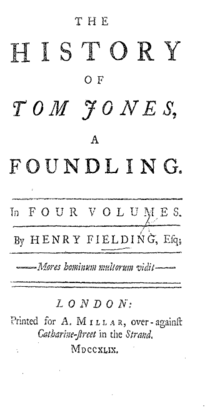
Lastly—and this is the personal touch that makes local indie stores invaluable—I was trying to special order a copy of Tom Jones, but one of the clerks insisted they had a copy. Their inventory didn’t show one, but he went off and looked through books that hadn’t been entered yet and came back with this spiffy hardcover in a slipcase. No online store is going to do that.

The location is fantastic—there’s a coffee shop right across the street, and right now there’s an ice skating rink, too. The space is great—and you can’t ask for friendlier, more helpful staff. It’s got it all.

Dawn of Dreams by Bronwyn Leroux: Preventing an Apocalypse in this Futuristic Fantasy

Dawn of Dreams

Dawn of Dreams

by Bronwyn Leroux
Series: Destiny, #1

Kindle Edition, 298 pg.
2017

Read: November 22-25, 2019


Jaden is out hiking with his friends on a mountain near their home during a school break. Suddenly, Jaden sees a large, monstrous, hard-to-describe bird-like creature. The rest of the group seems oblivious, and Jaden begins spending a lot of effort to convince himself he’s seeing things. Even taking bonus trips to the same point, and trying to record his sightings. The videos show nothing, but the way they show nothing convinces Jaden that he’s on to something.

Which really isn’t that reassuring. Why can’t anyone else see this beast? Why can’t the video show it?

Shortly after this, he meets Kayla, a new girl in the neighborhood. They’re hanging out at a park when the creature shows up, and not only can she see it—she’s been having similar experiences to Jaden. It’s somewhat reassuring that there’s someone else out there seeing it—but the questions keep piling up

It’s not long before they begin to see there are other similarities in their lives—clearly, there’s some sort of connection that goes back generations in both of their families. Throw in some artifacts—and other creatures that only Kayla and Jaden can see, and the questions pile up faster than the answers can keep pace with.

In a matter of days, their lives are no longer the same and the challenges that await them personally are so beyond anything they’d previously thought possible or likely.

Jaden is almost too perfect—smart; a real technical wizard (beyond his years and peers it seems); at least moderately popular; humble; a supportive and understanding child/grandchild; very athletic and annoyingly good at video games (just ask his friends). I’m not sure we saw a single weakness to him—despite that, I found myself liking the kid.

Kayla’s a bit more realistic—she’s clever, too; athletic, really into video games; but she’s not as good (at anything) as Jaden. She has skills that he doesn’t, thankfully. She’s had a harder life, you can sense, but don’t get all the details about. She’s easier to believe as a character, but I’d like to get a few more details about her past.

Jaden’s old friends—and Kayla’s new ones—aren’t around enough for us to get more than a vague sense about. But their families are involved a lot more than your typical YA families are—this is a pleasant change, but Leroux still spends a frustrating amount of time with the parents (mothers, to be specific) hinting at things going on in their lives rather than coming out and just telling the reader (whether or not the duo learns anything ) what’s going on.

The realities the pair discover and are exposed to are interesting, and I’d really like to see what Leroux has planned for them in the future. All the magical/otherworldly/unusual creatures they (and the reader) meet are well-designed and executed.

A couple of things I’m not sure about—first of which is the pacing. The book feels like it’s all set-up. All the conflict, all the challenge is in the future—Dawn of Dreams is just setting the stage for the series as a whole. I’m only guessing here, but my gut says I’d be more satisfied if books 1 and 2 in this series were combined into one, lengthier volume. Imagine if Tolkein had stopped The Fellowship of the Ring after the Council of Elrond and then started a second book for the trip through the Misty Mountains and the rest. I didn’t really have a problem with the slow pace, until the book ended and I was left wondering why I didn’t get more.

I’m not sure what’s gained by having this set in 2073 instead of the present day. I’m not saying there was a problem with it—I liked the slightly advanced version of the world, I’m just not sure I get the point of putting things there. I’m also not sure where this took place—there’s no reference to local flora or fauna, or even just a geographic place name.

Neither of these points really changed what I thought about the book, they just left me wondering more than I should have. There were some things that bothered me.

Leroux likes her adjectives. She more than likes them—she overloads the text with them (either especially at the beginning as she introduces the characters and world—or I got used to it as the book progressed). I appreciate her attempt to paint a picture with words, but it frequently felt to me like she’d never use one adjective if she could use three instead. Her adverb use is almost as bad at times, but it’s not as pronounced.

Beyond that, I’m not crazy about a lot of her word choices. In her attempt to vary her vocabulary, she often ended up grabbing the wrong word for a situation. I’m not talking malapropisms. But words that mean almost what she’s clearly going for, but aren’t quite right. Almost like Joey Tribbiani’s use of a thesaurus when composing a letter of recommendation. The result too frequently proved a stumbling block to the story. It’s like if your radio was tuned to 98.8 FM when the station is 98.7—you get a pretty good signal and can hear everything, but occasionally you get too much static with your music, ruining the song.

I don’t like bringing up those two points, because there’s a real earnestness to the novel. It’s not that Leroux is being negligent or careless in her writing, on the contrary, I think she’s trying too hard and ends up getting in her way. If she’d dial back on the effort a bit, focusing more energy on the plot and characters, I think the book would be more successful.

I liked the story, I thought the characters were fine—and I definitely want to spend more time with them. I’m just not crazy about the writing—which is a fairly important component of a book. So I can’t recommend this as heartily as I want to.


3 Stars


My thanks to damppebbles blog tours for the invitation to participate in this tour and the materials (including a copy of the novel) they provided.

BOOK SPOTLIGHT: Dawn of Dreams by Bronwyn Leroux (AND KINDLE GIVEAWAY)

Today I welcome the Book Tour for the YA SF&F Dawn of Dreams by Bronwyn Leroux. Along with this spotlight post, I’ll be giving my take on the novel here in a bit. Be sure to check out the Kindle Giveaway at the bottom of this post. But let’s start by learning a little about this here book, okay?


Book Details:

Book Title: Dawn of Dreams by Bronwyn Leroux
Release date: July 25, 2017
Format: Paperback/Ebook
Length: 298 pages

Book Blurb:

Lost family heirlooms. Sinister mutants. An ancient book hiding legendary secrets. Such mythical things should not exist in the futuristic world of 2073.

Yet, this reality is forced on two strangers. Jaden and Kayla are blissfully unaware their world is about to be invaded. When a relentless, age-old force casts them together, the shocking truth is revealed. They are hunted by the hideous, malevolent monster prowling their community. Worse, it’s invisible to everyone but them.

Forced down a dark and dangerous path, the pair discover their stalker isn’t the only thing they have in common. As they quest for solutions while trying to survive, their unique abilities surface. They team up with other-worldy allies. After deciphering an enchanted tool, they get their first answer. But knowledge comes at a price.

In a world on the verge of destruction, can Jaden and Kayla solve the puzzles and find a way to save it, all while trying to make sense of this inexplicable connection they feel for each other?

About Bronwyn Leroux:

Bronwyn LerouxBorn near the famed gold mines of South Africa (where dwarves are sure to prowl), it was the perfect place for Bronwyn to begin her adventures. They took her to another province, her Prince Charming and finally, half a world away to the dark palace of San Francisco. While the majestic Golden Gate Bridge and its Bay views were spectacular, the magical pull of the Colorado Rockies was irresistible. Bronwyn’s family set off to explore yet again. Finding a sanctuary at last, this is Bronwyn’s perfect place to create alternative universes. Here, her mind can roam and explore and she can conjure up fantastical books for young adults.

Follow her at https://bronwynleroux.com or https://www.facebook.com/AuthorBronwynLeroux/

Social Networks:

Twitter ~ Facebook ~ Website ~ Instagram

Purchase Links:

Amazon UK ~ Amazon US ~ Kobo ~ Nook

Kindle Giveaway:

For your chance to win a an 8GB Black Kindle Fire 7 with Alexa, click here.

Terms and Conditions: Giveaway starts November 23rd and ends at midnight MST on December 2nd 2019. Entries are open to all ages and countries. You will be asked to provide your email address which will subscribe you to Bronwyn Leroux’s mailing list. You can unsubscribe at any time. Bronwyn Leroux will contact the winner via email on December 4th. The winner will also be announced via Bronwyn Leroux’s social media channels. There is no cash alternative.

My thanks to damppebbles blog tours for the invitation to participate in this tour and the materials (including a copy of the novel) they provided.

A Few Quick Questions With…Steven Max Russo

I’ve blogged about Russo’s two novels now, and thankfully, I got to ask him a few questions about himself and his books. If you like this Q&A, be sure you check out Thieves and The Dead Don’t Sleep.

Tell us about your road to publication—was your plan/dream always to become a novelist and your education/other jobs were just to get you to this point, or was this a later-in-life desire?
I can’t say that my plan was to become a novelist, but it was always a dream of mine. I guess since high school I’ve harbored a secret desire to become an author. I wrote short stories and took several creative writing classes in college, and even began a novel once I got out of school, but I never got around to finishing it.

The truth is, when I was young, I just didn’t know how to go about becoming a writer. Also, deep down, I didn’t think I had the talent or perseverance to actually write an entire book.

I ended up becoming an advertising copywriter by default I suppose. It involves creative writing, but of a totally different sort.

Anyway, a few years back, I was feeling creatively frustrated and one night I just sat down and wrote a short story. It was about a young white collar criminal who is coerced into helping commit a murder.

I sent that story out, almost as a lark, and to my total astonishment a small online publication called The Rag actually published it. Paid me for it too!

That reignited the fire and I began writing seriously.

In Thieves, it’s really Skooley and Esmerelda’s story, and really you could’ve told the whole story without them (and Ray). But you kept bringing in Loretta. Can you—without spoiling anything—explain why you brought her into the story, what did she add that Esmerelda couldn’t have on her own?
An interviewer once asked me if I was a “plotter” or a “pantser.” Unfortunately, I am a pantser. That is, I don’t plot out where the story is going, I simply write by the seat of my pants.

I often tell people that I feel more like a reporter chronicling the events taking place than I do an author writing fiction. That is, I write what I see in my head. When I brought Loretta into the story, I was simply following Skooley as he left the house and went searching for something to eat. He ran into Loretta in a bar. I didn’t plan it that way, that’s just the way it happened.

What I think Loretta does is address a certain humanityand lack of humanityin the story.

She is the only main character that is even remotely likable. She is a victim and I think deep down sees herself as a victim. And to the psychopath, Skooley, she helps further show the depths of his depravity and psychosis.

She also helps ratchet up the tension.

Turning to The Dead Don’t Sleep, there’s at least a dozen things I want to ask. But I’m going to go with this one: The National League All Stars—where did this idea come from (both the name and the concept)? It seems like something that’s close to fact, but skewed a bit to the fictional side.
As I stated above, when I started this story, I didn’t know where it was going. I introduced this group of nasty characters and I knew they were tied to Frank’s past, but I wanted to isolate them, make them a specific group or subset that Frank could identify. Not everyone (such as Frank himself) who participated in this particular program during the war was a bad actor. Also, as the story progressed, these old baseball cards that are left were a device I could use to point the finger back at this group.

As for the name I chose, I wanted something that was instantly recognizable. It also allowed my characters to leave something that could be easily carried (baseball cards – one early reader of the manuscript, a big baseball fan, actually corrected the playing position of one of the baseball players I used) and it also allowed me to point directly to the relevant era.

Lastly, it gives the reader a hint at the false self-image this group had of itselfas an elite commando unit (hence All Stars)while their actions show that they were basically a group of drugged up, violent, and somewhat inept psychopaths.

Who are some of your major influences? (whether or not you think those influences can be seen in your work—you know they’re there)
I’d have to say that the three writers who influenced me most were Elmore Leonard, Ernest Hemingway, and Stephen King. If anyone can say they actually see their influences in my writing, I’d be immensely pleased! But I, and I believe most writers, are influenced by many of the writers we read. The trick is taking all these influences and putting them into the blender of your own imagination and then coming out with a voice that is your own, even if that voice sounds vaguely (or not so vaguely) like someone else’s.
Is there a genre that you particularly enjoy reading, but could never write? Or are you primarily a mystery/suspense/thriller reader?
I think when it comes to my own enjoyment, I am primarily a mystery/suspense/thriller reader. As far as what I can or cannot write, that remains to be seen. I am a novice author. I hate to admit it, but technically, I don’t really know what I’m doing! I can honestly say that I don’t see myself writing cozy mysteries or romance novelsbut who knows? I enjoy writing and telling stories and am just as surprised as readers are as to where the story is going next!
What’s next for Steven Max Russo?
Well, I’ve written a new book (my third) titled The Debt Collector that is now with my new agent (Peter Rubie of FinePrint Lit) and I am working on two more novels. I’m not really sure what the future holds. I plan to keep on writing. How much time I have to devote to writing novels, at least in the short term, will depend at least in part on how well my books are received, and how many I sell.
Thanks for your time—and thanks for both of these reads, I enjoyed them and hope you have plenty of success with both of them.

Thieves by Steven Max Russo: 2 Crooks, 1 Realtor, 1 Housekeeper and a Whole Lot of Thievery

Thieves

Thieves

by Steven Max Russo

Kindle Edition, 280 pg.
Down & Out Books, 2018

Read: November 11-15, 2019

Last month, I posted my thoughts on Steven Max Russo’s second novel, The Dead Don’t Sleep, and now I get to focus on his first book.

Skooley (I kid you not), is a small-time criminal with aspirations of greater things (and, let’s be honest, delusions of at least a bit more grandeur than he actually possess). He runs afoul of actual bad guys in Florida and makes himself scarce, hiding out in New Jersey for awhile. He gets a job in a restaurant and meets Ray. Ray isn’t as an accomplished thief as Skooley, but he’d like to be. And he knows where to start: their fellow co-worker Esmeralda had an idea.

You see, she’s got aspirations and dreams of her own. Hers are on the legal side, it’s nice to say. She’s a housekeeper, a restaurant hostess at night, and does some grunt work at a hair salon when she’s not working as either of those. She’s trying to save money for beauty school while taking care of her mother and younger siblings. She’s making progress, but it’s slow and she could really use a little boost.

Esmerelda tells Ray about the owners of a house that she cleans who take off for a month or so every year at this time. They’re the kind of people who leave cash and expensive things around with no one to check on them. Ray tells Skooley.

So Ray and Skooley break and enter, with the idea of spending a couple of days carefully and thoroughly pillaging this house. Almost immediately, things don’t go according to plan and the three conspirators are mired in distrust, frustration, and assorted moments of larceny.

There’s a subplot involving a real estate agent named Loretta. She blows off a little steam one night after work by having a little too much to drink. Somewhere between being one and three sheets to the wind, she runs into Skooley on a break from his plundering. In case there was any doubt at this point for the reader, what happens next definitely qualifies Skooley as a villain. Other than that, it wasn’t until the very end of the book that I saw anything redeeming about this storyline. Once I did, it all made sense. But man, I spent a long time wondering just what Russo was trying to accomplish with it.

I wouldn’t call this fast-paced, it’s more of a slow-build. More than that, it’s steady and always tantalizing about what’s coming next. Steady enough that you won’t want to put it down.

This is really an Elmore Leonard-esque plot and batch of characters, but it has none of Leonard’s style. Which is not a complaint—I’m trying to describe, not challenge—if he’d tried, I’d spend a few paragraphs describing the ways that someone who isn’t Elmore Leonard shouldn’t try to ape his style. Instead, you get the same types of characters in tight situations, which is good enough.

There are really two conclusions to this novel—and both are a lot more satisfying than anything I thought the novel might be leading to. And the last line is a killer, make no mistake.

All in all, a solid Crime novel featuring lowlifes, misguided people, and a few hardcore bad guys. It’s also enough evidence for myself that I’m going to grab the next Russo novel in a heartbeat. I dug this one, I think you will, too.

Disclaimer: I received a copy of this novel from the author in exchange for my honest opinion. I am grateful for that, but not so grateful that I changed my opinion.


3 Stars

LetsReadIndie Reading Challenge2019 Cloak & Dagger Challenge

Angel Eyes by Ace Atkins: Spenser’s 47th Novel Finds him in L.A. and Feels as Fresh as Ever

Angel Eyes

Robert B. Parker’s Angel Eyes

by Ace Atkins
Series: Spenser, #7

Hardcover, 305 pg.
G.P. Putnam’s Sons, 2019

Read: November 20-21, 2019

In the passing light, I noticed the welts on her wrists, chapped and bloody.

She’d been tied up for a long time.

Chollo noticed them, too.

“Should we kill him?” he said.

“Too easy.”

“You will never change, amigo,” he said. When will you learn? Some people live without rules. And sometimes killing a bad man is the only way.”

“I have other ideas for [him].”

Chollo nodded. “And I am listening”

The day that Hawk, Chollo (and a few others) stop trying to convince Spenser to just kill the bad guy and be done with it—or the day that he listens to them—is the day we’ll all know the series has run its course. Which will hopefully be around the time my future grandchildren start reading the series.

But far before we get to that point, we should probably start at the beginning.

A friend of Susan’s is worried about her daughter, who lives in L.A. and has gone missing. She’s beside herself, so Spenser flies out to find her with Zebulon Sixkill’s help. The book opens with Spenser and Z being let into Gabby’s apartment by her ex-boyfriend and still-agent, Eric Collinson. Collinson is typically the kind of twerp that Spenser would enjoy messing with, but he’s on his best behavior (probably to keep Collinson talking).

Collinson keeps insisting there’s nothing to worry about, that Gabby’s probably just off on a quick Mexican vacation or something. Still, he surreptitiously leaves her laptop behind for Spenser to “find.” Between what Z’s tech-wizard friend finds on the laptop, what Z and Spenser get from the LAPD (in the person of our old acquaintance Samuelson) and Gabby friends/former boss, there are two avenues of investigation for them to dive into. A powerful studio executive and a multi-level personal development group that’s somewhere in-between Scientology and NXIVM (far closer to the latter). But before they can dig too far into things, some heavies representing a third party show up and the lead starts flying.

And I ate it all up.

It’s dangerous enough that Z isn’t enough to help Spenser out. Chollo (now a small-businessman), Bobby Horse and Mr. del Rio put in appearances and render assistance in varying amounts.

I could easily keep going along these lines for 6-10 more paragraphs, but I’d better show some restraint and leave things there and move onto other parts of the book.

In addition to the hunt for Gabby, we get a little bit of Spenser’s jaded view of the entertainment industry (largely in the same vein as we saw in A Savage Place and Stardust, just up-to-date); a lot of references to movies and stars that are so irrelevant to contemporary Hollywood that most of the characters don’t get them; and a very jaded (but likely accurate) look at “The Industry” post-#MeToo.

Also, we get a hint or two at what Z’s been up to since he left Boston and Atkins has completely left the possibility open for someone to start a Sixkill series, already populated with a cast of characters to carry a book or two. I’m ready to buy at least 5 of them in hardcover right now.

The last little things that I’ll mention are that we get a nice update on Mattie Sullivan, but we need to see more of her soon. Plus, there’s a cameo that filled my heart with joy here—that’s all I’m going to say about it.

Atkins is in fine form, which comes as no surprise to anyone. I didn’t spend too much time comparing him to Parker as I read it, but you can’t help but do it. It’s a fast, breezy style, but there are depths to be plumbed (unlike several of Parker’s latter Spensers). It’s just a pleasure to bask in the language, dialogue, and characters.

At this point, when it comes to an Atkins Spenser novel, it’s really just a question of how much I’m going to like it, it’d be impossible (I wager) for him to deliver something that I won’t like. I liked this one plenty. A fine story, a setting the character hasn’t been in for a while, a chance to catch up with old friends . . . Angel Eyes is as satisfying as you could ask for. Could you start with it? Sure. You wouldn’t get all of the references, but none of them would impact your appreciation of the story. The only danger in starting with Angel Eyes is that you’d probably feel compelled to go back and read the previous 46. Which actually sounds like a lot of fun to me.

I hemmed and hawed over the stars on this one. If I had a 4 1/4 graphic, I probably would’ve employed it. My initial impulse was 4 Stars, but when I stop and think about: there was one page where I laughed out loud (at least a chuckle) multiple times (I really want to talk about it in detail, but don’t want to ruin anything); the way Atkins pulled in every L.A. reference possible (plus some other Spenser-canon references) without making it feel like checking off a list; and the feeling of dread and worry Atkins was able to elicit (which really doesn’t happen all that often in long-running series)…I’ve gotta give it that extra bump (and now that I’ve actually written that list, I’m thinking of bumping it up another).


4 1/2 Stars

2019 Cloak & Dagger Challenge

Page 375 of 625

Powered by WordPress & Theme by Anders Norén