GUEST POST: Chronic Illness in Death Rights by Shannon Knight

Shannon Knight popped into my email inbox last week (technically, it was an email from Shannon, not Shannon herself) with a Guest Post. This was great news for me–I love Shannon’s Guest Posts, and I appreciated the night off from writing. Then I read this post, and it deals with one of my favorite aspects of her new novel. What could be better? I really appreciate this post for several reasons, and I hope you enjoy it. Also, be sure to check out the books mentioned–you’ll be pleased that you did.


Chronic Illness in Death Rights
by Shannon Knight

So, I write action-adventures. Therefore, cerebral essays like this run the risk of giving readers the wrong idea. Thus, the cautionary intro wherein I explain that my stories are meant to blow your hair back, but I also believe in depth. Let’s be real—it makes the story more fun.

Death Rights, my latest, has the misfortune of being a middle book. That’s right, folks. You’ve got to read book one first, or what’s even the point? And yet, I’ve discovered that I’m the type of writer who likes to make something really new with each book, and being in a series didn’t stop me. Death Rights has quite a bit of civil rights focus, which I wrote about in another article. For you all, I’d like to talk about disability and chronic illness instead.

Like a lot of people, I got Covid in 2020. Like a lot of people, I never returned to health. I spent about two and half years mostly bedbound. Now I’m mostly housebound. Along with Long Covid, I gained a couple other diagnoses, including myalgic encephalomyelitis, which is quite a mouthful, so people like to call it ME (just say the two letters). ME is classified as a neurological disease with medical history associated with the name beginning in the 1930s. ME appears post-trauma, most commonly after a viral infection. Therefore, the Covid pandemic is creating a significant number of new ME patients. ME is incredibly debilitating and comes in a spectrum of mild to severe, with “mild” being immensely rough and “severe” being so bad that people not experiencing it tend to be unable to even believe that something so awful is possible. This spectrum, interestingly, creates more problems as the differences between cases can be so profound as to make them seem like entirely different illnesses.

Cover of Death Rights by Shannon Knight When I spent those years in bed, I had a support group of other people with the same sickness. The group chatted and shared experiences using Slack, so I could talk with them in my bed by typing into my phone. I found and shared an article about these Chinese women, best friends, who had bought a house together. They had each been renting apartments, but for the same money, they could own and share a full house with a garden and gazebo. We started daydreaming about this prospect. Wouldn’t it be lovely? When you become seriously ill, you tend to lose your income, which often means losing your housing. You also tend to lose your friends and even family. Spouses, especially men, quickly abandon their sick partners—so much for “in sickness and in health.” People were selling everything they owned. They were moving back in with elderly parents. Often, family that they moved in with were not understanding. They thought that if they just tried a little harder, they could stand or walk or participate in some gathering. The group talked about wishing they could pool money and live together somewhere where they didn’t have to explain their sickness to someone who couldn’t comprehend it. They imagined how well they might heal or simply live without added stressors.

I created a home that exists in Grave Cold, book one of Grave Chronicles, but features in Death Rights, book two, where a group of people with ME live together. We meet three members of the household. The set-up of the household was something I had daydreamed. When your immune system is not functioning properly and a virus has devastated your life, the very last thing you want is a new viral exposure. Yet, the Covid-19 pandemic showcased how very ready other people are to expose a vulnerable person. Psychology reports explained that people would hide their own positive status as a viral carrier for personal convenience. Additionally, asymptomatic carriers accounted for 60% of the cases, so anyone who felt and appeared healthy, could also be an active carrier. On top of that, people who had felt their own Covid experiences were not difficult decided that it wasn’t important if they exposed other people to Covid. They felt they had the right to choose what level of viral exposure another person should experience. Therefore, the house setup included a carriage house, or separate house structure, so all deliveries could be dropped there, all visiting could happen there, and the main house could remain a safe refuge for a vulnerable group of people. Similarly, a backyard space allowed for gathering or outdoor activities for the residents able to step outside, and a beautiful space for those able to look outside. All of the floors and paths were designed to accommodate wheelchairs and walking aids.

As Grave Chronicles is science fiction, I was able to include a variety of positive technology meant to clean the air. I believe upgraded systems of this sort will be a true part of our future. Just as we have learned to clean the water, we must clean the air. We have learned the lesson, but we still need to follow through on the widespread implementation. However, I didn’t want the updated technology to exclude the need for additional protective gear, such as respirators, because it was important to show characters taking small steps to protect and care for each other. Let’s normalize care and empathy. Let’s accept that it’s right and good to take steps to benefit people, even if the advantage is entirely for others.

Elise Wilson and Neha Patel are the two characters with ME that we spend the most time with. People associate the ill and disabled with poverty, homelessness, and a wide swath of negative ideas meant to blame them for their situation. If we blame them, then we can feel comfortable that this difficult situation will never happen to ourselves. This is part of ableism. When we blame and separate, then we give ourselves a reason to disassociate and rescind our good will and help. However, in order to have this lovely property with not one but two houses, lots of money had to be involved! As illness and disability can happen to anyone, then that includes those with wealth. Elise is the homeowner and primary person behind supporting the household. Neha had been a lawyer prior to becoming chronically ill. The story provides glimpses of each of them as real people. Neha likes gardening and decorates her rollator with anime stickers. Elise is protective and aims her energy at studies related to research and treatments for those suffering from ME.Cover of Grave Cold by Shannon Knight

In Grave Chronicles, ravens are long-lived people who send the dead to eternal rest. They’re a type of psychopomp. For their long lives to work, they have incredible self-healing powers, which become central to elements of the plot within the series. Self-healing also highlights a different angle of ableism, because there’s an idea that those who are superior do not get sick or will always recover from sickness. This connects with eugenics and ugly ideas that a person’s worth is tied to their abilities or contributions and not an inherent quality. Grave Cold includes some dark scenes in which the sick are seen as not trying hard enough. Death Rights builds off that notion, asking if those who don’t know and experience the desperate struggle of illness, disability, and old age are missing a core component of what it means to be human.

I hope readers of Death Rights are entertained by a thrilling adventure, but I also hope they feel moved by various moments in the story, and that after they’ve finished reading, some thoughts linger regarding chronic illness, how society treats the ill and disabled, the value of research and treatments for the chronically ill, and the inherent value that we all have simply by being alive. As you’re dwelling on these ideas, I hope you’ll do your best in your personal ways to help us all make this world a better place. Small actions can have ripple effects. The choices of a single person, even you, can change this world. We may not live long enough to see the full impact of the choices we’ve made in our lives, but that doesn’t mean we can’t strive even for the tomorrows that we ourselves will never see.

Grave Chronicles Protect the Dead Covers


Find your copies!

Grave Cold (Grave Chronicles #1) https://books2read.com/GraveCold

Death Rights (Grave Chronicles #2) https://books2read.com/DeathRights

Shannon Knight lives in the Pacific Northwest with her most excellent cat. Their adventurous lives include coffee, reading, ribbon games, and K-dramas. Shannon graduated summa cum laude with a Bachelors in English. She is the author of Death Rights, Domestication, Grave Cold, Insiders, and Wish Givers. Sign up for her newsletter at https://shannonknight.net/.


Irresponsible Reader Pilcrow Icon

April 2025 in Retrospect: What I Read/Listened to/Wrote About

I finished 24 titles (3 up, 1 down from last April), with an equivalent of 6,222 pages or the equivalent (547 up from last month), and gave them an average of 3.8 stars (.13 up). There was one DNF, too. Sure, four of those were children’s books, so we’re not talking about a lot of effort.

Speaking of things I didn’t do, I didn’t finish almost every post I tried last month. I did manage to eke out a few posts, though, as you’ll see.

So, here’s what happened here in April.
Books/Novels/Novellas Read/Listened to

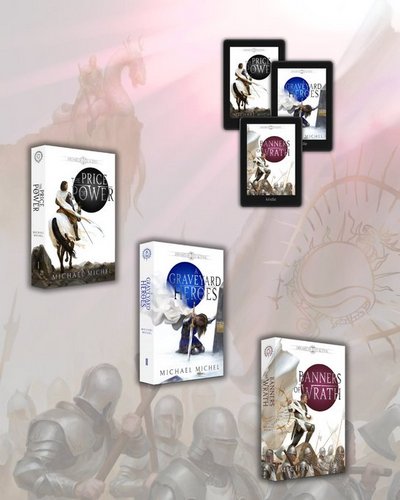
Cover of A Little History of Music by Robert Philip Cover of The Price of Power by Michael Michel Cover of Baby City by Freida McFadden & Kelly Stoddard
2 1/2 Stars 4 1/2 Stars 3 Stars
Cover of My Documents by Kevin Nguyen Cover of The Defender by Elliott Linker Cover of Life Lessons by Titan by Melaney Taylor Auxier
5 Stars 3 Stars 4 Stars
Cover of Frida the Good Dog by Daniel Breen Cover of Freddie Fastback and His Friends by Felicity Watt Wilson Cover of Blood Over Bright Haven by M. L. Wang
3 Stars 3 Stars 4 1/2 Stars
Cover of The Core of the Christian Faith by Michael Goheen Cover of I Haven’t Been Entirely Honest With You by Miranda Hart Cover of One Death at a Time by Abbi Waxman
still deciding 3 Stars 5 Stars
Cover of Everything Is Tuberculosis by John Green Cover of Happy Jack and the Scary-Ass Book of Doom by Rich Partain Cover of The Impudent Edda by Rowdy Geirsson
3.5 Stars DNF still deciding
Cover of Dark Neon & Dirt by Thomas Trang Cover of Memes & Mayhem by Ashely DeLeon Cover of Everyone on This Train Is a Suspect by Benjamin Stevenson
still deciding 3.5 Stars 4 Stars
Cover of Summer Knight by Jim Butcher Cover of Broken Homes by Ben Aaronovitch Cover of A Scanner Darkly by Philip K. Dick
4 Stars 4 Stars 3.5 Stars
Cover of Mere Christianity by CS Lewis Cover of Orconomics: A Satire by J. Zachary Pike Cover of The Space Trilogy by C.S. Lewis
4 1/2 Stars 3.5 Stars 3.5 Stars

Still Reading

Cover of Wisdom for Life by Michael P. V. Barrett Cover of The Unvarnished Jesus by Samuel G. Parkison Cover of Back After This by Linda Holmes
Cover of Good Trouble by Forest Issac Jones

Ratings

5 Stars 2 2 1/2 Stars 1
4 1/2 Stars 4 2 Stars 2startotal
4 Stars 6 1 1/2 Stars 1.5starttotal
3.5 Stars 5 1 Star 1startotal
3 Stars 5
Average = 3.78

TBR Stacks/Piles/Heaps

Audio E-book Physical Goodreads
Want-to-Read
NetGalley
Shelf/ARCs/Review Copies
End of
2024
3 68 78 167 10
1st of the
Month
5 72 77 172 11
Added 1 5 19 0 3
Read/
Listened
3 1 8 1 3
Current Total 3 76 88 171 11

Breakdowns:
“Traditionally” Published: 16
Self-/Independent Published: 8

Genre This Month Year to Date
Children’s 2 (8%) 6 (7%)
Fantasy 4 (17%) 12 (18%)
General Fiction/ Literature 2 (8%) 9 (14%)
Mystery/ Suspense/ Thriller 3 (13%) 17 (26%)
Non-Fiction 4 (17%) 15 (23%)
Science Fiction 3 (13%) 11 (17%)
Theology/ Christian Living 2 (8%) 10 (15%)
Urban Fantasy 2 (8%) 7 (11%)
“Other” (Horror/ Humor/ Steampunk/ Western) 1 (4%) 1 (2%)

Review-ish Things Posted

Other Things I Wrote
Other than the Saturday Miscellanies (5th, 12th, 19th, and 26th), I also wrote:

Enough about me—how Was Your Month?


April Reading Calendar

WWW Wednesday—May 7, 2025

Yesterday was the one-year anniversary of my kidney removal–and what a year it’s been. This is not much of an introduction to a WWW Wednesday, but it’s all that I’ve got in me. Well, I mean–I’ve got one kidney in me, as well as a full roster of other organs, that was more of a figurative “all in me,” but then I realized how it sounded and, well…I now realize I should’ve skipped the intro.


WWW Wednesdays Logo

This meme was formerly hosted by MizB at A Daily Rhythm and revived on Taking on a World of Words—and shown to me by Aurore-Anne-Chehoke at Diary-of-a-black-city-girl.

The Three Ws are:
What are you currently reading?
What did you recently finish reading?
What do you think you’ll read next?

Seems easy enough, right? Let’s take a peek at this week’s answers:

What are you currently reading?

Cover of Spiderlight by Adrian Tchaikovsky Cover of Kills Well with Others by Deanna Raybourn
Spiderlight
by Adrian Tchaikovsky
Kills Well with Others
by Deanna Raybourn, read by Jane Oppenheimer & Christina Delaine

I’ve been wanting to read Tchaikovsky for years, so I was excited to get the chance. This is a fun combination of creepy, fun, and solid adventure. I can see this not being my last time with Tchaikovsky–I just hope the next books by him that I read aren’t quite so arachnid-heavy. (Shudder)

I was hoping that the sequel to Killers of a Certain Age would be better than it was–sadly, Raybourn is nice an consistent. It’s good enough to keep listening, but that’s about it. I liked the idea and some of the characters, I just don’t think it’s enough to come back for volume three (assuming it comes)

What did you recently finish reading?

Cover of Class Clown by Dave Barry Cover of Back After This by Linda Holmes
Class Clown: The Memoirs of a Professional Wiseass: How I Went 77 Years Without Growing Up
by Dave Barry
Back After This
by Linda Holmes

Here’s a shocker–Dave Barry’s memoir is a hoot. It’s more than just funny, but that’s a good start.

Holmes’ book was delightful. I think I’m going to have to look into her other novels.

What do you think you’ll read next?

Cover of Hive by D.L. Orton Cover of Foxglove Summer by Ben Aaronovitch
Hive
by D.L. Orton
Foxglove Summer
by Ben Aaronovitch, read by Kobna Holdbrook-Smith

This is a revised version (I’m not sure how much) of a book I listened to four years ago. It should be fun to see this version.

Foxglove Summer is one of my favorites in the Rivers of London series, I’ve been looking forward to it

What are you working through?

LITERARY LOCALS: A Q&A About Writing in Idaho with Cindi Hartley

Literary Locals logo
I haven’t had a chance to read Cindi Hartley’s work yet, but I’m very excited to introduce you to her. When I met her at the Nampa Library’s Book Faire last month, her effervescent personality made me a fan. She’s new to being a published author, which brings a fun perspective. Hope you enjoy this–and that you give her book a shot.


Before we get into things, why don’t you give the reader a brief introduction to you and your work.
Hi, my name is Cindi Hartley. I am a volunteer disability advocate and accessibility advisor with experience in training volunteer forces, setting up accessible spaces, and hosting events that focus on helping those with special needs and various physical disabilities find more inclusion within the community. I myself live with a condition known as Ehlers-Danlos Syndrome, Arthrochalasia type (aEDS) which has progressed to the point of needing a wheelchair due to stability issues when I try to walk. As my health has weakened through the years, I have had to step back more, but I continue to do what I can when I am asked for help which has included hosting a wheelchair challenge for my city leaders and being on call to answer accessibility questions or brainstorm solutions to accessibility barriers in the community.

I have been an avid reader and book lover for as long as I can remember. I have often dreamed of being a writer and have won small awards for various essays, poetry, and an old blog through the years. Even with all that though, I never thought I would get to see the day my name appeared on the byline of a book. It’s been humbling, overwhelming, exciting, and nerve-wracking all at once. Definitely a whole new experience, but one I am grateful to be having. My main goal with “Fifth Sparrow Rising” is to provide encouragement and a few simple ideas for how my readers can help bring more light into the world around them. I share a bit of my personal story and faith as well as experiences through some of the hardest parts of my life and things I have learned through it all in hopes that at least one person might feel seen and find help, hope, or courage from it. This is not a tell-all memoir, nor is it a complete summary of my life, but I hope it is enough to help show others they are not alone and that there is a way to find light again, as well as be a light, even when one has lived through darkness.

You can reach me through my Facebook page, titled the same as my book, or through my email address: The5thSparrow@yahoo.com, and I will do my best to respond as quickly as I can. My book is currently available through Mail Room ‘n’ More (Nampa), Mustard Seed (Nampa), or Sweet Zola’s (Boise). You can also get it directly from me at book signings. My next one is coming up on May 17th at Shared Stories in Caldwell.

What brought you to Idaho in the first place? What is it about Idaho that keeps you here?
I am not a native Idahoan. I moved here from Kansas back in 2015 when my family and friends helped raise funds to get me to the Treasure Valley after a few doctors here made national news in the EDS community. I was able to see a couple of them before they retired or moved their practice out to the East Coast. Their help gave me back my stability for a few extra years, which I will always be grateful for.

What keeps me here is twofold. The nature and beauty of this state fills my heart, and the kindness and acceptance of the overall community and people here have helped me feel at home. I may be a Kansan by birth, but I am an Idahoan at heart.

Are you tied into some sort of local author/bookish group/culture? If so, tell us about it and how it helps you as an author. If you’re not, is there a reason for it?
My book was published in January of this year so I am still trying to find my feet in this new experience of being an author. I do however appreciate the kind and welcoming nature of other local authors who welcomed me with open arms at my first book fair. These are writers I have been a fan of and have eagerly looked forward to seeing at various book fairs over the years, and when I stepped to the other side of the table for the first time in April they immediately embraced me as one of their own which meant the world to me and provided more encouragement than I could express. I also have a friend I made from being a fan of her writing who has helped with advice and encouragement when I needed it while trying to complete my book.

What kind of events in the area do you attend—either to sell/promote your books or to network with authors? Are there any outside of this area that you hit regularly and wish we had something like it here?
I am still new to all this, but so far I have been at the Nampa Library book fair this past April and a book signing at Mail Room ‘n’ More in Nampa. I have another book signing coming up in May at Shared Stories in Caldwell and hope to be able to find a spot in another book fair in the fall.

What’s the breakdown of your audience—do you have a strong local base, or are your readers from other parts of the world?
Through past writings I have known a global audience, but for this book my audience as been mostly local or from Vermont, where the artists responsible for the beautiful cover art are from. I have a few readers in a handful of other states as well, and one reader in Australia, which was a humbling thing to experience.

Do you think there are particular challenges or advantages to being a writer in the Treasure Valley? (possibly both)
I am not sure about challenges, but one advantage was the Nampa Library and the librarians who work there. They were a huge support throughout my writing process by helping with everything from beta reading and light editing support to helping me tackle tech issues when trying to transport my book from my trusty notebook to the computer. I could never have done all this so quickly without their support.

I also believe I couldn’t find more genuine support and encouragement than I do from the local author community here and the community of readers. That in itself is a huge asset tied to being in the Treasure Valley.

Do you bring Idaho (or some sort of Idaho-sensibility, assuming one exists) to your work? Whether or not anyone else sees it, can you look at some aspect of your writing and think “That’s Idaho” or “I would do ____ differently if I was a Kentuckian or from Illinois?”
I don’t mention Idaho specifically, but I do draw from some of my experiences while living here. I also highlight the importance of kindness, acceptance, and community which I believe are values that are shared by fellow Idahoans.

One final question, is there a book (or two…or 18, if you get really carried away), that embodies Idaho/the Idaho spirit to you to recommend to my readers?
Oh, that’s a hard one for a book dragon. lol If I had to narrow it down, I would say “Idaho’s Remarkable Women: Daughters, Wives, Sisters, and Mothers Who Shaped History” by L.E. Bragg and “Fuzzwiggs: the Switcheroo” by Amy Maren Rice. An odd pair at first glance, I admit, but I honestly feel they help summarize what makes Idaho so great. The former is a non-fiction book about some key people in Idaho’s past that helped shape this state and is full of the grit, heart, and the kind of determination that makes Idaho strong. The latter is a fun fantasy that highlights humor, nature, and adventure while bringing you a story of family bonds and personal growth, while the main characters learn the value of working together and building a mentality of teamwork and community. Idaho to me is a magical and beautiful place, where the history and culture is rooted in perseverance, strength, and courage, and the sense of community and family here is strong. There are several more books that I could add to this list, but I choose these two books to highlight because I believe that together they help capture a good summary of what makes this state what it is.


Thanks for your time and participation! Hope you enjoyed it!


Literary Locals logo

MUSIC MONDAY: “Faster” by Rachael Yamagata

The Irresponsible Reader's Music Monday logo

Music Monday's originated at The Tattooed Book Geek's fantastic blog and has shown up hither, thither, and yon since then.

Irresponsible Reader Pilcrow Icon

Good Trouble by Forest Issac Jones: Marching toward Victory

Good Trouble Tour Banner


Cover of Good Trouble by Forest Issac JonesGood Trouble:
The Selma, Alabama and Derry, Northern Ireland Connection 1963-1972

by Forest Issac Jones

DETAILS:
Publisher: First Hill Books
Publication Date: April 1, 2025
Format: eARC
Length: 200 pg.
Read Date: May 1-3, 2025
Buy from Bookshop.org Support Indie Bookstores

What’s Good Trouble About?

It’s really simple, based on several interviews as well as plenty of research, Jones shows the connections between the Catholic Rights movement in Northern Ireland and the Civil Rights Movement in the Southern US in the late 60s and early 70s.

Essentially, groups and individuals in Northern Ireland saw what the non-violent protests in the U.S. were able to accomplish, how they went about it—and the costs they paid. Drawing inspiration—at the least—and borrowing methodology, they sought to follow in the footsteps of their predecessors.

Selma

After a chapter or two covering Michael Collins, the Easter Rising, and the rise of the IRA to set the stage, Jones turns his focus to the Eastern US—he discusses the Student Nonviolent Coordinating Committee, the March on Washington, and the Selma to Montgomery March. It’s a real mix of hope, joy, and trauma.

The bulk of this section is on the Selma to Montgomery March—the first-person accounts from those who participated in the March adds so much to this.

Derry

Jones then shifts to his discussion of the Catholic Rights movement—the way they self-consciously (and likely) unconsciously appropriated the methodology of the Black marchers and demonstrators on the other side of the Atlantic. They used similar thinking, learned lessons from the missteps of the Civil Rights marchers, and even used the song “We Shall Overcome.”

Despite some promising moves, and rallying after devastating counter-protests and police action, things did not stay non-violent in Northern Ireland, as we all well-know. Jones doesn’t spend as much time on that (if for no other reason than it stopped drawing inspiration from the South), but he does give a solid overview of it. Again, the first-person accounts he weaves into things like the account of the Long March from Belfast to Derry in 1969 are genuinely effective.

Some Minor Issues

I’m not sure that Jones inserting himself into the narrative quite as often as he did helped things that much. His friends fit in better—largely because they were among the first-person accounts mentioned before—but I’m not sure he needed to give them the same introduction every time. His parents might have been mentioned too often—they also didn’t need the same introduction almost every time they were mentioned. Nor did we need to be told twice in the same chapter how surprised they were to see Obama elected.

The repetition there makes me think of my main gripe—too many of the sentences and structure of various sections just needed a little more work. It really felt like another draft or two would’ve helped. The prose needed a little more tightening and a little less redundancy.

I don’t know that I’d have mentioned this in other circumstances, but it feels like a book talking about topics and themes that are this important should have writing to match—and this just doesn’t. I’d like for Jones to have elevated his prose to match this.

So, what did I think about Good Trouble?

In the movie The Commitments*, the band’s manager tells them:

Do you not get it, lads? The Irish are the blacks of Europe. And Dubliners are the blacks of Ireland. And the Northside Dubliners are the blacks of Dublin. So say it once, say it loud: I’m black and I’m proud.

Despite it being the wrong part of Ireland, that kept running through my mind while reading this book—and it only got louder when protestors in Derry started calling themselves “White Negroes.” Sure, it was a lighthearted moment in the movie—it wasn’t lighthearted (at least not for long) for those in Derry. This identification with the cause in the States underlines just how similar the causes and how precarious the situations for both groups were (this is particularly helpful for U.S. readers who may not be as familiar with “the Troubles” as we might want to be). Jobs, health, housing, and access to government—it all hung on getting the people and the government to sympathize with, to make systemic changes for these minority populations.

While hopeful—at least ultimately—this was not an easy read, the reminders, refreshers, or first-looks (depending on the reader) at the struggles, the hardships, the injustices before, during, and after the marches and the movement are harrowing and hard to read. Man’s inhumanity to man because of some perceived superiority is frightening and sickening—and Jones makes sure the reader sees that. And it won’t be easy to move on from that.

Yeah, there were some flaws with the book (hopefully some of them were caught before the final printing)—but they are overshadowed by the power of the book.

More than that—there’s a playbook to be found here for those who might be looking at mass demonstrations and marches in the future. They’re paths that are well-trodden, with various levels of success. Just knowing that others have faced these challenges and stuck to their non-violent convictions as much as possible can—and hopefully will—help others to do the same.

I’m glad I read this book—and think you will be, too.

* Probably the novel, too. But, it’s dangerous for me to check that unless I’m prepared to end up re-reading the whole thing.


This post contains an affiliate link. If you purchase from it, I will get a small commission at no additional cost to you. As always, the opinions expressed are my own.

My thanks to The Write Reads for the invitation to participate in this tour and the materials they provided.

BOOK SPOTLIGHT: Good Trouble: The Selma, Alabama and Derry, Northern Ireland Connection 1963-1972 by Forest Issac Jones

I’m very pleased today to welcome The Write Reads Blog Tour for Forest Issac Jones’ provocative Good Trouble: The Selma, Alabama and Derry, Northern Ireland Connection 1963-1972 on its last day! If you take a look at the feed for https://twitter.com/WriteReadsTours from the last week, you’ll see what several other bloggers have had to say about it. My $.02 will be coming along in a little bit.

Good Trouble Tour Banner

Book Details:

Title: Good Trouble: The Selma, Alabama and Derry, Northern Ireland Connection 1963-1972 by Forest Issac Jones
Genre: Non-Fiction
Age Category: Adult
Format: Paperback/Ebook
Length: 200 pages
Publication Date: April 1, 2025
Good Trouble Cover

About the Book:

Good Trouble will show the strong connection between the Black Civil Rights Movement in the United States and the Catholic Civil Rights Movement in Northern Ireland – specifically the influence of the Montgomery to Selma march on the 1969 Belfast to Derry march through oral history, based on numerous interviews of events leading up to both marches and afterwards. This is close to the author’s heart as both of his parents marched to integrate lunch counters and movie theatres in Salisbury, North Carolina, in 1963 as college students. His mother was at the 1963 March to Washington where Martin Luther King gave his ‘I Have a Dream’ speech.

Award-winning author Julieann Campbell (On Bloody Sunday) wrote the introduction for Good Trouble, looking back at her times growing up in Derry, in the heart of the Catholic Civil Rights Movement. Jones traveled to Dublin, Belfast, and Derry to conduct interviews for the book. In all, he did fifteen interviews with people who were involved in the movement in Northern Ireland (including Billy McVeigh – featured in the BAFTA winning documentary, Once Upon A Time In Northern Ireland) and in the United States (including Richard Smiley and Dr. Sheyann Webb-Christburg – both were at Bloody Sunday in Alabama and on the Selma to Montgomery march among others). Jones was also able to talk with Eamonn McCann (he took part in the Belfast to Derry march in 1969; he was the John Lewis of Northern Ireland).

Unlike most books on Northern Ireland, this goes into detail about the connection and the influence between the two movements. Also, most focus on Bloody Sunday and not the pivotal incidents at Burntollet Bridge and the Battle of the Bogside. Building off of unprecedented access and interviews with participants in both movements, Jones crafts a gripping and moving account of these pivotal years for both countries.

Book Links:

Amazon Canada ~ Amazon US ~ Amazon UK ~ Goodreads ~ The StoryGraph

About the Author:

Forest Issac JonesForest Issac Jones is the author of the upcoming Good Trouble, a historical examination about the connection between the US Black Civil Rights movement and the Catholic Civil Rights movement in Northern Ireland. ‘An insightful and compelling examination of a terrible period in our shared histories” (Brian McGilloway), it focuses specifically on the influence of the 1965 Montgomery to Selma march on the 1969 Belfast to Derry march through oral history, based on numerous interviews from people who were there on the front lines.

He is an award-winning author of nonfiction and essays, specializing in the study of Irish history, the US Civil Rights movement, and Northern Ireland. His latest essay, ‘The Civil Rights Connection Between the USA and Northern Ireland’ was awarded honorable mention in the category of nonfiction essay by Writer’s Digest in their 93rd annual writing competition in 2024.

In addition, Forest is a member of the Historical Writers Association, Crime Writers of Color, and the James River Writers.


My thanks to The Write Reads for the invitation to participate in this tour and the materials they provided.

The Ten Commandments by Cornelius Van Til: A Brief Look at the Law

Cover of The Ten Commandments by Cornelius Van Til The Ten Commandments

by Cornelius Van Til

DETAILS:
Publisher: Cantaro Publications
Publication Date: January 1, 2024
Format: Paperback
Length: 204 pg.
Read Date: February 9, 2025
Buy from Bookshop.org Support Indie Bookstores

What’s The Ten Commandments About?

Well, as the title suggests, it’s about The Ten Commandments–it’s an exposition of them, and a brief explanation of what the Moral Law is and how it functions by Cornelius Van Til, who taught the course on Christian Ethics at Westminster Theological Seminary in its early days.

Like many of his works, until this edition, it was unpublished. It’s the curriculum from that class, really. It’s as close to attending Van Til’s course as we’re going to get.

We get one chapter on the nature and use of the Law in the Christian life (and throughout Scripture) and then a (generally) brief chapter on each commandment.

Miscellaneous Observations

There are a handful of things that an academic reviewer would spend time on, or if I wanted to get into his arguments, I would devote paragraphs to. But I’m not, so I’m just going to list off thoughts I had along the way:

bullet When it comes to the First Commandment (leading to a discussion of God’s existence and atheism) and the Third Commandment (God’s self-revelation via His name and other means), Van Til the apologist comes to the fore. He spends a disproportionate amount of time on these two–I’m not complaining, I’m simply noting. Any students who took his Ethics class before Apologetics (assuming that was possible) probably had a leg up on those who went right into Apologetics.
bullet His discussion of the 4th (Sabbath) didn’t lead to as many specific practical applications as I was hoping (if only for curiosity’s sake, I wanted to see his take on some things). But pound-for-pound one of the best brief discussions on the day change, external vs. internal/spiritual observance of the day.
bullet I really appreciated his discussion of the Sixth Commandment (Human Life), we need more like it.
bullet It boggled my mind that he saw the necessity of labor unions and protests–in a fallen world, such things are necessary for protection against the fallibility of our fellow man. (I think I agree with him, just didn’t expect it from him)
bullet His discussion of the 9th Commandment (Truth) didn’t get take the apologetic turn that I expected (although it’s there), and was helpful–but I could’ve used more.
bullet The chapter on the 10th Commandment (Contentment) was too brief, but what was there was excellent.

So, what did I think about The Ten Commandments?

It wasn’t bad–it was pretty good, actually. I had hoped for a little more depth–and I got it occasionally, but not as often as I’d hoped.

It’s also pretty clear and easy to understand–this is a great bonus. Van Til enjoys (even among his most ardent of supporters/students) the reputation for not being a very clear writer. But I didn’t get a trace of that here.

This is a slightly uneven, but helpful and sound introduction to and overview of the Ten Commandments and their use in the Christian life. It’s in line with what you’d find in Calvin, Turretin, Hodge, and the like. Maybe a little more accessible because it was written in the early 20th Century.


3.5 Stars
This post contains an affiliate link. If you purchase from it, I will get a small commission at no additional cost to you. As always, the opinions expressed are my own.
Irresponsible Reader Pilcrow Icon

Saturday Miscellany—5/3/25

Odds ‘n ends about books and reading that caught my eye this week. You’ve probably seen some/most/all of them, but just in case:
bullet Most parents don’t enjoy reading to their children, survey suggests—might as well start on a down note, right? Can only go up from here…
bullet A Fifth of American Adults Can’t Read. Here’s How To Teach Them.—well, maybe not. (I don’t know enough to comment on the “how to teach” bit, as inclined as I am to agree). There’s probably a link between these two pieces.
bullet People who buy books faster than they can read them usually share these 7 traits—This’ll lift your mood a bit (I think this also applies to people who check out too many library books at once)
bullet Premodern Chinese Literature Can Be Trendy Too—Sure, why not? I’m mostly posting this for the one friend who will despair that one of his niche interests is trendy, but this did make me wish I had a little room on ye olde TBR.
bullet So, You Want to Write a Cookbook?—huh.
bullet Triumph of the Undead: The Public Domain as Horror Hero
bullet Scholars Have Lost the Plot!—This showed up as a sidebar link to the Public Domain piece, and I’m a little obsessed with it now. I’d like to take 2-3 weeks off to read the materials he’s interacting with and interact with this piece.I probably won’t. Okay, I definetly won’t, but it was a nice daydream.
bullet The Edgar Awards were given this week, which means it’s time for CrimeReads to post their roundtable discussions with the nominees. I love these annual posts. The State of the Mystery, Part 1: Craft Lessons and Favorite Reads and The State of the Mystery, Part 2: Issues, Concerns, and The Long Road Ahead.
bullet Speaking of the Edgars, I might as well share the list of the winners: 2025 Edgar Allan Poe Awards
bullet Nabokov’s Favorite Color, Stephen King’s Adverb Bullshit, Language’s Value Only As A Measure of Time—I really wish I remembered whose link I followed to this.
bullet What’s the deal with dystopian picturebooks?—I didn’t know this was a thing. There’s at least two of these that I had to fight the impulse to buy. (for now)
bullet Remembering the Average Reader—Yes. The phrase “average reader” is accurate but has a strange tone to me (I know Krysta wasn’t being pejorative—that’s the whole point). My friends tend to phrase it as: “people who aren’t like HC” or “normal readers.”
bullet 3 Truly Odd Protagonists & Why We Really Really Like Them—Sherlock Holmes, Arthur Dent, and Quentin Coldwater in the same piece. Worth reading just for that interesting combo.

To help talk about backlist titles (and just for fun), What Was I Talking About 10 Years Ago Week?
bullet Fairest by Marissa Meyer—that was 10 years ago??
bullet Atlanta Burns by Chuck Wendig—That was only 10 years ago??
bullet Dark Heir by Faith Hunter—a turning point in my appreciation for the series
bullet I mentioned the release of Darkened Blade by Kelly McCullough

This Week’s New Releases that I’m Excited About and/or You’ll Probably See Here Soon:
bullet The Mystery of the Crooked Man by Tom Spencer—”Fraudulent cozy mystery expert Agatha Dorn is cancelled — and severely ticked off! — in this quirky homage to Golden Age detectives, lost manuscripts, and famous authors.” I dig the premise here, if the execution matches, it’ll be a winner.
bullet Bat Eater and Other Names for Cora Zeng by Kylie Lee Baker—”In this explosive horror novel, a woman is haunted by inner trauma, hungry ghosts, and a serial killer as she confronts the brutal violence experienced by East Asians during the pandemic.” There’s no way I’d make it through this horror novel—but, man, it sounds great. Someone read it and tell me what I missed, okay?

A young girl looking into an oversized book with animals and fairies resting around it with the words 'If you want your children to be intelligent, read them fairy tales. - Albert Einstein'

WWW Wednesday—April 30, 2025

WWW Wednesdays Logo

This meme was formerly hosted by MizB at A Daily Rhythm and revived on Taking on a World of Words—and shown to me by Aurore-Anne-Chehoke at Diary-of-a-black-city-girl.

The Three Ws are:
What are you currently reading?
What did you recently finish reading?
What do you think you’ll read next?

Seems easy enough, right? Let’s take a peek at this week’s answers:

What are you currently reading?

Cover of The Space Trilogy by C.S. Lewis Cover of Back After This by Linda Holmes
That Hideous Strength
by C.S. Lewis
Back After This
by Linda Holmes

I should be finishing Lewis’ Space Trilogy here this evening–if nothing else, each book in this trilogy is radically different than the one before. I’m very curious about how he wraps this all up.

I really have no idea why I picked up Back After This but one of my favorite (non book) bloggers recommended it, and our tastes generally align. I’m less than a chapter into it at the moment, so I really can’t say anything about it yet.

What did you recently finish reading?

Cover of A Scanner Darkly by Philip K. Dick Cover of Orconomics: A Satire by J. Zachary Pike
A Scanner Darkly
by Philip K. Dick
Orconomics: A Satire
by J. Zachary Pike, read by Doug Tisdale Jr.

A Scanner Darkly was something, that’s for sure. I’m not sure what, though. Really well-written, fantastic ideas, but I’m not sure about the whole package.

Pike’s satire was everything I’d hoped it’d be–and more.

What do you think you’ll read next?

Cover of Good Trouble by Forest Issac Jones Cover of The Mercy Chair by M.W. Craven
Good Trouble: The Selma, Alabama and Derry, Northern Ireland Connection 1963-1972
by Forest Issac Jones
The Mercy Chair
by M.W. Craven, read by John Banks

I’ve been reading a lot of dark and heavy things, so as an antidote, let’s see what Good Trouble has in store. Oh, more of the same. Okay, then.

At least at the end of the latest Poe and Tilly book, there’s a somewhat happy ending after all the dark and heavy.

What are you escaping into lately?

Page 46 of 602

Powered by WordPress & Theme by Anders Norén