MUSIC MONDAY: “The Last Shanty ” by Derina Harvey Band

The Irresponsible Reader's Music Monday logo

Music Monday's originated at The Tattooed Book Geek's fantastic blog and has shown up hither, thither, and yon since then.

I mentioned the other day that I was celebrating the grandcritter’s 2nd birthday. As most two-year-olds do, I know he reads his Grandpappy’s blog religiously. So, for him, I thought I’d post one of his favorite songs.

Irresponsible Reader Pilcrow Icon

Book Blogger Hop: Do You Have Enough Shelf Space?

This prompt was submitted by Billy @ Coffee Addicted Writer:

Do you have enough shelves for all your books?

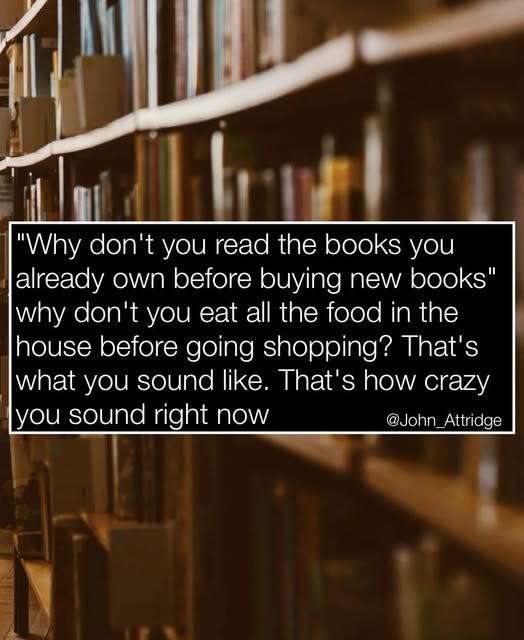
This is one of those very important questions that any book hoarder collector has to ask themselves regularly. Possibly frequently. As the meme says, it’s not a matter of too many books, it’s not enough shelves.

We have shelves in almost every room of the house–and one hallway. Some of these shelves could be replaced by taller versions. Some could be filled more efficiently/to greater capacity. Nevertheless, we’re running out of places for shelves. This is going to be a problem–possibly as soon as 2026.

But right now? I do happen to have enough space for my books and a little room to grow. This is not a phenomenon that I’m all that familiar with, honestly. But I’m enjoying it. There’s a bookcase that serves as my physical TBR stack (with a shelf of “you need to write about these soon”), a few Non-Fiction cases, more Fiction cases, a couple that are for my wife’s books, a little bench/shelf unit for the grandchildren’s books. The TBR unit is overflowing (sadly), the Non-Fiction has a little room for growth, the Fiction cases are really close to filling, but my wife’s cases are in real danger of hitting the limit. Oh, I’ve got a couple of those corner shelf units, too. They’re not bad, but not particularly large or helpful–I think I could fit a handful onto one of them. The grandchildren’s shelves are about half full–so that’s promising.

Okay, thinking about it in those terms make me think I have less breathing-room than I initially thought. 2026-me definitely has a problem, and had better start coming up with some solutions.

Remember, as the meme/tshirt/poster says:
It's not hoarding if it's books

How about you, reader? Do you have enough shelf space?

Saturday Miscellany—4/26/25

Did I spend too much at the Independent Bookstore Day event I attended? Yes. Am I bothered by that? No, because I actually showed restraint–I could’ve easily spent 2 or 3 times as much. And, I did cut myself off from going to multiple bookstores. Don’t tell me I don’t have self-control.

I also found the time to put this post together before I go to celebrate the Grandcritter’s 2nd Birthday (boggles my mind that he’s that age already). We start with a couple of links that aren’t technically bookish, but I appealed to the owner/manager of this site, and he agreed to let me post them anyway.

Odds ‘n ends about books and reading that caught my eye this week. You’ve probably seen some/most/all of them, but just in case:
bullet The Thursday Murder Club movie has released production photos!—sure, they’re just photos. But hard to imagine them getting the look better. Makes me feel hopeful about the rest.
bullet May the Fourth Gift Giving Guide—This Dad Reads is providing an essential servce here
bullet Ten Recommended Superhero Novels II—C.T. Phipps has put together a really nice list over at Before We Go Blog.
bullet 5 Year Blogiversary: Half a Decade of Cozy with Books—Congrats to Cozy with Books for making it to 5!
bullet Books About Books: A List—Witty & Sarcastic Book club commemorated World Book Day with this list and some great quotations about books.
bullet The Nicest Characters in Fiction—characters that need to be celebrated
bullet Andr3wsky has one of my favorite takes of the week

To help talk about backlist titles (and just for fun), What Was I Talking About 10 Years Ago Week?
bullet The Tomb by F. Paul Wilson
bullet The Diamond Conspiracy by Pip Ballantine & Tee Morris
bullet And I mentioned the releases of Second Olympus by K. A. Stewart and The Mad Apprentice by Django Wexler—two books that I never got around to reading and completely forgot about (and I think I regret both…still look pretty good)

This Week’s New Releases that I’m Excited About and/or You’ll Probably See Here Soon:
bullet Hidden in Smoke by Lee Goldberg—the arson investigators, Sharpe and Walker hunt for a serial torcher on a spree (with a little help from Eve Ronin and Duncan Pavone)
bullet Death Rights by Shannon Knight—Knight follows up Grave Cold with this sequel that ramps up the stakes in a very satisfying way. (well, the beta version I read was very satisfying, and from what I can assume from the changes Knight described, it’s even stronger).

1. Denial 2. Anger 3. Bargaining 4. Depression 5. Acceptance The five stages of putting my book down to go make dinner.

Programming Note/Reminder & Encouragement

This is one of those rare Saturdays where I don’t know when I can assemble the Miscellany for the day, but it is coming.

One of the reasons that I’ll be away from my keyboard is that it’s the last Saturday in April–known to many of us as Independent Bookstore Day. This is the 12th of these events, and I’m willing to bet that one near you is celebrating (it’s one of the bigger sales days for them–so I think they’ll be celebrating in more than one sense).
2025 Independent Bookstore Day Logo

If you can’t make it outside (which is understandable and relatable)–head over to bookshop.org, where a portion of the sales go to a bookstore of your choice. I typically suggest using my affilate site, but today, I urge you to pick your favorite local store (or, you can go with Shared Stories if you wanted to help mine if you don’t have one). Also, they apparently have free shipping this weekend!

Irresponsible Reader Pilcrow Icon

Opening Lines: A Scanner Darkly by Philip K. Dick

Head & Shoulders used to tell us that, “You never get a second chance to make a first impression.” That’s true for wearing dark shirts, and it’s especially true for books. Sometimes the characters will hook the reader, sometimes the premise, sometimes it’s just knowing the author—but nothing beats a great–or strange–opening for getting a reader to commit.

Once a guy stood all day shaking bugs from his hair. The doctor told him there were no bugs in his hair. After he had taken a shower for eight hours, standing under hot water hour after hour suffering the pain of the bugs, he got out and dried himself, and he still had bugs in his hair; in fact, he had bugs all over him. A month later he had bugs in his lungs.

Having nothing else to do or think about, he began to work out theoretically the life cycle of the bugs, and, with the aid of the Britannica, try to determine specifically which bugs they were. They now filled his house. He read about many different kinds and finally noticed bugs outdoors, so he concluded they were aphids. After that decision came to his mind it never changed, no matter what other people told him… like “Aphids don’t bite people.”

They said that to him because the endless biting of the bugs kept him in torment. At the 7-11 grocery store, part of a chain spread out over most of California, he bought spray cans of Raid and Black Flag and Yard Guard. First he sprayed the house, then himself, The Yard Guard seemed to work the best.

from A Scanner Darkly by Philip K. Dick
Cover of A Scanner Darkly by Philip K. Dick

Opening Lines Logo

WWW Wednesday—April 23, 2025


WWW Wednesdays Logo

This meme was formerly hosted by MizB at A Daily Rhythm and revived on Taking on a World of Words—and shown to me by Aurore-Anne-Chehoke at Diary-of-a-black-city-girl.

The Three Ws are:
What are you currently reading?
What did you recently finish reading?
What do you think you’ll read next?

Seems easy enough, right? Let’s take a peek at this week’s answers:

What are you currently reading?

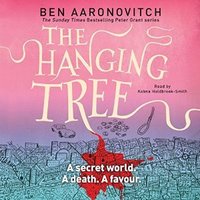
Cover of A Scanner Darkly by Philip K. Dick Cover of Broken Homes by Ben Aaronovitch
A Scanner Darkly
by Philip K. Dick
Broken Homes
by Ben Aaronovitch, read by Kobna Holdbrook-Smith

The Sci-Fi Book Club at Shared Stories is doing a great job of getting me to read things I’ve meant to get around to forever. Dick’s A Scanner Darkly is just one of those books.

I just realized that, if I want to finish this re-listen through The Rivers of London in time to read the new book when it’s released, I’d better get moving. Broken Homes is one of my favorites, so that helps incentivize me.

What did you recently finish reading?

Cover of Everyone on This Train Is a Suspect by Benjamin Stevenson Cover of Summer Knight by Jim Butcher
Everyone on This Train Is a Suspect
by Benjamin Stevenson
Summer Knight
by Jim Butcher, read by James Marsters

I love it when a sequel surpasses the original, and Stevenson succeeded there.

I (as expected) thoroughly enjoyed Summer Knight, I’d forgotten how much happened in this particular novel.

What do you think you’ll read next?

Cover of The Space Trilogy by C.S. Lewis Cover of Orconomics: A Satire by J. Zachary Pike
That Hideous Strength
by C.S. Lewis
Orconomics: A Satire
by J. Zachary Pike, read by Doug Tisdale Jr.

I’m a little behind schedule with my Lewis read for the month, but better late than never for this conclusion to the Space Trilogy–the only one I haven’t read before.

I remember wanting to pick up Orconomics when it came out in print a few years back, but I remember nothing else about it. I guess I’m about to see if I was right.

What are you reading?

LITERARY LOCALS: A Q&A About Writing in Idaho with Nathan Keys

Literary Locals logo
Nathan Keys and I tried to get this posted last year, but communication errors led to that plan going out the window. But after the Treasure Valley Book Faire a couple of weeks ago, we brushed this up, updated it, and now I’m happy to bring this to you. Hope you enjoy.


Before we get into things, why don’t you give the reader a brief introduction to you and your work.
Hello there! I’m Nathan Keys, author of the epic fantasy adventure series, The Epic of Marindel. My mission is to write captivating stories that will bring readers hope and purpose. I believe every person has a story, and every story is a part of something Greater. My faith in Christ is central to everything I do.

I have three books published as of this interview. Chosen and Redemption are Books I and II in The Epic of Marindel series. I also have a companion study guide called The Great Story of Marindel that offers the Marindel gospel allegory as a stand-alone tale, with guided questions after each chapter for those who would like to dive into the symbolism and Scripture references behind the story. Currently, I’m writing Books III and IV in the fantasy series.

You can find me on Facebook and Instagram @nathankeys23. Below are links to my website, YouTube, Goodreads, and Amazon page.

https://nathankeys.com/
https://www.youtube.com/@nathankeys23
https://www.goodreads.com/author/show/19341586.Nathan_Keys
https://www.amazon.com/stores/author/B07V5CCZWQ/allbooks?ingress=0&visitId=c113121d-7d33-402f-8bb4-e29c353973fc&ref_=pe_1724030_132998060

What brought you to Idaho in the first place? What is it about Idaho that keeps you here?
I was born and raised in the Southern California town of Rancho Cucamonga. I moved to San Diego for college, where I lived for ten years until the pandemic hit and I lost the means to afford the big city. My parents had been looking to move out of state for years, but the way the pandemic was handled in California pushed them over the edge, and they bought a property in the Treasure Valley. When they invited me to come with them, what was I going to say, no? We’ve been here for over three years now, and I have no regrets!

My favorite things about Idaho are its abundant natural beauty, the existence of four seasons, and the friendly neighborhood feel that I so rarely encountered in Southern California.

Are you tied into some sort of local author/bookish group/culture? If so, tell us about it and how it helps you as an author. If you’re not, is there a reason for it?
I’ve been part of a Christian writing group called the Kingdom Writers Association (KWA) for several years. I encountered them when I was just finishing the first draft of my first book, and they provided me with valuable information about how to publish, and connections with editors and illustrators. Though it was initially founded in San Diego, KWA has since expanded globally, including a local Boise chapter called Sacred Scribes, which I now help lead. We meet once a month to encourage one another in our writing, just like CS Lewis and JRR Tolkien did in their writing group, the Inklings.

Oh, great! Yet another writing group in the area—I keep finding new ones every time I turn around. Tell us a little about Sacred Scribes—how big is it? How active? Is it more of a mutual encouragement group, or do you critique each other and so on?
Sacred Scribes meets once per month, usually on the first Saturday. We’re pretty small for now, but slowly growing – our average attendance is between 8 and 15 people per meeting, with 65 people in our Facebook group (look this up if you, reader, are curious about joining). Our major focus is encouragement of the writer, though we also do regular writing prompts and critique circles. I’m the point-person for getting more of our published members involved in events like the Treasure Valley Book Faire!

What kind of events in the area do you attend—either to sell/promote your books or to network with authors? Are there any outside of this area that you hit regularly and wish we had something like it here?
Being relatively new to Idaho, I’m still learning about all the events that are possible to attend. I’m very pleased to see the local author/bookish community in the Treasure Valley growing so quickly. I was worried there would be fewer opportunities here than there were in San Diego, but it seems like each library in the TV is trying to put on an event at least annually. I’m also curious to discover which craft/community fairs will allow book tables. I’m sure there are more opportunities here than I’m aware of, so I’m open to suggestions!
If there are community/craft fairs that don’t allow them, I haven’t heard of any. I’m always getting tips from friends who attend more of them than I can.

What’s the breakdown of your audience—do you have a strong local base, or are your readers from other parts of the world?
I have a growing local fan base, which I’m very thankful for. Word-of-mouth is my favorite way to market! However, through my connections with the Kingdom Writers Association and as I grow my social media following, I have fans popping up all over the country. I’ve even gotten a few sales internationally. A library in the UK recently stocked my first book!

I have to imagine that hearing about that UK library had to be a great encouragement. Do you have solid plans for how to grow your social media following? I’m just curious about how authors experiment with these kinds of things. Have you tried some things previously that haven’t worked out?
For now, consistency is key. I’m not willing to allow social media to drain me, so I set realistic goals that I know I can accomplish, even if it’s less than what some other authors are doing. Right now, my goal is posting consistently twice per week. As for things that haven’t worked, I haven’t seen much luck with paid ads, though I think it may require more experimentation on my part.

Do you think there are particular challenges or advantages to being a writer in the Treasure Valley? (possibly both)
For advantages, the community-forward culture of the Treasure Valley makes it easier to connect with people through word-of-mouth. Getting into events at libraries, bookstores, etc. is also much less competitive than what I experienced in California with my first book release (2019). Here, I feel it’s much easier for indie authors to make connections and find their fan base. As for challenges, all I can think of is the lack of bigger writers’ groups and writing conferences that bring in renowned field experts. A TV writer will have to travel to take advantage of those!

You mentioned finding your fan base here. A couple of weeks ago, we were both at the same event, and I talked to someone who was so excited that their “favorite writer” had a table there—you. So you’re at least finding some fans here—has there been a strategy behind that, or is it just happening?
It’s happening by me showing up, being present, and talking to people! At every event I attend, networking is the most important objective. I don’t stress too much about sales, at least not in the short-term sense. Personal connection and brand familiarity often precede sales.

Do you bring Idaho (or some sort of Idaho-sensibility, assuming one exists) to your work? Whether or not anyone else sees it, can you look at some aspect of your writing and think, “That’s Idaho” or “I would do ____ differently if I was a Kentuckian or from Illinois?”
In my WIP (Marindel Book 3), I’ve introduced a tavern called “The Hardy Bluebird,” which is an intentional reference to Idaho’s state bird. The tavern’s entrance sign depicts a flying bluebird clutching a sage branch in its talons. The setting is more or less a ghost town (as much as a fantasy realm can delve into the wild west genre), and it’s very exploratory at the moment, but I’m enjoying the world-building so far!

One final question, is there a book (or two…or 18, if you get really carried away), that embodies Idaho/the Idaho spirit to you to recommend to my readers?
This is a question I’d like to turn on everyone reading this. I love both history and historical fiction, and I’m still getting familiar with Idaho’s story. Any recommendations?

Readers, feel free to give him some recs! I have a couple of ideas, but I’d love to hear yours.
 

Thanks for your time and participation! Hope you enjoyed it!


Literary Locals logo

One Death at a Time by Abbi Waxman: You’ll Laugh All the Way to the Morgue

(not that you actually go to a morgue in this book, I was just struggling with that headline)


Cover of One Death at a Time by Abbi WaxmanOne Death at a Time

by Abbi Waxman

DETAILS:
Publisher: Berkley
Publication Date: April 15, 2025
Format: eARC
Length: 400 pg.
Read Date: April 11-15, 2025
Buy from Bookshop.org Support Indie Bookstores

What’s One Death at a Time About?

Natasha Mason is a twenty-something still trying to figure out what to do with her life—her alcoholism led to her leaving law school, and now she’s paying bills by delivering food and doing other gig economy standbys in L.A., and making sure she makes at least one meeting a day.

At one of these meetings, a vaguely familiar-looking woman shows up—and is not the friendliest of people. She seems—well, is—more concerned about getting her court-mandated signature than in anything else. Mason volunteers to be this woman’s interim sponsor. Now this older woman had been sober before, but on the night that led to the court-mandated meetings had a blood-alcohol level that stunned a rowdy twelve-step meeting into silence. She’d also come out of a blackout next to the dead body of a former lover/decades-long antagonist and what was probably the murder weapon. For a night she couldn’t remember—it’d clearly been eventful.

The next morning, Mason shows up at the gate of her obviously well-off sponsee. Thanks to some time on the internet, Mason knows her to be Julia Mann—a former box office star, now a lawyer taking on cases for as many Davids as she can in a city of Goliaths. Oh, and in between careers, she’d been in prison due to the death of her husband—the former business partner of the dead man she’s currently suspected of killing.

This meeting didn’t go the way Mason suspected—for one, Julia Mann’s housekeeper is an amazing cook, as Mason learned. Also, the two kept butting heads—Mason wanted to talk about Julia’s sobriety, but Julia was rather fixated on the murder. And yet…something clicked between the two. In between verbal jousts,* Julia ends up hiring Mason to be her personal assistant and help with the investigation. Mason justifies this to herself as a way to stay near Julia and keep her sober. The chance to eat more of Claudia’s cooking and make more money than an app can pay doesn’t hurt.**

Before you know it, these two have got themselves involved in a separate murder investigation (another David for Juila to work for), arson, tensions around Julia’s former career in the film industry, tensions around Julia’s future career in the film industry (she wants none of it, but no one seems to care), brushes with organized crime, multiple reasons for both or either of them to ditch their sobriety, and more things that I can fit into this rambling sentence.

* The back-and-forth between these two is reason enough to try this book. Waxman will supply several others, it should be noted.
** Yes, this makes two books in as many months about an LA-based delivery driver turning amateur investigator.

The Murder Mystery(ies)

Murder mysteries surrounding the film industry tend to have a few things in common—secrets, petty grievances that get nurtured into full-blown rivalries (or worse), scandals (for an industry reputed to be filled with amoral hedonists, there really are a lot of moral scandals), and organized crime.

One Death at a Time ticks all of these boxes—and a few others that I should’ve listed above, but forgot to. This may be Waxman’s first mystery, but she clearly understands the genre and knows how to construct a classic whodunit in a contemporary setting.

You get all the twists, turns, red herrings, and layers upon layers of competing motives for multiple suspects that you need—doled out in just the right pacing with dollops of shocks and action along the way. The final reveal is satisfying, and every loose plotline is tied up. It’s a textbook example of the genre—pleasing in every way.

The Humor/Tone/Relationships

This might be a clumsy way to tackle these ideas, but it’s where I am.

Yes, Waxman is known for Rom Coms—or Rom Com-adjacent—books, so we all know she’s funny. This seemed to me to be more overtly comedic. There are jokes—many of them—not just funny situations and loveable, quirky characters doing goofy things. Don’t get me wrong, there are plenty of those (as well as non-lovable, quirky characters).

This reads like Dave Barry’s kind of crime novel, with the restraint of a Richard Osman. The verbal jousting is great, and the physical comedy is almost as good. The situations are frequently ridiculous, but never so much so that you get taken out of the moment.

The technical term that best describes Mason is “wiseass,” and one with poor impulse control. Someone who doesn’t know how to keep her trap shut, powered by Waxman’s wit is a fun character to read. Julia’s no slouch in that department either, but she’s more mature, she knows that she should pick her targets with care—and is therefore usually more effective.

The rest of Julia’s team (I will not tell you about them, so you can meet them properly) and some of the other characters the reader encounters have drier wits, largely fitting into the typical Waxman model. Oh, except this one actress…nope. You wouldn’t believe me if I tried to describe her.

Mason’s support system consists of the meetings she attends, her sponsor, and her cat. Julia has a strong team of employees and friends (the Venn diagram there has a large area of overlap)—they’re just not that effective on the sobriety front, but they make up for that with their loyalty. Julia also has a pretty strong network of former friends, employers, and employees in and around the film industry. These are loyal to their grudges against her and their own self-interest—however, they (or at least most of them) want her to succeed in her search for the killer, so they can move on with their lives and careers.

You combine all of this—with a (slowly) growing relationship of affection, trust, and appreciation between our protagonists—and you’ve got yourself a great basis for comedy with heart.

Sobriety

One thing that Waxman never made light of in all of this was the sobriety of the characters. Yes, Julia would mock Mason’s approach to being her sponsor, but that was about the characters’ personality differences—both of them took it seriously.

Not all of the characters appreciated the struggle and what the characters did to preserve it—but none of the comedy was about the drinking.

The opening meeting did get me to chuckle frequently, but that was character-based humor. The book never gets preachy at the reader, just to each other.

So, what did I think about One Death at a Time?

I had a blast with this—if you couldn’t tell. This is my fifth Waxman novel, so I went into it expecting that I would. I just wasn’t sure how much I’d enjoy it, because of the genre. But if I didn’t know who she was before I picked this up, I’d be scouring the library for her Abbi Waxman now.

It does—as it should—feel very different than her previous works. I’d say this is closer to last year’s Christa Comes Out of Her Shell than the rest, but even saying that, this is different. The stakes are (obviously) higher for these characters; there are potentially lethal consequences for failure. Which might explain the more heavy-handed approach to the comedy.

I think I’ve said everything I wanted to above—the mystery part is really well done; the characters are well-designed and well-excecuted, the relationships between them are strong and obvious—you like the people you’re supposed to like enough that you wish you sat around the room with them, watching them go back and forth while eating whatever wonderful treat/meal Claudia has prepared. Also, it’s funny. That’s a one-two-three combination that I’ll always enjoy and recommend.

This feels like a standalone, but it could easily spawn a sequel or more. If it does, I’ll be first in line. If it doesn’t…well, that’s okay, too. It works really well either way.

Basically, reader, if any of the above tickles your fancy—you need to add this to your TBR. I practically guarantee you’ll have a great time.

Disclaimer: I received this eARC from Berkley Publishing Group via NetGalley in exchange for this post, which contains my honest opinion—thanks to both for this.


5 Stars

This post contains an affiliate link. If you purchase from it, I will get a small commission at no additional cost to you. As always, the opinions expressed are my own.
Irresponsible Reader Pilcrow Icon

MUSIC MONDAY: “(Sittin’ On) The Dock of the Bay” feat. Jack Johnson

The Irresponsible Reader's Music Monday logo

Music Monday's originated at The Tattooed Book Geek's fantastic blog and has shown up hither, thither, and yon since then.

Irresponsible Reader Pilcrow Icon

REPOSTING JUST CUZ: The Ten Commandments by Kevin DeYoung: A Warm, Engaging Study of God’s Revealed Will

Well, I ran out of time to finish a post about a book I read this year about the Commandments, so…let’s dust this off.


The Ten CommandmentsThe Ten Commandments: What They Mean, Why They Matter, and Why We Should Obey Them

by Kevin DeYoung

eARC, 208 pg.
Crossway, 2018
Read: September 23, 2018

My initial thought when I saw this book was: do we need another popular-level work on The Ten Commandments? We’ve got so many already, like: Ryken’s Written in Stone, Horton’s The Law of Perfect Freedom, Packer’s Growing in Christ. We’ve got Douma’s, Watson’s and Durham’s (newly republished) on the heavier end of the spectrum, too. Why bring out a new book by DeYoung? Still, I was intrigued, so I requested a copy.

Not too surprisingly, I’m glad I did. This is typical DeYoung: a strong, affectionate, orthodox take on the Law delivered in a very accessible and affable manner. He made me think, he made me reconsider a thing or two, and he reminded me of a few things I needed reminding of.

He begins this work against the framework of the secular “anything goes” point of view, where everything certainly does not go — as much as we as a culture might rail against an external source of morality — there are things that simply cannot be said or done. Giving us a choice between humanity’s unwritten, assumed code — or God’s revealed will. DeYoung then goes on to list reasons for the study as well as the following of God’s Law.

The other important groundwork comes from the midst of his very strong chapter on the First Commandment in which he describes the role of the Law for New Covenant believers. It’s still applicable, still binding — just in a different manner. I think this could’ve been developed more — maybe in its own chapter, but what we got here was good. I do particularly appreciate his metaphor of transposition. The Law in the New Covenant is the same for believers as it was in the Old, it’s just in a different key.

Following the introduction where he lays out his framework, DeYoung turns to consider the commandments individually. This is the bulk of — and the heart of — the book, with a chapter devoted to each commandment. If the book has any value, it’ll be found here, and there’s a lot of it to be found. I briefly considered summarizing each chapter, but why steal his thunder. Also, he’s not carving out anything new here, so there’s little need. What’s new is his expression of the timeless truths, his way of explaining and applying them. If you want a quick summary of what he’ll say about each commandment read The Heidelberg Catechism questions 92-115 or the Westminster Shorter Catechism questions 39-85, and you’ll get a pretty good idea.

Instead, I’ll just comment on a few highlights and a couple of problems I had (your mileage may vary). I found his comments regarding the Fourth Commandment to be helpful, but hesitant — in his effort to not be legalistic, or overly dogmatic, he comes across as wishy-washy. I appreciated most of what he had to say about the Second Commandment, but again, he’s hesitant enough in some of his application to stumble a bit. Which is not to say that the bulk of those chapters weren’t good and helpful — they were. I think he could’ve been more consistently so.

Conversely, the chapters on the Eighth and Tenth commandments were incredibly helpful. If you ask me, these two are where the American Church and American Christians stumble more often than we realize (or care about). Publicly, Protestants are expounding so much energy on certain applications of the Sixth and Seventh commandments that one would be tempted to think that 8-10 are concerns of the past. DeYoung doesn’t let the reader think that for an instant, and if you don’t come away from these chapters with a good dose of conviction of your own sin, you probably didn’t read it too closely.

The chapter on the Third Commandment was invaluable also. It’s far too easy for Western Christians to reduce this to “don’t be a potty mouth” and far too hard for us to really get what the importance of “name of the Lord” is. DeYoung does a yeoman’s job on both fronts and does a good job expounding the meaning of this commandment.

You’ll never walk away from any of these chapters thinking that DeYoung is writing a hellfire and brimstone jeremiad against the Church, you, or anyone. He’s sharply critical of a lot of general culture, and individual inclinations, but that’s to be expected. There’s conviction and inspiration both to be found in these pages — all delivered in DeYoung’s warm, almost conversational, style — a strong blend of wit and charm with the steel in his words. I won’t get into it, but his chapter on the Third Commandment contains one of the funniest anecdotes (more in the telling than the story) I’ve read from him. Ignoring his content for a moment, his writing style is what will keep me coming back to DeYoung’s books for years to come.

I think I’ve said before, I’m not a big one for study/discussion questions in books — I like to think the engaged reader doesn’t need them and someone leading a discussion/study of a book will be clever enough to come up with their own. But, I’m obviously swimming against the tide on this because publishers keep printing them. That said, on the whole, this is a pretty good set of questions and would help someone who likes those kind of questions for their own use or for those using the book in Family Worship, Sunday School, or Bible Study.

In the end, my question, do we need another popular-level book on The Ten Commandments? Is answered yes: we need frequent — constant — reminders of the revealed will we’ve been called to obey, so we never stop striving for that perfection and never cease calling on the Spirit’s assistance. We also need to remember how great our sin and misery are so that we constantly live lives of repentance. So bring on DeYoung’s good summary. And others as well — and we need to read them, as well as the older popular-level works. And then we need to push ourselves and read some of the less-popular level ones as well.

This is a good, short set of meditations and reflections on the perfect law, the law of liberty for a contemporary audience. It’s approachable, it’s warm, it’s pointed, and it’s Gospel-centered. It’s not perfect, but it’s good. It functions well as a refresher for those who need one, and a good starting point for their own study of The Ten Commandments. I’m buying a copy (at least one) for my personal library and will be encouraging my household to read it — and anyone else who asks.

Disclaimer: I received this eARC from Crossway via NetGalley in exchange for this post — thanks to both for this.

—–

4 Stars

Page 47 of 602

Powered by WordPress & Theme by Anders Norén