Guest Post: Behind the Scenes and Advice for Writers by Erin Rhew

I’d like to welcome Erin Rhew to the blog today to promote her fantasy trilogy, The Fulfillment Series (and other things), as part of The Rhew 2 Rhew blog tour. The Fulfillment Series looks like a good investment of your time, I’ll add, be sure to check it out. After you read her post, of course — and enter the drawing.

Also, this was supposed to post this on Monday, and I messed up the posting. I’d like to publicly apologize to Erin for the mess-up. Irresponsible is supposed to by a name, a philosophy of reading, not a description of the guy behind the blog.

—

Thank you to H.C. for hosting me today, and thank you to his readers for joining us!! <waves> Today, I’m here to talk about the writing and publication process. I think I have a bit of a unique perspective because I’m a published author, AND I work for a publishing company. PS. Stay tuned to find out about a Rafflecopter giveaway for a $50 Amazon gift card!!

3707196_orig

People always ask me when I knew I wanted to be a writer, but I didn’t really have that “ah-ha” moment. Since I was four and read my first book, I’ve been fascinated with the written word. At four, I also wrote my first poem. My grandparents run a car dealership, and I wrote a little rhyming poem about the cars on their lot. When I received serious accolades for it, the writer in me bloomed. I wrote in middle school and had a whole gaggle of girls who waited not-so-patiently for me to complete a new chapter. In high school, I continued writing and also took up acting, and in college, I continued to do both. After graduation, I ran a theater company, where I both acted and wrote plays. I did that for many, many years, and my novel writing took a back seat. But I eventually returned to my first love and started a novel. In fact, I’m STILL working on that novel. LOL! I’ve finished it, rewritten it, and I’m in the process of rewriting it again. But while that book marinated, another book emerged–three, in fact. And The Fulfillment Series was born. I assembled a group of friends, called the Dream Team, to help keep me on task (ADD and all).

6762080_origFrom right to left: Danielle Craver, Dawn Ward, Ginny Hunsberger, and Kim Sharp–I’m kneeling)

I wrote the trilogy in three months (yep!) with the help of my friend, Kim, who required a chapter a day from me. But editing is a much longer, more arduous process, especially if you’re a grammar nerd like I am. Once I’d self-edited, I sent it to beta readers and critique partners, and then I edited it again, I sent out query letters. Rejections came in, lots of them, with a few requests for partials and fulls sprinkled in. And then one day, as I stood in the pet store, it came…the offer! I *may* have jumped up and down and squealed right there in the middle of that pet store. LOL!

And the rest, as they say, is history. All three books of the trilogy have been published, and I’m pleased as punch about it. Now I have to return to my original book…apparently to be my magnum opus!

89930301 My first book. Wonderful cover created by Anita at Race-Point!

Publication

I think working at a publication company has a great deal for my writing. I’ve learned a lot about what to do and what not to do just by reading other people’s work and working with the fabulous group of editors we have on staff. The lovely Heather Powell Van Fleet taught me a whole lot about “showing versus telling” and “actions before words.” And I learned a lot from my husband’s editor, Anya Kagan, about the big picture and “talking heads.” For those of you who don’t have the ability to benefit from working in a publishing company, I say this: Talk to other writers and editors. Immerse yourself in the world of writing. Follow Twitter contests like #PitMad and see what storylines are being overdone (you’d be surprised how many are alike).

Here is some of my advice:

1) Edit, edit, edit. (As I write this, I know my post will have an error–LOL!) I’m a HUGE grammar nerd and will spot mistakes in your writing right away. You only get one chance to make a good first impression. If you’re not good with grammar, find a friend who is or hire an editor (but make sure they’re legit). You won’t be sorry.

2) Be friendly and stay “in the know.” Reach out to readers, bloggers, agents, editors, and other authors on social media platforms. Stay informed about what’s going on in the writing world.

3) Decide on your path ahead of time. Think about the publishing options available to you and pursue the one that works best for you and your work. Please don’t submit to small presses and turn down a contract because “you wanted an agent.” If you want an agent, go after agents. Self-publishing, small presses, and traditional publication are all equally valid means of getting your book into the world. But be aware of the potential downfalls of each path: use sound editors for self-publishing, don’t use vanity presses or “fake” agents, etc.

4) Always, always, always better yourself. Even the greatest writers still have stuff to learn. We can all better ourselves and our craft. Be open to suggestions and critiques. Don’t make the mistake of thinking your writing is perfect like it is; you can always improve.

Thanks for hosting me, H.C.! Now I’d like to share a little bit about my books (and my husband’s books) with you and your readers! Hint: Giveaway link coming soon!

For those that don’t know, I’m a young adult fantasy author who is married to adult thriller author, Deek Rhew. Together, we are “the Rhews,” and our street team is the Rhewination!

8659935_origDeek and Erin– Join the Rhewination! 😉

So, here’s a little bit more about me, Deek, and The Fulfillment Series:

The Prophecy (Fulfillment Series Book 1)

89930301

Title: The Prophecy

Author: Erin Rhew

Publisher: BookFish Books

Cover Design: Anita at Race-Point

Available Now! Amazon Buy Link

Synopsis:

Growing up on a small farm in the kingdom of Vanguard, seventeen-year-old Layla Givens lives a deceptively tranquil existence. But her carefully constructed life quickly falls apart when she’s abducted by a religious zealot who proclaims her The Fulfillment of an ancient peace prophecy and whisks her away to marry her greatest enemy.

Wilhelm, Prince of the Ethereals, is reluctant to meet his new bride. He’s grown up believing Vanguards are evil, an enemy to fight and fear…not love. Can he set aside his prejudices and work alongside Layla to bring lasting peace after centuries of war?

Nash, a loner who has never fit in, carries a huge secret, one big enough to destroy both kingdoms. When he accidently meets Layla, he’s no longer content to live in the shadows, but he must resist his growing attraction–for her safety and for the longevity of the two kingdoms.

When Nash’s secret is revealed, a firestorm sweeps through both realms, with Layla at the center. Now she must choose between duty and desire while the fate of two nations hangs in the balance.

The Outlanders (Fulfillment Series Book 2)

3369516

Title: The Outlanders

Author: Erin Rhew

Publisher: BookFish Books

Cover Design: Anita at Race-Point

Available Now! Amazon Buy Link

The Fulfillment (Fulfillment Series Book 3)

Title: The Fulfillment

Author: Erin Rhew

Publisher: BookFish Books

Cover Design: Anita at Race-Point

Available Now! Amazon Buy Link

About Erin Rhew

9054840

Erin Rhew is an editor, a running coach, and the author of The Fulfillment Series. Since she picked up Morris the Moose Goes to School at age four, she has been infatuated with the written word. She went on to work as a grammar and writing tutor in college and is still teased by her family and friends for being a member of the “Grammar Police.”

A Southern girl by blood and birth, Erin now lives in a rainy pocket of the Pacific Northwest with the amazingly talented (and totally handsome) writer Deek Rhew and their “overly fluffy,” patient-as-a-saint writing assistant, a tabby cat named Trinity. She and Deek enjoy reading aloud to one another, running, lifting, boxing, eating chocolate, and writing side-by- side.

Connect with Erin Online!

For the latest and greatest, visit her web page:

www.ErinRhewBooks.com


About Deek Rhew

1411450442

Deek lives in a rainy pocket in the Pacific Northwest with the stunning YA author bride, Erin Rhew, and their writing assistant, a fat tabby named Trinity. They enjoy lingering in the mornings, and often late into the night, caught up Erin’s fantastic fantasy worlds of noble princes and knights and entwined in Deek’s dark underworld of the FBI and drug lords.

He and Erin love to share books by reading aloud to one another. In addition, they enjoy spending time with friends, running, boxing, lifting weights, and exploring the little town–with antique shops and bakeries–they call home.

Connect with Deek!


For the latest and greatest, visit his web page:
www.DeekRhewBooks.com

Rafflecopter Giveaway
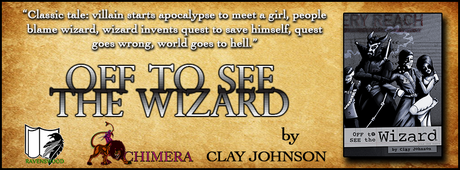
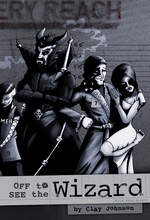
Off to See the Wizard by Clay Johnson


Here we are at the end of our day-long Book Tour stop for Off to See the Wizard (see Parts One, Two, and Three). Hope you enjoyed it.
—

Off to See the WizardOff to See the Wizard

by Clay Johnson

Kindle Edition, 373 pg.

Ravenswood Publishing, 2016
Read: April 18 – 22, 2016

From the beginning? Are you certain? The beginning is pretty dull, you know. All of the violence comes later. The beginning is just sex and blood and guts, and— yes, right, I see it now; fair point.

Let’s see… it began with that dwarf. At least, I think he was a dwarf. He may have been a child. I don’t honestly pay much attention to the jesters they hire. Mostly, they are little more than jingling bells in the background. I know he was very short. Wait! He had a beard. One of those awful, disgusting sort that grow scraggly and in patches. Looked like he’d glued stringy chunks of carpet to his cheeks; do you know the sort?

Yes, had to have been a dwarf.

A tale of an attempted apocalypse, a quest to thwart it, love (or something like it) in bloom, love (or something like it) in trouble, and the aftermath of it all. It may not sound like fodder for comedy, but in Clay Johnson’s hands, it is.

A royal feast ends abruptly, and in a disturbing way (although the way it’s narrated, its pretty humorous). And then soon, horrible things (mostly involving blood in places and amounts no one wants) start happening all over. Naturally, citizens, royalty and everyone in between demands answers — so they turn to a wizard to tell them what’s going on and how to stop it. The wizard has no clue (this will be a recurring theme), but sets off on a quest to find out. He takes his girlfriend, a swordsman, and a redshirt (the wizard has a strong sense of self-preservation). He soon regrets all of these choices — his girlfriend spends most of the time upset with him, the redshirt is a mopey kid who writes horrible poems (and is never used as cannon fodder), the swordsman deserts them. Thankfully, a better swordsman, and a drunken elf queen in training join up after that. Really, very little goes well on the quest.

Meanwhile, the Demon Lord who started the whole thing, really didn’t mean to — he was actually trying to do something else, and it went horribly wrong (I’ll leave it to you to learn what) — and he spends most of the book trying to ameliorate the situation and get his original purpose back on track. Very little goes well for him, either.

In the end, things are a giant mess, so a Royal Inquisitor is sent out to investigate it afterwards, and the book is a edited together compilation of transcripts of his interviews with witnesses, the quest party, the villains of the piece, and others. The mutually contradictory takes on the events given by the various interviewees are hilarious — each person has a strong voice, you pretty much get to the point where you skip the text identifying who’s speaking, you can tell who it is just from their language. It doesn’t take long for the reader to suss out how to take the competing versions and get to a pretty good idea of what really happened.

I don’t remember the details, and am short on time, so I can’t look for them. But somewhere, C. S. Lewis talks about why it’s appropriate (well, at least not totally inappropriate) to laugh at bawdy jokes if they’re cleverly told, involve some creative word play, and so on — not at the vulgarity of them. Given that cover by the noted apologist, I can freely admit that I laughed plenty at this. Johnson’s characters, their dialogue, and his creative use of words and imagery are wielded so well, that you just could help but laugh (even a few times when I knew Lewis wouldn’t approve of it). This is what Franco, McBride and the rest were going for in the movie Your Highness a couple of years ago — a funny fantasy. The Princess Bride for those who appreciate rated-R comedies.

For example, there’s a moment that got me laughing out loud — a lot — where someone inadvertently invents/coins one of the seven words you can’t couldn’t say on TV. The effect that word has on the most hardened criminals in the kingdoms was fantastic — it’s a moment that’ll stick with me for awhile.

From time to time the narrative started to drag a little bit, and I’d start to wonder if anything was actually going to happen. But within a page, I’d chuckle at something again and forget about the slow plot.

In the end, it was a little too off-color for me, but Johnson pulled it off in such a way that I was able to put that aside and enjoy his story and his story-telling. Really, Off to See the Wizard is the funniest thing I’ve read this year — and I can’t imagine much topping it.

Disclaimer: I received this book from the nice folks at Ravenswood Publishing in exchange for an honest review.

—–

4 Stars

Guest Post: The How by Clay Johnson


Welcome to Part Three of our participation in the Off to See the Wizard Book Tour (see Parts One and Two) — a review should be along shortly. We’ve got another Guest Post from the author, this time about the genesis of the book.

—
When I initially sat down to write one of these origins of the book, where did the story come from kind of posts, I went through three or four false starts. I kept focusing on the why, until I realized how boring that is. I mean, no matter how special I might have thought it was, the little thought that spawned the thing, the reality is very different, and I’m pretty sure that for every parody or humor piece that goes to any effort to skewer elements of its particular genre, the origin is the same: a healthy mix of love for the conventions of that genre, and an irritation at those same conventions. Either that, or a love for half the conventions and an irritation at the others. In both cases, writing about how those feelings led to writing the story eventually devolves into nothing more than a complaint session.

The more interesting, when I really got into it, was the how. How did I decide to tell the story, and why tell it that way. Sure, the story started as a vague idea about specific things I wanted to both poke fun at and pay homage to, but it didn’t truly come into being until I realized how I wanted to tell it. And that comes down to farce and writers workshops.

But first: there is a book by Tim O’Brien called Tomcat in Love (don’t worry, it’ll work its way back around). It belongs to that peculiar genre subsection of General Fiction/literary fiction where a middle aged white male college professor goes through a period of crisis and/or ennui (of the sort that can only be described as the epitome of first world problems) and the audience is put in the position of sympathizing with this character. He’s recently divorced, is in a romantic relationship with a student, can’t get the girl of his dreams to pay attention to him, and he’s taking his weekends to plot comic revenge against the man who stole his wife.

I know, I know, my novel is Fantasy and quest based. Like I said, I’ll work back around.

In that long circuitous route our brains sometimes take this way and that and over the hill to Grandma’s house in order to make connections (as I was taking a walk and letting Galbraith’s voice run through my head and explain why he started the whole quest), I remembered a workshop I’d been in one time where we did a set of questions in order to pinpoint our own writing style. Or maybe more accurately our own writing aesthetic. It was one of those exercises that didn’t land with me in any meaningful way at the time. Writers workshops seem to walk a very fine line between very useful and the type of obnoxious self help infomercial that airs at six AM and has bad piano music and graphics templates composited over stick footage of clouds at sunrise. In this case the exercise wasn’t particularly useful, in that it didn’t change my writing style, but it was interesting. According to the questionnaire, I like stories with characters that are their own worst enemy, stories with unreliable narrators, and I like farce. The third one I knew, but I hadn’t really connected to the other two.

Because really, one of the keys in a lot of farcical plots is that while the characters are often each acting in their own self interest, they are rarely acting in a way that is actually beneficial to themselves. It’s similar to the way that characters inn a romantic comedy could solve everything by simply having a conversation.

Now, in farces, you have a broad cast of characters all zipping in this door and out that window as the cook tries to steal a prize turkey, and the chauffeur tries to hide the damage to the car, while the visiting gentleman tries to win the affection sir who’s-his-what’s-its daughter. And on and on. One of my favorite elements of a good farce is that you can see some developments coming a mile a way and look forward to their arrival, and the others catch you completely by surprise. All because the individual characters have their own plots.

Also, because they are often all idiots.

Now, back to Tomcat in Love, for a moment. The narrator is an idiot. But you don’t know that at first. You also don’t know that he’s a degenerate and a coward. Tim O’Brien does an amazing job of making you sympathize with the character and like him and think he got the short end of the stick. You root for him and cheer him on, until about two-thirds of the way through. Then, through a series of small clues you start to get an inkling that the narrator may have been telling you a very different version of events.

And then he finally hits you with the true story behind the flashbacks the narrator has been alluding to the entire time. By the end of the book it’s an entirely different story. And it’s done with a staggering amount of skill.

Now, on to Wodehouse’s Jeeves and Wooster…

Part of the reason that you don’t necessarily get the unreliable narrator vibe from most of the characters in farces is because they are so often either third person stories, or as in the case of Bertie Wooster, single narrator stories. But in a lot of ways, Bertie Wooster is quite an unreliable narrator. Not in a malevolent way, of course, but in the way that someone who is an idiot doesn’t realize he’s an idiot would be. And through his misreading of situations, you start to get an inkling of the way that the other characters in Wodehouse’s farces might view themselves.

Roundabout, I started to think about how each character might describe their part of an epic quest, and that led to questions about why such a character might be included in the first place, and the whole thing snowballed into a much larger skewering that I’d initially imagined. But my favorite part was the way they all had not just differing agendas, but differing realities. I can see that now, and say it like I meant it all along, but at the time, I was only really shooting for a Roshamon style mesh of conflicting testimonies. I didn’t think the narrators were going to be in any way unreliable. It started out as a farce. That much was always true, but at first the characters shot straight with the audience. But bit by bit, and this is what made me think of Tomcat in Love, they revealed themselves to be much less honest than I thought they were.

It’s a lot like listening to someone with a color deficiency describe a circus. No matter how wholly they believe that the tent was purple, it’s still not true. I love that added later to a story. Even if it’s done in a comedic and over the top fashion.

Guest Post: The Machine Keeps Feeding Me by Clay Johnson


Welcome to Part Two of our participation in the Off to See the Wizard Book Tour (see Part One), a couple more posts will be up in a while. This is a Guest Post by Clay Johnson, the novel’s author, about his process:

—
I have to hear the words in my head before I start writing, or I’m pretty much hosed. I used to plan out the whole story, or at least try to. I spent a lot of time thinking about it, picturing the action and the plot points, really getting into the thing. I did a lot of imagining while listening to music. I figured if I could see what I wanted to write, then I was golden. Unfortunately, when it came time to actually sit down and do it, I’d hit a dry spot. It wasn’t writer’s block, though; it was more like I was incredibly bored. What I pictured so vividly in my head just wasn’t coming out anywhere nearly so thrilling, and in the few instances that it did I still wasn’t particularly captivated by the process. I kept trying though, and I kept ending up with a bunch of barely started or, at best, half-finished manuscripts.

One day, somewhere around senior year, of high school, instead of an idea, I had just a line. It wasn’t a particularly good line. It was something like: Bill woke up to find death staring down at him and asking if they had any nachos. But I liked what the line made me think of, and I was bored in class, so instead of trying to plan out what that story might be I just went with it. The result was an awesome mess. But it was an “awesome” mess. It was full of great little moments, and a lot of threads that led nowhere. I couldn’t use the story for anything, but I felt invigorated the whole way through. In working on that story I finally figured out my problem. If I knew where the story was going, I didn’t care. I’d already thought that part out; I just wanted to move on to the next story. Somewhere in the transition from over-planning to not planning, I’d found my voice.

I started riffing on just a line, or a vague idea built around a specific image. But the trick was that I had to be able to hear at least the opening line in my head. I had to be able to hear the voice the character would use. As long as I could tap into that, then I could continue the story. The rest seems to take place beneath the surface.

It feels like there is some constantly running story machine cranking away somewhere in the basement of my mind, and while I’m busy doing other things, it’s making connections and drawing paths between two unplanned plot points. Those are the moments I love the most when I write, those moments where two bits that I wrote on a whim meet up and fit together so well that I can’t believe they weren’t planned. Writing this way makes it harder in the revision process, because I end up with a lot of gems I want to keep and can’t, and there’s also a lot of connections that still have to be made after the fact, but almost always less of them than I would expect. As long as I can tap into the sound of the story, the way the words flow and the beat of the thing, the machine keeps feeding me.

Off to See the Wizard


Welcome to Part One of our participation in the Off to See the Wizard Book Tour — we’ve got a couple of Guest Posts from the author, Clay Johnson, and a review coming up in a bit.

Let me tell you a little about the book (well, let me steal some text from the publisher to talk about the book)

TITLE: Off to See the Wizard
RELEASE DATE: March 20, 2016
AUTHOR: Clay Johnson
KEYWORDS: fantasy, mystery, magic, wizards, fairies, ogres, elves
CATEGORIES: Epic/High Fantasy/Adventure
SYNOPSIS: At the end of most heroic quests, after a plucky band of heroes has averted the apocalypse, all is well, and everyone lives happily ever after… (until the next book in the series.)

Now, for the first time, readers get an in depth look into what really happens after the quest. This is the collected case file of the Grand Inquisitor’s investigation into the Misery Reach debacle. Read first hand as the participants try to explain their actions and make their case. Did the Demon Lord Krevassius really try to end the world just to impress a girl? Would everyone be better off if the Wizard Galbraith hadn’t invented a quest in order to stave off criticism? And what about an elf queen peeing on a Minotaur? A swordsman’s losing battle with a young raccoon? And the transvestite assassin with a heart of gold?

ONE LINER: Classic tale: villain starts apocalypse to meet a girl, people blame wizard, wizard invents quest to save himself, quest goes wrong, world goes to hell.

PAGE COUNT: 373
ISBN: 978-0692638170
IMPRINT: Chimera

Book Page: http://ravenswoodpublishing.com/bookpages/offtoseethewizard.html

AUTHOR BIO: Clay Johnson received an MFA from an old man running a forged documents booth under the 8th street bridge. When he’s not out saving the world as an international super spy and master of kung fu, he makes graphics and animation for a TV station. Clay lives with his wife and daughter in New Hampshire.

Author Link: http://www.ravenswoodpublishing.com/authors4.html#

April 30 – Independent Bookstore Day

You like books, right? Otherwise, why are you here? You like bookstores, too, right? Nothing against Barnes & Noble or any of the dozens of great online booksellers — but there’s nothing like a good Independent Bookstore. Staff who know their wares; possibly get to know your tastes; care about books, writing, etc.

(and better for the local economy than chains, too, but that’s out of my wheelhouse to discuss)

Basically, they’re great resources, community centers, and places to spend your money. To celebrate/promote them, 400 Indie Bookstores around the country are celebrating Independent Bookstore Day this Saturday. Go, check a local store out — see the exclusive items just for the day. If you’re in Southwest Idaho, Rediscovered Books in Boise is the place to go (there are a couple of other decent shops in the area, but not as good, IMHO).

Guest Post – 5 Must-Read Books for Harry Potter Fans

As part of Reader’s Legacy’s Rowling celebration, they’ve provided me with a few Guest Posts to draw attention to their Sale (through 4/30!) and a Grant Program created in order to give away 1 million physical books in support of literacy programs — be sure to check those out!
—

Harry Potter is one of the most popular book series ever written!

Its whimsical characters and magical adventures have captured the hearts of millions. If you’re a Potter Maniac, you probably think that no story can compare those of the mystifying Hogwarts and the boy with the lightning bolt scar on his forehead. But have you read these spellbinding masterpieces?

***Attention Harry Potter Lovers: In honor of J.K. Rowling being named the Top Followed Author on Reader’s Legacy in 2015 we’re holding a 1 week sale on ALL of her books. From April 25th-30th, 2016 any Rowling book is 20% off AND double the LitCoins will be loaded into your account just for purchasing. Click the link to check out this limited time offer! ReadersLegacy.com/JKRowling***
 
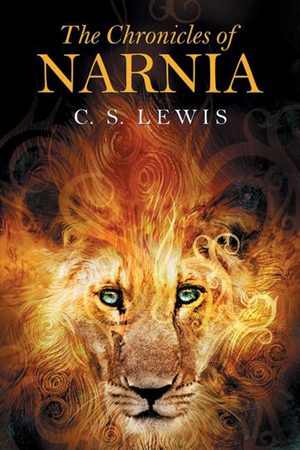
1. The Chronicles of Narnia by C.S. Lewis – http://bit.ly/1NygYMp

Like Harry Potter, this series comes in 7 installments and features a secret world full of wonders, its magical inhabitants, and the child-heroes who must save it from destruction.

 
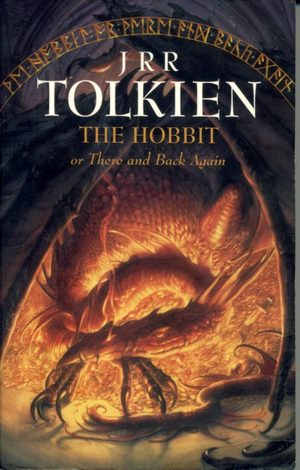
2. The Hobbit by J.R.R. Tolkien – http://bit.ly/1VeZwof

A prequel to the famed “Lord of the Rings” trilogy, this delightful classic takes readers far from reality as it follows a hobbit named Bilbo Baggins on an unexpected and perilous quest to help his friends reclaim their home, which has been taken over by a gold-loving dragon.

 
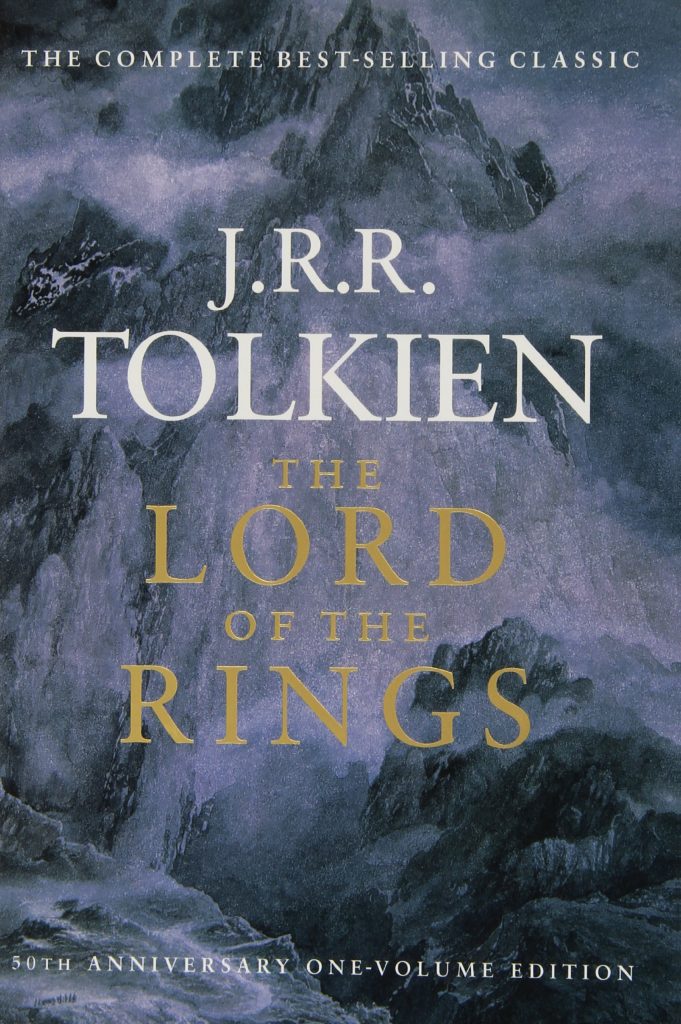
3. The Lord of the Rings by J.R.R. Tolkien – http://bit.ly/1qCCSJj

Told in 3 parts, this is the story of Bilbo Baggins’s nephew Frodo who, with the help of some unlikely allies, must travel to the ends of the earth to destroy an ancient ring, before its evil power brings his world to ruin.

 
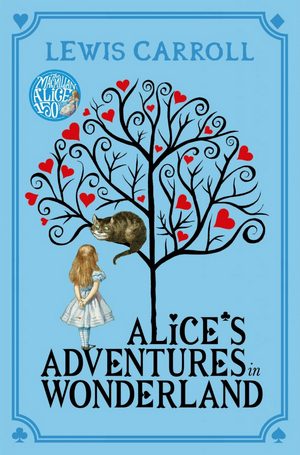
4. Alice’s Adventures In Wonderland by Lewis Carroll – http://bit.ly/1YDW3NQ

This endearing story tells of an imaginative young girl who falls down a rabbit hole and finds herself in a world full of whimsical (and more-than-slightly backwards) characters, where nothing is practical and anything is possible. Alice and her topsy-turvy friends return in the sequel, Through the Looking Glass (http://bit.ly/1rcoVmm).

 
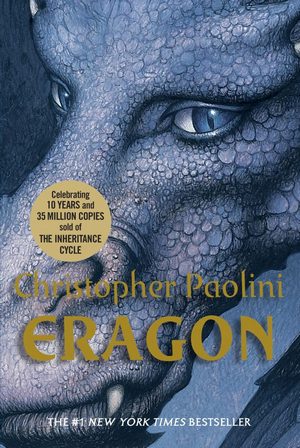
5. The Inheritance Series (Eragon) by Christopher Paolini – http://bit.ly/1WbUnfs

4 fantastic novels tell what happens when a farm boy named Eragon finds a mysterious dragon egg, it hatches, and his life is eternally changed as he becomes the last known Dragon Rider…and the primary target of a rising evil empire.

 
These are just some of the countless wonderful fantasy novels out there. By expanding your literary horizons you will gain a deeper love of reading, and acquire a tasteful appreciation for other authors/genres – even ones that may not be your favorite. Check out these books, or one of your own finding, and tell us what you think!

As an added perk of Reader’s Legacy’s Rowling celebration, we will be holding a special 20% off sale for each of her novels from April 25th to April 30th – ReadersLegacy.com/JKRowling. 

The sale not only celebrates J.K. Rowling, but was also brings attention for a special grant program we have created in order to give away 1 million physical books in support of literacy programs! Spreading a love of books, and ending illiteracy around the world is 100% possible, and with the help of reader’s on the site, we believe will be one step closer to achieving that goal! Get in on this sale HERE.

United States of Books – Fear and Loathing in Las Vegas (Audiobook) by Hunter S. Thompson, Ron McLarty

I’m a long-time fan of the Narrator, Ron McLarty, but didn’t know he did audiobooks — I need to go track some down, probably not this one, though.
—

Fear and Loathing in Las Vegas Fear and Loathing in Las Vegas

by Hunter S. Thompson, Ron McLarty
(Narrator)

Author: Wattle at Whimsical Nature

2 Stars

Synopsis: In Las Vegas to cover a motorcycle race, Raoul Duke (Thompson) and his attorney Dr. Gonzo (inspired by a friend of Thompson) are quickly diverted to search for the American dream. Their quest is fueled by nearly every drug imaginable and quickly becomes a surreal experience that blurs the line between reality and fantasy. But there is more to this hilarious tale than reckless behavior, for underneath the hallucinogenic facade is a stinging criticism of American greed and consumerism.

Review: I’ve been to Las Vegas exactly once, I thought it was a bit odd, a bit dirty and not a place I would like to spend any considerable amount of time in.

I felt similar things toward this book. I’ve tried to read it before in paperback, and I put it down after five pages or so. I have seen the film and hated it; so when I saw this on my list for review I was a little worried.

Rightly so, it turns out.

I opted to listen to the audiobook in the hope that I would find it more engaging than if it were text. Ron McLarty did a wonderful job with the narration, I really liked listening to him, but Fear and Loathing in Las Vegas was such a tedious story. The 6 hours I spent listening to it felt like 6 years.

This story is meant to be hilarious and surreal. I think I laughed once, and it was more of a derisive snort than actual laughter. I’m still not entirely sure what the point of the book was, there was such excess and stupidity and vastly irresponsible behavior.

If it was trying to teach me a lesson, I failed to see it (unless that lesson was – don’t do drugs). The characters were all unlikable; the story felt like it was just a rambling bunch of sentences thrown together with little direction. The content was definitely not for me (I don’t even drink, so the characters desire to be constantly wasted was beyond me), I felt the casualness of their drug taking and ridiculous behavior in general was more worrying than amusing.

I gave it two stars, 1.5 for the narration (which was really very good) and 0.5 for the work itself – it was much too far out of my comfort zone and just a bit too strange for me to get into. A pity, because I think if it had been written in a different way, it would have been a much more engaging work.

Saturday Miscellany – 4/23/16

Odds ‘n ends over the week about books and reading that caught my eye. You’ve probably seen some/most/all of them, but just in case:

    This Week’s New Releases I’m Excited About and/or You’ll Probably See Here Soon:

  • The Drafter by Kim Harrison is in Paperback — Harrison’s best, if you haven’t read it yet.
  • Dead is Best by Jo Perry — Charlie & Rose are back in this sequel
  • Scarlett Epstein Hates It Here by Anna Brewslaw
  • Almost Infamous by Matt Carter — a superpowered teen becomes a super villain to avoid the paperwork involved in becoming a super-hero.

Lastly, I’d like to say hi and welcome to Bijoux Alisoa for following the blog this week.

Guest Post: This Changes Everything: Capitalism vs. The Climate by Naomi Klein

Marjorie Thelen, an author I talked about last month asked if I’d be interested in guest reviews, and sent this one along — which is great, because I’ve just been too busy this week to come up with a post for today. Hope you enjoy it — and be sure to stop by her page and look at her books, would you? Thanks, Marjorie!

Oh yeah, probably obvious, but the opinions expressed in this post are all Marjorie’s, and do not necessarily reflect mine.

—

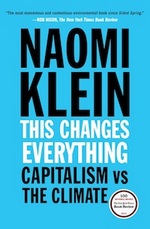
This Changes EverythingThis Changes Everything: Capitalism vs. The Climate

by Naomi Klein

Paperback, 532 pg.
Simon & Schuster, 2015


If you think you are not responsible for combatting global warming, think again. You better read this book. It has “radicalized” me into becoming an environmental activist.

With notes and acknowledgements this book is 532 pages (paperback) and jammed packed with information, facts, and opinion. Naomi Klein makes the compelling case that unfettered capitalism as a way of life is destroying the environment and is a big contributor to global warming. The faster we-the-people regulate large corporations, particularly the extractive industries like oil and mining, the better chance we have of reversing climate change. She outlines case after case after case of the harm the oil industry has done to the environment. Extreme extraction like fracking is especially harmful to land, water, and people. If you haven’t heard of the earthquakes in Oklahoma caused by fracking, you are living in a vacuum.

Our church book study group read the book, it is on the recommended reading list for the Episcopal Diocese of Eastern Oregon, and it has top reviews from a number of organizations and individuals. I had to make a tremendous effort to read the book, because in the first two sections, Klein paints a pretty dismal picture. Her writing is dense with fact and opinion. She is often repetitive but she gets her points across with facts. In part one she outlines how free market fundamentalism helped overheat the planet in a chapter by that name. She gives extensive coverage to the climate deniers, to scientists who think creating clouds will cool the planet, to the environmental groups she calls Big Green, some of whom, as it turns out, are in bed with Big Oil. In chapter seven she tells us that there are no messiahs, that the green billionaires won’t save us. She beats up on Richard Branson, the airline magnate, at length and points out that even though he talks a good green game, he and other green billionaires don’t follow through on their promises.

Klein gets more hopeful in part three with the chapter on the new climate warriors, who are ordinary citizens blockading the advance of the extractive industries. She sees hope in the Blockadia movement and gives examples of the development of the movement, like the protest to stop the Keystone XL pipeline. She says that extraction and refining has always required sacrifice zones and usually it is the underrepresented and poor who pay the price. “Through various feats of denialism and racism, it was possible for privileged people in North America and Europe to mentally cordon off these unlucky places as hinterlands, wastelands, nowheres . . . . the people reaping the bulk of the benefits of extractivism pretend not to see the costs of that comfort so long as the sacrifice zones are kept safely out of view.” (p. 311) Throughout the book she does not mince words.

She applauds the effort of Indigenous peoples to prevent tar sand development, open pit mines, fracking, and pipelines from destroying their lands and livelihoods. White people are glad to see this push back from the Indigenous people, but they can’t think that Indigenous people can carry on the fight by themselves. Everyone has to join in. Ironically, we now need the Indigenous on “our” side, whereas their concerns and battles were invisible to us before.

Klein advocates much more regulation of the extractive industries, read here Big Oil, Big Coal, Big Copper, think the development of the Pebble Mine in Briscoe Bay in Alaska. I don’t see that in today’s political climate more government regulation is in the cards, but I’d be happy if someone proves me wrong.

And when we keep oil in the ground we affect the love affair that American have with their trucks and SUVs. When are we going to stop buying them and go to more fuel-efficient vehicles? It would also affect plastics and related industries. When will the American consumer stop buying products that are not environmentally friendly? The consumer price index is a huge indicator of the health of our economy and what happens if and when Americans stop consuming so much? There are far-reaching implications of what Klein proposes in combatting global warming, and time is of the essence.

The divestment movement is another way to combat contributors to climate change. Institutions, colleges, organizations can divest in the stock of these companies that they hold. This is making headlines now. International laws and moratoriums can prevent and rollback expansion of carbon polluters. (p. 353). Some of the groups involved in the new wave of anti-fossil fuel activism are Food & Water Watch, 350.org, Greenpeace, Rainforest Action Network and Friends of the Earth. “It is this corroded state of our political systems that is fast turning Blockadia into a grassroots pro-democracy movement.” (p. 361) Needless to say, Klein is not kind to political systems controlled by big industry.

Klein says that filling out surveys, signing petitions, and giving money isn’t enough. We have to get out on the front lines and demonstrate, let our voices be heard. She says if you think that someone else is going to fight to combat climate change and things will turn out fine, you are wrong. (I was in this group.) We-the-people are responsible and have to make our voices heard. In our book study group, we asked ourselves what can we do, a small group in a small, rural town. We decided to start by showing the DVD documentary of This Changes Everything to raise awareness. I have ordered the DVD, and we will have a showing and discussion of it at our Senior Center and invite the public. Many people are simply not aware of the direness of the global warming situation. Through education we might create more activists.

“The task is to articulate not just an alternative set of policy proposals but an alternative worldview to rival the one at the heart of the ecological crisis — embedded in interdependence rather than hyper-individualism, reciprocity rather than dominance, and cooperation rather than hierarchy. This is required not only to create a political context to dramatically lower emissions, but also to help us cope with the disasters we can no longer avoid.” (p. 462)

If you are concerned about the future for your children, grandchildren and great-grandchildren and planet Earth, you must read this book and take up the cause of combatting climate change.

Page 537 of 632

Powered by WordPress & Theme by Anders Norén