Opening Lines – If I Fall, If I Die

We all know we’re not supposed to judge a book by its cover (yet, publishing companies spend big bucks on cover design/art). But, the opening sentence(s)/paragraph(s) are fair game. So, when I stumble on a good opening (or remember one and pull it off the shelves), I’ll throw it up here. Dare you not to read the rest of the book

The boy stepped Outside, and he did not die.

He was not riddled with arrows, his hair did not spring into flame, and his breath did not crush his lungs like spent grocery bags. His eyeballs did not sizzle in their sockets, and his heart’s pistons did not seize. No barbarian lopped his head into a blood-soggy wicker basket, and no glinting ninja stars were zinged into his throat.

Actually, incredibly: nothing happened–no immolation, no blood-bath, no spontaneous asphyxiation, no tide of shivery terror crashing upon the shore of his heart–not even a trace of his mother’s Black Lagoon in his breath.

Somehow Will was calm.

from If I Fall, If I Die by Michael Christie

Saturday Miscellany – 10/17/15

Odds ‘n ends over the week about books and reading that caught my eye. You’ve probably seen some/most/all of them, but just in case:

  • Flannery O’Connor: A Reading Primer — Even if you don’t need the list, if you’ve read her, you’ll appreciate what Van Young says. If you don’t know O’Connor — change that — you’ll love her.
  • How JK Rowling was revealed as the true author behind the Robert Galbraith novels — It’s a little light on the details, on the how, but I liked reading about why she adopted the name. I love this line: “the Robert Galbraith novels have distinguished Rowling as a master of plot, pacing and characterisation. She will not be remembered among the literary greats, but as the most addictively compelling writer of a generation.”
  • You only hurt the one you love — I almost did a full post reacting to this post from Kim Harrison, but couldn’t find the time. This is depressing and shocking in what it says about the publishing world today (yet, not at all counterintuitive) — for someone with Harrison’s pedigree to be this close to being finished after one book? I’m having a hard time wrapping my brain around that. Also, because of The Drafter? Which I still say is her best work. I don’t get it.
  • What do Goodreads ratings say about sales? — fantasy author Mark Lawrence crunches some numbers. (hat tip:Harry Connolly)
  • Can you pronounce the names of these literary characters? — I missed two, one of which I blame on an English professor (graduate level class, no less), the other was dumb on my part. Not going to tell you which two. How did you do?

    This Week’s New Releases featured a bunch of installments in series I’ve never heard of/read and a few things that just don’t catch my eye, with one exception:

  • Black Widow: Forever Red by Margaret Stohl — a YA adventure for Natasha Romanoff.


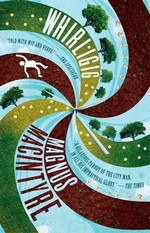
Whirligig by Magnus Macintyre

WhirligigWhirligig

by Magnus Macintyre

Paperback, 301 pg.
Marble Arch Press, 2015
Read: October 13 – 14, 2015

This is the story of a self-centered, shallow, city-dwelling fat man who takes an opportunity to reinvent himself and travels to a small town in Scotland to be the voice of a proposed wind farm. Which, of course, he knows nothing about. So, our fat man, Claypole, spends the next week bouncing around from here to there in this community, finding himself in one embarrassing/catastrophic situation after another. I think this is where we’re supposed to find humor — it never struck me as funny. These all just seemed like a guy acting without thought and finding himself being taken care of like some sort of bumbling Candide.

As anyone who’s read this setup knows, once this particular Englishman went up this proverbial hill, he developed an understanding of this community, learned some important life lessons, and whatnot before he came down the proverbial mountain.

I couldn’t tell, really, how sincere we’re to take the “green” portions of this story — there are a couple of true believers, and a cartoonish doubter or two — but the rest, their interest in/commitment to the cause seems pretty shallow. Now, that’s the characters, not the author, I grant you. But when the central plot revolves around the establishment of an environmentally friendly source of power, I expect a bit more than that.

Those people that do actually end up liking Claypole — I don’t get it. Particularly those who take a seemingly instant liking to him. He’s such an offensive buffoon that it’s hard to understand. I guess I can understand those who grow to like him when they see the man behind the awkwardness.

The people of this small town are sketchy, outside of one family, they’re fairly generic stock characters. And that family? I can’t buy them either, a little more fleshing out and I probably could’ve believed them. But pretty much, they’re just a collection of characteristics, tics, and odd wardrobes.

Whirligig has very sweet ending, and it was not exactly the one a reader would expect, but pleasant, and – like “crap telly” (Claypole’s words) had taught him, one that tied everything up nicely.

Not funny enough, not “green” enough, and I couldn’t connect the way I wanted to with anyone. Near miss after near miss after near miss takes me to a 2 1/2 Star rating.

—–

2 1/2 Stars

Review Catch Up: Walking the Perfect Square; The Drop; and A Bitter Feast

Time for another catch-up post because: A. I should’ve had these taken care of months ago, and B. because I’m having a really hard time writing up Butcher’s The Aeronaut’s Windlass

Walking the Perfect SquareWalking the Perfect Square

by Reed Farrel Coleman
Series: Moe Prager, #1

Hardcover, 264 pg.
Permanent Press, 2002
Read: April 19 – 23, 2014

Moe Prager is waiting to call his daughter on her birthday, but before he can do that he answers a phone call that may lead him to solving an old missing persons case. It’s a case that he investigated twenty years previously, shortly after an injury forced his retirement from the NYPD. We spend most of the novel in the 70’s, with brief looks at Prager’s present, tracing his work on the case.

As a mystery novel, it’s okay. Nothing special, but it kept my attention, kept me guessing, and was entertaining enough. Which is a decent start for a series. By the end, I’d really started to enjoy Prager and wanted to see where he goes from here — either the 70’s or 90’s (although I’m pretty sure the series sticks with the latter).

Stylistically, this was pretty cool. Though published in the early 2000’s, the flashback segments feel like they could’ve been written in the 1970’s/80’s. The present day material felt like it was written in the late 1990’s, and yet they were definitely of a piece. I’m very impressed that he pulled that off.

The last few paragraphs turned this from a decent mystery novel into a really good one — and if my mood had been a bit different at the time, they could’ve earned it a 4-start rating. The ending really does elevate the whole — while it sends you reeling from a serious gut punch.

I really should’ve gotten back to this series, but I didn’t want to color my take on him as he started his tenure with Jesse Stone — but that’s passed now, time to get busy.

3 Stars

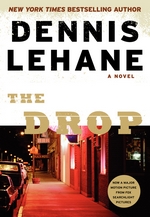
The DropThe Drop

by Dennis Lehane

Paperback, Large Print, 229 pg.
HarperLuxe, 2014
Read: September 30 – October 01, 2014

For Lehane, this was light and breezy. Bob Saginowski is a bartender in his cousin Marv’s bar (well, it’s not really Marv’s anymore — the Chechen mafia owns it now, Marv just runs it). Bob’s down-on-his luck, living in his deceased mother’s house, going to her Church, and trying to get by. A couple of days after Christmas, he finds a dog in a trash can. He takes the dog home and finds himself a reason to keep going — it doesn’t hurt that there’s a woman tangentially involved, but he’d be a devoted dog owner regardless. There’s a possibility for romance on the horizon, but there are a few obstacles.

Said Chechen mafia, for one. Marv’s dreams for getting one over on them. A couple of armed robbers. A Boston PD detective that attends the same Masses as Bob. The guy who disposed of the dog and seems to be having second thoughts. And Bob’s own mysterious past — and penance can’t seem to erase it for him.

But if Bob can manage all that, he just might find himself a little slice of happiness.

It’s not a typical Lehane story, but it works. Lines like these help:

Happiness made Marv anxious because he knew it didn’t last. But happiness destroyed was worth wrapping your arms around because it always hugged you back.

and

The traffic had thinned considerably as they drove past Harvard Stadium, first football stadium in the country and yet one more building that seemed to mock Marv, one more place he’d have been laughed out of if he’d ever tried to walk in. That’s what this city did — it placed its history in your face at every turn so you could feel less significant in its shadow.

(the movie based on this novel — adapted by Lehane — ain’t too shabby, either.)

4 Stars

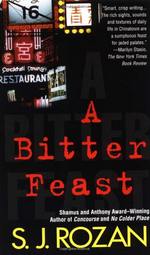
TitleA Bitter Feast

by S. J. Rozan
Series: Lydia Chin & Bill Smith, #5

Hardcover, 309 pg.
Minotaur Books, 1998
Read: December 11 – 13, 2014

Throughout this book — but especially in the first chapter — if you don’t feel the foreign-ness, the other-ness, of Lydia’s Chinatown, you aren’t reading it right. Which doesn’t really make it different from the other books in this series that are from Lydia’s POV, it just seemed particularly strong in this one.

There’s more than a clash of cultures with this case — there’s a clash of generations. Between those who think like transplanted Chinese, and those who think like American Born Chinese. Some restaurant workers are trying to unionize, and some owners (who may or may not have less-legitimate other businesses) aren’t too keen on it. There are some bullets and some bombs involved — which is pretty much where Lydia comes in. If she can identify, once and for all, who is taking this clash and making it violent, it can be stopped (and, well, the other side will probably end up carrying the day).

I’m not really certain that I need a case — or a plot — I could read a short novel-length work of Lydia and Bill just chatting over tea and espresso. Outside of Wolfe and Archie — or maybe early Spenser and Hawk — I can’t think of two characters I enjoy “listening” to more conversing with each other.

Narrative-wise and character-wise there’s nothing particularly interesting here, instead it’s just what you expect from a Lydia Chin book. Good, solid entertainment from a very reliable author.

3 Stars

Fahrenheit Press is Not Your Father’s Publisher

(that is, if your father had a publisher)

Fahrenheit Press is a new publishing house with a “punk ethos” that describes themselves as:

…intent on doing things differently and we’re building a publishing company that’s heavy on curation and deadly serious about marketing.

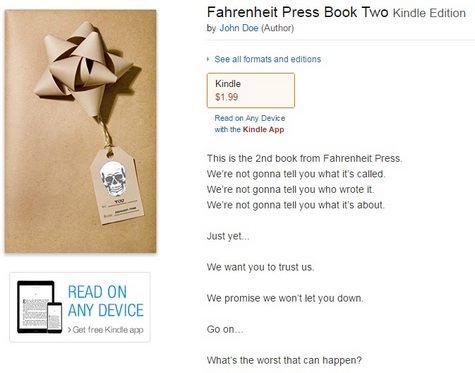
And yeah, they’re doing something different with their second book, to be published at the end of this month. Take a look at the Amazon listing:

One day, I hope they’ll explain how they got Amazon to play along. Be sure to click the link to get more details on this book.

Their founder, Chris McVeigh, explains the deal, the thinking behind it and a few more things in this post at fromfirstpagetolast. I hope this experiment works for them (and that the book is worth the effort), if only so I can see what they try next.

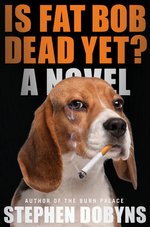
Is Fat Bob Dead Yet? by Stephen Dobyns

Is Fat Bob Dead Yet?Is Fat Bob Dead Yet?

by Stephen Dobyns

Hardcover, 351 pg.

Blue Rider Press, 2015

Read: October 8 – 12, 2015

Is Fat Bob Dead Yet? is essentially an Elmore Leonard book written by . . . someone else. It doesn’t have the zip, style and the panache of Leonard, though. It has a style and panache all of its own (almost no zip, though, but that’s okay).

Things get kicked off here with a nasty motorcycle accident that may not have been quite so accidental. The “accident” was witnessed by a homeless man named Fidget, a man too tan for Connecticut, and a man sporting a pompadour, the three of them spend the next few days finding several ways that their lives intertwine. The accident is investigated by Detectives Streeter and Vikström, who might be really good at their jobs if they spent a little less time bickering than the Battling Bickersons (one of the most reliable jokes early on is Vikström’s constant confusion over being asked if he was one of those famous Swedish detectives)

The tall, tan man is named Connor Raposo, a recently downsized teacher turned casino employee turned assistant to con-artists. Connor’s our entry point into this world, he introduces us the various and sundry scumbags, deadbeats, and other miscreants. Some of whom seem to have hearts of gold buried underneath a whole lot of cosmetic surgery or some sort of developmental delay. Others are just plain evil. In the middle is pretty much everyone else — Prom Queens whose life didn’t turn out the way they wanted them to, single moms working less-than-legitimate jobs, beagle owners, motorcycle aficionados, or guys just trying to please/impress the women in their life. There’s a real hodgepodge of humanity in all it’s strangeness on display here.

After a few chapters the narrator started dropping the royal “we” into the descriptions, which surprised me, but it worked. The further on you get into the novel, the narrator intrudes more and more into the story, editorializing as well as narrating. The stronger the narrative voice grew, the better the book got.

My one complaint is that it’s just too wordy — I’m not saying this should’ve been as minimalistic as something by Leonard, but it could’ve been a bit more streamlined. Was this amusing? Yes. Comic? Yes. Absurd? Absolutely. But I didn’t find it funny until the last few pages, and then I laughed a lot.

This novel is almost impossible to explain without giving everything away, before the setup is done, things are really underway — it’s not exactly fast-paced, but well-paced, slowly building up steam until it just barrels through the final events. A satisfying and very entertaining read. Give it a shot.

—–

3.5 Stars

Saturday Miscellany – 10/10/15

Odds ‘n ends over the week about books and reading that caught my eye. You’ve probably seen some/most/all of them, but just in case:

    This Week’s New Releases I’m Excited About and/or You’ll Probably See Here Soon:

  • The Sword of Summer by Rick Riordan — The start of a new series, with a new mythological pantheon. I think I’ve lost my Riordan beard to fiction for adults — I may have to admit that I buy these for me.
  • The Gap of Time by Jeanette Winterson — mentioned in the piece above this is (to quote her website), “Jeanette Winterson’s cover version of The Winter’s Tale“.
  • A Knight of the Seven Kingdoms by George R. R. Martin — The Tales of Dunk and Egg should get me excited, but . . . I dunno. Having a hard time caring. Still figure I’m going to read this soon.
  • Futuristic Violence and Fancy Suits by David Wong — this looks odd, potentially amusing, pretty exciting and good.

Lastly, I’d like to say hi and welcome to Emmanuel Muema for following the blog this week.

Image credit: Grammarly

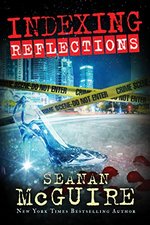
Indexing: Reflections, Episode 5: Sleeping Beauty by Seanan McGuire

Indexing: ReflectionsIndexing: Reflections, Episode Five: Sleeping Beauty

by Seanan McGuire
Series: Indexing, #2.5

Kindle
47North, 2015
Read: October 7, 2015

Henrietta Marchen was a perfect exemplar of her kind. Her skin was white as snow, and never tanned or freckled; the best she’d ever been able to accomplish was a violent burn that turned her entire body as red as her lips, which were the color of fresh-drawn blood. Once, in the third grade, she had gotten in a fight with another student who insisted on calling her a clown. She had blackened both his eyes, and he had mashed her red lips back against her white teeth, until real blood appeared to make the contrast in her coloration even more glaring. She had smiled, bloody toothed and feral, until he started crying for his mommy, and he’d never called her clown again, and her classmates had stopped looking her in the eye.

Thanks to the events of the last episode, Henry’s not available to narrate this one. Which is frustrating because we readers want to know what’s going on with her, but is ever so cool and rewarding because we get this episode narrated by Sloane instead.

A first-person narrator change can be annoying, no doubt, but sometimes it’s just the breath of fresh air that a work needs (or can find useful). In this case, we get passages like this:

I lifted the apple, turned it to the side without tooth marks, and took a bite. It was firm and crisp and a little too floral for my taste. I’ve never understood the way Snow Whites yearn for apples, but then, they’ve never understood the way I long to kill them all, so I figure it balances out in the end.

Which absolutely makes this change worth it.

So we’re treated to some more of Sloane’s backstory than we’ve gotten before, we learn a bit more about the AFI’s Deputy Director, we get the return of the HR shrink from Episode 1 (we all knew we weren’t done with Ciara). We also see the team through Sloane’s eyes, as well as her unmediated take on Elise and Birdie.

There was nothing not to like about this Episode, it moved the story along well, was entertaining as all get out and shook up the status quo in a way that served the story and characters rather than being change for change’s shake.

If you’re reading this serially, or will read it when the whole is complete, I can assure you, this is going to be a favorite installment.

—–

4 Stars

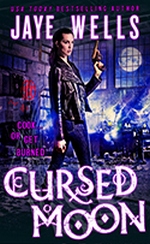
Cursed Moon by Jaye Wells

TITLECursed Moon

by Jaye Wells
Series: Prospero’s War, #2

Trade Paperback, 370 pg.

Orbit, 2014

Read: February 6, 2015


I…just don’t know. In theory, this series is right in my sweet spot — Urban Fantasy, Police Procedural (ish) — but it’s just not working for me. It feels like Wells is trying to get gritty and dark, but the results aren’t there. The same goes with the addiction storyline. It didn’t ring true for me, she seemed to be trying, her characters seem more like characters from a bad made-for-TV movie, not actual addicts.

While I’m complaining, I should mention that the Rape magic in the beginning — and the resulting bacchanal — was far too graphic, went on far too long. Then to follow it up with the trip to the sex coven with all the details given there? Overkill — especially because almost none of these details are important to the story. Take out those scenes, or tone them down, and you lose nothing.

The whole Pen story just annoyed me — Pen’s character seemed inconsistent throughout — her mood/actions/attitude fluctuating to serve the needs of the moment, but not arising organically from the situation or character.

And Danny? I don’t know where to start.

So what did work? The MEA stuff, the investigation, the world. Basically the major story, the core of the book was good enough to keep me going — it’s all the surrounding material that drove me nuts.

This has been brief and vague because it’s been so long since I read it, and because I just didn’t care one way or the other. Vaguely dissatisfied with a few significant beefs, would be a good way to summarize my take on this book. I might give this series one more shot, but I doubt I’ll go out of my way for it.

—–

2 1/2 Stars

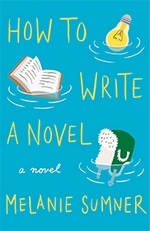
How to Write a Novel by Melanie Sumner

How to Write a NovelHow to Write a Novel

by Melanie Sumner
Paperback, 287 pg.
Vintage, 2015
Read: September 28, 2015

Aristotle — but you can call her Aris — Thibodeau is a 12 1/2 year-old would-be novelist. Under the guidance of her English teacher, school librarian and English-professor mother, she’s trying to write a novel in the next 30 days. Once it’s sold, she figures she’ll be able to make enough money so her mom can quit her job, still take care of her brother with his counseling/medication and find a husband. Aris does have a candidate in mind for her step-dad, but is open to someone else. We get to see precious little of her writing, but we do get to follow her on her journey through the novel writing process, and the family turmoil and drama surrounding it. Actually, as I write that, I have a hard time believing everything that happened outside of her novel took less than 30 days.

There’s a strong self-awareness to the narration — from Aris stopping the action to describe something she’s lacking in her novel, and then providing it in the narration to the sections of the book being labeled “Rising Action,” “Denouement,” etc. Typically, it works, but there were a couple of instances where it seemed forced or overdone.

There are two really strong points to this novel. Sumner can write a sentence that just sings I grabbed three examples from the opening pages — we get voice, humor, and a crystal-clear idea of the character she’s describing (and the one doing the describing):

Diane is forty-three now, short and either curvy or chubby, depending on her mood, with a button nose and blondish bangs that are always falling in her face.

Then he grinned. Papa was old before braces came out, so his teeth are slightly crooked, just enough to make him look like he can tell a good joke.

. . . ladies in the South don’t shake hands. Instead, they fold their cool fingers over yours and press ever so gently, leaning in close until you smell breath mints and the eau de toilette behind each ear. Then they say something awful. A few days after Joe [Aris’ father] died, Grandma and knelt beside Diane’s [Aris’ mother] bed and folded her fingers over her hand. After looking into her eyes for a moment, she whispered, “Why didn’t he ever have a better job?”

Don’t ya just luuuuv Grandma?

The other strong point (maybe half of a point) is her characters — Aris, Diane, her brother Max — are great. Diane’s student, Charles and his mother are pretty well-drawn. The librarian Ms. Chu wasn’t that fleshed out, but she didn’t need to be, and she was well drawn enough that you want to see more. These are real people, you could build a book around any of them alone. But the rest — and I’m only talking about characters that should be well-drawn — just aren’t. Aris’ grandparents don’t become much more than they were described above. The worst is Aris’s choice for her future step-dad, their current volunteer nanny: Penn MacGuffin*. He’s an accumulation of ticks, quirks, and clichés, but there’s not a person in the middle of that.

The more I think about it, the less I’m sure I like How to Write a Novel as a novel, however frequently clever it is. There are some great scenes, dazzling sentences, charming characters here; it was a pleasure to read. But I’m just not sure there’s much there beyond that.

—
* I’m not going to mention how long it took me to realize what his name meant — let’s just say it was before this moment, and I felt really, really stupid

—–

3 Stars

Page 553 of 632

Powered by WordPress & Theme by Anders Norén