
Music Monday's originated at The Tattooed Book Geek's fantastic blog and has shown up hither, thither, and yon since then.
Having the Grandcritter live with us for a while has really done a number to my music listening…


Music Monday's originated at The Tattooed Book Geek's fantastic blog and has shown up hither, thither, and yon since then.
Having the Grandcritter live with us for a while has really done a number to my music listening…
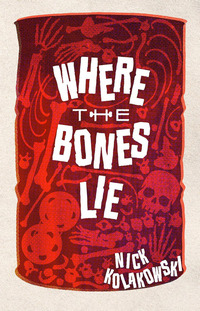 Where the Bones Lie
DETAILS:
Publisher: Datura Books
Publication Date: March 11, 2025
Format: eARC
Length: 304 pg.
Read Date: February 26-Narch 1, 2025


Dash Fuller used to work for a man he compared to Mr. Wolfe from Pulp Fiction, and in his employ would clean-up various messes by celebrities and other movers-and-shakers in L.A. Eventually the work got too much for him and he walked away. He tried to find a new career in Stand-Up comedy, but that’s not going so well. He’s doing better at drinking copious amounts of bourbon to numb himself, and then scurrying around picking up money from delivery driving and other gig jobs at the end of the month to pay his bills.
After one, shall we say, not-good night at a local comedy club two significant things happen for Dash. First, his old boss, Manny, shows up to badger him into doing one more job for him (he’d like more, but will settle for one, for now).
The other spins off of both—another audience member there picks up on some of what Dash does that night (but not all of it, he’s pretty good at what he does) and offers to hire him. After several years where the family had to assume he was dead, Madeline Ironwood’s father’s body has recently been discovered in a barrel found as a nearby lake has receded thanks to water shortages in the state. She’d like Dash to look into it and see if he can figure out what happened to him.
Ken Ironwood was a smuggler, and probably other things. He’s been missing since she was a young girl. He’s noteworthy enough that a true crime docuseries has started recently streaming about him, but not so noteworthy that Dash would’ve heard of him without the billboards all around town (that Madeline had to point out to him). The suspect list was so large that the LAPD and FBI gave up trying to pare down without more to go on than a missing man.
It’s not a lot for Dash to go on, but the money is okay, and it’s something that gets him out of town for a little bit.
I think it’s pretty obvious that Dash is supposed to be in the Hammett model more than the Chandler, but I’m more familiar with Chandler, so I’m going to lean on what I learned from L.A.’s hardboiled detective/detective-like characters from him.
Dash is a knight—a knight in tarnished, battered, and filthy armor. But a knight nonetheless—he knows how many of his choices didn’t match his ideals and ethics. His ex wondered if the good person inside him could be found—and Dash wonders the same.
This has taken a toll on him—one job in particular, but there’s also the cumulative effect from years of this—and has left him traumatized and self-medicating. This is also common to the hardboiled investigator, but given Dash’s cultural context it seems more apparent (and something he’s more willing to reflect on).
The job that Manny sends Dash on at the beginning brings all the trauma to the surface (it was close to it already, but this gave it the needed nudge). While the focus of the novel—and Dash’s attention—is Madeline’s case and her father’s fate, Dash’s struggles are a shadow over everything he does, over many of his choices (like the one to take the case), and will even interfere with his thinking on occasion.
Again, you see this all over Marlowe’s adventures—but it’s between the lines—I expect the same could be said about Hammett’s characters. But with Dash it’s clearer, it’s acknowledged, and understood—at least by some of the characters.
California’s repeated droughts lay the foundation of the investigation into Madeline’s father’s death. The heat in L.A. as Dash and Madeline drive northward is oppressive. Wildfires threaten that city, close in on Dash and Madeline at important junctures in their search—and play a significant outcome in the endgame of that storyline.
This is possibly the most environmentally aware detective novel I’ve read. I’ve read “eco novels” that do a less effective job of addressing these issues. Part of what makes it so effective is that Kolakowski doesn’t get preachy with it, he doesn’t beat you over the head with it—it’s just seamlessly woven into the tapestry of this novel, no more noteworthy than Dash’s bad jokes, or the threat of bent cops. But it’s there. Everywhere.
One question that had been running in my mind throughout was why Dash turned to Stand-Up, and his narration didn’t choose to reveal it, while it revealed so much about other things.
By the time that someone asked him, I was overjoyed that someone else (even if they’re fictional) had to know. The answer was satisfying enough, and in many ways didn’t tell us anything we couldn’t have/shouldn’t have figured out on our own (especially by that point in the novel), but hearing it from Dash was good.
This just might be the best thing Kolakowski has written so far. Which is likely a sentence I’ve written before—and I meant it then, but time has gone on and Kolakowski has gotten better.
I didn’t end up saying anything about the job that Manny hired Dash for that kick-started this whole novel, it doesn’t take long for Dash to take care of it, and we get an idea of some of the things he’s done in the past (more importantly, some of what he hasn’t done). Some of what he’s seen. This is developed through the course of the novel, too. But it gives us a taste of his old life and shows that he has the tools to build on.
Madeline’s case is the first job he’s ever had for a positive goal—to accomplish something. He’s not trying to prevent embarrassment or scandal—he’s not trying to save some studio a bunch of money, or rescue someone’s reputation, or prevent someone from facing legal charges. Sure, he has the skills—but he has to learn to use them in a different way. Which is a great place to put a character.
The supporting characters are great—particularly the “bigger bad”s (which is all I’m going to say about them). I would love to spend more time with the closest thing that Dash has to a friend, in particular.
With Chandler—like more modern writers like Ellroy or Connelly—you get a real sense of L.A. or California. And Kolakowski delivers the same here. He’s done some really specific geographic work in the past, but outside of geographic markers, I don’t know that I “felt” the area like I do here. (I want to stress that this isn’t intended as a criticism of his earlier work, it’s a compliment and observation about this one).
As far as the ending or resolutions to the various plotlines—some I saw coming, because Kolakowski prepared the reader for them. Some hit me like they came out of the blue (they didn’t, really, but they felt like it). All were satisfying in ways I didn’t expect really. There were lines that you could see Chandler writing—if not word for word, at least close paraphrases. The spirit of that age lives on in these pages.
His history suggests that the next work by Kolakowski will be something else entirely—probably not a cozy, but something he hasn’t delivered yet. But if he wants to do more like this, I’ll be first in line for it. Meanwhile, you should focus on getting this book in front of your eyeballs.
Disclaimer: I was provided with this ARC by the author in exchange for my honest opinion. The only impact this had on what I said about the book was that I could say it before I could buy a copy.

This post contains an affiliate link. If you purchase from it, I will get a small commission at no additional cost to you. As always, the opinions expressed are my own.
We all know we’re not supposed to judge a book by its cover (yet, publishing companies spend big bucks on cover design/art and we all do judge them that way). But, the opening sentence(s)/paragraph(s) are fair game. So, when I stumble on a good opening (or remember one and pull it off the shelves), I like to throw it up here. In these few paragraphs, you see exactly how he argues for the rest of the book.
from Miracles by C.S. Lewis:
In all my life I have met only one person who claims to have seen a ghost. And the interesting diing about the story is that that person disbelieved in the immortal soul before she saw the ghost and still disbelieves after seeing it. She says that what she saw must have been an illusion or a trick of the nerves. And obviously she may be right. Seeing is not believing.
For this reason, the question whether miracles occur can never be answered simply by experience. Every event which might claim to be a miracle is, in the last resort, something presented to our senses, something seen, heard, touched, smelled, or tasted. And our senses are not infallible. If anything extraordinary seems to have happened, we can always say that we have been the victims of an illusion. If we hold a philosophy which excludes the supernatural, this is what we always shall say. What we learn from experience depends on the kind of philosophy we bring to experience. It is therefore useless to appeal to experience before we have settled, as well as we can, the philosophical question..
If immediate experience cannot prove or disprove the miraculous, still less can history do so. Many people think one can decide whether a miracle occurred in the past by examining the evidence “according to the ordinary rules of historical enquiry.” But the ordinary rules cannot be worked until we have decided whether miracles are possible, and if so, how probable they are. For if they are impossible, then no amounnt of historical evidence will convince us. If they are possible but immensely improbable, then only mathematically demonstrative evidence will convince us: and since history never provides that degree of evidence for any event, history can never convince us that a miracle occurred. If, on the other hand, miracles are not intrinsically improbable, then the existing evidence will be sufficient to convince us that quite a number of miracles have occurred. The result of our historical enquiries thus depends on the philosophical views which we have been holding before we even began to look at the evidence. The philosophical question must therefore come first.
Here is an example of the sort of thing that happens if we omit the preliminary philosophical task, and rush on to the historical. In a popular commentary on the Bible you will find a discussion of the date at which the Fourth Gospel was written. The author says it must have been written after the execution of St. Peter, because, in the Fourth Gospel, Christ is represented as predicting the execution of St. Peter. “A book,” thinks the author, “cannot be written before events which it refers to.” Of course it cannot–unless real predictions ever occur. If they do, then this argument for the date is in ruins. And the author has not discussed at all whether real predictions are possible. He takes it for granted (perhaps unconsciously) that they are not. Perhaps he is right: but if he is, he has not discovered this principle by historical inquiry. He has brought his disbelief in predictions to his historical work, so to speak, ready made. Unless he had done so his historical conclusion about the date of the Fourth Gospel could not have been reached at all. His work is therefore quite useless to a person who wants to know whether predictions occur. The author gets to work only after he has already answered that question in the negative, and on grounds which he never communicates to us.

Odds ‘n ends about books and reading that caught my eye this week. You’ve probably seen some/most/all of them, but just in case:
 The Best Villains in Literature Bracket: Ides of March Madness—LitHub is about to crown the ultimate Villain in Lit. Vote now (if you can choose…some of these are brutal choices)
Inside a Collection of ‘Imaginary’ Books
The Digital Packrat Manifesto—the case for building your own digital library (and choosing your digital storefronts with care)
From the Gut: A Literary History of Indigestion—Oddly fascinating piece (and you must read the footnotes)
Harper To Publish New Collection of Stories and Essays by Harper Lee—Huh. Well, might as well, I guess. Probably will be better than that last published book with her name on it
Turns Out, There’s a Sequel to The Westing Game—this is, no doubt, the item from this list that I’m most invested in. It’s possibly the single piece of writing I’m most invested in this month.
Thomas Trang’s “Dark Neon & Dirt”: A Gritty, Twisty Riff on L.A. Noir—Nick Kolakowski talks to Thomas Trang about Tran’s upcoming book (which looks great, incidentally)
Speaking of Nick Kolakowski, The Writer’s Dossier 3/3/2025 – The Nick Kolakowski interview—Kolakowski talks about things like his latest novel (which you really should read), evolving as a writer, and his experience with Craig Ferguson
Tolkien Against the Grain: The Lord of the Rings is a book obsessed with ruins, bloodlines, and the divine right of aristocrats. Why are so many on the left able to love it?—pretty sure I’d have never thought about considering this
A New Harper Lee Book is Being Published: Why Is There No Controversy This Time?—Brianna asks a good question
Three Years of Roars and Echoes—Congrats to Lashaan! The man responsible for at least 70% of the comics/graphic novels I’ve read in the last decade, and almost all of the Tolkien from that period, too.
Carol’s Captivating Character of February Link-Up—a good pick (and a good reminder for me to finalize my choice)
bedsidebibliophile succinctly nails the thinking behind a 5 star rating
If you don’t “awwww” at this bookstore’s story, there’s something broken in you
To help talk about backlist titles (and just for fun), What Was I Talking About 10 Years Ago Week?
Stone Quarry by S. J. Rozan
Pin Action: Small-Time Gangsters, High-Stakes Gambling, and the Teenage Hustler Who Became a Bowling Champion by Gianmarc Manzione (I’d forgotten about this one, not sure I’m glad to be reminded)
The Girl Who Circumnavigated Fairyland in a Ship of Her Own Making by Catherynne M. Valente
I talked about the release of: A Key, an Egg, an Unfortunate Remark by Harry Connolly; Dead Heat by Patricia Briggs; Pocket Apocalypse by Seanan McGuire; Heir to the Jedi by Kevin Hearne; and Live Right and Find Happiness (Although Beer is Much Faster): Life Lessons and Other Ravings from Dave Barry by Dave Barry
This Week’s New Releases that I’m Excited About and/or You’ll Probably See Here Soon:
Don’t Tell Me How to Die by Marshall Karp—Domestic thriller, a look at grieving and preparation for death, and a rollicking good time. I raved about it recently (and will do so again at the drop of a hat)
Cold Iron Task by James J. Butcher—I have no idea what this third Unorthox Chronicle is about, because I can’t let myself be tempted, I just have too much to do. I’ve even loaned it to a friend just to get it out of the house so I can focus on some other things.
Guard in the Garden by Z. S. Diamanti—A cozy fantasy about an injured Dwarven soldier finding his second act. If this is half as charming as it looks, you’ll be in for a good time
Thaumaturgic Tapas by Tao Wong—you have to give this a second look for the title alone, right? The Nameless Restaurant struggles with success
Finlay Donovan Digs Her Own Grave by Elle Cosimano—My patience for Finlay’s antics is waning, but these are still guaranteed good times. Bringing in her nosy neighbor? Yeah, this should be fun.
Kills Well With Others by Deanna Rayburn—These senior assassins are called back into action.
I’m a Dumbo Octopus! by Anne Lambelet—this kid-level introduction to cephalopods looks adorable
See Friendship by Jeremy Gordon—A “young man who learns the devastating truth behind his friend’s death, propelling him on an odyssey of discovery into the nature of grief in the digital age, the limits of memory, and the meaning of friendship.”

Earlier today, I posted a spotlight about Reena Bhojwani’s novel Fragrant Soup. Now, I’ve got this look behind the scenes as Reena describes part of how she transformed this short story into a novel. I know she has more to say along these lines, and I hope she comes back to share some more. Either way, I’m very glad to present this Guest Post.
How Reading Can Help You Grow a Short Story into a Novel
I grew my short story of 5000 words into a novel with the same name that’s now over 62,000 words long.
So the question is how? And the answer is not linear. Although, one of the things I did very consciously and throughout was: reading.
I jumped in with both feet and scoured the Internet and the local libraries for books. I read some non-fiction articles, blogs and memoirs, but I also tried to read within the genre I was trying to write, which brought me to various forms of Asian fantasy stories. I tried to keep it to Young Adult and Middle Grade Asian and South East Asian Fantasy stories because they were closest to my target. However, on the side I continued to read romance novels, thriller, horror and a bit of middle grade fiction but not specifically Asian fantasy. I needed to know what was out there so I would know how to answer the annoying question “What books are your books like?” And also “What books are you books not like?”
Some other reasons to read widely were:
For sensitivity: This was me reading as a writer to see how sensitive or potentially offensive subject matter was dealt with when I read within my genre. For example, how certain descriptive phrases were written or how certain (possibly) taboo concepts were covered by certain writers. Taking notes either on a separate page or on post-its to then stick into the book as I read started becoming a habit.
For style: Again, this would mean reading as a writer. To be aware of nuances in dialogue, description and pacing. When I read other genres, I noticed things like choice of narrative perspective, chapter lengths and other devices that I would otherwise have allowed to slip through the cracks. Why certain things were done and certain choices were made while others were not. This is where I started noticing there were several books written with snippets of Mandarin, but I didn’t come across any with Cantonese in them.
For inspiration: I ended up getting so many ideas for my story while I was reading other pieces of fiction. However, inspiration doesn’t mean plagiarising. Sometimes I got an idea because there was a plot twist I was reading about or because a new character was introduced and I thought, “THAT’S IT! I can do that! EUREKA!” That doesn’t mean I took their character and shoved it into my narrative. It just made me realise that adding a character could help me make a certain part of the story work better. And equally, I had moments when I thought, “It makes sense now. This character/part/section has to go. It’s time to kill this darling.” Not because I knew they needed to go but because I realised.
While reading, I came across so many books in a series that I eventually realised I could turn my story into a series… and so I did! (Well, I started. I’ve only finished book 1 and the ‘Sneak Peek!’ Section of book 2!) Inspiration came come from content, style or just general concepts.
For what doesn’t work: The more books you read that you DON’T LIKE or that have been criticised in the field you’re interested in, the more insight you will get about what NOT to do, or what to watch out for or avoid, which is sometimes more helpful than what to do. The key is knowing not to get too caught up in it all. Take what you need and move on.
It’s important to note though that reading should happen all the way through in the ideal world, but there’s aren’t enough hours in a day and many of us can’t quit our day jobs or read through the night and function properly the next day, so some form of a balanced book diet with a frequency of your choice is best.
There are lots of tidbits of advice I have after I chose to grow my short story into a novel, so if you want to know more, you’ll have to comment on write to me and let me know. You can find me at www.inspiredmusehk.com.
You can find more information about Reena Bhojwani and her books at her website, Inspired Muse.
I’m very pleased to welcome Reena Bhojwani and her MG book Fragrant Soup, Book 1 of Siu-Yin and the Dragons. to The Irresponsible Reader today for this Spotlight post (I’ll have a guest post from her in a little bit, too). Fragrant Soup is one of the more unlikely titles that I can remember–also one of the more appealing (or maybe I’m just hungry right now. Probably both). This looks like fun for both the target audience and those who are open to reading MG (which should be everyone, right?) Learn a little about the book and then go pick it up. I’m about to.
Title: Fragrant Soup by Reena Bhojwani
Series: Siu-Yin and the Dragons, Book 1
Publisher: Inspired Muse!
Format: Hardcover
Length: 365 pg.
US Publication Date: September 8, 2024
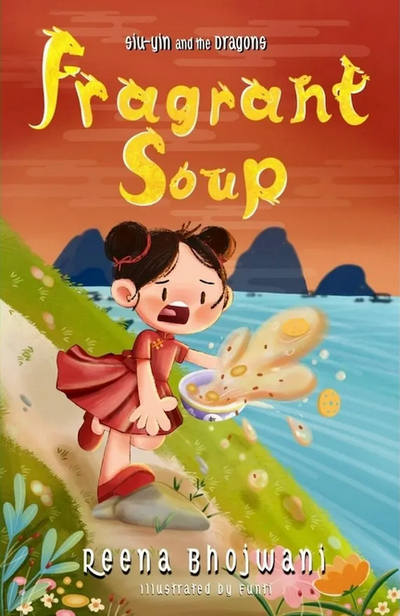
Nine-year-old Siu-Yin still doesn’t know the difference between boil and burn. The Lunar New Year’s Eve feast is only a couple weeks away. Every year, Poh Poh makes a special soup, an important offering to the dragon protector who brings luck to the village. This year Poh Poh has fallen ill. No one else knows how to make the sacred soup. So it’s all up to Siu-Yin.
If she succeeds, the village will be blessed with luck in the year ahead. If she fails, Siu-Yin and her village will have to face the wrath of a mighty dragon. Will Siu-Yin be lucky enough to figure out the recipe in time or will she stir up colossal trouble for herself and her village?
A ‘perfect for all ages story’ that is engaging enough for middle grade whilst the warmth and emotional impact will appeal to older audiences too.
It’s a captivating tale that’s bound to leave your heart full, but it might make your stomach hungry!
Perfect for fans of Grace Lin, Roald Dahl and Robert Munsch!
Fragrant Soup is Reena’s attempt to highlight similarities and differences between Cantonese and North Indian cultures. She’s been exploring the concept of identity for years and this book has helped her celebrate both aspects of the core cultures she resonates with.
Fragrant Soup was originally a (5000-word) short story published in one of the Hong Kong Writers Circle anthologies titled ‘After the Storm’ and after plenty of encouraging feedback, Reena decided to grow it into a full-fledged (62,000 +) middle grade novel. [you’ll hear a little about this later]
Fragrant Soup is book 1 of what Reena hopes will be a 9-book series!
Amazon ~ Imaginary Muse! (if you live in Hong Kong and want a signed copy)
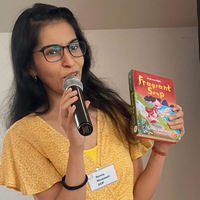 Born and brought up in Hong Kong, Reena Bhojwani is an author, a performer and a storyteller. She is also a TEDx speaker. She is a graduate of the University of Melbourne, with a creative writing major and a theatre studies minor. She has over 13 years of experience teaching creative writing to kids between 4-16 years old at Elephant Community Press. Additionally, she has volunteered to facilitate writing craft workshops for the Hong Kong Writers Circle since 2010. She happens to also be a poet and the winner of the 2018 Peel Street Poetry Slam Contest. ‘Fragrant Soup’ is her debut middle grade novel. She has previously published a picture book (‘Surprising Mrs Rhubarbson’) and its accompanying activity book. She is also the author of over 15 short stories, published in anthologies by the Hong Kong Writers Circle.
Facebook ~ Instagram ~ ~ Website
I didn’t quite finish my post about Kolakowski’s upcoming release last night (read: I wrote 2 paragraphs that probably need revision/expansion). So, let’s revisit this bold crime novel instead.
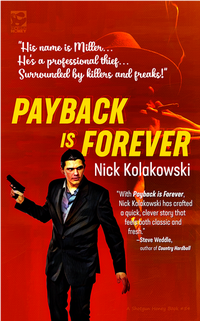 Payback Is Forever
DETAILS: Publisher: Shotgun Honey Books Publication Date: March 24, 2022 Format: Kindle Edition Length: 170 pg. Read Date: March 29-30, 2022
Miller’s a thief, a fairly successful one. This comes in handy because he’s not as successful when it comes to gambling. He needs to pay a debt, so he takes a job with a couple of strangers. They betray him, the job goes wrong, and Miller (and the cash) escape without his partners. They don’t know his name or home base, so he figures he’s safe for a little bit.
He’s soon contacted by a figure from his past, Rick Redfield:
“I’ve entered into an arrangement with some… men of violence, shall we say. Which means I need the services of the most violent man I know. Which is you.”
“I’m no bodyguard.”
“No. You’re capable of terrible acts, and that’s the necessary thing here. Besides, bodyguards ask too many questions.”
With the promise of a large payday on the horizon, Miller’s in—and soon finds himself involved with some Nazis who escaped from Germany in the waning days of the war, Nazi hunters, and a few more dead bodies than Miller was prepared to deal with.
Miller and most of the characters that he deals with are of a fairly typical sort—you’ll recognize the types easily. They’re interestingly-drawn and well-used, but they’re types.
Then there’s Jill Reilly—she’s Miller’s love interest and is a secretary in the Medical Examiner’s office. Given the proper circumstances, she’d probably make a pretty good Examiner herself—but between the education, she’d need, and the rampant chauvinism in the office, that’s probably not going to happen. Reilly feels like she’s got one foot in the Girl Friday type, but with a rebellious streak that keeps the other foot out of the type.
The other character that stands out as not fitting into a typical mold is Scott, Redfield’s friend who acts as a liaison to the outside world when Redfield needs to stay out of the light. He’s a timid, uncertain man—who needs to use a ventriloquist’s dummy, Colonel Longshanks, to communicate those things that are too much for Scott to handle. Miller has no patience for either of them—but can force himself to work with Scott. The Colonel on the other hand…
There was a moment where I wondered if Scott/Colonel Longshanks would over-take Monkey Man as my favorite strange Kolakowski character. He didn’t, but that he was in the running says something about the character development in this short novel.
If what I’ve described seems pretty straight-forward, it is. If anyone’s read Kolakowski before, that’s not how he rolls. Right?
There is something else afoot here. I don’t know that it added much (if anything), but it didn’t hurt anything either. Maybe if I was in a different mood when I read this I’d have a more positive take on the “something else,” but right now, I can take it or leave it.
The material with Miller, the Nazis, Nazi Hunters is enough to focus on and keep you entertained. If you happen to get the rest of it, that’s gravy.
This feels like the kind of pulpy thrillers from the 1960s and 70s I’ve read—just in a post-WWII setting with a dash of Nathanael West thrown in. It’s a surprisingly effective combination, and I’d have read another 200 pages of it without blinking. Although I do think this lean, mean, streamlined approach is far more effective.
Miller’s absolutely the kind of character you want in this setting—his morality is stuck in the gray—it’s a pretty dark gray, but he’s not a full-on villain. And he’s thinking about reforming, at least a little.
There were two scenes—or parts of scenes—that make this more than a quick, fun read. There’s a visual in the last big gunfight that’s so ridiculous, so comical, in the middle of a big action scene that makes you want a film version immediately (but it may be better in your imagination).
Before that there’s another scene that I can’t describe—you start it assuming X might happen, and yet when X does happen you still sit up and pay attention because you can’t believe that Kolakowski actually did that. And then over the next 3 or 4 paragraphs, the shocking scene becomes something so unexpected that you have to read it a couple of times to make sure you read it right. Cackling while you read it every time makes the comprehension a little difficult.
A solid, stylish thriller with Kolakowski’s style and sense of character is exactly what I needed to read last week, and Payback is Forever delivered. Do yourself a favor and pick it up.

What a difference a week makes–after talking about a few lackluster (or worse) books at the end of February, I ended the month very strong and the first books of March have continued that streak. It’s a nice place to be.

This meme was formerly hosted by MizB at A Daily Rhythm and revived on Taking on a World of Words—and shown to me by Aurore-Anne-Chehoke at Diary-of-a-black-city-girl.
The Three Ws are:
What are you currently reading?
What did you recently finish reading?
What do you think you’ll read next?
Seems easy enough, right? Let’s take a peek at this week’s answers:
 |
 |
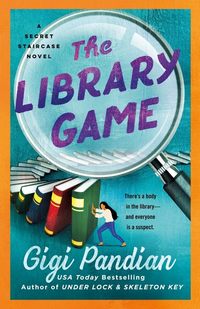
| The Library Game by Gigi Pandian |
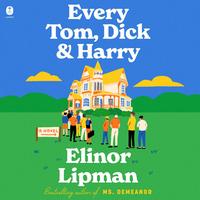
Every Tom, Dick & Harry by Elinor Lipman, read by Piper Goodeve |
I just started The Library Game today. I thought Pandian had wrapped up this series with the last book, I’m glad to see that I was wrong and I’m eager to see where the series goes from here.
Lipman’s Ms. Demeanor was entertaining enough (although it had its drawbacks), and I’m curious to try something else by her.
 |
 |
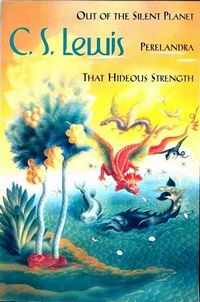
| Perelandra by C.S. Lewis |
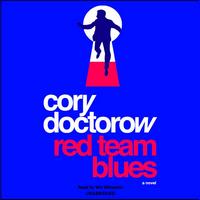
Red Team Blues by Cory Doctorow, read by Wil Wheaton |
Perelandra blew me away this week, just as much as it did 20+ years ago when I read it the first time.
A couple of weeks ago in a Saturday Miscellany post, I said something about getting around to trying Doctorow sometime, the manager of Shared Stories told me that I really should start with Red Team Blues. He was right.
 |
 |
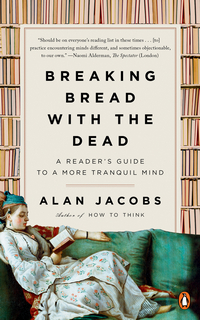
| Breaking Bread with the Dead: A Reader’s Guide to a More Tranquil Mind by Alan Jacobs |
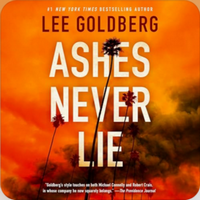
Ashes Never Lie by Lee Goldberg, read by Eric Conger,Nicol Zanzarella |
It’s time for me to wrap-up my review of Jacobs’ trilogy.
And I’ll be tackling Ashes Never Lie on audio. Sharpe & Walker + Eve Ronin = fun.

The topic for this week’s Top Ten Tuesdays is the Top Ten Things Characters Have Said
If I took that too loosely, I’d spend weeks trying to narrow this down. So I decided to limit it to one character–Nero Wolfe. He’s easily the most quotable character I can think of (with the possible exception of Archie Goodwin, who narrates the Wolfe books). But I didn’t have time to do a thorough job of that, either. But I was able to cobble together a decent collection of quotations. Give me a year, and I’ll come up with something more definitive (or I’ll have a selection of 90+ items and will freeze up in trying to whittle it down).
But first,
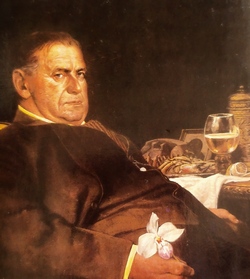 Nero Wolfe, fictional American private detective, the eccentric protagonist of 46 mystery stories by Rex Stout. Wolfe was introduced in Fer-de-Lance (1934).
A man of expansive appetites and sophisticated tastes, Wolfe is corpulent and moody. Detesting mechanized vehicles and disdaining most humans, he is averse to leaving his home for business reasons; he assigns the physical investigations of murders to his associate and friend Archie Goodwin and manages to solve his mysteries without leaving his own confines. Another of Wolfe’s associates is his private chef, Fritz Brenner, who also works as Wolfe’s butler and handyman. Wolfe’s interest in food is equaled only by his passion for orchids: with the aid of Theodore Horstman, he nurtures some 10,000 orchid plants in his rooftop garden.
by: The Editors of Encyclopaedia Britannica. "Nero Wolfe". Encyclopedia Britannica, 15 Oct. 2012, https://www.britannica.com/topic/Nero-Wolfe. Accessed 3 March 2025.
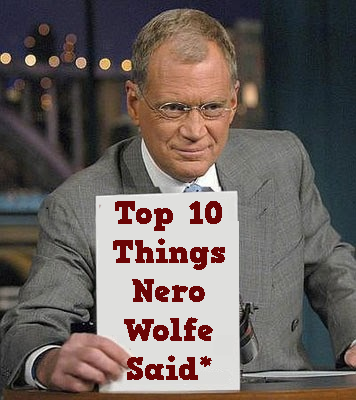 * That I Can Think of Without Re-Reading the Corpus
 |
To me the relationship of host and guest is sacred. The guest is a jewel resting on the cushion of hospitality. |
 |
…with the quarry within reach, the purpose fixed, and the weapon in hand, it will often require up to eight or ten minutes to kill a fly, whereas the average murder, I would guess, consumes ten or fifteen seconds at the outside. |

|
Man’s brain, enlarged fortuitously, invented words in an ambitious attempt to learn how to think, only to have them usurped by his emotions. But we still try. |
 |
Since I entered this room you have made nothing but mistakes. You were without courtesy, which was offensive. You made a statement contrary to fact, which was stupid. You confused conjecture with knowledge, which was disingenuous. |
 |
I carry this fat to insulate my feelings. They got too strong for me once or twice and I had that idea. If I had stayed lean and kept moving around I would have been dead long ago…I used to be idiotically romantic. I still am, but I’ve got it in hand. |
 |
Maintaining integrity as a private detective is difficult; to preserve it for the hundred thousand words of a book would be impossible for me, as it has been for so many others. Nothing corrupts a man so deeply as writing a book; the myriad temptations are overwhelming. |
 |
I love to make a mistake, it is my only assurance that I cannot reasonably be expected to assume the burden of omniscience. |
 |
Sir, I would not enter a taxicab for a chance to solve the Sphinx’s deepest riddles with all the Nile’s cargo for my reward! Good God. A taxicab…You observe my bulk. I am not immovable, but my flesh has a constitutional reluctance to sudden, violent, or sustained displacement. |
 |
[Dina Laszio] leaned back. “Marko told me once, long ago, that you don’t like women.” Wolfe shook his head. “I can only say, nonsense again. I couldn’t rise to that impudence. Not like women? They are astounding and successful animals. For reasons of convenience, I merely preserve an appearance of immunity which I developed some years ago under the pressure of necessity. I confess to a specific animus toward you. Marko Vukcic is my friend; you were his wife; and you deserted him. I don’t like you.” |
 |
I understand the technique of eccentricity; it would be futile for a man to labor at establishing a reputation for oddity if he were ready at the slightest provocation to revert to normal action. |
 Don’t Tell Me How to Die
DETAILS:
Publisher: Blackstone Publishing
Publication Date: March 4, 2025
Format: eARC
Length: 336
Read Date: January 29-31, 2025
I typically stay away from spoilers, but this is one of those books where almost everything I want to say feels like it’s in that general neighborhood. So I use illustrations from other books that are pretty well-known by this point. I can’t think of another way to do it that’s fair to Karp and this text.
This is one of those novels where it’d be easy to say too much, so let me rely on whoever wrote the jacket copy at Blackstone:
I have one thing to do before I die. And time is running out.
I had it all: a fantastic husband, two great kids, an exciting career. And then, at the age of forty-three, I found out I would be dead before my next birthday.
My mother also died young. I was seventeen, and she warned me that women would flock to my suddenly single father like stray cats to an overturned milk truck. They did. And one absolutely evil woman practically destroyed his life, mine, and my sister’s.
I am not letting that happen to my family.
I have three months, and I plan to spend every waking minute searching for the perfect woman to take my place as Alex’s wife, and mother to Kevin and Katie.
You’re probably thinking, She’ll never do it. Did I mention that in high school I was voted “Most Likely to Kill Someone to Get What She Wants”?
The book takes place in three parts: 1. When Maggie and her twin sister were seventeen and was dealing with their mother’s impending death and the events after it. 2. After Maggie’s diagnosis and her trying to implement the above plan. 3. Where the weaknesses in her plan threaten to overtake everything else.
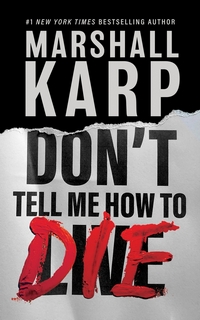
For much of this book, it felt like Women’s Commercial Fiction more than anything. But two things kept me from concluding that—1. Marshall Karp is going to write something with a mystery/crime element, period. and 2. that cover image with the blood (or whatever) writing the word “Die.”
Even before I figured out what Karp was up to with this book, it became clear that this fit in more with some of the recent books by Lisa Lutz (particularly The Accomplice)—I’m also thinking of Sascha Rothchild’s Blood Sugar or a restrained Darynda Jones—than it did with a Jennifer Weiner or Abbi Waxman.
So as I was preparing to read this novel, I said that it “looks like a return to his roots” because of some of the blurbs talking about Karp’s humor and so on. When I think of Karp and humor, I think of his Lomax and Biggs series. So that’s what I expected.
I was very wrong. It took less than a couple of pages to realize that this was a different Marshall Karp than I’d ran into before. That’s not an evaluation, that’s a description. Here’s an evaluation: he pulls it off well. Again, see Rothchild or Lutz. The more I think about the Lutz comparison, the more I like it—if you think of the change between her Spellman Files and things like The Accomplice, Karp’s new tone is somewhat similar.
Either way, you’re getting a guy who knows how to write comedy, no matter the flavor. He also knows when to pull back and let the drama take center stage.
I know that when it comes to psychological or domestic thrillers the twists are what generate headlines. While I appreciate a good twist as much as the next reader, what’s more important to me is the reveal of the twist. Plots go in strange directions sometimes—it’s how the author prepares the reader for the twist and how the author lets us in on the strange direction.
As an illustration: Benjamin Stevenson’s Everyone in My Family Has Killed Someone has a moment when he says that so-and-so enjoyed her final cigarette, or maybe she lit it, or something like that. The phrase “final cigarette” is the important part. Now, the reader has two guesses as to why that phrase is used here—1. She quits smoking after this or 2. She dies. As this is in the middle of a stressful weekend with her ex-husband’s family, with her on the verge of financial problem, her ex is definitely not coming back and is with his new partner, they’re all snowed in, there’s a killer on the loose, and the book isn’t close to ending…you pretty much know how that’s going to go for her. Does that matter? Not really, it’s how Stevenson sets us up for this and then how he shows us how she dies that’s important.
Now I’m not going to spill any of the twists or reveals in this book, but Karp does a few things like Stevenson did—they’re even more blatant, you could say. But he will distract you, make you wait a lot longer for the reveal, and will throw a bunch of red herrings at you (I won’t tell you how often I made a note like, “Oh, is this how he pays off X?” because I’d also have to tell you that I was wrong equally often). I didn’t guess anything right.
He also pulls a few things from seemingly nowhere—but explains them in such a way that you retrospectively say, “of course” or “y’know, that makes sense.”
This is one of those books that you’re only going to keep reading (initially, anyway) if you get invested in Maggie, our protagonist/narrator quickly. Other elements might keep you going eventually, but Maggie’s diagnosis, Maggie’s plight (and kooky plan), and character/voice are what’s going to get you to commit.
If you ask me, you’re going to want to commit. You can tell from the beginning that she’s smart. She’s driven. She’s brave (at least in the face of some things…like dying). She loves her family. She’s gone through a lot. She’s pretty funny. (probably pretty, too, but that’s not that important, especially when you see the world through her eyes). You later learn what a good friend she can be and why she was elected.
Now, like a parfait, or an onion, or an ogre—Maggie has layers. I’m not going to talk about those layers because you need to discover them for yourself. But she has them—and you keep learning about those layers as the book continues. Each layer—for me, anyway, and I predict for most readers—got me to like her more as a person (pretty frequently) and as a character (always). Is there a difference? Sure—one extreme example (that doesn’t apply here, but gets my point across) would be Dr. Lecter. Fantastic character, but not someone you’d want to hang out with.
Is this as good as the first two or three Lomax and Biggs books? Probably not—although it’s been a long time since I last re-read them, also this is a different sub-genre, so I could be wrong. Also, that’s really high bar. Is this better than anything else that Karp has done since then? Yes.
The way that Karp unspooled this was so well done. I sat back and enjoyed the ride more often than I “ought” to have, and didn’t take as many notes and whatnot as usual—I was just into the ride that much that continuing was more important than jotting things down. At least in the moment…I’d be sure to write that idea down, right after this part. Well, maybe the next bit.
I should note that I dipped back in a couple of times while writing this post to fact-check myself and even now I ended up reading a few pages or a chapter when I only needed a clause or a name. Karp just doesn’t want to let me go.
Anyone picking this book up—unless you do it blindly (and even then it’s told to you within a chapter)—knows that Maggie’s mom died almost two decades before these events. And yet—in her final moments, her last personal triumph—I was moved. I shouldn’t care this much about the impending death of a character I knew was long dead. But I did. And again, even though it’s right there in the description, “And one absolutely evil woman practically destroyed [“my suddenly single father”‘s] life, mine, and my sister’s,” watching it feels like a traffic accident—you know it’s coming, but you can’t stop watching.
Maggie’s plot, when introduced, feels like a silly rom-com plot that’s going to blow up in her face. And for most of the book, her sister treats it that way. You kind of do while you’re reading, too. It feels like one, you react like one. Then…well, you start to take her seriously. As does her sister, Lizzie (eventually).
Speaking of Lizzie. I really would’ve enjoyed more time with her, she seemed like a hoot and a half. Her kids Katie and Kevin were also the kind of characters you want more of. And if we were looking at any other part of Maggie’s life, we would’ve had more time with all three and we would’ve been perfectly content watching them go through their life. But this book just introduces them, lets us spend some time enjoying them (in pretty un-enjoyable circumstances) and then we just have to imagine the rest of their lives. Which is enjoyable enough.
I feel like I’ve talked around the book a lot, hopefully, I’ve talked about it enough. But I’m not sure what else to say. On March 4, go pick yourself up a copy (or go put it on reserve at your library now, and read it ASAP). Then we can email or chat or something about it and I can say all the things I can’t put here.
Don’t Tell Me How to Die isn’t the Marshall Karp I know, enjoy, and respect. It’s a new flavor of him that I’m getting to know, that I did enjoy and respect. And I can’t wait to see what other sides he has up his sleeve (to torture the metaphor). I’m trying too hard. I’m babbling. Go read this and I’ll shut up. Deal?
Disclaimer: I received this eARC from Blackstone Publishing via NetGalley in exchange for this post which contains my honest opinion—thanks to both for this.
This post contains an affiliate link. If you purchase from it, I will get a small commission at no additional cost to you. As always, the opinions expressed are my own.
Powered by WordPress & Theme by Anders Norén