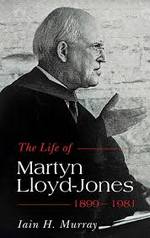
The Life of Martyn Lloyd-Jones – 1899-1981 by Iain H. Murray

The Life of Martyn Lloyd-Jones - 1899-1981The Life of Martyn Lloyd-Jones – 1899-1981

by Iain H. Murray
Trade Paperback, 496 pg.
Banner Of Truth, 2013
Read: Jan. 12 – Feb. 9, 2014

This is a frequently flawed book, and at times it was only a sense of duty/politeness to the person who eagerly pressed it into my hands that I persevered. But in the end, I couldn’t help but walk away awed at both the man and the book that tried to summarize his life (yet, I don’t think you’ll see me picking up the two-volume version this was condensed from anytime soon).

The first fifty or so pages, recounting his youth, medical school/early practice, and conversion — and even the beginnings of his ministry — were pretty tedious, and more often than not, far too detailed.

Once Murray was able to focus on his first years of ministry in Wales, and his eventual move to Westminster Chapel, the book took off. It’s clear that the hand of the Lord was upon his ministry, and gave him much evident fruit. It’s impossible to disagree with Murray’s explanations for Lloyd-Jones’ success, and I can only imagine ministers would benefit from reading this with an eye for how to reform their own work. Throughout the chapters detailing his pastoral work — particularly the chapter “Sundays in the 1950s” — Murray’s affection for, and devotion to, Lloyd-Jones threatens to overwhelm the narrative, and at times it seems that “the Doctor” could do nothing wrong. I remarked during that chapter that I wasn’t sure if I was reading biography or hagiography, which may seem a bit harsh. But really, Murray became a rabid fanboy here.

The chapters devoted to the controversies over Evangelical unity, conflict with Graham, Packer and Stott (and names that didn’t register with me) were again, far too detailed for my taste — but it’s understandable, I think. Murray was trying to set the record straight on certain issues/incidents, to make sure the historical record gets Lloyd-Jones’ perspective on them (particularly when others, claiming to speak on his behalf, got it wrong). Not having a dog in those fights, my eyes glazed over more than I liked, but I sure didn’t go back and re-read to make certain I didn’t miss anything. Murray is able here to critique Lloyd-Jones a bit in these chapters, which was good to see.

The final chapter, depicting the final three years of his life, as his cancer was gaining the upper hand, was moving, inspirational and convicting. Lloyd-Jones continued to preach when able, to correspond with and advise younger ministers, write and start Murray on his biography — spurred on by the knowledge that his death was near. Lloyd-Jones spoke of paying attention to death, dying the right way — with an eye to the glory he was going to, and anticipating it. No way that I try to summarize will do it justice, just read it for yourself. You might want to keep a Kleenex™™ handy. This chapter made all the stuff I’d grumbled and trudged through worth it.

Not Murray’s best — but obviously a work of love for the subject. Can’t imagine a little of that won’t rub off on the reader.

—–

4 Stars

Saturday Miscellany — 2/8

Odds ‘n ends over the week about books and reading that caught my eye. You’ve probably seen some/most/all of them, but just in case:

    This Week’s New Releases I’m Excited About and/or You’ll Probably See Here Soon — with a side of being annoyed with myself:

  • Cress by Marissa Meyer — the latest in the SF/Fairy Tale mashup series. This one snuck up on me — I’m #58 on my library’s reserve list. siiiiigh
  • Broken Homes by Ben Aaronovitch — Argh. I know I pre-ordered this months ago. I know it. Just can’t prove it. Should’ve been reading it by now. Anyhow, this Apprentice Magician/British Policeman series is great, so looking forward to this one.

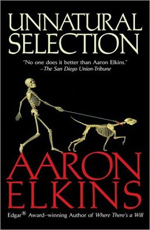
Unnatural Selection by Aaron J. Elkins

Unnatural Selection (Gideon Oliver Mystery, #13)Unnatural Selection

by Aaron Elkins
Hardcover, 288 pg.
Berkley Hardcover, 2006
Read: Dec. 26-27, 2014

So Gideon and Julie are off to the Scilly Isles in the UK for Julie to attend an ecology conference. While she’s busy talking about ways to save the world, Gideon plans on some sightseeing, hanging out in a museum doing some volunteer work, enjoying life.

But, no surprise here, Gideon stumbles onto a bone that doesn’t belong there. And we’re off to the races with the Skeleton Detective.

Elkins doesn’t come up with an excuse for Mr. and Mrs. Lau to come along to Julie’s conference, but thankfully, there are a couple of British policemen to fill his skeptical-then-fawning shoes. Which is not a knock on everyone’s favorite FBI Agent, it’s his role in the books, I get that. I enjoy him, even when the role gets tired. Anyway, the local constabulary are a fun pair.

Elkins clearly did some research on cadaver (et cetera) dogs, and he was eager to share it. Yeah, it was info-dumpy, which generally turns me off. But, Elkins made his dog expert pretty entertaining — and hey, it was about dogs. Ended up enjoying those bits.

Amusing characters, interesting puzzle, a new location, and Elkins’ writing is always enjoyable — put that all together for a thoroughly entertaining book. This wasn’t the greatest mystery I’ve read, or even the best of this series, but it was fun. That’s good enough.

—–

3 Stars

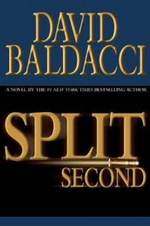
Split Second by David Baldacci

Split Second (Sean King & Michelle Maxwell, #1)Split Second

by David Baldacci
Series: King & Maxwell, #1

Hardcover, 416 pages
Published August 31st 2003 by Warner Books
Read: Jan. 21-22, 2014

This is the pilot novel for the King and Maxwell series. It reads so much like a TV pilot that I almost have to think of it that way — introducing our characters, learning their back-stories, how they get together as a team, and set off on a new set of adventures. It might as well have an image of Stephen J. Cannell tearing a page out of his typewriter at the end.

Sean King is a former Secret Service Agent, turned lawyer when the presidential candidate he was guarding was assassinated right next to him. Eight years later, Michelle Maxwell is guarding another candidate, who’s kidnapped from under her nose. With the clock on her career winding down, Maxwell throws herself into the search — as well as looking for help and guidance from the one former agent who’d understand what she’s going through.

There’s an okay chemistry between the characters — it looks briefly like romance would be in the air, but they turn from that pretty quickly. Maxwell and King settle into an burgeoning friendship as they search for the candidate, sift through lies, rumors, half-truths, and conspiracies that have been building for decades leading up to the kidnapping.

I won’t say I was grabbed by the plot at any point — and actually, I found most of the crimes in question to be pretty far-fetched. But it was good enough (just) to keep me turning the pages. Sometimes, that’s enough.

Like with many TV pilots, it’s hard to tell what the rest of the series is going to be like, but I liked this enough to try the next one. I just hope it’s a little more grounded.

—–

3 Stars

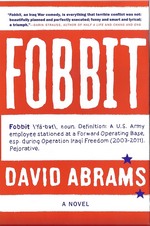
Fobbit by David Abrams

FobbitFobbit

by David Abrams
Paperback, 384 pg,
Grove Press, Black Cat, 2012
Read: Jan. 23-25, 2014

I enjoy a good satire — no matter if the target is one I identify with or oppose, a good satire is a treat. Fobbit didn’t totally work for me as a satire, but it came close.

As the cover says, a Fobbit is someone stationed at the Forward Operating Base during the Iraq war. The novel follows a handful of Fobbits as they try to survive their deployment while accomplishing as much as The Powers That Be allow them to (which includes a surprising number of PowerPoint presentations).

Staff Sergeant Gooding of Public Affairs attempts to keep various media outlets appraised of events, but before he can, he has to run everything up the flagpole — beginning with the impossibly political Lt. Col. Harkleroad. By the time Harkleroad and his superiors get done massaging/mangling the presentation of the facts to suit their needs, CNN, etc. have already discovered the reality, ran their stories, and moved on to something else.

On the other end of things, Sgt. Lumely is on the front-lines, but has to endure the inept command of Capt. Abe Shrinkle, who’s probably just as dangerous to his men as Iraqi insurgents (if not more). Lt. Vic Duret is Shrinkle’s commander, and he’s as frustrated trying to minimize Shrinkle’s damage.

Fobbit starts slow, and builds slower — but, eventually (and organically), the plot picks up and the lives of these poor Fobbits spiral out of control. Then it stopped feeling like a “eat your veggies” kind of read, and one that I could enjoy.

Fobbit‘s not as pointed as Catch-22, or as laugh-out-loud funny as Mash: A Novel About Three Army Doctors — as much as it wants to be in that company. But it’s honest, upfront, and feels authentic.

This is a satire of the circumstances these soldiers found themselves in, about the way the war was being fought, not about whether it should be or not. As nearly as possible, it’s an a-political book — pro-Operation Iraqi Freedom or anti- — it can be appreciated for what it is. Well-written, with characters that are a little more human than satire necessitates, and a world more grounded than expected.

—–

3 Stars

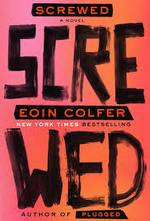
Screwed by Eoin Colfer

Screwed (Daniel McEvoy, #2)Screwed

by Eoin Colfer
Hardcover, 304 pg.
Overlook Hardcover, 2013
Read: Jan. 27-31, 2014

I saw that the sequel to Colfer’s Plugged was out, and I had a dim recollection that I enjoyed Plugged (and can look up my rating on Goodreads), but I can’t remember a lick of it. Which bothered me, but I figure it’ll come back to me with some work — so I put a reserve on it at the library. When I went to pick it up, I still couldn’t remember anything about its predecessor, which still bugged me. I read the jacket copy — doesn’t help, and now it’s driving me crazy. I read the first two pages — nothing. But at the bottom of the second page I read:

And those eyes? Big and blue, rimmed with way too much eyeliner. Men have climbed into hollow wooden horses for eyes like that.

With lines like that, who cares what I remembered? This is a great read, so much fun, and laugh out loud funny when you’re not horrified by the violence. Colfer writes like a Don Winslow who hasn’t slept in a week thanks to existing on a truly inhuman amount of energy drinks.

It’s not long after that observation that the tide starts to turn for Daniel McEvoy, our narrator. The two-bit gangster he angered in Plugged has decided on a way for McEvoy to start to make things right between them. Sure, it’s probably just a set-up, but what choice does he have? Especially with his best friend and the owner of those eyes serving as handy targets.

Before he gets the chance to figure out just what’s going on, Daniel stumbles across his long-lost aunt (in the middle of a decades-long bender), his grandfather’s fourth (or so, I don’t remember exactly) wife, a young wanna-be wiseguy, the wanna-be’s actual wiseguy henchman, the would-be gangster, a couple of corrupt policemen, a masked assassin, a killer lightning bolt, a car at the bottom of the river, and a few other obstacles. Daniel deals with each of these with a combination of world-weary cynicism, gallows humor, an unexpected romanticism with a trace of optimism and lethal force. The latter is really what carries the day, obviously, but it’s the rest that makes reading his exploits worth it — and darn enjoyable.

For example, towards the end of the book, Daniel makes this aside:

The Key to staying alive until you die is to not get yourself killed.
I saved this nugget till close to the end on account of how bleeding obvious it reads, which might bring on a little gnashing of teeth. But to most people not getting yourself killed involves nothing more than just doing what you’re already doing and maybe cutting down on mayonnaise, which is more or less liquid fat.

All Daniel wants to do is hang out with his friends, make some money with the casino/bar he and a partner are opening, and maybe, juuuust maybe pursue a romance. When describing some of the jokes he and his friend are making rather than deal with the harsh reality of their situation, he says

. . . Zeb and I spend a lot of our free time, as two single middle-aged bucks, watching TV. How cool and edgy is that? Most of our references are pop culture and our favorites at the moment are old episodes of the egregiously canceled shows Terriers and Deadwood.

Colfer buys himself and extra half-star or more for name-dropping Terriers and complaining about its cancellation — twice!!*

When you boil things down in the end, Daniel McEvoy is a basically decent man who’s seen and done things that no one should. Which prepares him (possibly makes him seek out) more of the same now. Which doesn’t change the fact that he’s really a good Irish man who likes telling a story and loves to play with language — even if the story (and his life) end up being hyper-violent and he has a propensity for letting his metaphors run out of control. Grab Plugged for context if you want, but definitely grab Screwed and buckle-in for a fun ride.

One more quotation that doesn’t fit anywhere, but made me chuckle enough to copy it down:

[I]f you want to see teenagers crap themselves laughing, try explaining what a pager used to be. You tell ’em about cassette tapes and they think you’re only a lying, old Depends-wearing motherfucker.
The following is a transcript of a conversation I had with Jason’s nephew:
Me: The songs were pressed onto a long tape. Six songs per side, then you turned it over.
Nephew: Turned what over?
Me: The tape in the machine, but you had to be careful or the machine would eat the tape and you’d have to straighten it out with a pencil.
Nephew: Fuck off, Gandalf. You’re making this shit up.

—–

* Not entirely true. It was my plan early on, but the book turned out to be too good to require that.

—–

4 1/2 Stars

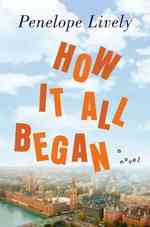
Dusted Off: How It All Began by Penelope Lively

How It All BeganHow It All Began by Penelope Lively
Hardcover, 240 pg.
Viking Adult, 2012
Read: May 2-3, 2012

Humbug. What a poorly-written, pretentious little thought-experiment disguised as a novel. In case you haven’t been beaten over the head with it in books, TV and film there’s this thing called Chaos Theory–usually explained by the Butterfly Effect; Lively starts off with one event and then examines how the butterfly of an elderly woman’s mugging effects the lives of 20 or so others.

As far as that goes…a decent setup. But we have to keep revisiting the conceit, every few chapters we have to have a recap that all of the things going on are because of this mugging. Over and over again. And about halfway through (minor spoiler), we get this big lecture about Chaos Theory. Juuuust in case we haven’t got it yet.

When she’s not browbeating us with that, Lively tells some okay stories. With the stress on “tells”, rarely, if ever, showing.

The best thing I can say is that at least Lively doesn’t interrupt really appealing characters in the middle of fun, compelling stories with this application of Chaos Theory.

—–

1 Star

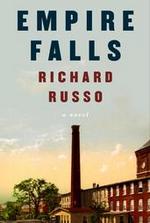
Dusted Off: Empire Falls by Richard Russo

Empire FallsEmpire Falls by Richard Russo
Hardcover, 483 pg.
Knopf, 2011
Read: May 22-27, 2012

Wow. Just wow. Not sure what else to say.

I’d suspected/wondered that something like the big climactic event was going to happen–yet when it happened, I was on the edge of my seat, saying “No fraking way!” (and just about decapitated my son who interrupted me during the middle of it) But even before that, the book had grabbed me with its humor, tragedy and humanity.

This one’s going to haunt me (in good and bad ways) for a long time.

—–

5 Stars

Saturday Miscellany — 2/1/14

Odds ‘n ends over the week about books and reading that caught my eye. You’ve probably seen some/most/all of them, but just in case:

    This Week’s New Releases I’m Excited About and/or You’ll Probably See Here Soon. Looks like a bumper crop of good stuff out this week, had a lot of things to sort through.

  • Murder in the Ball Park by Robert Goldsborough — My library had it on the shelf last week, but the 28th was the official release date. My less than positive review is here.
  • Arcanum by Simon Morden — intriguing concept.
  • The Chapel Perilous by Kevin Hearne — Hearne. Iron Druid short. Really don’t need to say more. 33 pages of awesome, I expect.
  • Red Rising by Pierce Brown — hearing many good things — for example, Paul Goat Allen’s Five Reasons You Should Read Pierce Brown’s Red Rising chomping at the bit for this one.
  • http://www.barnesandnoble.com/blog/five-reasons-you-should-read-pierce-browns-red-rising/

  • Shadow Ops: Breach Zone by Myke Cole — the conclusion to the great trilogy is here — am about 1/3 through it at the moment, and it’s hooks are deeply imbedded in me. Frankly, I sorta resent taking the time to do this post today rather than finish it. Check out Cole’s Big Idea post about it if you’re curious. Pretty sure there are entries for the first two, as well.

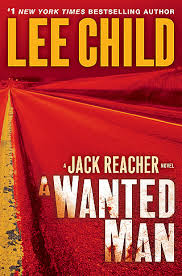
A Wanted Man by Lee Child

A Wanted Man (Jack Reacher, #17)A Wanted Man

by Lee Child
Series: Jack Reacher, #17

Hardcover, 405 pg.
Delacorte Press, 2012
Read: Dec. 16-17, 2013

Despite the fact that I’d written 2 paragraphs of this while reading it, I had a really hard time coming up with something to say here. This is about the most reliable series I know — how do you say something new and/or interesting about Old Faithful? Every 60-110 minutes it goes off, you can count on it. Every year or so, Lee Child let’s Jack Reacher go off. This is not a problem at all for the reader — far from it — but it’s a pain in the rear if you’re trying to write about it.

The greatest strength of this series is how different each novel/adventure is, totally unlike the rest — and yet each is quintessentially Reacher. There’s an unmistakable feel to reading about everyone’s favorite nomadic ex-MP.

This time out, Reacher’s still hitchhiking his way to Virginia — the same trip he started shortly after 61 Hours, and is picked up by two men and a woman on their way back from a corporate retreat (he assumes). He starts to notice a few things not quite right about the way they’re acting, but on page 33 he says, “Not my problem.” Which pretty much guarantees we’ll be spending the next 400 pages dealing with these people.

So what makes this one different from all the rest? It’s the twistiest, turniest Reacher in ages (if not ever). Like any good suspense writer, Child specializes in throwing a good curveball or five at you in the course of a novel — but (again, this is common with the best) usually you can look back at what’s come before and see where that plot twist came from. But there were a couple of turns in this one that took me totally by surprise. Not that Child cheated at all, or used a Deus ex machina, or the like. Just honest, out of the blue, surprises. I would’ve enjoyed the novel without those touches, but having them was a pleasant bonus.

I’m really looking forward to this next adventure — Reacher’s worked harder to get to Virginia this time than we’ve seen him before. He’s had a goal longer than we’re used to. I expect a humdinger of a read next time — and who knows?* Maybe it’ll be worth more than just one.

—–

* who knew? Actually got to use the word “humdinger.”

—–

4 1/2 Stars

Page 590 of 632

Powered by WordPress & Theme by Anders Norén