Dusted Off: The Help by Kathryn Stockett

The HelpThe Help

by Kathryn Stockett
Paperback, 522 pg.
Berkley Publishing Group, 2011

I had very low expectations going into this one–and was pretty much reading it only to placate my wife and mother. I expected a slow, dry and drab book about the woes of domestic help under the oppressive thumb of racism; overwritten, overly-sentimental, impressed with its own importance and appealing primarily to Oprah viewers.

Yeah, I can be snob, what’s your point?

This is a book with zing–I couldn’t believe how quickly I read it, there’s a lot of life to Stockett’s language and it carries you right through. And while no one could confuse this for a comedy, it’s very funny–laugh out loud funny in a couple of instances. The laughs being rooted in–and surrounded by–tragedy serve to make this feel realistic, this could be a non-fiction work and it’d be fairly believable.

I tired early on of the novel reminding me over and over that these women were “brave” and doing something “important” and “dangerous.” Eventually Stockett stopped telling me that, and showed me their bravery and why what they were doing was important and dangerous–and that’s when the novel really took off. But that’s really my only quibble.

It’d have been very easy to make the characters into cookie-cutter racists, black-hearted villains with no redeeming qualities, wholly bent on oppression of their servants. But The Help avoids that. The “worst” character is just a horrid person–and she’d be a horrid person if she appeared in book about the travails of au pairs in the Hamptons rather than a book about the struggles of black housekeepers. Conversely, the heroines here aren’t paragons of virtue–they are flawed, they are frightened they are ruled by their society, too (just not as much as other people are).

This is a very, very good book that deserves to be read (and will reward the reader in turn), and deserves most of the accolades it’s getting. No, it’s not nearly as good as To Kill A Mockingbird, despite what the endorsements may say–but that’s okay, very few books are, and that shouldn’t detract from how wonderful a book this is.

—–

5 Stars

Dusted Off: That Old Cape Magic by Richard Russo

That Old Cape MagicThat Old Cape Magic

by Richard Russo
Hardcover, 261 pg.
Knopf, 2009

I feel a little odd giving something by a legendary guy like Russo 2 out of 5 stars, but…eh. It was either not as funny as it was trying to be (while telling a serious story), or it was a serious (somewhat tragic) book that accidentally elicited chuckles. Either way, not entirely successful. It felt like Richard Russo tried to write a Jonathan Tropper novel and didn’t quite pull it off.

Well-written to be sure, and not a waste of reading time…but it wasn’t what it could’ve been. Sorta like the marriages the book talked about that were crumbling in the light of the two nascent ones.

—–

2 Stars

Dusted Off: Bright’s Passage by Josh Ritter

Bright's PassageBright’s Passage

by Josh Ritter
Hardcover, 193 pg.
The Dial Press, 2011

I wanted to like this a lot more than I found myself able to–maybe it’s just that I didn’t get it, I don’t know. I found this to be an over-written, messy bore. Sorry, Mr. Ritter, I’ll keep listening (and reading in the future), but…this just didn’t work at all for me.

—–

2 Stars

Saturday Miscellany – 11/2

Odds ‘n ends over the week about books and reading that caught my eye. You’ve probably seen some/most/all of them, but just in case:

    This Week’s New Releases I’m Excited About and/or You’ll Probably See Here Soon:

  • Behind the Sofa by Steve Berry — this looks like a lot of fun for Whovians

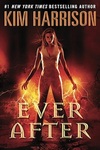
Ever After by Kim Harrison

Ever After
Ever After

by Kim Harrison
Series: The Hollows, #11
Mass Market Paperback, 528 pg.
Harper Voyager, 2013

So here we are at Hollows #11 — or as I prefer to think of them, The Adventures of Jenks and his Tenants. It’s the best in quite a while, if you ask me.* I’ve had a hard time maintaining a real interest in these lately, and have only persisted because I’ve read so many of them and I’m curious about how Harrison brings the series to a close. The nominal main character, Rachel, did make a radical developmental leap two books back — and while that served as the core of #10, I think it paid off here.

Thankfully.

Since the events at the end of #9, Rachel’s been more proactive, less wishy-washy about her personal life, and generally more interesting than she’d been. This is definitely the best use of her I can remember.

Ivy is still criminally misused and underused. I can’t believe that Harrison still cares about her at all — keeping her “off screen” so much, and then having her do practically nothing meaningful once she shows. Yes, I can see where the groundwork is being laid for a major Ivy storyline, but at this point, I have no confidence that we’ll see it — and if we do? I can’t see it working too well.

Jenks, on the other hand, played an important role throughout — his presence effected the story, he mattered. Not just because I like him better than anyone else in this universe, but the way Harrison uses him is so far superior to any other character, I like him more and more each passing novel. The stuff with his kids, and Belle, while not that important, in the grand scheme of things, grounds the novel and the characters.

Trent continues to grow on me — I was ready for the series to dump him ages ago, but now I really enjoy him. I still think that it’d have made sense, and been a healthier/wiser choice for Ivy and Rachel to have nothing more to do with him after maybe the third book, but that’s clearly not what Harrison wanted, and it’s paying off. Best use of him yet — the way he treats, and wanted to treat Rachel throughout this is so much better than he’s done before — character growth is always good. I wish Rachel got a bit more of it to match him.

Couple of quick character moments before I move on — Bis is such a great addition to the series, and this time we get to meet more gargoyles. I wouldn’t mind a few short stories featuring them (nothing against Anton Strout’s gargoyle series, I should add). I even liked Newt and Al for maybe the first time ever — but I really can’t get into the details there.

The seeds for the plot were planted from the beginning of the series, and were watered consistently — so the payoff here was well-earned, and dealt with correctly. The choices that Quen, Trent and Rachel are forced to make, the actions they take aren’t easy and felt like things people would choose to do, not merely decisions made for the sake of moving the story along (something I don’t think Harrison has consistently done). It’s really the best since, maybe book #4 in that regard.

The last chapter served as a really good epilogue, as well as setting the stage for the future — along with providing a lot of fodder for the various ‘shippers out there (most of this book does that, really). If Harrison’s doing what I think she’s doing here, I will be pleased.

In the end, a pleasant addition to this series, one that exceeded my expectations — can’t ask for much more than that.

* Apparently, I said the same thing after #10, but I don’t remember thinking that.

—–

3.5 Stars

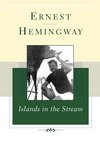
Islands in the Stream by Ernest Hemingway

Islands in the Stream

by Ernest Hemingway

I typically don’t bother with posthumous novels, but for some reason* I went ahead and tried this one, and on the whole, I’m glad I did, despite my rating. There’s a lot to the characters in this novel that weren’t in the previous novels. Still, as much as I appreciated various aspects of the novel, I just couldn’t get into it as a whole.

Part 3, “At Sea,” did almost nothing for me — Thomas Hudson is almost impossible to recognize, and it’s probably harder to sympathize with him — or his crew. Given that they’re hunting Nazi’s, it should be a pretty easy sell.

Part 2, “Cuba,” had some really interesting moments, some dialogue that leaps off the page, and once his first wife appears, Hudson becomes likable for the first time since Part 1. I don’t recall Hemingway’s characters having a pet before, and while Hudson’s relationships with his cats seem more than a little strange, just having them made him seem more human. Like in Part 3, he’s very different from the character we met in Part 1, but it’s a bit more understandable here. While I didn’t find that much to like about the character, the physical descriptions he gives towards Honest Lil are about the best, and most evocative, I remember in Hemingway.

Part 1, “Bimini,” is what made this worth the read. Other than the kid in The Old Man and the Sea (which a significant portion of this section evokes), we don’t really see children in Hemingway. But here, Thomas Hudson’s two sons from different wives are spending a few weeks with him, a chance for them all to reconnect, and give their mothers some sort of break. I really liked these kids — probably more than any other characters he’s devised. And Hudson’s relatable, sympathetic, and even likable as a person — something that he loses quickly, and only regains briefly toward the end of Part 2.

Honestly, if you’re inclined to give this a try, only read Part 1 — you’ll be happier for it, and the scenes with Hudson and one or both sons are really great. Otherwise, you probably have better things do with your time.

—–

* I’d already checked it out from the library before I found that out.

—–

2 Stars

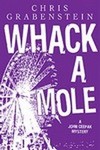
Whack A Mole by Chris Grabenstein

Whack A Mole
Whack A Mole

by Chris Grabenstein
Hardcover, 320 pg.
Carroll & Graf, 2007

How does Sea Haven, NJ continue to have summer tourism? For three years straight, the peaceful, quaint tourist town has been shaken by murders — some pretty ghastly. Sure, they’ve got a police chief and a mayor dedicated to keeping the havoc and mayhem under wraps. That’s part of it. And perhaps people looking to spend a week or two along the beach in Jersey aren’t the most discriminating of people (suddenly, I’m thinking of a MTV series).

Another factor, of course, has to be how the Sea Haven police deal with these murderers. In particular, rookie officer Danny Boyle and his partner John Ceepak. Ceepak’s practically a modern-day paladin — honor-bound, noble, with a deep sense of justice, law and order, infinitely patient with his partner — who spends almost every off-duty hour trying to learn all he can about forensic and investigation methods. If not for Ceepak, Boyle’d probably be on track for a life of partying, waiting tables, and trying to stay entertained. But now he’s on-track to become a better-than-average cop.

This time out, Ceepak and Danny are on the track of a serial killer who was pretty busy in the late 1970s and 1980s, but took a decade or two off — but now he’s back on his holy crusade to rid the world — or at least Sea Haven — from promiscuous young women. Of course, last time he was active, Ceepak wasn’t anywhere near Sea Haven (or a police force), things are going to go differently for the killer this time.

Grabenstein’s style is what makes these work — the mysteries, the situations, the characters, the setting — they’d probably be okay. But Grabenstein makes them sparkle. These are occasionally laugh-out-loud funny, but mostly these stories are just told with a dazzling wit, Danny’s voice is naive and worldy-wise at the same time — his devotion to his partner, along with his inapplicability of really understanding him, make me think of the Archie Goodwin/Nero Wolfe pairing. Ceepak’s too good to be true, but Danny’s incredibly believable, and as long as he believes in Ceepak, the reader does, too.

Good, solid entry in this series that I hope keeps going for a long time.

—–

3.5 Stars

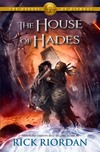
The House of Hades by Rick Riordan

The House of Hades
The House of Hades

by Rick Riordan
Hardcover, 597 pg.
Hyperion Books, 2013

I guess I already said the essence of what I have to say about this back when I checked in midway. This is a fun read, but a tad formulaic. However, it’s Riordan’s formula, so he pulls it off very well.

Hades didn’t charm me as much as his book usually do, and I’m not sure if that’s just me, or if it was a flaw in the book. Part of it was knowing that there was one more book, no matter what victories the Campers scored, they were only going to set the stage for the ultimate battle. Even as I say that, I know that’s not the case — but a lot of it just felt like marking time until the final installment next year.

The central conceit of Riordan’s mythology books is that these kids — near-teens or teenagers — are beating various and sundry mythological creatures — from monsters, to nymphs, to Titans or gods — in a variety of contests, even in battles to the death. Which can be hard to swallow sometimes, if you stop and think about it. But this is a common thing even in the old myths — mortals outsmarting these types. Too many of these contests in Hades are resolved by the Campers goading their opponents into making an obviously stupid move. Once or twice a novel, they could get away with it. I should’ve written it down, but he used that trick at least three times (maybe four or five) — in any event, it was enough that I groaned at least twice.

I don’t want to come down to hard on this book, I did like it. I haven’t chuckled at an obituary like I did at the one included in this book in a long time (you were supposed to, I’m not that twisted). There were some great character moments, some good personal growth — most of which I can’t get into without getting really spoilery. But, in short — Frank’s growth (in every sense of the word) was fantastic; Percy (and to an extent, Leo) realizing some of his former blunders and broken promises — he really comes off looking far less heroic and more human (which ends up making him more heroic). I do wish we’d had a bit more Reyna, I think she was given short-shrift, but what she did was probably more important in the end than what happened in most of the book.

Leo Valdez, however, is the hero of this book (and he’s come close to being the hero of one or two others in this series). Riordan really makes him shine throughout. It’s a real pleasure to read every one of his scenes — whether he’s the point-of-view character for that chapter or not.

I’m looking forward to the final book in this series, I do fear that it’ll be the last Riordan series I read. Unless he returns to adult fiction, that is. I have one son that currently provides me excuses to read Riordan, but he’s getting a bit long in the tooth for these books and has pretty much decided this is it for him. Hopefully, we can get his little brother into them, so I can keep going.

—–

3 Stars

Dusted Off: Beauty Queens by Libba Bray

Beauty QueensBeauty Queens

by Libba Bray
Hardcover, 396 pg.
Scholastic Press, 2011

This book is just fun. Are the characters over the top? Yup. Is it too preachy at times? Oh yeah. Does Bray hit the same target over and over and over again? Yup. But usually those targets have it coming.

There are plenty of flaws in this book, but Bray’s style, tone and message(s) work so well that you ignore them easily and forgive them all even more easily. A great, fun read–even for a guy like me who is nowhere near the target audience.

—–

4 Stars

Dusted Off: I Just Want My Pants Back by David Rosen

I Just Want My Pants BackI Just Want My Pants Back

by David Rosen
Paperback, 240 pg.
Broadway Books, 2007

This is a Coming of Age novel by a would-be Nick Hornby. Frequently amusing, but fairly paint-by-numbers. There’s virtually no plot point that couldn’t be predicted the instant a character is introduced.

There are plenty of fun turns of phrase, and Rosen definitely has a knack for this thing–I just hope that next time out the story is as good as the writer telling it.

—–

2 Stars

Page 598 of 632

Powered by WordPress & Theme by Anders Norén