Steam Opera by James T. Lambert: Choosing It Not Because It Was Easy…

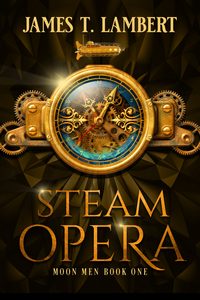
Cover to Steam Opera by James T LambertSteam Opera

by James T. Lambert

DETAILS:
Series: Moon Men, Book One
Publisher: Bert Books
Publication Date: November 18, 2022
Format: Paperback
Length: 416 pg.
Read Date: July 8-12, 2024

What’s Steam Opera About?

I’m both tired and apt to meander too much when trying to answer this question, so I’m just going to lift the answer from Lambert’s website:

London, England, 1894

Patrick Smythe lives a comfortable life in London coming up with new inventions. His close friend Thomas Melton finances many of these ventures and together they advance technology. Geoffrey Trenton takes the occasional investigative work after retiring from Scotland Yard.

Airships fill the sky

The world is on the move with dirigibles and Zeppelins hauling freight and passengers. On land and sea people travel at will in an era of plenty.

Unbridled invention fills the laboratories

New discoveries fill the news as scientists probe past the boundaries of human knowledge. Every field advances as knowledge of the natural world drives new innovation.

Telescopes scan the heavens

The Royal Observatory at Greenwich has a new telescope and the astronomers are using it to view the universe. Even when they’ve been told to take the night off. A strange discovery and a brutal murder draws Trenton out of retirement to investigate.

And we want to go to the moon!

Patrick develops his most ambitious project: a trip to the moon and back! With Thomas’s help securing financing and Trenton running security, what could possibly go wrong? But a mysterious organization wants to prevent this and will go to any length to stop them!

My Big Complaint

The next section will touch on a maybe larger concern. Or maybe it’s a quirk. I’m not sure. But I had an easier time getting over it than this part. There’s a quick arc that introduces us to the future security chief for this endeavor—it starts out pretty interesting, maybe more interesting than the “go to the moon” story at that point. And just as that story gets your hooks into you…it’s dropped. I do think that I can see where and how Lambert is going to pick it up again in the future. But the way he abandoned the story in this novel was abrupt and off-putting.

Lambert is capable of better.

Um…Where’s all the Steam?

You call something Steam Opera, you set it in the latter 1800s in London, you make it about inventors and engineers (among others), you give it that color scheme and cover design—you sorta indicate to your reader that this is going to be a Steampunk novel.

But we really don’t get one—we get a lot of Zepplins and dirigibles, science that’s more advanced than it should be, and the rest of it is pretty era-appropriate. No gadgets, no science that’s hard to pull off on this side of the Industrial or Digital Revolutions. Sure, there are plenty of people wearing goggles—but that’s about it. This is the least Steam-punky Steampunk I think I’ve read.

And I know Lambert can pull off Steampunk gadgets—Aether Powered demonstrated that clearly. So why not here?

Really, why not?

So, what did I think about Steam Opera?

Okay—all I’ve really said after the description sounds negative, and I don’t want to sound that way. Because once you get past the above quibbles (which is really pretty easy), this is a perfectly entertaining read.

This is easily the most ambitious of Lambert’s first three novels, and his writing has improved over what his first books delivered (and I liked those I want to stress). His characters, prose, eye for detail, and imagination are better represented here (as is a capability to carry a story for another 100 pages or so than he has in the past). If he keeps improving like this, he should get the fanbase he deserves.

Lambert does a good job with the pacing—sometimes it seems he speeds up more than is advisable, and occasionally he swings the other way—but overall, he keeps things moving well enough to keep you engaged while dipping into some pretty technical areas (even if the technology is made up). It’d have been very easy for him to get so into the technical descriptions that he’d kill any momentum and turn this thing into a slog. All things considered, he made the right choices on that front.

And the technical bits themselves? I think Lambert really succeded there—both the way he adapted Zepplin-esque technology to mimic the work that the Atlas and other rockets did in our timeline and in the way he described their flight while still in Earth’s atmosphere—I bought it all. It seemed plausible enough for this world (moreso than, say, the music devices that The Ministry of Peculiar Occurrences enjoyed, for example)—particularly the in-flight moments.

I wouldn’t have minded some more named characters—and some female characters would’ve been good to see*. This is very much a book about Moon Men. However, the characters we did get were engaging and interesting (even the antagonists). The more time we spent with all of them, the more I wanted to spend time with them—which is always a good sign.

* The lack of female characters probably deserves its own section, I now realize—but what more is there to say? Yes, the Victorian-era was dominated by men in engineering and business, so it helps things ocme across as more realistic to not have women around. But if we’re going for that level of realism…maybe keep everyone on Earth?

What we learn in the closing pages and what leads up to them is came out of nowhere—or so it seems, but really didn’t. What’s better is it sets up the next book and satisfies your curiosity about “Why is this a Book One?” Sure, it creates a whole bunch of new curiosity about Book Two (and maybe beyond, I’m not sure how long Lambert is thinking), but that’s the point. As long as you give me some answers, you can add all the questions you want.

In short, I had plenty of fun with this book and this world, and am eager to return to it. As good as Lambert’s next release, Relics of War, looks—I can’t help but be irked that it’s not Moon Men Book Two. I really want to know where he’s going with this. But that’s a problem for future-H.C. Present-H.C. is happy to recommend this to you and strongly suggests you become familiar with the very pleasant experience that is reading a James T. Lambert novel.

3 Stars

20 Books of SummerLiterary Locals logo

BOOK SPOTLIGHT: Anticipation by Neil Taylor

I’m very pleased today to welcome The Write Reads Spotlight Blitz for this nifty-looking YA Thriller about AI by Neil Taylor, Anticipation ! The Tour wraps up today, so be sure you check out https://twitter.com/WriteReadsTours to see what people have been saying about the book, what little I’ve read makes this sound promising. But for now, let’s learn a little bit about the book, shall we?
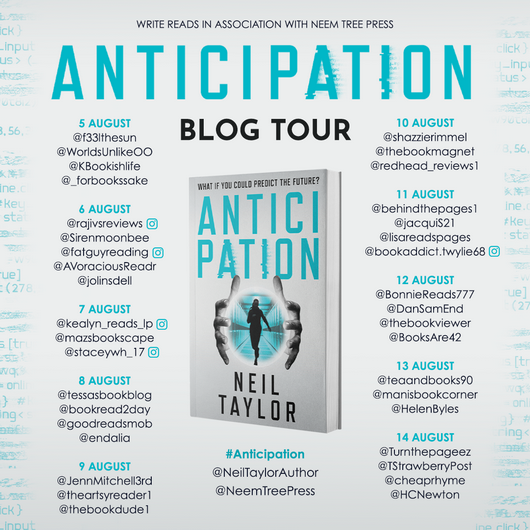
Anticipation by Neil Taylor Tour Banner

Book Details:

Title: Anticipation by Neil Taylor
Genre: YA (12 to 18), AI thriller
Publisher: Neem Tree Press
Format: Paperback/eBook
Length: 304 pages
Publication Date: August 8, 2024 (it’ll be available in the Western Hemisphere in February)
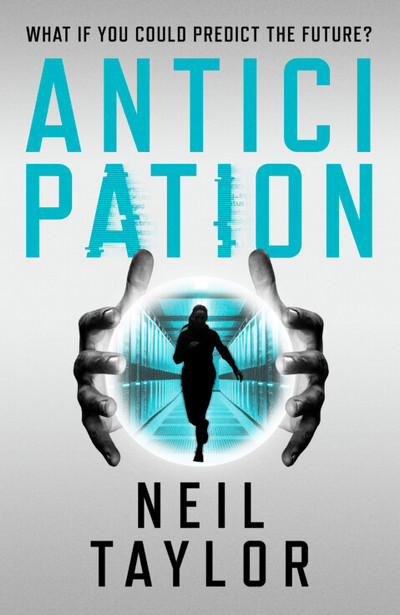
Cover for Anticipation by Neil Taylor

About the Book:

You are being played.

Your every move is being watched by businesses hoping to manipulate your behaviour. Every picture, every post, every like, every follow, every purchase, every search.

When 17-year-old Riya Sudame inherits her father’s secret AI algorithm, she and a handful of carefully selected Keyholders hold the power to predict people’s future using their online data. But with great power comes great responsibility, and they must safeguard it from falling into the wrong hands.

Enter Jim Booker, a powerful social media tycoon, who will stop at nothing to steal the technology for himself. Soon Riya faces a critical choice. Fighting ruthless tech giants seems like an impossible task—wouldn’t it be easier to relinquish her father’s creation in exchange for a normal teenage life?

But if she does, she will have to live with the knowledge that she is the reason that, like everyone, you are being played.

Neil Taylor marks his debut in this dark, twisty AI YA thriller.

Book Links:

Amazon UK ~ Goodreads ~ Neem Tree Press

About the Author:

Neil TaylorNeil Taylor is a software industry professional whose career has spanned Europe, Japan, and the USA. Now based in Durham, England, Neil works remotely for a leading cloud-based software and services company. With more than two decades of software experience, Neil possesses a deep understanding of how company motivations influence customers and users. Fascinated by the convergence of big data and behavioural science in the tech industry, Neil’s debut YA book, “Anticipation,” delves into the perilous implications of unchecked social media and AI development.


My thanks to The Write Reads for the invitation to participate in this tour and the materials they provided.

PUB DAY REPOST: The Last Shield by Cameron Johnston: You Will Sit Up and Say, “Yippee-ki-yay”

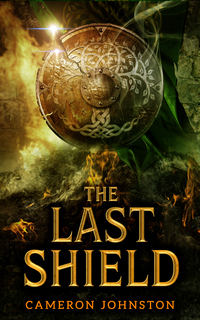
Cover of The Last Shield by Cameron JohnstonThe Last Shield

by Cameron Johnston

DETAILS:
Publisher: Angry Robot
Publication Date: August 13, 2024
Format: eARC
Length: 368 pg.
Read Date: July 31-August 2, 2024
Buy from Bookshop.org Support Indie Bookstores

What’s The Last Shield About?

Briar is the commander of the Shield, the Royal Guard protecting the soon-to-be-King; his uncle, the Lord Regent; and the castle that serves as the capital for the realm of Sunweald. She’s been in the post for several years, also serving as the personal bodyguard and confidant of the regent.

There are two neighboring kingdoms that would like to take over Sunweald, as well as to loot the castle’s vault, which, according to legend, contains the kind of magical weaponry that can remake the world. Keeping that vault safe, secure, and unmolested is one of Briar’s primary responsibilities.

The prince is set to take over in just a couple of years, and Kester is the prototypical spoiled, indolent, and irresponsible royal who no one can imagine can/should assume the throne. Maybe, if he grows up a lot before becoming an adult, but that seems unlikely. Meanwhile, the realm is in the incredibly capable and wise hands of his uncle Alaric

During a seasonal religious rite, an attack against the royal family leaves several guards dead and Briar near death, they have foiled the attempt, but at a great cost. After a long convalescence she’s recovered enough to move around a little bit, but not fit to return to active duty. After half a year of waiting and plotting, the survivors and some mercenary allies attack the castle from within—taking Alaric and some of the staff hostage, and killing others. Briar and Kester happen to be in just the right place and escape the sweep that collected so many. It’s up to them, each in their own way, to use Briar’s knowledge of the castle (and hidden passageways) to mount a rescue mission and to take down the small force who have taken over.

Shields

I’m talking literal shields here, not Briar and her guard.

Growing up, the only way I saw shields used was defensively—to block arrows or swords—until someone had to valiantly discard them because their dominant hand/arm was injured and they had to desperately use their shield arm to wield a sword, obviously. The only exception to this was Captain America (and a DC clone or two) and his implausible use of his.

And that’s pretty much how I saw the objects until now. But Clay Cooper and Briar have got me thinking about them as offensive weapons now. Their shields are very different in terms of size and material—but they’re both effectively used as a weapon. Briar does use her defensively, of course, but both prior to her time as a guerrilla fighter and now, she shows that a shield can be a potent weapon.

So my questions are: Have I missed how people use these things offensively all along? (either by reading the wrong things or not remembering anything but the swordplay, archery, and/or magic) Or have we entered an age where authors are embracing the full range of these objects strapped to an arm?

The Die Hard-Ness of it All

The Publisher’s description of this novel starts off with, “A gender-flipped Die Hard set in a mysterious castle.” And that’s absolutely what the book is—is that description reductionistic? Yes. Is it apt? Also, yes. But it’s also so much more than that summary. (but what a great elevator, pitch, right?)

I do not know if Johnston set out to write this as a Fantasy Die Hard, but at some point, he had to realize that’s what he was doing and (if you ask me) leaned into it. There are just too many similarities for me to believe anything else. But really, there’s one paragraph that seals the deal—I won’t give you details (but you’ll recognize it), but it is borrowing/appropriating/stealing an indelible image from the film. After reading that I knew it wasn’t just some ingenious marketer at Angry Robot who tagged it as “A gender-flipped Die Hard set in a mysterious castle,” as I half-way wondered, but it was Johnston’s intention. There’s just no way he does that.

I should stress that just because it’s a version of a movie that you likely know very well—do not think you know how this book is going to go. There’s plenty of suspense for the reader, as well as magical creatures that might have sent John McClane running for the hills.

Would I have been thoroughly entertained by The Last Shield without all the parallels to one of my all-time favorite movies? Yes. But being able to watch Johnston’s take on McClane, Nakatomi Tower, and the rest? It’s just an extra layer of frosting on an already delicious cake.

I do wish we’d gotten a Thornberg/William Atherton-esque character (should that get a spoiler warning), a non-villain that you despise almost as much as (if not more than) Gruber/his crew. Not because the novel was lacking anything, it’s just satisfying to see them get their comeuppance.

So, what did I think about The Last Shield?

This is a heckuva thrill-ride. Like its cinematic predecessor, the action in this novel is top-notch. It’s not non-stop, there are moments of reflection, of exhaustion, of trying to figure out how to survive—much less succeed against this force. The set-up to the main action also takes longer than you might think (but you should really just relax and let Johnston do his thing, it’s all important and helps establish what comes later). I was hooked almost immediately—and while I wondered when the “Die Hard” part of the book would kick in, I really didn’t care. I was having a good enough time with Briar, Alaric, and the rest.

But, boy howdy, when the action kicked in? What was a perfectly enjoyable book got so much better. Johnston can write an action scene—whether the action is hand-to-hand, bladed weapon against something else, supernatural-based…you name it, he can handle it with panache and aplomb. It’s well paced—with just enough downtime between fight scenes for you and the characters to be ready for the next. Once the book builds up enough steam, forget it—you’re not going to willingly put it down.

It’s not all about swords, shields, axes, and spells, however. Briar dealing with her injuries and recovery—both before the “Hans Gruber” moment and afterward—is done to almost perfection. There’s real growth—and real injury (and not just physical)—to be seen in several other characters. No one survives this time unscathed in one way or another.

The noted attorney and political operative Ainsley Hayes, noted, “they’re all about duty” when discussing the work of Gilbert and Sullivan.* This book, at its core, is just as much about duty as The Pirates of Penzance or H.M.S. Pinafore. Briar, ready to give her life fighting when she’s unfit for battle; Alaric, giving up decades of his life to step in as Lord Regent and govern; Kester figuring out what his obligations are to those he rules; several servants, guests, and others in the castle during the takeover carrying out their duties in what limited capacities they can as hostages—and the utter abandonment of duty by others. The Last Shield doesn’t have to be thought of in terms of good vs. evil (while it applies, it’s problematic when it comes to some characters). Instead, I suggest that it’s better seen whether these people live up to their duty/obligation or do they abandon that for selfish gain.**

And, there is something incredibly appealing to that way of thinking in our incredibly polarized and me-centric time. All sorts of people considering the cost and putting aside their wants/desires/lives in favor do doing what they’re supposed to do anyway.

* Yes, there’s no need to bring Ainsely into this, but I can’t help thinking of her and that line—or Leo, or Lionel Tribbey, etc.—when I think about duty.
** There are one or two characters who took over the castle that you could put forward against my claim, but I think I could make a strong (spoiler-filled) case in my defense, so I won’t do that pre-emptively.

I should probably talk a little about the three magic systems at work in this world—but this thing is going on too long already. But I really like seeing that diversity at work.

It wasn’t until I was preparing this post that I realized that Johnston wrote The Maleficent Seven, a book I’ve been meaning to get around to for ages. Now I’m even more motivated to do that (The Traitor God, too, come to think of it).

But that’s for another day, for today, I just want to revel in the near-perfection of this roller-coaster of a novel. I had such a good time with this novel and I’ve been telling everyone I know about it (I even think I sold the manager of a local bookstore on it, hopefully, he continues that chain). I was ready to read it again as soon as I was done.

Fantasy readers and action-adventure readers alike will dig this one. Go get your orders in now, unless you’re reading this on or after August 13—in that case, run down to your local indie bookstore and pick it up.

Disclaimer: I received a copy of this book from Angry Robot Books via NetGalley—thanks to both for this.


4 1/2 Stars

This post contains an affiliate link. If you purchase from it, I will get a small commission at no additional cost to you. As always, the opinions expressed are my own.
Irresponsible Reader Pilcrow Icon

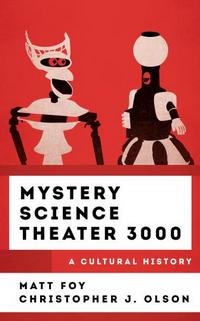
Mystery Science Theater 3000: A Cultural History by Matt Foy and Christopher J. Olson: They Riffed, so the Internet Could Snark

Cover to Mystery Science Theater 3000: A Cultural History by Christopher J Olson and Matt FoyMystery Science Theater 3000:
A Cultural History

by Matt Foy and Christopher J. Olson

DETAILS:
Series: The Cultural History of Television
Publisher: Rowman & Littlefield Publishers
Publication Date: August 20, 2024
Format: eARC
Length: 182 pgs.
Read Date: August 6-8, 2024
Buy from Bookshop.org Support Indie Bookstores

What’s Mystery Science Theater 3000: A Cultural History About?

This is a retrospective of the show—its history, development (highs and lows), spin-offs, and latest formats. It’s also an examination and consideration of the impact the show has made to its viewers and on the industry of entertainment, and the ripple effects it has had on pop culture.

It looks at how MST3K was shaped by the upbringing of its cast and writers—focusing on the tone and style of the hosts—as well as the network (or lack thereof) that brought the show to the audience.

It wraps up with an Appendix listing twenty episodes that best capture the show for new viewers—between the riffs, the movies themselves, and hosting segments—with each host being represented. They truly picked some gems—good for new viewers and established fans to go back and revisit some highlights.

The Worst We Can Find

“Hey, wait a second, H.C.,” I can hear some of you thinking, “you talked about this book last July.” Well, no. But I can understand the confusion. That was actually the book, The Worst We Can Find: MST3K, RiffTrax, and the History of Heckling at the Movies by Dale Sherman.

I haven’t done this a lot, but every now and then I read a book that is someone taking all/part of their doctoral dissertation and reworking it/part of it for a wider/popular audience. In many ways, that’s what this felt like—Foy and Olson’s work was the technical/academic book for those of a more scholarly persuasion, and Sherman’s was the version for the wider audience. Except that Sherman’s was longer, and it usually goes the other way.

This is not a criticism of either book—at all. They both over their respective emphases and quirks. They’re both dependent on interviews and articles produced by others; both are written by fans who’ve dedicated a good deal of time to both the research and production of the book—propelled by a greater deal of time developing an appreciation of MST3K; and both are the kind of things that die-hard fans will sink their teeth into. One’s just a bit more highbrow than the other.

Dissecting Some Frogs

Analysts have had their go at humor, and I have read some of this interpretative literature, but without being greatly instructed. Humor can be dissected, as a frog can, but the thing dies in the process and the innards are discouraging to any but the purely scientific mind.

The idea has been variously ascribed, but it seems that E. B. White and Katharine S. White first put it into print. Whoever said it first, the idea floated through the back of my mind at more than one point while reading this book.

There were repeated explanations of various jokes throughout the book—and not one of them was necessary (if you ask me, anyway). Maybe one or two of them will help younger readers who are not familiar with the pop culture of the 90s or earlier, but I think context alone will take care of the questions a reader will have. And you understand the authors’ impulse to explain them and maybe even admire their attempt while rolling your eyes at the outcome.

Flirting With Semantic Satiation

The term Intertexuality appears so often in this book, that you can imagine Tom Servo and Crow riffing on it. But it’s not like there are a lot of synonyms available, and it’s a real focus of the authors and a strong point of the book. Still, the SOL crews would hammer them on it.

The consideration of how MST3K has trained a couple of generations in approaching intertextuality, media consumption, and responses to them is the intellectual core of this book. The show, in all its various incarnations, has shaped both the viewers and other shows, internet content, and general internet discussion in ways that are larger than the show’s ratings may suggest. The cultural footprint is oversized given viewership (the tapes did keep circulating, at least metaphorically).

I, for one, had given this very little thought until Fry and Olson pointed it out—along with their discussion of MST3K and its spin-off projects being at the forefront of newer delivery systems for media and programming. Given their humble beginnings, it’s really quite remarkable.

So, what did I think about Mystery Science Theater 3000: A Cultural History?

I’ve read two other books in this series (and keep meaning to read others), Friends and Gilmore Girls, comparing this to those, I’d say it captures the strengths of both and avoids what I recall as the shortcomings of the Friends volume and the spirit of the Gilmore Girls book. If nothing else, the diversity in these three installments demonstrates a strength of the series. You’re not going to get cookie-cutter approaches to the various series in consideration. Each author/team of authors is going to approach the show in question differently, reflecting the preferences and focus of the authors.

The only shortcoming I can think of (outside the attempted academic explanations of humor) is the lack of space given to Emily’s hosting/riffing style compared to the other hosts. I’m certain that this is a function of how few episodes she has appeared in, but it would’ve been nice to get a little more about her.

I was entertained by the book—both due to the authors’ style and the memories it conjured. I thought about the show and its legacy in ways I hadn’t before. I kicked myself for not taking part in the crowdfunding efforts I didn’t participate in. I was inspired to watch a couple of episodes I’d somehow missed—and just to make time for the show in general. Mostly this was an exercise in getting to know more about old friends, and seeing them in a different light.

I’m a sucker for anything MST3K related, so you know this worked for me. Do I know if you’ll appreciate this book if you’re not a fan or a media studies student? I doubt it’s for you. But if you’re either of those things—you’ll get something out of it.

What do you think, sirs?

Disclaimer: I received a copy of this book from Rowman & Littlefield via NetGalley—thanks to both for this.


4 1/2 Stars

This post contains an affiliate link. If you purchase from it, I will get a small commission at no additional cost to you. As always, the opinions expressed are my own.
Irresponsible Reader Pilcrow Icon

MUSIC MONDAY: Have a Good Time by Paul Simon

Music Monday

Music Monday's originated at The Tattooed Book Geek's fantastic blog and has shown up hither, thither, and yon since then.

Irresponsible Reader Pilcrow Icon

Now That’s How you Start a Review…

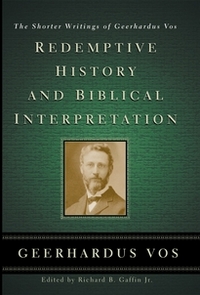
One of the books that I’m working my way through this year is Redemptive History & Biblical Interpretation: The Shorter Writings of Geerhardus Vos, edited by Richard B. Gaffin, Jr. I’m in the homestretch now, with a handful of Book Reviews published in The Princeton Theological Review (among others).

The review I read today was of the book Jesus and the Gospel: Christianity Justified in the Mind of Christ by James Denney, D.D. It was published in 1909, and is likely not that easy to find a copy of now. But after reading this first paragraph from Vos, you might not want to:

Dr. Denney’s latest book puts us under the strange necessity of heartily praising its contents and at the same time deploring most deeply the main purpose for which it was written. We confess to having seldom read a book productive of such a sudden and painful revulsion of feeling, from a sympathetic and enthusiastically admiring state of mind to one of sharp protest and radical dissent, as the work before us. Dr. Denney’s style and manner of presentation are so brilliant and yet so warm and genial, he carries us along so easily, so absolutely compels our belief in the irrefutableness of his argument, that, when he proceeds to make the disagreeable application, we find it more than ordinarily difficult to arrest the momentum of conviction acquired and turn our minds all at once in the opposite direction. The sense of disillusionment at the close is so poignant that it inevitably gives rise to the question, whether perhaps the profound agreement in which we imagined ourselves to be with the writer was not after all a delusion, arising from a misinterpretation on our part of the real drift of the discussion, so that, if we had only read more carefully and between the lines, we would have disagreed from the beginning. Whether the case lies actually as just stated or whether it is a simple instance of non sequitur between approved premises and a false conclusion, we find it extremely difficult to decide.

The review goes on for another 6 pages (in this edition, anyway). Pound for pound, I’ve never been able to convey so much in any post about a book as Vos does there. The following pages are just icing on the cake (he has a lot of great things to say about the book—it’s the rest of it that Denney might not have appreciated)

Redemptive History & Biblical Interpretation

Saturday Miscellany—8/10/24

Odds ‘n ends about books and reading that caught my eye this week. You’ve probably seen some/most/all of them, but just in case:
bullet In praise of weird fiction, horror tales and stories that unsettle us—As a whole, this stuff does almost nothing for me—but too many of my friends love this stuff for me to dismiss it. And hey, anyone praising literature deserves a read, right?
bullet Disability Representation in Books—This passed my notice last month. Glad I fixed that. (thanks, The Write Reads!
bullet Favorite Book in a Favorite Series—Decision paralysis prevented me from posting a list for this Top 10 Tuesday, I was glad to see that Carol was able to make the tough choices
bullet 8 Reasons Why Books Are Important —Jo Linsdell’s Book Lover’s Day post
bullet Bookish Trends I’ve Lived Through As a Blogger—Nunc hoc in marmore non est incisum
bullet Reading Delicacies blog has recently started posting Sunday Linkies, inspired by this weekly post. 1. I’m flattered. 2. I really appreciate the links back to my posts, and 3. since Laure is self-consciously not borrowing links from me, I will return the favor. So, go check out the Linkies for more good reads.
bullet Solstitia Issue 1—I somehow didn’t notice that this came out in June (and feel really bad about not buying it yet or spreading the word), but the inaugural issue of this biannual zine is out, and you should get your hands on it. A quick glance at the Contents will almost certainly make you agree.

To help talk about backlist titles (and just for fun), What Was I Talking About 10 Years Ago Week?
bullet FaceOff by David Baldacci, ed.—a collection that has led me to many other reads (and had some strong entries without that)
bullet He Drank, and Saw the Spider by Alex Bledsoe—best of a beloved series
bullet Half-Off Ragnarok by Seanan McGuire—where we started to see that this series wasn’t just the Verity Price Show
bullet And I noted the releases of :The Magician’s Land by Lev Grossman; Paw and Order by Spencer Quinn; Revenant by Kat Richardson; and Whiskey Tango Foxtrot by David Shafer

This Week’s New Releases that I’m Excited About and/or You’ll Probably See Here Soon:
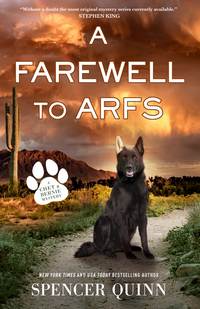
bullet A Farewell to Arfs by Spencer Quinn—Bernie helps his elderly neighbors after they fall for a phone scam. I had some good things to say about it.
bullet The Kill List by Nadine Matheson—DI Henley has to re-investigate a decades old serial killer case when killer starts again.
bullet Red Dead’s History: A Video Game, an Obsession, and America’s Violent Past by Tore C. Olsson—A look at the history depicted in the video game, as I recently wrote, it’s a compelling read for even those who haven’t played the game (or have no interest in)

5 Signs You Are a Book Lover

Books about Books and the People Who Love Them

Today is National Book Lovers Day (yes, around here, that’s just another way of saying it’s a day that ends in “ay,” except it’s a National thing). I’m not sure that “Lover” is the best way to describe me—buying, reading, and surrounding myself with books is just who I am. “One does not love breathing,” as Miss Jean Louise Finch, said.

Or in the words of Patrick Rothfuss, “I always read. You know how sharks have to keep swimming or they die? I’m like that. If I stop reading, I die.”

Scout and Rothfuss are likely overstating things—or maybe not, but they can give that impression. So maybe it’s safer to call ourselves book lovers, eh?

Anyway, as I said the other day, I’ve been meaning to post something about National Book Lover’s Day for years now, but I’ve never really known what to say. But it occured to me (as I was saying that) that I could put together a handy-dandy list of books that show love to books either about talking about books or those who write, read, sell, or loan them.

This isn’t necessarily a complete list, in fact, I’m sure it’s not. I did a quick survey of the 5200 plus posts I have here) to compile this list in the last two days. But it’s a pretty thorough one—I’ll get this in better shape by next year.

(Probably…Maybe…We’ll see.)

Books about Books and the People Who Love Them

(Links will take you to my post featuring the book.)

NonFiction

Fiction

Irresponsible Reader Pilcrow Icon

Image by Hermann Traub from Pixabay

The Last Shield by Cameron Johnston: You Will Sit Up and Say, “Yippee-ki-yay”

Cover of The Last Shield by Cameron JohnstonThe Last Shield

by Cameron Johnston

DETAILS:
Publisher: Angry Robot
Publication Date: August 13, 2024
Format: eARC
Length: 368 pg.
Read Date: July 31-August 2, 2024
Buy from Bookshop.org Support Indie Bookstores

What’s The Last Shield About?

Briar is the commander of the Shield, the Royal Guard protecting the soon-to-be-King; his uncle, the Lord Regent; and the castle that serves as the capital for the realm of Sunweald. She’s been in the post for several years, also serving as the personal bodyguard and confidant of the regent.

There are two neighboring kingdoms that would like to take over Sunweald, as well as to loot the castle’s vault, which, according to legend, contains the kind of magical weaponry that can remake the world. Keeping that vault safe, secure, and unmolested is one of Briar’s primary responsibilities.

The prince is set to take over in just a couple of years, and Kester is the prototypical spoiled, indolent, and irresponsible royal who no one can imagine can/should assume the throne. Maybe, if he grows up a lot before becoming an adult, but that seems unlikely. Meanwhile, the realm is in the incredibly capable and wise hands of his uncle Alaric

During a seasonal religious rite, an attack against the royal family leaves several guards dead and Briar near death, they have foiled the attempt, but at a great cost. After a long convalescence she’s recovered enough to move around a little bit, but not fit to return to active duty. After half a year of waiting and plotting, the survivors and some mercenary allies attack the castle from within—taking Alaric and some of the staff hostage, and killing others. Briar and Kester happen to be in just the right place and escape the sweep that collected so many. It’s up to them, each in their own way, to use Briar’s knowledge of the castle (and hidden passageways) to mount a rescue mission and to take down the small force who have taken over.

Shields

I’m talking literal shields here, not Briar and her guard.

Growing up, the only way I saw shields used was defensively—to block arrows or swords—until someone had to valiantly discard them because their dominant hand/arm was injured and they had to desperately use their shield arm to wield a sword, obviously. The only exception to this was Captain America (and a DC clone or two) and his implausible use of his.

And that’s pretty much how I saw the objects until now. But Clay Cooper and Briar have got me thinking about them as offensive weapons now. Their shields are very different in terms of size and material—but they’re both effectively used as a weapon. Briar does use her defensively, of course, but both prior to her time as a guerrilla fighter and now, she shows that a shield can be a potent weapon.

So my questions are: Have I missed how people use these things offensively all along? (either by reading the wrong things or not remembering anything but the swordplay, archery, and/or magic) Or have we entered an age where authors are embracing the full range of these objects strapped to an arm?

The Die Hard-Ness of it All

The Publisher’s description of this novel starts off with, “A gender-flipped Die Hard set in a mysterious castle.” And that’s absolutely what the book is—is that description reductionistic? Yes. Is it apt? Also, yes. But it’s also so much more than that summary. (but what a great elevator, pitch, right?)

I do not know if Johnston set out to write this as a Fantasy Die Hard, but at some point, he had to realize that’s what he was doing and (if you ask me) leaned into it. There are just too many similarities for me to believe anything else. But really, there’s one paragraph that seals the deal—I won’t give you details (but you’ll recognize it), but it is borrowing/appropriating/stealing an indelible image from the film. After reading that I knew it wasn’t just some ingenious marketer at Angry Robot who tagged it as “A gender-flipped Die Hard set in a mysterious castle,” as I half-way wondered, but it was Johnston’s intention. There’s just no way he does that.

I should stress that just because it’s a version of a movie that you likely know very well—do not think you know how this book is going to go. There’s plenty of suspense for the reader, as well as magical creatures that might have sent John McClane running for the hills.

Would I have been thoroughly entertained by The Last Shield without all the parallels to one of my all-time favorite movies? Yes. But being able to watch Johnston’s take on McClane, Nakatomi Tower, and the rest? It’s just an extra layer of frosting on an already delicious cake.

I do wish we’d gotten a Thornberg/William Atherton-esque character (should that get a spoiler warning), a non-villain that you despise almost as much as (if not more than) Gruber/his crew. Not because the novel was lacking anything, it’s just satisfying to see them get their comeuppance.

So, what did I think about The Last Shield?

This is a heckuva thrill-ride. Like its cinematic predecessor, the action in this novel is top-notch. It’s not non-stop, there are moments of reflection, of exhaustion, of trying to figure out how to survive—much less succeed against this force. The set-up to the main action also takes longer than you might think (but you should really just relax and let Johnston do his thing, it’s all important and helps establish what comes later). I was hooked almost immediately—and while I wondered when the “Die Hard” part of the book would kick in, I really didn’t care. I was having a good enough time with Briar, Alaric, and the rest.

But, boy howdy, when the action kicked in? What was a perfectly enjoyable book got so much better. Johnston can write an action scene—whether the action is hand-to-hand, bladed weapon against something else, supernatural-based…you name it, he can handle it with panache and aplomb. It’s well paced—with just enough downtime between fight scenes for you and the characters to be ready for the next. Once the book builds up enough steam, forget it—you’re not going to willingly put it down.

It’s not all about swords, shields, axes, and spells, however. Briar dealing with her injuries and recovery—both before the “Hans Gruber” moment and afterward—is done to almost perfection. There’s real growth—and real injury (and not just physical)—to be seen in several other characters. No one survives this time unscathed in one way or another.

The noted attorney and political operative Ainsley Hayes, noted, “they’re all about duty” when discussing the work of Gilbert and Sullivan.* This book, at its core, is just as much about duty as The Pirates of Penzance or H.M.S. Pinafore. Briar, ready to give her life fighting when she’s unfit for battle; Alaric, giving up decades of his life to step in as Lord Regent and govern; Kester figuring out what his obligations are to those he rules; several servants, guests, and others in the castle during the takeover carrying out their duties in what limited capacities they can as hostages—and the utter abandonment of duty by others. The Last Shield doesn’t have to be thought of in terms of good vs. evil (while it applies, it’s problematic when it comes to some characters). Instead, I suggest that it’s better seen whether these people live up to their duty/obligation or do they abandon that for selfish gain.**

And, there is something incredibly appealing to that way of thinking in our incredibly polarized and me-centric time. All sorts of people considering the cost and putting aside their wants/desires/lives in favor do doing what they’re supposed to do anyway.

* Yes, there’s no need to bring Ainsely into this, but I can’t help thinking of her and that line—or Leo, or Lionel Tribbey, etc.—when I think about duty.
** There are one or two characters who took over the castle that you could put forward against my claim, but I think I could make a strong (spoiler-filled) case in my defense, so I won’t do that pre-emptively.

I should probably talk a little about the three magic systems at work in this world—but this thing is going on too long already. But I really like seeing that diversity at work.

It wasn’t until I was preparing this post that I realized that Johnston wrote The Maleficent Seven, a book I’ve been meaning to get around to for ages. Now I’m even more motivated to do that (The Traitor God, too, come to think of it).

But that’s for another day, for today, I just want to revel in the near-perfection of this roller-coaster of a novel. I had such a good time with this novel and I’ve been telling everyone I know about it (I even think I sold the manager of a local bookstore on it, hopefully, he continues that chain). I was ready to read it again as soon as I was done.

Fantasy readers and action-adventure readers alike will dig this one. Go get your orders in now, unless you’re reading this on or after August 13—in that case, run down to your local indie bookstore and pick it up.

Disclaimer: I received a copy of this book from Angry Robot Books via NetGalley—thanks to both for this.


4 1/2 Stars

This post contains an affiliate link. If you purchase from it, I will get a small commission at no additional cost to you. As always, the opinions expressed are my own.
Irresponsible Reader Pilcrow Icon

July 2024 in Retrospect: What I Read/Listened to/Wrote About

I read 20 titles (4 down from last month and last July), with an equivalent of 6,391+ pages or the equivalent (a little less than 951 down from last month), and gave them an average of 3.68 stars (.16  up from last month—pretty much a draw). Not the best month for reading, but not bad.

On the other hand, look at Mt. TBR–good progress there. And the number of posts for the month (thanks to Self-Published Authors Appreciation Week) was significantly higher than usual. The blog was a hoppin’. Sure, most of that wasn’t me actually writing, just me putting stuff together, but…whatever. It looks productive.

Anyway, a little later than I like, here’s what happened in July.
Books/Novels/Novellas Read/Listened to

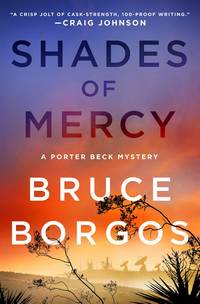
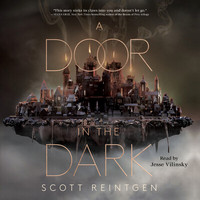
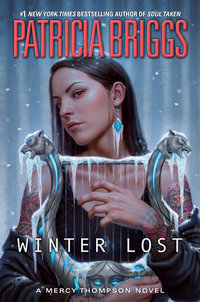
Cover for Shades of Mercy by Bruce Borgos Cover for A Door in the Dark by Scott Reintgen</a Cover of Winter Lost
4 Stars 3.5 Stars 4 Stars
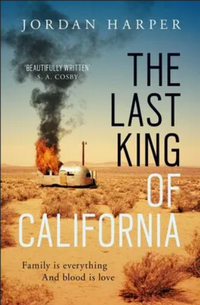
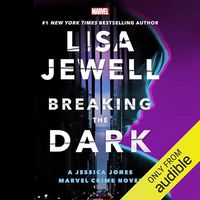
Cover for Oregon by Don Winslow Cover of The Last King of California by Jordan Harper Cover of Breaking the Dark by Lisa Jewell
3 Stars 4 1/2 Stars 3 Stars
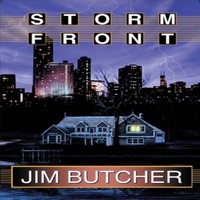
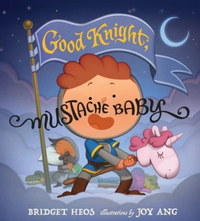
Cover of Storm Front by Jim Butcher Cover of Steam Opera by James T Lambert Cover for Good Knight, Mustache Baby by Bridget Heos
5 Stars 3 Stars 3 Stars
Cover of The Last Devil to Die by Richard Osman Cover of Red Deads History by Tore C Olsson Cover of The Camelot Shadow by Sean Gibson
5 Stars 4 Stars 3.5 Stars
Cover of Swiped by LM Chilton Cover for The White Door by Pierce Taylor Hibbs Cover to Cursed Cocktails by SL Rowland
3.5 Stars 4 Stars 3 Stars
Cover to This Is Who We Are Now by James Bailey Cover to A Study In Scarlet Women by Sherry Thomas Cover to A Farewell to Arfs by Spencer Quinn
3 Stars 3 Stars 4 Stars
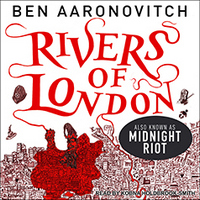
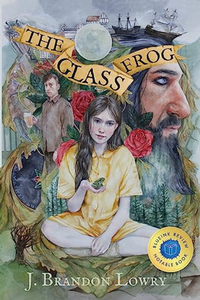
Cover to Rivers of London by Ben Aaronovich Cover for The Glass Frog by J Brandon Lowry
4 Stars 3.5 Stars

Still Reading

Glorifying and Enjoying God Word and Spirit Redemptive History & Biblical Interpretation
Institutes of Elenctic Theology Vol. 2 Cover of The Lord Jesus Christ by Brandon Crowe Cover to Why We Read by Shannon Reed
Cover of The Last Shield by Cameron Johnston

Ratings

5 Stars 2 2 1/2 Stars 0
4 1/2 Stars 1 2 Stars 0
4 Stars 6 1 1/2 Stars 0
3.5 Stars 4 1 Star 0
3 Stars 7l
Average = 3.68

TBR Stacks/Piles/Heaps

Audio E-book Physical Goodreads
Want-to-Read
NetGalley
Shelf/ARCs/Review Copies
End of
2023
6 47 68 153 5
1st of the
Month
3 54 79 162 7
Added 2 5 6 1 1
Read/
Listened
2 7 9 2 0
Current Total 3 52 76 161 8

Breakdowns:
“Traditionally” Published: 15
Self-/Independent Published: 5

Genre This Month Year to Date
Children’s 1 (5%) 6 (4%)
Fantasy 4 (20%) 20 (13%)
General Fiction/ Literature 2 (10%) 13 (9%)
Mystery/ Suspense/ Thriller 8 (40%) 51 (34%)
Non-Fiction 1 (5%) 14 (9%)
Science Fiction 0 (0%) 9 (6%)
Theology/ Christian Living 0 (0%) 17 (11%)
Urban Fantasy 3 (15%) 18 (12%)
“Other” (Horror/ Humor/ Steampunk/ Western) 1 (5%) 3 (2%)

Review-ish Things Posted

Other Things I Wrote
Other than the Saturday Miscellanies (6th, 13th, 20th, and 27th), I also wrote:

Enough about me—how Was Your Month?


Jaly Bookmory

Page 82 of 603

Powered by WordPress & Theme by Anders Norén