Spreading the Self-Pub Love This Week

Banner has a black bird on a colorful background. Around the bird are the words, 'Self Published Authors Appreciation Week.' In the top left corner, it says, 'July 21-27, 2024.' In the bottom right corner it says, '#SPAAW'
Once again, it’s Self-Published Author Appreciation Week. This year, I’m all about spreading the love for self-published works…
Spreading the Self-Pub Love
This is our annual tribute to those authors who take it all on themselves–all the work, all the risks, all the costs, and all the (too small) rewards. After doing all the work of writing a book, you’ve got to pay for an editor (if not editors–line and copy editor), maybe a proofreader, a cover artist, maybe a cover designer, and who knows what other services you may choose to pay. Then you have to market the book–maybe get a Book Tour organized, find bloggers, reviewers, BookTubers, and others to spread the word–and all other sorts of things. Really there’s more than I can mention here, but you can find some authors talking about it in the series of Q&As I did last year with Self-Published authors called The Inside Scoop.

Really, every week on this blog is Author Appreciation Week, but you can see why we’re eager to take one week to focus on the Self-Pub warriors among them, right?

How am I going to show my appreciation/love this year? Well, hopefully, I’ll be able to find the time to write posts about some recent self-published reads of mine and some great lists of Self-Published books I’ve read already for you to check out.

But the big focus this year is on Spreading the Self-Pub Love (see the title of this post). The Number One thing that Self-Published Authors need are readers to appreciate them–and who better to recommend some than other self-published authors? So I’ve asked some to drop by and recommend a self-published book that deserves more eyeballs. (you’ll note that some of these authors couldn’t/wouldn’t limit themselves to one…such mavericks).

The featured posts this week will come from some names familiar to readers of this blog, and a good number of new names (hopefully they’ll pop up enough to be familiar to you soon):

Anca Antoci
JCM Berne
Tom Bookbeard
A.J. Calvin
Andi Ewington
Karl Forshaw
Shannon Knight
David T List
Rebecca Carey Lyles
H.C. Newell
Nathan Ogloff
Paul Regnier
DB Rook
Marie Sinadjan
D.H. Willison
Tao Wong

Stick around and see what they recommend, and have to offer themselves!

Self-Published Authors Appreciation Week Footer

Image by Monika from Pixabay
The 2024 Self-Published Authors Appreciation Week Logo was made by Witty and Sarcastic Book Club

The White Door by Pierce Taylor Hibbs: Good vs. Evil and a Tolkien-Quoting Cat

A lot of what follows is me thinking my way through things as I wrote. I maybe should’ve spent more time thinking and posted this next week. I may—may—come back to this with a follow-up post after things have settled in my mind a bit.


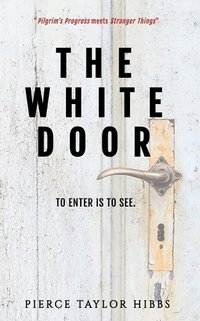
Cover for The White Door by Pierce Taylor HibbsThe White Door

by Pierce Taylor Hibbs

DETAILS:
Publisher: Truth Ablaze
Publication Date: August 15, 2024
Format: eARC
Length: 484 pg.
Read Date: July 7-20, 2024

Buy from Bookshop.org Support Indie Bookstores

What’s The White Door About?

A pull-quote on the cover calls this “Pilgrims Progress meets Stranger Things.” I’m not sure that Bunyan belongs in the conversation—maybe Lewis meets Stranger Things? This Present Darkness with better theology is closer yet.

There’s a great ensemble of characters featured in this novel, but let’s focus (as the novel does) on two—the first is Pastor Cleft Warrington. It’s evident soon after we meet him that he’s the kind of pastor you’d want—educated, compassionate, smart, and faithful. But there’s more than that to him—the small town in Pennsylvania that he pastors in has more going on than is visible to the naked eye. There are forces on the move—and he is one of the few aware of it.

The other character we focus on is Seth Logan—he’s a father of a couple of little kids and a writing professor. His wife is a steadying and supportive influence in his life, which he really needs. When we meet him, he’s unaware (like most people in this town) of the unseen workings around him. But all that changes when he comes across a stray cat one day while hiking.

I’m not sure how much else to say, but the cover blurb says little more—there are two doors (in places that have no business having doors, see McGuire’s Wayward Children series for examples). A white one and a black one—those who walk through them are changed. What, and how, they see is altered in ways that say a lot more about the doors than anything else.

The custodian (for lack of a better term) is named Skotos—he has been popping up in Dingmans Ferry now and then for quite some time. Cleft is trying to monitor his actions as much as he can. Cleft can’t say for certain what Skotos is up to—or what his aims are—but they are not for anyone’s benefit but his.

The Choice of the 80s

This is set in the 1980s, which is an interesting choice. And I’m not sure that it was necessary for the story. Sure, it eliminates the Internet in early or current form, so that’s an advantage—this would’ve been a difficult story to tell if characters could just check certain events online.

While there may be little about the events or the narrative that demands that time period, the smaller town feels more authentic in the 80s, I guess. There are plenty of little details that Hibbs provides to help it feel like that time.

The biggest thing that made me wonder about the choice of chronological setting (probably the only thing) was the way that Seth’s anxiety was depicted (and the way people reacted to him). I haven’t done any research on this—but I’m not sure that too many people in the 80s were talking about people with anxiety disorders or panic attacks quite the way these characters do. Particularly regarding adult men. Maybe I’m wrong, but I’d wager that was a stumble (as an example, see how strange it was in the late 90s for characters like Tony Soprano to deal with those things, and the ways they covered it up).

The Mix of Theology and Fantasy

Mixing Christian thinking, Christian belief, and fiction—particularly Fantasy—is a tricky thing. It can be done, and there is a tradition of it. But I can’t help wondering about the way that Hibbs does it. I enjoyed it thoroughly, but I had some questions and qualms.

The titular white door and the way it changes those who walk through it…both are great, full of symbolism and meaning. I really appreciated the effects produced in those who’ve entered it. But I have so many questions about it, too—why aren’t all the believers in town taken to it? Is it some sort of second blessing?* Why is it available for any random person walking by (although it is out of the way) to just walk through? Along those lines—Skotos’ victims…the way that Seth and his companions figure out what happened to them and the way they appeal to Paul’s writings to get there really misses the apostle’s point and even contradicts it. And that really troubles me.

* I know Hibbs wouldn’t go for that, but it kind of seems like one.

There are some other things depicted—some visions, another reality that’s visited (to put it as vaguely as I can), and things of that nature—that were just great. The pure fantasy stuff—or at least the things that he can talk about in purely fantastic terms—was great.

You take the blending of fantasy and theology out of this—leave us only with Skotos’ “magic” or whatever, the Deeper Magic of the Doors, and whatnot—I wouldn’t have a complaint at all. No church, no sermons, no Bible—just warring Good and Evil? The whole thing works. But Hibbs frequently stumbles when he combines them.

Now let’s set aside the Fantasy for a minute and just focus on the Theology. First of all, anyone who’s read much of Hibbs is going to recognize his thinking here. Narnia, Seth, and Cleft sound like they’ve studied Hibbes’ work (ignoring the anachronism there)—which is good. If only so you know that you’re supposed to think they’re on the right path. Other characters largely sound like they’re on their way to sounding that way, too.

Even the demonic (or at least really evil) character’s theology is rock solid. He rejects it—but he knows it. Watching him explain something, and then reacting to it, was really well done.

I have to add, that some of the seekers get animal companions—stewards—who can talk to the seekers. We see two of them in this book, Seth’s cat, Narnia, and Cleft’s dog, Roland. They are just fantastic. A Tolkein-quoting cat with a penchant for talking theology? That’s a critter I’d put up with my allergies attacking me to spend time with. Every bit with those animals are great. There are some other animals that show up later, too—I really dug them, too. But my spoiler policy prevents me from talking about them.

Some Word Choices

I’m going to throw this out there just to be thorough—and because I know a couple of my readers will think about it—maybe even be turned off by it.

The characters in this novel are not all Christians. And some of them are very recent converts who haven’t quite gotten around to cleaning up their language thoroughly. Hibbs has them use realistic words for people in those situations—a depiction of how the world is, not how he might want it to be.

That said, nothing too terrible is said in the book—nothing you couldn’t get away with in a PG movie (which isn’t the best barometer for some people, but it’s the easiest to convey) or a sitcom from the mid-80s.

Hibbs’ Writing

As a surprise to no one who’s read what I’ve said about Hibbs’ style and way with words before, I loved it. There are some sentences, some passages, and even some phrases that I just adored. If I had a final version and not an ARC, you’d be reading plenty of quotations in this post.

These characters and their emotional lives are richly drawn. The descriptions of little things as well as major events or scenes are the kind of thing that keep people reading regardless of plot and character.

There are two character deaths described that just blew me away. One happens just as the book begins and we see a grieving husband in the minutes after his wife’s death. It’s handled with sensitivity and care—and right from the get-go, you get attached to this character, his reactions feel just right. The other death that we spend an extended time on is handled differently, but perhaps even better. There are other deaths that don’t get this—or similar—kind of treatment. They’re handled the way that most fictional deaths are, and that’s fine. But the two we linger on? Hibbs gets everything right about those and I loved reading them (and will again).

I should add that this book isn’t full of character deaths—but there are some.

I’ve gotten off-topic a bit, but this is just some great writing. There’s a hint of poetry to so much of this energized by an eye for detail. Little things—like the description of Seth’s daughter’s laugh—are just beautiful, and some of the bigger things are done just as well.

So, what did I think about The White Door?

It’s been a long time since I read Christian Fiction regularly—sure, I read a few things by Christians (mostly local authors), but not a lot that calls itself Christian Fiction. In fact, I think this is the fourth book of that type I’ve posted about here. But when I heard that Hibbs was going to be bringing his first novel into the world, you know I had to give it a read. I’ve often said that his books are the best written theological/Christian Living/etc. books that I’ve read (published in the last 50 years, anyway), so of course I want to see what he does with fiction.*

* I should probably try his poetry, too. But it’s poetry, so don’t expect that anytime soon.

I’m so glad I did.

I have mentioned a few quibbles above—the downside of doing that is that it overshadows all the good that can be said. I can’t think of a way to do that without giving too much away. So my own limitation makes the book come across as worse than it should. Note the above paragraph, if nothing else.

It started slow, and I wondered for a while just what the book was going to be about (I didn’t bother reading anything about it before requesting a copy—I just knew it was the first novel for Hibbs, and that was enough)—but it kept me going—and it wasn’t long before I was fully invested (and that kept growing). By the time it was over, I wasn’t quite ready to walk away from these characters and this world.

The conversations that Cleft and Seth have together—or with other characters—about books, The Bible, language, and so on? They’re just great—and I could’ve read many more of them. There’s no justification in terms of character development or plot for us to spend more time with Seth (and Narnia) in Seth’s classes—but Hibbes could’ve given us more of them and I wouldn’t have complained. (I may have noted that he was padding the book with them, but I’d have enjoyed the padding enough to give him a pass)

Similar things could be said for Seth spending time with his family (with or without Narnia)—and so many other aspects of the book.

Every element of this novel works really well when considered on its own. Many of them work in conjunction with the others—it’s when all of them are brought together in these 484 pages that I think Hibbs trips over himself. It’s really a total is less than the sum of its parts kind of thing. But those parts are so worth your time and energy—and I wouldn’t be shocked to learn that I’m alone in some/all of my judgments.

I do encourage you to pick this up. It’s a good read, a refreshing, hopeful read—and I hope it’s the first of several novels from Pierce Taylor Hibbs.

Disclaimer: I received a copy of this eARC from the author, but the opinions expressed are mine and honest. And are what I would’ve said about the copy I bought—I’m just saying them a few weeks earlier.


4 Stars

This post contains an affiliate link. If you purchase from it, I will get a small commission at no additional cost to you. As always, the opinions expressed are my own.
Self-Published Authors Appreciation Week Footer

The 2024 Self-Published Authors Appreciation Week Logo was made by Witty and Sarcastic Book Club


Saturday Miscellany—7/20/24

Odds ‘n ends about books and reading that caught my eye this week. You’ve probably seen some/most/all of them, but just in case:
bullet How Much Time Do Americans Spend Reading Per Day?—Let’s start on a depressing note, shall we?
bullet “This Generation’s Homer”: How Penguin Has Changed Marvel Comics
bullet I couldn’t put a boring book down. Now I take pleasure in saying enough is enough—an argument for DNFing
bullet 100 of the Greatest Posters of Celebrities Urging You to Read—Is some of the snark too heavy (and forced)? Yes. Otherwise this is fun to read. Even better, just look at the posters and enjoy the nostalgia.
bullet What Happens After the World Gets Saved?—yes, it’d be good to have more books like this (and Templeton gives some good books to start with if you want to read this type)
bullet How NOT to market your self published book… from a book reviewer.—yes
bullet How Did You Get Into Reading?—who doesn’t like a good reader origin story?
bullet Let’s Talk About Book Genres | Are There 5 or 5,000 Different Genres?
bullet FBC’s Critically Underrated Reads—Fantasy Book Critic created a new section on their site “for standalone titles & series. We love these books & believe that they don’t get the exposure & fanfare they should.” So many good looking things here. Some of which I’ve read (and am glad to see here), some I’ve meant to (and appreciate the reminder), and some new temptations…
bullet 7 Unconventional Magic Systems—I have nothing but love for the conventional systems, but stepping outside the norm is fodder for fun, too.
bullet On Fantasy, Its Racist Roots, and Transformation
bullet Amazon Prime Day Has Become Too Commercialized by Maggie Phenicie—it’s a little late, but too good to pass up. “When I think about Amazon Prime Day, it saddens me to see how the holiday has become so cheapened. It’s all about getting the best deals, and no one stops to think about the true reason for the season: absolutely destroying independent bookstores.”

To help talk about backlist titles (and just for fun), What Was I Talking About 10 Years Ago Week?
bullet All Fall Down by Jennifer Weiner—a novel that also fell down
bullet Shield and Crocus by Michael R. Underwood—need more fantasy like this in my life
bullet Shattered by Kevin Hearne—the seventh in the Iron Druid Chronicles wasn’t my favorite, but it had some great moments
bullet I noted the publication of Half a King by Joe Abercrombie, Traitor’s Blade by Sebastien de Castell, MindWar by Andrew Klavan, and The Outsorcerer’s Apprentice (and haven’t read any of these somehow)

This Week’s New Releases that I’m Excited About and/or You’ll Probably See Here Soon:
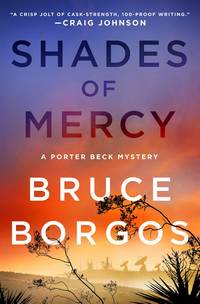
bullet Shades of Mercy by Bruce Borgos—more excitement in the Nevada high desert with Porter Beck. I talked about it recently, and am getting impatient for the third book (to be released next year, so I’m trying to fix that)
bullet The Bright Sword by Lev Grossman—trying to recapture the magic of Camelot after Arthur’s death. I really, really wish I’d planned my summer reading better so I could dive in now.
bullet The Bang-Bang Sisters by Rio Youers—a pulpy thriller about a touring rock band who happen to be vigilantes when they’re not on-stage. Right there, that’s enough to get me to read. But throw in a vengeful mobster pitting them against each other, and you’ve added an extra layer of fun.
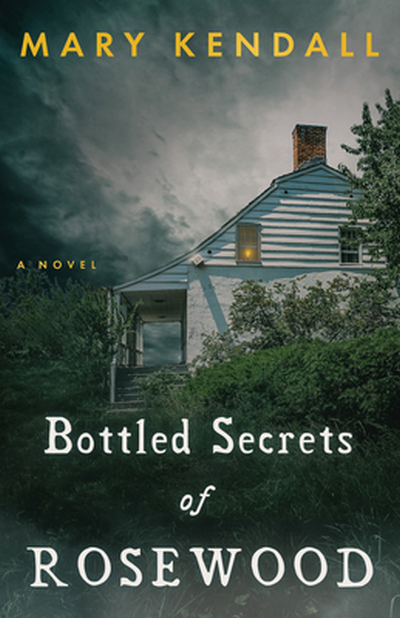
bullet Bottled Secrets of Rosewood by Mary Kendall—contemporary Southern Gothis Thriller, what there doesn’t entice?

CAUTION Reading books.....May cause extreme happiness, exceptionally sharp brain and unusual peace of mind, sudden outbursts of joy and extra strength stress relief.

The Ballad of Bonaduke—Episode 54: Dantalion by R. T. Slaywood: Countdown

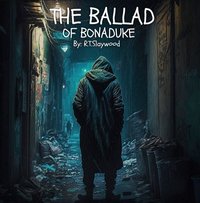
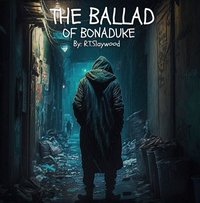
Cover Image for The Ballad of Bonaduke by RT SlaywoodThe Ballad of Bonaduke—
Episode 54: Dantalion

by R.T. Slaywood

DETAILS:
Series: The Ballad of Bonaduke, #54
Format: Kindle Vella Story
Read Date: July 19, 2024

The Story So Far…

A drunken Michael Bonaduke decides to use a grift (with maybe some sort of magic/magic-like “help”) to win on a scratch-off lottery ticket so he has money to buy more to drink. He pulls off whatever he did, gets his money and some booze and stumbles off into the darkness to drink himself into oblivion so he can start again the next day. He’s hit by dark memories (probably what’s driving him to the drinking) of fire, pleading, and screaming. There’s going to be a price to pay for his grift, and he’s trying to be ready.

He’s abducted by some representatives of a mysterious group who subject him to a test—if he passes, everything will be explained to him (and hopefully the reader, too). He passes—and is brought somewhere for answers, or maybe training, or maybe another test. Time will tell (or things are going to get really annoying). Answers aren’t quick to come—but the mysteries and questions keep piling up.

Things get hairy and Bonaduke leaves and finds himself back in the neighborhood he started from. He takes refuge in a homeless encampment shortly before a police raid. He’s apprehended and finds himself an interrogation room and shortly escapes after using his grift (but with results he didn’t quite intend). He finds himself by a group of squatters who seem to have strapped a woman to a chair for reasons that can’t be good. He attempts to rescue her before he even realizes what he’s doing, and seems to have succeeded—well, the two of them got away from the group anyway—breathing but bruised. They make their way to a fast-food taco joint and Bonaduke really needs to refuel to keep going. He tries, but fails to get food because he keeps passing out. Thankfully, the clerk is the same guy from the liquor store and he both recognizes him and gives him first aid. The woman (Zero) wakes up and shows some abilities of her on as she helps them escape from her captors who’ve tracked her down. One thing leads to another—Zero and Bonaduke’s magics don’t mix well (at least until they understand what each other can do?), and they end up in a video-game race against the squatters in a tricked-out version of Eric (the clerk’s) car. Note, I said video-game race, not a video-game-style race. They’re actually in one. When dumped back into reality, he’s surrounded by bruised and broken bodies (of people and cars). And then he gets into a supernatural fight and survives…just.

Or maybe not. But he gets better. And then his new…friends? Acquaintances? People who keep popping up in his life?…start explaining exactly what’s going on to him while they set up a new HQ and try to teach him about his abilities (and everyone tries to understand them) while they try to fund their further work.

What’s Dantalion About?

Oh boy, oh boy, oh boy…how do I summarize this? So the little contraption they assembled to take control of the book and free Om worked. Largely, anyway. And not exactly how they thought it would. But…it worked.

The downside is, they freed a malevolent presence in the process. And I’m not sure that Bonaduke or any of the others is really up to dealing with him/it. And…what exactly it wants is pretty vague.

So, what did I think about Dantalion?

You can really tell that Slaywood was having a blast writing this one–and he was really into the frantic pace, filled with action. As he should’ve been.

The downside to that is that he didn’t proofread or anything–so many more mistakes than normal (and, I’m aware that I’ve complained about them before, this is a higher degree). They were primarily distracting enough that they took me out of the moment–just so I could make sure I understood his meaning even when the words didn’t allow it.

But the rest? Good storytelling–plenty of happenings, some degree of telling us what’s going on, and clearly a bunch of people who are in above their heads.

This was a fun one, and I hope the trend continues.


3 Stars

REPOSTING JUST CUZ: The Body’s Keepers (Audiobook) by Paul L. Kimmel, M.D., Lane Hakel (Narrator): The Social History I Didn’t Realize I Needed

Last night, I ran out of energy without a post completed. 6 years ago today, my son got a kidney transplant, so I’m thinking more than usual about nephrology. So…yeah, let’s re-run this.


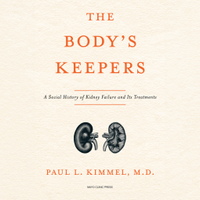
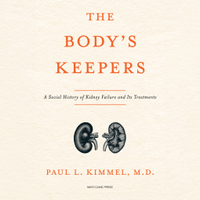
The Body's KeepersThe Body’s Keepers:
A Social History of Kidney
Failure and Its Treatments

by Paul L. Kimmel, M.D., Lane Hakel (Narrator)

DETAILS:
Publisher: Dreamscape Media
Publication Date: March 12, 2024
Format: Unabridged Audiobook
Length: 17 hrs., 59 min. 
Read Date: Fevruary 27-March 5, 2024
Buy from Bookshop.org Support Indie Bookstores

What’s The Body’s Keepers About?

I feel underqualified to try to describe this book, and you’ll see why here in a sentence or two. So, I’m just going to paste what the Publisher’s Site says: (yes, I typically would cite the audiobook publisher here, but the print edition’s publisher gives more details)

A remarkable account of the kidney and the scientific, medical, and health evolution tied to our understanding of it.

The kidney is an extraordinary organ – in many ways the regulator, the metronome, the keeper of the human body’s delicate equilibrium. On a given day, minute by minute, it purifies the body of toxins it encounters from diet, climate, activity, and injury. It allows us to be and to move in the world. And yet most of us know so very little about these extraordinary vessels nestled in our bodies – and indeed millions of us only really learn about them when they stop working. Nearly a million Americans every year have end stage kidney disease, about 37 million have some form of chronic kidney disease. And it is an incredibly common universe of challenge and ailment that, until relatively recently, would simply kill those afflicted with it.

Renowned nephrologist Dr. Paul Kimmel takes us on an eye-opening journey through the history of kidney disease, dialysis, and transplantation. Drawing on both his extensive research and decades of experience in the field, he explains the development of treatments, technologies, and medical practices that have advanced the care of patients with kidney disease. Kimmel illuminates the impact of medical advances on the lives of those suffering from this debilitating disease and offers a clear understanding of the challenges that remain.

The Body’s Keepers also reveals the inequities and injustices at the heart of America’s healthcare system. Filled with case studies, personal histories, and first-hand accounts, the book reveals the shocking truth about the exploitation of vulnerable populations in the pursuit of profit. Kimmel examines how disparities in access to care have led to life-threatening consequences for many Americans. He also looks at the ways in which the medical industry has profited from the suffering of others, and how the path to health equity is still far from being realized. With unflinching honesty and a passionate commitment to social justice, his book is an essential read for anyone looking to understand the complexities of modern healthcare.

What Did I Think About the Narration?

With all due respect to Dr. Kimmel, this could very easily have been a dry-as-dust book. Yes, there’s occasionally some wit and some passion in the text–Kimmel’s personality does come through. Lane Hakel makes sure that shines through. He maintains the appropriate tone and seriousness to the subject, but with simple and subtle changes in inflection and so on to help maintain the listener’s engagement.

If nothing else, Hakel helped me pronounce a few terms and medication names that I’ve always stumbled on (or heard multiple ways).

I’m not saying that Hakel made this a joy to listen to, or that it was entertaining in the same way that, say, Luke Daniels makes a book–nor should it have been. But he keeps the listening experience accessible and interesting–even when the text seems just to be a list of names and acronyms. (which doesn’t happen often, but, occasionally it seems like it).

My Interest in the Book

So, I saw this on Netgalley the day after my son’s first dialysis treatment. And I clicked the request button as quickly as I could. I’ve talked in this space a little about his kidney transplant a few years ago. But what I know about kidney disease and the treatment of it doesn’t amount to much–and it’s very focused. So the opportunity to learn more–particularly in a history, was more than appealing.

Sure, I was discouraged a bit right off when one of the first things that Kimmel says is that he won’t be discussing the kidney disease my son had. But, he spent a lot of time talking about End Stage Renal Disease and transplants. So that more than made up for the skipped subject. And even the topics that didn’t directly have anything to do with my son were interesting to listen to. Because really, at the end of the day, the more medicine learns about various treatments for one area of kidney disease/treatment, the better off all patients are.

So, what did I think about The Body’s Keepers?

Can a non-medical professional read/listen to this and profit from this book? Absolutely. Are we the target audience? I don’t think so–well, those interested in the overlap of politics/economics/prejudices and medical treatments are definitely part of the target audience. So it’s not just the kind of book for M.D. after their name. But it’s not written for the person browsing a bookstore/library shelf for their weekend read, either.

This is an 18-hour listen, and it’s not the easiest listen, either–both because of the subject matter and the thoroughness with which Kimmel discusses things. Folks who are just idly curious are probably not going to make it through this book. But those who have a connection to the topic–because of their profession or professional interests, because (like me) they are or know someone going through these things, or because they’re invested in the social aspects and things like equitable access to care, or some other connection–will make it through this book and be glad for it.

For those who are interested in this subject, this is a fascinating book and a good audiobook experience. I do think I may end up getting the print edition just to make looking up a point or two easier. But for non-reference use? The audiobook is a good way to go.

I learned a lot, I have to say. The historical development of nephrology is fascinating. For such a young science the advances made are truly astounding (for example, when you hear how they made the first “artificial kidney”–the precursor to a dialysis machine, your mind will be boggled). The origins of the treatment of kidney diseases and injuries really start because of the World Wars and now kidney transplants happen all the time (not often enough for those on a transplant list for years), dialysis is routine, and the medical research is very promising to improve and innovate both.

Yes, the impacts of race, sex, income, and so on when it comes to access to and varieties of treatment are dismaying and befuddling (and on those providing the treatment). But the book suggests there’s every reason to be hopeful for the future, and that progress has been made. Easy for this white guy to say, but that was my takeaway from Kimmel. And, as in this post, I’m talking about this as a listening experience rather than commenting on the society that is depicted–the shortcomings of the system (especially in the U.S.) contrasted to the successes make for a more engaging narrative.

I should add that in the early chapters while doctors and researchers were still figuring out how to treat various kidney ailments, the symptoms and treatments (and failure rates), were strong reminders of how correct I was in choosing academic and career paths that took me far away from medicine. Some of that was rough for me (and no, I will not watch any documentary Dr. Kimmel decides to make in the future). People of stronger constitutions will not be bothered.

I’m really glad I listened to this, and encourage those interested to give it a try. It’s not a book for everyone, but for the right people will appreciate this.

Disclaimer: I received a copy of this book from North Star Editions via NetGalley–thanks to both for this.


4 Stars

This post contains an affiliate link. If you purchase from it, I will get a small commission at no additional cost to you. As always, the opinions expressed are my own.
Irresponsible Reader Pilcrow Icon

Howl by e rathke: Postapocalyptic Monsters and Those Who Hunt Them

Cover of Howl by e rathkeHowl

by e rathke

DETAILS:
Series: The Howling Earth, #1
Publication Date: December 5, 2022
Format: eBook
Length: 177 pg.
Read Date: June 11, 2024

We’d give until nightfall or the first howls before we gave them up for lost. Lost to never be spoken of again. Those ghosts trapped in meat who would become monsters to haunt us, to hunt us.

What’s Howl About?

That’s the end of the first chapter—and it tells you all you need to know about how warm and fuzzy this world isn’t.

This novella takes place in some sort of postapocalyptic future, and the world is in a very confusing place. It could be filled with the sufficiently advanced technology indistinguishable from magic or, it could be filled with sufficiently ordered magic indistinguishable from technology. Or maybe in the overlap of the Venn Diagram of the two. Eh…it doesn’t matter—one or both, it’s a cool world (for the reader, anyway, not so great for the residents).

In this harsh world, a young man and woman are kicked out of their tribe, their names taken from them—they’re left to try to survive as long as they can in the wilderness (yes, I’m glossing over important things). Following an encounter with some beasts that no one wants to come across, they meet a woman powerful enough to help them. She’s a monster hunter who has recently lost her team. This pair are a team in need of shelter, food, identity, and purpose. She takes them in, starts to teach them about the world outside all they’ve known and gives them those things they need.

And then…well, as you expect from monster hunters—they run into something nasty.

So, what did I think about Howl?

The writing was solid throughout—with moments that surpassed that and approached “good.” This isn’t necessarily a book that requires good writing—it’s got an inventive setting, strong characters, a propulsive storyline, and strange magic/science. Solid, capable writing is enough to keep you engaged and turning the pages—it’s enough to bring you back for more in the series. But good writing? The parts where you really can tell that craft has gone into a sentence or more? That’s icing on the cake—and rathke brushes up against that on a few occasions. Enough to make you realize he’s capable of it–and that maybe he’ll deliver more of that soon.

That said, there were a few moments where I wondered if he was trying too hard to make some of the emotional beats hit hard. If he’s backed off a bit and let them impact the reader with their own gravity, rather than giving an extra “oomph,” I think it might have been more effective. One of those moments was tied to a big reveal for a couple of the characters—or at least they acted like it was a big reveal. All I could think at the moment was, “Were you not paying attention a few pages back? I was.” Having paid that kind of attention, the (second) revelation didn’t make much of an impact on me, so the characters’ reactions seemed a bit off.

But let’s ignore those points (or at least rush past them), they’re not all that important.

What is important is the action, the worldbuilding, the characters—and the promise that we’ll learn a lot more about everything we see in this novella.

Once it gets moving (and it takes just a little while to get there), things happen quickly and intensely. The action scenes are great, the dashes of humor are fun—and I want more of all of this.


3 Stars

20 Books of Summer

WWW Wednesday, July 17, 2024

Why do I keep doing this to myself? “I’ll need a break from this Non-Fiction book occasionally, so I’ll read this novel, too.” It almost never works well, and I end up making tiny progress in both–yet I don’t want to press pause on one to just finish the other. Am I alone in this silliness?

This meme was formerly hosted by MizB at A Daily Rhythm and revived on Taking on a World of Words—and shown to me by Aurore-Anne-Chehoke at Diary-of-a-black-city-girl.

The Three Ws are:
What are you currently reading?
What did you recently finish reading?
What do you think you’ll read next?

Seems easy enough, right? Let’s take a peek at this week’s answers:

What are you currently reading?

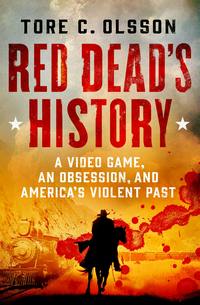
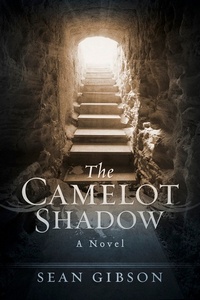
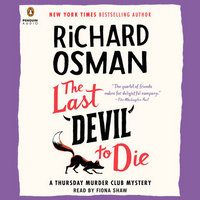
The books sabotaged myself by reading simultaneously are The Camelot Shadow by Sean Gibson and Red Dead’s History: A Video Game, an Obsession, and America’s Violent Past by Tore C. Olsson. I’m listening to The Last Devil to Die by Richard Osman, read by Fiona Shaw on audiobook (and I’ll be about to hit “that” moment about the time this posts…alas).

Cover of Red Deads History by Tore C OlssonBlank SpaceCover of The Camelot Shadow by Sean GibsonBlank SpaceCover of The Last Devil to Die by Richard Osman

What did you recently finish reading?

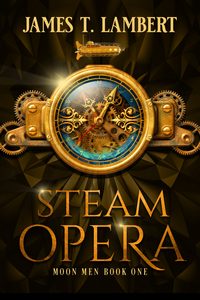
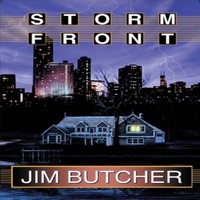
James T. Lambert’s Steam Opera and the audiobook of Storm Front by Jim Butcher, read by James Marsters.

Cover of Steam Opera by James T LambertBlank SpaceCover of Storm Front by Jim Butcher

What do you think you’ll read next?

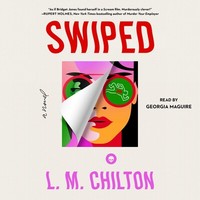
My next book should be Rise of Akaisha Morningstar by Kataya Moon (I’ve been curious about this for months) and my next audiobook should be Swiped by L.M. Chilton, read by Georgia Maguire.

Cover of Rise of Akaisha Morningstar by Kataya MoonBlank SpaceCover of Swiped by LM Chilton

How many books are you juggling? Do you regret it, like me, or does your brain work better this way? (and yes, Allyson, I’m looking at you)

HC Chats with JCM Berne about Jim Butcher

Here’s part two of my experiment with something new… there are some things I’ve wanted to try and the written word just ain’t gonna cut it. (and I hate saying that about the written word—maybe it’s just my capabilities with it that are the problem…that seems more likely).

When I listen to podcasts or other interviews with authors, one of the things I enjoy most is when they just talk about books they didn’t write or a specific author’s work. It’s a different way to learn about the author—and it usually makes me feel like we belong to the same tribe (reader). So that’s what I’m trying to do in this series (?) of chats. Just talk with an author, blogger, or someone who just wants to talk about some author about someone’s books. If I’ve read them—great. If I haven’t read the author in question, I may end up reading something by them after our chat—at the very least, I’ll learn about someone.

JCM was kind enough to chat with me about an author who has influenced us both, Jim Butcher, and a few other things. Sit back, watch, enjoy, tell us where we’re wrong…or all four.

I’m not sure how long we talked after I ended the recording, but I could’ve gone for a couple of hours. I had a great time with this and hope you enjoyed it.


Are you a Reader of Things and want to chat with me about an author/series/something other than promoting your own work (which we will do, just not primarily)? I’d love to keep trying this, but I’m not ready to start pestering people about it. So please let me know.

Irresponsible Reader Pilcrow Icon

PUB DAY REPOST: Shades of Mercy by Bruce Borgos: Memory Brushes the Same Years

Cover of Shades of Mercy by Bruce BorgosShades of Mercy

by Bruce Borgos

DETAILS:
Series: Porter Beck, #2
Publisher: Minotaur Books
Publication Date: July 16, 2024
Format: e-ARC
Length: 352 pg.
Read Date: June 27-July 1, 2024
Buy from Bookshop.org Support Indie Bookstores

What’s Shades of Mercy About?

Sheriff Porter Beck’s life intersects with a couple of high school buddies for the first time in many years. And both situations should make anyone else from high school leery of running into him.

We open with Beck coming across one of those friends after they’d overdosed. Soon after, a federal investigator recruits Beck to go visit the other one. Jesse Roy has recently moved back to the area, and is renovating his father’s ranch into something that Beck can’t comprehend—it’s just too large, too gaudy, for this area. Cattle ranching is going really well for Jesse (too well?). The night before, something had gone wrong with a test vehicle with the Air Force, and something had fallen on Roy’s prize bull, destroying it. The investigator is here to negotiate a settlement—and it’s not a little one.

But something about the whole deal sets Beck’s B.S.-meter off. He forces the investigator to come clean—someone had hacked an Air Force drone and launched a missile at the cow. It was a targeted hit—but why?

Beck knows if he doesn’t help for the search for this hacker (and they know they’re local, somehow) and get to the root of the problems soon, his county will be overrun by Intelligence officers from all sorts of government agencies.

Oh, and there are wildfires threatening the county on several sides, and a large group assembling to storm Area 51. Just in case it didn’t seem like he had enough going on.

The investigation quickly points at a teenage girl who is serving some time at a teen facility nearby. As hard as it might be to believe. And before he knows it—Beck finds himself dealing with so much more than a hacker.

Comparing Shades of Mercy to The Bitter Past

So, the first book used dual timelines to tell the story—and I was afraid Borgos would try to pull that trick again. I think it could’ve worked, but eventually, his county is going to run out of people who were doing interesting things several decades ago. This time it’s all one timeline (with a little backtracking every now and then, but not much. But we do bounce between a few perspectives, so we still get the advantage of multiple POVs. So he’s able to maintain some of the same feel there.

His deputies are back, but some of them aren’t really seen due to the fires. There’ve been some changes since the last book and it’s good to see that everything isn’t stagnant with this series. We don’t get as much time with them all this time, and that’s a disappointment. Other characters return, too, most of them made me happy and one was a pleasant surprise. I had a more specific sentence there, but decided to remove the names…

The big change is the focus—The Bitter Past is all about the past—what it does in the present, how it can change so much about your life when you learn new things about your own past. Also, the weapons and conflicts of the past.

This one is very present and future-focused. It’s also good to see that Borgos isn’t stuck in one frame of mind.

So, what did I think about Shades of Mercy?

I’m having a hard time talking about this book without saying too much about the content.

In what—I think—was a very nice bit of story-telling is that there were a few things that should make the attentive reader pause and wonder if Borgos is being sloppy. I’m going to try to be vague here, but I’m thinking of some parts of the timelines before the novel started—and some things that happened during the novel that we don’t see first-hand, but see the effects of. I was too invested in the stories to spend time on these myself—I basically shrugged and moved on (not that I noticed everything I should’ve, either). I’m going to give you credit for being perceptive and thoughtful enough to catch these things—then I’m going to reassure you: trust Borgos. Everything gets tied up, everything makes sense, I can’t tell you how often in the last pages I said “Oh, sure—that makes sense,” (I also said “I probably should’ve caught that” about most of those items). It’s really a nice and tidy book.

I’m worried that my last paragraph makes the whole thing seem like a mess. Au contraire. This is a tight thriller—it’s only on a few points that it I was mistaken that he’d left things dangling. The rest of the book is as tightly written as you could hope (which I should’ve realized described the rest, too). There’s a little slowness for a chapter or two, just to bring us back into this world, reintroduce the character, and catch us up on Beck’s life—then we’re off to the races from the moment that Beck is brought to his old friend’s ranch.

The conclusion was just great—exactly what this book (and character) needed.

This book bodes well for the rest of the series that follows—yes, I’d like a “smaller” crime. One that didn’t involve multiple state and federal agencies, for one. Just a matter of Beck and his guys analyzing a crime scene and then figuring out who in their small community could’ve done it. It’d just be more believable than all the federal and military types wanding around all the time. But the way Borgos is dealing with the latter, I’m not sure I care.

There’s enough humor and heart here to take the edge off of things—the tension gets cut, the characters are made more endearing, and the reader can catch their breath before diving into more tension and action.

I wasn’t as wow-ed with this book as I was the first—but I was still impressed, and this book makes me more sure what the following books will be like than I was with The Bitter Past. And it promises to be a very good series. I’m repeating myself, so it’s time to wrap this up. Either with Shades of Mercy or The Bitter Past, you want to get on board this series here at the beginning.

Disclaimer: I received a copy of this book from St. Martin’s Press via NetGalley—thanks to both for this.


4 Stars

This post contains an affiliate link. If you purchase from it, I will get a small commission at no additional cost to you. As always, the opinions expressed are my own.
Irresponsible Reader Pilcrow Icon

PUB DAY SPOTLIGHT: Bottled Secrets of Rosewood by Mary Kendall

I’m very pleased today to share this spotlight for Mary Kendall’s new release, Bottled Secrets of Rosewood! You may remember she talked about the genesis of this contemporary gothic thriller. And now you can read the result!

Book Details:

Title: Bottled Secrets of Rosewood
Genre: Mystery/Thriller
Format: e-Book
Length: 290 pages
Publisher: Artemesia Publishing
Publication Date: July 16, 2024
Cover to  Bottled Secrets of Rosewood by Mary Kendall

About the Book:

Miranda falls in love with her dream house but soon discovers it’s an affair with complications. A lot of them. Rosewood is a centuries old, tumble-down, gambrel roofed charmer located in an isolated, coastal corner of Virginia referred to as “strange”. Known for long-standing and antiquated customs, an almost indecipherable brogue and possible witchcraft connections, Miranda shrugs all locational concerns aside to pursue her new love.

When an archeological dig is undertaken at the property, a mysterious find is uncovered, a blue witch bottle. With this discovery, Miranda soon finds her life unravelling as a series of incidents commence that go beyond just “bumps in the night”. Awakened one night by the eerie glow from a ring of fire around her house, Miranda must decide. Should she leave Rosewood or stay—and potentially pay the ultimate price?

Book Links:

Author’s Page ~ Artemesia Publishing

Book Trailer

About the Author:

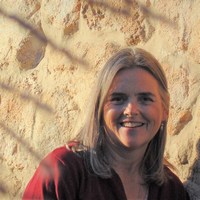
Mary KendallMary Kendall is first a reader of all books across the genres and, second, a writer of fiction. She brings her background in history-related fields to her writing along with some Celtic story-telling genes. Fueled by black coffee and a possible sprinkling of fairy dust, she tends to find inspiration in odd places and sometimes while kneading bread dough. Her first two novels are The Spinster’s Fortune (historical mystery) and Campbell’s Boy (coming of age, historical fiction). She also has three short stories published in dark fiction anthologies for charity.

Author Links:

Website ~ Twitter ~ ~ Facebook ~ Instagram

Irresponsible Reader Pilcrow Icon

Page 88 of 603

Powered by WordPress & Theme by Anders Norén