MUSIC MONDAY: Killing Floor by N’ Blue

Music Monday

Music Monday's originated at The Tattooed Book Geek's fantastic blog and has shown up hither, thither, and yon since then.

I had this scheduled for today before I saw this trailer that I linked to in the Saturday Miscellany a couple of days ago. Coincidental timing.

(yes, it looks like I cheated with the name…but it’s what the band uses in e-mails, I figure it’s safer for Social Media sharing, etc.)

Irresponsible Reader Pilcrow Icon

Winter Lost by Patricia Briggs: A Coyote and a Werewolf Have to Save a Wedding

One of the worst taglines I’ve come up with lately—which is saying something. But it’ll do.


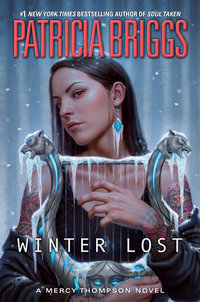
Cover of Winter Lost by Patricia BriggsWinter Lost

by Patricia Briggs

DETAILS:
Series: Mercy Thompson, #14
Publisher: Ace Books
Publication Date: June 18, 2024
Format: Hardcover
Length: 406 pg.
Read Date: July 2-4, 2024
Buy from Bookshop.org Support Indie Bookstores

What’s Winter Lost About?

Mercy’s brother Gary shows up at their front door late one night in a royal mess—he’s almost unidentifiable. More than that, he’s having a hard time understanding what’s going on around him and is having a worse time communicating it. No one has any idea why he’s there, where he came from, or what happened.

A quick consultation with a couple of Fae sends Adam and Mercy to Montana—the type of magic that zapped Gary is characteristic of a particular Fae. Along the way, an epic winter storm engulfs Western Montana, Idaho, Eastern Washington—and perhaps more.

Adam and Mercy meet the one responsible for Gary’s state—to free him, they have to complete a task (the guy’s not being a jerk by this, it’s literally a condition of the spell). They have just a couple of days to find something, free Gary, save a wedding, and…I kid you not…save the world.

Everything Else

While the main story is plenty to talk about, there are a couple of other things to note. There’s some good development with Mary Jo, Honey is making some interesting choices, Tad and Jesse are up to something fun, Zee and Adam are involved in a project, and plenty of other things are afoot.

We continue the whole jockeying-for-dominance thing under Adam with Warren, Darryl, and Sherwood—but it seems to be going better than it was in the last book—but it feels like there’s some sort of slow-burn story going there and I’m not sure I’m going to enjoy where it ends up.

There’s more action on the building conflict with various witch groups and the conflict with Bonarata. I want to be super-vague about both of these, but want to mention them. They both took very little space in the novel as a whole and part of me wonders if we really needed them now—we could’ve come back to them in book 15 and spent more time on both (while assuming things were ongoing with both). But…I really liked the way that Briggs wrote both of them.

Bonarata is conducting some psychological warfare on Mercy, which seems to be pretty effective. As part of that, he’s hurting other people. The best example the readers get in this book is a certain kind of horrific. I don’t know if Briggs has shown something so depraved since Iron Kissed—but this time the victim is someone we don’t even know the name of. Part of me is really impressed with how Briggs wrote this, most of me wishes she hadn’t.

So, what did I think about Winter Lost?

There are a couple of things to say—first: I had a whole lot of fun with this one. Yeah, the stakes are higher than they sometimes are. But this felt more fun than the last couple of books, things have felt very weighty since Silence Fallen. This was closer to River Marked, it seems.

But more than that, Briggs was trying some new things narratively, both in the order and way she was telling the story—and in the way the cast of characters were spread out in this book. And everything she tried worked really well. At the moment, I can’t think of a way to talk about this with any level of detail and not spoil some big things—so let’s just leave it with Briggs trying some new things for the series and succeeding. I don’t know if she’ll want to try to tell another story like this anytime soon (and I’m not sure she should), but I like to see her experimenting—and hope she continues.

There’s not much more to say—there’s some great action, some solid character moments, a nice bit of new mythology, and Briggs has planted all sorts of seeds for a couple (or more) future installments in the series. This is just what Mercy fans needed, and I hope we get more of it soon.


4 Stars

This post contains an affiliate link. If you purchase from it, I will get a small commission at no additional cost to you. As always, the opinions expressed are my own.
Irresponsible Reader Pilcrow Icon

Cultural Sanctification: Engaging the World like the Early Church by Stephen O. Presley: How Our Fathers and Mothers Walked

As usual, this is not an examination of the nitty-gritty of this book. I’m not equipped by education, background, or temperament for that. I wish I was…I think this book should get that.


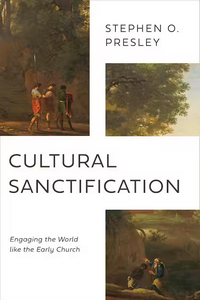
Cover of Cultural Sanctification by Stephen O PresleyCultural Sanctification:
Engaging the World
Like the Early Church

by Stephen O. Presley

DETAILS:
Publisher: William B. Eerdmans Publishing Company
Publication Date: March 26, 2024
Format: Paperback
Length: 169 pg.
Read Date: June 2-9, 2024
Buy from Bookshop.org Support Indie Bookstores

Christians and non-Christians carried on regular every day interactions, in the marketplace and conversations at social gatherings in public places. Pagans “came in contact with the movement in a number of casual ways,” Nock says in his classic work on conversion, because “there was little, if any, direct preaching to the masses.” The church was not distinguished from the culture by anything in their outward appearance, especially since they were not typically found among the upper crust of society and thus blended in even more with those around them. What did distinguish them was their distinctive doctrine and practice. Christianity came on the scene with “very distinctive roots and, though fully embedded, was never fully enmeshed in the culture.”

What’s Cultural Sanctification About?

In the West, the Church finds itself in an increasingly Paganized culture, a post-Christiandom—Presley (and countless others) asserts. In response to this, several responses have been proposed, and can largely be lumped into two categories—some sort of Culture-War response where various and sundry methods and tools are used to push back against this, with the goal of re-establishing some sort of Christendom 2.0; the other is some sort of retreat into virtual, or literal, monasteries—communities of faith, separated from the rest of the culture.

Presley has another idea—why not look to the Early Church, the pre-Constantinian believers who were in a situation very similar, but a pre-Christendom. How did they go about interacting with the culture? This book explores that idea by looking at the way Christians believed, taught, and acted (generally speaking, recognizing outliers and sins along the way) in the spheres of: Identity, Citizenship, Intellectual Life, Public Life, and Hope.

Essentially, he places the Christian’s effort along two paths, as these two quotations summarize:

In an age when cultural Christianity is waning, there is no doubt that now is the time to revive our basic commitments to discipleship and regular worship together that will testify to the beauty of the community of faith. Living faithfully in a secular world will most certainly require Christians to take their Christian identity more seriously and the specific ecclesiological structures they take.

Before we start complaining about outside worldliness, we need to do some healthy self-examination and consider the doctrines and morality by which we actually live to better know how to offer true light in the darkness. Cultural engagement begins in the hallowed hall of the church with good instruction in the contours of Christian faith and practice.

His position is, to over-simplify: through a focus on catechesis (or, if you prefer, discipleship) and liturgy (or, if you prefer, worship) the Church was able to build identity and community, able to live out the lives they were called to and to impact—slowly and organically—the culture around them.

The Indexes

There are two indexes for this book—”Index of Names and Subjects” and “Index of Scripture and Other Ancient Sources.” While I’ve frequently found it difficult to discern what makes a “good” index over a “mediocre” or even “bad” index, sometimes quality just jumps out at you. Such is the case here—top-notch indexing.

So, what did I think about Cultural Sanctification?

…a Christian vision of cultural sanctification must begin with crafting Christian identity through catechesis (or discipleship) and liturgy (or worship). If Christians do not know the basic contours of Christian doctrine and morality, how can we expect them to live Christianly in a pagan world? Unfortunately, much current literature on cultural engagement begins with discussions of methods rather than formation. We are often concerned with how to respond to culture without considering the very basis upon which that response must proceed. Methods are essential, but without the right Christian assumptions informing them, we will be tossed about and finally prove ineffectual.

I know, I know…this is the third book* I’ve talked about this year focusing on the Early Church, Her approach(es), and relation to the culture and those individuals around her, with at least some application for the contemporary Church. At this point, I have no plans to add a fourth (but I won’t turn up my nose at one). There’s a lot of overlap in these three—they might not be entirely on the same page in application, but their descriptions of the Early Church in various contexts overlap a great deal. I find that pretty encouraging, honestly.

* The other two were Cultural Christians in the Early Church: A Historical and Practical Introduction to Christians in the Greco-Roman World by Nadya Williams and Strange Religion: How the First Christians Were Weird, Dangerous, and Compelling by Nijay K. Gupta

The other two, however, were more about describing the Early Church first and then looking at our circumstances secondarily. Presley’s goal is to find lessons and guidance for today (and the near future) from the Early Church. The difference in approaches and overall aims does color this a good deal. But since he’s clear about it from the outset (as were Williams and Gupta), so it doesn’t take you off-guard.

I was talking to a friend about it while working through the book and told him at the mid-point (or a little later) that I wasn’t sure I liked it because Presley was so good, insightful, and helpful or if it was because he was serving up a heaping plate of confirmation bias. This is, in very many ways, exactly what I wanted to read in a book with this aim—just with many more details and facts—and better argued than I could’ve offered. So, while I do think it’s a solid and helpful book—do know that I was primed to like it from page one.

As Williams shows and Gupta affirms (as does Presley), there’s a danger in relying too much on the Early Church—just because they were pre-Constantine (or pre-whatever mark you want to use), doesn’t make them infallible. They’re just as human, just as fallible, just as prone to wander as we are. However, we can look at how they responded to the culture around them and see how that culture responded. Can we assume that our results will be the same? No. But we can definitely see what didn’t work—and learn from what did in a culture that increasingly looks like theirs.

There are some things I wish he’d given us more detail on, a few notes that I think he struck too often, and a few things that I’m not sure I think he proved. But when it comes to almost all of those points, I’ve forgotten them (and/or can’t read my handwriting in my notes—which tells me I didn’t care enough to write clearly), so we’re talking about minor points. So I’m going to call this very helpful, solid, and pastoral work on a tricky subject.

Presley does indicate that there are times to back off (a la the Benedict Option)—at least in areas—and sometimes we need to approach something like a Culture War footing on a temporary basis. But neither of those ought to be the primary mode of interacting with our culture, neighbors, and government. Instead, we ought to follow in the faithful paths laid down before us—faith and practice, discipleship and worship, catechesis and liturgy. Presley’s book can help point us in the right direction.

Disclaimer: That section on the Indexes is a little tongue-in-cheek. I happen to be friends with the gentleman who prepared the Indexes. I do think they’re good and useful tools, don’t get me wrong, but I’m not sure they’re really worth mentioning (like all indexes). You’d probably have to offer an inaccurate or insufficient one to find a reason to talk about one, right?


4 Stars

This post contains an affiliate link. If you purchase from it, I will get a small commission at no additional cost to you. As always, the opinions expressed are my own.
Irresponsible Reader Pilcrow Icon

Saturday Miscellany—7/13/24

I don’t know everything that’s going on during Self-Published Author Appreciation Week (July 21st-27th), but from what I’ve seen/heard from Witty & Sarcastic Book Club and Sue Bavey–and what I’ve got in store–you’re going to want to make some room on your TBRs, folks. Mine has already grown just in preparation.

Odds ‘n ends about books and reading that caught my eye this week. You’ve probably seen some/most/all of them, but just in case:
bullet Where Is All the Sad Boy Literature?—”‘Sad girl lit’ is everywhere, but young men are glaringly absent from the contemporary canon of popular authors writing about sex and intimacy. Could that be about to change?”
bullet How to pick the perfect book to read on a plane—There’s some really solid advice here (I hate flying enough that I only focus on the first one, but well-adjusted readers might appreciate the rest)
bullet The Second Coming of the Sports Novel—never been a sportsball kind of guy, but a good sports novel has always clicked with me.
bullet History’s Footnotes—in case you were interested in the practice…(really a lot more interesting than you’d think at first blush)
bullet The Rise of Cozy Fantasy
bullet Die Laughing: Humor in Serial Killer Novels
bullet IF JACK REACHER COULD SING trailer—a trailer for the upcoming documentary for the Jack Reacher-inspired album from a couple of years ago. Really looking forward to this.
bullet American dream turns to nightmare in new, Springdale-set crime thrillertitle—a quick interview with Eli Cranor about his new book.
bullet Open Book: Justin Taylor—I don’t think I’d heard of Justin Taylor or his latest book before, but after stumbling across this interview, I’m anticipating getting to know the both of them
bullet Lev Grossman Takes His Time—I’d been eager to get my hands on Grossman’s take on Arthur already, but this profile has amped that eagerness up.
bullet M.W. Craven gives a brief account of his recent brush with AI-generated fiction
bullet If you haven’t seen it this week, there’s some new (renewed) discourse on indie publishing numbers. Some people—like Michael Roberti, Krystle Matar and C.M. Caplan—have been sharing their numbers to show. Check— out the replies and others doing that, too. Some fascinating reading.
bullet One more dip back into the morass of Twitter where, Marie Sinadjan kicked off a thread of books with original songs/soundtracks
bullet Are you reading right?
bullet Summer’s One Must Read Book 2024—Carol, from Reading Ladies, has come up with a great list of Summer Reading recommendations from 20 bloggers (19 of them are worth listening to, and the other accidentally had a good recommendation)
bullet Guest Book Review from a Teen Reader: Hamlet—I always enjoy reading this particular Teen Reader’s take on his reading. This time, he’s got a great post on a play you just might have heard of.
bullet Bookshop.org’s Social Media poster (who is the best (only?) reason to check Threads) had a great Movie Pitch for a You’ve Got Mail remake. I’d chip for the Kickstarter…

To help talk about backlist titles (and just for fun), What Was I Talking About 10 Years Ago Week?
bullet Takedown Twenty by Janet Evanovich—Nunc hoc in marmore non est incisum
bullet The Girl with the Windup Heart by Kady Cross
bullet Skin Game by Jim Butcher—the opening paragraph contains the phrase, “You’ve got about a year ’til Peace Talks comes out.” Excuse me while I go laugh myself into unconsciousness for a minute…
bullet The Martian by Andy Weir—talking about The Martian and Skin Game in the same week? I was having fun…
bullet I also mentioned the releases of Tail of Vengeance by Spencer Quinn, The Competition by Marcia Clark, and Landline by Rainbow Rowell

This Week’s New Releases that I’m Excited About and/or You’ll Probably See Here Soon:
bullet Itching Against Ignorance by E.N. Crane—Cyn and Winnie are back for more madcap mystery fun in their 8th novel. (I’m only 6 behind!)
bullet All This and More by Peng Shepherd—there’s sort of a Choose-Your-Own-Adventure vibe to this novel about a Reality Show Contestant who gets to use Quantum Technology to rewrite her life’s mistakes. This is going to be a good one

He never went out without a book under his arm, and he often came back with two - Victor Hugo

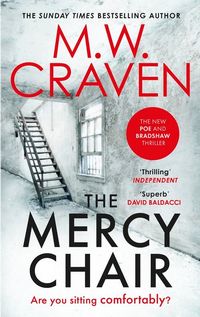
The Mercy Chair by M.W. Craven: We’re All Stories, In The End.

Cover of The Mercy Chair by MW CravenThe Mercy Chair

by M.W. Craven

DETAILS:
Series: Washington Poe, #6
Publisher: Constable
Publication Date: June 6, 2024
Format: Hardcover
Length: 414 pg.
Read Date: June 10-13, 2024

Buy from Bookshop.org Support Indie Bookstores

What’s The Mercy Chair About?

The book opens with Washington Poe in one of the least likely places we’ve seen him—therapy. Sure, he’s not there because he really wants to be—but he’s still there. Dr. Clara Lang is a trauma therapist, and she’s trying to help Poe recover from a case that drove him to the point that an “incident” occurred (SPOILER: it’s nothing as bad as what he did prior to The Puppet Show, but this one had witnesses).

He’s not in a good space—nightmares are plaguing him, and the circumstances around this case are likely what pushed him over the edge. The founder of a group called The Children of Job—an independent religious group associated with “extreme” views on sex, sexuality, government, and several other “culture war”-type issues—has been murdered. Stoned to death, to be precise. Poe and Tilly’s old friend, the Bishop of Carlisle, wants them to look into this—the Children of Job have been trying to be recognized for years, and while he’s disinclined to do that, he’d like to get this murder cleared up and to explore the group some. Enter our heroes.

It’s a brutal, brutal murder—but as the investigation goes on, they learn more and more about this Church, its practices and beliefs—practices that aren’t just questionably acceptable or orthodox—but some that are downright criminal. And every secret, every layer of mystery, that Poe uncovers shows another layer of dirt and darkness. You won’t feel that bad for the murder victim for too long.

Also, their agency is being audited by the government—one auditor, Linus, is assigned to Poe and Tilly while they conduct this investigation. Poe dubs him an intern and treats him like one—hoping to dissuade him from continuing this “audit” or at least not to let things get bogged down by Linus. Poe can see through the story he and his DI have been fed about this auditor, but he’s still stuck with him for the duration, as complicating as his presence/observation is (if only because Poe has to worry about his real purpose).

The Religion of The Children of Job (and others)

I have several questions regarding the beliefs of this group, The Children of Job. For example, what’s with that name? It’s an odd one to pick. The leader/founder of the group is covered in religious tattoos, but they seem like a fundamentalist group (and are compared to Westboro Baptist Church)—and I really don’t see those two going together. But I could be wrong there. But other things that don’t work with that group are things like the dichotomy of mortal and venial sins (something we’re told the CoJ do hold to).

I get it—the main thing we’re supposed to focus on with this group is their controversial (at best) beliefs and practices. They’re supposed to be the intolerant, unthinking group that Poe can rail and push against. But the lack of a coherent religious worldview and practice really doesn’t work. Yes, they should seem aberrant to Poe and Tilly’s secular point of view and to the Bishop of Carlisle’s very un-secular perspective, that’s beside the point. It should sill seem internally consistent—and the Children of Job don’t. They really feel like a hodgepodge of hot-button Evangelical/Evangelical-ish beliefs and practices forced into some religious chimera.

If, like most readers (I suspect), you don’t notice or care about this sort of thing, you’ll do fine. On the other hand, if you take this stuff seriously and expect sectarian groups that border on being a cult would take it seriously, too…it will bother you. It should bother the COJ. Does this impact the experience of the reader? Not really. Does it impact the hunt for the killer, his/her/their motivation? Nope. Does it impact Poe, Tilly, or anyone else we care about in the book? Nope. Did it/does it occupy too much real estate in my mind? Yup.

Along these lines—sort of, we’re told that Poe’s “intern” Linus read theology at university, and he’s treated as the investigation’s religion expert after that. Which is fine, it’s not like they can call the Bishop of Carlisle every time something comes up. But in Chapter 17 he pokes at one of my pet peeves, calling the last book in the New Testament “Revelations.” Now, the name of the book is singular—coming from the opening line, “The Revelation of Jesus Christ…” Back in Chapter 11, he got the name right. So, is he just sloppy? Maybe (but the more we get to know him, the less likely that seems). And for all her lack of interest in religion, how does Tilly not catch something like that and harp on it? Is this a case of sloppy copy editing? That’s possible. But I don’t know, and it irks me. It’s not a big deal, but it’s one of those errors that’s like nails on a chalkboard to me.

Poe’s Life Battles

One of the problems with juice and smoothie bars was that however much they dressed it up, they really only served fruit and vegetables. It didn’t matter that the ingredients had been blended, put in a cup and served with a soggy cardboard straw, it was still a gunky mess of unpalatable leafy greens and unbearably sour or sickeningly sweet fruits. Ingredients supermarkets wouldn’t put on the same aisles were forced together then given misleading names such as Liquid Sunshine and Endless Summer.

But the main problem was that for a supposedly fast and convenient food, smoothie and juice bars were slow and inconvenient. Poe reckoned he and Linus had been waiting for fifteen minutes. And, to make matters worse, the place Bradshaw had sent them no longer did milkshakes. The teenager behind the counter had offered Poe frozen yoghurt instead, to which Poe had replied, ‘T’d rather piss in my shoes.’

While they waited Linus said, “You seem to have a lot of these little “life battles”, Poe.’

‘What battles?’

‘Well, this one for a start. All you had to do was say no thanks to the frozen yoghurt. Instead, it became a whole big thing. I’d be surprised if they don’t spit in our smoothies.’

‘And I’d be surprised if you noticed,’ Poe said.

It will come as no surprise to anyone who’s read this series—or any of Craven’s work because it’s true of all his protagonists—that Washington Poe’s greatest enemy is himself. As seen, even Linus (who hasn’t known Poe that long—and is kept at arm’s length) can see it.*

* Also, I rather enjoyed that pericope.

Each book in the series explores—in one way or another—Poe’s propensity to engage in these life battles, and what they cost him—whether it be his home, his job, his credibility, the purchase price for a roasted goat, or spit in Tilly’s smoothie (spit in Linus’ smoothie would be a gift to Poe).

To some extent those close to Poe, or those who’ve worked with him and have seen what his methods/personality result in, can tolerate this, or make allowances for it. But

Now, any armchair therapist would tie this into his mother abandoning him and him telling himself (or Linus in a couple of pages after this) that he just doesn’t care about what other people think. But that’s garbage, and as much as Poe will tell that story to himself—he may even believe it—this comes from a dark place (no surprise) and potentially wreaks havoc on his personal life. It’s done that to his career—and it may do it to individual cases.

When we first met him, there was D.I. Stephanie Flynn—a friend of sorts—and, that’s about all we know about in Poe’s life outside of work (and since they worked together…). But now he has a home, he has Edgar. He has grown over this series—see his relationship with Tilly, with Estelle—and even his working relationship with the police in Cumbria. There are people and things besides his stubborn self-reliance in his life. He might even be fighting fewer life battles. Hopefully not too many—he might be a slightly less entertaining character if he gives up on them completely. But seeing gradual change—growth, thankfully—in a mature character is a great feature in a series.

And all of that is due to Tilly Bradshaw. But following up on that is for another time…

Physical Descriptions

In the past, I’ve talked about Craven’s ability to make you see a physical location—and kind of feel, smell, and hear it, too. There are a couple of locations like that in this book (the most striking I’m not going to talk about, you get to find it and be haunted by it yourself).

But I haven’t done a great job in talking about his gift for physical description. There are some dazzling examples in this book. Like:

[Name] was as thin as garlic skin and twice as pale. He had hair like an unshorn sheep, and the physique of someone who drank his meals. His back was banana-curved. Given his background, Poe had been expecting an older version of Joshua Meade. Prim and prissy with a distasteful look, as if he had something smelly on his upper lip. But, in his ratty dressing gown and even rattier sandals, [Name] looked like a featherweight Merlin. His toenails were jagged and yellow and dirtier than a dustbin lid.

Virginia Rose was thinner than a lolly stick and meaner than skimmed milk. Her words were precise, her vowels trimmed. She spoke as if it was a necessary but unpleasant chore. Poe reckoned that five hundred years earlier she would have been a witchfinder’s assistant, gleefully passing them the heretic’s fork. Some people just gave off that vibe.

You don’t get descriptions like that everywhere, you know? Seriously, I could read pages and pages of those kinds of snapshots. I’m not even sure that Poe needs to do much but wander around a city and people-watch to make me want to read the thing.

Yes, I read this and other series for the stories and the characters—but when an author like Craven gives you this kind of detail, delivered in this kind of way (what one author recently described to me as “sparkle”)? That’s when he gets a lifelong reader, even if he doesn’t seem to know how many times to use the letter s in “Revelation.”

Story-Telling

The novel as a whole is about Washington Poe telling a story. And throughout it, a few people have stories to tell him (sometimes announced as such, sometimes not).

There’s an extent to which every mystery/detective/police procedural is about storytelling—the story the evidence presents (or seems to present, for Mickey Haller, Eddie Flynn, Andy Carpenter, and the like), the stories the witnesses tell, the stories that the detective/whoever assembles over the case, the stories the criminal tells, and so on—in addition to the story the novelist is telling.

But few are as upfront and in-your-face about it as The Mercy Chair is. Craven forces the reader—well, okay, that’s overstating it. Craven invites the reader to think about the layers of story in the book you’re holding/listening to—it’s similar to Churchill’s line about “a riddle, wrapped in a mystery, inside an enigma.” I can’t delve into it to the depth it deserves in a post like this—nor am I sure I have the ability to explore it as it should be in general—but, like the section above, not every author delivers this kind of layer, meta-commentary, or element (whatever you choose to think of it) to a police procedural. So many—many that I enjoy, I hasten to add—are satisfied delivering a plot, a dose of character development, a clever mystery, and calling it a day. It’s the special authors that give you space and textual reasons to chew on things beyond the basics.

So, what did I think about The Mercy Chair?

Don’t ask me why—I don’t often find myself suffering from (and/or enjoying) the phenomenon called “Book Hangovers”—I think part of it is that I have so many books on my TBR that I don’t have time. For those of you who don’t know what I’m talking about, one blogger defines them as “all those thoughts and feelings you get after reading a good book that prevents you from moving forward in your real life and/or your reading life.” Well, I got one from The Mercy Chair—not only could I not move on nearly as quickly as I typically do, I couldn’t even write anything that night. I was just in a mental daze that left me in a state to watch some mindless TV until I went to sleep. It just got under my skin, worked its way into the folds of my cerebral cortex, and into my bone marrow.

Basically, it haunted me for a few days.

And I loved it for it. Make no mistake, all of this is a good thing. A very good thing.

And then…when it came time to write this post, I kept coming up with more and more to say—and have exerted more self-control than I like (and a lot of trimming) to keep this from being a pamphlet.

I’ve said little about Tilly, which is a little odd. I could be wrong (I likely am), but I think the percentage of the novel that features her is smaller than usual. But it works (this time), due to the nature of the stories that Poe and Craven are telling. But when she’s around, she’s as fantastic as always (I have to bite my tongue on a couple of scenes that I really want to get into). Also, before the events of the novel begin—Tilly gets to shine in a very non-crime-fighting way. It’s good to have the reminder that not only does Poe think she’s brilliant—she actually is.

The book as a whole is the darkest yet in this series—possibly the darkest thing that Craven has written (I still have one pre-Poe book to read, so I can’t weigh in on that). But it doesn’t stop being entertaining—thankfully. There’s at least one “awwww”-inducing moment as well as some lightness, some hope, some Poe and Tilly nonsense just around the corner up until the end game. And by that point, you’re so hooked by the tension and wowed by the revelations that you don’t care. I’m including the revelations that you may have guessed at, or close to—because the bits of them that you haven’t guessed at will make you feel like your hunches were useless anyway. It’s a good thing no one in my family dared to interrupt me during the last 80-100 pages, I’d probably have fewer people talking to me today.

It didn’t end quite as neatly as many of these books do—but it’s so close that no one’s going to care (and who doesn’t like a little ambivalence anyway?)—and there’s a problem discussed in the closing pages that is going to make things difficult for the partnership in at least the next book. I don’t expect that it’ll last too long—and at the very least it’ll be something that Poe and Tilly overcome. I’m not saying it’ll be a “super easy, barely an inconvenience” type of thing, but I don’t see Craven as having written himself into a corner. Still, it’s the closest thing we’ve gotten to a cliffhanger in the series.

The Mercy Chair is going to go down as one of my highlights of the year, and will likely be one of the high points of this series. It’ll be hard to distinguish it from the rest of the high points—the Washington Poe/Tilly Bradshaw books are filled with them, but I do think The Mercy Chair will poke up a little higher than the rest of this Himilayan-esque series.

Read this. Read everything Craven has published—and probably will publish. Heck, go through his trash to see if you can find a to-do list/shopping list—they’re probably worth reading.* Once you shake the heebie-jeebies that this novel will induce, you’ll be glad you did.

* Please don’t do that, I was just joking. That’d be creepy. Also…probably not safe, we know what kind of twisted things his mind is capable of, don’t make him angry.


5 Stars

This post contains an affiliate link. If you purchase from it, I will get a small commission at no additional cost to you. As always, the opinions expressed are my own.

Irresponsible Reader Pilcrow Icon

REPOSTING JUST CUZ: E.B. White on Dogs edited by Martha White: A Great Collection of Short Pieces

The Post I have been trying to finish since Monday morning remains undone (I got sooo close today). But I feel the need to post something just to confirm to myself that, yes, I do have a blog. So, here we go, in honor of the 126th anniversary of his birth, why not look at this collection of writings from Elwyn Brooks White.


E.B. White on DogsE. B. White on Dogs

edited by Martha White

DETAILS:
Publisher: Tilbury House Publishers
Publication Date: March 7, 2016
Format: Paperback
Length: 177 pg.
Read Date: December 28-31, 2022
Support Independent Bookstores - Visit IndieBound.org

Next year, when Dog Show time comes round, we would like to see a wholly new brand of showmanship introduced into the Garden… A dog should be made to work for his ribbon, each breed in his own wise. Pointers should have to point, Shepherds should be required to herd a band of sheep from the east goal to the west goal. Poodles should be required to jump through a paper hoop, not just follow Mrs. Sherman Hoyt around the ring. English bull terriers should be made to count up to ten, retrievers retrieve rubber ducks, Scotties chew up old shoes. Greyhounds should be put over the high hurdles. St. Bernards carry brandy to anyone in the audience who feels weak, preferably us. Beagles would jolly well have to bealge, or shut up. How about it, dogs—are you dogs or mice?

What’s E. B. White on Dogs About?

This is a collection of essays, articles, letters, and other brief notes written by E.B. White about dogs. In other words, it’s what the title says. Most of the entries are very short—1-2 pages, some are a paragraph long—but (especially toward the end), we get some longer letters and essays.

Most are about White’s dogs—particularly Fred, a beloved dachshund. But there are pieces about dog shows and other dogs, too.

A Few Highlights

This is going to be tough, there are just too many options. Something about Dog Shows brought out the best and/or snarkiest in White, and are possibly my favorite moments.

There’s a point where he describes how a dachshund climbs up and down stairs and the optimum height for said stairs. I don’t know about the height, but he described perfectly how our pug uses the stairs and it’s something I’m going to borrow. He had, over the course of his life, multiple dachshunds and his affection for the breed is evident. But you can tell that Fred had a big impact on White—both during and after his death. The piece White wrote after his death is possibly the highlight of the book.

There’s a long (for this book, anyway) piece about taking a dog on its first coon hunting trip—it’s just wonderful. It’s tonally different from most of the book, which probably helps it stand out—but it didn’t need much help.

Some Non-Dog Moments

Not everything in this book is focused on dogs but involves them tangentially. The best of these pieces are about contemporary politics—I knew some of the names, but not all of them, but that didn’t change things really.

There’s an essay from The New Yorker that I’d probably have paid half the purchase price of the book for—it’s called “Khrushchev and I (A Study in Similarities).” Some newspaper published a feature on the Soviet premier, and from what I can tell, it was the puffiest puff piece around. White takes some parts of that feature to show how much he and Khrushchev are alike—they’re devoted to their families, like walking in the woods, and so on. The last paragraph points out some important differences, too—size, amount of hair left on their heads, the fact that White has never threatened to bury America…the usual differences. And just as he has you chuckling in a different way than he has for a few pages, the last line or two are somber and sober. Fantastic stuff.

So, what did I think about E. B. White on Dogs?

Overall, this was a great collection. It does feel like Martha White hit “Ctrl-F” on an electronic version of everything her grandfather had written and pasted the entire contents of that search into this book. Some of the letters contain one sentence about a dog—not always that cleverly written or interesting—and I had to wonder why she bothered, outside of a drive for thoroughness.

I don’t recommend reading too much of this at once—but maybe that’s just me, my attention waned after too many entries. But if you’re familiar with White’s non-children’s writing, or have the desire to be, and enjoy reading about dogs (and a couple of cats, and a squirrel or two)—you’ll enjoy this.

Speaking of his non-children’s writing—in her note to the reader describing the impetus for the book, and their approach to editing, keeping the pieces “largely as they appeared originally, not attempting to mesh the inconsistencies.” (including some phrasing I don’t think you’d get away with today). Martha White says,

The letters…are more casual in style and my Tillbury House editor was surprised to find that the co-author of The Elements of Style did not always get his that and which correct, especially in the early years. Our hands-off policy nearly killed her.

I feel for that editor and can’t help but chuckle about E.B. White’s divergence from his own book.

All in all, this book delivers what the title promises, and if that’s up your alley, you’ll enjoy it. I sure did.


4 Stars
This post contains an affiliate link. If you purchase from it, I will get a small commission at no additional cost to you. As always, the opinions expressed are my own.


WWW Wednesday, July 10, 2024

It’s days like this that make me so glad to be a bookworm/bookwyrm/ink drinker and not someone who enjoys spending time outside—as I post this, it’s 107° F. No thank you. I’d be like one of those guys at the end of Raiders of the Lost Ark.

This meme was formerly hosted by MizB at A Daily Rhythm and revived on Taking on a World of Words—and shown to me by Aurore-Anne-Chehoke at Diary-of-a-black-city-girl.

The Three Ws are:
What are you currently reading?
What did you recently finish reading?
What do you think you’ll read next?

Seems easy enough, right? Let’s take a peek at this week’s answers:

What are you currently reading?

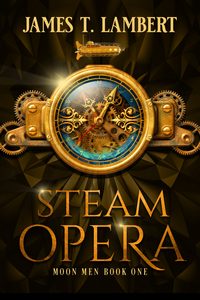
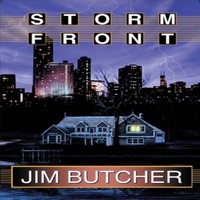
I’m reading Steam Opera by James T. Lambert, which is the least steampunk-ish steampunk novel I’ve ever read (at the 30% or so mark) and is also the best thing that Lambert has done to date, so what do I care? I’m listening to Storm Front by Jim Butcher, read by James Marsters on audiobook, because it’s been too long since I spent time with Harry.

Cover of Steam Opera by James T LambertBlank SpaceCover of Storm Front by Jim Butcher

What did you recently finish reading?

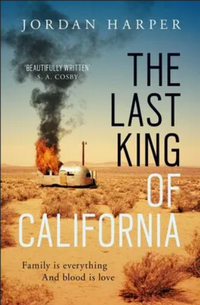
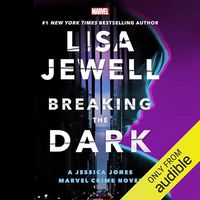
I just finished Jordan Harper’s The Last King of California and Breaking the Dark by Lisa Jewell, read by Helen Laser on audio.

Cover of The Last King of California by Jordan HarperBlank SpaceCover of Breaking the Dark by Lisa Jewell

What do you think you’ll read next?

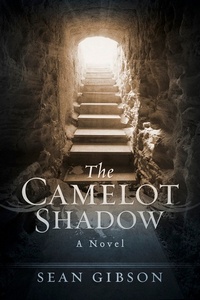
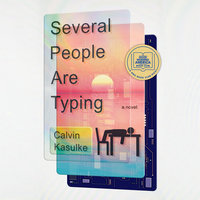
My next book should be for The Camelot Shadow by Sean Gibson and my next audiobook should be Several People Are Typing by Calvin Kasulke, read by MacLeod Andrews, Neil Shah, Dani Martineck, Sophie Amoss, Neil Hellegers, Cary Hite, Sean Patrick Hopkins, Joshua Kane, Amy Landon, Nicole Lewis, Brittany Pressley and Jonathan Todd Ross (which is a lot of people for 208 minutes).

Cover of The Camelot Shadow by Sean GibsonBlank SpaceCover of Several People Are Typing by Calvin Kasulke

Are you “beating the heat” (or at least avoiding it) with anything fun and/or good and/or compelling?

Highlights from May & June: Lines Worth Repeating

Highlights from the Month
June slipped away without me taking care of May. So, it’s time for a little catchup.
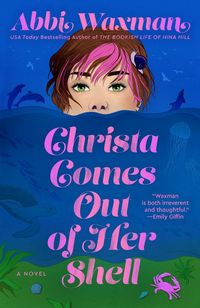
Christa Comes Out of Her Shell

Christa Comes Out of Her Shell by Abbi Waxman

If it’s possible to blush all the way down to your DNA, I did it.

It felt very much like home all of a sudden, like a familiar book released in a new edition.

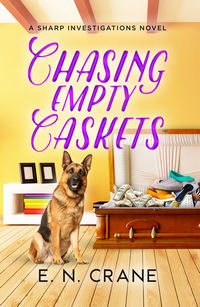
Chasing Empty Caskets

Chasing Empty Caskets by E.N. Crane
“Winnie, seek,” I said, letting her lead me. She was following the boy’s scent back the way he came and I followed her, grudgingly taking the sticky hand. It was small and somehow both wet and freezing. Children were a terrifying medical anomaly, and I suddenly understood why the ladies in mommy groups were nuts.


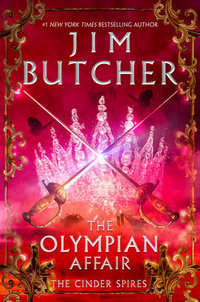
The Olympian Affair

The Olympian Affair by Jim Butcher

Bayard is a born hero, which is the larval form of a dead hero.

Ransom shook her head. “Some people think that if they’re simply insane and ruthless enough, they can accomplish anything.”

“Terrifying,” Espira said.

“Oh, that’s not the terrifying part,” Calliope said.

“No?”

“The terrifying part,” she murmured, “is that sometimes they’re right.”

Bridget rather forgot how to be conscious for some indistinct length of time.


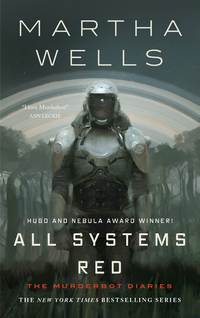
All Systems Red

All Systems Red by Martha Wells

I liked the imaginary people on the entertainment feed way more than I liked real ones, but you can’t have one without the other.

You may have noticed that when I do manage to care, I’m a pessimist.


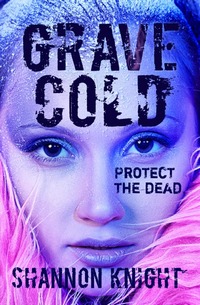
Grave Cold

Grave Cold by Shannon Knight

They’d reached her truck. “Nyle, meet the Gremlin, a machine you will love to hate.” The yellow truck looked very much up to the task.

One’s own mortality was a mighty incentive.


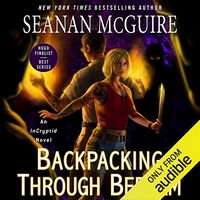
Backpacking Through Bedlam

Backpacking Through Bedlam by Seanan McGuire

Family is complicated. Peach cobbler, on the other hand, is refreshingly simple.

“The laws of physics aren’t negotiable.”

Darius laughed, and the sound was loud and joyous as he set his hands back on the wheel. “Sure they are. There’s no law that’s not negotiable, if you know how to get your shoulder against it and push.”

Always be polite to she shapeshifting super predator. It’s a simple rule of life, but a good one all the same.


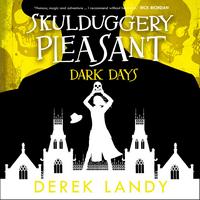
Dark Days

Dark Days by Derek Landy

“Sometimes you’ve got to admit it when you’re wrong.”

“You never admit it when you’re wrong.”

“But I’m rarely wrong, you see. You, on the other hand, are wrong a bizzarly large amount of the time. Statistically, it’s quite amazing.”


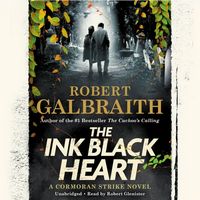
The Ink Black Heart

The Ink Black Heart by Author

He was starting to feel like a truffle pig doing its job in a room full of incense, dead fish, and strong cheese.


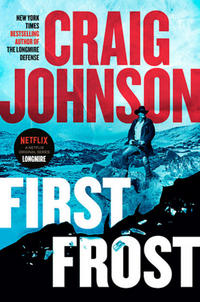
First Frost

First Frost by Author

I’d taken the frontage road, but I think I might’ve accidentally taken a few other turns, and now here we were in what might be the middle of nowhere—and when a guy from Wyoming refers to a place as the middle of nowhere that truly means the epicenter of nowhere.

I said nothing, which, when there was a stenographer in the room, was always a safe bet.


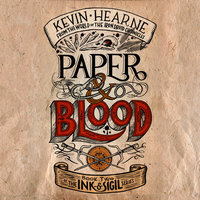
Cover image for the audiobook of Paper and Blood by Kevin Hearne

Paper & Blood by Kevin Hearne

Grief is never easy. But it gets softer around the edges, smoothed over like a river rock given time enough and water. It’s still a rock and it’s heavy and dangerous and capable of hurting you. Just not immediately to the touch, if that makes sense.

When the sky slid from indigo to grey, heralding the dawn, the birds began to wake up and call about their urgent need for Wednesday coffee— or so I imagined. I certainly needed some, as a belligerent caffeine-withdrawal headache had taken up residence in my brain and likely had legal arguments against eviction.

From pulp—utterly lifeless pulp—new life can be born. Add water and pressure and you no longer have mere pulp but a medium for the miraculous. It can carry the words of one lover to another. Express gratitude for gifts and thoughts. Invoice a client. Threaten death. Bear the light touch of poetry or the weighty prose of novels. It can be folded into an airplane, to annoy your teacher, or folded into origami, an artistic appreciation of nature made from wholesome natural ingredients. And on and on. So much can be built from the ruin of plant life.

Which is not to say that humans are noble. We ruin so much else that never gets a new life, and their dissolution—their extinction—is final.

But paper is one thing we got right.

The best we can do sometimes, in absence of actual wisdom, is to simply cease being foolish.


Cover image to E Rathke's Howl

Howl by e rathke

To look back on that day is to sink into a delicate memory. Like a love letter sent to myself, yet left to pulp in the rain.


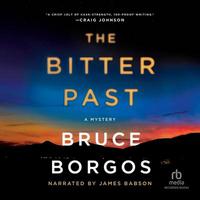
Cover for the audiobook of The Bitter Past by Bruce Borgos

The Bitter Past by Bruce Borgos

I believe in hunches. I think they’re just the dots in your brain that aren’t fully connected yet.


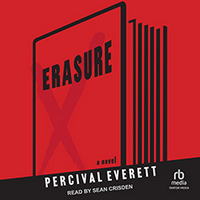
Cover of the audiobook for Erasure by Percival Everett

Erasure by Percival Everett

There are as many hammers as there are saws, the misplaced thumb knows no difference.

A reiteration of the obvious is never wasted on the oblivious.

I was lonely, angrier than I had been in a long time, angrier than when I was an angry youth, but now I was rich and angry. I realized how much easier it was to be angry when one is rich.

What some people would have you believe is that Duchamp demonstrated that art could be made out of anything, that there is nothing special about an object d’art that makes it what it is, that all that matters is that we are willing to allow it to be art. To say, “this is a work of art” is a strange kind of performative utterance as when the king knights a fellow or the judge pronounces a couple man and wife. But if it turns out that the marriage license was incorrectly filled out, then the declaration is undone and we will say, “I guess you’re not husband and wife after all.” But even as it’s thrown out of the museum, what has been called art it is still art. Discarded art. Shunned art. Bad art. Misunderstood art. Oppressed art. Shocked art. Lost art. Dead art. Art before its time. Artless art. But art nonetheless.


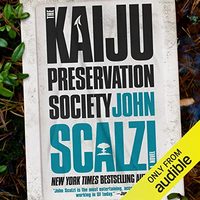
Cover for The Kaiju Preservation Society by John Scalzi

Kaiju Preservation Society by John Scalzi

“I like land,” I said. “I don’t drown there.”

“Any dietary restrictions?”

“I tried being a vegan for a while, but I couldn’t live without cheese.”

“They have vegan cheese.”

“No, they don’t. They have shredded orange and white sadness that mocks cheese and everything it stands for.”

“That thing looks like H. P. Lovecraft’s panic attack.”

It was stupidly perfect how all my problems were suddenly solved with the strategic application of money.


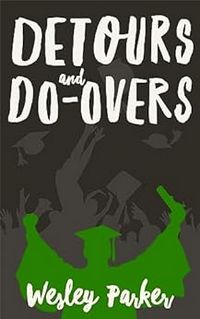
Cover for Detours and Do-Overs by Wesley Parker

Detours and Do-overs by Wesley Parker

Since she doesn’t wanna talk, I do what I assume most men do when confronted with crippling silence from their significant other.

I start to rationalize shit.

“How you holding up?” she says.

“Like a Jenga tower in the middle of a bunch of drunks,”


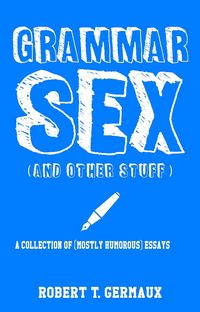
Cover for Grammar Sex by Robert Germaux

Grammar Sex and Other Stuff by Robert Germaux

Don’t you just love it when a professional athlete ends a long holdout and finally signs that new deal worth multiple millions of dollars, but assures everyone that “it wasn’t about the money”? Bless his little heart. As if any reference to cold hard cash would have somehow sullied the whole salary negotiation process.

(Image by DaModernDaVinci from Pixabay)

LITERARY LOCALS: A Q&A About Writing in Idaho with Jerome Goettsch

Literary Locals logo
Goettsh’s memoir had only been in print for a couple of weeks before I met him at the Library Book Fair. I wish I’d noticed that before I sent him my questions–I’d have tweaked them a little bit–not that there’s any problem with his responses, I’d just have framed things in light of the date.


Before we get into things, why don’t you give the reader a brief introduction to you and your work.
I’m a veteran of 9 years in the Marine Corps, 16 years in the Army, and 7 years working as a Navy civilian. I did 2 tours of duty in Vietnam. The first tour the book is based on as a rifleman and Fire Team Leader for 13 months, and a second tour for 12 months in ordnance. Over 25 years in the military I worked as a rifleman, an ordnance man, a military policeman, a rifle, and shotgun coach, and in administration. As a civilian for the Navy, I worked on the docks unloading munitions off ships and as a document editor. I edited operations manuals for navigation systems on nuclear submarines.

What brought you to Idaho in the first place? What is it about Idaho that keeps you here?
My wife and I moved here 21 years ago to be with our children. We have 2 children, 2 grandchildren, and 2 great-grandchildren in Idaho now.

Are you tied into some sort of local author/bookish group/culture? If so, tell us about it and how it helps you as an author. If you’re not, is there a reason for it?
This is all very new to me. I’m learning to tread the waters of authorship. I have a Facebook page: The Cocoa Kid, and I belong to a few Facebook groups: The Writer’s Forum, Writers For Writers, and Creative Writing. Also, the Kindle Community is very supportive.

What kind of events in the area do you attend—either to sell/promote your books or to network with authors? Are there any outside of this area that you hit regularly and wish we had something like it here?
I did my first book fair at the Nampa Library where we met. I made a few good contacts there. I’ve been talking with local librarians and hope to have something in the future. I need to reach out to new bookstores and book clubs. It’s challenging balancing my book promotion with my artwork.

What’s the breakdown of your audience—do you have a strong local base, or are your readers from other parts of the world?
My readers are from all over the US, but mostly veterans like myself. However, I like to point out the book is not just all about the war. It’s not all shoot ’em up bang bang. It’s about a young man’s journey from childhood to war. About struggle, loyalty, and sacrifice in the face of adversity. It’s about survival and moving on.

Do you think there are particular challenges or advantages to being a writer in the Treasure Valley? (possibly both)
It’s not just Treasure Valley. It’s the book community in general. Lots of people are going to e-books. Paperback books are slowly but surely going the way of hardback books. They will be obsolete collectors’ items someday. I’m not a Luddite; or a technophobe in today’s vernacular. I’m going to be putting an e-book version out soon.

Do you bring Idaho (or some sort of Idaho-sensibility, assuming one exists) to your work? Whether or not anyone else sees it, can you look at some aspect of your writing and think “That’s Idaho” or “I would do ____ differently if I was a Kentuckian or from Illinois?”
I consider myself an Idahoan as I’ve been here 21 years now. I have family and roots in Idaho. But I was born and raised in Green Bay Wisconsin. Later I lived in Milwaukee Wisconsin, Chicago Illinois, Dallas Texas, Phoenix Arizona, and California. After joining the military I was stationed in California, Texas, Virginia, Oklahoma, and Indiana. I did 2 tours (still not sure why they call them tours) in Vietnam. I’ve visited Mexico, Japan, China, Greece, Africa, and most of Western Europe. Working as a civilian for the Navy I traveled to Washington DC, Washington state, New York, Florida, and Georgia. I’m like a sponge, and have picked up some of the customs and language of most everywhere I’ve been.

One final question, is there a book (or two…or 18, if you get really carried away), that embodies Idaho/the Idaho spirit to you to recommend to my readers?
I’m a rockhound and photographer, as well as a writer and artist. I love to explore Idaho, so I have several books such as Rockhounding Idaho, Roadside Geology of Idaho, and books on Idaho’s history. I found reading about how Idaho’s Capitol was moved from Lewiston to Boise most interesting. I would highly recommend reading about the State Capitol’s history. Overall I’m a history buff, and I’m in the habit of reading a few books at a time. I like to pick one up and read a chapter or two, then put it down, pick up another, and repeat. I am presently reading Eiffel’s Tower by Jill Jones, The Greater Journey by David McCullough, and a book written in 1890, How the Other Half Lives by Jacob A. Riis. Riis was part of a movement that led to changes in society such as the Audy Home that I was locked up in, and which is in my book. Riis wrote his book in 1890 and the Audy Home was created by the women of Hull House in 1899.

Thanks for your time and participation! Hope you enjoyed it!


Literary Locals logo

MUSIC MONDAY: Deep Stays Down by Larkin Poe

Music Monday

Music Monday's originated at The Tattooed Book Geek's fantastic blog and has shown up hither, thither, and yon since then.

Irresponsible Reader Pilcrow Icon

Page 89 of 603

Powered by WordPress & Theme by Anders Norén