Rites of Passage by M.D. Presley: You Won’t Need A Dowsing Rod To Find The Appeal This UF

Back on April 1st when this book was released, M.D. Presley stopped by to answer some questions about it, be sure to give that a read if you haven’t.

Cover image of Rites of Passage by MD PresleyRites of Passage

by M.D. Presley

DETAILS:
Series: The Inner Circle, #1
Publication Date: April 1, 2024
Format: eARC
Length: 352 pg.
Read Date: May 29-June 3, 2024

What’s Rites of Passage About?

Teenager Corbin James escapes from the cult he was (largely) raised in just as the FBI’s raid begins. Weeks, miles, and multiple states later, Corbin’s still running when he encounters someone who seems to know a lot about him. Too much for a random stranger to know.

This stranger (we later learn he’s called Mister) recruits/tricks/entices/entraps Corbin into joining him for a task. Mister and Corbin join up with some other members of the Inner Circle (a group of magicians found in most of the major cities in the U.S.) to hunt for a missing magician. Corbin has the magic ability to dowse—and for much more than water (although maybe he can find water, too, it never comes up)—he can find whoever and whatever he needs to.

Obviously, there’s something about the search for this particular missing person that is going to take a little more than one session with Corbin and his dowsing rod (or it’d be a short story, not a novel)—and Corbin’s introduction to the Inner Circle, to the reality that there are all sorts of people who can do magic, and all sorts of magic, and a world beyond his cult isn’t going to be easy for him. Or all that safe, either.

Worldbuilding, Magic System, and So On

Okay, you’d expect that someone who’s written books on worldbuilding would know what he’s doing when it comes to it (or at least, you’d hope he would). In this case, you’d be right—which doesn’t make it less impressive.

This very clearly takes place in a version of our world (joking references to “muggles” make that clear), and magic users are underground. But, as UF readers often see, that doesn’t mean that there isn’t a strong culture of rules, mores, customs, and whatnot. There are essentially two ways that magicians organize themselves—in local associations or in a major association that covers the nation (it’s hard to explain briefly—think of a regional fast food chain and McDonald’s). Due to the circumstances around this novel’s events, we get a pretty good idea—but not exhaustive—about how they both function, are organized, and recruit members.

The variety of magic abilities is pretty great. The closest comparable series I can think of on this front is Jacka’s Alex Verus books. And I know this book only scratched the surface of that. It’s one that I can’t wait to explore in future books.

When it comes to The Dresden Files, The Hollows, or The Iron Druid (for example), by the end of the first book, you have a pretty solid understanding of how magic functions in their universes (even if that understanding will grow and expand over the course of the series). With Rites of Passage, we don’t get that. But you never have the impression that Presley’s making it up as he goes along. I have a vague understanding of how my smartphone works, but I know there’s a lot that I don’t understand—but I can use it and understand that it does work. The same thing goes for the magic here—I can see these people use it, and I understand that it does work. I don’t need to know all the ins and outs.

Some authors beat you over the head with the details (I’m not suggesting that Butcher, Harrison, or Hearne did that)—showing their work like it’s a math test. Presley doesn’t do that—he just shows it working and gives you a sense that there’s a methodology afoot. The reader will slowly (over a few books) piece it together—or not, because they really don’t care about the details—as we see more. Just knowing that there’s a structure is enough.

Is It Me?

Is it just me, or are there a lot of books being written lately about people escaping from cults? I’m not talking strict religious families/cultures—but out-and-out cults. Maybe I’m not seeing as many as I think I am and it just feels that way.

I’d say I’m starting to get tired of it—and I am—but Presley does such a good job of showing how Corbin’s life and thinking have been shaped by the cult, and how even after getting away from them (and how he did it)—he still reflexively thinks like a member. Sure, he’s skeptical about some of it, and can see through some of what the leader had done. But it’s not something you can just switch off, and Presley demonstrates that with skill. So, I’ll wait until the next time I come across this phenomenon to complain about it.

The Playlist

Presley has assured readers that once he gets enough online reviews for this book, he’ll release the playlist for this book. This playlist is going to be a doozy. At some point along the way, Corbin gets his hands on an enchanted iPod that helps him navigate the events of this novel. Given his sheltered upbringing he doesn’t recognize most of the songs it plays for him—he’ll give a description of some of the songs, so the reader can guess some/many/all of what he’s listening to (depending on the reader).

Getting this playlist will actually help round out your understanding of the book (it won’t be essential, but it’ll be a nice bonus)—and I’m pretty sure it’ll be fun to listen to, too.

So, what did I think about Rites of Passage?

I’ve talked about worldbuilding already, so what about the characters, arguably the most critical component in getting me (and other readers) to want to keep reading? Presley gives his readers a lot to here. It’d be easy to create a series with almost every magician we encounter in this book as the central character—and that’s not something I can say too often. Corbin is likely the best choice—the way he has to be introduced to this world and other forms of magic is a major plus, so any info-dumping for the reader has a natural outlet in teaching Corbin. But I can see myself really getting into at least a duology with every other magic user (including the villain of the piece).

While writing this post, I went back and read one of Presley’s answers to remind myself what character he mentioned here:

In screenwriting it’s understood that supporting characters are more fun to write because they can be over the top, since they’re not carrying the show. They can be outlandish and weird because not nearly as much is riding on them, which is why they have the freedom to become fan favorites. And I have a feeling that in Rites of Passage Kirin will be this character for me.

I’d forgotten to look for Kirin as I was reading to see if I could pick that up—it’s just as well that I did, so I can say that Kirin is this fan’s favorite. I’m also a bit relieved—we didn’t definitively say goodbye to Kirin here, but the way things ended, there was no guarantee we’d see her (or many other of the surviving characters) again. But knowing she’s got an arc that will be developed over several books helps build my own anticipation for further books (nothing against Corbin, but I knew we’d get more about him).

I’m not as enthusiastic about the plot as I am the other aspects of this novel. It’s not bad by any means—I was engaged and curious throughout. It wasn’t too hard to follow or anything else negative, either. I just think there was so much going on in establishing characters, the world, the magic, the associations, and so on that there wasn’t enough space left over for the story. Your results may vary, of course—but for me everything else overshadowed the story. I do fully expect that in future installments I won’t have this complaint as Presley has established enough here that he can focus more on the plot.

Regardless, I heartily encourage Urban Fantasy readers to try this. You’re not going to find your typical UF mainstays here, but you’re going to find a world that you’re going to want to spend more time in with characters you’re going to want to get to know better. This series has the potential to become a favorite.

Disclaimer: I received this ARC from the author in exchange for this post and my honest opinion. A gamble on their part.



3.5 Stars
Irresponsible Reader Pilcrow Icon

WWW Wednesday, June 12, 2024

Whoops, I almost forgot about this. Blame M.W. Craven.

This meme was formerly hosted by MizB at A Daily Rhythm and revived on Taking on a World of Words—and shown to me by Aurore-Anne-Chehoke at Diary-of-a-black-city-girl.

The Three Ws are:
What are you currently reading?
What did you recently finish reading?
What do you think you’ll read next?

Seems easy enough, right? Let’s take a peek at this week’s answers:

What are you currently reading?

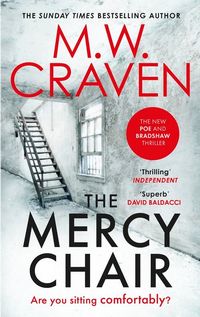
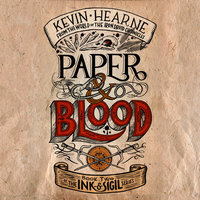
I literally had to force myself to close The Mercy Chair by M.W. Craven and put some distance between me and so I could get this post (and tomorrow’s) ready. I’m closing out Paper & Blood by Kevin Hearne, read by Luke Daniels on audiobook—I’m more eager than I was a couple of days ago for the third installment in this series (and I was pretty eager then). Also, this might be the best thing that Luke Daniels has ever done (and that’s no small feat).

Cover image of The Mercy Chair by MW CravenBlank SpaceCover image for the audiobook of Paper and Blood by Kevin Hearne

What did you recently finish reading?

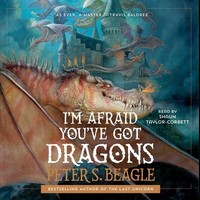
I just finished E. Rathke’s Howl and I’m Afraid You’ve Got Dragons by Peter S. Beagle, read by Shaun Taylor-Corbett on audio. Am I allowed to say that I enjoyed it more than The Last Unicorn? It feels like the kind of thing I should whisper—or maybe only admit to someone in a parking garage while standing in the shadows.

Cover image to E Rathke's HowlBlank SpaceCover to the audiobook of Peter S Beagle's I'm Afraid You've Got Dragons>

What do you think you’ll read next?

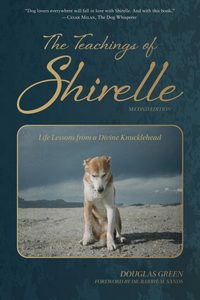
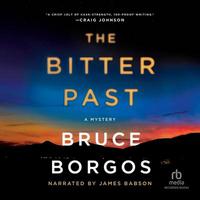
My next book should be for The Teachings of Shirelle: Life Lessons from a Divine Knucklehead by Douglas Green and my next audiobook should be The Bitter Past by Bruce Borgos, read by James Babson.

Cover image for The Teachings of Shirelle by Douglas GreenBlank SpaceCover for the audiobook of The Bitter Past by Bruce Borgos

What has found its way to the top of your TBR?

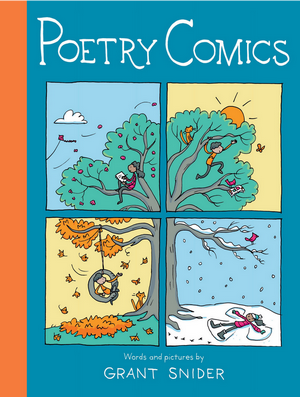
Poetry Comics by Grant Snider: Simply Bursting with Adequatulence

Cover for Poetry Comics by Grant SniderPoetry Comics

by Grant Snider

DETAILS:
Publisher: Chronicle Books
Publication Date: March 26, 2024
Format: Hardcover
Length: 96 pgs.
Read Date: June 1, 2024
Buy from Bookshop.org Support Indie Bookstores

What’s Poetry Comics About?

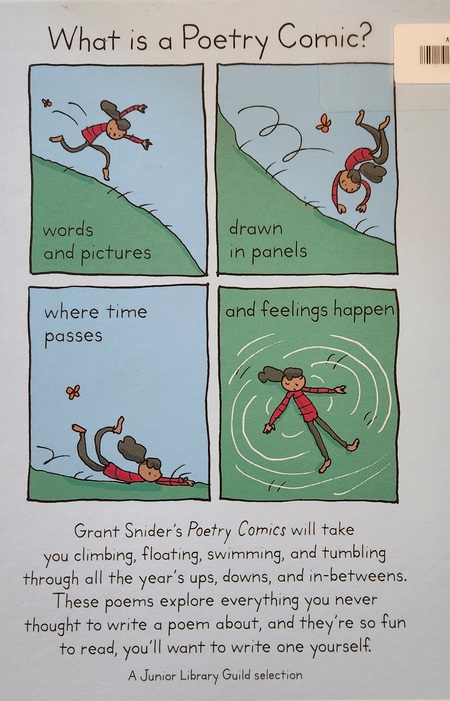
Rather than try to really describe this book (and I wouldn’t do a great job of it), here’s a shody photo of the back cover (forgive the partial library barcode)
Photo of the Back Cover to Poetry Comics by Grand Snider

A Word About the Art

If you’re a fan of Snider’s characteristic simple drawings, you’ll enjoy the art here. I am one of those, so I did.

The panels pair up really nicely with the poems—sometimes augmenting the shape and construction of the poem, sometimes simply illustrating them. Either way, it’s just what you want in this kind of book. They never detract from the poems (they probably make some of the simpler ones better—they definitely disguise their brevity*).

* I don’t mean to suggest that simple/brief poems are bad, they’re simply short.

So, what did I think about Poetry Comics?

This book is a shining example of adequasivity. It was perfectly fine, but on the whole, it really didn’t do much for me.

There were a few poems about writing a poem—they were nice (not particularly practical). Most seemed to be trying really hard to be uplifting—and many of those fell flat to me, primarily because they were clearly trying really hard, but I did enjoy a couple of those. I’m going to guess that I really enjoyed about 10% of them—but there were none that I’d consider “bad,” on the whole, the book was adequate.

So adequate that I knew halfway through that I’d have to look up that Newsradio video linked above.

Do I think readers in the target age range would appreciate this more than I did? Sure, if they like poetry (and possibly those who are ambivalent to it).


3 Stars

This post contains an affiliate link. If you purchase from it, I will get a small commission at no additional cost to you. As always, the opinions expressed are my own.
Irresponsible Reader Pilcrow Icon

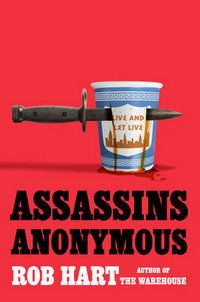
PUB DAY REPOST: Assassins Anonymous by Rob Hart:The Confessions of a Tactical Drone with a Heartbeat and a Dairy Allergy

Assassins AnonymousAssassins Anonymous

by Rob Hart

DETAILS:
Publisher: G.P. Putnam's Sons
Publication Date: June 11, 2024
Format: eARC
Length: 320
Read Date: May 27-29, 2024
Buy from Bookshop.org Support Indie Bookstores

What’s Assassins Anonymous About?

Almost a year ago, Mark walked away from his old life and into a 12-step meeting. It’s been a struggle for him—he’s almost relapsed, he came close to suicide, and he’s struggled every day. But with the support of the other people in his group, his sponsor, and a little orange cat who came into his life at just the right time—Mark is making it, day by day.

Then one day, Mark’s cleaning up after the meeting and he’s attacked by a Russian who moves like a professional killer. Mark fights back—incapacitating the Russian and escaping with a serious—but not-too-serious—wound of his own and a burning question: who sent the Russian? The search for the answer takes Mark (and his cat) around the world—into some very dangerous situations, and almost more temptation for Mark to relapse than he could’ve imagined.

You see, Mark’s 12-step meeting isn’t for Alcoholics Anonymous, Gamblers Anonymous, Narcotics Anonymous, or anything like that. As you’ll guess from the book’s title, it’s Assassins Anonymous. Hitmen, Assassins, Serial Killers, and the like, who are tired of the life, who are tired of killing and want to try to live productive, life-affirming lives. They have to fight old impulses, old habits, old attitudes, they have to abandon adrenaline rushes (which are probably pretty addictive) and all the rest for a quiet life. Mark had been one of the best in the world (or the worst, depending on your perspective)—almost legendary—until he went cold turkey. But someone’s apparently trying to warm up the poultry.*

* That’s a metaphor I really shouldn’t have tried to stretch.

Can Mark discover why someone game for him almost a year after he quit “the life”? Can Mark make them stop without having to throw away all the work he’s done over the last (almost) 12 months?

The Movies

Like many moviegoers, I love a good hit man movie. I can even enjoy a “just okay” hitman movie (sorry, The Whole Ten Yards you don’t qualify as either). Mark, unsurprisingly, isn’t a fan of most of them. Sadly, that’s where most people get their ideas and information about assassins and hitmen from. So by character, actor, or movie title, they’re brought up frequently—usually to Mark’s dismay. He’ll also just compare his life to those movies on occasion. I enjoyed this aspect of the character a lot—particularly one running bit where people kept expecting him to look more like a particular actor.

Other kinds of movies are used throughout the novel, too—they’re a great shorthand way of revealing character. What movies he likes, what movies he refuses to mention liking, and so on are a convenient and efficient way of telling you a lot about Mark. Also, it’s just fun to see characters talk about movies and whatnot—as people like Whedon, Tarantino, and Smith have been showing us.

The 12-steps

As the book started to really focus on—and feature—things like the meetings Mark’s attending, his recovery, and his working the steps, I started to get worried. Primarily because it was early on, and while I understood that Mark was flippant, even a wiseacre—was Hart going to be flip about the 12-steps? That feels like something you shouldn’t touch—like a third rail, a skunk with a hair-trigger, or that Easter Egg you finally found in late June.

But no—the meetings, the steps, the attitude about recovery, and the way the characters interacted about their recovery were dealt with respectfully. Sure, there was a little bit of Mark’s attitude (or similar ones) expressed in the meetings and whatnot—but not about the meetings or the program, just about each other or themselves. (much like I imagine happens in an actual meeting)

If anything, this is practically an advertisement for those kind of programs and the good work they can do. Because this is the heart of the novel—yes, there’s the violence, the suspense, the twists, and whatnot—let’s call them “The Thriller Aspects.” Those aspects are what will draw readers to the book, they’re what’ll keep your attention and get you hooked on it. But Assassins Anonymous isn’t so much about the “Assassins” as it is the struggle, the stumbles, and the victories associated with Recovery. In my book, we should get more of those—particularly honest books about the victories.

So, what did I think about Assassins Anonymous?

Imagine Martin Q. Blank, Jimmy Tudeski, and Frank Moses meeting up and trying to take care of business—non-lethally (I guess that’d be something like the pacifist version of The Expendables), and you’ll have something like this book.

Let’s start with The Thriller Aspects—Hart nailed them. Even—maybe especially—the more outlandish aspects of them (which are really the trickier part to pull off). There’s a confident panache to the novel—as well as most of the characters—that lets you know right away that you’re in good hands and are set for a great ride. Some twists you’ll see coming, and won’t care because of the way he executes them. But also,

The 12-Step aspect—well, see above—another win for Hart.

What about the comedy and narrative voice? Spot on—seriously good. It’d be easy to go overboard on the comedy—or to not use enough of it (we are talking about a bunch of people who have killed many others), but I think Hart hits the balance just right. And Mark’s the kind of guy you can enjoy being stuck in the mind of for 320 pages.

The first chapter gives you everything you need to know about this novel—it’s such a well-written chapter, too. Voice, character, action, comedy. If you read it and aren’t hooked, you’re probably going to feel that way about the rest of it. If that first chapter works for you? Kick back and enjoy.

Sure, this novel is right in my wheelhouse—I’m practically its target demographic incarnate—but I think even if I wasn’t, it would’ve won me over. I strongly encourage you to pick this one up. I can’t tell you what’s keeping me from giving it the final full star, but something is (and since I’ll have to round up almost everywhere I cross-post, I’m not going to lose any sleep over it)—but, boy howdy, you’re in for a great time when you open this one up.

Disclaimer: I received a copy of this book from Putnam Books via NetGalley—thanks to both for this.


4 1/2 Stars

This post contains an affiliate link. If you purchase from it, I will get a small commission at no additional cost to you. As always, the opinions expressed are my own.
Irresponsible Reader Pilcrow Icon

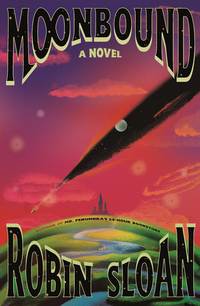
PUB DAY REPOST: Moonbound by Robin Sloan: The White Stripes Save the World (but not really)

MoonboundMoonbound

by Robin Sloan

DETAILS:
Publisher: MCD
Publication Date: June 11, 2024
Format: eARC
Length: 432 pg.
Read Date: May 21-27, 2024
Buy from Bookshop.org Support Indie Bookstores

Let’s Get This Out of the Way Right Now

This is not like the Robin Sloan books you may have read. This is not Mr. Penumbra’s 24-Hour Bookstore (even if everything I’ve seen from the publisher says it’s part of the Penumbraverse) and this isn’t Sourdough. If you’re looking for something like that, I can’t help you by talking about this book.

And yet…some of the same themes, the same kind of ideas, the same oddball ways of thinking, the same characters that will fascinate and (sometimes) frustrate you, the same quality of writing are present. So it is like the Robin Sloan books you may have read. But not really.

What’s Moonbound About?

Maaaannnn….I don’t know, I really don’t know. In case those semi-contradictory paragraphs above didn’t give you a clue. Also, to really talk about it would involve a few pages on my part and several spoilers.

Let’s start with this: the events of the book begin in the year 13777. The number of things that the human race has gone through—cultural, technological, societal, scientific, and political changes (revolutions, really) are impossible to describe. Civilizations have come and gone—the planet Earth looks little like it does now, and humanity isn’t much like it is now (except humans are going to be human—it’s like Doctor Who‘s far future episodes that way—just without the space travel). Even the Moon—the Moon, for crying out loud—isn’t the same.

In William Goldman’s The Princess Bride (and the movie does something very similar), Goldman talks about his father coming in while he’s sick to read him a book by S. Morgenstern.

“Does it have any sports in it?”

“Fencing. Fighting. Torture. Poison. True Love. Hate. Revenge. Giants. Hunters. Bad men. Good men. Beautifulest Ladies. Snakes. Spiders. Beasts of all natures and descriptions. Pain. Death. Brave men. Coward men. Strongest men. Chases. Escapes. Lies. Truths. Passion. Miracles.”

“Sounds okay,” I said and I kind of closed my eyes.

Similarly, let me tell you a little about what Moonbound contains:
Knights. Brothers. Talking swords. Dragons. Friendship. Robots. Bogs (which are very different than swamps). Raiders. Wizards. Bees that give direction. Gleaning coffee shops. Climate Warrior Beavers. Constructive debates (literally). Genetic engineering. Legendary warriors. Forty-three million dimensions.* Pizza rolls. Trash-pickers.

* Not really like Marvel’s Multiverse, more like the mathematical concept of three-dimensional or four-dimensional space, but much, much more expanded.

I’m not sure that’s helpful, but it’s something.

We begin when our protagonist, a boy named Ariel de la Sauvage, finds the remains of one of the greatest warriors in human history. This discovery ends up starting a chain of events that will lead to Ariel being on the run from the Wizard who rules the valley Ariel and his brother have grown up in—not just grown up in, but have never left. They have no knowledge of anything outside this valley—if anything exists beyond it, really. But to overthrow the Wizard and save his brother, Ariel will have to go into the wider world and learn about it. He needs experiences that his valley cannot give him. Equipped with this education and experience, Ariel should be able to confront the wizard and rescue his brother and the rest of the people he grew up surrounded by.

Oh, and he’s guided throughout this by an AI who has the accumulated knowledge of most of human history and is currently residing in a microorganism that has implanted itself in Ariel’s body.

Clear as mud, right?

Story

More than anything else—and there’s a lot of “anything else”—this is a novel about Story. The power of story to shape reality, to shape our expectations, the way we go about our lives, and the way we need others to go about their lives. The stories we tell ourselves about ourselves. The stories we tell others about ourselves. The stories that others tell us about themselves—and us. The stories that societies, governments, and other groups tell us and others about themselves and us.

Lastly, and maybe most importantly, Moonbound about the way we can re-write our stories, the way we can take control of them (once we realize the story being told) and change things.

So, what did I think about Moonbound?

That’s a great question, and one I’ve been chewing on for more than a week now. I want to read this at least two more times before I think I’ll be ready to answer that. Maybe the fact that I want to read this at least two more times in the next year or so gives you and me both a hint about what I think about it.

I haven’t been able to stop thinking about this book since I started reading it two weeks ago. Part of that is to think about what I read and decide what Sloan was doing and what I thought about it. Another part of that thinking is just reveling in just how strange and wonderful it was.

While reading, when I was able to stop thinking things like, “what is going on here?” or “What is Sloan trying to accomplish?” and just enjoy it and get caught up in the story—I was able to lose myself in the book. And that got easier the further into the book I got. But I also spent an awful amount of time just trying to suss things out and overthinking things.

I don’t think that’s a bug when it comes to this book—it’s a feature. Sloan has given the reader so much to take in, that if you’re not chewing on almost every idea, you’re doing the book and yourself a disservice. But it’s also the kind of book you can relax with and enjoy. At a certain point in the book, Ariel learns to lay back and float in water—which is both one of those things that takes effort and can be incredibly relaxing at the same time. Like him, the reader has to learn how to “float” in this book. And when you do, you’ll be rewarded. How greatly you’ll be rewarded, I’m not sure—but you will be.

I’m not going to give this a star rating—sorry if that’s what you’re looking for. I just don’t know (in case I haven’t used that phrase enough yet in this post)—I can both defend every rating from 3-5 Stars, and I can wage a better argument against each of those. I encourage readers who find anything I’ve rambled about above intriguing, fans of Sloan, or people who read what the Publisher’s site says to give it a shot. And then let’s get together and talk about it, because I’d love to bounce some spoilery ideas off of someone.

Disclaimer: I received a copy of this book from Farrar, Straus and Giroux via NetGalley—thanks to both for this.

This post contains an affiliate link. If you purchase from it, I will get a small commission at no additional cost to you. As always, the opinions expressed are my own.
Irresponsible Reader Pilcrow Icon

LITERARY LOCALS: A Q&A About Writing in Idaho with Christi Nogle

Literary Locals logo
Christi Nogle is another one of those writers who took me introducing myself with “I’m probably not going to like your [mostly horror] stuff” with a smile. I think if I read horror, I’d have a blast going through her backlist. She’s got some events coming up in the next couple of weeks (dates are listed below). Local readers should make a point of going to meet her.


Before we get into things, why don’t you give the reader a brief introduction to you and your work.
Hi! I’m a fiction writer, focusing on horror and horror-adjacent work. You can follow my writing journey at christinogle.com and at linktr.ee/christinogle

My first novel, Beulah from Cemetery Gates Media, won the 2022 Bram Stoker Award® for Superior Achievement in a First Novel and was one of five Shirley Jackson nominees in the Novel category for that year. The book has also been translated to Spanish by Dilatando Mentes Editorial. Beulah is a ghost story set in a fictional town of Beulah, Idaho. I’ve written two more novels also set in Idaho, which I hope will be available soon.  

I‘ve had almost a hundred short stories published in a variety of magazines, anthologies, and my fiction collections from Flame Tree Press: The Best of Our Past, the Worst of Our Future, which is a current 2023 nominee in the Bram Stoker Awards®, Promise: A Collection of Weird Science Fiction Short Stories, and One Eye Opened in That Other Place.  

I’ve co-edited two anthologies of horror, science fiction, and fantasy stories: Mother: Tales of Love and Terror with Willow Dawn Becker and Wilted Pages: An Anthology of Dark Academia with Ai Jiang, and I work as an Associate Editor for the horror fiction podcast PseudoPod.

Are you a native Idahoan? What is it about Idaho that keeps you here?
I moved to Idaho at the age of ten and have lived here ever since. Previously, my family moved around the country a lot.

I’ve stayed in Idaho because my family lived here, and now that my family members have passed, I have wanted to move closer to the ocean, but suppose I stay here because this still feels like my only home.

“Feels like my only home.” Is possibly the best answer I’ve received to this question.

Are you tied into some sort of local author/bookish group/culture? If so, tell us about it and how it helps you as an author. If you’re not, is there a reason for it?
Yes, I have a wonderful writing group here in Boise, the Sawtooth Alliance of Women Writers. [That name is a great way to say you’re an Idaho-based group without using the word Idaho. Also, I dig the initials.] I’ve known some of the members since college in the nineties and have been colleagues with others for almost that long, so it is a very comfortable and supportive group. The members of this group were among those who first encouraged me to send my work out for publication, and it has been wonderful to share my writing news and celebrate theirs each week. I’ve been meaning to check out the creative writing group at my local library, too, but so far I haven’t happened to be free during their monthly meeting time.

What kind of events in the area do you attend—either to sell/promote your books or to network with authors? Are there any outside of this area that you hit regularly and wish we had something like it here?
Just lately I have begun appearing at local events such as library book fairs, the library’s ComicCon event, readings, signings at Rediscovered Books and Barnes & Noble, and the like. One of the most successful events for me was a reading at the Star library hosted by Tina Johnson—the attendees were so receptive and kind! Krampus Con Bizarre Bazaar at ABU Games in Boise was fantastic as well. The well-attended event featured comics, art, books, games, and cosplay, and as you would imagine there were a good number of people open to talking about horror. On June 15, I will be signing at Rediscovered Books 11:00-12:30. June 29, I have plans to do a signing at local author Brian McBee’s store, Kuna’s Book Habit from 12-2:00.

I desperately wish there were more of a local horror community here and am always envious when I see that fellow horror writers can go to regular horror events in New England, the Pacific Northwest, and California. I’ve wanted to start a local group for some time, and I ran a workshop through The Cabin called “The Art of Dread: Crafting Contemporary Horror” in hopes of meeting and cultivating some horror friendships here in Idaho. I then began looking for other Idaho horror writers on Facebook in hopes of starting an Idaho Horror Writers Association (HWA) chapter. There simply weren’t enough people, but just recently, the Wyoming-based horror writer Josh Hanson and I were able to open a chapter of the HWA for the “Inland North States” region including Idaho, Montana, Wyoming, and North and South Dakota, so I hope that will lead to more regional opportunities as well as more local and semi-local friendships. The HWA has been the most important organization of the several I belong to, as it offers opportunities to mentor and be mentored, other fascinating volunteering opportunities, and has put me in contact with some of my favorite writers. If any local writers reading this are thinking of joining the HWA, please reach out to me through my website contact form or through any social media and I’ll be happy to help you join our chapter.

What’s the breakdown of your audience—do you have a strong local base, or are your readers from other parts of the world? 
My local friends read my work, and I’m trying to meet more readers locally, but most of my readers are from other parts of the U.S. and the U.K. Due to the translation of Beulah, I am also happy to have some readers and reviewers in Spain. I don’t read Spanish, but I can read their comments and reviews due to online translation, and it’s wonderful to see the response to the book.

Do you think there are particular challenges or advantages to being a writer in the Treasure Valley? (possibly both)
It’s been a bit challenging for me to be based here instead of in one of the places mentioned above that have a greater number of horror writers and readers. That said, there are some generous organizations in the area that have helped me, such as our local literary center The Cabin and the Alexa Rose Foundation—I’ll be in the Alexa Rose residency at The Common Well starting in November, and I hope to be offering a new workshop though The Cabin soon. We have a great library system here, and we have the wonderful independent bookstore Rediscovered Books.
With the Inland North States chapter, you’re on the front line of addressing one of the biggest challenges. I’ve had a few other authors talk about “maybe” starting something or wanting something that meets their genre/subgenre/specialty—it’s good to see that someone making progress in that direction, too.

Do you bring Idaho (or some sort of Idaho-sensibility, assuming one exists) to your work? Whether or not anyone else sees it, can you look at some aspect of your writing and think “That’s Idaho” or “I would do ____ differently if I was a Kentuckian or from Illinois?”
Yes, I think you would recognize a lot of the natural features of Idaho in my work, such as climate, the plants that grow here, the landscape. My settings are often rural or semi-rural and are drawn from the small towns where I’ve lived in Idaho as well as the country settings in Illinois and Indiana where I lived as a child.

One final question, is there a book (or two…or 18, if you get really carried away), that embodies Idaho/the Idaho spirit to you to recommend to my readers? 
There’s no one book that expresses everything that would need expressing about the state, but Educated: A Memoir by Tara Westover comes to mind. Westover’s work with theme of isolation really spoke to me.
Great pick.

Thanks for doing this–I hope you enjoyed it!


Literary Locals logo

MUSIC MONDAY: Beautiful World by Colin Hay

Music Monday

Music Monday's originated at The Tattooed Book Geek's fantastic blog and has shown up hither, thither, and yon since then.

Irresponsible Reader Pilcrow Icon

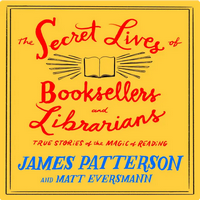
The Secret Lives of Booksellers and Librarians (Audiobook) by James Patterson and Matt Eversmann: BTS of the Book Connecting Scene

The Secret Lives of Booksellers and LibrariansThe Secret Lives of Booksellers and Librarians:
Their Stories Are Better Than the Bestsellers

by James Patterson and Matt Eversmann; Read by: Tom Force, Nancy Peterson, Jenn Lee, Jennifer Pickens, Amy Jensen, Deanna Anthony, Jane Oppenheimer, Susan Hanfield, Marni Penning, Daniel Henning, Rob Reider

DETAILS:
Publisher: Hachette Audio
Publication Date: April 8, 2024
Format: Unabridged Audiobook
Length: 7 hrs., 55 min. 
Read Date: April 14-16, 2024
Buy from Bookshop.org Support Indie Bookstores

My favorite thing is helping people. Handing someone a book with the power to change their lives is magical because, oftentimes, it does.

What’s The Secret Lives of Booksellers and Librarians About?

Typically, when I just use the Publisher’s Description, it’s because I’ve floundered around and can’t come up with a description that I like or because I just don’t care enough about the book to put the effort into it. this time, however, it’s because I really like the way that this copywriter put it (and maybe I’m a little worried that I’d end up plagarizing it a bit if I tried):

To be a bookseller or librarian…

You have to play detective.

Be a treasure hunter. A matchmaker. An advocate. A visionary.

A person who creates “book joy” by pulling a book from a shelf, handing it to someone and saying, “You’ve got to read this. You’re going to love it.”

Step inside The Secret Lives of Booksellers and Librarians and enter a world where you can feed your curiosities, discover new voices, find whatever you want or require. This place has the magic of rainbows and unicorns, but it’s also a business. The book business.

Meet the smart and talented people who live between the pages—and who can’t wait to help you find your next favorite book.

Overly-Romanticized?

Yes, I think so. Now, were you to ask me if I cared, I’d give you a big fat “no.”

Many librarians—public or school—in the book were involved in the recent efforts to restrict access to certain books. Something that’s important, to be true. And some of them had suffered because of it—but listening to this felt sanitized.

The booksellers, on the other hand, particularly those who owned/worked in independent stores didn’t seem to suffer or have many hardships. I mean, the bookstore in The Bookish Life of Nina Hill had a harder go of it than most of these. I know the point of this book isn’t to be a no-flinching look at the hard times involved in bookselling (you can look at things like Shaun Bythell’s or Oliver Darkshire’s books for the grimmer-side).

This book is designed to be a celebration of those people who’ve devoted their professional lives to connecting people with books—for a variety of reasons. So, sure, it doesn’t tell the whole story, just the good parts. And frankly, that’s entertaining enough—and given a lot of the dark tales that could be told about librarians and booksellers right now, I’m willing to settle for just the good bits while we can.

How Was the Narration?

It was really well done—if you just take a glance at the credits of the narrators, you can understand why. I’m not sure which narrator did which part of the book, nor am I sure how often I heard the same narrator reading different chapters—I honestly couldn’t tell. I call that a win in my book—they convincingly embued each bookseller or librarian with just the right amount of personality that I might as well have been listening to recorded interviews with the individuals behind the stories.

So, what did I think about The Secret Lives of Booksellers and Librarians?

I figured this would be a pleasant book, but I didn’t expect much beyond that. I’m pleased to have been wrong.

This is an inspiring and entertaining look at the people who connect others with the books they want or need—whether they realize they want or need them or not. For a booklover, this is great to hear. They sound like what you want them to sound like.

The big problem with this book is that you’re going to fight the impulse to quit your job and go get your MLS or start working as a clerk in a bookstore as soon as you finish (or by the mid-point). As downsides go, it’s a pretty tame one, but it’s there.

You’ll have a fun time with this, give it a shot.


4 Stars

This post contains an affiliate link. If you purchase from it, I will get a small commission at no additional cost to you. As always, the opinions expressed are my own.
Irresponsible Reader Pilcrow Icon

Strange Religion by Nijay K. Gupta: People Say I’m Strange, Does It Make Me A Stranger…

Strange ReligionStrange Religion:
How the First Christians Were Weird, Dangerous, and Compelling

by Nijay K. Gupta

DETAILS:
Publisher: Brazos Press    
Publication Date: February 27, 2024
Format: Paperback
Length: 216 pg.
Read Date: May 12-19, 2024
Buy from Bookshop.org Support Indie Bookstores

I set out to spend a few years studying ancient religions in general and Roman religion in particular, and I came to a clear conclusion: by and large, early Christians were weird and were dangerous to many, and yet clearly some found this religion attractive and compelling.

This book is not a handbook for how to be Christian today or how to create a “weird” church. Largely, I see the work I have done as descriptive—these are the first Christians, warts and all. They were not bucking conventions and pop religion to be special or different. In their best and most genuine moments, they were simply following Jesus, like mice blindly chasing after the pied piper. As they did so, they deviated from the norm of religion, and, whether they were intend. ing to or not, they stood out in society. This deviation from the norm is one way of defining what it means to be “weird. Another way is simply to say that “weird” things belong in another category. l am hoping that an extended investigation of the belies, practices, and ethos of the early Christians will clarify their origins and foundations, and provide insight into authentic Christianity today.

What’s Strange Religion About?

Gupta’s observation/conclusion is that early Christians were strange or weird when compared to others in their culture—thanks to their beliefs, ways of acting, and ways they wouldn’t act (for starters). They didn’t set out to be strange, to rebel against the culture, or anything like that. Actually, their goals involved being good citizens and living quiet lives—but their religious convictions set them outside the norm, and they stayed there for a good long time.

While Gupta doesn’t shy away from the occasional application to the contemporary Western (particularly American) Church, by and large, this is a descriptive book. He just talks about Roman culture in certain areas and then talks about how Christians were oddballs in the midst of all that. As he says above—this isn’t an attempt to make Christianity weird again, or anything like that—just to remind us how out of touch with the culture we were at one point.

Some of the areas he covers are: how the Romans of the first couple of centuries saw Christianity as a superstition; some early Christian beliefs—like believing they were possessed by God’s Spirit, their reckoning of the meaning of Time, and wanting to be associated with a horrible criminal in the first place (only the worst of the worst were crucified, who’d want to be associated with someone like that?); worship practices; family practices; and the way they treated others.

Belief

Romans sometimes argued about the gods—not over personal “beliefs” but over what they thought was true of the gods, But the Christians took their views to a whole other level, “believing” things that seemed absurd, disturbing, and even impossible. This may be one reason that Christians originally referred to themselves as “believers.” Today, we take for granted that religion is all about “faith” and “belief.” We have “faith” statements, “faith” traditions, and “interfaith” dialogue. But in the ancient world, there wasn’t this natural association between religion and faith language.

This is one of the biggest differences—one that shapes a lot of the rest. The book as a whole comes from Gupta’s students asking, why early Christians called themselves “believers,” what did the other followers of other religions call themselves? And well, one of Gupta’s findings was that Christians were more than a little strange by focusing on faith and belief. It was just foreign to the status quo.

The priests of public Roman religion were not chosen for their piety. They were expected to be experts in performing rituals. In fact, they had to be masters of religious arts so as to maintain the pax deorum*. It was a bit like being a professional bomb-disposal expert. It really doesn’t matter what you believe about government, law enforcement, or justice as long as you are good at defusing bombs. French historian and archaeologist Robert Turcan refers to Roman ritual worship as “Taylorism”—a form of scientific management. Frederick Winslow Taylor (1856-1915) developed a theory of management that was meant to produce efficient and effective workflow. Taylor offered a kind of mathematical formula to get the most out of human and industrial resources. Turcan argues that this was the mentality of the Romans—efficient and “successful” ritual performance to keep the gods content and happy. Roman priests and other cultic personnel had to provide meticulous observance of time-honored rituals.

He goes further:

There was a pervasive Roman understanding that persona beliefs, best intentions, and heartfelt emotion did not enhance religion. What mattered was what the gods actually called for—sacrifice and compliance. The early Christians had ther own practices and rituals, of course…But one thing we learn when we read the New Testament is that these Jesus people were absolutely obsessed with belief.

Now, Gupta spends twenty pages making that case, I just gave a brief overview—but even here, you can get an idea of how he goes about talking about each topic addressed.

* “Keeping Peace with the Gods.” Gupta describes the function of the sacrifices and rituals as maintaining this peace. It’s most of the content of the first chapter, and the basis for most of the rest of the book.

Pobody’s Nerfect

The last chapter* is entitled “The Christians Were Not Perfect”—some of this covers similar ideas as Nadya Williams’ book, Cultural Christians in the Early Church, but not all of it.

I really appreciated this chapter for a couple of reasons: 1. It’d be easy to take Gupta’s material and walk away with the idea that the early Christians had it all together (something that Williams and Gupta really wanted to counter), and 2. Gupta hits on some things that a lot of people don’t cover along these lines.

That said, it’s not a perfect chapter—and maybe it’s the most obviously imperfect chapter—I’m not sure I’m willing to buy into all of his examples from the Scriptures showing those imperfections (actually, there are some I’m sure I don’t buy).

But the chapter as a whole is a nice, refreshing reminder about the feet of clay that even the best of us possess.

* There is a conclusion following it, but it’s not long enough (or something) to be considered a chapter—at least not a numbered one. I wanted to stress that because I’ve complained recently about too many books not having a conclusion.

So, what did I think about Strange Religion?

One thing I haven’t talked about yet is that one of the things that Gupta focuses on is that despite—or maybe because of—the strangeness of Christianity to the Romans of the first and second centuries is that it was attractive to them. The “freaks” kept drawing more and more people to them, converting them to the weirdness. Again—not because they were strange, but because following Jesus Christ made them that way.

As a reader, not only did I appreciate the material, but the way that Gupta presented it. He built his arguments carefully and clearly (and one assumes accurately). Throughout all of this Gupta’s sense of humor shines through—keeping the text engaging as it educates. I’m always going to say good things about a book that does that (as long as the humor doesn’t detract from the serious material), and Gupta got this part right.

This is really one of the better books that I’ve read this year. From the thesis to the conclusion, and most points in between, Gupta painted a much-needed picture of early Christianity and Christians and how they related to the culture around them. It’s encouraging to remember that’s the natural state of the Church and one that we shouldn’t find ourselves overly-worried to be in again. I encourage Christians and those curious about our early history to give it a read.

I know that my wife has another book by Gupta on her shelves, I’m probably going to have to borrow it soon.


4 Stars

This post contains an affiliate link. If you purchase from it, I will get a small commission at no additional cost to you. As always, the opinions expressed are my own.
Irresponsible Reader Pilcrow Icon

Saturday Miscellany—6/8/24

I’m still trying to figure out my energy levels and how to manage them during my recovery, so I slept through most of my typical social media hours this week (and more of my reading/blogging hours than I’m comfortable with). This resulted in a skimpy list this week. But the show must go on, I hear. (and what I do list is worth your time, I think)

Odds ‘n ends about books and reading that caught my eye this week. You’ve probably seen some/most/all of them, but just in case:
bullet It’s Time We Added Full Credit Pages to Books: Maris Kreizman on the Importance of Acknowledging the Labor That Goes in a Single Title—I’d be down for that.
bullet Five Years On: Reflecting on Dead Inside—Noelle Holten looks back on her debut’s anniversary. (it was such a good read, if you haven’t tried it yet, you really should)
bullet Disabled and Neurodivergent Books out in 2024—a handy list for those who’d be interested
bullet My Problem With Audiobooks—I absolutely get this.
bullet On Mimesis and Stories—another batch of good thoughts from Peat Long
bullet On My Radar: May 2024—Literary Escape’s Monthly Wrap-up of posts and reviews we all should’ve read last month.

To help talk about backlist titles (and just for fun), What Was I Talking About 10 Years Ago Week? (and a fun week it was)
bullet No Colder Place by S.J. Rozan—the fourth Lydia Chin/Bill Smith
bullet The Lives of Tao by Wesley Chu—it was that long ago I read this?
bullet Kill Fee by Owen Laukkanen—I miss this series…
bullet Robert B. Parker’s Cheap Shot by Ace Atkins—Parker. Atkins. ’nuff said.
bullet Night Broken by Patricia Briggs—Mercy Thompson’s 8th adventure
bullet I also spent some time talking about some Puritan works Heaven on Earth by Thomas Brooks—an all-time fave—and The Christian’s Great Enemy: A Practical Exposition of 1 Peter 5:8-11 by John Brown
bullet I mentioned the release of strong>Those Who Wish Me Dead by Michael Koryta and the fun compilation, strong>FaceOff edited by David Baldacci

This Week’s New Releases that I’m Excited About and/or You’ll Probably See Here Soon:
bullet The Mercy Chair by M.W. Craven—the 6th Poe and Tilly novel, reportedly the darkest. No small feat there. Life is preventing me from getting to it at the moment, so I’m bit cross with life. (apparently available in the U.S. in September for those who aren’t addicted enough to order from overseas.)
bullet Traditions of Courage by Jeffrey H. Haskell—the 7th in the Grimm’s War series, and I’m not going to read anything about it, because I’m now 3 behind. Ugh.

Superimposed on a picture of full bookshelves, 'The Odd thing about people that have Lots of Books is that they always want More.'

Page 94 of 603

Powered by WordPress & Theme by Anders Norén