Tag: 3 1/2 Stars Page 8 of 44

Please Return to the Lands of Luxury by Jon Tilton: An MG Tale (in a Dystopian World) About What Matters Most

Please Return to the Lands of LuxuryPlease Return to the Lands of Luxury

by Jon Tilton

DETAILS:
Series: The Lands of Luxury, #1
Publisher: Blueberry Finch
Publication Date: March 21, 2023
Format: eBook
Length: 188 pg.
Read Date: March 22-23, 2023

What’s Please Return to the Lands of Luxury About?

Jane, Timothy, and Rodney are three children living in the community of Yarborough. Yarborough is a small(ish) group of people living on an island of trash. I’m not being metaphorical here—it’s a landmass that serves as a dumping ground for the refuse of the rest of the world (at least a continent). Like the rest of their neighbors, the children spend their days scavenging for things they can use and eat out of the refuse. Robots that run the place provide a daily allowance of water for each resident.

One day Jane finds a doll—almost pristine in condition—the nicest thing she or her friends can remember finding. The boys encourage her to cherish it and take it for her own—but the one who can read tells her that the attached tag says, “Please return to Gloria Thatcher.” It includes an address—in Paradise City, the source of the rubbish they live off of and among.

Jane knows that if she’d lost something so fantastic she’d be heartbroken without it—and she has the means to get it back into Gloria’s hands. She only has to risk her life to escape the island and make it to Paradise City. It seems like the right thing to do—and it shouldn’t take that long, she can probably get it done and be back in time for the next water distribution.

Her friends try to talk her out of it—but they fail. Once they realize she’s gone, they attempt to find and rescue her.

All three of them end up in dangerous situations—for both their physical and emotional well-being—and end up learning a lot about the world they live in.

It’s Dystopian, but Not

Most Dystopian novels are about people realizing the problems in their particular dystopia—or realizing they have the opportunity and ability to fight against those problems. I have nothing against those novels—I have (and likely will continue to) like many of those.

What I appreciate more (at least I think I do…maybe I’ll take this sentence back) is another kind of dystopian novel. The protagonists are sometimes aware the system is rigged, that things could be better. Sometimes, they don’t realize that’s where they are—like the fish who doesn’t realize it’s wet, it’s just life. But they press on, making do with what they have—or making things a little nicer for themselves and those around them—however temporarily. Those seem more realistic, more relatable, you know?

This falls into the latter camp—the people (even the kids) in Yarborough realize that life is hard and that theirs is harder than most. They don’t spend time dreaming of social change, of bettering their station in life, or anything like that. They’re surviving, helping each other, and trying to stay alive—finding joy in little treasures they find and in each other (and in hiding a harmonica from someone who doesn’t know how to play one, but keeps trying anyway*).

* Any parent—including, at one point, my own—can relate to this move. Yes, it’s mean—but it’s merciful to everyone else.

Stand-Alone vs. Series

This is kind of related to the previous point—I was a little discouraged to learn that this is part of a planned trilogy (at least, maybe more). I liked visiting this world and not having any real explanation for how things got to this point. How society evolved in the way it did, how a community emerged on a trash pile that should be bereft of life, what may happen now that some people in Paradise City know that the government and/or company have been lying to them about what goes on on the trash piles, and so on.

Sure, I was mildly curious, but I was more invested in the story than the world.

But now, to tell the story of Jane, Rodney, and Timothy after this book, we’ll need answers to the above—and maybe more—if the story is going to hold up. And I can’t imagine that the answers will make this a more interesting place—or that the following stories will match this one. Also, I’m a little worried that it’s going to end up being preachy—always a danger for books aimed at this audience, and I think the danger is greater in a dystopian world.

I hope that Tilton is able to make me eat my words and that he delivers a satisfying series. But at the moment, this story is enough time in the world for me.

So, what did I think about Please Return to the Lands of Luxury?

My finger is not on the pulse of MG fiction—I don’t know that in the recent resurgence of dystopian fiction (especially on the YA front) if it’s carried over into the MG world too much. I can remember a little bit of it from when I was that young, but I don’t remember my kids reading much like that. So take everything I say about MG dystopian fiction with a grain of salt.

I really liked the way that Tilton presented this world. Sure, there are things I’m not sure are all that consistent. For example, I don’t know how or why Timothy learned to read—particularly as much as he does. I absolutely get why Rodney and Jane can’t. There’s a lot about the culture in Yarborough that I don’t understand—and it’s fine, I don’t need to for this novel. But what we saw was enough. The tech makes sense (both the good and the bad about it), the consumerism seems more realistic than what we see in most dystopian fiction, and so on. And it was all really well communicated to be understood by the target audience.

The characters were great—everyone was well-designed. I liked how the adults in Paradise City were earnest, caring, well-intentioned, and clueless about what they were doing. Given time and a little opportunity for thought, I think the latter could work itself out. They just didn’t have the time to wrap their brains around what was happening in order to be anything other than clueless. But the way they stepped up when presented with the need and opportunity is exactly the kind of thing I like seeing in MG fiction.

It was exciting enough—with good tension (even if it was pretty easy to see who would survive and how—at least for older readers). But as good as the life-and-death material was, the interpersonal relationships were better. It mattered more how Rodney and Timothy got past the mutual offenses than if they lived. I cared more about Jane’s feelings, misunderstandings, and care for her home and friends than I did about the danger she faced—and so on. Tilton did a good job balancing all the aspects of this novel—and majored on the right aspects when he had to make a choice.

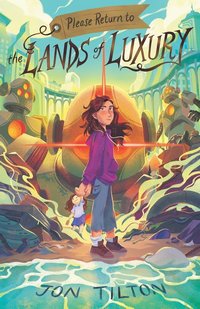
A quick aside—this cover just pops! It feels playful and vibrant, but there’s something undeniably ominous in those robots—so, you know, it matches the book. Sylvia Bi did a great job on this cover.

Misgivings about the next books aside, I’m coming back for them. I recommend Please Return to the Lands of Luxury for adults who find the idea of MG dystopian fiction intriguing and I heartily recommend it to anyone who might be shopping for an MG reader.


3.5 Stars

This post contains an affiliate link. If you purchase from it, I will get a small commission at no additional cost to you. As always, the opinions expressed are my own.

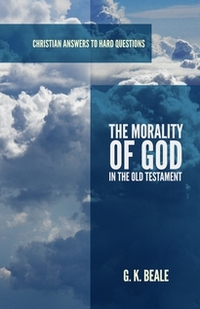
REPOSTING JUST CUZ: The Morality of God in the Old Testament by G.K. Beale

This is a lot shorter of a work than I usually talk about, but I needed a short read to break up longer, heavier reads. So now I guess I get to talk briefly about it before I talked about longer, heavier reads. (not that this is lightweight by any means)


The Morality of God in the Old Testament

The Morality of God
in the Old Testament

by G.K. Beale
Series: Christian Answers to Hard Questions

Booklet, 43 pg.
P&R Publishing and Westminster Seminary Press, 2013

Read: November 21, 2021
Grab a copy from your local indie bookstore!

What’s The Morality of God in the Old Testament About?

Believers and unbelievers alike stumble over some of what seems immoral in the Old Testament. Particularly what seems to be evil on the part of God. For example: God’s commands to exterminate the Canaanites and the imprecatory (cursing) Psalms.

How ought the believer to respond to their own questions about this, much less the questions from those outside the faith?

Beale looks briefly at a couple of popular responses to this and finds them wanting. In their place, he suggests a “plausible fivefold approach.”

There seems to be a better way to look at this problem. We will explore it from five different angles, which will help us to understand it more thoroughly. First, how does the killing of the Canaanites demonstrate God’s justice and righteousness? Second, how could Israel’s unique commission as a “kingdom of priests” (Ex. 19:6) shed light on the extermination of the Canaanites? Third, how does God’s sovereignty over all things help us to better understand that he can be considered blameless in all that he does, despite the problems just mentioned above? Fourth, how does the idea of God’s judgment of unbelieving humanity at the end of time shed light on this problem? Finally, how does the law of loving one’s neighbor now and at the end of time help us to better apprehend the issue about the Canaanites and the psalmist’s cursing of his enemies (though this last point has some overlap with the fourth point)?

Each question gets a couple of pages of explanation before moving on, so that the reader is given the complete fivefold approach along with some idea of how the ideas are worked out.

So, what did I think about The Morality of God in the Old Testament?

Not surprisingly, my main concern is length. I want to see each of these points better developed–I don’t think this has the makings of a 200+ page book or anything, but I think it could easily be twice as long to really flesh out some of the points.

The brevity works against itself primarily in that I don’t get to see the ideas examined thoroughly, or tested. The reader is given enough to understand the fivefold approach, enough to chew on it. But I’d like to see it worked out. I’d like to see Beale work through one of the difficult passages, or one of the Psalms in question and show “here’s where we see this and over there is where you see that aspect in action,” etc.

But the point of this series, the point of this being a booklet is for a short introduction to the idea. It’s supposed to be enough to show the reader that there are answers to the hard questions, just not enough to convince them. So I have to take it on its own terms–as such, it’s fine. Even more than fine. And I think there’s something to that fivefold approach, I just want to be convinced. I’m just going to need to look elsewhere for that.


3.5 Stars

This post contains an affiliate link. If you purchase from it, I will get a small commission at no additional cost to you. As always, opinions are my own.

Death at Paradise Palms by Steph Broadribb: The Detectives Show Their Fallibility In This Strong Follow-up

Death at Paradise PalmsDeath at Paradise Palms

by Steph Broadribb

DETAILS:
Series: The Retired Detectives Club, #2
Publisher: Thomas & Mercer
Publication Date: October 11, 2022
Format: eBook
Length: 303 pgs.
Read Date: March 16-17, 2023

What’s Death at Paradise Palms About?

After they solved a murder a few months earlier, the Retired Detectives Club has gained a certain amount of notoriety around the Homestead Retirement Community, so it’s not terribly surprising that when a resident has some concerns they call them for help. Particularly when that resident has had bad experiences with the police previously.

This particular resident is a retired movie star, Olivia Hamilton Ziegler. Her husband is missing, and she suspects foul play. They’re having no problems and it’s not like him to just not come home, not call, not pick up his phone, etc.

The Club jumps in, more than willing to help—they find a handful of decent suspects and start to dig into the background of each when a ransom demand shows up. Now they have a pressing deadline and more than a wife’s intuition. It’s time for these retired detectives to get to work.

Distracted Detectives

I’m not sure if this says something about Broadribb’s view of Americans, but in Death in the Sunshine we see that the three British retirees have things from their past that are hovering over them. I like that dynamic, but it’s good that not everyone has some deep, dark secret. Rick, our DEA retiree, seems to be baggage-free and easygoing. Maybe that just means we haven’t seen his baggage, or maybe Broadribb just thinks Americans are shallow.*

* I’m kidding. Probably.

With our British friends, however, things have happened to push these problems from hanging over their heads to being front-and-center in their minds. Normally this would be good, they’re working on the issues, dealing with the issues. However, when this club is the only one working on this kidnapping—the only outsiders aware of it—dealing with personal stuff becomes a distraction. Potentially a fatal one.

All three of these people make huge mistakes in the course of this investigation, easily observable mistakes (especially to the reader). And it’s not because they’re older, it’s not because their minds are slower, or their bodies aren’t up to what they used to be able to do—it’s because their heads aren’t in the game.

This makes for compelling storytelling, it’s great to see flawed characters battling with their flaws—but it’s a good thing they’re all retired because this is the kind of thing that should hurt a career.

The Series Arc

Ultimately, I think this series going to be telling the story of the shenanigans at the top of the Homestead Retirement Community. In Death in the Sunshine we see pretty clearly that TPTB filter the news and do what they can to prevent anything negative from getting out to the public or into the residents. And if it does show up, it’s quickly erased.

This takes work on the Social Media, old-school media, and possibly even law enforcement fronts—there’s no way that it’s all coincidental, unintentional, or any other excusable motivation. So the questions that need to be answered are why is this being done, who profits, who is hurt by this, and what actions are being taken/pressures applied, to get these various and sundry groups to quash the information.

Some of the residents see that this is going on—but (if you ask me) not enough seem that concerned—Moira sure is and is doing something about it. She’s working with a local reporter, although she has reason to believe that this is not the safest path for either of them to be taking. But that doesn’t seem to deter her.

I really hope that she’s able to get more of the Club on board with this soon—not that I want them distracted from their next big case. But she’s going to need some backup.

So, what did I think about Death at Paradise Palms?

I remember enjoying Death in the Sunshine, but I’d largely forgotten why. It was good to be reminded—this isn’t your typical elderly amateur detective series—this is a grittier take on that trend, full of people who are only amateur now, it wasn’t that long ago they were professionals, and they’ve still got the goods.

I did clock the Main Bad Guy instantly, and can only excuse the Club for not doing the same because of all their distractions (and because they’re not aware that they’re fictional characters, a lot of what tipped me off came from being a reader). So for me, the tension came from wanting to know how long it would take them to get around to discovering the truth—and how they’d use what they learned from the false trails to get there. That was enough for me—the good in this series doesn’t come from the whodunit—but from how they’re caught.

This, like all of Broadribb’s work, is a fast and fun read—it hooks you early and doesn’t let go until it’s good and ready to. Just buckle in and enjoy the ride. I can’t imagine I’ll let the next one of these sit ignored on my Kindle as I did this one.


3.5 Stars

This post contains an affiliate link. If you purchase from it, I will get a small commission at no additional cost to you. As always, the opinions expressed are my own.

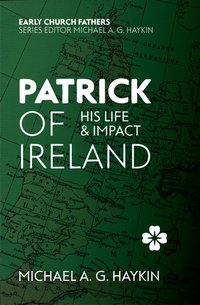
Patrick of Ireland: His Life and Impact by Michael A.G. Haykin: A Little Light on Info, but Does a Lot With It

Patrick of IrelandPatrick of Ireland:
His Life and Impact

by Michael A.G. Haykin
Series: The Early Church Fathers
Publisher: Christian Focus Publications
Publication Date: February 02, 2018
Format: eBook
Length: 112 pgs.
Read Date: February 19, 2023

I came to the people of Ireland to preach the Gospel, and to suffer insult from the unbelievers, bearing the reproach of my going abroad and many persecutions even unto bonds, and to give my free birth for the benefit of others; and, should I be worthy, I am prepared to give even my life without hesitation and most gladly for his name, and it is there that I wish to spend it until I die, if the Lord would grant it to me.

The Series

In case you hadn’t read what I thought of the other books I’ve read in this series, let me start with the thumbnail description of the series I came up with:

I literally stumbled on this series, The Early Church Fathers, a few weeks ago and thought it sounded like a great idea. It looked kind of like a mix of Crossway’s Theologians on the Christian Life and Oxford’s Very Short Introductions (incidentally, that’s what it ended up being).

What’s Patrick of Ireland About?

Like the other books in this series, Haykin starts with a biographical sketch of Patrick—noting the difficulties around that due to the small bibliography we have from him and the large number of myths and hagiography surrounding him. He then moves into considering Patrick’s Trinitarianism, his vision for evangelism/missions. Finally, he looks at “the balance of the Word and Spirit in Patrick’s thinking and experience.”

His Life

…there are a number of aspects about his life that are not at all clear- cut. There is no agreement, for example, about the date of his birth or the location of his childhood home, or about the place of his captivity in Ireland or whether or not he had formal theological education; nor is there any agreement about the dates of his ministry in Ireland.

We do know some things—mostly from his own hand—but scholars have to wade through a lot of chaff. R.P.C. Hanson is cited as summarizing it as: “Patrick’s life has become subject to a large amount of hagiographical embroidery and fictitious enhancement.”

That fictitious enhancement is where a lot of what I grew up “knowing” about Patrick, and I’d wager it’s the same for a lot of you.

…from the Middle Ages onwards, his mission to Ireland was depicted as one astounding miracle after another. For example, Jocelin of Furness (fl.1175–1214), the English Cistercian hagiographer, explained the absence of snakes in Ireland to be the result of Patrick’s destruction of them all on the peak of Croagh Patrick (St Patrick’s Mountain) in County Mayo. Jocelin also tells us that Patrick as an infant was baptized by a blind priest who got the water for the baptism by causing Patrick to make the sign of the cross over some earth, from which a well of water immediately issued. The water cured the priest of his blindness and enabled him, though illiterate, to read the rite of baptism. According to other miracles ascribed to Patrick, he was able to pass through doors, like the risen Christ, and could turn butter into honey.

At the end of the day, however,

Unlike the otherworldly miracle worker depicted by later biographies of Patrick, the two authentic writings from Patrick reveal a typical fifth- century bishop who was involved in preaching, baptizing, celebrating the Lord’s Supper, confirming new converts, and ordaining ministers.

Because of—or maybe despite—the dearth of information we have about him, what can be established is all the more interesting.

His Theology

Haykin focuses on two primary areas—Patrick’s Trinitarianism and his Missiology. Thankfully, we have his two written works to learn from here.

Without any references to the shamrock (thankfully), Patrick’s full-orbed Trinitarianism shines through his writings. After the last couple of entries in this series were so filled with controversy over the doctrine, it’s so refreshing to read one absent it.

I also appreciated the simple and straightforward nature of Patrick’s missiology and doctrine of the Church. He lived the kind of life he described and called others to. The fact that, in his mind, evangelizing the Irish was bringing the gospel to the literal end of the earth and thereby he was helping to bring in the Last Days, makes his work all the more remarkable. He didn’t call people to a temporary faith, he actually established believers and churches that lasted.

So, what did I think about Patrick of Ireland?

This is the best one of these books since the Augustine volume (maybe even better than it).

I enjoyed it—it helped increase my understanding and appreciation of the subject, and I learned a little bit about how little we know. (I read his Confessions more than a decade ago, and need to dig it out again)

I don’t think I got as much from this as I did from some of the others in this series—but that’s a quirk of the source material, and that has its own charm. Seeing what others have established, and what Haykin has synthesized here is the impressive bit.


3.5 Stars

This post contains an affiliate link. If you purchase from it, I will get a small commission at no additional cost to you. As always, the opinions expressed are my own.
PUB DAY REPOST: Foundations by Abigail Stewart: Three Eras, Three Women, and The House that Connects Them

FoundationsFoundations

by Abigail Stewart

DETAILS:
Publisher: Whisk(e)y Tit
Publication Date: March 7, 2023
Format: eARC
Length: 153 pg.
Read Date: February 22, 2023]

What’s Foundations About?

This is a novel about a house in Dallas, TX. It’s told in three eras—early 50s, early 80s, and something relatively recent. Those dates are pretty vague (and precision isn’t that important), but those are my best guesses based on details mentioned in the text.

In each of these eras, the house is owned (or lived in) by three different women, and we spend a little time with each of them and see their relationship (for lack of a better term) with the building.

Bunny

Bunny should give the reader a very Betty Draper vibe—but without quite as many issues. Essentially, she’s a lonely housewife whose husband spends more time at his club or on the road for his company than he does at home. Her sister lives nearby and the two do spend time together, but it doesn’t appear there’s a strong bond between them.

She spends time regularly at the library—secretly, it should be added—reading a variety of things for pleasure and education. At some point, she begins dabbling in things like palmistry, which leads one of the librarians to befriend her and introduce her to people and ideas Bunny hadn’t encountered before.

There’s a great paragraph where Bunny imagines her house as a museum and her as one of the exhibits. I don’t know that we learned much about her in that paragraph, but it crystalizes everything about her that her portion of the novel was saying in just a few lines.

Jessica

Jessica is an actress who (to paraphrase her), has passed her opportunity to be seen as a sexy star and has become eligible only for Lady Macbeth parts (since we’re not given details about her age, I do wonder a bit about that, considering the ages of some of the actresses she alludes to, but it’s not that important).

Now she wants to be away from L.A., where everyone recognizes her as someone who “used to” be in movies or on stage. So she moves to Dallas, buying the home.

She lives a very solitary life—which is her plan, after all—but it doesn’t take long for the shortcomings of that kind of life to become clear to her.

Amanda

Amanda buys the house to flip it as a competitor on a Reality TV show where she’ll be competing against people from across the country doing the same thing.

This is an outreach of work she’s done to make her brand—she’s done a little interior decorating and is striving to be a life coach—and this show could put her on the map.

We watch her chronicle her work to refresh the house on her own social media and the show’s filming. At the same time, she’s dealing with parental pressure to settle down and her boyfriend’s ambivalence toward her activities.

So, what did I think about Foundations?

I honestly don’t know what to think of the book as a whole. I think one of the pieces of art that Amanda picks for the house does a really good job of describing what the novel aspires to (a ceramic statue of three intertwined women), but I’m not particularly sure that the novel intertwines them that much. Their connection feels much more coincidental and circumstantial.

Considered separately, I have some definite thoughts on each woman’s story. It felt to me that Bunny’s story was the most realized, the most developed, and really showed more of the spirit the novel seems to want to show. Her life of quiet desperation feels familiar—like one we’ve all seen time and time again, but Stewart’s depiction of it is as fresh as it ever was.

Jessica’s segment of the book is the least developed, and possibly more of a cliche than Bunny’s. It also felt rushed with an ending that was too pat—I think if we’d had more time with Jessica, I might have reacted better to her and her situation. While I appreciated the character, I thought she got short shrift and it was hard to connect to her.

Amanda, on the other hand, was easy to relate to and connect with. Part of that comes from her living in the present, with immediately identifiable struggles, complaints, and interests. But there was more than that—Bunny just exists until she finds her new friend, and Jessica is running away from things—Amanda has hopes and dreams—she may not be certain about where she’s going long-term, but for the short-term, she has a plan and is focused on it. I think that’s what I appreciated most about her. Still, I think we could’ve gotten a little more time with her, too, to fully flesh her out (but it wouldn’t take much more)—but Jessica needs those pages more than Amanda did.

You can consider the book to show the changing face of feminism through the years, and as such, it’s successful. But I don’t know that it actually says anything about those faces beyond just helping the reader to see them.

Obviously, setting the book in Dallas plays a role in what’s expected for each woman—how they should act, how they should relate to the world around them, how they should feel about spending their days in this house. But I wonder if the danger in stereotyping Dallas is as great as some of the preconceptions of how a woman should comport themselves is.*

* Of course, I realize that coming from a man, that notion could be problematic. So I do want to stress that’s something I wonder about, and don’t have a firm opinion on. Stewart and her characters are apt to reach a conclusion that doesn’t match mine.

It’s a quick read—only 150 pages or so—with some passages and phrases that will knock you out. Different readers will walk away with varied impressions of the three women than me (obviously), and some will likely see something in the whole novel that I’ve missed (I’m hoping someone can show me what I’m not seeing). But I don’t think many will be able to walk away unaffected.

I do recommend this book—I think the small investment of time required will pay dividends for the reader above that.

Disclaimer: I received this eARC from the author and Lori Hettler of The Next Best Book Club in exchange for this post—thanks to both for this.


3.5 Stars

Foundations by Abigail Stewart: Three Eras, Three Women, and The House that Connects Them

FoundationsFoundations

by Abigail Stewart

DETAILS:
Publisher: Whisk(e)y Tit
Publication Date: March 7, 2023
Format: eARC
Length: 153 pg.
Read Date: February 22, 2023]

What’s Foundations About?

This is a novel about a house in Dallas, TX. It’s told in three eras—early 50s, early 80s, and something relatively recent. Those dates are pretty vague (and precision isn’t that important), but those are my best guesses based on details mentioned in the text.

In each of these eras, the house is owned (or lived in) by three different women, and we spend a little time with each of them and see their relationship (for lack of a better term) with the building.

Bunny

Bunny should give the reader a very Betty Draper vibe—but without quite as many issues. Essentially, she’s a lonely housewife whose husband spends more time at his club or on the road for his company than he does at home. Her sister lives nearby and the two do spend time together, but it doesn’t appear there’s a strong bond between them.

She spends time regularly at the library—secretly, it should be added—reading a variety of things for pleasure and education. At some point, she begins dabbling in things like palmistry, which leads one of the librarians to befriend her and introduce her to people and ideas Bunny hadn’t encountered before.

There’s a great paragraph where Bunny imagines her house as a museum and her as one of the exhibits. I don’t know that we learned much about her in that paragraph, but it crystalizes everything about her that her portion of the novel was saying in just a few lines.

Jessica

Jessica is an actress who (to paraphrase her), has passed her opportunity to be seen as a sexy star and has become eligible only for Lady Macbeth parts (since we’re not given details about her age, I do wonder a bit about that, considering the ages of some of the actresses she alludes to, but it’s not that important).

Now she wants to be away from L.A., where everyone recognizes her as someone who “used to” be in movies or on stage. So she moves to Dallas, buying the home.

She lives a very solitary life—which is her plan, after all—but it doesn’t take long for the shortcomings of that kind of life to become clear to her.

Amanda

Amanda buys the house to flip it as a competitor on a Reality TV show where she’ll be competing against people from across the country doing the same thing.

This is an outreach of work she’s done to make her brand—she’s done a little interior decorating and is striving to be a life coach—and this show could put her on the map.

We watch her chronicle her work to refresh the house on her own social media and the show’s filming. At the same time, she’s dealing with parental pressure to settle down and her boyfriend’s ambivalence toward her activities.

So, what did I think about Foundations?

I honestly don’t know what to think of the book as a whole. I think one of the pieces of art that Amanda picks for the house does a really good job of describing what the novel aspires to (a ceramic statue of three intertwined women), but I’m not particularly sure that the novel intertwines them that much. Their connection feels much more coincidental and circumstantial.

Considered separately, I have some definite thoughts on each woman’s story. It felt to me that Bunny’s story was the most realized, the most developed, and really showed more of the spirit the novel seems to want to show. Her life of quiet desperation feels familiar—like one we’ve all seen time and time again, but Stewart’s depiction of it is as fresh as it ever was.

Jessica’s segment of the book is the least developed, and possibly more of a cliche than Bunny’s. It also felt rushed with an ending that was too pat—I think if we’d had more time with Jessica, I might have reacted better to her and her situation. While I appreciated the character, I thought she got short shrift and it was hard to connect to her.

Amanda, on the other hand, was easy to relate to and connect with. Part of that comes from her living in the present, with immediately identifiable struggles, complaints, and interests. But there was more than that—Bunny just exists until she finds her new friend, and Jessica is running away from things—Amanda has hopes and dreams—she may not be certain about where she’s going long-term, but for the short-term, she has a plan and is focused on it. I think that’s what I appreciated most about her. Still, I think we could’ve gotten a little more time with her, too, to fully flesh her out (but it wouldn’t take much more)—but Jessica needs those pages more than Amanda did.

You can consider the book to show the changing face of feminism through the years, and as such, it’s successful. But I don’t know that it actually says anything about those faces beyond just helping the reader to see them.

Obviously, setting the book in Dallas plays a role in what’s expected for each woman—how they should act, how they should relate to the world around them, how they should feel about spending their days in this house. But I wonder if the danger in stereotyping Dallas is as great as some of the preconceptions of how a woman should comport themselves is.*

* Of course, I realize that coming from a man, that notion could be problematic. So I do want to stress that’s something I wonder about, and don’t have a firm opinion on. Stewart and her characters are apt to reach a conclusion that doesn’t match mine.

It’s a quick read—only 150 pages or so—with some passages and phrases that will knock you out. Different readers will walk away with varied impressions of the three women than me (obviously), and some will likely see something in the whole novel that I’ve missed (I’m hoping someone can show me what I’m not seeing). But I don’t think many will be able to walk away unaffected.

I do recommend this book—I think the small investment of time required will pay dividends for the reader above that.

Disclaimer: I received this eARC from the author and Lori Hettler of The Next Best Book Club in exchange for this post—thanks to both for this.


3.5 Stars

The Silk Empress by Josef Matulich: A Rollicking Steampunk Adventure on the High Silk Road

Be sure to come back this afternoon for a Q&A with the author, Josef Matulich


The Silk EmpressThe Silk Empress

by Josef Matulich

DETAILS:
Publisher: Dalmatian Alley Books
Publication Date: December 11, 2022
Format: eBook
Length: 332 pg.
Read Date: February 2-6, 2023
Support Independent Bookstores - Visit IndieBound.org


N/B: After I wrote this post, I saw that Matulich calls this “an adult novel with YA sensibilities” in our Q&A. That is a great way to describe the book, but I read it under the impression given by a certain eBook seller who labeled it as for readers of 12-18, and judged it accordingly. Some of what I said below reflects that. So take those with a grain of salt.

Finally, the Captain spoke: “You’re insane.”

“And that’s what will save us all,”Feng Po said with a smile. “We have about ten seconds before our friends out here realize we aren’t going to fall out of the sky by ourselves. If you have a brighter idea, I will be glad to execute it.”

The Captain spent five of those ten seconds in silence. He came back on the wire with a grunt and an unhappy tone.

“This is what Mme. Streif hired you for. You’d better be right.”

“If I’m not, I’ll be dead and wrong, and that should make you very happy in the Afterlife.”

What’s The Silk Empress About?

Our hero is Algie Piggrem (not surprisingly, nicknamed “Pig” by many), a twelve-year-old First Mate’s apprentice on the airship Wu Zetian flying along the High Silk Road between China and Europe. In the first chapter he and the first mate, Feng Po McLaren, try out some experimental weapons to fight off some air pirates. Algie is fueled more by adventure stories from penny dreadfuls than by common sense or an instinct for survival and takes risks with a panache that will endear him to the reader immediately.

This attack, and the way that Algie and Feng Po succeeded, will bring them (especially Algie) to the attention of the owner of their company, a regional British governor, and others—before he knows it, Algie is in the middle of some high-stakes intrigue.

The Flashbacks

I am depending upon you to do something both brilliant and short-sighted.”

That comes late in the novel, but it’s in the flashbacks that we get to see how Algie develops this ability.

We get to see a little bit of what happened to Algie right after he was orphaned—how he reacts to that, both in good and unfortunate ways—in flashbacks scattered throughout, leading up to the time he joined the crew of Wu Zetian. The way his mother raised him and the books that he read shaping his mind to act in certain ways (or at least attempt to) tells us a lot about him in the present, and how he has grown and learned from those days.

He shows his gallant and would-be heroic impulses from the beginning—his impulsivity and creativity, too. He learns (the hard way) that he can’t win every time, but it doesn’t stop him.

The Worldbuilding

if you have problems believing that a man from Nigeria might be able to outdo the best minds of the British Empire, I could bring in Mister Liu to explain the science of these fire suppression spheres,” Mme. Streif said coolly. “His English is quite good and he can speak very slowly if you have problems with the larger words.”

The worldbuilding here is outstanding. The obvious thing to look at in a Steampunk book is the tech—I really enjoyed that, both the airship Wu Zetian (and the rest) as well as the smaller, everyday tech. The revolutionary stuff that Algie and the rest encounter—like the clockwork dragon, and similar automatons, is just fantastic. It’s precisely the kind of thing you go looking for in a Steampunk work—it sounds great and you get just a hint of the kind of science that would make it possible. It’s enough like your typical Steampunk technology to feel familiar, but Matulich puts his own spin (helped in large part by the setting) on it, so it feels fresh.

The setting and the people it’s populated with, however, are probably even better than the Steampunk-ness. In addition to the typical Victorian English that usually populate Steampunk, you have people like the Scottish-born (and accented), Feng Po McLaren. But beyond him, there are characters of ethnicities and nationalities like Uyghurs, Chinese, Nigerians, Americans, and French citizens. These all come from a variety of religious, social, and economic backgrounds and combine in this book with a mix of curiosity and acceptance—as well as a decent helping of elitism and racism (as is to be sadly expected). It’s a great way to show how the kind of transportation and technology in this world is bringing things together a little faster than it did in our reality—in addition to the diversity just making things entertaining.

The use of so many non-English phrases (translated in endnotes) is a fun—if occasionally frustrating—plus as well. There were times I was annoyed by having to break from the action to look up the translation—although context would carry you through a scene if you want to finish it before checking the note.

The Illustrations

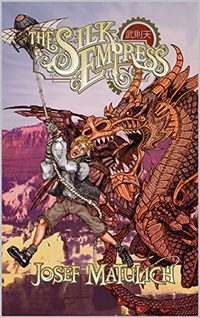
There are a few illustrations by Seth Lyons (who also did the great cover) starting off each chapter. A few didn’t do much for me, most were pretty good—a few were excellent. I don’t know that the book needs them—but I certainly don’t think they hurt it. Overall, they’re a nice little touch and do a great job of capturing and reflecting the tone and gadgets of the book. They might be a real bonus to a young reader dipping his toe into steampunk for the first time and isn’t sure how to imagine some things.

So, what did I think about The Silk Empress?

“There is a picaroon cutter lying in wait for us about seven kilometers off the port bow.”

“Air pirates?”

“So they are called in Adventure Stories for Boys. I usually just call them well-armed layabouts. Less pressure to live up to expectations that way.”

I’ve tried to stay pretty vague above while talking about a few things that really stood out—because half of the fun of this novel is in the discovery of this world and learning with Algie just what he’s found himself in the middle of. It’s a bonkers adventure—fit for one of Algie’s adventure novels.

I’ve only read one other YA Steampunk—Westerfeld’s Leviathan trilogy—so that’s all I have to compare this to. Matulich’s world is just as intricate and volatile, this book is just a bit leaner than any of Westerfeld’s. Also, this is more fun. That’s not a knock on Leviathan—they’re in a war and trying to stop it. This is more of an action/adventure lark (at least initially). But fans of one should check out the other. Some of the humor is a bit more “adult” than YA—but it’ll either fly right over the heads of a reader or give them a grin.

It’s not just the action or antics that make this an entertaining read—Matulich’s a writer that you want to read. There is a subtle charm to his phrasing, for example—he can take a pretty straightforward sentence or sentiment and tweak it just a bit to make it something that’ll stand out.

I don’t know if there are more books in this universe planned—but man, I hope so. I could live with this as a stand-alone, but I’d really appreciate at least a duology. I’m betting you’ll feel the same way. But first, you need to read The Silk Empress, and I encourage you to do so (and then pass it along to a YA reader).


3.5 Stars

This post contains an affiliate link. If you purchase from it, I will get a small commission at no additional cost to you. As always, the opinions expressed are my own.

A Man Named Doll by Jonathan Ames: A Fast, Twisted Ride Through the Streets of LA

A Man Named DollA Man Named Doll

by Jonathan Ames (Narrator)

DETAILS:
Series: The Doll, #1
Publisher: Mulholland Books
Publication Date: April 20, 2021
Format: Hardcover
Length: 208 pg.
Read Date: February 10-13, 2023
Support Independent Bookstores - Visit IndieBound.org

What’s A Man Named Doll About?

Happy Doll is a cop-turned-P.I. in Los Angeles, he now primarily works in doing security in a massage parlor* to make ends meet, but he used to do more investigative work.

* The employees may happen to negotiate other services.

When we first meet him, he’s talking with his mentor in the LAPD, a man who took a bullet for him and who now comes to him for a big favor. He needs a kidney transplant. Hap says he’ll think about it. That’s not good enough for Lou who ends up doing some very short-sighted things to get him that kidney. Happy doesn’t know that at the time, or he’d have said yes sooner.

An altercation with a high client at the parlor leaves Happy injured and under scrutiny by a couple of detectives from the LAPD. He’s also loopy on painkillers (which he counters with ADHD meds to really impair his judgment).

This leaves him in a bad spot when he has to investigate what Lou had gotten himself into and with whom. But he keeps plugging along obstinately (also, fueled by undeserved confidence).

Irving Ash

I picked this up because Chris McDonald said that this is the book that inspired him to write his novel Little Ghost. I tried, usually successfully, to not compare the two as I read.

I can see the shadow of A Man Named Doll on Little Ghost—there’s a similar vibe to the protagonists being up against forces they’re not ready for, but not backing down or allowing themselves to think of it. There’s a similar feeling of events quickly spiraling out of control for everyone involved, and the protagonist being in a very different place when the book is over.

I’m not suggesting that McDonald borrowed much from this book, but the novels share some DNA (and the protagonists likely do, too). The two novels can—and should—be entertaining on their own, and don’t need to be considered in relation to each other in any way. I just found it interesting to see how an author could draw inspiration from a novel and run with it.

So, what did I think about A Man Named Doll?

There were multiple twists that I didn’t see coming. I had to stop and go back to re-read a few paragraphs to make sure I just read what I thought I did, because…what author does that? Apparently, Jonathan Ames does.

I do think that this book moves a bit too quickly. I’d have liked to see Doll have to work a little harder to connect the dots between everything. I’d have liked to see the LAPD detectives play a larger roll in things (although I can’t imagine how they could’ve without ruining things for Doll’s investigation). It’s not a fatal flaw, but I think the book would’ve been better with just a little more of everything.

Ultimately, this reminded me of Eoin Colfer’s Daniel McEvoy books—just leaner and not quite as funny*. Although the latter could be a result of the former. I did laugh though at some of Doll’s narration—so not quite as funny does not imply not witty or funny at all. Both series share the same kind of worldview, the same kind of violence, and the same kind of twisted logic.

* It occurs to me that Doll does tell us that he’s half-Irish. But that part of his family hasn’t been in Ireland for quite some time, unlike McEvoy. But maybe there’s something to that heritage and the way he reacts to things. I only thought of that connection, as I was preparing to hit “Publish,” so I’m not going to spend time on it. It’s entirely possible that it won’t hold water. But it might.

I thought the emotional and psychological elements were handled perfectly—the way that Doll (and his friends) react to the events that befall them seems perfectly handled. And I really liked the Epilogue and the repercussions of the events of the novel for the characters. It comes across as a little more realistic than some PI novels would have it.

This didn’t completely wow me as I hoped—but it was a satisfying and surprising read. I want to see what else Ames is capable of and will be returning for the sequel as soon as I can.

Somehow I made it through this entire post without mentioning George, Doll’s half-Chihuahua, half-terrier dog. Shame on me. Briefly, he’s just adorable and goes through too much because of his doped-up human.


3.5 Stars

This post contains an affiliate link. If you purchase from it, I will get a small commission at no additional cost to you. As always, the opinions expressed are my own.
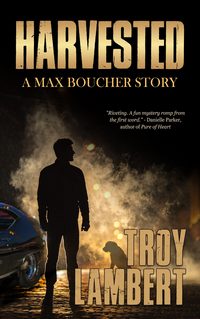
Harvested by Troy Lambert: A Man Bites Dog P.I. Novel

This is part of my Literary Locals series. Be sure to come back this afternoon for a Q&A with the author about this book—and in a couple of weeks to see his thoughts on writing in Idaho.


HarvestedHarvested

by Troy Lambert

DETAILS:
Series: Max Boucher Mysteries, #1
Publisher: Unbound Media
Publication Date: March 15, 2019
Format: Paperback
Length: 247 pg.
Read Date: January 2-3, 2023
Support Independent Bookstores - Visit IndieBound.org

What’s Harvested About?

Max Boucher is a P.I. in Seattle. Like a good (fictional) P.I., he spends a lot of time drinking. He spends most of the rest of his time working just to make ends meet. He really wants to devote his time to looking for whoever murdered his daughter, killed his dog, and either kidnapped or murdered his wife. He—and his former colleagues in the Seattle PD—have followed every lead they have, but he’d spend all of his life going back over the evidence time and time again if he could.

Now, he’s taken on a case—he takes on every case that comes his way—that takes him back to his old neighborhood. The dog park that he and his family used to go to, in fact. There’s a rash of dognappings in the area, and owners have come together to hire him to find their canine friends. The police can/will only do so much, but Max can devote more time to it.

It doesn’t take long for things to get hairy—there’s a connection to a Korean mob boss. Some of the dogs start reappearing—with strange injuries. And it turns out that this has been happening all over Seattle for some time. Max isn’t sure what he’s gotten himself into, but it’s about a lot more than missing poodles.

Supporting Characters

Obviously, you’ve got to have a compelling P.I. in a book like this—and a good hook for the story. That’s what the reader comes for, and the writer had better deliver. A plausible villain, is important, too—but the others can overcome an iffy one. But what will really make a P.I. novel work is the supporting characters—the cop buddies/frenemies/rival (depending on the series), the client, the witnesses, and so on.

Lambert nails this throughout the book. I like Boucher and want to see more of him, but I enjoyed some of the side characters more than him. There’s a friendly and helpful veterinarian who could probably carry a cozy mystery series on her own—and I would buy six of those tomorrow if they existed.

There’s a guy who details Max’s car (he’s got an older car that’s his pride and joy)—which is something definitely called upon when your case involves carrying injured dogs (and injured detectives) around. If Eddie shows up for a scene or two in every book in the series, you can color me pleased. I’m not even sure why—I also don’t care much, I just liked him.

I’m not going to say I enjoyed the Korean mob boss* in the same way I did those two. But the scenes with him are some of the most intense in the novel.

* Ahem. Suspected boss, of a mob that may not even exist.

I could go on for a few more—I don’t remember exactly my point when I started this section, other than to rave about Dr. Gamble and Eddie. But I guess that I just want to stress that Lambert gives us more than a solid P.I. He knows how to give the reader characters to invest in and care about—even if only for a page or two.

Beware of (Hurt) Dogs

* (yeah, that’s a lame section title—but it’s better than “It’s a Dog Eat Dog Book” with the implied cannibalism)

I know I have readers who will be antsy about this book—we’re talking about kidnapped and injured dogs here (there’s a reason I have a recurring post about books about dogs who live). And for those who cannot take violence toward animals, this is a book to avoid.

I will say, however, almost all of the violence happens “off-screen”—you see very little of it on the page. And what you see on the page isn’t that bad (up until the climactic bit at the end, but the violence there is spread amongst characters with two and four legs (and the two-legged ones get the worst of it).

The point of this book is Boucher investigating the kidnappings, stopping them by getting to the bottom of things and rescuing as many dogs as he can. So if you’re on the fence, you can hold on to that.

So, what did I think about Harvested?

This was a good read. Lambert delivered in every way I wanted a book like this to—solid plot, unique case, great character work, and a pace that keeps you turning the pages long past the time you should put the book down for sleep or chores. I’d recommend this just for the (relative) novelty of a Seattle P.I.—mid-sized US cities need to be the setting of more P.I. novels. The book delivers on everything it promises and gives you an open (and welcome) invitation to come back for another. I know I’m accepting that invitation.

Oh—minor spoiler—by the end, one of the kidnapped dogs can’t be matched with an owner and ends up staying with Max. So you know I have to come back, just for more of him.

I’d have come back anyway—I want to see how Max moves on from this point in general. I’m quite curious about the clues he discovered regarding his wife’s case, too. I’m assuming (and really don’t want to know the truth until I’m into the next book) that book 2 will advance the investigation into his wife’s kidnapping while Max and his new partner dive into another stand-alone case—and we’ll continue that way for a while. That sounds like a great time to me. Grab this one—the second book is out now, you might as well grab it, too. You’ll have fun.


3.5 Stars

This post contains an affiliate link. If you purchase from it, I will get a small commission at no additional cost to you. As always, the opinions expressed are my own.

Literary Locals logo

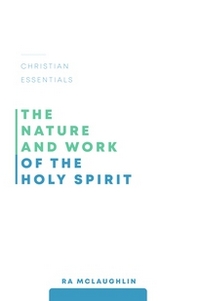
The Nature and Work of the Holy Spirit by Ra McLaughlin: A Broad and Capable Introduction to the Holy Spirit

The Nature and Work of the Holy SpiritThe Nature and Work of the Holy Spirit

by Ra McLaughlin

DETAILS:
Series: Christian Essentials 
Publisher: P & R Publishing
Publication Date: April 26, 2022
Format: Paperback
Length: 153 pg.
Read Date: January 29, 2023
Support Independent Bookstores - Visit IndieBound.org

What’s The Nature and Work of the Holy Spirit About?

As I said about the second volume of the Christian Essentials series, one of its advantages is that I can largely recycle what I said about the others.

This is a basic and broad introduction to Pneumatology—the doctrine of the Holy Spirit from a broadly Evangelical perspective. There’s a good mix of foundational theology and application of it to the Church and the individual believer. The book is adapted from curriculum using language that’s easy to translate—particularly into languages that don’t have a well-developed theological vocabulary—so the English is kept basic, too. There’s almost no academic or technical theological language used, and those that are used are well-defined (including in a handy glossary).

The chapters are short (most around fifteen pages) and well-organized. Each contains a handful of side-bars consisting of a paragraph or two with the contents of interviews with pastors and theologians on the topic under discussion. These interviews were with people from a variety of theological perspectives helping broaden the text so that it’s not exclusively from a reformed perspective.

The Organization of the Work

One thing that really jumped out at me while reading this book is that it wasn’t organized the same way as similar works are—which is refreshing because you get tired after a while of reading remixes on a topic. But mostly refreshing because I thought this was a really good way to approach the subject.

We start with the role of—and revelation of—the Spirit as a member of the Trinity—as seen in the Old Testament, then the New, and then as it was worked out in Church History. Those are three quick chapters that should probably be longer but did the job for the scope of this book.

Then we get chapters dealing with the Spirit’s work in the world—providence, creation, revelation, and common grace. Followed by His work in the Church—through special revelation, covenant grace, and gifts. The last two chapters focus on His work in individual believers—in conversion and sanctification.

So, what did I think about The Nature and Work of the Holy Spirit?

Solid teaching, an effective and helpful organization, all in all, a good book.

Like the rest of this series—the big problem with this book is that it works so hard to not take a particular position that it gives a watered-down presentation on areas of controversy. If they’d only taken a firm stance on (for example) cessationism, and then went on to give a fair presentation of non-cessationist views, that’d be different. Instead, we’re given descriptions of the views written in a way to explain them, but with the aim to avoid particulars and the offense they may carry—and really leads to it being almost useless.

When it’s not discussing intra-mural debates or disagreements, it’s a very useful and helpful work (like the other two books in this series). It’s good on the essentials—although exactly how “essential” is defined might be quibbled with.

For the series, I think this might have been the strongest entry. For just an introduction to the doctrine of the Spirit, it’s a pretty solid one. There are better books about Him and the theology surrounding Him, sure—but they’re of a nature and depth that this doesn’t want to achieve. Like the rest, I’d happily pass this volume on to someone who is just getting their feet wet.


3.5 Stars

This post contains an affiliate link. If you purchase from it, I will get a small commission at no additional cost to you. As always, the opinions expressed are my own.

Page 8 of 44

Powered by WordPress & Theme by Anders Norén