Tag: 3 Stars Page 13 of 55

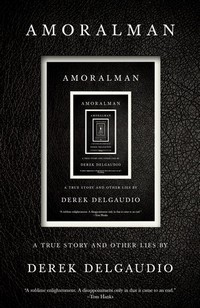
AMORALMAN by Derek DelGaudio: Engaging and Compelling, but Maybe Left Me with Too Many Questions

AMORALMANAMORALMAN:
A True Story and Other Lies

by Derek DelGaudio

DETAILS:
Publisher: Knopf
Publication Date: March 1, 2021
Format: Hardcover
Length: 235 pgs.
Read Date: July 11-12, 2022

Support Independent Bookstores - Visit IndieBound.org

What’s AMORALMAN About?

Derek DelGaudio is a performer. writer, and illusionist. This book claims (and that subtitle should make you suspect everything) to be an account of DelGaudio’s childhood, his early interest in magic tricks and illusions—and then how he was introduced to card sharps, eventually becoming friends with some and learning how to use the card tricks he’d practiced for so long to become a cheat at cards.

At some point, he takes this theoretical knowledge into the practical—to help a good friend, despite that friend’s former insistence that DelGaudio not follow him into that life. After some time exposed to this lifestyle, he has to make a choice? What kind of man is he? What place does morality hold?

It’s tied throughout to Plato’s Allegory of the Cave, the role of the perceptions, reality, and the participants.

The Title

Obviously, DelGaudio is playing with things in the title. Is this book about a moral man? an amoral man? Is it a story without a moral?

How much of this is the true story and how much is a lie? It could be seen as a collection of stories—so is only one true, or is the overall narrative true, with a scattering of lies?

I’m mildly amused by that, but I really don’t think I care.

So, what did I think about AMORALMAN?

Ehhhhh. I wanted more. And not in a “this was so good, I’ve got to have more” kind of way, but in a “this was okay, but…is this all there was?” way. Ultimately, what we’re dealing with is a memoir that tells you upfront (and repeats it) that at least some of what you’re told is a lie—and probably not just from those people who are liars by vocation.

I thought the premise promised more. I expected to get something with a bit more meat on it. A bit more to chew on.

Still, DelGaudio can tell a story. You get engaged right away and you’re eager to see how this detached, disinterested, and largely aimless kid becomes the guy who stars in In & Of Itself*. We don’t get that answer, but it’s not hard to see the foundation being laid.

* And, yeah, I bought this book without knowing anything about it because of the film version.

I do think I’d read another book by DelGaudio—I’m curious about what else he has to offer. And I do think that people interested in his other work would find something compelling here. But that’s about as much as I can say—you won’t be wasting your time.

3 Stars

20 Books of Summer

This post contains an affiliate link. If you purchase from it, I will get a small commission at no additional cost to you. As always, opinions are my own.

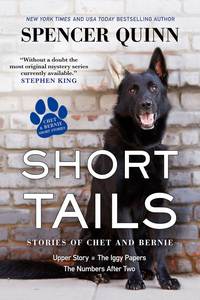
Short Tails by Spencer Quinn: Too Short, but a Lot of Fun

Short TailsShort Tails:
Chet & Bernie Short Stories

by Spencer Quinn

DETAILS:
Series: Chet and Bernie
Publisher: Forge Books
Publication Date: June 28, 2022
Format: Kindle Edition
Length: 90 pgs.
Read Date: July 7, 2022

I grabbed him by the pant leg, which was how we closed our cases, me and Bernie.

“Aieee! Aieee!”

Oh, come on, Chuckie! Suck it up. My teeth were barely engaged at all. But the funny thing is that when that Aieee sound is in the air, they—meaning my teeth—get this sort of…urge.

“AIEEE! AIEEE!”

What’s Short Tails About?

This is a collection of short stories from the Chet & Bernie series. I don’t normally do this for short story collections, but the collection is brief enough that I can get away with it, let’s take a quick look at each.

Upper Story

I want to say that this takes place during Scents and Sensibility, but I can’t swear to it (if it didn’t, I might as well have). Bernie’s in the hospital, so Chet’s staying–and working with–their friend, Rick Torres. This story is heavy on Chet’s actions and his contrasting appraisal of working with Bernie vs. Rick. As you’d expect, the comparison does not go in Rick’s favor (no matter that he’s freer with the Slim Jims).

It’s a very short story with a great emotional punch and some good chuckle-inducing lines. I’d have honestly expected this to be last in the collection because of that–but what do I know?

The Iggy Papers

This is probably the most satisfying story in the bunch. Like with The Iggy Chronicles, this focuses on something to do with Mrs. Parson’s medical care. Bernie gets to flex his investigative muscles here a bit more than in the other stories from the book, and Chet’s major contributions come from his commentary and interaction with Iggy.

This is everything that a Chet and Bernie short story should be.

The Numbers After Two

It’s been a bit since we got to see Bernie’s head for finances on display (more accurately, total lack of one), this story gives us a tale about an interrupted vacation for the detectives and a chance to see Bernie’s gullibility on display.

I know that it’s good to see Bernie’s fallibility–Chet tends toward hagiography when he describes Bernie. We need to see him stumble outside of his romantic relationships–but I have such trouble buying that he can be as gullible as he so often is when it comes to financial schemes and yet be such a good detective. Still, this is who he’s been since Day 1 of the series, so we need to see it every now and then.

The story isn’t all about watching the train wreck of Bernie making a bad investment*, but it’s the heart of it–the rest of the story makes up for that part of it, and it ends on a good note (as it started).

* That feels like a spoiler, but if you don’t know what’s going to happen the instant that Bernie gets a wad of cash, you haven’t been paying attention.

So, what did I think about Short Tails?

These were cute stories, but there were too few of them. If this collection was 2 or 3-times as long? I’d have been as happy as a dog with a new Kong. I had fun with this, but it was just enough to satisfy me. But not much more than that.

Still, I’ll take any excuse to read a Chet & Bernie story, and I figure most of Quinn’s readers will, too. So yeah, I recommend it.


3 Stars

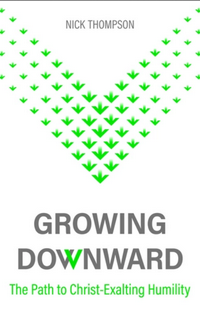
Growing Downward by Nick Thompson: Spiritual Growth is Not an Ascent; It is a Descent

Growing DownwardGrowing Downward:
The Path to
Christ-Exalting Humility

by Nick Thompson

DETAILS:
Publisher: Reformation Heritage Books
Publication Date: May 11, 2022
Format: Kind Edition
Length: 224 pgs.
Read Date: June 19-26, 2022
Support Independent Bookstores - Visit IndieBound.org

Here is the unvarnished truth: pride is your number one enemy at every stage of the game. This is true of you regardless of your vocation; your economic, political, or social status; and your age, ethnicity, or education… I begin here because it is only as we come to understand pride as our greatest enemy that we will learn to embrace humility as our greatest ally.

What’s Growing Downward About?

The Publisher’s Description is:

Author Nick Thompson recognizes that pride is our worst enemy. If pride is our chief foe, then humility is our chief friend, even though its company may be painful. But spiritual growth is a descent—we must grow downward. Defining humility as “the downward disposition of a Godward self-perception,” Thompson walks us through the practical implications of this definition, leading us to embrace a God-centered perspective on the self. With winsome illustration and warm pastoral instruction, Growing Downward shows us that the path of humility, though difficult, is the way to true meaning and fulfillment in Jesus Christ.

Thompson is thorough at arriving at his definition of “the downward disposition of a Godward self-perception”—looking at other definitions offered by notable authors and theologians along the way—evaluating and critiquing them.

From this point, he works out the implications of that definition by looking at Existential Humility, Ethical Humility, Evangelical Humility, Ecclesiological Humility, and Eschatological Humility.

So, what did I think about Growing Downward?

As far as the reading experience goes—this is fine. The writing is crisp, it’s clear, it’s accessible, and Thompson makes certain the reader gets his point.

As far as the content? Ehhhhh, I’m not sure. The Introduction and the first part of the book? Those were really, really strong and convincing—and Thompson had me with him there. But after that? It’s complicated to explain, but I’ll try. I liked the individual chapters, and the topics he covered in them. But they seemed disconnected from the whole. Not all of them even seemed that focused on the idea of humility or Godward self-perception. Good material, but to what end?

Instead of an argument built on several lines of reasoning, which is how the book seems to be designed. It seemed to me to be one argument made, with some essays loosely attached to the topic added on. I can see where a lot of these trains of thought can lead back to the main argument. But I look to an author for that work, to show how

The one thing I tripped on more than once was Thompson’s tone—it frequently struck me as less-than-gracious or compassionate. Generally, within a couple of pages, he’d say something to mitigate what I perceived as harshness (or something like that). But I think it’d be best to not need that mitigation.

That said, I fully expect to be in the minority on this. I think many readers will benefit from this book and not get hung up on those things I did.

I liked enough of this to recommend it to you—but just enough. If you do read it, come back and tell me where I’m wrong, okay?


3 Stars

This post contains an affiliate link. If you purchase from it, I will get a small commission at no additional cost to you. As always, the opinions expressed are my own.

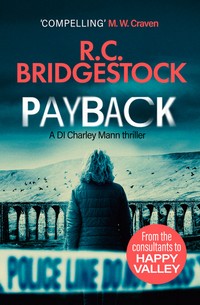
Payback by RC Bridgestock: A Decent Start for this Procedural Series

PaybackPayback

by RC Bridgestock

DETAILS:
Series: DI Charley Mann Crime Thrillers, #1
Publisher: Canelo
Publication Date: January 11, 2021
Format: Kindle Edition
Length: 334 pg.
Read Date: June 8-11, 2022

What’s Payback About?

Newly minted DI, Charley Mann, returns to her hometown in Yorkshire. She grew up here, fell in (and out of) love here, and started her career in the police here. She clashed a bit with a superior, got promoted, and was sent to London for a few years to get some more experience.

Now she’s back and ready to get to work with the people and area she loves. As is the rule for newly transferred DIs/DSs in British procedurals, before she can even meet with her team or superior, she catches a murder case. I’d pay good money to read a book where someone transfers into a new assignment, settles into their office, gets to know people, and starts to wonder if anything ever happens in these parts before being hit with a major case (if only to see how an author could give us a couple of interesting chapters along those lines).

Back to Payback—this is a gruesome and odd murder. It’s not an easy crime scene to understand—there are too many things that are incongruous. Charley begins to suspect that’s intentional—a suspicion that grows after another body is discovered just as the investigation starts to stall. Things get really interesting from there.

So, what did I think about Payback?

I don’t have a lot to say about Payback, and that bothers me. Hopefully, Condemned sparks more thought.

I’m conflicted here, I’ll admit. Let me start by saying that I enjoyed this book, I’m looking forward to picking up the second one, and I think that I can recommend it (with some provisos) to you.

At the same time, there are some big problems with the book. The dialogue is typically wanting—frequently, it feels like they use 33% more words than they need to. Quippy bits, snappish retorts, etc. would land a lot better if they’d chop off a third of the lines. Trust your audience to get what you’re going for without the explanation. The narrative portions—especially those explaining Charley’s backstory or emotions—are less than good*. It’s the telling vs. showing thing, it’s a lot of being too wordy (see above), there’s some unexplained motivations—it’s hard to explain without spending more time than it’s worth. Lastly, the characters—with the exception of the killer—all need a little more sketching out. It’s the first in a series, so you can assume that’ll happen and I’m not going to complain about that (too much).

* That said, there were a couple of moments that shone—I just wish they weren’t buried amongst the “meh.”

That’s a lot to complain about there, so why did I say I enjoy it? The police procedural part of the book—thankfully, the bulk—saves this. The murders, the motive, the way that Charley leads the investigation, all the ups, downs, and curveballs—that was exactly what I came looking for in this book. Even some of the “Charley over-explains things” work because she’s trying to help a detective and a uniformed officer understand some things about the job. The moment when Charley starts putting everything together, connecting all the dots, and so on at the end? That was great. I can shrug off a lot of problems when the central plot is executed as well as this.

I realize a lot of people are going to disagree with me about some of my problems, and that’s okay, we’re all wrong sometimes. I do recommend this, I just think you need to go into it with the right expectations. I am looking forward to the next two books—I want to see if Bridgestock can build from this, how a story arc or two are developed, and if the one impending personnel change brings a better character than the one being replaced.


3 Stars

20 Books of Summer

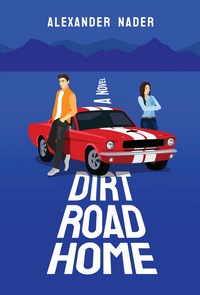
Dirt Road Home by Alexander Nader: From the Motor City to Small Town Tennessee

Dirt Road HomeDirt Road Home

by Alexander Nader

DETAILS:
Publisher: Winding Road Stories
Publication Date: April 15, 2022
Format: eARC
Length: 268 pgs.
Read Date: June 1-2, 2022

What’s Dirt Road Home About?

After a succession of horrible boyfriends (abusive, addicts, etc.) over the years, Rose Davis started seeing someone online. And things were going pretty well for them—so well, in fact, that Rose and her adolescent sons move from Detroit to a small Tennessee town to be with him.

Her sons, Logan and Dex, aren’t crazy about this move. Logan (who is the protagonist, by the way) is 6 weeks away from high school graduation and turning 18. Dex is a year behind him. They’re Detroit through-and-through, comfortable on the streets there, they live and breathe internal combustion engines, and cannot imagine living anywhere else, but they have no choice*.

* Okay, that part rang a little false for me. He’s close enough to 18, that Logan could’ve stayed behind. He could’ve crashed with some friends—or a series of friends—or something. Child Services isn’t going to swoop in and put someone his age into the system. But suspend disbelief for it and it’s fine.

On their first night in town, Logan and Dex get into a tussle with a couple of local high school football stars, and instead of simply being the new kids in school, they’re those guys. They’re trouble. The fight video is online, putting a giant target on their back.

Logan’s ability with cars helps him find a niche, a way to fit in. He and Dex take part in some street racing and find some friends—or at least people who aren’t instinctually antagonistic toward them.

More importantly, Logan meets Leah there. She’s a stunning, confident, and charming young woman in his class who will turn his life upside down. Maybe life in the South won’t be that bad after, all.

Greg McCarter

The MVP of this book has got to be Rose’s new boyfriend, the one they move to Tennessee to be with. With only one major character flaw (which, granted, is debatable and a minor spoiler, so that’s all you get), he’s about to perfect as you’re going to get. And sure, those characters are unrealistic, but every now and then, coming across one is fine.

He’s exactly the kind of guy that Rose needs to be with (even if, like Logan, the reader doesn’t understand her appeal to him). He’s absolutely the right kind of adult make for Logan and Dex to have in their lives. You can’t help but wonder how things would’ve turned out for all four of them had they moved to Tennessee a year or two earlier.

Still, he’s the kind of guy that would improve almost any novel—if Nader had put him as the central character of a book, he’d be just as appealing—maybe more so. I know my appreciation for this novel went up a notch or two when he was in a scene.

A Problem that Only I’m Going to Have

Back in April, Pay Dirt Road was published, and about that time Winding Road Stories reached out to me about Dirt Road Home. I cannot tell you how often I’ve conflated the two titles since then. They couldn’t be more different in any way, but those titles? I have been and am forever going to refer to them both as Pay Dirt Road Home.

So, what did I think about Dirt Road Home?

This is tagged as a coming-of-age story. And technically it is, sure. But I’d want to call it something else. It’s a coming-home story, which is tricky because Logan’s really never had one. But that’s what separates this from so many coming-of-age stories, it’s about more than Logan maturing—it’s about the atmosphere that gets him there.

My only complaint with this book is that everything happens too quickly. I’m not saying it’s too fast-paced, I’m just saying that if Logan had been 3 months away from graduation instead of 6 weeks, and that the events that happened between the fight their first night and the Event That Changes Everything right before the dénouement had taken more weeks, I’d have bought everything a little easier.

I bought it all in the moment, although there was a voice in the back of my head saying, “Slow down and think about things, kid.” The problem for me came when I put the book down and thought about it. I’m not saying what happens to—and within—Logan and the rest couldn’t happen like that, I just could have accepted and liked it more. Also, I wanted to see the relationships between Logan and those new to his life more—I really liked Greg and Leah’s parents, in particular, and more scenes with them would’ve improved this already good novel.

Tossing that aside—this is a fun story. It’s sweet, it’s hopeful, and it’s heartfelt. It’s a giant departure from the rest of Nader’s work (judging by the 120 seconds I spent researching him). It’s reminiscent of James Bailey‘s YA novels and Headphones and Heartaches. I need to read things like this from time to time—things that focus on growth, improvement, and contentment/happiness. That’s what this book’s premise promises and that’s what it delivered.

Disclaimer: I received this eARC from Winding Road in exchange for this post, the opinions expressed are my own.


3 Stars

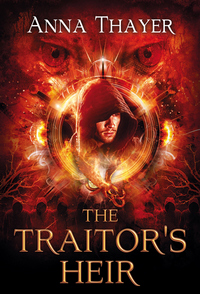
The Traitor’s Heir by Anna Thayer: He’s Gonna Have to Serve Somebody

The Traitor's HeirThe Traitor’s Heir

by Anna Thayer

DETAILS:
Series: The Knight of Eldaran, #1
Publisher: Lion Fiction
Publication Date: May 15, 2014
Format: Paperback
Length: 541 pg.
Read Date: May 16-17, 2022
Support Independent Bookstores - Visit IndieBound.org

What’s The Traitor’s Heir About?

When the book opens, Eamon Goodman, the orphaned son of a bookbinder currently a cadet in the final stages of his training as a member of the army of the Master of the River Realm. He doesn’t seem to be very good at being a soldier but is committed to passing and taking the oath. Beyond that, his heart doesn’t seem to be in it, either—but maybe it’s just the best route for some sort of security for him.

He seems to be a decent guy in an army that doesn’t have a lot of them—although those traits seem to be highly valued. After taking his oath, and achieving more success than seems deserved he meets someone who claims to be a descendant of the true king, deposed some centuries ago. Eamon agrees to work for this King in the capital.

Eamon isn’t the Chosen One—that’s (presumably) the King. However, Eamon is a direct descendant of the last King’s First Knight—champion and advisor. He’s not the Chosen One—he’s more like the Chosen Sidekick. Eamon’s calling seems to be to aid the King to reclaim the throne and serve him.

He goes to the capital and follows the King’s wishes. Until, with the help of a beautiful noblewoman, he gets distracted and serves the Master. Then circumstances lead him back to the King. And then…he ping-pongs between the two until he makes a final choice.

What I Don’t Get…

I’ve run into this issue before, this isn’t me picking on Thayer. The reader is clearly to get invested in this struggle between the King and the Master, we’re supposed to want to see the Master defeated and the King to retake the throne. But…

There is no reason to root for the King and his forces here beyond “generations ago his ancestor lost the throne due to the duplicity of his trusted knight. We have no vision of how he’ll improve anything for anyone but those supporters of his that have to hide their allegiance or have to live in his secret campground. His being on the throne would allow them to live openly and/or in society. Yes, he seems to be kind, compassionate, and honorable, but…there are a lot of good guys who happen to be related to someone who used to be in power that shouldn’t be put back in a position of authority.

There aren’t a lot of reasons for the reader to want to see the downfall of The Master. Sure, he treats those sewing dissension in the populace and/or actively working to bring down his government harshly. But…what government doesn’t? The methods he uses seem extreme and capricious, but also seem like the kind of thing a government in this setting would do.

Don’t get me wrong, it’s clear that The Master is evil, he manipulates Eamon throughout—and anyone who gets “behind the curtain” to see how the government is run should have qualms about it. But John and Jane Smith working away in their village outside the city aren’t being oppressed. They’re not being starved. They’re not being exploited. The same is true for Jill or Joe practicing their trades or selling their wares in the cities.

I can tell you why Panem’s President Snow should be defeated. I can tell you why the Golds should be replaced by the government that Darrow’s revolt made possible. The Sheriff of Nottingham? Oh, absolutely—Robin Hood is in the right. The White Witch and her never-ending (and Christmas-free) Winter need to be overthrown. But I can’t tell you how things are going to be better for the River Realm or its people. That’s really hard for me to push past.

So, what did I think about The Traitor’s Heir?

Thayer has a thinly disguised allegory here—our protagonist is a good man who has sworn an allegiance to an evil master while being given grace by the rightful king, who appeals to him to freely choose to serve this king. Allegories aren’t necessarily supposed to be subtle, but this was just one degree shy of Pilgrim’s Progress-level obviousness. Go for allegory if you want, but unless you’re Bunyan, do something other than use it like a 2×4 in the hands of “Hacksaw” Jim Duggan.

Eamon didn’t struggle between the two who wanted his allegiance. If you think of his allegiance as a number line from -10 to 10, he was wholly devoted to -10 and then swung to the other extreme. Then he’d rush back to -10. He never spent any time at 5, or -5—always the extreme. Show me some wavering. Show him spending some time around 0, teetering in each direction. Give me conflict. All I see is a flake that two antagonists are vying over—for no discernible reason than his status as Chosen Sidekick.

Eamon is a problematic character for me—even without his wavering allegiances. I clearly can’t buy into the political struggle. I’m dissatisfied with the world-building (I had a section detailing it, but deleted it because this post was becoming too negative). This book was headed for the DNF pile…and yet.

And yet…

Thayer kept ensnaring me. I couldn’t stop reading. I wasn’t enjoying anything, didn’t think I was reading a decent book—but I had to know what the next page held. And the next. And the next. Sure, I kept checking the page number so I knew how much longer this would go (and kept wishing the number was closer to 541)—but I’d have to see what 253 held. It makes no sense to me—but Thayer got her hooks in me. Her knack for that means I can’t go lower than 3 (begrudging) stars

So yeah, this was a compelling, if frustrating, read. Your results may vary. I know at least one friend/sometimes reader of this blog will disagree with me (he is, after all, who recommended the book to me). Others are more than welcome—encouraged, even—to weigh in and tell me what I missed. Give this a shot if the idea appeals to you—the trilogy looks like it’ll take a different shape than most. Just that novelty may be enough to intrigue you (it pulls on me).


3 Stars

This post contains an affiliate link. If you purchase from it, I will get a small commission at no additional cost to you. As always, opinions are my own.
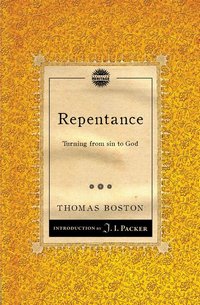
Repentance: Turning from Sin to God by Thomas Boston: Calls to Faith and Repentance as Clear Today As They Were 300 Years Ago

RepentanceRepentance:
Turning from Sin to God

by Thomas Boston

DETAILS:
Publisher: Christian Heritage
Publication Date: September 19, 2012
Format: Paperback
Length: 250 pg.
Read Date: May 1-8, 2022
Support Independent Bookstores - Visit IndieBound.org

What’s Repentance About?

This is a collection of sermons preached by Thomas Boston to his congregation in the parish of Ettrick in the early eighteenth century.

The sermons were selected from the sixth volumes of his collected works, and really weren’t conceived of as a set by him. They’re all on the theme of Repentance, from a variety of texts of Scripture.

They are warm, pastoral, clear, and firm. Pretty much everything you want and expect in a collection of Eighteenth-Century Presbyterian sermons.

Tweaking Boston

There were some layout changes and restructuring of the original texts for this book (it’s too long to detail it here)—basically taking works from the early 1700s and making them read like something that was written in the early 2000s.

It bugged me. It might make it easier to read and more approachable to contemporary readers, but it left a bad taste in my mouth.

Modernization of spelling and punctuation don’t bother me that much (I prefer to read it without the editing, but I’m weird that way). It’s the other tweaks that get to me.

The Introduction

Not at all surprisingly to anyone who’s ever read anything J.I. Packer ever wrote about Puritans and their successors the Introduction he wrote is almost as good as the rest of the book. It’s simply impossible to read that and not get ramped up for the rest.

So, what did I think about Repentance?

I like Boston—I’ve never not profited from time with his work. The Crook in the Lot is one of the greatest works I’ve ever read.

However (you knew there was a “but” coming), I’m not entirely convinced this collection is the best representation of either the doctrine or the preacher. As Packer notes, by the time of the later Puritans and then Boston, the emphasis on repentance had shifted from the penitent life (as espoused by Luther, Calvin, Book of Common Prayer, etc.) to the initial act of repentance of the convert. It’s that focus that dominates this book.

It’s good that it does. It’s important that it does. There’s not a word that Boston says on that point that is incorrect. But, I really could’ve used more about what repentance should look like every day, calls to/reminders for the believer to shape their lives that way. I realize that says more about me than the work, but given the title, that’s what I expected.

It’s a good collection of sermons. Boston’s way with words is rare and great to read. I just didn’t appreciate this as much as I’d hoped to.


3 Stars

This post contains an affiliate link. If you purchase from it, I will get a small commission at no additional cost to you. As always, opinions are my own.
Funny Farm (Audiobook) by Laurie Zaleski, Erin Moon: A Woman Rescues Herself, Her Kids, and a Big Bunch of Animals

Funny FarmFunny Farm:
My Unexpected Life with
600 Rescue Animals

by Laurie Zaleski, Erin Moon (Narrator)

DETAILS:
Publisher: Blackstone Publishing
Publication Date: April 25, 2022
Format: Unabridged Audiobook
Length: 8 hr., 10 min.
Read Date: May 9-10, 2022
Support Independent Bookstores - Visit IndieBound.org

I Did the Things You’re Not Supposed to Do

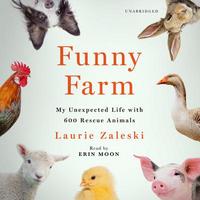
I judged this book by its cover.

I put this on my Want-to-Read this some months back, and really don’t remember why. All I really remembered is what I saw on the cover—it had to do with rescue animals, an “unexpected life”, and was called Funny Farm. The cover image has some friendly-looking animals. Something about it also reminded me of the cover of Straight Man by Richard Russo.

It looked to me like a light-hearted book full of animal stories, probably some that are inspirational, some that are funny, maybe some that are sad. Think James Herriot, David Rosenfelt (non-fiction that is), or Andrew Cotter. And while I read the publisher’s description, I’d forgotten it, so I just walked into this with my assumptions from the cover.

And you know what they say what happens when you assume…

So, What Is Funny Farm About?

It’s primarily the decades-long story of the establishment of the Funny Farm in its current form. It starts with Zaleski’s mother taking her and her two siblings and escaping from their abusive husband and father, dealing with both their poverty and continued harassment from him, and how they stumbled into Animal Rescue. From there we get a little about Zaleski’s outside career before we focus again on their mother’s relationship and battle with cancer, before getting a few chapters about the Farm’s permanent location and establishment as a non-profit organization.

More than anything else, this is a tribute to Zaleski’s mother—and a deserved one.

Animal Tales

The small, between-chapter, profiles/extended anecdotes about some of the Rescue’s animals are what I came for, and are absolutely worth it. I’d read another book full of nothing else. I don’t know that such a book would be a great read, but it’d be fun.

How was the Narration?

I liked the book, but I think I liked Erin Moon’s narration even more. She did a great job of bringing the text to life and augmenting the emotions.

I did think there was a weird New England-ish accent to the way she said “Mom”—particularly when she stretched it out a bit. I didn’t hear it at any other point, just that one word. It happened pretty frequently, and I bumped on it each time. Not a big deal, by any means, just something I noticed.

So, what did I think about Funny Farm?

I’d have liked it more had I come into it knowing what to expect—and that’s on me. Also, I probably wouldn’t have picked it up if I remembered what I was getting. Not that it’s bad, just not the kind of thing I put on a list to get.

There’s a warmth to the writing—even as it discusses the hardships her family endured, she writes from the perspective of someone who persevered and turned the experiences into something for the better.

While not loving the book, I really liked it—and have started following the Rescue’s social media accounts because I want to see some of this in action. It really sounds like a great organization. If you go into it with the right expectations, you’ll likely get more out of it than I did—give it a shot.


3 Stars

This post contains an affiliate link. If you purchase from it, I will get a small commission at no additional cost to you. As always, opinions are my own.
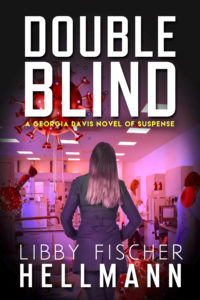
DoubleBlind by Libby Fischer Hellmann: COVID-19, a Doppelgänger, and a Dangerous Sect combine for an Ambitious PI Novel

DoubleBlindDoubleBlind

by Libby Fischer Hellmann

DETAILS:
Series: Georgia Davis, #6
Publisher: The Red Herrings Press
Publication Date: March 8, 2022
Format: eARC
Length: 335 pg.
Read Date: March 28-29, 2022

What’s DoubleBlind About?

I’m going to appropriate the description from Hellman’s website so I don’t slip up and say something she wouldn’t like me to reveal about the plot.

With little work during the pandemic, Chicago PI Georgia Davis agrees to help the best friend of fellow sleuth, Ellie Foreman. Susan Siler’s aunt died suddenly after her Covid booster, and Susan’s distraught mother wants the death investigated.

However, Georgia’s investigation is interrupted by a family trip to Nauvoo, Illinois, the one-time Mormon heartland. It’s there that her life unexpectedly intersects with the runaway spouse of a Mormon Fundamentalist. Back in Evanston, after Georgia is almost killed by a hit and run driver, she discovers that she and the escaped woman look remarkably alike.

Is someone trying to kill Georgia because of her death investigation case? Or is it a case of mistaken identity? And how can Georgia find her doppelganger before whoever wants them both dead tries again?

The Vaccination Storyline

I’m going to end up saying this at least a couple of times, but I thought it was a risky move to make the cornerstone of this novel a death that occurs right after the character receives a COVID-vaccination booster. It’s risky enough to try to get readers to invest in a COVID-era novel, but to center your plot on it—particularly vaccines right now? Hats off to her.

What’s more, there were a couple of times where I wondered if Hellman was on the verge of coming out pretty strongly anti-vaccination and other times I thought she was in danger of preaching the other direction—in the end, neither was true. There’s enough for everyone to like the way Georgia opines (and enough for everyone to dislike it, too). For Hellman’s sake, I hope her readers remember the views that are expressed by a fictional character do not necessarily match that of the author.

I thought the story wrapped up nicely, but I wish we’d gotten a little more time with it (and less of the Doppelgänger story).

The Doppelgänger Storyline

I’m of two minds about this storyline—I got really invested in Georgia’s doppelgänger. I’m not sure Hellman did the best job of depicting her story, but I really couldn’t get into everything surrounding her story—the reactions of those she left behind, Georgia’s involvement, the law enforcement angle…none of it seemed right.

If it stayed as a B-Plot to the Vaccine story, rather than taking over the book, I might have been better. If there’d been more nuance to the depiction of her husband—I’m not saying make him less of a clear-cut villain, just be more subtle about it’s shown.

Infodumps

Given the subject matter of the two storylines, a lot of research had to be done to make the details believable—and a good deal of the product of that research needed to be delivered to the readers, too. The trick comes in how that product is delivered. Hellman gets it right with one storyline, and less-right with the other.

When it comes to the vaccination storyline, Georgia has to dig in and find out more about the transportation of the vaccines and how things are supposed to go if there’s a problem with a patient post-vaccination. As Georgia does that research early on in the investigation, she has to think about what she learned and process it—this gives Hellman an opportunity to get that information in front of the readers in an organic way—even if it is an infodump.

On the other hand, Georgia and another character or two (being purposefully vague) need to be given information about Fundamentalist LDS culture and practices. Which results in some awkward infodumps—one that’s so far beyond awkward and ill-timed that I couldn’t suspend disbelief enough to handle the scene.

I’ve often heard authors in interviews talk about the temptation to use all their research in a novel, because it’s just so interesting. The infodumps about the Fundamentalist LDS felt like Hellman just had to share everything she learned.* Giving us the information in a smoother fashion, and only what was needed (at least explicitly, she could’ve alluded to more) would’ve worked better for the flow of the story—and might have provoked the reader to go read more on their own.

* “Felt like” is the key term there, she clearly could’ve gone more in-depth, but in the moment it seemed like she left it all on the page.

So, what did I think about DoubleBlind?

There’s some really strong storytelling at work here, with characters that Hellman’s clearly spent a lot of time crafting over the previous five novels.

I had some issues with some of the mechanics of writing—I thought that some of the dialogue needed another editing pass or two, some of it is best described as “clunky.” Not all of it—but enough that it stood out as a problem. The pacing could’ve been tighter in spots, there are the above comments about the infodumps (for both good and ill) and I don’t think Hellman prioritized the stronger storyline as she ought to have. Those detracted from and diluted the storytelling and characters—but not to the extent I wasn’t entertained by the novel or intrigued by the stories.

I’ll say it again, the way she incorporated COVID-19, the restrictions, and vaccinations was a gutsy move. I’m not wholly convinced it was the best way to approach it, but it was a pretty successful effort, and a nicely calculated risk.

Would I recommend this? Yeah, I would—maybe with a few reservations, but I don’t think they’re important enough to make me wave off a potential reader. Am I going to read Georgia Davis #7? I think it’s likely, I’m curious to see how Georgia moves from this point.

Georgia Davis is an intriguing character with a lot to commend her to your attention. Hellman’s a solid storyteller. That’s a combination I’m glad to recommend.

Disclaimer: I received this eARC from the author via Wiley Saichek and Saichek Publicity in exchange for this post—while I appreciate that, the opinions expressed are wholly mine.


3 Stars

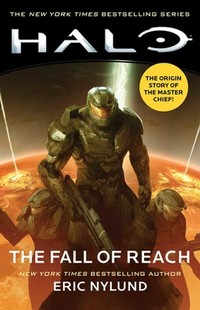
Halo: The Fall of Reach by Eric Nylund: The Story Behind the Game

Halo: The Fall of ReachHalo: The Fall of Reach

by Eric Nylund

DETAILS:
Series: Halo, #1
Publisher: Gallery Books
Publication Date: March 18, 2019
Format: Paperback
Length: 414 pg.
Read Date: March 23-26, 2022

Support Independent Bookstores - Visit IndieBound.org

What I Knew About the Franchise

Going in, this was the sum total of my knowledge about Halo:
bullet Someone in it was called, “Master Chief.”
bullet The point of the game (presumably as Master Chief), was to kill hostile aliens (perhaps all aliens)
bullet When I tried to play, I would die in no more than 28.7 seconds.

In other words, I had no preconceptions about this going in. My tabula was about as rasa as you can ask for.

What’s Halo: The Fall of Reach About?

In the 26th century, humanity has colonies in star systems throughout the galaxy. And finally, that moment we’ve been waiting for happens: First Contact. And like SF movies from the early 20th Century tried to warn us: the alien race we make that First Contact with is vastly technologically superior and isn’t friendly.

They’re called the Covenant, and are apparently made up of an association of various races—each with their own specialties. And unless something dramatic happens, they’re going to wipe out humanity. They don’t seem that interested in humans joining with them or assimilating humanity. It pretty much seems like they want humans eradicated.

Enter Dr. Catherine Halsey of the Office of Naval Intelligence. She’s got an insane, ethically-vacant, implausible idea—she’s going to take a bunch of children, train them to become the greatest soldiers in history, surgically/medically augment them, equip them with unbelievably advanced suits of armor, and set them loose on the Covenant. Basically a combination of Urban-Legend understanding of ancient Sparta + Ender’s Game + Red Rising + Tony Stark’s suits.

We see these Spartans in action, flashback to their early training, and then see them at their—and possibly the war’s—most pivotal moment. We get to know a few of them, a bit—but the focus is on the trainee who will become their Master Chief.

There’s also a plotline focusing on one starship commander (he switches vessels a couple of times, so I’ll go generic there) who takes a lot of risks—and has some solid crew members to back him up. Their combination of nerves, cleverness, and luck makes them about as successful as you can be without the scientific enhancements that the Spartans get. Eventually, they play host to the Spartans on a last-ditch mission, and that’s when things really start cooking.

So, what did I think about Halo: The Fall of Reach?

I don’t have a lot to say about this. Like every book (so far) that I was recommended in this 12 Books challenge, this isn’t something I’d typically read. But this was pretty fun. Sure, Pierce Brown and Mike Chen aren’t going to be looking over their shoulders worrying about Nylund—but the dude can write an entertaining scene with some decent character moments.

The battle scenes in particular were just what you want in a book like this (or a video game like this, I assume). The space battles brought me back to Jack Campbell’s books or the Robotech novels that I lived on in the late 80s. I need to make time for more stuff like that.

Reach, I should mention, is the biggest and most important military base for humans outside of Earth—the location of both are tightly kept secrets. So the book focusing on the fall of Reach tells you right away that this book will have an ugly end. And, spoiler alert, the title is apt.

But there’s hope—in the Dumb and Dumber “So, you’re telling me there’s a chance”—kind of hope. But that’s enough for a bioengineered super-soldier, a cocky AI, and a starship of maverick officers, right?

I’m definitely not going to rush and grab another Halo book to see what happens next or to learn about other escapades of the Spartans/Master Chief. But if they come across my path? Yeah, I’d read more.

If you’re into Halo or if you want to understand what someone in your family/friends group sees in the game, this might be just the ticket. It’s a decent amount of fun with just the right amount of action. Give it a shot.


3 Stars

This post contains an affiliate link. If you purchase from it, I will get a small commission at no additional cost to you. As always, opinions are my own.
Page 13 of 55

Powered by WordPress & Theme by Anders Norén