Tag: 3 Stars Page 15 of 55

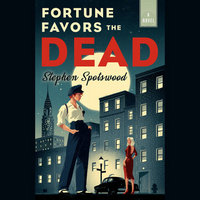
Fortune Favors the Dead (Audiobook) by Stephen Spotswood, Kirsten Potter: Female Sleuths Buck Convention in this 1945’s Adventure

Fortune Favors the Dead

Fortune Favors the Dead

by Stephen Spotswood, Kirsten Potter
Series: A Pentecost and Parker Mystery, #1

Unabridged Audiobook, 8 hrs., 31 min.
Random House Audio, 2020

Read: December 1-2, 2021
Grab a copy from your local indie bookstore!

The Oversimplified Setup

It’s a gender-flipped Nero Wolfe/Archie Goodwin. Instead of staying home habitually because of eccentricity, detective Lillian Pentecost has multiple sclerosis. Her assistant, Willowjean “Will” Parker has a much more colorful history than Archie Goodwin—she spent years in the circus after running away from a terrible home in her teens. Will is game to get physical with suspects if necessary, but she’s not up to Archie’s level and doesn’t necessarily give as good as she gets.

Pentecost is much more active outside the home than Wolfe, and the pair are more socially active—with social consciences that would be far more at home in Twenty-First century American than in the 1940s. But largely the duo operates like their archetypes.

What’s Fortune Favors the Dead About?

The book begins with how the two met and started working together, then it jumps three years to after the partnership had been established and prospective clients show up.

A year ago, Abigail Collins’ husband shot himself when it looked like everything was going the way the steel magnate wanted it to (in the mid-1940s, selling steel to the U.S. Government was a license to print money). Now, she’s been murdered, and her body was found in the same chair as her husband. Her son, daughter, and an old family friend (now head of the company) come to Pentecost to do what the police have been unable to—find the killer and assuage the worries of the company’s stockholders.

It’s practically a true-locked room mystery, which gets Pentecost’s attention. As an added bonus for the detectives, hovering around the case is a famed spiritualist that Pentecost has been wanting to expose for a fraud.

So, what did I think about Fortune Favors the Dead?

When it comes to re-imaginings, or characters based on Wolfe/Archie, I thought this was one of the more inventive and successful (DeAndra’s Lobo Black/Quinn Booker might be better, but it’s been so long since I read it, I’m not sure). Don’t take anything negative I say—or if I’m not that enthusiastic about it—as being a reaction to being a Wolfe purist.

When you think of Stout’s works—it’s about the case, the mystery. Sure, you stick around because of the characters—but it’s about watching the characters at work in and around the case. This was about Will Palmer first and foremost—with Pentecost clearly a secondary character—and her relationships/interactions with the principals related to the case and her background. The next priority of the novel was in creating and revealing the world of Pentecost and Palmer—how they were active in it and related to people in the world. The case—and everything else—came in as a tertiary concern.

This is all fine and good for a first novel—but it didn’t seem to fit the setup either as something modeled on Wolfe/Archie novels, or as something in a vaguer 1940s detective mold. That’s me carrying in assumptions to the text, I realize. But it still felt like Smallwood’s emphasis was misplaced.

The mystery/mysteries were clever enough and the plotlines were well-executed, and the emotional beats—particularly in the final chapter—were handled perfectly by both Spotswood and Porter.

Fortune Favors the Dead was not the novel I expected, but it was good enough to get me to come back for the second in the series.


3 Stars

This post contains an affiliate link. If you purchase from it, I will get a small commission at no additional cost to you. As always, opinions are my own.

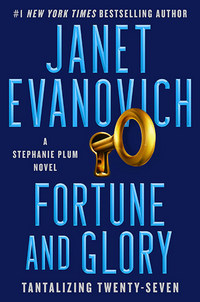
Fortune and Glory: Tantalizing Twenty-Seven by Janet Evanovich: Stephanie’s on a Treasure Hunt

Fortune and Glory

Fortune and Glory:
Tantalizing Twenty-Seven

by Janet Evanovich
Series: Stephanie Plum, #27

Paperback, 332 pg.
Pocket Books, 2021

Read: December 25-27, 2021
Grab a copy from your local indie bookstore!

Ranger stopped for a light and looked at me. “How about you? What’s in your bucket list?”

I was stumped. I didn’t have a bucket list. My bucket was empty.“I haven’t gotten around to making a bucket list,” I said. “Do you think that’s a personal failure?”

“No. You’re busy living every day. That’s a personal triumph.”

“It doesn’t feel like a triumph. It feels like I’m moving through my life with no important goals or aspirations.”

“What do you consider to be an important goal?”

“Being a doctor or a vulcanologist or a marine biologist or finding the Ark of the Covenant.”

What’s Fortune and Glory About?

Fortune and Glory continues the storyline kicked off in Look Alive Twenty-Five, this time Stephanie and Grandma Mazur are hunting for the treasure—whatever it may be (no one is telling) that the La-Z-Boy Gang had tucked away. Two of the surviving members are on the hunt for the clues that lead to it, too—and they’re not playing by Marquess of Queensberry Rules.

Naturally, Stephanie also has three skips to track down for Vinnie’s Bail Bonds—one of whom decides that Stephanie needs a bodyguard and devotes himself to that. Sure, Stephanie could use a bodyguard, but probably not one who has a handful (or more) of anxiety disorders that prevent him from doing much of anything.

Dodging gangsters and chasing down FTA’s, just another day in the ‘Burb for Stephanie Plum.

A Backdoor Pilot?

Evanovich has a new series starting next year about a recovery agent, Gabriela Rose. We get to meet Gabriela here because she’s been hired to recover the same treasure than Stephanie and Grandma are on the hunt for.

She’s slick, she’s skilled, she’s apparently successful—she’s pretty much the anti-Stephanie. She’s what Ranger could be if he didn’t have his whole company, either.

Gabriella’s not in the novel much, just enough to introduce her to Evanovich’s readers. But she plays a vital role when she’s around.

I enjoy it when there’s overlap between an author’s series/works, but this felt cheap.

A Change in the Offing?

Stephanie spends a lot of time considering her life, her career, her future…nothing she hasn’t done before, but it felt a bit more serious this time—going so far to ask herself “Who am I?”. Even her newfound bodyguard sees that she wants to change her life.

The presence of Gabriela and some new turmoil in her relationship with Morelli adds fuel to this self-reflective fire.

So, what did I think about Fortune and Glory?

This was fine. This was okay. It was amusing. I appreciate the ambition of the storyline (but glad Evanovich wasn’t ambitious enough to try to extend it). For a series this old, to try something like this for the first time? Pretty impressive.

I don’t know that I found anything funny, though—which isn’t good for a comedic series like this.

It’s not quite as good as the last couple of Plum novels, but not as weak as some of the others. Good enough to read and recommend, but just that good. If I actually believed this round of self-reflection was going to result in a change, I might be more optimistic about things, but I expect that #28 will be more of the same. Which isn’t necessarily bad, it’s just nothing to be excited about.


3 Stars

This post contains an affiliate link. If you purchase from it, I will get a small commission at no additional cost to you. As always, opinions are my own.
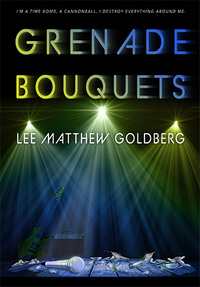
Grenade Bouquets by Lee Matthew Goldberg: True to the Rock Scene it Describes, there’s a Bit of a Sophomore Slump Here

Grenade Bouquets

Grenade Bouquets

by Lee Matthew Goldberg
Series: Runaway Train, #2

Kindle Edition, 286 pg.
Wise Wolfe Books, 2021

Read: October 12-13, 2021
Grab a copy from your local indie bookstore!

I’m sure there’s always moments in life you’ll remember, like when you get married, or hold your newborn baby, but like, I can’t imagine anything more hella cool than hearing your song on the radio for the first time.

What’s Grenade Bouquets About?

At the end of Runaway Train, Nico joins Evan and his band, Grenade Bouquets, for a few dates, helping them with one song at the end of the set.

Before long, a rivalry heats up between Nico and the band’s singer (and Evan’s ex)—enough that she leaves, and Nico takes over just as they get the attention of a record label.

Things go about as well as you’d expect from this point out—there’s a template for novels about Rock bands, and Goldberg’s not one to buck a trend.

So, what did I think about Grenade Bouquets?

Is it ridiculous to expect that just because she got her act together at the end of Runaway Train that Nico will act maturely after that—especially in light of sudden success, money, attention, lack of adult supervision, and the easy access to drugs and alcohol. But man, I had a hard time with her antics. At one point, I jotted in my notes “I’d pay Goldberg $50 if we could just drop this and catch up with Nico in 5 years.”

Sure, Goldberg did a fantastic job of capturing the cultural moment so wonderfully—and the realism of a confused teen in the midst of that. But, I tell you what, I had a hard time getting through that part of the book (the majority of it). Eventually, however, that part ends. It doesn’t necessarily end well for Nico (the opening scene of the book makes that clear, so I’m not spoiling), but it ends believably (perhaps inevitably).

It’s what happens after things fall apart for Nico where the novel starts to be worth the struggle—there’s a scene featuring a celebrity cameo that makes the whole novel worthwhile, actually. But even without that scene the latter parts of the novel rescue it and get me to the point I can recommend it.

If you liked Nico’s story from Runaway Train and wanted to know what happens to her after it, Grenade Bouquets is a successful follow-up. The reader, as well as Nico, has to get through a lot—but the pay-off will compensate you.

I’m sounding pretty down about the book—and I don’t mean to, really, I came around in the end—but there was something to come around from. I have to mention it/warn you about it. Still, a decent read—with some strong moments and crystal clear writing.

3 Stars

This post contains an affiliate link. If you purchase from it, I will get a small commission at no additional cost to you. As always, opinions are my own.
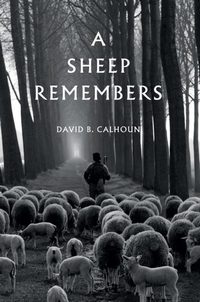
A Sheep Remembers by David B. Calhoun: Remembering Psalm 23

A Sheep Remembers

A Sheep Remembers

by David B. Calhoun

Paperback, 137 pg.
Banner of Truth Trust, 2021

Read: December 12, 2021
Grab a copy from your local indie bookstore!

All the circumstances of the pilgrimage—want, weariness, journeyings, wanderings, perplexities, the shadowed mysteries of the valleys, the thronging enemies, and the infinite beyond—are present; and the singer knows them. They are, however, only mentioned to sing of their negation by the graciousness of the Shepherd. Want is cancelled. For weariness he has green pastures of rest. On journeys he leads by pleasant ways. From wanderings he restores. Through perplexities he guides, and that by right ways. In the valleys of death’s shadow his presence cancels fear. In the presence of enemies he makes a feast, and he is a host royal in bounty.

What’s A Sheep Remembers About?

RIght out of the gate, Calhoun cites Spurgeon: “I cannot say anything new on this text…But I can remind you of old and precious truths,” and that’s pretty much Calhoun’s mission statement, reminding readers about Psalm 23. He’s not trying to shake things up with a new understanding, he’s not going for bold scholarship, or something along those lines. It’s simply an exercise in taking a slow look at what we already know, to remember the old and precious truths.

Each chapter takes a verse (or less) and reflects on it—the chapter starts with a version of the Psalm or a hymn based on it, then there’s a commentary on the phrase(s) examined, something written by a shepherd to help the reader understand (literal) sheep and their ways, illustrations from others to help understand the theme of the chapter and then a part of his own life story. The commentary sections are largely strings of quotations from other writers of various theological persuasions and varying degrees of orthodoxy, with a little addition from Calhoun–mostly to tie them together.

Preparing to Die

Calhoun talks about this in the book a bit—the Puritans had a practice to prepare for death, when terminally ill (or at least when they would suppose they were), they’d meditate on death, and the state of their soul as they neared it. In many ways, that’s what this book was for him.

Calhoun had been battling cancer for years, and he knew his death was imminent—he actually died shortly after delivering the final version of the manuscript to the publishers. You can tell from the latter chapters that he was very aware of the shortness of his time. Which adds some poignancy to this work—particularly the chapters concerning “Yea, though I walk through the valley of the shadow of death” and “And I will dwell in the house of the Lord forever.”

Supplementary Material

I don’t typically talk about this kind of thing—because, why would I? But these merit a mention.

Calhoun includes an Addendum of Additional Versions of Psalm 23—the versions included in the text were good, but I guess that there just weren’t enough chapters for everything he wanted to use. I haven’t seen most of these before and I’m glad I was exposed to them.

The Bibliography is your standard bibliography, but Calhoun includes some personal notes describing the works—that’s a nice touch, and I wish more people would do that.

So, what did I think about A Sheep Remembers?

How could I be joyful when my body was slowly, perhaps not so slowly, dying? I have lost sight in one eye and the other eye is failing, as is my hearing. I have been hospitalized seven or eight times in the last three years with pneumonia. I can no longer swallow food or talk very well. And, most disturbing, my mind is letting me down. How could I be joyful when all this was happening to me? In the valley I learned that joy comes, not from my feelings, nor from my daily experiences, but from the inner conviction that my life is going according to God’s plan. Joy is a gift of God. David wrote, ‘You have put more joy in my heart than they have when their grain and wine abound’ (Psa. 4:7).

This book isn’t just about Psalm 23 in the abstract, it’s about Calhoun’s Shepherd guiding him through his cancer. The latter is what made this book worth reading.

Like the other book I’ve read by Calhoun, In Their Own Words, the bulk of the text seems to be tiny quotations—that quotation I open this post with isn’t Calhoun, it’s G. Campbell Morgan—and it’s one of the longest quotations Calhoun uses, many are a single sentence long. It takes a certain genius to have these various sources on hand and be able to cite them together in such a way to present an argument. But really, Calhoun seems to use these to frame his argument, rather than to support it.

I appreciated the work, I profited from it—but I think it could’ve been stronger. If there was more of Calhoun, and less a medley of other writers—I think it would’ve been.

Still, it’s hard to walk away from time in this Psalm and not be refreshed. And the quotations, sayings, metrical versions, and paraphrases assembled here all help that endeavor. It’s hard to say anything bad about that.


3 Stars

This post contains an affiliate link. If you purchase from it, I will get a small commission at no additional cost to you. As always, opinions are my own.
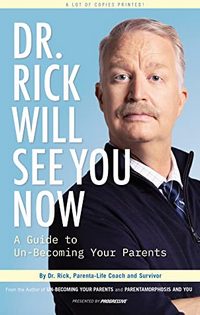
Dr. Rick Will See You Now by Dr. Rick is a Thing that Actually Exists (and I chuckled at)

Dr. Rick Will See You Now

Dr. Rick Will See You Now

by Dr. Rick

Kindle Edition, 119 pg.
Eleven Letter Press, 2021

Read: December 6, 2021

What’s Dr. Rick Will See You Now About?

I don’t know if my out-of-the-U.S. readers will have been exposed to these commercials, but I assume that everyone in the U.S. has seen these advertisements from Progressive Insurance–Dr. Rick is an expert in “parentamorphisis,” and advises his clients on how to beat it.

What is parentamorphisis? That’s when doing things like owning your first home turns you into your parents and gets you started doing things like making dad jokes, talking too much about parking, giving unsolicited advice at a hardware store, printing out directions for driving, and so on.

This book is a collection of quizzes and tips on how to avoid becoming your parents–a few items are similar/the same as the commercials, but most aren’t. There’s a combination of text, photos, and simple drawings to illustrate

“Dr. Rick”

I didn’t see anywhere in the book (I may have overlooked it) where the author(s) were identified as other than the Dr. Rick character–Progressive Marketing Department, or something like that, I guess. I’d like to give them the credit due, but…I guess that’s not to be.

So, what did I think about Dr. Rick Will See You Now?

This is cute. I find these advertisements pretty amusing, and this is just like sitting down and watching a series of them.

And, hey, it’s free. Free chuckles and something to do for a little bit. That’s a pretty good deal.


3 Stars

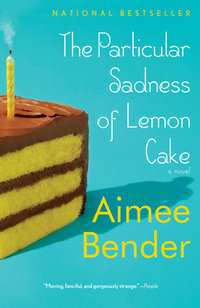
The Particular Sadness of Lemon Cake by Aimee Bender: A Gorgeously Written Let-Down

The Particular Sadness of Lemon Cake

The Particular Sadness of Lemon Cake

by Aimee Bender

Hardcover, 292 pg.
Doubleday, 2010

Read: November 30-December 1, 2021
Grab a copy from your local indie bookstore!

What’s The Particular Sadness of Lemon Cake About?

I don’t think I have it in me to do a decent job of this, so I’m just going to use the text from the flap of the dust jacket.

On the eve of her ninth birthday, unassuming Rose Edelstein, a girl at the periphery of schoolyard games and her distracted parents’ attention, bites into her mother’s homemade lemon-chocolate cake and discovers she has a magical gift: she can taste her mother’s emotions in the slice.

She discovers this gift to her horror, for her mother—her cheerful, good-with-crafts, can-do mother—tastes of despair and desperation. Suddenly, and for the rest of her life, food becomes a peril and a threat to Rose. Anything can be revealed at any meal. She can’t eat her brother Joseph’s toast; a cookie at the local bakery is laced with rage; grape jelly is packed with acidic resentment.

Rose’s gift forces her to confront the secret knowledge all families keep hidden—truths about her mother’s life outside the home, her father’s strange detachment, Joseph’s clash with the world.

Yet as Rose grows up, she realizes there are some secrets that even her taste buds cannot discern.

Particularly Sad

By page 15 of the novel, I’d already decided the title was pretty descriptive of the book. That impression never left off. Every page drips with sadness—even the most joyful moments of the characters’ lives are draped in it. There’s no joy, no happiness—the best is some contentedness and satisfaction that Rose finds in the last twenty pages. I’m not sure I remember a novel so consistent in the emotional tone.

So, what did I think about The Particular Sadness of Lemon Cake?

This is a split decision for me. The Bender’s prose and language deserve at least 4 stars, maybe more. But for my reaction to the book? It’s probably a 2.

Aimee Bender can write—her language is fantastic. The prose is as delicious as the food described isn’t. This is the kind of writing that demands attention (maybe it demands a bit too loudly on occasion). If not for what comes in the next paragraph, I’d be requesting every one of her books from the library as soon as I publish this post.

But I found the style off-putting, I didn’t care about a single one of these characters and their various plights. I wasn’t that curious about Rose’s “special skills” (or any others displayed by characters). I didn’t care about the story, or anything else. While the writing was dazzling, it seemed distant and detached (a neat trick for a first-person narrative)—and it kept me distant and detached.

I absolutely expect to be the exception to the rule here, that just about everyone else fawns all over this. But…oh, well. For my money, if you want something written like this but with characters/situations/writing that engages you, you’re better off picking up a Tiffany McDaniel novel.


3 Stars

2021 Library Love Challenge
This post contains an affiliate link. If you purchase from it, I will get a small commission at no additional cost to you. As always, opinions are my own.
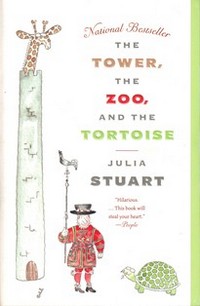
The Tower, the Zoo, and the Tortoise by Julia Stewart: A Quitet, Charming, Quirky, Tragic Tale

The Tower, the Zoo, and the Tortoise

The Tower, the Zoo, and the Tortoise

by Julia Stewart

Hardcover, 304 pg.
Doubleday, 2010

Read: November 16-18, 2021
Grab a copy from your local indie bookstore!

What’s The Tower, the Zoo, and the Tortoise About?

Balthazar Jones has inherited the world’s oldest living tortoise from his family—it’s been handed down for generations. It’s not the most interesting thing about him, but it’s going to prove pivotal.

Eight years before, Jones moved into the Tower of London with his wife and son, because that’s where Yeoman Warders live and work. Most of the world knows them by the nickname, Beefeaters. A few years later, his son dies suddenly. Jones and his wife, Hebe, stopped really talking or communicating that day—both wrapped up tightly in their grief.

Now, the Queen’s Equerry comes to Jones and tells him that the Queen wants to move the animals she’s been given by various nations to the Tower of London, re-establishing the menagerie there, and he gets to run it. After all, the keeper of the world’s oldest tortoise must know something about caring for animals, right?

His fellow Yeoman Warders aren’t happy about this at first—particularly the Chief Yeoman and the keeper of the ravens. Things go wrong pretty quickly with the animals in the menagerie, but it increases the popularity of the Tower, and tourism is booming. Also, it turns out that most of the Beefeaters end up enjoying the animals.

Hebe works in the Lost and Found for the London Underground where she and her officemate are diligent in seeking to reunite people with their lost property (very frequently odd things, it should be added), and will sometimes go to great lengths to do so. It is this strange little pocket universe they work in, and I was fascinated by that.

There are too many characters to list here—each eccentric in their own way (for example, the Tower chaplain, who secretly writes erotica with a sold moral core).

Around the time that the animals arrive, , everyone’s life changes—some for the better, some for the worse. As the Tower’s residents have to cope with the new arrivals, this collection of characters has to adjust to the changes rippling through their lives.

The Tone

Whimsical, but never outright funny. Comic and yet mournful. Grief permeates this novel—for opportunities lost, for mistakes made, for the death of a son and maybe a marriage—yet there’s an optimistic note throughout.

It’s hard to pinpoint the tone, think Gaiman’s Stardust meets Jennifer Weiner, and you’ll be close. It’s incredibly quotable, with some sparkling sentences (but for the quotes to make any sense, I’d have to go for longer pericopes than I’m comfortable with—so no examples, just take my word for it).

So, what did I think about The Tower, the Zoo, and the Tortoise?

I really liked this. It felt like a fairy tale about the contemporary world and without any real magic (well, maybe).

You can’t help feel bad for all the characters (with one exception—the book would’ve been better without them if you ask me). They’re lonely, they’re heartbroken, and they have no real hope of their lot in life improving. But they keep going. They keep living their sad, lonely lives until something happens to change things. It’s kind of inspirational.

Charming prose, characters you sympathize and empathize with almost immediately, and some very strange events make for a good, entertaining read. At times I felt like I was about to fall in love with the book, but sadly, that didn’t happen—I did like it a lot, though.


3 Stars

2021 Library Love Challenge

This post contains an affiliate link. If you purchase from it, I will get a small commission at no additional cost to you. As always, opinions are my own.

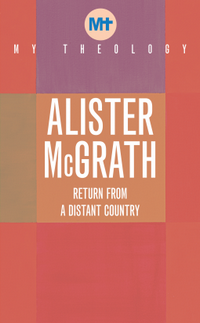
My Theology: Return from a Distant Country by Alister McGrath

Return from a Distant Country

My Theology:
Return from a Distant Country

by Alister McGrath
Series: My Theology

eARC, 96 pg.
Darton, Longman & Todd, 2021

Read: November 14, 2021
Grab a copy from your local indie bookstore!

What’s Return from a Distant Country About?

In this brief work, McGrath starts off with a brief spiritual biography—sketching out his early life and interests and then what brought him to faith while a student at Oxford.

He then gives a brief definition of theology and how he sees himself as a theologian, and how he’s demonstrating both in his own work. He then sketches out four main themes in his own work and theology—historical theology, the relation between natural sciences and theology, Christian Apologetics, and theological education—both a look at his and then how he tries to educate others.

The My Theology Series

The publisher’s website (Darton, Longman & Todd) describes this series as: “The world’s leading Christian thinkers explain some of the principal tenets of their theological beliefs.” The US Publisher (Fortress Press) helpfully adds “in concise, pocket-sized books” to that description. It looks to be sixteen projected volumes published from September 2021-March 2022 (in the UK), this volume will be published in the U.S. in January, and I would expect the rest to follow a similar schedule.

I think that’s an interesting, and potentially fascinating, idea. I don’t recognize the overwhelming majority of names, which I guess indicates how far my finger is from the pulse of the world’s leading Christian thinkers. I’m a little curious as to who these people are, which might lead me to read some more of these books.

So, what did I think about Return from a Distant Country?

I’ve started reading “intellectual biographies” in the last few years, and I guess this is pretty much a (mini) intellectual autobiography, which isn’t the way I’m used to reading. As such it was an interesting exercise. There was a time when I’d frequently read McGrath’s work, but it’s been a long time since I did—not that I didn’t appreciate it, I just had other priorities. It was nice to touch base with him after all this time. Seeing how he views his work within these four themes–and what he thinks about them–helps the reader understand him as a thinker, theologian, and (I’d imagine) person better than you did before.

I enjoyed this work, and think I got something out of it but it wasn’t as good as I’d hoped. Too much of McGrath’s description of his work makes it seem like Christianity is a largely—maybe even almost exclusively—a cognitive matter—all about thinking the right things to the exclusion of feeling, belief, and action. That’s a tendency for those in the neighborhood of conservative evangelicalism—particularly those with some connection to Reformed theology. I personally would’ve appreciated it if McGrath had made it clear that wasn’t his intention or belief. But that’s a more of a me thing than a substantive criticism.

I wouldn’t say that this book gave me new insight into Christian theology or any of the themes he addressed. But I got a better insight into who McGrath is and what I should expect as I read his other work—which, for a series called “My Theology” makes a lot of sense.

Disclaimer: I received this eARC from Darton Longman Todd via NetGalley in exchange for this post—thanks to both for this.


3 Stars

This post contains an affiliate link. If you purchase from it, I will get a small commission at no additional cost to you. As always, opinions are my own.
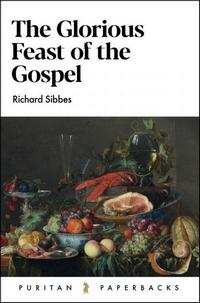
The Glorious Feast of the Gospel by Richard Sibbes: An Entirely Okay Collection of Sermons

The Glorious Feast of the Gospel

The Glorious Feast of the Gospel

by Richard Sibbes

Paperback, 166 pg.
The Banner of Truth Trust, 2021

Read: October 31, 2021
Grab a copy from your local indie bookstore!

What’s The Glorious Feast of the Gospel About?

The subtitle to this when originally published was “or Christ’s Gracious Invitation and Royal Entertainment of Believers,” it’s a series of nine sermons on Isaiah 25:6-9.

Banner of Truth reprinted the original title page, which does a better job of summarizing the book than I could. It states that among other things, “these Comfortable doctrines” are addressed in the book:

1. The Marriage Feast between Christ and his Church.
2. The vaile of Ignorance and Vnbeliefe removed.
3. Christ’s Conquest over death.
4. The wiping away of teares from the faces of Gods people.
5. The taking away of their Reproaches.
6. The precious Promises of God, and their certaine performance.
7. The Divine Authority of the Holy Scriptures.
8. The Duty and comfort of waiting upon God.

So, what did I think about The Glorious Feast of the Gospel?

I was genuinely excited when I saw that the Banner would be publishing a new Sibbes book, but it didn’t live up to my hopes. I’m going to go with the assumption that this wasn’t the right time for me to read this book. I just didn’t connect with it—I’m not saying it was bad, it just left me with a feeling of “meh.”

Sermons 5, 6, and 9 did grab me—proving that I’m not totally dead inside. Sermon 5, in particular, on the comforts of the Gospel as seen through “And all tears shall be wiped away from all faces” (v. 8), made the experience of the book worthwhile.

Once upon a time, Richard Sibbes was my “go-to” Puritan, so I do find it surprising when I don’t connect that well with a book by him. So, my assumption is that when I read this again in 2023-5, my reaction will be different. But for today, this was an okay book, but not a must-read.

3 Stars

This post contains an affiliate link. If you purchase from it, I will get a small commission at no additional cost to you. As always, opinions are my own.
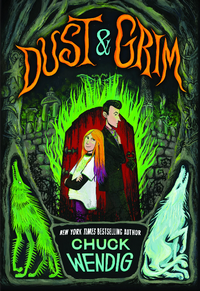
Dust & Grim by Chuck Wendig: Fairies and Foxfolk and Florgs, Oh My

Dust & Grim

Dust & Grim

by Chuck Wendig

Hardcover, 368 pg.
Little, Brown Books for Young Readers, 2021

Read: October 28-29, 2021
Grab a copy from your local indie bookstore!

“We’re a funeral home for monsters,” Vivacia said

Viv!” Dustin said, scandalized.

“Fine. The supernatural,” the woman corrected. To Molly, in a lower voice, she said: “Monster is a bit of no-no word. We prefer not to use it, and they certainly prefer us not to use it. But we need common ground here, and I hope it helps you to understand.”
“Monsters,” Molly said, repeating the no-no word.

“The supernatural,” Viv corrected again.

“The nonstandard citizens,” Dustin said sharply.

What’s Dust & Grim About?

After thirteen-year-old Molly’s father died, her uncle comes to her and tells her about her (late) mother and older brother—Molly’s parents split right after she was born and she’d never known anything about them. Her father had never been a good provider—or much of a parent in any other way. She needs money for costuming school (and room and board, too) and her long-lost family has an ongoing business of some sort.

So Molly introduces herself to her brother, Dustin, and makes an ultimatum: she wants half of everything or to take part in the business. Dustin and his mother’s friend, Vivian (who has taken on the role of mentor/guardian) aren’t keen on either option (or on Molly in general, if truth be told).

Through sheer pluck, determination, and a happy accident or two, Molly learns that the family business is as a funeral home/cemetery caretakers for supernatural creatures. Not only that, but a malevolent magic-user is running around the cemetery ruining the eternal rest of those interred there (which could have cataclysmic effects).

With the help of a band of non-standard citizens—as delightfully creepy and goofy as you could want—the siblings have to figure out how to get along and stop this threat.

The Non-Standard World

Mollllllly,” the forest whispered in return.

She shuddered. “That’s weird. You should stop that!”

Sorrrrry,” the forest answered.

Well, at least it’s a polite menacing voice.

It’s hard to describe briefly the non-standard world we’re introduced to—through the cemetery, the group helping Molly and Dustin, and others that they interact with. It’s sort of like Gaiman’s Neverwhere or Aaronovitch’s demi-monde. But the Pixar version.

Just a few examples: there’s a Foxperson shapeshifter, which is pretty much what it sounds like; the above talking forest (at least, that’s her theory at the time); a vampire that can compete with Fred, the Vampire Accountant for the Most Milquetoast Vampire in Literature; and a Florg, a childlike extra-dimensional being, who is probably the most dangerous being in the book, who is pacified with cheese crackers and by attempting to be funny (think Dave Bautista’s Drax, but not at all).

I hope there’s a sequel just to spend more time in this world.

So, what did I think about Dust & Grim?

“What kind of poison?” Dustin asked.

Marsha chimed in: “Mucus-thorn and mire-berry.”

“Is that, like, some kind of alt-folk band?” Molly asked.

“Not as bad as that,” Ember said, grinning like, well, a fox. “But as poisons go? Pretty flappin’ bad.”

Dust & Grim was just silly, creepy, wholesome fun. You’ve got some great creatures. You’ve got a nice sibling-dynamic. Some genuinely funny lines. Molly’s cosplaying is great, I love the choice to ground her character in that. And a creative story.

But most of all, you get to young characters who learn who they are, find ways of fulfilling their dreams that they didn’t expect to find, and a strong sense of family—and what that means. Not in some “we have to find a wholesome message for MG readers” kind of way, but in a way that would work for these characters no matter the intended audience.

I don’t want to spend too much time trying to talk about this, it’s just a fun read that should be enjoyed that way.

3 Stars

2021 Library Love Challenge

This post contains an affiliate link. If you purchase from it, I will get a small commission at no additional cost to you. As always, opinions are my own.
Page 15 of 55

Powered by WordPress & Theme by Anders Norén