Tag: 3 Stars Page 18 of 55

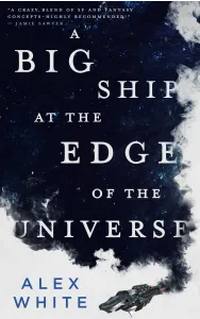
A Big Ship at the Edge of the Universe by Alex White was A Pretty Decent Space Opera That I Should’ve Liked More Than I Did

A Big Ship at the Edge of the Universe

A Big Ship at the Edge of the Universe

by Alex White
Series: The Salvagers, #1

Trade Paperback, 440 pg.
Oribt, 2018

Read: April 16-22, 2021
Grab a copy from your local indie bookstore!

“If we separate, our odds of survival go down, and make no mistake, I know odds better than anyone you ll ever meet.”

She tongued the inside of her cheek as she thought it over. ‘Interesting …1 figured you’d be happier with me dead.”

“Oh, I might. But I should also point out that your presence seduces the chance I’ll be shot first. So do we have a deal?”

He snatched up her whiskey bottle and tipped the neck slightly toward her. She clinked her tumbler against it.

“All right. Until we salvage the Harrow, consider me part of the crew.”

What’s A Big Ship at the Edge of the Universe About?

To really explain the set-up to this novel would take more time than I have to write, and more time to read than you want to give—that’s not an insult, if you’re going to spend time reading the elaborate set-up, you’d be better off with White’s prose than mine. But let’s see if I can give a very sketchy version.

This is a Space Opera with a pretty elaborate magic system—almost every person is born with an innate ability. An ability to augment their electronics/engineering capability; their medical abilities; their marksmanship; and so on. A small, pitiable few have no magical ability.

One such person is one of our protagonists, Elizabeth “Boots” Elsworth, is one. Despite her lack of magic, she was a fantastic combat pilot. After the war, she gained some fame (and not that much money) hunting for a treasure on a reality show. Since then, she’s eked out a living selling the equivalent of treasure maps for other would-be treasure hunters—many of which contain actual, verifiable information.

The other protagonist is Nilah Brio, one of the greatest living race drivers—she’s on the cusp of winning the Pan-Galactic Racing Federation’s Driver’s Crown, when mid-race a magic-user of great ability interrupts things, kills another driver, and frames her for it.

Both of these women have somehow become the targets of a secret conspiracy that’s tied to the Harrow. The Harrow is a space ship of tremendous power and as likely to exist as Atlantis. They’ve also found themselves on board the Capricious, the ship Boots served on during the war—still Captained by the same man, with a new crew and purpose. They’re salvagers and the victims of one of Boots’ faux-maps.

Boots is able to convince the crew to join her on the hunt for the Harrow to square her debt (and then some) and Nilah is along for the ride for various and sundry reasons.

This Novel Reminds Me Of…

There’s the dark conspiracy of The Expanse, the found family feel of Chambers’ The Long Way to a Small, Angry Planet, a magic system reminiscent of The Codex Alera (without the abilities having personalities…) mixed with that of the Alex Verus series*, and a tone that’s in the same neighborhood as Kings of the Wyld. All of which makes for an entertaining read that should appeal to many SF readers.

* Not really, but it’s the best I can come up with at the moment.

“…Hunter One and Two, standing by for orders.”

Those were the code names they’d been given. A few months ago, basking in the luxury of a PGRE hospitality suite, Nilah would’ve thought a code name was cool. Now, it just meant she was doing something stupid. Worse still, she was Hunter Two, and she had a pathological hatred of being second.

So, what did I think about A Big Ship at the Edge of the Universe?

It was pretty good. In theory, this is exactly the kind of read that should appeal to me—this isn’t just in my wheelhouse, it is my SF wheelhouse. I had a lot of fun reading it, I liked the characters, I thought White did the battle scenes right (no mean feat), and I thought the whole thing was pretty exciting.

But I didn’t click with it. I can see much/most of what White was trying to do, and think he pulled it off. I can see where people would really dig this and want to go immediately scrambling for the rest of the trilogy. But it just didn’t resonate with me. I’ll likely get around to the rest of the trilogy soon—and I may end up a die-hard fan. But for the moment, the best I can say is, “yeah, it’s all right.”

This is a well-written novel full of all the things I listed above and should have a cadre of die-hard fans. I’m missing out on something that I’m not one of them—but you likely could be. If any of this seemed interesting to you, I’d recommend giving it a shot. If you do, come back and tell me what I missed, would you?


3 Stars

2021 Library Love Challenge

This post contains an affiliate link. If you purchase from it, I will get a small commission at no additional cost to you. As always, opinions are my own.

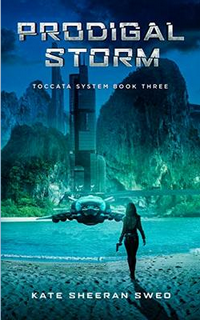
Prodigal Storm by Kate Sheeran Swed: The Toccata System Trilogy Wraps Things Up Satisfactorily and Entertainingly

Progigal Storm

Prodigal Storm

by Kate Sheeran Swed
Series: Toccata System, #3

Paperback, 179 pg.
Spells & Spaceships Press, 2019

Read: April 5, 2021
Grab a copy from your local indie bookstore!

If you’ve read what I had to say about the first two books in this trilogy and have yet to make up your mind about starting them, skip down to the “What did I think” heading, because there’s just no way to explain the setup to this without ruining the first book for you (and possibly the second).

What’s Prodigal Storm About?

A little over two weeks ago, Astra, the assassin raised by the revenge-driven AI, SATIS, had failed to carry out her mission to kill Conor. Conor is the child of the man who broke SATIS’s heart (after giving her the ability to have a broken heart). But because SATIS was careful, she had a large number of assassins as backups—including the woman acting as Conor’s bodyguard.

LJ (known to Astra and Conor as Laura), had carried out the mission, even though she loved Conor. She’s now holed up in a bar, trying to move on with her life. Her closest friend is Viv, SATIS’s liaison to humanity, who’d been a person of contact for nearly all the assassins. Now, Viv is trying to bring them to the bar she manages so they can get help in getting over SATIS’s death and hopefully find a way to live normal lives from here on out.*

* I got a real Orphan Black-sestra vibe from this gathering.

Little did any of them know that Conor had been saved by SATIS before she “died.” Now he’s on their planet, on a mission to take down his father’s AIs before they take over the Toccata system. The “sisters” band together to help him with this—even if several of them remember all too well that they’d been raised to kill him, and now they’re working with him. It’s not an easy transition.

I hope that made sense, it’s hard to summarize in a few paragraphs—I assure you, it makes a lot of sense when Swed spends several pages describing it.

A Broken Trend

Parting Shadows was inspired by Miss Havisham, Phantom Song was influenced by The Phantom of the Opera, but if Prodigal Storm is based on a classic work of literature, I didn’t recognize it (so I’m really hoping it wasn’t, I don’t want to be announcing my ignorance like this). I get that the needs of the story matter more than keeping up the literary allusions, but I missed that.

So, what did I think about Prodigal Storm?

I’ve had a really difficult time deciding what to say here, because it feels like I’m giving too much away about any/all of the books in the series—particularly this one.

The ending to the AI storyline was good—there were some good battle scenes, some interesting character development, and some fun new characters. I’ve got no complaints there. But what’s even better is seeing the “sisters” come together, building on the damaged (at best) childhoods that almost all of them had, thanks to SATIS), and turning it into something positive.

That’s not an easy road to travel by any means, and there are more than a couple of setbacks in these pages But there’s reason to hope throughout, too. This is a book about healing—even when it’s hard. It’s a story about forgiveness (and seeking it). It’s about the power of family (natural or adoptive*). And it’s about cleaning up the messes our parents have created.

* Again, see Orphan Black.

All in all, a solid conclusion to this series and reason enough to keep an eye out for new works by Swed. You should give the series a try.


3 Stars

This post contains an affiliate link. If you purchase from it, I will get a small commission at no additional cost to you. As always, opinions are my own.
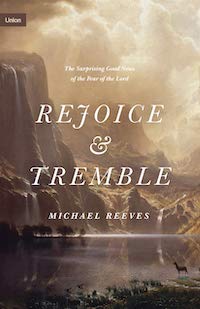
Rejoice and Tremble by Michael Reeves: Gospel Fear

Rejoice and Tremble

Rejoice and Tremble: The Surprising Good
News of the Fear of the Lord

by Michael Reeves
Series: Union

Hardcover, 168 pg.
Crossway, 2021

Read: March 7-14, 2021

What’s Rejoice and Tremble About?

The Publisher’s Description:

“The fear of the Lord is the beginning of knowledge.” —Proverbs 1:7

Fear is one of the strongest human emotions—and one that often baffles Christians. In the Bible the picture can seem equally confusing: Is fear a good thing or a bad thing? And what does it mean to “fear the Lord”?

In Rejoice and Tremble, Michael Reeves clears the clouds of confusion and shows that the fear of the Lord is not a negative thing at all, but an intensely delighted wondering at God, our Creator and Redeemer.

The High Point of the Book

There was one chapter that made the time I spent reading the book as a whole absolutely worth it. It’s called “How to Grow in This Fear.” The focus of the chapter is on how both Scripture and faith work in a believer’s heart and life to increase Godly Fear. I found it inspiring and convicting.

The Series Design and How This Book Deals with It

According to the Series Preface, this is the first book in a series called Union, “an attempt to express and share” certain values. “[W]e long to grow and support men and women who will delight in God, grow in Christ, serve the church, and bless the world.”

All well and good, but later it states,

Each exploration of a subject in the Union series will appear in two versions: a full volume and a concise one. The idea is that church leaders can read the full treatment, such as this one and so delve into each topic while making the more accessible concise version widely available to their congregations.

This not-concise book is 168 pages, the other version is 80—so I guess it’s not as full. But 168 pages of pretty easy reading isn’t what I’d think of as the domain of leaders. If this was the accessible, short version of a 4-500 academic text, I wouldn’t complain (and I’d be interested in that other volume, too). But this? This doesn’t need a simpler, shorter version.

So, what did I think about Rejoice and Tremble?

I truly think this is a better book than I give it credit for. But it didn’t do a whole lot for me.

I think it wasn’t the right time for me to read this—I’m not sure when a better time might be, but I didn’t connect with most of the material. I saw what he was doing (usually), but didn’t find it terribly compelling. I give both the topic and Reeves more credit than that, so I assume it was me.

I also think I was put off by the idea that this was intended to be an inaccessible volume for those who aren’t leaders in the church—there was nothing in this book that my seventeen-year-old couldn’t have handled. I really think reading that Series Preface put me off. If I pick this up again in a couple of years, I’m going to work harder on ignoring that.

It’s a decent read, it’s a good reminder of the place that a Biblical Fear of the Lord should hold in the Christian life. I cautiously recommend it. My guess is that most readers will get more out of it than I did.


3 Stars

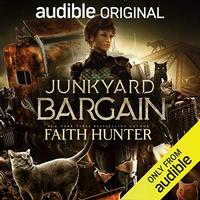
Junkyard Bargain (Audiobook) by Faith Hunter, Khristine Hvam: Shining Takes to the Road for the Next Step

Junkyard Bargain

Junkyard Bargain

by Faith Hunter, Khristine Hvam (Narrator)
Series: Shining Smith, #2

Unabridged Audiobook, 5 hrs., 40 min.
Audible Originals, 2021

Read: March 2-3, 2021

The Law was uncertain. Vengeance wasn’t.

What’s Junkyard Bargain About?

Shining Smith needs to gear up and improve her weapons and armor if they’re going to take on the task they have ahead of them. This means traveling to Charleston, and selling some of the junk from her scrapyard, and making the right deals.

Standing in their way are rival bike gangs, corrupt police, sex slavers, and random other criminals. Whatever else happens—Shining isn’t going to allow those slavers to hang on to their captives (and likely won’t let them hang on to their lives, either). She needs to avoid the police, strike careful deals with the gangs, and survive the rest—all the while she’s noticing changes in her cats and expands the control Shining’s won enhancements have on those closest to her.

It’s really hard to explain without pretty much recapping everything in the first book.

How’s the Narration?

In short, Khristine Hvam is the perfect reader for Hunter’s work. She gets how Hunter’s mind works, she knows how to bring the characters to life and how to infuse them with the right kind of humanity. You read enough of an author’s books and it’s just impossible to think of anyone else doing it. Just not sure what else to say about her work.

So, what did I think about Junkyard Bargain?

After Junkyard Cats took several unexpected turns in the latter half, I didn’t know what to expect from this beyond more of the same. This novella may have ended up where it seemed to be heading from the beginning, but the route it took bore so little difference to what was expected that it’s hard to recognize that. Hunter is filling this post-apocalyptic world with more dangers and strangeness than we’d been exposed to last time, and you know the next installment will increase the danger.

When talking about the last book, I said that it was too brief and not deep enough. This isn’t the case this time—and not just because it was 40 minutes longer. This time it felt like there was a solid match between depth and time—to the point I wondered how she fit it all in the novella-length book.

There were some great action scenes, some solid surprises, and good character development. And…cats with telepathy. I can’t wait to see what #3 has in store.


3 Stars

2021 Audiobook Challenge

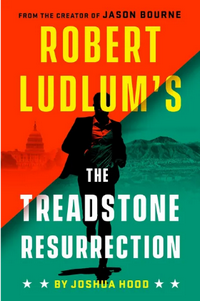
The Treadstone Resurrection by Joshua Hood: A Fast Popcorn Thriller Delivers the Action

The Treadstone Resurrection

The Treadstone Resurrection

by Joshua Hood
Series: Treadstone, #1

Hardcover, 375 pg.
G.P. Putnam’s Sons, 2020

Read: March 9, 2021

The bullet wound to his shoulder ached like someone was hammering nails through his skin.

Hayes had been here before, wounded, alone, and on the run. Wanting to quit, but unable to, thanks to the mind job the Treadstone docs had done on him. Survival: It was the only thing that mattered.

And revenge the voice reminded him.

What’s The Treadstone Resurrection About?

Not too long ago, Adam Hayes left the black-ops program, Treadstone, and invented a new life for himself as a contractor in Washington. It wasn’t an easy thing to do, but for several reasons, it was the thing he had to do.

But out of the blue, an old friend and colleague sends him an email containing four pictures. The subject line of the email reads “By the time you get this I’ll be dead.” Which, you’ve got to admit, will get your attention. Not only has his friend been killed, but a group of men have tried to kill Hayes twice (and almost succeeded both times).

It turns out that the men who killed his friend found the email and traveled from Venezuala to Washington to keep Hayes from doing anything with the information. It’s safe to say that they underestimated who they were going up against. It’s not every day that operatives find themselves trying to take out someone like a Treadstone assassin.

A combination of training, reflexes, and good friends make survival something he can accomplish. But revenge will take allies old and new; a trip to South America and back; and embracing everything he fought so hard to leave behind.

So, what did I think about The Treadstone Resurrection?

Okay, it takes very little time to have a pretty good idea what’s going to happen in this book—you know that Hayes is going to get his revenge and stop whatever plot his pal told him about. The questions are: how many and which of his allies will survive, how many bad guys will Hayes take out, and which one will be the hardest to kill?* It’s all about execution at this point.

* I was surprised by the answers to 1 and 3, by the way.

And Hood’s execution was pretty good. Without realizing it, I raced through this book in about half the time I’d scheduled for it (and I honestly didn’t realize how quickly I was reading). There’s not a wasted word, the prose is smooth, the action is fast, the pacing is tight, the ammo is plentiful—you just find the pages melting away.

The characterization is pretty thin—but it’s enough. You get enough of an idea about who Adam Hayes is and what makes him tick to work, but not much more. Ditto for the main bad guys. But that’s not what this book is about—it’s about escapist thrills. And it delivers that.

Suspend your disbelief (might be easier to just lock your disbelief in a small room somewhere), sit back, and enjoy.


3 Stars

2021 Library Love Challenge

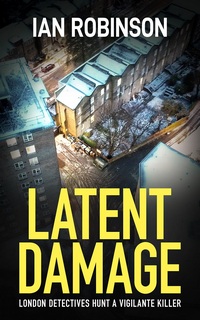
Latent Damage by Ian Robinson: A Compelling Series Debut

Latent Damage

Latent Damage

by Ian Robinson
Series: DI Nash and DS Moretti, #1

Kindle Edition, 199 pg.
The Book Folks, 2021

Read: February 16-17, 2021

What’s Latent Damage About?

Being awakened at 5 in the morning on a Saturday morning to come to a crime scene is not what DS Nick Moretti had planned. He’s got a vacation—sorry, holiday—coming up in a couple of weeks, and a homicide investigation could derail that. All part of the fun in the Met’s Homicide and Serious Crime Command.

When he arrives at the crime scene, Moretti discovers that the victim is a Muslim man whose throat was cut just across the street from his mosque. Automatically, the assumption is this is some sort of right-wing group acting out Anti-Muslim sentiment.

Moretti’s DI, Pip Nash spent some time in an undercover unit and still has a lot of contacts there—she’s able to use some of them to help once they get a direction to look in, but first they need to get a motive and some suspects.

While they’re still struggling to get some momentum for the investigation, another body shows up—with his throat cut in a similar fashion—this time, however, it’s an Anglican priest who was the victim.

Now, the team has two members of religious communities murdered in December—this is a PR nightmare in the making for the Met. Will these detectives and the rest of their team be able to stop the killer before another corpse shows up?

DI Nash and DS Moretti

DI Pip Nash is career-oriented, by the book type. She knows what she wants out of members of her team and isn’t afraid to demand it. Her background with the UC team adds a fun twist to things, and watching both the informants’ team and the UC team work with the homicide team is a nice change of pace—I’m used to seeing one of these entities at work, watching them cooperate (to whatever degree) is a great way to start a series.

DS Nick Moretti is less career-oriented (it seems), he’s definitely less by the book (he’s lucky if his alarm gets set in the morning). But he seems to do a good job of rallying the troops and putting the pieces of the murder together. His personal life is in an interesting state (although he has one, and it doesn’t seem that Nash does), and seems like it will prove fertile ground for drama in the future.

I’ve seen versions of both of these characters in books here and there—rarely as a team sharing the name of the series. I think watching their dynamic grow and develop over the next few books will prove just as interesting (maybe more so) than the crimes they investigate.

A Couple of Misgivings

So much of the dialogue in this book was awkward—some was even painful. The characters were trying to joke around or banter and it came off as stilted or excessively wordy—and it’s just off-putting. There were also a few instances of “I’m going to explain my job duties as I carry them out, despite the fact that everyone I’m talking to already knows this is my job.” The latter happens a lot with procedurals, so it’s easy to shrug off (even if these were some egregious examples). The former, however, is another matter. These are supposed to be friends or at least close colleagues, banter should feel natural. I’m going to chalk this up to Robigins just getting used to this world, and (if you count the works under his pen name) this is at least his fifth novel, and the first that I know of where practically every character wasn’t lying to everyone they talk to—it’s possible he doesn’t know how to write for people who aren’t deceiving.

So, what did I think about Latent Damage?

One thing that I’ve always really enjoyed about a good police procedural is the procedure. Watching a team go through the steps, grinding away to get the desired result is a pleasure. Sure, the procedure is dramatized, and usually only bears a passing resemblance to reality. But you can generally get a feel for what authors skew toward authenticity (few of these would be U.S.-based procedurals). And that’s pretty much what Robinson gives us—naturally, that’s helped by his years of actual experience. As such, there are investigative paths that go nowhere, and some that lead to unexpected places—and the amount of effort that goes into making small progress is a great realistic touch.

Yes, the ultimate reveals about the way the killer went about things seems a bit on the outlandish side*—but the way the team came up with his identity wasn’t. Nor was his motive, which seemed very grounded in reality.

* not unforgivably so, I’m not reading True Crime here, I don’t want a dramatized police blotter.

This is a solid, entertaining novel with a few stumbles along the way. But I’m recommending it, and am planning on coming back for at least a couple of more installments in this new series. Nash and Moretti are both the kind of characters you could build a series around, put them together and you’ve got a great foundation; the procedural element was well done, and the ending was as satisfying as you could ask for. Also, under his pen name, Robinson has crafted some of the best Crime Writing of the last few years—this series is going to improve, I know it (and even if it stayed at the same level, it’d still be worth coming back for).


3 Stars

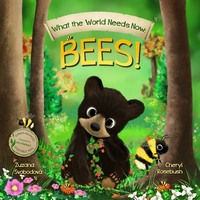
What the World Needs Now – Bees! by Cheryl Rosebush, Zuzana Svobodová: A Much-Needed Lesson for Kids About those Tiny Pollinators


What the World Needs Now - Bees!

What the World Needs Now – Bees!

by Cheryl Rosebush, Zuzana Svobodová (Illustrator)
Series: What the World Needs Now

PDF, 34 pg.
2021

Read: March 4, 2021


Was I tempted to just copy what I said about her earlier book, What the World Needs Now – Trees!, and give it a couple of small edits? Yes. And it would’ve been true, but that seems a little on the sketchy side.

What’s What the World Needs Now – Bees! About?

Melly, a young black bear, gives the reader a brief tour of her home area, with a particular focus on the fauna (particularly fruit) in the area, and then teaches the reader about the role that bees play in pollinating the plants. Then there’s a little discussion about what can cause problems among the bee population and some simple things that can be done—even by a young reader/pre-reader—to help.

A Moment of Pedantry

One of the supplemental information boxes includes this:

American black bears are medium-sized ursines that live in forests across North America. You can find them in Alaska, Canada, the United States of America, and even as far south as northern Mexico.

Alaska is part of the U.S. (as a state since 1959, and as a territory for more than 40 years prior to that).

Parents, teachers, caregivers can (and should) easily edit that sentence as they read it to a child, but it still rankles me.

How were the Illustrations?

Svobodová and her cartoonish-balanced with-accurate style are back, and I think better this time out. Melly and her flying friends are wonderfully rendered here.

The illustrations are full of small little touches to keep the attention of the youngest readers as they come back again and again. For example, there was a small chipmunk (I think—maybe a squirrel, I couldn’t see enough of it to tell) poking its head out from a hole in a tree on page 2. I’m not sure I can explain it, but that critter’s existence made the book for me—it’s a tiny little detail that it’d be easy to miss, but you know some eagle-eyed kid is going to focus on that while they’re listening (or, not listening, let’s be honest) to someone read the book to them. It’s a nice, subtle touch.

So, what did I think about What the World Needs Now – Bees!?

Like the art, I liked this a little more than its predecessor. I thought this was a bit more engaging and interesting. Again, it explained some of the current issues without being alarmist and did so in an attractive way, sure to keep the interest of the target audience.

I did wonder if there was a way to spend less time on pollination and more on the bees themselves (not that I have a problem with the pollination material, and it’s one of the bigger reasons we need bees—I just wanted more about the insects (I imagine many kids would agree with me—insects are almost always more interesting than anything else for every kid I’ve known)

Although, honestly, I think I had an easier time sleeping not knowing about the existence of Wallace’s giant bee. 🙂 Sure, they’re in Indonesia, but a bee with a 2.5″ wingspan? No thank you.

This is a good book and a good series, it’s well worth your time and effort.


3 Stars

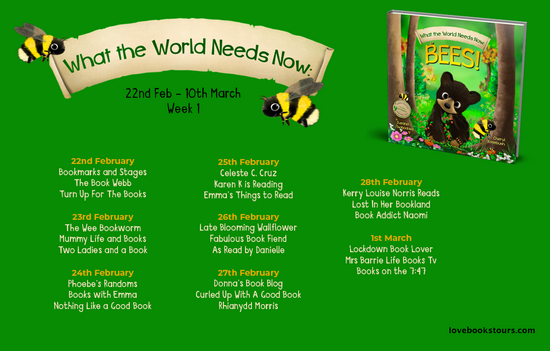
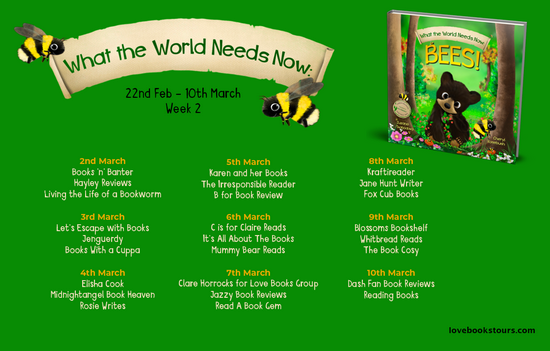
My thanks to Love Books Group for the invitation to participate in this tour and the materials (including the book) they provided.

Love Books Group Banner

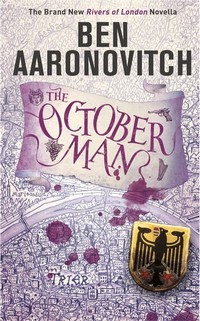
REPOST: The October Man by Ben Aaronovitch: Meeting Peter Grant’s German Counterpart

The last of the “I’m too tired to post about What Abigail Did That Summer” inspired reposts. I’m revisiting this one because it’s another Subterranean Press Rivers of London book that could inspire an entire non-Peter Grant-focused series.


The October ManThe October Man

by Ben Aaronovitch
Series: The Rivers of London, #7.5

Hardcover, 208 pg.
Subterranean Press, 2019
Read: June 19 – 21, 2019

So about the time that the one German Magic Practitioner hears that Nightengale has taken on an apprentice in Peter Grant, she decides that it’s time for Germany to do the same — keeping the playing field level, and all — she finds that apprentice in a second generation police officer, Tobias Winter. We meet Tobias a few years into things when he’s called away from leave time to investigate something that may be supernaturally related.

He recognizes vestigia right away — although I think the manner of death would be a pretty big tip off, no matter what. A mysterious fungal rot that covers him in precisely the way that fungus doesn’t cover people. I can’t do justice to how creepy it sounds when Tobias narrates it for us — you’ll have to read it.

Tobias is teamed up with Vanessa Sommer, a local police officer who knows the area, knows a bit about the particular fungus, and is super-curious about magic. Naturally, there’s an encounter with a River or two, and an interesting take on regional history — because this is a Rivers of London novel, what else are you going to get?

It’s a quick read with great story and the kind of people that Aaronovich fills his books with — these just happen to speak German and look at things in a different way from Peter and those he usually runs with — Tobias isn’t as funny as Peter, but he’s amusing to read and handles things in ways that Peter doesn’t. Still, at the end of the day, Peter’d be happy getting the same result (and probably would be jealous how little property damage that Tobias inflicts before wrapping up the investigation).

We’ve been given glimpses of what Nightengale and his fellows got involved in during WWII, but here we get more details — from the German point of view. It’s always been clear that happened wasn’t pretty — but I didn’t realize just how devastating it was until now. It’s also interesting to see just how significant it was for Nightengale to make Peter an apprentice. He essentially kicked off an international magical arms race (of sorts). Don’t get me wrong, the main point of this book is to be introduced to new characters, to see how magic is dealt with somewhere that isn’t London — but man, what we learn about things in London is fascinating.

I don’t know how this qualifies as a novella — even a “long novella,” as I’ve seen it marketed. I have several novels within reach of me right now that are smaller than this. It’s a semantic thing, but book nerds are supposed to be into words — so I don’t get it. Two hundred eight pages does not mean novella to me. If someone can explain it (or point to where Aaronovitch or Subterrerean Press explained it already), I’d appreciate it. Just to scratch that intellectual itch.

Aside from what to call this book, I enjoyed it. Tobias is an good character, he’s no Peter Grant, but he’s not supposed to be (in either Aaronovitch’s mind or the German practitioners’). I’d like he and Peter or he and the Nightengale to brush up against each other — or to have extended contact (like FBI Agent Reynolds and the Folly have had). If Aaronovitch decides on writing another novella/novel/adventure with him, I’d jump on it. But I’m not going to be waiting expectantly — if he doesn’t want to write another (or sales don’t justify it), I can be satisfied with just this much that we’ve been given here.

This’d be a great jumping on point for someone who wants to get a feel for the Rivers of London and Aaronovitch’s style. It’s also a great way for devoted fans of that series to dabble in something new, get a fresh perspective and realize that Peter Grant’s world is smaller than he realizes — while enjoying a creative and fun story.

—–

3 Stars

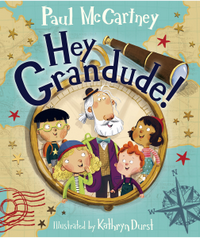
Hey Grandude! by Paul McCartney, Kathryn Durst (Illus.): 4 Grandkids and their Grandude Take a Magical Journey Away from Boredom and Rain

Hey Grandude!

Hey Grandude!

by Paul McCartney, Kathryn Durst (Illus.)

Hardcover, 32 pg.
Random House Books for Young Readers, 2019

Read: February 20, 2021
Grab a copy from your local indie bookstore!

What’s Hey Grandude! About?

Grandude and his four grandchildren (he calls them “chillers”) are spending a “gray and drizzly” day inside and “everybody was grumpy and too bored to be bothered. Grandude pulls out a stack of postcards and when he waves his magic compass over one, he and the chillers are transported to that location.

Each time they arrive somewhere (say, the beach), shortly after the five travelers start to have fun, some sort of danger/annoyance interferes (say, a multitude of crabs taking tiny bites, forcing them to run to another location for safety). They travel around from location to location, only staying for a couple of pages before being forced to leave one fun locale for another—until after a full and fun day, they go back home to rest.

How about the Illustrations?

Durst’s illustrations are easily the best part of the book—the character designs are great. The animals stay cute, even when they’re disrupting the children’s adventures. I’d have read a longer version of the book just to take a look at more of the illustrations. She makes everything happening—the story, the way it’s told—more fun for young and old.

So, what did I think about Hey Grandude!?

So, ultimately I judge these kinds of books for how fun they are for the adult reader to the target audience (if for no other reason than after four kids, I can’t predict what kids’ll like). On that mark, this doesn’t do that well. It’s not bad, but there’s no fun for the grown-up.

I think that an adult with the right attitude and enthusiasm can make this a fun story for kids—and the illustrations will go a long way to help.

But the episodes are a bit too brief to get into and the language isn’t all that clever (which is one of those things that bring the adults back). It’s a pretty straight-forward story, which is good enough, don’t get me wrong, but I don’t see an adult eager to read this again (unlike some others I could name along these lines).


3 Stars

2021 Library Love Challenge

This post contains an affiliate link. If you purchase from it, I will get a small commission at no additional cost to you. As always, opinions are my own.
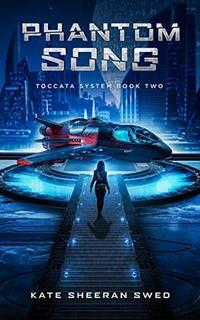
Phantom Song by Kate Sheeran Swed: Cyborgs, a Vigilante, and an Opera Star in a Solid Follow Up Novella

Phantom Song

Phantom Song

by Kate Sheeran Swed
Series: Toccata System, #2

Paperback, 179 pg.
Spells & Spaceships Press, 2019

Read: February 15, 2021
Grab a copy from your local indie bookstore!


Before I dig into this, here’s a warning—this is the second novella in a trilogy. I cannot talk about this in any understandable fashion without talking about a couple of the things from the first book. Most of what I want to say is no big deal, but one thing is a spoiler for an important revelation in the first book. If it were me, I wouldn’t mind knowing what I’m about to say when I started Parting Shadows Still if you’d prefer to be careful—you should just go read what I had to say about Parting Shadows and move on.

Are You Still Reading? Good.

So in Parting Shadows, we hear something about a vigilante running around Landry City—Astra speculates about that vigilante being one of the SATIS girls. Also, when Isabelle goes to the Opera in Landry City, something happens that rattles her—but other events are going on which makes that not such a big deal.

Phantom Song tells us about what happened at the Opera and about the vigilante. And that’s just the early chapters.

This book overlaps the events of Phantom Song but largely happens in its aftermath. We begin with a cyborg attacking a transport ship carrying a friend of Isabelle’s, Claire, and her mother. Claire is injured, but her mother gets her to safety. She wakes up as a cyborg herself—it was the only way to keep her alive. We later learn that it was SATIS who arranged for that. While she waits to see how raising an assassin goes, she has one constructed, too.

Claire spends her nights as that vigilante in order to find the cyborg that attacked her family (actually, she’s just hunting for the cyborg, the vigilante stuff is a side effect—but let’s not get into that). During the day, she’s the star of Landry City’s Opera.

Astra comes looking for the vigilante—to see if she’s right about the SATIS tie and to recruit some help in her efforts to stop Keyes. The two end up joining forces to take down the Cyborg first.

On Odd Prejudice

For a society so run by various AIs, there is a deep-seated prejudice against humans with cybernetic augmentation—no matter the reason for it. The prejudice is so strong that hospital staff—the same people that just saved Claire’s life through the implants—treat her with scorn because of them. It’s powerful but makes no sense.

Then again, no one said prejudices have to make sense. The ones that seem most prevalent in human society certainly don’t. So, spot on there.

Because of this hatred, Claire has to adopt a new identity and cover her cybernetic parts with long sleeves, dresses, and mask. Which works because of her new identity’s celebrity, but wouldn’t cut it in any other circumstance. That’s a nice touch—and the lengths Claire has to go to to protect herself paves the way for a very successful way to protect her double life.

So, what did I think about Phantom Song?

I know even less about Gaston Leroux’s Phantom of the Opera than I do, so I’m not going to pretend to be able to talk about this take on Phantom.

This is a short enough work—and so easy to spoil its own events, much less those of the prior book, that I feel like I’ve been unusually shallow talking about it. But that’s all you’re getting from me.

After doing all the heavy lifting in the first novella—setting up the rules of the world, the way AIs work, SATIS and her girls, and so on, Swed can just play in this novella. The story is more developed, she can sink deeper into the characters (having characters who have had a natural emotional development also helps), she can involve more characters and plotlines. In short, she can do more. Which leads to this being a more enjoyable read.

I don’t think this works that well as an entry point into the series—it’s a trilogy, that makes sense. But this is a great way to follow up on Parting Shadows and sets the stage for a big conclusion in Prodigal Storm. Which is exactly what you want in the middle book of a trilogy.


3 Stars

This post contains an affiliate link. If you purchase from it, I will get a small commission at no additional cost to you. As always, opinions are my own.
Page 18 of 55

Powered by WordPress & Theme by Anders Norén