Tag: 3 Stars Page 21 of 55

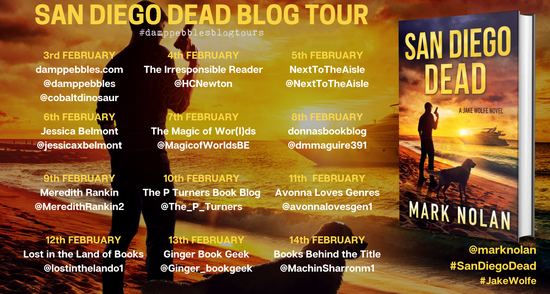
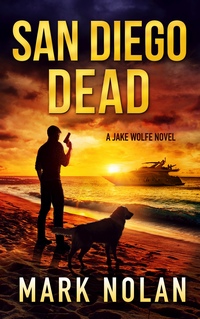
San Diego Dead by Mark Nolan: A Modern-Day Privateer (and his dog) takes on a Powerful Drug Cartel


San Diego Dead

San Diego Dead

by Mark Nolan
Series: Jake Wolfe, #4

Kindle Edition, 348 pg.
2019

Read: January 30-February 3, 2020


Jake Wolfe is a former photojournalist, ex-Marine, ex-CIA asset, lawyer, Mafia “Made Man” and modern-day privateer. He recently saved the life of the new First Lady (before the election), and is on a first-name basis with her (and her husband). Men (who don’t want to kill him) admire him, women (who don’t want to kill him) swoon over him. But for Wolfe, none of that matters, as much as spending time with Cody, who is another Marine vet. Cody shares in most of Wolfe’s accomplishments—and gets the same reaction from men and women. The significant difference between the two is that Wolfe comes from Irish and Italian roots, and Cody is a yellow Labrador and Golden Retriever mix.

Together these two make a seemingly unstoppable force for truth, justice, and the American way. Apart they are capable but diminished, distracted, and less emotionally whole. Wolfe considers Cody a partner and makes it clear to any and all that they’re a package deal.

While on assignment for the Secret Service, the pair assassinates a man who provides boats for a Mexican Drug Cartel to smuggle drugs into the U.S. Around the same time a dear friend and fellow Vet crosses the same cartel, putting both men (and Jake’s girlfriend) in the cross-hairs pg of the leader of that cartel.

The cartel cuts a deadly and destructive swath from Mexico to L.A. attempting to eliminate these two, pushing the pair until they retaliate.

Most of the book is told from Wolfe’s point-of-view, with dips into the POV of his girlfriend or Cartel members. There are a couple of noteworthy sections told from Cody’s perspective—he’s closer to Crais’ Maggie than Quinn’s Chet in these, but he’s more thoughtful (and more human thinking) than Maggie. I wish we had a few more segments from Cody’s POV.

There are two paragraphs in which a ghost appears and saves the day. These two paragraphs have had me thinking far too much about them in contrast to the rest of the novel. They’re proverbial sore thumbs sticking out from the rest—but they also worked better than you’d think.

Recently, listening to interviews with Lee Goldberg, I was reminded of a genre that’s not really out anymore (and I’d totally forgotten about)—”Men of Action” or “Men’s Adventure.” These used to be at grocery stores, convenience stores and the like offering easy-to-read adventures featuring manly men doing manly (frequently super-patriotic) deeds, and deadly (and incredibly attractive) women. Years ago, Goldberg wrote a few of this type under the pen name Ian Ludlow—and now Goldberg’s protagonist of the same name writes that kind of book. See also: Mack Bolan, the Executioner; Remo Williams; and the like. Thanks to that reminder, I was able to see San Diego Dead for the return to that kind of story-telling and enjoy it for what it is. If not for that reminder, I’d have been annoyed, bothered, underwhelmed by the book. But realizing the inherent goals of this kind of writing, I was able to ignore that annoyance and channel it into reuniting such entertaining tropes/themes for contemporary audiences. It’s silly, cheesy fun—which is all it tries to be.

Would much of this work better if you’d read the previous novels? Probably. Does it work fine as a stand-alone? Yes. I’m not going to say that this is for everyone—it’s not (but what is?). If you (or someone you know) need a break from intense, serious, deliberate thrillers and could use solid action that places the emphasis on entertainment factor over all other considerations, give yourself a treat and check out Mark Nolan’s Jake Wolfe.


3 Stars

My thanks to damppebbles blog tours for the invitation to participate in this tour and the materials (including a copy of the novel) they provided.

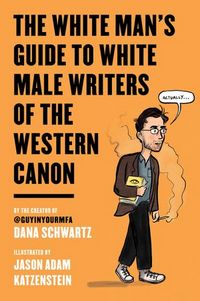
The White Man’s Guide to White Male Writers of the Western Canon by Dana Schwartz, Jason Adam Katzenstein (Illustrator): A Guide to White Male Writers for White Male Writers (or those who want to be one)

The White Man's Guide to White Male Writers of the Western Canon

The White Man’s Guide to White Male Writers of the Western Canon

by Dana Schwartz, Jason Adam Katzenstein (Illustrator)

Paperback, 241 pg.
Harper Perennial, 2019

Read: January 7-30, 2020
Grab a copy from your local indie bookstore (I did)!

If you want to be a writer, you should attend an Ivy League university, where you roommate happens to be the nephew of a senior editor at Knopf, and you should go on to get a summer internship in New York City. This internship will not be paid, and unfortunately you will have to suffer the indignity of living in an apartment that your parents pay for. But soon, your struggles will pay off, and you will be accepted at one of the nation’s most prestigious MFA programs.

If you can’t do all of that, I hate to say it, but it sounds like you won’t have the commitment and discipline necessary to make it as a writer.

Nice guy, the narrator of this book, right? I didn’t know this when I picked it up, but this is a book inspired by a parody Twitter account Schwartz runs @GuyInYourMFA, I wish I knew that going in—it might have helped me appreciate the book more. Probably not, really, the book speaks for itself, but it the humor in it screams Twitter. Anyway, that account is the voice behind this book.

This is a guide to:

teach you everything you need to know to become the chain-smokin, coffee-drinking, Proust-quoting, award-winning writer you’ve always known you should be…

Not a white man? Not to worry. The White Male Writer isn’t a hard-and-fast demographic; it’s a state of mind…

There’s a brief discussion of topics like how to dress like a writer, what the Western Canon is, how to identify “Chick Lit” (the last identifier is “By Jennifer Weiner”, which is a pretty good clue, you have to admit), and ends with a nice reading list of White Male Writers.

The heart of the book consists of thirty-two 6(+/-) page profiles of the greatest White Male Writers that make up the Western Canon. These consist of a brief biography, a discussion of some major works (“Works You Need to Know”), and some lessons from the work or life of the Writer that should be applied by the reader in their effort to become a Writer (drink recipes, how to respond to a rejection letter, how to write a love letter like James Joyce, etc.).

The writers are male, white, and largely published in the Twentieth Century (Shakespeare, Milton, Samuel Johnson, Goethe, Lord Byron, Dickens, Thoreau, and Tolstoy would be the exceptions). I can virtually guarantee that you’ve heard to them all—not that you’ve read them all, however. And in between the snark and intentionally sexist lessons, there’s some decent information to be gleaned. That isn’t the point of the book, the point is the snark, sexism, and general parodying the idea of the young, pretentious, white male would-be literary genius.

Every chapter includes at least 3 lines that should bring some level of amusement to the reader (some will have many more)—which is a pretty decent and consistent number. Sadly, all the jokes are around a theme, and so can get repetitive. If you don’t read cover to cover, if you only read a 2-3 chapters at a time, and bear in mind that all the jokes will be similar, you can have a lot of fun with this book. If you neglect any of that, it can get tiresome. Once I figured that out (it didn’t take long, thankfully, before I recognized the symptoms), I had a lot of fun with this book.

The illustrations are wonderful—each chapter (except the Pynchon chapter) features a great caricature of the artist, and a handful of other illustrations that do a wonderful job of augmenting the text.

This is not the subtlest of books I’ll read this year (it doesn’t try), but it is insightful, amusing and (accidentally?) informative. All of which makes it a fun, book-nerdy, read. Give it a shot, you’ll probably be glad you did.


3 Stars

This post contains an affiliate link. If you purchase from it, I will get a small commission at no additional cost to you. As always, opinions are my own.

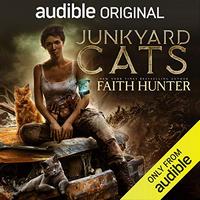
Junkyard Cats by Faith Hunter, Khristine Hvam: Hunter tries SF with Predictably Entertaining Results

Junkyard Cats

Junkyard Cats

by Faith Hunter, Khristine Hvam (Narrator)
Series: Shining Smith, #1

Audiobook, 5 hrs., 2 min.
Audible Original, 2020

Read: January 3-6, 2020


Faith Hunter dips her toe into SF with this Audible Original, and leaves quite an impression. The distinctive Hutner-flair is there, with science-y stuff replacing the magic stuff. It works pretty well.

Shining Smith is a veteran, of a handful of things, really. This takes place in the near-future, following a World War and another one (called the Final War in an act of aspirational nomenclature, I assume). She lives in/runs a scrapyard left to her by her father with a few cats and another vet recovering from trauma.

Shining deals on both sides of the law through intermediaries—no one knows her or who she is beyond those. It’s a perfectly safe environment.

Not a nice one, not a fulfilling one, but a safe one. And in her world, that’s asking a lot.

Until one day, one of her intermediaries shows up at her scrapyard dead. And then a very strong suspect for killing him shows up. And things get worse from there.

The action scenes are cool—filled with all the kinds of things that the best SF action scenes are filled with. The future-tech is cool, completely foreign to reality, yet it seems like the kind of thing that would emerge from our current tech.

I liked Shining, we don’t get to know her much. She’s such the riddle, wrapped in a mystery, inside an enigma, that it’s hard to get a real handle on her—but we get enough to root for her and want to know her better. Her compatriots are intriguing—as well-rounded as characters can get in this limited space where everyone is lying to each other about who and what they are.

There were a couple of SF-brand/tech names (like The Tyrell Corporation or tricorder) that I really couldn’t understand what Hvam was saying. Against the spirit of an “Audible Original,” but I’d like to read this so I could get a handle on those things. Which isn’t saying that Hvam didn’t do a great job—as per usual, her narration is top-notch.

My only complaint (outside of the tech words I couldn’t decipher), is the brevity, we get the good story, but we don’t get any depth—it’s like it’s designed to make you want more. Hey, wait a second . . .

A fun action-packed story that’ll whet your appetite for more. This is a glimpse into a cool world and I love what Hunter has created here. Yeah, I’m only going with 3 Stars for this. There’s a lot of potential in this world and with these characters—if Hunter returns to this? I can easily see this becoming a favorite series. It’s fine as a stand-alone, and it doesn’t demand a series/sequel but I think to really appreciate everything she set-up here, we need a little more. I’m not sure that makes sense, but…it’s what I can do.


3 Stars

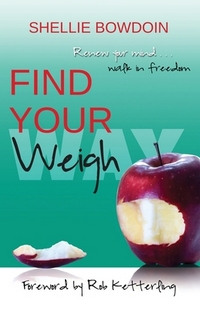
Find Your Weigh by Shellie Bowdoin: A No-Nonsense, but not overly-demanding, approach to Eating right/Weight loss

Find Your Weigh

Find Your Weigh: Renew Your Mind & Walk In Freedom

by Shellie Bowdoin

eARC, 239 pg.
2020

Read: December 21-23, 2019

Grab a copy from your local indie bookstore!

It’s that time when people are hitting the gym, starting diets, and doing all the sorts of things you do at the beginning of the year to “improve” themselves (seriously, having a hard time getting a parking spot at the gym). So it’s also the time for books on exercise, eating well, wellness in general to come out, enter Find Your Weigh. Bowdoin combines sage advice about eating/food/etc. with spiritual guidance.

When it comes to the Food aspects of the book, this is really good. Bowdain doesn’t try to impress with a lot of statistics, research articles and so on. Instead, she talks about her own experiences and then applies what she learned from them to provide examples for the book. Which isn’t to say that she didn’t do her homework, it’s there, but she doesn’t shove it in the reader’s face.

She covers things like honest expectations, mental blocks, habit formation, and the way to approach it all wisely. She does it in a friendly outgoing voice. She’s full of encouragement. She’s got plenty of tips and tricks to help you think about your weight and the effective ways to deal with it. There’s just so much here that is commendable that it’s hard to get into it all without making anyone getting the book on their own moot.

I’ll admit, if I’d known Bowdoin was going to try to bring the Bible into this, I’d have passed on the book. I have little patience for “Christian” diet books. It’s not that I don’t think the Bible is silent on health/diet/etc., but you’re not going to get much more than a pamphlet out of it, unless you’re going to trace themes about feasting, celebration, prayer, fasting, contentment, and so on then apply them via good and necessary consequence.

But, Bowdoin did bring the Bible up, so I feel compelled to address it. If she used the Scriptures correctly once, I didn’t notice it. And I’m not talking about holding/teaching a disputed idea from an unclear text. I’m talking about wholescale violence to the text and context she cites from. For example, Romans 7 is not about “learned helplessness” or the struggle against impulses to eat less-than-healthy food, it’s about the mortifying of sinful flesh; the discipline in Hebrews 12 is not self-discipline, but correction from our Heavenly Father; and so on.

If you ignore the Biblical citations/applications (and it’s easy to do, I wish I had), this is a really good book. It’s full of the voice of experience, compassion, and common sense. Written in a way that will likely draw you in, and help you to see how you can eat/act healthier. At the very least, it’s worth a glance (and probably more). This isn’t a once-sized-fits-all approach, but a toolbox that will have a lot of what you need to deal with the problem at hand.

Disclaimer: I received a copy of this book from the author in exchange for this post and my honest opinion.


3 Stars

This post contains an affiliate link. If you purchase from it, I will get a small commission at no additional cost to you. As always, opinions are my own.

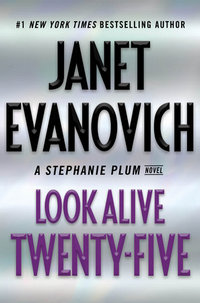
Look Alive Twenty-Five by Janet Evanovich: A local rock star with ambition, a shoplifter, and a mysterious deli fill Stephanie Plum’s 25th novel.

Look Alive Twenty-Five

Look Alive Twenty-Five

by Janet Evanovich
Series: Stephanie Plum, #25

Mass Market Paperback, 306 pg.
G.P. Putnam’s Sons, 2019

Read: December 25, 2019


Someone that Vincent Plum Bail Bonds had put up the bail for skipped town, and he’d put up his deli as collateral. Vincent’s father-in-law (the owner of the Bail Bonds) has decided he wants to diversify, so he’s hanging onto it. The catch is, the last several managers have disappeared while working. So Vinnie’s decided that 1. Stephanie is the new manager; 2. She needs to find out what’s going on to get the other manager’s kidnapped/killed/whatever; 3. She can take care of her bond enforcement job during the off hours.

That’s pretty much all you need to know. Stephanie’s running a strange little deli with Lulu as the assistant manager/sandwich guru. There are three other employees there who really know what they’re doing (mostly doing drugs while toiling away at a minimum wage job). Hijinks ensue—her car is stolen, she tracks down a couple of skips, she looks into the disappearances (with help from Joe Morelli and Ranger), and things get weird at the deli (particularly due to Lulu, who becomes a social media sensation of the moment).

I must say that Stephanie seems more competent at this gig than a lot of the other jobs she’s held over the course of this series—either in an undercover assignment or because she was trying to do something other than bond enforcement. If it wasn’t for the distraction of the investigation (and Lulu), she probably could’ve made a decent go of it and changed the series for good. It was pleasant to see her not horrible at something.

We get a little bit of another of Stephanie’s supernatural acquaintances, Gerwulf Grimoire (Wulf), here, but in such a small amount that I’m really not sure why Evanovich bothered. That said, if she was determined to use Wulf, this is precisely as much as she should.

I still don’t get what Stephanie sees in Joe, or what Ranger sees in Stephanie, or why Joe or Ranger let this stupid triangle continue. But I’m at peace with that—I’ll never get it, and Evanovich will never change it, why fight it?

If this had been part of any other story, I’d say the solution stretches credulity too far. But as it’s a Plum novel, I really don’t think I can. Honestly, it was only as I was gathering wool a couple of days later that I gave it any thought.

One last thing: I’d read the blurb for Twisted Twenty-Six a few weeks earlier, and was looking forward to reading it more than I have since the mid-teens (I’m guessing). So, it turns out that I was already primed for the near cliff-hanger last couple of pages. I don’t feel too bad saying that because it really doesn’t have much to do with this novel (although events in it do tie-in), but it’s something I have to talk about because I don’t remember Evanovich doing this in the previous twenty-four novels.* Evanovich doing anything new at this point is something to note and celebrate.

* Feel free to correct me in the comments.

This wasn’t anything special, but there wasn’t anything annoying about it, either. Which sets it apart from the last handful. Evanovich ticked all the boxes she needed to; got Stephanie into a new situation and had her handle it in a non-disastrous way; and capped the book off with something new. I can’t imagine Evanovich will return to the comedic heights of the early series—and I imagine even less that she feels any compulsion to do so. I just hope for a reliable level of moderate entertainment, and that’s what she delivered. It’s a decent time, but if you’re new to Plum—go back to One for the Money and immerse yourself in the first dozen or so of these before taking the plunge into the higher numbers.


3 Stars

2019 Cloak & Dagger Challenge

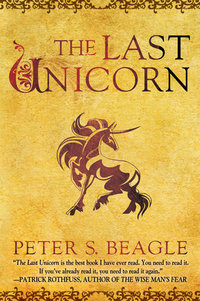
The Last Unicorn by Peter S. Beagle: A Beautifully Written Fairy Tale that Really Didn’t Do Anything For Me

The Last Unicorn

The Last Unicorn

by Peter S. Beagle

Paperback, 294 pg.
ROC, 1991 (originally published 1968)

Read: December 13-18, 2019

Grab a copy from your local indie bookstore!

The true secret in being a hero lies in knowing the order of things. The swineherd cannot already be wed to the princess when he embarks on his adventures, nor can the boy knock on the witch’s door when she is already away on vacation. The wicked uncle cannot be found out and foiled before he does something wicked. Things must happen when it is time for them to happen. Quests may not simply be abandoned; prophecies may not be left to rot like unpicked fruit; unicorns may go unrescued for a very long time, but not forever. The happy ending cannot come in the middle of the story.

This is the tale of a Unicorn—quite possibly the last in the world (hence the title). On some random day, she discovers that she might be the last of her kind, and so leaves her forest to go throughout the world, searching for others of her kind.

She falls into some trouble after a while, and is helped out by a magician she comes across who ends up traveling with her, as well as a woman associated with a band of outlaws who is looking to get away from them. They travel until they find the cause of the disappearing unicorns and seek to return them to the world.

This is some of the best prose that I read this year. The language is just beautiful. There were several times I had to stop and reread a sentence/paragraph/passage three or four times because it was so good. More than once, I had to force myself to move on or I’d never have made any progress in the book.

That little quotation at the beginning is just a taste of the meta-commentary on fairy tales (specifically) or story (in general) scattered throughout the book. I laughed a lot at some of them, and thought all were very thought-provoking. It’s like a more ambitious <b>The Princess Bride</b> in this regard (probably others, too, now that I say it, but I don’t have time to tease this idea out).

I dug the characters—Schmendrick the Magician (the world’s worst) was wonderful. Molly Grue is an inspired creation, and the kind of character more people need to write. And, of course, the Unicorn herself…

There were several scenes that were just delightful—unique, entertaining. When not unique, Beagle is playing with, twisting, riffing on fantasy/fairy tale mainstays.

But when you put them all together . . . I just didn’t see the point. A combination of these characters, these scenes, and the meta material alone should’ve been a home-run for me. Throw in that language? I should be making plans to re-read it regularly. But somehow, the whole ended up less than the sum of its parts. I just didn’t care about any of it, it never connected to me. I spent so much time trying to figure out why that was the case—and I got nowhere. I’m going to have to try in a couple of years again, see if it was just bad timing or something.

This is one of those books that everyone loves—and as far as I can tell, there’s plenty of reason to love it. Sadly, I didn’t. If you haven’t read this yet, you probably should—I just hope it works out better for you.


3 Stars

✔ A classic you’ve been meaning to get to

This post contains an affiliate link. If you purchase from it, I will get a small commission at no additional cost to you. As always, opinions are my own.

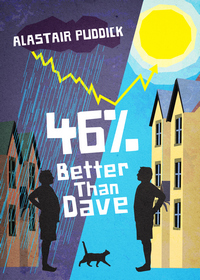
46 percent Better Than Dave by Alastair Puddick: Dave meets a better version of himself

46% Better Than Dave

46% Better Than Dave

by Alastair Puddick

Kindle Edition, 245 pg.
Raven Crest Books, 2019

Read: December 14-17, 2019

No matter which way I looked at it, I was now inexplicably living next door to another version of myself. Another Dave Brookman. A richer Dave Brookman. A more successful Dave Brookman. And though I didn’t like to admit it, he was clearly also a slimmer, fitter, more handsome Dave Brookman. It was as if he was better in just about every single way. And, whether it was his intention or not, he was making the old Dave Brookman look bad. Really bad.

To say that our narrator, Dave Brookman, is surprised to find out his new neighbor shares a name with him. He shortly learns that they grew up near each other and are in the same industry. The coincidences are mindblowing. But as our narrator starts comparing the two, he keeps thinking that the “new” Dave has it better—from a literal ex-model wife to a flashy car, and all points in between.

But just how much better is “new” Dave? “Old” Dave puts together a spreadsheet assigning numerical values to various attributes/possessions and ends up with the titular value:

I sighed loudly. Of course, I’d expected there to be a difference. I knew he would come out on top. But 46%? That was nearly 50%. And 50% was half. So New Dave was nearly a whole half better than me. How could this be? What the hell had I done with my life? Had I wasted the opportunities we apparently both shared, as New Dave took full advantage of them? What could my life have been if I’d made different decisions along the way? Would I have my own company and a flash, expensive car? A house with a new extension and swimming pool? Would I be married to a former model, and have robotically clever children?

Dave spends weeks obsessing over this idea and dives into a (very one-sided) competition to become the “better” Dave. Which is ridiculous, preposterous and unsuccessful. And that’s before his wife finds the spreadsheet. After that things go from bad to worse, and then worse. Until they don’t.

It’s a great concept, it hooks you right away. But it’s what happens after the hook that’s vital—how successful is that? Well, that depends on how you read the book.

If you are looking for any real degree of realism, it’s just too hard to swallow. But if you look at “old” Dave as a character in a comedy—he’s a lot of fun. He’s really a decent, successful guy with a good family. At least until his neighbesis (his word) moves in and he becomes an obsessive, jealous mess. In his less-obsessive moments, he seems like a decent, likable guy and it’s these moments that keep you reading. In his most-obsessive moments, he makes it hard to stick with. It’s quite the balancing act that Puddick tries here, and generally, he succeeds.

Everyone else in the novel—”new” Dave and his family, Dave’s family and co-workers—all seem perfectly normal and well-adjusted. Their reactions to him are perfectly rational and understanding, too. This both highlights his irrational behavior and makes everyone else the “straight man” to “old” Dave. Without that, I think the whole thing would’ve collapsed.

Puddick has given his readers a sweet and funny novel about obsession, jealousy, and what happens to someone when they lose sight of what’s important in life. If you’re looking for a fast and fun read, you’d do well to give this a shot.


3 Stars


My thanks to Love Books Group for the invitation to participate in this tour and the materials (including the book) they provided.

Love Books Group

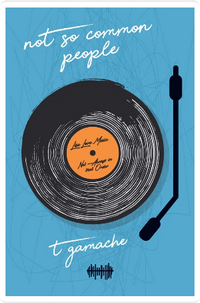
Not-So-Common People by T Gamache: Family disasters bring out the best in this protagonist

Not-So-Common People

Not-So-Common People

by T Gamache

Paperback, 209 pg.
Indie Owl Press, 2019

Read: November 27-28, 2019

Grab a copy from your local indie bookstore!

” . . . I don’t want to surprise you.”

Surprise me, hell I’m Captain Blindside lately! Every time I turn around one of my siblings is tossing a proverbial bombshell in my direction. I’m barely keeping this crap together, Calvin! When did it become a good idea to throw your emotions at Nathan? I’ll tell you when, NEVER! I’m the introverted, quiet, keep to myself guy in the family. Not the “hey, here’s our crazy laundry” guy!

Nate is a self-professed music geek/snob. That’s his primary description. He’s also a hipster barista with control issues (which he keeps hidden most of the time). He’s around thirty now and should really be making an effort to do something with his life/college degree rather than work part-time at a coffee house. This novel isn’t so much a coming-of-age novel about Nate, as it is that external forces impose age/maturity upon Nate. Which is a great and novel way to approach this kind of character.

I was trying to come up with something to say about the other characters in the novel, and realized that I really didn’t get enough of any of them, except maybe Rick and his parents. I do think they’re probably well-developed and three-dimensional, but there’s so many of them (including people who are maybe around for one scene—like various co-workers) that they can come across as flat and two-dimensional just because we don’t get to spend that much time with them.

For starters, we’ve got Claire, the BFF and roommate—always good for emotional support and sage advice; Frank, his other roommate; Gary, Frank’s fiancé; and Rick, the proprietor of Nate’s record shop—a frenemy of sorts. There’s Nate’s parents and then his siblings—Graham, the Type-A businessman; Calvin, the Lutheran minister; and Marcie, a housewife and mother. Last, but not least, we have the object of his affections, Anne, a little quirky, a little geeky, and driven to succeed.

In the weeks following a fateful Thanksgiving, each of his siblings goes through a major life-changing event (or series of events). And for reasons that he cannot understand, they turn to Nate. Not only do they turn to him, he steps up to help (which might surprise him more than the fact that they came to him for support). Sure, he doesn’t always know what to do for them (this is where Claire and Frank come in), but he’s willing.

In the middle of all this induced maturing, Nate meets Anne. Who is charming, attractive, and funny. Nate falls for her—probably in a ridiculous way—in a time when that’s the last thing he has time for.

While his siblings are reeling and he’s twitterpated, Nate realizes that his life needs some less dramatic life-changing, too.

We really need more time with Anne—it’s hard to buy how involved he gets given their time together (but, it’s cute and you do want to root for them to have a Happily Ever After). And it would be good for us to get more time with the siblings and roommates, too—they all need a little more space.

I have issues with Calvin being a Lutheran minister. If he was some sort of Methodist or non-denominational minister, I’d buy it. But he doesn’t seem that Lutheran to me (he’s definitely not a Missouri Synod or Wisconsin Evangelical Lutheran; and he’s not believable as a ELCA minister, either—but that’s closer). I definitely am uncomfortable with the way his religious activities are portrayed, but I can understand why an author would characterize them in the way that Gamache does.

This is a sweet story, a touching story, with a very likable protagonist (even if he wouldn’t believe me saying that), and you can’t help but want to cheer all these characters through their lives being upturned. If my biggest complaint is that we don’t spend enough time with the characters, I think that’s a pretty decent compliment. Recommended.

Disclaimer: I received a copy of this book from the author in exchange for my honest opinion. I appreciate getting the book, but not so much that I altered my opinion.


3 Stars

This post contains an affiliate link. If you purchase from it, I will get a small commission at no additional cost to you. As always, opinions are my own.

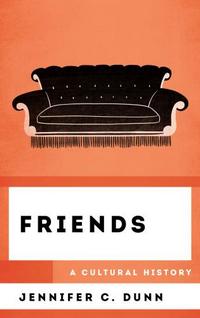
Friends: A Cultural History by Jennifer C. Dunn: The One Where I Liked 2/3 of a Book.

Friends A Cultural History

Friends: A Cultural History

by Jennifer C. Dunn
Series: The Cultural History of Television

eARC, 288 pg.
Rowman & Littlefield Publishers, 2019

Read: November 15-December 3, 2019

Grab a copy from your local indie bookstore!


I’ve only read one other book in this series (Gilmore Girls: A Cultural History), which led to me expecting a few things from this book—most of which I didn’t get (which is both a positive and a negative comment). I’m going to try not to spend too much time comparing the two books because it seems unfair—but it’s inevitable, so . . .

When I requested that Gilmore Girls book on Netgalley, I noticed the publisher had a similar title about Friends available—and who doesn’t like Friends? So, I requested that one, too—really diving into The Cultural History of Television. Granted, Dunn has more episodes to work from, but she does a better job of getting examples from all over the series—using different episodes/lines/characters to make related points rather than grabbing the same episode/line/character over and over and over again. One of the biggest strengths of the book is the depth of examples she musters for almost every point, reading this book is almost like binge-watching the entire series.

She begins with a chapter describing the success of the show, its place in the history of sitcoms—building on what had come before and shaping its successors. Then she moves on to looking at the impact of the show, its characters, and its actors on mainstream American pop culture—I do think she tried to make a little more hay than was warranted with some of the intertextual links she made in this chapter, but it came across as a quirk rather than a flaw. The third chapter discussed the way that the show replaced a biological family for a found family of friends as the core relationships for the characters. I really appreciated this section of the book and it gave me high hopes for the rest.

The third section of the book explores the legacy of Friends on American—and global—pop culture, as seen in fashion, music, memes, the way we talk (e.g., try to tell someone to pivot without invoking Ross trying to get his couch up the stairs), and the actors’ future roles and shows. This part wasn’t as strong as the first part of the book, but it was entertaining and an interesting way to think about the show. Dunn follows that with her list of the best 25 episodes, including an episode synopsis and a few sentences describing why that episode made the list. Fans will quibble over this list (for example, I think she got 15-18 of them right, and I can’t understand why she picked the others)—but I can’t imagine any fan not enjoying reading it.

The thing that makes me reticent to heartily recommend the book is the second section of the book, which includes the chapters: “Friends Happy Not Doing Too Much,” “Friends Happy Not Thinking Too Much,” “Thin, White, Upper-Middle-Class Friends,” and “Stereotypes, Sexuality, and Friend-ly Tensions.” Dunn states that this section “interrogates cultural identities represented on Friends.” There is a lot of interesting material presented in this section—whether you ultimately agree with her analysis or not—and most of it is well-presented. However, it’s a pretty problematic section. First, it assumes the readers will share her Progressive views (or at least hold ones close to hers) and that 2019 Progressive positions ought to provide the basis for evaluating the shows portrayal of characters/issues/themes, rather than the standards of the time the episodes were produced.

I’m not going to get into a point-by-point evaluation of these chapters, that’s not what this post is about, I’m just looking at this broadly. For example, Dunn begins her chapter on the anti-intellectual bent of some of the humor by pointing to the re-election of George W. Bush as president as one bit of evidence to the rise of anti-intellectualism in the era. I’m not sure I see the wisdom in insulting conservatives, Republicans, or moderates who voted for Bush and who enjoy discussions of a beloved sitcom and might be reading the book.

Yes, the writers couldn’t have made many of the jokes they did if the show was being produced now—but I’m not convinced that means they shouldn’t have then. At one point (at least) Dunn does concede that 2019 standards are different from those of that era, but it doesn’t stop her from criticizing aspects of the show for being products of their time. It seemed to me that at any point where she judged the show’s treatment of something in these chapters, she condemned it rather than look for an opportunity to be charitable. Now, there is a certain amount of intellectual stimulation and pleasure to be found in arguing with a book—and my notes indicate that I did a lot of that during these chapters—but at a certain point I started wondering why someone who clearly disapproved of so much of the show would watch it as much as she clearly has. To me, that detracts from the overall experience.

I’m not trying to suggest that Dunn’s criticisms are baseless, or that I disagree with everything she said in this section. I just think she comes across as unexpectedly antagonistic to the show and doesn’t do herself any favors with many of her readers.

It’s annoying that I had to spend that much time attempting to explain my problems with that section—it’s dicey so I tried to do a good job of that, but now that’s taken the majority of my space here. By importance, it should be about 1/3 of what I say about the book (maybe 40%). But to expand my comments on the rest would render this too long to read (and write, honestly).

I had one other stumbling block with the book—but this is more stylistic and is easily forgettable. You’ve probably read or heard the line: “Explaining a joke is like dissecting a frog. You understand it better but the frog dies in the process.” I’ve seen it variously attributed, but E. B. White seems the most likely candidate. It’s a trite observation by now, but mostly because it’s true. Dunn explains too many jokes for little profit—generally, they’re jokes that don’t require an explanation in the first place (especially for fans who know the joke, but I think it’s true regardless) and her explanations frequently border on condescending. White (or Twain or whoever) would probably have been willing to say “Explaining a joke or a meme” had they been aware of the concept. Neither one of these things is a major issue, but it grates on the nerves and makes the experience less positive

Ultimately, while I enjoyed the Gilmore Girls entry more, I think this book makes the series seem more promising and will likely lead me to read more of it. On the whole, this was a very enjoyable read and die-hard fans will easily dive into most of the book and relish the experience. And even on those points, a reader will disagree with her on, they’ll enjoy ransacking their memories for counter-arguments. Really, this is an excuse to think deeply about a favorite show for however long it takes you to read 300 pages, not much wrong with that.


3 Stars
Disclaimer: I received this eARC from Rowman & Littlefield Publishers via NetGalley in exchange for this post — thanks to both for this opportunity.

This post contains an affiliate link. If you purchase from it, I will get a small commission at no additional cost to you. As always, opinions are my own.

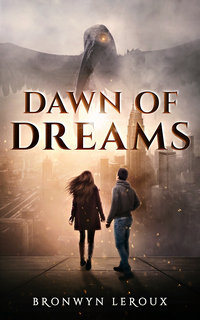
Dawn of Dreams by Bronwyn Leroux: Preventing an Apocalypse in this Futuristic Fantasy

Dawn of Dreams

Dawn of Dreams

by Bronwyn Leroux
Series: Destiny, #1

Kindle Edition, 298 pg.
2017

Read: November 22-25, 2019


Jaden is out hiking with his friends on a mountain near their home during a school break. Suddenly, Jaden sees a large, monstrous, hard-to-describe bird-like creature. The rest of the group seems oblivious, and Jaden begins spending a lot of effort to convince himself he’s seeing things. Even taking bonus trips to the same point, and trying to record his sightings. The videos show nothing, but the way they show nothing convinces Jaden that he’s on to something.

Which really isn’t that reassuring. Why can’t anyone else see this beast? Why can’t the video show it?

Shortly after this, he meets Kayla, a new girl in the neighborhood. They’re hanging out at a park when the creature shows up, and not only can she see it—she’s been having similar experiences to Jaden. It’s somewhat reassuring that there’s someone else out there seeing it—but the questions keep piling up

It’s not long before they begin to see there are other similarities in their lives—clearly, there’s some sort of connection that goes back generations in both of their families. Throw in some artifacts—and other creatures that only Kayla and Jaden can see, and the questions pile up faster than the answers can keep pace with.

In a matter of days, their lives are no longer the same and the challenges that await them personally are so beyond anything they’d previously thought possible or likely.

Jaden is almost too perfect—smart; a real technical wizard (beyond his years and peers it seems); at least moderately popular; humble; a supportive and understanding child/grandchild; very athletic and annoyingly good at video games (just ask his friends). I’m not sure we saw a single weakness to him—despite that, I found myself liking the kid.

Kayla’s a bit more realistic—she’s clever, too; athletic, really into video games; but she’s not as good (at anything) as Jaden. She has skills that he doesn’t, thankfully. She’s had a harder life, you can sense, but don’t get all the details about. She’s easier to believe as a character, but I’d like to get a few more details about her past.

Jaden’s old friends—and Kayla’s new ones—aren’t around enough for us to get more than a vague sense about. But their families are involved a lot more than your typical YA families are—this is a pleasant change, but Leroux still spends a frustrating amount of time with the parents (mothers, to be specific) hinting at things going on in their lives rather than coming out and just telling the reader (whether or not the duo learns anything ) what’s going on.

The realities the pair discover and are exposed to are interesting, and I’d really like to see what Leroux has planned for them in the future. All the magical/otherworldly/unusual creatures they (and the reader) meet are well-designed and executed.

A couple of things I’m not sure about—first of which is the pacing. The book feels like it’s all set-up. All the conflict, all the challenge is in the future—Dawn of Dreams is just setting the stage for the series as a whole. I’m only guessing here, but my gut says I’d be more satisfied if books 1 and 2 in this series were combined into one, lengthier volume. Imagine if Tolkein had stopped The Fellowship of the Ring after the Council of Elrond and then started a second book for the trip through the Misty Mountains and the rest. I didn’t really have a problem with the slow pace, until the book ended and I was left wondering why I didn’t get more.

I’m not sure what’s gained by having this set in 2073 instead of the present day. I’m not saying there was a problem with it—I liked the slightly advanced version of the world, I’m just not sure I get the point of putting things there. I’m also not sure where this took place—there’s no reference to local flora or fauna, or even just a geographic place name.

Neither of these points really changed what I thought about the book, they just left me wondering more than I should have. There were some things that bothered me.

Leroux likes her adjectives. She more than likes them—she overloads the text with them (either especially at the beginning as she introduces the characters and world—or I got used to it as the book progressed). I appreciate her attempt to paint a picture with words, but it frequently felt to me like she’d never use one adjective if she could use three instead. Her adverb use is almost as bad at times, but it’s not as pronounced.

Beyond that, I’m not crazy about a lot of her word choices. In her attempt to vary her vocabulary, she often ended up grabbing the wrong word for a situation. I’m not talking malapropisms. But words that mean almost what she’s clearly going for, but aren’t quite right. Almost like Joey Tribbiani’s use of a thesaurus when composing a letter of recommendation. The result too frequently proved a stumbling block to the story. It’s like if your radio was tuned to 98.8 FM when the station is 98.7—you get a pretty good signal and can hear everything, but occasionally you get too much static with your music, ruining the song.

I don’t like bringing up those two points, because there’s a real earnestness to the novel. It’s not that Leroux is being negligent or careless in her writing, on the contrary, I think she’s trying too hard and ends up getting in her way. If she’d dial back on the effort a bit, focusing more energy on the plot and characters, I think the book would be more successful.

I liked the story, I thought the characters were fine—and I definitely want to spend more time with them. I’m just not crazy about the writing—which is a fairly important component of a book. So I can’t recommend this as heartily as I want to.


3 Stars


My thanks to damppebbles blog tours for the invitation to participate in this tour and the materials (including a copy of the novel) they provided.

Page 21 of 55

Powered by WordPress & Theme by Anders Norén