Tag: 3 Stars Page 24 of 55

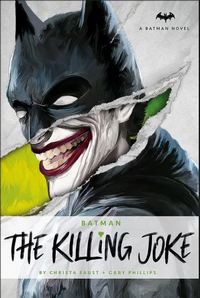
The Killing Joke by Christa Faust, Gary Phillips: The Legendary Graphic Novel Gets the Peter Jackson’s Hobbit Treatment

The Killing JokeThe Killing Joke

by Christa Faust, Gary Phillips
Series: BatmanHardcover, 293 pg.
Titan Books, 2018

Read: May 14, 2019

Leland liked to think that she had a finely tuned bullshit detector. It went with the job and–much to the dismay of the men she dated–tended to spill over into her private life, as well. Something about the Joker, however, messed with her ability on the deepest level. Like a magnet throwing off a compass needle.

She’d dealt with more than her share of compulsive liars, narcissists, and psychotics so alienated from reality that they were unable to distinguish truth from fiction. But the Joker was different.

Her testimony in court had led to the judgment that he was not guilty by reason of insanity, and he had been remanded to her care at Arkham. Yet, in her darkest, most sleepless hours she wondered if maybe he wasn’t insane after all. Not in the clinical sense, at last. Perhaps it was all just an elaborate act. A complex joke with an unfathomable punchline they might never see coming. If it ever came at all.

I don’t think I got my hands on the original The Killing Joke in 1988, I think my friend and I waited until ’89 for financial reasons (in your early teens and unemployable, funds were tight), but maybe we were some of the early readers. The when is murky, but our reactions were not. This was a fantastic story with unbelievable art — it blew our young minds. In the years since, I’ve read it countless times, and while I still enjoy the core of the book, there are bits that make me wonder why. Bolland’s art still blows me away.

The animated movie version wasn’t bad, as I recall. I’ve only watched it once and my memory’s not crisp about it. My point is, that I know this story pretty well. When I heard that Titan books was going to be doing a series of new novels about Batman and they’d start with an adaptation of this story, I was skeptical, but at the same time — an extended version of this story? This could be really good — but how were they going to get that much material?

It turns out that the key to that is the same strategy that allowed Peter Jackson to make a smallish children’s novel into a very long movie trilogy — just make up a bunch of stuff and shove it in here and there. Obviously, any novel treatment of the graphic novel (or movie) is going to do that to some extent — but I’d be willing to wager that up to 65% of this book is new, and not even hinted at in the original. Which bothers me on one level, but intrigues me on others — also, I liked the new stuff.

Batman and Batgirl are independently (usually) looking into the appearance and distribution of a new drug on Gotham’s scene — Giggle Sniff. It’s based on the Joker’s venom and is selling like crazy. There’s a lot of bouncing around as the Caped Crusaders tear through the underworld, looking for the sources of the drug — and interfering as much as possible with the sales and distribution. Commissioner Gordon and Detective Bullock are also nosing around, and turning up the heat on the dealers. There are some great action sequences, some interesting characters introduced.

While that’s going on, the Joker’s breaking out of Arkham and setting the stage for what he wants to do next. Then we get the adaptation of the Killing joke in the last quarter or so of the novel. Here, there’s minimal changes form the source material — some expanding of ideas, but nothing major or objectionable. If you know the graphic novel, then you know exactly what happens at this point, and if you don’t, I’m not going to spill the beans. I even liked their take on Batman’s reaction to the dumb joke told at the end — I think they made that problematic moment work.

The characters are well done, the action moves well — it’s just the execution of the idea overall that gives me any pause. There’s a little bit about the birth of the Internet as we now know it that’s really nicely pulled off.

The bits of this book that were an adaptation of the Moore/Bolland graphic novel were really well done — and the way these authors filled in some of the details and gave a very contemporary backstory to part of it worked in ways I didn’t expect. Also, the Giggle Sniff part of the book was pretty good. And if either one of them had been the core of a novel, I’d very likely be more positive about those books. But shoving the two of these together? It didn’t work that well. I liked the novel, but I can’t recommend it too highly because the two parts of the novel are just too distinct from one another to see why the authors made these choices.

—–

3 Stars

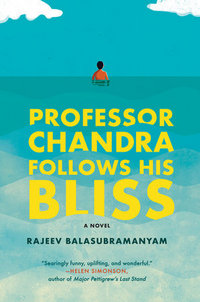
Professor Chandra Follows His Bliss by Rajeev Balasubramanyam: A Very Pleasant Novel of the Elderly Curmudgeon Reevaluates His Life/Attitudes Stripe

Professor Chandra Follows His BlissProfessor Chandra Follows His Bliss

by Rajeev Balasubramanyam


Hardcover, 345 pg.
The Dial Press, 2019

Read: April 11 – 15, 2019


Cambridge’s Professor P. R. Chandrasekhar is an emeritus professor of Economics, and someone who has come so close to winning the Nobel that it’s jarring to many he hasn’t (well. . . “many” might be a stretch, who actually knows leading economists?). But he’s also alone. His ex-wife and youngest daughter live in Colorado, his eldest son is in Japan and his other daughter won’t let anyone tell him where she is. While he has no room to complain, clearly bits of his life could’ve gone better. He seems well-regarded by those still around him, and while he’s a hard teacher, he seems like a good one.

After a health scare (there’s some humor in it, don’t worry, it’s not that kind of book), and due to worries about his youngest daughter’s behavior, he takes a sabbatical to California. Things don’t go so well with the daughter, or his ex, or his ex’s new husband (the man she had an affair with before leaving Chandra). The trouble with the new husband leads Chandra into going to a “spiritual retreat” at the Esalen Institute in Big Sur. Any type of spiritual retreat is the last place that anyone who knows this irascible conservative would expect him to go — including Chandra himself. But he goes, and as he’s the type to throw himself into anything he’s doing — no matter how silly he thinks it is. He plunges into the exercises.

And he doesn’t experience a giant epiphany turning him into a spiritual kind of guy. Nor does he find the exercises silly and spends the time mocking the experience. Instead, he starts to re-examine some things. Like the way he interacts with his kids, and how they react to him. So he starts trying with them in ways he hadn’t before — and it doesn’t go that well, honestly. But he makes some in-roads.

He ultimately returns to his home in Cambridge and makes some adjustments there, too. Eventually, some things happen that do permit him to further rehabilitate things with his children — and life in general.

I was really worried that this would be about Chandra finding some sort of enlightenment, throwing off all his accomplishments and convictions and becoming a totally different person. Instead, he becomes more thoughtful, more understanding and a better version of himself — with opportunities for further development. I don’t think that’s giving too much away, I hope not anyway. He’s worked hard all his life, and now starts to realize the price he and others paid for him to work as hard and as much as he did, and to achieve the success he has.

Chandra is a fascinating guy — I like the way he thinks. I like the very subtle humor in his approach and response to things, and wish more people in his life could catch it. I’d have liked more time with his daughters, I liked both of them and we only get to see the beginnings of better times between them and their father. Between family, new friends and new acquaintances, there are just too many characters to dig too deeply into. Which is one of the biggest problems this book has — too many great characters to fully appreciate any who aren’t in the title.

This looks like a “lighter” book from the title, cover, etc. — and it is. But it deals with some bigger ideas, just not in an overbearing way. It’s also not as funny as you’d expect from the description (or the blurbs on the cover). But there are subtle bits of humor throughout, and one or two very comedic moments. There aren’t laugh out loud moments — but there are plenty of smile quietly to yourself moments.

Balasubramanyam’s writing is strong, his characters are great, and he can keep the story moving well. He balances the lightness and the darkness of the story well, and while it’s not the kind of book that has a twist or three in the end, there are some things that you probably won’t see coming until they happen (and feel inevitable once they do).

At the end of the day, this was a very pleasant novel with one very interesting character, and a few too many other characters. Some of which had the potential to be just as interesting, but we couldn’t spend enough time with them because of their number. Trim a few of those, so the reader can focus those remaining and this book becomes much better. As it stands — I may not find a lot of bliss in these pages, but I found entertainment and relaxation and would certainly read Balasubramanyam in the future with great interest.

—–

3 Stars

2019 Library Love Challenge

KA-E-RO-U Time to Go Home by B. Jeanne Shibahara: A Sweet Novel (with some pretty big problems)

KA-E-RO-U Time to Go HomeKA-E-RO-U Time to Go Home

by B. Jeanne Shibahara


Kindle Edition, 259 pg.
2018

Read: April 5 – 8, 2019


Every so often I get a book that I struggle writing about. I know what I want to say about it, but I’m worried that my point will get lost. So, stymied, the file sits blank on my screen for a couple of days while I hem and haw. I’ve been doing that for most of the week about this book (and afraid it was going to happen last week). Hear me out.

There are so many things that I’d typically complain about in a book — casual disregard for grammar, sentence structure, mechanics; characters that behave like characters in a book, not people; a plot that makes sense to no one (well, part of it, anyway). Really, this is not a good novel.

But . . . dang it, there’s something about this book that I liked. It’s like a long, meandering Sunday drive — or walk in the woods — you take a windy road/path to nowhere in particular — occasionally stopping at a scenic overlook or wandering from the route for a bit before resuming. You don’t get anywhere fast, you may hit a bumpy/rocky patch, but overall you count it as a pleasant afternoon.

So Meryl’s a Vietnam widow (it’s pretty unclear when this happens — other than her son is an adult now) comes into possession of a flag that belonged to a fallen Japanese soldier from the War in the Pacific. She’s pushed to go to Japan (where her son teaches English) to return the flag to the soldier’s family. She ends up going on the trip and finds the freedom and ability to move on from her husband’s death.

The love story is ludicrous. Actually, there are a couple of them (three) — and they’re all ridiculous, and old Disney cartoons do a better job depicting love. They’re not the actual heart of the book — but man, they get all the attention. The heart of the novel is this simple story of the return of this flag to what’s left of the family of this soldier.

When the novel focuses on that story? It’s a real winner. I can believe those people, I can believe those reactions. I can believe it– and I want to read it (not just put up with it). In addition to this, the looks at Japanese culture are great — on the whole, this novel doesn’t focus on the parts of Japanese culture usually featured in books/films.

We spend way too much time with characters — pages and pages — just for them to appear for a paragraph or three in the story. As interesting as these journeys into backstory may be, by the time we get back to the story for them to disappear just drives me crazy.

To put it in the kindest way I can: this is a very idiosyncratic with a charm that is its best feature. It’s sweet. The historical and cultural insights are great (and almost worth the effort alone). If you give this book a chance — and a lot of leeway — it’ll win you over.

Disclaimer: I received a copy of this novel from the author in exchange for my honest opinion, I think it’s clear that my opinion wasn’t that swayed by it.

—–

3 Stars
LetsReadIndie Reading Challenge

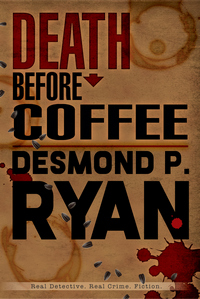
Death Before Coffee by Desmond P. Ryan: A Veteran Detective Faces Fresh Challenges


Death Before CoffeeDeath Before Coffee

by Desmond P. Ryan
Series: Mike O’Shea, #2

Kindle Edition, 245 pg.
Copper Press Publishing, 2019
Read: April 9 – 10, 2019

Detective Mike O’Shea is a detective with a couple of reputations — many know him as a cop’s cop, one who gets the job done right. Everyone knows him as one of two detectives who were on the hunt for a prostitution ring (that specialized in underage girls) and one particular runaway teen that came thiiis close to breaking the ring before his partner was killed and he almost was, too. The killer got away and O’Shea was left with a cloud over him. No matter what he’s done since, all his achievements are colored by that failure.

We join O’Shea as he’s transferred to a new platoon, with a new partner (Ron Roberts, who can’t seem to cope with the idea that he’s not in traffic anymore – he’s the only cop that I can remember in Crime Fiction who seems to think that’s a good place to work). Before they can really get a feel for each other (beyond previous knowledge and inherent prejudice), they’re called to the scene of a homicide. A one-legged man was beaten to death and dumped in a residential area.

The uniform on scene is not the shiniest star that the Academy has produced, but O’Shea and Roberts get things started enough that when the Homicide team shows up the investigation is well under-way. DS Amanda Black is tough, smart and driven and directs this investigation like her career depends on it.

We follow — O’Shea and Roberts through the preliminary stages of the investigation, through some hiccups caused by overzealous colleagues up to the hunt for their prime suspect. We also get a few scenes with just Black. Those are insightful, but feel pretty weird — there are so few scenes without O’Shea involved that anytime he’s not “on screen” it feels strange.

Along with this hunt, O’Shea continues to deal with the investigation that made his reputation — as much as he can while staying off the radar of his superiors — a suicidal retired cop, and his family. His marriage is all but over, but his siblings, son and mother are a very present realities for him. We could’ve gotten more time with his son for my taste (and probably O’Shea’s, now that I think of it). This all takes place over the course of a few days and O’Shea seems almost as in need of a good night’s sleep and a good cup of coffee as he is in getting resolution to any of his cases.

The novel is well-paced and it takes no time at all to get sucked into the story. This has all the hallmarks of a solid crime novel and police procedural. O’Shea is the kind of old school detective that readers love, Roberts has a lot of potential as a character and Black could easily dethrone O’Shea as the series’ focus (I’m not suggesting she will, but she’s written in a way that it could happen without anyone complaining).

I do have a few issues with the book, naturally. Things that detracted from my enjoyment, things that kept me from being over the moon with is (and it had that potential), but nothing that ultimately was that problematic.

This is the second of a intended six-book series and really reads that way. Can it be read as a stand-alone? Yes, but it’d be far more satisfying as part of a series (well, I expect it would be, anyway). There are some aspects of the timeline that I’m not convinced I can buy, but maybe with some context I could. Similarly, while this book and the main plotline do have definite conclusions, it feels like Ryan just presses “Pause” on so many other things it’s a little annoying. I’m not talking cliffhangers (minor or otherwise), it’s more of a “well, we’re done talking about this for a bit” kind of feel. Whether it pushes you to the next book is irritating, probably depends on the reader.

That last idea probably ties in to the realism vibe Ryan is going for. Which is great — to a point. We all like the idea of something realistic, no matter the genre, really At least we all say we do — but aren’t so much of us really looking for types of satisfaction that reality can’t provide? Especially in crime fiction — we want the kind of resolution not available in our lives. Ryan’s depiction of himself as a realistic writer works against him as much as it works for him. He has a little note to the reader before the novel assuring the reader “I’m an ex-cop, I’ve done this stuff, this is how it is.” Pretty much insulating himself from criticism of a lot that goes on in the book unless you’re prepared to bring an armload of research to bear. That note actually prejudiced me against the book, it reeked of someone who “doth protest too much,” and just set my teeth on edge. Show me your realism, show me your authenticity and convince me of it — don’t boast about it. It took me a long time to shake that bad first impression, but I do think I was able to push past it — but I’d have liked O’Shea and the rest a lot more if I hadn’t had to.

Ryan has a strong voice and uses it to give the right details to provide a very compelling read — it’s fast, gritty and with characters that’ll stick with you after you’ve moved on to your next read. Was it as good as it could have been? No, but not because of an inherent weakness, just because Ryan didn’t do enough with his strengths — but he’s got four more books in this series to fulfill the promise. I had a good time reading Death Before Coffee and I bet you will, too.

My thanks to damppebbles blog tours for the invitation to participate in this tour and the materials they provided — including the book, which did not influnce my opinion.

—–

3 Stars

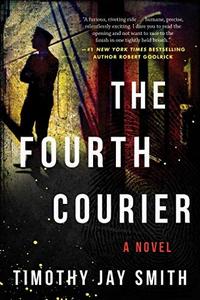
The Fourth Courier by Timothy Jay Smith: A Great Crime/Espionage Premise is Squandered in a Novel that Doesn’t Know What It Wants to Be.

The Fourth CourierThe Fourth Courier


eARC, 320 pg.
Arcade, 2019

Read: March 27 – 29, 2019

It’s 1992 and the countries (and people) that were behind the Iron Curtain are still trying to adjust to the new world order, which is a mind boggling idea, really. It’s something I haven’t thought much about since the early 90’s — and even then, I doubt I gave it much serious thought. But that’s the every day surreal life of the people in this novel — most are from Poland, some are from Russia, some from Serbia (oh, yeah and a few are from the States — but they’re not my focus at the moment). This alone makes The Fourth Courier different enough to take a glance at.

There’ve been a few unidentified men — with indications that they might be Russian — found murdered and mutilated (not necessarily in that order) in Warsaw. The last one showed traces of radioactivity (there’s a chance the others did, too — but the evidence is gone), and people start to worry about what’s afoot. It’s so worrying that the FBI sends someone (Agent Jay Porter) over to help the police investigate. The change in political realities is affecting the way the police operate, like every other aspect of society, but at least the basics are the same. Porter teams up with a Warsaw detective, but he also teams up with a CIA agent based in the US Embassy.

The CIA agent is focused on what these (possible) Russians are doing in Warsaw before being mutilated. Probably not at all coincidentally, a Serbian general visits the city the day before the bodies are found. There are several possibilities he’s looking into — the most benign involve narcotics trafficking, the worst involves small nuclear explosives.

The book is pitched as being this hybrid murder mystery/espionage novel in post-Cold War Poland — and when it is, it’s an interesting read. But I’m not convinced that’s the book that Smith really wanted to write — I’m sure it’s not the one he wrote.

Jay Porter is in the early stages of divorce back home, and one of the first things he does when he lands is to hit on an attractive woman working for the airline. They go on a few dates, he spends the day with her parents, sister and brother-in-law. She’s recently been divorced, too, but given the housing situation and economy, her ex-husband still lives with her and their adult son in the same apartment they shared while married. To say theirs is a complicated relationship is an understatement — and Porter’s only been in the country for a couple of days.

But that level of complication pales in comparison to the Serbian general. His sexuality/inclinations are beyond complicated — and several layers of which are peeled back for us to examine as we try to figure him out. We also get into the sex life of a ranking police official, a criminal with ties to the police, the general and Porter’s lady friend, the CIA agent, a complete stranger on a train and an ex-Soviet scientist. All of which is far too detailed for my (admittedly reserved) taste (although I’ve endured worse), many of which are gratuitous (one or two are useful for revealing character, but could’ve been dialed down and still achieved the same result).

If you ask me (and I guess, that’s kind of what the point of this blog is — and Smith did ask me, I have the emails to prove it), this is what he wanted to talk about: in the midst of the Cold War ruins to talk about these people — the romances, the sex (there’s a difference), the friendships, the shattered lives and psyches trying to reestablish themselves the way the countries were. It’s just that every now and then he remembered he was supposed to be writing the murder mystery/espionage novel and would go run off and deal with some of that plot before getting back to the stuff he wanted to talk about.

More power to him, by the way — it’s hard to come up with a reason to get all these characters in a book in the first place. But having decided to tell the story about multiple murders and spies and whatnot, he could’ve acted like he cared a bit more about that. The big espionage plot was pretty lazy and was resolved in an equally easy way. The murder mystery was resolved in a pretty unsatisfactory way and the investigation mainly happened “off screen.” At one point someone attempts to frame a suspect for the killings — it’s possibly the worst, most obvious frame job that I’ve read. Inspector Gadget would’ve picked up on it without Penny and the Brain needing to help. When the psychological ground for the mutilation was revealed, I almost quit reading — it was just too easy.

I did not, for one single second, believe any of Porter’s reactions to what was going on in the US regarding his family. I could buy his banter with his secretary. I could accept his emotions in Warsaw (although some of it was a stretch), but not his emotional backstory. I thought the general’s backstory was a bit over-wrought, but I could buy it. And I really had no problems with any of the Polish characters’ emotional lives or backstories — they all worked really well. If the supposed main stories were half- as well-developed as the personal/psychological/sexual stories/motivations/plotlines were, I’d be a lot more enthusiastic in my recommendation.

Before anyone goes off on me, saying that I just want the police procedural, or a crime novel that’s not about anything beyond the murder, a glance around this site should disabuse you of that idea. I enjoy Crime/Thriller novels that have something to say about things that aren’t the crimes in question — but before I’ll listen to anything else you have to say, you need to give me a Crime/Thriller that’s worth paying attention to.

Smith can do subtle, he can do nuance, he can show rather than tell. But most of the time when given the opportunity to do any of that, he seemed to choose the opposite. There’s enough skill in Smith’s work that I’m going to give it 3 pretty unenthusiastic stars, but this book could’ve been so much better. It just didn’t live up to the promise of it’s very strong premise. If he’d stuck with the premise, he probably could’ve pulled off something clever and compelling. If he’d told the story he seemed to really want to — it wouldn’t have been my cup of tea, but it would’ve been good read. Instead, we’re left with this pile of unfulfilled potential.

Disclaimer: I received this eARC from the author and Skyhorse Publishing via NetGalley in exchange for this post — thanks to all for this opportunity.

—–

3 Stars

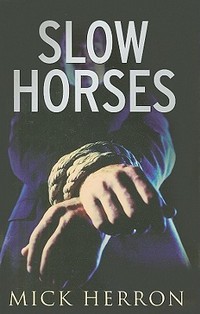
Slow Horses by Mick Herron: A solid, if slow-building, entry point to a spy series.

Slow HorsesSlow Horses

by Mick Herron
Series: Slough House, #1
Hardcover, 329 pg.
Soho Constable, 2010
Read: March 1 – 4, 2019

’What you have to bear in mind’–the O.B.’s words–’is that worst sometimes does come to worst.’

The worst had increased exponentially over the last few years.

The O.B.’s words of advice for his grandson turns out to be a bit more. I don’t think Herron placed this on page 2 to be a thesis statement for the book — but it really could be one. River Cartwright was musing about the way things were going for Intelligence officers (and people in related vocations) when it came to predicting what terrorists of various stripes would do. If September 11, July 7, and similar dates have taught Intelligence officers (and people in general), anything it is that sometimes the worst case is actually what happens. (actually, what do I know, maybe it was a thesis for the novel)

Of course, it doesn’t just happen for terrorist attacks — sometimes it happens for someone’s career. Take River Cartwright — after the events on page 2 (and the rest of that first chapter) — and his colleagues. Each of them had worked for the Intelligence service, many of them were rising stars (or stars that had already risen), until they messed up. Sometimes it’s in a large-scale drill, sometimes it was in the course of duty — but they all made an embarrassing mistake, misstep or failure of another stripe, resulting them being assigned to Slough House. In Slough House, all the officers still technically do intelligence work — reviewing transcripts of cell phone conversations for certain words and phrases, for example. But it’s all low priority, low importance work. Far from the important work that the rest of MI-5 (and the rest) do. They’re dubbed the “Slow Horses” and if they aren’t forgotten about by the rest of the service, they’re mocked.

One day, a Slow Horse brushes up against something that approaches “real” work and River takes the results are taken to MI-5’s HQ for them to follow-up on (after making a copy). About the same time that happens, a young Pakistani immigrant is kidnapped by a nationalist group that promises to behead him on the Internet. River decides to try to follow up on this intel, thinking it might lead to the kidnappers. And well, chaos ensues, and let’s leave it there.

Honestly, I had a lot of flashbacks to the show MI-5 (aka Spooks), throughout. The story has a very British spy feel, with more clandestine meetings, history and significant looks than an American spy story (which largely revolve around attractive people shooting things). But these Slow Horses aren’t the type that Nicola Walker, Peter Firth, and Miranda Raison would deal with — at best, they’re the ones those people would pass in the hall. But all of them wanted to get back to the major leagues — they all had the drive, the chip on their shoulder, the need to lose the embarrassment. It makes for an interesting motivation — it’s not just about saving the young man, it’s about them doing it.

The characters are quite a rag-tag bunch, who really don’t like each other much at the beginning — they all know that Slough House is a dead-end and resent being there — and transfer that resentment onto the others stuck there with them. An actual team gets forged through the events of this novel and the characters find things about each other that they can relate to — and maybe even admire.

It’s a solid spy story, and one told with restrained humor — it’s not a comedy by any means, but there are comic sensibilities throughout. Herron could’ve easily turned it into a humorous spy story about rejects trying to save the day. But he plays it pretty straight, there are things to grin about — or at least smile wryly about. But by and large this is a serious story told seriously. And it’s well done — it’s a well-constructed story and by the time the big twist is revealed, you care about the players enough to react appropriately.

But man, it was slow. Once things started happening, it flowed pretty smoothly and quickly. But those early chapters, where Herron was setting up his dominoes, were a slog. It took awhile to figure out why we were spending so much time with X, Y and Z. But when he started knocking the dominoes over? You understood why he’d spent the time and were glad he did. The slow pace of the early chapters were entirely justified, thankfully. Still, I think we could’ve had a better hook early on.

I do think that the later books in the series will be able to build on what’s established here and be less slow, and using the characters we met here get into the action quicker. I’m planning on reading at least a couple more in this series because I did enjoy this one, and think that Herron can build this into a great series. It’s a good entry point into something that promises to be better.

—–

3 Stars

2019 Library Love Challenge 2019 Cloak & Dagger Challenge

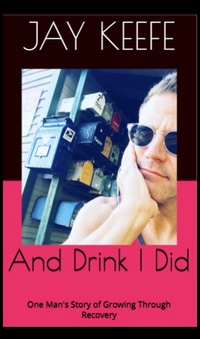
And Drink I Did: One Man’s Story of Growing Through Recovery by Jay Keefe: An underdeveloped, but powerful memoir of addiction and recovery

And Drink I DidAnd Drink I Did: One Man’s Story of Growing Through Recovery

by Jay Keefe


Kindle Edition, 154 pg.
2018

Read: March 2 – 5, 2019

This is one of those books that’s pretty well summed up by the title and subtitle. There’s not a lot more to say, really. But I’ll flesh it out a little — the first two chapters are primarily focused on his pre-alcohol life to gain some insight into his alcoholism. He begins by saying that he doesn’t know why he’s an alcoholic, he doesn’t know what made him one — moreover, it doesn’t matter. What does matter is that he is an alcoholic. That doesn’t stop him from thinking and writing about his childhood — not in an effort to justify or explain away his alcoholism, but to understand it. He explains some early emotional experiences, as part of this — and even his earliest memories of OCD.

This might be the closest I’ve gotten to understanding the compulsion’s sensation:

I didn’t feel right or complete until I had done specific tasks.

Even after I did them, there was still a lingering sense that something was off. When people ask me to describe it, the best I can do is to say it’s like an itch that can’t be scratched- kind of like when the top of your mouth tickles, and you use your tongue to scratch it, but it doesn’t really help because your tongue just isn’t the right instrument to scratch an itch.

It’s like that.

Kind of.

Then he explained his initial drinking experiences and how alcohol made him feel. It reminded me of a similar passage in Mose Kasher’s memoir of addiction.

I always felt a void and had no idea how to fill it.

Alcohol filled that void perfectly.

It took me out of myself.

I could relax. . . .

Alcohol quelled the OCD too.

I didn’t clean when I was drunk.

It didn’t bother me that things weren’t in their place.

I didn’t sweat the small stuff, so to speak.

And I knew I wasn’t sweating it. That was the beauty of it.

It’s so easy for people — especially for non-addicts — to pin drugs and alcohol use and abuse to people who are partying or having a good time and can’t stop. For Kasher, it was about feeling normal; for Keefe it’s about quieting the OCD, about not having the self-doubt and insecurities that plagued him. It’s about self-medicating. Addiction’s never more understandable to me than when I hear someone talking like that — who wouldn’t want that experience? Forget about feeling good, just getting to neutral — no problems.

Anyway, from there Keefe spends a few chapters talking about his experiences drinking — at one point he says that other addicts’ war stories never impressed him, and initially you get the feeling that’s hypocritical because he talks a lot about some of the stupid or out of control things he did while drinking. But he never glorified the experience, he never celebrates what happened — it’s just a list of things he did. Like reciting the tasks (largely routine) at work you completed one week. More than once I found myself wondering how Keefe is still living — and he probably did, too, while writing it.

He then talks about his early days of recovery — his early 12-Step days and when it started to work for him, and how that changed his life. How being sober didn’t fix all of his problems, and how he still has impulse control issues and what he’s done to minimize the problems that causes him. Then he discusses his current circumstances, with a few years of sobriety behind him — how he’s doing, what he’s doing with himself, and that he’s still an alcoholic, living in fear of stumbling.

Those last couple of chapters, in particular are really powerful.

I’m a little of two minds about this book — you can see from what I’ve quoted how this book reads. Paragraphs that are 1 or 2 sentences long (there are some that are a little longer), some aren’t even complete sentences. The book largely reads like a very detailed outline — at best like a good first draft. Also, the timeline’s a little fuzzy and his knack for not using names all the time when talking about his life doesn’t help keep things clear.

None of that keeps the book from making an impact. It’s moving, it’s powerful, and you have a very real sense of what he went through. So Keefe’s not Tobias Wolff or Frank McCourt — who cares? The book accomplishes what he sets out to accomplish, is insightful, touching and inspiring. That’s good enough for me.

—–

3 Stars
Disclaimer: I received this book from the author in exchange for this post and my honest opinion, which is what I provided.
LetsReadIndie Reading Challenge

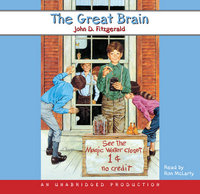
The Great Brain (Audiobook) by John D. Fitzgerald, Ron McLarty: A frequently pleasant stroll down memory lane

The Great Brain (Audiobook)The Great Brain

by John D. Fitzgerald, Ron McLarty (Narrator)
Series: The Great Brain, #1

Unabridged Audiobook, 4 Hours, 41 Minutes
Listening Library, 2002

Read: February 25 – 26, 2019


Growing up, these stories about a pre-teen con artist in late 19th Century Utah were among my favorites. I remember stumbling on a box set at a Yard Sale after I’d read them from the Library a couple of times and just about wore out the set reading and re-reading them. Even then, I remember that I had problems with some of the characters, and recall that my favorite was always the narrator, John D., not the titular Great Brain himself, Tom D. About 10 years ago, I read the series to my kids, and enjoyed it (possibly more than they did), but not as much as I remembered. Still, when I saw it listed as a new addition to my library’s catalog, I took a second glance and when I saw that Ron McLarty did the narration, I had to try it.

This book is a series of episodes from over a year or so in the life of three brothers, Sweyn D., Tom D. and John D. Fitzgerald. Sweyn is around a little bit as the more mature eldest brother, John’s the youngest (8 or 9, I believe) and Tom is 10 and the star. He’s Greedy, conniving, and ambitious — and his ego is bigger than the rest of his attributes combined. They live in a small, largely LDS, town in Utah during the last decade of the 1800s. The episodes feature different ways in which Tom’s Great Brain works to make him money and/or notoriety in the community, especially with the kids.

Some of these antics are silly, some are serious. Almost all of them are profitable for Tom. The strength of the stories is the humanity of the rest of the community — the traveling Jewish merchant, the local farmers, the Greek immigrant family, for starters. The weakness comes from the very laissez-faire approach to parenting the Fitzgeralds take — allowing Tom D. to pretty much get away with everything he wants.

There is some charm, some heart, throughout — even from Tom. That part appeals to me, the ego-driven greedy exploits of the Great Brain don’t. John’s narration occasionally will critique Tom’s motives, but mostly John’s a little brother thinking his big brother is fantastic no matter what. I know John becomes more disillusioned later, but for now, it was annoying. I want better for him.

How’s the narration you ask? Honestly, the chance to listen to Ron McLarty narrate was half the reason I had for grabbing this. McLarty will always be Sgt. Frank Belson to me, despite the many other things he’s accomplished in life. He did a fine job, at times a great job. Something about him reading the contraction-less dialogue bugged the tar out of me. George Guidal can make it work when he reads Henry Standing Bear — although it helps that no one else does it. McLarty can’t make it work, probably because despite the fact that slang is used, time appropriate language — but not a contraction from anyone? I don’t lay the fault at McLarty’s feet, it’s just a prominent feature.

I still recommend the books and enjoyed them. It’s just a tempered enjoyment. I’ll probably keep chipping away at the series over the next few months — waiting to see John’s disillusionment grow, and the brothers develop a conscience.

—–

3 Stars

2019 Library Love Challenge

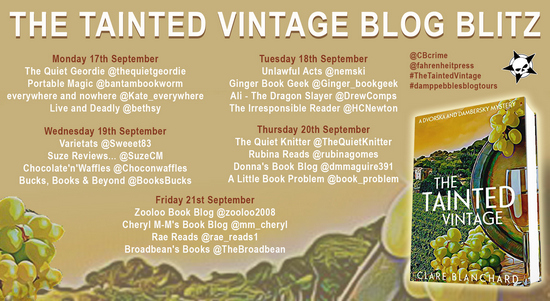
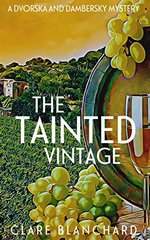
Fahrenbruary Repost: The Tainted Vintage by Clare Blanchard: A Promising Introduction to a series about crime fighting in the Czech Republic


The Tainted VintageThe Tainted Vintage

by Clare Blanchard
Series: Dvorska & Dambersky, #1

Kindle Edition, 159 pg.
Fahrenheit Press, 2018
Read: September 11, 2018
In the first chapter, we’re treated to a better synopsis than I could cook up, so let me just borrow it. One night in the little town of Vinice, in the Czech Republic, the mayor dies during his birthday party:

Dvorska was sure that she and Ivan had been sent there for the sake of appearances, because a dead mayor was by definition high profile, and of course because no-one else wanted to touch it. She wondered why they had been called out at all, so soon. The fat feminist and the misogynist – what a team. And of course Dambo, as the senior of the two, would call the shots, so her hands would be tied. Perfect. The sudden death of a rich and powerful local figure was hardly a magnet for rising-star detectives.

Dvorska picks up a clue or two that convinces her — and then Dambersky — that this death was not due to natural causes. The Powers That Be don’t want to hear such a thing, and rule otherwise. So this very unlikely duo has to embark on an unauthorized investigation — not just unauthorized, but prohibited — into the murder.

Finding the murderer of a man who died of natural causes isn’t the easiest thing to accomplish, obviously — it’s hard to ask too many questions without a “Hey, he wasn’t murdered, why are you asking?” coming up. So the partners have to be wily — not just with their superior officer, but with witnesses, possible suspects, and everyone else they encounter.

The investigation takes them to various cities, a variety of social classes, and even ends up giving them a few history lessons. The mayor’s home has ties to significant (at least to Vinice) historical movements, going back to World War II, the Communist takeover, and then once the Republic took over. This really helps the reader — particularly the reader who knows almost nothing about the Czech Republic — find themselves, not only in the geography but the history (cultural and otherwise). obviously, I’m no expert on the Czech Republic,, but I can understand a little more than I used to. Just the first couple of usages of “Perv” to indicate an illegal drug threw me — but between the narrator finally calling it Pervityn and a search engine, I got a little lesson in drugs during WWII.

It doesn’t take long for the book to try to get the reader on the side of these two characters — maybe there’s more to them than the “fat feminist and the misogynist.” I really found myself enjoying them as people, not just as detectives. We spend — for reasons that will become clear when you read this — more time with Dvorska than her partner, and she is a charming, dedicated detective, fully aware of her limitations and sure how to overcome them.

The writing was good but I thought it could be sharper — there’s an odd word choice or two (early on, the detectives start talking about the mayor’s death being an execution, not a murder); there’s a lot of recapping/rehashing something that was just done/considered/decided a page or two earlier — the kind of thing that makes sense for serialized novels, but this doesn’t appear to be on. Still, the voice is engaging, as is the story — and you get caught up enough in it that you can easily ignore a few things that’d normally bug you.

I was caught totally off-guard by the ending. I didn’t expect that to happen at all — my notes toward the end feature short words like “what” and”why?” But primarily my notes consist of question marks, exclamation points, and combinations thereof. This is a great sign for mystery and thriller novels. Blanchard did a great job setting things up so that there’s a dramatic reveal and one that isn’t seen chapters away. I do think some more ground work could have been laid early on so that it didn’t seem quite so out of nowhere. But it was effective enough, that I really don’t want to complain about it.

This is a pleasant read — it’s close enough to being a cozy that I could recommend it to friends who predominately read those, and twisted enough that those with more grizzled tastes can sink their teeth into it, too. The characters are winning, charming and the kind that you want to spend time with. It’s a good introduction to a series exotic enough for most English readers to feel “alien” and yet full of enough things so you don’t feel cut off from what you know. There are obviously future cases for these two in the works, and I plan on getting my hands on them when I can.

—–

3 Stars

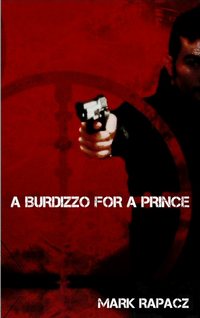
A Burdizzo For A Prince by Mark Rapacz: A Vengeance Tale with a Lot of Personality

A Burdizzo For A PrinceA Burdizzo For A Prince

by Mark Rapacz


Kindle Edition, 332 pg.
Fahrenheit Press, 2017

Read: February 21 – 23, 2019

“Spit it out,” I said. I was hoping for an apology, or something. Not every day your best friend is pretty sure he wasn’t going to kill you, which means he was equally as sure he was going to–I think. Semantics were never my strong suit, but when speaking the language of death, these things matter.

J. J. was having a perfectly okay day–he was out getting some supplies for the week, walking around the small Midwestern town he was calling home, when his childhood best friend arrives without pomp or circumstance. This was not a happy reunion–the reason they hadn’t seen each other for years because J.J. was on the run from the Jersey crime family they both worked and killed for; and Jackie’s presence meant that J.J.’s hiding spot was blown and that Jackie had been sent to kill him. So much for that good day.

Not really a spoiler: Jackie doesn’t kill him, or the book would’ve been much shorter than it is. Instead, he aligns himself with his old friend and partner to survive. Almost immediately, it becomes clear that their former boss has expected Jackie to not follow through on things and sent in a ringer to clean up. It’s not long at all before J.J. has to abandon the home he’d made for himself, the life he was on the verge of building and a woman he might love (or not like terribly much–it’s one of those things), to voyage down the Mississippi with Jackie and a couple of allies.

Shortly after that, this stops being a story about a couple of hitmen trying to retire and becomes a tale of vengeance and blood. Lots of blood.

Rapacz has a dynamite style — it’s slick, it’s fast, it’s full of black humor. And despite some distaste I had for J.J. and his personal life and vocabulary, I really got into it. As Jules Winnfield reminds us, “Personality goes a long way,” and this novel has personality by the bucket.

Somewhere along the trek down the The Big Muddy, I think you can argue that Rapacz let his style run away with him and parts of the book become too much. At the same time, some of the best moments of the novel — not just stylistically, but plot and character-wise, are in the middle of this excess. So what do I know?

I didn’t end up liking it as much as I started off liking it — and that might be me, it might be Rapacz, maybe a bit of both. There were some real surprises, some moments of head scratching, and some great tension — and a fight scene or two that will burn themselves into your mind’s eye for at least a week. Which, given the fact that the title is about a castration device, is about what you should expect, right?

A Burdizzo For A Prince might not be your cup of tea — or you’ll love it — but you won’t forget this anytime soon.

—–

3 Stars

Page 24 of 55

Powered by WordPress & Theme by Anders Norén