Tag: 3 Stars Page 25 of 55

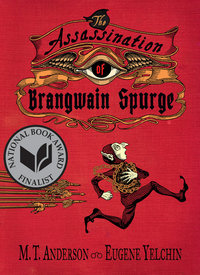
The Assassination of Brangwain Spurge by M.T. Anderson and Eugene Yelchin: A wildly imaginative and creative MG Fantasy

The Assassination of Brangwain SpurgeThe Assassination of Brangwain Spurge

by M.T. Anderson and Eugene Yelchin


Hardcover, 523 pg.
Candlewick Press, 2018
Read: January 24 – 25, 2019

Let me start with a hat-tip to Paul at Paul’s Picks for putting this on my radar. Thanks, Paul.

For a MG book, I’m surprisingly intimidated by the prospect of trying to give a synopsis. That’s probably a clue about the book. Brangwain Spurge is an elfin historian of moderate renown — when (as far as he knows) an ancient goblin relic is found in his land, he’s dispatched to present it to the goblin’s king. No elf has survived being in — much lest returning from — goblin territories in more than a century, but the conventional wisdom is that a historian should be safe — even if he is also spying.

The goblins and elves have spent centuries fighting each other, and are in a rare season without warfare — and no one expects it to last for long. Each side distrusts the other in ways that make relations between the USA and USSR in the 1960’s seem warm and cordial. So this mission of Brangwain’s is an unexpected and welcome overture of peace. Or so many people think.

Brangwain’s host is a goblin names Werfel — who’s also a historian. Werfel is a very odd, but seemingly pleasant, person living in the midst of pretty odd, and apparently pleasant, people. Every goblin he meets goes out of their way to welcome Brangwain and try to make him feel comfortable, while celebrating elfin culture. Brangwain’s a nervous guy, who has spent most of his life (going back to childhood) being insulted, bullied and overlooked — he doesn’t really see the efforts of the goblins for what it is. Besides, he’s too busy trying not to get caught while spying on his hosts.

Now, how does this elf — who most people expect is on a suicide mission — get his information back to the elves? I’m glad you asked — this is an ingenious move by Anderson and Yelchin — while alone and resting, Brangwain uses elfin magic and imagines what he’s seen which is transmitted to a device in the office of his king’s military intelligence, that takes these transmissions and “prints” them out. These would be the illustrations that make up a significant portion of this book.

Ultimately, things go awry and Brangwain and Werfel are on the run together, trying to survive and hopefully keep the peaceful overtures alive. A friendship will rise between the two as they depend on each other and realize how much they have in common.

There’s some great commentary on the power of perspective when it comes to history. Werfel and Brangwain differ greatly in their understandings of the same event/person, wholly dependent on their backgrounds. It’s all about who writes the history — even if it’s an obscure scholar — when it comes to establishing “fact.”

A little bit more about the art. First, it’s just great. This isn’t a book directed at the picture book crowd, but the art might as well be for people who can’t read the text — it’s as much of the story telling as the text. Yelchin actually saves them a couple hundred pages telling the more dramatic portions of the story in his pictures. Interestingly enough, the events described in the narration and the events depicted in the art/Brangwain’s reports differ significantly, and part of the fun of the book is comparing them. Yelchin’s art reminds me of Jules Feiffer’s from The Phantom Tollbooth, which is possibly the biggest selling point for me. Well, except the picture of a spider-creature that makes Shelob and Aragog look tame.

It’s a fun story, a little wry, and it will appeal to grade schoolers who have an off-kilter sense of humor. I really enjoyed reading it and recommend it for middle graders and their parents/older siblings alike.

—–

3 Stars
2019 Library Love Challenge

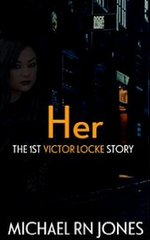
Fahrenbruary Repost: HER: The 1st Victor Locke Story by Michael RN Jones

Having read the two collections of Victor Locke books, I get what “HER” was trying to do — I stick with what I said in the moment, but I wish I’d trusted Jones more. I know I dug the series more than I did this. Ahh, hindsight.

HER: The 1st Victor Locke StoryHER: The 1st Victor Locke Story

by Michael RN Jones
Series: The Victor Locke Chronicles, #.5

Kindle Edition, 49 pg.
Fahrenheit Press, 2017
Read: March 7, 2017

So a couple of weeks ago, The Accidental Detective was released — and it looked good, and is sitting on my Kindle, begging for my attention.

Today, I had an extra minute or two on my hands and Fahrenheit Press was nice enough to provide this, the first story about Victor Locke and his psychologist for free. (hopefully you see this in time to head to amazon and grab it).

Locke is a fast-talking, genius of some sort who’s served time for computer hacking. Dr. Jonathan Doyle was his court-appointed psychologist upon his release. Locke’s no longer a client, but Doyle still sees him around. So when a couple of FBI agents drop in to his office to get his help finding Locke, it’s easy for him to connect them to Locke.

They have a task — go find a digital file that will bring great embarrassment to the British government, as well as the U.S.’. They provide no details about the file beyond what’s essential to find it. They also provide the Locke with a snazzy laptop (as he’s not permitted to have one any more). Seemingly on a lark, Locke takes their offer and begins searching.

The search obviously, leads to HER. The story isn’t that important in this case, it’s all about meeting the world, meeting Locke and Doyle. As such — it’s a hoot. There’s a strong voice that practically demands to be read quickly, breathlessly, like the fast-talking Locke (can you read breathlessly?). There’s a manic energy matching Locke’s logic and smarts, which explains why Doyle seems so intrigued by him.

As an advertisement for The Accidental Detective/encouragement to read it? This works really well — I’m in, and will work on getting to it soon. As a story in and of itself? Eh, maybe it works too hard at paying tribute to/updating a classic mystery story to really work. But man, it was fun. A great way to spend a half-hour or so.

—–

3 Stars

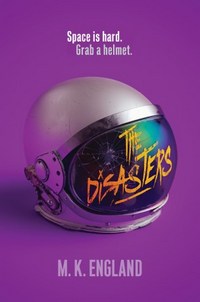
The Disasters by M. K. England: Some Fun YA Popcorn SF

The DisastersThe Disasters

by M. K. England


Hardcover, 352 pg.
HarperTeen, 2018

Read: January 29 – 30, 2019

           We sit in silence while al-Rihla, the jewel of the colonies, gradually takes over more and more of the viewport. It looks exactly like it did on the pages of my textbooks, only so much more. I let my eyes linger for a moment, taking in green continents outlined in rich red sand and huge, intensely blue oceans that glitter below. I know we’re in a life-or-death situation, but it’s hard not to be overwhelmed by the view. I can see why all the antiexploration crap went away once a few humans actually got out here. Who could look at all this and not want it? It’s bizarre–I’ve only seen Earth from space once, and I was busy trying not to die at the time. Now I’m looking down on a completely different planet, in person, in space, while flying a ship I stole.

I’m actually here. This is all I’ve ever wanted, though I didn’t get it in the way I wanted.

And in a few painfully long minutes, I’ll find out whether I get to live to see the other seven colony worlds one day, or if I get to die in a dramatic crash and kill all my new friends instead.

Fantastic.

Nax Hall is a would-be pilot, would-be space colonizer, and would-be anything but a failure in the eyes of his family. Sadly, after a day at the Ellis Station Academy (the only way to achieve two of those goals, and his best shot at the third), he’s been cut from the program. He’s not the only one — three others have been, too. As they wait for the shuttle to take them back to Earth, a terrorist group of some kind attacks the Academy. With a little luck, the expelled students escape in the shuttle that was destined to take them to Earth.

But they quickly realize that space fighters won’t allow the ship to land on Earth where they can alert the authorities about what happened at the Academy — so they have to hyperjump (or whatever it’s called in this world — I already took the book back to the library and can’t check) to colonial space. They quickly learn that the terrorists have used their escape as a means to frame them for the atrocities committed at the Academy and they now are on the run from the same authorities they were hoping to help them.

Thankfully, between the four of them, they have an almost perfect crew — a pilot, a diplomat, a medic and a technician/copilot. They soon find themselves aligned with a computer expert with ties to black-market entities that can help them spread the word about what happened at the Academy and what it might mean for the future of Earth’s space colonies. These five plucky teens are all that stands between humanity and widespread destruction.

England has a gift for action scenes — they were energetic, dynamic and enough to sink your teeth into. Nax’s flying, in general or in combat, was the highlight of the book for me. I could’ve used a little more of it, even though that would have been gratuitous. I’m not above gratuity in the right place. There’s a strong sense of fun in the narrative — despite being up against impossible odds, these kids are living their dream (just not in the way they wanted, as Nax put it in the quotation above). There’s a good deal of bonhomie between the makeshift crew, which builds gradually over the book to the point where they’re a tight bunch of friends at the end. This sense of fun is grounded by the dangers they face and the costs they’re paying, just enough to keep this from being a romp.

The characters aren’t that complex, although England makes a couple of attempts at it. Their backstories are interesting, to the degree that she explores them (which isn’t much). We get enough of Nax’s crewmates’ backstories to explain their presence on the ship, but not much more. We get plenty about Nax in bits and pieces — which is good enough, he’s the star of the show (and should be). The bad guys aren’t much more than stock villains, mostly a faceless group or two conspiring to do evil things. That’s fine with me, this isn’t the kind of book that promises complex opponents with compelling reasons for their activities, mustache-twirlers with lots of henchmen are good enough.

Here’s my major complaint with the book — the politics. Don’t get me wrong, I’m not saying that politics shouldn’t enter into fiction. Particularly Science Fiction. I’d prefer to see more of it — at least more diversity in political views, too much of the politics in SF is so culturally homogeneous one could easily believe no other opinions existed. But before I get gong on that line, let me get back to The Disasters. The politics and societal struggles of the late 22nd Century are apparently identical to those of 2018. Now, I’m not suggesting that Earth’s culture should have worked everything out and the struggles of today will be a distant memory — but they should’ve changed somewhat. The way these problems are seen, expressed and argued about should be different. England just comes across lazy in her approach to these ideas. It’d be like someone writing about Irish cops in 2019 Boston the same way people wrote about them in 1850.

Thankfully, while it flavors much of the book, the characters don’t spend that much time actively discussing it, so it’s easy to forget about. What you’re left with is popcorn fun. A bunch of underdog kids, rejects from society (while really being exceptional), find themselves in a place to save the world (more than 8 of them, technically). There’s some good action — again, the flight scenes are great — a couple of chuckles, and a solid ending. It’s a couple of hours of escapist entertainment when it’s at its best (which is pretty often).

—–

3 Stars
2019 Library Love Challenge

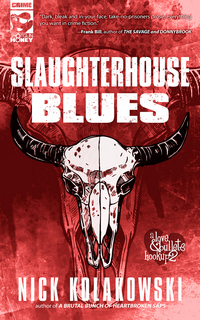
Slaughterhouse Blues by Nick Kolakowski: Broken Antiheroes on a Last Chance Power Drive

Slaughterhouse BluesSlaughterhouse Blues

by Nick Kolakowski
Series: A Love & Bullets Hookup, #2

Kindle Edition, 172 pg.
Shotgun Honey, 2018
Read: January 21, 2018

“What’d you put in there?” Don said, nodding at the soiled duffel bag in the backseat.

“About twenty pounds of tobacco, but don’t worry, no leaves, just the little bits. I asked the sweepers to give me the scraps.”

Don laughed. “A couple years back, we tried taking those scraps, making cigarettes out of them. They sold, but not enough. You can’t fight Big Tobacco.”

“You know what’s a good rule for life?” Fiona said. “Don’t fight groups dedicated to killing millions of people.”

It didn’t take long for Bill and Fiona to realize that the business relationship they found themselves in at the end of the last novella to be just as unpleasant as the one they’d just left. They hadn’t jumped into the fire per se, more like they’d jumped from one frying pan into another. And their new associates took a similar approach to their older associates to their exit — they wanted them dead. So now the pair are trying to avoid two large-scale criminal enterprises bent on revenge, while trying to secure enough of a nest-egg to retire and disappear.

That doesn’t sound fun. At least not for them, for readers on the other hand…

Fiona is off doing a small — but hopefully profitable — job for a couple of brothers she’s worked for before. They’re cigar manufacturers in Nicaragua, where the competition might just be getting lethal. Bill, on the other hand, is in another country trying to hide out among the throngs of tourists. Let’s just say that neither of them meet with a lot of success — but Fiona does manage to get a lead on what should be an easy heist. The catch is, it’s in New York. Right in their old backyard.

So we have an easy heist, an uneasy alliance between the couple and a less-than-trustworthy man who can lead them to a big pay, assassins on their tail and some others who discovered that the couple has delivered themselves to their city. Chaos ensues.

It’s action-packed, but with a smaller body count than the previous novel. But at least one of the deaths happens in a way that will stay with you. Not in a haunting way — but in a “wow, what a cool visual” way (something you can appreciate in fiction — in real life, it’d be horrific and witnesses would likely need therapy).

There’s an interesting tie-in here to some things that happened at the end of World War II, reminding the reader just how much moral gray area existed for US troops in those last days of the War in Europe. Well, a lot of gray existed, and some of it might have been made. Either way, it was there.

At the end of the day, I didn’t enjoy Slaughterhouse Blues nearly as much as A Brutal Bunch of Heartbroken Saps, but I think it says more about the latter than the former. It’s a solid piece of writing, expanding and deepening the universe of these characters a tad. It gives us another opportunity to see them in action while doing some important things for Fiona’s character. If nothing else, Slaughterhouse Blues sets up the third novella (which is better than either of the other two). But most importantly, it tells a good, entertaining story on its own. If I’d read this one not knowing who Bill, Fiona or Nick Kolakowski were — I’d have sought out more about them and by him. That’s good enough for me.

Disclaimer: I received a copy of this book from the author in exchange for my honest opinion.

—–

3 Stars

2019 Cloak & Dagger Challenge

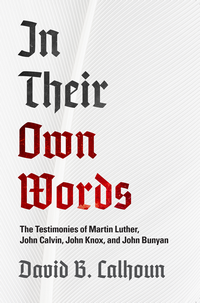
In Their Own Words by David B. Calhoun: Not exactly what I expected, but a profitable read

In Their Own WordsIn Their Own Words: The Testimonies of Luther, Calvin, Knox and Bunyan

by David B. Calhoun


Paperback, 232 pg.
Banner of Truth, 2018
Read: January 13 – 27, 2018

I liked this book — don’t get me wrong. I’d even recommend it heartily to people. But I have some issues with it.

Let’s look at the book blurb, shall we?

           Hundreds of biographies have been written of Martin Luther, John Calvin, John Knox and John Bunyan. But there is something unique to be gained by listening to these men tell their stories in their own words.

Right there? I’m sold — great idea for a book. What’s more, this is from Banner of Truth — this kind of thing is in their wheelhouse. Who wouldn’t want to read this kind of thing?

           Here, in In Their Own Words, is a collection of testimonial statements drawn from the writings of Luther, Calvin, Knox, and Bunyan. We see men who candidly confessed their sins and boldly testified to the grace, mercy, and goodness of God to them. Their testimonies illustrate the great truth stated by Paul that ‘where sin abounded, grace abounded much more, so that as sin reigned in death, even so grace might reign through righteousness to eternal life through Jesus Christ our Lord’ (Rom. 5:20-21).

The key word there, is “statements.” I had visions of extended portions of the works of these men. Which seemed odd to me at least in Calvin’s case, as he’s notorious for not talking about his life (as is seen in this book, I should add). But still, that’s what it sounded like to me. But by and large we’re talking a sentence or two of quotation to be followed by Calhoun discussing more about his subject on whatever topic/time period he’s looking at. Sometimes we get a paragraph — sometimes a couple consecutive paragraphs. Sometimes it’s less than a sentence. Really there’s a lot more David Calhoun than I expected. I don’t have a detailed analysis, but I’m pretty sure that the text is 55-65% Calhoun (and a few biographers he quotes), with the remainder by the subjects.

This doesn’t diminish the work by Calhoun — it’s no easy feat finding these snippets and then assembling them into a coherent narrative. But still …

My other issue is the inclusion of Bunyan. He doesn’t fit thematically, or even historically. Also, despite really trying — repeatedly for almost two decades — I can’t muster up that much enthusiasm for him. This is a personal flaw of mine, I realize. But that’s that.

Now, the content of the book? It’s really good — linking these mini-biographies (50-60 pages per subject) to biographical remarks is a great idea, and adds a perspective you don’t normally see. Calhoun is able to focus on the parts of their lives that they cared more about, rather than whatever the prevailing interests of scholars are.

We get good, concise views of their lives, with a lot of flavor of the subjects — their concerns, their thoughts, even some of their personality. A good investment of time — I learned some things, I found some inspiration in some of the words — and relished Calhoun showing the Providential care shown to each of these men.

Read this, think about it — just don’t go in expecting to get saturated by the words of these figures and you’ll enjoy it more than I did.

—–

3 Stars

2019 Cloud of Witnesses Reading Challenge

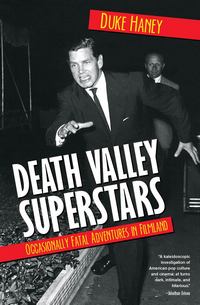
Death Valley Superstars by Duke Haney: Cautionary Tales about Hollywood

Death Valley SuperstarsDeath Valley Superstars: Occasionally Fatal Adventures in Filmland

by Duke Haney
Kindle Edition, 306 pg.
Delancey Street Press, 2018
Read: January 2 – 16, 2019

Duke Haney, actor, screenplay writer, novelist, essayist, has delivered a well-written collection of sixteen essays revolving around some of those impacted by, affected by, corrupted(?) by, shaped by Fame — that fleeting authority and celebrity bestowed by a chosen few in the Hollywood system that has captured the American imagination and attention since the 1900s.

The quality of the writing throughout was pretty consistent, as was the voice, etc., etc. But my own interest varied widely from piece to piece. I think that’s largely on me, not Haney. But then again, maybe Haney shouldn’t have picked topics that have been done to death. I’m not sure that the universe needs another essay/reflection/biography/anything about Marilyn Monroe, Lee Harvey Oswald, or Jim Morrison. It certainly doesn’t need any further effort to celebrate Hugh Hefner.

On the other hand, the pieces about Sean Flynn (son of Errol), William Desmond Taylor, Christopher Jones, and other people that I’d never heard of were fascinating. I learned something, I was introduced to people I’d missed out on. They weren’t slightly different takes on worn-out ideas about legends that have had dozens of books written about them.

Better yet were the pieces that were about his life — encountering Elizabeth Taylor as a youth, working on various films, his nude scenes, his crush on (and seen in retrospect, stalking) of a noted actress, the encounter with the lady on the bus talking about the video store they both frequented, even the part of the Jim Morrison essay about his quest to hire a psychic (it shouldn’t be that hard in L.A.) to do a séance in a hotel room Morrison lived in. He’s really his best — and most entertaining — subject (although when the subject of an essay is someone else, Haney tends to talk about himself too much). He doesn’t come across as someone trying to gloss over mistakes, missteps, or embarrassing moves — in fact, he seems to revel in them. These are honest (seeming), frequently funny and charming.

I have no doubt that there are plenty of people out there who will invert my rankings, or dispute them all together. And they’d likely be right to do so (I doubt they’d convince me, but you never know). Most collections I read are pretty uneven. This isn’t the case with Death Valley Superstars, I think the quality is consistent — it’s just my own reaction to the chapters that are varied. I’d wager the same will be true for other readers.

If nothing else, I think the above summary rundown demonstrates the variety of pieces in this collection — and I didn’t make mention of all of them. One thing that is fairly consistent is the takeaway from the collection as a whole — fame is fleeting, but its effect on the lives of the famous (and those near them) is long-lasting, and rarely pleasant or beneficial. Really, the whole book can be seen as a collection of cautionary tales with a persistent message — stay away from Hollywood.

I didn’t love this book, but I really liked parts of it, and am glad I read it. I can easily see many readers wondering what was wrong with me, however, and eating this thing up.

Disclaimer: I was provided with a copy of this book in exchange for my honest opinion, which is seen above.

—–

3 Stars

✔ An essay collection.

LetsReadIndie Reading Challenge

Flashback Friday: The Theory of Opposites by Allison Winn Scotch

The post I’m working on just isn’t going to be finished on time — at least not while leaving me capable of working today. So here’s a post from the past about a book that I’ve thought about lately.

The Theory of Opposites

by Allison Winn Scotch
Paperback, 306 pg.
Camellia, 2013

The Theory of Opposites starts off with a bang — a Rube-Goldberg of verbal and physical slapstick. Raised by a self-help guru, raised in an atmosphere saturated with and run by her (best-selling and almost universally acclaimed) father’s theories, Willa Chandler-Golden’s life is about to fall apart the way that her day falls apart before she even leaves the apartment this fateful day.

She loses her job, learns that she’s not pregnant after all, learns that her parents are both in the midst of a late-life crisis, learns that the twelve-year-old son of her husband’s dead friend will be spending the summer with them, her husband may be stepping out on her. Oh, yeah — and then a couple weeks later her husband decides they need a break from each other. He’ll be moving across the country, sharing custody of his “nephew.”

So, Willa does what anyone finding themselves in this situation — she agrees to help her best friend write a self-help book that ties into her favorite Reality TV Show. As an added bonus, their book will flatly contradict her father’s near-Nobel Prize winning work.

During this break, catastrophe strikes Willa’s father and brother, her mother’s life turns upside down, and The One Who Got Away comes back into her life.

Somewhere in all this, Willa tries to figure out just what she wants in life, what she believes about life, and what kind of person she’s going to be. The question The Theory of Opposites tries to answer.

There’s fun to be had in the reading, but it’s not as if there’s a denial of the seriousness of it all. Scotch deals with some pretty serious issues with the same light, deft touch she brought to her past novels — breezy enough that you can let the uncomfortable details slip by, but honest enough that they’re in front of you all the time. I don’t think this was quite as satisfying as her The Song Remains the Same, but it was good enough to keep me looking for whatever comes next.

—–

3 Stars

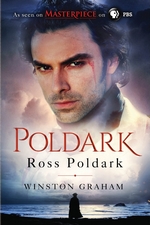
Ross Poldark by Winston Graham: A decent read, but it’s not for me.

Ross PoldarkRoss Poldark

by Winston Graham
Series: The Poldark Saga, #1


Paperback, 379 pg.
Sourcebooks Landmark, 2015 (originally published 1945)

Read: December 27 – 28, 2018

Ross Poldark, the scandalous son of a minor land-owner, comes back from serving the Crown in the War for American Independence to find his father dead, his estate in disrepair, and the woman who he’d hoped to wed engaged to someone else (a formerly close friend, actually). Understandably, he’s about to throw in the towel on life, but instead he starts putting things together.

He bullies his fathers’ (and now his) servants into getting to work restoring the house and lands, and hires some new help and even rescues a poor little girl being picked on by some nearby children and brings her into his house as a kitchen maid. He has to fight and then pay off her abusive father for the privilege, but does so. He takes care of his tenants, and is soon seen as half-one of them half-landowner. He starts a new mine with some other people in the area, doing a lot to help the local economy.

There’s some legal drama, a touch of medial as well, a malicious criminal presence, too — but it’s hard to take any of these seriously, and they are all dispatched quickly. In fact, that’s pretty much par for the course for everything — a problem arises and is resolved soon. There’s no real book-length plot to this novel — there’s no central or driving conflict. You might be able to make the case that it’s a story of Ross finding contentment and/or happiness after the way his homeland welcomes him. But I’m not sure I can buy that.

There is just so much wrong with the love story involving Ross that I’m not going to touch it. I get that it’s a different time, different standards, and everything, but he’d be locked up today for what happens — and rightly so. Frankly, all of the romances are a bit . . . off. Nothing that Austen would touch, for sure. One of the Brontë sisters might have, though.

This book feels like someone was convinced the only proper kind of book for a British person to write is one that Austen, a Brontë, or Dickens could have written — so he combined the three influences into one. But Graham isn’t one of those. He’s a passable writer of limited imagination. Every so often he’ll write a passage — a small paragraph to a page or so in length — that strikes me like he’s realized he hasn’t done anything “writerly” for a bit and dashes something off that fits the bill. Then he gets back to his usual story telling for 5-10 pages until he repeats the process. This isn’t to suggest he’s a bad writer, it’s just usually decent prose with odd splashes of flair.

It’s hard to describe any of the characters except in reference to Ross — and would end up spoiling a lot of the book to do so. I found them all relatively two-dimensional and without a lot of growth or development. What change there is in most of them is hard to believe, or at least happens off-screen and without explanation. The maid that Ross brings in is the easiest to see grow and develop, and we almost get a real sense of who she is — but I’m not sure I can say that.

Ross Poldark isn’t a bad book — but there’s nothing about it that grabbed me. I did grow to be a bit interested in two of the characters, and was pleased to see things go well for them. I’m not driven to pursue things to the next book much less eleven more, however. I can see the appeal — I think — that this book and/or this saga would have for some, but it’s not for me. But for people who like semi-romantic historical epics, you’d be well served by trying this. I probably sound more negative than I really am — I’m more indifferent than anything else.

—–

3 Stars
2018 Library Love Challenge

✔ Read a book recommended by one of your parents (in-laws count).

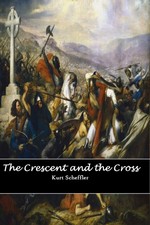
The Crescent and the Cross by Kurt Scheffler: An Uneven But Ultimately Satisfying Historical Fiction

The Crescent and the CrossThe Crescent and the Cross

by Kurt Scheffler


ebook
2014

Read: December 20 – 24, 2018


I normally reserve disclaimers for the end of a post — but I’m going to start this post with one. I’ve met Kurt Scheffler, he seems like a good guy. He has taught every one of my children, is currently teaching two of them, and will be teaching one for the next three years. He’s beloved in my house and the impact that he’s had on my kids is almost incalculable. Also, one of my kids bought this for me — not in a “hey, here’s an easy way to get brownie points” kind of move; but a “I know someone who wrote a book, my dad likes books, I should combine those things” kind of way. So basically, I’m trying to say that I have every reason to airbrush what I’m about to say, but I’m going to try to not do that. Also, no parent wants to see one of their kid’s teachers use the word “whoring” that much.

This is the story of The Battle of Tours (in 732) and events leading up to it, told through the lives of people close to Charles Martel and Charles on the one hand and a couple of the leaders of the Muslim forces involved in the Arab invasion of France. Specifically, that’s Charles, his longtime friend, his sons, his mistress, and some children who are adopted by a close associate and are practically part of his household; and then the son of the Caliph and Abderrahman.

It’s your typical historical fiction, blending historical events and fictionalized events into one narrative. I really liked some of the characters a lot, and the ones I had no patience for were the one’s the book doesn’t want you to enjoy. I’m not convinced that I didn’t like them for the same reasons I wasn’t supposed to like them — it wasn’t their less-than-savory characteristics, but their portrayal. But still, that’s better than many novels are able to pull off.

I’m not going to try to summarize the plot more thoroughly than that, or talk about any of the particular characters — this post would quickly become too long to bother with. The story takes awhile to coalesce — it almost feels like the novel couldn’t decide what it was going to be about for the first half — it started trying to be X, then it became Y, then Z and quickly A, B, and finally settling on being C (I might have exaggerated a bit there, the book might have settled on B). That’s how it felt, I should say. In retrospect, I don’t think that was the case, it was simply taking it’s time (arguably too much) setting the stage and establishing the characters before launching into the major story.

That said, I found myself enjoying each version of the story the novel gave us along the way, and when it seemed to shift into a different story, I was disappointed to leave X, Y or Z — at least until I got into the new version. Scheffler can tell a story, that’s clear. He’s skilled at sucking you in and feeling what he wants you to.

I do have a few quibbles with the book — I’ll only talk about a few. My notes are full of question marks when we got a historical particular, I just wasn’t sure if he got the timing on some things correct. There’s a lot of anachronisms — for example, Pascal’s wager a few centuries early (sure, someone could’ve said it before Pascal — but it seemed a bit off); some statements about equality that sounded like Martin Luther King, Jr.’s rough drafts; and people holding opinions/values that I just can’t accept given the time (mostly benign things, I should add, like a noblewoman baking as a hobby). The villains might as well be wearing black hats and twirling mustaches, while the “heroic” characters are subtly drawn and live in the gray — I just wish the villains got the same treatment. Practically every character is very aware of the historical significance of the struggle they’re part of — particularly when it comes to the ultimate (and impending) battle between Charles Martel’s and Abderrahman’s armies. I don’t doubt that sometimes individuals understand how vital a role they play in the grand scheme of things, but this seemed a bit overkill (or this is a case of one of the greatest conglomerations of narcissists ever).

There’s redemption, personal reformation, romance, action against a sweeping historical backdrop — there’s something for almost everyone here. Could this book have been better? Yes. Given the themes, the scope, the characters, the setting — there’s a lot more that Scheffler could’ve done here. Also, it would’ve been very easy to make this incredibly dull and/or hack-y. Scheffler avoided that — and I’m very happy about that. In the end, we’re left with something in the middle — an entertaining work with a few problems. You’ll keep turning the pages to see what he does with the characters, but you’ll wonder a little about the background and details. At worst (or best?) this’ll spur you to further reading on the history of the period after reading Scheffler’s fictional take. Really can’t complain about that, right? I’m glad I read it.

—–

3 Stars

✔ Read a book you received as a gift.

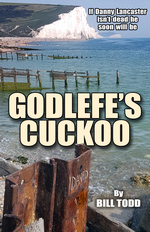
Godlefe’s Cuckoo by Bill Todd: A Deadly Game of Hide-and-Go-Seek

Godlefe’s CuckooGodlefe’s Cuckoo

by Bill Todd
Series: Danny Lancaster, #6

Kindle Edition, 270 pg.
DLE-Fiction, 2018

Read: December 19 – 20, 2018

He lit another cigarette. Popped the ringpull on another can of Stella.

This was pointless.

He could sit here forever debating the pros and cons like some poncy intellectual while all the time he knew what he would do.

Fuck it, those bastards had to be sorted out.

Anyway, you had to die of something.

So Danny Lancaster is a former soldier, injured in the line of duty — leaving him with one prosthetic (see also, Cormoron Strike). He didn’t seem to know what to do with himself after leaving the army and ended up a small-time criminal who did a little time in prison. Then he started working as a P. I. (I’m not sure if he could have officially done that given his record, but I don’t know). He seems to have skirted the edge of legality through this career — helping the police frequently, but a known associate of noted criminals (see also, Rebus and Big Ger). The picture I get is of a less intellectual, more violent, and less alcoholic Matt Scudder.

Given that this is Book 6 in a series, Danny Lancaster is a pretty established character and the novel doesn’t spend a lot of time exploring the character, mostly it’s just using him. Which makes sense, especially given the plot — but that means I have to rely a bit more than I normally would on extrapolating from what we’re given and comparing him to better known characters.

When the book opens, he’s been missing — presumed dead by many — for months. There are some hoping he’s still alive, who wish the police (or someone) would find him. There are some who are convinced (hoping?) he’s dead, and are fully prepared to leave him this way. And then there’s one person who is convinced he’s alive — and will continue to be convinced until he sees a body — and he’s determined to find Danny.

The problem is that this man is a Russian mobster, with a lot of money, a lot of power — and no patience or much time to live. Shortly before the “accident,” Danny had disrupted this Russian’s smuggling enterprise and he wants revenge. His associates in England pursue a particular strategy to bring Danny out of wherever he’s hiding — they start killing people associated with him, and will continue to do so until it works. They do this in such a way that it takes the police a long time to realize that’s what’s going on (and no one believes the first one to come to this conclusion).

Once Lancaster realizes what’s happening, he takes definitive steps to bring this to an end. Now that the prey has been flushed from cover, it becomes a matter of hunter vs. the hunted (I’m not sure which is which, really). The action scenes are great, and it’s easy to see why Danny Lancaster (the series or the character) have made it through five books already.

Most of the characters, like Lancaster, are clearly previously drawn and established. There are plenty of them, too. Again, if I knew them, I could appreciate their appearance and use. Those characters that are used for the first time I have a strong handle on and appreciate for.

I’m convinced that I’d have enjoyed this more than I did if it wasn’t my first Danny Lancaster book. That said, you can absolutely read this as an entry point to the series — it won’t work as a stand-alone, you’re going to want to read a possible seventh, and at the very least to go back and read the previous five. I just don’t see anyone reading this and thinking, “yeah, I’m done now.” I didn’t fully appreciate everything that happened here, but I could tell that long-time readers would and that there was something about these characters that could inspire loyalty and excitement.

I liked it, I think I should’ve and could’ve liked it more, if I’d only done my homework. Give it a shot — or better yet, read some of the earlier books and you’ll like this all the more.

—–

3 Stars

My thanks to damppebbles blog tours for the invitation to participate in this tour and the materials they provided (including the book).

Page 25 of 55

Powered by WordPress & Theme by Anders Norén