Tag: 3 Stars Page 41 of 55

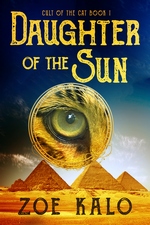
Daughter of the Sun by Zoe Kalo

Daughter of the SunDaughter of the Sun

by Zoe Kalo
Series: Cult of the Cat, #1

Kindle Edition, 330 pg.
2016

Read: July 1- 4, 2016


This one won me over — I spent a lot of time not enjoying it at all. I thought the characters were flat, predictable, unoriginal — and frequently acting like 11 year-olds rather than 17 year-olds. The plot was pretty obvious, the twists were telegraphed, the romance was cliché and dull. I frankly was only reading it because I had agreed to do this tour today.

But . . .

Somewhere around the 60% mark I noticed that I was into the story, and I had been for awhile.

All of the above remains true — but Kalo writes with an engaging style and gets you to like Trinity, her cousin, and just about everyone else (except the people you’re supposed to not like). You like them, you want to see them make it, and are rooting for them.

I don’t have much to say, really. It works: it’s entertaining, it’s engaging, it’s a Kane Chronicles for older readers. Could it have been better? Yes. But most books could. Read the blurb, if it sounds like the kind of book you might like, check it out — you’ll likely be satisfied.

Disclaimer: I received this book from the author in exchange for this post.

—–

3 Stars

This Review is a part of the Blogger Outreach Program by b00k r3vi3w Tours

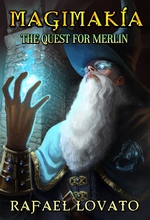
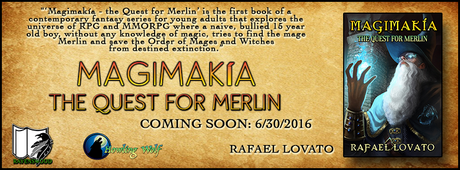
The Quest for Merlin: Magimakía by Rafael Lovato

The Quest for MerlinThe Quest for Merlin

by Rafael Lovato
Series: Magimakía, Book 1

Kindle Edition, 286 pg.
Howling Wolf, 2016

Read: June 20 – 22, 2016

I guess this is life. Maybe, strange things happen without much meaning.

The number of strange things happening around Oliver is pretty large.

So, hundreds of years ago, Merlin put himself in a suspended animation of sorts, and hid his body behind some clever little puzzle — like a video game. Wizards have made a few attempts to find him, but they haven’t worked out (obviously). The last attempt ended in death, destruction and betrayal.

More than a decade later, it’s time for another shot — one last shot. Merlin’s last male descendant, Oliver (although I’m not really sure about the math on that — sure, he’s a dork and awkward with females, but there’s no reason to think that Oliver couldn’t have kids). Oliver has no clue that he’s a Wizard (I guess the owl from Hogwarts got lost), his mother’s memory has been magically wiped, so she has no clue, either.

Oliver’s kidnapped (for his own good) and whisked away to begin to learn about his heritage while being introduced to a world of elves, witches, trolls, goblins, demons, seraphs and more. Most of whom are on the verge of war with each other, and only Merlin can stop it.

Oliver, a mind-reading goblin, a couple of attractive adolescent witches (he’s a 15-year-old nerd, of course that’s how he categorizes them), and an old friend of his father are the key to bringing back Merlin and saving the world. This isn’t your typical Merlin — or your typical anything — beyond the very typical socially awkward teenage male protagonist.

The plot, on the whole, was so-so. It got the job done, but never really grabbed me. The characters were . . . all right. Nothing special, nothing we haven’t seen before, but nothing eye-roll inducing or annoying. The world-building was very detailed, intriguing, and impressive — although sometime it wasn’t explained clearly. Still, if anything would bring me back for a second novel, it’d be the world-building. I don’t think the chapters of Goblins speaking to Goblins were anywhere near as funny as Lovato seemed to think they were, but I admire the fact that he stuck with them for as long as he did.

There were a few quirks that caught my eye — each race’s magic is characterized by a color, and Lovato spends a lot of time talking about them — so much so that I wondered if Hal Jordan and the Guardians of Oa were going to show up. I’m not sure I remember reading anything where the hero gets knocked out so often — it’s worse than Daredevil, Season 1. It’s not a huge thing, but there’s a difference between someone being a novice/rookie and someone being pathetically helpless. Reduce the knock-outs by 20% and I probably wouldn’t say anything.

My main complaint was the language — a few idiomatic phrases were off, the dialogue was frequently stilted, a lot of the word choices were not wrong, but certainly not right. About halfway through the book, I skipped ahead and read about the author — the fact that he’s a non-native English speaker explained just about every problem I had with the mechanics of the writing and I was able to ignore them. That’s precisely how it reads, and if I’d known that going in, I’d probably have enjoyed the whole experience a little more. Still, far too often Lovato uses three words when one would do.

Not a great book, but an entertaining read — and at the end of the day, that’s enough. For a little atypical YA fantasy, this would be well worth a look.

Disclaimer: I received this book from the author in exchange for this post, the honest thoughts contained above, and participation in the Book Tour.

—–

3 Stars


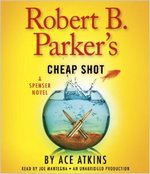
Cheap Shot (Audiobook) by Ace Atkins, Joe Mantegna

Cheap Shot (Audiobook)Robert B. Parker’s Cheap Shot

by Ace Atkins, Joe Mantegna (Narrator)
Series: Spenser, #42

Unabridged Audio, 7 Hours and 30 Minutes

Random House Audio, 2014
Read: June 7 – 9, 2016


This is a very mixed bag of an audiobook. I loved the novel 3 years ago, and enjoyed reliving it. But man, the narration was just not my thing. But I’ll get back to that in a bit.

I stand by pretty much everything that I said 3 years ago (although, I seem to have missed/underrated one plot point last time — I totally bought it this time). Here’s some of what I said before that still applies:

On the one hand, this is not Atkins’ best Spenser. But it’s the one that feels like Parker more than the rest (make of that what you will). The banter, the poking around and stirring things up until you get a break, the fisticuffs, the donuts, the gun fight, the needling of underworld players, and so on — he captures Parker’s voice and pacing better here than he’d managed before (yet doesn’t come across as pastiche). Spenser’s sniffing around the big money and big boys (and a few men) in sports, which serve as a good place for Spenser to reflect how men are to act. Parker did this Mortal Stakes and Playmates (and to lesser extents elsewhere — like Early Autumn), and Atkins is able to do that here (arguably he does so with a subtlety that Parker didn’t achieve).

Kinjo Heywood’s a fun character — slightly more grounded than Mortal Stakes‘ Marty Rabb, far more mature and grounded than Playmates‘ Dwayne Woodcock. One advantage Heywood has is his son, Akira (who’s plenty of fun on his own) — he has someone to provide a good example to, and he strives to. Heywood also seems to have thought ore about life and how one should live it. Marty seemed to think only about Linda (his wife) and baseball, Dwayne was all about his girlfriend (Chantel) and basketball, too — but with less self-examination, it’s just that’s all he had the chance to think about (although Chantel would see that changed, and his horizons broadened if she had anything to say about it). Heywood’s got a kid, he’s been through a divorce, and is fully aware of his place in the limelight (including social media) and his own shortcomings. This alone saves the book from being a reworking of Parker.

I should add that Sixkill has a lot of perspective here (with the assistance of Atkins’ own background in football) — he was close to Heywood’s level, and if he’d made one or two better choices, he would’ve been at this level. He has a better idea what’s going on in Heywood’s mind than Spenser and his brief stint in the boxing world would.

The book begins with Spenser doing bodyguard duty — and as always (Stardust, Looking For Rachel Wallace, A Savage Place, Rough Weather) things don’t go well. You’d think people’d stop hiring him for this kind of work. Spenser turns to investigating — and unearthing lie after lie from his client — while getting Hawk and Sixkill to pitch in on the bodyguard front.

In addition to the main characters, Hawk, Susan, Sixkill, Tony Marcus, and so on; Atkins continues to show a command and familiarity with the impressive gallery of supporting characters in the Spenser-verse. And the new characters fit into the ‘verse just fine, nothing that Parker wouldn’t have created.

Not only did Atkins give us a good story this time, he appeared to be planting and/or watering seeds for future books at the same time — something Parker never bothered with, but I’m glad to see.

About the only thing I’d like to add on this front is that I think I liked the story more this time around.

So much for the lovefest. I just didn’t like Mantegna’s work. I know, I know — he’s done many, many of the Spenser Audiobooks; Parker loved his work with Spenser (even getting him cast in those semi-regrettable movies); and he’s Joe bleepin’ Mantegna. Still, it didn’t work for me. When he was reading the narrative parts — Spenser describing what he was doing, what he was seeing, etc., even making smart aleck asides — I dug it. He did a perfectly entertaining job — maybe even more.

But the strength of Parker’s work was his dialogue, and Mantegna fell flat (at best) on this front. Spenser sounds like Fat Tony, which just should not be. Ever. Kinjo sounds like a stereotypical old blues man, not a young NFL linebacker. Hawk sounds like a slightly younger blues man. And don’t get me started on Zee. That was just embarrassing. Most of the other characters were pretty poorly done, as well. And when the book is so reliant on dialogue, so reliant on the charm of the characters, that missing with just about all of them hurts.

So, like I said, great writing, mediocre (when not disappointing) narration. Please note this rating is for the Audiobook — the whole experience, the narration as well as the writing — still love the book, and would recommend the novel in a heartbeat. This? Eh. It was entertaining enough, but that’s it. Still, any time with Spenser is time well spent.

—–

3 Stars

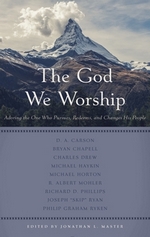
The God We Worship edited by Jonathan L. Master

The God We WorshipThe God We Worship: Adoring the One Who Pursues, Redeems, and Changes His People

by Jonathan L. Master, ed.

eARC, 192 pg.
P & R Publishing, 2016

Read: May 15, 2016

…something basic to every person— religious or not, atheistic or theistic. Everyone is wired to worship. We are always worshiping. We never stop. You are worshiping right now. You may be worshiping wrongly, but you are worshiping. We can’t help it— God built us that way. We are always giving our hearts and our hopes to someone or to something— a leader or a relationship, a job or a future success. The question for you and me is: what or whom are you worshiping right now? Is that object of worship good enough and wise enough and strong enough to bear the weight of your life?

Those questions by Charles Drew sum up the focus of this book. Who or what is the focus of/recipient of our worship?

Most books on worship focus on the how, the why, the “style” of worship — but this collection of essays (formed from addresses at the Philadelphia Conference of Reformed Theology over many years) thinks of it in different terms — Who is The One we worship? What’s He like? Why does He want us to worship?

Jonathan L. Masters took a break from podcasting (and, I assume, other things — but I only know the podcast) to edit and compile these essays from such notables as: D. A. Carson, Bryan Chapell, Charles Drew, Michael Haykin, Michael Horton, R. Albert Mohler, Richard D. Phillips, Joseph “Skip” Ryan, and Philip Ryken.

As a collection from various years, there’s some repetition of texts considered, no controlling theme (outside the title), and a lack of purposeful connection between the individual chapters. Also, there are variations in quality between the pieces. And Dr. Mohler just doesn’t seem to fit in tone or content to the rest. Not that there was anything terribly wrong about his chapter, it just didn’t seem to match up. Whereas Dr. Phillips reminded me (he showed up twice in these pages) how much I find him compelling to read or listen to.

All the authors bring a nice mix of theology, devotion, and encouragement as they try to remind us of the character and nature of the God we worship. Each chapter is easily accessible to any reader who wants to put in a minimal effort. Even the essays that didn’t engage me immediately ended up winning me over (again, except Mohler’s).

Phillip Ryken reminds us of the place of theology in our worship — not to the side, or relegated to some dark corner. On the contrary, our worship is theological, and the two inform each other.

Do you know what the Israelites did when the Egyptians finally were destroyed? They didn’t stand on the shores of the Red Sea arguing about the sovereignty of God, worrying about reprobation or its fairness. They glorified God because they had seen how glorious he was, not only in the mercy that he had shown to them, but also in the condemnation of sin and the way that he had brought justice. They were not trying to defend the sovereignty of God; they were simply celebrating it: “I will sing to the Lord, for he is highly exalted. The horse and its rider he has hurled into the sea. The Lord is my strength and my song; he has become my salvation” (Ex. 15:1–2 NIV).

. A solid collection of essays reminding us of who our focus is to be on — The God We Worship. Whether you read this a chapter or two a day on the Lord’s Day, or in one big sitting — this is a book that will help you remember that we are to glorify and enjoy Him forever.

I received this eARC from the good folks at NetGalley in exchange for this review.

—–

3 Stars

Giovanni Goes To Med School by Kathy Bryson

Giovanni Goes To Med SchoolGiovanni Goes To Med School

by Kathy Bryson

Kindle Edition, 70 pg.
Kathy Bryson Books, 2016

Read: May 7, 2016


Giovanni is an aspiring medical student and an ER scribe who just started working in the hospital morgue on the overnight shift, Astral is a first year resident with plenty of attitude; Rufus is Mrs. Harris’ rather large dog, temporarily in Giovanni’s care; Mrs. Harris was a patient of Astral’s that Gio helped with, and sadly, didn’t make it — but she just won’t shut up and leave Gio alone.

Yeah, you read that right.

There’s humor here, a little gore — and far more detail about the process that a decaying corpse goes through than I wanted to know — and a nice little story.

What isn’t there? Any real idea why Mrs. Harris is up to what she’s up to (there’s one explanation that seems to carry the day, but even it doesn’t fully work). In the moment it works — but when you put this down, it starts to nag at you.

It’s enjoyable enough, a quick read, and there’s a lot of potential here. I’m going to give this a tentative 3 Stars — because so much is left unexplained, so much is uncertain about what happens here, if we’re given at least a hint of some answers or explanations in the next one (or a good reason why we’re not given hints of answers yet), I’ll stand by it. But without that, there’s just too much uncertainty for me to strongly encourage anyone read this.

Disclaimer: I received a copy of this from the author in exchange for an honest review.

—–

3 Stars

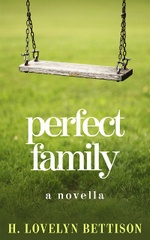
Perfect Family by H. Lovelyn Bettison

Perfect FamilyPerfect Family

by H. Lovelyn Bettison

Kindle Edition, 162 pg.
Nebulous Mooch, 2016

Read: May 5, 2016


Let me just get this out of the way, if this doesn’t make you think of an episode (I won’t say which) of Star Trek: The Next Generation you’re not paying attention. Bettison’s take on it is more satisfactory, however.

Bettison has given us a nice little piece of Magical Realism — Sadie and her husband, Kevin, have a cute little boy named Marcus, and a devoted golden retriever, Sammy. All in all, it’s a perfect family, a part of the perfect life that Sadie’s always wanted.

And then Marcus starts doing things that are beyond belief. As the reader learns about what Marcus’ abilities are and start to wonder where those abilities come from (as Kevin and Sadie are). But we also start to learn that their family isn’t quite as ideal as they might seem — but perhaps even more perfect, than Sadie realizes (that makes sense to me, and will probably make sense to anyone who’s read this).

There are parts of this book — when Marcus first displays his abilities, for example — that are disturbing, there’s some real dark times, too. In other hands, this could’ve been a very different kind of book — not that hopeful or anything, but borderline-horror. But that’s not what Bettison gave us — there’s life and love amidst the darkness.

On the one hand, I wanted more detail, more explanation, more exploration of Marcus’ abilities, but I’m pretty sure that if I got what I wanted, the story wouldn’t work as well as it did.

Give this one a read, you’ll be pleased.

Disclaimer: I received a copy of this from the author in exchange for an honest review.

—–

3 Stars

Kill the Boy Band by Goldy Moldavsky

Kill the Boy BandKill the Boy Band

by Goldy Moldavsky

Hardcover, 312 pg.
Point, 2016

Read: May 3 – 4, 2016

It’s not every day you get to be alone with a member of the most popular boy band ever.

Wait. Let me rephrase that.

It’s not every day you get to be alone with the biggest flop in the most popular boy band ever while he is blindfolded and bound to a hotel armchair.

The Ruperts were formed by the producers of the TV show, So You Think the British Don’t Have Talent? because they were about the same age and had the same first name. I should add, I can absolutely see this happening. They go on to become the biggest music stars on the planet. Again, I can absolutely see this happening. A group of four friends get a suite in the same hotel the band is staying at while filming a Thanksgiving special, and inadvertently kidnaps one of them. You know what? I can see it happening, too — at least the way Moldavsky writes it.

I hate books like this when it comes to writing about them — it is next to impossible to talk about them without ruining everything. Half the fun in this is seeing how Moldavsky reveals tidbit after tidbit during the story. How they accidentally kidnapped the Rupert, what ulterior motives might be at work here, why do we need to know the size of Apple’s bag? Seriously, I don’t want to say anything about the book beyond the hook.

What I can say is that it’s funny, it’s smart, it’s strangely heartfelt, satirical without being mean, celebratory without turning off the brain and its critical faculties. In the midst of telling a clever dark comedic story, Moldavsky blends in a commentary on fangirl culture, a critique of them, as well as a celebration of them. It’s very thoughtful when the book isn’t wickedly fun.

The characters were well-drawn, you can see them all very clearly in your mind. The dialogue rings true (even if I think some of the 80’s references will go over the heads of the target audience — I don’t care, I caught them — and enjoyed them). Moldavsky has a great ear, and I hope to see it displayed again.

Somehow I knew we were going to meet The Ruperts. I didn’t know yet if I would cry or scream or faint. And I know that sounds like the reaction you’d have while getting mugged or something, but getting mugged and meeting your idols was basically the same thing: a moment of pure hysteria where you lose our mind and all control. The Ruperts could do that to a person. They could do it to me. And I couldn’t care less.

For fathers of teenaged girls this will help you understand your daughters’ obsession(s) with bands, both the whys and the hows. It may also scare you (and even provide a little relief knowing that your Not-So-Little Princess is a lot like other Not-So-Little Princesses out there). I know it did all of the above for me.

Give this one a read, you’ll probably enjoy it.

—–

3 Stars

Ideas and Inspiration for Fantasy and Science Fiction Writers by James Hutchings

Ideas and Inspiration for Fantasy and Science Fiction WritersIdeas and Inspiration for Fantasy and Science Fiction Writers

by James Hutchings

Kindle Edition, 453 pg.
2016


You know what this book could’ve used? An introduction. Just something to ground the reader in the books intention, design, scope . . . something. It just dives in, you flip from the Table of Contents to the first entry.

The only way you know what the book is for is to have read the description from Goodreads/ebook seller:

If you want to spark new ideas for worlds, plots or characters, you want Ideas and Inspiration for Fantasy and Science Fiction Writers. Medicinal corpses, the jargons of thieves and carnies, Nazi UFOs, the colonization of space and green children from nowhere are only a few of the topics covered. This sourcebook is for all writers of fantasy or science fiction–whether novels, short stories, games, or any other form of storytelling.

The afterword touches on it a little, but who wants that at the end of a book?

Smoother writing, maybe a touch of personality to the writing would’ve been a plus, too.

It’s not something you can read cover-to-cover, it’s a resource book that you can consult, or flip through. I’m pretty sure I’ve read almost all of it over the course of a couple of weeks. It sparked an idea or two (not that I have time for them), but that’s about it.

I guess, this book set out to do what it intended, is thorough, easy to read, so . . . 3 stars? Next time you’re trying to prepare for NaNoWriMo or a Creative Writing course, give it a thumb-through.

Disclaimer: This book was provided to me by the author in exchange for an honest review.

—–

3 Stars

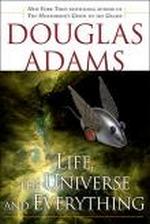
Reread Project: Life, The Universe and Everything by Douglas Adams

Life, The Universe and EverythingLife, The Universe and Everything

by Douglas Adams
Series: The Hitchhiker’s Guide to the Galaxy Trilogy, #3

Paperback, 232 pg.
Del Rey, 2005

Read: April 18, 2016

“One of the interesting things about space,” Arthur heard Slartibartfast saying . . . “is how dull it is?”

“Dull?” . . .

“Yes,” said Slartibartfast, “staggeringly dull. Bewilderingly so. You see, there’s so much of it and so little in it.”

Between General Busy-ness and having a hard time locating a reading copy of this book (I have one leather-bound edition of the “trilogy” pre-Mostly Harmless that I’m trying not to further abuse and a 1st edition that I really don’t want to abuse at all), I didn’t get to reading this one on schedule. I was briefly tempted to write this up from memory — and I think I’d have hit 80% of the same things, but that seemed dis-honest, somehow.

Also, I really wanted to read the Belgiuming thing (if you’ll pardon the expression)

Thankfully, the Nampa Library came through. So, yeah, a little late and without further ado…

Sigh. This one just doesn’t work as well as its predecessors, does it? You can sense how hard Adams is trying to recapture the sensibility of the previous two novels — but it just comes across like someone trying (or locked in a hotel room by his editor until he’s done, which I believe is what happened here). For example, look at the concept of Bistromathic Drive, if that’s not a desperate attempt to remake the Infinite Improbability Drive, I’m a frood who doesn’t know where his towel is. And then the whole Krikkit saga? Don’t get me started with that.

Which is not to say that this doesn’t have some good moments — most of Ford’s dialogue is great. The whole thing with Agrajag is both a great call-back and a fun diversion. The best part of the book (both in concept and execution) has to be:

The Hitchhiker’s Guide to the Galaxy has this to say on the subject of flying.

There is an art, it says, or rather, a knack to flying.

The knack lies in learning how to throw yourself at the ground and miss.

It goes on for quite a while after this — and I love every bit of it.

I had forgotten Marvin’s arc in this — I enjoyed that more than the rest (even if it wasn’t as good as his arc in Restaurant). It’s the best use of Trillian in the series, bar none. So, it wasn’t a total wash. Still, it felt forced, his heart didn’t seem to be in it. Which made us even, I guess, my heart sure wasn’t. Still, Adams on an off-day is better than most things.

—–

3 Stars

Waylaid by Kim Harrison

WaylaidWaylaid

by Kim Harrison
Series: The Peri Reed Chronicles/The Hollows

Kindle Single, 87 pg.
Pocket Star, 2016

Read: April 5, 2016


In her Foreword, Harrison says, “Waylaid still reads like self-made fan fiction to me, ” thereby denying book bloggers and other amateur reviewers the opportunity to use that label. Which is a shame, because that’d be a great way to sum it up. Thankfully, it saves us all from making the same joke.

In a move as classic as Uncle Jesse visiting Los Angeles to say “howdy” to Enos*, Harrison brings much beloved Rachel Morgan into the new, awesome, and in much need of publicity world of Peri Reed. Set sometime after the main events of The Witch with No Name (but not necessarily the last chapter), and before The Drafter, Waylaid will serve as a great introduction for fans of Morgan’s series.

A drunken mishap, inspired by a silly Urban Fantasy TV show (that I’d totally watch), results in Jack summoning Rachel in to Peri’s apartment. Jack and Peri assume she’s a counter-agent who’d been waiting for them to return to attack. Rachel has no clue who they are other than nitwits who summoned her away from a date and started attacking her. It doesn’t take her long to realize that her magic doesn’t work, and wherever she is, it’s a world she doesn’t recognize — Detroit still exists, people have technology she can only dream about, and the ley lines are deader than Arizona back home. The clock’s ticking and Peri and Rachel have to team up to get Rachel back home.

It’s silly, it’s fun — it’s pretty faithful to both series, it hopefully helps boost sales of The Drafter and its sequel.

I don’t really a lot to say without getting pretty heavy into spoilers, but I thought it was worth the pittance I spent on it, probably a little more. Fans of Harrison should give it a shot.

* I just revealed my age there, I know. I also know there are older examples, but that’s the first in my memory.

—–

3 Stars

Page 41 of 55

Powered by WordPress & Theme by Anders Norén