Tag: 4 1/2 Stars Page 21 of 30

The Twisted Path by Harry Connolly

I had a hard time writing this one up — I’m not sure why. I tossed out 98% of what I prepared to post yesterday and came up with this instead. I think the book deserves something better, but this is what I have.
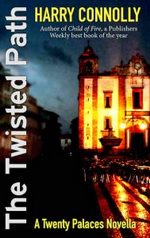
The Twisted PathThe Twisted Path

by Harry Connolly
Series: Twenty Palaces, #4

Kindle Edition, 109 pg.
Radar Ave Press, 2017

Read: December 20, 2017


Annalise Powliss is a powerful sorcerer who travels through the US on behalf of the Twenty Palace Society keeping magic out of the wrong hands — generally by killing the owners of those hands (and anyone standing too close to them). Ray Lilly is her Wooden Man — an assistant whose primary responsibility is to distract her foes, draw their fire, and die in her stead. It’s not the world’s best gig, but he’s an ex-con and doesn’t have a lot of prospects (there are other reasons, but you should read them for yourself). The thing is, Ray’s worked a lot with Annalise without dying, which makes him a remarkable example of a Wooden Man.

So the two of them have been called to the Society’s HQ in Europe so The Powers That Be can meet Ray, examine him and . . . well, he’s not really sure what to expect. Naturally, while they’re there, the pair have an opportunity to take out a supernatural bad guy in their spare time.

This is a very different kind of story for this series, the focus isn’t on the magical threat, but on the Society itself. Yes, there are Predators to be dealt with — but that’s almost a side-note. The Twisted Path gives Ray, as well as the reader, a much greater understanding of the Society. Not that I ever had a complaint about the focus in the earlier stories, but reading this pointed out what I wasn’t seeing before. Initially, you care about the Society’s mission in that, 1. they’re saving the world, blah, blah, blah; but primarily, 2. because you want Ray to succeed (or at least survive) and therefore you want to see the Society’s goals met. Now, I think I have a greater investment in the whole organization.

There’s just so many things I loved about this — Ray, the small-time crook from the Western U.S. being in Europe, trying to cope with all the differences that he never realistically expected to see. Just his reaction to walking on stairs that have existed for longer than the U.S. was a great paragraph. Ray’s initial response to the peers he’s called was so perfect, that I know it brought a smile to my face. Connolly did all the little things right, and that makes it so much easier for the reader to care about the bigger things. He’s probably done that throughout the series, but in a full novel, it’s easier to not pay attention to those details so you can get on with the story — so you can find out what’s going on. In a novella, you can feel like you can take your time.

Not only that, Connolly structured this novella in an atypical fashion — it allowed him to do some things with the story that were natural, organic, and not-cheating, but were able to take the reader by (some degree of) surprise that he wouldn’t have been able to in a straight-forward beginning-to-end structure. It’s possible, really, that this is the best writing of Connolly’s career — he’s had books that I liked a bit more, but I don’t know if he’s written anything better.

Short, fast, action-driven, but with a lot of things to chew on — this is a great UF novella for readers of this series. I don’t know how it’d work as an introduction to the series, maybe fine, but I think you’d be better off with Circle of Enemies. I bought it within minutes of hearing that The Twisted Path had been released and re-shuffled my week’s plans to read it as soon as I could — which were probably the best moves I made this week.

It’s been years since I last read one of the novels (or the novelette), so I spent a little more time than I’d have liked trying to remember why we encountered some of these characters before or how this compared to the style of the others. I’ve got to add the series to my re-read pile, I want to revisit this world soon. If you haven’t spent time with it — go grab Circle of Enemies (don’t read the prequel until after you’ve read #3, if you ask me), there are few, if any UF worlds like this.

4 1/2 Stars

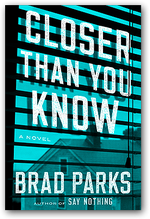
Closer Than You Know by Brad Parks

I’m afraid this comes across as a collection of backhanded compliments — I hope I’m wrong about that. If so, I didn’t mean it.

Closer Than You KnowCloser Than You Know

by Brad Parks

eARC, 416 pg.
Dutton Books, 2017

Read: December 6 – 8, 2017


When you read a book about a dog — from Marley & Me to Where the Red Fern Grows — you’ve got a pretty good idea what’s going to happen near the end. Same goes for a Nora Ephron movie. Or a Horror flick. But you still read or watch them, and you cry, or laugh and “awww”, or jump in your seat when you’re supposed to. Even on repeat reads/viewings. But when done right, those things just work. Similarly, think of a roller coaster — you may stand outside the fence watching the thing go around the track while standing in line (some lines give you plenty of opportunity to study), and armed with that study, as well as the your own eyes, you know that track is going to drop from in front of you in a couple of seconds — or the coaster is about to hit the loop — that doesn’t stop your stomach from lurching when it does.

Why do I bother with that? It’s a thought that kept running through the back of my mind while reading Closer Than You Know. By the time I hit the 10% mark, if you’d made me write down what I expected to happen — the reveals, the twists, the story beats, etc. — I’d have gotten an A. I’m not saying I’m smarter than the average bear or anything, anyone who’s read/watched a handful of thrillers would’ve been able to, too. And it worked. It absolutely worked. How Parks pulls it off, I do not know, but he does. He’s just that good.

And all the stuff that I didn’t guess? Oh, man, it was just so sweet when Parks delivered it, there were a couple of scenes that just left me stunned. And, I should rush to note, the way Parks made a couple of reveals that I’d seen coming from the start were so well done, it was like I hadn’t called the shot.

In his previous stand-alone, Parks said that he wanted to write about the thing that scares him the most — his children being kidnapped. Closer Than You Know taps into a very similar fear — Child Protective Services taking your child from you, leaving you to the mercies of the machine where you’re presumed guilty. This time instead of “the bad guys,” faceless criminals, taking someone’s kids, this time it’s the forces of justice, of law and order, taking the child — they’re celebrated for it, they’re doing it “for the best interests of the child.”

What’s worse is that no one will tell Melanie Barrick why her infant son had been taken from his daycare. Melanie spent most of her childhood in the Foster Child system, and most of that time in the worse situations that system has to offer. This isn’t the stuff of nightmares for Melanie, mostly because I don’t think she has enough imagination for her subconscious to cook this up. And then she’s arrested for possession of cocaine and paraphernalia suggesting distribution — a felony that will guarantee she’s about to lose her little Alex for good.

Melanie is a “good person” — she’s one of the success stories that we don’t see as often as we’d like from the Foster Child system. She worked to put herself through college; has a great, supportive husband; a lousy job (but with benefits) — but one that will help her family get somewhere; and is a devoted, doting, loving mother. The kind of person we all want to think we’re surrounded by, but fear we probably aren’t.

From this point on, it’s a cyclone for despair as every part of her life — her job, her husband, her brother, her friends, her finances, her sense of privacy and security — is affected, is under siege during this ordeal. Can Melanie maintain her hope, maintain her innocence, maintain her conviction that she’ll hold her baby boy again?

In charge of prosecuting “Coke Mom” (the press is always so quick with these nicknames), is Amy Kaye. Amy Kaye could easily be the protagonist in any legal thriller, she’s just the kind of character you want to read in that kind of thing. She’s smart, dedicated and driven — at the moment, she’s primarily concerned with a serial rape investigation that she’s doing pretty much on her own. Amy starts to make progress for the first time in years when she’s put on this prosecution (largely for political reasons) — which she’s more than willing to do, but she hates to take away time and attention from the rape investigation. What really makes this difficult for Kaye is that Melanie is one of the most recent victims in this investigation.

So basically, things are not going well for these two women. There are occasional moments where there is hope, where there is a hint of humor, or life for them and it’s just enough to get you to let your guard down before the gears turn again and life gets bad. Melanie seems to be a living embodiment of Murphy’s Law — things just never go her way in this book. As she notes herself, addicts talk about hitting rock bottom — she isn’t like them, she keeps finding new bottoms. It’s during this part of the book, where the gears keep grinding away, where the Justice System seems most like a machine, and least like a method for determining (not presupposing) guilt, that things will really get to you. That stomach lurching I mentioned earlier? That image came from somewhere. It feels so real, it feels like this is something that actually happened to someone that Parks spent hours interviewing. I don’t know how you read these parts of the book and not get demoralized — but unable to put the book down, because you just have to, have to know what happens next.

As I’ve said before, I’ve been a Brad Parks fan since the first time I read his debut novel — and I miss Carter Ross, the star of his series. The bad thing for me reading Say Nothing and Closer Than You Know is that these are so good, he’s going to spend years doing books like this and I don’t know if he’ll be able to get back to Carter. On the other hand, I can’t complain really if he’s putting out reading that’s this compelling. Yeah, I said the book was largely predictable — and you’ll likely find it the same. But you will be wrong about some things and you won’t know how he’ll show you that you’re right. Think of a NASCAR race — we all know that it’s basically a series of guys going fast and turning left — but it’s how they go fast and turn left that makes all the difference. Parks delivers the goods — the word riveting doesn’t do this book justice. It’s compelling, riveting, gripping, exciting, and will make you rethink so much of what you may believe of the Criminal Justice and Child Protective systems. You will laugh, you will be stunned (in good and bad ways), you will give up hope for this poor mother.

And you will hate when the book ends — as much as you breathe a sigh of relief as you know you have some degree of closure.
Disclaimer: I received this eARC from Dutton Books via NetGalley in exchange for this post — thanks to both for this.

—–

4 1/2 Stars

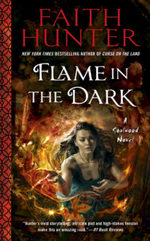
Pub Day Repost: Flame in the Dark by Faith Hunter


Flame in the DarkFlame in the Dark

by Faith Hunter
Series: Soulwood, #3eARC, 352 pg.
Ace/Roc, 2017
Read: September 22 – 27

Rookie Agent Nell Ingram and her PsyLED team start this novel in a multi-agency investigation into an attack on a political fundraiser — with a focus on one family in particular. There’s no obvious paranormal aspect to the attack, so PsyLED isn’t in the lead, but there’s enough to keep them hanging around the investigation. If for no other reason than the local vampires are interested in what’s going on. Soon, other attacks occur, making it even clearer that one family is the target. As the team starts to investigate that family, more questions are raised and secrets are revealed. But it’s a long while before the secrets and questions lead to anything useful for preventing further loss of life.

The presence of the vampires is a nice bonus — they were present a little in Blood of the Earth, but not really in Curse on the Land. Nell’s still struggling to make up for a faux pas in her initial exposure to the vampires — and a couple of them seem to be enjoying her discomfort. I enjoy seeing Hunter’s particular brand of vampires running around without Jane and her stakes, as long as she doesn’t return to this particular well too much in this series, the Vamps’ presence will be a plus.

The PsyLED case itself is a little on the tepid side — it’s far easier for readers to figure out what’s going on than it is for the characters, and that always hurts the stories somewhat. But — wow. What’s actually going on when the team finally puts all the pieces together? Wow — just wow. It makes putting up with their earlier slowness utterly worth it (also, the reader won’t be as correct as they thought they were for a long time). Basically, if you find yourself getting annoyed with this story, your patience will be rewarded. Probably more than rewarded.

Speaking of patience, Nell needs to exercise a good deal of it with her family, who are still struggling with understanding just what’s going on with her (and they don’t know it all!) and her move for independence from the cult she’s left. It’s clearly, and understandably, difficult to continue to distance herself from the ways and practices she was raised in, while trying to strengthen the ties with the family members still in the church. Meanwhile, the church does seem to be trying to change their practice — moving to orthopraxy, without much of a move towards orthodoxy. That kind of thing isn’t really going to work in the long run — but then again, Hunter’s not writing a realistic account of a movement in a religious group — so it’s not anything to get worked up over. Anyway, Nell puts her foot down on a couple of fronts and draws on some of what she’s learned in working with others, to be able handle her family in a way that hopefully gets through to them. She’s also making some smart moves regarding her sister, Mud/Mindy, who seems to share a lot of abilities and inclinations with Nell. I can’t wait to see what Hunter’s got up her sleeve with this.

While this is really Nell’s book (and series), there’s a great ensemble of characters here. Particularly in the PsyLED team. I’d have preferred a better use of the team, and for the second book in a row, I wondered why Hunter didn’t use some of the characters as well as she did in the first book. Maybe this is just me asking for more for Tandy to do.

There’s some satisfying development on the Brother Ephriam/foreign entity in Soulwood front (that’ll make sense to readers of the series), and regarding the “Vampire Tree.” Which just might be the creepiest floral entity I’ve ever read about — and it’s creepier than a lot of fauna, too. I’m particularly glad about the Brother Ephriam development, I was afraid that things were going to go on too long with that without any real shift in the status quo.

There’s also a stronger look at Nell’s romantic life here — her taking the first steps in exploring a real romantic relationship (in contrast to that marriage she was in), and maybe even getting her first “Improperly Proper Kiss.” There’s just enough romance story allow the reader to see her grow in this way (in addition to all the others she’s growing in), just one more step towards her fulfillment — but not so much that it’s the novel’s focus.

One of the pluses (and minuses) about this series all along has been how hard it is to simply say what Nell Ingram is. With most UF you can summarize things briefly: She can see dead people, he’s a wizard PI, she’s a skinwalker vampire hunter, he’s the world’s oldest living druid, she’s a changeling PI, she’s a ridiculously named werewolf who has a radio talk show, and so on . . . Nell’s a, um. Well. There’s magic, and powers over growing things, but no real spells, per se. See what I mean? This is a pain when trying to describe it to others, or even in knowing what to expect from her stories. And Hunter takes full advantage of this, she’ll have Nell do whatever at any point in time, and as long as it sort of relates to what she started off doing in Book 1, you buy it. By the same token, I can imagine that might be too much of a blank slate for Hunter — there are no well-established strengths/weaknesses/tropes to play with. There are things that Nell does here that just blows me away — and that has a lot to do with Hunter creating this magic creature/race on her own.

When I say that Hunter takes full advantage of this — I should say I thought she had been for the past two books — she really lets loose with it this time.

Let me try to sum up this rambling post: this is a slow burn of a novel — it puts down roots and grows like Nell’s plants, and eventually blossoms into something that’s great to look at. Be patient with it, watch the growth, and you’ll be rewarded. Because when things get going — they really get going, and it’s almost too much to take in. I vacillated a lot about what to rate this — I argued myself into 4-Stars and then into 5 and back into 4 and so on a few times. but because I really don’t place too much weight on the stars, really, I just stopped and split the difference. For those who’ve been around for the previous two books this is a must read — if this was going to be the last in the series, it’d be a decent way to leave (thankfully, Soulwood isn’t a trilogy); for Yellowrock fans who haven’t tried this series yet, you’ll appreciate it; and if you’ve never tried either — take a dip into this world, but I’ll warn you: you’ll end up reading all the others.

Disclaimer: I received this eARC from Berkley Publishing Group via NetGalley in exchange for this post — thanks to both for this. Thanks also to Let’s Talk! Promotions for the opportunity to take part in this book tour. My opinions about the book remain my own.

—–

4 1/2 Stars

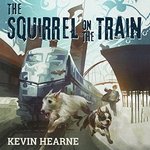
The Squirrel on the Train (Audiobook) by Kevin Hearne, Luke Daniels

The Squirrel on the Train (Audiobook) The Purloined Poodle (Audiobook)

by Kevin Hearne, Luke Daniels (Narrator)
Series: Iron Druid Chronicles/Oberon’s Meaty Mysteries, #2
Unabridged Audiobook, 2 hrs, 54 min.
Kevin Hearne, 2017
Read: December 2, 2016


I posted about the text version about a month ago (and reposted last week), but wanted to say a little more about the audiobook — so for the sake of those who just clicked on the Audiobook post, I’ll just repeat everything I said before, but tag on something at the end about Luke Daniels’ work. Can the magic of The Purloined Poodle be recaptured? Yes — maybe even topped. For many, that should be all I need to write. If that’s the case, you’re fine — go ahead and close this, no need to finish this.

If you’re still here, I’ll write a little more — While on a trip to Portland to go sight-seeing, er, sight-smelling, Oberon, Orlaith and Starbuck get away from Atticus (er, I mean, Connor Molloy) while chasing after a suspicious-looking squirrel. That’s a tautology, I realize, if you ask the hounds, but this was a really sketchy-looking squirrel. Anyway, this brought the group into the path of Detective Ibarra. She happens to be at the train station investigating the odd murder of a man who looks just like Atticus.

Naturally, that gets him interested and investigating things as best as he can. Thanks in no small part to the noses of the hounds, Atticus and an old friend are able to uncover what’s going on to help Atticus’ new friend make an arrest.

It’s a whole story in Oberon’s voice, I don’t know what else I can say about the writing/voice/feel of the book. That says pretty much everything. From Oberon’s opening comparison of the diabolical natures of Squirrels vs. Clowns to Orlaith’s judgment that “death by physics” “sounds like justice” to the harrowing adventure at the end of the novella, this is a fine adventure for “the Hounds of the Willamette and their pet Druid!”

No surprise to anyone who’s heard the audiobook for any of Oberon’s other appearances in short stories/novellas/novels, but Luke Daniels killed it here. From the overall characterization and narration he does as Oberon on down to the little details, like Oberon’s particular pronunciation of “Port-LAND,” I just love it. Frankly, how anyone can listen to his rendition of Starbuck’s first steps with words like, “Yes food!” and not giggle like Ron Swanson is beyond me. He gets the serious moments, the anger, the awe, the silliness just right. I just can’t say enough good things about this audio presentation.

There’s a nice tie-in to some of the darker developments in the Iron Druid Chronicles — that won’t matter at all if you haven’t read that far, or if you can’t remember the connection. This was a good sequel that called back to the previous book, and told the same kind of story in a similar way — but didn’t just repeat things. Just like a sequel’s supposed to be, for another tautology. I smiled pretty much the whole time I read it (as far as I could tell, it’s not like I filmed myself). I don’t know if we get a third in this series given the end of the IDC next year. If we do, I’ll be happy — if not, this is a great duology.

—–

4.5 Stars

Flame in the Dark by Faith Hunter


Flame in the DarkFlame in the Dark

by Faith Hunter
Series: Soulwood, #3

eARC, 352 pg.
Ace/Roc, 2017

Read: September 22 – 27


Rookie Agent Nell Ingram and her PsyLED team start this novel in a multi-agency investigation into an attack on a political fundraiser — with a focus on one family in particular. There’s no obvious paranormal aspect to the attack, so PsyLED isn’t in the lead, but there’s enough to keep them hanging around the investigation. If for no other reason than the local vampires are interested in what’s going on. Soon, other attacks occur, making it even clearer that one family is the target. As the team starts to investigate that family, more questions are raised and secrets are revealed. But it’s a long while before the secrets and questions lead to anything useful for preventing further loss of life.

The presence of the vampires is a nice bonus — they were present a little in Blood of the Earth, but not really in Curse on the Land. Nell’s still struggling to make up for a faux pas in her initial exposure to the vampires — and a couple of them seem to be enjoying her discomfort. I enjoy seeing Hunter’s particular brand of vampires running around without Jane and her stakes, as long as she doesn’t return to this particular well too much in this series, the Vamps’ presence will be a plus.

The PsyLED case itself is a little on the tepid side — it’s far easier for readers to figure out what’s going on than it is for the characters, and that always hurts the stories somewhat. But — wow. What’s actually going on when the team finally puts all the pieces together? Wow — just wow. It makes putting up with their earlier slowness utterly worth it (also, the reader won’t be as correct as they thought they were for a long time). Basically, if you find yourself getting annoyed with this story, your patience will be rewarded. Probably more than rewarded.

Speaking of patience, Nell needs to exercise a good deal of it with her family, who are still struggling with understanding just what’s going on with her (and they don’t know it all!) and her move for independence from the cult she’s left. It’s clearly, and understandably, difficult to continue to distance herself from the ways and practices she was raised in, while trying to strengthen the ties with the family members still in the church. Meanwhile, the church does seem to be trying to change their practice — moving to orthopraxy, without much of a move towards orthodoxy. That kind of thing isn’t really going to work in the long run — but then again, Hunter’s not writing a realistic account of a movement in a religious group — so it’s not anything to get worked up over. Anyway, Nell puts her foot down on a couple of fronts and draws on some of what she’s learned in working with others, to be able handle her family in a way that hopefully gets through to them. She’s also making some smart moves regarding her sister, Mud/Mindy, who seems to share a lot of abilities and inclinations with Nell. I can’t wait to see what Hunter’s got up her sleeve with this.

While this is really Nell’s book (and series), there’s a great ensemble of characters here. Particularly in the PsyLED team. I’d have preferred a better use of the team, and for the second book in a row, I wondered why Hunter didn’t use some of the characters as well as she did in the first book. Maybe this is just me asking for more for Tandy to do.

There’s some satisfying development on the Brother Ephriam/foreign entity in Soulwood front (that’ll make sense to readers of the series), and regarding the “Vampire Tree.” Which just might be the creepiest floral entity I’ve ever read about — and it’s creepier than a lot of fauna, too. I’m particularly glad about the Brother Ephriam development, I was afraid that things were going to go on too long with that without any real shift in the status quo.

There’s also a stronger look at Nell’s romantic life here — her taking the first steps in exploring a real romantic relationship (in contrast to that marriage she was in), and maybe even getting her first “Improperly Proper Kiss.” There’s just enough romance story allow the reader to see her grow in this way (in addition to all the others she’s growing in), just one more step towards her fulfillment — but not so much that it’s the novel’s focus.

One of the pluses (and minuses) about this series all along has been how hard it is to simply say what Nell Ingram is. With most UF you can summarize things briefly: She can see dead people, he’s a wizard PI, she’s a skinwalker vampire hunter, he’s the world’s oldest living druid, she’s a changeling PI, she’s a ridiculously named werewolf who has a radio talk show, and so on . . . Nell’s a, um. Well. There’s magic, and powers over growing things, but no real spells, per se. See what I mean? This is a pain when trying to describe it to others, or even in knowing what to expect from her stories. And Hunter takes full advantage of this, she’ll have Nell do whatever at any point in time, and as long as it sort of relates to what she started off doing in Book 1, you buy it. By the same token, I can imagine that might be too much of a blank slate for Hunter — there are no well-established strengths/weaknesses/tropes to play with. There are things that Nell does here that just blows me away — and that has a lot to do with Hunter creating this magic creature/race on her own.

When I say that Hunter takes full advantage of this — I should say I thought she had been for the past two books — she really lets loose with it this time.

Let me try to sum up this rambling post: this is a slow burn of a novel — it puts down roots and grows like Nell’s plants, and eventually blossoms into something that’s great to look at. Be patient with it, watch the growth, and you’ll be rewarded. Because when things get going — they really get going, and it’s almost too much to take in. I vacillated a lot about what to rate this — I argued myself into 4-Stars and then into 5 and back into 4 and so on a few times. but because I really don’t place too much weight on the stars, really, I just stopped and split the difference. For those who’ve been around for the previous two books this is a must read — if this was going to be the last in the series, it’d be a decent way to leave (thankfully, Soulwood isn’t a trilogy); for Yellowrock fans who haven’t tried this series yet, you’ll appreciate it; and if you’ve never tried either — take a dip into this world, but I’ll warn you: you’ll end up reading all the others.

Disclaimer: I received this eARC from Berkley Publishing Group via NetGalley in exchange for this post — thanks to both for this. Thanks also to Let’s Talk! Promotions for the opportunity to take part in this book tour. My opinions about the book remain my own.

—–

4 1/2 Stars

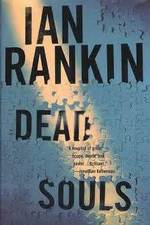
Dead Souls by Ian Rankin

Dead SoulsDead Souls

by Ian Rankin
Series: John Rebus, #10

Hardcover, 406 pg.
St. Martin’s Press, 1999

Read: November 10 – 13, 2017

For the best part of an hour, Rebus had been trying to blink away a hangover, which was about as much exercise as he could sustain. He’d planted himself on benches and against walls, wiping his brow even though Edinburgh’s early spring was a blood relative of midwinter. His shirt was damp against his back, uncomfortably tight every time he rose to his feet.

This might actually be the high point for Rebus in this novel — at least as far as the way he feels goes. The bad news is, this is from Chapter 1. Clearly, Jack Morton’s influence has clearly ended. Rebus is moments away from doing something he’ll regret almost instantly and that will have ramifications on everything he does for the foreseeable future, some of which will likely haunt him for more than that.

Which almost seems par for the course, I realize as I type that.

Anyway, Dead Souls focuses on crimes against children and what that can do to them — not just at the moment they’re victimized, but years later. There are also unintended (and fully intended consequences of crimes against adults throughout the book — Rebus’ own hands aren’t entirely clean here. Rebus’ actions in the opening pages cast enough of a shadow on him that his very brief involvement on another case is used by the defense to cast a shadow on the police’s investigation. He’s also tasked to investigate the apparent suicide of a police detective, informally, anyway. His main task is to work with Siobhan Clarke and a rookie to be a very obvious police presence to a convicted multiple-murderer, recently released and deported from the US back to Scotland. They really can’t do anything other than be visible for a few days until money runs out on the operation, but no one who knows this killer has any doubt that he’ll strike again, and the police are trying to discourage that. Unofficially, Rebus makes things uncomfortable for a pedophile in his new home — an act that will not go well and will spiral out of control — and he’s helping an old girlfriend look for her missing son.

Confused? Yeah, sure, I am — and I wrote that summary. Somehow, Rankin is able to take all that mess and assemble it into a novel that actually makes sense — with all of these stories being tied together, not just with over-lapping themes, but in reality in some sort of 6 degrees of separation fashion — even excluding DI Rebus. It’s really very impressive watching how Rankin weaves every strand of story and character in this novel — it always is, but this web seems more intricate than usual.

The other police in this novel interest me — I won’t go down the list, but those who can’t see why he cares about something, those who can’t understand why he’d do something with so little regard to consequences are on one end — the other end is filled by people (like Clarke) who know exactly what kind of man he is, and without approving or participating in the less-than-savory aspects his methods, can use him and them for good.

…he wondered why it was he was only ever happy on rewind. He thought back to times when he’d been happy, realising that at the time he hadn’t felt happy; it was only in retrospect that it dawned on him. Why was that?

There’s very little light in this novel, there’s introspection, there’s despair, there’s hatred, fear, prejudice, and opportunists taking advantage of all of that. But somehow the book never seems slow or ponderous — just Rebus chugging along, doing his thing. There’s also some strong action — some we see as it happens, but most we hear about after the fact (years or days alter). If you stop and think about how many criminal seem to “get away” with their crimes (as defined by not being charged/tried), it’s not that satisfying. If you think about the book in terms of Rebus (and through him, the reader) understanding what happened and why — it’s satisfying, not really cheerful, but satisfying in that regard.

The souls that are dead here have been killed by various means and methods over time — some realize that’s what they are, some haven’t a clue — some come to realize it in these pages (and some try to revitalize themselves). By and large, they’re dead souls walking, and seem intent on taking others with them. The question is: is DI Rebus among them?

I’m really not sure if I’ve said anything worthwhile about the book — it’s impressive, immersive and will not let you go — even days after finishing it. I don’t know that this is a bad one to be your first Rebus novel — you may be willing to cut him more slack for his questionable actions if you’ve got a history with him than you would be otherwise, however. For me, this is just further proof that Rankin is one of the best and is getting better (or was, at this point in his career anyway)

—–

4 1/2 Stars
2017 Library Love Challenge

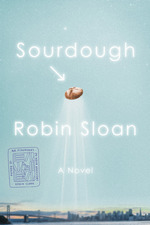
Sourdough by Robin Sloan

Two years ago, I read Robin Sloan’s Mr. Penumbra’s 24-Hour Bookstore, loved it, and spent 5 months trying to figure out how to talk about it. Last year, I listened to the audiobook, loved it, and spent 6 months trying to figure out how to write about it. I failed both times — and I’m not sure that I figured out how to talk about this book, but at least I got something posted. Short version: if you see a book by Robin Sloan somewhere, read it.

SourdoughSourdough

by Robin Sloan
Hardcover, 259 pg.
MCD Farrar, Straus and Giroux, 2017

Read: September 27 – 28, 2017

There’s a version of this where all I do is talk about how this is similar to/different from Mr. Penumbra’s 24-Hour Bookstore — but I don’t want to do that. Let me just say up front that if you liked Mr. Penumbra’s, you’ll dig this. If you didn’t like it, you will dig this — and you probably were having a bad day or weren’t paying attention when you read Mr. Penumbra’s (or you were created by the Tyrell Corporation). So let me sum up: you will dig this book.

This is the story of Lois Clary, a computer programmer working on ways to help robots redefine the concept of work for the future. It sounds like a dreadful place to work — intellectually rewarding, maybe; challenging, yes; but between the hours, the pay and the culture? No thanks. The work is demanding enough that they don’t have time to eat/prepare food, many using Slurry, “a liquid meal replacement,” for several meals each week.

Slurry was a nutritive gel manufactured by an eponymous company even newer than [the company Lois works for]. Dispensed in waxy green Tetra Packs, it had the consistency of a thick milkshake. It was nutritionally complete and rich with probiotics. It was fully dystopian.

Into her overworked and nutritive gel-sustained existence comes a menu for a small cafe that delivers. Their specialty is a spicy soup and a spicy sandwich. The sandwich is made on sourdough bread, and you get an extra slab with the spicy soup. This sourdough is a special thing (you may have guessed that based on the title). This becomes her new favorite food, and what she eats when she’s not consuming the gel.

She develops a semi-relationship with the brothers behind the soup/sandwich, and when they have to leave the country, they give her a part of their sourdoughs starter and a lesson on bread preparation (Lois doesn’t cook, and doesn’t come from a family that did). The starter has specific instructions that reminded me of what’s given when someone buys a mogwai — and just as important. Before she knows it, Lois is baking for herself, to give to others, and even to sell. She’s building a brick oven and really branching out socially (and keeping up with her work, too) — in this, Lois starts to enjoy life and work. I’m pretty sure this is the first time since school (if not ever) that this is true for her.

As she gets more involved with bread making, Lois makes friends, she travels a bit, meets new people — discovering three strange little subcultures along the. She also carries out an email correspondence with one of the brothers as he pursues his dream. That’s all I’m going to say about the plot — there is more to it than I said, but not much.

There’s something like magical realism at work throughout this, but I wouldn’t call it that. Mostly because, it’s weird science, not magic. But it’s probably not real science, just science the way we’d like it to work. Not so much so that this is Fantasy or Science Fiction, just… I don’t know what to call it. Whimsical science? 

It’s the way that Sloan tells the story that makes it worth it — there’s a spark to his writing that makes you want to read it. Lois’ world is our world, only better (and maybe a little worse), filled with interesting people doing interesting things. There’s a humanity in the narration, in the action that I can’t get enough of (ditto for his other work). There’s a humor throughout, but it’s not a funny book. But man, it’ll make you happy just to read it. I loved being in this world — it almost didn’t matter what happened to Lois and her starter (not that I didn’t enjoy it), just reading Robin Sloan’s prose is good enough for me. I’ve got a list of 10 quotations I wanted to use here that I couldn’t come up with a way to force into this post, and I think I could’ve easily let the size of that list double.

A book that will make you think, that may inspire, that will make you smile — that will make you want carbs (no joke — it required Herculean effort on my part each time I read a chapter or two not to call my son to tell him to bring home a fresh loaf from the bakery he works at), Sourdough is a gem.

—–

4 1/2 Stars

2017 Library Love Challenge

Pub Day Repost: The Hangman’s Sonnet by Reed Farrel Coleman

The Hangman's Sonnet Robert B. Parker’s The Hangman’s Sonnet

by Reed Farrel Coleman
Series: Jesse Stone, #16
eARC, 352 pg.
G.P. Putnam’s Sons, 2017
Read: July 3 – 5, 2017

On the one hand, I know that Coleman is a pro, and that he’s going to approach each series, each character from a different angle. But he’s so effective at writing a broken, grieving Gus Murphy, that you have to expect a grieving Jesse Stone to be written as effectively and with a similar depth. Which gave me a little pause when it came to cracking this one open — how much of a mess would Jesse be?

Big. A big mess.

Still, I was chuckling within a few pages — Jesse’s pursuing a path to self-destruction unlike any he’s had before, even that which cost him his career with the LAPD, but at his core he’s still the same guy we’ve been reading for 20 years. He may not care about himself (or at least he wants to punish himself), but Suit, Molly, and the rest of Paradise. When push comes to shove, he’ll do what he has to do. Some times he might need prompting, however.

But let’s set that aside for the moment — there are essentially two stories involving Jesse and the PPD. There’s the titular sonnet — a reference to a legendary lost recording by Massachusetts’ answer to Bob Dylan, Terry Jester. Sometime after this recording, Jester pulled a J. D. Salinger and disappeared from the public eye. Jester is about to turn 75, and a large birthday gala is being planned on Stiles Island. Jesse has to consult with Jester’s manager, PR agent and the chief of security for the island. Jesse can’t stand this idea — he can’t stand much to do with Stiles Island — he just doesn’t want to put up with the hassle, the celebrities, the distraction from the typical duties of PPD. But he doesn’t have much choice — for one, there will need to be something done to deal with the traffic, celebrities, and what not; but Jesse also has to deal with the mayor’s political aspirations. And you don’t get very far without the support (and money) of celebrities and the positive media coverage that kind of thing should bring.

On the other end of the spectrum, an elderly woman has been found dead in her bed, but under suspicious circumstances. She has deep ties to the history of Paradise, causing her death to grab more headlines than it might otherwise. Did I mention the mayor’s political aspirations? Well, the last thing she needs is an unsolved murder when she’s trying to cash in on the media attention that Jester’s celebration will bring. So she starts applying pressure to Jesse. When Jesse starts to think there’s a link between her death and the hunt for The Hangman’s Sonnet master recording, the pressure — and the urge to drink — increases for Paradise’s Police Chief. Thanks to the Law of Interconnected Monkey Business, the reader knew there was likely a link all along, so I don’t think I gave away too much there.

That right there would be enough to get me to read and probably recommend. But you add Coleman’s writing into the mix and you’ve got yourself a winner. There’s a wonderful passage where Jesse meditates on the beauty of the accessories to his drinking — the different glasses, the bottles, the rituals. The mystery was solid work — and I was close to figuring everything out, but not close enough. When the final reveal was made, I felt pretty stupid, all the pieces were there I just didn’t assemble them correctly. There were a couple of “red shirt” criminals early on that were so well written, that even when you know they’re not going to stick around too long, you get invested in them (one of them had a death scene fairly early that most writers would let be predictable — and the death was — but the way that Coleman wrote it got me highlighting and making notes). Coleman even does something that Parker said he couldn’t do.

I won’t say that everything that happened during Debt to Pay has been dealt with thoroughly — it hasn’t. But, most of the characters have been able to get a degree of resolution and closure that means they can move forward. Not perfectly, perhaps, but honestly. Jesse, in particular, might come back for book 17 in a significantly better place (or at least significantly different) — but the core will be there, and woe on any criminal that steps foot into Paradise.

Great character moments; slow, organic development; and top-notch writing. Coleman delivers again, continuing to take the foundation laid by Parker and building on it in a way that’s true to the spirit of the world Parker created, but brought to us with a newfound depth.

Disclaimer: I received this eARC from Putnam Books via NetGalley in exchange for this post — thanks to both for this.

—–

4 1/2 Stars

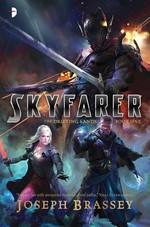
Pub Day Repost: Skyfarer by Joseph Brassey

SkyfarerSkyfarer

by Joseph Brassey
Series: Drifting Lands, #1
eARC, 352 pg.
Angry Robot Books, 2017
Read: August 11 – 14, 2017

I’ve read a few interesting mergers of SF and Fantasy this year — some that were just that, interesting, some that were good — a couple that were more than good. Thankfully, Brassey’s Skyfarer was in that latter camp. Even in those early chapters where I was still trying to figure out the world, remember which name lined up with what character, and get a handle on the plot, I had a sense that this was going to be one of those books I talked about very positively — and very often. That sense just only got stronger as the book went on.

I feel like could go on for pages about this book — but won’t let myself (so I can avoid the wrath of Angry Robot and you can actually get something out of reading it yourself — which you have to go do as soon as it comes out).

So you’ve got this group called the Eternal Order — a group committed to death, destruction, power, and plunder. When it comes to numbers, they can’t stand up to the civilizations around them, at least when they ally themselves against the Order. But when they (rarely, it seems) can come in with a quick strike against one people they can wreak much havoc. Which is exactly what they do here — they come in and demand that the rulers of Port Providence hand over the Axiom Diamond, or they will wipe them out — and it’s clear that Lord Azrael, the commander, isn’t being hyperbolic. The royal family responds with armed resistance, which has some measure of success, but is primarily fighting losing battles.

Into the midst of this looming genocide comes a wayward spacecraft, the Elysium. The Elysium is a small carrier with more weapons than one should expect (we’re initially told this, anyway). The crew has just welcomed an apprentice mage, fresh from the academy, to complete her studies with her mentor/professor. Aimee de Laurent has been pushing herself for years to excel, to be the best — if there’s a sacrifice to be made for her studies, she’s made it. All leading up to this day, where her professor, Harkon Bright has taken her as an apprentice on his exploration ship to complete her education. She joins a crew that’s been together for years and is eager to find her place within them.

When the Elysium arrives in the middle of this, it doesn’t take anything approaching calculus for them to figure out what this particular crew is going to do. There’s The Eternal Order on one side, civilians and the remnants of the military on the other. There’s a ravaged civilization on one side and the ravagers on the other. There’s a group trying to prevent The Eternal Order from getting something they want and there’s, well, The Eternal Order. So our band of adventurers tell the remnants of the royal family that they’ll hunt down the Axiom and protect it.

This isn’t exactly a revolutionary idea for a story — but man, it doesn’t matter. There’s a reason everyone and their brother has tried this — it’s a good story. Especially when it’s told well. And, I’m here to tell you that Joseph Brassey tells it really well. Not just because of his hybridization of SF and Fantasy, but because he can take a story that everyone’s taken a shot at and make it seem fresh, he can deliver the excitement, he can deliver the emotion. There is some horrible stuff depicted — either in the present or in flashbacks; there’s some pretty tragic stuff; and yet this is a fun read — the pacing, the tone, everything makes this feel like the adventure films and books that I grew up on. You want to read it — not just to find out what’s going to happen next, but because it’s written in such a way that you just want to be reading the book, like a having a glass of iced tea on a summer’s day.

The characters could uniformly use a little more fleshing out — which isn’t a weakness in the writing. Brassey pretty much points at the places where the reader will more details (especially when it comes to Aimee and Harkon), making us want more than he’s giving us. What we’re given, though, is enough to make you root for or against them, hope that they survive (or are subjected to painful and humiliating defeat), or simply enjoy the camaraderie. The good news is, that there’s more to learn about everyone — about their past and their present — and how those shape their future.

You’ve got magic — various schools of magic, too, each with its own understanding of what magic is and how it can be used; you’ve got swords and lasers (and similar kinds of weapons); you’ve got space ships running of magic (not just hyperspace drives that act like magic); objects and persons of prophecy; beings and intelligences that aren’t explicable — tell me why you wouldn’t want to read this? Especially when you throw in epic sword fights, magic duels, and spacecraft action all written by someone who writes like a seasoned pro. Sign me up for the sequel!

Disclaimer: I received this eARC from Angry Robot Books via NetGalley in exchange for this post — thanks to both for this.

—–

4 1/2 Stars

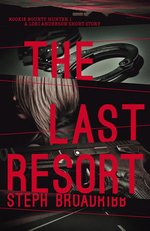
The Last Resort by Steph Broadribb

The Last ResortThe Last Resort

by Steph Broadribb
Series: Lori Anderson, #.5

Kindle Edition, 55 pg.
Orenda Books, 2017

Read: August 22, 2017


So, Steph Broadribb has put out a short story pre-quel to one of my favorite debuts of the year, Deep Down Dead — which is numbered 1, so there’s likely more on the way. The Last Resort is a short story that gives a glance into the early days of Lori’s training to be a bounty hunter, and an early case she worked.

Let me start with the reasons I didn’t want to read this (keep reading, or skip this if you want to get to the positives): I don’t typically like prequels, especially prequels that tread the same ground as the original stories. Deep Down Dead talks about Lori’s training, about the relationship she has with her trainer — and I liked the way it did that. I didn’t want this to take anything away from the way Broadribb opened up the relationship throughout the novel.

Here’s why I’m glad I read it: It. Rocked.

While that’s all I need to say, I should expand a bit: Lori’s a rookie, she makes rookie mistakes, but she’s got the same heart, the same moxie, and (probably more importantly) Broadribb writes with the same panache and apparent sadistic glee in seeing her creation get beat up. And, it doesn’t trample anything from the novel. So forget about that objection/caution.

This is listed everywhere as 55 pages — it’s not. There’s some promotional material/samples of Deep Down Dead and the like. I’m not sure exactly how long it is — but it’s pretty unimportant. You’re not going to put it down once you start and it’ll be too short. Even if it was 55 pages, it’d be too short. Because once you step into Lori Anderson’s world, you don’t want to leave. Fast and furious, this’ll help readers remember why thy fell for Lori — or will convince new readers that they need go get the novel. Either way, it’s a win.

—–

4 1/2 Stars

Page 21 of 30

Powered by WordPress & Theme by Anders Norén