Tag: 4 Stars Page 10 of 88

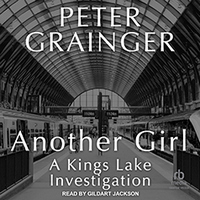
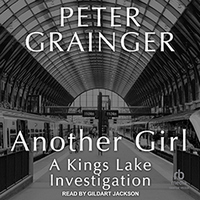
Another Girl (Audiobook) by Peter Grainger, Gildart Jackson: A Different Focus Keeps The Series Fresh

Another GirlAnother Girl

by Peter Grainger, Gildart Jackson (Narrator)

DETAILS:
Series: A Kings Lake Investigation, #4
Publisher: Tantor Audio
Publication Date: January 23, 2024
Format: Unabridged Audiobook
Length: 8 hrs., 38 min.
Read Date: February 13-15, 2024

What’s Another Girl About?

Serena Butler is loaned out to do some plainclothes intelligence gathering in a nearby city. She misses a check-in with her handler, right after saying something tantalizing about making some new friends. This galvanizes her team back at King’s Lake and her DCI pushes her weight and rank around to get involved in the investigation into her disappearance–and the drugs investigation Butler was helping with.

At the same time, there’s an apparent hit and run for the Murder Squad to look in back at home–and while they do their due diligence with that, their concern for one of their own clearly has captured their attention (also, an absent pathologist means a delayed autopsy, so they can only do so much).

A Change of Focus

Initially, DCI Cara Freeman and DC Serena Butler carried most of this book–although DI Tom Green gets a lot more focus than he’s ever received before. And that was just great, I always liked him, but I wanted to see him get to shine a bit. Freeman and Butler are a great pairing and really establish this as a different kind of entry in this series.

Yes, when Waters shows up roughly mid-way through the book, he ends up getting a lot of the focus, as we’re used to. Still, the narrative really does take advantage of Waters’ absence and explores the team and uses the multiple POVs to a greater advantage than Grainger has in the past. I don’t want Waters to get pushed to the background on a regular basis–but man, I really appreciated this.

But this is Serena’s book, really. We start with her assignment hitting a bump in the road and we finish by it going deeper than she was ready for. But throughout, we get to learn a lot more about this character that’s been around for twelve books and really takes on new life and a greater depth. She’s been a favorite of mine from early on in her first appearance–and I like her more now that I understand her better. Honestly, if she got her own spin-off series in the future, I’d be game, or just for more books like this. (a book that uses Green more would also be welcome, but given the way his character typically operates, I’m not sure that’s possible).

DC’s Shadow

DC Smith (it still feels strange to call him David) has always loomed large over these King’s Lake books, but it seemed to me that it was a little larger this time than it had been since Songbird (but it’s not like I keep statistics or anything). He’s either mentioned in conversation (by people on all sides of the law) or thought of by Chris and Serena–who will remember some advice/guidance he gave them–which allows Granger to slip in a line or two using his DC voice–and I’m always going to be in favor of that.

Which, I guess, brings us to:

A Word About the Narration

This is an audiobook, so I need to talk about the narration. But as I keep saying, I don’t know what to say about Gildart Jackson’s work on this series that I haven’t said umpteen times.

When his voice starts coming out of my phone, my mind instantly settles in for a good time. There’s a calmness that he evokes in me almost instantly (note: it’s not his voice, I rarely felt calm during the Alex Verus books). He catches the humor, the tension, the camaraderie, the…I don’t know, the spirit of these books. I’ve said it before, I’ll say it again, I’m not picking these up in print (although, I know at least one non-audiobook person who says they’re great in print), I have to have Jackson’s voice.

So, what did I think about Another Girl?

Grainger doesn’t frequently put his King’s Lake characters in peril (I thought about listing exceptions to that rule, but I won’t–but the point stands), this series is about typical investigations. But when he does, he does it effectively. And boy howdy, he does so here. I haven’t been this concerned for the fate of a Grainger character since A Private Investigation‘s close.

But more than just the danger aspect, watching Serena deal with the pressures of working undercover (especially as she initially wasn’t supposed to go as deep as she ended up) was so well done. Equally well done was watching her team fret about her when they couldn’t contact her and weren’t sure what was going on.

The hit-and-run story never got the time I initially expected, but the way that Grainger worked it into the overall storyline was his typical well-done work. He was able to weave it into the drugs story and show how it is about much more than drugs.

This tied this particular novel into something we first saw in On Eden Street and will likely show up for at least one more novel. Which isn’t to say that this novel isn’t largely a stand-alone like the rest, but there’s something that will tie it to further books.

I think I’ve rambled enough–possibly too much. I had a great time with this one, and as always I strongly encourage you to give this one a try. It would serve as a fine jumping-on point to the series (like every book so far), but if you have the time and means, I’d suggest starting at the beginning. Or somewhere. Just start with Peter Grainger, Gildart Jackson, and the detectives in and around King’s Lake Central.


4 Stars

Irresponsible Reader Pilcrow Icon

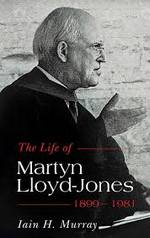
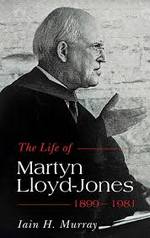
REPOSTING JUST CUZ: The Life of Martyn Lloyd-Jones – 1899-1981 by Iain H. Murray

I came across this post a couple of days ago, and thought I’d put it up again—and not only because I’m struggling with another post, but it sure helped.


The Life of Martyn Lloyd-Jones - 1899-1981The Life of Martyn Lloyd-Jones – 1899-1981

by Iain H. Murray
Trade Paperback, 496 pg.
Banner Of Truth, 2013
Read: Jan. 12 – Feb. 9, 2014

This is a frequently flawed book, and at times it was only a sense of duty/politeness to the person who eagerly pressed it into my hands that I persevered. But in the end, I couldn’t help but walk away awed at both the man and the book that tried to summarize his life (yet, I don’t think you’ll see me picking up the two-volume version this was condensed from anytime soon).

The first fifty or so pages, recounting his youth, medical school/early practice, and conversion — and even the beginnings of his ministry — were pretty tedious, and more often than not, far too detailed.

Once Murray was able to focus on his first years of ministry in Wales, and his eventual move to Westminster Chapel, the book took off. It’s clear that the hand of the Lord was upon his ministry, and gave him much evident fruit. It’s impossible to disagree with Murray’s explanations for Lloyd-Jones’ success, and I can only imagine ministers would benefit from reading this with an eye for how to reform their own work. Throughout the chapters detailing his pastoral work — particularly the chapter “Sundays in the 1950s” — Murray’s affection for, and devotion to, Lloyd-Jones threatens to overwhelm the narrative, and at times it seems that “the Doctor” could do nothing wrong. I remarked during that chapter that I wasn’t sure if I was reading biography or hagiography, which may seem a bit harsh. But really, Murray became a rabid fanboy here.

The chapters devoted to the controversies over Evangelical unity, conflict with Graham, Packer and Stott (and names that didn’t register with me) were again, far too detailed for my taste — but it’s understandable, I think. Murray was trying to set the record straight on certain issues/incidents, to make sure the historical record gets Lloyd-Jones’ perspective on them (particularly when others, claiming to speak on his behalf, got it wrong). Not having a dog in those fights, my eyes glazed over more than I liked, but I sure didn’t go back and re-read to make certain I didn’t miss anything. Murray is able here to critique Lloyd-Jones a bit in these chapters, which was good to see.

The final chapter, depicting the final three years of his life, as his cancer was gaining the upper hand, was moving, inspirational and convicting. Lloyd-Jones continued to preach when able, to correspond with and advise younger ministers, write and start Murray on his biography — spurred on by the knowledge that his death was near. Lloyd-Jones spoke of paying attention to death, dying the right way — with an eye to the glory he was going to, and anticipating it. No way that I try to summarize will do it justice, just read it for yourself. You might want to keep a Kleenex™™ handy. This chapter made all the stuff I’d grumbled and trudged through worth it.

Not Murray’s best — but obviously a work of love for the subject. Can’t imagine a little of that won’t rub off on the reader.

—–

4 Stars

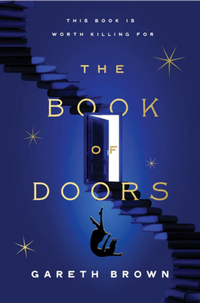
PUB DAY REPOST: The Book of Doors by Gareth Brown: We All Know Books are Magical, but Some Books Really Are Magic

The Book of DoorsThe Book of Doors

by Gareth Brown

DETAILS:
Publisher: William Morrow & Company
Publication Date: February 13, 2024
Format: eARC
Length: 416
Read Date: January 10-16, 2024

Buy from Bookshop.org Support Indie Bookstores

What’s The Book of Doors About?

Cassie Andrews grew up in the Northwest and had what you’d call a typical, nice life (with a little tragedy, because we all do). She grew up, had one big adventure, and then settled into New York City, and is having a typical life—with enough fun and love to keep going, but nothing exciting happens to her. Then one day a regular customer that she’d befriended dies and leaves a book for her. It’s a lovely little book, so she takes it home with her.

She quickly discovers that this isn’t any ordinary book—in fact, it’s called “The Book of Doors” and the inscription inside it tells her that every door is any door. An odd thing to say, but she discovers that it means she can open and step through any door with the book in her hand. Cassie and her roommate Izzy have some fun with the book, before Izzy starts to worry about the cost of this magic.

Cassie’s undeterred, however, and keeps experimenting. It’s not too long before a man called The Librarian (by some) finds them—warning Cassie that she’s in danger because of this book. There are many “special books” like the Book of Doors (not all as powerful), and there are those who want to add her book to their collection and will stop at nothing to get it. As these people are equipped with their own special, magical books—the things they can do are pretty remarkable.

Can Cassie stay ahead of these people—or off of their radar entirely? Can she use her book to help the Librarian keep his collection of books safe from a mysterious woman determined to possess them all?

Time Travel

This is more of a Fantasy kind of Time Travel than a Hard Sci Fi Time Travel. That’s really not a profound observation on my part, come to think of it—everything these books do is described as magical. So a lot of your typical rules when it comes to Time Travel are thrown out. You’re not going to get a butterfly effect here, or see what happens if you go back and keep your dad and mom from going to the Enchantment Under the Sea dance together. It’s more along the lines of what the Wyld Stallyns did (at least in the first movie, I can’t speak to the others).

I mention this just so you know what you’re getting into—I have friends who take a very purist approach to Time Travel, and want scientific explanations for everything (hopefully with a good amount of theorizing). They will probably not appreciate this book for that. On the other hand—I have friends who get tired of that kind of thing—they’ll have a lot of fun with Brown’s take. There are probably more people who won’t care, and will just have fun with the wibbly wobbly of it all.

The Rest of the Magic

There are many more books than The Book of Doors running around (more than we’re told specifically about), and all of them have applications you wouldn’t immediately think about. What the Book of Illusion can do by someone who knows what they’re doing? Awesome. The Book of Luck is pretty much what the tin says. The Book of Despair…it’s worse than you think, at least when used by someone who knows what they’re doing (and who should never be allowed to use it).

I’m tempted to keep listing the books, but that would get boring for you and me. The great thing about Brown’s magic system is the wide diversity of magical abilities and the way they’re used. I don’t know how much time he spent coming up with the ideas behind them, or if he just had a handful and then created a new book when he wrote himself into a corner—but either way, a good deal of ingenuity is displayed here, and I want to see more of it. (honestly, I assume he did a thorough job of coming up with the books beforehand, but I just like the idea of him getting to the point where says…”I need a Book of Antigravity so Cassie can float away from a thrown knife.”*)

* Not anything that actually appears in the book.

Quibbles

It’s not a perfect book. Few are, so this isn’t about me listing off reasons to avoid this book. I just want to be thorough as I talk about it.

First off, the book (particularly in the beginning) relies too much on the POV characters looking at reflections of themselves. This is a pretty common thing—some would call it a cliche (particularly as a woman character describes some of her physical attributes)—and the first time that someone did it, I rolled my eyes and moved on. But then it happened again, quickly after that, while it was still echoing in my ear. And then again. And it became a thing I paid too much attention to because it happened so much. If mirrors and reflections had become very important to the magic or plot as a whole—I might have spent a paragraph or two lauding this. But it didn’t. It just distracted and kind of annoyed me.

The “Big Bad” doesn’t have a name. She’s simply, “the woman.” If she was a character who showed up in other places, and we were supposed to figure out which of female characters she was—that’d be one thing. But there’s never a doubt about that, she’s simply “the woman.” She doesn’t even get a nickname like “She Who Must Not Be Named” or even “The Big Bad.” Surely, at some point, the subculture surrounding these special books would’ve started referring to her as something along those lines. A name, a title (like The Bookseller did), something whispered in the shadows. Not just “the woman.”

There are probably other flaws in the book—undoubtedly there are*—but these are the only two that jumped out at me (and kept doing so). In the end—both were easily overcome by the weight of all the good-to-great things about it. But I was irked enough that I had to talk about them a bit.

* Just before I hit “Publish,” I remembered a chapter focused on “the woman” that made me briefly consider stopping entirely. I am so glad that I persevered, and it wasn’t that difficult to.

Now, let’s get back to the good stuff. I probably won’t think about these issues again myself, when I think back on this book, I’m only going to think of what I say next.

So, what did I think about The Book of Doors?

If you took Peng Shepherd’s The Cartographers and merged it with Robin Sloan’s Mr. Penumbra’s 24-Hour Bookstore, you’d get something sort of like this. The secret subculture that arose around these special books—subcultures, really—made me think of these books, as well as the devotion to something that’s increasingly archaic—a typeface, paper maps, antique books, etc. There is great power, as well as great affection, in these artifacts of a former age. Sure, they’re not magical or mystical like Shepherd, Sloane, or Brown say. But these novels resonate for the same/similar reasons, these things call to us.

Setting aside all the magic and plot and character—just focusing on what The Book of Doors says about books in general, is pretty special. This aspect alone is going to speak to a lot of readers (most people who’d call themselves “readers,” in fact.). And you could spend time just flipping through those parts of the book.

On the whole, this novel was a slow burn for me—I was instantly drawn to the idea behind the books, I liked Cassie, and the way that Brown showed her reacting to the book. But then once we got into the story about “the woman” and the Librarian, my interest waned a lot. I’m not sure it should’ve, and many will likely have a different reaction, but it did. But as I kept reading, I got more and more invested and my inner-critic shut up because he was as interested in what was going to happen next as the rest of me was.

By the time you figure out what Brown’s end-game was—and Cassie’s, too—it’s so satisfying to see it all play out. It’s really a very tidy book and everything means something. But it’s not just the plot that works so well, all the emotional beats are so well-executed that you will be tempted to go back through Brown’s non-existent backlist to see where he figured out to write them so effectively.

If you like the idea of a kind of magic you’ve not seen before, magical time travel (among other things), an off-the-radar subculture devoted to this magic (or at least the idea behind it), and a quiet bookseller finding her inner strength and perseverance in the face of evil—you’re going to want to check out The Book of Doors. I strongly recommend you do.

Disclaimer: I received this eARC from William Morrow & Company via NetGalley in exchange for this post—thanks to both for this.


4 Stars

This post contains an affiliate link. If you purchase from it, I will get a small commission at no additional cost to you. As always, the opinions expressed are my own.
Irresponsible Reader Pilcrow Icon

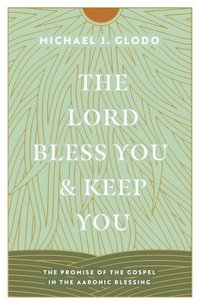
The Lord Bless You and Keep You by Michael J. Glodo: It’s More than Just a Signal that the Pastor is Done

The Lord Bless You and Keep YouThe Lord Bless You and Keep You:
The Promise of the Gospel
in the Aaronic Blessing

by Michael J. Glodo

DETAILS: 
Publisher: Crossway
Publication Date: September 19, 2023
Format: Paperback
Length: 174 pg.
Read Date: December 3-17, 2023
Buy from Bookshop.org Support Indie Bookstores

The Lord spoke to Moses, saying, “Speak to Aaron and his sons, saying, Thus you shall bless the people of Israel: you shall say to them,

  The Lord bless you and keep you;

  the Lord make his face to shine upon you and be gracious to you;

  the Lord lift up his countenance upon you and give you peace.

 “So shall they put my name upon the people of Israel, and I will bless them.”

What’s The Lord Bless You and Keep You About?

This book is a reflection on, study of, and application of the Aaronic benediction (above), “possibly the most frequently heard passage of Scripture in Christian worship”.

Luther called the Psalms “a little Bible” since each psalm sets out in brief form all that is taught in the rest of Scripture. I am suggesting the same observation is true of the Aaronic blessing. By exploring the blessing’s background, central elements, spiritual meaning in Israel, and realization in Christ, we will grasp the comprehensive nature of the theme of God’s face and be enabled to stand more fully in its light. We will see that God made us with faces so that his could shine on ours and that the Aaronic blessing could be to us not only a “little Bible,” but a “little gospel.”

The book is essentially broken into two sections—the first three chapters examined the context of the Aaronic blessing’s introduction, the content of the blessing itself, and then looked at it in the light of the New Testament. The second section is more practical—the consequences of the blessing both for ourselves and the way we treat others, and the pastoral use of the blessing.

A Question of Timing

I would’ve appreciated a version of this book written in 2019. Too often, Glodo, sounded to me like he was trying to re-fight the battle over masks from 2020-2021 with a theological veneer in the latter chapters (and the introduction). A version of those chapters without reference to that would’ve been more helpful—and less potentially off-putting—and might have prepared the reader to come to their own informed conclusions on that issue if a similar pandemic occurs again.

Maybe I’d have been happier if he took a firm pro-/con- mask position, because the mentions of the practice with just a negative tone (or so I took it), was unsatisfactory. (if only because it was so vague it’s hard to interact with)

So, what did I think about The Lord Bless You and Keep You?

I was very excited to hear that someone was giving us an entire book on the Aaronic benediction—and overall, I was pleased with what we got. Personally—I wanted chapters 1-2 to be longer, more detailed and a little more developed, especially 2. I think three could’ve probably used the same treatment, but I didn’t write that in my notes (unlike with the other two). The chapters on the consequences of the blessing were fine. I also anticipated that the book would’ve featured a lot more of what the chapter on pastoral use and application gave us—and would’ve liked more of that.

That said, I’m not complaining that Glodo didn’t write the book I wanted/expected—but it would’ve been nice. (I’m not sure we needed the appendix, but, eh—it’s an appendix, so…who cares?)

I really do think that this is a good contribution and will be helpful to readers. I do recommend reading this—particularly the first half.


4 Stars

This post contains an affiliate link. If you purchase from it, I will get a small commission at no additional cost to you. As always, the opinions expressed are my own.
Irresponsible Reader Pilcrow Icon

The Book of Doors by Gareth Brown: We All Know Books are Magical, but Some Books Really Are Magic

The Book of DoorsThe Book of Doors

by Gareth Brown

DETAILS:
Publisher: William Morrow & Company
Publication Date: February 13, 2024
Format: eARC
Length: 416
Read Date: January 10-16, 2024
Buy from Bookshop.org Support Indie Bookstores

What’s The Book of Doors About?

Cassie Andrews grew up in the Northwest and had what you’d call a typical, nice life (with a little tragedy, because we all do). She grew up, had one big adventure, and then settled into New York City, and is having a typical life—with enough fun and love to keep going, but nothing exciting happens to her. Then one day a regular customer that she’d befriended dies and leaves a book for her. It’s a lovely little book, so she takes it home with her.

She quickly discovers that this isn’t any ordinary book—in fact, it’s called “The Book of Doors” and the inscription inside it tells her that every door is any door. An odd thing to say, but she discovers that it means she can open and step through any door with the book in her hand. Cassie and her roommate Izzy have some fun with the book, before Izzy starts to worry about the cost of this magic.

Cassie’s undeterred, however, and keeps experimenting. It’s not too long before a man called The Librarian (by some) finds them—warning Cassie that she’s in danger because of this book. There are many “special books” like the Book of Doors (not all as powerful), and there are those who want to add her book to their collection and will stop at nothing to get it. As these people are equipped with their own special, magical books—the things they can do are pretty remarkable.

Can Cassie stay ahead of these people—or off of their radar entirely? Can she use her book to help the Librarian keep his collection of books safe from a mysterious woman determined to possess them all?

Time Travel

This is more of a Fantasy kind of Time Travel than a Hard Sci Fi Time Travel. That’s really not a profound observation on my part, come to think of it—everything these books do is described as magical. So a lot of your typical rules when it comes to Time Travel are thrown out. You’re not going to get a butterfly effect here, or see what happens if you go back and keep your dad and mom from going to the Enchantment Under the Sea dance together. It’s more along the lines of what the Wyld Stallyns did (at least in the first movie, I can’t speak to the others).

I mention this just so you know what you’re getting into—I have friends who take a very purist approach to Time Travel, and want scientific explanations for everything (hopefully with a good amount of theorizing). They will probably not appreciate this book for that. On the other hand—I have friends who get tired of that kind of thing—they’ll have a lot of fun with Brown’s take. There are probably more people who won’t care, and will just have fun with the wibbly wobbly of it all.

The Rest of the Magic

There are many more books than The Book of Doors running around (more than we’re told specifically about), and all of them have applications you wouldn’t immediately think about. What the Book of Illusion can do by someone who knows what they’re doing? Awesome. The Book of Luck is pretty much what the tin says. The Book of Despair…it’s worse than you think, at least when used by someone who knows what they’re doing (and who should never be allowed to use it).

I’m tempted to keep listing the books, but that would get boring for you and me. The great thing about Brown’s magic system is the wide diversity of magical abilities and the way they’re used. I don’t know how much time he spent coming up with the ideas behind them, or if he just had a handful and then created a new book when he wrote himself into a corner—but either way, a good deal of ingenuity is displayed here, and I want to see more of it. (honestly, I assume he did a thorough job of coming up with the books beforehand, but I just like the idea of him getting to the point where says…”I need a Book of Antigravity so Cassie can float away from a thrown knife.”*)

* Not anything that actually appears in the book.

Quibbles

It’s not a perfect book. Few are, so this isn’t about me listing off reasons to avoid this book. I just want to be thorough as I talk about it.

First off, the book (particularly in the beginning) relies too much on the POV characters looking at reflections of themselves. This is a pretty common thing—some would call it a cliche (particularly as a woman character describes some of her physical attributes)—and the first time that someone did it, I rolled my eyes and moved on. But then it happened again, quickly after that, while it was still echoing in my ear. And then again. And it became a thing I paid too much attention to because it happened so much. If mirrors and reflections had become very important to the magic or plot as a whole—I might have spent a paragraph or two lauding this. But it didn’t. It just distracted and kind of annoyed me.

The “Big Bad” doesn’t have a name. She’s simply, “the woman.” If she was a character who showed up in other places, and we were supposed to figure out which of female characters she was—that’d be one thing. But there’s never a doubt about that, she’s simply “the woman.” She doesn’t even get a nickname like “She Who Must Not Be Named” or even “The Big Bad.” Surely, at some point, the subculture surrounding these special books would’ve started referring to her as something along those lines. A name, a title (like The Bookseller did), something whispered in the shadows. Not just “the woman.”

There are probably other flaws in the book—undoubtedly there are*—but these are the only two that jumped out at me (and kept doing so). In the end—both were easily overcome by the weight of all the good-to-great things about it. But I was irked enough that I had to talk about them a bit.

* Just before I hit “Publish,” I remembered a chapter focused on “the woman” that made me briefly consider stopping entirely. I am so glad that I persevered, and it wasn’t that difficult to.

Now, let’s get back to the good stuff. I probably won’t think about these issues again myself, when I think back on this book, I’m only going to think of what I say next.

So, what did I think about The Book of Doors?

If you took Peng Shepherd’s The Cartographers and merged it with Robin Sloan’s Mr. Penumbra’s 24-Hour Bookstore, you’d get something sort of like this. The secret subculture that arose around these special books—subcultures, really—made me think of these books, as well as the devotion to something that’s increasingly archaic—a typeface, paper maps, antique books, etc. There is great power, as well as great affection, in these artifacts of a former age. Sure, they’re not magical or mystical like Shepherd, Sloane, or Brown say. But these novels resonate for the same/similar reasons, these things call to us.

Setting aside all the magic and plot and character—just focusing on what The Book of Doors says about books in general, is pretty special. This aspect alone is going to speak to a lot of readers (most people who’d call themselves “readers,” in fact.). And you could spend time just flipping through those parts of the book.

On the whole, this novel was a slow burn for me—I was instantly drawn to the idea behind the books, I liked Cassie, and the way that Brown showed her reacting to the book. But then once we got into the story about “the woman” and the Librarian, my interest waned a lot. I’m not sure it should’ve, and many will likely have a different reaction, but it did. But as I kept reading, I got more and more invested and my inner-critic shut up because he was as interested in what was going to happen next as the rest of me was.

By the time you figure out what Brown’s end-game was—and Cassie’s, too—it’s so satisfying to see it all play out. It’s really a very tidy book and everything means something. But it’s not just the plot that works so well, all the emotional beats are so well-executed that you will be tempted to go back through Brown’s non-existent backlist to see where he figured out to write them so effectively.

If you like the idea of a kind of magic you’ve not seen before, magical time travel (among other things), an off-the-radar subculture devoted to this magic (or at least the idea behind it), and a quiet bookseller finding her inner strength and perseverance in the face of evil—you’re going to want to check out The Book of Doors. I strongly recommend you do.

Disclaimer: I received this eARC from William Morrow & Company via NetGalley in exchange for this post—thanks to both for this.


4 Stars

This post contains an affiliate link. If you purchase from it, I will get a small commission at no additional cost to you. As always, the opinions expressed are my own.

Irresponsible Reader Pilcrow Icon

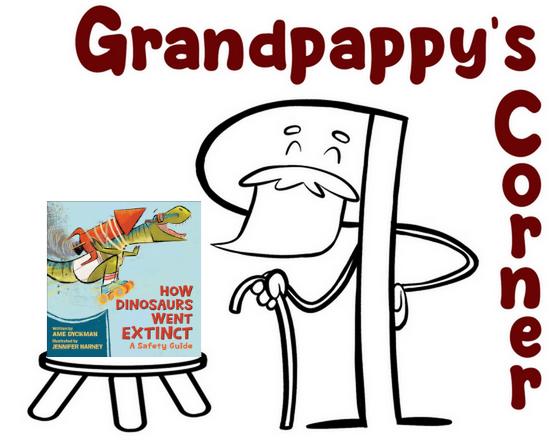
Grandpappy’s Corner: How Dinosaurs Went Extinct: A Safety Guide by Ame Dyckman, Jennifer Harney (Illustrator): A Clever Father Teaches Safety (and Some Bad Paleontology)

I cannot believe it took me 6 months to get around to writing this. It is nice, however, because I just didn’t have the energy to write up anything on the grown-up books on my list. Don’t take my delay as anything other than time management, it’s not a reflection on my enthusiasm.


Grandpappy's Corner Logo

How Dinosaurs Went Extinct: A Safety Guide

by Ame Dyckman, Jennifer Harney (Illustrator)

DETAILS:
Publisher: Little, Brown Books for Young Readers
Publication Date: April 18, 2023
Format: Hardcover
Length: 32 pgs.
Read Date: June 24, 2023
Buy from Bookshop.org Support Indie Bookstores

What’s How Dinosaurs Went Extinct: A Safety Guide About?

On a trip to a museum, while looking at dinosaur skeletons, a child asks how they went extinct. Their mom (or maybe an older sister—she has a Candace Flynn energy if you ask me) starts to give an accurate answer, covering some basic theories. But then the child’s dad cuts them off.

Dad explains how various species went extinct due to poor safety habits. The Anklyosaurus, for example, “tipped in their chair;” The Microraptor, “played with matches;” the Brachiosauraus “swallowed their gum.” And so on. Dad goes on for a while, covering a few vital life lessons while his kid is open and listening.

I don’t want to spoil anything…but Dad’s quick thinking may have paid off (at least temporarily).

Let’s Talk about the Art for a Minute

If the cover image of a T-Rex in tighty-whities and roller-skates with a rocket tied to their back doesn’t grab your attention…I don’t know what will. It also gives you a pretty thorough idea of what you’re going to find inside.

The dinosaurs are drawn fairly accurately—and very cartoony. And doing some clearly dumb/reckless things. The word “dynamic” doesn’t seem like it’s quite strong enough to describe this. The pictures scream movement, energy, and a sense of mirth. You don’t need the words to be able to flip through this and have fun (it’s better with them, of course).

How is it to Read Aloud?

First, Dyckman included a pronunciation guide, so people like me can get through all the tricky names of dinosaurs. Is it just me, or do we lose the ability to rattle off names of dinosaurs that weren’t featured in a Spielberg movie (or the sequels) after the age of 16 or so? Anyway, having these (with a note that there will be some local variations) is a major treat and wonderful aid.

With that aid—this becomes a blast to read. It’s filled with nice rhymes and goofy ideas and how do you not have fun reading that?

So, what did I think about How Dinosaurs Went Extinct: A Safety Guide?

I picked this up in the bookstore while looking for something else—the cover image/title grabbed me, and when I flipped through it quickly, I just knew we needed it on our shelves. I dug the art and what little I skimmed appealed to me. When I got home and sat down to read it, I saw that my first impression was spot-on. This was fun for me, and I’m sure it’ll be fun for the grandcritter in a few months.

The jokes are great. I love the style of art—it just explodes off the page. You’re able to talk about common sense safety/manners in a way that a toddler will be able to have fun with (and hopefully learn from). What’s not to like?

I initially jotted this down as a 3-Star read, and I tend to trust my initial impulses. But 1. I didn’t remember that, so I gave it a 4 on my 2023 Favorites list and 2. I just re-read it, and don’t understand what I was thinking back in June. This is too much fun to give any less.


4 Stars

This post contains an affiliate link. If you purchase from it, I will get a small commission at no additional cost to you. As always, the opinions expressed are my own.

Grandpappy Icon

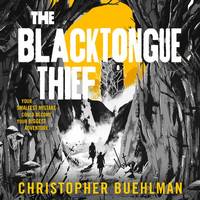
I’m Not Sure How to Write About The Blacktongue Thief (Audiobook) by Christopher Buehlman, But I Really Liked It

It really feels like I should take another crack or three at this before posting. But that’s just not going to happen. I either post this or I dither about for another eight months and give up. So, here it is.


The Blacktongue ThiefThe Blacktongue Thief

by Christopher Buehlman

DETAILS:
Series: Blacktongue, #1
Publisher: Macmillan Audio
Publication Date: May 25, 2021
Format: Unabridged Audiobook
Length: 12 hr.,  26 min. 
Read Date: January 2-5, 2024
Buy from Bookshop.org Support Indie Bookstores

What’s The Blacktongue Thief About?

I don’t know how to answer that question in under 8 single-spaced pages (okay, that’s hyperbole…but it feels honest). Also, this is one of those audiobooks that leaves a listener without a clue how to spell just about everything (for example, I just learned how to spell the main character’s name), so you have to factor into my utter inability to write character/nationality/etc. names to my trepidation about trying to sum it up.

So I’m going to just paste what the publisher’s site says…

Kinch Na Shannack owes the Takers Guild a small fortune for his education as a thief, which includes (but is not limited to) lock-picking, knife-fighting, wall-scaling, fall-breaking, lie-weaving, trap-making, plus a few small magics. His debt has driven him to lie in wait by the old forest road, planning to rob the next traveler that crosses his path.

But today, Kinch Na Shannack has picked the wrong mark.

Galva is a knight, a survivor of the brutal goblin wars, and handmaiden of the goddess of death. She is searching for her queen, missing since a distant northern city fell to giants.

Unsuccessful in his robbery and lucky to escape with his life, Kinch now finds his fate entangled with Galva’s. Common enemies and uncommon dangers force thief and knight on an epic journey where goblins hunger for human flesh, krakens hunt in dark waters, and honor is a luxury few can afford.

The Narration

(I’m sure I’ve said this before) It can be dangerous for an author to narrate their own book, but when they’re good narrators, they can bring something special to the performance as they understand the book in a way a hired gun never can. Buehlman is one of those authors who should read his own material all the time. He did a bang-up job with the accents, the characters, the comedy, and the drama.

I don’t know how this would come across in the print version—I’m assuming it would somehow—but in the audiobook, Buehlman makes Kinch speak with some sort of Irish accent (probably safer to say it’s more Irish-ish so he can deviate when he wants), which communicates so much about him. You hear that, and you automatically get his strange cynical optimism, the poverty he came from, his odd sense of humor. I don’t know how quickly that would be communicated with some other accent—but it immediately made sense to me. Galva’s accent is very different, and utterly fitting, too. I don’t know if other narrators would’ve made choices like he did to communicate that all so well—but I have to give him kudos for that.

So, what did I think about The Blacktongue Thief?

I can’t really discuss what I think of this book and the various plotlines/characters without spoiling the whole thing. So let’s stick to overall impressions.

Buelhman can create a character that shows up for a few pages—or recurs throughout the whole book—that is so well-drawn that you could imagine them carrying their own novella (at least). The magic system (systems?) are inventive—or at least used inventively—and I can think of several mages from other series that would be in trouble if they tried to cross some of these. The main storyline for Kinch seems locked-in early on, but also it’s pretty clear (I think) that he’s going to diverge from his assignment early. But the way it happens is enough to make you sit up and take notice (and perhaps mumble something like, “Are you sure about this, man?”).

Among the many subplots here is a love story—and I don’t know if I’ll come across one so effective for the rest of the year.*note It’s so sweet, so real. And really strange in the way that only fantasy can pull off.

* Okay, I wrote that sentence before I got too far into Charm City Rocks by Matthew Norman a day later, I really shouldn’t make statements like that in January.

By the same token, there’s this rivalry between Kinch and someone he knew in childhood. Their lives took very different paths, and Kinch (somewhat rightly) feels guilt over the way things went—Malk feels a lot of resentment about it (somewhat rightly, entirely understandably). Watching them navigate this reunion in various circumstances is a real treat. There’s some good depth, some believable realism to it—and Beuhlman is able to keep it entertaining.

I don’t want this to sound like it’s a comedy or a light-hearted caper kind of novel. It’s not. There’s a lot of darkness in these pages, a lot of tragedy and bloodshed, there’s some kind of duplicity on almost every page, and absolutely no one comes out of this unscathed. Assuming they come out of this at all. But you will be hooked; you will be invested in these characters; you will be mystified, weirded out, and perhaps a bit grossed-out by the magic; and you will probably want to avoid large bodies of water juuuuust in case one of Beuhlman’s krakens are nearby.*

* I know nobody has happy, shiny krakens full of humor and rainbows. But something about his seemed a degree or two worse.

I picked this up on a whim, mostly out of mild curiosity. But now I have to know what’s coming next.


4 Stars

This post contains an affiliate link. If you purchase from it, I will get a small commission at no additional cost to you. As always, the opinions expressed are my own.

Irresponsible Reader Pilcrow Icon

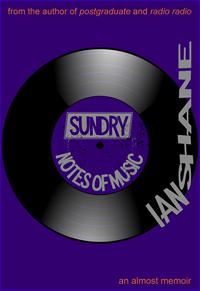
PUB DAY REPOST: Sundry Notes of Music: an Almost Memoir by Ian Shane: A Life’s Playlist

Since I inititially posted about this book, Shane has made a Spotify playlist to go along with this, I’d recommend giving it a listen as you read/after you read/before you read the book. It’s just a good mix of music (and I can’t imagine anyone else is going to come up with a playlist like this). It’s worth a listen or five even if you’re not interested in the book (and then you might be…)


Sundry Notes of MusicSundry Notes of Music:
an Almost Memoir

by Ian Shane

DETAILS:
Publisher: 45rpm Media
Publication Date: December 26, 2023
Format: eARC
Length: 248 pg.
Read Date: October 27-30, 2023

What’s Sundry Notes of Music About?

Ian Shane takes a break from fiction to bring us a memoir that’s unlike most you’ve read. These began as a series of blog posts looking at his life through songs. Forty-six songs connected to forty-six stories from various parts of his life—an almost-memoir, as he puts it.

Some of the essays are tied to a particular version of a song, how a particular copy became part of his collection (or how he hunted for it), and others are because a particular episode or person became entwined with a song.

Almost everyone can relate to this book—everyone has those songs that when you hear them make you think of a particular place, person, time of life—or an old cassette tape, CD, or beat-up vinyl (maybe I should add pirate site or streaming service, too). It doesn’t take much for anyone to start listening to music and start reminiscing. Shane’s just been a bit more formal about the process than most of us and has written them down in these essays.

The Songs

I hesitate to admit this because I’m afraid I’m going to lose a lot of credibility with Shane. But I know less than a quarter of the songs from this book (at least the ones he devotes a chapter to—I know some of the others referenced).* Even worse, I disagree with him about the quality of more than one of those.

* I may know a few others if covered by another artist, or by hearing them on the radio or in the background somewhere without knowing the artist/title.

Does this matter? Not really, no. What matters is the connection and how Shane expresses it. What he says about his life and the song. This is why books like High Fidelity, Eddie and the Cruisers, Juliet, Naked, Thank You, Goodnight, The Rome of Fall, etc., etc., etc. work—because we can connect to music and music makers even when they’re fictional. We all know how it feels when we click with a song, how it can reflect and shape memories, how it can make you feel on several levels at once.

Sure, those handful of chapters involving songs (or artists) that I’m familiar with hit on another level or two. But not in a way that made things significantly different.

Also, it must be remembered—this is not a book of music criticism, as often as it may feel like it. It’s a memoir—it’s about how a song is connected to a time or event in the life of Ian Shane. So even if he made up “Supertheory of Supereverything” by Gogol Bordello (and come on…how hard would it be to believe that?), that wouldn’t particularly impact the way that chapter worked for the reader.*

* Aside from the fact that in a memoir things should be as close to true as possible while protecting privacy and allowing for fuzzy memory.

So, what did I think about Sundry Notes of Music?

I love the concept for this book—and wish I could read more like this. I think people exchanging track listings for their version (to be expanded upon by request) would make becoming friends much easier.

I also think this helps me understand shades of Shane’s novels (not just the parts that he points to in this book, either). As he’s one of those authors at the top of my list from the last few years, I particularly appreciated that—but since not enough of the world has heeded my calls to buy and read his work, I won’t expect many to see a similar appeal in this book. And as I’ve learned these last few years, you really don’t need to know much about the life or work of someone to be able to really enjoy a memoir, if the memoir is good enough. This one is.

Sure, I’d have liked another few chapters about the Tom Petty show. Do I think his estimation of The Beatles is lacking (however apt calling them the equivalent of a boy band may be)? Yes. Do I wish (primarily for his sake) that some of these chapters had ended on a “happier” note (particularly the chapters “talk tonight – oasis” and “life fades away – roy orbison”)? Sure, but’s not a comment on Shane’s writing, it’s reality rearing its head.

You can see traces of Hornby’s Songbook/31 Songs in these pages. Possibly Al Young’s Drowning in the Sea of Love (I don’t know, I hadn’t heard of it until Shane mentioned its influence). But this struck me as something more like Rob Sheffield’s Love Is a Mix Tape and Talking to Girls About Duran Duran—just involving a longer period of time. I may have grinned and chuckled more at Shane than Sheffield (those who’ve read the former will roll their eyes at me there, of course).

There are parts of this book that are very funny—some bittersweet, some tragic, some simply thoughtful. Multiple essays will hit all of those points and more. They’re all engaging in various ways. Not one track on this playlist is going to leave you looking for the skip button.

Readers of Hornby, Young, or Sheffield should appreciate this approach to memoir. Those who find this approach intriguing likely will, too. Readers of Shane’s novels will definitely find something to enjoy here. People who simply appreciate well-written memoirs/personal essays should give this a look, as well. Really, anyone who finds good writing appealing should give this a glance. Yes, I’m casting the net wide on that last sentence—that’s my point.


4 Stars

Irresponsible Reader Pilcrow Icon

The Chimes by Charles Dickens: A Different Set of Bells You Don’t Want Tolling for You

The ChimesThe Chimes

by Charles Dickens

DETAILS:
Publisher: Fahrenheit Press
Publication Date: November 15, 2023
Format: eBook
Length: 94 pg.
Read Date: December 21-22, 2023
Buy from Bookshop.org Support Indie Bookstores

There are not many people—and as it is desirable that a story-teller and a story-reader should establish a mutual understanding as soon as possible, I beg it to be noticed that I confine this observation neither to young people nor to little people, but extend it to all conditions of people: little and big, young and old: yet growing up, or already growing down again—there are not, I say, many people who would care to sleep in a church. I don’t mean at sermon-time in warm weather (when the thing has actually been done, once or twice), but in the night, and alone.

What’s The Chimes About?

Apparently, the original title of this was: The Chimes: A Goblin Story of Some Bells that Rang an Old Year Out and a New Year In. But for pretty obvious reasons, people shortened the name to The Chimes when talking about it, and this edition went with the short version, too.

The Chimes are the bells in a church steeple–powerful goblin spirits reside in them, (not everyone gets to see the goblins–or this’d be a very different kind of story). Our protagonist, Trotty, is summoned to the steeple by these bells. Bells he’s lived under for years and has come to love their ringing. However, he’s now called to account by them for…essentially losing faith in humanity and disparaging them. Particularly lower-class humanity–like he’s part of.

Trotty is a ticket-porter, barely scraping by–but is a hearty, cheerful man. His daughter is in love with someone who hopes to marry her soon. But Trotty reads something in the news one day (inspired by a true story, incidentally) that makes him doubt people’s goodness. This is followed by him being hired by/interacting with an Alderman and an MP who look down the poor, exacerbating Trotty’s dismay.

These bells show Trotty a future in which he dies that night and how the ripples from his death impact the lives of several of his acquaintances. Very much in a Ghost of Christmas Future kind of way. But these are darker futures than anything Scrooge saw, if you ask me.

Trotty repents of his negative outlook and does something in this vision that proves his sincerity. He’s brought back to the present and life is good–even better than it was thanks to his attitude adjustment.

Oversimplification, I know, but I’m still trying to stay away from details. It’s only been in print for 179 years…

These Guys are The WORST

So this year I’ve read about misanthropes, mass murderers, people who kill without remorse, people who target minorities for fun, demons and other monsters, etc., but I’m honestly not sure that there were people who disgusted me and enraged me nearly as much as Alderman Cute and Sir Joseph Bowley.

Bowley loves to think of himself as a benefactor to the poor, a charitable soul…listen to him brag about it a bit (to an actual poor person),

Every New Year’s Day, myself and friends will drink his [a generic poor person’s] health. Once every year, myself and friends will address him with the deepest feeling….‘I do my duty as the Poor Man’s Friend and Father; and I endeavour to educate his mind, by inculcating on all occasions the one great moral lesson which that class requires. That is, entire Dependence on myself. They have no business whatever with— with themselves.

He does (at least in the vision), bring poor people into a great New Year’s feast with his guests so they can see he and his friends drink to their health and hear paternalistic (at best) speeches about how they need to better themselves, although they probably can’t because if they could…well, they wouldn’t be poor, after all.

Cute dissuades Trotty’s daughter and her beloved from marrying because it’s not like they’ll be able to subsist on whatever money they can eke out–and they’ll just end up having kids they can’t afford to feed, and thereby expanding the need for welfare and whatnot.

Sure, Dickens was probably exaggerating for satirical purposes. But I doubt it was much. And it’d be really easy to imagine these despicable guys as contemporary figures.

Dickens’ Writing

He saw the tower, whither his charmed footsteps had brought him, swarming with dwarf phantoms, spirits, elfin creatures of the Bells. He saw them leaping, flying, dropping, pouring from the Bells without a pause. He saw them, round him on the ground; above him, in the air; clambering from him, by the ropes below; looking down upon him, from the massive iron- girded beams; peeping in upon him, through the chinks and loopholes in the walls; spreading away and away from him in enlarging circles, as the water ripples give way to a huge stone that suddenly comes plashing in among them. He saw them, of all aspects and all shapes. He saw them ugly, handsome, crippled, exquisitely formed. He saw them young, he saw them old, he saw them kind, he saw…

When Dickens first introduced the goblins (and I only gave you a sample), I really enjoyed it. And was reminded that he typically got paid by the word. Not necessarily for this novella–but the impulse was still there. Because the man can go on…never using 5 words when 20 will do.

I have zero problems with it in this novella–but it jumps out at you occasionally.

A few other lines that jumped out at me that I want to bring up…they’re so good.

‘There’s nothing,’ said Toby, ‘more regular in its coming round than dinner- time, and nothing less regular in its coming round than dinner. That’s the great difference between ’em. It’s took me a long time to find it out.’

This gentleman had a very red face, as if an undue proportion of the blood in his body were squeezed up into his head; which perhaps accounted for his having also the appearance of being rather cold about the heart.

‘The good old times, the good old times!’ The gentleman didn’t specify what particular times he alluded to; nor did he say whether he objected to the present times, from a disinterested consciousness that they had done nothing very remarkable in producing himself.

(I’m forever going to be thinking of this anytime I hear someone talk about the good old days)

So, what did I think about The Chimes?

I’m told that the hardcover is gorgeous–I ordered this late, so I can’t confirm (I’ll try to remember to update this post when I get it). The cover looks pretty neat, though. I bring this up so you’ll think about getting your hands on this hardcover edition for your own personal use/shelf decoration.

But what about the novella itself? I dug it. I know I don’t read enough Dickens–and never have. But when I’m exposed to him, I regret many of my life choices that lead to this dearth (not so much regret that I see that I’ll change that anytime soon). I really appreciated his writing, his characters (even the ones I spent time hating). I would’ve appreciated a little more time with some of the characters, but we didn’t need it.

The way the bells show Trotty the future really did make me think of the Ghost of Christmas Future, I know they inspired It’s a Wonderful Life, but I got more of the former vibe than the latter. I’d like for people to tell me what I’m missing, incidentally. Either way, I liked the way Dickens uses this tool to get people to change their way of thinking, even if he uses it too frequently.

The social commentary was well done (if heavy-handed), and probably needed as much then as now. And probably as effective then as now. Oh well, would be nice to think otherwise.

It’s a quick read that packs a powerful punch with some clever writing. If you’re like me, and have never heard of this novella before, take advantage of this opportunity to pick it up. If you’re a better-educated reader and are familiar with it–isn’t it about time to re-familiarize yourself?


4 Stars

This post contains an affiliate link. If you purchase from it, I will get a small commission at no additional cost to you. As always, the opinions expressed are my own.
Irresponsible Reader Pilcrow Icon

Blood Betrayal by Ausma Zehanat Khan: A Pair of Potential Hate Crimes are Almost Too Much for the Communities and the Investigators

Blood BetrayalBlood Betrayal

by Ausma Zehanat Khan

DETAILS:
Series: Blackwater Falls, #2
Publisher: Minotaur Books
Publication Date: November 07, 2023
Format: Hardcover
Length: 293 pg.
Read Date: December 8-12, 2023
Buy from Bookshop.org Support Indie Bookstores

What’s Blood Betrayal About?

On one night, there were two police shootings in the Denver area. One is the shooting of a possible innocent bystander/possible fleeing suspect in a drug raid. The other is the shooting of a vandal by an officer who (claims? he) mistook a can of spray paint for a gun.

Both of the officers were white, and the men who died were young minorities. Both cases will call for the Community Response team to investigate, neither case will be easy for them (and not just because their limited resources will be stretched by simultaneous investigations of a charged nature).

So let’s deal with these in the order we learn about them…

Case 1

Harry Cooper isn’t a fantastic cop—nor is he a bad one. He’s a solid, middle-of-the-road officer, and has been one for years—and now is near retirement. He’s never used his weapon before, but while pursuing some vandals on foot, he fires a warning shot in the air. Then he’s sure he sees a weapon in the hand of the vandal facing him. So he shoots to kill.

It seems like a tragic mistake, but as he’s part of Sheriff Grant’s force, Lt. Seif seizes the opportunity to do a thorough investigation—to ensure that’s all it was, and to maybe get more intel to help his case against Grant.

A number of things start to not add up—mostly around the “vandal.” He’s not one. He’s an art student who isn’t even from Blackwater Falls. He’s taking part in a legitimate street art contest, for one, not someone tagging random private property. Secondly, Seif thinks the physical evidence may point to something bigger. But he’s just not sure what. He wants Inaya Rahman to lead the charge on this.

Case 2

But Inaya has other concerns. She left Chicago after being assaulted by a number of fellow officers, we learned last time. So when one of those officers shows up on her family’s doorstep, she’s disturbed (to understate it). John Broda has come to her for help—his son is a patrol officer in Denver assigned to help a drug raid on a marijuana dispensary that was known to sell harder drugs, too. In the midst of it, a potential suspect was shot. Officer Kelly Broday was arrested for murder, without saying he shot Mateo Ruiz, he is saying he’s responsible for his death.

John Broda wants her to investigate and clear Kell, and in return, John will give Inaya the evidence he needs to close her last case from her days in Chicago.

She starts to look into things in exchange for the evidence, but she’s soon convinced that Kell was set up—possibly by a gang within the Denver Police. But she can’t figure out if someone wanted Ruiz dead (or why), or if it all has to do with the officer. Or is it both?

Meanwhile, the communities both young men belonged to start to organize and protest—particularly the Hispanic neighborhood Ruiz was from—and the Police Department isn’t responding calmly. Time is of the essence for this investigation.

Everything Else

Which is just a pithy way of saying “Everyone’s Personal Lives and the FBI’s Investigation into the Blackwater Falls Sheriff.” We learn more about every member of the Community Response team (and the civil rights attorney they ally with), and whatever arcs we saw or got hints of in the first book progress nicely (well, at least for the reader—I’m making no promises about how the characters feel).

Those aren’t the important parts of these books, but the more we get invested in these characters, the more compelling we’re going to find how the cases impact them and their lives. As a plus, they’re all really interesting characters so the arcs make for good reading.

As far as the FBI Investigation goes? Well…it’s still a thing. I’m not sure how much more I can say.

So, what did I think about Blood Betrayal?

It’d be easy to write this series off as some sort of “woke” thing where a racially diverse group of police investigators find hate crimes everywhere. Especially when white cops kill black and Latino men. That would be a grave error, however. Khan writes complex stories that cannot be reduced to a simple, one-line explanation, never mind a label or two.

In Blackwater Falls we got one murder that led to the uncovering of a web of more crime and corruption. Here we have two murders that end up being about so much more—both cases are about as complex as the one from Blackwater Falls, but the way that Khan weaves the two stories together (if only because the investigators are the same) makes this an even more complex novel. We get two great crime stories for the price of one. Yes, I think one of the cases was easier for the reader to figure out—possibly too easy. But the way that the clues, motives, and solution were revealed more than made up for that. And the other case? You’re never going to guess the solution until Khan shows it all.

But better than that is the way Khan shows (again) how crimes like this can impact entire communities, and the tensions that result and build up (possibly spill over) between those communities and the police rings so true that you could believe it happening today.

But Khan’s not just good at the big, social commentary—the impact that these killings have on the families is obviously bigger than anyone wants to imagine. And, as she did in the previous novel, Khan shows the grief, confusion, anger, and the other emotions that strike a family at this time with sensitivity and keen observation. Over the last few years, I’ve started noticing this part of a police procedural, and I really appreciate it when the author does it well. Khan’s one of the best around in this aspect.

Throw in some strong writing and great characters to all this? You’ve got yourself a winner. One of the best sequels that I read this year. You’d be doing yourself a favor if you grabbed the two books in this series up and doing so soon.


4 Stars

This post contains an affiliate link. If you purchase from it, I will get a small commission at no additional cost to you. As always, the opinions expressed are my own.
Irresponsible Reader Pilcrow Icon

Page 10 of 88

Powered by WordPress & Theme by Anders Norén