Tag: 4 Stars Page 13 of 88

PUB DAY REPOST: Impossible Christianity by Kevin DeYoung: A Call for Assured Disciples

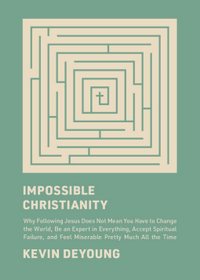
Impossible ChristianityImpossible Christianity:
Why Following Jesus Does Not Mean You Have to Change the World, Be an Expert in Everything, Accept Spiritual Failure, and Feel Miserable Pretty Much All the Time

by Kevin DeYoung

DETAILS:
Publisher: Crossway
Publication Date: August 15, 2023
Format: eARC
Length: 160  pg.
Read Date: July 23-30, 2023
Buy from Bookshop.org Support Indie Bookstores

What’s Impossible Christianity About?

On the one hand, the twenty-eight(!) words of the subtitle give a handy summary of what the book is about—but there’s still more to say. But it’s difficult to summarize outside of that without going on too long. Still, it’s worth a shot.

While exploring things like personal wealth, corporate guilt, and the call to individual holiness and sanctification, Kevin DeYoung reminds readers that our goal isn’t to change the world, it isn’t to achieve a perfection in behavior or ability, nor is it to wallow in our shortcomings and weaknesses. Rather, we are to press on when we stumble, ask God for forgiveness and help; keeping our eyes on our goal, see how far we’ve come; and rejoice in the work of grace in our lives—knowing that our Father is pleased with us.

There’s more to it than that (obviously, he spends eight chapters developing what I just used two sentences to convey). But that’s a decent thumbnail sketch.

The Highlights

In chapter 2, “Who Is It That Overcomes the World?,” we get an exploration of some of the more challenging material in 1 John. This treatment of 1 John and assurance is enough to justify picking the book up in the first place (for me, anyway. But I doubt I’ll be alone).

Where DeYoung will take these ideas from the epistle to encourage believers, to see signs of their faith and draw assurance from them, too many have taken the same words to use as tests of faith, to spur an attitude of “I must do more to earn God’s favor” or “I need to prove my devotion.”

While avoiding any kind of “cheap grace” (or whatever people call it today), DeYoung points to John’s heart in dealing with “little children” and encouraging their continuation in the faith.

He does something similar in Chapter 7 when reminding us of God’s Fatherhood and what the Scriptures tell us about Fatherhood. It’s an encouragement to fidelity and activity, not a whip to drive us to it. We’re called to virtues, not to-do lists—to reflect a character, not to change the world. The world (or at least things in our immediate vicinity) may be changed as a result, but that’s not our goal. Rather (as he argues in Chapter 8 ) is to live a quiet life of faithful discipleship.

I Could’ve Used a Bit More

DeYoung is known for frequently being on the pithy side with his books, and that’s certainly the case here. As it is characteristic of him, I don’t want to complain about that too much—I knew what I was getting into when I picked this book up.

Still, it felt a bit too brief. I wanted a little more from some of the chapters—a little more explanation, a little more depth, a little fuller idea of what he was trying to convey. It’s hard to explain while speaking broadly (and without citations because it’s an ARC), but I need 10-20% more of everything.

One thing, in particular, I wanted fleshed out was some criticisms he pointed at Christians who teach that we’re constant failures and should feel that weakness. I’d have appreciated less vagueness—direct citations, or at least references in a footnote would’ve been helpful so I could compare what he was arguing for to what he was arguing against.

So, what did I think about Impossible Christianity?

I think that’s my largest complaint—the book’s just a bit too brief. DeYoung was his typical engaging, clear (with the exception listed above), and helpful self in these pages. His illustrations and examples from his own life were amusing and helpful. If nothing else, I enjoyed reading the book.

On top of that criteria (in this type of book, it’s the least important), the book was helpful, encouraging, and gracious. Which is what it set out to be, so kudos for that. There was some material that was good to chew on, some healthy reminders of truths easy to forget or neglect, and a few moments to inspire a renewed activity.

Would I have appreciated more? Yes. Do I appreciate what DeYoung delivered? Also, yes. I’m afraid I come across as too critical, so let’s be clear—I wanted more of something helpful so it could’ve been more helpful.

From the smile-inducing opening illustration to the closing paragraphs of benediction (what a great addition to this book)—this was a pleasure to read. I do recommend this book and encourage others to pick it up.

Disclaimer: I received this eARC from Crossway via NetGalley in exchange for this post and my honest opinion—thanks to both for this.


4 Stars

This post contains an affiliate link. If you purchase from it, I will get a small commission at no additional cost to you. As always, the opinions expressed are my own.

However Long the Day by Justin Reed: One Eventful (some might say Disastrous) Night

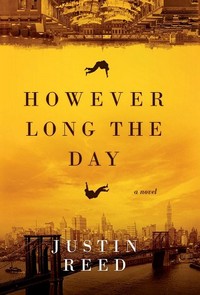
However Long the DayHowever Long the Day

by Justin Reed

DETAILS:
Publisher: Bulrush Press
Publication Date: February 15, 2022
Format: Hardcover
Length: 402 pgs.
Read Date:  August 8-11, 2023

Buy from Bookshop.org Support Indie Bookstores

What’s However Long the Day About?

This is a The Prince and the Pauper-esque story set in New York in 1918 with the son of a wealthy politician and an activist mother hiring his doppelganger, a recent Irish immigrant, to stand in for him for one night. Fredrick (the rich guy) got caught (again) doing something reckless and is about to be subject to a lecture/tirade from his father before being sent to his room for the evening (a room, it should be noted, that’s bigger than the apartment Niall is sharing with his uncle). Sure, it’s ridiculous that someone in his early-to-mid-20s (I’m guessing) is being treated that way. But if he wants to siphon off of his parents, I’m guessing he has to put up with ridiculous things like this.

I’d better move on before I open another parenthesis.

Niall was offered more money than he could make in a year, so he has to sign on. This kicks off 12 hours (or so) of mistaken identities, women kissing the wrong me, kidnappings, abductions, fights, beatings, criminals, police, criminal police, plots being hatched, secrets being exposed, plans going awry, plans coming to fruition, and so much more.

Frederick Philips

Frederick is a spoiled and apparently useless man desperate to get out from underneath his father’s thumb. He’ll do anything to accomplish that, except get a decent job and put in an honest day’s work. He needs to live in the manner to which he’s become accustomed, and there’s no way he can do that easily. I’m pretty sure Archie Goodwin would call him a “fop,” and although that word’s not really used anymore, it feels rather fitting (and not just because of the setting for the book).

He appears to have tried gambling and some other hare-brained (and likely illegal) schemes that have put him on the wrong side of at least one crime syndicate. One of the things he’s trying while Niall pretends to be him is the culmination of a lot of his scheming—he’s trying for the big score that’ll equip him to set up a new life in Philadelphia.

Niall Donovan

Niall has been in NYC for a month and we meet him as he’s struggling to substitute for his Uncle Paddy on his ice delivery route. Paddy’s fighting off the Spanish Flu* and needs someone to cover so he can keep his job. Niall’s not that good at the fairly thankless job, but it’s a way he can contribute.

* The grief given to the police officer wearing a mask—and his defending the practice—feels pretty timely.

Other than in appearance, Niall’s everything that Frederick isn’t—he’s a hard worker, he’s honest and honorable—and can acquit himself well in a fight. You’ll have a really hard time not being immediately charmed by him and wanting to see him succeed everywhere. He might be so loyal, so devoted, so determined to do the right thing that he puts himself in some stupid and dangerous situations, quite honestly. And more than once you’ll shake your head at him making a choice that’s sure to lead to problems—but you’ll still root for him.

Other Characters

Frederick’s ally/accomplice in all this is named Ivy. She lives near him, with parents in a similar social standing—she’s equally miserable but doesn’t have the means to get away from home. She’s a little more level-headed than Frederick and works with him—urging him to take some chances for both of their sakes.

Flora works in domestic service for one of the homes on Paddy’s route and Niall is pretty sweet on her (the feeling’s mutual). She’s hands down my favorite character in the book—she’s everything that Niall is (but backwards and in high heels), but generally thinks more clearly (except for the one time she encourages Niall’s foolhardiness. Both of them end up regretting that). I wish I could tell you all the reasons I love Flora, but that’d involve spoilers.

Niall’s Uncle Paddy is a great guy, too. He’s doing all he can (in his very limited way) to help Niall acclimate to New York and to get established.

And I’m going on too long—I can’t talk about all the great characters—but Reed’s got a knack for creating characters that come to life. There’s not one of them that you’re not going to have a very solid impression of—and probably a pretty good mental image for (despite minimal description in the text). I could’ve easily enjoyed more scenes with each and every character—except maybe Frederick—because I just enjoyed watching them in action so much.

The Object Itself

Most of the time I don’t talk about things like covers, printing, and whatnot—it’s just not something I want to dwell on (and frequently it’s stuff outside an author’s control). But when it’s done this well—particularly by a self-published author, I want to take a moment to talk.

The printing, binding, and so on for this book is top-notch. Indistinguishable from most of the hardcovers on my shelf. The cover design as well as the interiors were done with skill and care. Does this help the reading experience much? Probably only a negligible amount. But it’s clear that Reed put some money into the production end of this—money and care. As much effort into that as he put into the words on the page (or close).

I wonder if he regrets that—or if by trimming a few costs, he’d be closer to making a profit. But for me? I appreciate an author putting their money where their mouth is. Again, I don’t know if it added much to the experience, but I sure enjoyed that part.

So, what did I think about However Long the Day?

As far as I can tell—Reed nailed the historical setting. His NYC of 1918 looks and feels like histories of the era that I’m familiar with—and with books from around that era that I’ve read. I’m no expert by any means, but it felt accurate—and if I raised an eyebrow at any of his historical details, they didn’t bother me enough to remember or write in my notes. I’m open to correction on this point, but I’d say he dealt with this part well.

I’ve talked briefly about the characters already, so let’s move on to the plot. It took a while for a clear picture to develop about what was going on, but the ride to that point was so fun, I really didn’t care—I just kept wondering what the next scene would bring. Sure, there were some moments early on that I wondered if he was trying to juggle too many storylines and characters, and I will admit to shaking my head a few times when he’d throw in something new or insert a new difficulty or obstacle for Niall or Frederick to overcome. Eventually, I started to see the tapestry he was weaving and was glad to see that patience rewarded—Reed knew where he was going and led us on a straight path that only seemed to be meandering.

Every now and then, I wondered if Reed was hitting either Niall and Paddy’s Irishisms* a bit too hard—or if he was laying on the 1910s jargon/slang a bit too thick. But it was less often than I assumed I’d think something like that going in—and it really was rare that I wondered that. There was a time or two that I wondered if the dialogue in general was a bit preachy (whether or not I agreed), or wordy in general.

* Flora using the term “Irishism” also seemed a bit strange, but it worked in the moment so well, that I’m not going to complain. And not just because it was Flora who said it. Although that helps. I’m telling you, I loved her.

But overall, I was really impressed with Reed’s writing. Near the 300-page mark I got a little uneasy. There was maybe 30 pages of story left, how was he going to fill up another hundred or so? It turns out that it was super easy, barely an inconvenience. Not only that, it was some of the best story-telling he’d done up to that point. Most of it didn’t even depend on the mistaken/interchangeable identity aspect of the book. It’s not often that I misjudge an author’s pacing anymore, especially not a first-time author (and when I do, it’s generally not a good thing)—but Reed taught me a welcome lesson in humility there.

I was pleasantly surprised throughout this book—I didn’t expect anything much to strike me as funny when I picked it up, for example. I was optimistic about the premise and anticipated enjoying it. But I expected a fairly earnest, straightforward drama. But Reed gave us some good action, some interesting hijinks, and some solid comedy. (Yes, there’s a chance that I found things funny that I shouldn’t have…I’ll grant you that, and apologize to Reed if that offends him).

One example of the comedy that really stood out to me–there’s a recurring discussion about the choice of cake vs. fruit pie. It feels straight out of Tarantino, or maybe Jim Gaffigan. It essentially becomes a personality test–and Frederick fails, incidentally. It becomes this nice bit of humor, it helps solidify Flora as a character, it humanizes some of the gangsters (see Tarantino), and is something that really helps the reader to connect with the characters. The fact that it has almost nothing to do with the plot is a great bonus, it becomes something where the characters can interact as human beings regardless of what’s going on. Also, anything that allows Flora to shine and makes Frederick look bad is worth pointing out.

Clearly, I enjoyed this book a lot. If this is what Reed can do for a debut, I can’t wait to see what he accomplishes for a follow-up. I strongly recommend you all to go pick this one up.


4 Stars

This post contains an affiliate link. If you purchase from it, I will get a small commission at no additional cost to you. As always, the opinions expressed are my own.

20 Books of Summer
Literary Locals logo

Eye of the Sh*t Storm by Jackson Ford: Flash Floods, Electric Powers, and Teagan Lets Loose in Public

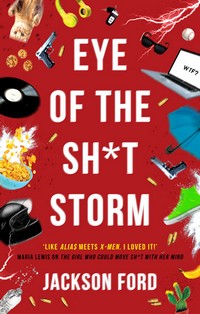
Eye of the Sh*t StormEye of the Sh*t Storm

by Jackson Ford

DETAILS:
Series: Frost Files, #3
Publisher: Orbit
Publication Date: April 27, 2021
Format: eBook
Length: 512 pg.
Read Date: July 20-24, 2023
Buy from Bookshop.org Support Indie Bookstores

And now I’m trapped under a collapsed bridge, in a burning van, having just taken a faceful of meth, while a biker gang shoots at me and my friends with automatic weapons.

We’ve all been there.

What’s Eye of the Sh*t Storm About?

Obviously, spoilers for the previous book are going to come into play here…if you’re concerned about that, skip to the stars at the bottom and move on. Actually, I’ll make it easy for you: ★ ★ ★ ★. Proceed at your own risk.

It’s been two months since Random Sh*t Flying Through the Air, L.A. (and the rest of California) is still struggling to deal with the loss of infrastructure, lives, jobs, and sense of normalcy that had been ripped from them. Teagan and her team have resumed their work as best as they can.

The book opens just as a mission to uncover an illegal gun sales ring goes horribly awry—leading to my opening quotation. Before the team has a chance to recover from this debacle, they’re sent to investigate a strange occurrence that is right up their alley. A storage unit complex—the entire thing, from asphalt to walls to ceilings and everything in between—has become electrically charged. Technically, that’s impossible, right? But so are psychokinetics like Teagan and the earthquake-inducing little boy we met in the last book.

Teagan figures out a way to get her inside the complex and discovers the cause–another little boy. About the same age as the one she faced off with two months ago. But this boy is different—he’s scared. He’s not in control of his power at the moment because he just wants his dad and to get away from “the Zigzag Man” (whoever that is). Teagan knows her job is to bring the kid in and turn him over to the authorities. But she can’t do that—this boy, Leo, isn’t out to hurt anyone. He’s not trying to fry California or anything. He just wants his dad, and Teagan can’t imagine subjecting Leo to the experiments and testing that he’d be subjected to if she did her job.

So, she goes AWOL, hoping to reunite Leo with his family before she figures out what to do with her employers. She’s eventually tracked down by her friends—some agree to help her, some try to apprehend Leo. Things get messy from there. And they all learn pretty quickly that Leo was right to want to get as far away as humanly possible from the Zigzag Man.

Reggie

Of the group, the character we’ve spent the least amount of time with. This makes sense—she’s the “woman in the chair,” as Ned Leeds would put it. She’s their hacker, their supervisor, the one calling the shots from home base and doing what she can to dig up information for them in the field. She’s also in a wheelchair, limiting what she can do in the field (but she pushes those limits as often as possible).

This book solves the we-don’t-get-to-spend-time-with-Reggie problem by giving her several point-of-view chapters. When we’re not with Teagan, we’re with her. And I loved it—I’d take a Reggie solo story anytime. She’s just a rich character—getting to focus on her and having some of her backstory filled in are just great. She had a pretty impressive résumé already, but what she accomplishes here proves that Teagan’s not the only impressive one on the team (that could be said for all of them, really, but I want to focus on Reggie).

Her future looks pretty different going into Book 4 than it has so far—but I’m looking forward to seeing what she does in this new stage of life. I predict things will look better for her within the next 400 pages than it does now.

I Didn’t Expect This To Come Up

There’s a subplot running through all this where Teagan deals with the come down from an accidental (and large) exposure to meth and struggles to experiment with it some more. This is due to the withdrawal symptoms she’s suffering, and also because it turns out that meth supercharges her abilities for a brief period and that sounds really handy right now.

Now, I don’t know how realistic all the non-superpower effects of meth and the temptation to use it again so soon are. But it feels real. And the fact that I have to clarify “non-superpower” does put us outside the realm of realism already.

Teagan goes through a lot in this book (and series), but the way she looks into the temptation of great power at a great cost and cannot shake it immediately was really well depicted and—so far—the most compelling. This temptation keeps calling her name, she’s able to justify/allllllllmost justify experimenting with the drug. And maybe giving herself over entirely to the addiction.

Teagan’s Growth

I reacted… poorly. Hey, just because I’ve been trying to think through my decisions doesn’t mean I’m perfect, OK?

This is already longer than I’d planned, so I’m going to be brief here—in my post about Random Sh*t Flying Through the Air I talked about Teagan’s growth in terms of power and maturity—and how far she has to go. That’s still present, but she’s making progress—and she’s aware of her need.

I think she gives herself more credit than she deserves in this quest up to this point—but she’s moving in the right direction. And who wants a perfect protagonist anyway?

So, what did I think about Eye of the Sh*t Storm?

Over the past few years, I’ve become very familiar with the giant spurt of adrenaline you get after surviving something that should have killed you.

It always arrives around five minutes after I nearly die, beginning with a prickle on my arms, a delightful tremor in my fingers. Then a feeling of well- being, flooding through me, quickly growing to a kind of hysterical euphoria. It’s like an old friend by now. One I’ve been hanging out with for so long that I know everything they’re going to do before they do it.

There was a point where my eReader was at risk of flying through a window. Thankfully for the sake of marital harmony (and my poor eReader), that didn’t happen (my notes read, “No no no no no no no no,” and I was able to limit it to that). Frost has demonstrated that no character is safe, the status quo is not respected, and that readers should not think that anything is settled. This is not a bug, this is a feature. Not necessarily one that promotes emotional health in a reader, however, but it’s a feature.

What Ford’s cavalier attitude toward my blood pressure does is heighten every moment, intensify every conflict (even if it doesn’t seem like it’s time for a major happening), and keeps you focused throughout as you speed through the pages.

I’ve been annoyed with myself for not staying on top of this series since the summer of 2020—and now that I’m almost caught up—I’m even more annoyed with myself. But for now, I’m just happy I got this posted so I can move on to the next book in a few days.

If you’re into super-hero-adjacent kind of stories, this series is a must-read. Could you do okay by starting with this book? Sure—Ford won’t let you get lost and will help you get oriented in the midst of things. But do yourself a favor and start with the first book and do it soon.


4 Stars

This post contains an affiliate link. If you purchase from it, I will get a small commission at no additional cost to you. As always, the opinions expressed are my own.


20 Books of Summer

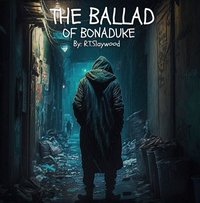
The Ballad of Bonaduke—Episode 31: Cheat by R. T. Slaywood: Buckle Up!

The Ballad of BonadukeThe Ballad of Bonaduke—
Episode 31: Cheat

by R.T. Slaywood

DETAILS:
Series: The Ballad of Bonaduke, #31
Format: Kindle Vella Story
Read Date: August 10, 2023

The shooting is making this difficult!

The Story So Far…

A drunken Michael Bonaduke decides to use a grift (with maybe some sort of magic/magic-like “help”) to win on a scratch-off lottery ticket so he has money to buy more to drink. He pulls off whatever he did, gets his money and some booze and stumbles off into the darkness to drink himself into oblivion so he can start again the next day. He’s hit by dark memories (probably what’s driving him to the drinking) of fire, pleading, and screaming. There’s going to be a price to pay for his grift, and he’s trying to be ready.

He’s abducted by some representatives of a mysterious group who subject him to a test—if he passes, everything will be explained to him (and hopefully the reader, too). He passes—and is brought somewhere for answers, or maybe training, or maybe another test. Time will tell (or things are going to get really annoying). Answers aren’t quick to come—but the mysteries and questions keep piling up.

Things get hairy and Bonaduke leaves and finds himself back in the neighborhood he started from. He takes refuge in a homeless encampment shortly before a police raid. He’s apprehended and finds himself an interrogation room and shortly escapes after using his grift (but with results he didn’t quite intend). He finds himself by a group of squatters who seem to have strapped a woman to a chair for reasons that can’t be good. He attempts to rescue her before he even realizes what he’s doing, and seems to have succeeded—well, the two of them got away from the group anyway—breathing but bruised. They make their way to a fast-food taco joint and Bonaduke really needs to refuel to keep going. He tries, but fails to get food because he keeps passing out. Thankfully, the clerk is the same guy from the liquor store and he both recognizes him and gives him first aid. The woman (Zero) wakes up and shows some abilities of her on as she helps them escape from her captors who’ve tracked her down.

What’s Cheat About?

Zero’s driving the car like a bat out of hell—or at least as much as she can. She’s weaving all over, battering cars of the squatters, and essentially barely keeping them all alive. Something about the way that Bonaduke is playing a video game on the clerk’s phone is impacting them—Zero doesn’t really explain, but this has something to do with what she insisted they believe in the last episode.

Still, Bonaduke isn’t that good at phone games. Then he realizes that he borrowed the phone and his grift is able to kick in.

So, what did I think about Cheat?

I want more details about Zero’s ability—but I realize that a high-speed chase isn’t the best place for a conversation.

This episode was a lot of fun. There’s not much more to say.


4 Stars

Impossible Christianity by Kevin DeYoung: A Call for Assured Disciples

Impossible ChristianityImpossible Christianity:
Why Following Jesus Does Not Mean You Have to Change the World, Be an Expert in Everything, Accept Spiritual Failure, and Feel Miserable Pretty Much All the Time

by Kevin DeYoung

DETAILS:
Publisher: Crossway
Publication Date: August 15, 2023
Format: eARC
Length: 160  pg.
Read Date: July 23-30, 2023
Buy from Bookshop.org Support Indie Bookstores

What’s Impossible Christianity About?

On the one hand, the twenty-eight(!) words of the subtitle give a handy summary of what the book is about—but there’s still more to say. But it’s difficult to summarize outside of that without going on too long. Still, it’s worth a shot.

While exploring things like personal wealth, corporate guilt, and the call to individual holiness and sanctification, Kevin DeYoung reminds readers that our goal isn’t to change the world, it isn’t to achieve a perfection in behavior or ability, nor is it to wallow in our shortcomings and weaknesses. Rather, we are to press on when we stumble, ask God for forgiveness and help; keeping our eyes on our goal, see how far we’ve come; and rejoice in the work of grace in our lives—knowing that our Father is pleased with us.

There’s more to it than that (obviously, he spends eight chapters developing what I just used two sentences to convey). But that’s a decent thumbnail sketch.

The Highlights

In chapter 2, “Who Is It That Overcomes the World?,” we get an exploration of some of the more challenging material in 1 John. This treatment of 1 John and assurance is enough to justify picking the book up in the first place (for me, anyway. But I doubt I’ll be alone).

Where DeYoung will take these ideas from the epistle to encourage believers, to see signs of their faith and draw assurance from them, too many have taken the same words to use as tests of faith, to spur an attitude of “I must do more to earn God’s favor” or “I need to prove my devotion.”

While avoiding any kind of “cheap grace” (or whatever people call it today), DeYoung points to John’s heart in dealing with “little children” and encouraging their continuation in the faith.

He does something similar in Chapter 7 when reminding us of God’s Fatherhood and what the Scriptures tell us about Fatherhood. It’s an encouragement to fidelity and activity, not a whip to drive us to it. We’re called to virtues, not to-do lists—to reflect a character, not to change the world. The world (or at least things in our immediate vicinity) may be changed as a result, but that’s not our goal. Rather (as he argues in Chapter 8 ) is to live a quiet life of faithful discipleship.

I Could’ve Used a Bit More

DeYoung is known for frequently being on the pithy side with his books, and that’s certainly the case here. As it is characteristic of him, I don’t want to complain about that too much—I knew what I was getting into when I picked this book up.

Still, it felt a bit too brief. I wanted a little more from some of the chapters—a little more explanation, a little more depth, a little fuller idea of what he was trying to convey. It’s hard to explain while speaking broadly (and without citations because it’s an ARC), but I need 10-20% more of everything.

One thing, in particular, I wanted fleshed out was some criticisms he pointed at Christians who teach that we’re constant failures and should feel that weakness. I’d have appreciated less vagueness—direct citations, or at least references in a footnote would’ve been helpful so I could compare what he was arguing for to what he was arguing against.

So, what did I think about Impossible Christianity?

I think that’s my largest complaint—the book’s just a bit too brief. DeYoung was his typical engaging, clear (with the exception listed above), and helpful self in these pages. His illustrations and examples from his own life were amusing and helpful. If nothing else, I enjoyed reading the book.

On top of that criteria (in this type of book, it’s the least important), the book was helpful, encouraging, and gracious. Which is what it set out to be, so kudos for that. There was some material that was good to chew on, some healthy reminders of truths easy to forget or neglect, and a few moments to inspire a renewed activity.

Would I have appreciated more? Yes. Do I appreciate what DeYoung delivered? Also, yes. I’m afraid I come across as too critical, so let’s be clear—I wanted more of something helpful so it could’ve been more helpful.

From the smile-inducing opening illustration to the closing paragraphs of benediction (what a great addition to this book)—this was a pleasure to read. I do recommend this book and encourage others to pick it up.

Disclaimer: I received this eARC from Crossway via NetGalley in exchange for this post and my honest opinion—thanks to both for this.


4 Stars

This post contains an affiliate link. If you purchase from it, I will get a small commission at no additional cost to you. As always, the opinions expressed are my own.

The Ballad of Bonaduke—Episode 30: Zero Game by R. T. Slaywood: Something’s Afoot!

The Ballad of BonadukeThe Ballad of Bonaduke—
Episode 30: Zero Game

by R.T. Slaywood

DETAILS:
Series: The Ballad of Bonaduke, #30
Format: Kindle Vella Story
Read Date: August 4, 2023

…whatever happens next you have to believe or we’re worse than dead.

The Story So Far…

A drunken Michael Bonaduke decides to use a grift (with maybe some sort of magic/magic-like “help”) to win on a scratch-off lottery ticket so he has money to buy more to drink. He pulls off whatever he did, gets his money and some booze and stumbles off into the darkness to drink himself into oblivion so he can start again the next day. He’s hit by dark memories (probably what’s driving him to the drinking) of fire, pleading, and screaming. There’s going to be a price to pay for his grift, and he’s trying to be ready.

He’s abducted by some representatives of a mysterious group who subject him to a test—if he passes, everything will be explained to him (and hopefully the reader, too). He passes—and is brought somewhere for answers, or maybe training, or maybe another test. Time will tell (or things are going to get really annoying). Answers aren’t quick to come—but the mysteries and questions keep piling up.

Things get hairy and Bonaduke leaves and finds himself back in the neighborhood he started from. He takes refuge in a homeless encampment shortly before a police raid. He’s apprehended and finds himself an interrogation room and shortly escapes after using his grift (but with results he didn’t quite intend). He finds himself by a group of squatters who seem to have strapped a woman to a chair for reasons that can’t be good. He attempts to rescue her before he even realizes what he’s doing, and seems to have succeeded—well, the two of them got away from the group anyway—breathing but bruised. They make their way to a fast-food taco joint and Bonaduke really needs to refuel to keep going. He tries, but fails to get food because he keeps passing out. Thankfully, the clerk is the same guy from the liquor store and he both recognizes him and gives him first aid.

What’s Zero Game About?

Before Bonaduke can get some food or come up with a decent plan for what to do next, the squatters find them and try to invade the restaurant to get the woman back (and probably punish Bonaduke). She wakes up, very conveniently, and takes charge—getting the clerk and Bonaduke to follow her lead pretty effortlessly (but not entirely willingly).

Then things get dangerous and weird.

So, what did I think about Zero Game?

Oh, ho. This is full of things happening. There’s zero naval-gazing or setup for later here (well, a little setup)—it’s about action and the story moving forward. This woman, apparently named Zero, is someone that I want to get to know better. And I think we’re going to get that chance.

Now I’m really annoyed that I took last week off because I could’ve been reading Episode 31 today otherwise. I really want to see what Zero does next.


4 Stars

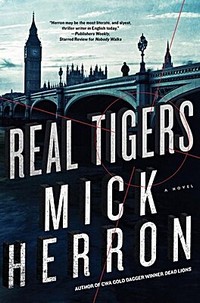
Real Tigers by Mick Herron: Things Hit Close to Home for the Slow Horses

Real TigersReal Tigers

by Mick Herron

DETAILS:
Series: Slough House, #3
Publisher: Soho Crime
Publication Date: January 19, 2016
Format: Hardcover
Length: 343 pg.
Read Date: May 21-June 2, 2023
Buy from Bookshop.org Support Indie Bookstores

Real Tigers‘ Flap Copy

I don’t like what I’ve come up with to describe the book, so I’m just going to use the flap copy:

London: Slough House is the MI5 branch where disgraced operatives are reassigned after they’ve messed up too badly to be trusted with real intelligence work. The “Slow Horses,” as the failed spies of Slough House are called, are doomed to spend the rest of their careers pushing paper, but they all want back in on the action.

When one of their own is kidnapped and held for ransom, the agents of Slough House must defeat the odds, overturning all expectations of their competence, to breach the top-notch security of MI5’s intelligence headquarters, Regent’s Park, and steal valuable intel in exchange for their comrade’s safety. The kidnapping is only the tip of the iceberg, however—the agents uncover a larger web of intrigue that involves not only a group of private mercenaries but the highest authorities in the Secret Service. After years spent as the lowest on the totem pole, the Slow Horses suddenly find themselves caught in the midst of a conspiracy that threatens not only the future of Slough House, but of MI5 itself.

The Introduction

I absolutely love the way that Herron introduces Slough House and its denizens in each book. It reminds me of the way that Rex Stout’s Archie gives the rundown of Wolfe’s Brownstone and the routine in each book. But Herron’s unique approach to each introduction has really clicked with me and I look forward to this part of the books.

I can see just opening up one of these at random from time to time, reading the description of Slough House, and moving on with just a quick refreshing hit of Herron’s magic.

Roddy Ho

Roddy Ho is a great hacker—that’s clear. He’s probably almost as good as he thinks he is. The level of delusion he has about his desirability to women outdoes even Crais’ John Chen (and that’s saying something)—it’s a fun character trait, even if it is hard to believe that someone can be that clueless about themselves.*

* 5 minutes on social media reminded me of the power of self-delusion. Never mind.

That said…it’s easy between books to remember how fun it is to see him getting verbally smacked around by Lamb or River pressuring him to work, and how good he is at the technical stuff, etc.—but to forget just what wholly unpleasant person he is. I mentioned John Chen before, Chen is helpless and harmless (while being a misogynistic creep). Roddy doesn’t have that veneer of hapless charm that Chen carries—and is a bigger misogynistic creep. I just want to wash my hands after a scene focused on him if it shows him thinking or talking about women. He probably belongs in prison and would’ve ended up there if not for being employed by MI5.

Team Building?

I will say, for a bunch of misanthropic individualists, when it comes to one of their own, the Slow Horses are really good at teamwork. They spend so much time on their own, regretting their own mistakes that landed them in Slough House, dreaming and scheming their way back to Regent’s Park, etc. that they all have a serious bit of tunnel vision. They’re all focused on themselves to the exclusion of pretty much everyone else—but they’re becoming closer to a true team—particularly when one of them is in some sort of jeopardy.

It’s nice to see—and generally funny, because they’re so bad at teamwork. But the bits that they get right—either on the job or off—are heartwarming to see.

As heartwarming as this series gets, anyway.

So, what did I think about Real Tigers?

The way that this book deals with the Dead Lions-aftermath is the best part for me. Obviously, most of that has to do with Lousia, but it’s there for everyone to one degree or another. Yes, these books can be read as stand-alones, but there’s an impact to be felt from the previous novels. The MI5 and political machinations behind all the actions—the twists, double-twists, and triple-twists. I know that’s part-and-parcel for this series, so I’m not complaining about that. It felt off…overdone maybe? The Slow Horses doing their thing was entertaining enough. But the package as a whole felt like a letdown.

Still, I loved reading this book. Herron can put together a sentence like no one else. I can’t imagine there’s something I wouldn’t want to read him describe. Even when I didn’t really connect with the story, I couldn’t stop reading—that’s all down to Herron’s skill and the fantastic characters he fills his books with. I’m not just talking about the Horses, even the characters that you’re going to see for 1-2 chapters feel like they’ve got a depth to them that could sustain a novel.


4 Stars

This post contains an affiliate link. If you purchase from it, I will get a small commission at no additional cost to you. As always, the opinions expressed are my own.

The Ballad of Bonaduke—Episode 29: All Talk by R. T. Slaywood: What a Small World

The Ballad of BonadukeThe Ballad of Bonaduke—
Episode Episode 29: All Talk

by R.T. Slaywood

DETAILS:
Series: The Ballad of Bonaduke, #29
Format: Kindle Vella Story
Read Date: July 20, 2023

Just once I would like to wake up on something warm and soft.

The Story So Far…

A drunken Michael Bonaduke decides to use a grift (with maybe some sort of magic/magic-like “help”) to win on a scratch-off lottery ticket so he has money to buy more to drink. He pulls off whatever he did, gets his money and some booze and stumbles off into the darkness to drink himself into oblivion so he can start again the next day. He’s hit by dark memories (probably what’s driving him to the drinking) of fire, pleading, and screaming. There’s going to be a price to pay for his grift, and he’s trying to be ready.

He’s abducted by some representatives of a mysterious group who subject him to a test—if he passes, everything will be explained to him (and hopefully the reader, too). He passes—and is brought somewhere for answers, or maybe training, or maybe another test. Time will tell (or things are going to get really annoying). Answers aren’t quick to come—but the mysteries and questions keep piling up.

Things get hairy and Bonaduke leaves and finds himself back in the neighborhood he started from. He takes refuge in a homeless encampment shortly before a police raid. He’s apprehended and finds himself an interrogation room and shortly escapes after using his grift (but with results he didn’t quite intend). He finds himself by a group of squatters who seem to have strapped a woman to a chair for reasons that can’t be good. He attempts to rescue her before he even realizes what he’s doing, and seems to have succeeded—well, the two of them got away from the group anyway—breathing but bruised.

What’s All Talk About?

Desperate for something to eat to help him keep going, Bonaduke walks up to a drive-thru restaurant and places an order. Now, unless things are different where Slaywood or Bonaduke reside, he shouldn’t get served there—but he does. Well, almost. The employee at the window is someone the reader and Bonaduke know. So things go downhill fast (that conjunction might not be the best to use, but who do we know that Bonaduke does where things would go well after running into them?).

Without intending to, Bonduke uses his grift. He and the (still) unconscious woman find themselves a place to wait in relative security while waiting for the next shoe to drop and/or he decides what his next move will be.

So, what did I think about All Talk?

It’s not all talk—but it largely was. It’s one of the more dialogue-heavy episodes thus far—maybe the heaviest. But Slaywood’s kept the forward momentum going—and that’s what’s important.

I can think of nothing I didn’t like about this episode, Bonaduke keeps trying to help this woman, and while not enjoying it, successfully pushes this kid around to do just that. And maybe because he enjoys it a bit.

I really don’t have anything else to say. Good job, and I’m eager to see what happens next.


4 Stars

Random Sh*t Flying Through the Air by Jackson Ford: Whimsical Title Aside, Ford is NOT Playing Around

Random Sh*t Flying Through the AirRandom Sh*t Flying Through the Air

by Jackson Ford

DETAILS:
Series: Frost Files, #2
Publisher: Orbit
Publication Date: July 7, 2020
Format: eBook
Length: 544 pg.
Read Date: June 19-21, 2023
Buy from Bookshop.org Support Indie Bookstores


There is no good reason that it’s taken me three years to read this book given how much I enjoyed its predecessor. But it did, and now I can answer the question:

What’s Random Sh*t Flying Through the Air About?

Teagan and her team are back on course after the events of The Girl Who Could Move Sh*t With Her Mind, she’s still haunted by those events (or, more specifically who was behind them). Still, they’re back in action as if they’d never been chased by the police, and have even added a new member to the team (and I’m so glad that Ford figured out a nice way to work him in) to the series.

Teagan’s no longer considering her team coworkers (coworkers by coercion, no less), but friends. She has plans to take cooking classes. That’s not all, she’s even trying to repair the disaster that is her friendship/budding romance. Things are looking up, basically.

Which means it’s time for things to start going wrong. And boy howdy, do they go wrong in a big way. One thing that Teagan, her team, and the shadowy government officials who employ them learned in the previous book, is that there are other people out there with abilities like hers.

For example, there’s this cute little kid—he’s smart enough that it’s a super-power in and of itself—he’s like Teagan, but his powers work best with rock, dirt, soil—basically, anything you focus on in Geology class. And he discovers that if he can access a fault line, he can do a whole lot. Between his power, his intelligence, and a complete lack of moral compass—this discovery isn’t good for anyone.

The question quickly becomes: can Teagan and the rest of her team stop him before mapmakers need to redo the Western coast of North America?

The Stakes

That last line wasn’t a joke—the stakes are literally that high in this one. This is a big jump—we go from a confused younger adult convinced he’s doing the right thing by killing a few people to literally risking several states and provinces? “Ford’s not really going to…oh, yes he is.”

It’s hard to imagine how the stakes could be higher (I’m a little nervous about the next two books), but this remained a very personal story. Amidst the threat of death and widespread destruction, the novel is about Teagan, the boy, and a few people in their immediate circle. Yes, the fate of millions hangs in the balance—but our focus never gets bigger than twenty people.

Personal Growth

At the end of The Girl Who Could Move Sh*t With Her Mind, Teagan’s in a better place than she began the novel in—she’s gained a little self-acceptance, has a better relationship with her team, and so on. But she’s essentially the same person. Which is both good and bad.

What we see in this novel is how much she needs to grow as a person—and as someone with abilities and knowing how/when/why to use them. She does grow a lot in these ways, as you’d hope. But we also see how far she still has to go. Sure, readers could tell that (like her rival) her abilities could be strengthened and improved in her debut—but I don’t know if I realized how far she had to go emotionally as I did this time.

It’s good to see that she is growing—and seems to be aware of her shortcomings, so we can expect to see more of it. Which is all we can ask for.

So, what did I think about Random Sh*t Flying Through the Air?

This is just what you want in a super-hero-ish kind of book. There’s drama, there’s action—the kind that CGI wouldn’t quite render right—there’s comedy, there’s honest and brutal emotion. Come to think of it, that’s pretty much what I want in any kind of book (well, I don’t demand action in every one…but you know what I mean). There’s a depth to RSFTtA that TGWCMSWHM didn’t quite have, but it maintained the same voice.

Yeah, I talked about emotional growth and high stakes and all—but at the core of the book is still Teagan’s snarky inner monologue taking us through everything. She takes some hard hits physically, mentally, and emotionally through these events, but it’s still her voice talking us through them. So the book is still entertaining no matter what.

If Ford is going to up his game—and up Teagan’s as well—this much between books 1 and 2, I can’t imagine what’s in store for us in the next two books. But man, am I going to enjoy finding out. I do recommend grabbing the first one before diving in here, but it’s not essential. Either way, pick this up.


4 Stars
This post contains an affiliate link. If you purchase from it, I will get a small commission at no additional cost to you. As always, the opinions expressed are my own.
20 Books of Summer

The Beginning and End of All Things: A Biblical Theology of Creation and New Creation by Edward W. Klink III: This Is Our Father’s World

The Beginning and End of All ThingsThe Beginning and End of All Things:
A Biblical Theology of Creation and New Creation

by Edward W. Klink III

DETAILS:
Series: Essential Studies in Biblical Theology
Publisher: IVP Academic
Publication Date: May 30, 2023
Format: Paperback
Length: 172 pg.
Read Date: June 4-25, 2023
Buy from Bookshop.org Support Indie Bookstores

While there is some biblical wiggle room for us to disagree about how God created the world, we better not misunderstand who God is and who humanity was designed to be, or what God intended to do in the world, ultimately through the work and person Jesus Christ, or why God made the world in a way that explains my life and purpose in the world. In short, if we misread the beginning of the story, we potentially misread the rest of the story. And since this story is about the Creator and his creation, the stakes could not be higher.

The Beginning of All Things (Mostly of the Book)

Every time the term creation or even doctrine of creation was used, the Christians in my church were thinking of origins. It was as if the only category the term creation would elicit in their minds was the beginning of time when the world came into existence. The only question was about what happened in the beginning, and even then, the primary focus was clearly on the heavily debated “six days” The rest of the history of the world, the physical reality in which we live our lives, or even the purposes for which the world was created were not even part of the equation. It seemed to me to be like a man who, when asked about his marriage, was unable to think of anything else besides his wedding ceremony. His love and commitment to his wife, the purpose and design of marriage, and even the current state of his marriage and the family it produced were viewed as distinct or unrelated. My point is not to deny the importance of the first six days of creation but to make important every created day.

Klink starts out by stressing that a doctrine of creation is not about what the first two chapters of Genesis mean—it’s not about how God made the Earth. Or at least, it’s not just about that. It’s about why God made the Earth—what was His purpose in creating, what’s His goal for the creation, and so on. It’s about the goodness of the creation and how we are to enjoy and preserve it. It’s ultimately about the new creation, what is going to happen on that Last Day when creation is renewed, restored, and recreated.

With that in mind, Klink then looks at how these (and related) ideas and themes are expressed throughout the Biblical narrative, from the Fall through Christ’s ministry on Earth, and on through the time up to the End.

The End of All Things (and of the Book)

…Creation was good but not yet finished to perfection. Again, quoting Gunton: “As created, it is perfect, because it is God’s project. . . . But it is not pertest in the sense of completion. It has somewhere to go” To be clear, this is eschatology. Not in the sense of the last few years of human history (the end times) but the entirety of human history. Eschatology, therefore, is referring to God’s goal or purpose for creation, his ordained intention and the plot of the world. Thus, eschatology 1s the aim of trajectory of all things, the goal of all things. Our argument in this chapter—and the book as a whole has been that the biblical stary of creation and new creation, which includes redemption, is a biblical theology of the goal of all things. The use of etymology for defining eschatology (the study of the end times) should be banned by royal decree! Eschatology ts only tangentially defined by interpretive questions regarding a millennium, let alone a rapture. Simply stated, eschatology is referring to the intentions of God for the world, even the will of God. Eschatology, which extends from creation to new creation, is the goal of all things.

From the Introduction through the first nine chapters, Klink has kept one eye on the Eschaton (and kept the reader looking for it, too). Chapter 10, Creation’s Consummation, focuses on that. He shows how all those earlier themes bring us to this point, and Creation and Redemption will shape the coming New Creation. This chapter is worth at least half of the purchase price of the book. It’s a great way of tying the book together and reminding the reader what our focus should be during our pilgrimage on Earth.

He follows this with a concluding few pages of Pastoral Reflections. He talks about the importance of thinking—and having pastors getting their flocks to consider—about creation in a fuller sense than just the “beginnings.” He also tries to show ways that the doctrine of creation should be applied and worked out in the believer’s life, what it should look like lived out. It’s a brief few pages, but very powerful.

So, what did I think about The Beginning and End of All Things?

…the Christian life is not merely a spiritual life but a physical life—a life lived in creation and in relation to the Creator. If Christians are united to their Creator in Christ and through the Spirit, then they should be the most aware of their physical existence and createdness. A few examples might be helpful. First, Christians should have a robust theory and practice of the human body and reflect God’s concern for its purpose and care. Second, Christians should be both aware of and concerned for physical creation, especially the earth, which is a gift from God that he both created and will re-create.”’ Both of these topics, however, have been minimized or manipulated by too many Christians for too long. This is not only detrimental to the church’s witness but also to the fullness of its life. In a world filled with creatures who neither know or submit to their Creator, Christians should reflect in word and deed the beauty, awe, and affection of the mystery of creation that is reflective of the new life they have been given by their Creator and Redeemer. Psalm 104 (especially Ps 104:24, 30, 33) provides us with a lens for our appreciation of the physical world and, therefore, the honor and praise due to our Creator.

When Klink started by saying that a doctrine of creation needs to be about more than what happened in Genesis 1-2, he piqued my interest and got me on his side immediately. The Introduction and Chapter 1 were just fantastic.

The “meat” of the book—Chapter 2, Creation’s Curse, through Chapter 8, Creation’s Commission—is refreshing both in outlook and insight. Any quibbles I had with Klink did show up in these chapters but were only in some of the ways he described ideas or on minor points (ultimately due to differences in confessional outlooks).

But as I indicated above, the last chapter and the pastoral reflections were as good (probably better) as the beginning of the book. At least a third of the notes I took about the whole book were on these 24 pages.

On the whole, this book is warm and pastoral, reminding the believer that the world we live in was created very good, and while it groans for the new creation, it remains full of good gifts from our Father for us to use, enjoy, and glorify Him with. I heartily encourage you to pick this up and read it.


4 Stars

This post contains an affiliate link. If you purchase from it, I will get a small commission at no additional cost to you. As always, the opinions expressed are my own.

Page 13 of 88

Powered by WordPress & Theme by Anders Norén