Tag: 4 Stars Page 14 of 88

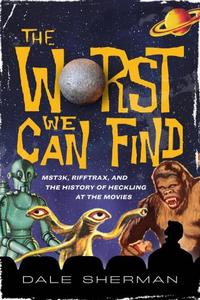
The Worst We Can Find by Dale Sherman: MST3K: The Satellite of Love, The Bots, The Mads, The Movies and Everything Else

The Worst We Can FindThe Worst We Can Find:
MST3K, RiffTrax, and the History of Heckling at the Movies

by Dale Sherman

DETAILS:
Publisher: Applause Books
Publication Date: June 15, 2023
Format: Paperback
Length: 246 pg.
Read Date: June 27-29, 2023
Buy from Bookshop.org Support Indie Bookstores

What’s The Worst We Can Find About?

This is one of those books where the sub-title tells you everything you need to know: “MST3K, RiffTrax, and the History of Heckling at the Movies.” The back of the book does give a fuller explanation:

Had you tuned in to the small television station KTMA on Thanksgiving Day, 1988, you would have been one of the few witnesses to pop culture history being made. On that day, viewers in and around St. Paul, Minnesota, were treated to a genuine oddity, in which a man and his robots, trapped within a defiantly DIY sci-fi set, cracked jokes while watching the terrible 1981 movie Invaders from the Deep. Although its origins may have been inauspicious, Mystery Science Theater 3000 captured the spirit of what had been a beloved pastime for generations of wags, wiseacres, and smart alecks, and would soon go on to inspire countless more.

The Worst We Can Find is a comprehensive history of and guide to MST3K and its various offshoots—including Rifftrax, Cinematic Titanic, and The Mads Are Back—whose lean crew of writers, performers, and puppeteers have now been making fun of movies for over thirty years. It investigates how “riffing” of films evolved, recounts the history of these programs, and considers how a practice guaranteed to annoy real-life fellow moviegoers grew into such a beloved, long-lasting franchise. As author Dale Sherman explains, creative heckling has been around forever—but MST3K and its progeny managed to redirect that art into a style that was both affectionate and cutting, winning the devotion of countless fans and aspiring riffers.

Sherman starts with some commentary on the history of what we now call “meta” and riffing in general—going back to Greek choruses. He then shows how movies started riffing/commenting on themselves (and each other).

He then focuses on MST3K itself—talking about Joel Hodgson’s background and the creation of the show. We actually get some good background on all the major players from the early years. He then describes the transitions in staff/cast as it moves from KTMA to Comedy Central to the movie (and, wow, what an effort to get that made) to SciFi and so on.

We then get a look at what the post-MST3K careers of the central figures look like and how riffing on movies has kept popping up in their lives (largely because people won’t let them stop) and how the show has come back from its ending a time or two.

My Sole Criticism

Sherman only cites previously available material—yes, he dug up a lot of things that many/most fans would never see, never think of looking for. But he doesn’t interview anyone himself, or provide anything outside a couple of personal memories that an industrious fan couldn’t have found on their own.

I don’t want to criticize what he did—it is no small feat to do what he did. And I’m so glad he did it—but the lack of original material keeps me from absolutely raving about this book.

So, what did I think about The Worst We Can Find?

Back when I talked about Scott Ryan’s Moonlighting: An Oral History, I’d said:

When I read a book about a television show, I want a few things—I want something to

    • make me want to rewatch the show
    • make me not really need to, because the book has helped me remember it in such a way that it’s not that necessary
    • give me a lot of behind-the-scenes information about the show
    • help me understand it better (not just information, but reflections on it—its legacy, cultural context, impact on television, et.)
    • Ideally, teach me something about the art and/or business of television (preferably both)
    • and if it can be fun (TV should be entertaining), that’s all the better.

Yeah, that seems like a lot to ask for from a book, but if I’m going to take the time to read a book instead of watching a behind-the-scenes show or listening to a panel discussion, I want bang for my buck—I don’t always get it (and know that going in), but I want it.

The Worst We Can Find delivered on all but the “make me not really need to” because there’s no way that someone could do that in a book form. I have watched some MST3K since then (more than I usually do because I’ve been inspired)—and some Rifftrax, too.

I don’t want ponderous, I don’t want slow. I don’t mind a lot of detail (in fact, I relish it), I don’t mind thoughtful (that’s why I read the book), but I want to be entertained. And Sherman delivered there. His chapter introductions were golden—worth at least half of the purchase price alone. I started to give a couple of examples, but why ruin it for you? So, I’ll be vague. I laughed aloud at Chapter 4’s introduction. Maybe all of them, but Chapter 4 was the point I stopped to make note of it.

I really appreciated the way Sherman pivoted in the last chapter to speak of “we” in reference to fans of the show, it’s clear throughout that he was one of us (there’s no way you do this work without that—or a bigger paycheck than he likely got for this book), but I appreciated the way he did it there.

The last paragraph was perfect, incidentally.

This was a great read, I learned a lot, I chuckled frequently, and I had a great time reminiscing about a favorite show. I think you will, too. I’d say is a must for MSTies. As I said, I can’t rave about it—but I can strongly encourage you to check it out. And keep circulating the tapes.


4 Stars

This post contains an affiliate link. If you purchase from it, I will get a small commission at no additional cost to you. As always, the opinions expressed are my own.

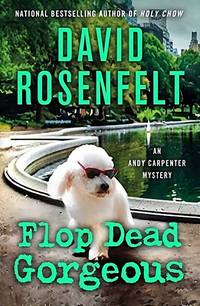
PUB DAY REPOST: Flop Dead Gorgeous by David Rosenfelt: An Old Friend Brings a Challenging Case for Andy Carpenter @stmartinspress @netgalley

Flop Dead GorgeousFlop Dead Gorgeous

by David Rosenfelt

DETAILS:
Series: Andy Carpenter, #27
Publisher: Minotaur Books
Publication Date: July 04, 2023
Format: eARC
Length: 272
Read Date: June 13, 2023


What’s Flop Dead Gorgeous About?

Jenny Nichols went to the same high school as Andy Carpenter—but when he went to law school, she went to California and became a movie star. She comes back to Paterson frequently, even adopting a miniature French poodle from Andy’s rescue foundation and striking up a friendship with Laurie.

She’s staying in Paterson while filming her next movie in New York and Andy hosts a dinner with her and several others—during the dinner, her ex-boyfriend, current producer, and co-star (all the same person) shows up and causes a scene in an effort to see her. While Andy does nothing at all (his strength), Willie, Laurie, and Marcus shut down the producer and his bodyguards. They leave and the night goes on as before and everything seems fine.

Because this is that kind of book in that kind of series, that “fine” doesn’t last long. Jenny wakes up in the middle of the night to find her ex stabbed to death in her kitchen. With no one else in the house—and few people knowing she was staying there at all—the suspect list is really short, and it’s no time at all before Andy is hired to defend Jenny.

Wait, What?

I may be revealing what a horrible (as opposed to irresponsible) reader I am here—but in the second chapter, Rosenfelt said something that stopped me cold. Andy’s hosting that dinner for Jenny with a bunch of his friends and colleagues, including Sam, Willie and Sondra Miller, Vince Saunders—you know, the people you’d expect. Except for this: Marcus and his wife Julie. Did we know Marcus had a wife? Has she shown up a lot and I’ve totally forgotten her? I really don’t think so, but I don’t have time to read 20+ books (I can’t remember when he shows up first, book 2 or 3, I think) to see.

Part of my shock here has to do with the idea of Marcus having any kind of personal life is strange. It’s like when you’re in second grade and see your teacher in the grocery store. But I just have no recollection of this woman.

And, really, that’s not the strangest Marcus moment in the book…

Poor Eddie Dowd

Andy’s on his third associate in the series—the lawyer who does most of the actual lawyering, instead of the investigating and courtroom antics. He’s the guy who puts together briefs, looks up precedents, writes motions, and so on. This associate is usually comedic in some way, too.

Eddie shows up a little bit here, but nowhere is used to lighten the mood—we don’t even get one example of his overuse of sports metaphors. It was likely necessary to cut his jokes for space and/or to make up for the running joke (see below), but I couldn’t help but feel bad for the character. He barely got to do anything—particularly nothing interesting.

The Running Joke

There’s a running joke throughout this book that I can’t bring myself to ruin—or repeat. Initially, I wondered about Rosenfelt’s continued use of it—but in the end, I wouldn’t cut a single instance of it, and the later in the book we got the funnier I found each reappearance.

I don’t remember Rosenfelt going back to the well so often like this often (ever?).* Sure, he repeats jokes from book to book—Andy’s trying to retire, Edna’s lack of interest in work, Marcus’ lack of talking, etc. But fifteen+ appearances of a gag in one novel? I think this is new. I don’t know that we need it in every Andy Carpenter book from now on, but I wouldn’t mind it frequently.

* Fill up the comments here with the times he’s done it before and I’ve forgotten about it, by all means.

So, what did I think about Flop Dead Gorgeous?

I know I complain often about not knowing what to say about an Andy Carpenter novel that I haven’t said a few times before. And really, aside from what I’ve noted in the two sections above, I’m not sure what to say.

The one thing that I want to talk about the most is the one that I cannot discuss—the killer and the motive behind the killing. I can’t even think of a vague way to praise the choices Rosenfelt made in this novel’s structure. But for my money, the choice of the killer, motive, etc. are praiseworthy.

I do like the way Rosenfelt is aging Ricky—especially while not aging Tara—and letting Ricky pay attention to this case. Good character work.

Flop Dead Gorgeous features some of Rosenfelt’s funniest material in years. More of Andy in court (or so it seems) than we’ve been treated to lately. Good character work (both with regulars and new characters)—except for poor Eddie. The best mystery Rosenfelt’s given us in a long time. And Andy’s narrative voice has never been better (rarely been worse, too)—there are a couple of paragraphs that made me stop and note, “This is why I keep coming back to this series.”

We’re twenty-seven books in and I still laughed and was left on tenterhooks to see how Andy was going to prevail. That’s no mean feat. Rosenfelt hasn’t lost a step, and neither has this series. Naturally, I recommend Flop Dead Gorgeous to your attention.

Disclaimer: I received this eARC from St. Martin’s Press via NetGalley in exchange for this post—thanks to both for this.


4 Stars

This post contains an affiliate link. If you purchase from it, I will get a small commission at no additional cost to you. As always, the opinions expressed are my own.

Flop Dead Gorgeous by David Rosenfelt: An Old Friend Brings a Challenging Case for Andy Carpenter @stmartinspress @netgalley

Flop Dead GorgeousFlop Dead Gorgeous

by David Rosenfelt

DETAILS:
Series: Andy Carpenter, #27
Publisher: Minotaur Books
Publication Date: July 04, 2023
Format: eARC
Length: 272
Read Date: June 13, 2023


What’s Flop Dead Gorgeous About?

Jenny Nichols went to the same high school as Andy Carpenter—but when he went to law school, she went to California and became a movie star. She comes back to Paterson frequently, even adopting a miniature French poodle from Andy’s rescue foundation and striking up a friendship with Laurie.

She’s staying in Paterson while filming her next movie in New York and Andy hosts a dinner with her and several others—during the dinner, her ex-boyfriend, current producer, and co-star (all the same person) shows up and causes a scene in an effort to see her. While Andy does nothing at all (his strength), Willie, Laurie, and Marcus shut down the producer and his bodyguards. They leave and the night goes on as before and everything seems fine.

Because this is that kind of book in that kind of series, that “fine” doesn’t last long. Jenny wakes up in the middle of the night to find her ex stabbed to death in her kitchen. With no one else in the house—and few people knowing she was staying there at all—the suspect list is really short, and it’s no time at all before Andy is hired to defend Jenny.

Wait, What?

I may be revealing what a horrible (as opposed to irresponsible) reader I am here—but in the second chapter, Rosenfelt said something that stopped me cold. Andy’s hosting that dinner for Jenny with a bunch of his friends and colleagues, including Sam, Willie and Sondra Miller, Vince Saunders—you know, the people you’d expect. Except for this: Marcus and his wife Julie. Did we know Marcus had a wife? Has she shown up a lot and I’ve totally forgotten her? I really don’t think so, but I don’t have time to read 20+ books (I can’t remember when he shows up first, book 2 or 3, I think) to see.

Part of my shock here has to do with the idea of Marcus having any kind of personal life is strange. It’s like when you’re in second grade and see your teacher in the grocery store. But I just have no recollection of this woman.

And, really, that’s not the strangest Marcus moment in the book…

Poor Eddie Dowd

Andy’s on his third associate in the series—the lawyer who does most of the actual lawyering, instead of the investigating and courtroom antics. He’s the guy who puts together briefs, looks up precedents, writes motions, and so on. This associate is usually comedic in some way, too.

Eddie shows up a little bit here, but nowhere is used to lighten the mood—we don’t even get one example of his overuse of sports metaphors. It was likely necessary to cut his jokes for space and/or to make up for the running joke (see below), but I couldn’t help but feel bad for the character. He barely got to do anything—particularly nothing interesting.

The Running Joke

There’s a running joke throughout this book that I can’t bring myself to ruin—or repeat. Initially, I wondered about Rosenfelt’s continued use of it—but in the end, I wouldn’t cut a single instance of it, and the later in the book we got the funnier I found each reappearance.

I don’t remember Rosenfelt going back to the well so often like this often (ever?).* Sure, he repeats jokes from book to book—Andy’s trying to retire, Edna’s lack of interest in work, Marcus’ lack of talking, etc. But fifteen+ appearances of a gag in one novel? I think this is new. I don’t know that we need it in every Andy Carpenter book from now on, but I wouldn’t mind it frequently.

* Fill up the comments here with the times he’s done it before and I’ve forgotten about it, by all means.

So, what did I think about Flop Dead Gorgeous?

I know I complain often about not knowing what to say about an Andy Carpenter novel that I haven’t said a few times before. And really, aside from what I’ve noted in the two sections above, I’m not sure what to say.

The one thing that I want to talk about the most is the one that I cannot discuss—the killer and the motive behind the killing. I can’t even think of a vague way to praise the choices Rosenfelt made in this novel’s structure. But for my money, the choice of the killer, motive, etc. are praiseworthy.

I do like the way Rosenfelt is aging Ricky—especially while not aging Tara—and letting Ricky pay attention to this case. Good character work.

Flop Dead Gorgeous features some of Rosenfelt’s funniest material in years. More of Andy in court (or so it seems) than we’ve been treated to lately. Good character work (both with regulars and new characters)—except for poor Eddie. The best mystery Rosenfelt’s given us in a long time. And Andy’s narrative voice has never been better (rarely been worse, too)—there are a couple of paragraphs that made me stop and note, “This is why I keep coming back to this series.”

We’re twenty-seven books in and I still laughed and was left on tenterhooks to see how Andy was going to prevail. That’s no mean feat. Rosenfelt hasn’t lost a step, and neither has this series. Naturally, I recommend Flop Dead Gorgeous to your attention.

Disclaimer: I received this eARC from St. Martin’s Press via NetGalley in exchange for this post—thanks to both for this.


4 Stars

This post contains an affiliate link. If you purchase from it, I will get a small commission at no additional cost to you. As always, the opinions expressed are my own.
Grandpappy’s Corner: Little Aiden – A Love Book for Toddlers by Albert and Anna Choi, Bettina Braskó (Illustrator): Will Make You Say, “Awwww.”

I’m posting about the two books (so far) in the Little Aiden series today, which is turning into a bigger challenge than I expected. The two books are pretty similar in terms of style, quality, etc. So, yeah, the second post might sound a lot like the first—occasionally I’m just going to copy and paste. Sorry about that. But they should be different enough to justify your time as well as mine.


Little Aiden - A Love Book for Toddlers

Little Aiden – A Love Book for Toddlers

by Albert and Anna Choi, Bettina Braskó (Illustrator)

DETAILS:
Series: Little Aiden 
Publisher: Mytogo Publishing
Publication Date: May 22, 2023
Format: eBook
Length: 41 pg.
Read Date: June 10, 2023

What’s Little Aiden – A Love Book for Toddlers About?

This book is basically someone* narrating a day in Aiden’s life (or a bunch of activities over a few days), assuring him of their love in all the things he’s up to—when he’s being brave, when he’s being calm, when he’s sad, anxious, scared, and so on. All throughout the day and with a promise that this love will continue.

*Presumably his mother, given the art—although you could make the case that it’s from the point of view of the dad seeing both of them. It really doesn’t matter.

Let’s Talk about the Art for a Minute

The art is as adorable and eye-catching here as it was in the other Little Aiden book. Fantastic expressions, great background illustrations, etc. These are going to be very fun for a toddler—and whoever is reading with the toddler—to stop and talk about.

Braskó’s use of Aiden’s teddy bear is fantastic, once I saw what she did on the “Brave” illustration I had to go back through the whole book just looking for what was going on with the bear. (adding the rest of the toys to the mix on the “Confident” page was great, too)

I like her use of the first Little Aiden book here—that was such a nice touch. I wonder how many toddlers will notice?

Be sure to check out some of the samples on Braskó’s website.

How is it to Read Aloud?

I don’t mean this in a bad way—but this isn’t going to do much for the adult reader. It’s a simple and repetitive text. You don’t get to do any fun rhymes, tongue twisters, silly voices, or goofy noises (well, maybe a couple). And it’s okay, because it’s not that kind of book.

It’s the kind of book that’s intentionally repetitive—this is how you can help the child learn. It’s written simply for the same reason. Short and clear sentences that make it easy to grasp the point.

It’s also the kind of book that’s easy to stop reading to discuss—what Aiden is doing, the art, what his Teddy Bear is doing (alongside or in contrast to Aiden), or whatever. And that’s where the engagement for the adult reader is going to come in.

And, hey, some of the pages serve as a good reminder to the adult that it’s okay for the toddler to be frustrated and angry—because it’s really easy for parents/caretakers to forget that sometimes. It’s good for us to vocalize that.

So, what did I think about Little Aiden – A Love Book for Toddlers?

This is just so sweet. There’s some fun to be had (primarily from Braskó’s art, because the text is earnest), but it’s largely warm and sweet reminders of a parent’s affections.

It just made me melt, it’ll likely do the same for you.

It’ll be a great springboard for a parent/grandparent/caregiver to use to talk about all the different ways and times they love the toddler they’re reading with—and who can’t use something like that?

Another heartily recommended book from this series.


4 Stars

Grandpappy Icon

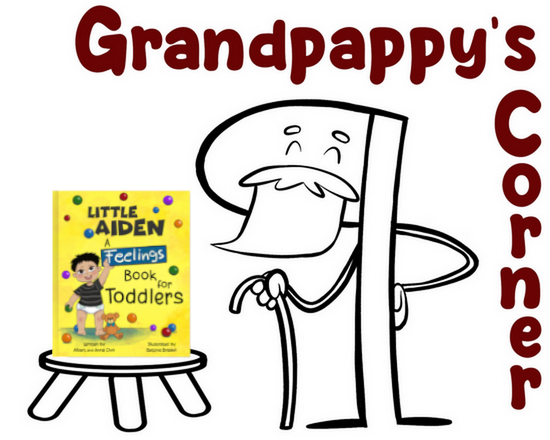
Grandpappy’s Corner: Little Aiden – A Feelings Book for Toddlers by Albert and Anna Choi, Bettina Braskó (Illustrator): Nothing Less than Feelings

I’m posting about the two books (so far) in the Little Aiden series today, which is turning into a bigger challenge than I expected. The two books are pretty similar in terms of style, quality, etc. So, yeah, the second post might sound a lot like the first—occasionally I’m just going to copy and paste. Sorry about that. But they should be different enough to justify your time as well as mine.


Little Aiden - A Feelings Book for Toddlers

Little Aiden – A Feelings Book for Toddlers

by Albert and Anna Choi, Bettina Braskó (Illustrator)

DETAILS:
Series: Little Aiden 
Publisher: Mytogo Publishing
Publication Date: December 17, 2022
Format: eBook
Length: 41 pg.
Read Date: June 10, 2023

What’s Little Aiden – A Feelings Book for Toddlers About?

There’s one simple point to this book:

It is okay to have feelings.

It’s the first sentence and that sentiment is repeated fourteen times over the book as we follow Aiden through a bunch of scenarios where he’s feeling things that kids can identify with. Scared, tired, happy, playful, silly, helpless, and more.

Let’s Talk about the Art for a Minute

Little Aiden’s expressions are clearit’s a piece of cake to tell what he’s feeling, even for a little one just trying to put words to facial expressions.

But I think Braskó’s real strength is in the rest of the illustrationswhat’s Aiden’s body doing with the feeling? What’s going on around him? Is there a mess? Does he have toys? How’s he interacting with his environment? Those really help fill out the ideas of the book.

These are going to be very fun for a toddlerand whoever is reading with the toddlerto stop and talk about. “He’s sure a messy eater, isn’t he? What’s that on the floor there next to his sippy cup? What’s that on his face?”

The illustration that goes with embarrassed is probably my favorite (and that probably says something about my maturity level).

Be sure to check out some of the samples on Braskó’s website.

How is it to Read Aloud?

I don’t mean this in a bad waybut this isn’t going to do much for the adult reader. It’s a simple and repetitive text. You don’t get to do any fun rhymes, tongue twisters, silly voices, or goofy noises (well, maybe a couple). And that’s okay, because it’s not that kind of book.

It’s the kind of book that’s intentionally repetitivethis is how you can help the child learn. It’s written simply for the same reason. Short and clear sentences that make it easy to grasp the point.

It’s also the kind of book that’s easy to stop reading to discussthe feeling in question, the art, or whatever. And that’s where the engagement for the adult reader is going to come in.

And, hey, some of the pages serve as a good reminder to the adult that it’s okay for the toddler to be frustrated and angrybecause it’s really easy for parents/caretakers to forget that sometimes. It’s good for us to vocalize that.

So, what did I think about Little Aiden – A Feelings Book for Toddlers?

Feelings can be scarysometimes a toddler isn’t sure why they’re having the emotional reaction they are, sometimes a toddler can see the adults around them reacting to the toddler’s emotions in a way that can be frightening or off-putting, sometimes a toddler doesn’t like the way an emotion makes them feel. It doesn’t do much good to assure the toddler that it doesn’t get much better sometimes as an adult.

But what you can assure them of is that it’s okay to feel things. The Chois have given toddlers a handy and helpful book to tell them this. As they read and re-read it with someone they trust they can examine these feelings and get the reminderor get the lessonthat it’s okay to feel emotions.

How to react to those emotions is a talk for a different timebut for now, it’s about being okay with having and feeling them.

I heartily recommend this book.


4 Stars

Grandpappy Icon

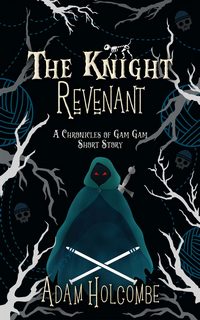
The Knight Revenant by Adam Holcombe: You Do NOT Mess Around with This Old Lady

The Knight RevenantThe Knight Revenant

by Adam Holcombe

DETAILS:
Series: Chronicles of Gam Gam
Publisher: Bounty Ink Press
Publication Date: May 30, 2023
Format: eBook
Length: 29 pg.
Read Date: June 10, 2023

What’s The Knight Revenant About?

Gam Gam had been at this (this being necromancy in an official capacity) for twenty-two days, four hours, and thirty-four minutes, after having graduated top of her class from the mage’s academy in Capital City

…and has taken it upon herself to take care of a revenant that had been disrupting travel between two cities.

The revenant tries to unleash its aggression on her, and she simply slaps it down like it’s nothing but a petulant child, scolding it a bit, and then trying to reason with it patiently like only a grandmother can. The revenant plays its part in this pantomime and throws a tantrum. This continues for a few days until a new target presents itself for the spirit.

And then Gam Gam has to show it who’s boss.

What did I think about The Knight Revenant?

This short story is a great point of entry for the series/world of Gam Gam. Is it necessary to read this before the novella? Nope. I actually think it works better as a follow-up to the novella (even though it takes place first), so you get some backstory for characters you already like. But that’s probably because I read them that way.

Gam gam gets some fantastic lines here. Had I been on the fence about her before, she’d have earned a fan from the way she dealt with the revenant—both as a foe and then later on. We get to see her heart, her spunk (although it feels cliché and possibly condescending to talk about an older woman having spunk…but it’s a great word to describe her attitude), and her humor.

And we get to see her power…Gam Gam is not to be taken lightly. What she did in the novella was probably a greater display of raw power. But something about the way she counters the relevant struck me as more impressive. Maybe it’s the banter + the magic rather than just the magic. Holcombe is quick to show the reader that magic can only do so much and that the frailties of age can get the best of even a professional necromancer.

The last scene? (Spoiler ahead in the next 2 sentences) I got a big “Vincent and The Doctor” vibe from it. And now I’ll forever see Tony Curran as this character when I think of him in the future.

This was a quick, fun companion piece for the novella (in whatever order you want to read them). It solidified my commitment to jump on the next adventure of Gam Gam with all possible haste, too.


4 Stars

REPOSTING JUST CUZ: Beyond Authority and Submission by Rachel Green Miller: Starting-Point for a Discussion the Conservative Church Should’ve Already Had

originally posted 10/27/19
I feel compelled to repeat the disclaimer I threw on a book last week—and I should probably throw this on a lot of theologically-oriented works. This is another one of those works that I feel really unqualified to discuss. So, know that this is from the perspective of an opinionated and semi-(formally)educated reader and occasional armchair theologian. Not the reflections of an ordained minister or professional theologian.

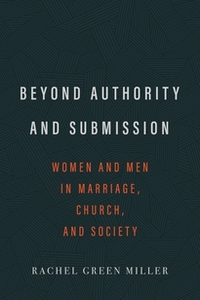
Beyond Authority and Submission

Beyond Authority and Submission: Women and Men in Marriage, Church, and Society

by Rachel Green Miller

Paperback, 259 pg.
P&R Publishing, 2019

Read: September 22-29, 2019

Contrary to what popular culture states, women and men are not from different planets. We’re complementarymore alike than different. Without denying the differences, we need to stop defining women as the polar opposite of men and vice versa. Such divisive definitions create and encourage unnecessary conflict and set up unrealistic and unbiblical expectations for how women and men should behave.

Paul frequently refers to fellow believersboth men and womenas co-laborers. The word he uses, sunergos, means “a companion in work.” As we will see in the next sections, co-laborer captures the sense of what we were created to be and what we are called to be in Christ.

I can’t get where this is controversialI’m definitely not the kind of guy to say “in this day and age” when it comes to this kind of thing, so please don’t hear me saying that. In any day and age where someone’s thinking is shaped more by the Bible than it is by the surrounding culture (either of the moment or by some version of a historical point of view). I don’t get where this is controversial. Sadly, it is. But as long as that’s Rachel Green Miller’s controlling thought (and I firmly believe it is), I’m on board with this book.

So I should say at the outset, I’ve appreciated Miller’s writing for years now and am very sympathetic to Miller’s general perspective on the issues she tackles in the book. I came into it expecting a useful and beneficial book for those wading through issues relating to the relation of the sexes to each other from a Christian worldviewand I got it. I didn’t expect a book to settle arguments, or a panacea to problems churches/ministries/individuals are having on this frontwhich is good, because she doesn’t try.

After setting the stage for what she wants to discuss in the book, Miller goes on a brief historical survey of views of men and women in the Greco-Roman World and Victorian Era (which she posits have more of an influence on conservative Christianity than we realize), and then she looks at First, Second and Third-Wave Feminism and how the Church has reacted to each. I think her book would be better served if this section were expanded and depended less on secondary sourcesbut given space limitations, I can live with it. From there she explores Biblical teaching on the Nature of Men and Women, how the two should relate in marriage, the Church, and society. In these chapters, she tries to show how current understandings are (too) frequently largely molded by a reaction to a political movement or values imported from a historical context (that needed Biblical reform). Each section here could be a book unto itselfand maybe should bebut Miller’s treatment is a good starting point for discussion.

If you see the book as thata starting point for conversation, with a lot of very helpful things to bear in mind, this is a very commendable and worthwhile read. If you’re thinking of it as definitive in any sense of the word (and I think Miller would warn against that herself), the book will not come close to living up to expectations.

Miller critiques both the foundation of the worldviews she disagrees withancient pagan cultures or recent/contemporary naturalistic views. Latter feminism, as well as godless patriarchal views, are her targetsas are the ways those presuppositions or their expressions are imported into the Church.

Where I think this book stumbles is in the positive case for what she believes. Miller is very clear on what she’s not trying to say (though many aren’t paying attention to this), she’s also clear on what she disagrees with (no one would deny this)but she’s too unclear about what she’d like people to think. I think I just did the same thing hereso I’m going to resort to metaphor. Most of what I talk about here is fiction, so I’m going to employ that for a minute. If Andy Carpenter, Eddie Flynn and Mickey Haller (various fictional defense attorneys) have taught me anything, it’s that while it’s all well and good for a defense attorney to poke holes in a prosecution’s case, what will really turn a jury around is a good alternative suspect, someone to blame, to hold accountable for whatever crime is in question. Miller’s done a great job in showing problems with the prosecution’s case, and we know she doesn’t want us to find her client guiltybut I don’t have anyone else to hold accountable/punish for the crime.

Now, the problems with that metaphor are plain enough, but I think my point is clear (clearer than I could’ve made it earlier). For what it’s worth, I think she’s dead to rights on what she’s not wanting to say, and by and large, she’s right on what she’s critiquing. I just wish I had a clearer notion of what she wants readers to think in a positive sense. Also, while I agree that we need to do more than talk about the relationship between the sexes in terms other than “authority” and “submission” we still need to have clear ideas about how those roles should function (if we’re going to understand the Bible), and Miller should have addressed that.

This book has, regrettablyyet not at all unsurprisinglykicked up a hornet’s nest of controversy. Sadly, it seems that most of the reviewers have dug into two hard-and-fast camps: the “this is a load of drivel that Miller and P&R should be ashamed about” camp on the one hand, and the “this is the greatest thing since the Institutes” camp on the other. Neither is even close to right. This is a good book (with clear flaws) and deserves to have its good points, flaws, and pushes to conversation discussed without vitriol. Sadly, I can’t see that happening, which is probably why books like this are needed.

Honestly, if we can’t deal charitably with each other on this kind of thing, how can we expect a lost and dying world to listen to us at all?

I know that more than a few reviewers have taken issue with the way that Miller treats some of the sources she’s citing and critiquingand there were a couple of times I wondered if she and I had read the same article/chapter/book, because I didn’t come away from it with the same ideas she did. At timesand more often than should be acceptableshe comes across as saying that “Writer X is problematic on these issues and therefore everything they’ve ever said about them is wrong.” I don’t think that’s her intention, but I do think that she gives that impression. But on the whole, I think there’s a lot of straining at gnats by her critics when it comes to her treatment of sources.

I think I’ve lost the thread a bit here. Such is the nature of the tempest in the conservative Christian teapot, that I can’t really think about the content of the book without thinking about the reaction to it. I wish I’d found/made the time to write about this book before I read about it. That’s on me.

Let me try to get back on track. I liked this book. It made me re-examine a lotand will probably continue to do so as I mull on what she has to say (and I’ll probably find a lot to disagree with ultimately, and a lot to agree withas it ought to be). How much of what I think about how women and men should interact with each other (in the home, Church and society) comes from Scripture and how much from the culture? How much of what I think it means to be a man or what it means to be a woman has more to do with Ancient Greek culture or the Victorians? (more than it should). The core of the message should be heard and weighed, and hopefully, after the hubbub has died down a bit, we can start to deal with it.

The Bible testifies to our unity. We don’t have one Bible for men and a different one for women. The armor of God isn’t just for men, and the fruit of the spirit doesn’t apply only to women. No, we have one Bible for us all, and most of the Bible’s commands apply to all of usmale or female, old or young, rich or poor, servant or master.

It’s important to emphasize that when God made humanity in His image, He did so by making a man and a woman. Women are as much made in the image of God as men are. Men don’t have more of God’s image because of their masculinity. We are equal in worth, but we’re not the same. We are different, but we are also interdependent. We were created to complement each other, and we need each other.

Tolle Lege.


4 Stars

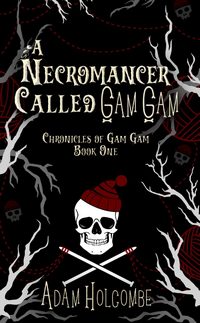
A Necromancer Called Gam Gam by Adam Holcombe: Knitting, Skeletal Cats, and Other Kinds of Magic

A Necromancer Called Gam GamA Necromancer Called Gam Gam

by Adam Holcombe

DETAILS:
Series: Chronicles of Gam Gam, Book One
Publisher: Bounty Ink Press
Publication Date: May 30, 2023
Format: eBook
Length: 110
Read Date: June 3-5, 2023


A cat, free from the restraints of flesh, muscle, and organ, stretched on the edge of the wagon, as if that would do anything for its skeletal body. Then it jumped down next to Mina and plodded over to the woman, who had returned to her chair by the fire. A partially- knitted scarf coiled in her lap as she continued to work on it. The skeletal cat found a comfortable piece of the woman’s dress, curled up at her feet, and licked its non- existent crotch with a non- existent tongue.

What’s A Necromancer Called Gam Gam About?

Twelve-year-old Mina is being pursued by armed men—armed men who had just killed her father. She has a special kind of magic, and those in power want to use her because of it.

She runs across a kindly grandmotherly type who introduces herself as Gam Gam. Gam Gam, it turns out, is a necromancer with a soft spot for endangered little girls. (probably endangered women, and males of all ages, too). She takes her Mina in and promises her safety. Gam Gam is a necromancer and can back up that promise (not definitively, but more than most people can).

They tell each other their stories—Mina tells her why she’s on the run, and Gam Gam tells her that she became a necromancer after the death of her grandchildren so she could resurrect them.

But first, Gam Gam decides that she needs to do something to keep Mina safe.

The Types of Magic

The bundle of bones at the top of the stove raised its feline skull and looked at Mina, then disregarded her and returned to a nap. Why did skeletal cats need so many naps?

Great question. But that’s not what I want to talk about here.

We see two types of magic portrayed with our two protagonists—with others floating out there in this world for us to encounter in future installments, I assume.

Necromancy is rarely something I’m interested in reading about unless the necromancer is about to be thwarted. I know there are exceptions (including here), but it’s hard to think about magic involving reanimating the dead as a good thing. But Holcombe not only makes that specialty seem interesting but gives the reader a necromancer you can root for.

I really liked the way one of the characters describes Gam Gam’s magic to Mina. It grounded the practice, for starters—you could understand it. It’s also idiosyncratic enough to fit Gam Gam to a T. From that point on, I could see that explanation at work—even when the text doesn’t refer to it.

Now Mina’s magic is a kind I’ve never encountered before—maybe a few things like it (particularly in SF rather than fantasy)—but it took almost no time at all for Holcombe to convey the potential—both for a character in fiction, as well as for an evil empire to exploit. In the hands of someone with little experience—for example, a 12-year-old—it could be dangerous. Okay, it could be dangerous in the hands of anyone, but people with experience would control and target the damage they inflict, a child would just inflict damage.

Having a novel (or novella, in this case) with a great magic system is a good start—but it’s how you convey the use of magic to the reader that’s the make/break point for me. And Holcombe nails this part. Mina’s as well as Gam Gam’s. This is a big selling point for me.

The Unexpected Content

Tears escaped her and raced down her cheeks. Was it possible to ever run out of tears? She couldn’t possibly have many more before she would start shriveling up.

Okay, you’ve got this friendly and caring Grandmother-type character. You’ve got a lost little girl who needs comfort. There’s a cute (in a certain way) cat. And using knitted goods as a bribe/reward/gift for the undead. Really, this sounds like it’s full of warm fuzzies and maybe a little bit of fun along with the adventure that a Fantasy should bring. Rightly or wrongly, I expected something with a similar tone to A Wizard’s Guide to Defensive Baking.

And it’s there. However…

You’re dealing with a twelve-year-old girl whose devoted father was murdered in his own home trying to protect her. She’s on the run from armed men who are out to use her for their own purposes. You’re also dealing with an elderly woman who mastered an entire type of magic at her advanced age fueled by grief in a gambit to cheat death. There’s nothing warm and fuzzy there.

These two characters are suffering—they need each other to get through what they’re dealing with. There’s healing (and the promise of more to come). But healing, comfort, and all that comes at the end. The cliché “the only way out is through” comes to mind here—most of this book (and likely future books) is in the “through.”

This is a bigger selling point for me.

So, what did I think about A Necromancer Called Gam Gam?

When [the zombie] chose socks, Gam Gam instructed it to lift a foot, then tugged the sock into place.

“Is this necessary, Gam Gam? Can they even feel the cold?” Mina asked.

“Of course it’s necessary, sweetie,” Gam Gam said as she pulled the second sock onto the zombie’s other foot. “Just because they’re undead doesn’t mean they have to be neglected.”

I was charmed instantly by this book, and that only grew throughout. Particularly once I cottened on to the fact that it wasn’t going to be a cozy kind of read—despite the scarves and sweaters. Once I saw what Holcombe was up to, I really got into things.

I don’t want to spoil anything but don’t get attached to any character. Just sayin.’ (okay, it’s called Book One of Chronicles of Gam Gam, so it’s probably safe to get attached to one. Although, given the loose correlation between death and characters doing things in this book…)

Holcombe has created a great little world for his characters to dwell in, and pairing Mina and Gam Gam together is a big one. He knows how to show the emotions of the moment—and to get the readers to buy into it. Even better, his depictions of the way magic works here are really well executed.

Even his choice of novella-length was smart. This isn’t a story that would work well with another 2-300 pages to tell it. Nor should it be the first part of a novel—this tight story is one that needs to be by itself.

I see that there’s a short story in this world that takes place sometime before this novel. I’ll be jumping on that soon while I begin the wait for Book Two.

This is a short read that packs the punch of a longer one, and I encourage you to give it a shot.


4 Stars

This post contains an affiliate link. If you purchase from it, I will get a small commission at no additional cost to you. As always, the opinions expressed are my own.
Kneading Journalism by Tony Ganzer: Thoughts on Bread and the Press

Be sure to come back later this morning for a Q&A with the author!


Kneading JournalismKneading Journalism:
Essays on baking bread and
breaking down the news

by Tony Ganzer

DETAILS:
Publisher: Cherry Mountain Media
Publication Date: March 17, 2023
Format: eBook
Length: 166 pg.
Read Date: April 14-29, 2023


What’s Kneading Journalism About?

This book is centered on the idea of the kitchen table—a (perhaps mythological) place where people can sit down, have a meal, and discuss a wide range of issues with respect and frankness. What can be found in every culture on the globe on those tables as a staple—particularly when enjoying the company of someone outside your household? Bread.

Ganzer used to work in a bakery and has recently gotten serious about his breadmaking again. He brings bread into this collection in two important ways. First, he includes a recipe for a different kind of bread to accompany every essay. Secondly, he incorporates something about the enjoyment, projection, and/or history of a bread into the essay about journalism (this sounds like it’d take some stretching or forcing of the issue—but it doesn’t. Or Ganzer’s just so good that he can force it without it feeling that way).

Beyond that—the essays themselves are about the state of journalism/news media in the U.S. and in other countries around the world (not exhaustively, just where Ganzer has some experience), along with personal reflections on his career in journalism. Some of the topics he covers are: journalism education (and how it can help “consumers” as well as “producers”); Machiavelli and his relation to the media as well as contemporary equivalents; The Daily Show and similar “journalism cosplay”; and being a reporter in the middle of the Egyptian revolution.

Bread

I want to start by saying how much I love this way of organizing the essays and the motif of the bread.

I’m no expert, but the recipes (advertised as for any level of baker) do look easy enough and pretty tasty. I need to get around to trying them someday.

But more importantly, the way that Ganzer weaves the various breads and factoids about it (wow, Germans seem to love the stuff) into these essays is really commendable and helps hook the reader into the rest.

Journalism

Ganzer is an advocate for and believer in a certain type of journalism—one that cares more about informing citizens for the public good, not one that’s about reinforcing our own bias.

To say that he takes a dim view of most cable news would be an understatement. He’s also not crazy about the way that public figures are calling the press the enemy of the American people—and going out of their way to erode trust in the press. Since Watergate, American esteem of reporters has shifted, and over the last few years that shifting has sped up.

What Ganzer wants to reinvigorate is a respect for constructive journalism. Reminding the reader that reporters can—and should—serve a vital function in society. Particularly in a democracy.

He compares and contrasts, for example, the way the press has been viewed and used throughout history, as well as in other parts of the world—like Egypt and Germany.

I’m going to cut myself off here before I say too much about Ganzer’s arguments—he’ll do a much better job of it, and I don’t want to muddy the waters.

So, what did I think about Kneading Journalism?

This is a great read—challenging, but in a friendly, welcoming way. Thoughtful and thought-provoking without being combative or overly critical. Ganzer has a point of view—and makes no claim about lack of bias here—but isn’t pushing a partisan outlook, just a pro-responsible press outlook. Brief, but not insubstantial.

I enjoyed reading these essays and appreciated the insight and opinions. But I couldn’t stop with just reading—I spent time afterward thinking about the individual essays as well as the book as a whole. Both in terms of the content of the essays as well as in how to apply and evaluate what I read/watch.

I’m afraid this isn’t going to find the readership it deserves—but I hope it does find readers that the message resonates with and that they can at least spread the ideas and carry them into their own lives and media consumption. It’s something all Americans need to think about before it’s too late.

I encourage you to read and think about this. I’d grab a new book by Ganzer without much thought and would hope that there are other books like it out there for me to read, too.

Disclaimer: I received a copy of this book from the author in exchange for this post and my honest opinion.


4 Stars

This post contains an affiliate link. If you purchase from it, I will get a small commission at no additional cost to you. As always, the opinions expressed are my own.
The Only Truly Dead (Audiobook) by Rob Parker, Warren Brown: This Trilogy Ends as Strongly as it Started

The Only Truly DeadThe Only Truly Dead

by Rob Parker, Warren Brown (Narrator)

DETAILS:
Thirty Miles Trilogy, Book 3
Publisher: Audible  
Publication Date: May 18, 2023
Format: Audible Original
Length: 7 hrs., 3 min.
Read Date: May 19-22, 2023

What’s The Only Truly Dead About?

The ending of And Your Enemies Closer has changed the scene for this series—DI Iona Madison is clinging to her career by her fingernails—under investigation from the events on that roof, as anyone officer should be. But also, thanks to her old boss’ (now exposed) corruption, she has to clean her reputation, too. Those same events reshaped the criminal landscape of Manchester and Liverpool, with new leadership trying to solidify their places.

Rumors are flying about something called the Twilight Express. But no one knows what it could be—other than big. Career-making (or saving) for the police officer who derails it.

It’s risky, but Madison sees only one way to put a stop to Liverpool’s newest crime lord—bring her former DI, his brother, Brendan, in as a consultant. Brendan resists—until his teenage son starts spending too much time with his uncle.

Find out what the Twilight Express is. Stop it. Extract Dan Foley from his uncle. Clear Madison’s name. Any of those would be enough to fuel a book. All four? That’s a daunting prospect. But Foley and Madison are probably the right people for the job.

Poor Red Shirts

Throughout this series, Parker displayed a real knack for introducing (or re-introducing) a character in such a way that you just knew they might as well be wearing a security red shirt from the original Star Trek (he’d also frequently tip his hat in dialogue sometimes so you’d know someone just changed into that uniform). Frequently it annoys me when an author does that—oh, okay, I can stop caring about this character and just wait until it happens.

Parker (with an assist from Brown), however, consistently got me invested in these Red Shirts—and usually surprised me when they were killed. The fact that he did that when I was expecting it here was even more impressive.

I don’t mean to say that he does this with every character’s death—there were characters who died—or survived—that I didn’t expect. And plenty of other surprising turns and twists along the way.

A Pleasant Bonus

Readers of Parker’s Ben Bracken series will see some old friends here—Salix and his NCA team get involved, which was fun.

If you’ve never read the Bracken books, it won’t hurt your appreciation of the characters—you’ll just see them as more people working alongside Madison and Foley. It’s just nice to see some familiar faces in this setting.

What About the Narration?

It’s always important to get a good narrator for an audiobook, doubly (or triply) so when it’s an Audible Original. This is the way that audiences get to experience the book*, so it needs to be great.

Warren Brown was a perfect choice for this trilogy—and you can hear that from the opening of Far from the Tree to the close of The Only Truly Dead. I’ve failed the previous two times to have something more to say about Brown’s work, so at least I’m consistent as I struggle here—he just does a fantastic job and there’s nothing to add to that.

He seems pretty busy with the whole TV thing, but I hope he finds the time for more audiobooks—he’s great at it.

* At least for several months before Red Dog Press can put it out in print.

So, what did I think about The Only Truly Dead?

This book just didn’t stop moving—sure, it was a little slow at the beginning as Parker was setting the stage—but even then, between moving between POV characters and scenes the book had momentum. And it kept accelerating and building up energy until it became unputdownable. (circumstances required I do that with about 90 minutes to go on Friday, and the only reason I didn’t delay any longer is that I knew it was only going to get worse—it was a long weekend waiting for a chance to dive back in)

The ending was as gripping as you could want. A character or two says that it had to end this way, and they were right. As satisfying dramatically as that is—it didn’t necessarily make it easier, or less tense, to read.

The only thing I want to call foul on is the final conversation between Madison and her Acting Chief Superintendent. I want to say that it’s nonsense and that as skeptical as he is of her, no decent officer is going to act that way. But…I can’t. Because it’s probably the most authentic moment in this procedural, if only for it being full of infuriatingly bureaucratic nonsense. You’ll know the scene when you get to it.

Even if the first two books in this trilogy hadn’t hooked me—this one would’ve and would’ve impressed me (incidentally, it’s not vital to have read the previous two to enjoy this). As with the sequel, this isn’t just a repeat of the first novel—new crimes, new characters to enjoy, new and surprising levels of depravity, and a few people stepping up to do what needs to be done to push back against the darkness. A mix of hope and darkness, and a reminder that both have lasting effects.


4 Stars

Page 14 of 88

Powered by WordPress & Theme by Anders Norén