Tag: 4 Stars Page 34 of 88

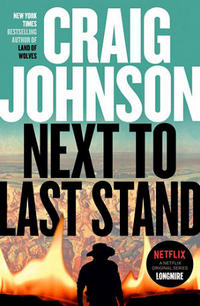
Next to Last Stand by Craig Johnson: Boy Howdy, Walt Longmire and an Art Crime, Who’d Have Seen That Coming?

Next to Last Stand

Next to Last Stand

by Craig Johnson
Series: Walt Longmire, #16

Hardcover, 320 pg.
Viking, 2020

Read: September 23-25, 2020
Grab a copy from your local indie bookstore!

I placed my hands on my hips and stared at the recently departed. It was true that he wasn’t a man I particularly liked, but fate had brought him in contact with me and now he was dead wand that made me partially responsible….

“Earth to Walt.” I turned and looked at her as she smiled. “So, you’re getting pissed, huh?” She stood beside me, toeing a tuft of grass. “There’s always a point where you start taking it personally. I like that part because that’s when shit starts happening, and I like it when shit starts happening.” She turned her face toward me, listening as I clenched my fists, like a cinch being tightened ion a saddle. “So, is shit about to start happening?”

“I believe so.”

What’s Next to Last Stand About?

An elderly resident at the Veterans’ Home of Wyoming (“The Sailor’s & Soldier’s Home of Wyoming”) dies of an apparent heart attack—which saddens, Walt, he liked Charley Lee Stillwater (and Cady loved the man). But what gets him coming back is the fact that among his possessions is a shoebox full of hundred dollar bills. Ten thousand of them, in fact. Where does a man like Charley Lee come up with that? And is there a clue among the surprising amount of books about art, art history, and General Custer in his room?

And the presence of a million dollars does cast a little doubt on the heart attack if only to be thorough. That’s a great motive to kill someone—or at least the beginning of one. Things develop from there as they tend to when Walt gets curious. He ends up involving art experts from all over the state (and even the world)—experts who may be more interesting than the art they’re discussing.

I want to spend more time at The Sailor’s & Soldier’s Home—I liked both the staff and the residents we spent time with. The souped-up motorized wheelchairs were great, and the people in them were even better. I just hope we don’t need another semi-suspicious death to get Walt back there.

The Custer material really serves as an excuse for Henry Standing Bear to sound off about Custer and the battle of Little Big Horn. I’d love to hear a few history lectures from Henry, the little bits we got here were enough to make me want more. Walt, Vic, and Henry (with an assist from Lucian) also give their (almost universally negative) opinions about all the movies made about the man and event. The Custer, Little Big Horn, and cinematic material alone is worth the effort to read this book.*

* Of course, with Johnson’s style, there’s not a lot of effort involved, so that may come across as faint praise.

Next to Last Stand in relation to the Rest of the Series

There’s a new staff member for the Absaroka Sheriff Department, and at least one member of the current staff is preparing to leave (how many is yet to be determined). Johnson either has big plans, or he’s writing himself into a corner where he’ll have to make some. I’m pretty curious about it either way.

But the bigger tie to the rest of the story is where this stands in relation to Depth of Winter. I enjoyed The Western Star, and thought the conclusion was a doozy. This led into Depth of Winter, which was good, but…wasn’t a Walt Longmire book. Land of Wolves focused on Walt’s recovery and was closer to what I expect in a Longmire book. Walt’s not back at 100%, physically or mentally. But he’s closer to it than he was in Land of Wolves, close enough that the book gets closer and closer to a typical Longmire read the further we get. Something about this case sparked whatever it was in Walt that he’d allowed to grow dormant since the last chapter of The Western Star.

It’s never really spelled out—it’s just obvious to those of us who’ve spent 16 books (plus the short stories) with the Sheriff. I’m not looking for the series to stagnate. I appreciate that every book in the series has a different feel than the others, and I don’t want that to change. I want Walt, Vic, Sancho, and the rest to develop. But there’s something about every non-Depth of Winter novel that remains quintessentially the same—I was more than a little worried that Johnson had left that behind in favor of the guy who took on a small army in Mexico. I’m glad to see I was probably worried about nothing.

The Return of an Old Friend

Lonnie Littlebird—Chief of the Cheyenne Nation and Tribal Elder—is back! It’s been too, too long since his smiling presence has graced this series. Um hmm, yes, it is so.

I’ve got nothing more to say about him, but as always, I perked up when I saw him. I just enjoy him (and am looking forward to hearing George Guidall’s narration of the audiobook, I like his Lonnie Littlebird).

Well, I guess I know what the Next Book is About?

There’s this subplot involving Henry Standing Bear, Tribal Police Chief Lolo Long (from As the Crow Flies, Dry Bones, and maybe a short story), Lolo’s niece, and Walt that looked like it was going to be a major part of this novel. And then it just…went away. I’m not talking about being unresolved, it was simply dropped with 150 pages to go.

Now that I stop and think for a minute, there was another subplot that didn’t get adequate resolution…maybe it’s setting the stage for something else, too?

I think Johnson’s too good to just drop stuff without a good reason (ditto for the editorial staff at Viking). I just can’t see the reasoning from here.

So, what did I think about Next to Last Stand?

“You do realize that being so conversant with wounds that you can estimate the amount of stitches needed to retain vital organs is not normal, right?”

I laughed. “What’s normal in this line of work anyway?”

“Good question.”

Abandoned storylines aside, I liked this so much. The world and characters we know and love have almost been absent—or at least not fully present—since 2016’s An Obvious Fact. But they’re all here, and it felt so good to be back. But even without that sense of relief, this was a fun book—had we got this book without the Mexico trip trilogy (for lack of a better name), I’d have enjoyed it as much. Clever mystery, great characters—both the guilty, the victims, and everyone else—with a conclusion that’s as entertaining as it is satisfying. I was in hog heaven.

Would this work as a jumping-on point to the series, or even to read as a stand-alone? Oh, yeah. Absolutely. Johnson’s strong on that point, you can jump on at almost any point and feel at home. You technically could read this as a stand-alone, but it’d be like eating just one Lays Potato Chip, I bet you cant. I’m already counting down the days until Walt Longmire #17, and there are too many of them.


4 Stars

This post contains an affiliate link. If you purchase from it, I will get a small commission at no additional cost to you. As always, opinions are my own.

The Beast and the Bethany by Jack Meggitt-Phillips, Isabelle Follath: A Story of Friendship and a Magical, Voracious Beast

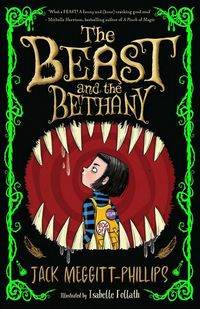
The Beast and the Bethany

The Beast and the Bethany

by Jack Meggitt Phillips, Isabelle Follath (Illustrator)
Series: The Beast and the Bethany, #1

eARC, 240 pg.
Egmont Books, 2020

Read: September 14, 2020
Grab a copy from your local indie bookstore!

What’s The Beast and the Bethany About?

Ebenezer Tweezer has one goal in life—to keep on living. And he’s been doing a good job of that for over five centuries. He’s able to do this because of potions given to him by a magical Beast he met as a child. To keep the potions coming, he has to bring food to the Beast (who is only slightly more mobile than a caged bird). In return, the Beast magics money, treasures, and other gifts for Ebenezer.

The thing is, The Beast has peculiar tastes—monkeys, cacti, Ebenezer’s beloved cat, endangered species, and so on. Now, it has a specific task for Ebenezer. The Beast wants to eat a human child. A nice plump one with rosy cheeks. Initially horrified, Ebenezer decides that he’s really more interested in prolonging his own life enough that he can probably find a child easily enough.

It’s actually not as easy as he initially thought, but he eventually brings one home and sets to fattening it up a little bit for The Beast. In those few days, Ebenezer starts to think that maybe there are things more important than living to 512.

The Beast

Shockingly, The Beast is the least interesting thing in this book. It’s a large, grey, probably hideous looking, blob with tiny hands and feet. Its mouth is anything but small, much like its appetite. And that’s the problem.

This amorphous and amoral antagonist has an avaricious appetite. It has an overwhelming desire for more and for novelty. It’s not satisfied with being gluttonous, it wants something new, new experiences, new tastes, new flavors. If, like with its first victim in the book, the food happens to be rare, that’s all the better. But what seems to drive it more than anything else is something it hasn’t had before. For parents, caretakers, teachers who like to make young readers think about what they read will probably have a lot of fodder there.

But let’s not get bogged down in that—it’s mean, it’s greedy, and it’s not that bright and fairly helpless. It’s these two things that will help the protagonists.

The Bethany

(I love that the title uses the definite article for her…I can just see the beleaguered teachers at her school doing that. “Oh, you’ve got The Bethany in your class this term? Better you than me…” “Did you hear what The Bethany did today?”)

Bethany is…and I mean this in the strictly technical sense…a horrid, obnoxious, pill. And yes, yes, there are reasons for that, and we ought to understand that and exercise empathy toward her and try to help her. But at the beginning of this book, that’s not the point. The point is that she’s an ill-mannered bully, and that if Ebenezer had to pick a child to feed to the monster, you can certainly grant that she’d make a worthy nominee. Put in a slightly less homicidal way, Bethany is precisely the kind of girl who’d make Mrs. Piggle-Wiggle think of retiring.

Until—and this is the key—until she’s shown some kindness (unintentionally, sure, but that’s not important). When Ebenezer does nice things for her, extends her some courtesy—and inadvertently acts like a friend. That makes all the difference to Bethany, and she responds in kind (and probably ends up losing her definite article along the way). Those parents, caretakers, and teachers I mentioned earlier can really camp out on this point, I’m sure.

Ebenezer Tweezer

When the book starts, it’s easy to write off Ebenezer as merely The Beast’s errand-boy. Sure, a 511-year-old errand boy, but an errand boy nonetheless. Then once you understand what he’s doing and why…well, you lose pretty much all sympathy for him. Sure, some sort of alien, magical creature that only wants to eat is one thing, you can get that impulse. But Ebenezer has sold his metaphorical soul to him, in his Faustian bargain for a long life, Ebenezer has helped facilitate a swath of destruction through this world. And that just seems worse than The Beast’s actions.

And for what? Money, years, and nice things? He might as well be Smaug.

But as soon as you’re about to name him the true villain of the piece, he shows a little bit of a conscience. A teeny, tiny hint of one, but a conscience. Then, like the Grinch’s heart, that conscience grows three sizes. And once he accidentally befriends The Bethany? Suddenly, this villain becomes something approximating a hero. Then when Bethany reciprocates his kindness, his friendship, well, then you can’t help but cheer him on and wish him all the success. Parents, caregivers, teachers—you get where I’m going with this.

Throw in a backstory worthy of Heinz Doofenshmirtz and Ebenezer Tweezer turns out to be a character that could become a favorite after a re-read or two.

A Bit About the Illustrations

I’ve proven time and time again, that I’m just not that good with describing visual art or my reactions to it. So let me start with the simple—I liked Follath’s work, it seemed to fit the flavor and feel of the text. Which is just what you’re looking for, right?

My memory of Quentin Blake’s work is pretty dim, but I can see why people would compare these illustrations to his work (although most of that probably has to do with comparisons to Dahl, see below). But the artist that came to mind—repeatedly—for me while reading this was Jules Feiffer. Stylistically, there’s a lot to distinguish the two—but there’s some quality that I can’t put a name to that made me think of Feiffer.

I’m also not sure how big the art is in hard copy, how much of a page it’ll take up. In my eARC, the illustrations are typically pretty small—like they wouldn’t take up much room on a page. That’s a shame—if that’s true for the hard copy, I’d recommend getting a magnifying lens, so you can take in the detail. If you’re reading an e-copy, you should be able to zoom in/magnify the pictures with a click or a reverse pinch. Do so, you’ll be glad you did.

So, what did I think about The Beast and the Bethany?

I think it’s pretty clear that I liked The Beast and the Bethany—I’ve certainly talked enough about it. It’s a solid story with great characters, told in a clever way—just enough humor and wit to make this truly disturbing tale pretty entertaining and diverting. There’s even a nice little moral or two embedded in the text, but delivered in such a way that the target audience can ignore them so they can focus on Bethany’s efforts not to get eaten.*

* While the morals percolate in the reader’s subconscious, where it’ll do some good.

I’ve seen a lot of comparisons to Roald Dahl used in discussions of this book. Those may be fair and apt, I don’t remember enough of Dahl’s work to make them myself (nothing against the guy, I remember positive experiences with his works, but he was never a favorite). For me, this reads like a latter-day Daniel M. Pinkwater.* I don’t know what kind of audience he has today (I certainly had a hard time finding his stuff when I had kids the right ages), but I remember spending a lot of time in elementary school rereading and rereading books like Lizard Music, The Hoboken Chicken Emergency, I Was a Second Grade Werewolf—which combined horror elements, odd humor, and snappy writing. Just like this book. I couldn’t tell you the last time I thought about him—but I wasn’t far into this book when I started thinking about Pinkwater.

* It may not be fair to say latter-day, as Pinkwater’s still putting out books.

Put another way, this is the kind of book to give a middle grader that you want to turn into an A. Lee Martinez fan. I’m not sure how many people have that as a goal (it’d be a worthy one), but it’d work. If you are an A. Lee Martinez reader and are thinking about reading this book yourself or getting it for someone younger, this is right up your alley.*

* Conversely, if you’re looking for something like this written for adults, check out Martinez.

For laughs, for a warm fuzzy or two, for a little bit of horror, for a fun read for readers of all ages, The Beast and The Bethany is an almost sure-fire winner.


4 Stars
My thanks to The Write Reads for the invitation to participate in this tour and the materials (including the novel from Egmont Publishing via Netgalley) they provided.

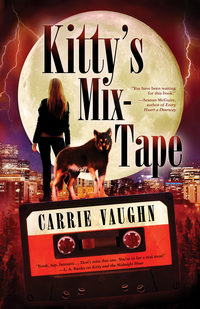
Kitty’s Mix-Tape by Carrie Vaughn: One More Trip to Kitty’s World in this Collection

Kitty's Mix-Tape

Kitty’s Mix-Tape

by Carrie Vaughn
Series: Kitty Norville

eARC, 288 pg.
Tachyon Publications, 2020

Read: September 12-14, 2020
Grab a copy from your local indie bookstore!

What’s Kitty’s Mix-Tape?

That’s an easy question: this is the second collection of short stories (previously published) set in the world of Kitty Norville, the werewolf turned talk radio star. We get a lot of stories featuring Kitty and/or her friends and allies (and one foe), and we get some stories that just happen to take place in the same reality even if they really don’t have any cross-over with the series.

There’s an introduction by Emma Bull that by itself would make a great review of this book (and maybe the series). Really, writing anything else after reading Bull seems superfluous.

Kitty & the Gang

I’m going to have a hard time keeping myself from talking too much about the stories featuring Kitty and her friends—Kitty and Ben going to her 10-year high school reunion was the perfect way to start off this book. Quick, fun, and a great way back into this world.

“It’s Still the Same Old Story,” could’ve fit into The Immortal Conquistador that I talked about a few months back—except it didn’t fit into the story arc of that one. But for those who wonder what Rick was up to in the early part of the twentieth century, this will give you a good idea. This is possibly my favorite thing focusing on Rick to date.

On the eve of their wedding in Kitty and the Dead Man’s Hand Ben disappears off on his own for a while, Vaughn finally lets us know what he was up to at the time. I’d forgotten all about that until I read this story, but I remember wondering then (as I was supposed to) what he’d been up to—it’s nice to have that answered.

There was a dynamite story about Detective Jessi Harden of Denver PD investigating a murder with a supernatural angle that doesn’t involve any of the series regulars. This would be the basis of a great follow-up series if Vaughn was in the mood for something. Hardin tackling “woo woo” crimes (I think that’s what the New Orleans PD calls them in the Yellowrock books) would be compelling as all get out.

One more that I want to mention is called “Kitty Learns the Ropes.” In this story, Kitty meets a professional athlete who happens to be a werewolf. Does that give him an unfair advantage? Should he disclose his situation to the world? Can’t this guy who never asked to be supernatural just live is life?

I’m going on too long, so I’ll summarize a few other standouts: there’s a fun little story with Odysseus Grant, and some cute bits with Kitty and her pack dealing with the Super Blood Moon and the like, and a showdown with some Federal Agents.

Other Stories

There are some stories that aren’t about Kitty or her friends, too, but just take place in her universe. There are two that take place in Regency England, “The Island of Beasts” and “The Beaux Wilde.” I enjoyed them both, and it is interesting to see Vaughn try to put her werewolves in that world. I would eagerly read more stories or a novel about the characters in “The Beaux Wilde.”

There’s also a sequel to a story from her previous short story collection, Kitty’s Greatest Hits about a child of a selkie who grows up to be a Navy SEAL (what else could such a son be)? I liked that one, too, but it seemed to be missing a little something from the end. But I’m pretty sure it was supposed to feel that way.

The tale about Nazis attempting to use werewolves in the war didn’t do much for me—but I think that’s mostly a me thing. It was a good story, just not the sort of thing I think I’d seek out.

The Songs

Vaughn includes a list of songs that embody the various stories for her, which she did for the novels, too. I think if you consider this list as a track list for a mixtape, you’d end up with something that Rob Fleming (in any incarnation) would look upon with scorn. If you take them as pieces to go with the stories, it’s a lot of fun, and adds a nice little dimension to them.

I will admit that I didn’t listen to them as I read—I think it would work though. They’re also a good tool to use to ruminate on the stories a bit.

So, what did I think about Kitty’s Mix-Tape?

There wasn’t a dud in the bunch, which is rare for a short story compilation—sure, I liked the ones about Kitty and her friends best, because that’s what I came to the collection for. But I liked them all.

The back cover promises that this is “the final installment” of the series, but Vaugn talks about staying tuned because it’s great to have a pre-existing world to write stories in. If the blurb is right, I’m glad I got a little more time in this world, but I’m hoping that staying tuned will pay off.

This may not be a great introduction to the werewolf DJ named Kitty, but it might work as one just fine, it’s certainly a good tour of the world. But it’s definitely the kind of thing that Kitty’s readers should come for. It’s one of the best collections I’ve read this year—and maybe for a good chunk of last year, too. Give it a whirl.

Disclaimer: I received this eARC from Tachyon Publications via NetGalley in exchange for this post—thanks to both for this.


4 Stars

This post contains an affiliate link. If you purchase from it, I will get a small commission at no additional cost to you. As always, opinions are my own.

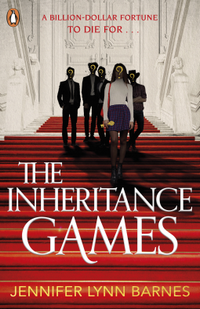
The Inheritance Games by Jennifer Lynn Barnes: A princess. A riddle. An heiress. A game.

The Inheritance Games

The Inheritance Games

by Jennifer Lynn Barnes
Series: The Inheritance Games, #1

eARC, 372 pg.
Penguin, 2020

Read: September 11-12, 220

What’s The Inheritance Games About?

We begin by meeting Avery, a high school junior on a mission. She’s determined to get through high school without drawing a whole lot of attention (good or bad), to fly just under everyone’s radar—but to do so in a way that’ll pick up enough in scholarships to get to college and get to a stable and lucrative career (in actuarial science). Once she’s there, she can take time to breathe, time to relax. But not until then—now it’s about studying, working, and hopefully getting to help out the older sister that she lives with.

And then a mysterious—and obviously stinking rich—stranger shows up and tells her to get on a plane to Texas where she needs to be at the reading of a last will and testament. She knows no one in Texas, has never heard of the deceased, and can’t think of why she needs to be there. But hey, it’s a free trip for her and her sister (and she’s curious about the will).

The deceased is Tobias Hawthorne, a billionaire. With a B. He was the richest man in Texas and among the richest in the world. It turns out that he’s left almost everything to Avery. If she can live in his mansion (the word mansion doesn’t seem to cover it, but English doesn’t have a word that’d actually describe the place) for a year.

The difficulty in that lies in the rest of the household—there’s the staff who don’t seem all that welcoming, Hawthorne’s daughters and son-in-law who clearly resent the interloper, and Hawthorn’s four grandsons (all around her age) who were the presumptive heirs before she came along.

Avery and the grandsons (and, actually, pretty much everyone in the world once the story breaks) just want to know one thing—why her?

The Characters

I’ve been thinking all week about how to talk about the characters in this book, and I think the best way to get a handle on them is to think of them in three tiers (and as soon as I write that sentence, I think of a way to separate them into four, or maybe five, so admittedly, there are problems with this approach, but I’m sticking with it),

Tier One is simple: Avery and the four Hawthorne grandsons—Nash, Grayson, Jameson, and Xander. They aren’t as all well-drawn as the others (Avery, in particular), but any time they’re around, the reader and the scene focuses on them over everyone else. The novel is about them, everyone else is a supporting character. More than the other Tiers, each of these characters has an obvious goal, an obvious storyline, a motive to find out what Hawthorne was doing with this will. They’re three-dimensional characters (Nash could use some more definition, though). It’s hard to like them all consistently, but you can’t help but be curious about each of them.

Tier Two consists in Libby, Avery’s sister; Oren, her security chief; Alisa, the lawyer/primary contact with Hawthorne’s law firm (and Nash’s ex, but that’s another story); and Max, Avery’s best friend (who she only communicates with via text and telephone throughout the novel). It occurs to me that this group consists of people that Avery trusts (maybe she should, maybe she shouldn’t, but they haven’t given her a reason not to). We know them a little better than the rest, but the focus on them isn’t as great as it is on the Tier One characters. Of these, I really wanted more time with Max—and hope that the story will allow more interaction with Avery and Max in the sequels.

Tier Three is everyone else—people from their schools, consultants/employees of the estate, and well, anyone else who shows up. Most of these are little more than names and titles—some are filled out a little bit, but few are more than a two-dimensional sketch. If they get more than two dialogue lines, they’re interesting, and you typically want to know more about them and hope that Barnes finds an excuse to use them some more (with the exception of Libby’s boyfriend, who you just hope never to hear from again, every time he makes an appearance). Some of these may be trustworthy, but you have almost no reason to trust anyone on this Tier (Libby’s boyfriend is the exception—you have absolutely no reason to trust him). This is an interesting quirk of this world—there are precious few people that the sudden-heiress can trust, everyone has an agenda dealing with her, usually a hidden one.

Of course, looming over everything is the specter* of Tobias Hawthorne. As he’s dead, I don’t count him as a character. But his personality, his achievements, his machinations govern everything. As Xander notes (and Avery frequently remembers), even if she’d manipulated Tobias into this, she’d find he was manipulating her all along.

* Not literally, this isn’t that kind of book.

You take the large cast of characters that this represents, using them all (particularly Tier Three) as pieces of the puzzle themselves–and all of them providing multiple clues of various quality to the big question, and the word “complex” almost doesn’t cover the nature of this puzzle.

A Thought about Genre

I keep seeing references to this as a thriller. It is absolutely not a thriller. There are moments that could be seen as belonging to that genre, but they’re so brief that they don’t count.

This is a puzzle, this is a mystery, this is a mental exercise, a riddle. It’s practically a cozy (closer to one than it is a thriller, anyway).

That’s not a criticism of anything but the marketing. But anyone walking into this should not be expecting pulse-pounding tension, breakneck speeds (although it is generally fast-paced), and nail-biting action. This novel about the characters, it’s about figuring out motives, and the meaning of various acts.

So, what did I think about The Inheritance Games?

I picked this up just to read a chapter or two in order to get a flavor for it, then I was going to put it down for the evening, and pick it up again the next day. I ended up reading 30% of it before I had to stop—and read almost another 20% that night. It’s engaging, it’s smooth, it’s so, so, readable.

The pages just melt away and you get swept up in the story—as outlandish as it is. Without any effort, you not only suspend your disbelief, but you put a gag on it and stuff it in a closet somewhere.

There’s a definitive end, a puzzle is solved, and there’s a sense of resolution. Which is immediately replaced with the next puzzle and a promise of more to come in the sequel. So while I don’t think you can call it a cliff-hanger, you can definitely see the cliff just ahead on the path.

I’m a little annoyed that I saw The Westing Game referenced a few times in the marketing for this book. Because I really wanted to talk about the way that this had a similar feel to The Westing Game and be able to come across as insightful to do so, Instead, I’m just part of the echo chamber. Still, there’s a very Westing Game-vibe to The Inheritance Games, and as there are few books that I consider as clever, as well constructed, and as readable as Raskin’s book, that’s a high compliment.

This is just a fun, fun read. Pick it up.

My thanks to The Write Reads for the invitation to participate in this tour and the materials they provided via Penguin Random House Children’s UK and Netgalley.

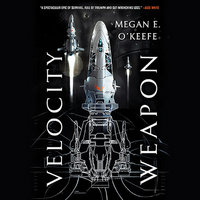
Velocity Weapon (Audiobook) by Megan E. O’Keefe, Joe Jameson: A Brother, A Sister, A Battleship, and the War that Unites Them

Veloctiy Weapon

Velocity Weapon

by Megan E. O’Keefe, Joe Jameson (Narrator)
Series: The Protectorate, #1

Unabridged Audiobook, 18 hrs., 22 min.
Audio, 2019

Read: July 9-15, 2020

What’s Velocity Weapon About?

There are two primary storylines—either one of them would have been a decent basis for a novel on their own. Combine them and you’ve got something special.

Sergeant Sanda Greeve is flying a fairly routine patrol when she’s attacked—a rare burst of heat in a long Cold War. She wakes up in a ship from the fleet that attacked her. Alone. Except for the AI that runs the ship (is the ship?). Bero, the AI, shows Sanda footage and evidence that the Icarions that build him wiped out all life in the system except Sanda 230 years ago.

The second primary storyline features her brother, Biran. Biran’s speaking at his graduation ceremony when his sister (and others) are attacked. The news disrupts the ceremony, and Biran uses finds himself in the position of having to calm those who are watching (live or on the news). In the days and weeks following, he rises to a prominent position—becoming the government’s spokesman, reassuring and leading the populace through this time.

We bounce back and forth as Biran tries to stave off a war, and to Sanda dealing with its results. It’s a great concept and you just don’t know what to expect even though Bero has told Sanda what’s happening.

And then another escape pod shows up and all bets are off.

The Stuff I Should’ve Paid More Attention To

There were some flashbacks to the invention of the Gate technology that makes interstellar travel possible, which was pretty interesting, but there was something about it that I just couldn’t focus on for very long.

Similarly, there was a tertiary story to the main two. This one focused on a street gang involved in some pretty petty crimes, but they stumbled onto something pretty big. This was interesting, but I couldn’t keep most of the characters straight and had a hard time following it. This was solely due to my focus, and as many times as I told myself to pay attention, I didn’t. I predict that this is going to come back pretty significantly in the sequel—I’m just hoping I can play catch up. If you read and/or listen to this book—learn from my mistake and pay attention.

How was the narration?

I liked it. Bero in particular is hard to get right—and vital to get right. Jameson does it. Everything else came out good, too, don’t get me wrong, but for this, the AI is essential. He captured the tones, flavors, and diverse set of characters in an engaging and convincing way.

So, what did I think about Velocity Weapon

When this came out, it looked intriguing. When I started seeing it show up on my Goodreads feed and book blogs I follow, I really became interested. But I didn’t follow up on it. I spent pretty much e the entire time listening to Velocity Weapon berating myself for that.

This is the kind of thing I like in SF. A clever story, compelling characters, and great tech in space. I liked the humans, I really enjoyed the AI (I sort of figured this would be a variation on the AI in Rockwell’s Serengeti books, and wow, I was wrong). It was a SF adventure, but it was also a straightforward thriller (with SF frills). I had a blast with this and am looking forward to the sequel.


4 Stars

2020 Library Love Challenge

Far from the Tree (Audiobook) by Rob Parker, Warren Brown: A Disturbing Crime, A More Disturbing Investigation

Far from the Tree

Far from the Tree

by Rob Parker, Warren Brown (Narrator)
Series: Thirty Miles Trilogy, Book 1

Unabridged Audiobook, 8 hrs., 53 min.
Audible Studios, 2020

Read: August 11-13, 2020

What’s Far from the Tree About?

I’ve tried several times to try to come up with a summary, and I just can’t without ruining something. So, let’s just appropriate the Publisher’s Summary, shall we?

Brendan Foley has worked to balance the responsibilities of a demanding job and a troublesome family. He’s managed to keep these two worlds separate, until the discovery of a mass grave sends them into a headlong collision. When one of the dead turns out to be a familiar face, he’s taken off the case.

Iona Madison keeps everything under control. She works hard as a detective sergeant and trains harder as a boxer. But when her superior, DI Foley, is removed from the case, her certainties are tested like never before.

With stories of the Warrington 27 plastered over the news, they set out to solve the crime before anyone else. The local constabulary is small and under-funded – Brendan knows they can’t crack this case alone, and he’s not letting a rival force take over. Not with the secrets he fears are lurking. Their investigations lead them into the murky underworlds of Manchester and Liverpool, where one more murder means little to drug-dealing gangs, desperate to control their power bases.

But as Madison steps into the ring for the fight of her life, the criminals come to them. It’s no coincidence that the corpses have been buried in Foley’s hometown. The question is, why? Foley might not like the answer….

Is There Anything I can Add to That?

Foley’s family is messed up, and he doesn’t do a lot to improve things (actually for most of this book he seems to be making it worse—while trying to help, I should add in his defense). Typically, the families of fictional police are either near-picture perfect or are pretty dysfunctional. Parker starts off making you think it’ll be the former, and then he changes course and leaves dysfunctional in the dust. Still, Foley comes across as the kind of cop you want to read about, the kind that you like to think you can find in police forces all over the world—sure, he needs some marriage counseling and needs to do some serious work when it comes to his kids. But who doesn’t have problems?

Madison’s boxing (and what drives her to it) is a great touch. It’s such a different character choice, and it really works. It gives her the right mix of self-destructive impulses, aggression, and self-discipline. On-duty, Madison’s just as interesting—seeing her torn between loyalty to Foley, devotion to duty, and wanting to solve the crime. She’s a great character, and I really hope that she plays a large role in the next two books.

What About the Narration?

This was an Audible Original, so the Audiobook experience is a big part of it. Brown was a great choice of narrator—he’s the perfect voice for this material. He captured and shaped the tone as he needed to, and gave the right performances for each character.

I can’t help feeling like I need to say more, but I just don’t know what else to say. If I had problems with the performance, I’d probably be able to go on longer, but when a narrator gets it right, like Brown does here, what else is there to say?

So, what did I think about Far from the Tree?

This was just brutal—and I mean that in the best possible way, because I can’t imagine that Parker and Brown were going for anything else. Every time—and I don’t think I’m exaggerating here—that I thought I knew where the story was going, what Parker was trying to do with one of the characters (except maybe Madison), what surprises he had up his sleeve, I was just minutes away from being proven wrong.

It was shocking—repeatedly—it was the textbook definition of gripping, unrelentingly so. Get your hands and ears on this one.


4 Stars

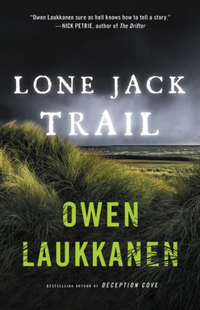
Lone Jack Trail by Owen Laukkanen: Trouble Strikes Deception Cove Again

Lone Jack Trail

Lone Jack Trail

by Owen Laukkanen
Series: Neah Bay, #2

Hardcover, 322
Mulholland Books, 2020

Read: September 7, 2020
Grab a copy from your local indie bookstore!

“Deputy.” Hart held up his hand. Then he sighed. “Jess. You haven’t worked a case this big before; I understand that. You’ve got a lot to learn, and sometimes I forget, but—”

“Sheriff—”

“But you’re going to find,” Hart continued, talking over her interruption, “that cases like these, they’re not generally head-scratchers. Most of the murders you’ll see, they’ll wrap up just about the way you expect them to. People get angry, they do something stupid. They, by and large, lack the capacity to cover it up.”

Jess made to speak again, but Hart wasn’t having it. He held his hand up again, palm out toward her.

Yes, that’s the case generally. But, there are exceptions to that rule. If not, there wouldn’t be a whole lot of books available in the Crime Fiction/Mystery/Thriller Genre.

What’s Lone Jack Trail About?

Since, the events of Deception Cove, the County Sheriff has retired and a new one has come in and has cleaned house. As part of Sheriff Hart’s efforts to right the ethical/legal ship, he’s hired Jess as a Deputy. Mason Burke has stuck around, too, and is working for the construction crew building Jess’s new house.

Things are looking up for both of them until another man is released from prison and comes to town. “Bad” Brock and Mason clash instantly and repeatedly, eventually coming to blows. So when Brock is found dead, Mason’s a potential suspect. Evidence starts to pile up and Mason stops being a “potential” suspect and becomes the only suspect.

Mason: The Suspect

He’d wondered, again, if he might not be better off turning himself in, putting his faith in the law and avoiding the possibility of further violence. But Mason knew he couldn’t do it.

If he wanted his name cleared, he would have to do it himself. And he would have to do it in a way that ensured no more innocent people were hurt.

Mason’s struggling with what happened in Deception Cove, but is trying to move on. Given his past, he’s definitely not one to complain about what’s happened to him. He also understands how he became a suspect and doesn’t hold it against Hart for suspecting him. He wishes Jess would help him more—but understands and doesn’t blame her for doing her job.

He’s seen enough, though, to know better than to trust the system. So he does as much of the legwork as he can to dig up evidence to exonerate himself. Sadly, circumstances and the guilty work harder to keep him from getting anywhere.

Jess: The Deputy

Mason Burke wasn’t a killer anymore. Jess simply couldn’t see how he’d do it…she believed he hadn’t killed Brock Boyd either, though in truth, on that count, she couldn’t be as sure.

He killed before, didn’t be? And didn’t you already prove you’re a piss-poor judge of a man’s character? Wasn’t your husband already the plain proof of that fact?

You need proof, she thought. Something concrete.

At the beginning of the novel, Jess is struggling with commitment. She wants to go “all in” with Mason, but after what her husband did to her (and so many others), it’s hard to trust. That’s in addition to the trauma from her service that she’s still dealing with (aided and comforted by Lucy).

Then when Brock’s body is found, she knows she needs to tell her boss about the bad blood between Brock and Mason. She doesn’t doubt in Mason’s innocence (well, maybe a little), but she knows how ex-cons do in the system. So she does what she can to look for other suspects—and eventually has to go beyond her orders to investigate.

“Bad” Brock Boyd: The Victim

I’m not suggesting this man deserved to die. I’m definitely not suggesting that it was good that he was murdered.

But…

Wow, it is hard to muster any sympathy for this victim. The first thing we learn about him is that he was a horrible person—a celebrity athlete who went to jail for dog-fighting. And that right there, is the best, most likable things we learn about him. Again, not someone who deserved to be murdered, but it’s hard not to want to look for excuses for his killer to get away with it. Really, you want the killer to be caught more for Mason’s sake than for justice’s.

Lucy: The Dog

At the end of the day, these books don’t exist without Lucy. She brought Mason and Jess together, she played major roles in the first book and is a significant force in this one.

What she does in this book isn’t nearly as important as what she did in Deception Cove (which is not to say that she doesn’t do anything important), but her shadow is over everything that happens with Mason and Jess—and even Boyd.

But best yet, she’s a good girl, and more books need dogs like that.

So, what did I think about Lone Jack Trail?

It took me a little longer to get into this one than I expected or am used to from a book by Laukkanen. But wow, once I got hooked? That was it, I ignored pretty much everything else going on that day so I could finish.

I love the characters, the plot was compelling and the reveals were gripping. It was hard to see how Mason would stay a free man with the cards stacked against him—and there was plenty of tension and suspense aside from that. It’s also great to watch the fragile relationship between Mason and Jess progress—with the highs and lows, setbacks, and challenges that make it feel real.

Laukkanen did it again. He just knows how to write a thriller that sticks with you.


4 Stars

2020 Library Love Challenge
This post contains an affiliate link. If you purchase from it, I will get a small commission at no additional cost to you. As always, opinions are my own.

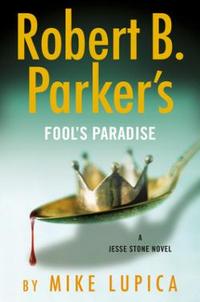
Pub Day Post: Robert B. Parker’s Fool’s Paradise by Mike Lupica: Jesse Stone takes a Murder Case Personally

Fool's Paradise

Robert B. Parker’s Fool’s Paradise

by Mike Lupica
Series: Jesse Stone, #19

eARC, 352 pg.
G.P. Putnam’s Sons, 2020

Read: September 2-3, 2020
Grab a copy from your local indie bookstore!

What’s Fool’s Paradise About?

Suitcase Simpson calls Jesse to the scene of a murder, an unidentified man has been found shot at the lakeshore. Jesse recognizes the man—they’d been at the same AA meeting the previous night. It’s not Jesse’s regular meeting, and he didn’t think this man was a regular, either. But at least they had a first name to go off of.

Suit is able to find out at least a little about what the man did after the meeting. He’d taken a taxi from the neighboring town into Paradise. He even had an address—the mansion of a rich and influential family who’d been in Paradise for ages. They’re quick to claim they didn’t know the man, or that he’d been at the house in the hours before he was shot. No member of PPD believes this, but there’s little they can do until they learn a bit more about the victim.

Jesse admits this isn’t entirely rational—but doesn’t back off from it—the fact that he and the victim came to the same meeting, both needing the help that can be found there, created a link for between the two of them. Jesse felt like he owed this man justice more than he would another victim (not that Jesse’s ever been known to not try to find justice for anyone, it’s just personal this time). I loved this little touch—it felt very true to the character and his circumstances, but something that a lot of authors wouldn’t do.

Not long after this, someone takes a shot at Jesse while he’s in his home. Soon, other members of the PPD are attacked off-duty. As always, Jesse, Molly, and Suit acknowledge that coincidences exist, but they have a hard time believing in them. So while they try to identify the murder victim and figure out what he’s going in Paradise (and that part of Paradise in particular), they also need to figure out why someone would be attacking the PPD. And are the two cases related?

A Nice Little Bonus

There’s a lot of Molly in this book. She gets whole chapters without Jesse in them, and a lot of space on her own in chapters with him. We get a little bit of an off-the-job look at Molly, as well as seeing her work part of the investigation. Yes, Jesse’s the central character and should be the focus—but any time that Lupica (or whoever) can flesh out Molly, Suitcase, or any of the others is time well spent (I like the new deputy, too—he was a nice touch). But Molly’s been a favorite since Night Passage introduced this world, and she’s rarely been used as well as the character should’ve been. It’s so nice to see that.

Lupica’s Take on Jesse Stone

I was worried about Lupica being given the reins of this series. I was such a fan of what Colman had done, saving the series from the Michael Brandman debacle—and even from some of the uneven quality that Parker had given toward the end.

But Lupica did exactly what he needed to do—and exactly what I’d hoped (and didn’t expect). He embraced the developments that Coleman introduced and built on them. He could’ve ignored them, or written around them, but he kept Jesse going to AA, he worked on the new relationship with Cole, and Paradise and the Paradise Police Department the same way Coleman had, treating that bit of the series with as much respect and influence as the first nine novels.

Stylistically, Lupica’s closer to Parker than Coleman—which makes sense, it’s the more natural way for him to write (and will likely win back some of Coleman’s detractors). It works for the series, it works for the author—all in all, it’s a good move.

I freely admit that I was skeptical and pessimistic about anyone but Coleman at the post-Parker helm of Jesse Stone and am glad to be proven wrong.

Something I was Pleasantly Surprised By

While I have thought in the past that the best use of Sunny Randall was when Parker used her in the Jesse Stone novels, I wasn’t thrilled to see her in these pages—I thought that Stone, at least, had grown past this relationship. It’s not what it was back in the 3-4 books that Parker wrote with them as a couple, but reflects where they both are now.

I’ve got to say, I liked her here. I liked her in Paradise more than I liked her in the two books that Lupica has written about Sunny. If he keeps this up, I won’t complain.

Lupica’s War on my Sanity

Sure, that’s hyperbolic. But it felt like he was doing this to just bug me.

The mansion that the taxi pulled up to that fateful night is owned by the Cain family, Whit and Lilly Cain. Whit suffered a stroke a few months back, so his wife, Lilly, is who Jesse primarily interacts with. She’s brash, confident, loud, and flirtatious.

Now, I’ve watched the Veronica Mars series more times than I should have. Season One more than the rest. Every time I read “Lilly Cain,” I couldn’t think about anything other than “Lily Kane,” Veronica’s brash, confident, loud, and flirtatious friend.

I know it’s a coincidence, that neither name is all that rare. But it didn’t feel that way.

So, what did I think about Fool’s Paradise?

I liked this so much more than I expected to. I went into this hoping I wouldn’t hate it, and it didn’t take long at all for me to realize I was enjoying it. The prose crackled and moved quickly. There was enough of Jesse’s quiet humor to keep me grinning. The relationships and banter between the characters was spot on. The cases were compelling, interestingly framed, and well-executed. Lupica tied his novel into the overall history of the series well (referencing over half of the books, I think) and established that he’s the right man for the job. I strongly recommend this—either for new readers or established fans. Robert B. Parker’s Fool’s Paradise is a satisfying read that’ll get you eager to see what comes next.

Disclaimer: I received this eARC from PENGUIN GROUP Putnam via NetGalley in exchange for this post—thanks to both for this.


4 Stars

This post contains an affiliate link. If you purchase from it, I will get a small commission at no additional cost to you. As always, opinions are my own.

The Last Smile in Sunder City by Luke Arnold: A Fantasy Novel that Defies My Pithy Headline Composing Abilities

The Last Smile in Sunder City

The Last Smile in Sunder City

by Luke Arnold
Series: The Fetch Phillips Archives, #1

Kindle Edition, 368 pg.
Orbit, 2020

Read: August 26-27, 2020
Grab a copy from your local indie bookstore!


I think this could be my longest post ever, and I’d still leave things left unsaid, you wouldn’t believe the length of my notes for a book of this size. I’ll try to hit the most important points. To fill in whatever lacunae appears below, you should probably also read what was said over at Witty and Sarcastic Bookclub, The Tattooed Book Geek, Grimdark Magazine, and FanFi Addict—they’re what convinced me to buy the book.

“So, you’re a Man for Hire?”

“That’s right.”

“Why don’t you just call yourself a detective?”

“I was worried that might make me sound intelligent.”

The Principal wrinkled his nose. He didn’t know if I was trying to be funny; even less if I’d succeeded.

“What’s your relationship with the police department?”

“We have connections but they’re as thin as I can make them. When they come knocking I have to answer but my clients’ protection and privacy come first. There are lines I can’t cross but I push them back as far as I can.”

What’s The Last Smile in Sunder City About?

Fetch Phillips is hired to find a missing vampire, Edmund Albert Rye, an instructor at an exclusive private school for the children of magical creatures (lycanthropes, vampires, elves, dwarfs, etc.). It’s been a few days since he was seen, which is uncharacteristic enough that the principal’s getting nervous—he’s tough, but he’s been unwell. He, the students, and staff just need to know what happened to him.

I made my way east along Fourteenth Street without much hope for what I might be able to find. Professor Edmund Albert Rye; a man whose life expectancy was already several centuries overdue. I doubted I could bring back anything more than a sad story.

I wasn’t wrong. But things were sticking to the story that knew how to bite.

Fetch gets to work, enjoying the feeling of a good amount of cash in his pocket. The first step is the city library, Rye’s been living in the attic for that last several years, so he could enjoy some privacy and the sunlight. The librarian is just as worried as the principal had been.

It’s really not long before Fetch’s investigation brings him to an old private club for Vampires—and he find the remains of a couple of vampires. The lab concludes that it Rye wasn’t one of the fresh corpses. There’s another dead magical creature there, one that Fetch has never seen, and it takes a couple of days for the results identifying that to come in, too.

One thing that Fetch learns fairly soon is that Rye isn’t the only one missing, a girl vanished around the same time as he did. Now, Fetch has to track down a missing vampire and a teen-aged Siren. His work is definitely cut out for him.

Because he knows from the get-go that the story he’ll bring back to his employer won’t have a happy ending, he has a hard time pursuing it head-on. He keeps finding little things to distract himself, to slow the investigation. Even when the missing girl gets factored in, and he knows he needs to be fully committed just to have a chance to find her, to. He really can’t pull it off. The sad story just became so much sadder, and he doesn’t want to know the depth of that sadness.

Fetch Phillips

While the majority of the book traces this story, we also get several flashback chapters tracing Fetch’s tragic childhood, decent (but not great) adolescence and then troubled adulthood leading up to the point where he helped the Human Army destroy all the magic in the world. It’s an event called the Coda, and it occurred six years before Fetch was hired by the school. All magical creatures lost the abilities that distinguished their races, and the world was never the same. As an act of penance that no one but Fetch cares about, he’s since refused to work for humans, only for formerly-magic creatures. Which is what brought him to the search for Rye.

Fetch is a broken man—he wasn’t in great shape before the Coda, but he’s worse after it. An ex-soldier, convicted criminal, ex-prisoner, and now a drunk, with moments of sobriety (fewer than he should have while on a job, but all that money can buy many drinks).

There was a hangover on the horizon, along with something else. Something sort of stupid.

A devil was sitting on my shoulder whispering the kinds of things that stopped working on me years ago. I was only in my thirties but I was old. You don’t measure age in years, you measure it in lessons learned and repeated mistakes and how hard it is to force a little hope into your heart. Old just means jaded and cynical and tired. And boy, was I tired.

It’s the penance that drives him. He’d been an author of so much of what was wrong with the world, and he’s doing what he can to alleviate it just a little bit. It’s the only thing keeping him going. It’s not enough, but it’s all he has.

Fetch is such a rich character. It’s hard to like him, it’s hard to find anything redeemable in him*, any reason to be interested in what happens to him. But you can’t help pull for this broken, beaten, disillusioned, and cynical man.

* Which is, admittedly, the point of redemption.

What a Piece of Worldbuilding

This is such an incredibly conceived world. The Coda is so fresh that the citizens have started to move on, but aren’t used to dealing with the post-magical world. And so many of them are still hoping that it’ll all come back just as suddenly as it left.

The mixture of the fantasy elements and Human tech and science in this world, picking up the slack for the things that magic can’t do anymore is so rich, so well designed, so well-written that the reader has to stop every so often and try to take it in.

Even if I didn’t really like the book all that much, I’d still be recommending the book for the worldbuilding. It’s a master class in how to do it, how to describe it, and how to reveal it to the reader.

A Gripe

Just so, so, so many extended passages in italics. I won’t try to make a case against them, Benjamin Dryer does a better job than I possibly could. I just find them aggravating. It’d be so easy to indicate that something’s a flashback without them and spare readers the annoyance.

So, what did I think about The Last Smile in Sunder City?

Maybe nobody gets better. Maybe bad people just get worse. It’s not the bad things that make people bad, though. From what I’ve seen, we all work together in the face of adversity. Join up like brothers and work to overcome whatever big old evil wants to hold us down. The thing that kills us is the hope. Give a good man something to protect and you’ll turn him into a killer.

Fetch is a classic hard-boiled detective in a classically noir tale—the fact that it takes place in a Fantasy world (yet full of fairly modern technology) is just icing on a pretty tasty cake. The narrative voice is great, the writing leaps to life, and I can’t say enough about the way the world—and the novel—were designed and executed.

This probably deserves more than the 4 Stars I’m giving it, but I just didn’t connect with the story, with Fetch, with everything else going on as much as I wanted to. This regrettably ends up in the category of books that I admire more than I enjoy. But my admiration of this is so high that it almost doesn’t matter. This is a great Fantasy novel, and one unlike any you’ve read.

The sequel is out in a couple of weeks—I’m coming back to this world because now that Arnold doesn’t have to spend so much time explaining how the world works (or, more properly, how it no longer works) that he’ll be able to focus on telling a story or two, and I want to see what heights he’s capable of when the rules have already been established.

Do I recommend this book? Oh yeah. You’ll probably like it more than I did (I’m a little worried about hitting “publish” on this, as I know I’m one of the less enthusiastic readers of this). And even if you don’t, you’ll be just as impressed as I am with Arnold’s imagination and skill.


4 Stars

20 Books of Summer

This post contains an affiliate link. If you purchase from it, I will get a small commission at no additional cost to you. As always, opinions are my own.

Rather Be the Devil by Ian Rankin: He’s Hardly the Retiring Type

Rather Be the Devil

Rather Be the Devil

Ian Rankin
Series: John Rebus, #21

Hardcover, 310 pg.
Little, Brown and Company, 2017

Read: August 28-29, 2020

Clarke nodded towards the figure striding across the foyer. She waved, and Rebus noticed her. He offered a curt nod and signaled with his hand that there’d be a phone call later. Then he was out of the automatic doors and gone.

‘What was all that about’ Fox asked.

‘I think it means trouble for someone,’ Clarke answered. ‘Been a while since I saw him with that look in his eyes…’

What’s Rather Be the Devil About?

Darryl Christie is savagely beaten in front of his own house and Clarke jumps onto the case. He didn’t see his attacker/attackers, and there were no witnesses. Cafferty’s name has to be on the suspect list, and as luck would have it—John Rebus calls at that moment for a small favor. As much as Clarke would love to go up against Cafferty, everyone knows that Rebus would get better results. So she trades favors with him.

Malcolm Fox is soon assigned to the Christie case, too—and then something else happens that requires their attention. Clarke, Fox, and Rebus find themselves in the middle of a messy tangle of crimes that are decades old, in progress, brutal and old school, or high-tech and almost hard to fully grasp.

Rebus

He’s dealing with COPD, carrying an inhaler, not smoking (and is handling that about as well as you can expect), and not drinking. Well…okay, not drinking that much. He’s trying to be the good retired man that he’s supposed to be. But sometimes walking the dog and trying to be healthy just isn’t enough…so when he starts telling Deborah Quant an interesting story about a murder that happened in the hotel above the restaurant they were dining in*, he can’t keep his curiosity in check and has to see if he can finally close the case. If only for his own amusement.

* because where can they go where he doesn’t know an interesting story about a murder committed on or near the premises? And, who but Quant would listen?

And then once this turns into an opportunity to lock horns with Cafferty again? And maybe help his friends/protégés take Christie down before he can become as strong as Cafferty was? Well, this certainly beats counting flowers on the wall.

I really love the fact that so much of this book depends on Rebus needing something to do to keep his mind occupied. As nice as it would be for him to find peace with his dog and Quant—and maybe enjoying time as a grandfather, that’s just not Rebus. This kind of thing is so much better for him.

Works out well for we readers, too.

Siobhan Clarke

I really think she got the short-end (again). She’s a better police detective than Rebus or Fox, and while it’s believable that the brass will overlook her to give Fox the promotion, it’s regrettable that Rankin does almost the same.

Rebus and Fox get up to all sorts antics, hiding a lot of it from her—at least until they’re done with them—so she won’t stop them. She doesn’t play things wholly by the book, but compared to Rebus (as always) and (increasingly) Fox, she’s a model officer.

Still, when she’s going toe-to-toe with Christie or his family, or his henchmen? She’s fantastic. I just got wish we got more of her. Maybe Rankin figures we know all we need to know about her, and we’re still trying to figure Malcolm out?

Malcolm Fox

After what happened to him in the last book, he’s given a nice promotion to the Major Crimes Division of Police Scotland. A promotion he takes, but knows he doesn’t deserve, while Clarke does. Clarke knows it, too (and is having a hard time not resenting him getting it). His superiors are hoping the situation with Christie will put them in a situation where they can take him down—and more importantly, a couple of his allies with him, so he’s sent back to Edinburgh to be their man on the ground. He does all he can to keep Clarke involved, which helps their relationship a degree.

It turns out that Christie has a tie to Fox’s sister, Jude, and is working that for all it’s worth. Between that and his willingness to involve Rebus far and above what he should be, Fox is coloring outside the lines that used to define him so clearly. Which is good for this case, but is that really going to serve him long-term?

Big Ger

If you can’t keep a good man down, how do you explain Morris Gerald Cafferty?

So, what did I think about Rather Be the Devil?

I loved the way the cold case resolved. I enjoyed just about everything about the Christie beating story (including what Fox was really there to take care of) and how that took care of itself. And generally, I just really liked being in this world again.

At this point, all I have are smallish gripes (as expressed above) and general expressions of satisfaction and enjoyment. I wish I had some deeper thoughts to offer, but I really don’t. I just like these books and am impressed with the ways that Rankin has found to keep Rebus active. Now if he can just keep him alive…


4 Stars

2020 Library Love Challenge20 Books of Summer
This post contains affiliate links. If you purchase from any of them, I will get a small commission at no additional cost to you. As always, opinions are my own.

Page 34 of 88

Powered by WordPress & Theme by Anders Norén