Tag: 4 Stars Page 42 of 88

Reposting Just ‘Cuz — Re Jane by Patricia Park

So, I couldn’t get anything written tonight — but wanted to get something up, so for no real reason, here’s a post from 5 years ago (or so)

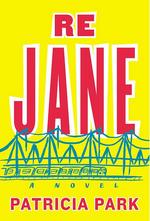
Re JaneRe Jane

by Patricia Park
Hardcover, 338 pg.
Pamela Dorman Books, 2015

Read: July 6 – 8, 2015

There are two ways to look at this book — as a retelling of Jane Eyre and as a novel on its own terms. It’s clearly indebted to Jane Eyre — frequently, the allusions are subtle; sometimes, she might as well be jumping up and down waving a flag. Still, Park’s her own writer — this is its own story, with its own characters — and a heroine who’s not just Brontë’s best-known character thinly disguised.

If you haven’t read Jane Eyre, first of all — shame on you. Secondly, yes, you can read this and appreciate it — you’ll just miss some of Park’s cleverness. Instead, what you’ll get is a straight-forward story about the trials and travails (and travels) of a young Korean-American woman.

Jane Re’s a half-Korean college graduate who becomes a nanny for the daughter of a couple of silly (white) New Yorkers — she’s a stereotypical college professor in Women’s Studies, he’s a henpecked high-school English teacher. Their daughter was adopted from China, and is now old enough that she doesn’t need a nanny — which makes the whole thing a greater challenge. Still, it’s better than the alternative — returning to live with her uncle and aunt, who were forced to take her in after the death of her mother in Korea (and her family there being unwilling to keep her).

Then through a series of events you can read about yourself, she finds herself living for a bit in South Korea. This is as fascinating as you’d think it’d be. It’s not just about a young South Korean woman, it’s about a young half-South Korean woman, raised in the States (by people who left Korea decades before), trying to acclimate to Korea. A stranger in the U.S. to many because of culture and appearance, finds herself a greater stranger there for the same reasons.

Which leads to . . . spoiler stuff. Which is even more interesting. Along the way there’s a whole mess of family issues, stranger-in-a-strange-land issues, self-acceptance issues, romance issues, and other things I can’t pair with the word “issues.” Jane goes through a lot, I’ve got to say — maybe a wider-range of challenges than Eyre. I frequently found myself wanting a bit more spunk, a bit more chutzpah from Jane throughout. But, like her namesake, when she needed it, she found it within — and it was great to see.

Park makes a pivotal choice in her selection of chronological setting — and one that worried me. It’d have been so easy to go wrong with this, and I’m used to seeing it go badly — but Park pulls it off, and actually makes it work for her.

In the end, I liked Jane. I rooted for her. I liked (some of) her family and friends. I was invested in the story. It’s not going to go down as good as, or as important as, its inspiration — but it’s a well-written, warm, look at a woman learning how to take charge of her life.

—–

4 Stars

Worst Case Scenario by Helen Fitzgerald: Move over Murphy, it’s Mary Shield’s Law now

The last book I’ll look at for #IndieCrimeCrawl (not my last post for the Crawl) is the latest from Helen Fitzgerald. Unlike the others I’ve blogged about this week, Fitzgerald is a new author to me, and the only thing I know about her is that a few weeks ago, about half of my bookish twitter feed was full of people praising this book. I don’t remember who is the one that convinced me I should pick up this book — I could pretty much pick a name at random and come up with a decent candidate though. I don’t see anyone but an independent publisher allowing this story to be told in the way it is. I think many publishers would take a version of this novel — a restrained and somewhat neutered version of it, sure — but not this version. This protagonist, this story, this author and this publisher are textbook examples of the strengths of Independent Crime Fiction. Without further ado:

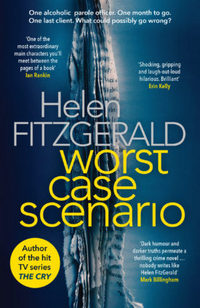
Worst Case ScenarioWorst Case Scenario

by Helen Fitzgerald


Paperback, 207 pg.
Orenda Books, 2019

Read: July 13 – 15, 2019

           When Mary decided to get her diploma [to become a Social Worker], she believed it would be her role to stand on bridges and stop people jumping off. Very soon after qualifying she realised she would never stand on bridges. She and everyone else were too busy catching casualties downstream. Except for sex offenders. If you saw a drowning sex offender being swept with the current you threw a large rock at him. Mary had done her best work in her first five years in the job. Those early cases were the ones she could recall, where she’d made the time and had an impact. She should have been forced to resign at the five-year mark. Every worker should.
           Please let me get through today without killing a child, they’d all be thinking, as Mary had thought for the last thirty years. Please help me not ruin a child’s life. She’d prayed each day that she’d get through it without fucking up, without turning out to be the bad guy after all. No-one in the office was expecting fame, riches, or even thanks, even though each worker would have made an excellent protagonist in It’s a Wonderful Life. They all saved lives, all the time, but no-one ever noticed. Boy did people notice when it went wrong, though.

Mary Shields is a social worker/probation officer, and I can’t imagine that there are many in either field that can’t recognize themselves a little in those above quotations (I couldn’t pick one). It’s probably my (understandable) lack of knowledge about Scottish penology/jurisprudence, but I don’t get exactly how her job works. She refers to herself as a social worker, and seems to work for a private employer, while she manages people on probation. It didn’t impact the novel for me, it’s just something I stumbled over a few times.

Before I go on, can I just ask something? Police procedurals and PI novels are never going away, but are we done with Forensic Scientists/CSI-types now and moving on to Probation/Parole Officers? Maybe it’s just me, but I’ve gone my entire life without reading a book focused on/featuring a Probation Officer and now I’ve read two in the last month and a half. I’m all for it, if the books are as good as these two are, I should stress.

Anyway, Mary is going through several changes in her life — including The Change. Her adult son has finished school and has found gainful enough employment that he has moved into his own place, her husband—a struggling artist for years is on the brink of making good, reliable money; and her own employment is getting the best of her—the schedule, the clients, the management—it’s all too much and with Roddie about to have a reliable income, she’s decided to give her notice once things become official for him. Having made that decision, she’s being a little less careful than she should be with her clients. Instead of doing everything by the book and diplomatically, she’s going to cut to the chase and do what she can to protect society from her clients and do what’s right for the people around them (even if they don’t want her to.)

The strategy sounds all well and good, but the execution could use a little work. Mary describes her role to one client as imagining the worst case scenario and then working to make sure it doesn’t happen. Well, she couldn’t imagine this scenario if she’d tried. Things start to go wrong immediately, and to a degree she can’t cope with.

The biggest example of this (but far from the only) is Liam Macdowall, her newest client. He was convicted of murdering his wife, and is on the verge of release. Not at all coincidentally, on the same day, his book is due to be published. It’s a series of letters he wrote to his dead wife from prison, essentially exonerating himself and putting the blame for the problems on his life on her. He’s become the poster child for Men’s Rights Activists throughout the country and his release is the occasion for protests (not necessarily the non-violent kind) for feminist groups as well as his fellow MRAs. Mary lays down the law on the eve of his release, setting forth very strict guidelines and expectations for him. Which is begins openly defying within hours of his release.

Before Mary can do anything about it, thing after thing after thing go disastrously wrong—regarding Macdowall, but with other clients, too. I can’t get into the details, but let’s just say the best of the things that go wrong is that her own son begins dating Macdowall’s oddly devoted daughter and sipping the MRA Kool-Aid. Everything that Mary tries to do to either fix the problems in her life, or just alleviate them, fails miserably. The only thing thing that doesn’t blow up in her face is retreating home to her bed and streaming Sex and the City. Her life doesn’t go from bad to worse just once or twice, but at every turn, she finds another level of worse for things to go to.

I’ve never talked about Christopher Buckley on this site, which is a crying shame (if only because I’d like to link to the posts demonstrate this point), but I haven’t read anything by him since I started here. I’ve been reading him since the late Eighties and love his approach to satire. The problem with all of his novels (with one exception) is that the last 5-10% seems to get away from him—like a fully-loaded shopping cart speeding down a hill. No brakes and only gravity and momentum exercising any control over what happens to it, while the wheels are close to falling off. I mention this only because I kept thinking of Buckley’s endings while reading this. There are two significant differences—the out-of-control part set in around the 25% mark and somehow (I wish I could understand how) Fitzgerald pulled it off. I do think in the last 15 pages or so, the wheels got a little wobbly, but while things felt out-of-control, Fitzgerald kept things going exactly where she intended.

While I don’t understand fully how Fitzgerald kept things from spiraling out of control in the novel (not Mary’s life) is the character of Mary Shields. She’s just fantastic. She’s funny (usually unintentionally); earnest but jaded; angry at so much of what’s going on around her; fully aware that she’s a mess (and not getting better); yet she pushes on in her Sisyphean tasks to the best of her ability. Her life is a car wreck, and we are invited to rubberneck as we drive by. When we read:

           …she didn’t want to kill [Macdowall’s MRA publisher], as this would mean losing the moral high ground.

we actually understand her frame of mind. She’s a woman whose life is crumbling around her and she’s doing all she can to hold it together for just a few more days until she can retire.

We don’t get to spend enough time with other characters to get a strong sense of them—this is all about Mary and the disaster that is her professional, personal, and family life. I liked the portrayal of almost everyone else in the book, I just wish the style of the novel allowed Fitzgerald to develop them more fully. Particularly the MRAs—I felt that their depiction was rather shallow and lacked nuance, making them rather cartoon-y. Sure, you could argue that she’s just being accurate and MRAs are cartoon-y, but I’d like to see a bit more subtlety in their portrayal. But on the whole, things are moving so fast, and Mary bounces from one calamity to another so rapidly that there’s no time to develop anyone else.

There’s a lot about this book that I’m not sure about, and a significant part of me wants to rate it lower. But I can’t largely because of Mary Shields. I’ve never read anything or anyone like her. This is definitely a Gestalt kind of novel—various parts of it may not make a lot of sense; or may be good, but not great. But the whole of the novel is definitely greater than the sum of its parts—when you take all the parts that may not be that stellar and combine them the way that Fitzgerald did—and with Mary at the core—it works, it all really works.

Insane, fun, insanely fun—and probably a little closer to reality than any one is ready to admit. I have a number of family members and friends in the social work/probation/parole fields—and I’m probably going to insist that most of them read this while I encourage all of you to do the same. I can virtually promise that you won’t read anything like this anytime soon.

—–

4 Stars

Ink to Ashes by Russell Day: The Least Likely Miss Marple Successor Dives into the Murky World of Motorcycle Gangs

I’d fully intended to post about this book last week, until I remembered that this was #IndieCrimeCrawl week. Who better to write about this week than Russell Day and Doc Slidesmith? I don’t think I can think of better representatives of Indie Crime Fiction than them. Last year Day made me into a near-raving fanboy, and this year’s work has only made me appreciate him all the more. There’s a realism as well as poetry to his prose that needs to be experienced to understand. I can’t encourage you enough to buy and read his work. This is one of the grittier works I referred to yesterday (when this was supposed to post, but life happened and I forgot to edit the intro), and so it might not appeal to as many people as other authors do — but for those whose taste run to the darker side of Crime Fiction, Russell Day is your man.

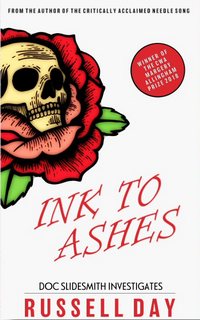
Ink to AshesInk to Ashes

by Russell Day
Series:
Doc Slidesmith, #2

Kindle Edition, 306 pg.
Fahrenheit Press, 2019

Read: July 12 – 13, 2019

           For me, the why of it is always the point.

As much as we all like a good whodunit, generally, I’m with Doc Slidesmith — the whydunit is really what’s more interesting. You might have an incredibly clever criminal — and an equally clever sleuth (professional or amateur) — a twisty, turny plot with perfect reveals, and the rest — but if the motive behind the crime is non-existent or non-interesting, the novel just isn’t going to be that satisfying. Russell Day’s Doc Slidesmith novels are all about the why — he’ll pull the why out at the end and it’ll be something you don’t expect (but maybe should have), and it will be compelling as you could want.

One of Doc Slidesmiths’ oldest friends has died in a motorcycle accident and his widow has very unusual request, which I’ll leave for you to read about on your own. But it leads to one of the . . . strangest and most striking first chapters that I can remember.

For those that haven’t met Doc before — he’s your standard-issue doctor of psychology, who has embraced voodoo and tarot reading, rides a motor cycle and owns a tattoo shop, while solving mysteries that he stumbles into à la Miss Marple. You know the type. Yakky is his taciturn friend/colleague who works in Doc’s shop, and is a backup/wingman when Doc needs one (whether he wants one or not).

The widow has another request — her husband was one of the founders of a motorcycle club, and one of the newest members has disappeared. Can Doc track him down as a favor to the dearly departed? She can’t ask any members of the club so she’s counting on Doc to come through for her.

At the moment, things are really tense intra-club membership. There’s a move for the club to stop being a tighter association of motorcycle enthusiasts and become a full-fledged outlaw biker gang. This is causing problems in the ranks — there are many who don’t want anything to do with that, preferring to preserve the club as is — but there are many, typically younger voices who want to go all the way with this. Tied into this move are income streams and dissension about some of them, plus pressure to add in something more illegal than they currently have to worry about.

Doc’s not far into his search when he can tell there’s a lot of lies around the disappearance of the member, and before Doc can figure out who’s lying and why — the search becomes deadly. It isn’t long after that when Doc starts to question the official finding about the motorcycle accident. Leading to more questions and deceit. Yakky and Doc now have to walk through this minefield to find out what happened to the member (and why), what happened to Doc’s friend (and why) — oh, and maybe stop an all-out war between this nascent outlaw gang and an already established one. Just another day in the office for Slidesmith.

I was able to guess the who behind one of the lines of investigation pretty easily, but the why was something I just didn’t see. The other line was a mystery for me right up until the reveal, making that particular reveal quite satisfying. Coupled with Day’s ear for dialogue and evocative prose, the mysteries — and the darkness of the human psyche they explore makes this a compelling read — almost a must-read.

The various club members and those who come into regular contact with them are really well depicted — and several of them are the kind of character that you hope show up again in a future book in the series. But the core of the book is Doc and Yakky. Now, Needle Song was written from Yakky’s perspective, where this is written from Doc’s — and that makes so much difference. A lot of master detective types (amateur or not) need to be written about “by” a friend, associate or assistant. John Watson, Archie Goodwin, Chet, Danny Boyle do more than narrate the stories and relate the exploits of their partners/employers, they also help convey the proper sense of awe and wonder we’re supposed to have for the Great Detective. In Needle Song, we got that from Yakky — both the narration and we were given a proper sense of admiration in response to Doc. Here, we only get Doc’s narration — and he isn’t nearly as impressed with himself as Yakky was/is. Which makes it harder for the reader to be.

On the other hand, Needle Song was in many ways, Yakky’s story. This is absolutely Doc’s story, so who else could tell it to us? And Day is able to get across the kind of guy that Doc is — like in this testimony from his departed friend:

           “Do you know what Dago used to say about you? He said, if you followed someone into a revolving door, you’d walk out in front of them. He thought a lot of you.”

Don’t let the fact that I’m not raving give you the impression there’s something wrong with this book. Rather, it just reminds me how impressed I was with Needle Song. I wondered if Day could live up to expectations, and I don’t think he did. Many will disagree with me (which is a good thing), but while this was a solid, compelling read featuring characters that I can’t get enough of — it didn’t knock my socks off. Russell Day remains one of the strongest new voices I’ve come across in the last couple of years. I know his next novel will be completely different from this, but I hope he comes back to this world soon. In the meantime, go, go get this.

—–

4 Stars

Pub Day Repost: Bark of Night by David Rosenfelt: Another winner of a case for the lawyer who’s gone to the dogs

Bark of NightBark of Night

by David Rosenfelt
Series: Andy Carpenter, #19

eARC, 304 pg.
Minotaur Books, 2019
Read: July 3 – 4, 2019

I know it’s practically de rigueur for me to start off talking about how difficult it is to talk about yet another Andy Carpenter book, but I’m going to try to resist this time (no promises that I won’t resort to it next time).

Instead, I want to focus on people who read this blog and haven’t picked up a book in this series — let’s see if I can help you come to the light. Andy Carpenter is a defense attorney — thanks to some high profile cases, some lucrative lawsuits, (and some other things), he’s an independently wealthy defense attorney (see the first couple of books for details). He’s also lazy. These two traits generate a lawyer/protagonist who doesn’t want to take on clients who doesn’t want to go to work (he’s the anti-Lincoln Lawyer). He’d rather watch sports, hang out with his wife, kid, friends and dog (especially the latter) and maybe check-in on the dog rescue he runs with a former client. He only takes on a case when he likes the potential client, he feels an injustice is being done, his wife talks him into it — or the life of a dog lies in the balance (there’s a strong link between the first reason I listed and the last). This time out, it’s pretty much a combination of those motivations. Nevertheless, when he takes on a client, he pulls out all the stops for him or her. Much like with Perry Mason, you have to wonder why prosecutor’s don’t just drop charges when Andy shows up in court — you can bet his client will be exonerated.

Andy’s vet calls him to his office to talk about something — namely, this dog that had been brought in to be euthanized. Before he did that, someone in his office scanned the microchip in the dog. The man who paid for the euthanization, wasn’t the owner f the dog — because he’d been murdered shortly before the dog appeared. After some digging, Andy discovers that the man who brought the dog in is very likely connected to the murder (especially when they look at his rap sheet). No one’s sure why he wanted a vet to take care of destroying the dog rather than doing it himself. But someone completely different has been charged with the crime, and Andy knows that this man is innocent — he has to be, there’s no other explanation how the would-be dog killer got involved.

From there, Andy and his team (his PI wife, her PI friend/Andy’s bodyguard, Andy’s CPA/hacker, his associate attorney) set out to defend their client, figure out why anyone would want to kill the victim (a documentary filmmaker, and not a particularly successful — or good — one), and maybe answer a few questions about the victim’s dog. Like most Carpenter novels, the mystery is just twisty enough to keep you guessing to the end. Andy’s courtroom antics are pretty subdued this time, but watching him in action is fun — particularly as he battles the Assistant D.A.

Andy’s team — and his friends who aren’t on the team — are as enjoyable to spend time with as ever. With some long-running series you stick with it because the characters are so near and dear to you. With some, you put up with characters because the author puts out great mysteries/adventures/whatever. It’s with the best series that you get both — a good mystery (in this case) and a cast of characters you look forward to seeing again. That’s definitely what we have in the Andy Carpenter books, and Bark of Night is a prime example of it.

As a capper, if the last few paragraphs don’t provoke a warm fuzzy or three in you, there’s something wrong with you and you should probably seek professional help. Rosenfelt is good at the heart-warming stuff, and he’s at the top of his game here.

Newcomers will get enough information along the way to hop on board here — there’s no need to feel like you need to go back to Book One (Open and Shut) and read them in order to catch all the nuance. Start here, and you’ll easily see why this book has charmed and entertained audiences enough to last for 19 books (and counting!). It’s a clever mystery, featuring characters that are reliably comfortable and funny — with just enough moments of seriousness and displays of skill that you can believe they’ll be defending someone and bringing a killer to justice at the same time. This is one of the better installments in the last few years (both for being enjoyable and for the mystery) and should move right to the top of your TBR (note that a “lesser” Andy Carpenter book is still fun, engaging and entertaining).

Disclaimer: I received this eARC from St. Martin’s Press via NetGalley in exchange for this post — thanks to both for this opportunity.

—–

4 Stars

Bark of Night by David Rosenfelt: Another winner of a case for the lawyer who’s gone to the dogs

Bark of NightBark of Night

by David Rosenfelt
Series: Andy Carpenter, #19

eARC, 304 pg.
Minotaur Books, 2019
Read: July 3 – 4, 2019

I know it’s practically de rigueur for me to start off talking about how difficult it is to talk about yet another Andy Carpenter book, but I’m going to try to resist this time (no promises that I won’t resort to it next time).

Instead, I want to focus on people who read this blog and haven’t picked up a book in this series — let’s see if I can help you come to the light. Andy Carpenter is a defense attorney — thanks to some high profile cases, some lucrative lawsuits, (and some other things), he’s an independently wealthy defense attorney (see the first couple of books for details). He’s also lazy. These two traits generate a lawyer/protagonist who doesn’t want to take on clients who doesn’t want to go to work (he’s the anti-Lincoln Lawyer). He’d rather watch sports, hang out with his wife, kid, friends and dog (especially the latter) and maybe check-in on the dog rescue he runs with a former client. He only takes on a case when he likes the potential client, he feels an injustice is being done, his wife talks him into it — or the life of a dog lies in the balance (there’s a strong link between the first reason I listed and the last). This time out, it’s pretty much a combination of those motivations. Nevertheless, when he takes on a client, he pulls out all the stops for him or her. Much like with Perry Mason, you have to wonder why prosecutor’s don’t just drop charges when Andy shows up in court — you can bet his client will be exonerated.

Andy’s vet calls him to his office to talk about something — namely, this dog that had been brought in to be euthanized. Before he did that, someone in his office scanned the microchip in the dog. The man who paid for the euthanization, wasn’t the owner f the dog — because he’d been murdered shortly before the dog appeared. After some digging, Andy discovers that the man who brought the dog in is very likely connected to the murder (especially when they look at his rap sheet). No one’s sure why he wanted a vet to take care of destroying the dog rather than doing it himself. But someone completely different has been charged with the crime, and Andy knows that this man is innocent — he has to be, there’s no other explanation how the would-be dog killer got involved.

From there, Andy and his team (his PI wife, her PI friend/Andy’s bodyguard, Andy’s CPA/hacker, his associate attorney) set out to defend their client, figure out why anyone would want to kill the victim (a documentary filmmaker, and not a particularly successful — or good — one), and maybe answer a few questions about the victim’s dog. Like most Carpenter novels, the mystery is just twisty enough to keep you guessing to the end. Andy’s courtroom antics are pretty subdued this time, but watching him in action is fun — particularly as he battles the Assistant D.A.

Andy’s team — and his friends who aren’t on the team — are as enjoyable to spend time with as ever. With some long-running series you stick with it because the characters are so near and dear to you. With some, you put up with characters because the author puts out great mysteries/adventures/whatever. It’s with the best series that you get both — a good mystery (in this case) and a cast of characters you look forward to seeing again. That’s definitely what we have in the Andy Carpenter books, and Bark of Night is a prime example of it.

As a capper, if the last few paragraphs don’t provoke a warm fuzzy or three in you, there’s something wrong with you and you should probably seek professional help. Rosenfelt is good at the heart-warming stuff, and he’s at the top of his game here.

Newcomers will get enough information along the way to hop on board here — there’s no need to feel like you need to go back to Book One (Open and Shut) and read them in order to catch all the nuance. Start here, and you’ll easily see why this book has charmed and entertained audiences enough to last for 19 books (and counting!). It’s a clever mystery, featuring characters that are reliably comfortable and funny — with just enough moments of seriousness and displays of skill that you can believe they’ll be defending someone and bringing a killer to justice at the same time. This is one of the better installments in the last few years (both for being enjoyable and for the mystery) and should move right to the top of your TBR (note that a “lesser” Andy Carpenter book is still fun, engaging and entertaining).

Disclaimer: I received this eARC from St. Martin’s Press via NetGalley in exchange for this post — thanks to both for this opportunity.

—–

4 Stars

Bullet Points about Even Dogs in the Wild by Ian Rankin: Another winner from one of the best in the biz

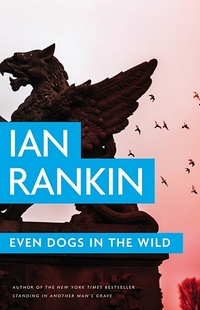
Even Dogs in the WildEven Dogs in the Wild

by Ian Rankin
Series: John Rebus, #20

Hardcover, 347 pg.
Little, Brown and Company, 2016

Read: June 10 – 12, 2019

This post is overdue, and I can’t seem to find time to do it right. So, I won’t. Here’s a quick and dirty way to get it taken care of. I wish I had it in me to do a better job, but I don’t. Here’s the blurb taken from Rankin’s site:

           Retirement doesn’t suit John Rebus. He wasn’t made for hobbies, holidays or home improvements. Being a cop is in his blood.

So when DI Siobhan Clarke asks for his help on a case, Rebus doesn’t need long to consider his options.

Clarke’s been investigating the death of a senior lawyer whose body was found along with a threatening note. On the other side of Edinburgh, Big Ger Cafferty – Rebus’s long-time nemesis – has received an identical note and a bullet through his window.

Now it’s up to Clarke and Rebus to connect the dots and stop a killer.

Meanwhile, DI Malcolm Fox joins forces with a covert team from Glasgow who are tailing a notorious crime family. There’s something they want, and they’ll stop at nothing to get it.

It’s a game of dog eat dog – in the city, as in the wild.

Even Dogs in the Wild brings back Ian Rankin’s greatest characters in a story exploring the darkest corners of our instincts and desires.

If I had the time to do this properly, here are the things I’d be talking about.

  • Rebus as consultant/PI — this is really the perfect role for him, he’s not that great at procedure anyway. Calling his own shots, following his instincts, going about things, he’s a better fit for this kind of thing than a certain retired LAPD Detective.
  • This proves to be the kind of case made for Rebus — the solution lays in the past, but the ramifications are in the present.
  • Cafferty isn’t the suspect here (he’s not innocent, he never is), but he’s the victim — and maybe a concerned citizen?
  • There’s little in Crime Fiction better than Rebus and Cafferty on the same page — that’s as true here as ever.
  • Clarke’s role seemed diminished in favor of Fox and Rebus (particularly the former), but maybe that’s just me — what she does, however, allows Rebus to do what he does best
  • The Clarke/Fox friendship is an interesting one — and different from the Clarke/Rebus friendship. I’ll enjoy watching this develop.
  • I’m already really enjoying the Fox/Rebus friendship/mentorship. That’s not something anyone would’ve seen coming the first time we met Fox, or the first time we saw the two of them cross paths. The fact that they’ve got a strange friendship/mentorship going on is just wonderful.
  • There’s more going on in Fox’s personal life than we’ve really ever seen with Rebus or Clarke on an extended basis.
  • Fox’s share of the story is really strong and displays the character we’ve come to know over the past few novels, but evolving to take on some of Rebus’ better traits, but none of his . . . well, worse.
  • For a period of time, through no fault of his own, Rebus takes guardianship over a small dog. This was just fantastic and one of my favorite things to happen to him in years.

Combine all of the above with Rankin’s consummate skill and you’ve got another winner — the twentieth Rebus book and the character, the writing, and the perspective is a strong and fresh as it ever was. A sure-fire win for old fans that would probably convert a newbie, too.

—–

4 Stars

2019 Library Love Challenge 2019 Cloak & Dagger Challenge

Marah Chase and the Conqueror’s Tomb by Jay Stringer: An Archaeologist and a Spy Walk Into a Bar . . .

Marah Chase and the Conqueror's TombMarah Chase and the Conqueror’s Tomb

by Jay Stringer
Series: Marah Chase, #1

eARC, 320 pg.
Pegasus Books, 2019

Read: June 26 – 29, 2019

Right after I finished Stringer’s How to Kill Friends and Implicate People, I jumped onto NetGalley to request this — despite being woefully behind on everything else (including NetGalley books!), curiosity prevailed. I had to know how Stringer would approach this particular premise and character.

What a fun, strange, ride! This is pure escapist entertainment. There’s no message, there’s no pondering foibles of contemporary society, there’s no commentary on social ills (or celebration of social triumphs), just a wild and crazy story about a “renegade archeologist” and a spy battling a cult, a plot to take over the government, and historic artifacts that could easily change the course of civilization. (there is some pretty well-done character growth and development — which grounds the lunacy a bit)

It’s difficult — at best — to not mention the Pop Culture Icon that Marah Chase will remind readers of, and I’ve decided that I’m not up for difficult right now (after trying a few times). Marah Chase is essentially a contemporary, female Indiana Jones — without the legitimate day job. Circumstances forced (well, forcefully encouraged) her to abandon the more scholarly, accepted archeology and to become a “relic runner” or “gold dog.” Someone who finds historic, hard to find, artifacts and sells them to private collectors. It’s hard to say just how successful she is at it — enough to be a known figure throughout the Middle East (to people on both sides of the law), but not enough to get overly-choosy about what jobs she takes.

She’s on the run from a group that pretends to be an arm of ISIS to cover up their criminal activities after scooping a treasure from their grasp when a British spy recruits her to go on the hunt for an artifact rumored to be a powerful weapon. I’ll leave the details to Joanna Mason as she briefs Marah, but what’s driving her to get Marah on the hunt is that she’s convinced a powerful church has decided that a. the weapon is real and b. they are close to finding it. Marah’s always been fascinated by the researcher they’re basing their search on and she’s in probably the best position to stop them before it’s too late.

All she has to do is find the tomb of Alexander the Great — a location that has stumped archeologists, treasure seekers, and zealots for centuries — in the next few days. All she has to do is deal with white supremacist soldiers, faux-ISIS goons, a wealthy and powerful church, an ancient secret society, and worst of all, the granddaughter of the one man in history who may have found (and then covered-up) Alexander’s tomb — her ex.

Marah may be the star of the book — and her name’s in the title — but don’t think that Mason doesn’t play as nearly vital a role in these events. While Marah’s on the hunt for the tomb, Mason’s trying to prevent a bloodless coup from within her own government, one that’ll pave the way for the church to take over.

Both of these women seem to be the embodiment of an amped-up Murphy’s Law — If anything can go stunningly, horribly, mindbogglingly wrong, it will — and usually will involve mortal danger, and then leave you in a worse (and more dangerous) predicament. I quickly stopped thinking that anything would work for either of them and just held my breath until things went from precarious to worse. It’s a tribute to Stringer’s imagination that he was able to keep that up for as long as he did.

Both Marah and Mason are surrounded by a great cast of characters — enemies and allies alike. Honestly, either story line would’ve been enough to keep a novel going and be a lot of fun. You stick both of them together and you’ve got gold on your hands. I’m not sure this is the kind of story that invites in-depth analysis — it’s the kind of story that invites cheers, fist pumps, and would work best with a bowl of popcorn at your side.

For those looking for the Jay Stringer of the Sam Ireland books, they’re going to be disappointed. For those looking for a Jay Stringer using his skills to create a new world, new voice with the same quality, they’re in for a treat. His sense of humor is still evident, it just shows itself in different ways — just as delightful, however. The banter between Marah and her smuggler friend is like catnip to me — I could read it all day long. The action scenes, in particular, are outstanding — there’s one fight on board a plane that will . . . well, no, I’d better not.

Fast-paced, adrenaline-fueled, adventure with a couple of the most marvelous female protagonists you’ll find this year — Marah Chase and the Conqueror’s Tomb is a guilt-free pleasure and a fantastic introduction to what had better be a long-running series.

Disclaimer: I received this eARC from W. W. Norton & Company via NetGalley in exchange for this post — thanks to both for this opportunity.

—–

4 Stars

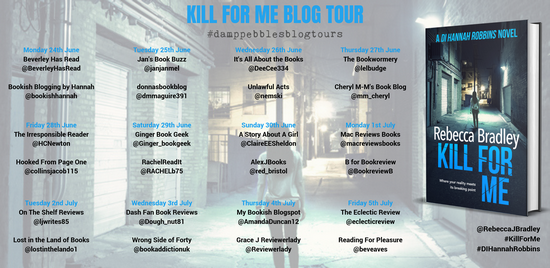
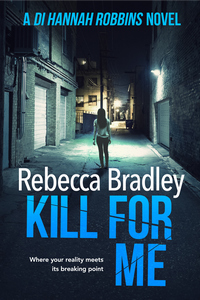
Kill for Me by Rebecca Bradley: Compelling seems an inadequate word to describe this Police Procedural

Kill for MeKill for Me

by Rebecca Bradley
Series: DI Hannah Robbins, #5

Kindle Edition, 275 pg.
2019

Read: June 20 – 22, 2019

           …it had happened the way he planned it and there was no use crying over a perfect plan. The one surprise was how well it had all gone. How easy it had been to manipulate people. Like pieces on a chess board they had done as he told them to. They’d moved where he told them to move and done as he’d told them to do. He felt powerful and it was a feeling he liked and could get used to…

He could create a vicious circle where the police could never catch up . . . and he was pulling the strings but not a single strand of his DNA was left at the scene. It was priceless.

Pure genius. He was a genius.

There were enough people in the world who were more interested in saving themselves than anything else that they would do as he told them to.

There were some fun times ahead.

So like the last DI Hanna Robbins book I read — The Twisted Web — so much of the success of Kill for Me comes down to the hook. Obviously, how well she delivers on the promise of the hook is as essential, but without that hook, who’s going to read on?

As you can see above, it’s a great hook — our nameless “He” puts this single mother in a no-win situation. He’s manipulated her daughter’s school, compromised her communication with the outside world and has her daughter. All he requires her to do is kill someone, and then her daughter will be returned. Once he’s done with her, he moves on to someone else. And someone else. And someone else. Each time, the lever he uses to pry his victim into action is different — the life of a daughter, threatening to expose wrongdoing and ruining the life of a spouse as well as his victim, threatening to use falsified pictures of a child, and so on. Rather than risk whatever he’s threatening — “saving themselves” (or someone else) — these victims will do “anything else. . . he told them to.”

Murder by proxy. Spree killing by proxy, really. What starts off as killing for some dark purpose quickly evolves into killing because of the thrill gained by manipulating others — being a puppet master who happens to have deadly puppets

It’s gripping. It feels plausible. It feels like a story in the news from next week.

Does Bradley deliver? Yes. Not in the way I expected things to go once I got to the quotation above, but in a way that was so much better. This is the third novel of Bradley’s I’ve read in the past ten months. Each one had a fantastic premise, a hook as shiny and sharp as anyone could want — and each time she uses that hook to reel in her readers in the manner of a seasoned pro. I’m not going to say more than that so I don’t risk giving something away.

I wasn’t crazy about the Epilogue — it was an efficient way to wrap up what needed to be wrapped up, take care of remaining details, etc. If she hadn’t written it up in a nice summary fashion like she did, it would’ve taken a chapter or two. But it felt rushed, too compressed and perfunctory. It did what needed to be done, but in a way that left me unsatisfied. It’s a small thing compared to the rest of the book, but Bradley didn’t do the novel any favors with that.

As effective as Bradley is with premises (and following through with them), she’s great with the emotional core of the story and characters. I wonder from time to time if she doesn’t give enough space to the “procedural” part of “police procedural” (in at least two of the three books by her that I’ve read). In this book in particular there were two lines of inquiry that I thought Hannah and her team could’ve — should’ve — done better with. Thanks to a recent binge-watch with my wife, I had visions of DCI Gill Murray eviscerating Hannah for leaving them untouched. But the reader will either not notice those points, or won’t care, because Bradley will suck you into the innermost thoughts and feelings of the victims and the police investigating the crimes (and, in some ways, with the killer). I sympathized and empathized with each of these victims — understanding why they felt they had no choice but to dance to the wicked tune he was playing, turning themselves into the kind of monster they couldn’t imagine ever being.

The same is true for Hannah Robbins and her team — you see the turmoil caused by this case, the way it gets under their skin — as well as personal and professional crises/upheaval changes for Hanna, her right hand man, and others. I’m still trying to suss out all the various plotlines, character arcs and motivations when it comes to the police thanks to coming to this series so late — but I’m very interested in the way a couple of them play out. One thing along those lines that Hannah seems to think has been resolved, has almost certainly not been resolved and will blow up in a book or two, and I’m very curious about it.

Whether we’re talking about new characters or established ones, victim or police trying to help them — Rebecca Bradley infuses these characters with enough genuine emotion, authentic desire and undeniable and relatable reactions to the madness surrounding them that she can do pretty much what else she wants and readers will follow.

In addition to writing compelling stories, Bradley seems to have many things to say about our mobile devices, social media, personal security and the way these three ideas need to be carefully reevaluated by ourselves and others needing some sort of court order (it seems) to reconsider the way we utilize this new technology.

I’m finding myself becoming a real fan of Rebecca Bradley and DI Hannah Robbins both, and this book is a large part of why. Compelling doesn’t seem to be an adequate adjective for these books and this author. Fans of police procedurals should get their hands on these books right off. This would be a great jumping on point for a new reader, and a great maintenance fix for people familiar with Hannah Robbins and her brand of investigation.

—–

4 Stars

LetsReadIndie Reading Challenge 2019 Cloak & Dagger Challenge


My thanks to damppebbles blog tours for the invitation to participate in this tour and the materials (including a copy of the novel) they provided.

How to Kill Friends and Implicate People by Jay Stringer: Girl Meets Boy on a Crime Spree

Two days in a row where I use denouement in a post. Odd streak. Pretty sure I can guarantee I won’t go for three, though. Sorry for the babbling that’s about to ensue.

No, I’m not really, it’s what happens when I get excited.

How To Kill Friends And Implicate PeopleHow To Kill Friends And Implicate People

by Jay Stringer
Series: Sam Ireland Mysteries, #2
Kindle Edition, 404 pg.
Thomas & Mercer, 2016
Read: May 30 – 31, 2019

I can’t pretend that everybody I’ve killed has been a bad egg. I can’t even say they all had it coming. But you want the real truth? We could all be said to have it coming. Write down the worst things you’ve ever done. Just the top ten. The silent little moments of guilt sitting at the back of your eyes in the bathroom mirror.

Did you break someone’s heart? Were you a bad husband or wife? Lousy mother or father? Was there a time you stole some money from the till at work? Maybe you just cheated on a test. We’ve all done things. One day, these things might come to the attention of the wrong person, and you get me knocking on your door.

Morals have to be flexible when you’re self-employed. Sometimes I can turn jobs down if I think they’re shady, but I’ve still got bills to pay.

This is coming a couple of weeks later than I intended to write it — mostly because I was trying to get my thoughts in order (yeah, also busy, tired, etc., etc. — but largely the getting my head wrapped around it bit). I didn’t know how it could live up to it’s predecessor and then knowing it, I had a hard time knowing how to compare the two; I couldn’t decide what was safe to talk about; I’m not sure what I can say about the ending; one of the events of this novel shocked me in ways authors almost never succeed at, and I’m still recovering (this is a good thing — but I still kind of hate Stringer for it). Frankly, I’m not sure I’ve decided any of these things, but I don’t want to not talk about this anymore.

One of the best parts of Ways to Die in Glasgow was the three first-person narrator structure, and I wondered how Stringer was going to approach this one, given that two of those narrators were unavailable. I was happy to see that he simply replaced them with another two — and relieved that it was as successful, if not more so, in these pages.

I couldn’t help thinking of the opening to Fletch (one of my favorite first chapters ever) as I got into this one. In Fletch, Alan Stanwyk hires Fletch to kill him — supposedly to prevent him from dying a painful death from a rare form of cancer. This job offer sends Fletch off on a great investigation that results in an ending Stanwyk couldn’t have predicted. Here, a businessman who makes Stanwyk look ethical, named Alex Pennan hires hitman Fergus Fletcher* to pretend to kill him. He’s done some very bad things, and some very, very bad people are going to want to do very, very, very bad things to him — the only escape is to die (but not really). Fergus knows this is a bad idea — but it’s such a bad idea that he’s interested.

* A connection I just now made — wow, I’m dense sometimes

Fergus is at something of a crossroads — he’s not sure that being a hitman is the right thing for him anymore. It’s not like he’s received “a swift, spiritual kick to the head that alters your reality forever” or anything — but it’s similar. He’s lost the taste for it, he’s making sloppy mistakes. Maybe, just maybe, not killing someone would be a great way to get out of the business.

Alex and Fergus are our two new narrators — and they have very different takes on their deal, and how things unfold. This alone would be worth reading — but it gets better, because I haven’t talked about Sam Ireland — part-time PI, part-time bicycle messenger, and all around great character — our other narrator yet. Alex’s wife knows he’s up to something sketchy, and hires Sam to prove that he’s having an affair. Also, Sam and Fergus have recently met on a dating app (neither is incredibly up front about their careers for their own reasons). So you see — things are getting even more interesting.

Now, add in the very, very bad people that Alex wants to fool, the people that employed Fergus while he made some sloppy mistakes, some crooked cops, one very not-crooked cop, Alex’s wife, Fergus’ family, a footballer, a couple of shady politicians, a best-selling crime novel that keeps showing up everywhere, and a few other folks — and you’ve got yourself a Grade-A Kerfuffle of Epic Proportions. I really can’t say more than that — but I want to, it’s a great roller-coaster of a ride that you’ll enjoy while you hang on for dear life.

Alex is a great character — he’s thoroughly convinced that he’s smarter than he is — which doesn’t mean he’s not going to get away with his plan. He’s got big dreams and will do anything — anything — to achieve them. But, wow, he’s such a lousy person — you find yourself spending a lot of time hoping that Fergus messes up and actually kills him. Fergus, meanwhile, is objectively a reprehensible person — he’s a very successful hitman, after all — you should want him dead or rotting away in prison. But you won’t — you’ll be cheering him on, hoping he gets the chance to figure out his next career steps.

And Sam? If you’ve read, Ways to Die in Glasgow, you know all you know everything you need to about Sam.

I want to devote a post or two to Sam’s brother and his cockamamie thoughts and observations on comic books. But to do that, I’d end up ruining the reading experience, so I’ll keep my powder dry. But Phil made me rethink Jor-El’s efforts to save Kal-El and Krypton, and made me laugh audibly while doing so. His ideas are intriguing to me, and I wish to subscribe to his newsletter.

While I’d never pretend to be able to predict everything that happens in various books — to an extent, you kind of can after awhile. Right? Even when we say to each other “I never saw X coming” — in retrospect, you usually can see where X came from. The number of stunning, out of left field, I cannot believe Author Y did that moments are few and far between — maybe a dozen in the past five years. I know the only one that comes to mind in recent memory is John Mars’ Her Last Move which left me a reeling for days last November. Stringer did that to me here, I so strongly disbelieved what I’d read that I re-read a particular passage four times before moving on — only to come back a couple of pages later to try it a couple of more times. Surely it had to be what a pretty unreliable narrator perceived to have happened, not what really happened.

For those of you keeping score — this is the book that got me in a hopeful and cheery mood moments before Noelle Holten shattered it. But don’t infer from that an ending that doesn’t exist — this is one of the most complex denouements I can remember — following shortly after one of the more exciting climaxes I’ve read this year. I remember walking into another room to read the last 15 percent or so, because I could not — would not — tolerate any distractions. Not that my kids and dog were being more distracting than usual, but it was that kind of ending (and really, my dog’s half-pug, so simply breathing is frequently a distracting behavior…). It’s that kind of a read — you will laugh; you may find yourself rooting for the boy in his crime spree to get the girl; you will find your jaw hanging open (even is — especially if — you’re not the type of person to do that); you will (at the very least want to) cancel/rearrange plans to make time to read; you will wish your reading speed was a little faster so you can find out what happens when Sam tries to (ahem, well); you will find yourself writing/speaking in italics more than you’re accustomed to when discussing the novel. It’s just that kind of read.

I know Stringer has a non-Sam Ireland book coming out soon, but I sincerely hope that he’s not done with her. I’m not ready to be.

—–

4 1/2 Stars

✔ Read a book with “how to” in the title.

2019 Cloak & Dagger Challenge

Pub Day Repost: The Girl Who Could Move Sh*t with Her Mind by Jackson Ford: The Title Says Almost Everything You Need to Know About this Rollicking Adventure

The Girl Who Could Move Sh*t with Her MindThe Girl Who Could Move Sh*t with Her Mind

by Jackson Ford
Series: Frost Files, #1

eARC, 496 pg.
Obit Books, 2019
Read: May 28 – 29, 2019

Not unlike James Alan Gardner’s All Those Explosions Were Someone Else’s Fault from 2017, the title, The Girl Who Could Move Sh*t with Her Mind tells you all the important things about this book that you need to know before picking it up — although I think this book does a better job of following through with the tone of the title throughout the book. The voice, the attitude and the defining characteristic of the protagonist (at least as most people are concerned) is all right there. If the title turns you off, don’t bother buying/borrowing this novel, you’re going to hate the experience. The same goes for the first few pages — if you’re not amused and/or intrigued by Teagan’s personality and narration within the first chapter, just stop and go find something else. If you’re amused and/or intrigued? You’ll be in for a good time. If you’re amused and intrigued? Well, my friend, settle back and enjoy.

Teagan Frost is our titular girl, and she…well can move sh…aving cream with her mind. She has psychokinetic abilities (not telekinetic, she’s touchy about that distinction) — or pk, as she calls is. Teagan will slowly describe her abilities to us as she has opportunity — and eventually will spell out to someone where those abilities came from (surprisingly far from the beginning — which I appreciated). But for the initial plot all you need to know is what the title said.

She’s part of a pseudo-governmental espionage team that acts a lot like judge and jury without bothering with the formalities. No one, or almost none of her team wants to be on it, but the shadow-y figure that calls the shots is forcing them all to be part of it (including Teagan — don’t get the idea that she wants to be some pk wielding super-hero/secret agent — she wants to work in a kitchen somewhere until she’s good enough to start her own restaurant). The rest of the team have various skills that prove handy in their tasks, but she’s the only one has any kind of extra-ordinary abilities. Actually, as far as anyone knows, Teagan is the only person alive who can do what she does.

That is, until a dead body is discovered — and the victim could not have been killed by anyone but a psychokinetic. Naturally, there’s a tie to both Teagan’s teams recent activities and the location they were in the night before. The police are looking for them (not that they have an explanation for how the victim died, but they expect someone can), and some of the higher ups in the government want to take care of Teagan without worrying about due process (those who live by the sword and all) — and if that “take care” involves dissection or vivisection so they can figure out how her pk was given to her . . . well, who’s to complain? Teagan doesn’t have a lot of time to clear her name, but she’s going to try. As are most of her associates — if she does down for this, they will to.

Time prevents me from talking about all the things I want to, but that should be enough to whet the ol’ appetite. It’s a fun book and not one you need to know much about first. There’s a lot of action, plenty of snark, some violence, some banter, some mystery, some heartbreak. There’s a very Cas Russel/Peri Reed feel to this book and this world. But something that feels entirely fresh at the same time. I’m not sure that’s technically possible, but it seems it. So it can appeal both to fans of Cas and Peri, as well as those who didn’t care for them/don’t know who they are.

There’s a lot of depth to the characters, a lot more than you’d expect — which is one of the great parts about this book. As you learn more and more about what’s really going on around the murder victims the more you learn about Teagan and her team/found family (ditto for Teagan, actually). There are plots revolving around romance and friendship plots that are legitimately surprising — in a pleasant way, nice to see someone going the way Ford does, making the choices he makes for his characters. While I’m on the subject, it wasn’t just in characterizations/relationships that Ford surprised me — he did it throughout. Even when I was saying “Well of course, ____ was really doing ___, there’s no other explanation” to myself, that was a heartbeat after I said, “What??!?! No, that can’t be right!” I’m not saying I couldn’t see anything coming, but the ratio of surprises to telegraphed moves comes out in Ford’s favor.

There are a number of X-Men parallels, going on here — all of which would appeal to Teagan (some of which she mentions). Which is a nice touch. It’s probably also something that deserves more space than I’m giving it — I’m stopping myself, because I think I could go a long way down this particular rabbit hole. I’d love to ask Ford about it.

Now, there’s one character that I think Ford messed up — he’s part of a government clean-up crew that comes to take Teagan into custody. For some reason, he hates Teagan with some sadistic vengeance, and isn’t afraid to tell anyone that. It’s senseless and motionlessness (yeah, I know sometimes people hate others for no reason — I can accept that in real life, I can’t accept it in fiction. There has to be a reason). Which is strange, as little as we understand this jerk, we know the murderer and the individual prompting them to act. Technically, we know more about the killer than we do about Teagan for most of the book. Which just makes the clean-up guy even stranger.

I expect in future installments, we’ll get an explanation for the hatred and I’ll shut up. But not until then. Ford may be playing a long game here, but this is a short game world. Ford’s set up a lot for future installments, really (you won’t figure out just how much until the end — unless you’re smarter than me, then maybe you’ll see some of it coming) — but that doesn’t stop this from being a wholly satisfying experience.

So much of the time when I’ve been reading lately I get wrapped up in evaluating a book (for good or ill), wondering why an author did this or that, and what that might mean for the book as a whole, what that might say about the writer, etc. There’s nothing wrong with that — at all. But every now and then, it’s nice to stop the critical thinking and just enjoy a book. I’m not saying I did that wholly (and my lengthy notes can testify to that) — but in a real sense I did. I got lost in Teagan’s voice, the action, and wondering just how far the killer (and the individual pushing him to be one) would go, and who’d be lost in the process. I didn’t worry about what I was going to write, but about what Jackson Ford had written. I appreciate that.

I think this is one that could be better on a second (and then maybe on the third) read, once you can take your time and not race to find out what happened, or be dazzled by Teagan’s personality. If I’m wrong, and Ford’s just razzle dazzle — well, you’re left with a fun read with snappy prose and an more-entertaining-than-most protagonist/narrator. Either way, The Girl Who Could Move Sh*t with Her Mind is a book I recommend without a hint of hesitation (if you pass the simple tests from my first paragraph).

Disclaimer: I received this eARC from Orbit Books via NetGalley in exchange for this post — thanks to both for this.

—–

4 Stars

✔ A book with a curse word in the title.

Page 42 of 88

Powered by WordPress & Theme by Anders Norén