Tag: 4 Stars Page 73 of 88

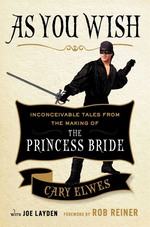
As You Wish: Inconceivable Tales from the Making of The Princess Bride by Cary Elwes with Joe Layden

As You Wish: Inconceivable Tales from the Making of The Princess BrideAs You Wish: Inconceivable Tales from the Making of The Princess Bride

by Cary Elwes with Joe Layden

Hardcover, 259 pg.
Touchstone, 2014
Read: December 31, 2014
I’m not the world’s biggest Cary Elwes fan — I’ve never not enjoyed him, but I’ve never sat down and said “I should find an Elwes movie to watch” or “oh, Elwes is in that movie/show? Gotta watch it now.” So when I saw this book on the shelves, I thought “how nice for him that he wrote a memoir,” and since he was in his Dread Pirate Roberts getup that he’s not one of those actors who’s running from the one thing that made them “big.” But I had no real interest in reading it — enough so that I didn’t even read the subtitle, which probably would’ve piqued my interest.

So it wasn’t until he was a guest on Kevin Pollak’s Chat Show that I learned anything about the book (audio version is here, the video version is here and either would be well-worth your time) and decided I really wanted to read this book.

This is also one of the biggest reasons not to read the book — Elwes tells about half the stories in the book during the interview. And hearing him tell them, clearly enjoy the memories, and do pretty good impressions and entertaining voices while doing so is more enjoyable than reading them after the fact.

Still, I’m glad I read the book — there are plenty of other stories about the making of that wonderful movie, some details he doesn’t give of the stories he did — and some bits from interviews that Elwes and/or the writer working with him did with the cast, director, writer and producer. I laughed out loud at one of the new stories, and enjoyed many of the others.

It’s clear that Elwes loved making this movie and the way it’s become a favorite of so many. There are some funny stories (most of them), some interesting behind the scenes stuff, and some perspective on his fellow cast members.

Particularly, this book reads as a mini-tribute to Andre the Giant. If there’s a good biography of him, I should track it down, the man had a fascinating life. This book needs to be read for the story of Andre the Giant farting during filming alone — I promise that it will make your inner-8-year-old boy laugh (even if you’re a grown woman who didn’t realize you had an inner-8-year-old boy).

Not the best book I’ve ever read about making a film, but probably the warmest. A very pleasant read, and I’d really recommend it to fans of The Princess Bride. I’ve got to find the time to watch the movie now…and maybe re-read the book, too.

—–

4 Stars

Broken Soul by Faith Hunter

Broken Soul (Jane Yellowrock, #8)Broken Soul

by Faith Hunter
Series: Jane Yellowrock, #8

Mass Market Paperback, 329 pages
Published October 7th 2014 by Roc
Read: December 27 – 30, 2014
In many ways, Broken Soul functions merely to clear the deck of lingering plot lines, tie up a few loose ends, and set things up for the next few novels. But wow – what a way to accomplish all that!

There’s murder, mayhem, romance, torture, destruction, intrigue, a whole new supernatural species, bombs, tattooed vamps, a whole lotta secrets revealed, and Sabina cracks up at something Jane says (which is as strange and creepifying you’d think).

While everyone’s adjusting to the new status quo after the shakeup in Black Arts, the New Orleans vampires receive word that the Europeans are coming for a visit. And maybe to invade and take over a more hospitable part of the world for the Mithrans. So Jane, Del and the rest start to prepare — when said new species (new to us readers, not to the vampires) attacks. And honestly, all the most powerful vampires in The Big Easy and everyone’s favorite skinwalker are no match for the beastie.

Then things get worse. Possibly the best fight scenes that Hunter’s given us are here — two or three of them, actually.

While her professional life is getting even more interesting than usual, Jane’s personal life gets put in order — and shaken up, but in a good way.

On the tamer side of things is a section of the book where Jane realizes two things about herself: 1. She’s put down roots in New Orleans (and in the lives of people like Eli and Alex) and 2. (her words) she’s become a girl — with girly tastes and clothes. This was some good, earned character development that Hunter pulled off with a lot of humor.

For my taste, the sexyfuntime was a bit too prolonged and detailed — we could’ve left those two a little more privacy. Then again, it never came close to The Wise Man’s Fear, so I shouldn’t complain.

There was a point or two that I was a little worried Hunter was going to back to the ‘I realized I’d said that out loud” well too often. But the line worked every time, so, who am I to say what’s too often?

Hunter’s clearly got some big things in store for Janie and the rest — I can’t wait to see what that’s going to be. So glad there’s only a few months until the Dark Heir. This would work as a jumping on point to the series if you’re looking for one, but you’d be better off going back to the beginning.

—–

4 Stars

The Job by Janet Evanovich and Lee Goldberg

The Job (Fox and O'Hare, #3)The Job

by Janet Evanovich and Lee Goldberg
Series: Fox and O’Hare, #3

Hardcover, 304 pg.
Bantam, 2014
Read: November 29 – December 1, 2014How is this only the third in the series? It’s a testament to the professionalism and craft of Evanovich and Goldberg that this feels like a series that’s been around for at least a half-dozen books, a well-oiled machine.

The hook to this particular case — someone posing as Nick Fox pulling off some major heists — was pretty fun, and a great excuse for Kate to go jet-setting around the world. That lasted just long enough to set up the major target for this novel: one of the biggest, baddest, most mysterious Drug Lords in the world. Thankfully, he has a pretty major Achilles’ heel that Nick and Kate were able to take advantage of. In just about any other series, I’d cry “foul” about someone like Lester Menendez falling for this implausible con. But it totally worked in this world — and would probably have worked if Nate Ford and the crew had tried it, too. Slick talking, fast work and a hint of danger (more from the psychotic bodyguard Reyna Socorro and her trusty AK-47 than from her boss) — and bam. The bad guy gets defrauded and sent away for a long time.

The major difference between this one and the previous two installments is that the rest of the team doesn’t have as major a role to play — don’t get me wrong, the usual players and some new faces are there and important. We just don’t spend as much time with them — it’s more heavily geared to being the Nick and Kate Show. They’re even restrained in their use of Jake O’Hare. I don’t have anything against the rest of the team, and really enjoy some of them — but I’m glad that they were put in a secondary position this time. As long as they get featured more prominently on a regular basis, I think focusing on the title pair makes sense.

The only suspense really is how far the “Will They/Won’t They” go (and so far, that hasn’t reached the point of being annoying). We all know that Fox and O’Hare will get their target, we may not be sure how — we won’t know how much fun there’ll be along the way, how much private property will be destroyed, and how many exotic (or domestic) locales will be visited along the way. And it’s fine that this isn’t a suspense-filled series. It’s a lot of fun. That’s what it promises, and that’s what it delivers — as long as we don’t look for more than banter, impossible cons and slick writing, we won’t be disappointed.

Not that the first two were slogs by any stretch of the imagination, but I raced through this — with a little more sleep, I’d have tackled this in one sitting, but I had to leave the last 50 pages for another day. The writing, the plot, the banter was just so smooth it was almost impossible to stop once I got started. I thoroughly enjoyed this one and already am looking forward to the next.

—–

4 Stars

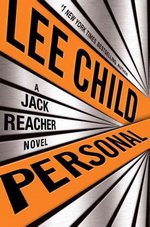
Personal by Lee Child

Personal (Jack Reacher, #19)Personal

by Lee Child
Series: Jack Reacher, #19

Hardcover, 353 pg.
Delacorte Press, 2014
Read: November 10 – 11, 2014Someone took a pot-shot at the French president — and by pot-shot, I mean “almost impossible” sniper shot — it didn’t work, didn’t even break the “invisible armor” glass in front of him. But still, bad form, and people are expected to do something about that. Various and sundry intelligence agencies across the globe come up with a short list of snipers capable of making the shot. Disturbingly enough, most of them are employed by various and sundry nations across the world, but there’s a small handful that are just tracked (almost infallibly) by the same groups.

In this case, there were four unaccounted for at the time of the shooting. A British sniper, a Russian sniper, an American, and (I think) a French sniper (clearly doesn’t matter…minor spoiler). Each respective government gets someone to track down their potential suspect. Once upon a time, MP Jack Reacher arrested the American. So someone in the upper echelons of the Army reached out to Reacher in some cloak and dagger-y way to get him involved in tracking down the U. S. sniper.

Reacher has nothing better to do — no longer on his mission to meet Maj. Susan Turner (and wasn’t really given a choice, anyway) — and he owes the Brig. General. So “Sherlock Homeless,” as he’s been dubbed by the Army, heads off to Arkansas, Paris and London to track down his prey. The requisite purchases of replacement clothing, fights, and Reacher-ness ensues.

There was one particular highlight for me. There’s a London gangster, Little Joey — a giant of a man, makes look Reacher look like . . . well, like Tom Cruise standing next to the book’s version of Jack Reacher — Reacher’s initial internal description of him makes the whole book worth reading.

The most disturbing thing about this book is the constant, universal, assumption that governments will cover up, manipulate media and spy on everyone they choose to. In other novels — Gone Tomorrow jumps to mind as the best example — Reacher’s resented this kind of thing, complained about it. But this time, he uses it, takes it for granted — this could just be Reacher the pragmatist and we could get a return to form next time. But the way that everyone else — no matter their nationality or role in the investigation — assumes this, and doesn’t care about it, disturbed me. Mostly because I figure it’s fairly realistic.

The first few chapters are riddled with Reacher describing himself as “Predictable.” And, yeah, he is — both in his world and as a character in novels. He’s going to act a certain way, he’s going to shoot, punch, elbow and kick a certain amount of people. He will win the day, leave a few bodies in his wake, and at least charm a lady or two along the way (at his most chaste). Predictable. But satisfying. Scratching a particular itch for readers in a way only Lee Child can.

This seems to be a pretty divisive book amongst fans, for reasons I don’t particularly understand — on the whole the complaints I’ve seen about this one could be applied to 12-15 of the others, it’s just the way Child works. Maybe my expectations are different than others, but this one checked all my “Reacher” boxes and provided a few hours of entertainment.

Predictable can just be another word for Reliable.

—–

4 Stars

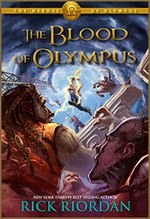
The Blood of Olympus by Rick Riordan

The Blood of Olympus (The Heroes of Olympus, #5)The Blood of Olympus

by Rick Riordan

Hardcover, 516 pg.
Disney-Hyperion, 2014
Read: October 25 – 28, 2014
Well, after ten novels, it’s time to say good-bye to Percy, Annabeth, Grover, and the other residents of Camp Half-Blood — not to mention their new-found allies and friends (when they’re not trying to wipe them out) from Camp Jupiter. But first they have to stop Gaea and her army of giants from wiping out the gods, humanity, and all life as we know it.

Just another day for these demi-gods, really.

As is the norm for Riordan’s books, our heroes are faced with a series of tasks which build up to a major confrontation — this time, a couple of them. It’s amusing as usual to see these kids outwit various minor gods, titans, etc. Good teacher that he is, Riordan gives his readers plenty of education about the Greek and Roman pantheons under the thin disguise of plot development.

The big epic battles that he’s been building for since the beginning of this series — well, they were epic. They were tension filled. And still managed to be funny. And will likely be read with breaths caught, and lumps in throats. Possibly the funniest visual in Riordan’s works appears in the midst of one of these battles, and for a second I was torn between enjoying it and turning the page to find out what happened next.

My one quibble was that the resolution to the Gaea story was a little too easy, a little too quick after all this build up. Still, the way he wrapped up the other story lines and conflicts was sufficient, so I was able to move past it easily. Riordan continues dabbling in themes I’d prefer not to see in MG books, but I know I’m in the minority on that.

At the end of the day, especially at this point in these series, it’s the characters that readers care about. I read this ahead of my son (who started these back when there were only three in the original series, and is now a good deal older than the target audience) and made a joke about something bad happening to Grover — and the glare he gave me probably took a year off my life. It’d that kind of dedication that Riordan instills in his fans. As such, there’s plenty of development and resolution given to these characters — Riordan doesn’t spell out their futures the way that Rowling did at the end of her series, but he gives us enough to be able to say good-bye.

Riordan does right by his characters — Reyna, Jason, and Frank particularly. Annabeth and Piper shine like neither has before. And Leo Valdez is even more of a star than he was before (if I’m going to talk about my son’s soft spot for Grover, I’d better be honest about my Leo-centric focus). I’m not saying they all survive, or are otherwise unscathed, but Riordan treats his characters with respect and keeps his readers turning the pages.

It’ll be odd not getting a new adventure with these characters next year, but I’m looking forward to seeing what Riordan does with the Norse pantheon (and learning about them, too).

—–

4 Stars

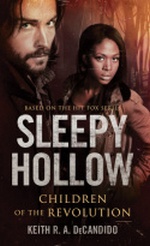
Sleepy Hollow: Children of the Revolution by Keith R.A. DeCandido

Sleepy Hollow: Children of the RevolutionSleepy Hollow: Children of the Revolution

by Keith R.A. DeCandido

Paperback, 304 pg.
Broadway Books, 2014
Read: October 24, 2014DeCandido has given us the best possible first tie-in for Sleepy Hollow — it’s a good follow-up to the second episode, “Blood Moon,” (which I didn’t even realize needed a sequel until I read this); it captures the essence of the show; and tells a good story to boot.

This takes place about four months after “Blood Moon” — 8 half-moons, to be exact. We’re told it’s January 2014, but I’m not exactly sure where that locates things in the first season. Somewhere between episodes 10 and 11, by my reckoning. A coven is trying one more time to resurrect Serilda, using a collection of medals commissioned by General Washington for a group of heroes of the Revolution — including Ichabod, of course.

DeCandido touches base with the characters and most of the events that stand out in the first season, all the touchstones are there. Macey Irving, Sheriff Corbin, Andy Brooks (I’m pretty sure his name is dropped), Henry Parrish, the Golem . . .

The book is filled with random historical musings from Ichabod — though the part where he criticizes (to put it very mildly) the recreation of Ft. Ticonderoga was a bit too much like his dressing down of the docent about Paul Revere. But you know what? It was just as amusing — and what else are you going to to with our favorite time-displaced Witness?

Really, the key to this book (like the show) is getting the two central characters right. Let’s look at two brief snippets:

Abbie spent most of the drive up Interstate 87 to Ticonderoga being simultaneously charmed by Crane and seriously wanting to strangle him.
Thinking about it, that defined a lot of her relationship with him.

Captures Abbie’s attitude, her swagger, and her humor.
and then:

. . . he pulled out the device that was referred to as a “cell phone.” He assumed the modifier “cell” was a joke referring to how much modern humanity was imprisoned by such devices, as it seemed that the citizens of the twenty-first century relied on them to an appalling degree.

Even though that’s in the Third Person, if you don’t hear Tom Mison’s voice in your head there? Something’s wrong with you.

He captured the friendship, the feel of the characters and their voices — both in narration and in dialogue. Couldn’t ask for more.

This tie-in captured the show’s tone, its feel, its characters and its world while telling a compelling story. Great stuff.

Note:I received this book for free from Blogging for Books for this review. Which was generous and cool of them, but didn’t impact what I said about the book. It was strong enough to gain my respect on its own.

—–

4 Stars

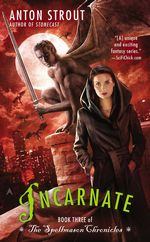
Incarnate by Anton Strout

Incarnate (The Spellmason Chronicles, #3)Incarnate

by Anton Strout

Mass Market Paperback, 320 pg.
Ace, 2014
Read: October 11 – 15, 2014
And here we are at the end of The Spellmason Chronicles (following Alchemystic and Stonecast). So the big question for me going into this (aside from how would Lexis and Stanis clean up that mess from Stonecast?) was: could Strout stick the landing — his other series was just canceled, leaving things open (and I’m still curious about it), this was a planned conclusion, so how’d he manage it? I’m not at all surprised to say, pretty well.

First off, Strout really expands his world here — there’s a lot more magic, magic users and the like than he’d shown before (it was there before, but we hadn’t seen it as much). There’s some new characters I’d like to spend more time with — Fletcher seems really interesting, and the NYPD detectives Maron and Rowland need to run into Simon Canderous and Connor Christos.

Lexi’s a lot more confident in her abilities — which have grown since we saw her last — and driven in a very Peter Parker-y way. She’s a lot more than the would-be artist we meant a couple of books ago. Similarly, her pals Rory and Marshall have grown a good deal — I like the development of them both. Marshall’s is on the one hand surprising (as Lexi’s and Rory’s reactions attest), but on the other is a lot more believable than Rory’s. But with Rory, her continued growth into Lexi’s go-to fighter is pretty fun, and as long as we’re buying the whole Spellmason thing, we might as well buy into Rory the super-hero.

Stanis has his hands full trying to track down stray grotesques like himself, help them understand what’s going on with them and give them a place of safety and refuge — particularly as the threat of a group of grotesques who are out to use their strength, abilities and invulnerabilities against humanity. The more we learn about the leader of the other group, the worse it gets. I don’t want to get into spoilers here, but the Big Bad in Incarnate here is probably the worst villain that Strout’s come up with yet.

Throw in interference from the magic community (who aren’t happy at all that muggles are seeing flying statues in the Big Apple), notice of — and pursuit by — the NYPD, and Lexi and her gang have more than their hands full. Which makes for a good time for the readers.

That said, Strout stumbles a couple times with this. In the opening chapters, the dialogue is a little stilted, a little awkward. Which is really unusual — this is typically Strout’s strong point. But to me, a lot of the dialogue was very thinly veiled exposition. Not quite as bad as, “Hey Rory, my blue-haired best friend since childhood, dance student and resident ass-kicker, could you please pass me my great-great-great-grandfather’s spell book, the one I just inherited a couple of months ago when I started manifesting the abilities of a Spellmason?” But it felt close. By chapter 4 or 5, that mostly disappears, and if not for the notes I’d taken I’d probably have forgotten it.

There was a lot more blood than I expected here — not that this was really gory at all, and all of the nasty stuff happened off-screen (if you will), and our heroes either came across it after the fact or in photographs. So there’s a lot of blood and some dismemberment — but even the more squeamish readers should have no problem with it.

And, like Stonecast, this is a little too short. I could’ve used more Rory and Marshall (together or on their own). We hit the big “Boss Battle” a bit abruptly, I thought. Also, the last chapter is rushed. It felt like one of the alternate endings to Wayne’s World (there’s a relevant pop culture reference, for ya) — a series of conclusions for each character one after the other, bam, bam, bam. Given everything he tried to accomplish in those last few pages, the importance and scope involved, I just think it could’ve used a bit more breathing room.

I realize my negatives are longer than my positives — but that’s because I can talk about them with a bit more detail than all the cool stuff that happens, which pretty much involves spoilers. The good far outweighs the nits I may want to pick. All things considered, it’s a solid conclusion to a pretty good series. Good character development throughout, leaving most of the characters in places that will please and satisfy fans (I, honestly, would’ve preferred something a little less happy and a little more incarceration-y for Caleb). I don’t know if Strout has plans in this direction, but he leaves things in a place that he could come back and tell more stories in this world, and with these characters with no problem. Or he could leave them alone with no problem. Which is a nice place to leave a series.

Whatever Strout has planned next, I’m looking forward to it.

—–

4 Stars

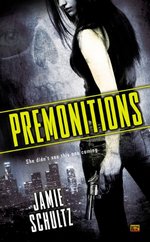
Premonitions by Jamie Schultz

PremonitionsPremonitions

by Jamie Schultz
Series: Arcane Underworld, #1

Mass Market Paperback, 384 pg.
Roc, 2014
Read: September 9 – 12, 2014

I spent a lot of time staring at a blank screen trying to figure out how to talk about this. I came close to just posting, “This is seriously effed-up. But in a good way. Read it!”

Really, that might have been the way to go. But let’s give this a try…

Premonitions is not your typical Urban Fantasy. Karyn isn’t full of spunk, battling her way through some challenges with only her wits, a snappy line and her powers in a quest to defeat evil/save a life/protect justice. Nope, all she’s trying to do is survive. Same for the rest of her gang — they steal, they work only to make it to the next day. They’re not well off, they’re really not even comfortable — borderline desperate, really. So when they’re given the opportunity to split a 2 million dollar score, it’s an offer they cannot refuse (in many ways)

In this world, magic — or precognitive abilities — come with a price. A nasty, dirty, life-altering price. Neither the magic or the precog life seems at all worth it — and with one possible exception, everyone we meet in these pages with some sort of ability realizes that. Yet, those who can choose to pay that price or not, keep coming back to it. Karyn, on the other hand has no choice. Her abilities come with horrible hallucinations that she has to keep suppressed with a drug. Which is, of course, hard to find and only available on the black market. So like any good junkie, she steals to support her habit. Karyn’s psychic ability is like a less-pretty, less specific and more unreliable version of Alex Verus’ magic. Not that I think for a second that Schultz was going for that — it’s just what occurred to me as I read. I like the slightly different take on the idea.

Premonitions is a Heist story — so, of course, things go horribly wrong (that’s the point of these, right?), it’s watching how this particular band of thieves respond to this that makes this compelling. In fact, the broad brush strokes of the plot are pretty apparent within the first few pages — this isn’t a knock on Schultz, it’s just evidence that he knows what he’s doing. This is a classic Heist story, told in his own particular way, with his unique blend of characters — thieves, marks and obstacles.

We have two central characters — Karyn and Anna, with a crew of others — magicians(is that the word?), an ex-Marine and — well, some others they pick up along the way. Years ago, Karyn and Anna become friends, and for reasons we’re not privy to, and Anna may not fully recognize, Anna hitched her wagon to Karyn. She could’ve gone off and had a successful career, family, and whatnot. Instead, she’s a criminal scratching by, doing all she can to help her friend make it to the next day.

That’s the heart of this novel — the friendship between these two. Their dedication to each other, to each other’s needs, wants, desires and lives — and by extension, those members of their team, romantic partners, and miscellaneous allies. There’s no flashy swords, or government conspiracies, or prince to rescue — but this is really a one for all and all for one group. As long as they remember that.

There is a pervasive atmosphere that characterizes this novel, a mood. The whole thing is dark and moody. In my mind, it looks like the sets from Season 1 of The Wire, lit by whoever picked the look for Blade Runner. This gives it a different feel than most of your Urban Fantasies on the market. Not that they’re all rainbows and unicorns, but there is a “blue sky” feel to Urban Fantasies by Underwood, Butcher, Hearne, Harrison, Briggs and whatnot — that is not shared here. Schultz is not Richard Kadray-dark, but he’s close. Honestly, this reminded me of the Twenty Palaces world of Harry Connolly. Obviously, the magic system is different — but I’d have no problem at all seeing Ray Lilly and Annalise Powliss bump into Karyn and her crew (thankfully, I’m pretty sure their magic isn’t the sort that Annalise would feel compelled to eliminate anyone).

When I was 34 pages from the end of the book, I jotted down a note: “Not only do I have no clear idea how all this will end (frankly, I didn’t see what happened three pages ago happening), but I also have no clue what a sequel to this looks like.” That’s not normal, that says a lot about how Schultz is working. Now, by the end of the novel, that wasn’t the case — I had a clear idea what to expect Splintered to be like (I’m also prepared to be totally wrong). But to be that close to the end, and not sure what’s around the corner? That’s pretty cool. To be fair, it could be that I was being dumb — but I’m going to give the credit to Schultz for keeping me on my toes.

Give this one a try, folks, don’t think you’ll be sorry.

—–

Note: I was provided a copy of this by the author, who seems like a pretty cool guy — which made the fact that I really enjoyed this a relief.

—–

4 Stars

The Forsaken by Ace Atkins

How did I get so far behind that I haven’t written anything on The Forsaken yet? Ugh. When I get behind, I get behind.

—–

The Forsaken (Quinn Colson, #4)The Forsaken

by Ace Atkins
Series: Quinn Colson, #4
</br
Hardcover, 384 pg.
Putnam Adult, 2014
July 29 – 30, 2014

Atkins is at the point now where these Quinn Colson books seem automatic. Don’t mistake me — these are well-crafted, carefully plotted, richly detailed — Atkins’ labor is more than evident. But there’s something inevitable about the result of that effort. You don’t even have to wonder what you’re going to get anymore. If it’s Quinn Colson, it’s going to be good.

This also tends to make it hard to review these books, but I’ll give it a shot.

This time out Colson and Virgil are asked to investigate a cold case from a year or two before Colson was born, and when his less than ethical Uncle was Sheriff. Two teen girls walking home from Fourth of July festivities in Jericho were raped and one was murdered. Two days later, a black man, bearing no resemblance whatsoever to the perpetrator was lynched for the crime. Decades later, one father’s guilt and the mature strength of the survivor ask the now honest (at least when it comes to his job) Sheriff to find the man truly responsible. To say that this makes anyone involved unpopular in Jericho would be an understatement of the first degree.

Which is a shame, because right now, both Deputy and Sherriff could use some popularity. Colson’s feud with Johnny Stagg is getting hotter, a new election is on the horizon, and Stagg’s framing of Virgil for murder is looking stronger and stronger every day. On the other hand, one of the few men in this world that Stagg fears is about to be paroled and is likely to return to Jericho and rekindle their rivalry. Maybe Stagg could use a determined and honorable man in office after all.

Surrounding this is the town and people of Jericho, and their recovery from the recent devastating tornado. Colson’s sister, Caddy, has really seemed to find herself in her leadership in this area. It’s hard to recognize the woman from the first two books in what we see now. Even Colson’s having to admit that there might be something to his sister’s current state of sobriety and responsibility. Their father’s name came up in the course of his investigation, and for the first time in a very long while, Quinn Colson’s being forced to think about the man who abandoned his mother, sister and himself so long ago. Naturally, this is where the real heart of the novel is — the rest of it is merely the life around Quinn, this is Quinn’s inner life, his identity.

Not only are all of these strings in one way or another being woven together now, we begin to see that there might be ways in which they were tied together before and around that fateful Independence Day.

We don’t get a lot of resolution and closure to things in this novel — not unlike life in that regard, but we get to see some trajectories on most fronts, and that’s good enough. Character, setting, story, mood — all of it is just right for this story and this series. Atkins may be getting attention and sales from his Spenser novels, but his strength is here with Colson and the rest.

—–

4 Stars

Bad Little Girls Die Horrible Deaths by Harry Connolly

Bad Little Girls Die Horrible Deaths and Other Tales of Dark FantasyBad Little Girls Die Horrible Deaths and Other Tales of Dark Fantasy

by Harry Connolly

ebook, 153 pg.
Radar Ave Press, 2014
Read: July 29 – August 23, 2014

By and large, I am not a fan of short stories. The length is typically frustrating for me — even when they don’t remind me of the various anthologies I had to use in Lit classes throughout my High School and College years. Still, I try every now and then to read some. Finding a good short story is as rewarding — if not moreso — than finding a good novel. This is a collection of ten short stories and one novelette — six of the stories are reprints, the others have been published for the first time in these pages. The novelette belongs to Connolly’s criminally under-appreciated Twenty Palaces series, and would be worth the purchase price for fans of that series. If you’ve never read that, but are interested in in trying out a variety of new fantasy worlds (including one that has some books to go with it), this is a great investment.

There was one story in the batch that I didn’t like. But even as I read it, and wasn’t enjoying it, I realized there was nothing poorly written/constructed about the story. It just wasn’t my thing. I don’t care who told the story, or how they did it, Don’t Chew Your Food wasn’t going to work for me. It’s a pretty straight-forward horror kind of thing, and that just doesn’t do it for me.

That out of the way, let’s focus on the pluses. This was a nice little variety pack of stories — the styles were all over the place, one (Hounds and the Moonlight) read like something the Brothers Grimm would’ve appreciated, another (Cargo Johnny) felt like it should’ve been introduced by Rod Serling, and another (Beyond The Game) demonstrated that Connolly can do funny — which is nice to see (also nice to have a little palate cleanser after all the mayhem and destruction).

The One Thing You Can Never Trust is a great introductory story — in just a few pages we have a political system (or two) unfolded for us, society’s way of (not) dealing with a racial divide and a new magic system. All while telling a tidy little crime story. Bad Little Girls Die Horrible Deaths is similarly a great short burst of world building with a fresh magic system — and some wonderful monsters, both human and not. Great opening paragraphs, grab you and make sure you’re along for the ride.

The main reason people are going to be picking up this collection is for the Twenty Palaces story: The Home Made Mask. And they are right to do so. I cannot get enough of this series (sadly, I’m a member of a very exclusive club). The fact that Ray and Annalise aren’t in the story much doesn’t affect that — this is the strange, creepy, capricious kind of magic at work that makes this series so compelling. Tempted to buy some Power-ball tickets just so I can commission some more of these.

I think my favorite story was Lord of Reavers, which is the closest thing to “traditional” fantasy. This tale of an almost super-human swordsman joining up with a band of raiders was great. I felt that I should’ve seen the conclusion coming sooner than I did, but it was so much fun I’m glad I didn’t. I’d read a novel or more starring this character — easy.

Most short story collections are uneven at best, full of ups and downs. Bad Little Girls . . . is an exception — 1 down, and 10 ups. Can’t ask for more than that. You’d do well to give it a try.

—–

4 Stars

Page 73 of 88

Powered by WordPress & Theme by Anders Norén