Tag: 4 Stars Page 75 of 88

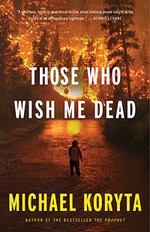
Those Who Wish Me Dead by Michael Koryta

Those Who Wish Me DeadThose Who Wish Me Dead

by Michael Koryta

Hardcover, 388 pg.
Little Brown, 2014
Read: June 21, 2014

Once Koryta left Lincoln Perry behind and started writing stand-alones, I read one and never got around to the rest — but something about this one drew me in (and it doesn’t look like my typical suspense preference) — and now I’ve got to find time to go back and pick up the three or four I’ve missed. It was just so good.

The elements are all here: characters, plot, pacing, setting. As cliché as some of the characters may be in theory, they really aren’t that in Koryta’s hands — the 13 year-old murder witness, the scarred (emotionally and physically) hero firefighter, the survival expert being pushed beyond his limits, the hapless federal Marshall, the troubled teens on the wilderness survival course, the pair of killers who are possibly creepier and deadlier than Breaking Bad‘s Salamanca Cousins. All of these are drawn sensitively and realistically.

The first couple of chapters were enough to keep you reading, but that’s about it — set up the story, establish the main characters, typical stuff. But it takes almost no time at all to go from that to shut-off-the-phone/ignore-the-wife-and-kids exciting. Gritty, fast-paced, visceral, with a strong sense of character and realism. Exactly what you want in this kind of book.

I don’t know if this particular bit of Montana actually exists — but Koryta gives you a strong enough sense of place that it might as well. From the Serbins’ home, to the trail the teens travel, to Hannah’s look out tower, to the mountain the bulk of the action takes place on, I feel like I could hop in the car, drive a few hours and be right there in the midst of them. Not now, during fire season, obviously — don’t need that level of realism.

Koryta has so many opportunities to drown us in details about the backstory of the characters — which is not to say that he doesn’t give us enough to get to know these people. But most authors would’ve given us a lot more about the history of everyone — particularly Ethan and Allison. He hints at things, the characters are still acting in response to what’s gone on before these events, but we’re only told a bit more than we need to know. His restraint is commendable, and only adds to the immediacy of the action and the pace.

From the point where Koryta kicks things into high gear to the gut-wrenching climax, this is an edge-of-your-seat thriller that delivers exactly what it promises — action, suspense, and as much entertainment as you can squeeze into just under 400 pages. How good was it? Just writing this up has whet my appetite for a re-read.

—–

4 Stars

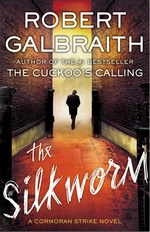
The Silkworm by Robert Galbraith

The Silkworm (Cormoran Strike, #2)The Silkworm

by Robert Galbraith
Series: Cormoran Strike, #2

Hardcover, 455 pg.
Mulholland Books, 2014
Read: July 2 – 5, 2014

Cormoran Strike is back, and I couldn’t be much happier. After the events described in The Cuckoo’s Calling, Strike’s enjoyed a few minutes of fame — a degree of notoriety with the police, and a profile big enough to land him bigger clients, plus his fair share of would-be clients with a weak grasp on reality and/or not a lot of money. Leonora Quine certainly appears to be in the latter camps when she comes to hire Strike to find her missing husband — but he sees an opportunity to collect eventually, and he likes her. The missing husband, Owen Quine, is a writer of some measure of success and renown. He’s been known to disappear for a few days every now and then, but this time seems longer, and with a special needs child at home, Leonora needs her husband back. Something’s fishy, and his soon-to-published next book is at the heart of it. While juggling his other clients — the ones with large checkbooks — Strike starts poking around, and it doesn’t stay a missing person’s case for long.

Cormoran Strike continues to be reminiscent of several mystery fiction types and specific characters — yet he still feels mostly fresh. There’s your typical hard-boiled loaner (Spillane, Spenser, Marlowe, Cole, etc.), the armed services background (same list, come to think of it), the troubled family history, and so on. There were a couple of detectives that I kept coming back to this time around (and I’m probably alone in this, I realize). Strike’s musings on the way he still works like he did in SIB removed me of the way Danny Boyle talks about John Ceepak. It’s odd to see the two ex-military men in the same light, while on opposite sides of the Atlantic. Yet, it’s also incredibly fitting. Strike and Robin also remind me a great deal of Yancey’s Highly Effective Detective and his assistant. Except Strike actually is highly effective.

The description of Quine’s new book in question was fantastic — it is not a book I want to read, in any shape or fashion, but I really enjoyed reading about it. Galbraith is able to give us enough to get the idea without having to take the time to compose another book in the process — very well done there.

This is slow, yet deliberately moving (like the protagonist, really) until it doesn’t need to be any more — once the pieces are in place and it’s time to reveal and trap the killer, then it moves on at a brisk clip and forces the reader to pick up the pace, too (or at least it felt that way). But it never drags, never meanders — it’s always on point, and is building to something.

It’s tough to say that Strike develops much over the course of this book — we grow in our understanding of him, but he’s pretty much the same man at the end. Not so for Ellacot — she grows and becomes stronger throughout, and its only a matter of time before she’s going to be a 50-50 partner in the agency, I bet — and maybe Strike’s partner in other ways, too. I’m looking forward to watching Galbraith develop this character more in the books ahead, but I can tell I’m already getting impatient for it to happen, rather than trusting him and his timeframe. The other supporting characters not involved in Quine’s disappearance are great additions and make everything better, helping us understand the characters more (e.f., Strike’s family, Ellacot’s family — still not the fiancée, Strike’s old friends).

The biggest selling point (for me) with this book is an intangible quality — a je ne sais quoi — about one-third of the way in I noted I was enjoying it. It was a good, solid detective novel — but in a real sense, nothing I hadn’t seen before. Yet — I noticed I was really “into” the book. I couldn’t explain why I was invested as much as I was — but my goodness, I was in whole hog. I have to chalk it up to Rowling’s super power — she can tell a story that grabs you in a way you just can’t explain. If you’ve read her, you know the effect.*

As I read the last couple of paragraphs and closed the book I noticed something — I was smiling. Not a usual reaction for me as I complete a book, no matter what it is. That has to say something, doesn’t it?

—–

* Unless, of course, she’s talking about a little town called Pagford and its residents. Then there’s nothing at all that will grab you.

—–

4 Stars

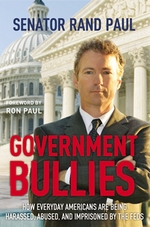
Dusted Off: Government Bullies: Americans Arrested, Abused, and Terrorized by Rand Paul

Government Bullies: Americans Arrested, Abused, and TerrorizedGovernment Bullies: Americans Arrested, Abused, and Terrorized

by Rand Paul

Hardcover, 272 pg.
Center Street, 2012
Read: October 16 – 29, 2012

Great read. This book angered me, made me want to change the world, and filled me with despair–certain that things’ll only get worse. Frequently within the same paragraph (if not the same sentence). These tales of bureaucracy run amok should (and likely will) cause any freedom-loving patriot’s blood run cold.

I can see where a lot of people would get tired of Paul bringing himself into the book as often as he does–as a candidate or Senator. But honestly, it’s only as Senator/candidate that Paul gets this information, gets this perspective. Besides, he’s got to look toward re-election and this is part of his work earning that.

—–

4 Stars

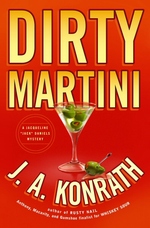
Dusted Off: Dirty Martini by J. A. Konrath

Dirty Martini (Jack Daniels Mystery, #4)Dirty Martini

by J.A. Konrath

Hardcover, 292 pg.
Hyperion, 2007
Read: October 15, 2012

Not that I had a lot of complaints (or any, really) with Jack Daniels #2 & #3, but this one seems fresher, tougher, more clever. Jack gets herself into some really hairy territory here. I’ll be honest, I thought I had it figured out right up to the point where the bad guy’s identity was revealed–and couldn’t have been more wrong.

There were a couple of new characters introduced here, one of which was so over the top and annoying I was dreading reading on. But Konrath knew what he was doing after all, shame on me.

A taught, nail-biter of a read. Good stuff.

—–

4 Stars

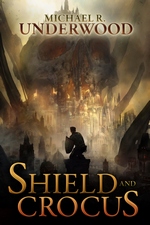
Shield and Crocus by Michael R. Underwood

Shield and CrocusShield and Crocus

by Michael R. Underwood

Paperback, 391 pg.
47 North, 2014
Read: June 26 – July 02, 2014

The level of detail in this world is astounding, it reads like it could be the 4th installment or so in a long-running series — the worldbuilding is just fantastic. I don’t know for a fact that Underwood has the history of Audec-Hal, of these races all mapped out for centuries before, and these characters lives detailed going back to birth — but it reads that way. He seems to know them all that well — but best of all, he doesn’t share all the homework he’s done with you, but you can tell he’s done it. The care, the detail, the intricacy, the strangeness of all of this — I mean strange in a good way, that somehow makes total sense in context — is so impressive. I don’t think I can adequately express my appreciation of the imagination and craft here.

We come into this city which is a shadow of itself — no longer in the heyday of its republic, it’s now a city controlled by competing tyrants. Where the citizens live in a sort of fearful servitude, a new generation being raised to know only this reality, and their elders in danger of forgetting what came before. Now where most writers would put a scrappy insurgency here, made up of soldiers, former government officials, and young ideologues, Underwood zigs instead of zags. Instead? We get the Justice League — or maybe the Justice Society (last time I checked, JSA was more welcoming of elderly heroes) — a band of costumed vigilantes doing what they can to destabilize the tyrants and protect the citizenry.

Right there, that’s enough. I’m in. I’m buying the T-shirts, pre-ordering any sequels, seeking out fanart (feel free to direct me to any shirts or art, btw).

The team’s leader, the Fist Sentinel is a Batman/Blue Beetle (Ted Kord)-esque figure. Getting by on his wits, fists and gadgets (tho’ some of his are magic, something that Batman and Beetle couldn’t say). He’s advanced in years, and doesn’t have much fight left in him, but he’s too stubborn/committed to quit. Then there’s the Shield — a sort-of guardian of the city, a mystic mantle that passes to new bearers after the death of the previous — a literal shield, which gives the bearer increased strength, etc. is the mark of the mantle. The current Shield is the Sentinel’s adopted son — think Captain America dosed by magic instead of revolutionary science. There’s a speedster, a woman with super-strength, someone who can control rocks with her mind, someone with mental powers — and a loosely organized group of mundane types who act as spies.

I’m getting into recapping too much here — this should be enough to whet your appetite. And there’s so much more to say in the setup, the details, the people.

Wonderfully told, well-plotted, well-paced. It’s everything I hoped and expected from Underwood.

But.

I didn’t care about these people. I was curious how things would turn out, I was pulling for The First Sentinel and the Shield. But honestly? I didn’t care about them. I know Underwood is capable of making me care about characters — seemingly effortlessly. But something here was off. I’m able to rave about this as a display of care, skill, and imagination — but there’s a distance between the reader and the characters and I just don’t think he bridged it.

A couple of items other things worthy of note: Both before and immediately upon release, I heard a lot of talk about the map in this book — which seemed a bit odd, but then I saw the map. It is so cool. Possibly the greatest map in the history of fantasy fiction — it’s like nothing you’ve seen before. Underwood states, “It all started with a doodle on the back of a grocery list. Now, rendered by a professional, it is amazing. :)” He’s right. The cover art’s pretty great, too.

Basically, this is a book I admire more than I enjoyed. What Underwood constructed here was fantastic, I just couldn’t connect with it emotionally the way I wanted to (the way I can with most of the people in his Ree Reyes series). His care for the world, for his characters is more than evident. He just didn’t do enough to get me to share that. Your results may vary, you might think I’m out to lunch here. That could be — I still really recommend this novel, just not as strongly as I’d expected to.

—–

4 Stars

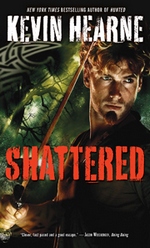
Shattered by Kevin Hearne

Shattered (The Iron Druid Chronicles, #7)Shattered

by Kevin Hearne
Series: The Iron Druid Chronicles, #7

Hardcover, 335 pg.
Del Rey, 2014
Read: June 21 – 22, 2014

If there’s any justice left in this world, Hearne’s inclusion of a 3 page “The Story so Far” recounting the main events from every book in the series should earn him many 5 star ratings, it’s something that more people should do. The last two lines of his retelling should earn him a few more.

I’m not going to be one of those, I really want to be — I spent most of the novel thinking I would be — but in the end, I have to settle with a 4-star. In the end, I think Hearne tried to do too much in too little space, hurting the overall book — think Spider-Man 3. The use of multiple POV characters might have contributed to my problems — having spent 5 (and most of the next) inside Atticus’ head, spending as much of this book outside of it gives added distance to those events not from Atticus’ POV in a way it wouldn’t have if we’d been bouncing between Atticus’ and Granuaile’s viewpoint from the beginning. That said, I’m not opposed to it — and I really liked the Granuaile chapters, and would’ve been willing to do a whole book from her POV. Even the Owen (Atticus’ Arch-Druid who was introduced at the end of Hunted) chapters were fun, but again, it made it hard to get attached to Atticus’ story.

That said, I think the Granuaile story is probably the best part of Shattered, but it would’ve been better if we hadn’t taken off to see what Atticus was up to, or laughing at Owen trying to figure out how to make his way in the 21st Century. Laksha Kulasekaran calls and asks her for help, so Granuaile and the hounds are off to India for an adventure. One that pushes Granuaile to the edge of her abilities, and to her emotional breaking point — so much so that you wonder why Atticus isn’t around. Not that she’s not capable on her own, a strong, independent woman and all that — but because she’s a rookie druid and could really use her mentor’s guidance — and as the guy who loves her, he should’ve been there to support her in this trial. Along the way, she learns a bit more about magic in general, and meets some supernatural creatures that are about as odd and fun as you could ask. If the whole novel had been this story, I’d have loved it. But the power and impact of it were dented.

While Granuaile is running around Asia, Atticus is looking into who exactly is up to no good in Tír na nÓg, stirring up trouble (rebellion?) amongst the Tuatha de Danann, trying to take out our favorite Druid and generally causing all sorts of trouble. As investigations go — it was pretty weak, and pretty easy for Atticus to suss out what’s going on. What he found on the other hand — well, that was pretty big. And Hearne capped it off with a big ol’ Celtic can of whoop-ass. It wasn’t quite Hammered‘s level of insane fight scenes, but it was close. And (tiny spoiler) neither side came out unscathed.

What exactly the ramifications of this for the Tuatha de Dannan, the druids, and the various and sundry deities we’ve met (and probably will meet)? Well, obviously, we’ll have to wait and see — but it’s going to be big.

Still — and again, sing along with me — take out a lot of the Owen goofiness and Granuaile’s story, devote that space to Atticus’ story — and this is so much better. It’s so frustrating to read something that’s so close to be great, but falters.

Enough complaining, I really did enjoy this book. What positive things can I say? Hardcover! Yay. That’s a sign of success for the series, right? I even got one signed. Doesn’t mean anything to the review, I just like to see that.

I really liked Orlaith, it’s good for Granuaile to have a companion like this. I also appreciated she’s not just a feminine Oberon, but she has a distinct personality and is the proverbial Lady to Oberon’s Tramp. Owen Kennedy is an amusing addition to the cast — and potentially a powerful ally for Atticus and Granuaile as things heat up — and I look forward to something more substantial from him. While she’s not my favorite character, I’m glad to see Laksha hasn’t been abandoned — nor are other folks from earlier in the series (not sure why I’m so protective of this relatively minor spoiler — but it tickled me so to see Atticus deal with ______ at ______ I don’t want ruin it for anyone else).

Oh, and of course — Oberon. Really, for people who’ve read the IDC, that’s enough to say, right? Oberon. Read that and try not to smile.

At the end of the day, when it comes to wise-crackin’, magic-throwin’ dudes, The Iron Druid takes a backseat to almost no one (there is that guy in the Chicago yellow pages . . . ), and this book almost lives up to its predecessors. Any complaints are really just a sign of how good Hearne’s been before this. Bring on IDC #8!!

—–

4 Stars

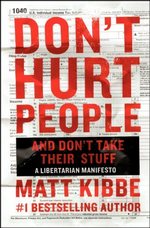
Don’t Hurt People and Don’t Take Their Stuff: A Libertarian Manifesto by Matt Kibbe

Don't Hurt People and Don't Take Their Stuff: A Libertarian ManifestoDon’t Hurt People and Don’t Take Their Stuff: A Libertarian Manifesto

by Matt Kibbe

Hardcover, 272 pg.
William Morrow, 2014
Read: June 19 – 20, 2014

FreedomWorks’ Matt Kibbe has produced a very accessible, very readable libertarian manifesto. A rallying cry for a grassroots movement of concerned citizens. He focuses on 6 Rules for Liberty, emphasizing 1 & 2:

Rules for Liberty:
1. Don’t hurt people.
2. Don’t take people’s stuff.
3. Take Responsibility.
4. Work for it.
5. Mind your own business.
6. Fight the power.

With these as a starting point, he critiques many aspects of the U. S. Government (current and recent administrations of both parties) as it currently operates. Kibbe is positive about (a few) politicians on both sides of the aisle, but he’s mostly negative about the overwhelming majority. Sure, he’s more positive about Liberty-leaning Republicans than anyone else currently in Washington, but at the end of the day, he wants to replace both parties.

Compared to a lot of Libertarian/Libertarian-ish books that I’ve read, this is pretty light reading. He jokes, he drops pop culture references, he’s not all that cranky, he writes with conviction and hope. He drops lines like:

Music and freedom just seem to go together, just like the word “bacon” belongs in any sentence that includes the phrase “proper meal.” I can’t prove it, but you just know that it’s true.

One chapter features a simulated round table between Sen. Rand Paul, Sen. Mike Lee, Sen. Ted Cruz, Rep. Justin Amash, Rep Thomas Massie, and Rep. David Schweikert — based on interviews he conducted with each individually. Yes, a real round table would’ve been better, but this was probably easier to pull off. But seeing the way that these men were similar, yet distinct, was good to see. Kibbe’s not promoting a monolithic libertarian view, there’s room for differences based on a shared commitment to the 6 Rules.

It seems so strange that a book on politics is as dependent on a classic rock album (Rush’s 2112, which I should really try to listen to one day) as one of my favorite SF novels of recent years, but — hey, it works. I don’t think this book will convince anyone to become a Libertarian. But it does present a case for the philosophy, it will serve as a good introduction for those who are curious. In contrast to many of his peers — who come across as cranks or kooks — Kibbe comes across as someone with conviction, someone of principle, while still remaining rational.

I remember debating Chris Matthews, the guy on MSNBC’s Hardball, once at an event in Aspen. I was making a (surely profound) point, and Matthews abruptly interrupted. He does that. “I know, I know,” he said. “I read Ayn Rand in high school. I used to believe that stuff, too, but then I grew up.” Maybe he didn’t know he was parroting his favorite president, Barack Obama.
I’ve heard this so many times. I’m sure you have, too. . . Grow up. Play ball. Get in line.
Well, I don’t want to “grow up.” I don’t want to if growing up means abandoning the principle that individuals matter, that you shouldn’t hurt people or take their stuff. I don’t want to give up on values that have gotten me down the road of life this far. I won’t “grow up,” if that means not seeking ideals, taking chances, and taking responsibility for my own failures. I don’t want to compromise, at least not on the things that really matter. I don’t want to split the difference on someone else’s bad idea, and then pat myself on the back for “getting something done.”
I have no plans to fall in line.
I do the best that I can, and I belong to a community of many millions of people who seem to agree with me on the things that really matter.

—–

4 Stars

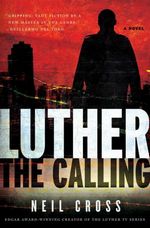
Dusted Off: The Calling by Neil Cross

The CallingThe Calling

by Neil Cross

Hardcover, 336 pg.
Touchstone, 2012
Read: September 13 – 14, 2012

Wow. Just…wow. The same disturbed depravity, intensity, dedication, drive that are displayed in each episode of Cross’ show are in full force here. You’ve got one very, very sick murderer (and I mean that in every possible way) being hunted by Det. Luther across London. And even tho’ most people who pick up this book know exactly how it ends (the opening scene of episode 1), you’re still on the edge of your seat, white-knucklin’ the book, breathing only when you remember.

The visuals are straight off of the show, too. I’m so, so glad that I don’t have to see the two major crime scenes on TV. Just having read them is going to stick with me for awhile, a long while probably.

Possibly even more brutal is watching the break-up of the Luther marriage. Again, we met Luther post-divorce on TV, but having to go through Zoe’s turmoil and Luther’s obliviousness at the beginning of the end…ugh. Just rip my heart out, please.

All the police characters at the heart of season 1 are here and are note perfect. Quite the achievement.

—–

4 Stars

Dusted Off: Rusty Nail by J. A. Konrath

Rusty Nail (Jack Daniels Mystery, #3)Rusty Nail

by J.A. Konrath

Hardcover, 292 pg.
Hyperion, 2006
Read: August 11 – 12, 2012

Laugh out loud funny, sit on the ,of your seat tense, heartfelt moments, a couple of utterances of “ew.” This third outing for Jack Daniels is great detective novel, a heckuva read–just like the first two. I really dig this cast, this world that Konrath’s building.

What’s most impressive, I think, is the way that the first three entries to this series — while remaining pretty much standalone works — are so intricately tied together.

Of course, I appreciated the nod to Robert B. Parker and Spenser, as it was Konrath’s chapter from In Pursuit of Spenser: Mystery Writers on Robert B. Parker and the Creation of an American Hero that led me to Jack in the first place.

—–

4 Stars

Dead Connection by Alafair Burke

Dead Connection (Ellie Hatcher #1)Dead Connection

by Alafair Burke
Series: Ellie Hatcher, #1


Hardcover, 336 pg.
Henry Holt and Co., 2007
Read: June 22 -23, 2014

I’ll be honest — it was this video that got me looking into this series. I figured an author with taste enough to help out the Kickstarter enough to get that video as a reward is someone I’d enjoy spending time with.

And, yeah, I was right. Ellie Hatcher, her brother, and her father’s dark past are right up my alley. Rookie detective, Ellie Hatcher, has been temporarily assigned to Homicide to assist with the investigation into a series of murders revolving around the client list of an online dating site.

Ellie’s career-driven, haunted by the murder of her father (which the Wichita police have declared a suicide), idealistic and in love with New York City. She came to the city to look after her brother, Jess, a would-be rock musician with questionable judgment in recreational activities. She works harder than she should, spends more time on cases than she needs to, and no personal life outside her brother. So when given the chance to work a Homicide, she throws herself into it.

It’s quite the case, too. There’s a sociopath, Russian mobsters, identity theft, crooked cops, and enough other ingredients to keep Ellie burning the midnight oil and the reader to keep the pages turning as fast as possible.

This was a very clever mystery — downright smart, in fact. I’d guessed the killer, because of story structure/dramatics not because of the whys and wherefores and the psycho-ness of it all. I did put all the pieces together slightly ahead of Ellie (like half a page or so), but by that point, Burke wanted the reader to.

There’s a moral flexibility to the plot’s resolution, to ensure justice is done that I frequently quite enjoy in fiction — but would hate in reality. Which is why I read fiction and not true crime, I guess.

I’ll be back for more, very soon.

—–

4 Stars

Page 75 of 88

Powered by WordPress & Theme by Anders Norén