Tag: 5 Stars Page 11 of 24

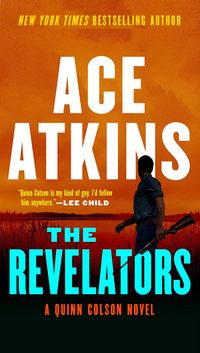
The Revelators by Ace Atkins: It’s All Been Leading to This

The Revelators

The Revelators

by Ace Atkins
Series: Quinn Colson, #10

Hardcover, 386 pg.
G.P. Putnam’s Sons, 2020

Read: August 4-10, 2020
Grab a copy from your local indie bookstore!

“Place kinda looks like when you came home ten years back?”

“Nope,” Quinn said, placing the small bottle back in the glove box. “It’s a lot worse.”

What’s The Revelators About?

How is it already book ten?

The Revelators starts with Boom Kimbrough trying to keep his friend alive. Quinn Colson has been responding to a call about a domestic dispute and had been ambushed by The Watchmen—the far-right vigilante militia beating him and then someone shooting him. When a book starts off with your series’ protagonist clinging to life, you know it’s going to be a grim time and it is.

A year passes and Quinn’s rehab has gone pretty well. The governor has appointed someone to fill in as Sherriff, and that man is everything that Quinn isn’t, he make’s Quinn’s crooked uncle look like a fine lawman. He’s not entirely physically ready, but he can’t wait anymore—Quinn’s got to step up and do his job before it’s too late and criminal elements have completely taken over. Quinn, Boom, Lillie Virgil, and the Jon Holliday (plus who knows how many undercover agents he has—he won’t tell anyone) prepare for a significant move that’ll put most, if not all, of the major elements in prison.

Meanwhile, the new Sherriff and ICE raid a local chicken processing plant (to the surprise of almost everyone in the county), arresting everyone, not allowing anyone to provide their immigration papers (of those who have them), merely sending them off somewhere to await deportation. Lillie and her church have their hands full with the children left behind by this move. If anything, this action galvanizes Quinn to step up his work.

Fannie Hathcock is making moves of her own, securing her position not only in Tibbehah County but the entire state (and beyond). And…well, I don’t have the space to keep going. There are so many moving pieces in this book I’m not even going to attempt to summarize.

There’s at least an allusion to the previous books, and many characters/crimes/events from them directly impact what happens here. The Revelators is the culmination of ten novels’ worth of events and nothing’s going to be the same after it. It’s clear from the get-go that Atkins has something major in mind and the atmosphere of the whole book reflects that. At various points in the novel, I have notes like “please don’t do anything to X and Y.” And at times it feels like this could be the series finale, and I spent a little time wondering how there’ll be any way for it to continue.*

* I’ve heard/read enough interviews of Atkins at this point to know he’s not keeping the next novel a secret, so I don’t feel bad about saying that.

Is this Fiction?

From the ICE raid on a chicken processing plant—and the way that parents are kept from their children afterward, to the police corruption and abuse of power, to the militant (and well-armed) right-wing group pushing their way around, and a few other spoilery actions—these “ripped from the headlines” storylines made me wonder time and time again how little fictionalization/sensationalism Atkins was pouring int this. I’m so relieved that it is fiction but at far too many points, it doesn’t feel all that fictional and you get a little sick wondering just how much of this could really be happening in Mississippi (or your own state).

Lights in the Darkness

In the middle of all this corruption, crime, inhumanity, and impending doom, there are moments of hope, joy, and family. Quinn’s nephew, Jason, falls for a girl (who falls right back). Quinn and Maggie are expecting. Maggie’s son Brandon grows closer to his new family—there’s one very sweet scene between Brandon and Quinn. Caddy seems to have found another chance at love.

And an old foe realizes how far down the wrong road they’ve gone and seeks to make it up to Quinn. I had to read a couple of scenes twice to make sure I understood what was going on.

Not only does that kind of thing keep Quinn and his allies going—it’s a reason to keep fighting, even if things are worse in the ten years since he came home. But, it also makes it easier to read. If it was all crime, corruption, racism, impending doom, and the rest, sure, it’d be worth reading, but these brief reminders that even Tibbehah County isn’t as bad as it could possibly be make it so much easier to keep reading.

So, what did I think about The Revelators?

“Johnny Stagg, J. K. Vardaman, the Watchman—all of them come from the same place,” Quinn said. “Me and you been fighting them over since we came home.”

“Been here long before me and you were born,” Boom said. “And they gonna be around long after we die.”

“That’s a hard take,” Quinn said.

“Do I lie?”

That is a hard—and honest—take. But what Quinn leaves unspoken is that it really doesn’t matter how long this kind have been around, people like he and Boom have been around resisting, fighting back the darkness, and trying to make it easier for light to shine. That’s why readers have kept coming back to this series for ten years. And they’ll keep coming back as long as that fight’s being waged.

Atkins has outdone himself this time—there are so many moving parts, so many interweaving plotlines, so much that he has to reveal slowly (or not let us see) so that he can let it all loose at the right time.

While reading it, I kept muttering about how good it all was, how fantastically Atkins was pulling off this very ambitious novel—and he made it look easy while keeping the reader white-knuckling the cover.

Book 11 in this series is going to look pretty different than the ten that came before, but it’ll be Quinn facing off with the same type of people—and as long as we get books of this caliber (or near it), that’ll be more than good enough.

5 Stars

20 Books of Summer2020 Library Love Challenge

This post contains an affiliate link. If you purchase from it, I will get a small commission at no additional cost to you. As always, opinions are my own.

Peace Talks by Jim Butcher: Family Complicates Everything

Peace Talks

Peace Talks

by Jim Butcher
Series: The Dresden Files, #16

Hardcover, 340 pg.
Ace, 2020

Read: July 15-17, 2020
Grab a copy from your local indie bookstore!

Ever since the Red Court had taken my daughter, I’d been reeling from one disaster to the next, surviving. This entire situation was just one more entropy barrage hitting my life, forcing me to scramble once again, maybe getting me killed. (Again. Technically.)

Things were different now. I was a part of Maggie’s life. And she might need me to walk her down an aisle one day.

Maybe it was time I started getting ahead of this stuff.

Maybe it was time to get serious.

What’s Peace Talks About?

So, as per usual, there are a lot of balls in the air here—Harry has to juggle getting used to being an active and involved father, there’s a budding romance, there are his duties as a Warden, his duties as Winter’s Knight, his duties as Warden of Demonreach, and then…Thomas is in all sorts of trouble, there’s a threat to remove Harry from the White Council of Wizards, there’s something brewing with Chicago P.D., and then Baron Marcone is hosting a convocation of the Unseelie Accord signatories—requested by the Fomor—to hash out differences.

And that’s what I can say without spoiling anything.

Now, since their appearance, the Fomor have been a fantastic antagonist for everyone—really. I think even the Denarians pale in comparison to the threat they pose to humanity. So this meeting is a major happening—and promises to go very, very ugly. Which is why Carlos shows up to enlist Harry to help provide security and be an emissary to Winter. Mab wants Harry there as her Knight and—here’s the kicker—to help fulfill a debt by granting two favors (no questions asked) to Laura Wraith during the summit.

There’s just so, so much that can go wrong. And much of it does. And then other, worse, things happen. At one point*, I thought about closing the book and walking away—probably following Mr. Tribbiani’s example and putting it in the freezer. Skin Game would make a good, albeit inadvertent, series finale.

* If you’re curious, it’s around the time that Murphy starts to do something brave, foolish, short-sighted, and entirely in-character with a saw.

In the midst of all this—Harry does what he normally does. He tries to save the day, and along the way take care of those most important to him. Maybe the order there should be reversed, for accuracy’s sake.

Underneath a lot of the issues he’s facing are family issues, and they all complicate every other bit of what Harry’s up to in this book. Harry’s never really had much of a family, and while he’s pretty used to dealing with a brother now. His relationship with his grandfather, Ebenezer McCoy, could use some work (we get an idea how much work is needed in this book), and it’s clear that he’s new to the fatherhood thing. But when you combine the three? Harry’s just not ready for that. Particularly when you throw in some conflict between members of his family. This alone may be Harry’s greatest challenge. These things distract him, they sap his emotional and mental energy, they stop him from thinking clearly—and they give him a reason to keep going and to make sure that no one can hurt those he loves.

There’s one major clue to the myriad problems that he’s facing, one big question that he’s not asking…and if I’m right about this, Battle Ground is going to be worse than expected.

Two characters noted for their wisdom and approach to life even more than they are for their power and abilities to fight (which are significant enough to take note of), give Harry some advice partway through the book. I hope, hope that Battle Ground ends with him taking that advice. I fear he won’t, and that his choice will make his life a lot harder.

What about the Characters?

There are just so, so many here. Almost every regular is at least name-dropped, if they don’t actually put in an appearance (although I can come up with a list that of those that aren’t mentioned without much effort). And I don’t want to ruin anything for any reader that hasn’t had the chance yet. I enjoyed seeing unexpected faces—even when their presence boded ill—and the expected faces were good to see, too. (Although, I really could’ve lived without seeing Red Cap again)

The effects from a lot of what happened in the short stories from Brief Cases show up in these pages—to an extent that I don’t remember from Side Jobs. I hope everyone’s had the time to read Brief Cases, because he doesn’t explain a lot of those things. I loved that.

I miss Bob.

And then there’s stuff like this:

Home, like love, hate, war, and peace, is one of those words that is so important that it doesn’t need more than one syllable. Home is part of the fabric of who humans are. Doesn’t matter if you’re a vampire or a wizard or a secretary or a schoolteacher; you have to have a home, even if only in principle—there has to be a zero point from which you can make comparisons to everything else. Home tends to be it.

That can be a good thing, to help you stay oriented in a very confusing world. If you don’t know where your feet are planted, you’ve got no way to know where you’re heading when you start taking steps. It can be a bad thing, when you run into something so different from home that it scares you and makes you angry. That’s also part of being human.

But there’s a deeper meaning to home. Something simpler, more primal.

It’s where you eat the best food because other predators can’t take it from you very easily there.

It’s where you and your mate are the most intimate.

It’s where you raise your children, safe against a world that can do horrible things to them.

It’s where you sleep, safe.

It’s where you relax.

It’s where you dream.

Home is where you embrace the present and plan the future.

It’s where the books are.

And more than anything else, it’s where you build that world that you want.

When Butcher, via Dresden, says this kind of thing—where he taps into something universal (or close enough) about humanity. Something that will resonate with every reader. Butcher’s ability to capture these thoughts and feelings, to put the ineffable into concrete terms like that is ultimately what draws readers to him more than his flawed heroes, snappy dialogue, and action does.

(and then three pages later, he has someone utter some pablum about the nature and power of faith that reminds me that as much as I love this guy, he’s not perfect)

There are a couple of other things I wanted to talk about, but I can’t figure out how to work them in, so I’ll pass on them for the moment—this is getting too long. It’s time to wrap up.

So what did I think about Peace Talks?

While reading this, I had to keep stopping to remind myself to treat this as just another book. To try to think of this as merely the next book in a beloved series (just a little delayed). I wanted to treat this as An Event. We’ve waited so long for this*, you’ve got the whole 20th Anniversary of The Dresden Files thing, the fact that this novel was originally so big they had to split it into two, and everything we know/anticipate/fear about what’s about to happen thanks to the story, “Christmas Eve”—it’s really hard to keep it all in perspective. There’s a real sense in which it’s difficult, if not impossible, to live up to the hype—and that’s not really fair. As An Event, I think it falls a little short (but maybe if we think of Peace Talks/Battle Ground as the Event, maybe it won’t). But as the sixteenth novel is this beloved series? It delivers. It made me happy.

* And I get Butcher’s explanation for that, but it does tend to raise expectations.

Peace Talks is everything the Dresden fan wants—it’s packed with action, the cracks are wise, the choices are hard, the victories are Pyrrhic (and small), the (many) enemies are daunting, and the stakes really don’t get higher. While it clearly started life as the beginning of a longer book, Peace Talks is a complete novel, it doesn’t end on a cliffhanger—but, I tell you what, if we didn’t have a hard release date on Battle Ground I don’t imagine the fan-base would be quiet. In the meantime, I’m spending the next 71 days with bated breath.


5 Stars

This post contains an affiliate link. If you purchase from it, I will get a small commission at no additional cost to you. As always, opinions are my own.

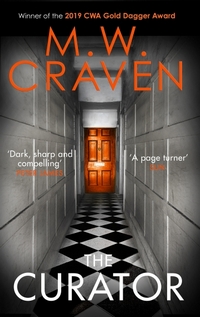
The Curator by M. W. Craven: I do not have enough superlatives in my repertoire to do justice to this novel

The Curator

The Curator

by M. W. Craven
Series: Washington Poe, #2

Hardcover, 372 pg.
Constable, 2020

Read: June 30-July 2, 2020

‘Sean Carroll’s a kite enthusiast,’ Bradshaw said after Nightingale had ended the call. ‘He’s not a dork.’

Poe grunted. He had a problem with ‘enthusiasts’. As far as he was concerned, on the ladder of weird interests that eventually escalated to criminal behaviour, enthusiasts were only a rung below Obsessives, and he’d seen first-hand what obsessed people were capable of…

Yup, this case is strange enough that Poe is driven to consult a kite dork—sorry, enthusiast—that’s just how desperate he is for a clue. Not only has Poe seen first-hand what obsessed people can do, he’s frequently the obsessed person in question–he can make Harry Bosh look laid-back.

What’s The Curator about?

It all starts around Christmas—two severed fingers are found in a public location with no indication how they got there. Tests show that one finger was removed from the victim while they were alive, the other after they were dead. Two more sets of fingers show up in equally public, yet hard to access places. Clearly, there is a creative, disturbed and clever killer at work. The local police waste no time in calling in Washington Poe—this is up his alley, near his home, and the replacement for Detective Superintendent Gamble knows they need his assistance. With Poe comes his DI, a very pregnant Stephanie Flynn, and Tilly, everyone’s favorite analyst.

Racing against the clock—the last thing anyone wants is another pair of fingers showing up—Poe and Tilly do all they can to figure out what the victims have in common, or what would make them a target. And what “#BSC6” could mean—it was left at each scene, and even Tilly is stumped by it.

They catch a break or two, and Poe makes the most of it. Before long, they’re able to make an arrest, Tilly is able to do things with that evidence that even Poe didn’t know she could do—solidifying the case they have against their suspect—who begins confessing to crimes no one knew about. But he won’t confess to the killing.

And then there’s a phone call from a crusading FBI Agent to Poe. And suddenly, everything that Poe thought they’d established about the killer is thrown out the window.

From that point on, I couldn’t believe what I was reading. It was surprise after surprise after surprise. The twists didn’t stop coming—I’m pretty much at a loss for words. Is there a word that means “more than intricate”? If so, I need to learn it so I can describe this novel. Craven doesn’t cheat when it comes to his twists and reveals—it’s all there in the book for you to find. But you probably won’t, because Craven’s smarter than almost all of his readers.

What about the characters?

The real draw to these books are Poe and Tilly. Everything readers liked about the before is back. Their camaraderie is as strong as ever and the reader can feel it radiating off the page, who needs a friendship of your own if you can live vicariously through theirs?

In The Puppet Show, Poe was trying to find his footing again after being reactivated. In Black Summer, he’s fighting to protect his reputation and career. Here? Poe’s just a man on a mission, with no distractions or hindrances in his way. Poe unleashed is a great thing to behold.

As much as Poe’s a local legend among Law Enforcement, it won’t be long until Tilly’s as much of a star (if not more). Watching her win over a bunch of jaded, cynical cops by being her brilliant, socially awkward self was so much fun. (her interaction with a representative from the Ministry of Defense might have been more entertaining, but not by much)

I don’t want to take away anything from DI Flynn—her role in this is pivotal, but her role in the investigation isn’t as large as it has been before, making her more of a supportive character than usual. Her condition, and Poe’s protective instincts (despite Flynn’s objections), won’t allow for anything else.

Detective Superintendent Nightengale is a no-nonsense woman. She’s clearly a good officer, a good manager. She wants to do things by the book, but she’s clever enough to give Poe and Tilly all the latitude she can for them to do a more effective job than the by-the-book route, just in case. I’m sure that eventually,, she’ll run out of the patience required to deal with this team—but that’s a plot complication for another day (and one I look forward to).

Estelle Doyle, the pathologist we met in Black Summer is back and just as wonderful. I know it’d be pushing things to have her play a larger role in these books than she does, but the few scenes we have with her are just not enough to satisfy.

Neither space or time permit me to discuss the other standout characters—on both sides of the law. I would like to talk a bit about the eponymous Curator, because the Curator is the kind of character that you want to sit around discussing for a couple of hours. Obviously, I can’t do that here.

So what did I think about The Curator?

In addition to the plot and characters, there’s real pathos, real tension, real heart—and even some real laughs. I’m not sure I breathed enough in the last seventy-five pages, it’s probably good that I wasn’t hooked up to an oximeter, the alarms that it would have sounded would’ve been really distracting. As usual, this is given to us via Craven’s crisp and compelling prose. Combine those characteristics with a top-notch mystery? And you’ve got a book that deserves all the accolades the first two books in this series has received, and then some. As good as The Puppet Show and Black Summer were (two of the best books I’ve read in the last two years), The Curator is better.

It was two days after I finished this before I could start another book—three before I could start another novel. That is rare for me. But I needed some time to recover/come down from this one. Pick an element—plot, atmosphere, character, pacing, complexity, twists—Craven nails it all. This is an exceptional work. It’s pointless for me to say anything else, why try to gild the lily?

5 Stars

20 Books of Summer

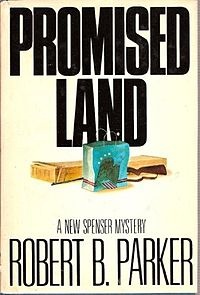
Classic Spenser: Promised Land by Robert B. Parker

Classic Spenser

Promised Land

Promised Land

by Robert B. Parker
Series: Spenser, #4

Mass Market Paperback, 218 pg.
Dell Publishing, 1976

Read: April 30, 2020
Grab a copy from your local indie bookstore!

“Whose picture is on a one-hundred dollar bill?” I said.

“Nelson Rockefeller.” [Susan said]

“Wrong.”

“David Rockefeller?”

“Never mind.”

“Laurence Rockefeller?”

“Where would you like to go to lunch?”

“You shouldn’t have shown me the money. I was going to settle for Ugi’s steak and onion subs. Now I’m thinking about Pier 4.”

“Pier 4 it is…Come on, we’ll go back to my place and suit up.”

“When you get a client,” Susan said, “you galvanize into action, don’t you?”

“Yes, ma’am. I move immediately to the nearest restaurant.”

Harv Shepard’s wife walked out on him and he wants Spenser to find her and bring her home. Spenser agrees to the first part of that—he’ll find her, make sure she’s healthy and under no duress, but he won’t force her to come home. Shepard agrees to that, so Spenser starts digging. It takes him practically no time at all to discover that their relationship wasn’t as good as Shepard insists it was (Shepard doesn’t seem to find his wife leaving home to be a big clue)—and that Pam herself might not be as happy or well-adjusted as she let on.

It doesn’t take Spenser that long at all to find Pam and see that she’s okay. She’s not that interested in coming home, and Spenser’s prepared to let it lie like that. But she soon calls Spenser for help—and like the knight errant he is, Spenser obliges. She’s found herself neck-deep in serious legal problems and it’ll take an ingenious plan to get her out of it while not letting criminals get away with anything.

The trickier part of the equation comes from a man called Hawk.* When Spenser first arrives at Shepard’s house,

Shepard appeared from the door past the stairs. With him was a tall black man with a bald head and high cheekbones. He had on a powder blue leisure suite and a pink silk shirt with a big collar. The shirt was unbuttoned to the waist and the chest and stomach that showed were hard and unadorned as ebony. He took a pair of sunglasses from the breast pocket of the jacket and put them on, he stared at me over their rims until very slowly the lenses covered his eyes and he started at me through them.

* Yeah, I couldn’t resist.

As Spenser soon tells Shepard, Hawk’s presence means that he’s got bigger problems than a missing wife. Shepard denies it, but Spenser believes he’s into a loan shark and/or mobster for a pretty large sum and is behind on payments. It won’t be long until Hawk is hurting Shepard—if not more than that—in order to get this money.

Hawk and Spenser go far back—they used to fight on the same heavyweight card and come into frequent contact in their current occupations. Hawk’s a freelancer and is one of the best in Boston. He’s not a good guy, but he has a code. There’s a mutual respect between the two and Spenser is quick to defend Hawk against Shepard’s racial slurs. Hawk as a character deserves more space than I’m giving him at the moment—but that’s all I can do for now. I’ll probably find a way to give him a few paragraphs in the post about the next book.

So not only does Spenser need to get Pam out of her legal mess, he takes on getting Harv out of his illegal mess. He does so through a complicated set-up assisted by a couple of the funniest cops I remember reading about. It’s a shame that neither of these reappear the way that Healy, Belson and Quirk do (although, it’d be hard to take them seriously). It’s hard to explain, you’ll need to read them for yourselves.

Toward the end of the previous book, Mortal Stakes it looked like Spenser is getting more serious about Susan and less serious about his other dating relationship with Brenda Loring—there’s a reference to Brenda early on in this book*, but by the end, Susan and Spenser are as close to married as they’re ever going to get—essentially pledging monogamy without the legal/religious contract. This is huge for the genre at the time—and bigger for the character.

* Unless I’m mistaken, that’s the last reference to Brenda outside of a short story in the series. [Update: She’s mentioned in the next book, so I read the reference about 5 hours after I published this]

While Spenser tries to extricate the Shepards from the trouble they’ve found themselves in—and hopefully provide them with the opportunity to work on their marriage (at least enough to make a calm decision about its fate), Parker uses the Shepards as well as Susan and Spenser to discuss second-wave feminism in a somewhat abstract fashion, but also in concrete terms as it applies to each of these couples. Parker takes the opportunity to opine a bit on isms and how they tend to swallow the individual—where he prefers to consider such topics (this is assuming that Spenser and Parker align on these ideas, but there’s no reason to suspect they don’t). The reader may not agree with them any of the views they read in these pages, but they’re fairly well reasoned.

In Promised Land, we meet Hawk and Susan and Spenser become permanent (for lack of a better term). These two things are the final pieces to come into place as the foundation for the series—they’ll take a more final form in the next book, but we have them all now. Every other book in the series is built on what’s introduced up to this point and finalized in The Judas Goat. For a series that’s lasted 44 years after the publication of this one, that’s quite the accomplishment.

A significant portion of American Detective Fiction since then will be shaped by this, too—people will be reacting against this set-up or putting their series in a similar vein. Personally, I’ll get to the point (eventually) where Susan stops adding anything to the series. But I’ve yet to tire of Hawk. He may be the kind of guy who should spend the rest of his life behind bars, but he’s also the kind of character than you can’t help but love when he shows up on the page. We’ll revisit Hawk (and his contribution to the series) later, but for now, it’s just good to sit back and enjoy him.

You take all the above, mix them together—and you’ve got a true classic. Parker looks at marriage and feminism—and, of course, honor—while his protagonist matches wits with a mobster. Told with Parker’s trademark style and wit. Few things are as good as that—fewer yet are better.


5 Stars

This post contains an affiliate link. If you purchase from it, I will get a small commission at no additional cost to you. As always, opinions are my own.
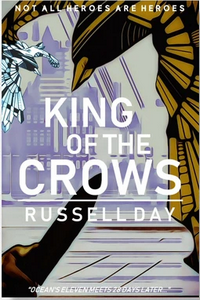
The King of the Crows by Russell Day: Prescient. Gripping. Haunting. Unpredictable. What stories should be.

King of the Crows

King of the Crows

by Russell Day

Kindle Edition, 456 pg.
Fahrenheit Press, 2020

Read: April 28-May 9, 2020

… for me at least, the first week of the Lockdown was the worst.

Knowing it had happened to me. I hadn’t escaped, I wasn’t one of the lucky ones. Lucky to be safe or lucky to be dead. Take your pick. I was neither.

That right there gives you a pretty good idea what kind of light and fluffy read this is going to be.

There are two timelines in this story—the primary focuses on a post-pandemic London, while the other shows what happened to a couple of the characters mid-pandemic (with plenty of material describing what the pandemic was like for others). In the primary timeline, Europe is a disaster—a “wasteland”—and eight years after the Outbreak, it’s beginning to put itself back together. But it’s going to take a long, long time to recover from this. Don’t let the fact that “eight years after” this fictional outbreak is 2028 bother you at all.*

* Good luck with that. I’ll get back to this in a bit.

I’m not going to try to list all the various ways that Day uses to tell this story: I’m certainly going to forget several. So here’s a partial list: here’s a third-person 2028 narrator describing a police investigation, a first-person perspective on the same investigation; a first-person account of that same detective’s life during the Outbreak; selections from a screenplay made about a group of Londoners during the Outbreak; selections from the Outbreak-memoir of one of those Londoners; and third-person narration of the same (N.B.: these three will vary in telling ways); redacted 2028 prison correspondence about the Outbreak; excerpts from scholarly works on aspects of the Outbreak (including a very illuminating work on the slang of the time); graffiti from 2021; internet message boards. Day weaves these together to tell his story, build the world, and help you to understand it. Frequently, I read something from the 2028 timeline, and understood it—only to find a new depth to it several pages later after getting another piece of the puzzle from 2020/2021. It’s hard to juggle that many narrative forms/voices/perspectives/calendars as a reader or a writer—Day pulled it off better than I did (any problems I had following things I attribute to myself, and it was pretty easy to clear out my misunderstanding with a minimum of backtracking*). It definitely helps paint the picture of the scope and variety of effects the sickness had on the world more efficiently than a consistent first- or third-person narrative would be able to.

* This would be easier in hardcopy than on an e-reader in my opinion. But that’s just a guess.

There are times (several of them) when I felt that the characters were getting lost amongst the plot and worldbuilding and sickness. But when I stopped and thought about it—and eventually got to the point where I didn’t have to—I realized I had a pretty solid idea about who these people were and was more invested in them than I expected. I thought there was so much going on that the people were getting hidden, but really, Day’s work was subtle—working in the characters into my subconscious like you give a dog its medicine. Normally, this isn’t something I require (or would like)—and it’s not Day’s usual M. O. (quite the opposite), but I think this approach really fit the novel and the story/world.

“They weren’t zombies,” he says, softly. “Don’t call them zombies.”

No one who was involved in the Outbreak for real uses the zee word.

So exactly what was the sickness?

I remember reading a couple of years ago about these ants that would succumb to a fungus which would short-circuit their brain and make them do certain things before killing them—or something like that, vague memories here. Then there were stories about parasites controlling the host’s actions—both of these stories had their 15 seconds of fame on social media around the same time (I may be messing the details up a little bit, but I’m not writing history here).

In Day’s world, one of these kinds of parasites will reside—asymptomatically, I should stress—in cats, who would pass it on to humans. Skipping the details, the humans would get very sick and then, survivors would maybe succumb to a psychosis that would make them violent. This sickness, HV-Tg (Human Variant-Toxo gondii), in a little more than a year would kill more than 20 million in Europe (at least 33% of France’s population) Et voilà!—an easy to believe pandemic that results in Zombie-like people wandering around.

Now, if one of those who’d “switched” and become violent infected you during an assault, well, you were likely to succumb. There were enough of these (“psychos” or “Gonzos”), and the sickness was so widespread, that the police and military couldn’t keep up, that civilians were forced to take action and defend themselves, their family and neighbors. People quickly forming into gang-like associations for mutual protection. It was a literal kill-or-be-infected (and likely killed) situation.

One such association became known as The Crows or The Kings of the Crows. They developed a legendary status mid-and post-Outbreak—and are the subjects of the memoir and film mentioned above. One of their number who happened to survive (and gain notoriety enough to get a publishing deal for a memoir) is the subject of the 2028 investigation. They survived the worst of the worst in one of the hardest-hit cities. They did so via means and methods that many (including their own) would find deplorable, but under circumstances that not only permitted, but required, those actions.

We also see what happens to an American in Paris for work when the Outbreak reaches the point that International travel is canceled (particularly to the U.S.). Her allies will never be considered the Kings of anything, and the contrast between how she survives to what the Crows do is pretty striking.

In 2028…eh…you know what? You should read that for yourself. I’m going to say something I’ll regret.

The biggest killer in those days wasn’t the disease or the psychos, it was stupidity.

However, it has been pointed out by many historians, logic was one of the first casualties of the Outbreak.

Some of the best moments of this book have nothing to do with advancing the plot, they’re little bits showing what the world of the Gondii-pandemic looks like. The man telling the story about taking his girlfriend to the ER because of a burn—how they were treated, and how she became infected. The soldiers coming back from a Middle East deployment being completely unprepared for what had happened to their home country. The mother and son who traveled with the Crows for awhile.

Ultimately, it’s not the story you think you’re getting…or is it? The marketing tag line is, “Ocean’s Eleven meets 28 Days Later.” It is, all things considered, a good, catchy line. I’m not sure it’s all that accurate a description of the novel (but it’s not inaccurate). What it is, really slides up on you—and when you see it it feels like it was obvious all along (even if you wouldn’t have said that 20 pages earlier). There’s a straightforward crime story at the heart of this novel—it’s just surrounded by so many layers, that you can miss it—there’s the sickness, there’s the horrible social and political context (both mid- and post-Outbreak), there’s what the characters are going through otherwise—and the whole thing is drenched in social commentary about 2020 society, e.g., sexism, economics, medical care.

And that’s not even touching the context we’re reading it in now. I truly wonder what I’d think of this book if I’d read it last Fall. I’d still like it, I’d still be impressed by it—but I don’t know if it would resonate with me the same way. There’s almost nothing about Gondii that’s comparable to COVID-19. But the way that people and governments respond—well, that’s pretty different, too. but if you can’t see what’s going on around us reflected in this novel? You’re not paying attention. That Day appears so prescient says something about his skill and observation (and a lot about Western culture, too).

I can see why people cling to the idea that the Gonzos were trying to tell us something. Something’s out there trying to get a message through: there’s a plan. Compared to the idea that it was all just chance, it’s a comfort of a type. Chance doesn’t care and can’t be appeased and can’t be reasoned with. Chance means it could all happen again.


5 Stars

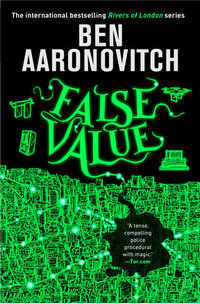
False Value by Ben Aaronovitch: Peter Grant Gets a New Job and a Great Series Gets Better

False Value

False Value

by Ben Aaronovitch
Series: The Rivers of London, #8

Hardcover, 294 pg.
DAW Books, 2020

Read: February 28-March 3, 2020
Grab a copy from your local indie bookstore!

“Somebody else came during the night and magicked them,” I said.

“Is that a real term—’magicked?'” asked Guleed.

“And it’s spelt with a ‘k,’ too,” I said. “But the technical term is actually ‘enchanted.’ Only the trouble with that word is that everyone starts thinking glass slippers and spinning wheels.”

There’s very little that I don’t like in The Rivers of London series, you may have noticed, but the friendship and banter between Peter and DS Sahra Guleed is possibly my favorite part of the books. The way they slip between discussions of magic (or magick) theory, police procedure, family stuff, the cases they’re working without missing a beat—or doing so professionally or like a couple of teenagers having too much fun under the nose of authority figures. It feels real, it feels natural, and it’s fun.

It’s also much more beneficial for each character—and the Queen’s peace—than his friendship with Leslie May.

After the series-altering events of Lies Sleeping, the question most readers had was, “Will the series be any good post-Martin Chorley?” Most were likely like me, with a firm “Very probably. Hope so.” False Value demonstrates that things are just fine without Chorley—better than fine, really (although everyone is dealing with the aftermath of everything he did).

Also, as nice as The October Man was, it’s great to be back with Peter and the rest of the Folly.

Most of the books in this series are about a Wizard-in-Training who happens to be a police officer. This book was a Crime Fiction novel about a guy who happens to be a wizard in training.

With the suspension he received at the end of the last book, and his future with the Police uncertain, Peter Grant goes off in search of a new job. He ends up finding work investigating some internal shenanigans for a tech giant headquartered in London. Peter’s computer-geek gets the chance to shine a bit as well as flexing his investigative muscles.

It’s not long before he discovers the source of the shenanigans, and that’s where things get interesting. The source is associated with The New York Libraries Association, “the militant magical wing of the New York Public Library Services.” Which is one of the American analogues to The Folly (just without the official police sanction). He and his superior are also investigating the company—because they’re convinced that SCC is utilizing magic in a potentially hazardous way, paving the way for something huge. I am beyond curious about the Libraries Association and hope we get to see them in action again soon. The whole thing is ripe with possibilities and it’s going to be great to see it all play out.

If you were to draw a Venn diagram with circles for Charles Babbage/Ada Lovelace, Artificial General Intelligence, and Wizardry—the overlap is where you’d False Value. Who wants more? The mix of contemporary cutting-edge technologies and Newtonian magic is just fantastic.

This all leads up to a wonderfully exciting climactic showdown between Nightingale, Peter and the rest on one side, The Librarians on another, and SCC on the other.

If we act now we might be able to roll them up before they know what’s hit them.”

Nightingale frowned into his teacup.

“Perhaps,” he said.

“What have we got to lose?” I said.

Nightingale looked up and gave me a strange, sad smile.

“Oh, everything, Peter, “he said. “But then such is life.”

Yeah, sure, there’s plenty of things going on with Abigail, Molly, Foxglove, and (of course) a very pregnant Beverly. But I just don’t have the time to talk about it all. I think it’s safe to say that this is the busiest novel in the series with something for every fan (more than one something, too).

We also got to check in with our favorite FBI Agent. She was able to give Peter all sorts of background about SCC and its founder (an American), which proved vital and interesting (she got some information about the Librarians in return). Better yet, some of what she uncovered changed Peter’s understanding of some of what went on in Lies Sleeping (the reader’s understanding, too). I’m betting this will prove to be at the core of the next arc for the series.

So now we have an idea about two groups in the States, German practitioners, ,and then a smattering of some in the UK. I love how they’re all very diverse, while sharing a lot in common.

I stopped short in the first sentence of the book:

My final interview at the Serious Cybernetics Corporation…

Serious Cybernetics Corporation? As in,

The Encyclopedia Galactica defines a robot as a mechanical apparatus designed to do the work of a man. The marketing division of the Sirius Cybernetics Corporation defines a robot as “Your Plastic Pal Who’s Fun to Be With.” The Hitchhiker’s Guide to the Galaxy defines the marketing division of the Sirius Cybernetic Corporation as “a bunch of mindless jerks who’ll be the first against the wall when the revolution comes,”

from The Hitchhiker’s Guide to the Galaxy. So I thought that Aaronovitch was having a little fun with an in-joke and moved on. But no, it was a theme throughout the entire tech company. HR is referred to as “the Magrathean Ape-Descended Life Form Utilization Service,” and Security (where Peter was applying) is “the Vogon Enforcement Arm.” The book is full of these things, and after page 14, I stopped counting them. There’s so many of these that around page 150, Peter says something about SCC “pushing copyright” after a particularly egregious example. I had a great time with this book anyway, but all this was a thick layer of icing on the cake.

A carefully and intricately plotted main story, some fantastic action scenes, and character growth—coupled with Aaronovitch’s signature style and wit. I just can’t think of anything wrong with this book—this is exactly the kind of book that I want to read.


5 Stars

This post contains an affiliate link. If you purchase from it, I will get a small commission at no additional cost to you. As always, opinions are my own.
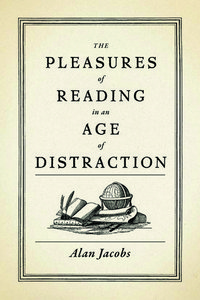
Reread Project: The Pleasures of Reading in an Age of Distraction by Alan Jacobs: A very different model of what reading can be all about.

The Pleasures of Reading in an Age of Distraction

The Pleasures of Reading in an Age of Distraction

by Alan Jacobs

Hardcover, 150 pg.
Oxford University Press, 2011

Read: January 2-3, 2020
Grab a copy from your local indie bookstore!

Read would give you delight—at least most of the time—and do so without shame. And even if you are that rare sort of person who is delighted chiefly by what some people call Great Books, don’t make them your study intellectual diet, any more than eat at the most elegant of restaurants every day. It would be too much. Great books are great in part because of what they ask of their readers: they are not readily encountered, easily accessed. The poet W. H. Auden once wrote, “When one thinks of the attention that a great poem demands, there’s something frivolous about the notion of spending every day with one. Masterpieces should be kept for High Holidays of the Spirit”—for our own personal Christmases and Easters, not for any old Wednesday.

I picked this up as my first book of the year as a way to refresh the mind, come into the year with a reminder of what kind of reader I want to be. As I write this, I’m deliberately not looking at what I wrote last time I read this, but you may find it interesting. Maybe not. I don’t know if I’ll end up repeating myself.

I remember this book being as close to a mission statement for my approach to reading as you could hope for—particularly because I came to it late in life. It’s not like this is a book I read in college and it shaped me/my thinking, but it’s something that I came to a couple of years ago and it was as if a more erudite and thoughtful version of myself had written it.

The beginning of the book is the heart of it, he sets forth his central theses, core argument:

one dominant, overarching, nearly definitive principle for reading: Read at Whim.

Reading shouldn’t be about self-improvement (primarily), it isn’t the mental equivalent of eating Brussels Sprouts. It should be for pleasure. And to maximize that, Jacobs will argue—read at whim.

Following that, Jacobs talks about many aspects of reading for pleasure—note-taking, thinking about what we read, focus (and how to expand it), the role of ereaders (he’s surprisingly pro-ereader), fighting distractions, evaluating what we read and more.

I was particularly struck this time through by his section on re-reading. For growing in appreciation for, or understanding of a work. Or because you enjoy escaping into a well-known and beloved world for a period.

Jacobs frequently quotes Auden, at one point he cites Auden’s five ratings for a book—I think we should maybe replace the standard 5-Star system with this:

For an adult reader, the possible verdicts are five: I can see this is good and I like it; I can see this is good but I don’t like it; I can see this is good, and, though at present I don’t like it, I believe with perseverance I should come to like it; I can see that this is trash but I like it; I can see that this is trash and I don’t like it.

Most of all, this is a celebration of/appreciation of reading. Jacobs is a kindred spirit to us readers as well as a humanities professor. Reading is both a passion and a profession—and both (particularly the former) are clearly seen in these pages.

Our goal as adults is not to love all books alike, or as few as possible, but rather to love as widely and as well as our limited selves will allow.

Hear, hear. That’s a good reminder.


5 Stars

This post contains an affiliate link. If you purchase from it, I will get a small commission at no additional cost to you. As always, opinions are my own.
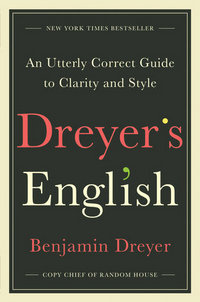
Dreyer’s English by Benjamin Dreyer: A delightful guide to style, grammar, spelling and other things English Language-related that you didn’t realize you wanted to know.

Dreyer’s English

Dreyer’s English: An Utterly Correct Guide to Clarity and Style

by Benjamin Dreyer

Hardcover, 269 pg.
Random House, 2019

Read: December 27-30, 2019
Grab a copy from your local indie bookstore!

The English language…is not so easily ruled and regulated. It developed without codification, sucking up new constructions and vocabulary every time some foreigner set foot on the British Isles—to say nothing of the mischief we Americans have wreaked on it these last few centuries-and continues to evolve anarchically. It has, to my great dismay, no enforceable laws, much less someone to enforce the laws it doesn’t have.

Benjamin Dreyer isn’t the enforcer he wishes existed, but he’s close to one—especially for Random House. This book isn’t a book of those laws, rules or regulations—it’s about what one copy editor thinks that would-be editors, authors, and everyone else should know about grammar, sentence construction, punctuation, and. . . you know what? The official blurb does a more concise job of describing the book than I could. Let’s cheat a little and use it:

We all write, all the time: books, blogs, emails. Lots and lots of emails. And we all want to write better. Benjamin Dreyer is here to help.

As Random House’s copy chief, Dreyer has upheld the standards of the legendary publisher for more than two decades. He is beloved by authors and editors alike—not to mention his followers on social media—for deconstructing the English language with playful erudition. Now he distills everything he has learned from the myriad books he has copyedited and overseen into a useful guide not just for writers but for everyone who wants to put their best prose foot forward.

As authoritative as it is amusing, Dreyer’s English offers lessons on punctuation, from the underloved semicolon to the enigmatic en dash; the rules and nonrules of grammar, including why it’s OK to begin a sentence with “And” or “But” and to confidently split an infinitive; and why it’s best to avoid the doldrums of the Wan Intensifiers and Throat Clearers, including “very,” “rather,” “of course,” and the dreaded “actually.” Dreyer will let you know whether “alright” is all right (sometimes) and even help you brush up on your spelling—though, as he notes, “The problem with mnemonic devices is that I can never remember them.”

And yes: “Only godless savages eschew the series comma.”

Chockful of advice, insider wisdom, and fun facts, this book will prove to be invaluable to everyone who wants to shore up their writing skills, mandatory for people who spend their time editing and shaping other people’s prose, and—perhaps best of all—an utter treat for anyone who simply revels in language.

As one who enjoys a good language-revel, I fell in love with this book almost instantly. I had to force myself to stop jotting down notes because I’d be reading this thing until March if I wrote down everything I wanted to (I have a list of page numbers, though, to go back and glance at while I write this and/or want to do a quick revisit of the book). I’m glad that I’m bone tired and don’t have a lot of time here, because I could easily spend a few thousand words on this book if I let myself. But circumstance prevents me from that and protects you from enduring it (we’ll pretend you’d endure it to preserve my ego, you’d likely just decide it was too long and go to the next link on your list). I think this is coherent enough to post. I’ll let you decide.

Dreyer clearly had fun writing this—there’s a joie de mot/langue* that permeates this book and its infectious. Each page is filled with humor as well as semi-/quasi-/actually technical discussions about writing/reading, making this a book that will appeal to both your mind and funny bone.

* There’s a good chance that l’Académie française is going to hire someone to assassinate me for those neologisms. Whoops.

I’m not going to try to encapsulate the book (hence the use of the blurb), but I want to highlight a few things that stood out to me.

Over the last two years, I’d estimate I’ve read about 50 pages on the interrobang. That number didn’t increase at all with this book. In the chapter discussing punctuation he eventually gets to the interrobang and states, “Neither will we discuss the interrobang, because we’re all civilized adults here.” Reader, I laughed hard at that.

There’s so much of this book that authors need to read—were I richer, I’d require any author who asks me to read this book to evaluate it by these standards. For example, I can’t agree more with his oft-voiced complaint about italics that go on for more than a sentence (“For one thing, italics weary the eye; for another, multiple paragraphs of text set in italics suggest a dream sequence, and readers are always keen to skip dream sequences.” or “tend to convey Lengthy Interior Monologue or Something Else I Probably Don’t Want to Read.”). Do you know how many authors I want to send that to? (I’m including books I loved there, but most books I didn’t)

That reminds me, another thing I’d like to send to many, many authors I’ve read over the last five years:

…I swear to you, a well-constructed sentence sounds better. Literally sounds better. One of the best ways to determine whether your prose is well-constructed is to read it aloud. A sentence that can’t be readily voiced is a sentence that likely needs to be rewritten.

A good sentence, I find myself saying frequently, is one that the reader can follow from beginning to end, no matter how long it is, without having to double back in confusion because the writer misused or omitted a key piece of punctuation, chose a vague or misleading pronoun, or in some other way engaged in inadvertent misdirection. (If you want to puzzle your reader, that’s your own business.)

My life would be easier (and this blog much more chipper) if more authors were concerned about that.

A number of times, he’ll deliberately place an error in the text so he can call it out a paragraph or two (or pages) later to demonstrate how easy it is to make that faux pas and how hard it may be to catch. I loved every one of these and thought it was a brilliant idea.

He has lists of commonly misspelled words, notes on the way to get around Proper Nouns (or things that look like them, but aren’t), as well as bullet-point rants about pet peeves and actual problems that should prove to be an invaluable resource for students and writers of any level. I’m probably going to grab an e-copy of this so I can have it on my phone for easy reference.

The book is so fun, it’s spawned a game! How many books can say that?

While he is laughing at language, how it’s used/abused, and so on—Dreyer never discourages anyone from writing. He also mocks himself/his book a lot. It’s hard not to like a smart guy making wisecracks about himself.

With apologies to Dave Barry, Kevin Hearne and Delilah S. Dawson, this was probably the funniest thing I read in ’19 (and I cracked up a lot at those three). I laughed, I chuckled, I grinned, I think I might have even guffawed at this book (maybe even chortled). I can’t stop quoting it.

[People are] not, I’ve discovered, apt to be dissuaded from their prejudices by the evidence of centuries of literate literary usage or recitations from the bracingly peeve-dismantling Merriam-Webster’s Dictionary of English Usage. And they’re certainly not likely to be moved by the suggestion that English is in a constant state of evolution and that if our great-grandmothers ever caught us using the noun “store” when what we should have said was “shop” or using “host” as a verb, they’d wash our mouths out with soap. Well, I concede with a shrug, if the English language itself is notoriously irregular and irrational, why shouldn’t its practitioners be too?

As a practitioner, you might want to be less irregular and more rational. If so, Benjamin Dreyer has given you an excellent guide to find your way out of that. I loved it, if you’re even a little bit of a language geek, you will, too.

5 Stars

This post contains an affiliate link. If you purchase from it, I will get a small commission at no additional cost to you. As always, opinions are my own.
My Favorite 2019 Non-Fiction Reads

Like every single year, I didn’t read as much Non-Fiction as I meant to—but I did read a decent amount, more than I did in 2018 (by a whole percentage point, so…). These are the best of the bunch.

(alphabetical by author)

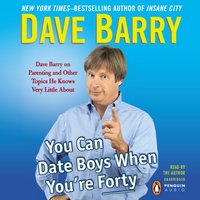
You Can Date Boys When You're FortyYou Can Date Boys When You’re Forty: Dave Barry on Parenting and Other Topics He Knows Very Little About

by Dave Barry

My original post
Barry at his near-best. This reminded me for the first time in a few years why I became a life-long devotee in high school. I could relate to a lot of it, and what I couldn’t was just funny. His reaction to Fifty Shades was a highlight—the chapter about his family’s trip to Israel was fantastic, funny and moving.

4 Stars

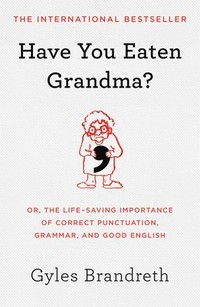
Have You Eaten Grandma?Have You Eaten Grandma?: Or, the Life-Saving Importance of Correct Punctuation, Grammar, and Good English

by Gyles Brandreth

My original post
I remembered rating this higher, but I’m not going to second-guess myself now. I’ll steal from my original conclusion for this: It’s the kind of thing that my college-bound daughter could use on her dorm bookshelf (and will probably find), and I know more than a few people who find themselves writing reports and the like for work who could use something like that. If you need help, might as well have a good time while you’re at it—and Have You Eaten Grandma is just the thing.

3.5 Stars

Dreyer’s EnglishDreyer’s English: An Utterly Correct Guide to Clarity and Style

by Benjamin Dreyer

I haven’t written a post about this yet, but it’s a great book. I can see why it was so popular this year—so much so that it got its own card game! The only more useful book I read in 2019 was the next one on the list. I’m not sure if I read something that made me laugh more. Fun, smart, incredibly quotable, and a resource you’ll return to time and time again.

5 Stars

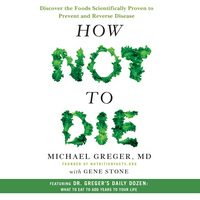
How Not to DieHow Not to Die: Discover the Foods Scientifically Proven to Prevent and Reverse Disease

by Michael Greger M.D. FACLM, Gene Stone

My original post
One of the doctors that I’m seeing this year recommended this book to me, and it’s literally been a life-changer. This is an information-packed resource. But it’s not dry—Greger tells this with humanity, wit and concern. It’s a great combination of theory and practice.

4 Stars

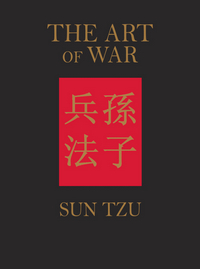
The Art of WarThe Art of War: A New Translation

by Sun Tzu, James Trapp (Translator)

My original post
The classic text about military strategy—a great combination of psychology and management. It’s simple and profound, and approachable enough that there’s no excuse for not reading it.

5 Stars

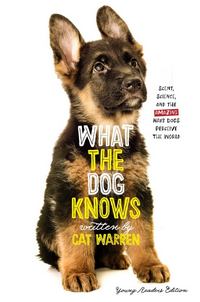
What the Dog Knows Young Readers EditionWhat the Dog Knows Young Readers Edition: Scent, Science, and the Amazing Ways Dogs Perceive the World

by Cat Warren, Patricia J. Wynne (Illustrator)

My original post
I loved the “adult” version of this a couple of years ago, and this is just as good—but edited so that middle-grade readers can tackle this exploration of the life of Working Dogs and their handlers.

4 Stars

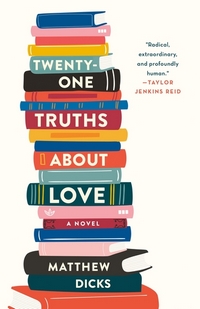
Twenty-one Thoughts About Twenty-one Truths About Love by Matthew Dicks

Twenty-one Truths About Love

Twenty-one Truths About Love

by Matthew Dicks

Hardcover, 352pg.
St. Martin’s Press, 2019

Read: December 5-9, 2019
Grab a copy from your local indie bookstore!

NOVEMBER 4
8:10 AM

5 Problems with Lying
1. We lie most often to the people we love.
2. There is no greater shame than getting caught in a lie.
3. A lie often requires additional lies, making it impossible to ever come clean.
4. Liars are the worst human beings.
5. Lies always cover up the worst parts of you.

NOVEMBER 4
8:40 AM

How liars with the best intentions are like the owners of every iteration of Jurassic Park
They never set out to hurt anyone.
They operate with enormous hubris.
Denial both perpetuates and intensifies the problem.
The situation inevitably gets worse and worse as time goes by.
The end is never pretty.

1. Yes, that’s how this entire book is written.

2. No, it doesn’t get old or tiresome or start to feel overused. In fact, you’ll probably end up wishing you could read more books written like this.

3. But you’ll know if you did, they’d feel like cheap rip-offs of this great idea.

4. Some time back Daniel Mayrock’s therapist wanted him to keep a journal, making lists about his life/likes/thoughts was the compromise they reached. Now, this is how he processes things in his life, tracks ideas, and even occasionally plans things (including incredibly stupid things that even he realizes that he shouldn’t be planning).

5. A year ago, Daniel quit his job as a teacher to open a bookstore.

6. The bookstore is struggling, and he’s losing money

7. The lying that he’s focused on in that quotation above (and throughout the book) is primarily focused on that—Daniel’s lying to his wife to the extent she thinks they’re turning a profit

8. Other things that Daniel lies to Jill about include: his interest in/preparedness for having a baby (not just about the financial strain this would be, but that’s a big chunk of it); and the amount of jealousy he has toward his wife’s first husband, who died young.

9. The book contains the cutest authorial cameo this side of the stand-alone novels that Brad Parks has been putting out lately.

10. This guy is so addicted to Little Debbie Snack Cakes, I’m beginning to wonder if the frosting is laced with nicotine.

11. We don’t get to know Jill very well, because this book is about what’s going on in Daniel’s mind, with a focus on his issues, not the people around him. We know she has trouble with the principal at her school, that she really wants a baby, is still in love with her dead husband—and is apparently crazy about Daniel (not that he’s great at seeing it).

12. The other big thing we learn about her is that she is really bad at putting away clothing after it’s been laundered.

13. I mentioned earlier that Daniel plans something incredibly stupid, with the goal of helping finances. It is incredibly stupid, but along the way, he unintentionally makes a friend. My sole complaint with this book is that we don’t get to spend more time with this friend. Thankfully, we get enough to enjoy him.

14. I spent a lot of time thinking this plan was a fantasy/daydream kind of thing that he was indulging in—and liked it. When I realized (later than I should have) that Daniel was serious about it, I worried that this would ruin the book for me. It didn’t, so I’m glad I didn’t give up on it.

15. You’d think that given the unique way this book is written in that you’d speed through it in an afternoon.

16. You’d be wrong—it’ll take you about as long as any other 350-page book would take to read. You end up having to think a little bit more about the words than usual to piece together the story from the snippets given in the lists. (this is not a complaint, it’s an observation)

17. This is one of the funniest books I’ve read this year. But it’s not all about the laughs—there’s brutal honesty, there’s the inherent ugliness of jealousy, the despair of hopelessness, Daniel’s self-loathing at lying to his wife . . . Daniel’s a great, flawed, human character that you can’t help but root for (including rooting for him addressing some obvious character flaws).

18. I remember in a Creative Writing Class in College spending about 40 minutes going over the rules/strategies involved in using lists in fiction. I’m pretty sure that Dicks breaks half of them—and the book is better for it. I’d love to discuss this book with that instructor. (Unlike a lot of what I read, I can see her enjoying this book and appreciating the craft). The execution is perfect—and it’s easy to tell that, if it wasn’t this would’ve been a disaster of a novel.

19. No, I did not sit in my car weeping while reading the end of this book.

20. If the eponymous title was Thirty-Six Truths . . . I might have. I probably would have. (It might have only taken 25 truths)

21. I’ve been telling myself for years that I needed to pick up another Matthew Dicks novel, and I’m so glad that I did and that it was this one. It’s one of my favorite reads of 2019.


5 Stars2019 Library Love Challenge

This post contains an affiliate link. If you purchase from it, I will get a small commission at no additional cost to you. As always, opinions are my own.
Page 11 of 24

Powered by WordPress & Theme by Anders Norén