Tag: 5 Stars Page 18 of 24

The Force by Don Winslow

Oh fer cryin’ out loud, after I finished writing this, I noticed that the publisher’s description starts with the same quotation I started my post with. I swear I didn’t steal the idea.

The ForceThe Force

by Don Winslow

Hardcover, 479 pg.
William Morrow, 2017

Read: June 26 – 29, 2017

Our ends know our beginnings but the reverse isn’t true.

If Denny Malone’s beginning knew his ending, would it have prevented anything? Or would Malone have convinced himself he could find a work-around? Probably the latter.

Denny Malone is a one of NYPD’s Finest — a detective sergeant, and the head of a task force (known as “Da Force”) on the front line of the War on Drugs. He and his team — who’ve been together for years — rule Manhattan. Sadly — and perhaps naturally — they’re corrupt. They take (and are given) money, drugs, weapons and more from criminals (of all levels), lawyers and others. They pass on some of these to lawyers, city officials and other cops — and keep a whole lot for themselves. Through their methods, they do keep some sort of peace on their streets — sure, they pass on some of the violence and poison on to other parts of the city, but that’s not their concern.

After doing this for years, the wheels start to come off — it’s tough to say what the first domino (to mix metaphors) was to fall, but once it does, there’s nothing stopping the rest — as much as Malone may try. The result is one of the most powerful crime novels I’ve read in years.

The characters are rich, fully developed and they seem like they could step out of the book onto the streets of NYC with no trouble. You are sickened by them, want to see them stopped — yet start to understand them, like them as people, and — despite yourself — hope at least some of them get away with it all. At one point, I was laughing at their banter like we were all old friends hanging out, and it bothered me how much I enjoyed them as people (that faded somewhat in a few pages).

This book feels like the love child of Tom Wolfe’s The Bonfire of the Vanities and Nicholas Pileggi’s Wiseguy. You really feel like you understand how the city of New York is run — at least parts of it: the police, elements of the criminal world, and parts of the criminal justice system. Not how they’re supposed to run, but the way it really is. He achieves this through a series of set pieces and didactic pericopes. Three quick examples: you get Malone musing on how the way that cops have to learn how not to care about citizens and criminals, because otherwise, they’ll end up hating them. A great section showing how The Force goes out on the town to celebrate. The following quotation about the attitude of a prosecutor and Malone about his creative use/understanding of the truth while testifying:

Because the real truth that they both know is that without cops “testilying,” the DA’s office would hardly get any convictions at all.

This doesn’t bother Malone.

If the world played fair, he’d play fair. But the cards are stacked against the prosecutors and police. Miranda, Mapp, all the other Supreme Court decisions, give the advantage to the skels. It’s like the NFL these days–the league wants touchdown passes, so a defensive back can’t even touch a receiver. We’re the poor defensive backs, Malone thinks, trying to keep the bad guys from scoring.

Truth, justice and the American way.

The American way is, truth and justice maybe say hello in the hallway, send each other a Christmas card, but that’s about the extent of their relationship.

You throw that kind of stuff in with a compelling plot, believable characters, striking details and Winslow’s voice? You’ve got yourself a dynamite book.

If someone had told me this was non-fiction, I’d believe it (maybe I’d balk at some of the details of his personal life being told in a Non-fiction book, but otherwise…). It rings true — and I spent most of the book just hoping that Winslow was exaggerating and fearing that he was holding back. The whole thing feels real, it seems ripped from the headlines, and is beyond engaging — it’s engrossing, it’ll take over your mind, make you see deception and corruption everywhere.

Winslow nailed it. It’s just mindbogglingly good. I’m going to over-hype it if I keep going — so I’ll leave it at that. Get this book and then strap in for one of the best reads you’ll have this year.

—–

5 Stars

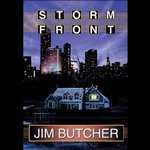
Storm Front (Audiobook) by Jim Butcher, James Marsters

Storm FrontStorm Front

by Jim Butcher, James Marsters (Narrator)
Series: The Dresden Files, #1
Unabridged Audiobook, 8 hrs., 1 min.
Buzzy Multimedia Publishing Corp., 2009

Read: May 18 – 19, 2017


Okay, I know myself well enough that I’m pretty incapable of critical thought when it comes to The Dresden Files — which is not to say I think the books (especially this one) are perfect, but I can overlook all the flaws — and those I can’t I can shrug off. It’s been years — almost a decade — since I re-read this, and I’d forgotten some details, but the core is pure Dresden. And the best of all is that I know they get better from here.

So I’m not going to talk about the book, really. For the 2 of you who don’t know, Harry Dresden is a Marlowe/Spenser-type of P.I. (but not really) who happens to be a wizard. He consults with the police on the supernatural front and does a little business helping private citizens. That’s all the setup you need.

What I want to talk about here is the audiobook portion of it — I’ve heard for years that the James Marsters narrated audiobooks in this series are fantastic. I was prepared to be thoroughly entertained. But not as much as I was. Marsters was just incredible, almost unbelievably good. This was, as the best audiobooks are, a performance, not just a reading. And this was one of the best performances I’ve witnessed from Marsters. Had I the means, I’d have bought the rest of the series Friday night after I finished this one.

Butcher fans, if you’ve only read the book, you need to listen to them, too. Marsters brought our man to life.

—–

5 Stars

Learning to Love the Psalms by W. Robert Godfrey

Learning to Love the PsalmsLearning to Love the Psalms

by W. Robert Godfrey

eARC, 263 pg.
Reformation Trust Publishing, 2017

Read: April 2 – 16, 2017


Godfrey’s Afterword begins:

In our study, we have made a beginning of learning to love the Psalms. We have looked at some of the attractions and difficulties of the Psalter. We have summarized the great themes, subjects, and emotions of these songs. We have examined some of the forms and uses of the Psalms. But this book is at best an introduction and invitation to growing in an appreciation of the Psalter. You need to carry on with what we have started together.

That right there is a great 80 word summary of the book — both in intention and execution. If that summary appeals to you, you’ll dig the book.

Godfrey starts with a few short chapters talking about the Psalter as a whole. He discusses his own personal history with the Psalms and what attracted him to them and the benefit he’s gained — then a very quick look at Psalms in Church History (notably their impact on the Reformation). Then he discusses why people are discouraged from getting into them, how to overcome that, how to approach the Psalms and some basic things to think about why studying them/using them for yourself. He gives 10 questions to use when coming to any Psalm that are easy enough for any rookie to put to use and also for any one who had studied the Bible for years to benefit from.

Following that he looks at each of the 5 collections or books or whatever you want to call the groupings of the Psalms that make up the whole Psalter. These would be:

  • BOOK ONE – THE KING’S CONFIDENCE IN GOD’S CARE: Psalms 1– 41
  • BOOK TWO – THE KING’S COMMITMENT TO GOD’S KINGDOM: Psalms 42– 72
  • BOOK THREE – THE KING’S CRISIS OVER GOD’S PROMISES: Psalms 73– 89
  • BOOK FOUR – THE KING’S COMFORT IN GOD’S FAITHFULNESS: Psalms 90– 106
  • BOOK FIVE – THE KING’S CELEBRATION OF GOD’S SALVATION: Psalms 107– 150
  • THE CONCLUSION OF THE PSALTER: Psalms 146– 150
  • In these parts, Godfrey explores the structure and themes of each and then looks at at least 5 psalms in that book — opening them up for the reader, seeing how they work together with the other around them, in some cases how they don’t fit the theme of the rest of the book. All of these are brief, but thorough, chapters (an overview chapter and then individual chapters on each Psalm) — insightful and helpful on their own — much more so when combined with the other chapters in that section or the book as a whole. But really, if you wanted help with, say, Psalm 78 (to choose at random) as a refresher for something — the chapter on that from this book would be a great way to start. Godfrey explains:

    The intention of this study is not to provide an exhaustive exegesis of each psalm considered, but rather to open a way to a growing understanding of the Psalms. God gave His people the Psalter so that we could more and more be defined by it, so that we could find our identity in it. We as the people of God today need to learn for ourselves what it means to live in the Psalms. In a real sense, they give us words to express what it means to live as a Christian. We should live in and out of the Psalms.

    “They give us words to express what it means to live as a Christian ” I love that line — as I have really started to explore the Psalms for myself over the last couple of years, that’s really what I’ve been seeing and will immediately start using that phrase to describe it.

    These sections of the book are the heart of it — as helpful as the initial chapters are. It’s not a commentary, as he states, but it does do a great job of jump-starting your individual study. I probably jotted down more quotations from these sections than I have from others lately, and the temptation to list them all is great. I’m going to limit myself to three, just so you can get a taste of Godfrey’s language and the variety of topics/themes he addresses:

    The difference between this praise song [based on Psalm 103] and the actual psalm [103] is striking. The song is repetitive in vague terms: He has done great things. The psalm, by contrast, is specific about the various blessings received. Taking the psalms as our standard of praise should warn us against the repetitiveness of many contemporary songs and lead us to praise that is much more pointed and specific. Genuine gratitude reviews in detail the wonderful gifts of our God.

    — Both a pointed critique and a challenge/encouragement for how to go express our gratitude biblically.

    From Psalm 73:

    Pictures that reconstruct the temple almost invariably misrepresent the scene as very clean and tidy. In fact, the altar must have been a rather horrible sight of blood and charred remains. It was surrounded with the odors of blood, burnt flesh, and death. Flies probably swarmed around. What the psalmist saw was what God intended His worshipers to see: that the wages of sin is death in all its horror. The altar testified that sin leads to destruction, and the only way to avoid the just consequences of sin is to find a substitute and sacrifice. The altar testified that the blood of a spotless substitute was necessary for sin to be forgiven. . .The altar and the sacrifices point to Jesus and His saving work. He is the true sacrifice and substitute for His people.

    From his discussion of Psalm 74:

    Here is a concern often repeated in the Psalter: Why does the Lord not act more promptly in response to the needs and prayers of His people? Why? First, we should notice that this questioning by the psalmist stands against the advice offered today by some well-meaning Christians who say that we should never ask why. Such advisers voice a kind of Christian stoicism, teaching that we must just grin and bear it. The psalmist, by contrast, gives strong expression to the depths of his emotions. Indeed, God, by the example of the psalmist, encourages His people to a refreshing honesty in prayer, including honesty in expressing our emotions. Fear, anger, frustration—all are emotions that we find poured out in the Psalter. But we must remember that they are emotions expressed by a believer who still trusts his God. It is immediately after these questions that the psalmist asserts his faith in the words of verse 12.

    Again, I could keep going, but I’m going to force myself to stop. But we have here gratitude, sacrifice, mercy, despair, fear, faith and that’s just in 3 Psalms — only bits of his explorations of 3 Psalms, actually. Godfrey’s guide to the Psalter touches on almost as many aspects of the Christian life as the Psalter itself does.

    I should note that this one of those books whose end-of-chapter discussion questions are actually worth reading and using. It’s such a rarity, that it needs to be pointed out when you do see it.

    I’m not going to say that this is a flawless work, there are a few places where my notes consist primarily of question marks or “that seems like a stretch.” But most of those are on comments about the structure of the Psalter as a whole, about the organization of the “books” of the psalms and that sort of thing — which isn’t to say I disagreed with anything he said there, it’s just that he didn’t convince me. But given my lack of study on this sort of thing, it’s very possible I just need to think about it all some more. Mostly my notes are along the lines of “excellent,” “great point,” or “why didn’t I have this book years ago to help me with topic/discussion X?”

    Earlier, I quoted from the Afterword, which could’ve been longer (most of the book could’ve been longer, really — but it would’ve become imposing, intimidating and less attractive for its target audience if it had) but was a great way to sum up the book and spur the reader on for further study, reflection and devotion in the Psalms. It served as a good call to action with some very handy tips.

    Now, I must admit I didn’t read this one the way I should’ve — it would’ve taken me a couple of months to do so and I really figure that Reformation Trust wanted something a bit more timely than that from a NetGalley offering. This is the kind of book to read with a Bible and notebook within reach and to use both of them frequently. It’s a book that takes study and time to get everything out of — and I fully intended to return to this book soon for just that purpose — which isn’t to say that it’s not approachable or that it’s difficult to read. Not at all, this is one of the least technical books I’ve read in a long time when it comes to Bible Study. There’s nothing here stopping anyone from profiting from the book. But to get everything out of the volume, you need to put in the time to read what Godfrey says and reflect on it while reading (or singing) the Psalms discussed and working through them on your own.

    All in all, this is a very helpful book — a good study, a good aid for individual/group use (I think it’d be great for family worship/devotions/whatever you call it), and an encouragement to dig into one of the more intimidating yet wonderful books of the Bible in order to find those “words to express what it means to live as a Christian”. I heartily recommend this book.

    Disclaimer: I received this eARC from Reformation Trust Publishing via NetGalley in exchange for this post — thanks to both for this, I benefited from this greatly.
    N.B.: As this was an ARC, any quotations above may be changed in the published work — I will endeavor to verify them as soon as possible.

    —–

    5 Stars

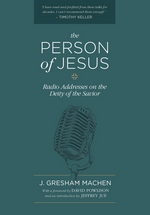
    The Person of Jesus by J. Gresham Machen

    The Person of JesusThe Person of Jesus: Radio Addresses on the Deity of the Savior

    by J. Gresham Machen

    Paperback, 101 pg.
    Westminster Seminary Press, 2017

    Read: March 19, 2017


    If it’s J. Gresham Machen, it’s gotta be good! Yeah, that might be an oversimplification, but it’s true.

    This book is made up of part of a series of radio addresses Machen gave in 1935 — this selection, obviously, focusing on the Person of Christ — his Deity (and what it actually means to describe him as such), what He says about Himself, and what He demonstrated about Himself. These are warm chapters that must’ve been easy to listen to (at one point Machen apologizes for technical language in a way that brought a smile to my face), but rich in teaching. I only wish we had the recordings. I don’t know how, but even with these addresses coming from eight decades ago, they feel like the could’ve been delivered last week.

    My favorite chapter, probably, was on The Sermon on the Mount — it’s a long-standing favorite of liberal theologians, and other non-Christians as a way of talking about the “ethics of the New Testament” apart from anything supernatural, miraculous or theological. Machen directly takes on this idea and shows how it’s baseless and impossible to actually do.

    These addresses were given towards the end of this life, after he’s gone through “The Presbyterian Conflict” and all the associated drama and trials. Through that experience, he’s a bit more direct. In Christianity & Liberalism Machen’s no less forthright, but he talks about Liberal Theologians, or “other teachers”, etc. Here, he doesn’t waste time — he just calls them “unbelievers.” It’s the same thing, as he demonstrated in his earlier work, but he doesn’t do that here.

    This is how apologetics should look — easy to understand and follow, yet rich in doctrine and the Bible. Welcoming and winsome while not giving an inch to his opponents. As always, with Machen, this is how we should all be doing it.

    —–

    5 Stars

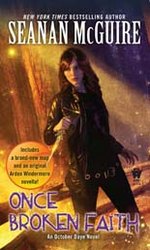
    Once Broken Faith by Seanan McGuire

    Once Broken FaithOnce Broken Faith

    by Seanan McGuire
    Series: Toby Daye, 10

    Mass Market Paperback, 350 pg.
    Daw, 2016

    Read: January 14 – 17, 2017

    My name is October Daye. My father was a human; my mother was, and is, a Firstborn daughter of Oberon, making her one of the more powerful people among the fae, and a definite pain in my still-mortal changeling ass. I was born and raised in San Francisco, which explains my willingness to stay in a city that’s historically been full of people who insist on trying to kill me at the slightest provocation. Faeries are real. Magic is real. My tendency to greet dangerous situations by plunging headfirst and seeing how long it takes to get myself covered head to toe in blood is also real.

    I live an interesting life.

    It drove me crazy to not be able to get to this for four months — and now having read it, I think I’m even more mad that I put it off. But the important thing is that I got to read it. Now I have to try to do something more than sound like raving, mindless fanboy here. Which will be difficult, because when it comes to Toby Day, that’s what I’ve been since book 3 (and was pretty close to it since halfway through book 1).

    It’s been a few weeks since Toby overthrew the King in the Mists and things are pretty calm — she, her Fetch, her Squire, her fiancée and the rest of her friends are happy and comfortable. Which we all know can’t last for long.

    What ruins this state this time is a giant conclave of North American Fae royalty being held in Queen Arden Windermere’s knowe — overseen by the High King and Queen. Kings, Queens and other nobles that we’ve met and/or heard of already — and many others — are meeting to discuss and decide what to do with the cure for elf-shot. The political and legal ramifications of the new cure are far bigger than anyone — including readers — thought. The discussion will prove to be a clash of traditionalists, reform-minded people, class-conscious rulers, those in favor of helping Changelings, and those who can’t be bothered to care about Changelings.

    As this is a Toby Daye book, it doesn’t take too long for dead bodies to start to show up — and the blood (much of it Toby’s) starts to flow. As the hero of the realm, it’s Toby’s job to find out who’s responsible and stop them from shedding any more blood.

    So there’s political intrigue, a closed room (well, knowe) murder mystery — but that’s not where the heart of the book is. It’s in Toby and her family. Toby and her liege are still on the outs, Arden’s brother and closest friend were elf-shot, Quentin’s parents are in town and watching him closely, Tybalt has to keep her at arm’s length to preserve his independence as King of the Cats in this setting, and so many other things. There’s plenty of drama in each area of the book, enough to satisfy any reader, but when you add them all together — it’s that special blend of magic that only someone as good as Seanan McGuire can conjure.

    This one ticked every emotional check box for me — including the ones that made me very aware of all the dust in my immediate vicinity. I can’t think of a problem with this one — I’m not so much of a fanboy that I can’t see problems with McGuire’s work, but the last few in this series have been so great. There are few books this year that I’m looking forward to as much as/more than the next Toby Daye, and books like Once Broken Faith are the reason way. It doesn’t get much better than this.

    —–

    5 Stars

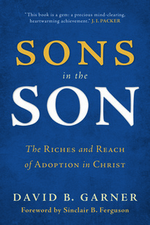
    Sons in the Son by David B. Garner

    Sons in the Son Sons in the Son: The Riches and Reach of Adoption in Christ

    by David B. Garner

    eARC, 400 pg.
    P & R , 2017

    Read: October 23 – December 11, 2016

    At the heart of Pauline soteriology is the redemptive-historically charged concept of adoption (huiothesia). For Paul, the entirety of our redemption—from the mind of God before creation itself until its eschatological completion in our bodily resurrection—is expressed by filial reality, filial identity, and a filially framed union. As we will see in the following pages, this filial grace in Christ Jesus is expressly and implicitly, in Pauline theology, adoption.

    I remember the first time I was really introduced to the doctrine of Adoption — sure, the idea had been mentioned throughout my Christian life, and using some material from an Ancient History class on Roman culture, I’d developed my understanding a bit, but it wasn’t until I’d been Reformed for a year or two that I heard someone seriously discuss the doctrine — the elder of the church I belonged to at the time walked us through the Westminster Confession’s teaching on it — the most robust development and explanation of the doctrine in Reformed Confessional history. I recall being struck by this teaching, how vital it was — and then hearing very little about it (on the whole) for the next couple of decades.

    You see, despite being one of the three benefits the Westminster Shorter Catechism says that they who are effectually called partake of in this life (the other two being justification and sanctification, with several benefits that flow from or accompany these three), by and large, it’s been ignored in favor of the other two. Garner will describe it as a “deafening theological silence characterizing huiothesia [adoption] since the WCF.” It’s a slight exaggeration, but only slight.

    Garner wants to push this doctrine to the forefront, to the limelight that it deserves, has pursued this in various forms throughout the years, and now brings it all into focus through this outstanding book.

    He begins by describing various approaches to the topic — historically, linguistically, and so on — and sets out how he will proceed and build upon the best (primarily: Calvin and Westminster). This is a daunting section, but does well setting forth the landscape. It was interesting and thorough, I don’t know that it wowed me at any point, but it certainly whet my appetite for that which lay ahead.

    Part 2 is where the major Biblical heavy lifting takes place — Garner goes for in-depth exegetical looks at each text that touches on the topic, building both a case for each text individually, as well as a Biblical-Theological whole. I will be honest, a lot of this went over my head — at least the details. But Garner writes in a way to ensure that even untrained laity can follow the his train of thought.

    In part 3, Garner brings Adoption into Systematic Theology, primarily discussing its relation to Justification and Sanctification. He brushes up against some of the recent Justification controversies here, and demonstrates how a better understanding of Adoption, can (and should) play a significant role in resolving them. He does similar work with some Sanctification controversies — but not as much, partially because Justification has been a larger issue of late, and because historically Adoption has been (incorrectly) considered as forensically as Justification. This section probably takes more work to understand than the Exegetical section, but that could be just because I don’t try to get too much of a handle on the Greek, and I don’t have that hang up with English. Takes more work, sure, but doable.

    Garner isn’t writing for laity explicitly, but he doesn’t write in a way that’s only accessible by theologians and scholars. Yeah, you sometimes there’s a lot of technical jargon to wade through, but it can be done (if nothing else, you feel smarter — and probably learn a couple of things). It was a bit weightier than most of what I’ve been reading lately, and I took my time with it to make sure it didn’t overwhelm me (it easily could have).

    It’s absolutely worth the effort — this book is full of pastoral application, it will help you understand and appreciate the Pauline texts — and will deepen your assurance. This is quite possibly the best book I’ve read this year. Read this one. I will re-read it — I’m even going to buy a hard copy when this is released, you should, too.

    Disclaimer: I received this eARC from P & R Publishing via NetGalley in exchange for this post — thanks to both for this. I meant it, I’m buying a hard copy as soon as I can.
    N.B.: As this was an ARC, any quotations above may be changed in the published work — I will endeavor to verify them as soon as possible.

    —–

    5 Stars

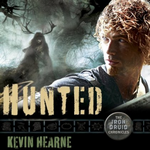
    Hunted (Audiobook) by Kevin Hearne, Luke Daniels

    Hunted Audiobook Hunted

    by Kevin Hearne, Luke Daniels (Narrator)
    Series: Iron Druid Chronicles, #6

    Unabridged Audiobook, 9 hrs., 52 min.
    Random House Audio, 2013

    Read: November 21 – 23, 2016


    I loved listening to this one this week — hated for it to end. I’m not sure why this volume works so much better for me than others in this series (not that there’s a bad one in the bunch), but it does. I’m still pretty satisfied with what I wrote the first time I read the book, so I’ll pretty much copy and paste it below with a few minor tweaks and a word or two about the audio performance.

    Try as I might, I can’t figure out a way to get Goodreads to let me give this as many stars as it deserves — 6. I don’t think it’s possible for Hearne to write a bad book, but Hunted is beyond good. Not that Hearne has ever seemed anything but self-assured and capable (sorta like Atticus), but he’s really firing on all cylinders here — from the jaw-dropping and series-changing events of Chapter 1 through all the plot, twists, character moments, quips, action, and development that follows — Hearne delivers with verve and panache.

    I don’t know how to describe the storyline without plunging neck-deep into spoiler territory, so let’s just say that this picks up minutes (if not seconds) from Trapped and keeps going from there. Virtually every character from the previous five novels makes an appearance (if only with a name-drop), and we get a few new characters from the pages of myth (Irish, Greek and Roman predominantly, but most of Europe is well-represented here) as well from Hearne’s own imagination. Our favorite Druids face off with a couple of new opponents, try to broker a peace with Greek and Roman pantheons, prepare for Ragnarok, and try to suss out who amongst the Tuatha Dé Danann might be working to bring about their untimely demise. (clearly, our heroes don’t get a lot of rest in these fast-moving 300 pages to get all that addressed)

    Not that Atticus has had an easy go of it since the beginning of Hounded, but Hearne really puts the hurt on him this time around. He has two of the closest calls I can remember a first-person narrator dealing with in recent history — and he gets both of them in one book! Though honestly, the emotional and intellectual challenges he faces are probably harder for him to deal with — his Bear charm and tattoos can’t help him with those. Naturally, he rises to the challenges and even pulls off a couple of schemes that would make his buddy Coyote proud. While remaining Atticus at his core, there are flashes of a ruthlessness and hardness that we haven’t seen much of before. A good reminder that a Celtic warrior was formidable opponent (thankfully, there are things that still make him balk!)

    While most of the book is told from Atticus’ POV as usual, we do get a few chapters from Granuaile’s POV — Daniels is able to pull these off well, I should add. I appreciated seeing things from her perspective (not just the parts that Atticus couldn’t relate, either) and I learned a lot more about a character I thought I knew pretty well already. I think she’s just about at the point where we could get Granuaile novels with minimal use of Atticus (see the Joe Pike novels) and not feel we were missing much — if anything, the fight scenes might be a bit more savage. There’s a danger here (I think Atticus himself sees this) in her becoming too much of an eco-warrior (think Captain Planet as told by Tarantino), and I think that could make for problematic reading if it went on too long or too extreme. But until then, I’m enjoying the heck out of this warrior woman.

    If you’re already reading this series, you’re in love with Oberon (or have no soul). If you’re not reading it, you’ve probably not read this far — but if you have, just know that it’s worth buying the 6 books just to spend time with this most wonderful of Irish Wolfhounds. This is the best use of Oberon yet — of course, he’s hilarious and inappropriate as always — but he also gets to be heroic, inspiring and even moving. I’m not kidding, my eyes got misty a couple of times just because of him. I remembered — very clearly — Oberon’s response to Atticus’ shooting as very moving. Luke Daniels’ work made it heartbreaking (thankfully, I knew what happened afterwards, or I’d have been openly weeping at my desk). A couple of hours later, I did audibly crack up when Oberon used Mercury’s leg for a fire hydrant. Similarly to the way that the audio performance made Oberon’s grief more tangible, his joy in the Epilogue was incredibly contagious.

    Any book that does all that while pulling off things like citing Wheaton’s Law within a few pages of quoting Dante (in the original!) needs to be celebrated. Add in Daniels’ outstanding performance? An absolute winner.

    —–

    5 Stars

    ‏Eleanor & Park (Audiobook) by Rainbow Rowell, Rebecca Lowman, Sunil Malhotra

    Eleanor & ParkEleanor & Park

    by Rainbow Rowell, Rebecca Lowman & Sunil Malhotra (Narrators)

    Unabridged Audiobook, 8 hrs., 57 min.
    Listening Library (Audio), 2013
    Read: May 31 – June 1, 2016


    Okay, so yesterday I talked about a book that was hurt by the audio narration — this is one that’s helped by it (but not much, because it really doesn’t need much). I read this back when it came out, and gave it 4 Stars — which boggles my mind, was I a harsher grader back then? I remembered liking it more than that, though. Anyway, this audiobook is the perfect example of what the medium can be.

    It perfectly captured the flavor, the emotion and the detail of the original. Now, it didn’t become all about the performance, the narrators brought the words to life, but not at the expense of the text.

    Lowman and Malhotra were spectacular — they were Eleanore and Park. You fall for them while the characters were falling for each other, and when they expressed emotion, you certainly felt it. Well, I don’t know about “you,” but definitely me.

    I’m really not sure what else I can say. This is a perfect story about first love, how it defines who you are in a way you didn’t expect — how it reveals the best of you and improves the worst of you. Using these two social misfits to tell this story grounds it in a way that the Prom King and Queen couldn’t — I just loved it. It’s probably the best thing Rowell’s done, and it’s one of the best audiobooks I’ve ever heard.

    —–

    5 Stars

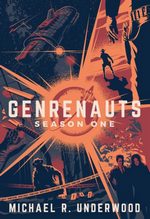
    Genrenauts: The Complete Season One Collection by Michael R. Underwood

    Genrenauts: The Complete Season One CollectionGenrenauts: The Complete Season One Collection

    by Michael R. Underwood
    Series: Genrenauts, #1-6

    Kindle Edition, 544 pg.
    2016


    Parallel to our world are various worlds populated by fictional characters in a wide variety of genres (Western, SF, Romance, etc), and when things go wrong in the stories, things go wrong in our world. For example, broken Romance world stories = higher divorce rates here. In this world, there are a number of teams of story specialists who shift to the other worlds to fix the stories and set things back on course here. Leah Tang — a struggling stand-up comic by night, struggling receptionist by day — is the newest recruit. Join her as she learns the ropes, rights wrongs, struggles with ethics, and gets shot at while cracking jokes.

    Originally printed as 6 episodes in 5 novellas, now collected in one season-long omnibus, Genrenauats as become one of my favorite series this year and I’m glad to get one more chance to talk about it with the release of the collection this week.

    There’s a great cast of characters here, all of which deserve the reader’s time and focus. For example, I was tempted to not-really-ignore, but relegate Angstrom King to back burner status in my mind. He’s the leader, he points the team in a direction, but the real excitement’s with the rest. This was a mistake on my part — think of him like Capt. Picard. Sure, for the most part he sits around in his ready room with some Earl Gray (hot) — but really, some of the more interesting things that happen in he series are because of his actions. King’s not Jean-Luc, but there’s a similar quality.

    I love a good team — fiction, TV, comics, you name it — the interaction, the teamwork, the dynamics, there’s really nothing like it. There’s a great team in these novellas — some of the intra-team camaraderie got pushed aside for a little romance that doesn’t really work for me (but I get why it would for others and appreciate the way Underwood’s tackling it). Overall, it’s built on solid interactions and relationships that have plenty of room to grow and develop over the many seasons that we hopefully get of this.

    Each adventure gives Underwood an opportunity to talk about various genres — to talk about the clichés, tropes, archetypes, pluses, minuses, and so on of each genre. And one visit to each won’t be enough to fully explore these. Don’t get me wrong, we’re not talking Master’s Theses-esque discussion, he jokes about them, plays with them, sometimes turns them upside down while telling his tale.

    The collection includes:
    The Shootout Solution — We meet Leah Tang, Angstrom King and the rest of his team. We’re also introduced to the concept of Genrenauts, Story Worlds, the effects that they can have on our world — also, we get a pretty decent story in Western World. Not bad for 148 pages. (For more details, you might want to read my original blog post, my blog post about the audiobook)

    The Absconded Ambassador — The team goes to Science Fiction World to help out on a DS9-like Space Station. On the verge of a major treaty being finalized and signed, the Terran ambassador has been kidnapped. It’s up to King and co. to rescue the ambassador and keep the shaky alliance from crumbling in her absence. We learn a little more about everyone, and while having a lot of fun with genre conventions. ( my original blog post, my blog post about the audiobook)

    The Cupid Reconciliation — The team gets back up to full strength in time to go rescue a Rom-Com gone awry. Underwood really lets things fly when it comes to observations about the genre and playing with conventions while using them for comedic — and narrative — value. Also — a couple of seeds that were planted in the first two novellas are watered enough that you can see season/season-plus story arcs beginning to grow. The series took a big jump in quality here. ( my original blog post)

    The Substitute Sleuth — A Police Procedural needs some help, a no-nonsense cop’s off-the wall/out-of-the-box partner takes a bullet and another pair of mismatched detectives needs to come in and close the case. We get some major backstory stuff here, and the season arc is moved along nicely. The detective story itself isn’t my favorite, but what Underwood does with the tropes, themes, conventions, etc. is really good — it is more of a TV detective story than a novel detective story. Think Castle, not Harry Bosch (whoops, thanks Amazon, you ruined that point…). ( my original blog post)

    The Failed Fellowship (Part 1 & 2) — This think kicks off with Leah Tang ranting about fantasy fiction and 5 episodes later, she gets to spend 2 episodes in Fantasy World, where a Chosen One with a Magic Artifact story has fallen to pieces. Leah’s in hog heaven, the rest of the team are at the top of their game and Underwood is, too. Rollicking good adventure. Best of the batch in every way. ( my original blog post)

    I dig this series, and having all of the novellas in one handy collection is going to make it easier (I hope) for others to discover it — the collection is also a little cheaper than buying all the individual stories, which will also going to make things easier for people to discover it. If you haven’t dipped your toe in this world/these worlds yet, what are you waiting for?

    —–

    5 Stars

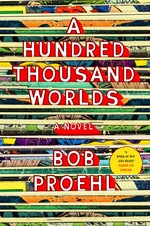
    A Hundred Thousand Worlds by Bob Proehl

    This was supposed to post on July 21, believe it or not, but that morning before work, I gave it one final skim and decided it wasn’t right. I made a couple of notes and cancelled the post. And then promptly forgot about it. I’ve tried a couple of times since then to address the notes, but sadly, they were too note-ish and not enough worked out to really help me remember what I wanted to address. So…I’ve had to settle for this. The book is better than my post (they usually are, in case you haven’t noticed)

    A Hundred Thousand WorldsA Hundred Thousand Worlds

    by Bob Proehl

    Hardcover, 354 pg.

    Viking, 2016
    Read: July 13 – 16, 2016

    Only you can decide where your home is. And every good story is about finding your way there.

    I want to invoke The Amazing Adventures of Kavalier & Clay, or one of the Grossmans, or Ernest Cline — but who isn’t invoking them when it comes to this book? So consider them invoked, I’ve done my duty, and now I’m going to avoid them. Proehl’s book about people attending a series of Comic Conventions will attract those are into “Geek Culture,” but it’s not really targeted toward them (us). The book is set in the world of Comics and SF, but that’s it — it’s just where this novel about mothers and sons, artists of sundry stripes finding their place in the world, and a boy learning about story happens to take place.

    Val, an actress on a now-cancelled show that’s sort of X-Files mixed with Fringe (and how many of you want to watch that show, right now?) is spending a few weeks of the summer going from Comic Con to Comic Con on a cross-country trip with her son, Alex. She’s not an unemployed actor, she’s busy off-Broadway, but isn’t flush, so the Cons are paying their way to L.A., where a major shakeup in their family structure is going to take place. As they move West, we travel through time to trace Val’s relationship with Alex’s father, up to the devastating events that led to her moving to New York with her son and without her husband. Val is having a hard time wrapping her head around the fans attending the Cons and what they expect from her — but she’s getting it.

    Alex is almost too perfect — which is a pretty big danger when it comes to writing kids, they’re either too precious, too precocious, too stupid, too . . . well, you get the idea. Alex is clever, intuitive, and sensitive. He’s got a great imagination, and just needs a little direction as a creative-type. (N.B.: This is one of those paragraphs I needed to develop better and failed to, for those of you keeping score at home.) He’s the hinge that all this stuff hangs on — as much as this is a story about Val (more than anything else), without Alex it just doesn’t happen. Entire posts/articles/essays could and should be written about Alex — but they’ll have to be done by people better than me. He’s not entirely realistic, but he’s a great character.

    Gail is an up-and-coming comic writer, who may have found her level in the industry (lower than anyone wants). She has a couple of good friends who are rooting for her. While she travels form con to con, she wrestles with her own personal demons and history and dos what she can to help others with theirs. Her new friendship with Val is one of those things that will reward them both.

    Brett is an artist/co-writer of an indie comic with his long-time-friend. The two aren’t having the best time working together anymore, each getting distracted with their own projects. From future professional gigs to helping Alex out with his story.

    Alex’s “Idea Man” and the traveling troupe of female cosplayers are deserving of far more attention and analysis than I can provide — so let me just say that they’re all fun to read, thought-provoking and ignored at the reader’s loss.

    Val didn’t know the name, but she knew there was a lot of excitement around it. It’s something she likes quite a bit about this little world: the capability of those within it to get deeply and sincerely excited about things. She wonders how they fare in the real world, where excitement is poorly valued, and she tries to think of things she has been excited about. There are so few.

    If “the capability . . . to get deeply and sincerely excited about things” isn’t one of the best descriptions of contemporary Geeks, I don’t know what is.

    There are a handful of goodies for those who are into Comics, SF and whatnot — the Doctor Who analog is great, ditto for the Alan Moore and Green Lantern analogs. There are some that are more subtle, too. I think I got most of them, but I’m sure I missed a few.

    The writing is strong — although Proehl has a couple of ticks I could do without. For example, I’m not sure how many times he said something like, “Before she got her start in comics, Gail ran . . . ” and then talked about her blog. Once would’ve been enough with that (although it does fit in nicely with the origin-story thing he has going on, and maybe that’s the point). I don’t know that you could call this “light” at any time, but there is an optimism (mostly) throughout — but an optimism tinged with realism.

    At the end of the day, this was a very compelling tale, full of characters that you wanted to spend time with (more time with, actually). Proehl might give one or two storylines a very “happily ever after” feel, but some of them are left to the reader to conclude on their own. I liked that. Nicely written, compelling characters in a setting that is very relatable — how can I not love this?

    —–

    5 Stars

    Page 18 of 24

    Powered by WordPress & Theme by Anders Norén