Tag: 5 Stars Page 22 of 24

Ready Player One (Audiobook) by Ernest Cline, Wil Wheaton

Ready Player OneReady Player One

by Ernest Cline, Wil Wheaton

Unabridged Audiobook, 15 hrs and 46 mins
Random House Audio, 2011
Read: March 19 – 27, 2014

As much as I enjoy a good audiobook, I rarely have time for them, and I usually only listen to books that I’ve previously read. When my family needed something to listen to on a road trip last month, this was an automatic top contender — the printed version of this was probably my favorite book of 2011, and I was due for another read.

I’m so glad we picked this one, it was long enough (an important consideration for a road trip) and it was marvelously done. Wil Wheaton was an inspired choice to read this — not only is he an experienced, and accomplished audiobook performer (is that the right word?); but being who he is — an Internet/Nerd icon and a 1980’s child star — he adds a layer of authenticity and authority to the book.

I’m not going to talk about the book, I can’t. I’ve tried it before, and failed. But it’s just about perfect — funny, adventurous, immersed in pop culture (particularly from the 80’s, my formative years), smart, with heart — a lot of it.

So when you add one of the best performances of Wheaton’s career to that, you’ve got something worth spending 15 hours with. If only for his Sean Connery impression.* Wheaton captures the flavor, the pathos, the charm of the book and the characters that inhabit it. Go grab the book and give it a read. The audiobook’s almost as good. If you’ve read it, the audiobook’s a good way to revisit it.

—–

* There are several other “if only”s I could’ve used there, that’s just the first that came to mind. As Alan Sepinwall would put it, Deyanu!

—–

5 Stars

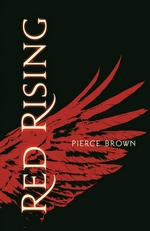
Red Rising by Pierce Brown

Red Rising (Red Rising Trilogy, #1)Red Rising

by Pierce Brown
Series: Red Rising, #1

Hardcover, 382 pg.
Del Rey, 2014
Read: Feb 26 – Mar 6, 2014

I’m having a hard time deciding what to say about this one. To really talk about it would require me spoiling every plot point that I loved (most of which I didn’t see coming). So I won’t. I’ll just say that I really, really dug this book.

I don’t want to just compare this to The Hunger Games, as much as reviews/blurbs/etc. make a guy want to. There are some surface-level similarities, yeah. And you could make the case (as I did when just starting the book) that Brown’s Mars was just the place for people who thought Collins’ Panem was a bit easy. In fact several parts of this feel like >The Hunger Games dialed up to 11. The working/living conditions for Darrow and his family are more severe, what Darrow has done to him to prepare him for what’s to come makes what Cinna et al. do to Katniss look like child dress-up, Darrow plays a deadly game on a larger scale than Katniss, and so on. But Darrow’s motivation is different than Katniss’ — she’s trying to survive, he’s trying to do far more (and much of the time, survival’s pretty low on his list) — the stakes he’s playing for are greater, and he will go to lengths that Ms. Everdeen doesn’t have to.

There are a few moments when things seem too slow, or meandering, or even redundant — but each time, I was wrong, and Brown made it all pay off. Visceral was the word that kept coming back to me as I read the book. I had almost visceral reactions to some of the horrors depicted, I could feel the grime and muck (literal and metaphorical) that Darrow crawled around in.

This shows every indication of leading to something epic in the next volume, leaving Mars behind and moving to other planets and/or the space between. As well as seeing if Darrow can retain his self and purpose — and how far will he be willing to go to carry it out.

There is a classic SF reference in Part IV that made me giggle with delight (in the middle of a pretty grim part of a fairly grim book, so I appreciated the placement). I won’t spoil it, but Pierce Brown has bought a lot of loyalty from me with two simple words.

Go grab this one.

—–

5 Stars

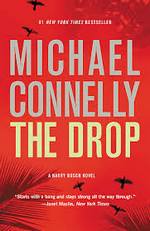
Dusted Off: The Drop by Michael Connelly

The DropThe Drop

by Michael Connelly
Series: Harry Bosch, #17

Paperback, 448 pg.
Grand Central Publishing, 2012
Read: Jun. 23-25, 2012

How does he do it? How does someone as accomplished as Connelly continually top himself? Equaling himself would be a tough act (and not one he always pulls off), but topping himself? Inhuman.

This was gripping (duh). This was harrowing (duh). The suspense was there, the intrigue was thick (duh). What was shown about the human condition should cause anyone to reflect (duh). All of that is par for the course for Connelly and Harry Bosch.

But this one…the depravity, Harry’s reaction to it–not just the bad guys, but the politics surrounding the cases…hit harder than normal. You can really feel for Bosch in this one, you can curse his mistakes (and even the right things he did that don’t feel so right), but the closing chapters carry a kind of emotional weight that Bosch novels normally don’t.

This is Connelly at his best. Looking forward to the next time he tops himself.

—–

5 Stars

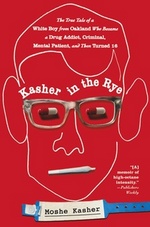
Dusted Off: Kasher in the Rye: The True Tale … by Mose Kasher

Kasher in the Rye: The True Tale of a White Boy from Oakland Who Became a Drug Addict, Criminal, Mental Patient, and Then Turned 16Kasher in the Rye: The True Tale of a White Boy from Oakland Who Became a Drug Addict, Criminal, Mental Patient, and Then Turned 16

by Moshe Kasher
Hardcover, 303 pg.
Grand Central Publishing, 2012
Read: June 1-3, 2012

This book about the descent of a very young man into delinquency and addiction (and his eventual recovery) in just about any other hands could’ve been maudlin, sappy, trite or overly-sentimental. But Kasher’s skill shows itself in being honest and articulate while being able to joke about the tragic events described.

That doesn’t mean he’s making light of anything or glorifying in the problems. But it does seem to allow him some distance from the horror so he can talk about it.

This is a heartbreaking work, eye-opening, educational, incredibly relatable, occasionally laugh-out-loud funny. Great, great book.

—–

5 Stars

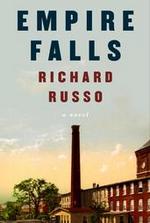
Dusted Off: Empire Falls by Richard Russo

Empire FallsEmpire Falls by Richard Russo
Hardcover, 483 pg.
Knopf, 2011
Read: May 22-27, 2012

Wow. Just wow. Not sure what else to say.

I’d suspected/wondered that something like the big climactic event was going to happen–yet when it happened, I was on the edge of my seat, saying “No fraking way!” (and just about decapitated my son who interrupted me during the middle of it) But even before that, the book had grabbed me with its humor, tragedy and humanity.

This one’s going to haunt me (in good and bad ways) for a long time.

—–

5 Stars

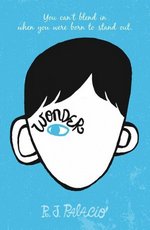
Wonder by R. J. Palacio

WonderWonder

by R. J. Palacio

Hardcover, 313 pg.
Knopf, 2012
Read Jan. 14-15, 2014

August “Auggie” Pullman is a great 10-year old kid, loves Star Wars, academically gifted, has a devoted dog, a nice older sister, very supportive parents, he’s friendly — big-hearted, really. After years of being homeschooled, he’s off to a private school for Middle School (when, btw, did Middle School start in 5th grade?). Oh, sure, one other thing: he has a genetic disorder resulting in severe facial abnormalities.

Kids being kids — this is clearly fraught with peril. It’d be tough for a kid to enter this atmosphere from his background no matter what — but in Auggie’s case, things are magnified. We follow Auggie through that rocky first year through various perspectives — his, his sister’s, his friends’, his sister’s boyfriend’s, and so on. I frequently get tired of this whole multiple perspective schtick, but Wonder is one of those cases where it works. By seeing the same event (occasionally, not every event) trough various eyes, we get a much better — and richer — picture of Auggie’s trials and triumphs.

Yeah, this is written for 4-8 grade reading level, and as such, not the most sophisticated writing or plot. Yeah, this has all the makings of an After-School Special (that’s a term that’s about to lose all meaning, isn’t it?). Yeah, the plot is pretty predictable. Fair enough. But R. J. Palacio pulled it off — it all works — all the kids seem real, the struggles his sister has are believable, the varied emotions (noble and not) are realistic. It’s a song sung well, no matter how old or simple it is.

Wonder‘s fun, occasionally funny, and heartwarming. Read it, and get your kids to read it, too.

—–

5 Stars

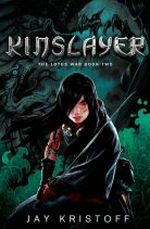
Kinslayer by Jay Kristoff

Kinslayer (The Lotus War, #2)Kinslayer

by Jay Kristoff

Hardcover, 432 pg.
Thomas Dunne Books, 2013
Read: Dec. 6-13, 2013

It’s a law that the second part of a trilogy is going to be darker in tone than the rest and will leave things in a precarious position. The mark of a really good second part of a trilogy is that even as you expect that, the tone and direness of the events affect you as they ought, and don’t just seem as ways to advance the overall story arcs to get through the third installment.

Kristoff’s Kinslayer delivered on that. And then some — I’m not sure where I expected/wanted things to go following the calamitous events at the close of Stormdancer — obviously there’d be fighting between the Guild, the Kagé rebellion, and various groups trying to fill the void left by the death of Yoritomo. And, of course, Buruu and Yukiko would be smack dab in the middle of it. Beyond that, I really had no idea.

Which is fine and dandy, because I was pretty wrong — yes, there’s conflict between the Kagé, the Lotus Guild and various Shōgun, but not all-out warfare (mostly). And for the bulk of the novel, Yukiko and Buruu aren’t directly involved in that story — they are off on an important quest on their own, their storylines intersect with the rest at the beginning and end of the novels (like Luke and R2 off to Dagobah in another noted second part of a trilogy).

Don’t get me wrong — it’s not all doom and gloom. There are more than a few chuckles, some fun times to be read here. Early on in the book, I wrote the note, “the conversations between Yukiko and Buruu are fantastic — the playfulness, the teasing, the love — it’s like Temeraire with snark.” But then things started to turn — in the capitol, in the Kagé wilderness and even with the thunder tiger and his stormdancer. Yukiko is having trouble controlling her powers, there’s division in the rebellion’s ranks, and it seems that nobody in the capitol is telling the truth to anyone about anything. Betrayal courses through this novel. It’s raw and powerful.

What makes all the betrayal effective isn’t how it moves the plots forward, but because with established and new characters, Kristoff has created characters you can believe, characters you can empathize with, identify with, care about — no matter their allegiance in the conflicts. So that when plans go awry, trust is broken, loved ones abandoned (or worse), it matters to the audience.

True to form, things are bleak — if not worse — as the novel closes, but Kristoff has set the stage for something very exciting, and many things that I’m not even going to pretend to predict. Can’t wait for what’s next.

Lastly, I am indebted to Kristoff for the Character Reference pages at the beginning and wish that more serial fiction people did something like that — an easy way to re-orient yourself in this strange world. If only there was a pronunciation guide, too. But now I’m getting greedy.

—–

5 Stars

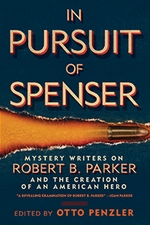
Dusted Off: In Pursuit of Spenser, Otto Penzler, ed.

In Pursuit of Spenser: Mystery Writers on Robert B. Parker and the Creation of an American HeroIn Pursuit of Spenser: Mystery Writers on Robert B. Parker and the Creation of an American Hero

by Otto Penzler
Paperback, 247 pg.
Smart Pop, 2012

I loved this book.

It has been years since I’ve read a festschrift–and this is the only one I’ve read that wasn’t about a figure in the Presbyterian/Reformed tradition. I’d forgotten how nice they can be.

It was like hanging out with a bunch of articulate friends talking about our dearly departed friend/mentor/idol. Insightful, occasionally moving, occasionally factually wrong (extreme fanboy alert)–a great tribute to Dr. Parker.

—–

5 Stars

Steelheart by Brandon Sanderson

Steelheart
Steelheart

by Brandon Sanderson
Hardcover, 386 pg.
Delacorte Press, 2013
Series: The Reckoners, #1

This blurb was enough to get me excited about this book:

Ten years ago, Calamity came. It was a burst in the sky that gave ordinary men and women extraordinary powers. The awed public started calling them Epics.

But Epics are no friend of man. With incredible gifts came the desire to rule. And to rule man you must crush his will.

Nobody fights the Epics . . . nobody but the Reckoners. A shadowy group of ordinary humans, they spend their lives studying Epics, finding their weaknesses, and then assassinating them.

If the book description doesn’t sell this book, I can’t imagine anything I say will. But the story of young David Charleston, orphaned during the takeover of this world by the Epics, fueled by a thirst for vengeance and justice, is one you’d do well to read.*

I wish I could remember what podcast I was listening to recently where they started discussing the difference between DC and Marvel heroes — but I thought of it when I was reading Steelheart. DC heroes, they claimed, jumped at the chance to use their powers to fight evil. Marvel heroes, on the other hand, were reluctant heroes — they have no other choice to do what they do with their powers. In Sanderson’s world, on the other hand, no one with powers wants to do anything for anyone but themselves. Basically, Steelheart is the embodiment of Lord Acton’s maxim, “Power tends to corrupt and absolute power corrupts absolutely.”

This is the YA thriller done right — a lot of action, a hint of romance (no triangle, for which we all owe you thanks, Mr. Sanderson), a solid group of characters, a very bleak looking world, and a central character that doesn’t really fit in — but is driven, more capable than anyone thinks, and in the right place at the right time.

This band of rebels David finds himself working with isn’t as rag-tag as you’d expect — which is an interesting way to approach it. But the Reckoners are rag-tag enough, that even if they weren’t going up against nigh-invulnerable people, you’d still see them as the underdogs. Which you have to see them as, or you won’t be able to root for them. It also helps that we don’t get a good look at the Epics as anything but “The Other” or “The Enemy.” We don’t get the chance to sympathize, to understand, to care about them.

One quibble — some of David’s humor, his references, don’t feel quite right — they don’t seem like the kind of thing a kid who’s been living the kind of life he’s been living for ten years. Actually, most of the humor in the book feels out of place coming from the Reckoners.

That said — David’s wit (as bumbling as it is), Cody’s self-aware eccentricity, the voice this story is told in is what moves this book from “engaging super-hero distopia” to “zowie!” It doesn’t ring true, but it doesn’t matter — Sanderson sells it while you’re reading.

I’m eager to see what Sanderson has for us in this series — where did these powers come from? What are the other groups of Reckoners like? Are we going to see [redacted] again? Is David ever going to figure out how to use figurative language?

—–

*Unless you don’t like super-hero stories, YA adventure, distopian novels, or books that rock, if that’s the case, I can’t help you.

—–

5 Stars

Dusted Off: The Help by Kathryn Stockett

The HelpThe Help

by Kathryn Stockett
Paperback, 522 pg.
Berkley Publishing Group, 2011

I had very low expectations going into this one–and was pretty much reading it only to placate my wife and mother. I expected a slow, dry and drab book about the woes of domestic help under the oppressive thumb of racism; overwritten, overly-sentimental, impressed with its own importance and appealing primarily to Oprah viewers.

Yeah, I can be snob, what’s your point?

This is a book with zing–I couldn’t believe how quickly I read it, there’s a lot of life to Stockett’s language and it carries you right through. And while no one could confuse this for a comedy, it’s very funny–laugh out loud funny in a couple of instances. The laughs being rooted in–and surrounded by–tragedy serve to make this feel realistic, this could be a non-fiction work and it’d be fairly believable.

I tired early on of the novel reminding me over and over that these women were “brave” and doing something “important” and “dangerous.” Eventually Stockett stopped telling me that, and showed me their bravery and why what they were doing was important and dangerous–and that’s when the novel really took off. But that’s really my only quibble.

It’d have been very easy to make the characters into cookie-cutter racists, black-hearted villains with no redeeming qualities, wholly bent on oppression of their servants. But The Help avoids that. The “worst” character is just a horrid person–and she’d be a horrid person if she appeared in book about the travails of au pairs in the Hamptons rather than a book about the struggles of black housekeepers. Conversely, the heroines here aren’t paragons of virtue–they are flawed, they are frightened they are ruled by their society, too (just not as much as other people are).

This is a very, very good book that deserves to be read (and will reward the reader in turn), and deserves most of the accolades it’s getting. No, it’s not nearly as good as To Kill A Mockingbird, despite what the endorsements may say–but that’s okay, very few books are, and that shouldn’t detract from how wonderful a book this is.

—–

5 Stars

Page 22 of 24

Powered by WordPress & Theme by Anders Norén