Tag: 5 Stars Page 8 of 24

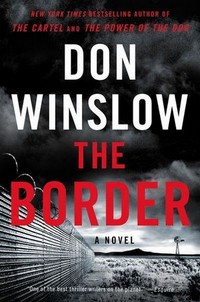
The Border by Don Winslow: Confronting the Ghost and the Monster

The BorderThe Border

by Don Winslow

DETAILS:
Series: The Power of the Dog, #3
Publisher: William Morrow
Publication Date: February 26, 2019
Format: Paperback
Length: 716 pgs.
Read Date: June 23-29, 2022
Support Independent Bookstores - Visit IndieBound.org


I can barely scratch the surface of this book—I spent months trying to write something about the previous book in the trilogy, The Cartel, before giving up because I tried to do my typical post with it. This time, I’m going to go pretty surface-level, just to get something written.

What’s The Border About?

Adán Barrera is dead. DEA Agent Art Keller’s personal White Whale is gone, and two things are up in the air: what is Keller going to do with his life/career now? and What will happen to the Drug Trade in Mexico? Barrera may have been an evil man with a trail of bodies in his wake, corrupting government officials on every level, and is responsible for getting countless people on both sides of the border addicted to poisons. But he was a stabilizing influence on the various competing gangs, and without him, chaos ensues.

Meanwhile, a ranking Senator gets Keller appointed as the new head of the DEA. Once there, Keller attempts to change the way the War on Drugs has been fought. As one on the forefront of the “old way,” he knows how poorly it has succeeded. If he’s going to make any kind of impact, he’s going to have to change the way things are done.

But it turns out there’s something uglier and dirtier than the heinous crimes Barrera and his colleagues and rivals are steeped in—U.S. politics. Keller has to battle factions in the DEA and other law enforcement agencies to put his plans into action. He commits to a risky plan that could make a real difference in the war—if he can pull it off.

If he can’t, his career, his freedom, and maybe his life are at stake.

A Financial Education

A key part of Keller’s new strategy is to watch the money—there’s a lot going back and forth across the border, both to buy drugs and then to launder it. But then…it turns out, the cartels wanted more. They couldn’t just sit on the money, no matter how clean it was—there was just too much to leave hanging around. So they invested it, and they wanted something out of those investments.

If Keller can stop the money from going back South, that would be a significant move in the War on Drugs. They’re not going to provide the product if they’re not getting paid for it.

I didn’t go into this book expecting to get a lesson in finance or anything, but I don’t know if I’ve learned as much about that kind of thing since The Bonfire of the Vanities or Liar’s Poker. But the numbers Winslow uses make what those guys were up to seem small.

Supporting Characters that Steal the Show

One thing that Winslow does time and time again throughout this trilogy is to take a character and treat them as a case study for someone in this war on drugs. He’s used hitmen, minor drug dealers, aspiring gangsters, and others. What’s amazing is that he will consistently take someone like this and turn them into a character you really care about while using them to illustrate a reality, and at some point to advance the plot, too. The latter is probably the most impressive part—they’ll spend so much of the book seeming like a digression—a compelling, often moving digression, but a digression—and then he’ll shock you by making them integral to a plot point.

There were two that really stood out to me in this book—most prominently was a ten-year-old Guatemalan boy, forced by his mother to travel to New York (alone) to live with his Aunt and Uncle. The alternative was staying in Guatemala City and being forced to work for the gangs. His journey north is heartbreaking—and what happens to him (and how he reacts) once he crosses the border just guts me.

The other one that will stick with me for a while is a young woman addicted to heroin. Her story is tragic and frequently predictable. That predictability ends up making it even more tragic the further into her story you get.

If nothing else, characters like these two remind you that the Drug War really isn’t about the DEA, the Cartels, the gangs, or anyone else—it’s about the people who get caught up in the middle. The victims. The addicts. The people most of us never see or think about.

So, what did I think about The Border?

This is a daunting read—before you open it up, and it stays that way until the last 150 pages or so.

But it’s a powerful read. A gripping read. A haunting read.

I’ll frequently talk about how a novel feels real, like the kind of thing you’d read in the news. Usually, when I say that, it’s a compliment—like I can’t believe how well the author was at portraying something realistic. But with Winslow, I don’t know that it’s a compliment. He’s done his research—so much of this book is true. So many of these characters are amalgams of several actual people and their crimes. In many cases, I’d wager that he’s toned down the violence, the money, the debauchery, the corruption—just to make it credible. That old line from Mark Twain, “It’s no wonder that truth is stranger than fiction. Fiction has to make sense,” comes to mind.

It doesn’t bother me to think that characters like Hannibal Lecter or Ernst Blofeld are running around this world, because they’re so clearly fictional. But Keller’s targets—those south of the border, in the world of finance, and the halls of power in Washington, D.C.? Those are real. Those are frightening.

This is a disquieting book. It’s disturbing. It’s distressing. And it’s supposed to be. Winslow’s trilogy is a monumental achievement. It will entertain you as well as make you reconsider your position on the Drug War.

I can’t say enough about this accomplishment. This trilogy is one of the best things I’ve ever read.


5 Stars

20 Books of Summer

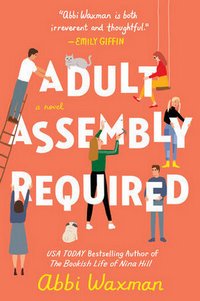
Adult Assembly Required by Abbi Waxman: She Gets By with a Little Help from Her Friends

Adult Assembly RequiredAdult Assembly Required

by Abbi Waxman

DETAILS:
Publisher: 9780593198766
Publication Date: May 16, 2022
Format: Paperback
Length: 374
Read Date: June 2-4, 2022
Support Independent Bookstores - Visit IndieBound.org

“My name is Laura Costello, and I’m having a bad day.” She realized that made her sound like a member of a twelve-step group with an extremely low requirement for membership, but it’s what came out.

What’s Adult Assembly Required About?

This is not the most auspicious way to meet your protagonist—she’s in a new city, she knows nobody, and is about a month away from starting grad school, so is in kind of a limbo—waiting to start the next chapter in her life when her apartment burns up (with everything she owns) and she’s caught in a massive rainstorm before stumbling into Knight’s bookstore.

Thankfully, Knight’s is just the right place for someone to stumble into—not only will you find a great selection of books and people to help you find the right one, (at least in this case) they’ll take you in, get you a towel, a cup of tea, befriend you, and will help you find a place to live—the illegal boarding house that one of their staff lives at has an opening.

Maggie Morse is a widowed therapist, her children have moved out, so to fill up her house, she rents out as many rooms as she can—once Laura moves in, that total is five boarders, two dogs, and a cat. All are just a wee bit eccentric, which is just what Maggie wants—to fill her life with interesting people. The 80s sitcom just begs to be made, doesn’t it?

She and Laura hit it off, and Laura moves in. We quickly learn that today isn’t the only bad day that Laura’s had—she’d had a couple of years’ worth of them and has moved to L.A. for a fresh start as well as graduate school (she could’ve stayed in NYC for that, but her overbearing family and her ex-fiancé are there).

And from this point? Well, life—and possibly love—ensues.

No Islands, No Rocks

If The Bookish Life of Nina Hill was about finding and understanding family (while finding love), Adult Assembly Required is about friendship and its power to help you define yourself and your place in the world—alongside, or possibly in place of, family—(while possibly finding love).

It’s not just about Laura’s new friendships—there are so many layers of overlapping, intertwined, and free-standing friendships of various levels of closeness throughout this book it’d be nearly impossible to diagram. You could really excise (or ignore) the romantic plots within this and it’d still carry a heavy emotional impact.

Study after study, article after article, book after book talks about how disconnected Americans are today, that people are lonely and isolated—even those in close-knit families feel this way—that we need friends, friend-groups, and social connections outside the home. And to see all of these strong friendships and the impact they have on the people involved—topping it with how Laura’s life changes for the better and she becomes stronger because of and as she develops friends? It’s fantastic to see. You want to be friends with some/all of these people.

I’ve got nothing against a decent love story (over one book or a series), teams/partners working together are great, and there are plenty of great rugged individuals all over the literary landscape. But there’s something special about healthy and solid friendships.

The Nina Hill of It

“…I’m not a big Halloween person.”

“Not even Reese’s peanut butter pumpkins? They’re the best of the shapes,” said Nina. “It’s the perfect ratio of chocolate to peanut butter.”

Laura looked at Nina with interest. “You really do spend a lot of time thinking about things, don’t you?”

“‘Fraid so,” said Nina cheerfully, nodding. “It’s what keeps me from gnawing my own fingernails off.”

I was a little apprehensive about the idea of revisiting Nina Hill—that book was just so good, and we left her in the perfect place—a good chance of a Happily Ever After, a fresh start with her family, and her vocation/life purpose was revitalized and re-energized. Why disturb or revisit that?

But in making her a supporting character—Waxman gets to give fans (and, I expect, herself) some more time with this delightful character, but doesn’t have to jeopardize anything from the ending of The Bookish Life, because the focus is on Laura along with Polly and Impossibly Handsome Bob. Nina is just one more of the eccentric characters that Laura encounters in L.A. and as she becomes a friend she helps Laura—but the agency, the interest for the reader is on Laura.

I wasn’t sure I wanted anything like it, but now I’m fully on board with the idea of a Nina Hill Extended Universe and hope Waxman will return to it frequently (but not necessarily exclusively).

Only Missing Taylor Doose

One of the most impressive things that Waxman did in this book (and to an extent in The Bookish Life was making this little area of L.A., Larchmont, feel like a small town—not just a small town, but an idyllic small town like Stars Hollow.

It’s still in LA—with the traffic, weather, intricate highway systems, and questionable public transit—but in at least this one area it’s a community. Neighbors help and support each other’s businesses, know who the quirky people are, go to street fairs, have a Booster Club that’s apparently effective, et cetera.

I’m sure there are real communities scattered about in larger cities like L.A., but this feels different—yet believable.

So, what did I think about Adult Assembly Required?

I’ve tipped my hand already, here, I’m sure. But I loved this. By the time I’d read four pages I’d laughed enough that my daughter was giving me a look from the other side of the room. That settled down a bit as I re-acclimated to Waxman, but the book stayed as engaging and witty from there.

Waxman’s narrative voice is the real star of this book—Polly’s a fantastic character, ditto for everyone else in Maggie’s house, I’d love more time with Polly’s grandmother, and the assorted cats and dogs* are fantastic—but I’d be more than willing to read a version of this book without any of them just to read this narrative voice. It’s chatty, it’s snarky, and it’s still a reliable third-person omniscient. One day, I may be able to define the je ne sais quoi to define what it is about this voice that makes it so special, but until then I’ll just enjoy it (and not really care if I can describe it).

* Ugh. The pets! I forgot to write anything about the pets! Especially Daisy the pug. I don’t have time, and this post is too long anyway. They’re all pretty great, even the cats. But Daisy is magic. Am thinking of starting a petition calling for Book 3 in the NHEU to be about her.

I’ve spent a lot of time talking about everything but Laura Costello. Primarily because I don’t know how I could do so without making you reading the book irrelevant, once I start, I don’t know that I would know where to stop. From the moment you see her in the bookstore and hear about her bad day, you want to see her have a good day. When you do see that, you want to see more of them—and you want to see her put herself in positions to have many more of them. And as she has them, you want her to have even more.

She took some hard and important steps to put herself in L.A.—but those aren’t enough. She has more work to do (I don’t think she realizes how much more), and she needs support to get it done. The remarkable thing is that she gets that support, she’s surrounded by it, when she realizes her need—these friendships enable her to get to the point that she can see her need. And (very importantly), it’s not one-sided, she’s able to give support and encouragement and prodding even as she receives it.

Impossibly Handsome Bob is probably also Impossibly Good. But who cares? He’s just fun to read about, especially as he reacts to Laura.

Adult Assembly Required is funny, it’s sweet, it’s heartwarming, and will make you feel good all over. I canceled a thing or two and shuffled around my plans so I could find more time to read this because I just didn’t want to stop once I started (and didn’t regret it!). I’m not promising you’ll have the same reaction, but I don’t see why you wouldn’t have one like it.


5 Stars

This post contains an affiliate link. If you purchase from it, I will get a small commission at no additional cost to you. As always, opinions are my own.

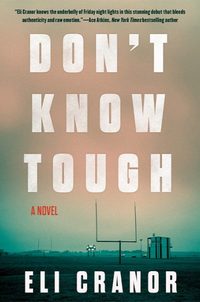
Don’t Know Tough by Eli Cranor: Glory Days, Well, They’ll Pass You By…

Don't Know ToughDon’t Know Tough

by Eli Cranor

DETAILS:
Publisher: Soho Crime
Publication Date: March 22, 2022
Format: Hardcover
Length: 322 pg.
Read Date: May 19-23, 2022 
Support Independent Bookstores - Visit IndieBound.org


I feel like I said too much here—I didn’t give away any plot points (I don’t think), but I still think I maybe said too much. I don’t know how else to talk about this novel. Also, I don’t think it matters what I say, just read the first two pages of Don’t Know Tough and it won’t matter what I put here—you’re going to have to read the rest or will just walk away.

Either way, you’re probably wasting time if you read this post when you could just read the @#$&! book.

What’s Don’t Know Tough About?

Billy Lowe is a running back for a small-town Arkansas High School Football team. He’s practically half the team by himself. They wouldn’t be in the State Championship playoffs without him—and they won’t win anything without him, either.

So when he gets himself in trouble—with the school and potentially the legal system—for repeatedly giving a beating to the son of one of the area’s richest men, their first-year coach’s dreams of glory are in jeopardy.

Then, the boyfriend of Billy’s mother is found dead—likely murdered. Things go from dismal to worse.

Billy

Billy has been valued for one thing in his life—he’s a great football player. He’s the son of a high school football legend. The younger brother of a phenomenal high school player. After High School, he will likely produce a few kids who will go on to be high school football players.

He’s also the target of his mother’s drunken and abusive boyfriend. Everyone living in their trailer is. Her boyfriend (Billy refuses to use his name) replaced the drunken abusive father and husband who abandoned them years ago.

His life is defined by football and abuse. Everything else is just filler.

It’s no wonder then that Billy is full of rage and need for some kind of affection beyond his mother’s imperfect attempts to express her love.

He doesn’t know how to live. He doesn’t know how to be an adult. He knows how to be hurt and how to hurt. We see that immediately in the first two pages—the next 320 are just the repercussions of that.

Coach Trent Powers

Coach Trent sees himself in Billy. His teenaged years featured several different Foster Homes until his high school coach brought him into his home and family and changed his life. He found stability, family, and Christianity. He went on to marry his coach’s daughter.

Trent wants to copy and paste his experience onto Billy (except that whole marrying the coach’s daughter thing—there’s no way that Mrs. Powers would accept that). He has far less time to replicate that scenario than his coach had, but he still thinks he can make it work.

He fails to see the things that separate Billy and his teenaged-self. More importantly, he fails to see the differences between himself and his coach. He is earnest, idealistic, and desperate—he thinks he can impose success on the situation if he wants it enough, if he believes it enough.

At one point, Trent tries to evangelize Billy. It epitomizes this whole endeavor and is one of the more painful scenes in a novel that has an overabundance of painful scenes. I wanted to call a time-out, stop the scene and talk to Trent for a minute. This is not how you present the Gospel, sir, as if simply saying “Jesus” will solve every problem. Go read 1 Corinthians 15:1-11 and try again, stop rushing it. I think he’s genuine, I think this is a heartfelt attempt on his part to help Billy, I am convinced that Trent thinks he’s doing the right thing—but he’s approaching the whole thing incorrectly.

Trent sees himself as the Evangelical Louanne Johnson/Jaime Escalante/Principal Joe Clark/Sister Mary Clarence mixed with Coach Eric Taylor, who will rescue this kid. Sadly, he’s really just a combination of Ned Flanders and Michael Scott. I liked him, wanted him to succeed, and never thought for a moment he would/could, or should.

Race

You hear football, the South, and Crime Fiction and you think this book is going to be about race/racism—at least in part. And you’d be wrong—as hard as that is to believe.

But you’d also be almost right. One of the more impressive things about Don’t Know Tough is the subtle way it is and it isn’t about race in the South.

So, what did I think about Don’t Know Tough?

I was blown away by this. I should stop there before I go overboard with praise. But, I’m not going to. Feel free to stop reading now, though, I’m not going to improve on those six words.

I should probably start off by saying, as un-American as it is, I don’t like football. I don’t see why it’s popular, I wish so many young people in this country wouldn’t sign themselves up for the lasting physical and mental damage that it brings. I do not understand the religious fervor that grips fans of the sport—particularly in Texas and the South when it comes to high school and college teams. And frankly, I don’t know that I want to.

But hey, Dani Rojas speaks for millions when he says, “Football is life.” (even if he’s talking about the other football). So bring on the books about it—especially if you’re going to write them the way that Eli Cranor does. If you’re going to give me something this good, I don’t care what subculture, sport, or location it is—I’m going to lap it up.

As I stumbled through saying above, Don’t Know Tough is about race, it’s definitely about class and family. But it’s primarily about being an adult, about being a man, and how one gets to that stage in life—about mentorship and being mentored. Both Trent and Billy find themselves in situations where they have a greater degree of responsibility than they’re accustomed to or prepared for. Billy is thrust into it by his actions and other people’s actions. Trent decides to take it upon himself. At the same time, everyone around them recognizes them as still being (essentially) children and treats them accordingly.

This is a novel about heartbreak, despair, about clinging to a dream as it crumbles around you (whether or not you realize that’s what’s going on). There is a sense of inevitability about everything that happens to Billy, Trent, and their families—even if any of them realized what was happening and tried to change things, it just wouldn’t matter.

And all of it is told in prose that is beautiful, visceral, empathetic, and honest—I cannot convey to you the greatness of Cranor’s writing properly. I’ll either not be effusive enough in my praise, or I’ll come across as over-hyping it. He invites the reader to think about Hemingway* as you read this—in terms of themes, story, and character—but I’d like to think I’d have gotten there on my own.

* The Old Man and the Sea in particular, but I think it’s safe to bring other works into the conversation.

This is a brutal novel. As I read, I wanted it to end sooner than it did to just stop the suffering of these poor characters. But I wanted to read another couple hundred pages of Cranor’s writing.

Reading Don’t Know Tough is like watching a series of defensive highlights on the NFL Network—hit after hit after hit after bone-crushing hit. It will leave you psychically battered and bruised—and oddly wanting more.


5 Stars

This post contains an affiliate link. If you purchase from it, I will get a small commission at no additional cost to you. As always, opinions expressed are my own.

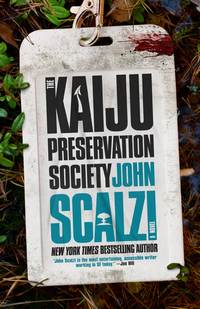
The Kaiju Preservation Society by John Scalzi: Delivers Everything the Title Promises

Kaiju Preservation SocietyThe Kaiju Preservation Society

by John Scalzi

DETAILS:
Publisher: Tor Books
Publication Date: March 14, 2022
Format: Hardcover
Length: 258 pg.
Read Date: April 1-4, 2022
Support Independent Bookstores - Visit IndieBound.org

You have no idea how difficult it was for me to not say, ‘Welcome to Jurassic Park!’ to all of you just now.”

Jurassic Park didn’t end well for anyone in it,” I pointed out. “Book or movie.”

“Well, they were sloppy,” Tom said. “We’re not sloppy. And, they were fictional. This is real.”

What’s The Kaiju Preservation Society About?

Jamie Gray drops out of his Ph.D. program (writing a dissertation on utopian and dystopian literature) thanks to a quarter-life crisis that gets him to want to make a lot of money. So he goes to work for a tech startup, starts to make decent money, and gets fired just as COVID lockdowns start. He starts scraping by on his savings and meager work for a food-delivery app.

Until he delivers shawarma to Tom one day—the two were acquaintances in college, and they have a brief conversation where a couple of things come out—Jamie hates delivering food, and the NGO that Tom works for has an immediate need of someone on his team. He doesn’t give Tom a lot of information, but that the work involves travel and large animals. His team is set to depart soon, and they can’t without a full team. They just need someone who can, and is willing to, lift things. Tom points out his nice condo as proof that they pay well. Jamie signs on.

A few days later, Jamie and a few other new people on the team find out what the initials in KPS stand for—after it’s too late for them to back out. They’ve traveled to a parallel Earth populated by Kaiju for a six-month stint at one of the human bases.

Obviously, like the book and movie referenced above, things go wrong. They just have to for the sake of a novel, right? (but up until then, I think I could’ve made a case for this being an entire novel without that—it exists as one for longer than I expected—and I would’ve liked it just as much as the one Scalzi delivered).

The Science Fiction-y bits

Given Tom’s work, and Jamie’s, Scalzi’s able to gloss over a lot of the how-they-eat-and-breathe (and other science facts…la! la! la!) stuff, but he does reference things like the square-cube law when it comes to enormously big creatures. Jamie’s new friends include scientists who can deliver some of the biology, chemistry, etc. that are needed for the story—but when it’s needed, they’re always explaining it to the liberal arts guy on their team, so the reader doesn’t have to wade through the heady stuff (something Michael Crichton could’ve used, for example).

It’s not a perfect way to deal with these things, but it sure works well, and Scalzi feeds it to the reader in his usual charming way, so I embraced it.

Pop*.* Fiction

In his Author’s Note, Scalzi states:

KPS is not, and I say this with absolutely no slight intended, a brooding symphony of a novel. It’s a pop song. It’s meant to be light and catchy, with three minutes of hooks and choruses for you to sing along with, and then you’re done and you go on with your day, hopefully with a smile on your face. I had fun writing this, and I needed to have fun writing this. We all need a pop song from time to time, particularly after a stretch of darkness.

I’d been describing it as a popcorn movie in a book. He says pop song. It’s pop-something.

It’s the movie you escape to in the middle of a heatwave and forget about the oppressive weather, the sun, and everything else to enjoy the heat and some pure entertainment. It’s the song you find yourself overplaying because it’s just so catchy until you get sick of it (although you can’t help singing along) and abandon it for years until it comes up on some random mix and you become obsessed with it again for a couple of weeks.

What I found striking about Scalzi saying that is that it reminds me of Seanan McGuire’s comments about the last Toby Daye novel—she needed to write something like that (and I enjoyed it for similar reasons to this one). Are we going to see more books like this from other authors soon? Did 2020/2021 gift us a slew of authors writing happy books as a way to shake it off? (I wonder if Winslow’s Free Billy fits here).

Frankly, I hope so.

So, what did I think about The Kaiju Preservation Society?

“Why isn’t he eating us?” I asked. We were now close enough to Edward that this was not an entirely irrelevant question.

“He’s asleep,” Satie said.

I glanced over at him. “Asleep?”

“They sleep, yup.”

“How can you tell when he’s asleep?”

“He’s not eating us, for one,” Satie said. “You can’t see his eyes, for another.”

I love popcorn movies, I love pop songs like that…and well, you can probably see where that’s going. I’m not the world’s largest Kaiju fan (don’t actively dislike them, either), but it really doesn’t matter, this book skips all that and jumps right to the pleasure center of the brain the same way a catchy tune can.

Reading The Kaiju Preservation Society reminded me of the first time I read Ready Player One (before the movie, distance, and the sequel made me take a second/third/fourth look at it). Or Snow Crash (a wise reference for Scalzi to make early on). It sort of reminded me of the first time I read High Fidelity, too. The catchy, irreverent narrative; the snappy dialogue; the first-person narrator you click with right away*…it just took me a few pages to know that I was going to find nothing but joy in these pages.

*or probably never.

And really, I don’t have a lot to say about the book beyond this. It brought me joy for a couple of days. Thinking about it now is doing the same thing. Go get your hands on this text-based dopamine hit in your preferred medium (I bet Wheaton’s audiobook narration is perfect), sit back, and enjoy yourself.


5 Stars

This post contains an affiliate link. If you purchase from it, I will get a small commission at no additional cost to you. As always, opinions are my own.

Reconstruction by Mick Herron: A Tense and Cerebral Thriller

ReconstructionReconstruction

by Mick Herron

DETAILS:
Publisher: SohoConstable
Publication Date: February 1, 2008
Format: Hardcover
Length: 352 pg.
Read Date: January 21-26, 2022
Support Independent Bookstores - Visit IndieBound.org

Memory plays tricks, everyone knows that: it shuffles the deck, charms the snake, hoists the rope into nowhere. It convinces you you know just where you were, what you were doing, then whap, the detail betrays you. Reconstruction is never simple. Two days from now, a grainy, after-the-event newspaper photo will show Jaime Segura wearing the jacket he’s wearing now, and it’s not a dark green bomber at all: it’s brown, it’s faux-leather; it has long sleeves turned up at the cuffs, and drops to mid-thigh. George Trebor will look at that picture and wonder how much else of what he remembers actually happened, and how much was simply processed by a mind taught, like everyone else’s, to join the dots. Nobody studies events every second that passes. Like speed cameras, we take one picture, then another; and allow the data gathered by experience to fill the gaps.

And, like speed cameras, sometimes there’s no film in the machine.

Oops

I knew I should’ve written this post before I talked about this book on the Barbican Station podcast, I’ve been struggling to write this since—I’ve lost the impulse, having said just about everything I can think of about the book.

But I’m about to run out of renewals at the library, so I’d better get something done.

What’s Reconstruction About?

On the surface, this is a story about an inadvertent hostage situation. A young man, Jamie Segura, is told that if something happens to his boyfriend, he’s to go to a nursery school in Oxford and find a lady there who can help him understand. Which is what he does.

On the way to the school, through circumstances far beyond his control, Jamie picks up a gun. So when he shows up at the school, he gets the attention of those present—one of whom, the teacher, shows a remarkable amount of presence of mind and locks the place down, so that no more people can be stuck inside with him—it’s just the aide who cleans up the place, this teacher and one father with his twins. Louise’s quick thinking keeps the other staff, parents, and students away.

In addition to the instruction to find the lady at this school, Jamie has a name, Ben Whistler. Whistler worked with Segura’s boyfriend, they both are accountants for MI6. Not really the kind of guy you want in a hostage negotiation, but when he’s the one man the hostage-taker will talk to, you make do.

As the novel progresses, we learn what brought each of the people to the school that morning—their motivations, their past, and their very tenuous present are peeled back and exposed (mostly for the reader, but some for them)—while we also see what happens from the time Whistler arrives. This novel is like an onion—or an ogre—each time you pull back a bit and reveal something, you discover there’s a lot more you need to discover. For me, the structure is reminiscent of Hawley’s The Fall but in a more compressed time—and perhaps more effectively told. But now I’m clearly out of things to say describing what happens and have started talking about the book in an evaluative way, so I’d better move on to the next heading.

The Gun

She’d never been this close to a gun—stupid: nobody had ever been this close to a gun; nobody with a normal life and ordinary aspirations. Eliot’s boys were crying, but that seemed a long way distant; much closer was the gun itself, which was this side of the railings now. While Louise gazed into its mouth, the boy holding it—the only one among them on his feet—closed the gate. That, at least, was normal; everything else had rattled free of its holdings, scattering reality around her like spring rain.

One of the things that really grabbed my attention early on was during the hostage situation was that the attention wasn’t on Jamie Segura, but on the gun he was holding. It’s all about the gun—at the moment, Louise probably couldn’t have described him at all, he’s a boy, that much she’s got, but nothing more. She’s not alone there, the others are in the same boat—the gun is what’s important, the gun is essentially personified.

That’s such a great choice. The reader is focused on the gun so easily, just like Louise and the others. Really, at that moment—even the reader isn’t that concerned with knowing anything about Jamie, just what’s he going to do with the gun. Later, once Ben Whistler arrives and starts to get Jamie to open up a little, then our attention and interest shift to him, as they ought. But that’s secondary.

Later in the novel, there are other guns that are important—but that, too, is for later. And even then, they’re not focused on the way this gun is, because we know the people behind them (largely) and what they’re going to be used for.

The Prose/Narrative Voice

‘Are you an only child?’

‘Am I a what?’

‘Do you have brothers or sisters?’

‘What’s that got to do with—no. No, I don’t. Do you?’

‘Second of four. All boys.’

‘Well, that explains your ease with women.’

‘Probably accounts for my competitive nature, too. I’ve never liked coming second.’

‘Is there a point to this?’

‘Something I’ve noticed about only children. They have a tendency to think events revolve around them.’

We meet the narrator of this very early on—at the same time they tell us they’re not going to be around anymore (they might have 2 sentences total where they mention themselves). So we know that this isn’t some sort of neutral or omniscient third-person. There’s a human involved in telling this story, but we know precious little about them. But it does add some color to the reader’s experience.

The novel is told in a wry, detached sort of humor—but there’s nothing funny going on. It’s very strange—it’s not a comic thriller, those contain things you’re supposed to laugh at, actually funny moments. This is told like that without any humor. Individual phrases, sentences, paragraphs—even a couple of paragraphs are funny if you read them out of context. There’s a lot of wit involved in the way the words are assembled. But in context, nothing’s funny. It’s deadly serious, and even the wry narrative comment or three doesn’t relieve the tension–if anything it ratchets up the tension.

I don’t know how Herron pulled it off. I really don’t. I spent time re-reading passages trying to see if I could figure it out. And I just can’t. It’s the kind of thing where I see it in action, admire it and then have to move on.

What Exactly is Being Reconstructed?

I don’t spend too much time thinking about titles to books, really. I’ll think about “The 2019 X Character book” or “The Y Writer Stand-alone about Z” with a vague idea about when I read it—if I need the title, well, that’s what my spreadsheets and Goodreads are for.

But every now and then, a title will stick in the back of my head as I read a book—this is one of those cases. What could Reconstruction be referring to? The rebuilding of post-war Iraq? The police (or someone else) taking all the evidence around the hostage situation and putting together how it happened? The narrator taking in everything and putting it together in a way the police can’t? or…I have a list of around a dozen guesses. I’m pretty sure at least half of them are defensible. Like the layers of story and character that Herron peels back, there’s a lot to think about in just the title.

So, what did I think about Reconstruction?

…today is either the first day of the rest of your life or the last day of your old one, depending on how things work out. It’s Tuesday, April 3rd. The weather’s set for fair. Sunlight has already reached the bedspread, drawing upon it a range of shadow mountains whose outcrops and valleys exactly match the folds and ridges of the curtaintops. It’s time to get up. It’s time to get up.

The book opens with (almost) all of the characters waking up, going about their normal business not knowing if today is the first day of the rest of their life or the last day…all they know is that they have to get up and do some things. Then The Gun (and the poor, scared young man holding it) show up at the nursery school, and everything changes.

I’ve read and listened to Slow Horses, and while I enjoyed it, I’ve yet to move on in the series (I’m not sure I can explain why). But this book turned me into a Mick Herron fan—it’s going to be one of those books I’m thinking about for a long time to come. (and the more I think about it, the more I like it)

It took me a little bit to settle in—but even before I did, I was loving the prose and narration. Once Herron finished setting things up and introducing characters and starts letting them just do what characters do, I was hooked. From the surprising and horrific image (and sound!) of a car striking a man running out in front of it, through the events at the nursery, to the jaw-dropping last page—and killer last line. This is a great read.


5 Stars

This post contains an affiliate link. If you purchase from it, I will get a small commission at no additional cost to you. As always, opinions are my own.

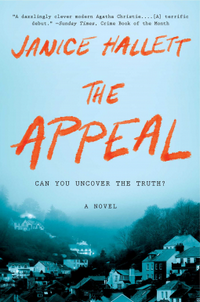
PUB DAY REPOST: The Appeal by Janice Hallett: You Have Not Read a Mystery Like This Before.

The Appeal

The Appeal

by Janice Hallett

eARC, 448 pg.
Atria Books, 2022

Read: October 30-November 4, 2021
Grab a copy from your local indie bookstore!

What’s The Appeal About?

The setup is basically this: a pair of law students have been given a stack of documents—emails, texts, voicemail transcripts, letters, and so on. They’re to read through this stack and be prepared to work out what crime(s) happened in what’s documented and who did what (and maybe why).

The correspondence focuses on a period of March-July in the lives of people in The Fairway Players or their associates. The Fairway Players are a local amateur theater group from a small community. As the group starts to plan their next play, the director makes a horrible announcement: his granddaughter, Poppy, has just been diagnosed with a rare form of brain cancer. He’s going to have to step back for a while, and Poppy’s uncle will be stepping up to direct, etc. There’s an experimental drug from the U.S. that’s her best shot at a cure, but it’s expensive and the family’s trying to crowdfund the treatment.

The Players are galvanized into action—individually and as a whole. People do charity runs, have a fundraising gala, a raffle, direct contributions, and so on—and, of course, all the proceeds from The Fairway Players’ next play will go to the Fund.

The stack of documents chronicles the messages about this fundraising appeal, the emails of support, and a lot of the behind-the-scenes work at the appeal and the play, and assorted tangential matters. There’s a lot of gossip, backstabbing, emotional manipulation, and…well, you start to get the idea that not everything is on the up-and-up with the appeal, the treatment, and some of the people involved. The more you start to piece together the picture these emails, etc. are painting, the more you’re pretty sure you’re missing something big. Maybe a few somethings. A crime has been committed, one or two may be in progress, and there may be more on the way.

The only way to find out is to see what the next email has to say.

Isabel Beck

When it comes to sheer word count, we hear more from Isabel Beck than any of the other characters. This doesn’t necessarily mean that we know more about her than some of the others—we just get more input from her about what’s going on. Or at least what she says is going on.

Issy is clearly a lonely person. Until she recruits a couple of new colleagues, she’s the newest member of The Fairway Players and isn’t really liked by most (and, in fact, the people she brings in are quickly more welcome than she is). She’s described as “mousy,” “drippy,” who “latches on to” people—and some things not as complimentary. Between her emails and what others say about her, you really start to pity Issy.

And that feeling just grows—like just about every person in the book, she does some truly lousy things. But unlike just about every person in the book, I only felt bad for her. I really hoped for a heaping dose of comeuppance to be given to everyone else but kept hoping something good would happen for Issy.

If I liked nothing else about The Appeal, Isabel Beck would be enough for me to tell you to go read this book. I’m so glad I met this character, one of the best of 2021.

The Stroke of Genius

The law students, Femi and Charlotte, communicate with each other via WhatsApp about these documents as they read—as you read, too. They get exactly the same information as the reader does when the reader does. As they write back and forth, it’s like you’re a part of the conversation with them. Instead of texting/messaging your friend(s) as you read the same novel, in this case, you’re reading along with a couple of the characters.

In mysteries, as the reader, you’re always looking back at things, seeing what happened. Even if the narration is in the present tense, it’s going through things that have already happened. Which is the case here, too. But you’re with Femi and Charlotte in the trenches—it feels very “now”—while you and those two are looking towards the future, what documents are going to be coming? As they start to put things together, you do, too (sometimes faster than them, sometimes a beat or two behind them). It’s a fun—and brilliant—layer on top of what’s already a great book that kicks it up a notch or two of cleverness.

Lingering Questions

One of the downsides/advantages (depending on your point of view) of this type of storytelling is that you don’t have an omniscient narrator—or even a first person—to tie up all the loose ends.

I have several lingering questions about some of the events of the book, many of which can’t even make a decent guess about the answer for. If Connelly, Rankin, Holten, Goldberg, or anyone else had left this much hanging—you can believe I’d be jumping up and down shouting my objections to the heavens. But I’m oddly at peace with this. I have been and am going to be spending some time chewing on my questions, make no mistake, but I’m fine with Hallett not tieing everything up in a nice bow.

I should stress that all the important questions, the ones that keep the reader turning pages for, are answered in definitive ways.

So, what did I think about The Appeal?

I ordered this book as soon as I read Noelle Holten’s post about it in July. Then listening to Hallet on The Blood Brothers Podcast just made me anticipate it more. So when I saw this on NetGalley, I had to jump—who wants to wait until January for the US release?

I am so glad that I didn’t wait.

As I read this, I kept saying to myself things like, “oh, this is clever;” “this is great;” “oohh, impressive;” and so on. And then 30-60 minutes later, I’d say the same thing again, but mean it more. And then again 30-minutes later. Right up to the final paragraphs, this kept getting better and better—and it started off great.

Now that I’ve said such grandiose things that no book can possibly live up to them, I’m not sure there’s a whole lot left to say.

The Appeal is a funny, thought-provoking, and suspenseful novel full of great, believable characters—not a whole lot of likable characters, but believable and interesting, sure—with a multi-layered plot that will keep you guessing and thinking as it pushes you to keep going; all presented in a format that you’ve seen rarely (if ever) in a mystery novel. If the execution isn’t flawless, it’s close enough that you won’t notice.

One of the best of the year. Period.


5 Stars

Disclaimer: I received this eARC from Atria via NetGalley in exchange for this post and my honest opinion—thanks to both for this.

This post contains an affiliate link. If you purchase from it, I will get a small commission at no additional cost to you. As always, opinions are my own.

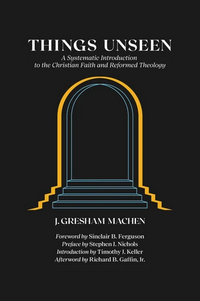
Things Unseen: A Systematic Introduction to the Christian Faith and Reformed Theology by J. Gresham Machen: Concise Looks at Fundamental Doctrines

Things Unseen

Things Unseen:
A Systematic Introduction
to the Christian Faith
and Reformed Theology

by J. Gresham Machen

Hardcover, 426 pg.
Westminster Seminary Press, 2020

Read: January 3-December 26, 2021/td>

What’s Things Unseen About?

Starting in 1934 and continuing until his death in 1937 (although he had plans to keep it going for at least another two years), J. Gresham Machen delivered a series of radio addresses on WIP in Philadelphia. The addresses focused on the Christian doctrine of the Bible and what the Bible tells us about God, the Christian view of Man, and then doctrines of salvation (this was cut off before he completed it).

While not technically a Systematic Theology, the outline matches how many/most Systematics cover the topics.

These addresses had been collected and published in collections in previous decades, but now, they’re published in one attractive (and seemingly durable) volume.

So, what did I think about Things Unseen?

With a couple of weekends off for travel or sickness, I read a chapter a week this last year, and it was a great practice. The addresses took thirty minutes or so a week when delivered, so they take only a few minutes to read. But minutes that serve as a wonderful reminder of the basics of Christian Doctrine.

In the 1930s, the vogue was to downplay Reformed distinctives, as well as a whole-hearted belief in a supernatural Christianity. Machen flies in the face of that and was bold in his teaching on both fronts. He’s succinct, pastoral, accessible, and even witty. These are not talks for scholars, or dumbed-down–they’re straightforward presentations of the topics for everyone.

Were this a smaller collection, I might be able to get deeper about some of the topics–but there’s just too much to try to talk about. But it’s all great–this has been one of the most rewarding books I’ve read in a few years. Even when Machen is merely restating what generations before him taught, there’s a freshness to his presentations that really are appealing.

I can’t recommend this enough.


5 Stars

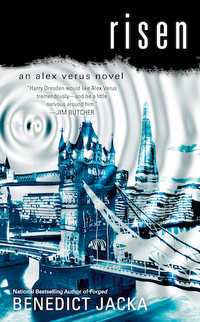
Risen by Benedict Jacka: I Don’t Like to Use “Perfect”, but I Came Close in Describing this Series’ End

Risen

Risen

by Benedict Jacka
Alex Verus, #12

Paperback, 323 pg.
ACE, 2021

Read: December 13-16, 2021
Grab a copy from your local indie bookstore!

As far as most people were concerned, I was one of the bad | guys, and I wasn’t sure they were wrong. The part that really bothered me was that, when I looked back on the decisions that had brought me here, all of them had made sense at the time. There hadn’t been a moment where I’d had a clear choice between good and evil. I’d just had to choose between bad options, over and over again, and things had kept getting worse.

Was there a point at which it had all gone wrong?

This last year, I’ve been listening to the audiobooks to review the series before this. And it’s been a lot of fun. Up until that chapter at about the midpoint in Fallen that really could’ve served as a series finale. Even knowing it was coming, it was a gut-punch. And the book and a half that followed made it clear that a lot was going to happen in this last book, and very little of it promised to be good.

Also, in a real sense, even though I think the story needed to end, it was coming to that point naturally—I really didn’t want to leave this world and these characters.

This brings us to:

What’s Risen About?

It’s time for the final face-off between Alex and his allies (a new, temporary, one is introduced early on here), the Council, Richard Drakh, and Anne and her forces. If Anne (okay, the djinn who controls her) succeeds in their plans, a new, devastating war will break out, and mages throughout the world will be killed in large numbers (and humans will fare much worse). So, the others call a truce to face this threat together.

Naturally, everyone expects the others to betray them as soon as is possible—but in the meantime, they need to work together (the Council solicits Alex’s help in taking Richard out as soon as feasible). Alex goes along with the truce—and the Council’s offer—because it’s the only way to prevent the worst-case scenario and he wants one more shot at saving Anne. Something that Richard and the Council couldn’t care less about.

That’s pretty much what the novel is about—a fight for all the marbles. At the very least, the future of magic society in the U.K. hangs in the balance. At the most, the future of life on Earth will be determined by this confrontation.

Oh, and Alex is pretty sure he only has a few days left to live (not that he’s told anyone this), so he needs to get a move on to save the day, and possibly Anne.

That Meme Moment

You’ve likely seen that meme with photos of Bert from Sesame Street, reading that says, “When a character’s death is so sudden and unexpected that you have to re-read it a few times…” (see also that death from Harry Potter and the Order of the Phoenix). Well, there was one of those, here. You knew X was in a jeopardy-filled situation—everyone in the novel is—you knew all along that there’d be character deaths.

But…wow. “____ killed ____” and that’s it. No fight, no dialogue, no description of it, just “____ killed ____”. I don’t know how many times I reread it, just hoping for more detail, hoping what I read was actually “it looked like ____ killed ____.” I was in shock for a bit. Alex and others were, too (when the danger passed).

As I said, you knew from the beginning (or from the two previous novels) that every character was at risk, but those three words really drove that home.

No one is safe in Risen. No. One.

I absolutely love it, and I’m glad I don’t interact with Jacka online because I won’t have to pretend to be nice to him for the next few weeks while I process things.

The State of Alex

“Are you going to help?”

“And if I say no?”

“I would prefer that you didn’t.”

“Prefer,” Helikaon said cynically. “What happened to that nice mild-mannered apprentice I used to have?”

“Turns out he was never all that nice.”

Helikaon grunted. “Took you long enough to figure that out.”

The novel opens with a pretty big fight scene—bigger than a reader of the first few novels might expect—and Alex is going through enemies like a super-powered action hero. Sure, he’s powered up a lot lately, but it was just so strange to see that. He’s not the character we met in Fated anymore.

Is that a good thing?

That’s the central question of Risen (arguably for the series itself). For years, Alex has insisted he’s not a Dark Mage when the whole world assumed he was one. Sure, he was definitely not a Light Mage but he consistently refused to align himself with the Dark Mages. Alex saw himself as an embodiment of Henley’s Invictus. But when then he was forced into office as a Dark Mage and then when the Light Council turned on him one too many times…he started acting like one. He never really embraced the identity, but he might as well have.

But beyond the title, he really started walking down a Dark Path (with the “dark” connoting the lack of morality that Dark Mage doesn’t). Compromise after compromise, choice after choice after choice—all the defenses and walls that Alex had set up so that he wouldn’t act a certain way came falling down. And maybe, just maybe, it indeed “turns out he was never all that nice”—or moral.

A lot of time is spent with Alex wrestling over this in Risen. Often enough—and in terms similar enough—it might seem redundant. But when you remember how short a time frame this book’s action encompasses, it’s not surprising that he keeps mulling over things in the same terms—he never gets a chance to really resolve the question to himself until the end. Alex isn’t repeating himself, he’s continuing the inner dialogue over a couple of days—with frequent life-threatening interruptions. It’s no wonder he keeps asking the same question of himself.

In the end, for Alex, I’m not sure it matters what kind of person he was. Whether he was a moral person—or just wanted to be (at least for a while). I think the Alex Verus of Fated wouldn’t be crazy about the Alex of Risen, but he might exercise some compassion and understanding toward him (begrudgingly). But it’s the actions at the end, in the closing chapter or two, that really tell the reader (and Alex) what kind of man he was at his core.

Getting to watch him wrestle with these ideas, the moral ambiguities, and clear moral failings was a great part of this series. A character that can honestly examine himself and draw these kinds of conclusions is rare in Urban Fantasy (also, it’s not frequently called for). It’s just one of many reasons to love the series.

A Word About Luna

When we first meet Luna, she’s scared, nervous, as far from confident as is humanly possible, but in befriending Alex (and being befriended by him), she’s realized that there’s some kind of hope of a future for her. She’d never really had that (or if she did, it was so long ago, she’d forgotten it). He pulled her out of her shell, introduced her to a new world, and guided and protected her through it.

She probably ended up idolizing Alex because of this—thought of him in ways he couldn’t live up to. Yes, she was aware enough of his shortcomings and human nature to keep her idea of him from being overidealized, but there was a degree of it. She seamlessly transitions from being his biggest cheerleader to being his conscience. As always, they talk through plans, he assumes (as he should) her assistance in his schemes—but through their planning sessions, Luna keeps calling him back to the Alex he was, reminding him of his morals and the decisions he made to ensure he wasn’t Richard, or Levistus, or any one of a number of mages he wanted to be nothing like. She wasn’t always 100% successful, she sometimes had to repeat herself. But if Alex were a cartoon character, Luna would be the figure in the white robes standing on his shoulder fighting for him to do the right thing.

Beyond being Alex’s Jiminy Cricket, Luna’s really matured. She really doesn’t need him in her life as a mentor—the Arcana Emporium is truly hers now, she’s the one doling out guidance and advice. Luna’s able to stand on her own now—and it’s great to see. Alex might be the central character of this series, but Luna’s the real MVP.

Along the same lines, I need to shoehorn in a comment about Landis. I’ve always liked him and meant to talk about him—this was underlined during my revisiting this year. There’s so much to appreciate about this character—I really hope he’s one we get short stories about in the future. He really shines in Risen—for his actions, as well as for those actions he deliberately doesn’t take. There’s a complexity to him that would be great to dive into.

Risen as a Series Finale

Luna tailed off, a sad look on her face. “We’ve lost so much.”

The simple way that she said it hurt. I wished I could tell her that the worst was over.

With over a hundred pages to go at that point, I wished he could tell her that, too—but no. Not even close.

Before I started reading this, I thought back to the series I’ve read over the last few years that ended (I’m not counting things like trilogies that were never supposed to keep going). Some of them ended well—like The Hollows (until Harrison’s publisher decided it needed to come back); some of them went out on a victorious note—like Kitty Norville; some of them left readers divided and uncertain—like The Iron Druid Chronicles (I change my mind about that ending regularly). I don’t think this will be as divisive as IDC (and it shouldn’t be), but it really reminded me of it.

I think Alex spends a lot of this novel (and the previous one) in a similar headspace to Atticus at the end of Scourged, a lot of what happened to him and those around him was due to choices Alex had made and he saw that—and was prepared to face the consequences (although, he’d find a way out of them or to mitigate them if possible).

But the similarities end there.

This is a great series finale—we get the confrontations we’ve been waiting for since early on. We get resolutions to every major plotline. We get answers to some big questions. There are strong indications for what life is going to look like (at least for the foreseeable future) for those we care about who make it to the end. It doesn’t feel like Jacka pulled any punches, or cheated to give someone a happier ending than the story seemed to suggest.

Everything that happened felt inevitable, like we were waiting for it, and Alex for all his divination should’ve seen it coming (I wonder if Helikaon did). In that opening quotation, he asks, “Was there a point at which it had all gone wrong?” Yeah, pretty much early on in Fated is when his fate was sealed—although it’s probably when he took on Anne and Vari in addition to Luna, when he opened himself up to them, cared about them, and shared his life and dangers with them—and adopted theirs as his. This makes it a lot like The Iron Druid Chronicles again—there’s a straight line between the choices that Atticus makes in that first book and the finale.

All this points to Jacka’s skill—unlike some people claim for their series, I don’t get the impression from what I’ve read/heard from him that he had the series mapped out like this when he started. But it sure felt like it.

Do I want to see more in this world? Of course! And the promised collection of short stories will satisfy that desire. But do I feel cheated? Do I feel like I need more? No. And much more than a few short stories will take some of the luster off of this ending. The story has been told, and as a reader I can move on knowing that’s done.

So, what did I think about Risen?

I shook my head. No easy choices, no easy answers. And now I was keeping company with generals and politicians, the sort of people who make these kinds of choices every day. Pick option one, these people die. Pick option two, it’s some other people instead. Pick option three, and both groups live, but the problem isn’t solved and will come back at some unspecified time in the future, at which point it’ll probably be worse. Make your choice, and don’t take too long, because tomorrow you’ll have to do it all over again.

Maybe this was how you turned into someone like Levistus. Having to fight for your own position while also having to decide between life and death for the people below you every single day. Over time you’d get numb to it, and eventually you’d stop feeling anything at all.

Was I becoming like that? I didn’t know. and that frightened me.

As tempting as it is to focus solely on the end of the series, I wanted to focus on Risen as a novel. It’s one of Jacka’s best. Maybe his best. Probably his best. And I say this as someone who is not a fan of all the choices he made in terms of character or plot. At least not in the moment, I think I’ve come around to them after the fact.

It really works as a novel—from the (typical) in media res opening, the challenges and deals Alex has to make to set up the main action (which takes so much more of the novel than is typical), to the main action—it’s well-paced, never too fast so you feel overwhelmed, but it never really lets up, either. There are moments of lightness to balance the darkness, thoughtfulness/reflection to balance the action.

Not having to worry about the next X many books to come, Jacka can keep things focused. It almost becomes a stand-alone at this point. The goals of the plot and Alex are clear throughout—stop Anne’s djinn’s plan, defeat Richard (hopefully once and for all), try to save Anne, and be ready for the fateweaver to kill Alex.

I wasn’t sure where to put this observation, but I needed to say something about this. After the last chapter—with its very definitive “The End”—there’s an Epilogue. But before that epilogue are a few pages with just a little text each. It’s a brilliant move, and I’d give the book another star if I could just for it. They make the Epilogue the literary equivalent of an MCU mid/post-credits scene, and I didn’t think such a thing would be possible or would work, but it did. Those pages also give the reader a minute to process the impact of that final scene before diving into the Epilogue, and you really need that.

There are great action scenes, some great character moments (many, actually), and fans will find themselves fist-pumping quite often. There are so many powerful scenes. In a few months, I’m going to listen to this audiobook. And I already know a few passages where Jackson’s narration is going to hurt to listen to—mostly ones I went back and re-read and I could hear his narration in my head as I did so.

I want to keep going, I don’t know how to shut up about this, in case you can’t tell. But I think I’ve said all the important things, and probably several of the less-important things. It’s almost like when I hit “Schedule,” I’ll really be done with the series, so if I can keep typing I don’t have to say goodbye.

I’m going to miss Alex and the crew—but I’m glad I got to see it go out this way. And you know, when the promised collection of short stories is out, I’ll be jumping on it. If you’ve read this far, you’ve probably read the whole series and don’t need me to tell you to read it—you already have, or are just waiting with bated breath to do so. If you’ve read this far and haven’t read the series? For cryin’ out loud, fix that.


5 Stars

This post contains an affiliate link. If you purchase from it, I will get a small commission at no additional cost to you. As always, opinions are my own.


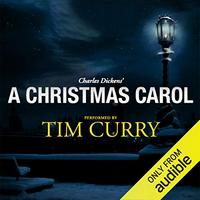
I have a Few Unnecessary Thing to Say About A Christmas Carol: A Signature Performance by Tim Curry

A Christmas Carol: A Signature Performance by Tim Curry

A Christmas Carol:
A Signature Performance
by Tim Curry

by Charles Dickens, Tim Curry (Narrator)

Unabridged Audiobook, 3 hrs., 31 min.
Audible Studios on Brilliance, 2016

Read: December 10, 2021
Grab a copy from your local indie bookstore!

What’s A Christmas Carol: A Signature Performance by Tim Curry About?

Yeah, just kidding. We all know.

So, what did I think about A Christmas Carol: A Signature Performance by Tim Curry?

Really, all this post needs to be is: “Tim Curry read A Christmas Carol” and include a link to purchase. What else do you need? That’s pretty much all I needed to read from this post by Bookstooge.

But let me say something about the narration—it’s good, it’s really good. It’s also not what I expected, at least not fully.

I think I went into it anticipating an almost-over-the-top performance, whatever the audio-equivalent of a scenery-chewing showcase of Tim Curry excess. Which would have been delightful, make no mistake. Curry’s got one of those voices that would’ve lent itself to such a thing and I’d have made it an annual listen.

But no, Curry’s a pro. And he shows that here. He treats the material with respect and gives just the right emotional weight, sentimentality, personality, and life that the text and characters call for.

One line reading, in particular, made me chuckle (and came as close to what I anticipated as anything does):

“You will be haunted,” resumed the Ghost, “by Three Spirits.”

Scrooge’s countenance fell almost as low as the Ghost’s had done.

“Is that the chance and hope you mentioned, Jacob?” he demanded, in a faltering voice.
“It is.”

“I—I think I’d rather not,” said Scrooge.

I chuckled at that last line and went back to listen to it a couple of times.

This is just what I needed—did it make my heart grow three sizes that day? Nope. Too much of that moralism-disguised-as-Christianity so typical of Dickens and his era, this work will never have that effect on me. But it’s a nice dollop of holiday spirit, and sure to entertain anyone who gives it a listen.


5 Stars

This post contains an affiliate link. If you purchase from it, I will get a small commission at no additional cost to you. As always, opinions are my own.

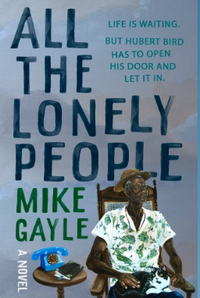
All the Lonely People by Mike Gayle: Extraordinary things can happen to ordinary people

All the Lonely People

All the Lonely People

by Mike Gayle

Hardcover, 371 pg.
Grand Central Publishing, 2021

Read: November 24-29, 2021
Grab a copy from your local indie bookstore!

What’s All the Lonely People About?

In the 1950’s Hubert Bird left his home and family in Kingston and went to London in search of work. When we meet him, he’s been a widower for over a decade and has been living shut-off from just about everyone (other than those he runs into doing food shopping, etc.) with only his cat to keep him company.

Until one fateful day (of course, or this’d be a boring book)…

We learn about Hubert’s life in alternating chapters—one in the present and one from his past.

Then

Since arriving in England, Hubert had felt out of place in a whole host of locations in the mother country, everywhere from the streets around Mayfair to the pubs of east London and beyond. But as he stepped off the 9:20 from London Victoria that Saturday morning, all previous experiences paled in comparison to how he felt standing on platform two of Bromley South Station.

He felt like a character from one of the Westerns he enjoyed seeing at the pictures—not the hero, cowboy, or sheriff, but rather the stranger in town. The man who walks into a bar full of life, music, and chatter, only for the whole room to fall into a complete and uneasy silence the moment they notice his presence.

We get glimpses of Hubert’s life from when he decided to leave home, to the early troubles he had finding regular work—employers and fellow employees didn’t exactly welcome “The Windrush Generation” (to put it more than mildly). In the midst of the harassment, undisguised prejudice, and meager wages—Hubert meets and falls in love with a white woman—who falls for him, too, despite her family’s clear wishes. They marry, have a couple of kids, and build a life for themselves—it’s hard and slow going, but they get there.

Eventually, the kids move out and Hubert’s wife dies, and he soon starts living alone.

Now

Hubert talks to his daughter—now a professor in Australia—weekly. He’s ashamed to tell her that he’s cut ties with the outside world, so he invents some friends and spends time each week inventing activities that they’ve been doing so he can have something to tell her when she calls.

Then one day, a new neighbor, Ashleigh, drops by to introduce herself—which just flummoxes Hubert and he cuts the conversation short, he’s so out of practice in interacting with people. Ashleigh’s one of the friendliest, most hopeful characters I’ve encountered recently. After running into him briefly a couple of times, she shows up at Hubert’s door in a panic—she has a job interview and her babysitter just bailed. Can Hubert watch her daughter while she interviews?

“Look, me see you in a pickle. Really, me see that. But have you lost your mind? You can’t just ask a complete stranger to look after your child. Don’t you watch the news?”

“Of course I do,” said Ashleigh. “And yes, I know sometimes the world’s a horrible place, but not always. Sometimes it’s a lovely place where nice things happen for no reason and I’d much rather…” She began to get upset. “I’d much rather live in that world than the other one!”

Hubert gets sucked in—he helps out, and the trio ends up spending more and more time together. Slowly

Meanwhile, Hubert’s daughter is due to come for a visit—his fictional life is about to be exposed. It’s about time for him to actually make some friends. Thankfully, Ashleigh’s been reminding Hubert that life is better when he opens himself up to others and he starts to do just that. Maybe he can have something to tell her after all (after ‘fessing up to the deception). And then Ashleigh gets an idea that ensures he’s going to have a lot to report.

So, what did I think about All the Lonely People?

“It’s easy to waste a lot of time trying to think of a perfect solution to a problem. But sometimes the only thing you can do is cross your fingers and have a go.”

I haven’t read a Mike Gayle book for something like 15 years (just couldn’t find them for a while, and then forgot to look), in that time he went from what I remember as Hornby-esque, but maybe with more jokes. In this book? He reminded me of Fredrik Backman, just with a different accent.

It was just as heartwarming, just as tragic, and with a similar kind of almost impossibly happy ending tinged with sadness that Backman’s noted for. And you don’t care how realistic it is, because you just loved everything that led to that point

I almost instantly liked Hubert and was quickly drawn into his story. You get invested through him (and if you don’t like him by midway through chapter two—just DNF this, it’s not a book for you). I liked Ashleigh almost as much as him, but when it comes to everyone else, you like them/care about them for Hubert’s sake.

For example, when his wife died—it hit me hard (which is odd because I knew about when she’d die even when we met her). But I didn’t feel too bad for her, but my heart broke because of what it did to Hubert. The same goes for the rest of what happens–you care because of Hubert, you’re invested in the story and the antics of his friends because of Hubert, you want things to go well in the end for Hubert’s sake. And you get intensely happy about the last chapter or two because of Hubert. Picking up a theme?

Gayle’s writing was warm and inviting—you get sucked in and carried along because of how it makes you feel, more than because of the plot or even the characters. I’m not always crazy about that kind of writing, but when it works well, it’s really effective (as it is here).

There’s one thing Gayle does that made me mad, and I came close to starting to outline a rant about it—but in the end, I got over it. I thought about DNFing the book! I could still go on a rant about the authorial decisions about it (this is so tricky to talk about in the abstract), because I am still mad, but the end product justified it.

Sure, I said the emotional weight of the story is more important overall to this than the story or characters–but I’ve got nothing against either of them. I liked and admired Hubert. I would love to hang out with Ashleigh and her kid (and her new Significant Other). The story of Hubert’s life feels so real—and is likely freakishly close to so many lives—and the world could use novels about lives like these.

This is such a heartwarming novel, if you get to the end and aren’t in some way cheering over the Capraesque ending? You should try and schedule an electrocardiogram—stat. And you just have to love that epilogue that shows that Hubert isn’t Eleanor Rigby, no matter what the title suggests.


5 Stars

2021 Library Love Challenge
This post contains an affiliate link. If you purchase from it, I will get a small commission at no additional cost to you. As always, opinions are my own.
Page 8 of 24

Powered by WordPress & Theme by Anders Norén