Updated 8/9/2025
Saturday was National Book Lovers Day (yes, around here, that’s just another way of saying it’s a day that ends in “ay,” except it’s a National thing). I’m not sure that “Lover” is the best way to describe me—buying, reading, and surrounding myself with books is just who I am. “One does not love breathing,” as Miss Jean Louise Finch, said.
Or in the words of Patrick Rothfuss, “I always read. You know how sharks have to keep swimming or they die? I’m like that. If I stop reading, I die.”
Scout and Rothfuss are likely overstating things—or maybe not, but they can give that impression. So maybe it’s safer to call ourselves book lovers, eh?
I’ve been meaning to post something about National Book Lover’s Day for years now, but I’ve never really known what to say. But it occurred to me (as I was saying that) that I could put together a handy-dandy list of books that show love to books, either about talking about books or those who write, read, sell, or loan them.
This isn’t necessarily a complete list, in fact, I’m sure it’s not. I did a quick survey of the 5200 plus posts I have here) to compile this list in two days in 2024, plus a little bit of time adding books since then. But it’s a pretty thorough one—I’ll get this in better shape by next year.
(Probably…Maybe…We’ll see.)
(Links will take you to my post featuring the book.)
NonFiction
- Once Upon a Tome: The Misadventures of a Rare Bookseller by Oliver Darkshire—how Darkshire became a bookseller, and just how rare bookselling works in our modern world
- 42: The Wildly Improbable Ideas of Douglas Adams edited by Kevin Jon Davies—odds and ends from the collected papers of Douglas Adams paint quite the picture of the writer.
- How to Read Literature by Terry Eagleton—I remember very little of this book, but there was a lot of good to be found in it (unlike at least one book below). Much to chew on, either way.
- Don’t Panic: Douglas Adams & The Hitchhiker’s Guide to the Galaxy (Third Edition) by Neil Gaiman, David K. Dickson and MJ Simpson—a revision of the first Gaiman I ever read—all about the creation of Adams’ most known series (in all its forms) and some of his later work, too.
- The World’s Strongest Librarian: A Memoir of Tourette’s, Faith, Strength, and the Power of Family by Josh Hanagarne, Stephen R. Thorne (Narrator)—its about much more than being a librarian, but most bookworms will find something they can relate to in this memoir
- The Stories Behind the Stories: The Remarkable True Tales Behind Your Favorite Kid’s Books by Danielle Higley, David Miles (Illustrator)—it’s all right there in the title. Quick profiles of 29 beloved children’s books that will almost certainly make you want to go pick up some old favorites to get reacquainted.
- Breaking Bread with the Dead: A Reader’s Guide to a More Tranquil Mind by Alan Jacobs—principles for reading outside your time/culture/perspective
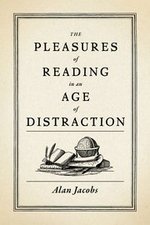
- The Pleasures of Reading in an Age of Distraction by Alan Jacobs—as close to a mission statement for my approach to reading as you could hope for. I should probably read it again soon (no matter when you’re reading this), and if you read only one thing from this post, make it this.
- But Have You Read the Book?: 52 Literary Gems That Inspired Our Favorite Films by Kristen Lopez—learn more about the books your favorite movies were adapted from
- Texts from Jane Eyre by Mallory Ortberg—who hasn’t wondered what it’d be like if your favorite literary characters could text each other? Ortberg brings those answers to life. Frequently hilarious. Almost always worth a read.
- The Secret Lives of Booksellers and Librarians (Audiobook) by James Patterson and Matt Eversmann—Patterson and Eversmann celebrate those who connect readers with the books they need/want.
- Why We Read: On Bookworms, Libraries, and Just One More Page Before Lights Out by Shannon Reed, read by Paige McKinney—Reed, a writing teacher, talks about how she teaches people to love to read again, and some of the many, many reasons people love to read. It’s funny, insightful, and will make you feel like you’ve found a reading buddy. (I haven’t posted about this one yet, but soon)
- Lit!: A Christian Guide to Reading Books by Tony Reinke—I had a lot of problems with Reinke’s approach, but I’m sure someone out there (besides him) will appreciate it
- The White Man’s Guide to White Male Writers of the Western Canon by Dana Schwartz, Jason Adam Katzenstein (Illustrator)—a guide to “teach you everything you need to know to become the chain-smoking, coffee-drinking, Proust-quoting, award-winning writer you’ve always known you should be…Not a white man? Not to worry. The White Male Writer isn’t a hard-and-fast demographic; it’s a state of mind…”
Fiction
- A Rare Book of Cunning Device (Audiobook) by Ben Aaronovitch, Kobna Holdbrook-Smith—a fun, short, installment in the Rivers of London that finds Peter and some friends in the basement of the British Library (which sounds like a great place to visit for someone like me) tracking down a magical book.
- What You are Looking for Is in the Library by Michiko Aoyam—a series of short stories depicting people struggling through various stages in life being helped by a wise librarian (almost magically so) directing them to just the right book to lead them to improve their lives.
- The Book That No One Wanted to Read by Richard Ayoade, Tor Freeman, Jarvis Cocker, Lydia Fox—a book written by a book (making it far different than a book written by a person) about a book that no one wanted to read and how to help it. That’s a lousy description, so let me just say—you need to read it.
- No Two Persons by Erica Bauermeister—a series of short stories follows the path of a book from its writing, to finding an agent, to the audiobook narrator, and the impact it makes on the lives of those who encounter it in various forms.
- The Book of Doors by Gareth Brown—A bookstore clerk finds herself in a world of magic and wonder (and danger) thanks to impossible books.
- The Finlay Donovan series by Elle Cosimano—a romantic-thriller writer’s conversation with her agent is overheard and misunderstood leading to her being hired as a hitman. Hilarity, danger, and amateur crime-solving ensues as she and her live-in nanny try to stay out of trouble.
- I Cheerfully Refuse by Leif Enge—in a largely (and proudly) post-literate postapocalytpic society, one rare book brings turmoil to a community and family. (there’s a lot of other things going on, too–but that’s the core)
- The Hero Interviews by Andi Ewington—a young man goes off to research a book into what makes a hero by interviewing all sorts of stock (and some not-so-stock) Fantasy Characters
- The Thursday Next books by Jasper Fforde—I’ve only read two of these (and I don’t know that I’ll read more, which is a commentary on me, more than the books), but they’re a strange and often delightful series about a literary detective who can travel in time, space, and into books.
- The Ian Ludlow thrillers by Lee Goldberg—follow a thriller writer whose life keeps getting turned upside down when the plots of his novels keep coming to life as various and sundry criminals and terrorists borrow his ideas.
- Ban This Book (Audiobook) by Alan Gratz, Bahni Turpin (Narrator)—an elementary school girl, upset that she can’t borrow her favorite book from the school library anymore, begins a lending library from her school locker featuring several books the school administration has decided don’t belong in the library.
- Summer Hours at the Robbers Library by Sue Halpern, read by: Josh Bloomberg, Dara Rosenberg, Allyson Ryan—I can’t sum up this book about found-families in a small-town library beyond this inadequate try.
- My Lady Jane (Audiobook) by Cynthia Hand, Brodi Ashton, Jodi Meadows, Katherine Kellgren—Within this YA/Supernatural novel that re-writes Lady Jane Grey’s life, we get a love letter to books — and Jane is the representative book lover par excellence (though she could like poetry and novels a bit more)—there’s a treasure trove of quotations about reading, books, and related topics in these pages.
- The Hawthorne and Horowitz Mysteries by Anthony Horowitz—These books feature a fictional and somewhat hapless Anthony Horowitz being hired to follow a consulting detective on some cases and write about Hawthorne’s successes (because Hawthorne needs the extra money).
- How I Became a Famous Novelist by Steve Hely—a hilarious, over-the-top (yet probably really tamer than reality) satire about the publishing industry and the selling/making of books.
- The Door-to-Door Bookstore by Carsten Henn, read by: Raphael Corkhill, translated by Melody Shaw—Schmaltzy but earnest story about an older man connecting people with just the right books
- The Library Murders by M.R. Mackenzie—a twisty murder mystery that includes a sincere and heartfelt tribute to Library workers and the value of their service.
- The Jake Mooney books by Duncan MacMaster—Hack, Hacked, and Hacker (that I really need to write a post about) tell the story of a ghost writer who keeps finding himself in situations where he has to solve murders and try to keep from becoming the next victim. Funny, action-filled, mysteries
- Namaste Mart Confidential by Andrew Miller—a would-be novelist and his stand-up comedian roommate/coworker serve as unlicensed P.I.s when they’re not working at a supermarket.
- Lula Dean’s Little Library of Banned Books by Kirsten Miller—this is a sanctimonious and shallow book (IMNSHO), but the message about the value and importance of all books—particularly those that people might want to ban—rings clear.
- Jane and Dan at the End of the World by Colleen Oakley—a not very successful writer finds herself stuck in the middle of a hostage situation that closely resembles her own book—if she could just convince her husband of that fact, they might beable to get out of the situation.
- The Awful Truth About the Sushing Prize by Marco Ocram—a mystery novel featuring a best-selling author who can create reality by what he writes (it’s more nuanced than that, but it’s close).
- According to Mark by H. B. O’Neill—a man suffers a breakdown and is visited by Mark Twain’s ghost who convinces him to kill himself.
- Man on a Murder Cycle by Mark Pepper—a past-his-prime author, struggling to recapture his former success, steals the work of a dead author. And then people start being killed in ways depicted in that book, making him the prime suspect. And then things get weird.
- I Will Judge You by Your Bookshelf by Grant Snider—brilliant comic strips about books, writing, reading, and the like
- Everyone in My Family Has Killed Someone/Everyone on the Train
- How to Write a Novel by Melanie Sumner—the sweet (and clever) story of a 12-year-old would-be novelist in her attempt to write a novel that will sell enough to allow her mom to quit her job and take care of her family.
- The Bookish Life of Nina Hill by Abbi Waxman—one of my favorite novels from the past five years is about a bookseller and reader discovering a family, making new friends, falling in love, and basically finding life outside of her books (but never without them)
- The Storied Life of A.J. Fikry by Gabrielle Zevin, read by: Scott Brick—a sweet rom-com about a small-town bookseller finding love.
Image by Hermann Traub from Pixabay