Tag: Cameron Johnston

Opening Lines: Deadly Does It by Abbi Waxman

Head & Shoulders used to tell us that, “You never get a second chance to make a first impression.” That’s true for wearing dark shirts, and it’s especially true for books. Sometimes the characters will hook the reader, sometimes the premise, sometimes it’s just knowing the author—but nothing beats a great opening for getting a reader to commit.

It wasn’t that Mason was vain. It was just that if anyone was going to mess up her face, she wanted it to be her. She already had two piercings in one eyebrow, two in her nose and multiple holes in her ears, but the guy approaching her with a slender but very pointy ice pick seemed to think something more central was going to really pull her look together.

Not that aesthetics were his primary concern.

“I’m going to hurt you,” he said, his breath a little ragged. Mason had just punched him in the gut, and he’d taken it badly.

from Deadly Does It by Abbi Waxman

Opening Lines Logo

First Mage on the Moon by Cameron Johnston: Magic and Mundane Engineering

<

h2><img src=”http://www.hcnewton.com/irrreader/2026images/FirstMage.jpg” alt=”Cover of First Mage on the Moon by Cameron Johnston” border=” />First Mage on the Moon

by Cameron Johnston

DETAILS:
Publisher: Angry Robot
Publication Date: April 14, 2026
Format: Paperback 
Length: 320
Read Date: July 9-15, 2026
Buy from Bookshop.org Support Indie Bookstores

He slid the paper across her workbench and stood there, waiting expectantly.

She sighed and glanced down, paused, then looked harder at the scrawl of handwriting. On the page was a circle representing their world, and another, smaller circle with a crude palace of the gods crowning it, depicting the moon. A straight dotted line ran from one circle to the other, surrounded by numbers and calculations, many scored out.

“What is this unholy mess?” she asked.

Jackan nodded at his workings. “You tell me, lass.”

She studied it, determining distance and speed and… “What is this number?”

“Weight,” he said.

She frowned, trying to fit it all together. “It looks like you are trying to figure out the speed you would need to achieve to get something the weight of a stone golem to the surface of the moon.”

He rocked backwards and forwards on his heels. “Mmmhmm. Thoughts?”

She looked up at him, eyes widening as she took in his sincerity and remembered an off-hand comment made the day before. “Why the moon? Is it just a thought experiment?’

He nodded. “Sure is.” Then, under his breath: “For now.”

What’s First Mage on the Moon About?

An accident triggered by lightning and experimental weaponry leads Ella Pickering to have a conversation or two with the engineer Jackan Grissom. Ella was a skymage, flying ships in the war—after a crash that landed her in a wheelchair, she’s been working in a weapons factory doing grunt work. She knows enough to see that Grissom’s weapon wasn’t really that much of a weapon.

It turns out that he’s actually trying to build something to reach the home of the Gods—the Moon. Ella is intrigued and gets herself assigned to his team. They recruit a couple of other people—actually, no. one person blackmails her way onto their team, and they get saddled with another. Their boss believes they are working on a revolutionary weapon—but that’s the last thing they want to do.

Essentially, they’re stealing money and resources from the government’s war effort to undertake a mission that is (or at least approaches) blasphemy. And anyone figuring out what they’re doing is going to lead to their demise.

The Little Touches

For recovering Space Race junkies like me, there are so many things to find joy in.

Johnston has worked in several—more than several—little Easter Egg-type things throughout the book. Allusions to Star Trek and Firefly, several names that make you think of Gemini and Mercury astronauts, there’s a very USSR-snooping-on-the-Mercury-Program feel to things, the alternative to Laika or Ham the Astrochimp is inspired—and only possible in a Fantasy novel.

Why did I pick this up? Why did I keep reading?

“Aye,” the old engineer said. “Most guild-taught mages think that every little problem can be solved by using the right magic, but there’s only so many arcane runes and enchantments you can add to something before they snarl each other up explode in your face. I was a stonemason and an engineer before I was an accredited mage, so I thought to myself ‘alchemy, now, that’s a different matter entirely’. If we use our brains as well as our aether, we are bound to improve the efficiency of both.”

I picked this up because The Last Shield convinced me that I want to read a lot more of Johnston (and I still do). Also—the idea of a magic user headed to the moon in a rocket-looking thing is just too great to pass up.

Why did I keep reading it? As much as I dislike an in medias res beginning and typically don’t find them that effective in getting me to answer something, this one had me invested. How do we get from the beginning (see my Opening Lines post) to this point?

Even without that, I’d have been in—watching a bunch of magic users function as engineers and scientists with their magic, rather than just muttering something and waving their hands to get a wonderful result—is such a great idea, and was fun to read. It’s possibly the best idea in the book, and the execution really makes you want to see other Fantasy writers take a stab at things along those lines.

What does this book tell us about humanity?

It’s very much in the spirit of one of Sam Seaborn’s better lines:

Mallory O’Brian: Do we really have to go to Mars?

Sam Seaborn: Yes.

Mallory O’Brian: Why?

Sam Seaborn: ‘Cause it’s next. ‘Cause we came out of the cave, and we looked over the hill and we saw fire; and we crossed the ocean and we pioneered the west, and we took to the sky. The history of man is hung on a timeline of exploration and this is what’s next.

At the core, this book is about a bunch of decent and smart people who are tired of a war that doesn’t seem to have an end, or much of a point. They’re tired of pumping out weapons and have found a way to use their magic and smarts for something positive. That human spirit that Sam puts into words permeates the novel, in the middle of everything else—these people want to take to the sky.

Not just among the team—but across borders.There’s a real international appeal to their efforts, but I’ll leave that for you to see.

So, what did I think about First Mage on the Moon?

“Up there, beyond this ball of rock, sea, and soil, is something humanity knows nothing about. We have so many questions without answers, and so many questions we don’t even know to ask.”

This wasn’t the book that I thought it was going to be—but I’m not complaining.

One thing that I’d have liked to see more of is the developing friendships among the team. There’s enough science and engineering, political maneuvering going on, espionage, and warfare that there really wasn’t room for it. But those little moments of conversation between them, collaboration, and growing bonds were the best parts of the book. The character work was very well done, but not the priority of the novel (and I wish it was).

This was, instead, a book about war, the costs of it (in many senses), hope, those who benefit from destruction, and the systems that encourage this behavior. What our astronauts learn about their gods is more than unexpected, but fits in with the overarching themes of the book.

I’m not entirely sure that I can say that I enjoyed this book—but I’m very glad that I read it. The ideas, the characters, and the execution were more than worth the investment of time. And the last page or so really just sealed the deal on this being a good read.

This post contains an affiliate link. If you purchase from it, I will get a small commission at no additional cost to you. As always, the opinions expressed are my own.

20 Books of Summer 2026

Irresponsible Reader Pilcrow Icon

Opening Lines: First Mage on the Moon by Cameron Johnston

Head & Shoulders used to tell us that, “You never get a second chance to make a first impression.” That’s true for wearing dark shirts, and it’s especially true for books. Sometimes the characters will hook the reader, sometimes the premise, sometimes it’s just knowing the author—but nothing beats a great opening for getting a reader to commit.

“You must meet the most interesting people on the gallows,” Whitlaw Goddard said to the black-hooded man readying his noose. The wooden stool creaked beneath his bare feet as he shifted, earning him a cuff that left his ear throbbing. The large audience chattered among themselves, making jokes and mocking, waiting for the day’s entertainment to begin.

The silent executioner didn’t dare talk with the heretic the corrupt hierarchs held responsible for conniving to land a mage on the holy moon, home of the gods. He ignored the condemned mage and pulled a length of rough rope taut, checking that it would hold the weight of his portly criminal. The man grunted in satisfaction and tied the end into a looping knot just large enough to accommodate Whitlaw’s head.

The mage shuddered and swallowed back down the sudden burn of bile. He’d never been one for pointless small talk, but with his hands bound and his magic sealed, a rising panic lent desperate energy to his tongue — as if by some miracle he might charm the dour executioner into sparing his life.

from First Mage on the Moon by Cameron Johnston

Opening Lines Logo

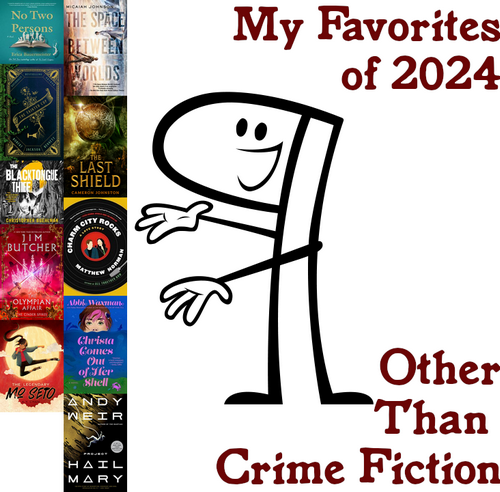
My Favorite Non-Crime Fiction of 2024

My Favorite Non-Crime Fiction of 2024
Back when I started this site, I knew the content would be largely “genre”-oriented. I’d have wagered the content would be roughly 1/3 Mystery/Detective fiction, 1/3 Urban Fantasy, and slightly less than 1/3 SFF, with “non-genre” fiction, humor, and non-fiction being enough to make my one-thirds just an approximation (honestly, if you asked me what I read regularly, that’s pretty much how I’d describe it today). Actual numbers show that’s wrong—it’s typically almost 40% Crime/Thriller Fiction, the rest of fiction is around 30% combined. This is just a long-winded way to get to these two points: because Crime Fiction takes such a big chunk of my reading, it gets its own “Favorite” list, but none of the others really garner enough numbers for their own.

When it comes to this particular list of favorites this year, it was tough to continue after the first cut. But no one wanted to read my top 30 (well, I didn’t want to put it together, anyway). I got it down with a little effort. So here’s my list of 10 favorite non-Crime Fiction Novels of 2024. Hopefully, you will find something here to tempt your.

As always, re-reads don’t count—only the works that were new to me.

(in alphabetical order by author)

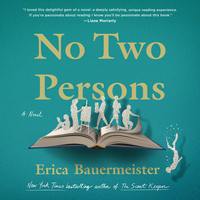
Cover of No Two Persons by Erica BauermeisterNo Two Persons

by Erica Bauermeister, read by a full cast

My original post
For those who don’t know, this is a series of interconnected short stories about a novel. From the struggles the author had getting it written, to it being “discovered” by an overwhelmed reader at an agency, to the audiobook narrator, to readers, booksellers, and others who came into contact with it. We get a look into their lives before and after the novel enters their orbit.

And I loved it. I loved it so much that the day after I finished the audiobook that I borrowed from my library I went and bought the hardcover because I needed it on my shelf just to feel better.

I can’t promise anyone else will react to the book the way I did–or that I will react to it when I read it again. But yeah…I loved this thing.

4 1/2 Stars


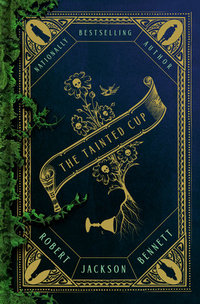
The Tainted CupThe Tainted Cup

by Robert Jackson Bennett

My original post
This was the first (non-beta) novel I read in 2024 and it was also the first book I gave 5 stars to (odd how that worked out). It takes the Nero Wolfe/Archie Goodwin dynamic, changes it up (Wolfe becomes a woman who stays inside for different reasons, gives the “Archie” a different explanation for his memory, etc.), and shoves it into a Fantasy world. And this fantasy world is so different than one I’ve run into before, so full, so well-developed, so intricate and “lived in” that it blew my mind from our introduction to the world through the end of the novel.

The magic, the science, the architecture…all of it was…I’m running out of believable superlatives to use here. And don’t get me started on the wonderful characters–from the detectives to the killer to the suspects to everyone else.

Possiby the best book I read all year–if not, it’s close enough that almost everything else was a let-down.

5 Stars


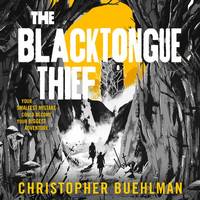
Cover of The Blacktongue Thief by Christopher BuehlmanThe Blacktongue Thief

by Christopher Buehlman

My original post
About the time I started the above, I finished this. Clearly 2024 was going to be a good year of Fantasy for me. I talked about the audiobook yesterday, so let me try to focus on the story.

You’ve got an irreverent thief, the kind of guy that other thieves don’t trust (which actually makes sense, honor among thieves has to be the dumbest idea….but I digress), a knight on a (probably) doomed mission, some strange magic and…forget it. You need to do this yourself.

It’s just bonkers. The book is fun, the dialogue is spot-on, the stories are harrowing, tragic, and gripping. It’s the whole package.

4 1/2 Stars


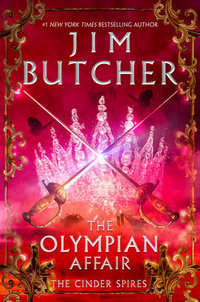
Cover of The Olympian Affair by Jim ButcherThe Olympian Affair

by Jim Butcher

I haven’t written anything about this yet because I’m just too overwhelmed and the words can’t come out right. I loved being back in this world. I was surprised and wonderfully entertained by this story and the way it all played out (even the parts you could see coming). There’s a death that probably needed to happen, and I’ll think about forgiving Butcher for it someday (long before I forgive him for the big one in The Dresden Files).

I like the new characters (at least the ones I should), I loved catching up with our old friends. I enjoyed the whole thing. I know some people aren’t crazy about the space the new characters took compared to some of the old ones, and I get that–but the story was so fun!

4 1/2 Stars


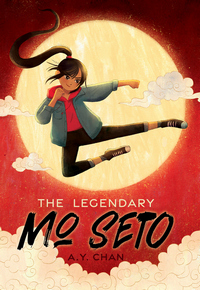
Cover for The Legendary Mo Seto by A. Y. ChanThe Legendary Mo Seto

by A. Y. Chan

My original post
Speaking of fun…here’s Mo (Modesty) Seto and her story. In my original post, I said, “I had about as much fun as is permitted by law while reading this.” And I still remember it that way.

You’ve got martial arts, you’ve got a fantastic underdog, you’ve got a funny and caring grandfather/grandfather figure, you’ve got family tension, you’ve got strange history, you’ve got a movie set and tall the nonsense entailed by that, you’ve got a treasure hunt (of sorts), and a great cast of characters.

Chan brought it all to life and actually has me eager to get my hands on the sequel. And I shouldn’t be this excited about a new MG novel, but I am.*

* Not because I’m some sort of snob, or that I look down on MG books. I’m just 4 decades too old to be that excited.

4 Stars


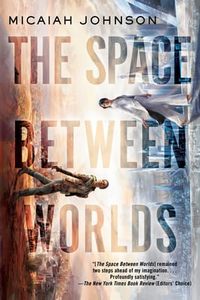
Cover of The Space Between Worlds by Micaiah JohnsonThe Space Between Worlds

by Micaiah Johnson

My original post
This is, simply, a stunning SF novel. It’s a stunning novel with no genre label necessary. It’s so beautifully written. The worldbuilding and SF-sciency stuff is so good that you wonder why it took until 2021 for someone to use it. I can’t believe it’s a first novel.

I don’t know what else to say. Go read my original post where I at least have some more room to babble. Just go get it.

4 1/2 Stars


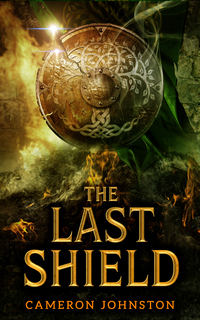
Cover of The Last Shield by Cameron JohnstonThe Last Shield

by Cameron Johnston

My original post
If I start on this one, I don’t know when I’ll stop. So I’ll just copy some of what I’ve already said.

The Publisher’s description of this novel starts off with, “A gender-flipped Die Hard set in a mysterious castle.” And that’s absolutely what the book is—is that description reductionistic? Yes. Is it apt? Also, yes. But it’s also so much more than that summary. (but what a great elevator, pitch, right?)

It’s is a heckuva thrill-ride. Like its cinematic predecessor, the action in this novel is top-notch. It’s not non-stop, there are moments of reflection, of exhaustion, of trying to figure out how to survive—much less succeed against this force. The set-up to the main action also takes longer than you might think (but you should really just relax and let Johnston do his thing, it’s all important and helps establish what comes later). I was hooked almost immediately—and while I wondered when the “Die Hard” part of the book would kick in, I really didn’t care. I was having a good enough time with Briar, Alaric, and the rest.

But, boy howdy, when the action kicked in? What was a perfectly enjoyable book got so much better. Johnston can write an action scene—whether the action is hand-to-hand, bladed weapon against something else, supernatural-based…you name it, he can handle it with panache and aplomb. It’s well paced—with just enough downtime between fight scenes for you and the characters to be ready for the next. Once the book builds up enough steam, forget it—you’re not going to willingly put it down.

It’s not all about swords, shields, axes, and spells, however. There’s real growth—and real injury (and not just physical)—to be seen in several other characters. No one survives this time unscathed in one way or another.

Just pasting in these paragraphs, I’m ready to set everything aside and re-read it.
4 1/2 Stars


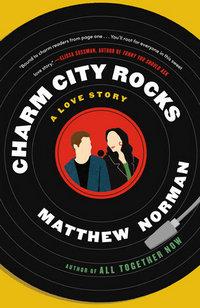
Charm City RocksCharm City Rocks

by Matthew Norman

My original post
It’s a love story. It’s a story about a father and a son. A son and his mother. It’s a story about music and its power. It’s a story about second (and third and fourth) chances. It’s a tribute to Baltimore.

It’s charmingly told. It’s sweet (but not overly). It will make all but the most jaded smile. Actually, I noted earlier that “I think the best way to sum up my reaction to the book is that I noticed that every time I put the book down for some reason, I was grinning. Not because I set the book down, but it just made me happy.”

4 1/2 Stars


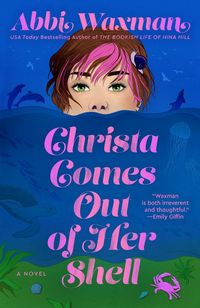
Christa Comes Out of Her ShellChrista Comes Out of Her Shell

by Abbi Waxman

My original post
One of the worst-kept secrets on this here blog over the last few years is that I’ve become an Abbi Waxman fan, I’m almost guaranteed to rave about her books. And of the four I’ve read, three deserve (and the other was a really strong read, if not rave-worthy). So of course, she’s going to show up here.

The first 87 pages of this book might have been my favorite 87 pages this year. That trend might have continued, but I wrote that note then. Everything just worked.

Christa is more abrasive than your typical Waxman protagonist, which was a nice change. But the rest are just about who you’d find peopleing her other works.

A couple of scenes between a couple could’ve faded to black a little earlier for my prudish taste. But outside of that, I was in hog heaven as I read this.

4 1/2 Stars


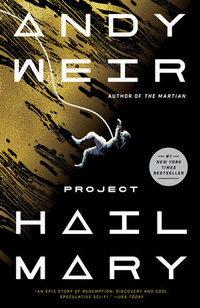
Cover of Project Hail Mary by Andy WeirProject: Hail Mary

by Andy Weir

Why didn’t I read this the day the hardcover arrived in my mailbox like I’d intended to? I’ll never know. I’ll regret it for quite a while, though. I spent a lot of time castigating myself for that choice as I read this.

But the important thing is that I read this. Yes, Ryland Grace is like a friendlier, less-sweary Mark Watney. But who cares? I’ll live in Watney’s head again. The jumping around in the timeline nature of this book made it different enough to keep it from being The Martian-but-different. The type of calamity that put Ryland out in space by himself is so far removed from a mission to Mars that it’s hard to compare it to.

The stuff on Earth was tense–even as we know how it’ll end (or at least that it’ll result in Ryland in space), you’re gripped. And then once he’s there? It’s just so great.

I won’t even talk about the way the ending hit. It’s just too much for a paragraph. I admit I loved The Martian more, but that’s solely because I read it first, so PHM had to compete with it. Were the situation reversed, I’d be saying that Watney is almost as great as Ryland.

It’s a must-read for SF readers or not. (unless you didn’t enjoy Weir’s other work. Then you’d better stay away.)

5 Stars


A few books that almost made this list and that I want to be sure to mention:
Return of the Griffin by JCM Berne (My original post), Blood Reunion by JCM Berne (My original post), Shadow of Hyperion by JCM Berne, The Tenacious Tale of Tanna the Tendersword by Dewey Conway & Bill Adams (My original post), and Buddy the Knight and The Queen of Sorrow by Peter David (My original post).


PUB DAY REPOST: The Last Shield by Cameron Johnston: You Will Sit Up and Say, “Yippee-ki-yay”

Cover of The Last Shield by Cameron JohnstonThe Last Shield

by Cameron Johnston

DETAILS:
Publisher: Angry Robot
Publication Date: August 13, 2024
Format: eARC
Length: 368 pg.
Read Date: July 31-August 2, 2024
Buy from Bookshop.org Support Indie Bookstores

What’s The Last Shield About?

Briar is the commander of the Shield, the Royal Guard protecting the soon-to-be-King; his uncle, the Lord Regent; and the castle that serves as the capital for the realm of Sunweald. She’s been in the post for several years, also serving as the personal bodyguard and confidant of the regent.

There are two neighboring kingdoms that would like to take over Sunweald, as well as to loot the castle’s vault, which, according to legend, contains the kind of magical weaponry that can remake the world. Keeping that vault safe, secure, and unmolested is one of Briar’s primary responsibilities.

The prince is set to take over in just a couple of years, and Kester is the prototypical spoiled, indolent, and irresponsible royal who no one can imagine can/should assume the throne. Maybe, if he grows up a lot before becoming an adult, but that seems unlikely. Meanwhile, the realm is in the incredibly capable and wise hands of his uncle Alaric

During a seasonal religious rite, an attack against the royal family leaves several guards dead and Briar near death, they have foiled the attempt, but at a great cost. After a long convalescence she’s recovered enough to move around a little bit, but not fit to return to active duty. After half a year of waiting and plotting, the survivors and some mercenary allies attack the castle from within—taking Alaric and some of the staff hostage, and killing others. Briar and Kester happen to be in just the right place and escape the sweep that collected so many. It’s up to them, each in their own way, to use Briar’s knowledge of the castle (and hidden passageways) to mount a rescue mission and to take down the small force who have taken over.

Shields

I’m talking literal shields here, not Briar and her guard.

Growing up, the only way I saw shields used was defensively—to block arrows or swords—until someone had to valiantly discard them because their dominant hand/arm was injured and they had to desperately use their shield arm to wield a sword, obviously. The only exception to this was Captain America (and a DC clone or two) and his implausible use of his.

And that’s pretty much how I saw the objects until now. But Clay Cooper and Briar have got me thinking about them as offensive weapons now. Their shields are very different in terms of size and material—but they’re both effectively used as a weapon. Briar does use her defensively, of course, but both prior to her time as a guerrilla fighter and now, she shows that a shield can be a potent weapon.

So my questions are: Have I missed how people use these things offensively all along? (either by reading the wrong things or not remembering anything but the swordplay, archery, and/or magic) Or have we entered an age where authors are embracing the full range of these objects strapped to an arm?

The Die Hard-Ness of it All

The Publisher’s description of this novel starts off with, “A gender-flipped Die Hard set in a mysterious castle.” And that’s absolutely what the book is—is that description reductionistic? Yes. Is it apt? Also, yes. But it’s also so much more than that summary. (but what a great elevator, pitch, right?)

I do not know if Johnston set out to write this as a Fantasy Die Hard, but at some point, he had to realize that’s what he was doing and (if you ask me) leaned into it. There are just too many similarities for me to believe anything else. But really, there’s one paragraph that seals the deal—I won’t give you details (but you’ll recognize it), but it is borrowing/appropriating/stealing an indelible image from the film. After reading that I knew it wasn’t just some ingenious marketer at Angry Robot who tagged it as “A gender-flipped Die Hard set in a mysterious castle,” as I half-way wondered, but it was Johnston’s intention. There’s just no way he does that.

I should stress that just because it’s a version of a movie that you likely know very well—do not think you know how this book is going to go. There’s plenty of suspense for the reader, as well as magical creatures that might have sent John McClane running for the hills.

Would I have been thoroughly entertained by The Last Shield without all the parallels to one of my all-time favorite movies? Yes. But being able to watch Johnston’s take on McClane, Nakatomi Tower, and the rest? It’s just an extra layer of frosting on an already delicious cake.

I do wish we’d gotten a Thornberg/William Atherton-esque character (should that get a spoiler warning), a non-villain that you despise almost as much as (if not more than) Gruber/his crew. Not because the novel was lacking anything, it’s just satisfying to see them get their comeuppance.

So, what did I think about The Last Shield?

This is a heckuva thrill-ride. Like its cinematic predecessor, the action in this novel is top-notch. It’s not non-stop, there are moments of reflection, of exhaustion, of trying to figure out how to survive—much less succeed against this force. The set-up to the main action also takes longer than you might think (but you should really just relax and let Johnston do his thing, it’s all important and helps establish what comes later). I was hooked almost immediately—and while I wondered when the “Die Hard” part of the book would kick in, I really didn’t care. I was having a good enough time with Briar, Alaric, and the rest.

But, boy howdy, when the action kicked in? What was a perfectly enjoyable book got so much better. Johnston can write an action scene—whether the action is hand-to-hand, bladed weapon against something else, supernatural-based…you name it, he can handle it with panache and aplomb. It’s well paced—with just enough downtime between fight scenes for you and the characters to be ready for the next. Once the book builds up enough steam, forget it—you’re not going to willingly put it down.

It’s not all about swords, shields, axes, and spells, however. Briar dealing with her injuries and recovery—both before the “Hans Gruber” moment and afterward—is done to almost perfection. There’s real growth—and real injury (and not just physical)—to be seen in several other characters. No one survives this time unscathed in one way or another.

The noted attorney and political operative Ainsley Hayes, noted, “they’re all about duty” when discussing the work of Gilbert and Sullivan.* This book, at its core, is just as much about duty as The Pirates of Penzance or H.M.S. Pinafore. Briar, ready to give her life fighting when she’s unfit for battle; Alaric, giving up decades of his life to step in as Lord Regent and govern; Kester figuring out what his obligations are to those he rules; several servants, guests, and others in the castle during the takeover carrying out their duties in what limited capacities they can as hostages—and the utter abandonment of duty by others. The Last Shield doesn’t have to be thought of in terms of good vs. evil (while it applies, it’s problematic when it comes to some characters). Instead, I suggest that it’s better seen whether these people live up to their duty/obligation or do they abandon that for selfish gain.**

And, there is something incredibly appealing to that way of thinking in our incredibly polarized and me-centric time. All sorts of people considering the cost and putting aside their wants/desires/lives in favor do doing what they’re supposed to do anyway.

* Yes, there’s no need to bring Ainsely into this, but I can’t help thinking of her and that line—or Leo, or Lionel Tribbey, etc.—when I think about duty.
** There are one or two characters who took over the castle that you could put forward against my claim, but I think I could make a strong (spoiler-filled) case in my defense, so I won’t do that pre-emptively.

I should probably talk a little about the three magic systems at work in this world—but this thing is going on too long already. But I really like seeing that diversity at work.

It wasn’t until I was preparing this post that I realized that Johnston wrote The Maleficent Seven, a book I’ve been meaning to get around to for ages. Now I’m even more motivated to do that (The Traitor God, too, come to think of it).

But that’s for another day, for today, I just want to revel in the near-perfection of this roller-coaster of a novel. I had such a good time with this novel and I’ve been telling everyone I know about it (I even think I sold the manager of a local bookstore on it, hopefully, he continues that chain). I was ready to read it again as soon as I was done.

Fantasy readers and action-adventure readers alike will dig this one. Go get your orders in now, unless you’re reading this on or after August 13—in that case, run down to your local indie bookstore and pick it up.

Disclaimer: I received a copy of this book from Angry Robot Books via NetGalley—thanks to both for this.


4 1/2 Stars

This post contains an affiliate link. If you purchase from it, I will get a small commission at no additional cost to you. As always, the opinions expressed are my own.
Irresponsible Reader Pilcrow Icon

The Last Shield by Cameron Johnston: You Will Sit Up and Say, “Yippee-ki-yay”

Cover of The Last Shield by Cameron JohnstonThe Last Shield

by Cameron Johnston

DETAILS:
Publisher: Angry Robot
Publication Date: August 13, 2024
Format: eARC
Length: 368 pg.
Read Date: July 31-August 2, 2024
Buy from Bookshop.org Support Indie Bookstores

What’s The Last Shield About?

Briar is the commander of the Shield, the Royal Guard protecting the soon-to-be-King; his uncle, the Lord Regent; and the castle that serves as the capital for the realm of Sunweald. She’s been in the post for several years, also serving as the personal bodyguard and confidant of the regent.

There are two neighboring kingdoms that would like to take over Sunweald, as well as to loot the castle’s vault, which, according to legend, contains the kind of magical weaponry that can remake the world. Keeping that vault safe, secure, and unmolested is one of Briar’s primary responsibilities.

The prince is set to take over in just a couple of years, and Kester is the prototypical spoiled, indolent, and irresponsible royal who no one can imagine can/should assume the throne. Maybe, if he grows up a lot before becoming an adult, but that seems unlikely. Meanwhile, the realm is in the incredibly capable and wise hands of his uncle Alaric

During a seasonal religious rite, an attack against the royal family leaves several guards dead and Briar near death, they have foiled the attempt, but at a great cost. After a long convalescence she’s recovered enough to move around a little bit, but not fit to return to active duty. After half a year of waiting and plotting, the survivors and some mercenary allies attack the castle from within—taking Alaric and some of the staff hostage, and killing others. Briar and Kester happen to be in just the right place and escape the sweep that collected so many. It’s up to them, each in their own way, to use Briar’s knowledge of the castle (and hidden passageways) to mount a rescue mission and to take down the small force who have taken over.

Shields

I’m talking literal shields here, not Briar and her guard.

Growing up, the only way I saw shields used was defensively—to block arrows or swords—until someone had to valiantly discard them because their dominant hand/arm was injured and they had to desperately use their shield arm to wield a sword, obviously. The only exception to this was Captain America (and a DC clone or two) and his implausible use of his.

And that’s pretty much how I saw the objects until now. But Clay Cooper and Briar have got me thinking about them as offensive weapons now. Their shields are very different in terms of size and material—but they’re both effectively used as a weapon. Briar does use her defensively, of course, but both prior to her time as a guerrilla fighter and now, she shows that a shield can be a potent weapon.

So my questions are: Have I missed how people use these things offensively all along? (either by reading the wrong things or not remembering anything but the swordplay, archery, and/or magic) Or have we entered an age where authors are embracing the full range of these objects strapped to an arm?

The Die Hard-Ness of it All

The Publisher’s description of this novel starts off with, “A gender-flipped Die Hard set in a mysterious castle.” And that’s absolutely what the book is—is that description reductionistic? Yes. Is it apt? Also, yes. But it’s also so much more than that summary. (but what a great elevator, pitch, right?)

I do not know if Johnston set out to write this as a Fantasy Die Hard, but at some point, he had to realize that’s what he was doing and (if you ask me) leaned into it. There are just too many similarities for me to believe anything else. But really, there’s one paragraph that seals the deal—I won’t give you details (but you’ll recognize it), but it is borrowing/appropriating/stealing an indelible image from the film. After reading that I knew it wasn’t just some ingenious marketer at Angry Robot who tagged it as “A gender-flipped Die Hard set in a mysterious castle,” as I half-way wondered, but it was Johnston’s intention. There’s just no way he does that.

I should stress that just because it’s a version of a movie that you likely know very well—do not think you know how this book is going to go. There’s plenty of suspense for the reader, as well as magical creatures that might have sent John McClane running for the hills.

Would I have been thoroughly entertained by The Last Shield without all the parallels to one of my all-time favorite movies? Yes. But being able to watch Johnston’s take on McClane, Nakatomi Tower, and the rest? It’s just an extra layer of frosting on an already delicious cake.

I do wish we’d gotten a Thornberg/William Atherton-esque character (should that get a spoiler warning), a non-villain that you despise almost as much as (if not more than) Gruber/his crew. Not because the novel was lacking anything, it’s just satisfying to see them get their comeuppance.

So, what did I think about The Last Shield?

This is a heckuva thrill-ride. Like its cinematic predecessor, the action in this novel is top-notch. It’s not non-stop, there are moments of reflection, of exhaustion, of trying to figure out how to survive—much less succeed against this force. The set-up to the main action also takes longer than you might think (but you should really just relax and let Johnston do his thing, it’s all important and helps establish what comes later). I was hooked almost immediately—and while I wondered when the “Die Hard” part of the book would kick in, I really didn’t care. I was having a good enough time with Briar, Alaric, and the rest.

But, boy howdy, when the action kicked in? What was a perfectly enjoyable book got so much better. Johnston can write an action scene—whether the action is hand-to-hand, bladed weapon against something else, supernatural-based…you name it, he can handle it with panache and aplomb. It’s well paced—with just enough downtime between fight scenes for you and the characters to be ready for the next. Once the book builds up enough steam, forget it—you’re not going to willingly put it down.

It’s not all about swords, shields, axes, and spells, however. Briar dealing with her injuries and recovery—both before the “Hans Gruber” moment and afterward—is done to almost perfection. There’s real growth—and real injury (and not just physical)—to be seen in several other characters. No one survives this time unscathed in one way or another.

The noted attorney and political operative Ainsley Hayes, noted, “they’re all about duty” when discussing the work of Gilbert and Sullivan.* This book, at its core, is just as much about duty as The Pirates of Penzance or H.M.S. Pinafore. Briar, ready to give her life fighting when she’s unfit for battle; Alaric, giving up decades of his life to step in as Lord Regent and govern; Kester figuring out what his obligations are to those he rules; several servants, guests, and others in the castle during the takeover carrying out their duties in what limited capacities they can as hostages—and the utter abandonment of duty by others. The Last Shield doesn’t have to be thought of in terms of good vs. evil (while it applies, it’s problematic when it comes to some characters). Instead, I suggest that it’s better seen whether these people live up to their duty/obligation or do they abandon that for selfish gain.**

And, there is something incredibly appealing to that way of thinking in our incredibly polarized and me-centric time. All sorts of people considering the cost and putting aside their wants/desires/lives in favor do doing what they’re supposed to do anyway.

* Yes, there’s no need to bring Ainsely into this, but I can’t help thinking of her and that line—or Leo, or Lionel Tribbey, etc.—when I think about duty.
** There are one or two characters who took over the castle that you could put forward against my claim, but I think I could make a strong (spoiler-filled) case in my defense, so I won’t do that pre-emptively.

I should probably talk a little about the three magic systems at work in this world—but this thing is going on too long already. But I really like seeing that diversity at work.

It wasn’t until I was preparing this post that I realized that Johnston wrote The Maleficent Seven, a book I’ve been meaning to get around to for ages. Now I’m even more motivated to do that (The Traitor God, too, come to think of it).

But that’s for another day, for today, I just want to revel in the near-perfection of this roller-coaster of a novel. I had such a good time with this novel and I’ve been telling everyone I know about it (I even think I sold the manager of a local bookstore on it, hopefully, he continues that chain). I was ready to read it again as soon as I was done.

Fantasy readers and action-adventure readers alike will dig this one. Go get your orders in now, unless you’re reading this on or after August 13—in that case, run down to your local indie bookstore and pick it up.

Disclaimer: I received a copy of this book from Angry Robot Books via NetGalley—thanks to both for this.


4 1/2 Stars

This post contains an affiliate link. If you purchase from it, I will get a small commission at no additional cost to you. As always, the opinions expressed are my own.
Irresponsible Reader Pilcrow Icon

Powered by WordPress & Theme by Anders Norén