Tag: Christian Living

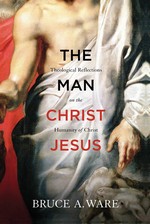
The Man Christ Jesus: Theological Reflections on the Humanity of Christ by Bruce A. Ware

The Man Christ Jesus: Theological Reflections on the Humanity of ChristThe Man Christ Jesus: Theological Reflections on the Humanity of Christ

by Bruce A. Ware
Kindle Edition, 160 pg.
Crossway, 2012
Read: March 9, 2014

One of Ware’s presuppositions — repeated throughout this book — is that evangelical Christians today have a good understanding of and embrace the doctrine of the Divinity of Christ, but their understanding of his humanity is wanting — enter this book. Without dipping a toe into Nestorianism, Ware wants his readers to understand the humanity of Jesus. He explains this so with a constant eye to His divinity — and how that divinity is expressed in the life of the God-man.

One of his main interests is for his readers to understand the dependency of Jesus on the Spirit — His indwelling, guidance and empowering. Without that indwelling, it would be impossible for Jesus to carry out His father’s will. If we grasp that, we see the limitations of the divine nature of Christ to his earthly work, which may seem paradoxical, but isn’t as Ware will explain.

The application portions to every chapter keep this book from being merely theoretical (however great that theory is) to helping readers put shoe leather to this teaching — as every teaching ought. It’s just easier when the author goes out of his way to help us start that on our own.

I really appreciated the chapter “Resisting Temptation,” Ware’s reflections on Hebrews 4:15 and the idea of Jesus being tempted to sin in general. He surveys some of the leading theories before suggesting his own idea how the idea of the impeccable theanthropos being tempted without sinning. He put into words an idea or two that had been floating around in my own head for a few years, and

I was surprised that Ware had to devote an entire chapter defending the masculinity of the God-man, although I shouldn’t have been. Sadly, this was a pretty boring chapter. Ware really beat this horse far beyond the point of its flatline. Sadly, he probably needed to be as through given today’s thinking.

Deep enough to discourage a casual read, but friendly enough that this should be able to be read by thoughtful laity.

—–

4 Stars

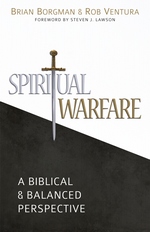
Spiritual Warfare: A Biblical and Balanced Perspective by Brian Borgman & Rob Ventura

Spiritual Warfare: A Biblical and Balanced PerspectiveSpiritual Warfare: A Biblical and Balanced Perspective

by Brian Borgman & Rob Ventura
Kindle Edition, 128 pg.
Reformation Books, 2013

Borgman and Ventura realize they’re heading into dangerous territory here — far too many books on this topic are sensationalistic, fantastic (and I don’t mean that as a synonym for great), and unbalanced. On the other hand, there’s the danger of downplaying the need for this kind of material. They seek (and succeed, I should add) at striking a Biblical balance in their approach.

Essentially, this is a careful study of Ephesians 6:10-20, not a systematic or biblical-theological approach to the topic. Which is well and good, but I’d have preferred one of the latter. Still, there are enough cross-references here to ensure they’re interpreting Scripture by Scripture, as well as illustrating principles from the Ephesians passage elsewhere.

The authors also cite other writers like crazy — for the sake of clarification, illustration, and (I think) to demonstrate to those wary of the topic that they’re not the only ones to consider the idea of spiritual warfare outside the Neil Anderson, Nicky Cruz, Frank Peretti crowds. The authors they cite from are a varied and impressive collection of Reformation-era, Puritan (and slightly later)-era, and contemporary Reformed and quasi-Reformed writers, preachers and commentators. They clearly owe a debt to William Gurnall here, but I think they could’ve used him a bit more throughout.

A solid book, nothing earth shattering. A good starting point, though. Readers would be well off to use this to get an overall look at the topic and then to use the cited authors (particularly those that are pre-20th century) for further study.

—–

3 Stars

Blood Work: How the Blood of Christ Accomplishes Our Salvation by Anthony J. Carter

Blood Work: How the Blood of Christ Accomplishes Our Salvation
Blood Work: How the Blood of Christ Accomplishes Our Salvation by Anthony J. Carter
My rating: 3 of 5 stars

Um, yeah. This was okay. This is a brief survey of the New Testament’s usage of Christ’s blood — both literal and metaphorical — essentially looking at the question, what does the Atonement do for the believer?

Carter’s answer would be: quite a lot. The blood of Christ purchases, propitiates, justifies, redeems, cleans, sanctifies, ransoms and frees the believer who is brought near to other believers by the blood, are given peace by it and are elect in it. In addition to looking at key texts supporting or explaining each of these aspects of the atonement, Carter brings in historic catechisms and confessions to help understand his point, and then invokes song lyrics to demonstrate (in part) that this is what people have believed for generations — or to help the reader apply the lessons to themselves.

Carter writes with a very personable style and obvious passion — it is easy to “hear” a lot of this book being preached, and done so with great efficacy and application to the individual. It’s this that kept me going through the book after it became pretty clear that this was going to be a survey at best, and not an in-depth examination of anything. While I did admire his ability to quote a historic catechism in one breath and hip hop lyrics in the next, I wonder if he wasn’t too reliant on quoting lyrics (rap or hymnody) to seal his points. A minor quibble at best, but one that stuck with me.

Ultimately, I was a little disappointed, I wanted more. I can’t put my finger on anything and say “This could’ve been made better, here.” But there were several places that could’ve been true. It’s certainly not shallow, but it’s nowhere near deep. Nor particularly insightful. But it is solid, it is passionate, it is focused on the essentials — and for many people that’s exactly what they need. Maybe if I’d read this a week or so later (or earlier), I’d have had a different reaction.

View all my reviews

In Christ Alone: Living the Gospel Centered Life by Sinclair B. Ferguson

A briefer version of this appears on Goodreads.

—–

In Christ Alone: Living the Gospel Centered Life
In Christ Alone: Living the Gospel Centered Life by Sinclair B. Ferguson

My rating: 4 of 5 stars

There’s not a lot of in-depth theology here, you won’t come away from this with a deep understanding of any one subject, or a few related ones. This is a compilation of fifty articles, grouped together by topic, which will enable you to gain a refresher on a spectrum of topics, or an introduction to ideas, concepts and texts that you want to come back to and study in the future. As such, it’s a really strong compilation and one that I’m glad I spent an afternoon with.

Don’t get me wrong — it’s not that I didn’t learn anything, or gain a deeper understanding of anything. But compared, say, to his The Holy Spirit or Pundits Folly, it’s (by design) not as in-depth. I thought his framing the book of Romans as a series of exchanges (e.g., man exchanging the truth of God for a lie; the gospel exchange of righteousness and justification instead of unrighteousness and condemnation) was very handy and something I’m trying to internalize. The chapters that followed it were a series of glimpses at the letter to the Hebrews, and now I want an entire book on that epistle by Ferguson.

In the section on “The Spirit of Christ,” he has a chapter called “When the Spirit Comes,” which is an examination of John 16:8-11.

And when he comes, he will convict the world concerning sin and righteousness and judgment: concerning sin, because they do not believe in me; concerning righteousness, because I go to the Father, and you will see me no longer; concerning judgment, because the ruler of this world is judged.

His thesis is that while, yes, there is a continuing relevance of these verses,

we miss their rich significance of we interpret them in a way that bypasses their historical context. In their original setting, these words constitute a prophecy of the Spirit’s work on the day of Pentecost (Acts 2:1 ff).
When we recognize this, we are able to fill out the content of the promise. But when we fail to recognize it, we are in danger of interpreting (and thus remolding and distorting) Scripture in the light of our own experience.

I’ve got to say, I’ve been guilty of this remolding and distorting until today, and will have to set to work on correcting my thinking.

On the whole, the book doesn’t feel too much like a collection if unrelated articles, rather than a book he set forth to write; and as such it doesn’t really suffer from being a compilation — though Part IV, “The Privileges of Grace,” is the weakest and most scattered. That said, the chapters from Part IV, “The Life of Faith” (on “Now faith is the assurance of things hoped for, the conviction of things not seen.”) and “‘The Greatest of All Protestant Heresies’?” (on the doctrine of assurance) were very helpful and thought-provoking. So even at its weakest, this book rewards the reader.

Part V, “A Life of Wisdom,” is really a section on sanctification. But instead of the approach that is usually employed here, Ferguson focuses on the more internal sanctification that needs to happen to result in the external fruit. All of which could use some extended treatment by this author. Particularly, I found the chapter on discernment rich and one that I need to return to for further meditation. His extended look at Psalm 131 to show how to cultivate contentment is, naturally, valuable — Ferguson’s always at his best when discussing the Psalter.

The final chapters center on the idea of spiritual warfare — not the flashy, type that characterize so much evangelical writing on the topic. But the quieter, more difficult, and (dare I say) more Biblical approach — focusing on our sin, our need for mortification, or own worldliness.

The closing chapter on Sabbath rest is far too brief, but excellent. He reminds us that the Sabbath in creation was a “time for Adam to listen to all the Father had to show and tell about the wonders of His creating work,” — a “Father’s Day” every week. Which, of course, was ruined by the Fall, redeemed by Christ and will be fully enjoyed every day in Glory. Practically,

this view of the Sabbath helps us regulate the whole week. Sunday is “Father’s Day,” and we have an appointment to meet Him. The child who asks, “How short can the meting be?” has a dysfunctional relationship problem — not an intellectual, theological problem. Something is amiss in his fellowship with God.

There’s a lot to be mined here for devotional use, as well as a spring-board for future study.

Faith & Life by Benjamin Breckinridge Warfield

Faith & Life:
Faith & Life: by Benjamin Breckinridge Warfield
My rating: 5 of 5 stars

Back when Princeton Seminary was the crown jewel of biblical Presbyterian training in the US, notable professors like Archibald Alexander, Samuel Miller, and Charles Hodge would have informal addresses for students on Sunday afternoons. B. B. Warfield, the lion of Princeton, continued this practice. These 41 chapters come from some of these addresses to the students.

I went skimming over the Table of Contents to pick out a few highlights — and I’m having a real problem. Almost every one is a gem. “Prayer as a Means of Grace” and “Prayer as a Practice” were very helpful — the latter was slightly better. “New Testament Puritanism” was great. Despite the reputation men like Warfield have, the chapters involving the work of the Holy Spirit were all tremendous. “God’s Holiness and Ours” was fantastic. I could keep going here, but it wouldn’t be long before I copied the Table of Contents.

For being the exemplar of “old Princeton,” with all the rigor and scholarship that entails — these addresses help us remember that even stalwarts like Warfield, who are known for strong stances on doctrinal issues — were men with vibrant faith, even a sense of humor.

I spent a few months reading 1 or 2 of these each Lord’s Day morning between breakfast and heading out for church — it was a great way to get my head (and heart) in the right frame of mind for worship. It’s everything Christian scholarship should be — warm, Christ-centered, practical, and doxological. It’s also everything that Christian devotional material should be — careful, sound, and deliberately orthodox. Highly recommended.

The Masculine Mandate: God’s Calling To Men by Richard D. Phillips

The Masculine Mandate: God's Calling To Men
The Masculine Mandate: God’s Calling To Men by Richard D. Phillips
My rating: 3 of 5 stars

A few years ago, I spent a couple of weeks staying with a friend in South Carolina. His church didn’t have an evening service, so he would frequently attend the church pastored by Richard Phillips, and he took me along that first week I was there. He preached on the role and duties of husbands from Ephesians 5 — I don’t remember much about the sermon, most of his points have been incorporated into the rest of the sermons/books/expositions I’ve heard/read on the passage. I do remember how humbled, convicted, and challenged I felt afterward. My friend told me on the way home that we were going back the next week for sure, because after all that directed at him, his wife needed to get preached at the same way (as I recall, instead of hitting wives with both barrels like he did husbands, Phillips only gave them one barrel and used the other one at husbands again).

The Masculine Mandate wasn’t as convicting or powerful as that sermon was (books seldom are, if you ask me) — but it was definitely in the same vein. The Mandate that Phillips focuses on is God’s purpose of the first man (and through him, all others descending from him) in Genesis 2:15, “The Lord God took the man and put him in the garden of Eden to work it and keep it.” His primary concern is to show how contemporary man can and should “work” and “keep” in every sphere of life, yet this book is very Gospel-centered, and he makes it clear that the only way to achieve this mandate is via Ordinary Means-enabled sanctification.

The initial chapters developed these doctrinal points to provide a foundation for the practical chapters. While I thought he was spot-on with his teaching, and frequently insightful, I did wonder why he picked the particular passages he built these chapters around, and why others were excluded, don’t get me wrong, I’m not suggesting that he dodged passages/topics — not at all. All in all, Phillips did develop his teaching on “work” and “keep” enough that when he moves to the more practical chapters, the reader is prepared to see the application of doctrine, not just a list of “do’s.”

Like any good preacher, Philips uses Biblical examples and exemplars throughout to illustrate his points. For example, Boaz is shown as the husband model we should aspire to. And a particularly strong and convicting chapter is about using John the Baptizer as a model for a servant attitude. This put some flesh to hid teaching beyond sound thinking and his own experience.

He spends more time on the role of man in marriage than in anything else — fittingly enough — and much of it echoes what I probably heard in that sermon years ago. He covers topics familiar to many, without being stale — he even finds fresh insight (or at least it doesn’t seem stale) in the well-worn territory of comparing storge/eros/philo/agape. Speaking of man as protector (as part of keeping) in the marriage, the idea that struck me most profoundly is that, “The main threat against which a man must protect his wife is his own sin.” That’ll keep you up at night.

From marriage, he moves on to speaking of working and keeping as father, friend, and church member (a good chapter that could have been made better if he included more on what we unordained should do, as there are many more of us than the ordained).

A helpful book, a thoughtful — and thought-provoking book. Not the last word on the subject (not intended to be, either). But well worth the time and attention of a man seeking to live according to biblical mandates.

Page 16 of 16

Powered by WordPress & Theme by Anders Norén