Tag: Fantasy Page 27 of 54

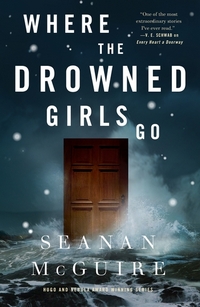
Where the Drowned Girls Go by Seanan McGuire: A Mermaid Saves Herself

Where the Drowned Girls GoWhere the Drowned Girls Go

by Seanan McGuire

DETAILS:
Series: Wayward Children, #7
Publisher: Tor 
Publication Year: 2022
Format: Hardcover
Length: 150
Read Date: January 10-11, 2022

Support Independent Bookstores - Visit IndieBound.org

And everyone knew that things from the other side of the door could absolutely leak through into this reality. Her hair had been brown, not aquamarine, before she found her fins. Christopher would die without his flute—literally die. Seraphina was the kind of beautiful that stopped hearts, and everyone who’d seen pictures of her from before her travels said that she hadn’t always been like that. She’d been attractive, not impossible. The doors made changes. The doors stayed with you.

What’s Where the Drowned Girls Go About?

Things have gone poorly for Cora since her return from the Moors, and things are getting worse for her. She’s now afraid of getting a door—because it might not lead to the world she wants. So now that “other school” starts to sound appealing to her. Maybe it wouldn’t be so bad to feel at home in this world—it’s certainly better than one of the alternatives. There’s no way that she’ll get those tools at this school (as much as she likes/loves her friends).

So she talks West into transferring her—and regrets the decision before the ink is dried. Still, she sets out to make the best of a bad situation—it’s still going to get her the results she’s been desiring, just not in a pleasant way.

Cora tackles the situation in a “no pain, no gain” manner. West’s school wasn’t helping (at least not the way she wanted), the Whitethorn Institute isn’t going to save her, it’s up to Cora to save herself.

Whitethorn Institute

“You’ve always said that there was a second school.”

Eleanor pulled her hands away. “The Whitethorn Institute. Cora, you can’t intend—”

“You said they steal your students sometimes. That when you’re not fast enough, or when the children are having a harder time adapting to life in this reality, that sometimes Whitethorn gets there first.” She sat up straight, giving Eleanor a challenging look. “You said it was where students go when they want to believe that everything that happened on the other side of the door was just a dream, or a delusion, and not a real thing at all.”

We’ve known about “the other school” for children who come back through their doors into our world—one for those who didn’t want to see their doors again, one for those who want to feel at home in this world. But this is the first time we’ve seen it.

It is not a nice place to be.

That’s about all I feel comfortable about saying—you’ll need to read the book to see how it’s not a nice place to be. I get that (especially as the series takes a pro-Eleanor West’s Home for Wayward Children stance) it’s not going to seem as nice, welcoming, and affirming as the school we’re used to. I expected that this school would come across as wanting, not just in contrast, but objectively,

But I think McGuire approached that idea in a lazy manner. It’s too obviously a bad environment. She had the chance to go subtle, and she didn’t take it. I kept thinking, “Oh, she’s making a commentary about X or Y” in the real world—but she was doing so with too broad a brush, and it’d end up applying to things she didn’t mean to attack.

Still, if you’re looking to make an establishment a villain, she did an effective job. I think it’d have been more interesting—and more fitting with the series—if there’d been more nuance to it. Give the readers a second school that has differing goals from the Home for Wayward Children, but let us respect them while disagreeing—then you’ve got something. Instead, we get an institution that might as well be twirling its mustache.

Regan

It’s not just Cora that we see here, Regan’s also came to this school after returning from the Hooflands. I appreciated that. I didn’t think we had enough of Regan—but it didn’t feel like the character would be showing up at West’s.

So, what did I think about Where the Drowned Girls Go?

McGuire is simply one of the best around—and this world she’s created in this series is just wonderful and I really enjoy all the time I spend in it. But this book seemed to be missing something. The previous books in the series all left the possibility open to revisiting the world on the other side of the door, the POV character, and so on—while telling a complete story.

This novel is also a complete story—but it feels (at least to me) too much like a Part One of at least a two-parter (if not three). And I think the book suffered from it. When we get to that second part, I might change my mind about this book, but now it just feels incomplete. Add in my problems with the presentation of Whitethorn and it makes for a less-satisfying read than I’m used to for this series.

I still recommend it as a read—you’re instantly sucked into this world, it’s fantastic to get a look at Whitethorn (if nothing else); the story of Cora, Regan, and the others is well-worth telling and reading; and McGuire’s language and imagination in this series are always fascinating. I just wanted more of this good thing.


3.5 Stars

This post contains an affiliate link. If you purchase from it, I will get a small commission at no additional cost to you. As always, opinions are my own.

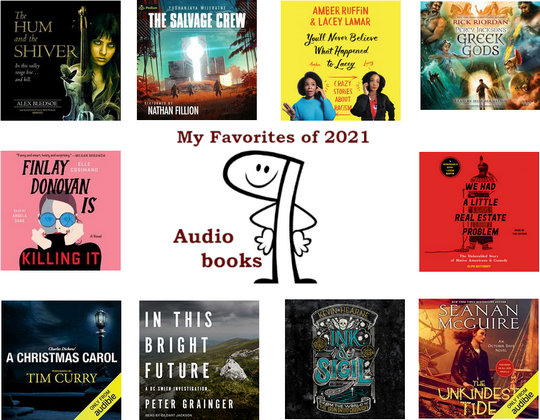
My Favorite Audiobooks of 2021

My Favorite Audiobooks of 2021
Last year I kicked off my Year-End Retrospective with a look at my favorite audiobooks, I might as well repeat that this year. How do I keep this from being just a rehash of my other year-end lists? By focusing on the audiobook experience over the content. What was it like to listen to it? How engaging was it, how did the narrator do? Was it a good match in terms of tone, content, and performance? All of these books are/were good—but the audiobooks are a bit better because of the narrator and the rest of the people involved in the production.

(in alphabetical order by author)

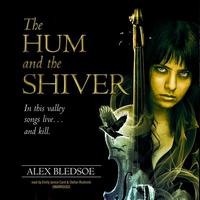
The Hum and the ShiverThe Hum and the Shiver

by Alex Bledsoe, Emily Janice Card(Narrator), Stefan Rudnicki (Narrator)

This was my third or fourth trip through this book (maybe, fifth, but I don’t think so). I’m not sure if that means it was easy for me to be impressed—or maybe it was really hard because I had high expectations. Regardless, Rudnicki and Card took me to Cloud County and the land of the Tufa. I could believe that these people lived, breathed, and walked around in this world—and yet were otherworldly, as they ought to be. I knew Rudnicki could make me believe in a Fantasy world—it turns out that he can make me believe in this one, too. Card was right there with him.

4 Stars

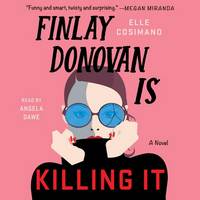
Finlay Donovan Is Killing ItFinlay Donovan Is Killing It

by Elle Cosimano, Angela Dawe (Narration)

My original post
This is on the list because of Dawe’s narration. The text was entertaining enough, sure, but her narration is what made sure I remembered the book during the list-making time. The novel was a tricky balancing act between the various tones and characters, and Dawe makes you believe it. She captured the comedic sense of the novel along with the tension and emotional moments. There were a few accents involved and she did a believable job with them, too.

3.5 Stars

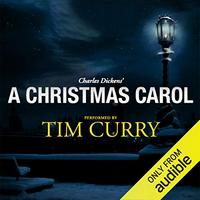
A Christmas Carol: A Signature Performance by Tim CurryA Christmas Carol: A Signature Performance by Tim Curry

by Charles Dickens, Tim Curry (Narrator)

My original post
I’ve said it before, I’ll say it again: all you need to know about this is: Tim Curry. This wasn’t the performance I expected—I figured I was in for something near to over-the-top, with Curry going to town with the text. Instead, we’re treated to a respectful, restrained performance giving Dickens’ classic just the right emotional weight, sentimentality, personality, and life.

5 Stars

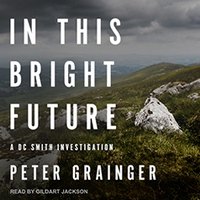
This Bright FutureIn This Bright Future

by Peter Grainger, Gildart Jackson (Narrator)

My original post
Grainger and Jackson together have made this one of my Top 3 audiobook series, period. So my only question was how many of the books would end up on this list. I ended up limiting myself to one, and therefore it had to be this one—we get so little of our typical characters and settings, but Jackson is able to make Belfast as warm and homey as King’s Lake. There are elevated dangers and emotions in this book that we don’t typically get with D.C. Smith, but Jackson doesn’t miss a beat. Grainger puts D.C. through his paces, too. Both are at the top of their game—making D.C. at the top of his, too.

4 Stars

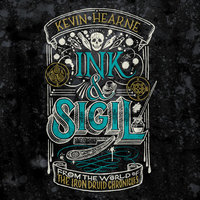
Ink & SigilInk & Sigil

by Kevin Hearne, Luke Daniels (Narrator)

Even though a pro like Luke Daniels is constantly doing voices/accents for his characters and the narration is almost never his “natural” voice (assuming he even has one anymore), I have to think that maintaining a Glaswegian accent for as long as he did for this book (ten hours and change, I think) has to be an added level of difficulty. Not that you can tell from listening to this. I thought the novel was a rollicking good time and just the way you should introduce a new series. The audiobook version just cemented that.

4 1/2 Stars

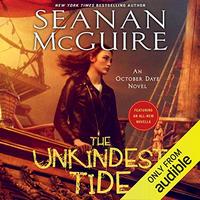
The Unkindest TideThe Unkindest Tide

by Seanan McGuire, Mary Robinette Kowal (Narrator)

This novel was the payoff (as far as we know so far, I wouldn’t put it past McGuire to turn it upside down later) to a storyline that had been lingering and building for years, I remember being stunned when reading it—just that aspect of The Unkindest Tide brought a great combination of anticipation, grief, suspense, and surprise. The story of the novel—the trip to the Duchy of Ships, the intrigue around Dianda, etc. was as solid as it gets, too. I remembered all this going in, so it was all teed up for Kowal—and she nailed it, it almost felt like I hadn’t read the book before and was discovering it fresh. A narrator who can do that is tops in my book.

4 1/2 Stars

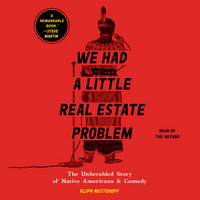
We Had a Little Real Estate ProblemWe Had a Little Real Estate Problem: The Unheralded Story of Native Americans and Comedy

by Kliph Nesteroff

My original post
As I was trimming down the list of audiobooks I listened to last year for this list, I didn’t expect that this would stay on the list. A history of Native Americans in Comedy, really? But I kept not deleting it…so I started thinking of it—there’s a social history, an entertainment history, with individual profiles mixed it—it has it all. What’s more, despite a pretty dry (but never boring) narration, and not using clips of original performances, the comedy of these individuals comes through. In the midst of hardship, suffering, prejudice, and hard breaks, there are some solid laughs. It’s hard not to keep thinking about that.

4 Stars

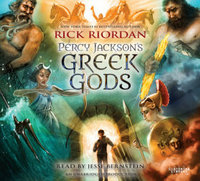
Percy Jackson's Greek GodsPercy Jackson’s Greek Gods

by Rick Riordan, Jesse Bernstein (Narrator)

I started working on a post last year about contemporary myth retellings (and I intend on finishing it before my unconceived grandkids are ready to read it), and listened to this as part of that. In many ways, the book and the information didn’t fare well compared to things like Gaiman and Fry have recently produced. But this is here and they’re not—because as an audiobook this is a great experience. Bernstein is Percy Jackson here, and it felt like something ol’ Percy was sitting down and relating to future Camp Halfblood residents. It inspired me to listen to the original Percy Jackson series again just so I can listen to Bernstein perform this character.

3 Stars

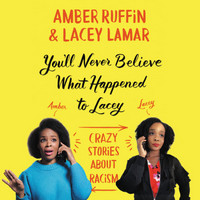
You'll Never Believe What Happened to LaceyYou’ll Never Believe What Happened to Lacey: Crazy Stories about Racism

by Amber Ruffin, Lacey Lamar

My original post
I’m still telling people about this audiobook/book nine months later. I can’t think of a book that made me angrier, sadder, or made me laugh as much in 2021 (or a few years before it, either). This did all three. Ruffin’s narration, Lamar’s stories, their hurt, and their optimism make this a must-listen.

4 1/2 Stars

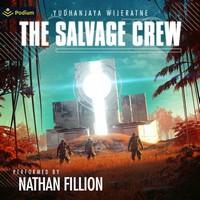
The Salvage CrewThe Salvage Crew

by Yudhanjaya Wijeratne, Nathan Fillion (Narrator)

My original post
This is a very strange SF story about a sentient AI (based on the memories and personality of an engineer). I think I’d have enjoyed the story had I read the novel, but it’s Nathan Fillion that brought it to life. That same charm that makes you like Caleb, Mal, Castle, and Nolan shines forth and makes you believe in this malfunctioning (at least eccentrically-functioning) AI and get invested in the AI’s survival and that of his ragtag crew.

4 Stars

The Nutcracker by E.T.A. Hoffman: A (weird) Classic Christmas Story

The Nutcracker

The Nutcracker

by E.T.A. Hoffman

Hardcover, 69 pg.
Fahrenheit Press, 2021

Read: December 20, 2021

What’s The Nutcracker About?

This is a story about a little girl who gets a nutcracker from her toy-making godfather. But this is no ordinary nutcracker: it’s magical—it’s a prince trapped in a wooden figure until he’s freed (like Belle’s Beast).

At night, this Nutcracker comes to life (like Buzz, Woody, and the rest) to do battle against the mice in the girl’s palace. The war between the Nutcracker and the mice—in particular, the seven-headed Mouse King, goes back to when the Nutcracker was human, and wages on.

And then things get weird…

A Couple of Confessions

I’m part of the probably 5-15% of Western Culture who needed the above, many of you probably rolled your eyes at me including that. But:

1. Until I got the newsletter from Fahrenheit Press talking about this release, I had no idea that this novel existed. Obviously, I knew about the ballet and a handful of the adaptations of it. But a novel started it all? What rock was I living under to have missed that?

2. I have never watched the ballet, or finished any of the various adaptations. I get bored, or distracted, or just decide it’s just a mess of a show. Maybe now that I’ve actually read the novel, I can make persevere to the end.

One Thing I’d Like to Know

Before the text itself, there’s a…it’s not really an epigraph or epigram, it’s too short to be an Author’s Note—well, maybe it’s the right length for that, I guess we should go with that. In it, Hoffman praises his skill and genius, not to mention the value of the book.

Now, I don’t know enough about the guy to know if he’s the world’s most delusional and/or arrogant writer—or is it satire? My gut says the latter, but I don’t know. Maybe he is the Narcissus of Prussian Literature. Do any of you know?

This Particular Edition

For the last two Decembers, Fahrenheit Press has hit pause on their particular brand of noir publishing to publish nice editions of Classic Christmas stories*.

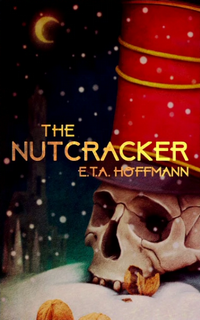
This one came in a very nice hardcover with a great cover that is both on-brand for them and evocative of the story. It’s one of those hardcovers that’s going to last a while and is pretty enough to deserve it. You should absolutely try to get your hands on one while they’re still available.

* They also do some great charity work at this time of year, even as a struggling indie press, an example to us all.

So, what did I think about The Nutcracker?

The fantastical elements of this story were great—and the way it bounced back and forth between fantasy and reality—or make-believe and reality, if you’re Marie’s family—were wonderful. It was likely that Hoffman looked at the rules for story-telling around that, shrugged, and then did whatever he wanted to. The imagination behind it was truly impressive and I can tell why it’s inspired so many people to create works based on it.

The style, too, was fantastic—it’s a great way to tell a story. His word choice (and that of whoever translated this) were delightful. I felt like I was reading a descendant of things like Arabian Nights and The Brothers Grimm and a forerunner of writers like Lewis Carroll and William Goldman (The Princess Bride not Marathon Man). Although I will admit it occasionally left me a little bored—it was like he laid it on too thick from time to time, and I just couldn’t sustain my interest when that happened. Too much of a good thing, I guess.

It was a nice little book. I’m not saying I’m a convert to the story of the prince, the magic toys, and the seven headed-rat or anything. But I can see myself reading it again from time to time–I can definitely see this as a great thing to read this time of year to a kid if I had any around.

A Few Quick Questions with…K.R.R. Lockhaven

Earlier today, I posted my thoughts about K.R.R. Lockhaven’s novel, The Conjuring of Zoth-Avarex: The Self-Proclaimed Greatest Dragon in the Multiverse, a book I strongly recommend. The author was gracious enough to spend some time responding to some Qs that I posed, I hope you enjoy his As as much as I did.


I typically ask about what led someone to being a writer, but you talked about a little in your recent guest post here. So instead—what led to you being a firefighter? Other than giving you more of an income than novelist will likely provide, how does it affect your writing? Is Jake you putting yourself in the novel?
That’s a tough question, since my memory is patchy at best. But I think the seed of the idea was planted when I read The Sirens of Titan by Kurt Vonnegut. There’s a line in that book; “I can think of no more stirring symbol of man’s humanity to man than a fire engine.” Reading that awakened something in me, and eventually led to me try to become a firefighter. It was probably a little of that, and a little of wanting a job that was considered “cool,” because I felt/feel very uncool.

Jake, a firefighter character from my book, is actually modeled after one of my coworkers who is this big, fun-loving guy who is nice to everyone and loves to pull pranks. I am much closer in personality to the main character, Harris, who is meeker and much more unsure of himself.

All authors have more ideas running around in their head than they can possibly develop—what was it about this idea that made you commit to it?
The fire department I work for is at a nuclear site in eastern Washington State. It’s a place that suffers from…bureaucracy issues. As a writer, I have long wanted to satirize the entire site in some way, but I could never find an angle I liked. Early on in my writing “career” I wasn’t writing fantasy, but I always felt a pull to start writing it. Then one day it just hit me—what if, instead of being a nuclear site that once made atomic bombs, there was a magical site, hidden away by the government, that tried to conjure a dragon? I was immediately taken with the notion, and the ideas really started flowing. There was no turning back from that point.

There’s a tricky element to the tone—keeping it fun and funny while maintaining the threat represented by Zoth-Avarex intact. Did that come naturally, was that something you had to work on over multiple drafts to make sure it worked?
Tone is a very tricky thing! I have to admit that it wasn’t something I thought of when writing the first draft, but I have learned a lot about it since then. My brother was the first to point out to me some of the initial inconsistencies with the tone. I went back through everything with that in mind, and tweaked it to what it is now. I think the fact that Silvia, the woman the dragon captures, is made to feel as comfortable as a prisoner can feel (like “a guest without leaving privileges”), helps to give it enough immediacy to be compelling (hopefully), but not a life-or-death, this-isn’t-fun-anymore, feel.

It’s hard to pick just one or two things to focus on to ask about that don’t involve spoiling the whole book…but I want to talk about Eddie for a minute. Where did that character come from? How do you keep yourself from letting a character as fun as that from taking over the novel?
I’m glad you liked him! He was loosely based on an old curmudgeon of a firefighter I worked with early in my career. Sometimes I feel like an imposter when I get credit for dreaming up a character like that, when I really had an inspirational embarrassment of riches at my job. He is a larger-than-life kind of guy who I was lucky enough to get to hang out with for a while.

I love a novel with comic footnotes. Can you talk a little about the choice to use that technique—in general, and how you decide when to use a footnote to deliver the joke rather than keeping it in the text?
I love footnotes, too! I recently read Jonathan Strange and Mr. Norrell by Susanna Clarke, and I thought the footnotes really expanded on the world of the book.

I wish I could explain the decisions, but it was mostly done by feel. I thought footnotes could be used to expand the world of the Site, too, and to get a into Zoth-Avarex’s history and psyche. In the end, I deleted a ton of footnotes. Many just weren’t funny, and having too many of them distracted from the story too much. Some of my favorite parts of the book are in the footnotes, though. Like the thing with the rise and fall of an entire civilization that went on for almost two pages. That was fun to write.

What was the biggest surprise about the writing of The Conjuring of Zoth-Avarex itself? Either, “I can’t believe X is so easy!” or “If I had known Y was going to be so hard, I’d have skipped this and watched more TV.”
The biggest surprise I found when writing the book is that I could actually write comedy. I wasn’t sure if I had it in me, to tell the truth. Among my group of friends, I’m probably the least funny of the bunch, but on the page, I have to admit that I have at least some comic ability. I was very hesitant to admit that, though. I mean, I made myself laugh with my goofball shit, but I didn’t know how others would receive it. It has taken a lot of positive feedback and some good reviews to convince me that maybe I don’t completely suck.

Let’s play “Online Bookstore Algorithm” (a game I made up for these Q&As). What are 3-5 books whose readers may like The Conjuring of Zoth-Avarex?
Another tough one! I know every author thinks their book is so unique, but I do have a hard time coming up with comparable titles. I am no Terry Pratchett, or Douglas Adams, but I do think that people who enjoyed The Hitchhiker’s Guide to the Galaxy or anything by Pratchett might get a kick out of my book. Also anyone who grew up reading Tolkien, or just fantasy in general, and would like to see the genre lovingly skewered. One recent, semi-comparable title is The Part About the Dragon Was (Mostly) True by Sean Gibson.

What’s next for K.R.R. Lockhaven, author?
I was lucky enough to recently sign a three book deal with Shadow Spark Publishing, and they are going to publish my humorous hopepunk nautical fantasy trilogy. Book one, tentatively titled Marauders, Daughters, and Dragons, is slated to come out in the summer of 2022. The series will take place on another world, but will still be within the Zoth-Avarex multiverse (wink wink). My writing has made a slight shift toward the more heartfelt and serious, but there is still a lot of foul-mouthed fun, like a shit-talking bird companion, a reanimated skeleton with confidence issues, and a group of failed pirates who just want to sing and have adventures.

Thanks for your time—and thanks for The Conjuring of Zoth-Avarex, I had a blast with it and I hope you have plenty of success with it.
Thank you very much! I’m so glad you enjoyed my book. This interview was really fun! The questions were tough, and unique, and you really made me think. I loved it.


The Conjuring of Zoth-Avarex: The Self-Proclaimed Greatest Dragon in the Multiverse by K.R.R. Lockhaven: So Preoccupied with Whether They Could, They Didn’t Stop to Think If They Should…

The Conjuring of Zoth-Avarex

The Conjuring of Zoth-Avarex:
The Self-Proclaimed Greatest
Dragon in the Multiverse

by K.R.R. Lockhaven

Kindle Edition, 306 pg.
BookBaby, 2021

Read: October 23-25, 2021
Grab a copy from your local indie bookstore!

“We’ve had years and years of preparations to ensure everything will run smooth. We have learned from the mistakes of the past and will use that knowledge to make better mistakes in the future. Er. . . to avoid those mistakes altogether.”

What’s The Conjuring of Zoth-Avarex About?

Harris Reed is fresh out of magical training school and arrives at the Site to begin his career as a conjurer—he couldn’t be more excited about it. He’d grown up on fantasy literature and movies, and in college finds out that so much of what he’d dreamed about is actually true. Not only that, he can be part of the incredibly secret world.

What he discovers is a corporate culture that basically mimics that which is in the mundane world (Harris would use the adjective “Muggle,” he’s that kind of nerd). Petty rivalries, careerists focused on climbing the ladder, budget issues, inter-department squabbles, and a devotion to bureaucracy over the well-being of the employees—or common sense.

Harris and his fellow graduates have been brought to the Site to add some last-minute power to a long-term project set to launch on their second day of work, which sounds exciting to them all.

What they don’t know is that the project is summoning a dragon into this world from another universe. To you and I, this might sound as dumb as John Hammond’s plan for a park full of dinosaurs, but the managers of the Site (and the U. S. Military, which expects to be the eventual recipient of said dragon) don’t see it that way. It turns out that, in comparison, Hammond looks like a safety-conscious genius—it takes less than one sentence for the dragon to show that the humans have no control over him. He kills one staff member, snatches a woman that Harris knew from school, and flies off.

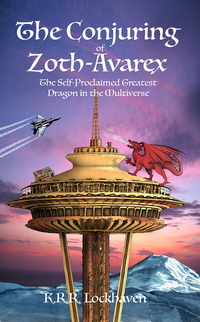
Zoth-Avarex takes Silvia to the top of the Space Needle and makes it his base. He brought Silvia along because he needs a princess in addition to his treasure. There’s no threat implied to her (as long as she doesn’t try to escape)—he basically wants to keep her safe and pamper her. It doesn’t keep this from being a horrible experience for her, but it sure could be much worse.

On their first day, Harris has befriended (or tried to) Siliva, her fiancé, and her sister. The three of them quickly realize that Management and the military are going to be of little use in getting Silvia back, and decide to take matters into their own hands in the tradition of fantasy protagonists everywhere. They get support and a little guidance from Silvia and Harris’s direct supervisor, as well as a long-term employee who’s got his heart set on retirement.

Eddie

One of the first people that Harris meets on campus is a conjurer just days away from retirement. He’s named Eddie, but might as well be named Dr. Perry Cox. Eddie’s a legend on the Site for some heroics back in the ’70s but is now an iconoclastic grump. The kind of guy every office has one or two of—they’ve been around forever and understand the way things work in ways that management doesn’t. They also don’t care about anything anymore and aren’t afraid to show it. He gives the new hires a hard time but actually gives good advice and assistance.

I personally love to get to know those figures and try to learn as much as I can from them (and have likely taken on that role a time or two), maybe that’s why Eddie resonated with me so much. He was hands-down my favorite character—he’s one of those supporting characters that could overshadow the protagonists if used too much, but Lockhaven doesn’t let that happen. Which is probably good, too much of him could’ve hurt the novel.

Footnotes

I am a sucker for a good (generally comedic) use of footnotes in novels—it’s not something I see often, but when I do, there’s a high correlation between their presence and a novel I enjoy.* Lockhaven nails the practice—they give him an added vehicle for jokes and help add to the reader’s understanding of the world and some characters. He also includes one note that’s so long could be a Steinbeck-ian intercalary chapter. It takes a certain audacity to try that, and it paid off.

* See Lisa Lutz, Thomas Lennon, Josh Bazell.

Satire

The book is primarily a fantasy adventure, but throughout—sometimes more pronounced than others—it’s also a workplace satire. As such it’s a winner—even if the fantasy storylines and broader comic bits didn’t work, I’d be pretty positive about this book for the workplace satire alone.

Like Harris, Lockhaven is pretty clearly someone who has drunk deeply from Fantasy fiction. At once he celebrates tropes, themes, and ideas from all sorts of Fantasy—and pokes fun at them. If he just ridiculed them (as several tropes and themes deserve), it’d likely come across as mean-spirited and wouldn’t be that entertaining. If all he did was unleash his favorite tropes to use in telling his story, it’s be unoriginal and clichéd. Mixing avoids the pitfalls and makes for an entertaining read.

So, what did I think about The Conjuring of Zoth-Avarex?

“Well, Bill, I know the answer to life is simply to live with love. Well, actually it’s forty- two, but you humans can’t comprehend that.” The dragon paused wistfully. “I know the best things in life are free. But the birds and bees can have all of that. I need gold! Gold! And to hang here with my beautiful maiden. That’s all I want in this crazy mixed-up world.”

It’s de rigueur when talking about a humorous work of Fantasy or SF to invoke Pratchett, Adams, and Asprin, and it’s de rigueur when I talk about that kind of fiction that I go out of my way to not do that. It’s easy this time because I find them completely inapplicable. On the other hand, TCoZA:TSPGDitM brought to mind: John Scalzi (I’m thinking Agent to the Stars and The Android’s Dream), Scott Meyer (Magic 2.0 series), Joe Zieja (Epic Failure Trilogy), and Eoin Colfer (Highfire). You put those works in a blender and pulse for 30 seconds and you’re going to get something akin to this book.

* Actually, does anyone Asprin anymore? I probably need to update my references.

This would be an easy book for me to go on too long about—I’d love to spend a few paragraphs on Zoth-Avarex alone. But it’s best experienced rather than being told about.

Most of the Independently published Humorous/Light Fantasy that I’ve come across hasn’t worked for me—at least not as much as I wanted it to. Either on the humor front or the story front. But Lockhaven nailed it, I’m happy to say. I laughed—audibly and hard—a couple of times, I chuckled and grinned a lot. I thought the relationships between the characters worked well, and I enjoyed the characters you’re supposed to enjoy and was annoyed by the ones that are supposed to bother you. This is largely one of those novels whose journey is more important than the destination—but I enjoyed the way Lockhaven wrapped things up, too.

In short, I had a lot of fun with this and expect that you will, too. Give this one a try.


4 Stars

This post contains an affiliate link. If you purchase from it, I will get a small commission at no additional cost to you. As always, opinions are my own.
Dust & Grim by Chuck Wendig: Fairies and Foxfolk and Florgs, Oh My

Dust & Grim

Dust & Grim

by Chuck Wendig

Hardcover, 368 pg.
Little, Brown Books for Young Readers, 2021

Read: October 28-29, 2021
Grab a copy from your local indie bookstore!

“We’re a funeral home for monsters,” Vivacia said

Viv!” Dustin said, scandalized.

“Fine. The supernatural,” the woman corrected. To Molly, in a lower voice, she said: “Monster is a bit of no-no word. We prefer not to use it, and they certainly prefer us not to use it. But we need common ground here, and I hope it helps you to understand.”
“Monsters,” Molly said, repeating the no-no word.

“The supernatural,” Viv corrected again.

“The nonstandard citizens,” Dustin said sharply.

What’s Dust & Grim About?

After thirteen-year-old Molly’s father died, her uncle comes to her and tells her about her (late) mother and older brother—Molly’s parents split right after she was born and she’d never known anything about them. Her father had never been a good provider—or much of a parent in any other way. She needs money for costuming school (and room and board, too) and her long-lost family has an ongoing business of some sort.

So Molly introduces herself to her brother, Dustin, and makes an ultimatum: she wants half of everything or to take part in the business. Dustin and his mother’s friend, Vivian (who has taken on the role of mentor/guardian) aren’t keen on either option (or on Molly in general, if truth be told).

Through sheer pluck, determination, and a happy accident or two, Molly learns that the family business is as a funeral home/cemetery caretakers for supernatural creatures. Not only that, but a malevolent magic-user is running around the cemetery ruining the eternal rest of those interred there (which could have cataclysmic effects).

With the help of a band of non-standard citizens—as delightfully creepy and goofy as you could want—the siblings have to figure out how to get along and stop this threat.

The Non-Standard World

Mollllllly,” the forest whispered in return.

She shuddered. “That’s weird. You should stop that!”

Sorrrrry,” the forest answered.

Well, at least it’s a polite menacing voice.

It’s hard to describe briefly the non-standard world we’re introduced to—through the cemetery, the group helping Molly and Dustin, and others that they interact with. It’s sort of like Gaiman’s Neverwhere or Aaronovitch’s demi-monde. But the Pixar version.

Just a few examples: there’s a Foxperson shapeshifter, which is pretty much what it sounds like; the above talking forest (at least, that’s her theory at the time); a vampire that can compete with Fred, the Vampire Accountant for the Most Milquetoast Vampire in Literature; and a Florg, a childlike extra-dimensional being, who is probably the most dangerous being in the book, who is pacified with cheese crackers and by attempting to be funny (think Dave Bautista’s Drax, but not at all).

I hope there’s a sequel just to spend more time in this world.

So, what did I think about Dust & Grim?

“What kind of poison?” Dustin asked.

Marsha chimed in: “Mucus-thorn and mire-berry.”

“Is that, like, some kind of alt-folk band?” Molly asked.

“Not as bad as that,” Ember said, grinning like, well, a fox. “But as poisons go? Pretty flappin’ bad.”

Dust & Grim was just silly, creepy, wholesome fun. You’ve got some great creatures. You’ve got a nice sibling-dynamic. Some genuinely funny lines. Molly’s cosplaying is great, I love the choice to ground her character in that. And a creative story.

But most of all, you get to young characters who learn who they are, find ways of fulfilling their dreams that they didn’t expect to find, and a strong sense of family—and what that means. Not in some “we have to find a wholesome message for MG readers” kind of way, but in a way that would work for these characters no matter the intended audience.

I don’t want to spend too much time trying to talk about this, it’s just a fun read that should be enjoyed that way.

3 Stars

2021 Library Love Challenge

This post contains an affiliate link. If you purchase from it, I will get a small commission at no additional cost to you. As always, opinions are my own.

How to Slay a Dragon by Cait Stevenson: A Historical Approach to Major Fantasy Tropes

How to Slay a Dragon

How to Slay a Dragon:
A Fantasy Hero’s Guide
to the Real Middle Ages

by Cait Stevenson

Hardcover, 188 pg.
Tiller Press, 2021

Read: September 14-16, 2021
Grab a copy from your local indie bookstore!

From the Back of the Book

I tried to come up with my own summary, and it kept coming out like those horrible paraphrases you turned in to your teacher after basically sitting down with an encyclopedia for ten minutes—technically not plagiarism (at least not to a sixth-grader’s mind), but not really original work.

Instead, let’s just see what the back of the book says:

Grab your magical sword and take the place of your favorite fantasy character with this fun and historically accurate how-to guide to solving epic quests.

What should you ask a magic mirror? How do you outwit a genie? Where should you dig for buried treasure? Fantasy media’s favorite clichés get new life from How to Slay a Dragon: A Fantasy Hero’s Guide to the Real Middle Ages, a historically accurate romp through the medieval world. Each entry presents a trope from video games, books, movies, or TV—such as saving the princess or training a wizard—as a problem for you to solve, as if you were the hero of your own fantasy quest. Through facts sourced from a rich foundation of medieval sources, you will learn how your magical problems were solved by people in the actual Middle Ages.

Divided into thematic subsections based on typical stages in a fantastical epic, and inclusive of race, gender, and continent, How to Slay a Dragon is perfect if you’re curious to learn more about the time period that inspired some of your favorite magical worlds or longing to know what it would be like to be the hero of your own mythical adventure.

So, what did I think about How to Slay a Dragon?

It’s a great concept—fantasy readers (and writers, I assume) are frequently talking about authenticity and if X technology or practice really fits with an era. Or how would you really go about doing Y? We’ve needed something like this book for years.

It’s just clever—it’s not just about the topics that Stevenson addresses, it’s how the topics are dealt with. There’s a great deal of wit in the setup and explanation of each one—and the way they flow from subtopic to subtopic. Jumping from person to person, location to location, and so on could seem erratic or jarring, but she makes it feel like it flows naturally.

I love her voice—I honestly wish I wrote the way Stevenson does. It’s not just the humor, it’s the way she approaches an idea. It’s the kind of prose that if I decided to get serious about writing that I’d want to study emulate.

Yet…this was one of those strange, I can’t explain it at all, the whole is less than the sum of its parts reads for me. It impressed me on all fronts, and yet I was bored almost the entire time. Until the last 40 pages or so, I’d eagerly pick it up and dive in, and then my mind would start wandering within a page or so.

It absolutely could be just what was going on for me this week, it’s likely just me—I fully expect after I post this and look around at what others say that I’m going to see a lot of raving. But I just can’t do that.

I’m sticking with the 3 stars because of the sum of its parts and because one of the first notes I made was, “if she keeps this up, she’s got a lock on 4+ stars.” Otherwise, this would be 2 stars.

By all means, fill up the comment section with ways I’m wrong about this one.


2 1/2 Stars

2021 Library Love Challenge

This post contains an affiliate link. If you purchase from it, I will get a small commission at no additional cost to you. As always, opinions are my own.
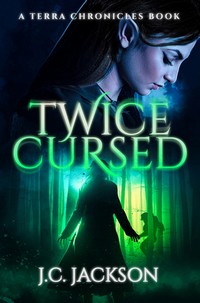
Twice Cursed by J. C. Jackson: It’s Time to Bring Werewolves into this World

Twice Cursed

Twice Cursed

by J. C. Jackson
Series: Terra Chronicles, #3

Paperback, 241pg.
Shadow Phoenix Publishing, 2018

Read: August 5, 2021
Grab a copy from your local indie bookstore!


Since it’s been awhile (too long) since I posted about this series, I thought it’d be a good idea to copy a bit of the introduction to this series I posted back in 2018 (slightly edited):

I had a brief conversation a couple of weeks ago with J.C. Jackson and she described the book as “Science Fantasy” and told us a little about the series. Something about fantasy characters but with modern technology, but phrased better. Not really getting what she said, I asked why not just call it Urban Fantasy, and she gave a decent answer—basically that she didn’t have enough vampires or werewolves in the books so readers told her she couldn’t. I was a chapter or two into the book when I figured out what she was saying.

In your mainstream Urban Fantasy, you have fantasy creatures—wizards, druids, werewolves, fae—popping up in our world. On the other end of the spectrum (or an other end, anyway) you have things like the Eddie LaCrosse novels or the Dragon Precinct books that have modern ideas (police squads, private investigators) used in a fantasy series. Jackson takes a different tack—it’s a typical fantasy novel in that there’s a lot of magic, elves, halflings, Dark Elves, etc. living next to humans—very standard kind of thing, but their technology matches ours (actually, it’s slightly more advanced). I loved this approach and there’s a good chance that I’d have had nice things to say about the book just because of this idea.

What’s Twice Cursed About?

Ketayl and her Paladin partner, Silver, are sent off to do fieldwork, bringing along another lab tech to look into a rash of werewolf deaths in the territory of the Alpha Prime’s pack (he’s sort of like the Marrock of this world). The local Terran Intelligence Organization office is primarily full of recent graduates from the Academy, most still learning the ropes—they’re not up for dealing with both the investigation and dealing with the Alpha. So, instead, they throw Ketayl into leading her first team because of her investigative abilities and to get her to grow into leadership.

She interacts better with the pack than anyone (except maybe her boss) expected—certainly better than she assumed. She and Silver quickly decide that this is another example of the rise in Necromancy that they’ve been chasing.

Through a combination of good procedure and being in the right place at the precisely right time (or wrong place/wrong time, depending on their perspective), they make great strides in the investigation—even if it essentially puts multiple lives on the line. Through it Ketayl gets a crash course in juggling personalities, abilities and unprepared-for team members.

A Gripe Resolved

Something that bugged me through a lot of the first book, and that really got on my nerves in the second book was (to cite that post) that most characters treat Ketayl “with the kind of care usually reserved for glass on the verge of shattering, they only tell her as much of the truth as they want—all the while, wanting the benefit of her intelligence, abilities, and magic. It feels condescending and manipulative. And for that to be the way those closest to her to treat her? I can’t stomach it.” There were characters throughout that didn’t treat her that way, but they were the distinct minority.

None of them were around this time—only those who saw her strength, who believed in her when she didn’t really believe in herself (which is still going on ), and those who didn’t have preconceived notions about her. Despite herself, she responded to that kind of confidence well and is able to rise to the occasion.

I do wonder what it’ll be like when they spend more time around some of those other characters—will they see the growth in her?

A Quibble Exasperated

I do have another quibble with the series—Jackson has two story arcs that she appears to be taking a “slow burn” approach to. I’m all for that, but while she’s letting the development of those arcs build deliberately—she’s telegraphed where they’re both going in a way that takes away the deliberate, careful way she’s going about it.

It’s hard to talk about that without getting into plot specifics, but hopefully, that paragraph makes sense.

Now, that’s a quibble—not a full-on gripe or criticism. It’s a thought I have every so often while reading (and when writing about it), but I shrug it off and move on with a fun read.

So, what did I think about Twice Cursed?

I really dug it. The Alpha and his crew were a lot of fun (I hope we get to see them in a book or two). Ketayl’s growth was great—both in leadership and social interaction, but she has a few places where she’s able to flex the magic muscle that she’s long kept under wraps, and…yeah—I really loved those scenes.

I’ve been kicking myself for getting behind on this series—I had this and the next book on my shelf for years untouched—and I’m so glad I got back into this world and with these characters. The mix of tech and Fantasy, and characters you can’t help but want to befriend makes for a fun time. I’ll be back for more soon.

(Over the weekend, I bought the next two books, so even after reading this, I’m more behind).


3.5 Stars

20 Books of Summer '21

This post contains an affiliate link. If you purchase from it, I will get a small commission at no additional cost to you. As always, opinions are my own.

The Irresponsible Reader On…Self-Published Fantasy

Self-Published Authors Appreciation Week
From the first moment that people did the strange thing of asking me to talk about their books on my blog, I’ve been impressed by the quality of a lot of what’s been published by authors going out on their own, taking all the risks, shouldering all the responsibility and doing all the work to get their words, their dreams, their blood, sweat, and tears. This should be celebrated—it’s definitely appreciated, as we’re trying to show this week.

I haven’t had time to read anything new for Self-Published Authors Appreciation Week, and therefore don’t have anything new to blog about, so I’m going to highlight some of the self-published works that I’ve blogged about over the last few years—just a sentence or two. Hopefully enough to make you click on the link to the full post. Beyond that, it’d be great if I inspired you to add a few of these to your TBR. Also, be sure you check out the other posts over at the SPAAW Hub.

Today we’re going to be looking at Self-Published Fantasy. These are some of the most imaginative, creative, and enjoyable Fantasy novels I’ve read since I started blogging. These authors approach this beloved genre in ways that surprise and inspire me. Check out these books, hopefully you’ll find something good.

bullet Of Honey and Wildfires by Sarah Chorn—Chorn’s Western/Fantasy about…I don’t have room here. It’s beautiful prose, heartbreaking stories, and a stellar example of writing. (my post about it)
bullet Oh, That Shotgun Sky by Sarah Chorn—the follow up to the the above. A handful of people trying to come to grips with the new world they find themselves in. (my post about it)
bullet Seraphina’s Lament by Sarah Chorn—A planet is dying, political upheaval, and the dawn of a new reality. One of the most brutal reads in recent memory (and one of the most disturbing covers!). I absolutely loved it and would be literally counting down the days until the sequel if I knew the date. (my post about it)
bullet One Man by Harry Connolly—A man hiding from his past, becomes a one-man army trying to save a kidnapped mother and daughter. (my post about it)
bullet The Story of Lucius Cane: Book One by Vanya Ferreira—a mildly atypical vampire goes up against a lycanthrope-ish rogue in 1794. (my post about it)
bullet The Blackwood Saga by Layton Green—three brothers from New Orleans travel to a fantasy version of Earth and have to fight their way back home. (I haven’t finished this series yet, and it’s driving me crazy)
bullet The Brothers Three (my post about it)
bullet The Last Cleric (my post about it)
bullet The Spirit Mage (my post about it)
bullet The Culling by M. T. Miller—a bleak fantasy world is beset by monsters, and The Culling is a committed group of warriors wandering the countryside to fight them. These are dark books, but so fun to read.
bullet Apex Predator (my post about it)
bullet Brotherhood of the Worm (my post about it)
bullet The Nameless Chronicle by M. T. Miller—humanity struggles in a desolate, post-apocalyptic world. One man rises to fight the despots ruling them. He suffers, he bleeds, he dies. He just can’t seem to stay dead.
bullet Ascent (my post about it)
bullet Bedlam (my post about it)
bullet Risen (my post about it)
bullet A Strange Chemistry (my post about it)
bullet Strife (my post about it)
bullet Sir Thomas the Hesitant and the Table of Less Valued Knights by Liam Perrin—a wholesome and comedic Arthurian tale about knights not quite good enough for the Round Table (my post about it)
bullet An Unexpected Afterlife by Dan Sofer—wide-scale resurrection of the dead causes more than a few problems for everyone in modern Israel. (my post about it)


If you’re a self-published author that I’ve featured on this blog and I didn’t mention you in this post and should have. I’m sorry (unless you’re this guy). Please drop me a line, and I’ll fix this. I want to keep this regularly updated so I keep talking about Self-Published Authors.

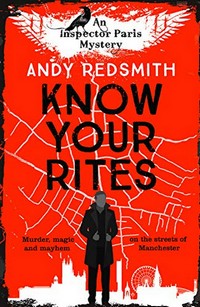
Know Your Rites by Andy Redsmith: Murder, magic and now rap music. Oh joy.

Know Your Rites

Know Your Rites

by Andy Redsmith
Series: Inspector Paris Mystery, #2

Kindle Edition, 313 pg.
Canelo, 2019

Read: July 7-9, 2021

With his “street” clothes and silly trimmed beard, Dirk remained the most bizarre magical dwarf the inspector had ever seen. Although he was acutely aware of how stupid that sounded.

What’s Know Your Rites About?

It’s been a couple of weeks since DI Nick Paris led the efforts to stop the demon invasion from the magical world—something celebrated on both sides of the portal, with parties, accolades from officials, TV interviews, etc. Now he just wants to get back home to Manchester and investigate some crimes involving humans–no elves, dwarves, talking animals, just people. It won’t be easy, but he really wants to put the whole magical world in his rearview mirror.

He’s called to the scene of a murder—a music producer has been killed in his home, and there’s a suspect in custody. There’s a catch—the suspect is a dwarf who’s in the non-magical world so he can pursue his dream of being a major rap star.

Dirk’s a pretty ridiculous character, but it’s hard not to root for him. You have a hard time believing he committed the crime and how do you not root for a guy who had to leave his own world to follow his passion? (the fact that he doesn’t appear to have a lot of talent, makes him more tragic).

There’s a lot of pressure on Paris to wrap this up quickly—the non-magical authorities are not wanting to publicize the fact that a human was killed by someone from the other side. Those on the magical side are wanting to negotiate trade pacts with the humans, and don’t want anything derailing that. Still, there’s something wrong with the case against Dirk, and Paris learns it quickly. But it’s clear that a “magical being” was the culprit. So the team from last time gets back together and crosses over to find their murderer.

We spend the bulk of this novel on the other side of the portal, getting a better understanding of the world and how it operates—including how the police department, postal service, and tourist travel work. We also get to meet several other magical creatures, and Redsmith’s take on them continues to be a winner.

For example…

Paris and the rest need to cover a lot of ground quickly, so Tergil hires some Lamassu to handle the transportation. What’s a lamassu? I’m glad you asked:

They were flying cows. Or, more precisely, flying bulls. Each had a bull’s body, with lion’s legs, huge wings attached to their shoulders, and a human head. A man’s head with striking noble features, a long yet neatly cut beard, and wearing a silver helmet. A silver jockey’s helmet.

And, for reasons that make a certain kind of sense, they have Australian accents.

I’m telling you, reading the passages about them justifies the purchase price. The rest of the book is icing on the bull-shaped cake.

The Humor: The Crux of the Matter

Paris frowned at her. ‘What?’ he said. ‘How did somebody called Ug Og end up with the middle name Serendipity?’

‘I don’t know,’ said the ogress. ‘It just sort of happened.’

She turned towards the inspector, baring her misshapen teeth in an attempt at a grin.

In Breaking the Lore Redsmith really swung for the fences to establish the series, but it felt like he dialed things back a touch. Which is not to say it’s bad, it’s just not as funny. I think the puns have really dropped off. I also think that Redsmith tries to squeeze more out of the “dwarf who can’t rap with ambitions to be the next Eminem” than is there. But it’s a ludicrous notion, so it’s hard to blame him for going back to it as much as possible.

In the first book, he established a strange, fantastic and ridiculous world (two of them, technically). Now he gets to play in it—he doesn’t have to try as hard, he can just play it straight and let the settings and characters bring the funny to the story just by being the way they are. I’m actually glad that he toned it down a bit. (just a bit—it was frequently chuckle-inducing, I’m not saying the humor is gone)

So, what did I think about Know Your Rites?

I was a little worried about returning to this so long after I read the first book in the series, and I shouldn’t have been, it took no time at all to remember the characters and situation. It’s just as enjoyable this time as it was last time.

There’s a straightforward crime story at the core of this, wrapped in Fantasy garb, enclosed in comedy. I like these characters, I want to spend more time with them, and I hope that there are more books to come. In the meantime, take some time to dive into this series.


3.5 Stars

20 Books of Summer '21

Page 27 of 54

Powered by WordPress & Theme by Anders Norén