Tag: Fantasy Page 34 of 54

A Few Quick Questions With… Anne Dolleri

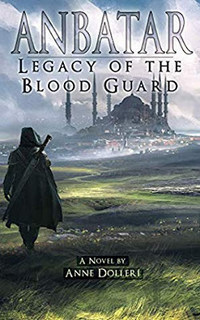
Earlier, I posted my thoughts about Anne Dolleri’s debut, Anbatar: Legacy of the Blood Guard. Now, she’s generously agreed to this brief Q&A. I enjoyed her responses to the questions and the opportunity to get to know her a bit better, I hope you do, too.


Tell us about your road to publication—was your plan/dream always to become a novelist and your education/other jobs were just to get you to this point, or was this a later-in-life desire?
I started writing when I was 13 years old. I never really did it with the intention to become a novelist. I was just thrilled about stories, about those beautiful things you could experience in the eternity of your own mind. Even today I consider myself as an amateur. Writing is a beautiful hobby and as weird as it sounds but I never want to make it a day job. I guess that would just rob it of it’s magic. I am a skilled gardener which on the first look might seem like something completely different, but really the fresh air and the hard work inspire me a lot.
I don’t want to ask “where do you get your ideas?” But out of all the ideas floating around in your head, why’d you latch onto this one—what was it about these characters, this idea that drove you to commit months/years to it?
I don’t really have a lot of ideas floating around. My ideas are born from the characters that occupy my mind. Nareth was actually my first book character I ever created. The first story I told was his and somehow there was this world growing around him. This sounds quite vague, I know, but sometimes I got the impression that writing is a mystery to the author even more than to the reader.

Well what made me spent that much time with this book? It’s the unbearable feeling of untold stories. It’s the feeling most of us have when our favorite series seasons finale has aired and ended with the worst cliffhanger you can imagine. You’ll just have to keep going until the story is told. I got my people in my head. And they got their story. And the story needs to be told.

I loved your use of Nareth;s dog and horse. Sure, as with 99% of all books, more of the dog would’ve helped. Was that a conscious choice or just something that happened along the way? [Note: I forgot I asked this question when I wrote about that in my post. I don’t mean to harp on the point, it just happened]
That is a really hard question. As a war horse Alahar has his purpose of course but I can’t recall having planned to create him. The same counts for Revo, who is Nareths dog. I do like having animals in rather descriptive episodes of a book (like journeys) so my character is capable of interacting with something. So you can say in retrospective Revo is a beloved unexpected helper, who does a great job in those scenes. But like Alahar this wasn’t a conscious decision, more a very happy coincidence. Of course I do have a thing for animals, so I guess it would be harder for me to write a book without animals in it.
Similarly, I loved Keni. Without spoiling anything, what can you tell readers about him? Where did the idea to include him come from—not just to include him, but to use him so often?
When Nareth enters Anbatar for the first time I needed someone he could talk to. As a stranger and even more so an enemy to the people of the North it needed to be someone he could risk talking to. Who could be better for that than a boy, who is experiencing the poverty of Anbatar every day while he’s roaming the streets for food. So at first Keni was only planned as Nareths first contact. But the naughty little thief turned out to be a great counterpart for Nareths soldier-like disciplined attitude. And to be honest Nareth grew very fond of the little guy. So he found his way into the story, and turned out to be an awesome character who finds his way from the beginning of the book until the very last chapter.
Who are some of your major influences? (whether or not you think those influences can be seen in your work—you know they’re there)
Of course most of us authors insist on being a unique sparkling unicorn but to be honest the stories of Terry Goodkind (The Sword of Truth), Kristen Britain (The Green Rider Series) and Naomi Novik (Temeraire) had a huge impact on me. What might be seen in my own work from these books is the very character based writing. I am telling my story through the eyes of my main character. And I believe this is what I adapted from the writers above.
What’s next for Anne Dolleri, author (if you know)?
I wish I had an idea. Considering that I am a self-published author and not a native english writer, it’ll definitely take some time until there will be something new to read from me. I had planned to continue Nareth’s story but until it is written, published, translated, edited and published in english, many month will pass I’m afraid.
Thanks for your time—and thanks for Anbatar: Legacy of the Blood Guard, I enjoyed it, and hope you have plenty of success with it.
Thanks for the interview, thanks for reading it, I am glad you enjoyed your time in Anbatar.

Anbatar: Legacy of the Blood Guard by Anne Dolleri: A Satisfying New Fantasy Adventure

If this one ends up looking intriguing, come back in a little bit to read a Q&A with the author (the link’ll work when it posts) to see if she can convince you to give this a shot.

Anbatar

Anbatar: Legacy of the Blood Guard

by Anne Dolleri

Kindle Edition, 488 pg.
Nina Döllerer, 2019

Read: October 14-15, 2019


Nareth is a Samerier warrior (a super-soldier of sorts, I’m going to stay vague about that), and single-handedly turned the tide against an invading army in a recent war. Haunted by what happened (particularly is role in it), and determined to prevent that needing to happen again, he goes on a secret peace mission to the country that recently invaded his own. His brother, the king, sends a security force and an ambassador, too. But they can’t move as quickly as he can (nor are they as driven).

Nareth arrives in the capitol city, Anbatar, and is stymied on every front—he can’t talk to anyone in the government. The invasion had gone so awry that the king was killed, so by law, the leaders of the nation are behind locked doors for weeks until succession is decided and a new king is crowned. Forced to wear makeup to disguise his darker pigmentation, Nareth familiarizes himself with Anbatar, starts to get a feel for the politics in the city, and makes some contacts that will help when he (and the coming diplomat) have a chance to negotiate a lasting peace.

When the opportunity arises (forced, actually, by Nareth taking a reckless and potentially calamitous step), it comes tied to dangerous tasks — digging out the remnants of a secret police and protecting the daughter of a popular candidate for the monarchy from forces loyal to the slain king’s family.

This books would work pretty well as Exhibit A in an examination of why I rarely DNF things. There were a handful of aspects to this novel that felt like deal-breakers when Dolleri introduced them. If not deal-breakers, harbingers of a disappointing read, anyway. The kind of things that felt things I’ve read in other independently published Fantasy novels that almost never worked out well. For example: the way she kept most of the details about the Samerier warriors from the reader for most of the book; the seemingly irrational feud between Nareth and his ambassador—and the way the two interacted with each other; the way the inevitable romance was introduced. Dolleri didn’t do a bad job with any of them, but at first blush these things (and others) reminded me of a disappointment in another book and made me think that this book would be the same. But at some point, without me noticing, she won me over. Every time that I grumbled about something in my notes, or rolled my eyes at an idea, I eventually got to the point where not only did the thing not bother me, I ended up liking the way she was dealing with things.

I’m not sure I’m being clear there—so let me put it this way: every negative (or potential negative) that I came across, she turned into a positive. That’s skill, that’s a good instinct (even if she didn’t see what I’m complaining about as a negative), she put enough heart, individuality or chutzpah into her story that I couldn’t help but respond positively.

At one point (I have to be careful here to not give away anything), it became clear to me what kind of ending she was going for (even if I didn’t have all the details guessed, I could see the trajectory) and it’s not what I expected. Even here, I quickly got behind her choices and was able to enjoy them.

There is a real lack of backstory about this world, about the recently completed war and the ongoing tensions between the two countries (pre-war and after). We get a little bit of information on this, but not much. This is both wonderful—no prolonged infodumps—and frustrating—it’d just be nice to know from time to time. Ultimately, I think this was a smart move (and makes the reading easier), but man…I’m curious.

I’m not going to spend a lot of time talking about this character, but there’s a thief wandering around the city. He can get where he wants, when he wants. His mere presence gets people to give him their money—he’s like Batman would be if he turned. His character alone, plus the impact he has on various points of the story, are real bonuses for me. I’d read a book about him at the drop of a hat.

Typically in Fantasy novels, animals are just part of the background, or they’re invested with some sort of near-magic/supernatural quality. Nothing against the latter, but I’d prefer just some good animals. That’s what we have here—Alahar, Nareth’s horse is a good warhorse—he works well with his rider, but isn’t supernaturally fast, strong or smart animal. Nareth also has a dog, Revo. It seems once or twice that Revo might secretly be supernatural, but in the end, he’s just a good dog. I think he gets short-changed a little in the end (and that’s not just because I’m obsessed with dogs in fiction), but he’s nice to see.

The last character that I want to focus on is Keni. He’s a typical street urchin who does some odd jobs for Nareth and ends up being taken under his wing. There was something infectious and charming about his presence, and I think a lot of the affection I ended up having toward this book is rooted in him. At the very least, Dolleri’s use of him magnified my appreciation for the book.

My last point is this—Dolleri isn’t a native English speaker/writer. Which can be a dicey thing when trying to write/translate fantastical elements. If I didn’t know English was a second language for her, I don’t think I could’ve determined that from the book. Major kudos to her for that—no small feat.

Is this the best Fantasy I’ve read this year? No. But it’s a surprisingly satisfying one. I’m ready to head back to this world, hopefully back to some of the characters. It’s an intriguing setting for some enjoyable characters to have their adventures in with an author that has some pretty solid story-telling chops. I’d get this one if I were in your shoes, folks.


3.5 Stars
LetsReadIndie Reading Challenge

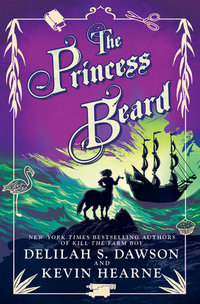
Pub-Day Repost: The Princess Beard by Kevin Hearne, Delilah S. Dawson: An Adventure on the High (and Joke-Filled) Seas of Pell

The Princess Beard

The Princess Beard

by Delilah S. Dawson and Kevin Hearne
Series: The Tales of Pell, #3

eARC, 384 pg.
Dell Rey Books, 2019

Read: September 16-21, 2019

Readers of Kill the Farm Boy (the first installment in the Tales of Pell trilogy) may have been wondering about what happened to Princess Aurora/Snow White-esque figure, Princess Harkovitra*. Well, she wakes up, and finds herself in the position she’s always wanted—a chance to start over. She leaves her name and home behind, hitching a ride with our old acquaintance Morvin on his way to start a new life himself.

*Then again, maybe you’re like me, and figured she was like Worstely and that her only purpose was to kick-start the novel and hadn’t thought of her since.

They’re not the only ones looking for a new start. We also meet a swole centaur prone to over-compensation, seeks to reach a mystic temple that will heal him of (what he considers) his emasculating magical abilities. A pariah elf is looking for the opportunity to do something more meaningful than swindle tourists. And we also pick up with one of the newly liberated dryads from No Country for Old Gnomes, who needs a way to get to her chosen law school, Bogtorts.

All of these new starts require the characters to travel somewhere inaccessible to foot/horse/carriage traffic. Enter the Clean Pirate Luc (a.k.a. Filthy Lucre), who happens to be a one-eyed talking parrot. He needs new crew members and is willing to let these travel to their intended destinations in exchange for labor. Even if the result is something incongruous, like a centaur swabbing the decks (thankfully, that’s a funny image—a great thing for a comedic fantasy). Except for Morvin, who has other plans that involve less of the high seas.

The pirate ship ends up being just the thing to take our characters from quick adventure to quick adventure, creating opportunities for bonding and character growth. It’s different enough from the land-based pilgrimages of the past two novels to keep things feeling fresh, while allowing the same kind of vibe to permeate the book. I’m not the biggest fan of pirate/ship-based adventures, but when they’re done well, they are a lot of fun. And who doesn’t like a good Melville-based joke (or several)?

Not just Melville-based jokes, but there’s more than a couple of The Princess Bride riffs (in case the title didn’t tip you off). Which seems timely, given the resurgence in interest in William Goldman’s classic thanks to some nonsense about remaking the movie. I could be wrong, but this seems to be the jokiest of the three (I’m pretty sure my notes/list of great lines is longer than normal). Not that the others were joke-light, but this seems more focused on them and less focused on the story. Which makes it less successful as a novel in my opinion. But that’s in comparison to two really strong and effective novels, so I’m not saying it’s not a good read—it’s just a not-as-good-as-I-wanted read. If this was the first Pell book I’d read, I’d rush out to get the others (particularly, if a charming and insightful blogger had said the others were better than this one). I started chuckling within a page and didn’t finish until the end. Sometimes I did more than chuckle.

I’m not complaining a bit about the number of jokes, the character names alone are hilarious and make the book worth reading. It just takes away some of the impact of the story and the characters—or it distracted the authors from making them as compelling as they could have been. It’s kind of a chicken vs. egg thing.

Each of these characters gets an opportunity to find themselves, find their inner-strength, true desires, real self—whatever you want to call it. It turns out that some of them were right all along, and others just needed the fresh perspective that extreme circumstances can bring.

I didn’t connect with this one as much as I did the ones before, ditto for any of the characters. But I expect that my experience isn’t typical—The Princess Beard will resonate with some more than the others did. Either way, the reader will enjoy the ride. It’s exciting, it’s affirming, it’s a hoot.

I’m going to miss Pell, and hope the authors decide to dip their collective toes back into the land from time to time in the future. If not, at least we get the beginnings for these beautiful friendships.

Disclaimer: I received this eARC from Random House Publishing Group – Ballantine via NetGalley in exchange for this post—thanks to both for this entertaining romp.


3.5 Stars

The Princess Beard by Kevin Hearne, Delilah S. Dawson: An Adventure on the High (and Joke-Filled) Seas of Pell

The Princess Beard

The Princess Beard

by Delilah S. Dawson and Kevin Hearne
Series: The Tales of Pell, #3

eARC, 384 pg.
Dell Rey Books, 2019

Read: September 16-21, 2019

Readers of Kill the Farm Boy (the first installment in the Tales of Pell trilogy) may have been wondering about what happened to Princess Aurora/Snow White-esque figure, Princess Harkovitra*. Well, she wakes up, and finds herself in the position she’s always wanted—a chance to start over. She leaves her name and home behind, hitching a ride with our old acquaintance Morvin on his way to start a new life himself.

*Then again, maybe you’re like me, and figured she was like Worstely and that her only purpose was to kick-start the novel and hadn’t thought of her since.

They’re not the only ones looking for a new start. We also meet a swole centaur prone to over-compensation, seeks to reach a mystic temple that will heal him of (what he considers) his emasculating magical abilities. A pariah elf is looking for the opportunity to do something more meaningful than swindle tourists. And we also pick up with one of the newly liberated dryads from No Country for Old Gnomes, who needs a way to get to her chosen law school, Bogtorts.

All of these new starts require the characters to travel somewhere inaccessible to foot/horse/carriage traffic. Enter the Clean Pirate Luc (a.k.a. Filthy Lucre), who happens to be a one-eyed talking parrot. He needs new crew members and is willing to let these travel to their intended destinations in exchange for labor. Even if the result is something incongruous, like a centaur swabbing the decks (thankfully, that’s a funny image—a great thing for a comedic fantasy). Except for Morvin, who has other plans that involve less of the high seas.

The pirate ship ends up being just the thing to take our characters from quick adventure to quick adventure, creating opportunities for bonding and character growth. It’s different enough from the land-based pilgrimages of the past two novels to keep things feeling fresh, while allowing the same kind of vibe to permeate the book. I’m not the biggest fan of pirate/ship-based adventures, but when they’re done well, they are a lot of fun. And who doesn’t like a good Melville-based joke (or several)?

Not just Melville-based jokes, but there’s more than a couple of The Princess Bride riffs (in case the title didn’t tip you off). Which seems timely, given the resurgence in interest in William Goldman’s classic thanks to some nonsense about remaking the movie. I could be wrong, but this seems to be the jokiest of the three (I’m pretty sure my notes/list of great lines is longer than normal). Not that the others were joke-light, but this seems more focused on them and less focused on the story. Which makes it less successful as a novel in my opinion. But that’s in comparison to two really strong and effective novels, so I’m not saying it’s not a good read—it’s just a not-as-good-as-I-wanted read. If this was the first Pell book I’d read, I’d rush out to get the others (particularly, if a charming and insightful blogger had said the others were better than this one). I started chuckling within a page and didn’t finish until the end. Sometimes I did more than chuckle.

I’m not complaining a bit about the number of jokes, the character names alone are hilarious and make the book worth reading. It just takes away some of the impact of the story and the characters—or it distracted the authors from making them as compelling as they could have been. It’s kind of a chicken vs. egg thing.

Each of these characters gets an opportunity to find themselves, find their inner-strength, true desires, real self—whatever you want to call it. It turns out that some of them were right all along, and others just needed the fresh perspective that extreme circumstances can bring.

I didn’t connect with this one as much as I did the ones before, ditto for any of the characters. But I expect that my experience isn’t typical—The Princess Beard will resonate with some more than the others did. Either way, the reader will enjoy the ride. It’s exciting, it’s affirming, it’s a hoot.

I’m going to miss Pell, and hope the authors decide to dip their collective toes back into the land from time to time in the future. If not, at least we get the beginnings for these beautiful friendships.

Disclaimer: I received this eARC from Random House Publishing Group – Ballantine via NetGalley in exchange for this post—thanks to both for this entertaining romp.


3.5 Stars

Catch Up Quick Takes: Shattered Illusions by J. C. Jackson; The Queen Con by Meghan Scott Molin, A Plague of GIants by Kevin Hearne

It’s been a while since I’ve done something like this, but it’s pretty overdue (and only way I’m going to catch up). I’ve started (and re-started) posts on all three of these, but for some reason, I just can’t get something I’m satisfied with, and I don’t think I’ll get to it, and I really want to say something about them (if for no other reason, I won’t let myself read the next installment until I do). So here’s a few nutshell versions of what I wanted to say.

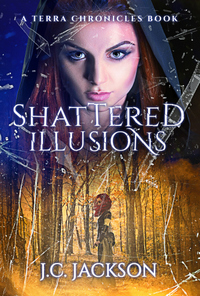
Shattered Illusions

Shattered Illusions

by J.C. Jackson
Series: Terra Chronicles, #2

Paperback, 252 pg.
Shadow Phoenix Publishing LLC, 2017

Read: January 31, 2019

Read the Official Synopsis here.
I love this world, this take on fantasy in a modern setting—I think I might keep reading these just to spend time in this world even if Jackson’s stories weren’t that great. Thankfully, I don’t have to make that call, because Jackson can tell a compelling story.

I don’t appreciate the way that many (most?) of the characters treat our protagonist, Katayl. They treat her with the kind of care usually reserved for glass on the verge of shattering, they only tell her as much of the truth as they want—all the while, wanting the benefit of her intelligence, abilities, and magic. It feels condescending and manipulative. And for that to be the way those closest to her to treat her? I can’t stomach it. There’s a decent contingent of characters that do treat her with respect, will tell her as much of the truth about things as they can, and allow her the agency anyone else would enjoy, and I trust those numbers will grow. I’m sure there’s a decent reason the others treat her like an unstable suitcase bomb, but it rankles me to see it.

The blossoming friendship/partnership between Katayl and Silver is great, and I’m really enjoying it. I found this look into her past quite intriguing. And the end of the book? There’s really a lot to unpack there, and I can’t wait to see what the fallout from it all.
3 Stars

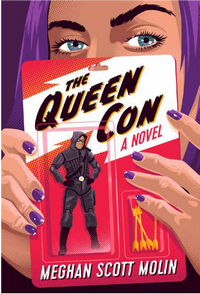
The Queen Con

The Queen Con

by Meghan Scott Molin
Series: The Golden Arrow Mysteries, #2

Kindle Edition, 336 pg.
47North, 2019

Read: July 11 – 12, 2019

Read the Official Synopsis here.
I was really looking forward to this follow-up to The Frame Up, and even listened to the audiobook to prep myself for the release. And while I really liked it, I did think it was a little bit of a let-down. It felt a little rushed, and not fully cooked.

There were some strange continuity problems (wondered about some continuity when listening to The Frame Up, too) that niggled the back of my mind throughout. MG’s narration felt too much like it was trying to rehash the previous book rather than allowing MG to move on a little bit. And Molin seemed to be hinting at one of the reveals of this book so hard that I thought it had to be a red herring, because she seemed more subtle than this.

Nevertheless, these books have so much charm, that I can’t help but smile while reading them. MG is one of my favorite protagonists of the last couple of years. Matteo is a great character, too and I can’t get enough of MG’s friends and/or colleagues (including the new ones). The story itself is a lot of fun, and that covers a multitude of problems.

I do think Volume 3 can—and likely will—win me back, and I did like this one, just not as much as I expected to.
3.5 Stars

A Plague of Giants

A Plague of Giants

by Kevin Hearne
Series: Seven Kennings, #1

Hardcover, 624 pg.
Del Rey Books, 2017

Read: October 19 – December 30, 2017

Read the Official Synopsis here.
There’s just so much about this book that I loved, and so little that I had issues with, I couldn’t piece together anything coherent. I think the idea of the kennings is brilliant (yes, common to other fantasy series, but Hearne’s approach sells it). Most of the point-of-view characters are so well-drawn and developed that I can’t find fault with any of them.

This has all the strengths of The Iron Druid Chronicles (and maybe a couple of the minor weaknesses), which is enough to get me solidly on board for the series, but there’s more to it than just that.

The best thing, the most inspired idea is the way the bard tells the story, how we get each different POV. It’s a brilliant stroke.

The whole book is great—the magic system, the characters, the stakes, the big mystery about the source of invading giants, and the very human responses to the invasion. A great start to a fantasy trilogy that’s surely going to be one of my favorite trilogies. I just wish I could be a bit more articulate about it.

It does move maddeningly slow. But it has to—you can’t establish this fantastic world at a fast pace. You can’t take the time for all the tiny character moments that are just pure gold if you’re driving towards big action moments. But when the pace does pick up occasionally, you get a hint at how dynamic parts of book 2 and most of book 3 are going to have to be.
5 Stars

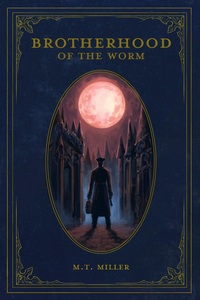
Brotherhood of the Worm by M. T. Miller: A little Sam & Dean, a little more Van Helsing, a lot of Monster Killing

Brotherhood of the Worm

Brotherhood of the Worm

by M. T. Miller
Series: The Culling, Book 1

Kindle Edition, 332 pg.
2019

Read: August 28-29, 2019

The door leading to the hallway and the rooms upstairs slammed open without warning, and in came the missing patron. He was tall, thin, and wide in the shoulders. He had been lodging upstairs for the last three days, and always wore the same grey coat and cocked hat. In his gloved left hand was a heavy-looking leather bag that he never let anyone else touch. Apparently, he even took it to the outhouse.

“Listen to me!” he bellowed after letting the bag down and shutting the door. “And listen well. Until the sun rises, no one may leave this inn!”

Having just emptied a goblet down his throat, Moritz gave the man a look of dull surprise. “What is this? A robbery?”

“I’m afraid not,” the strange patron said. “If it were, we’d all have a better chance of getting through it alive.”

The inn is in an 18th-Century(ish) Germany(ish) country. The strange patron is Conrad Shast, the last member of a noble household turned monster hunter. That’s about as friendly as he gets. He goes from town to town, wherever he’s called to go to eliminate any one of a multitude of monsters on behalf of a shadowy organization that, well, let me let Shast tell it:

“Few refer to it by name, but it is called the Culling, and it’s been protecting the world from monsters and witches for as long as history remembers. From time to time, others have tried their hands at monster hunting, but it never lasted. In the long run, only the Culling has survived the test of time.

“Officially, no noble is under obligation to aid a hunter. But the consequences of rejecting a plea for help far outweigh their potential cost.”

The Culling is a busy group, it seems, there are monsters everywhere in this world (even overrunning some continents), and, as the man said, they’re the only game in town. Generally, they send one or two people to any particular place, but if there’s a big enough problem, they will send out reinforcements. During the course of this novel, Shast ends up working with two other hunters. It’s clear that no two hunters are alike—there’s a variety of approaches, specialties, backgrounds, and personalities (I was a little afraid it’d be armies of Shasts, Miller might have been able to pull it off, but I like this approach better).

Shast is a classic loner, a wandering knight à la Jack Reacher or TV’s David Banner (but with less of a sense of humor). He comes to down, gets his prey and the money he (and The Culling) is owed for that service and moves on. No friends, no family, no entanglements. The particular hunt he’s on when he takes over the inn is a little trickier than most (and will end up being a lot trickier in the end)—he eliminates the monster, but not the source of the infestation. The source has moved on and has likely infested at least one more city by this point. So he has to hit the road to track down the source.

One woman in the inn was so changed by her exposure to the monster that she can detect the hidden creature (not that she wants to), so Shast brings her with him to expedite the hunt. The city guard also dispatches a knight old enough to be her father to act as chaperone and guard. Eventually, they cross paths with another hunter after the same target. She’s into poisons, explosions (Shast prefers a good knife) and making sure her enemies suffer. She joins this grim band as they continue to track down the source, eventually reaching the capital city and discovering things are worse than they thought.

It’s not a smooth journey, and there are distractions and obstacles (both monstrous and human) along the way. The group is not united in any way, and most aren’t that willing to be participating, but there’s not a lot of choice offered any of them. Putting this in an 18th-Century(ish) setting is a great idea—you get a little bit of technology (guns, primarily), but not enough that swords, horses, traveling on foot and slow modes of communication aren’t the flavor of the day. You get a shifting prominence of nobility, a rising middle class, and a church struggling to survive in a hostile world, also. It’s a tumultuous time, not helped at all by the creatures plaguing the citizenry. It’s also a great change from the post-apocalyptic wasteland of Miller’s previous series.

And I wish I had time to give good descriptions of these monsters—and you’d be better to read them for yourselves anyway. The first one we see is simply disgusting and disturbing (and, boy howdy, am I glad we don’t get a bunch of them). Some aren’t that bad (relatively speaking, anyway), but a lot of them could be nightmare fodder is Miller used them a little differently. None of them are easy targets for the Hunters, but it’s only in large numbers that they’re a giant threat. We don’t seem to get anything that you’ve seen before (at least nothing I’ve seen before), which is great. Nothing against trolls, orcs, vampires, wights, etc.—but I appreciate seeing something new.

A common thread, it hit me this weekend, to all the books I read—Crime Fiction, SF, Fantasy, Urban Fantasy, even General Fiction, Non-Fiction or Theology—is that the worst enemies, the greatest predators, the most dangerous threats to humans aren’t aliens, monsters, demons, or whatever external threat you can think of. It’s humanity, our neighbors, our leaders, those like us. And as horrible as the creatures that The Culling targets may be, there’s something hundreds of times worse. Miller using that reality, reflecting that in his fantasy, is my favorite part of this novel (the competition for that was stiff), it’d have been easy and understandable to make a parasite that can control its host—or some other creature—to be the ultimate evil that Shast and the rest contend with. But Miller took the better—and harder—road. Which speaks good things for this new series (and bodes ill for how things are going to go in future installments).

Speaking of future installments, I know he’s already getting things ready to release the sequel in a few months. I can see a lot of options for what that sequel will hold—Character A’s next hunt, or Character B’s hunt/attempt at redemption, Character C & D going forward (together or separately), or a completely new batch of characters in the same world. All of which are pretty appetizing—I’d prefer A or C and/or D to another group or B—but I can see any of those working. Miller’s earned my trust at this point, and I’ll take whatever eagerly.

This is the sixth work I’ve read from Miller (you can read about the four novels and one novella of The Nameless Chronicle here), and I love watching him grow and develop—he’s learned a lot from that last series, and is applying those lessons well. This is more assured and better executed than those—and I had few complaints about them! Jump on to this one at the beginning of what promises to be a great ride.

Disclaimer: I was given a copy of this novel by the author in exchange for my unbiased opinion.


4 Stars
LetsReadIndie Reading Challenge

Screamcatcher: Web World by Christy J. Breedlove: Get Caught Up in this YA Fantasy’s Web

Screamcatcher: Web WorldScreamcatcher: Web World

by Christy J. Breedlove
Series: Screamcatcher, #1


Kindle Edition, 218 pg.
Melange Books – Fire and Ice YA, 2019

Read: July 31, 2019

I don’t have a lot to say about this one, my views are pretty straightforward and most of the analysis I’d give would be spoiler-heavy, but I do want to try to say enough to entice someone (preferably a few someones) to read this satisfying YA Fantasy.

I really prefer to come up with my own synopses, but I’ve failed to think of a succinct way to give one for this book (well, I had one that was too succinct and was really unsatisfactory), so I’m just going to appropriate the official blurb:

           When seventeen-year-old Jory Pike cannot shake the hellish nightmares of her parent’s deaths, she turns to an old family heirloom, a dream catcher. Even though she’s half blood Chippewa, Jory thinks old Indian lore is so yesterday, but she’s willing to give it a try. However, the dream catcher has had its fill of nightmares from an ancient and violent past. After a sleepover party, and during one of Jory’s most horrific dream episodes, the dream catcher implodes, sucking Jory and her three friends into its own world of trapped nightmares. They’re in an alternate universe-locked inside of an insane web world. How can they find the center of the web, where all good things are allowed to pass?

I don’t pretend to have an extensive, much less exhaustive, familiarity with uses of Native American symbology, imagery, spirituality, or anything. But I’ve come across my share over the years, and I don’t remember anyone using the dreamcatcher in any significant way before. And I don’t know why — this is an awesome idea.

The first few pages (maybe the first chapter or so) were a little rough, and my expectations lowered a little bit. But once Breedlove had established the world and things started happening, the book became a lot more enjoyable and I got sucked right into it. Breedlove does a great job of balancing the fantastic elements of this dream world (I guess nightmare world would be closer to the truth) and reality to make it easy to understand, but still following a nightmare logic ad full of the stuff that dreams are made of (just without the statuary from Malta).

There was a love story that was established early on, and I really had no interest in it, but it eventually won me over and I started pulling for it. Making it on two fronts that Breedlove got me to invest in both the story and the characters when I wasn’t in any frame of mind to do so. I can’t tell you what ineffable quality there is to her writing that accomplishes that, but call it what you will, I like it when someone can do that.

There was a little suspense concerning the fate of some of Jory’s friends/companions, but by and large, you get the feeling early on just how things will turn out for almost all involved, the pleasure (for the reader, not the characters) is in the journey. There’s some self-discovery and personal growth to go with the monster fighting (fighting and/or avoiding).

It is written for a YA audience and certainly will appeal to that sensibility, but it can easily be entertaining for those of us with gray in our beards or on our heads (assuming there’s anything to gray). I’d like a little more depth to the primary characters, but that wasn’t in the cards, and it’s not like they’re not three-dimensional, I just think those dimensions could be a little deeper.

I did expect a lot more Native American imagery and myth (something akin to Riordan maybe, at least like Craig Johnson). I don’t think what we got was incompatible with it by any means, but it certainly wasn’t steeped in it. I’m not complaining, I don’t think the story needed it, but it might have made things a bit richer.

I don’t see how this leads to a sequel, in fact, I’d have thought it precluded one. But the end of the book tells me it’ll be available this year. Color me curious.

Imaginative and compelling with an unusual focus/motivating hook. For a fast, fun YA fantasy, Screamcatcher: Web World will satisfy.

Disclaimer: I received a copy of this novel from the author in exchange for this post, but I read it because I wanted to and the opinions expressed are my own and not influenced by the receipt of the novel.

—–

3.5 Stars

LetsReadIndie Reading Challenge

Magic for Liars by Sarah Gailey: A PI, a Horrific Death, and a Magical High School combine for a solid novel

Magic for LiarsMagic for Liars

by Sarah Gailey


Hardcover, 333 pg.
Tom Doherty Associates, 2019

Read: June 24 – 25, 2019

           But this? A real murder case? This was the kind of thing that private detectives didn’t do anymore. It was what had made me get my PI license in the first place―the possibility that I might get to do something big and real, something nobody else could do. I didn’t know the first thing about solving a murder, but this was my chance to find out if I could really do it. If I could be a real detective, instead of a halfway-there failure. If this part of my life could be different from all the other parts, all the parts where I was only ever almost enough.

I won’t try to pinpoint the first lie I told myself over the course of this case. That’s not a useful thread to pull on. The point is, I really thought I was going to do things right this time. I wasn’t going to fuck it up and lose everything. That’s what I told myself as I stared at the old picture of me and Tabitha.

This time was going to be different. This time was going to be better. This time, I was going to be enough.

I can’t describe the book more succicently than the blurb does, so let’s use it and save us all some time (if you ignore the 4 drafts of it that I’ve abandoned):

When a gruesome murder is discovered at The Osthorne Academy of Young Mages, where her estranged twin sister teaches Theoretical Magic, reluctant detective Ivy Gamble is pulled into the world of untold power and dangerous secrets. She will have to find a murderer and reclaim her sister―without losing herself.

Ivy is a PI (much more on that in a moment), a Muggle (if you will allow me to import a term), who is totally not jealous of her twin sister, Tabitha, a gifted magic user. Except that she’s absolutely jealous and angry with her sister for somethings she did and didn’t do back in high school. But she knows about the world of magic―at least that it exists―which makes her the best candidate to come in and investigate the murder that has been officially described as an accident.

There’s a Hogwarts joke on page one, which was a relief for me―it was going to be that kind of book. Yeah, there’s magic and fantasy elements, but there’s also SF/F fiction and an awareness of it. So there’s a Potter-esque element to this, but there’s a very The Magicians feel, too. The magic in it is at once like most Fantasy/Urban Fantasy magic, but Gailey puts a distinctive stamp on it―it’s as fantastic as you want it to be, but it’s also pretty dull (except in a couple of scenes). Dull’s not the right word, but most of the time you see magic, it’s not as exciting as it was the first few times you saw it in Hogwarts (or Diagon Alley) or in Brakebills. Which is because the focus isn’t on the magic―the focus is on the relationship between Ivy and Tabitha, Ivy coming to terms with her Muggle-ness/place in the world, and events and relationships with the students. Now, when the story calls for magic to take center stage, it does so in a wonderful way―but typically, the magic takes a back seat to other things.

Ironically enough, given the setting, Ivy Gamble might be the most realistic PI that I’ve read about lately. The types of cases she works, her financial situation, her awareness of her liabilities (as quoted above, she knows the case she’s taken on is beyond her grasp―but that doesn’t mean she won’t try), the way she thinks about life. She screams authentic―at least compared to most fictional counterparts. She’s good at what she does, but she’s no Spenser, Elvis Cole or Lydia Chin―she’s close to Kinsey Millhone, but not quite. I love listening to her talk about being a private detective:

           Here’s the truth about most detective work: it’s boring, grueling, and monotonous. It involves a lot of being in the right place at the wrong time. But if you spend enough hours being in the right place, eventually, it’ll be the right time. You have to be able to recognize it.
           The other active cases were small potatoes-two disability claims, three cheating spouses, one spouse who wasn’t cheating after all but whose husband couldn’t believe that she had really taken up pottery. She was pretty good at it too.
           I’ve always had a good memory for names. Someone once told me at a conference that’s all it really takes to be a private detective: a good memory for names and faces, an eyeball for details, and. a halfway decent invoicing system.

And while Ivy may not be the best detective in the world, she’s good―and she knows how to put on enough of a show that she can convince everyone else that she’s good enough for the task at hand. While she’s lying to herself about a lot, she’s lying to everyone around her, too. She’s not the only one who’s gifted at self-delusion/self-deception. The word “Liars” is in the title for a reason, and the attentive reader (even the half-awake reader) will see why.

The book’s about a lot more than self-deception, there’s a lot about the role of/importance of family to one’s identity―and how a lack of communication coupled with poor assumptions can warp that.

Gailey kept the plot moving quickly―even as the emotional and familial aspects of the story took their time to work things out. Which is a pretty neat trick, a lot of authors would’ve let things slow down so Ivy and Tabitha could rebuild their relationship, so Ivy could do the soul-searching she needed to, to get deeper into some of the high school relationships, etc. And Gailey hits all those beats (and more), but she does it while keeping the pace going, so you’re turning the pages as fast as you can even while you want to explore the quieter aspects of the story.

Magic for Liars is well-written, well-paced, with a great solution―both to the main plot and to the other storylines, in a wonderful world told in a creative way. But I wanted a little more from it. I can’t put my finger on just where it came up a little short for me, but it did. But make no mistake―I recommend people go read this, because I think most readers will like it more than I did. And I did like the book, I just wanted to like it more. I can’t imagine that Gailey will return to this world (or to these characters, anyway)―but if I’m wrong, I’ll definitely read a sequel. Either way, I’ll definitely be on the lookout for whatever Gailey’s got coming next

—–

3.5 Stars

2019 Library Love Challenge2019 Cloak & Dagger Challenge

Opening Lines – Magic for Liars by Sarah Gailey

Head & Shoulders used to tell us that, “You never get a second chance to make a first impression.” That’s true for wearing dark shirts, and it’s especially true for books. Sometimes the characters will hook the reader, sometimes the premise, sometimes it’s just knowing the author — but nothing beats a great opening for getting a reader to commit. This is one of the better openings* I’ve read recently. Would it make you commit? How can you not?

It might take a little while to get there, but I’ll tell you everything, and I’ll tell you the truth. As best I can. I used to lie, but when I tell you the story, you’ll understand why I had to lie. You’ll understand that I didn’t have a choice.

I just wanted to do my job.

from Magic for Liars by Sarah Gailey

* Technically not the opening, there’s a Prologue (or something, I don’t have the book on me) — it’s the start of Chapter 1. But I count that as the opening.

A Few (more) Quick Questions With…Devri Walls

Ages ago (it seems), Devri Walls stopped by to talk about her stand-alone The Wizard’s Heir, and gave us a little taste of her upcoming series, Venators (including a cover that I don’t think I ever saw again). Since then, I’ve actually spoken to her at book store events and a comic convention (sat in on a couple of her panels, too). At the book launch for her most recent book, Venators: Promises Forged, (see my earlier post) she did a Q&A that got a couple of questions percolating in the back of my mind. Before I knew it, I had enough for one of these posts and Devri was able to find a time to answer them.

Before I get to the Q&A, a word about that book launch — Devri seems to have a good number of solid fans, it’s encouraging to see — from a wide age-range, too. She had more people in the front row of her reading than were in the audience of the last reading I’d been to at Rediscovered Books (and that author had one of the major publishing houses behind him) — and she had some Facebook live viewers, too. It’s good to see an indie author getting that kind of support.

As is usual when I get a second shot with someone, we got a little more into details of the particular book/series in question—but I don’t think you have to be a Venators-reader to appreciate these answers. Check them out and then go grab her books.

You’ve talked about how everyone’s favorite character is Beltran (I demur), given his appeal/popularity—how hard is it to keep him from taking over the series? How are you going about that?
This book is different in that there really are a lot of main players. This is going to allow Beltran to have a large role, and you’re going to see him really stepping into that in book three. But yes, he cannot take over. I think the key when working with strong supporting characters is that although they can have a heavy-handed part in the story, at the end of the day, they can’t be the hero. They can assist the hero, they can motivate the hero, they can set up a hero, but they can’t actually “pull the trigger”, so to speak. Given who Beltran is this will be tricky, but it has to be done in order for the climax to feel satisfactory to the readers.
Let’s talk about names for a minute: there’s a lot of creativity and strangeness in names (up to Rune from Earth), but then you give us Tate. An oddly Earthy name. Is that just to mess with people? I’ve always wondered, but never asked anyone—how do you come up with character names? Is the process different per series/world/book?
This made me laugh! No, I was not trying to just mess with you. Although I will admit to giving the giant race ridiculously human names because it amused me. However I promise to keep it consistent. With Tate on the other hand, he is part Venator, which means he’s part human. It made sense to me that given the backstory of this world and its connection to earth that there would be human names floating around both in the human villages as well as the Venators.

When it comes to choosing names there is there rare occasion that I will just completely make a name up, but for the most part I lean heavily on baby name websites. People are ever disappointed when I give this answer because they think that we authors pull all of these things out of our heads. The thing I looove about the baby name websites is that I can sort the results. For example, I can choose to look at old Scottish names specifically or only Norse names. This allows me to keep a consistent feel through an entire story, or in a book like Venators, a consistent feel within different species.

Normally before I even start a book I will visit baby name websites. Trying to choose names is both a time suck and a momentum killer for me. If I have a list of names both male and female that I have decided I like ready to go, then I have a very short list to reference when I add a new character.

Talk to me a little more about Arwin the wizard. First, how am I not supposed to think about Liv Tyler/the Lady of Rivendell? Secondly, the brilliant character who probably knows more about what’s going on than anyone, but plays the doddering, clumsy fool is a mainstay. How hard is it to pull that character off convincingly? And why have you gone that route with him—is it just because that’s more interesting than the super-powerful, all-wise type?
I think anytime you’re working with a genre like fantasy there’s always going to be things that remind you of other stories. It’s, dare I say, almost unavoidable. But instead of fighting this, I did lean into the tropes on purpose. I wanted to play on the idea that all the stories and legends we tell today originated in Eon. In order to do that some of the threads needed to feel very familiar, while others I purposely twisted. Just like in the game telephone the end result will have some aspects of truth and some other things that have drifted far from the truth. That’s the basis that I was working from when deciding lore and chapter traits to keep or leave.

As far as Arwin’s character is concerned, I did choose to portray him as doddering very specifically. I needed to balance the story. When you look at the council you have a werewolf, vampire, incubus, succubus, elf, fae and wizard. From that list, three characters are very intense and serious. One of the characters is cruel and although she think she has a sense of humor, it’s dark and malevolent. Two of the characters have the ability to break tension in a scene but the sexual themes that run through that tension break is only sustainable for so long. And although all of these characters are much, much deeper than their facades, it’s the facades that they must present at the council house in order to keep themselves and their own people safe. Which means that by default every council scene will become unavoidably stifling. I needed someone to diffuse the situation and add a lightness to the writing. Thus, Arwin’s portrayal was born. Now, we are too early in the edits so I can’t guarantee that this scene will stay, but in book three we get a delightful taste of Arwin dropping that part of himself and showing the reader exactly what he is capable in a Council meeting by breaking up a argument between Dimitri and Silen. I think both you and the readers will be very happy with the result.

Now that you’ve told me about it, the scene has to stay. At the very least it needs to be included as a cut scene in an appendix. Or there will be rioting in the streets! (assuming I can figure out how to instigate one)

Can you tell me about the timeline for this series? A lot has happened in less than 2 weeks in Eon (assuming my memory/math is right), your poor characters have barely been able to catch their breath—are you planning on some kind of time jump? Is it going to keep going at this pace?

I’m a big believer in whatever timeline is natural and working for the story is the timeline that I’m going to use. Most of my work has always been a continual line without a lot of time jumping. For the first few books in the series I expect that will continue with small time jumps added to account for travel days. When we get past book five, I suspect we may need a time jump and some summarization of their day to day life when their world is not completely falling apart. But yes, overall I take it as it comes and I like a very logical and linear progression.
At the book launch, you talked a lot about what you’ve got worked out for the future in terms of plot and character—but I want to look at the world. How much of Eon have you mapped out (mentally or literally), do you know this world’s geography or is it more of a case of “I need an area like X, I’ll put it overrrrrr…here!”
Oh geography, I hate geography. Maps really do hurt my head. By happy accident I made a new writer friend who looooves making maps. So much so that she actually sat down with me and offered to map out the first general idea of Eon. It was very basic. However, as I’ve been writing book three and thinking through the plot points for the next couple of books, I realized that in order to set things up properly the geography absolutely had to be handled. Almost all of the council members areas have now been mapped out with the exception of Tashara and Shax for reasons I will explain in another book. But yes, there is actually a solid map on my wall now and despite the process causing me an aneurysm, I do really like the end result. Having something solid to refer to has been great. I definitely see the advantage to mapping things out at the start of the story and will probably move more toward doing that earlier in future projects.
I’m glad you were able to find some time in your hectic schedule for these answers and hope Promises Forged is a big success (and that you survive the editing process for #3!)

Page 34 of 54

Powered by WordPress & Theme by Anders Norén