Tag: Fantasy Page 36 of 54

A Few Quick Questions With…Sarah Chorn

So I just posted my thoughts about Seraphina’s Lament and now we get to hear from the author herself, Sarah Chorn. By the way, if you haven’t checked out her blog, Bookworm Blues, you should fix that. But before you do, read this. Chorn knocks it out of the park here.

I don’t know how to ask about Seraphina’s Lament short of handing you a dozen and a half spoiler-ific questions. And, boy howdy, do I have questions. Still, I hope you don’t mind if I don’t touch on the book too much – would you care to start things off with an elevator pitch?
I pretty much fail at elevator pitches. Here goes nothing. Seraphina’s Lament tells the story of a group of people trying to survive in spite of the fact that the world is dying, magic is changing, there’s widespread famine, and the government sucks. They are all tragically flawed and completely unready to face what is happening to them. Basically, I take a handful of the most unprepared, wrong-for-the-job people I could possibly dream up, and just push them and push them and push them until they break and then… things get interesting.
For what it’s worth, I think that’s a pretty good pitch.

While you talk on your site about a long-standing desire to be a writer, this is your first novel after years of reviewing and editing. Was it just a matter of coming up with the “right” story, or was there something that made you decide it was time for you to give it a shot? How do you think years of reviewing shaped your novel?

I think it’s a combination of a lot of things. First, I’ve written novels before, but they are all terrible. I mean, T-E-R-R-I-B-L-E. This isn’t really my first book, it’s just the first one I think is ready to see the light of day. The rest will live on eternally in some dark corner of my hard drive.

It was also a matter of coming up with the right story. All the elements were there, but it took me a really, really long time to figure out how they all worked together, and build the world (this took an absolutely insane amount of research) and characters. Once I had that all sorted, the book really just burst out of me.

I think editing and reviewing has been essential to my writing process. I’ve been reviewing for about ten years now, and editing for almost three. Editing and reviewing has taught me how stories are told, how sentences flow, how to use words, add details, build a world, keep a story moving and so much more. People talk a lot about how to write a novel, and I don’t think there is any one answer. We all do it differently. I can say, my book never would have been written, at least not the way it was, if it wasn’t for all that reading and picking-apart of books I’ve done over so many years. Knowing how words work, and how stories are shaped, was crucial to my writing.

I don’t want to ask “where do you get your ideas?” But combining a magic-filled fantasy world and a Stalin-esque character? How do you get to that? It’s brilliant, by the way, I can’t shut up about it.
Oh, I do so love my tortured Stalin-esque character. I had great fun writing him.

I do a weird thing when I can feel a story brewing in the back of my brain. I head to the library and check out just about every historical nonfiction book on the shelves that I haven’t read yet. About two years ago, this happened to be a bunch of books on Russia, the Romanov dynasty, Stalin, Lenin, and the Holodomor. Well, something in this mélange of books completely unlocked whatever was stewing in the back of my brain. Suddenly, these elements to this story I wanted to tell but couldn’t figure out just sorted themselves out.

Specifically, the Holodomor. It’s a tragic, horrible genocide that took place from 1932-1933 in Ukraine that I knew literally nothing about until I started reading books about it. In the process of reading these books, I came to the idea that sometimes events are so big, so powerful, so dramatic that they become characters in and of themselves, and so two characters in the book were born, both of whom represent the Holodomor. One, the physical aspect of it – the starvation and wasting away, and the other represented the more soulful aspect—a sort of loss of spirit and heart due to tragedy.

Eyad, my Stalin-esque dude wasn’t actually in my first draft. In fact, my first draft of this book was really dialed down on the communism and all these elements of the book. He never had a perspective. I think, if I remember right, I had some lord in a castle who never really had a face or even a name. Then, when I was getting ready to do my rewrite, I saw a tweet that said something along the lines of, why are all the fantasy worlds set in these medieval countries with kings? Where’s the communism? Where’s the industrialization? I read that tweet and I realized that communism was the entire aspect that was missing from this story, and I really, really needed to have someone driving the government. And you know, there aren’t many fantasy books featuring communist government systems so why not give it a go?

Insert my Stalin. Now, I humanized my dude a bit, and I took some liberties, but I really wanted to bring him to life, to show his perspective. Villains very rarely realize they are villains. Stalin was a horrible person, but he thought he was doing the right thing, and man, trying to bring that to life in Eyad was hard. There’s a scene in the book where he’s talking about grain requisition quotas and it just about killed me to write that because I’d read about it. Stalin had to know what he was doing, but he did it anyway, and in the process, he damned millions and millions of people who didn’t deserve it.

It took a ton of research to write all of this. I’ve got a series of books on Stalin on my bookshelf that clock in at a grand total of 6,000 pages, and that’s only a fraction of what I’ve read on him. Probably equally as much about communism in Russia. There aren’t as many books about the Holodomor, because the research is fairly new and it is, unfortunately, not an acknowledged tragedy to most of the world, but I read every bit I could get my hands on, and talked to some people who either survived it, or had relatives that did.

The magic itself came about because I’m personally fascinated by the idea of elemental magic, but not the kind where you point and fire shoots out of your finger. Man has been controlling fire for as long as we’ve existed. I’m fascinated in the idea of, what happens when fire controls man?

When it came to writing Seraphina’s Lament what was the biggest surprise about the writing itself? Either, “I can’t believe X is so easy!” or “If I had known Y was going to be so hard, I’d have skipped this and watched more TV!”
I was really amazed by how much research I had to do into the Holodomor, communism, and Stalin in order to write this book. I use barely a fraction of what I learned, but once I got started writing, I realized that in order to put so many things in context, I had to understand what happened before. I had to know about the things that laid the groundwork for this particular situation. For example, you can’t understand Stalin without understanding Lenin (and life in Georgia). You can’t understand Lenin until you understand elements of WWI, and Tsar Nicholas. You can’t understand Nicholas until you understand the two Tsars before him (at least). And then I had to understand how all of this impacted the average person living in this area of the world, so I ended up falling down all these really wild rabbit holes about village life in Russia, and turn-of-the-century Russian culture.

I had to do this with Ukraine, as well. In order to understand the Holodomor, you’ve got to understand the politics in Ukraine, into the relationship between the Ukrainian people, and the Russian people (which goes back well over a thousand years and is really, really interesting). I had to learn about how Ukraine is the breadbasket of that region (and the gateway to the West), with fertile soil and lush crops, and how the insertion of Stalin’s obsession with modernization fundamentally impacted life, cultures, and traditions. I had to read about land owners, and village life, and so much more.

All of these things mixed together to give me a ton of context that I could use to hopefully give events in my world a bit more grounded, well-rounded look to them.

What’s the one (or two) book/movie/show in the last 5 years that made you say, “I wish I’d written that.”?
I have a toddler and a seven-year-old. The past five years of my life has been filled mostly with Paw Patrol and Peppa Pig.

This is going to be a boring answer, but there are a lot of authors I admire and learn from, but I’m glad they’ve written the books they wrote because those books just need to exist, and I probably couldn’t have done it half as well as they did.

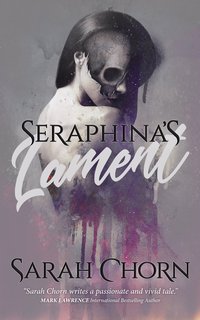
Lastly, I (mostly) jokingly told your publicist that I’d read the book because it was probably the best way to get that cover image out of my mind. That’s one of the most striking covers I can remember – did you have any input on that, or did your designer just hit you with it? I don’t know how to ask something coherent about it, so let me just say – what would you like to say about the cover
Pen Astridge is the bomb. Seriously. I sent her the first few chapters of my book (which I ended up rewriting in edits). She asked for some inspiration, if I had any, and I basically drew a blank. I told her something along the lines of, “basically everyone dies and it’s really dark so just death this sucker up.” I think I attached a picture of a dead tree and some skulls, too. I mean, I impressively suck at that sort of thing. Somehow, Pen took all that total crap and then handed me this book cover.

I say it in my acknowledgments, but I’ll say it here, too. Everyone should hire her. Pen is the absolute best in the business, and I am beyond lucky to have her create my cover. It was better anything I could ever imagine and exactly what the book needed.

Thanks for your time, I hope you nothing but success with Seraphina’s Lament and I hope the work on volume 2 is going well.

Seraphina’s Lament by Sarah Chorn: Beautiful, moving, and brutal. You haven’t read anything like this fantasy.

I just reread this, and it doesn’t cover everything I wanted to, but it’s approaching that length where it becomes untenable — and I really don’t have time to add the 3-5 paragraphs that I want to (and who knows what else I’d think of when I open the floodgates). It’s a good start, anyway…

Seraphina's LamentSeraphina’s Lament

by Sarah Chorn
Series: The Bloodlands, #1

eARC, 342 pg.
2019

Read: February 12 – 15, 2018


I just don’t know that I can do an adequate job describing this book — actually, I do know that I can’t do an adequate job describing this book. But I can sort of explain things enough that you might get an idea if this book is for you. Maybe.

This takes place in some sort of Fantasy World, one rich in magic — elemental magic. There are those with Fire Magic, Earth Magic, Animal magic — and so on It’s hard to tell just ow the various people use their magic — but you get an idea that the world was full of a lot of magic that just isn’t working any more. The planet seems to be dying and one of the first signs was that fewer people were showing signs of magic and those who had it couldn’t use it has they could before. That right there is a great hook for a fantasy story — but for this book, it feels like it might be the seventh or eighth most important thing to know.

There’s a little bit of chicken and egg to this situation — did the economic and political upheaval happen because of the dying magic, or is they dying magic a response to the upheaval? I don’t think the book answers the question and I think I could argue for both positions (I’ve only read the book once, and I might be forgetting the one or two lines that definitively answer this question). The dynasty that had ruled The Sunset Lands was toppled by revolutionary forces — collectivist rebels seeking to remake not just the government, but society as a whole. After the Revolution, the Premier ends up pushing the citizens into collective farms and mines to provide for the nation as a whole. This is met with resistance, counter-revolutionary movements and problems. As the world dies, as the magic that aided people in both industries fades, the situation gets worse and people are pushed to desperate actions — and things that are even beyond desperation — just to survive.

In the midst of all this we focus on a few people — one farmer who lost everything, his home, his family, his hope. Seraphina, the title character, a personal prisoner of the premier, a slave that he spends years tormenting and crippling. Her twin brother, who escaped from the premier because of Seraphina’s sacrifice. We also meet others who offer aid and succor to as many as they can — food, shelter, assistance fleeing from the government’s forces — they’re dubbed counter-revolutionaries, and while they might aspire to that, they basically just help people live a little longer. We also, of course, spend a lot of time with the Premier — who can do nothing to prevent the collapse of his world and his society, but puts all his efforts into it. Lastly, we see the sleeping gods of this world awaken to watch the approaching end. I don’t feel comfortable enough talking about the characters in any more detail than that — they will grab your heart, break your heart, inspire and frighten you.

I’ve seen a couple of reviews that use the phrase “grimdark” to describe this book. Maybe I’m being restrictive in the way I use the term, but I don’t see the book in that model. It’s a different kind of dark, if you ask me (there’s a torturer that I can imagine Abercrombie’s Glotka accusing of going too far). This novel feels like it’s a few steps beyond dystopia, when the status quo of unjust society, environmental woes, extreme poverty are looked back on by people in a sense of “remember when we still had a chance to turn things around?” One character prepares for death and thinks back on his full and happy life. My notes focused on that “happy” with an all caps, “HOW?” Yet somehow, and I wish I could give a reason for this, somehow the book never becomes burdensome to read, you’re never thinking, “I’ve got to trudge through how many pages before we can get to some resolution?” You don’t want to see more tragedy befall the characters you know, you don’t want to face another interlude where you see the horrors that other characters face, where society breaks down further, where taboos disappear like a mist. But you can’t stop reading this book, you can’t help but read on.

This comes down to the way that Chorn tells the story, the language she uses to talk about the heartbreak, the horror, the tragedy, the atrocities, everything. So often, she’d be talking about life being pain, and death being the release in ways that elevated the idea, that seemed new and revolutionary, yet so true, so familiar that you intuitively related to the sentiment. It’s not right of me to talk about this without examples — but I have an ARC, so I can’t quote from it (and even if I had a published version, I don’t know that I could’ve picked just one or two examples — I’d have had a hard time limiting myself to a dozen favorites). There’s a lyrical, poetic quality to the language. There’s a humanity that infuses every nook and cranny of this novel in a way that I can’t imagine not appealing to readers.

Before I forget, I want to talk about this cover a little bit. Is that not one of the most disturbing images you’ve seen lately? When Chorn’s publicist approached me about reading this book, I (mostly) jokingly said something about having to read this book just to get the image out of my brain — like you have to listen to an earworm all the way through to get it dislodged from your brain. It’s a perfect cover for this book.

This isn’t a perfect book — there were times I wondered if she’d gone to far with the depravity expressed by one character or another. The repeated uses of “closure” as in a character getting or needing “closure” or “moving on,” seemed out of place for this world — the same for “survivor’s guilt.” And honestly I have no problem with the conventional wisdom of a world like this having a concepts similar to those, but talking about it in the psychological language of late 20th/early 21st century seems odd to me. The Yeats allusion really struck me as unsuitable. (any of these might have been addressed in the final edits and might not appear in the final copy). None of these ruined a scene or a moment for me, but they did all cause me to take a beat and ask, “really?” It’s nothing significant, but they all felt inappropriate in this setting.

Time and time again while reading this book, I was struck by how unique, how unusual this experience was — I hadn’t felt like this since I read Darrell Drake’s A Star-Reckoner’s Lot a couple of years ago. Which doesn’t say much to most readers, because it’s a criminally unknown book. So I stretched my memory some more and came up with N. K. Jemisin’s The Hundred Thousand Kingdoms as having a similar impact on the way I thought about the story, and how unusual it feels compared to other fantasies I’ve read. The experience of reading this isn’t something I’ll forget any time soon.

Now, this is the first book of a trilogy, and I’m left totally unprepared for the second book. The middle book of a trilogy is where things are supposed to take a turn for the worse, leaving the reader wondering where the story is going to be able to take a turn for the better. I don’t see how things can get worse from this point, how there’s more chaos, more destruction, more peril possible. Which means that Chorn’s going to have to cast off traditional story structure, or pull a rabbit out of her hat (well, probably a few nests’ worth). Maybe both. I’m eager to see how she accomplishes book two.

But to focus on this book — this is a special fantasy. Beautiful, moving, and brutal. Read it.

Disclaimer: I received an ARC of this novel from the author, it didn’t impact my opinion beyond giving me something to have an opinion about..

—–

4 1/2 Stars
LetsReadIndie Reading Challenge

The Assassination of Brangwain Spurge by M.T. Anderson and Eugene Yelchin: A wildly imaginative and creative MG Fantasy

The Assassination of Brangwain SpurgeThe Assassination of Brangwain Spurge

by M.T. Anderson and Eugene Yelchin


Hardcover, 523 pg.
Candlewick Press, 2018
Read: January 24 – 25, 2019

Let me start with a hat-tip to Paul at Paul’s Picks for putting this on my radar. Thanks, Paul.

For a MG book, I’m surprisingly intimidated by the prospect of trying to give a synopsis. That’s probably a clue about the book. Brangwain Spurge is an elfin historian of moderate renown — when (as far as he knows) an ancient goblin relic is found in his land, he’s dispatched to present it to the goblin’s king. No elf has survived being in — much lest returning from — goblin territories in more than a century, but the conventional wisdom is that a historian should be safe — even if he is also spying.

The goblins and elves have spent centuries fighting each other, and are in a rare season without warfare — and no one expects it to last for long. Each side distrusts the other in ways that make relations between the USA and USSR in the 1960’s seem warm and cordial. So this mission of Brangwain’s is an unexpected and welcome overture of peace. Or so many people think.

Brangwain’s host is a goblin names Werfel — who’s also a historian. Werfel is a very odd, but seemingly pleasant, person living in the midst of pretty odd, and apparently pleasant, people. Every goblin he meets goes out of their way to welcome Brangwain and try to make him feel comfortable, while celebrating elfin culture. Brangwain’s a nervous guy, who has spent most of his life (going back to childhood) being insulted, bullied and overlooked — he doesn’t really see the efforts of the goblins for what it is. Besides, he’s too busy trying not to get caught while spying on his hosts.

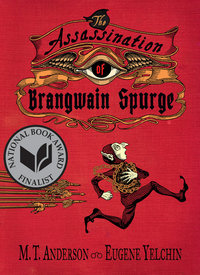
Now, how does this elf — who most people expect is on a suicide mission — get his information back to the elves? I’m glad you asked — this is an ingenious move by Anderson and Yelchin — while alone and resting, Brangwain uses elfin magic and imagines what he’s seen which is transmitted to a device in the office of his king’s military intelligence, that takes these transmissions and “prints” them out. These would be the illustrations that make up a significant portion of this book.

Ultimately, things go awry and Brangwain and Werfel are on the run together, trying to survive and hopefully keep the peaceful overtures alive. A friendship will rise between the two as they depend on each other and realize how much they have in common.

There’s some great commentary on the power of perspective when it comes to history. Werfel and Brangwain differ greatly in their understandings of the same event/person, wholly dependent on their backgrounds. It’s all about who writes the history — even if it’s an obscure scholar — when it comes to establishing “fact.”

A little bit more about the art. First, it’s just great. This isn’t a book directed at the picture book crowd, but the art might as well be for people who can’t read the text — it’s as much of the story telling as the text. Yelchin actually saves them a couple hundred pages telling the more dramatic portions of the story in his pictures. Interestingly enough, the events described in the narration and the events depicted in the art/Brangwain’s reports differ significantly, and part of the fun of the book is comparing them. Yelchin’s art reminds me of Jules Feiffer’s from The Phantom Tollbooth, which is possibly the biggest selling point for me. Well, except the picture of a spider-creature that makes Shelob and Aragog look tame.

It’s a fun story, a little wry, and it will appeal to grade schoolers who have an off-kilter sense of humor. I really enjoyed reading it and recommend it for middle graders and their parents/older siblings alike.

—–

3 Stars
2019 Library Love Challenge

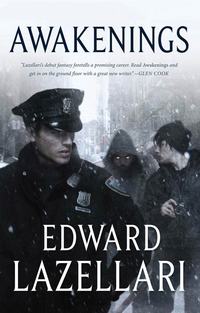
Awakenings by Edward Lazellari: A Solid Beginning to a Portal Fantasy Series with a Twist

AwakeningsAwakenings

by Edward Lazellari
Series: Guardians of Aandor, Volume One

Hardcover, 348 pg.
Tor Books, 2011

Read: January 12 – 15, 2019


When I heard Lazellari talk about the setup to this novel/series on The Once and Future Podcast, I knew I had to give this a shot. I just love the premise — to secure the future of a war-torn fantasy world, a group of loyal subjects take a royal infant into our world via a great magic working. Once here, something goes horribly wrong and they forget who they are and split up.

Thirteen years later, more people come into our world from theirs — hunting for the now young man. Not as much goes wrong for them — they retain their identities, if not all their magic (this just isn’t the right kind of world in the multiverse for magic to work easily). Once they’ve somewhat acclimatized to Earth (aided by a spell or two), they begin hunting for the protectors and the child, er, teen.

Finally, one more traveler came to Earth — a student mage (almost a full wizard, but not quite), Lelani comes, realizes what’s happened and sets out to protect those being hunted and to restore their memories. Early on, she comes across Seth, who studied with her under the same master. On Earth, Seth’s a deadbeat, drug-using photographer — mostly of desperate young women willing to pose for just about any kind of picture for a few dollars (yup, mostly those kind of pictures). Honestly, you have to work pretty hard to not want to see him eaten by something out of the Monster Manual for D&D.

You really can’t say that Lelani convinces Seth of anything, but he accompanies her as they come to retried the group’s leader. He’d been part of one of the ruling families, and was a star among the Guard. Here, he’s Cal MacDonnell, a police officer — not just a police officer, but in addition to his career, he has a wife and daughter — a whole family, one he doesn’t want to abandon for the sake of a fairy tale (even if he’s pretty sure that Lelani’s telling the truth). I think it’s this aspect of Cal’s story that grabbed me the most — he knows his duty, what’s expected of him, but he can’t just give up his life here to take up that duty. While Lelani tries to help them remember who they are, Seth and Cal set out to find the teen and their former companions.

And what of the child? He’s not officially identified, but the novel spends a lot of time talking about a young man living in a small town in New York. He’s bullied at school, his adoptive mother has married a drunk who abuses him, yet Daniel spends a lot of time defending others — friends and his sister.

The villains of this piece are more reminiscent of the more unsavory characters of Gaiman’s Neverwhere than anything that Weis, Hickman, Eddings, Tolkein, etc. created. But that doesn’t mean you can’t see them roaming around some semi-medieval land, terrorizing the populace.

This book comes across as an Urban Fantasy novel, but it’s not really one — it’s really an Epic Fantasy that takes place in New York. The feel is different than Urban Fantasy (but man, it sounds like I’m splitting hairs — but I bet it won’t when you read it). It’s a portal fantasy, with a twist. A band of heroes in a noble cause, trying to stave off chaos — not only for their world, but ours as well (now that the bad guys know where it is…a whole universe unprotected from magic and monsters).

The ending is clearly designed to propel you to the sequel (and it worked!), with Daniel in peril; Cal, Seth and Lelani poised to find him and the rest of the companions, and their foes preparing to eliminate them all. We’ve learned a lot about their world, but there’s a whole lot more to learn — ditto for the others who came here 13 years ago. Book two, The Lost Prince has a lot to accomplish, and I can’t wait to see how it does.

Here’s a bonus feature for a few readers — this is a complete trilogy, the third volume came out last year. You can dive into this without worrying about Lazellari getting distracted by life/other projects.

—–

3.5 Stars

2019 Library Love Challenge

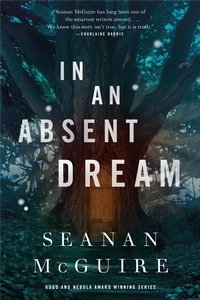
In an Absent Dream by Seanan McGuire: Another Wayward Child’s story — magical, enchanting, heartbreaking. You know the drill.

In an Absent DreamIn an Absent Dream

by Seanan McGuire
Series: Wayward Children, #4

Hardcover, 204 pg.
Tor Books, 2018
Read: January 9, 2019

           …the worst she was ever called where anyone might here was “teacher’s pet,” which she took, not as an insult, but rather as a statement of fact. She was Katherine, she was the teacher’s pet, and when she grew up, she was going to be a librarian, because she couldn’t imagine knowing there was a job that was all about books and not wanting to do it.

Here’s a quick recap of this series for those of you who haven’t heard about it yet/have ignored everything I’ve said about the series these last few years: Imagine Children who go off to a magical kingdom for a bit from our world — Narnia, Fillory, the Lands Beyond, Neverland, Lyrian, whatever you call that land on the other side of the fourteenth door in Coraline, etc. — and then return home. Some will go on to live “normal” lives — others can’t forget or outgrow their attachment to the magical world — some of those, those who want more than anything to return to whatever was on the other side of the door wind up at Eleanor West’s Home for Wayward Children. This series is about some of those children.

There’s a basic outline to these books — McGuire introduces you to a Child and a new world. Her language will be lyrical, playful and enchanting. She’ll draw you in with the awe and wonder and while you’re not looking, she’ll set the hook, and you will be as emotionally tied to her characters as you are close family members*. Then something devastating will happen to those characters, and you will feel horrible, yet love the experience. No matter what kind of resolution is found in the book (death, rescue, brokenness), when you close the book you’ll almost instantly start waiting until the next book comes out, because McGuire is just that good.

In this book we meet Katherine — Katherine’s never been good at making friends her age (there are justifiable reasons for this), but she likes talking to adults more, she likes rules, and she loves reading. There’s something about each Wayward Child that readers can identify with, but Katherine is more relatable to readers than the others have been. One day, Katherine comes upon a tree that hadn’t been there before. This tree had a door in it, and before she realized what was happening — she was on the other side of the door, walking down a hall, on her way to a Goblin Market. In the last book, we saw a nonsense world — this is a logic world, through and through. There are rules, enforced by everyone who lives there — and somehow, by the world itself.

Unlike that (mostly) tongue-in-cheek outline above, each of these books are so different from the rest, it’s hard to compare them — so I’ll try not to. But the structure of this seems more different than the others have. So I’m not going to tell you any more about the plot than I have — I’ll just say it’s a great story, incredibly well told — and even when the narration tells you the ending is not going to be “kind”, you keep expecting/hoping/wanting for things to work out for Katherine and her loved ones.

I’ve made the ending sound bad — it’s not “happy,” but I’m not complaining, I’m not criticizing, I’m most definitely not warning a reader away. It’s the right ending for this story, it’s absolutely how things needed to go — but this is not the Feel-Good Novella of the Year. It is wonderfully written, beautifully written, imaginative, awe-inspiring, delightful, and eventually heartbreaking. McGuire’s one of the best at work today — and this is proof of it.

Yes, you can read these out-of-order — but I don’t recommend it. And hey, were talking 200 pages or less each, you’ve got time for that. You’ll be glad you did (once you stop feeling horrible)


  • That might be a bit hyperbolic.

—–

5 Stars

My Favorite Non-Crime Fiction of 2018

When I was trying to come up with a Top 10 this year, I ran into a small problem (at least for me). With 44 percent of my fiction, Crime/Thriller/Mystery novels so dominated the candidates, it’s like I read nothing else. So, I decided to split them into 2 lists — one for Crime Fiction and one for Everything Else. Not the catchiest title, I grant you, but you get what you pay for.

I do think I read some books that were technically superior than some of these — but they didn’t entertain me, or grab me emotionally the way these did. And I kinda feel bad about leaving them off. But only kind of. These are my favorites, the things that have stuck with me in a way others haven’t — not the best things I read (but there’s a good deal of overlap, too). I know I read books that are worse, too — I don’t feel bad about leaving them off.

Anyway…I say this every year, but . . . Most people do this in mid-December or so, but a few years ago (before this blog), the best novel I read that year was also the last. Ever since then, I just can’t pull the trigger until January 1. Also, none of these are re-reads, I can’t have everyone losing to my re-reading books that I’ve loved for 2 decades.

Enough blather…on to the list.

(in alphabetical order by author)

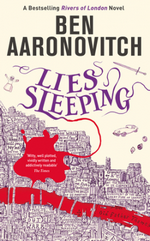
Lies SleepingLies Sleeping

by Ben Aaronovitch

My original post
I’ve read all the comics (at least collected in paperback), listened to all the audiobooks, read the books at least once . . . I’m a Rivers of London/Peter Grant fan. Period. Which means two things — 1. I’m in the bag already for this series and 2. When I say that this is the best of the bunch, I know what I’m talking about. Aaronovitch writes fantastic Urban Fantasy and this is his best yet. The series has been building to this for a while, and I honestly don’t know what to expect next. Great fight/action scenes, some genuine laughs, some solid emotional moments . . . this has it all. Everything you’ve come to expect and more.

—–

5 Stars

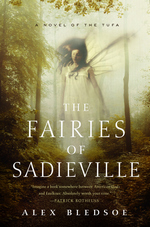
The Fairies of SadievilleThe Fairies of Sadieville

by Alex Bledsoe

My original post
I was very excited about this book when Bledsoe announced it was the last Tufa novel. Then I never wanted it to come out — I didn’t want to say goodbye to this wonderful world he’d created. But if I have to — this is how the series should’ve gone out. It’s the best installment since the first novel — we get almost every question we had about the Tufa answered (including ones you didn’t realize you had), along with a great story. It’s just special and I’m glad I got to read this magical series.

—–

5 Stars

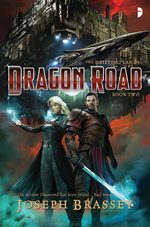
Dragon RoadDragon Road

by Joseph Brassey

I haven’t been able to get a post written about this — I’m not sure why. It’s superior in almost every way to the wonderful Skyfarer — the idea behind the caravan, the scope of the ship and it’s culture are more than you might think anyone has done before. A fantasy novel about wizards and warriors (and warrior wizards) in a SF setting. I had a blast reading this and I think you will, too.

—–

4 1/2 Stars

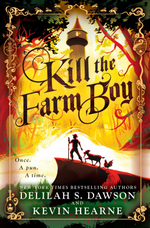
Kill the Farm BoyKill the Farm Boy

by Delilah S. Dawson and Kevin Hearne

My original post
Probably the best comedic/parody/satire fantasy since Peter David’s Sir Apropos of Nothing. The characters are fun, well-developed and pretty strange. This is a great fantasy story, it’s a great bunch of laughs, but there’s real humans and real human reactions — it’s not all laughs but enough of it is that you won’t have to work hard to thoroughly enjoy the book.

—–

4 Stars

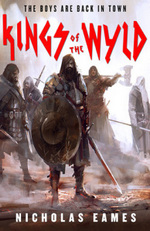
Kings of the WyldKings of the Wyld

by Nicholas Eames
Like Dragon Road, I’ve been trying to write a post about this book for months. An epic story about brotherhood, about family, about heroism, about integrity — but at its core, it’s a story about Clay Cooper. Clay’s a good man trying to stay one. He worked really hard to get to where he is, but he has to get back on the road to help his friends’ daughter. It’s a fantastic concept and set up, with an even better follow-through by Eames. Possibly the best book I read last year — and I don’t say that lightly.

—–

5 Stars

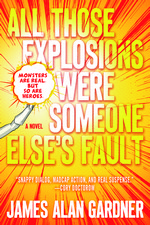
All Those Explosions Were Someone Else's FaultAll Those Explosions Were Someone Else’s Fault

by James Alan Gardner

My original post
A Superhero story, a SF story, an Urban Fantasy, a story about friendship and destiny told with just enough of a light touch to fool yourself into this being a comedy. From the great title, all the way through to the end this book delivers.

—–

4 Stars

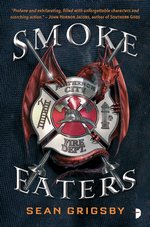
Smoke EatersSmoke Eaters

by Sean Grigsby

My original post
I started my original post about the book like this: Really, the case for you (or anyone) reading this book is simply and convincingly made in 13 words:

Firefighters vs. Dragons in an Urban Fantasy novel set in a futuristic dystopia.

That could’ve been my entire post, and it’s all I’m going to say now.

—–

4 1/2 Stars

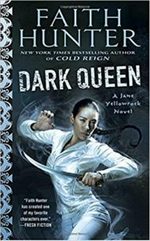
Dark QueenDark Queen

by Faith Hunter

My original post
This could have been the series finale and I’d have been satisfied. I’m thrilled that it’s not. Hunter’s been building to this for a few books now — and it absolutely pays off the work she’s been doing. Better yet, there’s something else she’s been building toward that doesn’t get the attention it needed — and it’s devastating. The series will be different from here on out. Hunter’s as good as the genre has, and this book demonstrates it.

—–

5 Stars

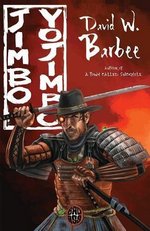
Jimbo YojimboJimbo Yojimbo

by David W. Barbee

My original post
I don’t have words for this. I really don’t know how to say anything about this book — especially not in a paragraph. Click on the original post and know that even then I fail to do the book justice. It’s strange, gross, funny, exciting and thrilling.

—–

4 Stars

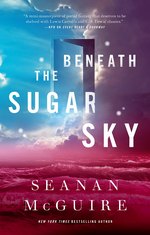
Beneath the Sugar SkyBeneath the Sugar Sky

by Seanan McGuire

My original post
As much as I appreciate McGuire’s Toby Daye, Indexing and InCryptid series, her Wayward Children books are possibly the best things she’d done. This allows us to spend time with characters I didn’t think we’d see again and the family — and world — of my favorite character in the series. It’s like McGuire wrote this one specifically for me. But it’s okay for you to read it, too. I’m generous like that.

—–

5 Stars

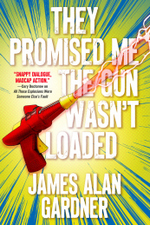
They Promised Me the Gun Wasn’t Loaded by James Alan Gardner: The Newest Canadian Super-Heroes are Back in Action

 They Promised Me the Gun Wasn't Loaded They Promised Me the Gun Wasn’t Loaded

by James Alan Gardner
Series: The Dark vs. Spark, #2

Paperback, 350 pg.
Tor Books, 2018

Read: November 26 – 27, 2018

When I read the first book in the series, All Those Explosions Were Someone Else’s Fault, back in January, I said “the sequel can’t get here fast enough.” I didn’t quite expect to be reading it 11 months later, but I’m okay with that.

It’s just a couple of weeks after the events of the previous book, and the newly formed team of superheroes has gone home for Christmas break. Now with just a few days before classes start up again, the team is coming back. In the last book we focused on Kim/Zircon, this time our protagonist is her roommate/teammate Jools/Ninety Nine.

Jools doesn’t even make it out of the airport before she’s dealing with the police and a powerful Darkling — and maybe a powerful Spark artifact.

(Quick reminder: In this world there are two super-powered groups: the Darks/Darklings and the Sparks. The Darks are all the supernatural-types you can think of (and some you can’t): vampires, weres, etc. The Sparks are Super-Heroes and the like (although some have gone astray))

Jools, with a little help from her friends, gets out of that mess — only to find herself signed up for more.

Soon, in an effort to keep this artifact from falling into the wrong hands — Jools finds herself cut off from her friends and in the secret-hideout with a very maverick group of Sparks — a modern-day Robin Hood and his Merry Men. This gives her an opportunity to watch other Sparks in action, to see how they live and think — and come up with some ways to evaluate her new lifestyle. Also, there’s a lot of fighting and nifty tech to read about.

I wasn’t crazy about how little time we got with the rest of the team because of this, but I think in the long run, it’ll work for the strength of the series. And when we get the team together again, it’s even better to see than it was before.

Again, I had a blast with this book. Gardner’s world is ripe with story-telling possibilities and I’m enjoying watching him develop these characters and this world. Jools is a great character — a solid combination of vulnerable and snarky, unwise and ridiculously intelligent — you’ll probably end up with her as your favorite character in the series (at least until book 3). Go grab this (and the other one, too) now.

—–

4 Stars
2018 Library Love Challenge

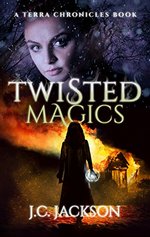
Twisted Magics by J.C. Jackson: A Great Spin on Contemporary Fantasy Kicks Off a Promising Series

Twisted MagicsTwisted Magics

by J.C. Jackson
Series: Terra Chronicles, #1

Paperback, 220 pg.
Shadow Phoenix Publishing LLC, 2016

Read: August 30 – 31, 2018


I had a brief conversation a couple of weeks ago with J.C. Jackson and she described the book as “Science Fantasy” and told us a little about the series. Something about fantasy characters but with modern technology, but phrased better. Not really getting what she said, I asked why not just call it Urban Fantasy, and she gave a decent answer — basically that she didn’t have enough vampires or werewolves in the books so readers told her she couldn’t. I was a chapter or two in to the book when I figured out what she was saying.

In your mainstream Urban Fantasy, you have fantasy creatures — wizards, druids, werewolves, fae — popping up in our world. On the other end of the spectrum (or an other end, anyway) you have things like the Eddie LaCrosse novels or the Dragon Precinct books that have modern ideas (police squads, private investigators) used in a fantasy series. Jackson takes a different tack — it’s a typical fantasy novel in that there’s a lot of magic, elves, halflings, Dark Elves, living next to humans — very standard kind of thing, but their technology matches ours (actually, it’s slightly more advanced). I loved this approach and there’s a good chance that I’d have had nice things to say about the book just because of this idea.

I do have more reasons to say nice things, though.

Ketayl is an Elven mage who works as a a CSI-like lab tech for the Terran Intelligence Organization (a FBI-like organization). Her strength is in finding ways to use devices to do forensic investigation of magical elements of particular crimes. She’s not the most socially adept of people, clearly more secure in her lab and with clearly drawn rules governing her interaction with others.

Then there’s an explosion in the Elven Territories, seemingly magical in origin — definitely devastating. The TIO director sends Ketayl, along with the rural tracker, Retanei; and Artemis, Retanei’s wolf companion to investigate. Along with the local TIO team — which does their best to bring these agents into their community — they dive into finding those responsible. It’s a kind of magic that doesn’t play by the rules that Ketayl is used to, and powerful enough to make her nervous.

While they look for what could have caused this destruction, we learn more about the world, the magic system and Ketayl. I still have a few questions about all of those and I think some of them should’ve been addressed in the first book — but I never felt lost in this world as I waited for the details to be given. This is a pretty decent thriller when you strip away the fantastic elements, or a pretty decent fantasy tale if you take out the criminal investigation elements. Keep them combined and the whole thing is stronger.

Eventually, the TIO hires a consultant from the Paladins — their kind of music is very different from Ketayl’s. The Paladins are also very prejudiced toward other magic users, and other species. Thankfully, the Paladin sent to help the team (Silver) is pretty open-minded and doesn’t get driven right into a religious conflict (which doesn’t preclude other kinds of conflict). Silver joining the team — primarily partnering with Ketayl — brings her out of her shell a bit.

Ketayl frequently reminded me of Tilly Bradshaw, the analyst from M. W. Craven’s The Puppet Show (one of those books that I somehow haven’t had time to blog about, but you should read, if only for the Ketayl-like character). She’s a complex character that I look forward to learning more about. The rest of the characters — with Silver pretty much being the exception — aren’t as developed as you might like, but you get enough of to satisfy just about every itch you might have.

There were a few too many typos for me, and the misspellings/unfortunate slips like homonym confusion. It wasn’t horrible, but it was bad enough to stick with me.

The novel does a good job of introducing us to the characters and world while telling a compelling story. Jackson’s particular spin on merging fantasy and a 10-minutes-into-the-future world is refreshingly original. I liked the characters, the world and everything — I’ve already gone out and purchased the sequel and am trying to find time on the schedule to get it read.

—–

3.5 Stars

✔ Read a book written by an author from the state where you grew up.

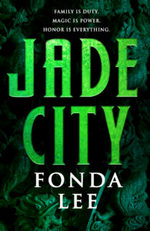
Jade City by Fonda Lee: Immerse yourself in this world of Magic, Crime and Family

Jade CityJade City

by Fonda Lee
Series: The Green Bone Saga, #1

ARC, 444 pg.
Orbit, 2017

Read: August 15 – 16, 2018

So Fonda Lee has a great idea — others have employed it as well, don’t get me wrong, but the way she does it is great — instead of setting an Urban Fantasy in this world, just a version of it with some magic; you set it in a world a whole lot like this one — but you infuse the world with some sort of magic. A world where technology/science and magic co-exist. It’s enough like this world that you can get your hands around cultural mores and norms.

There’s this stone, a mineral, called jade. It looks a lot like our jade (from what I can tell, Hank Schrader, I’m not). Certain people are sensitive to it, and it enables them to channel magic, some become addicted to the mineral and what it does to them — others (“stone eyes”) are completely insensitive to it and are therefore the ideal candidates to shape it, transport it, and mine it. Only people from Kekon have this relationship with jade (not that unexpectedly, they’re also the world’s source for it).

There are other countries that want jade and what it can do to a person — military uses, primarily. But their people aren’t natively sensitive, so they’re working on ways to engineer the sensitivity. There’s a lot of money to be made controlling the Jade. Years ago — a generation or so — a group of “Green Bone” warriors drove foreign powers from Kekon and assumed control of the Jade trade. Working with the legitimate government, these Green Bones rule Kekon.

They are, for all intents and purposes, a criminal organization — or would’ve been were it not for a divergence of vision — they’re now two rival criminal organizations — with their own rules, laws, rituals, educational systems and cultures. There’s a Cold War between them — a perilous truce, with the citizens of Kekon stuck in the middle (paying tribute, currying favor, and occasionally serving as cannon fodder).

But then something shifts the balance of power — plans that have been brewing for years start to come to fruition and conflict erupts.

We focus on the Kaul family, their soldiers, their leadership, their friends and fortunes. There’s the aged warrior struggling with the weight of glory and past success in the face of the end of their life, there’s the new generation of leadership, trying to live up to the glories of the past and finding it more difficult than they expected. Some have tried to forge new paths in a new world, others are trying to recreate the past.

This is one of those that I can’t think how to describe without ruining everything — so that’s about as much as I’m going to say. The back cover blurb describes this as “The Godfather with Magic.” It’s easy to see why. It’s also incredibly easy to start casting various characters ___ is Michael (clearly), ___ is Tom, and if ____ isn’t Sonny, I’ll eat my hat. I do have real answers for those blanks, but I thought I’d better not give everything away. It is more than just The Godfather with Magic — but you can’t get away from that (unless you’re not that familiar with that particular work — and then you’re not missing a thing).

There’s magic, there’s a mob story, there’s family, love, loyalty . . . you name it, this book has it. Better yet, at the helm of this world you have Fonda Lee who does a great job building this world and populating it with people that the reader can relate to.

This is a rich world full of intrigue, danger, family and magic. It’s a fantastic piece of worldbuilding and you can tell that Lee has great plans in store for these characters, and I can tell that they have no clue what’s coming — and frankly, the readers have less of a clue. I’m looking forward to seeing just what it is.

Note that’s close to a disclaimer, yeah, I said ARC for a book that was published last year. How’d I manage that? Time travel? Well, no. I won the ARC at Indie Bookstore Day (or something like that). So, there be a couple of changes between what I read and the final product, but probably nothing major.

—–

3 Stars

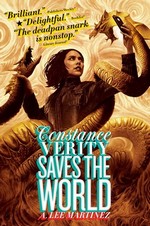
Constance Verity Saves the World by A. Lee Martinez: Connie Verity is trying to have it all — a personal life while saving the world on a regular basis

Constance Verity Saves the WorldConstance Verity Saves the World

by A. Lee Martinez
Series: Constance Verity, #2

Trade Paperback, 385 pg.
Saga Press , 2018<br/
Read: August 18 – 20, 2018

“It’s a problem I have. When you’re ten years old and dangling from a cliff while rabid hyenas circle below, you learn to be stubborn. You can’t quit, because quitting isn’t an option. You dig your fingernails and pray that root doesn’t come loose. And if it does, you plan how best to fend off hyenas when all you have is a Pez dispenser and a priceless diamond in your pocket. I fight. It’s what I do. It’s how I survive. When people turn and run, I go forward. It’s kept me alive so far, but it’s skewed how I look at things.

“Somebody tells me I can’t do something, I want to do it more. Want isn’t a strong enough word. I need to do it. Give me that big red button labeled DO NOT PUSH in bright neon letters, and I’ll push it every time.”

Having fought for the ability to have a normal life in The Last Adventure of Constance Verity Connie’s out to try to have one. Which is harder than saving the world a few times a week. She’s still saving the world regularly, as well as having all sorts of adventures. She’s trying to settle down with her boyfriend Byron the accountant, while relying on her best friend/sidekick Tia some more (all the while, Tia is trying to strengthen her relationship with her ninja-thief boyfriend, Hiro). There are evil geniuses, aliens, robots, and vampires living in her condo — all of them behaving themselves, thank you very much.

One of the activities that takes most of Connie’s time right now is trying to help out an old friend cleanup the supercriminal organization that he’s in charge of now that his mother has apparently died. There’s a lot of rogue agents, assassins and experiments that need cleaning up if the organization is going to be come a legitimate force for good — or at least not a force for evil and chaos in the world. Connie’s tempted to spend more time doing that than she should, to the detriment of her relationship with Byron. Thankfully, Tia’s there to help keep her priorities in order. Hopefully, that’ll be enough.

You ever find yourself eating something — say, some cake — and you’re not sure if it’s too rich, if the frosting is too sweet? And then you realize how stupid you sound? Wondering if the cake is too good? Well, that’s the experience I had with this (and, I’m pretty sure with the previous Constance Verity book) — where there too many quips? Too many (seemingly) random ideas, aliens, evil masterminds, robots, henchmen of a variety of stripes, strange occurrences? What a stupid thing to ask. Yeah, there’s a lot going on, but it actually doesn’t get to the overload status. It may come close, but it stays on the right side. It’s like asking if there are too many animated personages in Who Framed Roger Rabbit?, if there are too many Easter Eggs in whatever your Super-Hero movie of choice is. No, there’s not — there’s a lot of good things that are fun. Shut up and enjoy.

Really, that’s the worst thing I can say about the book — occasionally, there are too many fun things happening. The pacing is great, the characters are rich, lively, and well-developed (including many of those only around for a page or so), you’ll laugh, you’ll be moved, you might even have a thought provoked. It’s just a charming book set in a delightful world.

Do not make the mistake of thinking this is a romp, just a free-wheeling ball of fun, snark and self-referential humor. It’s an A. Lee Martinez book, so yeah, there’s a lot of that — but laying underneath that is a good story, some interesting ideas about relationships, about trust, about fate. A whole lot of other things, too, I’m sure, but let’s stick with those. Too many people will read this, focus on the “fun” stuff and will miss the very thoughtful portions — it’s Martinez’ strength and weakness that it’s so easy to do with his works. There’s nothing wrong with a silly adventure story, and there’s nothing wrong with a book that’s about something. But when you have a novel that’s both — you should pay attention to both.

I knew Martinez could write a series if he wanted to — I had no idea what it was going to look like when he did. I’m glad I got the chance to find out. Constance Verity Saves the World is equal to its predecessor in every way that it doesn’t outdo The Last Adventure of Constance Verity — which is no mean feat. It’s fun, the characters are better defined and have grown some, and there’s never a dull moment. Constance Verity, the caretaker of the universe, the Legendary Snurkab, possibly the only woman with more titles than Daenerys Targaryen, is a character you need to get to know. Her sidekick Tia is, too. I cannot wait to see what the two of them do next.

—–

4 Stars

Page 36 of 54

Powered by WordPress & Theme by Anders Norén