Tag: Fantasy Page 41 of 54

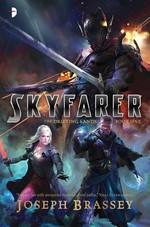
Skyfarer by Joseph Brassey

SkyfarerSkyfarer

by Joseph Brassey
Series: Drifting Lands, #1

eARC, 352 pg.
Angry Robot Books, 2017

Read: August 11 – 14, 2017


I’ve read a few interesting mergers of SF and Fantasy this year — some that were just that, interesting, some that were good — a couple that were more than good. Thankfully, Brassey’s Skyfarer was in that latter camp. Even in those early chapters where I was still trying to figure out the world, remember which name lined up with what character, and get a handle on the plot, I had a sense that this was going to be one of those books I talked about very positively — and very often. That sense just only got stronger as the book went on.

I feel like could go on for pages about this book — but won’t let myself (so I can avoid the wrath of Angry Robot and you can actually get something out of reading it yourself — which you have to go do as soon as it comes out).

So you’ve got this group called the Eternal Order — a group committed to death, destruction, power, and plunder. When it comes to numbers, they can’t stand up to the civilizations around them, at least when they ally themselves against the Order. But when they (rarely, it seems) can come in with a quick strike against one people they can wreak much havoc. Which is exactly what they do here — they come in and demand that the rulers of Port Providence hand over the Axiom Diamond, or they will wipe them out — and it’s clear that Lord Azrael, the commander, isn’t being hyperbolic. The royal family responds with armed resistance, which has some measure of success, but is primarily fighting losing battles.

Into the midst of this looming genocide comes a wayward spacecraft, the Elysium. The Elysium is a small carrier with more weapons than one should expect (we’re initially told this, anyway). The crew has just welcomed an apprentice mage, fresh from the academy, to complete her studies with her mentor/professor. Aimee de Laurent has been pushing herself for years to excel, to be the best — if there’s a sacrifice to be made for her studies, she’s made it. All leading up to this day, where her professor, Harkon Bright has taken her as an apprentice on his exploration ship to complete her education. She joins a crew that’s been together for years and is eager to find her place within them.

When the Elysium arrives in the middle of this, it doesn’t take anything approaching calculus for them to figure out what this particular crew is going to do. There’s The Eternal Order on one side, civilians and the remnants of the military on the other. There’s a ravaged civilization on one side and the ravagers on the other. There’s a group trying to prevent The Eternal Order from getting something they want and there’s, well, The Eternal Order. So our band of adventurers tell the remnants of the royal family that they’ll hunt down the Axiom and protect it.

This isn’t exactly a revolutionary idea for a story — but man, it doesn’t matter. There’s a reason everyone and their brother has tried this — it’s a good story. Especially when it’s told well. And, I’m here to tell you that Joseph Brassey tells it really well. Not just because of his hybridization of SF and Fantasy, but because he can take a story that everyone’s taken a shot at and make it seem fresh, he can deliver the excitement, he can deliver the emotion. There is some horrible stuff depicted — either in the present or in flashbacks; there’s some pretty tragic stuff; and yet this is a fun read — the pacing, the tone, everything makes this feel like the adventure films and books that I grew up on. You want to read it — not just to find out what’s going to happen next, but because it’s written in such a way that you just want to be reading the book, like a having a glass of iced tea on a summer’s day.

The characters could uniformly use a little more fleshing out — which isn’t a weakness in the writing. Brassey pretty much points at the places where the reader will more details (especially when it comes to Aimee and Harkon), making us want more than he’s giving us. What we’re given, though, is enough to make you root for or against them, hope that they survive (or are subjected to painful and humiliating defeat), or simply enjoy the camaraderie. The good news is, that there’s more to learn about everyone — about their past and their present — and how those shape their future.

You’ve got magic — various schools of magic, too, each with its own understanding of what magic is and how it can be used; you’ve got swords and lasers (and similar kinds of weapons); you’ve got space ships running of magic (not just hyperspace drives that act like magic); objects and persons of prophecy; beings and intelligences that aren’t explicable — tell me why you wouldn’t want to read this? Especially when you throw in epic sword fights, magic duels, and spacecraft action all written by someone who writes like a seasoned pro. Sign me up for the sequel!

Disclaimer: I received this eARC from Angry Robot Books via NetGalley in exchange for this post — thanks to both for this.

—–

4 1/2 Stars

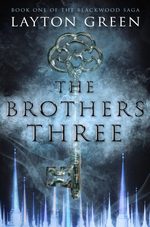
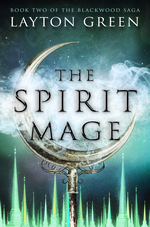
The Brothers Three by Layton Green

The Brothers ThreeThe Brothers Three

by Layton Green
Series: The Blackwood Saga, #1

Kindle Edition, 332 pg.
Cloaked Traveler Press, 2017

Read: August 4 – 8, 2017


Ever since Edmund, Lucy and Eustace got sucked into that tacky painting and into the sea in Narnia, I’ve been a sucker for a good portal fantasy*. Which is exactly what Layton Green has given us here.

Will Blackwood works for a general contractor, with the occasional shift at a medieval-themed family restaurant where he will engage in stage fighting, and spends a lot of time reading fantasy novels. He’s suffered from panic attacks since childhood and that’s kept him from much more. His buddy, Lance, a New Orleans police officer will occasionally take him on ride-alongs, but he’s just not up for much more excitement. His older brother Caleb, is a bartender and perpetual adolescent (given time and opportunity, I’d have liked to see that explored more, because I suspect there’s more to it than meets the eye). The oldest, Val, is a corporate lawyer in New York who has served as self-appointed guardian to his brothers since their father’s death while they were children.

Until one day, things get a little strange: Will and Lance run into a zombie Rottweiler and the weird guy who controls it. Lance explains it away, but Will can’t. He knows what he saw, and apparently has a willingness to be flexible with his presuppositions about what may be real. Not long after this, the Blackwood’s godfather shows up, tells them that their father was a wizard, gives them some magical weapons and then gets kidnapped by the guy who had the Rottweiler (it was a pretty eventful conversation). Before they can wrap their minds around this, a stranger claiming to be a wizard shows up and talks to Will, telling him that Zedock is the name of the man who kidnapped Charlie — he’s a necromancer from a parallel universe where magic rules, not science.

Not only that, he’s arranged for the brothers to go to that parallel universe to learn a little about magic, their weapons and maybe find a way to defeat Zedock. Will is game, but he knows that he’s not going to be able to convince his brothers that this is a possibility. They’ve managed to convince themselves that they didn’t see anything magical and that there’s a reasonable explanation for everything going on (except Charlie’s statements) — they’re not quite at the level of the explanations that Tommy Lee Jones uses in Men in Black, but they’re close. So Will tricks them into triggering the portal to the other world with him (and Lance gets sucked through it, too).

Even in a world clearly not our reality — with swords, magical creatures, and different looking streets in New Orleans — it takes time for those who aren’t Will to accept what’s going on. But they eventually do, and hire some locals to help them get to a fortress where they should be able to find something they can use to challenge Zedock. I seem to be talking about the willingness of Val, Caleb and Lance to accept what they’ve seen and experience — but that’s a pretty big plot point. I like the way they struggle with this, unlike what goes on with kids in portal fantasies who seem to swallow the whole concept in seconds

The travel isn’t easy — it’s not long before all of them get to learn how to fight with pre-modern weapons. Val shows some signs of magical ability and begins training in its use, while Will learns how to use a sword in a fight that doesn’t happen on a stage, and Caleb picks up a trick or two from a thief. They don’t just train and travel — they see and fight creatures straight out of a D & D manual. A lot more happens, of course, but I don’t want to give it all away — so I’ll just sum up by talking about how the adventurers they travel with are a great collection of characters, pretty compelling, and just what’s needed to keep the story move forward and acclimate the dimension-jumpers to this world.

There is real peril — as demonstrated by enough deaths to satisfy the grimdark fans while not really being a grimdark world. Sure, there were a couple of Red Shirt deaths (Red Tunic deaths?), but characters you assume are safe turn out not to be after all. I read one paragraph a few times just to convince myself that I read about the gruesome death of a major character actually happened. Even without that, the way this story is told isn’t what you expect — there are secrets, ulterior motives, and barrels of denial everywhere. It’s very compellingly and interestingly put together.

The Brothers Three is well-written, skillfully structured, and well-paced — there are some nice turns of phrase throughout the novel, too. Green is the real thing, giving the readers a good story, great characters, an interesting world (or pair of them), in a well-written package. Book 2 comes out next month and it’s on my TBR. I’m resisting the impulse to move it higher, but it’s not easy.


* Yeah, I read The Voyage of the Dawn Treader first — I read series out of order in my childhood. As a kid, I was practically feral, it seems.

Disclaimer: I was provided with this copy for an honest review by the author.

—–

4 Stars

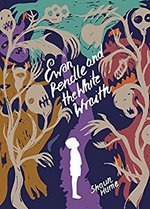
Ewan Pendle and the White Wraith by Shaun Hume

Ewan Pendle and the White WraithEwan Pendle and the White Wraith

by Shaun Hume
Series: Ewan Pendle, #1

Kindle Edition, 496 pg.
Popcorn & Rice Publishing, 2012

Read: August 1 – 2, 2017d


Yeah, so this is a MG Fantasy about an orphan boy with horrible foster parents being recruited to go to a private school where he’s trained in mystical arts and gets in all sorts of adventures. But it’s totally not Harry Potter. Clearly inspired by that series by Rowling — but others as well, don’t get me wrong (Riordan and Mull leap to mind as examples) — but Ewan Pendle and the White Wraith is its own thing. Every now and then its non-Harry Potterness gets in your face and is a bit distracting. At the same time, focusing on how Hume zags when Rowling zigs, or how they approach the same convention differently displays the strengths of this project while making it appealing for the reader missing the Hogwarts crew.

Ewan and the others at his school have the rare ability to see all sorts of mythical Creatures, and as such, are trained to deal with them and other exotic threats. Classic boarding school-type hijinks ensue, Ewan makes a couple of really good friends, and a few others. He and Mathilde and Enid, his two best friends, come across some information which they believe indicates that graduates, officials and at least one student are involved in an attempt to kill the Queen. They bend, break, and ignore rules to investigate and try to stop this plot.

Meanwhile, they have all sorts of interesting studies — there’s a class involving swords, one hand-to-hand combat, one involving making potions (of sorts), one involving the Creatures (of course), and things of that nature. That’s pretty fun.

The relationships between Ewan and his two closest friends, as well as those between the other students and some of the teachers are just great. I can easily see fan favorites emerging from among the student body as the series continues. There’s a couple of kids in his class that have an irrational hatred of Ewan and his friends. Those two are a little too underdeveloped now, they might as well have mustaches to twirl. It won’t take much in book 2 to develop them into something interesting.

On the whole, an entertaining, heartfelt, and quick fantasy novel that’ll please the MG crowd. The plot is solid, ditto for the characters, and the world is both familiar and foreign. I’d like book 2 to deepened everything a little, but given the worldbuilding and plotting that one had to establish that it won’t, that should be easy. Give this one a shot.

Disclaimer: This book was provided to me by the author in exchange for this post and my honest opinion.

—–

3.5 Stars

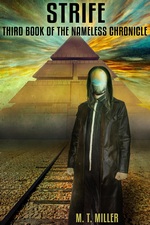
Strife by M. T. Miller

StrifeStrife

by M. T. Miller
Series: The Nameless Chronicle, #3

Kindle Edition, 336 pg.
2017

Read: July 28 – 31, 2017


The first two books of this series feature Nameless just struggling to survive, while along the way stumbling into adventure, some wealth and other kinds of success. He really never seemed to have much of a plan, but things worked out in his favor (eventually, and at great cost). But after the great success — if it is that — after Ascent, Nameless isn’t worried about survival, about doing more than subsisting this time. He’s got time for plans — not just plans for himself, but for the citizenry of the Pyramid.

Whoops. Maybe he should go back to just eking out a living.

Things don’t go so hot for him this way — but man, what character growth. Really, there are depths to Nameless that may not surprise readers, it makes sense that they exist, but we’ve never had the opportunity to see it before.

There are two other cities on the post-apocalyptic landscape, New Orleans and the White City. New Orleans is full of the New Voodoo Movement, and the White City is the home base of the One True Church of America — religious movements that Nameless doesn’t have a good track record with, and has done a lot to try to get rid of. Now both of these cities have plans for Babylon and Nameless — but it’s clear that pretty much all the White City wants out of them is abject surrender and assimilation. That’s just not going to sit well with Nameless.

Now Nameless has to look at the world that he’s helped to create, but he has a chance to reshape it, and save the city he’s adopted.

There’s some soul-searching here, there’s a lot of exploration into what makes Nameless tick and his origins. But the focus is on what he’s going to do next and why. This is only the third book in the series, so you really can’t say what a “typical” Nameless book would be — but whatever that would be, this isn’t it. I don’t know how to really talk about it without divulging all the nuts and bolts of the plot, sadly. There are old friends and new, old threats and new (and some old friends are new threats and vice versa). Which is not to say that the core of Nameless — a ruthless, skillful killer of all in his way — isn’t there, he is and he does. But there’s a little more to him than just that.

I’ve enjoyed Miller’s writing in the past, but this is at a whole new level for him. There’s a complexity to his writing, a subtlety that hasn’t been there before. There’s a good balance of lightness and darkness in the story, the writing itself. He’s clearly maturing as a writer, hopefully people give him a shot to impress them, he will.

This isn’t the place to jump on for new readers — the first two books are cheap and pretty entertaining, too, grab them first. I don’t know if Miller’s going to be able to keep this series going, if so, I can’t wait to see where he goes from here. But if not, I’m more than satisfied with where things are left. A very satisfying ending after a good mix of thrills, fighting and character growth.

Disclaimer: I was provided a copy of this book by the author in exchange for this post and my honest opinion. Thanks, Mr. Miller! This didn’t impact my opinion of the book in any discernible way.

—–

4 Stars

Top Ten (and a bonus) Books from My Childhood

Having trouble finishing a post in time for this morning — mostly it’s that there are too many things I want to say about a few books and I’m having trouble narrowing it down. So, here’s a re-run of something I liked having written.
I was bemoaning how long my current read was the other day and how it was going to leave me without a post for today, and my ever-so-clever daughter suggested, “Why don’t you list the Top 10 Books from your childhood?” That sounded pretty fun, so I figured that I might as well. It turned out to have been better than I thought, so kudos to her.

Ranking them really would be impossible, but then 11 came to mind really without any effort, and I couldn’t axe one of them, so there’s a bonus entry to the list. All of these I read more than I can count — if they’re part of a series, these were the ones that I came back to most often. The links are to Goodreads pages because I can’t find good official pages for all the books/authors (a true sign of my age, I guess).

Enough of that, on with the trip down Amnesia Lane:

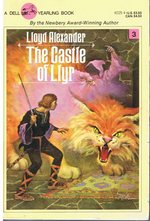
The Castle of LlyrThe Castle of Llyr

by Lloyd Alexander
The Chronicles of Prydain taught me most of what I needed to know about Fantasy (augmenting The Chronicles of Narnia‘s lessons). Fflewddur Fflam here is at his best, I think it’s here that I fell in love with Eilonwy, Taran’s more of a real hero than before, and you get plenty of Gurgi (who I just have to mention because thinking of him makes me smile). There’s peril, the characters grow more than they have before, a hint of romance . . . it’s not the most important book in the series, but I think it’s pivotal.

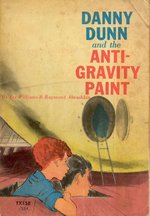
Danny Dunn and the Anti-Gravity PaintDanny Dunn and the Anti-Gravity Paint

by Raymond Abrashkin and Jay Williams
I didn’t know until today that this was the first in the series, I always figured it was mid-series. It’s the only one of the series that I owned — thankfully, the library had a few more — so it’s the one I read most. It was also my favorite — I just loved the stuff at the edge of our solar system and Prof. Bullfinch and Doctor Grimes making musical instruments from their hair — stupid as all get out, but it worked for me.

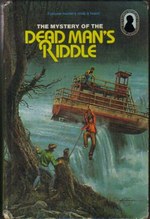
The Mystery of the Dead Man's RiddleThe Mystery of the Dead Man’s Riddle

by William Arden
While Encyclopedia Brown (see below) got me reading mysteries, it was The Three Investigators — Jupiter Jones, Bob Andrews and Pete Crenshaw (btw, the only thing there I had to look up was Pete’s last name — not bad for a series I haven’t touched since the late 80’s) got me hooked on reading detective series. The Dead Man’s Riddle was one of my favorites — and I think the first or second I read — something about the Cockney slang kept bringing me back to it. I read what I do today because of this series, really.

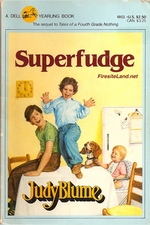
SuperfudgeSuperfudge

by Judy Blume
I remember Tales of a Fourth-Grade Nothing being funnier, but this was a better story — the Fletchers leaving NYC, Peter maturing, Fudge being a real pain, not just a cute nuisance. Blume taught me a lot about how to read non-genre stuff, probably paving the way for Hornby, Tropper, Weiner, etc.

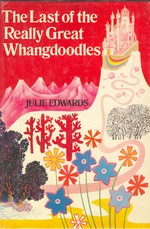
The Last of the Really Great WhangdoodlesThe Last of the Really Great Whangdoodles

by Julie Edwards
What a great world, what a great magic system . . . I’m not sure I can express what this book meant to me as a kid, and the copious warm-fuzzies the memory brings up. I remember that it was in the pages of this book about a magic kingdom that I first learned about DNA and RNA (and what those letters meant) — thanks, elementary school science classes. The creatures’ names in this are great (and, as an adult, I can “hear” Andrews saying them in my mind for an added layer of fun). There’s a great deal of whimsy here, a sense of play that permeates this — even when it gets silly. The kingdom’s motto, “peace, love and a sense of fun” really sums up the spirit of the book.

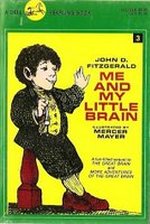
Me and My Little BrainMe and My Little Brain

by John D. Fitzgerald, Mercer Mayer (illus.)
Sure, the series was supposedly about Tom, but J. D.’s the real hero of the books. He has a conscience, a better moral compass than his brother — and is probably just as smart. This is the book that lets him shine as he ought to have all along. All the books had their strong points, and were fun, but this ruled them all.

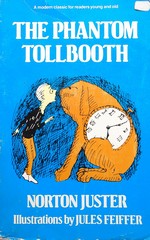
The Phantom TollboothThe Phantom Tollbooth

by Norton Juster, Jules Feiffer (illus.)
Such wordplay! What a great, twisted way to teach how important words and ideas are. Seriously, just a wonderful book. The humor is so off-kilter, any appreciation I have for puns came from this book (and it set the standard that a pun must achieve for me not to groan). If you haven’t seen the documentary about it, The Phantom Tollbooth: Beyond Expectations, get on it. (I contributed to the Kickstarter for it, I should add).

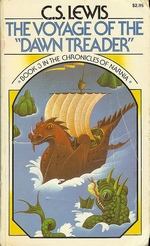
The Voyage of the Dawn TreaderThe Voyage of the Dawn Treader

by C. S. Lewis
I remember the bookstore where I bought this, the date and month that I bought it, and reading a good chunk of it before I got home. I read this one more than the rest of the series (Prince Caspian a close second). I just love this one — you get Reep at his bravest and funniest, some really odd creatures, an epic story, and Eustace’s redemption (back when I did crazy things like this, I almost got a tattoo of Eustace as Dragon). Who could ask for more?

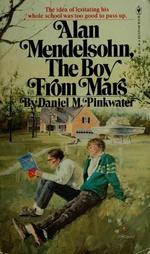
Alan Mendelsohn the Boy from MarsAlan Mendelsohn, the Boy from Mars

by Daniel M. Pinkwater
Pinkwater has funnier and stranger books (both before and after this one), but there was heart, there was depth — there was length! — to this story about a kid who didn’t really fit in until he made a friend who didn’t want to fit in. This is another one where I can peg the place and time I bought it. Science Fiction-y in a real world (didn’t know you could do that!), comic book geeks as heroes, and real non-sanitized-for-kids emotions. There’s no way this wouldn’t be a favorite. More than the rest on this list, I’m thinking of finding my old copy and taking it out for another spin (because I just read the next one a couple of years ago).

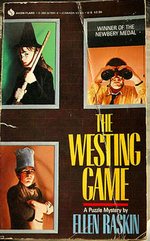
The Westing GameThe Westing Game

by Ellen Raskin
If I had to pick one off this list (and I don’t), this would probably be my favorite. I re-read it two years ago, and it was one of my favorite experiences that year with a book. The characters are great, the story was so clever, the writing so crisp. There’s nothing wrong with this book at all.

I saw a hardcover reprinting of this on Monday, and had to fight to resist buying a new copy. Kind of regretting that now. [Note: I went back a couple of days later and bought the hardcopy. It looks very nice on my shelf]

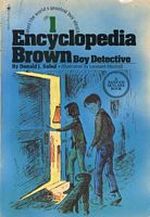
Encyclopedia Brown Boy DetectiveEncyclopedia Brown, Boy Detective

by Donald J. Sobol
Summer after second grade, we were on a forever-long road trip and I was bored, so I demanded my parents buy me something to read. I must’ve been a real snot about it, because at the next town, they did. I got two books, this one and Sugar Creek Gang Screams in the Night (not the best in the series, but it was good enough to read several times). It blew me away — I loved the puzzles, the characters, the idea. I wanted to be a P. I. This was my first mystery book, and it clearly set the stage for most of what I’ve read since (about a third of what I read).
Were you a fan of any of these as a kid? What were some of your faves? Have you read them lately?

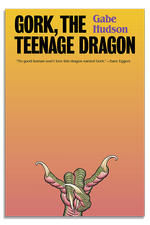
Pub Day Repost: Gork, the Teenage Dragon by Gabe Hudson

Gork, the Teenage DragonGork, the Teenage Dragon

by Gabe Hudson
eARC, 400 pg.
Knopf Publishing Group, 2017
Read: June 30 – July 3, 2017

Note: As I re-read this before it goes up, I thought I should stress something: this is a fun book and I think people will enjoy it. The problem is, it takes more words to describe the stuff I wasn’t crazy about than it does to describe the stuff I liked. I chuckled, I grinned, I was happy for Gork’s successes (happier for his best-friend Fribby’s successes — but they usually coincided) — as rare as they were. Don’t let the length of the “bleh” bits here distract you — Hudson just provoked some thoughts.

There were parts of this that were delightful, parts of it that were problematic, parts that were just okay. There were also too many parts, but we’ll get to that in a bit.

Our protagonist and unlikely hero is Gork — a dragon with pretty strong feelings toward Tolkein and the author of Beowulf for the depiction of dragons — he’s sort of a wimp, his horns aren’t that big (pretty small, really), he’s not that fierce (but he wants to be), and he tends to faint at inopportune times and frequently. Nevertheless, he’s about to finish his last year at the War Academy and head off to terrorize and conquer a planet of his own, all he needs to do is get someone to agree to be his queen and they’ll head off. We meet him on the day he’s supposed to do just that. Now, think back to high school — does this seem like a guy who’s going to be getting a lot of dates? Not really — and when your high school is full of dragons intent on learning how to be the nastiest, fiercest, most terrifying conquerors any planet has ever seen, well — Gork’s odds are even worse.

Naturally, because this is a high school story, our puny geek has set his eyes on the most popular, gorgeous and dangerous girl in school. The question really isn’t “Will Gork and his band of friends be able to convince her to be is queen?” It’s, “Will Gork survive the day?” And oddsmakers around the school, put his chance at that at 1%.

This is clearly from the word “go” a comic novel — we’re supposed to laugh at the madness, mayhem and murdering — and it’s easy to do on the whole. It’s a crazy world Hudson’s created for these dragons to go around in, and most of the characters are amusing. I’m not convinced it works that well as a novel as a whole — as a series of goofy episodes that eventually lead to a big showdown with the nastiest dragon around, it’s all right. (I’m not sure that distinction makes sense to anyone).

I like the idea of spacefaring dragons, dragons that have fully embraced technologies that we can’t think of (or we have thought of, just haven’t done that much with yet) — robotics, nanobots, and more. Although the “mind-swap” device doesn’t really swap minds it . . . well, it’s hard to sum up, but it felt like it belonged more to a Hanna-Barbera show than a SF novel. Basically, this is a Science Fiction wonderland populated with dragons instead of highly developed humans, Grays, Vulcans or Wookies. Still, being that takes away some of the X-factor that makes people fascinated with dragons. Dragons are already pretty cool, you don’t need to give them gizmos and machines that go “ping” — if anything that detracts from them. Still…a dragon in a spaceship is a pretty cool visual.

There’s a moral code that the dragons here live by, or aspire to anyway. It glorifies treachery, destruction, brutality, and so on. Grades of F are to be aspired to, As are to be lamented. That sort of thing — but societies can’t exist like the way Hudson depicts, and honestly, his society doesn’t function the way he says it does (the fact that there are actual friendships depicted, not just uneasy alliances is proof enough against that). You can’t have characters shocked by betrayal in a world where there are classes on betrayal. It’s the moments of loyalty and help that should be shocking, and not trusted by anyone. But no one works that way in this book. This is not a problem unique to Hudson’s work, I’ve run into it before — usually, in works like this, where the twisted ethics are played for laughs and we’re not supposed to be getting as analytical about them as I am. So, ignore everything I just said.

There were just a couple too many zigs and zags to the plot — a few less challenges, a few less pages, and I think this would’ve worked a bit better. I’m not necessarily saying that I can point to something and say, “That right there — yeah, we didn’t need that,” it just dragged a bit here and there. I tend to be more patient than most of the target audience for this book, so I worry about their reaction.

Speaking of target audience — I’m not sure what it is. The humor and emotional depth says MG to me, but the Gork’s fixation on mating and the things that attracts him to potential mates (he’s pretty shallow, I should warn you) are more YA. I’m not sure it matters all that much, it’s just one of those things that ran through the back of my mind during the slow parts.

I got a bit ramble-y there, sorry about that. I clearly am not sure what to make of this book — I enjoyed it, and I bet many will, too. But it has it’s problems — my best advice is, don’t think about it — just enjoy the antics. Gork’s a good guy and is fun to hang out with.

Disclaimer: I received this eARC from Knopf Doubleday Publishing Group via NetGalley in exchange for this post — thanks to both for this.

—–

3 Stars

Gork, the Teenage Dragon by Gabe Hudson

Gork, the Teenage DragonGork, the Teenage Dragon

by Gabe Hudson

eARC, 400 pg.
Knopf Publishing Group, 2017

Read: June 30 – July 3, 2017


Note: As I re-read this before it goes up, I thought I should stress something: this is a fun book and I think people will enjoy it. The problem is, it takes more words to describe the stuff I wasn’t crazy about than it does to describe the stuff I liked. I chuckled, I grinned, I was happy for Gork’s successes (happier for his best-friend Fribby’s successes — but they usually coincided) — as rare as they were. Don’t let the length of the “bleh” bits here distract you — Hudson just provoked some thoughts.

There were parts of this that were delightful, parts of it that were problematic, parts that were just okay. There were also too many parts, but we’ll get to that in a bit.

Our protagonist and unlikely hero is Gork — a dragon with pretty strong feelings toward Tolkein and the author of Beowulf for the depiction of dragons — he’s sort of a wimp, his horns aren’t that big (pretty small, really), he’s not that fierce (but he wants to be), and he tends to faint at inopportune times and frequently. Nevertheless, he’s about to finish his last year at the War Academy and head off to terrorize and conquer a planet of his own, all he needs to do is get someone to agree to be his queen and they’ll head off. We meet him on the day he’s supposed to do just that. Now, think back to high school — does this seem like a guy who’s going to be getting a lot of dates? Not really — and when your high school is full of dragons intent on learning how to be the nastiest, fiercest, most terrifying conquerors any planet has ever seen, well — Gork’s odds are even worse.

Naturally, because this is a high school story, our puny geek has set his eyes on the most popular, gorgeous and dangerous girl in school. The question really isn’t “Will Gork and his band of friends be able to convince her to be is queen?” It’s, “Will Gork survive the day?” And oddsmakers around the school, put his chance at that at 1%.

This is clearly from the word “go” a comic novel — we’re supposed to laugh at the madness, mayhem and murdering — and it’s easy to do on the whole. It’s a crazy world Hudson’s created for these dragons to go around in, and most of the characters are amusing. I’m not convinced it works that well as a novel as a whole — as a series of goofy episodes that eventually lead to a big showdown with the nastiest dragon around, it’s all right. (I’m not sure that distinction makes sense to anyone).

I like the idea of spacefaring dragons, dragons that have fully embraced technologies that we can’t think of (or we have thought of, just haven’t done that much with yet) — robotics, nanobots, and more. Although the “mind-swap” device doesn’t really swap minds it . . . well, it’s hard to sum up, but it felt like it belonged more to a Hanna-Barbera show than a SF novel. Basically, this is a Science Fiction wonderland populated with dragons instead of highly developed humans, Grays, Vulcans or Wookies. Still, being that takes away some of the X-factor that makes people fascinated with dragons. Dragons are already pretty cool, you don’t need to give them gizmos and machines that go “ping” — if anything that detracts from them. Still…a dragon in a spaceship is a pretty cool visual.

There’s a moral code that the dragons here live by, or aspire to anyway. It glorifies treachery, destruction, brutality, and so on. Grades of F are to be aspired to, As are to be lamented. That sort of thing — but societies can’t exist like the way Hudson depicts, and honestly, his society doesn’t function the way he says it does (the fact that there are actual friendships depicted, not just uneasy alliances is proof enough against that). You can’t have characters shocked by betrayal in a world where there are classes on betrayal. It’s the moments of loyalty and help that should be shocking, and not trusted by anyone. But no one works that way in this book. This is not a problem unique to Hudson’s work, I’ve run into it before — usually, in works like this, where the twisted ethics are played for laughs and we’re not supposed to be getting as analytical about them as I am. So, ignore everything I just said.

There were just a couple too many zigs and zags to the plot — a few less challenges, a few less pages, and I think this would’ve worked a bit better. I’m not necessarily saying that I can point to something and say, “That right there — yeah, we didn’t need that,” it just dragged a bit here and there. I tend to be more patient than most of the target audience for this book, so I worry about their reaction.

Speaking of target audience — I’m not sure what it is. The humor and emotional depth says MG to me, but the Gork’s fixation on mating and the things that attracts him to potential mates (he’s pretty shallow, I should warn you) are more YA. I’m not sure it matters all that much, it’s just one of those things that ran through the back of my mind during the slow parts.

I got a bit ramble-y there, sorry about that. I clearly am not sure what to make of this book — I enjoyed it, and I bet many will, too. But it has it’s problems — my best advice is, don’t think about it — just enjoy the antics. Gork’s a good guy and is fun to hang out with.

Disclaimer: I received this eARC from Knopf Doubleday Publishing Group via NetGalley in exchange for this post — thanks to both for this.

—–

3 Stars

Spellcaster by George Bachman

SpellcasterSpellcaster

by George Bachman

Kindle Edition, 262 pg.
Sublime Ltd., 2017

Read: June 22 – 23, 2017


On a recent Once and Future Podcast episode, Rachel Caine said something about new writers today needing patience — not rushing to publish, just because you can thanks to technology, to take the time to get the book right. Man, I wish Bachman had done that. I think there’s a perfectly fine and probably entertaining novel here — but this needed a few more drafts/revisions, and an editor to come alongside him and give him a hand. Sadly, we have this mess instead.

If you told me that the copy I downloaded was missing several chapters — key chapters, I should note — or that this was a sequel to something that I really should’ve read first, I would absolutely believe that. But given no other titles listed anywhere for Bachman and that the chapters are numbered, I can’t even use that to rationalize the problems.

If I look at the book description, I get a much better idea of what happened in the book that I did from the book itself. Bad sign. I think Bachman was trying to go for mysterious, enigmatic, something to get the readers to dig in to the story. Instead he gave us something confusing, something that obfuscates more than intrigues. I’m not saying the author has to hold my hand and point out everything about the story that I need to understand — but if I have to assume as much as he made me, or just shrug and say, I’m sure that made sense in his head that often, the author failed.

There’s some sort of steam-punk/future tech going on in the setting, but . . . nothing comes from it. It was like he started writing some sort of alt-history or steampunk novel and dropped it, without deleting references to hovercars or two types of showers (one water and the other . . . sonic or something, I don’t recall).

At some point we trade in one set of characters for another — which was fine, but left us with no sense of resolution, or anything for those we left. Aside from 1 character being thought of occasionally, nothing more is said or done with them. I don’t think that was handled well at all.

That goes for the whole book, really. It’s not going to do anyone any good — least of all me — to enumerate all the problems I had with this book. There was some decent writing, a sense of style that should appeal to many, but they were wasted in a horribly plotted and executed novel. Spare yourselves.

Disclaimer: I received a copy of this from the author in exchange for this post. I think it’s pretty clear that the act didn’t persuade me in any way. I still do appreciate the opportunity.

—–

1 1/2 Stars

Gather Her Round by Alex Bledsoe

Gather Her RoundGather Her Round

by Alex Bledsoe
Series: Tufa, #5

Hardcover, 315 pg.
Tor Books, 2017
Read: May 29 – 30, 2017

Man, it’s hard to write much that doesn’t boil down to: It’s the new Tufa book by Bledsoe — it’s great, go read it. Which is essentially a tautology followed by a natural conclusion. And isn’t that interesting (then again, I never promised you interesting, Dear Reader).

So, what sets this one apart? Well, there’s the pretty mundane nature of the inciting incident (mundane meaning not magical, not mundane meaning ordinary), the framing device, and the . . . I don’t want to say resolution (because there are a few — and yet none), I guess the way things end.

The framing device is perfect for a Tufa novel — Janet Harper, a noted musician and actress is at a story-telling festival and brings her guitar onstage to use with her story — one that’s true, but that no one in the audience will believe, as much as she says it. She does change the names of the participants (which makes her different than Ray Parrish) to protect everyone involved — including herself (see Ray Parrish).

Janet tells the story of Kera Rogers, who goes for a walk one morning to go play a little music, relax a bit, sext a little with a couple of guys, think a little about cutting out one or both of the guys when she’s attacked by a wild animal and is never seen again. At least not most of her — a small body part or two shows up. The community is horrified that this happens and her parents grieve the end of her young life. Duncan Gowan is one of the boys she was involved with — and thought he was the only one — is wrecked by her death and learning that she was also sleeping with someone else.

The rest of the tale traces the ripples from this event over the next few months (almost a year) — and the next victim to fall prey to the animal — Kera’s family moving on, Duncan getting involved with another woman, the hunters that come in to track the beast (which will also hopefully prevent any police investigation). One of the hunters gets involved with a Tufa we’ve known since the first book, and is introduced to the real culture of Needsville.

While all this is going on, we get the best picture of how things are going with the faction formerly led by Rockhouse Hicks, now led by Junior Damo, and it’s clear to everyone that Junior is not the new Rockhouse — which is mostly good, but there are some real drawbacks. Mandalay Harris takes it upon herself — even though the dead are Junior’s — to get to the bottom of what happened. Sure, it was a wild animal attack — but is that all it was? Her methods aren’t exactly anything you’ll find in a police procedural, but produce results that Gil Grissom and his kind would envy.

The best parts of these books is the way that people like Junior, Mandalay, Bliss, and Bronwyn are secondary characters; while people we’ve never met (or just barely) like Kera, Duncan, Janet, and Jack Cates (the hunter) are the focus. Yet somehow, we care about them almost as much — and through the eyes and experiences of the new characters we learn more about our old friends and see them grow and develop. Bledsoe is fantastic at making each of these books very different from the rest, yet clearly part of a series.

Like every novel in this series — this can be your introduction to the world. Actually, this one may be a better intro-book than any but the first (even as I write that I can think of arguments against it, but I think I can stick with it). You don’t have to have any advance knowledge of this world to appreciate 98% of the book.

There’s heart, magic, fun, wonder, vengeance, a dash of romance and mystery wrapped up in this novel — expressed through very human characters. The humanity shown by these people who aren’t all that human shines through more than anything else.

—–

4 Stars
2017 Library Love Challenge

Down Among the Sticks and Bones by Seanan McGuire

Down Among the Sticks and BonesDown Among the Sticks and Bones

by Seanan McGuire
Series: Wayward Children, #2

Hardcover, 187 pg.
Tor, 2017

Read: June 14, 2017

Some adventures begin easily. It is not hard, after all, to be sucked up by a tornado or pushed through a particularly porous mirror; there is no skill involved in being swept away by a great wave or pulled down a rabbit hole. Some adventures require nothing more than a willing heart and the ability to trip over the cracks in the world.

This is the story about how Jack and Jill, the twins in the middle of the events in Every Heart a Doorway, got to The Moors, the dark world they had their adventures in before being returned to ours.

They were born to people that never should have had kids, had miserable childhoods (not that they realized it) — with two bright spots. The lesser, but more constant, bright spot was each other — they always had their twin. Just before this relationship was torn apart by the ways their parents were dividing them, the find themselves in a magic kingdom. They’re split up again, but this time the lifestyles they are immersed in better fit their personalities than what had been imposed on them by the World’s Worst Parents. Jack is trained by a mad scientist, learning to deliver medical care, reanimate the dead and more. Jill is pampered by a vampire that rules The Moors — being coached and guided into becoming one herself. We see them grow into strong individuals in this dark and deadly place before being returned to Earth.

The story is one we know already (assuming we read the first book), and even without that, it’s pretty clear how things are going to go. But that doesn’t make this any less gripping — the character work, the development of these two girls is fantastic. And the world created in The Moors is fantastic, you can see it — practically smell, feel and taste it. Best of all is the way that McGuire tells the story, the way she describes things (emotions, internal actions, external actions). It’s almost as magical as the first book.

It’s not a perfect novella, however. I’d have been tempted to call the previous one perfect, but this doesn’t quite make it. It seemed like half-story, half-manifesto against the kind of parenting McGuire hates.

This, you see, is the true danger of children: they are ambushes, each and every one of them. A person may look at someone else’s child and see only the surface, the shiny shoes or the perfect curls. They do not see the tears and the tantrums, the late nights, the sleepless hours, the worry. They do not even see the love, not really. It can be easy, when looking at children from the outside, to believe that they are things, dolls designed and programmed by their parents to behave in one manner, following one set of rules. It can be easy, when standing on the lofty shores of adulthood, not to remember that every adult was once a child, with ideas and ambitions of their own.

It can be easy, in the end, to forget that children are people, and that people will do what people will do, the consequences be damned.

It’s McGuire’s book, I’m not saying she shouldn’t feel free to use the space the way she wants — but it detracted from the story. Their parents have no redeeming qualities whatsoever, McGuire’s usually better than that. I think you could make the case that their shallowness, their utter horribleness fits the fairy-tale-ish story she’s telling. Honestly, I think that was the case — but it just doesn’t feel right. I would’ve like a little more time with the vampire himself — although maybe not getting more time with him, and learning about him primarily from the way that others react to him and his actions does make him creepier.

I was hoping (but didn’t expect) to see a little about what happened to the pair after Every Heart, oh well — hopefully soon.

I thought it a little heavy-handed in some places, but overall, I was just so happy to return to this series that I can get past it and recommend this one almost as highly as the last one.

—–

4 Stars

Page 41 of 54

Powered by WordPress & Theme by Anders Norén