Tag: Fantasy Page 42 of 54

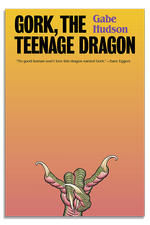
Gork, the Teenage Dragon by Gabe Hudson

Gork, the Teenage DragonGork, the Teenage Dragon

by Gabe Hudson

eARC, 400 pg.
Knopf Publishing Group, 2017

Read: June 30 – July 3, 2017


Note: As I re-read this before it goes up, I thought I should stress something: this is a fun book and I think people will enjoy it. The problem is, it takes more words to describe the stuff I wasn’t crazy about than it does to describe the stuff I liked. I chuckled, I grinned, I was happy for Gork’s successes (happier for his best-friend Fribby’s successes — but they usually coincided) — as rare as they were. Don’t let the length of the “bleh” bits here distract you — Hudson just provoked some thoughts.

There were parts of this that were delightful, parts of it that were problematic, parts that were just okay. There were also too many parts, but we’ll get to that in a bit.

Our protagonist and unlikely hero is Gork — a dragon with pretty strong feelings toward Tolkein and the author of Beowulf for the depiction of dragons — he’s sort of a wimp, his horns aren’t that big (pretty small, really), he’s not that fierce (but he wants to be), and he tends to faint at inopportune times and frequently. Nevertheless, he’s about to finish his last year at the War Academy and head off to terrorize and conquer a planet of his own, all he needs to do is get someone to agree to be his queen and they’ll head off. We meet him on the day he’s supposed to do just that. Now, think back to high school — does this seem like a guy who’s going to be getting a lot of dates? Not really — and when your high school is full of dragons intent on learning how to be the nastiest, fiercest, most terrifying conquerors any planet has ever seen, well — Gork’s odds are even worse.

Naturally, because this is a high school story, our puny geek has set his eyes on the most popular, gorgeous and dangerous girl in school. The question really isn’t “Will Gork and his band of friends be able to convince her to be is queen?” It’s, “Will Gork survive the day?” And oddsmakers around the school, put his chance at that at 1%.

This is clearly from the word “go” a comic novel — we’re supposed to laugh at the madness, mayhem and murdering — and it’s easy to do on the whole. It’s a crazy world Hudson’s created for these dragons to go around in, and most of the characters are amusing. I’m not convinced it works that well as a novel as a whole — as a series of goofy episodes that eventually lead to a big showdown with the nastiest dragon around, it’s all right. (I’m not sure that distinction makes sense to anyone).

I like the idea of spacefaring dragons, dragons that have fully embraced technologies that we can’t think of (or we have thought of, just haven’t done that much with yet) — robotics, nanobots, and more. Although the “mind-swap” device doesn’t really swap minds it . . . well, it’s hard to sum up, but it felt like it belonged more to a Hanna-Barbera show than a SF novel. Basically, this is a Science Fiction wonderland populated with dragons instead of highly developed humans, Grays, Vulcans or Wookies. Still, being that takes away some of the X-factor that makes people fascinated with dragons. Dragons are already pretty cool, you don’t need to give them gizmos and machines that go “ping” — if anything that detracts from them. Still…a dragon in a spaceship is a pretty cool visual.

There’s a moral code that the dragons here live by, or aspire to anyway. It glorifies treachery, destruction, brutality, and so on. Grades of F are to be aspired to, As are to be lamented. That sort of thing — but societies can’t exist like the way Hudson depicts, and honestly, his society doesn’t function the way he says it does (the fact that there are actual friendships depicted, not just uneasy alliances is proof enough against that). You can’t have characters shocked by betrayal in a world where there are classes on betrayal. It’s the moments of loyalty and help that should be shocking, and not trusted by anyone. But no one works that way in this book. This is not a problem unique to Hudson’s work, I’ve run into it before — usually, in works like this, where the twisted ethics are played for laughs and we’re not supposed to be getting as analytical about them as I am. So, ignore everything I just said.

There were just a couple too many zigs and zags to the plot — a few less challenges, a few less pages, and I think this would’ve worked a bit better. I’m not necessarily saying that I can point to something and say, “That right there — yeah, we didn’t need that,” it just dragged a bit here and there. I tend to be more patient than most of the target audience for this book, so I worry about their reaction.

Speaking of target audience — I’m not sure what it is. The humor and emotional depth says MG to me, but the Gork’s fixation on mating and the things that attracts him to potential mates (he’s pretty shallow, I should warn you) are more YA. I’m not sure it matters all that much, it’s just one of those things that ran through the back of my mind during the slow parts.

I got a bit ramble-y there, sorry about that. I clearly am not sure what to make of this book — I enjoyed it, and I bet many will, too. But it has it’s problems — my best advice is, don’t think about it — just enjoy the antics. Gork’s a good guy and is fun to hang out with.

Disclaimer: I received this eARC from Knopf Doubleday Publishing Group via NetGalley in exchange for this post — thanks to both for this.

—–

3 Stars

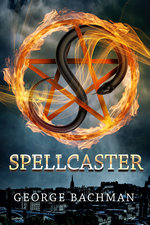
Spellcaster by George Bachman

SpellcasterSpellcaster

by George Bachman

Kindle Edition, 262 pg.
Sublime Ltd., 2017

Read: June 22 – 23, 2017


On a recent Once and Future Podcast episode, Rachel Caine said something about new writers today needing patience — not rushing to publish, just because you can thanks to technology, to take the time to get the book right. Man, I wish Bachman had done that. I think there’s a perfectly fine and probably entertaining novel here — but this needed a few more drafts/revisions, and an editor to come alongside him and give him a hand. Sadly, we have this mess instead.

If you told me that the copy I downloaded was missing several chapters — key chapters, I should note — or that this was a sequel to something that I really should’ve read first, I would absolutely believe that. But given no other titles listed anywhere for Bachman and that the chapters are numbered, I can’t even use that to rationalize the problems.

If I look at the book description, I get a much better idea of what happened in the book that I did from the book itself. Bad sign. I think Bachman was trying to go for mysterious, enigmatic, something to get the readers to dig in to the story. Instead he gave us something confusing, something that obfuscates more than intrigues. I’m not saying the author has to hold my hand and point out everything about the story that I need to understand — but if I have to assume as much as he made me, or just shrug and say, I’m sure that made sense in his head that often, the author failed.

There’s some sort of steam-punk/future tech going on in the setting, but . . . nothing comes from it. It was like he started writing some sort of alt-history or steampunk novel and dropped it, without deleting references to hovercars or two types of showers (one water and the other . . . sonic or something, I don’t recall).

At some point we trade in one set of characters for another — which was fine, but left us with no sense of resolution, or anything for those we left. Aside from 1 character being thought of occasionally, nothing more is said or done with them. I don’t think that was handled well at all.

That goes for the whole book, really. It’s not going to do anyone any good — least of all me — to enumerate all the problems I had with this book. There was some decent writing, a sense of style that should appeal to many, but they were wasted in a horribly plotted and executed novel. Spare yourselves.

Disclaimer: I received a copy of this from the author in exchange for this post. I think it’s pretty clear that the act didn’t persuade me in any way. I still do appreciate the opportunity.

—–

1 1/2 Stars

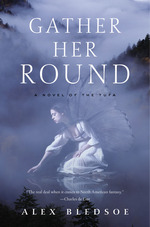
Gather Her Round by Alex Bledsoe

Gather Her RoundGather Her Round

by Alex Bledsoe
Series: Tufa, #5

Hardcover, 315 pg.
Tor Books, 2017
Read: May 29 – 30, 2017

Man, it’s hard to write much that doesn’t boil down to: It’s the new Tufa book by Bledsoe — it’s great, go read it. Which is essentially a tautology followed by a natural conclusion. And isn’t that interesting (then again, I never promised you interesting, Dear Reader).

So, what sets this one apart? Well, there’s the pretty mundane nature of the inciting incident (mundane meaning not magical, not mundane meaning ordinary), the framing device, and the . . . I don’t want to say resolution (because there are a few — and yet none), I guess the way things end.

The framing device is perfect for a Tufa novel — Janet Harper, a noted musician and actress is at a story-telling festival and brings her guitar onstage to use with her story — one that’s true, but that no one in the audience will believe, as much as she says it. She does change the names of the participants (which makes her different than Ray Parrish) to protect everyone involved — including herself (see Ray Parrish).

Janet tells the story of Kera Rogers, who goes for a walk one morning to go play a little music, relax a bit, sext a little with a couple of guys, think a little about cutting out one or both of the guys when she’s attacked by a wild animal and is never seen again. At least not most of her — a small body part or two shows up. The community is horrified that this happens and her parents grieve the end of her young life. Duncan Gowan is one of the boys she was involved with — and thought he was the only one — is wrecked by her death and learning that she was also sleeping with someone else.

The rest of the tale traces the ripples from this event over the next few months (almost a year) — and the next victim to fall prey to the animal — Kera’s family moving on, Duncan getting involved with another woman, the hunters that come in to track the beast (which will also hopefully prevent any police investigation). One of the hunters gets involved with a Tufa we’ve known since the first book, and is introduced to the real culture of Needsville.

While all this is going on, we get the best picture of how things are going with the faction formerly led by Rockhouse Hicks, now led by Junior Damo, and it’s clear to everyone that Junior is not the new Rockhouse — which is mostly good, but there are some real drawbacks. Mandalay Harris takes it upon herself — even though the dead are Junior’s — to get to the bottom of what happened. Sure, it was a wild animal attack — but is that all it was? Her methods aren’t exactly anything you’ll find in a police procedural, but produce results that Gil Grissom and his kind would envy.

The best parts of these books is the way that people like Junior, Mandalay, Bliss, and Bronwyn are secondary characters; while people we’ve never met (or just barely) like Kera, Duncan, Janet, and Jack Cates (the hunter) are the focus. Yet somehow, we care about them almost as much — and through the eyes and experiences of the new characters we learn more about our old friends and see them grow and develop. Bledsoe is fantastic at making each of these books very different from the rest, yet clearly part of a series.

Like every novel in this series — this can be your introduction to the world. Actually, this one may be a better intro-book than any but the first (even as I write that I can think of arguments against it, but I think I can stick with it). You don’t have to have any advance knowledge of this world to appreciate 98% of the book.

There’s heart, magic, fun, wonder, vengeance, a dash of romance and mystery wrapped up in this novel — expressed through very human characters. The humanity shown by these people who aren’t all that human shines through more than anything else.

—–

4 Stars
2017 Library Love Challenge

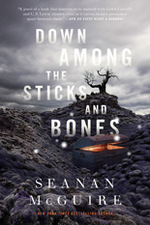
Down Among the Sticks and Bones by Seanan McGuire

Down Among the Sticks and BonesDown Among the Sticks and Bones

by Seanan McGuire
Series: Wayward Children, #2

Hardcover, 187 pg.
Tor, 2017

Read: June 14, 2017

Some adventures begin easily. It is not hard, after all, to be sucked up by a tornado or pushed through a particularly porous mirror; there is no skill involved in being swept away by a great wave or pulled down a rabbit hole. Some adventures require nothing more than a willing heart and the ability to trip over the cracks in the world.

This is the story about how Jack and Jill, the twins in the middle of the events in Every Heart a Doorway, got to The Moors, the dark world they had their adventures in before being returned to ours.

They were born to people that never should have had kids, had miserable childhoods (not that they realized it) — with two bright spots. The lesser, but more constant, bright spot was each other — they always had their twin. Just before this relationship was torn apart by the ways their parents were dividing them, the find themselves in a magic kingdom. They’re split up again, but this time the lifestyles they are immersed in better fit their personalities than what had been imposed on them by the World’s Worst Parents. Jack is trained by a mad scientist, learning to deliver medical care, reanimate the dead and more. Jill is pampered by a vampire that rules The Moors — being coached and guided into becoming one herself. We see them grow into strong individuals in this dark and deadly place before being returned to Earth.

The story is one we know already (assuming we read the first book), and even without that, it’s pretty clear how things are going to go. But that doesn’t make this any less gripping — the character work, the development of these two girls is fantastic. And the world created in The Moors is fantastic, you can see it — practically smell, feel and taste it. Best of all is the way that McGuire tells the story, the way she describes things (emotions, internal actions, external actions). It’s almost as magical as the first book.

It’s not a perfect novella, however. I’d have been tempted to call the previous one perfect, but this doesn’t quite make it. It seemed like half-story, half-manifesto against the kind of parenting McGuire hates.

This, you see, is the true danger of children: they are ambushes, each and every one of them. A person may look at someone else’s child and see only the surface, the shiny shoes or the perfect curls. They do not see the tears and the tantrums, the late nights, the sleepless hours, the worry. They do not even see the love, not really. It can be easy, when looking at children from the outside, to believe that they are things, dolls designed and programmed by their parents to behave in one manner, following one set of rules. It can be easy, when standing on the lofty shores of adulthood, not to remember that every adult was once a child, with ideas and ambitions of their own.

It can be easy, in the end, to forget that children are people, and that people will do what people will do, the consequences be damned.

It’s McGuire’s book, I’m not saying she shouldn’t feel free to use the space the way she wants — but it detracted from the story. Their parents have no redeeming qualities whatsoever, McGuire’s usually better than that. I think you could make the case that their shallowness, their utter horribleness fits the fairy-tale-ish story she’s telling. Honestly, I think that was the case — but it just doesn’t feel right. I would’ve like a little more time with the vampire himself — although maybe not getting more time with him, and learning about him primarily from the way that others react to him and his actions does make him creepier.

I was hoping (but didn’t expect) to see a little about what happened to the pair after Every Heart, oh well — hopefully soon.

I thought it a little heavy-handed in some places, but overall, I was just so happy to return to this series that I can get past it and recommend this one almost as highly as the last one.

—–

4 Stars

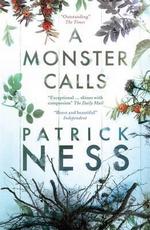
A Monster Calls by Patrick Ness

A Monster CallsA Monster Calls

by Patrick Ness

Paperback, 225 pg.
Candlewick Press, 2013

Read: June 1, 2017


I hadn’t even heard of this book until a couple of weeks ago, when it was recommended to me by a loyal reader. And I wasn’t given a lot of details, just a strong recommendation and something about it being “about grief.” I could’ve used the warning that it was a YA book, but otherwise, that’s all I needed to know (and the YA wouldn’t have been a deal breaker or maker — I just would’ve liked to know what I was grabbing). I’m not going to say much more than that, really. It’s about grief, there’s some magic, and it’s one of the most effective novels I’ve read this year.

There’s been so much said about this book by others — I’m almost afraid to say much, I don’t want to ruin anyone’s discovery.

You’ve got a 13 year-old boy, Conor, whose mother is undergoing cancer treatment — and it’s not going well. His grandmother (not at all the stereotypical grandmother-type, as Conor is very well aware), comes to stay with them with every new round of treatment, and Conor hates it. His father and his new wife have started a new life in the US. All of this has left Conor isolated, emotionally all alone — except at school, where he’s bullied (when not alone). Somehow in his despair, Conor summons a monster, a monster older than Western Civilization, who visits the boy to help him.

He helps him via stories — I love this — not escapism, but through the lessons from stories — and not in a “You see, Timmy . . . ” kind of moralizing — just from understanding how people work through the stories.

After reading page 15, I jotted down in my notes, “Aw, man! This is going to make me cry by the end, isn’t it?” I didn’t, for the record, but I came close (and possibly, if I hadn’t been sitting in a room with my daughter and her guitar teacher working on something, I might have.

The prose is easy and engaging — there’s a strong sense of play to the language. There’s some wonderfully subtle humor throughout, keeping this from being hopelessly depressing. The prose is deceptively breezy, it’d be very easy to read this without catching everything that Ness is doing. But mostly, what the book gives is emotion — there’s a raw emotion on display here — and if it doesn’t get to you, well, I just don’t know what’s wrong with you.

The magic, the monster and the protagonist remind me so much of Paul Cornell’s Chalk (which is probably backwards, Chalk should be informed by this — oops). Eh, either way — this is cut from the same cloth.

That’s a bit more than I intended to say, but I’m okay with that. I’m not convinced that this is really all that well-written, technically speaking. But it packs such an emotional wallop, it grabs you, reaches down your throat and seizes your heart and does whatever it wants to with it — so who cares how technically well it’s written? (and, yeah, I do think the two don’t necessarily go together). A couple of weeks from now, I may not look back on this as fondly — but tonight, in the afterglow? Loved this.

Love, grief, hope, loss, anger, fear, monsters and the power of stories. Give this one a shot. Maybe bring a Kleenex, you never know . . .

—–

4 1/2 Stars

2017 Library Love Challenge

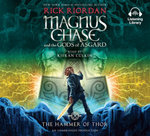
The Hammer of Thor (Audiobook) by Rick Riordan, Kieran Culkin

The Hammer of ThorThe Hammer of Thor

by Rick Riordan, Kieran Culkin (Narrator)
Series: Magnus Chase and the Gods of Asgard, #2
Unabridged Audiobook, 10 hrs., 34 mins..
Listening Library, 2016
Read: May 10 – 12, 2016


Thor’s hammer is missing, so not only can he not stream Netflix (I’d forgotten that was a thing in this series) on it, he can’t intimidate the giants into not invading. You can guess which bothers him more. The Valkrie Samira and her pal Magnus have to go find it before things get out of hand.

I didn’t like this one as much as the first book in this series — but I didn’t dislike it. It’s still the same outline that Riordan is following with these books — there’s a quest; the hero and his friends have to go find the whatever to stall doomsday a little longer; to get the X the group has to beat a series of mini-challenges and then they’ll have a shot at the X. Since this is a book 2, they’ll get X, but many other things will go wrong, forcing the series into another book. For the most part, the minor challenges worked better for me than I expected.

I enjoyed Magnus’ friends — Samira in particular; although I’m pretty torn about the new character added to Magnus’ group: Alex Fierro — a child of Loki. I understand what Riordan was trying to do with this character, but I’m not sure he succeeded. I’m not convinced that Alex was a person, and not just a conglomeration of traits. But I have hope. Alex’s presence, I thought, ended up short-changing some of the other characters when it came to action and involvement in the plot, which I wasn’t crazy about.

I really enjoy seeing different authors’ take on the same mythological characters. Comparing/contrasting Kevin Hearne’s and Riordan’s Thors and Lokis would make for a very entertaining piece (I think Riordan’s Thor is more comical, but his Loki just might be more sadistic), and I will admit I got distracted a couple of times listening to this by thinking about the differences.

The best part of this was seeing how the problems Magnus, etc. are dealing with intersect some of what Percy, Annabeth and Apollo are going through in Riordan’s other series, and the strong hint that we’ll see some sort of cross-over soon. We’d understood that the Egyptian gods were threatening the earth about the same time that the Problems with Camps Jupiter and Half-Blood start up, but this was a much more explicit description. I like thinking that the various pantheons are having troubles at the same time, and that Earth could be doom in any number of ways simultaneously.

I bought this in hardcover the week it came out (last October, I think), but haven’t been able to find/make the time to read it. When I saw it as available on my library’s audiobook site, I figured I’d jump — just to get that TBR pile a little smaller. I hadn’t listened to Riordan on audio before, and was curious ow it translated. I was surprised to hear Kieran Culkin’s name (and voice) at the beginning of this — he didn’t strike me as the kind of actor who’d do audiobooks. I’m glad that he did, though. I really enjoyed his work throughout the novel — the narration, the characters — he just nailed it. That’s how Magnus Chase should sound.

It was entertaining enough to keep going, and I trust that Riordan knows what he’s doing, I’m just not convinced that he did all he could to make this book as good as it could be.

—–

3 Stars

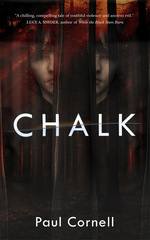
Chalk by Paul Cornell

ChalkChalk

by Paul Cornell

Kindle Edition, 206 pg.
Tor.com, 2017

Read: May 5 – 8, 2017

There are kids who went through school experiences like mine who will never watch football, and there are those who end up playing for Arsenal. Okay, who will end up with season tickets. Stockholm syndrome will only take you so far.

Enough about what I am now. That comes later.

Everyone keeps talking about this as a story about bullying — sure, there’s a little bullying here. But mostly, that’s like saying that Hannibal Lecter enjoys an unconventional diet. What happens to Andrew Waggoner is so far beyond bullying — it’s flat out assault (but with a psychological component that matches bullying). After a Halloween dance, Waggoner is forced into the woods by the school bullies and is assaulted. Somehow, his trauma links him to some long-dormant forces who take the opportunity to reassert themselves. One manifestation of the mystical/magical works with (compels? coerces? convinces?) Waggoner to take his revenge against those who permanently scarred him mentally and physically.

And over the next 12 months, that’s just what happens — Waggoner and/or his mystical companion (it’s never clear exactly how much is done by each) exact their revenge — Waggoner vacillates in his commitment to this project, and comes close to stopping on many occasions. In the midst of this, he becomes a writer and makes a friend based on shared interest, rather than just being social pariahs. In short, he starts growing up.

Meanwhile, the ancient forces tied to Waggoner are in open conflict with the dominant, more modern/contemporary, forces/beliefs. The school — and the students’ lives — become the major battleground for them, the final conflict coming on the anniversary of the attack that changed Waggoner’s life forever.

I kept seeing the school as the school from Sing Street (except, in the West Country, not Dublin — but roughly the same era), which I know is inaccurate, but I couldn’t stop myself. Pop music plays a large role in the story, and as it’s set in the early 80’s I didn’t have to google most of the songs (there were a couple of tunes that didn’t make it to Idaho that long ago) — which was a plus for me, and probably most readers.

You can tell (well, you can guess) that Cornell and Waggoner had similar experiences in their early lives — the language he uses to describe the bullying speaks to that. But more than that, the way he describes how the bullying shaped him, both then and when Waggoner reflects on those events from the vantage point of adulthood, resonated with me, and will with many readers.

The characters — bullies, victims, other children, or adults — were all wonderfully constructed. I’m not sure that I liked any of them (including Waggoner), but I was drawn into this world, and was very invested in what happened to each of them.

This was intense, gripping, strangely something (I want to say beautiful, but that doesn’t seem right) — there’s a je ne sais quoi about Chalk that inspires and repulses at the same time. I know I haven’t done a good job describing this book — I’m trying hard not to ruin anything for future readers. It was one of the more affecting, compelling books I’ve read this year. Cornell does a masterful job of mixing our reality with his fantasy — as he’s shown in the Shadow Police and Lychford books — this time you add in a layer of childhood horror and wonder to that combination.

This is something special, you won’t read much like it.

—–

4 Stars

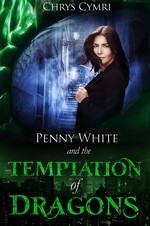
The Temptation of Dragons by Chrys Cymri

The Temptation of DragonsThe Temptation of Dragons

by Chrys Cymri
Series: Penny White, #1

Kindle Edition, 232 pg.
2016

Read: April 24 – 26, 2017


Penny White, an Anglican priest of a small town who seems to be working on becoming a functional alcoholic, is driving home one night when she feels her car hit something. She stops to investigate and comes across a dragon who claims to be dying and requests last rites. Without thinking, she gives them, gets home without further incident and goes to sleep. By the next morning, she’s convinced herself it didn’t happen.

Until the next day, when her bishop asks her to take a role in ministering to magical creatures like dragons, unicorns, vampires, and more in a parallel reality to ours. Being a pretty big fan of SF/F, she jumps at the chance, and ends up ministering in both worlds. A gryphon named Morey is assigned to live with her and help her navigate between the two worlds (and other reasons). Actually, his name isn’t Morey — it’s something long and fairly unpronounceable because it’s Welsh — in the magic reality, everyone speaks Welsh.

I really dug Penny — I could understand her emotional arc and thought it was dealt with in a pretty solid way (I’m a little worried about the semi-triangle thing set up here, and hope it doesn’t get too overplayed in future books). But a big part of Penny’s character — and what helps her adjust to this new life — is her SF/F fandom. I share most of her tastes (including her love for the Seventh Doctor and Ace). Morey was another strong character, and I appreciated that there was a pretty strong theologically conservative voice sympathetically portrayed in this book — I didn’t expect to find myself agreeing with a gryphon’s theology more than with a human’s (a clause I never thought I’d write) — even if there was a patronizing explanation offered by one character (and seemingly shared by others) for his stances. His emotional arc was just great.

The rest of the characters were almost as engaging as these — human or not, they were people. Many of them need more time to be developed, but given the constraints of this one novel, I didn’t think many of them got short-changed.

I thought the plot was pretty strong, and I did quite enjoy it — particularly Penny’s search for balance between her two callings, Penny and Morey’s bonding, and Penny’s family life. But the books isn’t that much about the plot — this is primarily about the characters and relationships throughout. This was more about setting up the series, introducing the characters, species, and worlds — all of which Cymri did very capably. But the book’s core was in the character moments, the characters themselves and this very interesting world that we’re starting to learn about.

This is a comparison that won’t mean much to most of my readers, I imagine — but for those who get when I’m saying, you’ll understand this book. This book reminded me of reading the early volumes of Christopher Stasheff’s Oathbound Wizard series — I think it’s more than intelligent, articulate fantasy monsters and an Anglican/Roman Catholic approach to faith, the sacraments and the world, but that’s part of it. Mostly, it’s the warmth, confidence and charm in these pages that lured me in and kept me interested.

This is truly a lot of fun, give it a shot.
Disclaimer: I received this book from the author in exchange for this post — thanks so much for this. Sorry it took so long.

—–

3 Stars

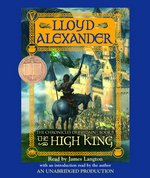
The High King (Audiobook) by Lloyd Alexander, James Langton

The High KingThe High King

by Lloyd Alexander, James Langton (Narrator)
Series: Chronicles of Prydain, #5
Unabridged Audiobook, 7 hrs, 24 min.
Listening Library, 2005

Read: March 29 – 30, 2017


Arawn-Death-Lord has managed to get his hands on Dyrnwyn, Gwydion’s sword, which has emboldened him to move his forces to launch an all-out assault on the Kingdom of Prydain. Gwydion and his allies move quickly to assemble the forces necessary to stand against him — basically, it’s an Armageddon-type situation, and all hands are needed.

Taran is sent to the Free Commots, where he spent so much time recently to gather their support — and he does so, almost without trying to, becomes the leader of the assembled forces (such as they are) of the rather libertarian people. Before you know it, Taran’s leading his band into battle at the side of Gwydion and the other warleaders. It’s a stretch to believe, but at this point, you go with it. The forces marshaled against the High King are strong enough to make this an uphill battle, but when treason rears its ugly head and the forces of Prydain are divided against themselves, it really seems that all hope is lost. Eventually, Gwydion and his forces head off on a last-ditch effort to stop the Death Lord, while Taran, his companions, allies, followers and Glew take on a vital, but smaller task that will allow Gwydion’s hail Mary to work.

And frankly, that whole treason storyline bugs me — not just because it’s evil, but because it’s futile, stupid, and pointless. I think this was Alexander’s biggest error in the series. It serves no real purpose but to stack the odds against the armies of Prydain.

Finally, we get final battles — The Death Lord and his forces are defeated (spoiler, children’s fantasy written in the 60’s features good guys winning); the future of Prydain is settled; other Tolkien-esque things take place as is fitting in the conclusion to a fantasy series (actually, Tolkien was probably following the same older rules and tropes as Alexander, but we now associate them with Tolkien, not his predecessors).

Taran finally grows up into what Alexander’s been holdig out for him all along — it takes the whole novel, but it happens. Gwydion is probably the least interesting he’s ever been here, which is a shame. Eilonwy? Oh, Eilonwy — she’s just so perfect (as a character, probably annoying in real life — still, someone you want in your corner). I loved everything about her in this book. I wish Gurgi had a little more to do, and that Glew had far, far less. Fflewddur Fflam remains the unsung hero of this series — the sacrifices he makes, the efforts he makes, his wisdom, etc., are all overshadowed by his comedic use. What he goes through moved me more this time through than any of the deaths. As an aside, the first time I saw a picture of Lloyd Alexander, I shouted — Fflewddur! I don’t know if it was intentional, or if I just had a strange imagination, but he looks exactly like a Fflam.

Oh, and there are many, many deaths — mostly nameless soldiers on both sides, but there are quite a few named people, too. Some get great heroic moments, others are just named in a list of the fallen. I remember the first time I read this book being very upset by just one of them — it was quite possibly the first time in my young life that anyone other than a dog, an ailing elderly person or a villain had died in a book I read. I still get sad when I read that particular one, but it doesn’t get to me as much.

James Langton’s performance here is consistent with what he’s done for the last few books. If you liked him before, you’ll like him now. If not . . .

I remember liking this more than I did, even just a few years ago when I read this with my kids. Still, a great way to wrap up this series — Alexander ties up everything that needs tiring up, he rewards all the surviving characters in a fitting way and sends our heroes off on new adventures. There’s still a bit of fun, a little adventure, and character growth throughout, with all things ending up just where they need to satisfy readers. It’s really easy for adult-me to see where kid-me fell in love with the genre thanks to this series. Still, a fitting conclusion to this series — which I still recommend for young and old (primarily the young).

—–

4 Stars

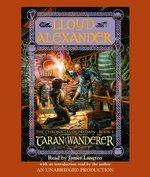
Taran Wanderer (Audiobook) by Lloyd Alexander, James Langton

Taran WandererTaran Wanderer

by Lloyd Alexander, James Langton (Narrator)
Series: Chronicles of Prydain, #4
Unabridged Audiobook, 6 hrs, 22 min.
Listening Library, 2005

Read: March 28, 2017


The one question that’s plagued Taran all his life is just who is he? Who is his family? Is there any chance at all that his family is some sort of nobility? This last question has taken on a new level of importance to him as he has realized that he’s in love with a princess and can’t do anything about it without that nobility.

Dallben can’t answer the question for him — but he allows Taran leave to go try to find the answer himself. I’ve never understood just how Taran can pull this off — there’s practically no birth records in Prydain (I can’t imagine), it’s not like he can get blood tests done — and he doesn’t really interview anyone, just meanders around.

Still, he visits various corners of the kingdom — visiting friends old and new, dipping his toe in all sorts of trades and vocations. He renders aid, and gets aid. Fflewddur Fflam shows up and spends a good portion of the novel traveling with him (Gurgi remains a constant companion). There’s a confrontation with a wizard, a regional armed conflict to try to settle, a mercenary band to deal with — as well as other woes.

He learns a lot, he matures a lot, and maybe even gets a dose of wisdom. It’s not your traditional fantasy novel by any sense, but it’s a good one.

As for the audiobook? Everything I’ve said about the other books in the series — Alexander’s introduction and Langton’s performance — holds true for this one.

The most emotionally rich of the books, the most thoughtful — particularly for those of the target age. Good, good stuff.

—–

4 Stars

Page 42 of 54

Powered by WordPress & Theme by Anders Norén