Tag: Fantasy Page 44 of 54

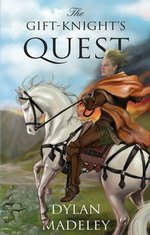
The Gift-Knight’s Quest by Dylan Madeley

The Gift-Knight’s QuestThe Gift-Knight’s Quest

by Dylan Madeley

Kindle Edition, 289 pg.
Matador, 2015

Read: December 29 – 30, 2016


I typically try to be thoughtful and at least semi-thorough when I write about a book here — even (maybe especially) those I didn’t care for. I don’t think I have it in me for this one.

This fantasy novel is full of political intrigue, secrets, revelations (not nearly enough of those), and deception — it felt like someone who wanted to write a streamlined George R. R. Martin novel. But here’s why Martin works — we care about the people involved (we may not like them, but we care what happens to them — even if that’s just them getting molten gold poured over them, we care that it happens). Speaking of Martin, his books are complex webs — this was a convoluted mess. It wouldn’t have been too hard to clear up things a bit — but it still wouldn’t have made it good, but it’d have been easier to read.

The characters were sketches, when not clichés. Chandra, the central(ish) character is close to an actual character that I can almost care about, understand and root for. Close, but not quite there.

Actually, that sums up the book — close, but not quite there.

Disclaimer: I received a copy of this book from the author in exchange for my honest opinion. This is overdue, and I am sorry about that, however.

—–

2 Stars

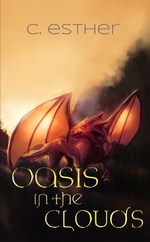
Oasis in the Clouds by C. Esther

Oasis in the CloudsOasis in the Clouds

by C. Esther

Kindle Edition, 248 pg.
Createspace, 2016

Read: December 27 – 28, 2016


I started this with a degree of trepidation — I’ve been burned lately by sub-par fantasy novels, and try as I might, I couldn’t ignore that when I pulled this up. Thankfully, it took less than a chapter to dispel the trepidation, and not much longer to win me over.

Niri is the Crown Princess and the subject of prophecy. Which is why she’s been kidnapped, imprisoned in an idyllic floating island, and had her memory wiped. Or so she’s been told by a rescuer. She’s really not sure, because, well, that whole memory wipe thing.

Why don’t bad guys, misguided people’s champions, pranksters, etc. ever learn what prophecy means before trying to defeat it? We’re not talking weather forecasting, punditry, or statistical analysis — we’re talking prophecy. It’s going to happen. (not really a spoiler, here) Sure, we’d lose out on some good stories if not for this stubborn refusal to pay attention to definition — or self-deception. And, it needs to be remembered, not every prophecy is going to be interpreted correctly.

Anyway, I need to jump off of that particular rabbit trail . . . her rescuer helps her start to retrieve her memories, as well as to develop magical abilities she didn’t know she had (even before the memory wipe), in an effort to confront her kidnapper, fulfill the prophecy and save the kingdom.

The book blurbs give away less than most, and I’m going to try to honor that here, so that’s it for plot from me.

I liked the characters — the King and Queen aren’t as useless as most authors would make them, Niri’s kid sister is a pretty good character, Love Interest Guy seems pretty decent, too. Niri’s allies are great (I wouldn’t have minded the snarky one being snarkier). I liked Niri and started rooting for her almost instantly. The villain of the story is believable and fairly sympathetic. Really well-drawn.

The writing is warm and engaging — it could be better, some of the dialogue is stilted; there are goofs like using “implicated” instead of “implemented” (just a guess, but given context, I’m betting that’s what she was going for); commas out of place, someone having a “photo” in a fantasy kingdom — minor, and relatively rare, goofs. The story and people C. Esther has wrapped around these flubs are entertaining and compelling enough that you shake them off and move on.

This is a fun book — it could’ve used a little more polishing, sharpening up some plot points and character beats a little. But it’s good enough as it is to recommend it. Fun, a little out of the norm, with a satisfying conclusion. That’s good enough for me. Check this one out.

Disclaimer: I received a copy of this book from the author in exchange for my honest opinion. Honest, not punctual. Really sorry for the delay, C. Esther.

—–

3 Stars

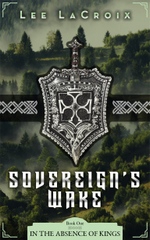
Sovereign’s Wake by Lee LaCroix

Sovereign’s WakeSovereign’s Wake

by Lee LaCroix
Series: In the Absence of Kings, #1

PDF, 344 pg.
2015

Read: December 26 – 27, 2016


I don’t normally get into the nitty-gritty of the writing when I compose these posts — not because I don’t notice or care about it — but sometimes you have to. When I can’t make it past the first three paragraphs without the writing drawing attention to itself (not in the delicious way that Neil Gaiman or Don Winslow do so often), I feel like I’ve got to mention it.

In a different time, there was a forest that was as deep as it was plentiful. . .

That boy, Novas, possessed deep green eyes as verdant as the wild around him . . .

. . . He was taught that the land was just as alive as he was . . .”

That phraseology isn’t wrong — but it’s easy to overuse, and when you do it once in each of the first three paragraphs, you might was well be waving a flag to draw attention to it. Now, there’s no author that doesn’t stumble a bit, I can’t tall you how many times I’ve posted something here that I wish I’d rewritten a few times — I don’t want to pick on him, but wow, this kind of thing kept coming.

It wasn’t too much later that Garreth (I’ll talk about him in a bit) tells his son,

“Over my employment, many people tried to kill the King, and it was my duty to stand in between them. Instead, I put them to death…”

Uh, what?

Soon, Garreth and his son head to the capital, but we read:

In order to reach the capital of Amatharsus, their journey was not an odyssey of undertaking.

Editing is about more than just grammar and spell checking — it shouldn’t be less than that. I don’t know if I could find a page that didn’t have a problem with the writing.

Enough about that, I had a few more notes on that front, but no one wants to read it (I don’t want to write it). Let’s get on to story and character.

Garreth is a former guard of the king, who has taken a post guarding the forest. And, let’s be honest, doing something else, too. But LaCroix won’t reveal that until book three. We know nothing about his wife and/or the mother of his son. We’ll probably learn about Novas’ parentage in book three, too. Anyway, the two learn that the king is dead and that The Queen/Powers acting without knowledge and consent of the Queen/The Queen working with these Powers have decided to level the forest for economic reasons.

Garreth can’t believe this, so he and the boy leave for the capital to find out what’s really going on. Along the way, they learn more about the Blackwoods Company — the same people out to raze the forest — who are playing both sides of the law — thieving, pillaging and whatnot, while acting as enforcers for the authorities. The two join up with — and taking leading roles — in the resistance to the new order that has developed in the absence of a king.

Overall, this is a poorly written book. The story was adequate, but there was nothing about it that made you pay attention. Many of the characters had potential to be something, but they end up being something we’ve all seen dozens of times before in better stories. I can’t think of anything to commend this novel.

Disclaimer: I received a copy of this book from the author in exchange for my honest opinion. I really wish this had been more timely, sorry about that.

—–

2 Stars

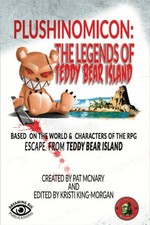
Plushinomicon edited by Kristi King-Morgan, Connor MacDonald, B. Jaymes Condon

PlushinomiconPlushinomicon: The Legends of Teddy Bear Island

by Kristi King-Morgan, Connor MacDonald,B. Jaymes Condon eds.

Kindle Edition, 146 pg.
Dreaming Big Publications in collaboration with Orcs Unlimited, 2016

Read: December 19, 2016

What, you may ask, did Jessie the Flufamancer do? Well, he animated the plush creatures of the children. Then he made them do his evil bidding. I can’t even begin to tell you about the bidding that he bade, but just believe me when I tell you that it was evil!

That’s the third (or so) paragraph in this collection of short stories — and it’s the one that convinced me I wanted to finish this.

It’s a collection of stories about various adventurers (or the like) going to Teddy Bear Island to try to find Jessie (for various reasons), to find treasure, just to prove they can — or any number of other reasons that dwarves, elves, humans, orcs or kobolds might find themselves adventuring (There are more kobolds in this collection than I’ve probably ever read before — and I really liked them). They’re designed as campaign starters for the RPG, Teddy Bear Island, or to enjoy on their own. They work either way.

There’s a sense of play, a sense of fun in the middle of traditional-ish fantasy adventure stories. The various plush animals are a hoot, my favorite idea was the hydra-bear. I don’t know that I can point to any particular stories and say “This is one of the best,” — or the worst, actually. They’re all delightful in practically equal amounts.

There are laughs, puns, pop-culture jokes and danger in the midst of the goofiness of stories. It’s hard to explain, but imagine a less-intense version of The Lord of the Rings, but populated by stuffed animals (and you’ll be pretty close).

I am not an RPG player — I’ve tried, but just never clicked with me. But these stories make me really want to, first time since Dragons of Autumn Twilight that a book has had that effect on me. Which is sort of the point, right? Even without that, it was a fun collection of adventure stories

Disclaimer: I received a copy of this from the Publisher in exchange for my honest thoughts.

—–

3 Stars

A Strange Chemistry by M. T. Miller

A Strange Chemistry A Strange Chemistry

by M. T. Miller
Series: The Nameless Chronicle

Kindle Edition, 69 pg.
2016

Read: December 14, 2016


If Miller had told me that he was going to write a novella about someone else in The Nameless Chronicle, I’d have had 3 or 4 guesses who’d it’d feature. And I would’ve been wrong. However, if he’d asked for requests, this is what I’d have asked for.

Sure, I’d rather see more from Nameless and I don’t doubt we’ll get that soon — but if we’re going to take a side trip, Rush is the one I’d like to go with.

This takes place not long after the end of Ascent, and if nothing else, this lets us catch a quick glimpse of life after those events. But we don’t get much of that — mostly this is about Rush and her own personal aftermath. Which ain’t pretty. The drugs she’s been taking to perform at the level she does aren’t doing there a lot of for her and withdrawal is lurking around the corner all the time. It’s possible, just possible, that the steady stream of drugs that she depends on is slowing down — maybe even changing into something else. This, and her steady need for distraction, gets Rush on the street to investigate. Which doesn’t go so well for her — but Rush being Rush, it goes worse for most of those who cross her.

While we’re seeing this, we get Rush’s origin story, which goes almost exactly the way you’d have guessed. But Miller gives it to us in such a way that the reader doesn’t feel like he’s wasting his time reading it — it also helps the emotional weight of what’s going on in the “present” day story. I thought she was interesting before, I know she’s interesting now — and I can’t wait to see what Miller’s going to do with this character next.

This is a short, fast read with plenty of action and a good dose of insight into one of this series’ most interesting characters. If you’re reading The Nameless Chronicle, you want to read this. If you’re not reading the series, you should look into it. Good stuff.

Disclaimer: I received a copy of this from the author in exchange for my honest opinion and because the author’s a cool guy.

—–

3 Stars

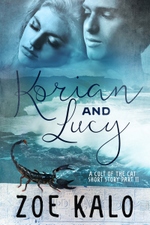
Korian and Lucy, Part II by Zoe Kalo

Korian and Lucy, Part IIKorian and Lucy, Part II

by Zoe Kalo
Series: The Cult of the Cat, #.06

Kindle Edition, 35 pg.
2016

Read: November 29, 2016


I’m not sure how to go about this — this makes no sense if you haven’t read Part 1 of this tale — and neither would really make that much sense without the novel, Daughter of the Sun. So if you haven’t read either — skip this, really. Go read Kalo’s novel (or at least my take on it) instead of this post.

Still, I want to say something — and not just because I said I would. I liked this a whole lot better than Part I , which is just about the fainted praise possible. And, like with the novel, Kalo is starting to win me over — she has a certain charm, no doubt about it. I liked Lucy more after this book — her mother. too — and I’m a tad more interested in the story. All good — and well done, Kalo.

Here’s the problem: I’m less convinced than I was after Part I that Kalo’s readers need this story. We haven’t gotten anything we couldn’t and wouldn’t have assumed from what we learned in the novel about this period. I don’t need to know anything about Trinity’s mother, or her romance with Trinity’s father, to be invested in Trinity. Also, I’m not sure that Part II actually accomplishes anything other than letting us know that time passed and that the pregnancy progressed — oh, and it charms curmudgeonly readers like myself. But the story needs to do more than that to justify itself, doesn’t it?

Now, will Part III be able to change my mind about this entire story? Sure. I truly hope it does. But at the present, I don’t see why she bothered with this installment.

Still, I enjoy this world — I like Kalo’s writing (which was better here than in Part I, but not as good as in Daughter of the Sun, Kalo’s one of those writers that needs space), so I’m glad I read this, as will most of her readers be. I’m looking forward to Part III (and truly hope that it wraps things up) — but even more, I’m looking forward to the sequel to Daughter of the Sun.

Disclaimer: I received a copy of this from the author in exchange for this post and my honest opinion.

—–

3 Stars

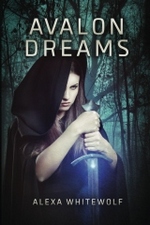
Avalon Dreams by Alexa Whitewolf

Avalon DreamsAvalon Dreams

by Alexa Whitewolf

Kindle Edition, 659 pg.
2016

Read: December 5 – 7, 2016


There’s a decent novel hidden in these pages, and I do appreciate what Whitewolf tried to do, but it just didn’t succeed for me. But let’s focus on the positive for a bit.

Vivienne Du Lac, who in a future life was The Lady of the Lake (as in, “The Lady of the Lake, her arm clad in the purest shimmering samite, held aloft Excalibur from the bosom of the water…”) has been reincarnated into the modern life as a nervous, socially awkward historical researcher. One day, the reincarnation of her former bodyguard, Sébastien, shows up in town and everything goes to pot.

Sébastien is dealing with the effects of an ancient curse, and is torn between his strong desire to serve and protect Vivienne, while being convinced that he’ll cause her harm. In her previous life, Vivienne was served by a demon dog — who finds himself as a large Caucasian Shepherd, with diminished magic. Alistair’s a fun character — sort of a canine Ben Kenobi.

I really liked the fact that while, yes, this was your typical Chosen One fantasy; this particular Chosen One was an adult woman. This particular Chosen One has been brought back to stop the former apprentice of Merlin, Carleigh, from wreaking havoc on the 21st Century. He’s a very powerful necromancer now, and only someone of pure magic has a chance against him. I’m not really sure what this pure magic is, but that’s beside the point. It’s not just Carleigh they have to prevail over — he’s got a contemporary henchman, some druids, and Sébastien has run afoul of the Mob.

I’ve got to say that I’m not sure what anyone (Sébastien in particular) sees in Vivienne, she’s pretty self-involved, treats everyone like a servant, and generally seems pretty spoiled. That said, it’s really easy to find yourself rooting for her and her guardians. The romance works because of their past (where, as royalty she acted a lot less like one than she does as a researcher).

There’s some strong Arthurian themes throughout this book, mixed in with some contemporary tropes — a mix that’s sure to satisfy.

Here’s my problem with this book — besides the personality of the protagonist — and the only thing that keeps me from strongly recommending this: the language. Whitewolf just doesn’t have the command of English to write this kind of book without a strong editor. She writes as if she had a Romanian-to-English Dictionary open next to her. It’s hard to complain about someone working too hard on a book, so hard that she ends up overwriting — the emotions are overwrought, the prose can be clunky, and frequently the words are just wrong (sometimes, not by much, but enough to draw attention to themselves and stop the flow of the narrative). Now I feel like a snob and a heel for saying that, but it detracted from what could’ve been a fun read.

If you can get past the language issues, it’s a fun contemporary fantasy with Arthurian ties, and I can see where people would enjoy it — I did, but I had to work harder than I should’ve to get to that point.

Disclaimer: I received a copy of this novel from the author in exchange for my honest opinion. Thanks, Ms. Whitewolf.

—–

3 Stars

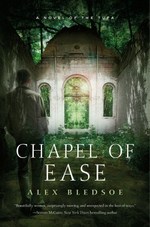
Chapel of Ease by Alex Bledsoe

Chapel of EaseChapel of Ease

by Alex Bledsoe
Series: Tufa, #4

Hardcover, 315 pg.
Tor Books, 2016

Read: November 19, 2016

“Sometimes the best mysteries are never solved, because the mystery is too important to lose. This is the story about one of those mysteries. Most of it’s true, and the parts that ain’t, well, they still sound true.”

It’s time to return to Needsville, TN, the home of the Tufa for the latest installment in one of the best ongoing Fantasy around. One of the best things about this series is how every book is completely different from its predecessors, but they all clearly belong to the same series.

After a quick tease, we enter the story in New York City where an up-and-coming musical writer/composer and a well-established director are casting for an off-Broadway musical (the opening line of which was quoted above). There’s something about the story and songs penned by Ray Parrish that draws everyone who reads and/or hears them in as surely as moths to a flame. One such person was Matt Johanssen, who becomes friends with Ray as well as one of the more dedicated cast members.

The twist in this tale comes from the source of Ray’s material — old (and not-so-old) Tufa stories and music. As anyone who knows these people realizes, people back home are not going to look kindly on this. There are a couple of people on the fringes of Ray’s world that make it clear that the Tufa want something out of Ray — ideally, a cessation of any musical or play or anything ending up in public. Ray will not be dissuaded, this is the story he wants to tell — whether people in Needsville want him to or not.

Just before the much-talked about play opens, Ray dies in his sleep and it falls upon Matt to bring his ashes home to his family. While there, he has the opportunity to look into the places and people this play is based on — and maybe get an idea what the central mystery of the play is about. Ray’d played his cards close to the chest on this topic and without him around to tell the cast, someone has to do some first-hand research. So, while mourning his friend and getting to know his family, Matt finds himself on the verge of instigating a feud while doing his research.

Now, it’s not unusual for a Tufa novel to feature an outsider’s first encounter with the Tufa. But this time, the book is just about that — there’s so little action outside of this story that it really doesn’t merit attention (at least not now). In these pages we have a first person narrator as the person encountering the culture. This gives everything an immediacy, an intimacy that we don’t normally get to these. Also, the narrow concentration keeps the reader focused on what’s going on with the Parrishes and Matt, without worrying about the Tufa politics, shifting power, and so on (it’s there, and there are changes in town, but that’s not what the novel is about).

In many ways, it’s not a novel about the Tufa — it just happens that they’re around, it’s a novel about Matt and Ray. But once you throw the Tufa in, you end up with something that’s not your typical story about a dancer/actor from NYC returning his friends’ ashes to the Appalachian town he grew up in.

I thought Matt was great — as was his dawning realization that he wasn’t in the world he knew anymore, and how he reacted to that realization. The way he stepped into parts of the culture he was exposed to was well handled, second only to the way he went about fighting against or struggling with the rest.

You do get to see your favorite recurring characters and they make references to events in the other novels, so readers of the series do get to check in on things other than the Parrishes — please don’t misunderstand. The novel’s focus isn’t on that, however.

If you even glance at the cover blurb, you know that someone has to die so that there’s an urn for Matt to bring to Cloud County, but Ray’s inevitable death was a doozy — and the memorial service held for him was one of the more moving things I’ve read this year (the impromptu memorial in New York held by friends/cast, that is — the wake the Tufa held was a different kind of experience). Making you care about a guy you know is going to die before you open the book and meet him that much takes a special kind of writer — and that’s what Alex Bledsoe is. Naturally, that doesn’t just apply to Ray; it works for Matt, the Parrishes, C. C. and several others who actually survive the book (and one that doesn’t).

I feel like I’m in danger of becoming the Chris Farley talk show host character here, “Remember that part in the book where Matt does ____? That was cool.” I really don’t know what to say about this book — or the others in the series — that I haven’t before. It’s a great setting, with a culture and people you want to see again and again, for both understanding and entertainment. Plus the overwhelming desire to actually hear the music they keep talking about. This is Bledsoe at the top of his game, you should be sure not to miss it.

And, like the play itself — it all sounds true.

—–

4 1/2 Stars

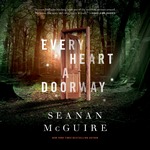
Every Heart a Doorway (Audiobook) by Seanan McGuire, Cynthia Hopkins

Every Heart a Doorway (Audiobook) Every Heart a Doorway

by Seanan McGuire, Cynthia Hopkins (Narrator)
Series: Wayward Children, #1

Unabridged Audiobook, 4 hrs., 44 min.
2016, Macmillan Audio

Read: November 17 – 18, 2016


When I get to considering my favorites of 2016, there’s no way that Every Heart a Doorway doesn’t make the Top 10 (see my initial post), so when I saw it available on the library’s audiobook site when I needed something to end the week with, I grabbed it, certain I was going to have a lot of fun.

Wow, was that a mistake. The story was just as good, the characters as rich, the world(s) just as fascinating — the writing, the wordplay, the language . . . it was just as good as I remembered. But man, the narration just didn’t work for me at all. The book is creepy, funny, spooky, beautiful — and remains so despite the narration. The jokes don’t land, most of the characters seem to lack affect. Actually, I have a list of problems, but I don’t want to get nasty, so I’ll just leave it at that.

I did pick up a bit of a William Ernest Henley’s “Invictus”-vibe towards the end this time that I hadn’t picked up the first time — but I still like it, regardless. I noticed more details, and appreciated the examination of the ideas of what’s home and what’s real maybe a little more this time, so it wasn’t a wasted effort. But it was a disappointing one.

I do want to make it clear that I don’t think Hopkins couldn’t turn in a good performance — I don’t have enough information to say that. I do think that she was wrong for this project, didn’t understand it, or had an off day. I’m not sure. But a novella as exceptionally good as Every Heart a Doorway deserves the best, and this wasn’t it. So for this audiobook (not the text version), I’ve gotta go with 4 stars (and even that feels a little generous).

—–

4 Stars

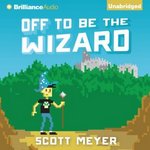
Off to be the Wizard (Audiobook) by Scott Meyer, Luke Daniels

Off to be the Wizard Off to be the Wizard

by Scott Meyer, Luke Daniels (Narrator)
Series: Magic 2.0, #1

Unabridged Audiobook, 10 hrs, 15 min.
Brilliance Audio, 2014
Read: August 8 – 16, 2016


I’m just going to steal most of what I said about the book before and add a little bit at the end about the audiobook — and Daniels in particular.

The first thing Martin always did when he found some new data file was to search for his own name. It may seem egocentric, but Martin wasn’t worried about that. He had spent a lot of time thinking about himself, and had come to the conclusion that he was definitely not self-absorbed.

There’s a great temptation — and frequently a rush — when discussing an amusing/funny book in SF or Fantasy to compare it with, well — the name rhymes with Schmouglas Schmadams — this can be damning, because almost nothing can live up to it. So I’m going to resist even saying the name. If anything, I think you could say this was reminiscent of Schmon Schmalzi — only funnier.

Martin Banks is the rather unimpressive hero here — a college dropout, living in a poorly-furnished apartment, working in “a cubicle farm, . . . a fluorescent-lighted, beige-walled abattoir for the human spirit where he had to spend most of his time,” and doing some minor hacking on the weekends, just to amuse himself. He stumbles upon a way to manipulate reality, to change things just a little bit here and there around him. Being human, it takes very little time before he begins using that ability in a way to draw the attention of the Federal Authorities. Which is not all that comfortable, so he heads off to England in the Middle Ages where he figures he can do okay for himself, living as a wizard using these abilities.

That’s when things start to get really entertaining (and I had no complaints up to this point). Anything more I say on this front is a horrible spoiler, so we’ll just leave it with really entertaining.

This is a coming of age tale — and, as it’s about a Millennial, it’s a delayed-coming-of-age story. But Martin’s not one of those protagonists that you have to see mature before you like him — you connect with him right away (or you’re probably wasting your time reading on). He definitely doesn’t mature in your typical way, which is part of the fun. I can’t help comparing Martin to Wesley Chu’s Roen Tan. But without the stakes that Roen had to deal with (and a nicer mentor).

Most of the characters we get to know are met after Martin’s time jump — so don’t worry if you find everyone in 2012 a little shallow and undeveloped. They are, but other people won’t be.

There are several things in the book that won’t hold up to much scrutiny — like his ability to get a smartphone signal in Dover, England in 1150. Adapt the advice Joel and the ‘bots used to give us, “just repeat to yourself . . . you should really just relax.” It’s worth it.

The book is just littered with wit — from the extended jokes, the funny visuals, or little asides like: “The fact that wristwatches weren’t invented yet made it difficult to look impatient, but he managed.” On nearly every page, there’s something to make you chuckle or laugh — or at least grin. I laughed enough that it was annoying to my family — not that I cared, mind you. But it’s not just a yuk-fest, there’s a well-written story here, in a great world with some characters you want to spend time with.

Daniels scores again here — his performance didn’t really remind me of his work on the Iron Druid Chronciles, which, I have to admit I was a little worried about. I got a kick out of his voice choices for Martin and Jimmy in particular — Martin’s voice when he got excited was perfect. I’m not sure I liked his choice of voice for Philip — it reminded me too much of Douglas Reynholm from The IT Crowd (I’m probably the only person on Earth who hears that, so take it with a grain of salt), and I never got used to it. But I loved everything else he did, so who cares, right? If anything, Daniels’ narration helped the material (not that it needed it).

Meyer’s writing holds up to a second-read, even jokes/situations I knew were coming worked pretty well — more than well, actually, judging by my laughter. I enjoyed it as much the second time through as the first, so that’s a pretty good sign.

—–

4 Stars

Page 44 of 54

Powered by WordPress & Theme by Anders Norén