Tag: Fantasy Page 45 of 54

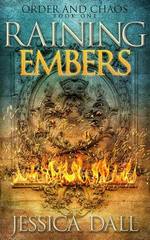
Raining Embers by Jessica Dall

Raining EmbersRaining Embers

by Jessica Dall
Series: Order and Chaos, #1

Kindle Edition, 276 pg.
Red Adept Publishing, 2015

Read: October 5 – 6, 2016


I hate books like this — I just don’t know what I can say without taking too much from the book, and then I look at the blurb/publisher’s description/etc. and everything I don’t want to say is there in a paragraph or two. So what do I know?

Palmer Tash is a theological/prophetic student who doesn’t believe in deities or prophecy, but he’s penniless and an orphan, so what else does he have to do? Brier Chastain is a bored daughter of a wealthy family, who seemingly won’t be allowed to do anything with her life other than get into trouble while waiting to hear who she’s supposed to marry.

The two of them are kidnapped and taken to some strange castle in a country they’ve never been — there, they’re told that they’re actually the current embodiments of Order and Chaos — the forces that predate time are living within them and give them supernatural powers. The two learn to depend on each other — and attempt to lean on each other for support and guidance as they fight their destinies to keep from destroying their home.

There’s a very rocky beginning to this — you have to make it to 15% or so before things start working. It seems like Dall is trying so hard to be mysterious that it ends up feeling like she’s playing games with the reader to obfuscate what’s going on. Shortly after that, we get the big reveal shortly about their actual identities, which just helps things get more interesting.

I like the main characters — and another powered being they meet — a lot. Most of the rest of the characters are too sketchy to get a real handle on. The characters are the strength of this novel so much that the plot suffers. Most of the novel is too surface-y and fast paced that you don’t really get into things the way you should. Dall created a great world, but we only get to see a small part of it. If the last 2/3 were better developed, it’s help the book so much.

It’s an entertaining read with some characters that are very appealing — Dall’s got some real talent here, I just wish she’d let it do more.

Disclaimer: This was provided to me in exchange for my honest take on the book — note that I said “honest” and not “timely.” I was supposed to have this done months ago. My thanks for the book and apologies for the tardiness, Ms. Dall.

—–

3 Stars

This Damned Band by Paul Cornell and Tony Parker

This Damned BandThis Damned Band

by Paul Cornell, Tony Parker (Artist)

Trade Paperback, 160 pg.
Dark Horse, 2016

Read: October 12, 2016


I’ve struggled for a couple of days now trying to figure out what I can say about this. It’s all about the premise when it comes to this book (a collection of issues from a limited-run series).

This is a comic about one of the biggest bands of 1974, Motherfather, on what could be their last world tour — complete with a documentary crew, a gaggle of groupies, and a manager who could be the hybrid of Wilson Fisk and Colonel Tom Parker. Like many rock artists of the time, Motherfather makes a big deal about worshiping the devil as part of their stage persona. While on this tour (possibly with some psychopharmacological help), they discover they’ve actually been worshiping the devil.

Oops.

Things don’t go all that well from there.

If you like that hook, you’ll like this book. Otherwise, just skip it.

Paul Cornell wrote this, so right off that tells you this is going to be well-written. A little humor, some real people and real emotions, and some seriously messed up supernatural elements. Cornell delivers on the promise of the premise — and a little more. It’s exactly what you want to read given the hook.

As for Tony Parker? I don’t think I’ve seen his stuff before — but I’m going to keep an eye out for it. I honestly can’t think of anyone who could’ve matched the style and story of this book like he did — either in the film sections, the visions/hallucinations, or the rest. Really great work.

I should throw in a quick note here, if it’s not obvious from the subject matter, this is not for kids.

It’s not for everyone, but it’s pretty entertaining. If the concept strikes you as up your alley, it probably is — give this one a shot.

—–

3 Stars

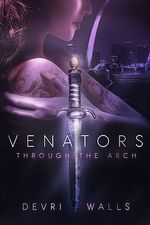
Venators: Through the Arch by Devri Walls

Venators: Through the ArchVenators: Through the Arch

by Devri Walls
Series: Venators, #1

Kindle Edition, 300 pg.
Superstorm Productions, 2016
Read: October 7 – 10, 2016

So this is a strange double-portal fantasy — six years ago Tate and some other creatures come into our world and run into Grey Malteer and some others, and disappear soon afterwards. Tate (and some others) comes back to check up on Grey and let him know about his destiny. In the meantime, Grey’s discovered he has some strange supernatural abilities — and has been teaching himself to use them in secret — he’s also been doing some research into the supernatural in the open, which is not such a great idea for a socially awkward teen — he might as well attach a “Kick Me” sign to his back himself.

About the same time, Rune’s twin, Ryker starts acting a little strange (and definitely takes advantage of the metaphorical “Kick Me” sign). Rune starts to feel differently about her brother and the supernatural, but there’s nothing she can put her finger on — so she bows to parental pressure and devotes herself to three things: academics, sports, and keeping Ryker from self-destruction. She excels at all three.

Six years later, the three are in college and Tate returns to bring Rune and Grey back to his world. A world where they are Venators (hunters) — keeping the vampires, werewolves, goblins, elves, fae, dragons, etc. in line. Eon is home to pretty much every mythological creature you can think of — and a few that Walls has invented on her own. The Venators are a line of human hunters supernaturally immune to the various abilities and magics of them all, whose duty it is to keep order in the land.

For various and sundry (largely undisclosed) reasons, most of the Venators are dead and gone — only these two remain. Tate and some of his allies, under the watchful (and not entirely corrupt) eye of the Council will train them to fulfill their destiny and restore the Venators to their rightful place.

Throw in a distrustful populace, a mysterious and powerful enemy, and a couple of super-powered impetuous and idealistic youths and you’ve got yourself a heckuva story.

Walls writes with a confidence and flair that helps the reader trust that she’ll be able to make sense of a fairly jumbled beginning (not bad, but could’ve been easier to navigate). Once we get into Eon, she balances plot, character work and worldbuilding to create a foundation for a promising series. I wondered a couple of times if the characters could’ve been developed a little more fully, but the work as a whole was strong enough that I was willing to roll with it and assume she’ll give us fuller characters next go around.

A quick-moving introduction to an interesting new reality. Give this one a shot — Walls will entertain you.

—–

3.5 Stars

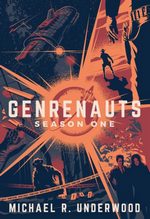
Genrenauts: The Complete Season One Collection by Michael R. Underwood

Genrenauts: The Complete Season One CollectionGenrenauts: The Complete Season One Collection

by Michael R. Underwood
Series: Genrenauts, #1-6

Kindle Edition, 544 pg.
2016


Parallel to our world are various worlds populated by fictional characters in a wide variety of genres (Western, SF, Romance, etc), and when things go wrong in the stories, things go wrong in our world. For example, broken Romance world stories = higher divorce rates here. In this world, there are a number of teams of story specialists who shift to the other worlds to fix the stories and set things back on course here. Leah Tang — a struggling stand-up comic by night, struggling receptionist by day — is the newest recruit. Join her as she learns the ropes, rights wrongs, struggles with ethics, and gets shot at while cracking jokes.

Originally printed as 6 episodes in 5 novellas, now collected in one season-long omnibus, Genrenauats as become one of my favorite series this year and I’m glad to get one more chance to talk about it with the release of the collection this week.

There’s a great cast of characters here, all of which deserve the reader’s time and focus. For example, I was tempted to not-really-ignore, but relegate Angstrom King to back burner status in my mind. He’s the leader, he points the team in a direction, but the real excitement’s with the rest. This was a mistake on my part — think of him like Capt. Picard. Sure, for the most part he sits around in his ready room with some Earl Gray (hot) — but really, some of the more interesting things that happen in he series are because of his actions. King’s not Jean-Luc, but there’s a similar quality.

I love a good team — fiction, TV, comics, you name it — the interaction, the teamwork, the dynamics, there’s really nothing like it. There’s a great team in these novellas — some of the intra-team camaraderie got pushed aside for a little romance that doesn’t really work for me (but I get why it would for others and appreciate the way Underwood’s tackling it). Overall, it’s built on solid interactions and relationships that have plenty of room to grow and develop over the many seasons that we hopefully get of this.

Each adventure gives Underwood an opportunity to talk about various genres — to talk about the clichés, tropes, archetypes, pluses, minuses, and so on of each genre. And one visit to each won’t be enough to fully explore these. Don’t get me wrong, we’re not talking Master’s Theses-esque discussion, he jokes about them, plays with them, sometimes turns them upside down while telling his tale.

The collection includes:
The Shootout Solution — We meet Leah Tang, Angstrom King and the rest of his team. We’re also introduced to the concept of Genrenauts, Story Worlds, the effects that they can have on our world — also, we get a pretty decent story in Western World. Not bad for 148 pages. (For more details, you might want to read my original blog post, my blog post about the audiobook)

The Absconded Ambassador — The team goes to Science Fiction World to help out on a DS9-like Space Station. On the verge of a major treaty being finalized and signed, the Terran ambassador has been kidnapped. It’s up to King and co. to rescue the ambassador and keep the shaky alliance from crumbling in her absence. We learn a little more about everyone, and while having a lot of fun with genre conventions. ( my original blog post, my blog post about the audiobook)

The Cupid Reconciliation — The team gets back up to full strength in time to go rescue a Rom-Com gone awry. Underwood really lets things fly when it comes to observations about the genre and playing with conventions while using them for comedic — and narrative — value. Also — a couple of seeds that were planted in the first two novellas are watered enough that you can see season/season-plus story arcs beginning to grow. The series took a big jump in quality here. ( my original blog post)

The Substitute Sleuth — A Police Procedural needs some help, a no-nonsense cop’s off-the wall/out-of-the-box partner takes a bullet and another pair of mismatched detectives needs to come in and close the case. We get some major backstory stuff here, and the season arc is moved along nicely. The detective story itself isn’t my favorite, but what Underwood does with the tropes, themes, conventions, etc. is really good — it is more of a TV detective story than a novel detective story. Think Castle, not Harry Bosch (whoops, thanks Amazon, you ruined that point…). ( my original blog post)

The Failed Fellowship (Part 1 & 2) — This think kicks off with Leah Tang ranting about fantasy fiction and 5 episodes later, she gets to spend 2 episodes in Fantasy World, where a Chosen One with a Magic Artifact story has fallen to pieces. Leah’s in hog heaven, the rest of the team are at the top of their game and Underwood is, too. Rollicking good adventure. Best of the batch in every way. ( my original blog post)

I dig this series, and having all of the novellas in one handy collection is going to make it easier (I hope) for others to discover it — the collection is also a little cheaper than buying all the individual stories, which will also going to make things easier for people to discover it. If you haven’t dipped your toe in this world/these worlds yet, what are you waiting for?

—–

5 Stars

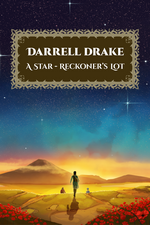
A Star-Reckoner’s Lot by Darrell Drake

This book releases this weekend, go pre-order now (well, not now … wait until you read this).

A Star-Reckoner's LotA Star-Reckoner’s Lot

by Darrell Drake
Series: A Star-Reckoner’s Legacy, #1

Kindle Edition, 294 pg.
Darrell Drake, 2016

Read: September 22 – 26, 2016


There are few phrases sweeter to readers than “Stand Alone Fantasy.” Sure, most of us really get into series, but the chance to dive into a world and know that there’s a narrative conclusion just a couple of hundred pages away? There’s something very appealing about that. Throw in a world pretty much like nothing you’ve come across before? Sign me up.

Drake brings us into a world of pre-Islamic Iran — full of social mores that are just as foreign to Western readers as anything that the most imaginative novelist could invent, along with a magic system, a belief system, and a host of supernatural beings that are equally novel. Sure, there’s apparently a decent amount of historical research undergirding the fiction — but just coming up with the idea to base something in this world and to do the research will inspire confidence.

Ashtadukht is a star-reckoner for the King of Kings. A star-reckoner is a magic-user who can harness the power of constellations — the power of stars — to perform their magic. Primarily, their duty is to attack divs, demon-like beings at war with humanity. Ashtadukht (this name makes me so glad for copy and paste, incidentally) is a pretty capable (with some provisos) star-reckoner, but has a reputation for being a bit too lenient with some divs. She doesn’t fight the reputation, but when you see the way she deals with a few divs, you start to wonder what it’d look like if she wasn’t lenient.

At some point, her father becomes concerned for her safety and recruits her cousin, Tirdad, to act as her bodyguard. Before this, he was one of the King’s elite soldiers and can do some pretty heavy damage to a div himself. I really liked Tirdad — his growth throughout the novel, his character, his sense of humor, etc. — I really liked this guy. You’ll likely have a similar reaction. He and Ashtadukht have known each other since childhood and act like it — they know the secrets, the tells, the hearts of the other in a way that only old friends can. It’s easy to believe that he’ll do whatever it takes to keep his cousin safe and successful.

The other part of their party is Waray — she’s a problematic character for some, but man, I liked her. She has some verbal tics — running words together, defining things and people as “šo” this and “šo” that (and just uses the ‘š’ in place of an ‘s’ — see my Q&A with Drake for more). Ever since Gurgi in The Prydain Chronicles, I’ve enjoyed the annoying not-totally-human characters (especially those obsessed with food). I think she’s a hoot — and more, there’s a darkness to Waray, to her past and present — along with her loyalty and her penchant for odd pranks.

The banter, the bickering, and friendship between Tirdad and Waray is one of those things that will attract you to this book beyond the setting and plot. The three of them are a great team, a great found-family, watching their relationship is infectious and utterly believable — you can feel the affection they have for each other, and don’t need to be told about it. There are fantasy novels when you’re told that the characters are old friends and you just don’t believe it (or only believe it because it’s mentioned every couple of pages) but here, you see it develop and grow and have no doubts.

The novel follows the trio all over Iran dispatching a div here and there, hunting for the killer of Ashtadukht’s husband (a div) and struggling against her failing health. There comes a point where things evolve past the “monster of the chapter” structure and everything is really tied together — but I can’t get into it without ruining things. It’ll leave your jaw inches from its typical place and the whole book gets more intense from there.

Drake almost never info-dumps, he drops you into this world and lets you figure out what a star-reckoner does, what a div is, etc. Yes, almost every question is answered eventually — but by the time he spells it out of you, you’ve pretty much figured it out on your own. I loved that. There’s a humor, a heart — and some really disturbing violence — throughout this book. The book is sometimes challenging to read, but always rewards the effort. It’s not a perfect book — but it is so satisfying that you overlook it’s shortcomings. I can’t say I enjoyed everything that Drake did in the last few chapters — but I can’t fault him for them. It’s not the ending I wanted, but it’s the ending the novel needed.

I’m afraid I’ll overuse the word imaginative if I tried to describe what Drake has done here in the depth I want to. You haven’t read a fantasy novel like this one before — almost certainly, anyway — but you should.

Besides, anyone who works a Samuel L. Jackson reference into a book about pre-600 AD Iran deserves a read, right?

Disclaimer: I received this eARC from the author in exchange for this post.

—–

4 1/2 Stars

A Few Quick Questions With…Darrell Drake

For the second time this week, sleep won a victory over my finishing a post, so you won’t be reading what I thought about this author’s book (spoiler: it’s something special). Thankfully, however, We get to spend a few minutes with Darrell Drake today before I post my thoughts on his book A Star-Reckoner’s Lot tomorrow–a stand-alone fantasy set in Sassanian Iran (yeah, I had to look it up, too). He’s got like a million things going on in the days leading up to the release this weekend. so we kept things short and sweet so he could focus on the important things. Hope you enjoy.

Bonus technical question: [I don’t normally do this, but I figured it might help readers] What’s that mark over the “s” in Waray’s dialogue? How should readers pronounce that (even in just their heads)?
You’re the first to ask! The mark you’re referring to is a diacritic that goes by the name of caron(ˇ). My original intention was to use an “s” with a line below it, but there arose issues with rendering it on certain devices and in certain file types. All’s well, though, because its replacement (š) serves as the official romanization of the Persian letter Shin, which is pronounced “sh”. Relevant to Sassanian Iran, the second King of Kings to rule the empire was Shapur, which is sometimes written Šapur. In Waray’s case it’s pronounced “sho-“. I figured readers would at the very least realize she pronounces it differently due to the diacritic.
So, you’re on the verge of publishing a book funded by Kickstarter — looking back on it, how was that process? Would you/are you going to do it again? What did you learn from that?
In a word: stressful. It was stressful as all get out. What’s more, I went through the process twice for the same book (about a year apart). The goal set for my initial campaign was a bit too ambitious, and I adjusted accordingly the second time around.

Running a Kickstarter is also very illuminating, because much of what goes on behind the scenes isn’t someone a backer would worry about. It isn’t until you’re in the thick of it that you come to appreciate the work that goes into a campaign (one that intends to deliver anyway). The logistics of backer rewards, trying to reconcile backer rewards with the cost of producing them and what you’re getting from pledges—it’s no small task. You send out many, many e-mails. You get in touch with folks for prospective rewards, for promotion, for research, for advice, for shipping, for packaging, for taxes, for—well, you get the idea. Again, it’s stressful, and so much more than simply throwing some reward tiers together.

While I don’t currently have any plans to do it again, I’d consider Kickstarter for future projects. It’s a powerful platform, and I’d be a fool not to at least consider.

Besides what I mentioned above with respect to what goes down behind the scenes, I’d say it taught me who I can depend on. And that came with some surprises. I have an greater appreciation for those who went out of their way to help on many fronts. These kind souls showed a genuine interest in championing something that’s dear to my heart. Something I’ve toiled over for years. That is no small gesture, and if it were up to me (and not my notoriously unreliable memory), I’d never forget any of it.

Sassanian Iran — I’m sure you’ve been asked before, but I probably won’t be the last: where did you get this idea? Had you previously researched the time/culture — or was this something you had to do after coming up with the idea.
This is where that tenuous memory comes into play. I can give you a general idea, though. Before settling into Sassanian Iran as a setting, I had an idea of the character and her travels. From there, I set off in search of, well, somewhere that stood out. I came across Sassanian Iran in my research into the history of the Middle East—when or where exactly I can’t be certain. But something there led me to the national epic of Iran, the Shahnameh (and later the Hamzanama).

I can tell you with conviction that the former had an undeniable impact on the course of my research. Like any good epic, it delineated the history of Iran, and did so with flair and magic and adventure. Something in there nudged me toward Sassanian Iran. When I learned of its impact on the history of the world, and of the unsung nature of that impact, I delved deeper. In doing so, I found the perfect setting for Ashtadukht. The legends, the culture, the lands, the history: it all fit.

What’s the one (or two) book/movie/show in the last 5 years that made you say, “I wish I’d written that.”?
Breaking Bad ended in 2013, so that counts, yeah? Naturally, I’d like to see success on that scale. More than that, it’s a drama that I sincerely doubt I’ll ever live up to. The narrative is damn brilliant, and riddled with nuances. It’s powerful, it speaks to people, and it is a shining example that a TV series can be art as much as any movie or book.

Figure I should include a book, since I’m an author and all. In this case, I’ll use Guy Gavriel Kay’s River of Stars (without really going through everything I’ve read). He’s a luminary for a reason, one who wields both history and prose better than I ever could. He’s demonstrated as much time and again, but River of Stars is especially beautiful. There’s an earthiness to the characters, a coziness that describes them as real people. They don’t feel the slightest bit fictitious (I realize some are fantasy depictions of real-world figures). He’s a master of his craft. Certainly of historical fantasy.

I’ve often heard that writers (or artists in general) will forget hundreds of positive reviews but always remember the negative — what’s the worst thing that someone’s said about one of your books, and has it altered your approach to future books?
I’m not sure I could pick out the worst thing. I’ve probably tried to bury it for my own sake. But when I first started writing people would often comment negatively on my prose—purple prose, namely. It wasn’t entirely unfounded. Well, I’ve since learned from that, and evolved my writing to work in some of the more inventive words here and there while generally being more relaxed for the most part.

I did have readers sometimes find issues with characters that must have been influenced by their own issues with the world. Too busy trying to find political or social commentary that wasn’t there. I try to avoid that kind of thing.

With your next book on the verge of release, what comes next? Are you neck deep in a draft, or are you waiting for A Star-Reckoner’s Lot to be launched before diving in?
I’m hunkered down with A Star-Reckoner’s Lot, and doing my utmost to make its release a success. Too focused on keeping the book afloat and securing its future to really concentrate on what’s next. Some authors can manage both; I am not one of them. And I don’t want to look back and think that I should have given A Star-Reckoner’s Lot my undivided attention. In most cases, you get one launch. One. If I’m going to screw it up, I don’t want it to be because I wasn’t giving it my all.

Thank you very much for having me, H. C. You brought up some topics I haven’t had the pleasure of discussing, and I’m grateful for the opportunity. May your beard always be full.

Thanks for your time and the answers, Darrel. I hope the launch goes well.

The Failed Fellowship by Michael R. Underwood

The Failed FellowshipThe Failed Fellowship

by Michael R. Underwood
Series: Genrenauts, #5 & 6

eARC, 181 pg.
2016

Read: September 16 – 17, 2016

Her job was to fix the story, not right every little wrong in the entire world.

But was that really enough? If you force someone to work with shoddy equipment and they get hurt every week, eventually, shouldn’t you fix the tool instead of sending them to the doctor? She’d spent the last several months playing the doctor, applying spot fixes along with the team, keeping to the shadows. Help the real hero, delay the problems until the real hero came back.

I want to come back to talk about Leah’s continuing difficulties adopting the right attitude as a Genrenaut, but we’ve got some work to get through first.

A band of intrepid warriors, in possession of a magic artifact carried by the one person capable of stopping a great evil enters a castle and fights through untold numbers of warriors through magic and feats of strength and skill. Only to have the Chosen One killed before they can challenge the leader of the forces of evil. Clearly, not the way this story is supposed to go — which creates problems on Earth Prime, and a need for Angstrom King’s team to come to Fantasy World, get the band back together, and fix the story.

The first thing the team does when they get to the world is track down Ioseph, the wizard who assembled the failed heroes. Leah describes him as:

Gandalf if Gondor had already fallen, Dumbledore facing a fascist wizard state under Voldemort.

Which is a great descriptive line, wholly genre-appropriate. This is Underwood at his best — not that he’s not great in SF or the other genres we’ve seen this season — but in Fantasy, he’s at his strength (see the Ree Reyes series for further examples).

It’s not just Underwood being comfortable, either — one of the first things we learned about Leah is that she’s a big Fantasy Fan. So her being here was is just what she’s been waiting for — and she makes the most of it. She jokes, she fights, she sings (her character is a bard), performs heroic deeds and she eats a lot of stew (while making the requisite snarky remarks about the stew). Everything you want in an epic fantasy novel or game, it’s celebrated and commented on at the same time. It’d be very easy to do a quick edit to remove all the references to other worlds/Genrenauts/etc. and come up with a decent novella-length story here — with a pretty good twist. Thankfully, we don’t have to read that hypothetical edit — we get Leah and the gang guiding us through it.

In addition to the pretty fun story — we get to see these Genrenauts function like a fully formed team — which is not to say they’re perfect, part of it is Leah’s rookie status, part of it comes from the length of time they spend in this world (as we learned last time), and part of it is the uncertainty that the tall woman they’ve been chasing brings to the story. There’s at least one other part, but you have to read the book to learn about it. Roman gets to tell Leah where he came from and what that means, which helps him a lot (the rest of the team, too). King’s and Shirin’s part of the story is the more straight-forward, if for no other reason than their temperaments and experience. Which is not to say that their parts are dull — in fact, one of the best characters from this world (with the obligatory annoying ‘ in his name) comes from their portion of the story.

The focus is, of course, on Leah — she loves being surrounded by a fantasy story and lets the setting get to her. Also, as the opening quotation shows, she’s struggling with her role as a Genrenaut in various worlds. Much like Kirk bristling under the constraints of the Prime Directive, Leah has a hard time adapting her sense of right and wrong to the world and culture she’s in — and I’m not sure she’s getting better about it, maybe she’s getting worse the more comfortable she is with the team. Frankly, I’m glad to see her struggle here, and I’m not sure what side I want her to come down on.

Leah’s now at the end of her probationary status — and if any of the Genrenauts were analyzing their own story, they’d clearly see that this was the end of a narrative arc and that something big was about to happen — enough to close this chapter and lead into a new one. It does, and it’s a doozy. Man, I hope things went well enough on the sales front for Underwood to be able to bring us a second season (if not seven) — I’m more than ready to support the next Kickstarter.

Underwood seemed more confident, a little more willing to have fun with the genre in these entries than he has with the others (not that he’s been all that restrained before). I loved this. When (for example) Leverage was on the air — there were better shows on, but few that I enjoyed as much. Similarly, I’ve read better books this year than The Failed Fellowship or any of the others in this series, but not that many and none have made me as happy reading these. There is one line towards the end of this that made me laugh out loud (and groan, too — Leah has no shame) and if I read an interview where Underwood said he wrote the previous 5 books in this series just to set up this line? It’d be justified.

Disclaimer: I received this eARC from the author in exchange for this post — I thank him for it (and for releasing the cover image in time for me to post this without my lousy placeholder).

—–

5 Stars

Children of the Different by S.C. Flynn

I wanted to nail this one, and I don’t think I did — just so I’m clear — you want to read this. Any of your kids over 13 (and maybe some under) will likely enjoy this. Don’t be put off by the labels attached: “Post-apocalyptic,” “YA,” or whatever — this is a good story about kids in the nearish future.

Children of the Different Children of the Different

by S.C. Flynn
Kindle Edition, 316 pg.
The Hive, 2016

Read: September 12 – 13, 2016

I’m going to get this quotation wrong, so remember it’s just a paraphrase: William Gibson’s early works were said to be set “Fifteen minutes into our future” — they’re futuristic SF, but only barely. Using that as a basis, I think you’d be safe saying that this book is set 20 minutes into our future — when Gibson’s cyberpunk present falls apart. Yes, it’s technically post-apocalyptic, but so is The Sword of Shannara, but that doesn’t mean you can walk in with any idea of what its’ going to be like. Think of this as a fantasy world very much like our own (but with cooler accents) — but where almost nothing works and teenagers are threats to their own health and safety, but also to pretty much the entire world’s health and safety.

We meet the twins Arika and Narrah just as Arika is beginning her time in the Changeland. Which is a stressful time for everyone in her life — but her brother Narrah does something quite out of the ordinary, he takes advantage of their inherent psychic link and enters the Changeland with her. By doing so, they set down on a path that could change the world forever. Not that they knew this. These aren’t a couple of Promised Children, Children of Destiny or whatever — they’re just a couple of kids in the right place and the right time to become the Children of Destiny. Arika’s the strongest character, the best fleshed out and it’s her reactions to everything that inform the readers’. Not to discount anyone else, but it’s her fears, her hopes, her determination that set things in motion (even Narrah will defer to her). Before I leave Arika — her friend, who I see as a combination of Luna Lovegood and Sybill Trelawney, but far less chatty — is such a great character. She’d have been easy to use wrongly, but Flynn gets is just right. She’s very likely my favorite part of the whole book.

While in her Changeland, Arika finds an enemy and Narrah finds a potential ally. Both show up later when Arika returns the favor and comes to Narrah’s rescue in his Changeland. It’s really kind of hard to describe, read it yourself. His is radically different and more hazardous — as are the conditions he finds himself in. I don’t want to get into the story beyond that, but let me just say that nothing in the story worked out the way I expected, and I’m so glad for it. The novel ended in such a way as to be initially dissatisfying, but with just a little thought, it was perfect — you don’t want more than you’re given, really — it seems like you do, but after a little time and thought, you get why he doesn’t the way he ended it the way he does, and actually end up pretty satisfied with the whole novel.

Oh yeah, there’s this great part that turns out to be a description of Echolocation. That was cool — I know I was wearing a big grin for a few paragraphs once I figured out that’s what was going on. That’s just an aside and your results my vary, but I really dug that scene. Almost as nifty are Narrah’s new abilities, and I’ll just leave it at that.

Flynn gives us clear, well-defined, and distinct characters here. I can’t say that I got too emotionally attached to any of them — but I was very curious about all of them. I imagined more of what life was like for the twins and their friends growing up in their circumstances, what made the various people who left their settlement do so, and just what might happen after the book ends. At the end of the day, these are people you want to see succeed, even if you don’t have that big emotional bond with them.

Once you get your bearings (which took a little longer for me than it should’ve, I think I had an off day), you can really get into this world and get an idea how things function (or don’t) on the Australian continent — and you can guess what’s going on in the rest of the world, too. Between the powers, the hard life and the machinations of the leaders — there’s plenty going on to keep you turning the pages — some is exciting, some is rich in imagery, some is tense and all is entertaining.

A heckuva debut novel — I can’t look forward to more enough.

Disclaimer: I received a copy of this novel from the author in exchange for my participation in the Book Tour and my honest post.

—–

4 Stars

A Few Quick Questions With…S. C. Flynn

You’ve maybe seen him here and there in the feedback for various and sundry posts, I know I have. S. C. Flynn’s been all over this blog — and I appreciate it. Thankfully, his book was good enough that I didn’t have to feel awkward (because it’s all about me, right?) Here’s a lil’ Q&A that S.C. and I did this week. I didn’t actually ask him more questions than usual — he edited my questions to make the answers better.

1. Why Post-Apocalyptic Fantasy (I didn’t even know that was a thing)?.
It is rare; I can hardly think of any examples of this sub-genre, and those are a long way from CHILDREN OF THE DIFFERENT. I suppose post-apocalyptic fantasy is rare because, as I see it, it is a mix of science fiction and fantasy. SF provides the background – in my case, an epidemic that affects the human brain such that by adolescence the second generation of survivors are already in part a new human species with enhanced abilities. Then the fantasy comes in, based on science and a little bit of magic!
I found this a neat way to let my imagination go where it wanted, while still having a plausible basis in our world.
2. Why YA?
I have written various other novels – all fantasy, but very different from this one – and been close to breaking into conventional publishing via professional literary agents over a period of many years. I had never written Young Adult before, though, so it was something new to try, together with the new strategy of quality self-publishing that I am carrying out, with an all-pro support team.
Writing YA has been a really enjoyable challenge. A Young Adult novel must have all the things that any good novel must have: strong plot, well-developed characters and convincing setting. By definition, the writer is limited in how much sex, coarse language and graphic violence can be included in a YA novel. That means that you have to work harder with those basic components I mentioned – plot, characters and setting, in order to achieve your effects you need.
Once I had the basic idea – namely, following the brain disease epidemic that destroyed civilisation, adolescents go into a coma and emerge either with special powers or as dangerous Ferals – the choice of YA was made for me. The logical time for this Changing to occur was at the onset of puberty, so the main characters (twins Arika and Narrah – a girl and a boy) are 13 years old. Arika and Narrah can read and write, but they have always lived in a small, isolated non-industrial settlement, and their language and thoughts are conditioned by their limited knowledge of the world. In CHILDREN, we see everything from the twins’ viewpoint, so the style in which their story is told necessarily had to be simple and clear. That fits perfectly with the Young Adult audience.
3. What was it about this story that made you say — yup, this is the one?
CHILDREN OF THE DIFFERENT leaped into my mind almost fully formed once I had the basic idea. Of all my novels, CHILDREN was by far the easiest and quickest to write, at least as far as the first draft was concerned.

I am an obsessive reviser, so that was four years ago, during which time there have been long pauses while I was revising other novels, or even – surprisingly enough – taking some time off from revision. Still, the first draft of CHILDREN virtually wrote itself – every day when I needed a scene, it was there ready-made.
I had never written about Australia before, so probably, without realising it, I had a great amount of background knowledge ready to use. My other novels are quasi-historical fantasy and required a lot of research.

I think the main characters really wanted to tell their story, as well.

4. You’ve been doing the SF/F blog thing for a while now — how has that helped you as a novelist??
The style of writing that works on a blog is completely different from what fiction requires, so I see them as two separate skills. As I said before, I have written novels for many years, so my fiction style was probably formed in large part before I started blogging.

Blogging certainly keeps you up with the latest books and what people are saying about them, and the skills of writing blog posts is essential for trying to publicise your fiction. Setting up a blog also brought me out of my corner, where I had been writing for years, and got me into contact with lots of cool people who have helped and encouraged me.

5. What’s the one (or two) book/movie/show in the last 5 years that made you say, “I wish I’d written that?”
Wool by Hugh Howey. A very clever dystopian idea, and also a book that helped to revolutionise the self-publishing industry.
6. Aside from a burning desire to buy copies to give away as gifts, what are you hoping your readers take away from this book?
An optimistic post-apocalyptic story like CHILDREN is an important one to tell, for me. It contains a warning about the dangers of technology, together with hope for what our society could achieve if technology were used for good purposes.

CHILDREN also contains a hopeful message that our very young people can achieve great things. Like the twins, adolescents are not stupid, but just lacking in experience, exposed to dangerous influences and struggling to work out who or what they are turning into. It is up to us to give them the best chance we can and leave them the best world we possibly can./td>

7. What’s next for S. C. Flynn?
There has so far been a fair bit of interest from reviewers in seeing more of the world of CHILDREN OF THE DIFFERENT. So, one possibility would be to write a sequel.
The alternative would be to publish one of the completed novels I referred to before. Three of those are of publishable quality, in my opinion, having been through years of editing by professional literary agents, as well as my own fanatical revision.For now, I will wait and see what happens with CHILDREN.
Thanks so much for your time, and I hope your launch week meets with a lot of success.

Children of the Different by S. C. Flynn Book Tour

Welcome to our Book Tour stop for Children of the Different. Along with this blurb about the book I’ve got a Q & A with the author, S. C. Flynn and my 2¢ about the book.

Book Details:

Book Title:  Children of the Different by S. C. Flynn
Release date:  September 10, 2016
Genre: Post-Apocalyptic Fantasy
Extract: THE ANTEATER

Book Description:

Nineteen years ago, a brain disease known as the Great Madness killed most of the world’s population. The survivors all had something different about their minds. Now, at the start of adolescence, their children enter a trance-like state known as the Changeland and either emerge with special mental powers or as cannibalistic Ferals.

In the great forest of south-western Australia, thirteen year-old Arika and her twin brother Narrah go through the Changeland. They encounter an enemy known as the Anteater who feeds on human life. He exists both in the Changeland and in the outside world, and he wants the twins dead.

After their Changings, the twins have powers that let them fight their enemy and face their destiny on a long journey to an abandoned American military base on the north-west coast of Australia. If they can reach it before time runs out.

Author Info:

SCy-Fy: the blog of S. C. Flynn

https://twitter.com/LaughRiotPress

https://twitter.com/SCyFlynn

S. C. Flynn’s Amazon Page

Page 45 of 54

Powered by WordPress & Theme by Anders Norén