Tag: Fantasy Page 46 of 54

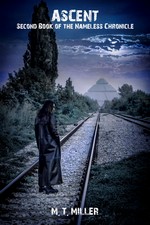
Ascent by M. T. Miller

AscentAscent: Second Book of the Nameless Chronicle

by M. T. Miller
Series: The Nameless Chronicle, #2

Kindle Edition, 316 pg.
2016

Read: September 3, 2016


Can you read this without having read Risen? Yeah, but it’d be better if you didn’t (and Risen is short enough that you might was well). I’m not sure how much time has passed since the last page of the first book, but we find Nameless pretty much how we left him — wandering along, on the verge of . . . whatever exactly would happen to him if he didn’t get more energy. Like before, almost as soon as he gets to town, he falls victim to a gang of sorts and is mugged. Of course, his first order of business (after recuperating from the beating) is revenge, which will give him the energy he needs to move around the Pyramid to search for the explanations he needs to understand his abilities, his nature and identity.

What’s the Pyramid, you ask? It’s a city in a giant 4-tiered structure (each tier housing a different caste). Nameless adopts a name, makes a little money on the lowest level — full of crime, poverty and menial labor — and buys himself access to the next level. Where he finds a new — and legal — way to use his fighting abilities to make money. Things go haywire from there.

There’s a lot more going on in this book than there was in its predecessor, Risen — if for no other reason than it’s almost 3 times as long. It’s still the same kind of book — full of violence, some pretty good fight scenes, and a post-apocalyptic culture that’s foreign, yet all-too familiar. There are many more characters, relating to Nameless in a variety of ways — friendship, camaraderie, betrayal, exploitation, to name a few.

The way things went in Book One, I assumed that we were going to learn Nameless’ origins, etc. over the course of a handful of books. Nope — we get almost every question we had about where he came from answered — and almost all of them are just dumped on us. There was no slow and steady learning here, just BAM! here are your answers. And it worked — much better than a slow reveal, a giant dropping of information (which I usually am opposed to) took care of everything (while still leaving me with almost as many questions as Nameless had).

I shouldn’t neglect to say that just because Nameless has almost all of his questions answered here, that he knows what to do with this information. I’m guessing part (or all of that) will be revealed in Book Three.

I don’t normally do this, but I while writing this I went back to my post about Risen and chuckled because what I said there as a lot like the next point on my outline: “My one complaint is length — just about everything is too short. The story is too short, most of the scenes are, too. But I’m pretty sure that’s just my wanting more for myself — to give us longer scenes would ruin the pacing, would mess with the way Miller’s constructing the series. And really, when you get down to it “I wanted more!” is more of a compliment than a complaint — but I’m calling it one nonetheless.” His scenes aren’t too short this time, but everything else I said there is still true. A lot of the action (especially the violence) is given to us in summary form — we see the “important” fights, the ones that shape the story, but the rest is given in something like a re-cap mode (ditto with the flirting, with his conversations with others, and so on). So clearly, this is the kind of thing that’s 1. Miller’s style and/or 2. The style of this series. Either are perfectly acceptable. And honestly? If he’d given us more of the fights, more about Nameless’ days in the new society he’d encountered, etc. I’d likely be complaining that he’s reveling in the violence, bogging down the story with the details. So what do I know?

Ascent is a book that kept you guessing and leaves you in a very different world than you thought you were in at the beginning — with a status quo that is so far from what it initially was that it’ll leave you reeling. Taut, well-paced, with some pretty good hand-to-hand combat scenes — and it won’t let you go until the very end. Miller’s really got something going here.

Disclaimer — I received a copy of this book from the author in exchange for my honest opinion. I appreciate that, Mr. Miller — and thanks for being so cool about me forgetting the date.

—–

3.5 Stars

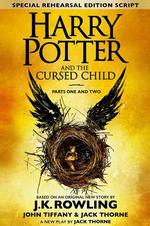
Harry Potter and the Cursed Child by J.K. Rowling, John Tiffany & Jack Thorne

Harry Potter and the Cursed ChildHarry Potter and the Cursed Child – Parts One and Two (Special Rehearsal Edition)

by J.K. Rowling, John Tiffany & Jack Thorne
Series: Harry Potter, #8

Hardcover, 308 pg.
Scholastic, Inc., 2016
Read: September 2, 2016

I went into this with low expectations for a few reasons (negative buzz being one of many), and sadly had them all met — I don’t think anything were exceeded.

This is fan-fiction, pure and simple. Sure, it’s official fan-fiction written in conjunction with Rowling — but it’s not the same series, it doesn’t feel the same. It feels like someone’s trying to recapture what they had, in just a slightly different form. I’m fine with that — if people want to throw money at Rowling, Tiffany and Thorne for doing this? Let them. Let’s just not pretend it’s more than what it is.

The story primarily focuses on Harry and Ginny’s middle child, Albus. Albus is pretty uncomfortable living in the shadow of the Boy Who Lived — he doesn’t like the notoriety or pressure that comes with that territory. Which is absolutely understandable — especially now that he’s at Hogwarts, where Harry’s legend is strongest. Between that, and typical teenager strife with Dad leads Albus to take some really big risks with banned magical technology.

These risks center on time travel — and this is where it lost me. I just can’t stand the kind of stories where someone goes back in time with perfectly good intentions and messes things up, changing the future so much that it’s not recognizable. So then they (or someone else) have to go back in time again to prevent/minimize the damage. And magically, this second (or third) intervention restores everything back to the way it was before the time travelers left. Sure, this is a series in which magical things like that are clearly possible. But there’s possible and too-incredible. It almost doesn’t matter how good this story/execution was, I wouldn’t be crazy about it.

The writing was . . . okay. Nothing spectacular, nothing that had the same …”magic” as the other books in the series. It’s not as bad as many claim — but it’s not as good as others claim either. How some of this can be staged, I just can’t imagine. I’m not saying it can’t be — but wow, that’s a real technical challenge, I’d think.

There were some nice moments, some great fan-service stuff — and I’m very glad I got to meet Scorpius Malfoy. I’d rather spend time with him than any of the rest of the descendants of the original series, there’s something very cool about this kid. I should also mention that there’s some nice father-son moments with Harry and Albus.

On the whole, I’m glad I read this, but I really can’t get crazy about it.

—–

3 Stars

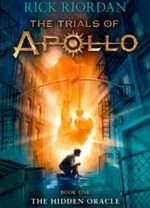
The Hidden Oracle by Rick Riordan

The Hidden OracleThe Hidden Oracle

by Rick Riordan
Series: Trials of Apollo, #1

Hardcover, 361 pg.
Disney-Hyperion, 2016

Read: August 31, 2016


Only 361 pages? Riordan is taking it easy on his readers. And maybe himself.

Anyway, following the events of The Heroes of Olympus, Zeus is a little displeased with Apollo and demonstrates this by turning him into a human teen (read: YA/MG novel star) and casting him to earth. He appears to be fully human — not even a demigod like Percy and the rest. Speaking of Percy, as soon as Apollo figures out what happened to him and where he is, he makes a beeline for Percy’s apartment to get help. Smart move. Percy gets him to Camp Halfblood and disappears back to NYC to do homework.

Once there, Apollo begins trying to figure out what quest he’ll have to do to return his status to quo. Along the way, he’ll make some friends, get a better perspective on himself and his offspring (yeah, that’s not weird), and maybe go through some of that personal growth. Note that I said, “some” personal growth and “better” perspective — that’s not saying much, basically Apollo comes across as a teenaged-Gilderoy Lockheart with a conscience. Instead of the large number of missions that we’ve become accustomed to in these books, there’s really just one (plus the series-arc mission) — such a nice change.

A lot of people from the Percy Jackson and The Heroes series are name-dropped and discussed, not to mention the few that we see — there’s even a nod to the Magnus Chase series — thankfully, my favorite is one of those who shows up in the flesh. There’s also a good amount of in-jokes to please the long-time fans. But readers new to this universe shouldn’t be put off by any of this — it’s absolutely approachable, maybe even moreso than anything since The Lightning Thief.

This is told in the typical breezy style that characterized non-adult mystery Riordan novels, but given the different protagonist, feels a little fresher. A little briefer, a little change of pace — still full of that Riordan magic. The Hidden Oracle is a sold first-entry in yet another adventure in this world. Give it a shot.

—–

3.5 Stars

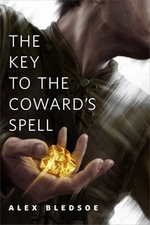
The Key to the Coward’s Spell by Alex Bledsoe

The Key to the Coward's SpellThe Key to the Coward’s Spell

by Alex Bledsoe
Series: Eddie LaCrosse, #?

Kindle Edition, 27 pg.
Tor Books, 2016

Read: September 3, 2016


This over-before-you-realize-it short story is a welcome dip of the toe back into the world of Eddie LaCrosse, sword jockey (i.e., medieval private eye). Bledsoe’s Tufa series is one of the best things around, but man, I enjoy this series so much.

LaCrosse has been hired by a local blacksmith to find his kidnapped son. LaCrosse is sporting a broken arm, so he’s going to need a little more help than normal, Jane Argo, for one — and some new faces, too. There’s really not a lot to say, here — half of the action takes place before the story starts. LaCrosse gets a little more intel, and then jumps into action.

The action is brief and to the point — with a nice twist or two along the way. Nothing special, but it’s a good couple of sequences. And a brief reminder that no matter what you dress it up in — modern time/tech/clothing, generic fantasy tropes, SF, whatever — there are some forms of evil that transcend those details and are just evil that need to be fought in whatever little way we can.

Yeah, it was fun to spend some time in this world and with LaCrosse and everyone. But man, just as you get into it, the story’s over. Just not enough to really satisfy, but it was a fun taste. I don’t know that this is a good intro to the character (it might be), but it’s a good reminder for those who’ve met him before that they want to read more about him.

—–

3 Stars

Timothy Other: The Boy Who Climbed Marzipan Mountain by L. Sydney Abel

Timothy Other: The Boy Who Climbed Marzipan MountainTimothy Other: The Boy Who Climbed Marzipan Mountain

by L. Sydney Abel
Series: Timothy Other, #1

Kindle Edition, 325 pg.
Speaking Volumes, 2016

Read: August 11 – 13, 2016


A nameless boy is left at the Dreams and Hopes Orphanage (and don’t think I didn’t have to concentrate really hard not to flip those two every time I read/wrote the name) and is named Timothy Other — which is not the most interesting name in the book, trust me — where he spends the first twelve years of his life happy, healthy (insanely so) and cared for. Until the man who ran the orphanage dies and the bank takes ownership of the mortgaged-to-the-hilt facility. The people that take it over might as well have been Miss Hannigan and Dolores Umbridge.

Not surprisingly, Timothy wants something else in his life, runs away — and straight out of Candide ends up at Marzipan Mountain (his name for it); befriending a giant mouse, caterpillar and Sasquatch-like creature; and on the trail of his birth parents (something he learns much later); and a way to rescue the orphanage. Meanwhile, back home we learn about the nefarious schemes that are behind the takeover of the orphanage and the various motivations behind them.

Some of the subject matter and way it’s depicted seem a little more “adult,” dark or whatever than is acceptable for kids’ literature. On the whole (there might be a line or two I wouldn’t defend), this is silly and doesn’t give kids enough credit. It also ignores the history of these kind of books — from Lewis Carroll and J. M. Barrie to Rowling and Gaiman — kids can handle this stuff if presented right. Frequently better than adults can.

Eventually, Timothy and one of his new friends come back home to save the day, right wrongs, and give many the happy ending you expect given the genre and setup. There’s a bit of redemption, a bit of justice, and a lot of hope and love at work here — Dreams and Hopes, I guess you could say, as these various characters pursue the Golden Life and launch Timothy on further adventures in the sequel(s). All the makings of a good introductory novel for a series.

There’s a nice hat-tip to another British children’s fantasy series that should tickle everyone who catches it — and mean nothing at all to those who don’t.

With each major character (and most of the minor) there’s a moment or two, a couple of lines, or a scene that doesn’t seem to fit with what we’ve been told/seen about the character. It’d take too much space to illustrate this, but when you get to that scene (and you’ll recognize it just about every time), just shake it off and move on, Timothy or Edwin or Itling or whoever will get back to themselves soon.

I had a hard time nailing down the feel of this one, there’s sort of a fairy-tale feel to it. Not Grimm Brothers’ fairy-tale, but the warm-fuzzy kind (with a hint of the other), like J. K. Rowling-light. Even a dash Mrs. Piggle-Wiggle at the beginning. Later on, it morphs into a Neil Gaiman-esque children’s book feel. Now, Abel never quite hits the Rowling/MacDonald/Lewis/Gaiman tone exactly — which is good, he’s doing his own thing, but it’s in those ballparks. The one thing that would help his tone is a bit more economy of words — he takes a few too many to pull of the whimsy, the sense of play, that he seems to be going for.

Actually, that goes for pretty much the book as a whole — Abel could’ve trimmed just about everything a bit. It’s a slow read, which is not necessary a bad thing, I’ve got nothing against them. But I think it works against what he’s trying to do and I think I have a little more patience than the target audience would. I’m not saying it needs to be a hundred pages shorter — but it could read a little smoother, quicker. Really — how many people noticed the length of Goblet of Fire? You didn’t because of the way it was written (not just the exciting parts, either).

I want to be clear, I’m not saying the writing isn’t good — but the pacing and language are so close to being very good, the fact that he misses the target by a little emphasizes the fact that he missed it. This is a winsome and charming book that should enchant younger readers, if they just give it the opportunity.

Disclaimer: I received a copy of this book from the author in exchange for this post/my honest thoughts. I’d like to thank him for the book and for his patience, I took far too long with this.

—–

3 Stars

Trampling in the Land of Woe by William Galaini

Trampling in the Land of Woe Trampling in the Land of Woe

by William Galaini
Series: Patron Saints of Hell, #1

Kindle Edition, 360 pg.
Scarlet River Press, 2015

Read: August 24 – 25, 2016


This is a well-written, imaginative book with a stack of great characters — they have depth, individual voices and points of view. Coming up with the idea of this book is a stroke of something, I’m not sure what. I trust that Galaini’s parents had him tested as a child.

How do you even give a synopsis of this? Imagine Dante’s After-Life, but fuzzier on morality/religion/ethics than the Alighieri would be comfortable with. Denizens of Purgatory (and the Heavenbound) can move around from place to place (not sure if the damned can, it doesn’t appear so) — at least to “lower” levels than their own. As technology among the living advances, the dead use it, too — but instead of regular old Steam Power, they use Hellfire — which is a much better source of energy (for example). Living for thousands of years gives you plenty of time to refine your science.

Now, Alexander the Great’s right hand man, lifelong friend, and companion, Hephaestion, has decided that Alexander’s been consigned to Hell long enough and is going to liberate him. Hephaestion has been in Purgatory since his death and has spent a millennia or so preparing for his rescue mission. He’s going to sneak into Hell, track Alexander down and slip out the back door. The plan goes awry from almost the beginning and Hephaestion has to rely on newly minted friends and allies to get him where he’s going.

For some reason that’s only made clear at the end, the Jesuits aren’t fans of this, and use a variety of means (bribes, threats, assassins) to dissuade Hephaestion and his friends from their quest. Many of these assassins are ninjas. Which is just cool, I gotta say.

There’s all sorts of strange magic, odd beasts, crazy settings and some great fight scenes here — Galaini can write. Make no mistake.

But man, I just didn’t like it — I didn’t connect with any of the characters (there’s a couple I might’ve been able to, if they’d been around more), the quest seemed wrong-headed and doomed at best (as at least one person tried to tell Hephaestion), and I couldn’t muster up the interest to get invested. I persisted, in case he won me over (and Galaini came close), because I told the publisher I would, and I was mildly curious. My curiosity wasn’t rewarded, sadly. I’m not saying it’s a bad book — it’s not. It’s not a book for me.

I’m giving it 3 because it deserves at least that objectively on merit — my gut says to give it two, it just didn’t click for me — but it’s so well-written than I have to bump it up one. I do expect many would like it more than me, and if I’d read it at some other point in time, I might have liked it more (but I don’t think so).

Disclaimer: – I received a copy of this book from the publisher in exchange for my honest opinion. I thank them for the opportunity.

—–

3 Stars

The Phantom Tollbooth (Audiobook) by Norton Juster, Norman Dietz

The Phantom Tollbooth The Phantom Tollbooth

by Norton Juster, Norman Dietz (Narrator)

Unabridged Audiobook, 5 hrs, 20 min.
Recorded Books, LLC., 1993

Read: August 1, 2016

4 Stars

I needed something to listen to at work a couple of weeks back, and the only thing I could find from the library’s collection was the audio version of the children’s classic, The Phantom Tollbooth. It’s been a few years since I read this with my kids, so I figured it was worth a shot. The story of bored (and boring) Milo receiving a magic Tollbooth that transports him to a magic kingdom where he goes on an adventure to restore Rhyme and Reason to their rightful places has long been a favorite of mine.

It wasn’t a bad use of time, but was a little disappointing. A lot of the word play needs to be read, not heard — having to over-pronounce the “h” in “whether man” to make it the joke land just doesn’t work. I could list other examples, but that’ll do.

Still, most of the magic is there, you still get the overall feel of the book, the strange adventure that Milo, Tock and the Humbug have is intact, it’s just missing some of the details.

Really, any version of The Phantom Tollbooth that doesn’t feature the art of Jules Feiffer is missing something — even the cover of this one was done by someone else! Thankfully, I remembered what most of the pictures looked like and could supply them in the right spot. But it’s just not the same.

Basically, I guess I’m saying any audio-only production of this novel is hobbled out of the gate. Which is nothing against Norman Dietz’s work — he did fine, nothing spectacular, but nothing detrimental, either. Good, capable, entertaining narration — but it’s just a bad book to try to do this with, I think. (that said, apparently David Hyde Pierce did an audiobook recording of it, too — and I will grab that if I can).

If you’ve read it before — this will scratch the re-read itch if you have it. It might be a good way to entertain the kids on a road trip. But this shouldn’t be anyone’s initial exposure to the story — get the book. Really. I’m giving it 4 Stars for sentiment’s sake — and Juster’s words/story.

—–

4 Stars

Forever We Play by David Belisle

Forever We PlayForever We Play

by David Belisle

Kindle Edition, 95 pg.
David Belisle, 2016

Read: August 6, 2016


It’s been a few years since I’ve been able to watch a game, but at one point I was a semi-serious baseball fan. So when given the opportunity to read a novella where baseball is a religion, I had to try it. Especially when I’m told it’s a satire.

Now, I’ve known a few people for whom sports are a religion (see Fever Pitch — book or movie), but nothing like this. In a nutshell, Heaven is overcrowded and so entry has to be limited. Upon death, people have to pick a team and they will remain in Purgatory until that team wins the World Series. It’s more complicated and convoluted than that, but there’s the essence.

Naturally, there are a lot of Cubs fans in Purgatory.

Also, there’s a thin-ly disguised Devil running around (actually, I didn’t realize it was a disguise for a while — that’s how thin it was). He’s plotting and planning and stirring up trouble.

There’s a lot of goofiness, jokes that land, jokes that just don’t, a convoluted plot involving the last Cubs’ series win, a strange mix of various religions, and an attempt at a love story or two. I don’t think anything was as developed as it should’ve been to really tell a winning story — the characters were sketchy, the plot details too vague, and many of the jokes didn’t have enough meat to them to really get the point across. Everything came close to working, but not much did.

In the end, I enjoyed this. But man, it was a mess. A mess with a heart and wit, don’t get me wrong.

Disclaimer: I received a copy of this from the author in exchange for this post.

—–

3 Stars

Dicing with the Gods by Sean McKenzie

Dicing with the Gods

by Sean McKenzie
Series: Grug Smash, #1

ePub, 105 pg.
Nerd Incognito Press, 2016

Read: July 29, 2016


This is a short book, so I have to keep things brief and vague.

Gurg is your typical barbarian adventurer — more brawn than brains (a lot more), good in a fight, not so good in a conversation. Think of him as Tarzan with a sword, sort of.

In the middle of a typical adventure, Gurg is separated from his party and finds a magical amulet. While wearing it, he finds himself with a growing awareness that his life is governed by forces he doesn’t understand (and much of his life doesn’t really happen). He’s also just a whole lot smarter — he’s developing empathy, thinking about things other than adventuring and drinking.

What kind of impact will this have on his life? What will this do to his adventuring? When he stumbles upon an evil plot — how will he react now that he can do more than unthinkingly slash and bash his way through enemies?

This was fun — the only downside for me was the length. Thankfully, there’s a second volume in the series already out. I expected something goofier, more farcical — maybe even slapsticky. I was wrong, it is clever and amusing. But it’s also a good fantasy story. McKensie writes with skill and panache, and his characters could be in a straight-fantasy with no problem. Instead, he comes at it from a skewed perspective and takes the standard D&D party and turns it into something special. I’ll be back for more.

Disclaimer: I was given a copy of this book by the author in exchange for this post.

—–

3.5 Stars

A Few Quick Questions With…Devri Walls

Devri Walls was kind enough to participate in a Q&A with me along with providing me a copy of her book The Wizard’s Heir (see my thoughts on it from earlier today). I asked her a little bit about the book, what’s next for her, and her writing in general. In addition to Heir, she’s got a YA series and another one on the way — I’d recommend checking at least one of those out.

What’s the one (or two) book/movie/show in the last 5 years that made you say, “I wish I’d written that.”?
The Hollow City concept was genius and so fun! I would’ve loved to have come up with that and been able to work a story around those incredible pictures. Also, The Mortal Instrument Series. To be the one to have come up with Shadow Hunters… oh man! So much fun would’ve been had!
In the writing of The Wizard’s Heir, what was the biggest surprise about the writing itself?  Either, “I can’t believe X is so easy!” or “If I had known Y was going to be so hard, I’d have skipped this and watched more TV”.
I’ve written enough books, and enough drafts of books, that I can usually predict where my trouble spots will be. While annoying in their consistency, it’s not usually a surprise. On the other hand, I’m almost always surprised by a character. I’ll add a new one, intending them to play a small, meaningless part, and then fall in love and alter the plot to include them as a larger player. It’s always the best thing that could’ve happen to the story, but still a surprise.

In The Wizard’s Heir it was, Asher. Everyone, including myself, really connected with him. He was a bit of a throw away character until I added the scene where he goes to the boat to pick up supplies, and that was it, I loved him immediately and gave him a much larger role to play. The Wizard’s Heir is a stand alone novel but I’ve been approached several times about writing a second book in that world, while I don’t have one officially in the plans, if I ever did it would be written with Asher as the main character.

Who are some of your major influences? (whether or not you think those influences can be seen in your work — you know they’re there)
I’ve been influenced by Cassandra Clare, Dean Koontz, Stephen King and Cinda Williams Chima to name a few. I also pick up a little good with any great book I read. There are always little nuggets that I try to make note of to improve the next book.
I’ve often heard that writers, or artists in general, will forget hundreds of positive reviews but always remember the negative — what’s the worst thing that someone’s said about one of your books, and has it altered your approach to future books?
The worst thing? Oh man, something about, “this story would’ve been good if an author with talent had written it.” Lol. Nice, right? Negative reviews did alter my writing in the best way possible. I realized fairly quickly that the things one person complained about, someone else loved, and vice versa. In addition, where some people hate my work… with more vehement than perhaps necessary, others love what I write with a passion far and above what it probably deserves. I could write the Pulitzer prize winning novel and someone would still write a review that it was the worst pile of drivel they’d every read. Once I realized that, those negative reviews became freeing, I do the absolute best I can at the time and that’s all I can do. I push myself, hard. And I rewrite until I throw my hands up and say, I really can’t do any more.
It looks like your next book is on the verge of release, what can you tell us about that — and what comes next?
Yes! My Venator series is getting close to the release of book one. I’m always hesitant to give a date until I have return commitments from the editors but I am hoping for late August, early September.

I’m really excited about this series. I’m still working on the official blurb but it’s the story of two teenagers who cross through the St. Louis arch to an alternate dimension where everything you’ve ever read about exists—Fae and Vampires, Werewolves and Dragons. Seriously, nothing is off limits and it is so much fun to work with. I think my readers who were missing the environment of The Solus Series will be especially pleased with this. The Venator series is slated for multiple books, so that’s where my brain is at right now, but I have a whole notebook full of story ideas that I will get to eventually.

Since I don’t have an official blurb in hand yet, can I give your readers a sneak peek of the cover?

Nice looking cover! Thanks for your time, and thanks for The Wizard’s Heir.

Page 46 of 54

Powered by WordPress & Theme by Anders Norén