Tag: General Fiction Page 27 of 45

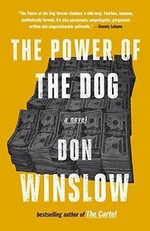
The Power of the Dog by Don Winslow: A truly magnificent book that I can’t adequately express my appreciation for

The Power of the DogThe Power of the Dog

by Don Winslow
Series: The Power of the Dog, #1
Paperback, 542 pg.
Vintage Crime/Black Lizard, 2005
Read: December 29, 2018 – January 8, 2019

The Americans take a product that literally grows on trees and turn it into a valuable commodity. Without them, cocaine and marijuana would be like oranges, and instead of making billions smuggling it, I’d be making pennies doing stoop labor in some California field, picking it.

And the truly funny irony is that Keller is himself another product because I make millions selling protection against him, charging the independent contractors who want to move their product through La Plaza thousands of dollars for the use of our cops, soldiers, Customs agents, Coast guard, surveillance equipment, communications . . . This is what Mexican cops appreciate that American cops don’t. We are partners, mi hermano Arturo, in the same enterprise.

Comrades in the War on Drugs.

We could not exist without each other.

You ever start a book and within a few chapters you know, you just know — the way you know about a good melon — that this is going to be a great book? Not just a good book, an entertaining book, a rave-worthy book, but a great one? Sure, it doesn’t happen often enough, but we’ve all been there. It’s happened almost every time I’ve read a Winslow book, I have to say.

Yet there are eleven books by Winslow that I haven’t read yet. Explain that to me, please.

It’s hard to say exactly when it was that I realized that with The Power of the Dog but it happened — and it took me by surprise for a half of a second, and then the voice in the back of my head said, “Of course.” The scope, the style, the voice, the audacity of the novel — there’s no easy way to describe it. And now I have to try to talk about it? I do super-hero novels, stories about detectives who use magic — or hunt for rare vinyl LPs, teenagers post videos of their drunken parents on Youtube or Picture Books about Die Hard — I posted about (and loved) 2 completely unrelated Crime-Solving Comic Book Artists last year! How am I supposed to talk about this?
After a quick — and disturbing — look at the cost of the War on Drugs in 1997, Winslow takes us back to 1975 in the State of Sinaloa, Mexico. There we meet new DEA agent Art Keller — a Vietnam vet, who’s come to use his experience to help take on the Opium trade. Thanks in large part to those efforts, the Opium trade is devastated — but the industry shifts to cocaine, and well — things go from bad to worse.

We follow Art’s career from 1975 to 2004 — watching him try to stop the flow of drugs from Mexico into the U.S. Calling that a Quixotic effort seems to be an understatement at best — but one particular cartel has made things personal for him and he directs most (if not all) of his efforts — you could argue most of his life — at disrupting their business and, hopefully, dismantling it. It’s no small task, and no quick battle.

But this isn’t just Art’s story — he disappears from the focus several times, in fact. It’s also the story of a maverick Mexican priest as he struggles to minister to various drug dealers, their family members — and their victims. We get to know some members of the Federación very well (too well, in some cases). Also, because the Federación needs customers, we meet several, ahem, NYC-based importers. Connected to all of the above is a high-class prostitute. We see these characters moving through actual history — Iran-Contra, the Mexico City Earthquake, political shifts in Washington. It was striking reading this in 2018/2019, remembering that once upon a time the name “Giuliani” was an invocation of law and order — a name that symbolized a change in organized crime’s power (at least perceived). Watching these individual’s stories weave in and out of each other’s over the decades and over huge geographic areas moves this from an intricate crime story to an epic.

None of these criminals is wholly evil (well, you could make the case for a couple of them, maybe), there are very relatable moments for just about all of them. They love, they laugh, they nurture their kids — they do good things in their community. The same can be said for the law enforcement characters — they aren’t wholly good, in fact, some of what they do is downright despicable. All of them, in short, are very human.

Winslow’s skilled at weaving in seemingly disparate tales into this tapestry and eventually you can see enough of it to appreciate why they’re all there. There are scenes in this book that are among the most depraved I’ve read. Scenes of torture, scenes of murder, scenes of heartbreak. But they’re not written for thrills, they’re not exploitative — they’re just horrific, and very likely based on something that actually happened. There’s a sweet little love story, tucked away in the middle somewhere that I kept wondering why we were getting. It was hundreds of pages, really, before I learned why — I enjoyed it while I could.

There is within this book a very heavy critique on the so-called War on Drugs in the U.S. — at the very least, on the way it’s being waged. Sometimes this comes from the narration, sometimes from a narcotraficante (see the opening quotation), sometimes from DEA agent — it doesn’t really matter whose mouth the critique comes from, it’s biting and it’s typically on point. It will likely make many people uncomfortable — by design; it should make many people upset. But Winslow never browbeats you with these critiques — unless you take the entire book as one, which it very arguably is.

I don’t know if I have the ability to describe Winslow’s writing here. Despite the scope and intricacy of the plot, it’s not a difficult read. Despite the horrors depicted, it’s not overwhelming. In fact, there are moments of happiness and some pretty clever lines. Which is not to say there’s a light-hand, or that he ever treats this as anything but life-and-death seriousness. It’s not an easy, breezy read — but it’s very approachable. I don’t know if there’s a moment that reads as fiction, either — if this was revealed to be non-fiction, I would believe it without difficulty. I will not say that he transcends his genre to be “Literature,” or that he elevates his work or anything — but I can say that Winslow demonstrates the inanity of pushing Crime Fiction into some shadowy corner as not worthy of the attention of “serious” readers.

I think I’ve pretty much covered everything on my pared-down outline. I really want to keep going, but I can’t imagine that many have read this far. As it is, this is at best, an inadequate job describing the book and how wonderfully constructed and written it is. Hopefully, this encourages you to seek more information, or actual reviews about it. Really, The Power of the Dog is a tremendous book and should be read by many. Be one of those.

—–

5 Stars

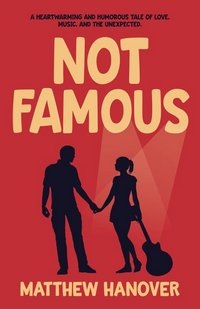
Not Famous by Matthew Hanover: A Sweet bit of Lad Lit that’ll fill your Heart with Song.

This is now available for pre-order at a discounted price! Take advantage of it while you can!

Not FamousNot Famous

by Matthew Hanover
Series: Wallflowers, #1

eARC, 382 pgs.
2019

Read: December 3 – 4, 2018

We meet Nick a couple of months after one of the most embarrassing experiences of his life — a marriage proposal that goes awry. He’s still reeling from that when he meets a very cute, and comparatively young, barista at his favorite Seattle-based Coffee chain shop. Alli’s not just a barista, she’s also a musician — a solo act, just a girl with a guitar — so Nick goes to one of her shows. He falls in love with her music right away, and somehow convinces her to go to dinner with him.

Which is just the beginning of their story. Alli’s a very private person with no romantic past. At all. Which seems hard to believe when you read it here, but when she tells Nick that, you have no problem believing it. Unless she’s singing, she seems nervous, uncertain, and shy. But on stage . . . she’s a different person. And while she seems like a shrinking violet, she has a will of iron when it counts. One of the places it counts surrounds her past — it’s a closed book — and it doesn’t seem likely that she’ll open up until and unless she truly trusts someone. Although she’s put up enough walls to protect herself that it’s going to take quite the guy to get her to let her defenses down.

Now, on the other hand, Nick has some kind of romantic past, but it’s hard to believe it sometimes as he fumbles his way through this relationship. It’s kind of fun to watch him act like he’s an expert on romance, someone guiding Alli through this new territory for her, and then frequently doing and saying the wrong things — almost sabotaging the relationship more times than he’d care to admit. Some of this comes from general ineptitude, some comes from the damage done to him in his last relationship (much of which he doesn’t realize happened).

Now, I don’t want to take any thing away from Nick or Alli — they’re they heart and soul of the novel. But, I want to talk a little bit about Nick’s sister, Lacy. Her father was their mom’s second husband, and about ten years younger. They’re not close, but their mother keeps trying to get Nick to be involved — after his step-father died, Nick’s really the only male influence in her life. Lacy, like their mom, wants them to be close. She sees him as her big brother, even if he only sees her as his much younger step-sister. As the book goes on, Nick’s maturity can be gauged by his relationship to his little sister. Naturally, like just about everything that’s not work in his life, Alli’s influence and action improves things — the friendship between Lacy and Alli forces Nick to play a larger role in his sister’s life. And before long, he doesn’t need Alli’s efforts to want that closeness himself. I thoroughly enjoyed Lacy as a character, and watching how Nick changes in relation to her — she was the added something that made this book more than just a sweet love story. She’s not around much, actually, and there are characters that have a more obvious impact on the plot — but she’s the non-Nick/Alli character that sticks with you.

She’s also the one character whose main role isn’t to serve the Nick/Alli relationship in some way. Now, she does serve that — don’t get me wrong. But that’s not the chief purpose for her. I have nothing against Alli’s Starbucks coworkers, or fellow musicians who only show up to encourage the romance. Or Nick’s roommate, or friend/partner who give him reality checks and the prodding her needs. But they really don’t do much else. But little sister does. If I ever get to interview Hanover, we’re going to spend a lot of time talking about her.

I would have appreciated having a better sense of who Nick is outside the relationship. I do have a sense of him as a single guy, as a friend, as a professional — but I’d have liked a bit more of that. It’s really hard to have much of a read on Alli outside their romance, as it’s all told from Nick’s POV. But you do get hints — I’d have liked a few more. But since this is the story of Nick and Alli, it’s appropriate (and enough) that we get a really strong idea about them as individuals relating to each other and them as a couple, and how that dynamic functions. I’m just a reader who almost always wants a little more than an author gives me.

At the end of the day — and long before that, actually — what you think about this book boils down to one thing: Alli. Do you like her as a character — do you fall under the same spell that Nick does? (or can you see why someone would?) Moreover, her secret — do you care? And is that caring based on this struggling artist trying to make her way in the world, or do you care because you’re curious? Nick, his struggles, his ineptitude, Lacey, etc. — you’re appreciation of the book will be flavored by your appreciation of those, but it’s all about Alli when it comes to the question of, “Do you like this book?” And Nick, at least, would have it no other way.

Not Famous is almost as much a tribute to Nick Hornby as it is a story in the same vein as his work. There are nods to Jonathan Tropper and Matthew Norman, too — probably Mike Gayle as well, but it’s been so long since I’ve read him, it’s hard for me to recognize that. This is not a bad thing — in fact, I quite appreciate it, and enjoyed the process of seeing how Hanover reflects his influences in his writing.

At some point, I can’t tell you where, I stopped thinking about Not Famous as something that I was going to post about, or something I was going to provide feedback on. I just got wrapped up in the story and the fate of these two characters (and his sister, actually). I stopped thinking about how Hanover wrote and was only concerned with what he wrote (not that I didn’t notice the former, I just didn’t care). It’s always a good sign when I disengage the critical part of my brain and simply read.

Not Famous — it’s cute, it’s amusing, it’s charming, it’s sweet. It’s the kind of book that you want to bring home to mother (okay, that line’s borderline cheesy, I know — but my mom would really enjoy this book) — and even bring it home to your daughter. I hope this book is successful enough to warrant future novels from Hanover, because I would love to read more.

Disclaimer: I was given a copy of this ARC by the author in exchange for this post. Which gave me something to opine about, but otherwise didn’t influence my opinion.

—–

4 Stars

Flashback Friday: The Theory of Opposites by Allison Winn Scotch

The post I’m working on just isn’t going to be finished on time — at least not while leaving me capable of working today. So here’s a post from the past about a book that I’ve thought about lately.

The Theory of Opposites

by Allison Winn Scotch
Paperback, 306 pg.
Camellia, 2013

The Theory of Opposites starts off with a bang — a Rube-Goldberg of verbal and physical slapstick. Raised by a self-help guru, raised in an atmosphere saturated with and run by her (best-selling and almost universally acclaimed) father’s theories, Willa Chandler-Golden’s life is about to fall apart the way that her day falls apart before she even leaves the apartment this fateful day.

She loses her job, learns that she’s not pregnant after all, learns that her parents are both in the midst of a late-life crisis, learns that the twelve-year-old son of her husband’s dead friend will be spending the summer with them, her husband may be stepping out on her. Oh, yeah — and then a couple weeks later her husband decides they need a break from each other. He’ll be moving across the country, sharing custody of his “nephew.”

So, Willa does what anyone finding themselves in this situation — she agrees to help her best friend write a self-help book that ties into her favorite Reality TV Show. As an added bonus, their book will flatly contradict her father’s near-Nobel Prize winning work.

During this break, catastrophe strikes Willa’s father and brother, her mother’s life turns upside down, and The One Who Got Away comes back into her life.

Somewhere in all this, Willa tries to figure out just what she wants in life, what she believes about life, and what kind of person she’s going to be. The question The Theory of Opposites tries to answer.

There’s fun to be had in the reading, but it’s not as if there’s a denial of the seriousness of it all. Scotch deals with some pretty serious issues with the same light, deft touch she brought to her past novels — breezy enough that you can let the uncomfortable details slip by, but honest enough that they’re in front of you all the time. I don’t think this was quite as satisfying as her The Song Remains the Same, but it was good enough to keep me looking for whatever comes next.

—–

3 Stars

Flashback Friday: Fate Ball by Adam W. Jones

The post I’m working on just isn’t going to be finished on time — at least not while leaving me capable of working today. So here’s a post from the past about a book that I’ve thought about lately.


Welcome to Part One of our participation in the Fate Ball Book Tour — a brief interview will follow in a couple of minutes. Hope you enjoy both of these posts half as much as I enjoyed this book.

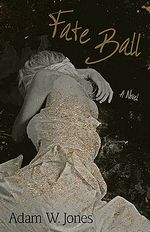
Fate BallFate Ball

by Adam W. Jones
PDF, 279 pg.
Wisdom House Books, 2016
Read: April 14 – 15, 2016

Parents always seem to think that saving the day is a good thing, but really it just postpones the inevitable. Sometimes, they should just let their kids crash and burn, so they learn their lesson the hard way. Parents can be the biggest enablers of them all when they’re acting out of love and kindness, but that usually just makes things worse.

That’s not the most dazzling piece of writing in Fate Ball, nothing catchy or inherently memorable, like I try to start with — but this is the heart of the book. People trying to help an addict not ready to be helped, and inadvertently making things worse.

In the prologue, Able Curran receives news that Ava Dubose has died — Chapter One takes us back 14 years to 1980 to meet her. In Chapter Two (one of the best chapters I’ve read this year), Able meets her — and falls for her almost instantly (and many readers will, too). Over the next few chapters, you see the two falling deeper and deeper in love — one of the cutest couples you’ve read.

All the while, you know that things are leading to the fateful phone call Able receives in 1994. We start to see some signs of trouble (well, those started before this) long before Able does. When he finally gets clued it, it destroys him — and they don’t see each other for some time. From there we watch these two lives intersect from time to time over the next 15 years (usually, Able trying to help her), as well as getting glimpses of their lives between the intersections.

This is really the story of two addicts — one who lets their dependency control and destroy them. The other who learns how to live with the problem, controlling and eventually overcoming. And even as you know it’s happening, you still hold out hope for Ave to shake things off, to achieve the serenity — or at least the contentment that she so desperately needs. Things get worse and worse — yet Jones is able to keep things from despairing, there’s a lightness to the prose that keeps things moving. While things fall apart for Ava, they move on for Able and their friends — success, new love, children, life.

In some hands, you’d be beaten over the head with the contrast, Jones doesn’t do that however. It all spools out naturally, easily (the kind of ease that takes work to pull off). You like everyone here enough that you’re pulling for them, no matter what stupid choices they make. Jones as come up with a perfect blend of humor, romance, drama, and tragedy.

There are plenty of little touches along the way to keep things light, to immerse you in the world — which is good because the book could become too fixated on Able and Ava.

His mother was always asking, then answering her own questions. That’s why she was always right. She could have a whole conversation with herself, even a fight depending on the subject matter, and no one had to say a word. All Able needed to do was just nod his head once in a while and she would take care of the rest.

This is not the best book I’ve read — not even the best novel on addiction. But it works well enough that it doesn’t matter. I’m not saying it’s a bad book, or there are glaring problems — but objectively, I just think it could be better. But when you’re reading it? It delivers everything you want, and some things you don’t expect. I really enjoyed this and think you will, too.

Disclaimer: I received a copy of this book from the kind folks at Wisdom House Books in exchange for an honest review.

—–

4 1/2 Stars

Pub Day Repost: Dry Hard by Nick Spalding: Who needs to drink when you can have this much fun reading?

Dry HardDry Hard

by Nick Spalding
eARC, 293 pg.
Amazon Publishing UK, 2019
Read: November 19, 2018

Kate Temple’s in PR, Scott Temple’s a marketing director for a distillery. Both of them rely on alcohol to get through their days (and nights). They used to have each other to rely on and curb their use, but as they’ve become more successful, they have to do more things away from each other and they really don’t have anyone to watch out for them. Also, because they spend less time with each other, both have a hole they need to fill throughout their days — which usually involves more drinking.

Things are getting bad enough that they both endanger their jobs (not to mention the property and safety of others) thanks to drunken escapades. But this doesn’t give either of them much pause — if anything it drives them to the bottle even more. Their teenaged daughter, Holly, can’t understand why these two can’t see how bad their drinking is, how much it’s hurting their marriage, how much it’s affecting her life. So, at Christmas, she decides to secretly film them at their drunken worst (which starts pretty early in the evening) and then she shows it to them, hoping this video intervention will awaken them to their problem.

It doesn’t work — her parents defend their drinking, downplay the mortifying things they do on video and generally blow her off. So in a fit of adolescent pique, she uploads the video to YouTube so her friends can see it. But the video catches the attention of a couple of popular YouTube celebrities and next thing they know, Kate and Scott are a viral sensation.

This very public shaming convinces them that they need to make some changes, and decide to cut out drinking totally. Holly tries to get them public support by uploading videos chronicling their efforts to live dry for a year, attaching the hashtag #DryHard. Things do not go well — well, maybe well, but not smoothly.

Now, here’s where Spalding distinguishes himself from almost every other writer on the planet — he makes all of that hilarious. Yes, Holly’s going through a lot because of her parents, but even in the way that Spalding describes it, her hardships are funny. At the 14% mark, I wrote in my notes “I have no idea if he can tell a story, but Spalding can make me laugh!”

I can thankfully report, he can tell a story — and still makes me laugh. The comedy comes from the situations, from the slapstick-y way his characters navigate the situations, and just the way he narrates (typically through the protagonists’ voices). It’s not just one thing that he does well — he can bring the laughs through multiple channels. Yes, the couple are careening toward rock bottom, but you laugh about it; yes, they’re dealing with very serious life and death issues — but Spalding makes you find the humor in the situations; they have monumental struggles that don’t go away just because they sober up, but you’ll ber chuckling and chortling while watching them flounder.

Oh, also, this has nothing to do with the plot, but Spalding’s description of Gin Fawkes — a flavored gin using orange peel and cinnamon produced by Scott’s distillery — is enough to make me consider becoming a teetotaler. Fantastic stuff. Funny and horrifying in equal measures.

This is the story of a family in crisis and the great lengths they go to to preserve that family. That right there sells me on the book — everyone wants the same thing — Kate and Scott’s marriage to recover. There’s not one person in the family thinking of pulling away, there’s not one more committed than the rest — both spouses are flawed and fallible, even Holly makes mistakes and loses her way, however briefly. No one’s blameless, no one’s to blame, Scott and Kate have got themselves to this point together, and together they’ll make it out. Too many books like this will take the “side” of one spouse — one is committed, one is faithful, one is stupid and blind to their own faults and one is the bigger/wiser person, etc., etc. Spalding doesn’t do that — he presents the Temples as mutually dysfunctional, mutually aspirational, and human.

Unlike a lot of similar authors, if Spalding had the opportunity for an honest, heartfelt emotional scene or a series of laughs — he’d pick the laughs 99 times out of 100. Thankfully, if he could go for a fairly honest and quite heartfelt scene with laughs, he’d go for that too. If he’d gone for fewer laughs and more of the honest and heartfelt moments, he might have a more complex, realistic, and substantive novel. Something more akin to Jonathan Tropper or Nick Hornby at their best. Instead, Spalding produced an entertaining, funny and frequently hilarious novel. The substance is there — but it’s hidden and easy to miss between the chuckles.

If you take the time to look for the substance/depth — you’ll find it and appreciate its presence. If you don’t and just laugh, you’ll be fine and have a good time — either way, you win.

This was my first Nick Spalding book — it will not be my last. Fast and funny — I had a blast reading this and laughed out loud more than I can remember doing in a long time. Read this. You’ll enjoy it.

Disclaimer: I received this eARC from Amazon Publishing UK via NetGalley in exchange for this post — thanks to both for this.

—–

3.5 Stars

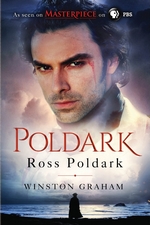
Ross Poldark by Winston Graham: A decent read, but it’s not for me.

Ross PoldarkRoss Poldark

by Winston Graham
Series: The Poldark Saga, #1


Paperback, 379 pg.
Sourcebooks Landmark, 2015 (originally published 1945)

Read: December 27 – 28, 2018

Ross Poldark, the scandalous son of a minor land-owner, comes back from serving the Crown in the War for American Independence to find his father dead, his estate in disrepair, and the woman who he’d hoped to wed engaged to someone else (a formerly close friend, actually). Understandably, he’s about to throw in the towel on life, but instead he starts putting things together.

He bullies his fathers’ (and now his) servants into getting to work restoring the house and lands, and hires some new help and even rescues a poor little girl being picked on by some nearby children and brings her into his house as a kitchen maid. He has to fight and then pay off her abusive father for the privilege, but does so. He takes care of his tenants, and is soon seen as half-one of them half-landowner. He starts a new mine with some other people in the area, doing a lot to help the local economy.

There’s some legal drama, a touch of medial as well, a malicious criminal presence, too — but it’s hard to take any of these seriously, and they are all dispatched quickly. In fact, that’s pretty much par for the course for everything — a problem arises and is resolved soon. There’s no real book-length plot to this novel — there’s no central or driving conflict. You might be able to make the case that it’s a story of Ross finding contentment and/or happiness after the way his homeland welcomes him. But I’m not sure I can buy that.

There is just so much wrong with the love story involving Ross that I’m not going to touch it. I get that it’s a different time, different standards, and everything, but he’d be locked up today for what happens — and rightly so. Frankly, all of the romances are a bit . . . off. Nothing that Austen would touch, for sure. One of the Brontë sisters might have, though.

This book feels like someone was convinced the only proper kind of book for a British person to write is one that Austen, a Brontë, or Dickens could have written — so he combined the three influences into one. But Graham isn’t one of those. He’s a passable writer of limited imagination. Every so often he’ll write a passage — a small paragraph to a page or so in length — that strikes me like he’s realized he hasn’t done anything “writerly” for a bit and dashes something off that fits the bill. Then he gets back to his usual story telling for 5-10 pages until he repeats the process. This isn’t to suggest he’s a bad writer, it’s just usually decent prose with odd splashes of flair.

It’s hard to describe any of the characters except in reference to Ross — and would end up spoiling a lot of the book to do so. I found them all relatively two-dimensional and without a lot of growth or development. What change there is in most of them is hard to believe, or at least happens off-screen and without explanation. The maid that Ross brings in is the easiest to see grow and develop, and we almost get a real sense of who she is — but I’m not sure I can say that.

Ross Poldark isn’t a bad book — but there’s nothing about it that grabbed me. I did grow to be a bit interested in two of the characters, and was pleased to see things go well for them. I’m not driven to pursue things to the next book much less eleven more, however. I can see the appeal — I think — that this book and/or this saga would have for some, but it’s not for me. But for people who like semi-romantic historical epics, you’d be well served by trying this. I probably sound more negative than I really am — I’m more indifferent than anything else.

—–

3 Stars
2018 Library Love Challenge

✔ Read a book recommended by one of your parents (in-laws count).

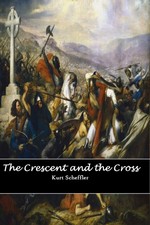
The Crescent and the Cross by Kurt Scheffler: An Uneven But Ultimately Satisfying Historical Fiction

The Crescent and the CrossThe Crescent and the Cross

by Kurt Scheffler


ebook
2014

Read: December 20 – 24, 2018


I normally reserve disclaimers for the end of a post — but I’m going to start this post with one. I’ve met Kurt Scheffler, he seems like a good guy. He has taught every one of my children, is currently teaching two of them, and will be teaching one for the next three years. He’s beloved in my house and the impact that he’s had on my kids is almost incalculable. Also, one of my kids bought this for me — not in a “hey, here’s an easy way to get brownie points” kind of move; but a “I know someone who wrote a book, my dad likes books, I should combine those things” kind of way. So basically, I’m trying to say that I have every reason to airbrush what I’m about to say, but I’m going to try to not do that. Also, no parent wants to see one of their kid’s teachers use the word “whoring” that much.

This is the story of The Battle of Tours (in 732) and events leading up to it, told through the lives of people close to Charles Martel and Charles on the one hand and a couple of the leaders of the Muslim forces involved in the Arab invasion of France. Specifically, that’s Charles, his longtime friend, his sons, his mistress, and some children who are adopted by a close associate and are practically part of his household; and then the son of the Caliph and Abderrahman.

It’s your typical historical fiction, blending historical events and fictionalized events into one narrative. I really liked some of the characters a lot, and the ones I had no patience for were the one’s the book doesn’t want you to enjoy. I’m not convinced that I didn’t like them for the same reasons I wasn’t supposed to like them — it wasn’t their less-than-savory characteristics, but their portrayal. But still, that’s better than many novels are able to pull off.

I’m not going to try to summarize the plot more thoroughly than that, or talk about any of the particular characters — this post would quickly become too long to bother with. The story takes awhile to coalesce — it almost feels like the novel couldn’t decide what it was going to be about for the first half — it started trying to be X, then it became Y, then Z and quickly A, B, and finally settling on being C (I might have exaggerated a bit there, the book might have settled on B). That’s how it felt, I should say. In retrospect, I don’t think that was the case, it was simply taking it’s time (arguably too much) setting the stage and establishing the characters before launching into the major story.

That said, I found myself enjoying each version of the story the novel gave us along the way, and when it seemed to shift into a different story, I was disappointed to leave X, Y or Z — at least until I got into the new version. Scheffler can tell a story, that’s clear. He’s skilled at sucking you in and feeling what he wants you to.

I do have a few quibbles with the book — I’ll only talk about a few. My notes are full of question marks when we got a historical particular, I just wasn’t sure if he got the timing on some things correct. There’s a lot of anachronisms — for example, Pascal’s wager a few centuries early (sure, someone could’ve said it before Pascal — but it seemed a bit off); some statements about equality that sounded like Martin Luther King, Jr.’s rough drafts; and people holding opinions/values that I just can’t accept given the time (mostly benign things, I should add, like a noblewoman baking as a hobby). The villains might as well be wearing black hats and twirling mustaches, while the “heroic” characters are subtly drawn and live in the gray — I just wish the villains got the same treatment. Practically every character is very aware of the historical significance of the struggle they’re part of — particularly when it comes to the ultimate (and impending) battle between Charles Martel’s and Abderrahman’s armies. I don’t doubt that sometimes individuals understand how vital a role they play in the grand scheme of things, but this seemed a bit overkill (or this is a case of one of the greatest conglomerations of narcissists ever).

There’s redemption, personal reformation, romance, action against a sweeping historical backdrop — there’s something for almost everyone here. Could this book have been better? Yes. Given the themes, the scope, the characters, the setting — there’s a lot more that Scheffler could’ve done here. Also, it would’ve been very easy to make this incredibly dull and/or hack-y. Scheffler avoided that — and I’m very happy about that. In the end, we’re left with something in the middle — an entertaining work with a few problems. You’ll keep turning the pages to see what he does with the characters, but you’ll wonder a little about the background and details. At worst (or best?) this’ll spur you to further reading on the history of the period after reading Scheffler’s fictional take. Really can’t complain about that, right? I’m glad I read it.

—–

3 Stars

✔ Read a book you received as a gift.

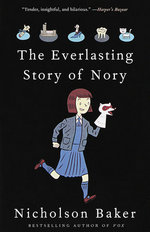
The Everlasting Story of Nory by Nicholson Baker: A Look at Life through the Eyes of a 9-year-old Girl

The Everlasting Story of NoryThe Everlasting Story of Nory

by Nicholson Baker

Hardcover, 226 pg.
Random House, 1998

Read: December 17 – 18, 2018

Sometimes the problem with telling someone about a book was that the description you could make of it could just as easily be a description of a boring book. There’s no proof that you can give the person that it’s a really good book, unless they read it. But how are you going to convince them that they should read it unless they have a glint of what’s so great about it by reading a little of it?

When I read these musings of a little nine-year-old girl, all I could think was, “Welcome to my world, kid.” Seriously, what book blogger hasn’t had that thought at least once a week? If this hadn’t been set in the mid-90’s, Baker might have been tempted to have his protagonist take to blogspot to talk about her favorite books (which I absolutely would have read).

Nory, her parents and her two-year old brother have moved to England from Palo Alto, CA, where she attended a Chinese Montessori School. She’s now attending a Roman Catholic school with grades and a structured curriculum. Which isn’t an easy transition for her (as you’d expect). As she’s an “Americayan” with a strange accent and difficulty understanding British phrases, she’s on the outside of her school’s social structure.

This is rough for her, but I think it’d be rougher for other kids. Nory has an incredibly vivid imagination and tells herself stories (some of which she writes down, some she enacts with dolls and toys, some of which she just says to anyone who might be around). They are intricate, inventive, and as entertaining as the parts of the book that are about Nory (arguably more so). When times are tough, when she’s bored, when she needs to entertain her brother, when she has trouble sleeping — these stories are there for her. The reader gets to go along for the ride with her — which is a nice bonus.

When she’s not making up stories (or opining on the construction of them), she’s struggling through school and through the mine field that is making friends, and searching for a best friend. There’s a girl who frequently seems to like Nory, but would appreciate it if Nory would change a few things. There’s another girl who is bullied, teased, and generally disparaged by the rest of her class. Nory very unsuccessfully tries to defend her, but mostly just tries to be friendly to her.

And that’s the bulk of the book — there’s some “slice of life” stuff with her family, some parts where Nory remembers Palo Alto and the Chinese Montessori school — that kind of thing. But mostly it’s the tale of a few months of a 9 year-old looking for a friend, trying to stay out of trouble in a school she doesn’t understand and playing with her dolls.

Nory is a girl of opinions — some of them very strong. She has very definite ideas about storytelling, and what’s necessary to a successful story or book. Ironically, this book fails Nory’s own tests due to its lack of plot, and relatively small stakes. That’s probably an intended irony, and Baker’s really saying that people like me that want plots like Nory insists on have child-like tastes. I don’t know that to be the case, but I’d be willing to put money on it.

It’s told in third-person, but the narration is very stream of consciousness, very nine-year-old stream of consciousness — bouncing all over the place with a short attention span, and nine-year old misunderstandings of life around her. It’s delightful to read, and only a little annoying when you pause to reflect on what’s happening (or better, what’s not happening). In the moment, it’s just fun to surround yourself with Nory’s thoughts.

I won’t say this is a must-read, but if you give it a shot, I can’t help but think you’ll be rewarded. It’s perfectly safe for anyone Nory’s age or older to read, but I can’t imagine many people Nory’s age will appreciate it (but I could be wrong). It’s better appreciated by those of us who can remember some of what it’s like to be her age. I liked it, am glad I tried it and I expect you will be, too.

—–

3 Stars

GUEST POST – The Open Road Awaits: Your Guide to Literary Road Trips

I’m very happy to have this guest post today — and not just because I need some time to finish a couple of things you won’t see for a few weeks. I love a nicely designed (and informative) infographic and this one hit the sweet spot for me. When I was asked if I’d be interested in posting this, I jumped on it. Give this a read and check this out. Then maybe plan a trip?

Literary Road Trips Across AmericaScott Fitzgerald, Jack Kerouac and Tom Wolfe…

These are a handful of renowned authors responsible for writing some of the most iconic books we know and love. The sources for their inspiration came from their life experiences, including some at the heart of American culture—road trips. From adventures lasting ten to over one hundred hours, these famous works of literature account for the national parks, cities and cultural events each author explored.

For example, On the Road, by Jack Kerouac, follows the story of Sal Paradise and his friends. The crew of young, broke hippies in love with life travel from New York to San Francisco. Through his young characters’ adventures, Kerouac’s work captures the spirit of freedom and the American dream. The narrative draws from Kerouac’s personal experiences traveling across the country.

The experiences of many authors are brought to life through the words crafted in their stories, making it incredibly difficult to put these books down. And each year, thousands of Americans, inspired by wanderlust and words, set out on their own adventures. The freedom of a cross-country road trip, whether on your own or with a group of close friends, never fails to enchant. There’s something intensely clarifying about hitting the open road. You’re suddenly able to disconnect from the routines of everyday life. You become what’s happening in that moment. You are living outside time.

Inspired by the need for adventure and the words of iconic authors, CarRentals created a guide to literary road trips across America. Instead of simply living them through the pages of your favorite novel, you can set off on routes that follow the narrative arc of six iconic books. Create new stories of your own by exploring the paths of these famous American authors. The road awaits!

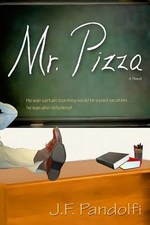
Mr. Pizza by J. F. Pandolfi: A Winsome Tale of a Rookie Teacher

(WordPress is doing that thing again where it messes up the html in my post header. I think I’ve fixed it, but if the beginning of the post looks ugly, sorry, I’m doing my best)

Mr. Pizza
Mr. Pizza

by J. F. Pandolfi


ePUB, 298 pg.
L&A Publications, 2018

Read: December 4 – 5, 2018

On the verge of graduating from college, Tony Piza (long “I”, and yes, he’s heard all the jokes), decides he’s not ready to head to law school and would like to take a year off. Inspired by a suggestion from his roommate, he applies to teach at a Roman Catholic school near his home. He figures that it’ll be pretty easy — spout some facts and figures from the text-book, assign some homework, do a little grading, catch up on his reading. All while living rent-free with his parents and sister. Despite never having taken an education class, nor showing any previous interest in education, and some iffy interview questions, he’s hired.

Early on, he performs his duties just as he planned — and it’s as successful as you imagine. But before long, he starts to see his students as individuals, not some faceless mass. It’s just a few steps from there to caring about their education and trying to do something about it. Tony also makes some friends with fellow teachers — two other lay teachers (including the other male staff member), and one nun. They start to rub off on him — and even inspire him.

But that doesn’t mean he turns into Professor Charles W. Kingsfield Jr or George Feeny, he’s more like a version of Gabe Kotter or Charlie Moore. Unconventional, off-kilter, and comical — yet challenging. Both his lectures and his assignments bring out the strengths and weaknesses his students (and their parents) were unaware they possessed. They also get Tony in trouble with parents, school administrators and school board members.

Essentially, the novel is a bildungsroman, watching Tony’s development from someone who sees teaching as a vacation from his real life to someone truly invested in it. I don’t want to say that it’s a smooth transition or that he flips the switch and becomes the World’s Greatest 6th Grade Teacher ™. That would make for a very dull novel.

Pandolfi writes in a very smooth, assured style. There’s not a lot of artistic flourishes — that’s not a critique, just an observation. It is charming, frequently amusing, and pretty earnest. I was a little afraid after reading the description that this would be a satire that tried too hard, one of those books where you can see the writer trying to be funny (which almost never works) — but I’m pleased to say that it wasn’t. Tony seemed to try too hard, but not Pandolfi — a character doing that is annoying, but it’s a character trait; a writer doing that is frequently a a deal breaker.

Tony’s antics and judgement are a mixed bag, as I mentioned. Early on, some of his jokes/behavior didn’t seem like fun, they seemed capricious and even mean — but so did M*A*S*H‘s Hawkeye and Duke Forrest (the book and movie versions, anyway). From the get-go the 1973 setting and sensibility put me in that frame of mind, so that’s where my mind went. And sure, part of the book is to show his growth from that, but it’s pretty off-putting. Similarly, I had trouble swallowing how tone-deaf he was when it came to jokes about Roman Catholics (even after being warned), yet he was reflexively sensitive to other people/problems (frequently in a way that seemed at least somewhat anachronistic).

Ultimately, I was able to get past that — and it’s possible that without me putting something about that in my notes, I’d have forgotten to mention it. Because of his growth, by that last third or so of the book, you see almost no signs of this (except when his past comes back to haunt him). So, I guess I’m saying, if you’re put off by some of his early behavior, give him a chance.

His sister, Patty, has Down’s Syndrome. I really appreciated the way that Pandolfi treated her. She’s simply a character — there’s no After-School Special moment with her, she’s not an object of pity — she’s simply Tony’s little sister. There are funny moments with her, some sweet moments with her — just like there are with Tony’s mother and father.

Tony’s students, fittingly, come close to stealing the novel from Tony. As is the case with the Bad News Bears, the Sweathogs, Fillmore High’s IHP class, etc., you have to want to see the kids do well to care about their teacher. They’re a diverse group, each having some distinctive characteristics and/or problems. They come to believe in their “Mr. Pizza” long before the staff, or even Tony — and stay his biggest supporters through the ups and downs that ensue. If you don’t like at least most of the students, there’s something wrong with you and you should seek professional help. Or just re-read the book, because you probably missed something.

The rest of the cast of characters are well-drawn and believable. There are a few that I’m glad we didn’t get much time with (Tony’s extended family, for example). His friends, fellow teachers and principal are strong characters, a couple of them are better developed. But that’s simply due to time spent with them. Pandolfi has a gift for good characters, which is half the battle in a novel.

Mr. Pizza is a charming tale of a young man maturing at a turning point in his life. There’s some good laughs, some uncomfortable moments, and some earnest emotional beats. The book is a pleasure to read and it — and it’s protagonist — will win you over and get you rooting for them both.

Disclaimer: I received this book from RABT Book Tours in exchange for this post and my participation in the book tour.

—–

3.5 Stars

✔ Read a book with your favorite food in the title.

RABT Book Tours & PR

Page 27 of 45

Powered by WordPress & Theme by Anders Norén