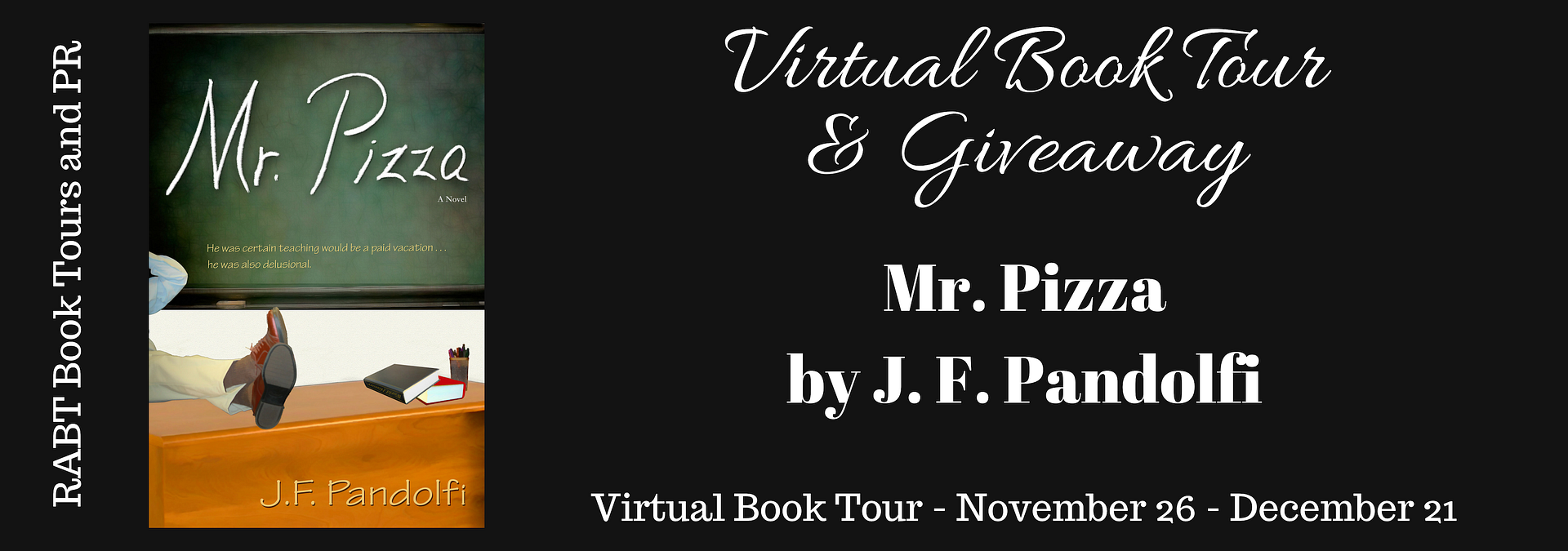
I’m very happy to host a Book Tour stop for J. F. Pandolfi’s Mr. Pizza (and not just because it satisfies a category for the 2018 While You Were Reading Challenge). Be sure to click the link below for the Rafflecopter giveaway — but do read the book/author info, too –and then come back later this morning for my thoughts about the book.
—
Tag: General Fiction Page 28 of 45
The Summer Holidays Survival Guide
by Jon Rance
Kindle Edition, 262 pg.
2018
Read: November 14 – 15, 2018

‘Oh, Dad, how little you know,’ said Liv, her head returning to her phone.
How little I know. I have a feeling this one cold, hard sentence, uttered from my twelve-year-old daughter’s lips, might sum up my life.
Ben Robinson is an art teacher, in his mid-40s, and is trying to figure out how he’ll survive the upcoming summer holidays — 6 weeks with his three kids, and a marriage who’s spark is gone out (possibly for good). Oh yeah, and an aging father with dementia moving in with them, rather than a nursing home. Meanwhile, he’s trying to prepare for a half-marathon, which is about a whole marathon more than he’s ready for.
We get a day by day (or close to it) account of how this goes for Ben. The short version is: not very well. Particularly in the beginning. Ben meddles in his fifteen year old son’s love life (with some really bad sex tips — all of which I’m considering passing on to my kids), cannot understand his twelve-year-old daughter’s social media life (and nascent pubescence), and derails his eight year old son’s summer plans without trying. Things go downhill from there, really.
His dad is having trouble remembering that he doesn’t live in the same home, or that his wife has been dead for a few years — this is a source of strain for both Ben and his father — and the relationship becomes strained. Ben is having trouble seeing his father this way, and his father is having trouble being this way. Both are trying their best, but this
Speaking of a strained relationship, the number of things wrong with his marriage keeps growing, and every thing that Ben tries to do to fix it just makes things worse. He and his wife aren’t communicating well — one of those problems that keeps feeding itself and growing worse.
Throw in an accidental participation in an anti-Brexit demonstration, a road rage incident leading to social media notoriety for one member of the family, teen romance problems, summer-altering injuries, and well — clearly, someone needs to write a survival guide.
As Ben and his family try to get through their struggles intact — and maybe even better than that — there’s plenty of fodder for humor. There’s a lot of heartwarming material, some real laughs and more than a few chuckles. There’s some really effective writing and characterization.
However, there’s also Rance’s need to go for the big laugh. And here, he basically turns Ben into Basil Fawlty — with all the wild schemes, failing schemes, shouting, misunderstandings and slapstick involved. I don’t think any of these scenes or moments worked for me. When he’s going for subtle laughs, or those that grow from character, I really enjoyed it. When the subject matter is serious (or at least non-comedic), Rance is really strong. It’s when he’s obviously trying that he falters.
‘Marriage,’ said Dad. ‘There’s always ups and downs. You just keep riding it, son. It’s like a rollercoaster. You can’t get off, so you just hold on, and do your best to enjoy it.’
‘I’m holding on for dear life, but life is harder than it was, Dad. The world has changed. The rollercoasters are bigger and scarier now. The drops are bigger, the hills higher.’
‘Oh tosh. The world might change, but people don’t. Love is still love, clear and simple. Don’t blame the world for your problems, son. Hold on tighter. Love stronger.’
That’s one of the more earnest moments — and there are plenty of them in the latter part of the novel, all set up well in the early part — and it shows the heart of the book — and there’s plenty of heart. Rance won me over, and got me to put more of his books on my list because of these kind of moments, and the genuine laughs I got from the smaller moments, I’ve got more of his stuff on the TBR.
It’s a nice, pleasant book that’ll tickle your funny bone and warm your heart.
—–

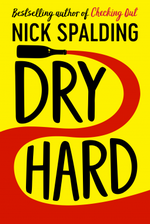
Dry Hard
by Nick Spalding
eARC, 293 pg.
Amazon Publishing UK, 2019
Read: November 19, 2018

Kate Temple’s in PR, Scott Temple’s a marketing director for a distillery. Both of them rely on alcohol to get through their days (and nights). They used to have each other to rely on and curb their use, but as they’ve become more successful, they have to do more things away from each other and they really don’t have anyone to watch out for them. Also, because they spend less time with each other, both have a hole they need to fill throughout their days — which usually involves more drinking.
Things are getting bad enough that they both endanger their jobs (not to mention the property and safety of others) thanks to drunken escapades. But this doesn’t give either of them much pause — if anything it drives them to the bottle even more. Their teenaged daughter, Holly, can’t understand why these two can’t see how bad their drinking is, how much it’s hurting their marriage, how much it’s affecting her life. So, at Christmas, she decides to secretly film them at their drunken worst (which starts pretty early in the evening) and then she shows it to them, hoping this video intervention will awaken them to their problem.
It doesn’t work — her parents defend their drinking, downplay the mortifying things they do on video and generally blow her off. So in a fit of adolescent pique, she uploads the video to YouTube so her friends can see it. But the video catches the attention of a couple of popular YouTube celebrities and next thing they know, Kate and Scott are a viral sensation.
This very public shaming convinces them that they need to make some changes, and decide to cut out drinking totally. Holly tries to get them public support by uploading videos chronicling their efforts to live dry for a year, attaching the hashtag #DryHard. Things do not go well — well, maybe well, but not smoothly.
Now, here’s where Spalding distinguishes himself from almost every other writer on the planet — he makes all of that hilarious. Yes, Holly’s going through a lot because of her parents, but even in the way that Spalding describes it, her hardships are funny. At the 14% mark, I wrote in my notes “I have no idea if he can tell a story, but Spalding can make me laugh!”
I can thankfully report, he can tell a story — and still makes me laugh. The comedy comes from the situations, from the slapstick-y way his characters navigate the situations, and just the way he narrates (typically through the protagonists’ voices). It’s not just one thing that he does well — he can bring the laughs through multiple channels. Yes, the couple are careening toward rock bottom, but you laugh about it; yes, they’re dealing with very serious life and death issues — but Spalding makes you find the humor in the situations; they have monumental struggles that don’t go away just because they sober up, but you’ll ber chuckling and chortling while watching them flounder.
Oh, also, this has nothing to do with the plot, but Spalding’s description of Gin Fawkes — a flavored gin using orange peel and cinnamon produced by Scott’s distillery — is enough to make me consider becoming a teetotaler. Fantastic stuff. Funny and horrifying in equal measures.
This is the story of a family in crisis and the great lengths they go to to preserve that family. That right there sells me on the book — everyone wants the same thing — Kate and Scott’s marriage to recover. There’s not one person in the family thinking of pulling away, there’s not one more committed than the rest — both spouses are flawed and fallible, even Holly makes mistakes and loses her way, however briefly. No one’s blameless, no one’s to blame, Scott and Kate have got themselves to this point together, and together they’ll make it out. Too many books like this will take the “side” of one spouse — one is committed, one is faithful, one is stupid and blind to their own faults and one is the bigger/wiser person, etc., etc. Spalding doesn’t do that — he presents the Temples as mutually dysfunctional, mutually aspirational, and human.
Unlike a lot of similar authors, if Spalding had the opportunity for an honest, heartfelt emotional scene or a series of laughs — he’d pick the laughs 99 times out of 100. Thankfully, if he could go for a fairly honest and quite heartfelt scene with laughs, he’d go for that too. If he’d gone for fewer laughs and more of the honest and heartfelt moments, he might have a more complex, realistic, and substantive novel. Something more akin to Jonathan Tropper or Nick Hornby at their best. Instead, Spalding produced an entertaining, funny and frequently hilarious novel. The substance is there — but it’s hidden and easy to miss between the chuckles.
If you take the time to look for the substance/depth — you’ll find it and appreciate its presence. If you don’t and just laugh, you’ll be fine and have a good time — either way, you win.
This was my first Nick Spalding book — it will not be my last. Fast and funny — I had a blast reading this and laughed out loud more than I can remember doing in a long time. Read this. You’ll enjoy it.
Disclaimer: I received this eARC from Amazon Publishing UK via NetGalley in exchange for this post — thanks to both for this.
—–

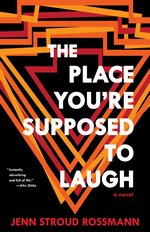
The Place You’re Supposed to Laugh
by Jenn Stroud Rossmann
eARC, 330 pg.
7.13 Books, 2018
Read: November 5 – 7, 2018

Those inclined to irony might find it in the Palo Alto Farmers Market assembled on asphalt, where there had once been an apricot orchard. Each weekend from May through December, the workweek parking lot filled with vendor stands and umbrellas protecting bins of trucked-in garlic cloves, avocados, tomatillos, et al. The University down the street was known as “The Farm,” though it hadn’t been one since the Stanfords donated their country estate and chartered a college in the 1880s. Stanford grads and especially its dropouts had been transforming the Valley ever since; the fruit came from further and further away.
It’s really hard to grab a representative quotation from this novel — but this comes close. There’s a hint of the humor, the capturing of a moment in time, societal observation, a hint of wistfulness, and even a modicum of critique.
It’s 2002, in many parts of the country the shadow of 9/11 looms large. It’s present in Palo Alto, but not to the degree it is other places — what looms larger is the bursting of the dot-com bubble, everyone around them has been impacted in some way by it — most people have been impacted in significant ways, although the ripples are still going out from them and affecting the lives of everyone in their community in some way.
Our focus in this novel is on the life of Chad Loudermilk and those who are near him. Chad’s 14 and is enduring his first year in high school. His best friend since . . . well, forever, Walter Chen attended there briefly, but was pulled out by his parents to attend the Roman Catholic academy nearby — for a greater focus on academics, and fewer active shooter drills. Life’s hard without Walter around. Chad’s mother works with “at risk” youth, on making wise decisions, while she’s still reeling from her mother’s death a few months earlier. Chad’s father, Ray, is dealing with ripples of the burst — the advertising agency he’s part of his dealing with a shift in clientele. There’s Scot, Chad’s next-door neighbor, the creator of Latte (wink, wink) — the Macromedia tool — a big brother figure, dispensing non-parental advice and playing video games (his wife really doesn’t have any time for Chad). There’s a new girl in school that Chad can’t stop talking about, and a couple of guys from the proverbial other side of the tracks that he met at a record store and is spending time with. The major focus of the plot is following Chad’s interactions with them over the course of a few months — we get chapters focusing on his parents and what’s going on in their lives, but on the whole, the rest of the characters are seen filtered through Chad’s experience.
The other major thread follows Chad’s maternal aunt, Diana, a physics professor we meet as she registers for a conference in Barcelona. She’s trying to re-establish her career after pressing pause on things to have a child with her best friend. It’s not easy for her to get back into the swing of things, but she’s close. As Chad’s aunt, there’s a lot of opportunity for the plotlines to intersect and overlap — but the sisters aren’t that close, so it’s not as frequent as it could’ve been. By the end of the novel, events have transpired enough that Diana’s as large a fixture in Chad’s life as Scot (maybe larger), so it’s easy to intermingle the story lines. But for the first 1/2-2/3 or so, there a clear distinction between the two — and it’s not clear why we’re getting both stories.
Another thing that’s not clear is what exactly is Chad’s story. This is close to a Bildungsroman, but we only really see the beginning of Chad’s development — it’s like the first Act of Chad’s Bildungsroman. Which isn’t to say that it’s an incomplete story, it’s not. It’s just about Chad starting adolescence. You don’t want to get the details from me, you want to get them from the book, but a lot of stuff happens. Nothing major like a school shooting, a terrorist attack, or anything. Just life, the ebbs and flows of people’s lives. I could actually sum up the major events of the novel in 2 sentences. One of them might be long-ish, but just two sentences.
Don’t get me wrong — there’s a plot to this book. But really, you don’t see it (well, I didn’t see it) until toward the end — maybe even after the end. This is not a bad thing, it just means you have to think about things a lot. My notes are filled with comments along the lines of “I really don’t see where this is going” or “I’m not sure what the point of all this is” — and they’re always followed with, “Don’t care, great stuff.” I really didn’t care where Rossmann was going, I was too busy enjoying the ride — the voice, the characters, the atmosphere, the little bits like the Farmers Market (above), were enough to keep me engaged, entertained and turning the pages.
I’m not going to drill down and talk about the various characters — or even just one. I could do a post just about Ray, or Scot, or a long one on Chad or Diane — I think I’d have to do a series on Chad’s mom. Instead I’ll talk about them as a collective whole — they’re people. There are things to like about them all, there’s plenty to dislike about them all (particularly the adults). A lot of what they do seem inconsistent with the characters as Rossmann has presented them, but that just makes them more human. There’s not one character in this book that isn’t a human — no one larger than life (Scot kind of is, but he’s larger than life in the way that we all know someone who seems to be that way). Any person in this book could easily be the person next to you in the bagel shop, sipping on their caffeinated beverage of choice. They’re delightful in that perceived realism, also in the way that Rossmann talks about them. Without approval of anything, you get the feeling that she has affection for every character in the book.
The clergymen who appeared — however briefly — in this book were a couple of the least objectionable depictions of clergy I can remember seeing lately. Not hypocritical, they actually seemed to believe in what they were saying, and were actually trying to help those they encountered. It’s not often you get to see that anymore, and it should be acknowledged when you see it.
I’ve been struggling for a few days — and I’m not sure I’m succeeding at the moment — to put into words the experience that is The Place You’re Supposed to Laugh. I think I was hooked by the end of chapter 1 — definitely by some point in the third chapter. I liked the book, I liked the characters, I liked the writing. It’s a pleasant, thoughtful experience. It’s what reading a book should be like — skillful writing, wonderfully drawn characters and prose you enjoy immersing yourself in.
The novel talks about a lot of things — one of the biggest themes is forgiveness. I don’t think I’ve ever seen the topic discussed in quite the same way in any format. I won’t suggest that Rossmann exhausted the idea, obviously, but she talked about it, depicted it, and had her characters think about it in ways I found refreshing and encouraging.
I’m not sure what else to say — The Place You’re Supposed to Laugh is a great read. It’s a strong novel that will make you think, will make you feel, and will leave you satisfied. Rossman writes with sensitivity, wit and skill. What else are you looking for?
Disclaimer: I was provided with a copy of this novel by the author in exchange for my honest opinion, which is seen above.
—–

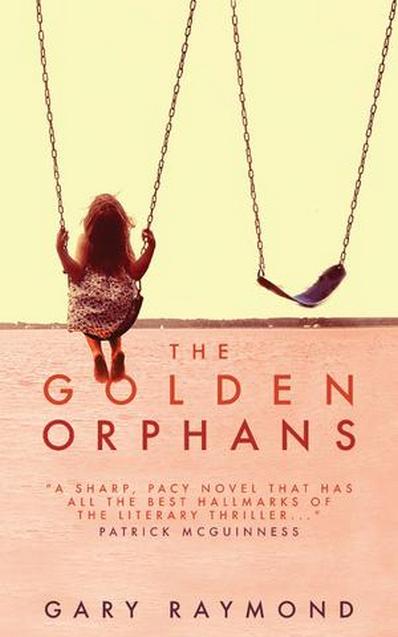
The Golden Orphans
by Gary Raymond
Kindle Edition, 280 pg.
Parthian Books, 2018
Read: October 23 – 28, 2018

I thought for a moment. “I think I am about to do something stupid.”
“In Cyprus you only need ask yourself one question,” Tara said, deadly serious. “Is it out of desperation?”
I keep running into artists in the novels I read — like in Tom Rachman’s The Italian Teacher, Russo’s Bridge of Sighs, or even Hawley’s Before the Fall — there are other examples, I’m sure — but they’re not coming to me right now. I’ve never understood the appeal, really, but I hold out hope that one day I’ll get it. And I shouldn’t be running out of opportunity anytime soon — it’s a vocation that draws authors like flies to honey.
Gary Raymond’s artist protagonist is a little different than the typical depiction. He’s a successful artist — to some extent, anyway — but not a genius (misunderstood or not), he’s not a superstar. In fact, his best days are probably behind him, and he knows it. But he’s still plugging away at it, while pursuing an otherwise self-destructive lifestyle. He’s invited to a funeral in Cyprus at just the right time — his finances are in shambles and his relationship is in a similar state, the largest question being which will fall apart first.
Not only is he invited, but his trip is paid for — so he can go. Francis Benthem is the deceased, and at one point in time he was a teacher, a mentor for the narrator (I should say that Raymond didn’t name him, I’m not being negligent) — he was like a father to him, really. So he goes to the funeral, and for most of it, is the only one present besides the priest. Eventually, Mr. Prostakov (Benthem’s employer, who paid for everything) and a few other people show up and leave quickly. Their appearance both confuses and intrigues the narrator.
Actually, that describes just about everything about Cyprus — it confuses and intrigues him. So he spends time getting to know the island, the people on it and, when given the opportunity, Mr. Prostakov. Illie Prostakov is an enigma wrapped in a riddle, wrapped in a hint of a stereotypical wealthy Russian with a murky past and revenue stream. He presents the narrator with a business proposition — take up residence in his home and replace Benthem. He’s a little vague as to the artistic duties required, so I will be, too. But the money’s good enough to take care of problems back home, so the narrator takes the job — not realizing the trouble and mystery that he’s put himself in the way of.
Unlike Bentham, the narrator won’t just take things at face value — he asks questions, and when he doesn’t get answers, he tries to find them (he might not be great at it, but he tries). Who is Prostakov? What’s he doing? Who are the people he surrounds himself with? Asking these questions isn’t the safest thing he could do — getting answers is probably worse.
The island of Cyprus isn’t just the setting of the novel, it’s practically a character. While the narrator is trying to understand his employer and his employer’s aims, most people are more concerned with getting him to understand Cyprus. Everyone’s description (I don’t have a hard count, but I’d guess at least a dozen are given) is different, but combined you begin to get an idea what life on the island is like. In the end, I think we get a fuller understanding of Cyprus than we do anything that the narrator is looking into.
Which is not to say that he doesn’t get any answers. He does, as does the reader. Raymond doesn’t leave you frustrated like that.
There’s a feel to this book that makes you think it’ll be one thing, but it’s not. The characters seem to be certain types, and most are — but they don’t act the way you think they will. The conclusion seems surely to be headed in one direction, but it ends up giving you a different ending. Everywhere you look, Raymond doesn’t do what you expect — which is both refreshing and annoying (you’d like to be right occasionally).
I’m not that convinced this is really a thriller — but it’s being marketed as one. As a thriller, I think it’s missing a sense of urgency, of real danger. But I think things moved too quickly, and without the depth called for in a literary book. A little more time after the narrator took the job and trying to accomplish it before the plot moves forward, more time spent on the painting (and talking about the process) would’ve helped. A greater sense of hazard, of peril from Viktor or Illie would’ve helped a lot on the thriller front. In the end, the book wasn’t quite sure it knew what it wanted to be — and a mix of the two genres would’ve worked, but it needed to be a bit more of one of them (or both) to really be effective. It was just always lukewarm.
That said — it never, not for a minute, failed to hold my interest. I may not have been very invested in the outcome or characters, but I was glued to it. Frankly, I think the narrator was the same way — he wasn’t invested in his relationship back in London, his career (really), or anything that was happening around him on Cyprus — but he couldn’t stop himself from sticking a toe in here and there, from involving himself just a little bit in everything. As he was confused — so was I. As he was intrigued — so was I. Raymond did a very effective job in getting the reader (or at least this reader) to see things from his protagonist’s eyes.
Raymond’s given us something unique here. I’ve talked before about books that I can respect and admire more than enjoy. This is one of those — the writing and approach of this novel exceeds any affection or excitement I might have for it. It’s not the kind of thriller you can finish and move on from easily — I’m going to be thinking about this for a while. The characters will linger in my imagination, but the reality he depicts will stay around longer. This isn’t a novel that lends itself to a rating any more than it lends itself to a genre-classification, so take it with a grain of salt.
—–

My thanks to damppebbles blog tours for the invitation to participate in this tour and the materials they provided, including a copy of this book — which didn’t influence the above post, beyond giving me something to post about.

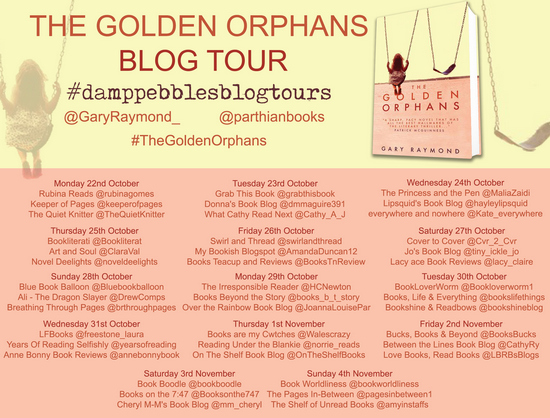
Today I welcome the Book Tour for the literary thriller The Golden Orphans by Gary Raymond. Along with this spotlight post, I’ll be giving my take on the novel here in a bit.


Book Details:
Book Title: The Golden Orphans by Gary Raymond
Publisher: Parthian Books
Release date: July 19, 2018
Format: Paperback/ebook
Length: 280 pages

Book Blurb:
Within the dark heart of an abandoned city, on an island once torn by betrayal and war, lies a terrible secret…
Francis Benthem is a successful artist; he’s created a new life on an island in the sun. He works all night, painting the dreams of his mysterious Russian benefactor, Illy Prostakov. He writes letters to old friends and students back in cold, far away London. But now Francis Benthem is found dead. The funeral is planned and his old friend from art school arrives to finish what Benthem had started. The painting of dreams on a faraway island. But you can also paint nightmares and Illy has secrets of his own that are not ready for the light. Of promises made and broken, betrayal and murder…
The Golden Orphans offers a new twist on the literary thriller.

About Gary Raymond:
Gary Raymond is a novelist, critic, editor and broadcaster. He is the presenter of BBC Radio Wales’, The Review Show, and is one of the founding editors of Wales Arts Review. He is the author of two novels, The Golden Orphans (Parthian, 2018) and For Those Who Come After (Parthian, 2015). He is a widely published critic and cultural commentator.

Gary Raymond’s Social Media:
Twitter ~ Facebook ~ Amazon Author Page
Purchase Links for The Golden Orphans:
Amazon UK ~ Amazon US ~ Waterstones ~ Book Depository ~ NOOK ~ Kobo

My thanks to damppebbles blog tours for the invitation to participate in this tour and the materials they provided.


I thought I had another week to get this up in time for the release — which was actually two days ago. This is why I’m supposed to trust what I write down (and consult that frequently) rather than what I remember.
—
Scoundrels Among Us
by Darrin Doyle
PDF, 284 pg.
Tortoise Books, 2018
Read: July 24 – August 6, 2018

The trouble I often have when talking about collections of short stories is just how to do talk about the collection as a whole. After tossing around some ideas, I think the easiest way to sum up my reaction to these stories is with his simple question: What was he thinking?!?!
Now sometimes I asked that question incredulously, sometimes in awe, sometimes in confusion, sometimes in bafflement, sometimes all of the above. But I kept asking it. Some of these are incredibly short, some are on the longer side — told from a variety of perspectives and in a variety of tones. So beyond my one question, I don’t know how to address them collectively. I won’t go into detail on them all individually (that’s just too many), but let’s take a look at some that stood out.
The collection starts with “Insert Name,” a story about the struggles of nonuplets growing up and then transitioning to adulthood in a very unexpected way. It impressed me, and made it clear that this wasn’t going to be a run-of-the-mill short story collection. By the time I got to the sixth entry, “Dangling Joe,” I knew a couple of things — Doyle’s mind doesn’t work the way most people’s does, and that I needed to toss out every expectation I had when I started each story. Whatever I was starting was going to be different from what had come before, and I needed to be ready for that.
The highlight of the book is “If the Invisible Man Dies and Nobody Sees it, Does He Really Die?” This is impossible to describe, but brilliant. He does so many things in this story — in addition to telling a compelling story — that I can’t sum it up easily. Give me 15 pages or so, and I’d be willing to give it a shot. It’s one of the best things I’ve read this year.
My notes on “Twilford Baines, Buck Hunter Unbounded” were simple, “that’s really good.” I just re-read it to see if I could expand on that, and no, I really can’t. It’s a story about a man hunting deer, who is forced into some concentrated self-reflection, and it’s really good. Re-reading it tempted me to push this off another day to re-read most of the stories, actually.
“Slice of Moon” was a great read, but personally frustrating. I think if you read it, you’ll agree. I can’t think of anything else to say without ruining it. If not for “Invisible Man,” it’d be my favorite story in the collection (given how annoyed he made me with it, however, maybe it was more effective than “Invisible Man,”).
I invoked Flannery O’Conner recently, and hesitate to do it again, however, I’m compelled to. Except for the explicit sexual content (which wasn’t really necessary), “Reborn” could’ve come from the pages of Everything That Rises Must Converge. It was powerful and strange and I’m glad I got to read it.
Were there some in this collection that didn’t work for me? Yes. There were some real clunkers — but there was nothing I wasn’t glad to read. As usual, some of the stories that didn’t work for me will work for you. And the one’s that sent me over the moon won’t do much for you (you’ll be wrong most of the time there — especially if you don’t love “If the Invisible Man Dies and Nobody Sees it, Does He Really Die?”). One thing I think everyone who picks this up will agree is: Darrin Doyle is a great writer and you should read his stories. You’ll probably also ask yourself “What was he thinking?” more than once. Go grab it.
Disclaimer: I was provided with a review copy of this collection in return for my honest thoughts and this post — which I appreciate..
—–