Tag: General Fiction Page 29 of 45

Finding Felix by Jo Platt: A Charming Rom Com that brought a smile to my face

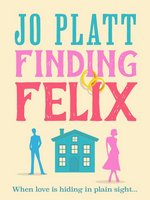
Finding FelixFinding Felix

by Jo Platt

Kindle Edition, 258 pg.
Canelo, 2018
Read: August 28 – 29, 2018

‘Head buried in the sand,’ she said. ‘Typical Dot.’

I frowned but didn’t feel able to challenge the statement. I knew she had a point. My tendency to refuse to confront personal challenges and consider their consequences until my nose was pressed up against them was undeniable. In my defence, it was an approach that on the whole seemed to work reasonably well. It cut down considerably on the amount of time spent worrying and stressing about things, and, nine times out of ten, a last-minute fix was just as good as a lengthy, considered and, in my opinion, tortured approach.

However, like it or not, I had to admit that this was not one of those times. This was definitely the one in ten.

This is all thanks to Ian Patrick — if he hadn’t tweeted about this book on Saturday, I wouldn’t have heard about — much less read — Jo Platt’s book (or Jo Platt, come to think of it). The term “romcom” just didn’t seem like the kind of thing I should see coming from him. So I clicked the link, read about the blurb and decided to give it a whirl. There seemed very little chance that anyone would find a dead body, kill anyone or have to defend their lives — which seemed like a good change of pace.

I’m glad I took the shot on this — as you can see from the above, Dot Riley doesn’t think things through too often. And it probably seemed like a good idea to assure her dying grandmother (Nanny Flo) that, no, she’s not single; there’s no reason to worry about her at this time — in fact, she’s dating that old friend from childhood that the whole family loved so much. But faster than you can say Norah Ephron, Nanny Flo makes a miraculous recovery — and she credits the news about Felix for saving her life. Before she realizes it, months have slipped away and it’s time for Dot’s sister’s wedding. Which, naturally, her boyfriend will be attending with her.

Dot has a couple of choices here: come up with a lame excuse for Felix’s absence; telling her family the truth, which let’s be honest, would possibly kill Nanny Flo; or . . . she could track down the man she hasn’t seen since they left for university and get him to go along with the story. Because of the genre, it’s easy to guess which she’ll go for.

She tracks him down and he agrees to go to the wedding with her. You halfway expect them to hit it off immediately, or at least think about it — but Felix doesn’t seem that interested in anything about Dot as a person; and Dot is so thrown by the ridiculousness of her request and how Felix changed (as people do) in the decade or so since she’s seen him that she isn’t really that capable of getting past any of that.

You can pretty much plot out the rest of the book for yourself — but that doesn’t mean that Platt doesn’t have a curveball or two to throw at the reader. And even the parts you do see coming are handled with such aplomb, wit and charm that you’re not sitting there rolling your eyes and saying “yeah, knew that was going to happen.” Rather, you grin and admire how she did it.

The key, obviously, to all this are the characters, in particular, Dot. Platt gives us a great group of characters — whether around for a few paragraphs or for the entire book. Dot’s a mess of a character. But in a good way — she’s tardy, she’s impulsive, she’s frequently unintentionally thoughtless, and she has an uncanny ability to ruin any encouragement she tries to give anyone by poor word choice. But she’s got a big heart and great taste in friends. Thankfully, she’s got a good sister and an equally good best friend/business partner who can keep her from mucking everything up too badly.

Felix is . . . Felix is a good character, too. I don’t think I can say much more without spoiling some of the work Platt did in revealing him. So we’ll move on to . . . Dot’s mother? She tries really, really, really hard not to meddle in her daughter’s lives. Well, she thinks she does, anyway. She loves them, and wants the best for them — and will do everything she can to make sure that her daughter’s do what they need to do get their lives to work out for the best (whether or not that’s what her daughters actually want).

Dot’s father is a hidden gem — possibly the most valuable player here. He’s funny, he’s put-upon, he’s the voice of reason (and humor) working to prevent her mother’s emotional excesses from steamrolling their daughters and their daughter’s significant others.

The relationships that Dot has with her sister and partner — and their husbands — are just great. I’d have easily enjoyed another 80-100 pages of filler conversations between any of them and Dot just to enjoy their interactions. They are cozy, fun, and honest in the way you only can be with those closest to you.

This was silly, it was earnest, it was sweet, it was fun — I laughed out loud a couple of times, and even when I didn’t do that, I appreciated the humor. If you’re willing to buy into the conceit and genre (and I know some of you who wouldn’t be), I can assure you — you’ll have a good time.

Oh, yeah, and there are no killings, attempted killings or lesser crimes committed at all. It’s good to remember that you don’t need any of that to get a good story.

—–

3.5 Stars

BOOK BLITZ: Shadow Games by Jim Lester

 photo Shadow Games_zpsutlxortm.jpg

Coming of Age
Date Published: June 2018
 photo add-to-goodreads-button_zpsc7b3c634.png
Danny McCall loves basketball more than anything in the world. So why would he risk his basketball scholarship, the love of his life and his entire future to fix the point spread in a series of college basketball games?
Set in the early 1990s, Shadow Games is an exciting page-turner, filled with fast-paced hoops action. A topical novel for readers of all ages, the book is a powerful portrayal of the loss of youthful innocence.


About the Author

 photo Shadow Games Author Jim Lester_zps3ykf5nop.jpeg

Jim Lester is the author of three successful young adult novels: Fallout, The Great Pretender and Till the Rivers All Run Dry. He has a Ph.d in history and is the author of a non-fiction book entitled Hoop Crazy: College Basketball in the 1950s.
Contact Links
Purchase Link


RABT Book Tours & PR

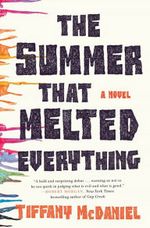
Flashback Friday: The Summer that Melted Everything by Tiffany McDaniel: The Devil Goes Down to Ohio?

Long, tiring, but good week. But there’s just nothing left in the tank for something new, so I’m going to repost about couple of books from the past that I loved. I’m pretty sure that it was McDaniel’s prompting that got me to join NetGalley so (was a few more months before I really started using it).

The Summer that Melted EverythingThe Summer that Melted Everything

by Tiffany McDaniel
eARC, 320 pg.
St. Martin’s Press, 2016
Read: July 18 – 19, 2016

The greatest trick the Devil ever pulled was convincing the world he didn’t exist.

Yeah, Keyser Söze’s paraphrase of C. S. Lewis’ appropriation of Charles Baudelaire isn’t part of this book, but it might just encapsulate it. Maybe.

It’s the summer of 1984 in Breathed, OH, and it’s hot. Really hot — and about to get a lot hotter. 1984 is a big year — HIV is identified as the virus that leads to AIDS, Apple releases the Macintosh, Michael Jackson’s Pepsi commercial shoot, and the following advertisement runs in the local newspaper, The Breathian:

Dear Mr. Devil, Sir Satan, Lord Lucifer, and all other crosses you bear,

I cordially invite you to Breathed, Ohio. Land of hills and hay bales, of sinners and forgivers.

May you come in peace.

With great faith,
Autopsy Bliss

Autopsy Bliss is the local prosecutor, who wants to see for himself what evil looks like. Hence the advertisement.

So who shows up in response? A bruised, short black boy dressed in tattered and torn overalls who simply seems to want some ice cream and to say hi to the man who invited him. Autopsy’s son, Fielding, is the first one in town to meet the boy and takes him home to his father (sadly, no ice cream is available in town — unbelievably — for the remainder of the Summer). The Bliss family ends up taking the lad in, and starts calling him Sal. He and Fielding become fast friends and are almost inseparable for the rest of the summer. One by one, almost everyone in this sleepy community is touched by the appearance of Sal — either first-hand or by proxy — demons (figurative), troubled family and personal histories are exposed, latent corruptions come to light, and accidents strike many. No one in Breathed will be the same after the day Sal first appears to Fielding.

The book is narrated by Fielding about 70 years after that summer looking back on the time, thinking of all the regrets he’s had since then and all the ways his time with Sal has overshadowed the ensuing decades. It honestly reminded me of A Prayer for Owen Meany because of this — little kid who talks oddly, is smarter than any of his (apparent) peers, and divides a community, while leaving an indelible mark on his closest friend (who’s not always a friend).

Almost every name (maybe every name, and I’m not clever enough to get it all) is rich in meaning and symbolism — there’s symbolism all over the place, but McDaniel gets her money’s worth with the names in particular. This book will reward close readings, and probably repeated readings as well.

There are so many depictions and descriptions of child abuse and spousal abuse that it’s almost impossible to believe that there households in that world where someone isn’t getting hit on a pretty regular basis. Thankfully, we’re spared watching characters going through it (the vast majority of the time), but there are many mentions of it.

This is not fun read, really, but I loved the whole experience, it is a rewarding read. McDaniel writes with such richness, such depth, there are phrases throughout this that will knock you out. There’s one sentence that I went back to at least a half-a-dozen times one evening — not because I needed to try to suss it out, but because I just liked it so much. The variety of ways she can describe the horrible and debilitating heat wave that struck that part of Ohio those months is pretty astounding — I’m just glad I had some sort of air conditioning most of the time I spent reading the book. Sal’s descriptions of Hell and his fellow prisoners there are full of haunting images that will stick with me for a while (some good haunting, some less-so). I’m troubled by some of what this book said about God, but since the Devil is the one who told about God, I’m not sure we’re supposed to trust his characterizations. On the other hand, just about everything that the book says about the devil seems to be spot-on.

There are no easy answers to be found here — is Sal the devil? Is someone else in town? Is there a devil at all? Are the naturalistic explanations offered here and there throughout enough? I just don’t think you can think about this book without dealing with the Baudelaire/Lewis/Söze thought.

Can’t help but wonder how things would’ve gone if he’d just gotten a little ice cream.

Disclaimer:I received this eARC via NetGalley at the author’s invitation in return for this post. My thanks to NetGalley, St. Martin’s Press, and Tiffany McDaniel for this.

N.B.: As this was an ARC, any quotations above may be changed in the published work — I will endeavor to verify them as soon as possible.

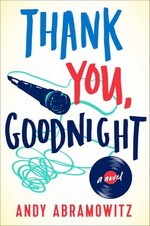
Flashback Friday – Thank You, Goodnight by Andy Abramowitz: A book about a one-hit wonder by an author who I hope has a few more in him.

Long, tiring, but good week. But there’s just nothing left in the tank for something new, so I’m going to repost about couple of books from the past that I loved.

Thank You, GoodnightThank You, Goodnight”

by Andy Abramowitz
Hardcover, 338 pg.
Touchstone, 2015
Read: June 30 – July 3, 2015

In most instances, space between people grows like mold, neglected just long enough to be noticed. You intended to wipe it clean, but the more of it there is, the more daunting a task it becomes to erase it. Not so with me and the band. I’d discontinued those people as if they were a premium cable channel that I’d finally realized was broadcasting nothing I wanted to watch.

From passages like that, a nice mix of thoughtful, sentimental, with a bit of a grin; to the out-and-out funny, like the funniest suicide attempt I’ve read in a long time, possibly ever (something worthy Save Steve Holland’s Lane Myer, but longer); this book covers the spectrum. Not only covers it, but does so with assurance and panache. It’s one of those first novels that makes you wonder what could possibly be done as a follow up.

Teddy Tremble is a successful enough lawyer for someone who’s heart isn’t really in it, while still being good at it. He’s sort of coasting through life — being good enough at his job, good enough with his girlfriend of forever, good enough for his social circle, but not good enough for his father (but after meeting him, you understand that’s just a given). He’s forty-ish and realizes that life is going to pretty much stay this way. On the whole, he seems okay with that — but in the back of his mind he knows he’s not. He won an Academy Award. His band was huge for a little while in the 1990’s, before his hubris ruined things. Sure, things are good enough now, but once upon a time they were great.

Then through a truly humbling and bewildering set of circumstances, Teddy comes across a group of huge Tremble fans. Seriously, die-hard doesn’t begin to describe these people. Think something akin to the kind of people that organized the first Star Trek convention back when it wasn’t a cultural phenomenon, just a short-lived and then canceled show. This changes everything. The adulation, the attention, the satisfaction of performing gets under his skin and he starts writing music for the first time in a long time.

Pretty soon, he’s (forgive the cliché) trying to get the band back together — his agent and producer are on board, convinced that what he’s written exceeds his former quality. Incidentally, both of these characters are the kind that we readers hope to come across — supporting characters that threaten to steal the entire novel, but when used properly just make the whole thing better.

Anyway, with these two on board — Teddy just has to convince the rest of the band to give it a shot, to trust him. Maybe even to forgive him for what he did to them so long ago. Then he has to convince music fans to take them seriously. Neither of these tasks is going to be easy. Both are practically impossible, really.

The book starts out as pretty entertaining, definitely amusing. But it doesn’t stop there — it gets better, deeper, emotionally richer all the while. By the time I got to (and through) Chapter 20, I tweeted that, “Not sure I need to read another word (am going to), but that was as close to perfect as it gets.” I’m still thinking about it a month later.

At various places through the novel, Teddy observes: “One day I’ll die, and this will be one of the things I did with my time.” I’m not sure if I’ve ever seen one sentence used so many different ways with so many different meanings depending on the context. Sometimes he’s says it wryly, sometimes caustically, sometimes wistfully, sometimes with pride. It’s one of those writerly things that when you see it in action, you wonder why more people don’t try it.

Each of these characters — the agent, the producer, the bandmates, their (sometimes very odd) families, Teddy’s girlfriend, associates in the law firm, and others — are well-drawn. Occasionally familiar, without being stock characters or cliché, each character ends up being strong enough that you want to spend at least a little more time with them. But Abramowtitz is too capable of steward of his resources and gives us just enough to leave us wanting more.

I’ve seen a lot of comparisons of Thank You to Hornby’s High Fidelity and Tropper’s This is Where I Leave You. I don’t get that. Maybe it’s just because these people haven’t read anything else by these authors — they should be comparing this to Hornby’s Juliet, Naked and Tropper’s One Last Thing Before I Go (to be fair, I have seen a little of this comparison, but no one else that I’ve seen has tagged Juliet). These three cover some of the same territory, and Abramowitz comes out looking really good in that company. Don’t get me wrong, I really liked Juliet, I know I liked it more than most people I know. But I don’t think it was as good as it wanted to be or as it thought it was. Thank You seems to do the things that Juliet was wanting to do but didn’t get done. I’m not necessarily saying it’s a better book (I might lean that way), but this is more successful in the areas they overlap. Similarly, while I wouldn’t say that One Last Thing is a bad book, it can’t hold a candle to this one. I’m not trying to make this a competition, but for this first-time novelist to get things better than old pros like Hornby and Tropper says so much about him.

One day I’ll die, and reading this will be one of the things I did with my time. I’m so glad it was.

—–

4 1/2 Stars

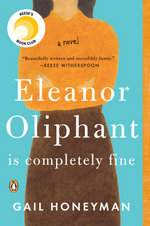
Eleanor Oliphant Is Completely Fine by Gail Honeyman: Fine’s a good word for this novel about a lonely woman.

Eleanor Oliphant Is Completely FineEleanor Oliphant Is Completely Fine

by Gail Honeyman

Paperback,352 pg.
Penguin Books, 2018
Read: July 31, 2018

I steeled myself as best I could, and, with teeth gritted, using only one finger I typed:

C U there E.

I sat back, feeling a bit queasy. Illiterate communication was quicker, that was true, but not by much. I’d saved myself the trouble of typing four whole characters. Still, it was part of my new credo, trying new things. I’d tried it, and I very definitely did not like it. LOL could go and take a running jump. I wasn’t made for illiteracy; it simply didn’t come naturally. Although it’s good to try new things and to keep an open mind, it’s also extremely important to stay true to who you really are. I read that in a magazine at the hairdressers.

I went into this expecting the next Where’d You Go, Bernadette — it’s “quirky,” “wacky” “hilarious” “warm and funny” “warm and uplifting”, Honeyman is the next Fredrik Backman, etc. I did not find it. I’m not sure I laughed at anything — I might have smiled at something sweet, but nothing more amusing than the above quotation. Do I think I’d have liked it more if it had been funny? Probably not. I probably wouldn’t have read it, however, if I hadn’t thought it was. This is not a bad thing, not every book has to be funny. I’m just saying I went in expecting a chuckle, a wry smile, something amusing and didn’t get that.

Instead I got a sad, but ultimately nice story about a poor, lonely, shy and socially awkward woman dealing with her personal (and repressed) demons the best she could — which really wasn’t all that well. I didn’t find her amusing, I pitied her. I felt bad for her. I got annoyed when people made fun of her. And I wanted her to figure her life out so she could be an amusing character.

Eleanor is 30, has been doing the same job as a finance clerk for a graphic design firm since she got out of university — she goes to work, talks to her “mummy” Wednesday evenings, gets a frozen pizza, some wine on Fridays and knocks off two bottles of vodka each weekend (spread throughout Saturday and Sunday so that she’s “neither drunk nor sober”), then repeats the cycle. it’s not much but it’s her life and she’s fine with that.

Her life goes in that way with very little variance for about a decade, until she’s befriended by an IT worker, Raymond, in her company. Through him, and other accidents, she meets people. She also does things like get a smartphone, go online for things non-work related, and sorta cyber-stalks a musician. Shortly before meeting Raymond, she’d attended a concert of some local bands (won tickets in a drawing at work) and became infatuated-at-first-sight with a singer — in the way that a thirteen year-old girl does when encountering NKOTB/’NSync/One Direction/insert your time-appropriate band. Eleanor’s childhood was such that she delayed this stage until now. On the one hand, I thought this was a great instigation for Eleanor’s life to change, but man, I kept cringing every time the story came back to it.

Minor, very minor, spoilers: Her social life is the best it’s ever been, things are picking up at work, but there’s this delayed adolescence thing lurking — all the while she’s having problems with mummy. Things go horribly, horribly, horribly awry — but then there’s a chance for her to put her life together again, and maybe discover what went wrong in her very bad childhood, so that she can have a better adulthood.

The characters are well-drawn, well-executed, and pretty realistic. The situations — all of them — ring true. Honeyman can write really well. I thought the story moved well, and the reveals, the twists, the heart-warming moments (and the tragic ones) were all spot-on. I just didn’t enjoy the book that much, it wasn’t bad, it wasn’t great. It, like the title character, was completely fine.

Your mileage may vary — and judging by reviews (professional and otherwise), sales, and attention this book is getting, there’s a great chance you’ll think I’m out to lunch on this. I may be.

—–

3 Stars

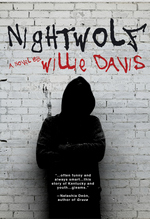
Pub Day Repost: Nightwolf by Willie Davis: A beautifully written book about some horrible people

NightwolfNightwolf

by Willie Davis
Kindle Edition, 286 pg.
7.13 Books, 2018
Read: July 12 – 16, 2018

The police thought they collared Nightwolf. The newspapers kept cagey about it, saying the cops book a person of interest in a “prolonged vandalism case.” Prolonged vandalism–like the tagger had writers block and agonized for weeks, and then returned to the scene of the crime to erase a comma.

In the first three paragraphs, our narrator, Milo Byers sets the stage and the tone for what is to follow — a killer introductory section that is irreverent (at best, cynical, jaded, and — simultaneously — honestly optimistic.

We are then thrown into a giant mess surrounding the culture of runaways and poor teens in Lexington, KY. Dropouts, petty criminals, not-so-petty criminals with aspirations of greater crimes, drug dealers, addicts, users, the mentally ill, the ignored, the abused, and their friends create an interesting cultural web for Milo and his associates to move in. At this time, I’m not sure Milo actually has any friends (at least not to his knowledge), but he is constantly surrounded by people.

Milo’s not technically a runaway — he goes home to his mother frequently, but his mother’s dealing with dementia and other problems, so Milo’s practically orphaned. He had (has?) an older brother who left home a few years before, and no one’s heard from him since. Theoretically, that’s why Milo spends time with some of the criminal class — they knew his brother, and he’s sure that he’ll get a clue if he just hangs around enough.

Also running around the city is Nightwolf. He’s a graffiti artist who dabbles in vigilantism (and not wholly successfully) — a folk hero of sorts. For reasons I’ll let Milo explain, he’s got a theory that Nightwolf is his brother. Now he just needs to meet him to unmask him, hopefully finding his brother — and everything will make sense for him. Despite the book’s title, Nightwolf is a relatively minor character — but his presence (or lack thereof) hovers over just about everything we see Milo do.

Now, all this time — I don’t like Milo. He’s not got a lot going for him as a character, he’s a weasel, he lies to himself and everyone else in his life constantly (and frequently without reason) — it’s not that he’s a criminal, there’s at least something defining the character then. I just didn’t care about him, or about what happened to him. Honestly, he’s the best of the bunch — among this cast of characters he’s the most sympathetic, the most reliable, and the most tolerable. Frankly, I spent a lot of time wondering just what the point of this book was — I didn’t dislike the book, just everyone in it and just about everything they did.

(Small spoiler) Now, at 60% there’s a pretty big time jump. I was totally unprepared for that — and enjoyed someone saying, “Time moves too fast” two chapters later. I was initially annoyed because in many ways this jump ended things before I was ready for them to be ended. But it didn’t take me too long to figure out that pretty much everything before was setting the stage for Part Two. Yes, you could argue that sixty percent of a novel is too long to spend on the introduction — and typically you’d be right. But Davis makes it work. The characters have matured enough, have enough distance from the acts of the first part, and have seen what’s happened since then to those involved, etc. The last forty percent of the novel worked for me in ways that the first didn’t, but it wouldn’t have been able to without the foundation laid.

Whenever I’d brush up against “Southern” fiction in my lit classes in college — those stories/novels became my favorite in the course, and I’ve often intended on taking a year or so to do some sort of deep dive into that tradition — but I haven’t gotten around to it. I should see if there’s an iTunesU (or equivalent) covering that. Anyway, I’ve gotten distracted here. My point is that I can see a direct line from Faulkner and Flannery O’Connor to Willie Davis — particularly the latter. She’d be disappointed in Davis’ attitude toward religion, I think, but she’d note a kindred spirit, I think. That should give you a spirit of the flavor of the novel — agnostic, 21st century O’Connor-ish.

Better yet? Davis has the talent to pull that off. Even when I didn’t like the characters (and I mean “actively disliked” not “didn’t appreciate yet”) and wasn’t sure I wanted to know more about what was happening to them — I could not stop reading the writing. When I didn’t mind the characters and felt a certain apathy toward the plot, I couldn’t stop reading the writing. When I sorta kinda maybe liked one or two of the characters and was curious where things were going — I could not stop reading Davis’ writing. I think you get what I’m saying here. Davis’ writing is worth the hassle. I’m not going to try to explain it really — I don’t think I could. Just go with me on this. At the 9% mark, my notes read “horribly ugly world — beautiful prose.”

The book is funny (not really because of events, it’s largely in the narration), sad, thoughtful, mournful, provocative, visceral, offensive and strange (in the most positive sense of the word). It’s not one for a quick casual read, but will reward the effort. For most of the book — and maybe even now (I’m unconvinced) — I didn’t care what happened, ultimately, I just wanted to see what Davis would do with ideas and language (not that I wasn’t ultimately pulling for a few things to happen plot-wise). I’m not wholly satisfied with the novel — not that I can fully articulate why (beyond really not liking anyone or what they were doing for most of the book) but I have a nagging suspicion that the problems are within me, not the text. I will be keeping an eye out for Davis in the future, and suggest you do the same — but read Nightwolf first.

Disclaimer: I received a copy of this novel from the author in exchange for my honest opinion and this post.

—–

4 Stars

Nightwolf by Willie Davis: A beautifully written book about some horrible people

NightwolfNightwolf

by Willie Davis

Kindle Edition, 286 pg.
7.13 Books, 2018
Read: July 12 – 16, 2018

The police thought they collared Nightwolf. The newspapers kept cagey about it, saying the cops book a person of interest in a “prolonged vandalism case.” Prolonged vandalism–like the tagger had writers block and agonized for weeks, and then returned to the scene of the crime to erase a comma.

In the first three paragraphs, our narrator, Milo Byers sets the stage and the tone for what is to follow — a killer introductory section that is irreverent (at best, cynical, jaded, and — simultaneously — honestly optimistic.

We are then thrown into a giant mess surrounding the culture of runaways and poor teens in Lexington, KY. Dropouts, petty criminals, not-so-petty criminals with aspirations of greater crimes, drug dealers, addicts, users, the mentally ill, the ignored, the abused, and their friends create an interesting cultural web for Milo and his associates to move in. At this time, I’m not sure Milo actually has any friends (at least not to his knowledge), but he is constantly surrounded by people.

Milo’s not technically a runaway — he goes home to his mother frequently, but his mother’s dealing with dementia and other problems, so Milo’s practically orphaned. He had (has?) an older brother who left home a few years before, and no one’s heard from him since. Theoretically, that’s why Milo spends time with some of the criminal class — they knew his brother, and he’s sure that he’ll get a clue if he just hangs around enough.

Also running around the city is Nightwolf. He’s a graffiti artist who dabbles in vigilantism (and not wholly successfully) — a folk hero of sorts. For reasons I’ll let Milo explain, he’s got a theory that Nightwolf is his brother. Now he just needs to meet him to unmask him, hopefully finding his brother — and everything will make sense for him. Despite the book’s title, Nightwolf is a relatively minor character — but his presence (or lack thereof) hovers over just about everything we see Milo do.

Now, all this time — I don’t like Milo. He’s not got a lot going for him as a character, he’s a weasel, he lies to himself and everyone else in his life constantly (and frequently without reason) — it’s not that he’s a criminal, there’s at least something defining the character then. I just didn’t care about him, or about what happened to him. Honestly, he’s the best of the bunch — among this cast of characters he’s the most sympathetic, the most reliable, and the most tolerable. Frankly, I spent a lot of time wondering just what the point of this book was — I didn’t dislike the book, just everyone in it and just about everything they did.

(Small spoiler) Now, at 60% there’s a pretty big time jump. I was totally unprepared for that — and enjoyed someone saying, “Time moves too fast” two chapters later. I was initially annoyed because in many ways this jump ended things before I was ready for them to be ended. But it didn’t take me too long to figure out that pretty much everything before was setting the stage for Part Two. Yes, you could argue that sixty percent of a novel is too long to spend on the introduction — and typically you’d be right. But Davis makes it work. The characters have matured enough, have enough distance from the acts of the first part, and have seen what’s happened since then to those involved, etc. The last forty percent of the novel worked for me in ways that the first didn’t, but it wouldn’t have been able to without the foundation laid.

Whenever I’d brush up against “Southern” fiction in my lit classes in college — those stories/novels became my favorite in the course, and I’ve often intended on taking a year or so to do some sort of deep dive into that tradition — but I haven’t gotten around to it. I should see if there’s an iTunesU (or equivalent) covering that. Anyway, I’ve gotten distracted here. My point is that I can see a direct line from Faulkner and Flannery O’Connor to Willie Davis — particularly the latter. She’d be disappointed in Davis’ attitude toward religion, I think, but she’d note a kindred spirit, I think. That should give you a spirit of the flavor of the novel — agnostic, 21st century O’Connor-ish.

Better yet? Davis has the talent to pull that off. Even when I didn’t like the characters (and I mean “actively disliked” not “didn’t appreciate yet”) and wasn’t sure I wanted to know more about what was happening to them — I could not stop reading the writing. When I didn’t mind the characters and felt a certain apathy toward the plot, I couldn’t stop reading the writing. When I sorta kinda maybe liked one or two of the characters and was curious where things were going — I could not stop reading Davis’ writing. I think you get what I’m saying here. Davis’ writing is worth the hassle. I’m not going to try to explain it really — I don’t think I could. Just go with me on this. At the 9% mark, my notes read “horribly ugly world — beautiful prose.”

The book is funny (not really because of events, it’s largely in the narration), sad, thoughtful, mournful, provocative, visceral, offensive and strange (in the most positive sense of the word). It’s not one for a quick casual read, but will reward the effort. For most of the book — and maybe even now (I’m unconvinced) — I didn’t care what happened, ultimately, I just wanted to see what Davis would do with ideas and language (not that I wasn’t ultimately pulling for a few things to happen plot-wise). I’m not wholly satisfied with the novel — not that I can fully articulate why (beyond really not liking anyone or what they were doing for most of the book) but I have a nagging suspicion that the problems are within me, not the text. I will be keeping an eye out for Davis in the future, and suggest you do the same — but read Nightwolf first.

Disclaimer: I received a copy of this novel from the author in exchange for my honest opinion and this post.

—–

4 Stars

BOOK BLITZ: The Unity Game by Leonora Meriel

About the Book:

WHAT IF THE EARTH YOU KNEW WAS JUST THE BEGINNING?


A New York banker is descending into madness. 


A being from an advanced civilization is racing to stay alive. 


A dead man must unlock the secrets of an unknown dimension to save his loved ones. 


From the visions of Socrates in ancient Athens, to the birth of free will aboard a spaceship headed to Earth, The Unity Game tells a story of hope and redemption in a universe more ingenious and surprising than you ever thought possible. 


Metaphysical thriller and interstellar mystery, this is a ‘complex, ambitious and thought-provoking novel’ from an exciting and original new voice in fiction.


Book Links:

 
Meet the Characters:
 
The Setting: EarthNew York City. The 1990s. One of the world’s leading investment banks.


The Setting: Space


A distant planet. A dry surface orbited by three red moons and circling a distant sun. An advanced civilization living in underground chambers.


The Setting: Death


An open door. A library. A room of knowledge. A garden of dazzling color. The answers to every question that has ever been asked on Earth.


Meet David


A brilliant scientist and wildly ambitious, David abandoned an academic path to follow the glow of Wall Street money. From a small town in Canada, he is now determined to make the riches he has given up his scientific talents for. He is always on edge, he must prove he is better than the other bankers, he has to win the best deals. However, he is easy pickings for the multi-million dollar bosses who see how they can use a greedy, naïve young man for their own purposes. David falls further into risk, mistakes and desperation, clutching at anything around him as his dreams and world falls apart.


Meet Noe-bouk


Dry dust. Three red moons. A member of one of the most advanced civilizations in the universe, taught to believe that all the answers come naturally from the incontrovertible logic of the greatest good. Now, facing death, Noe-bouk decides to find out if there is something more than what he has been taught. Accepting a place on a space ship, the further he gets from the moons of Home Planet the more he understands that he knows nothing at all…


Meet Alisdair


A respected lawyer. An adoring grandfather. Alisdair collapses outside his law offices in London and finds himself standing beside his unmoving corpse. He feels wonderful! He spots some wide open doors and bounds through them to discover a library, a garden, and his dead wife. All his life he has burned with the questions of the universe: what is the purpose of existence? What is good and evil? How far does the infinite stretch? With an afterworld guide and his wife at his side, his only limits now are to come up with new questions as all of his horizons expand beyond imagination…


Meet Elspeth


Beautiful, young, angry. Apart from her beloved grandfather Alisdair, Elspeth has been let down by everyone in her life. She’s rejected her parents and their easy choices, she sees no meaning in the structures of society. She has always felt lost, and now the death of her grandfather is forcing her to make choices. With some money he has left her, she decides to follow a feeling and go on an adventure.


Meet Socrates


Legendary philosopher, pion of bravery and morality, a figure so strong his ideas and presence pervade the centuries and the dimensions of time and space. Who else would Alisdair call upon in the afterworld to help his granddaughter Elspeth, than the man he has revered his entire life, and whose teachings guided him? Yes, Elspeth can be helped, but she must be brought together with another soul – one who has truly lost their path. 

Reviews for The Unity Game
 
 “A complex, ambitious and thought-provoking novel.” ~ Kirkus Reviews


“Elegantly written, expertly crafted and a moving message. I found this book very hard to put down. Moving and poignant.” ~ Lilly, Amazon US reviewer“An engrossing, unique, and totally bizarre tale! I could not stop reading it once I started. Such a beautiful take on the afterlife, and its connection to those still living. A unity game, indeed!”~ Brenna, Goodreads reviewer

 
About the Author:
Leonora Meriel grew up in London and studied literature at the University of Edinburgh in Scotland and Queen’s University in Canada. She worked at the United Nations in New York, and then for a multinational law firm.
In 2003 she moved from New York to Kyiv, where she founded and managed Ukraine’s largest Internet company. She studied at Kyiv Mohyla Business School and earned an MBA, which included a study trip around China and Taiwan, and climbing to the top of Hoverla, Ukraine’s highest peak and part of the Carpathian Mountains. She also served as President of the International Women’s Club of Kyiv, a major local charity.
During her years in Ukraine, she learned to speak Ukrainian and Russian, witnessed two revolutions and got to know an extraordinary country at a key period of its development.
In 2008, she decided to return to her dream of being a writer, and to dedicate her career to literature. In 2011, she completed The Woman Behind the Waterfall, set in a village in western Ukraine. While her first novel was with a London agent, Leonora completed her second novel The Unity Game, set in New York City and on a distant planet.
Leonora currently lives in Barcelona and London and has two children. She is working on her third novel.
Contact the Author:


BOOK BLITZ: Castles in the Air by Sangeet Sharma

About the Book:

Publisher: Rumour Book India
Edition: First edition (2017)
ISBN: 978-1945563850
Genre: Fiction
Format: Paperback
Pages: 234
Price: 299/-

Laughter is said to be the best elixir and the book is a satire on architecture written by one who knows the bricks and concrete of the profession by heart.

The author, an architect himself, delves into the journey of a professional practice. The book is witty with acerbic humor.

Word by word, sentence by sentence, page by page, every scene unfolds like a screenplay, leaving the reader amazed with the brutalities of life in architecture, and life itself.
Book Links:
Reviews for the Book:


About the Author:
Sangeet Sharma is a practicing architect in Chandigarh. He is a partner in SD Sharma & Associates, a well-known firm of the region founded by his father Ar. SD Sharma, an eminent Architect. Widely acknowledged and awarded Ar. Sangeet Sharma commands an undisputed international reputation in profession. Carrying forward the legacy and vocabulary established by his father he is fascinated by geometrical forms.
By looking at every drawn line as built spaces he follows a certain rationale to his reflective practice. His buildings are based on sustainable applications.
He is a multifaceted personality. He is a poet, Architectural critic, writer, artist and author. He has authored Architecture, Life and Me, published by Rupa and Co., a memoir that takes an all-round view of the profession.
Contact the Author:

BOOK BLITZ: Robert’s Rules by J.F. Riordan

Literary Fiction
North of the Tension Line, Book Three
Date Published:  May 23, 2018
 photo add-to-goodreads-button_zpsc7b3c634.png
As the new Chairman of the Town Board, Fiona Campbell finds that life has become a series of petty squabbles, dull meetings, and papers everywhere, all complicated by her guardianship of the as yet unidentified screaming goat. In desperation, she hires an unknown newcomer, the compulsively orderly Oliver Robert, to run her office and keep her organized.
Roger’s fame as an idiosyncratic yoga practitioner continues to spread, and he and Elisabeth are looking for a new location to accommodate the growing crowds at their tiny coffee shop. Ferry Captain and poet Pali has an offer to leave the Island, and wonders whether it is time to introduce his son, Ben, to the larger world. Meanwhile, the Fire Chief is threatening to quit, and Fiona finds herself faced with an Island controversy and an unwanted set of new responsibilities.
As Pete Landry prepares to leave for one of his regular journeys, Fiona begins to suspect that his life may be more than it seems. His secrecy raises doubts in her mind about whether he can be trusted, and their breakup plunges her into grief.  The reliable Jim, always nearby, is all too ready to offer comfort.
Robert’s Rules is Book Three in the award-winning North of the Tension Line series, set on a remote island in the Great Lakes. Called a modern-day Jane Austen, author J.F. Riordan creates wry, engaging tales and vivid characters that celebrate the well-lived life of the ordinary man and woman.
 
Other Books in the North of the Tension Line Series:
North of the Tension Line
Published: May 2016
Fiona Campbell is a newcomer to tiny Ephraim, Wisconsin. Populated with artists and summer tourists, Ephraim has just enough going on to satisfy her city tastes. But she is fascinated and repelled by the furthest tip of Door County peninsula, Washington Island, utterly removed from the hubbub of modern life. Fiona’s visits there leave her refreshed in spirit, but convinced that only lunatics and hermits could survive a winter in its frigid isolation.
In a moment of weakness, Fiona is goaded into accepting a dare that she cannot survive the winter on the island in a decrepit, old house. Armed with some very fine single malt scotch and a copy of Meditations by Marcus Aurelius, Fiona sets out to win the dare, and discovers that small town life is not nearly as dull as she had foreseen. Abandoning the things she has always thought important, she encounters the vicious politics of small town life, a ruthless neighbor, persistent animals, a haunted ferry captain, and the peculiar spiritual renewal of life north of the tension line.
North of the Tension Line, Book Two
Release Date: May 23, 2018
Publisher: Beaufort Books
All is not well north of the tension line. A series of unsettling nighttime incidents have left the islanders uncertain whether to be nervous or annoyed. Are they victims of an elaborate teenage prank, or is there a malevolent stranger lurking on the island? Meanwhile, out-of-state owners of a new goat farm seem to consider themselves the self-proclaimed leaders of the island; Pali, the ferry captain, is troubled by his own unique version of writer’s block; and Ben, the captain’s ten year-old son, appears to be hiding something. But it is only when the imperturbable Lars Olafsen announces his retirement, and Stella declares her candidacy for office, that the islanders realize trouble is brewing. Fiona must decide whether it is time to leave the island for good, or to make another reckless gamble.
Book two in the award-winning North of the Tension Line series, The Audacity of Goats is the continuing tale of Fiona Campbell, and her reluctant adventures among the pleasures, mysteries, and exasperations of small town life
 Excerpt
Pete looked over at Fiona. “That stop sign…I’m sure it was only a suggestion.”
“Never mind,” said Fiona blithely. “There was no one around.”
“I’m here,” said Pete.
She glanced at him briefly and returned her eyes to the road.
Pete sighed pointedly, but continued the conversation.
“It’s never occurred to me that books should match,” he said.
“That’s because you read. Well, also probably because you’re male,” Fiona conceded. “But serious people. I mean, people who care about ideas, and about actually reading, don’t have matching books. If anything, their books are a haphazard reflection of the search for knowledge, reflecting the wanderings of a person’s curiosity. There’s nothing matching about that.”
“I don’t think I’ve ever been to a house with matching books.”
“How about a house with just one set of encyclopedias and not one other book? Have you been to one of those?
“Encyclopedias? Who has encyclopedias anymore?”
“Well, you know what I mean.”
“You have thought a great deal about this.”
Fiona looked sheepish. “Yes. Because it’s a form of pretention, and I detest pretention.” She pulled into a parking space that had been more or less invented between the cedar trees and pulled on the brake, continuing the conversation without turning off the engine.
“It’s showing off that you have books, even while it’s clear that the books are only props. And, also,” she confessed, “it bothers me because their houses are so beautiful, and mine is full of haphazardly unmatching books.”
“And stacked everywhere, by the way. We need to get you some more bookcases. But if it’s clear that the books are props,” he said, returning to the main point, “isn’t it also clear that the person doesn’t actually read them? In which case, I would argue that it’s not pretension, it’s actually the opposite: no pretense whatsoever, just, perhaps, shallowness. Now, if an unserious person were to have lots of unmatching books that he had never read and were trying to make people believe that he’s read them, that would be pretentious. So, you should shift the focus of your wrath to owners of never-read, unmatching books. Leave the poor matching people alone. They don’t know what they’re missing.”
Laughing, Fiona looked at him and shook her head. “Stop looking so pleased with yourself.”
“I am pleased, though. I have unmatching books, and I read them. Q.E.D. I feel smug.”
“If you were the kind of person who felt smug, I wouldn’t like you.”
Pete smiled. “I feel smug about that, too.”
Laughing and shaking her head, Fiona turned off the engine. They gathered their things from the trunk of the car and headed off toward the water and its rocky beach. “How would you even find the book you wanted if they were all wrapped in matching paper?” asked Pete, slinging the straps of the beach chair bags over his shoulder.
“Exactly,” said Fiona.
About the Author

J.F. Riordan was born in New Jersey and first moved to Michigan, then Wisconsin as a child. At the age of 14 she decided to become an opera singer, and was fortunate in the aftermath to have been able to sing. At 16, after two years of high school, she went to the University of New Mexico to study voice, continued her music studies in Chicago and Milwaukee, and ultimately became a professional singer. Homesick after years of travel, she came home to the Midwest, finished her college degree, and became certified to teach high school. She taught for three years in the inner city before taking a position as a program officer for a foundation. She lives in exile from Washington Island with her husband and two dogs. North of the Tension Line is her first novel.
Contact Links
Purchase Links
RABT Book Tours & PR

Page 29 of 45

Powered by WordPress & Theme by Anders Norén