Tag: General Fiction Page 41 of 46

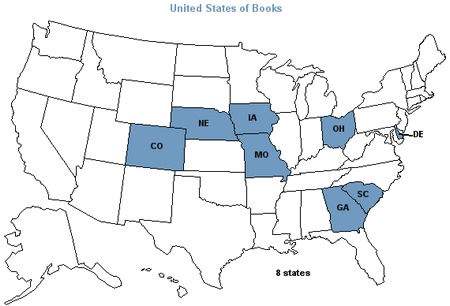
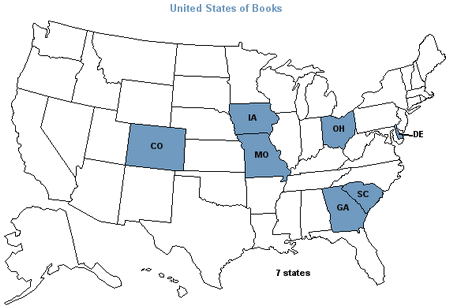
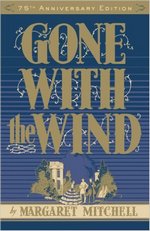
United States of Books – Gone with the Wind by Margaret Mitchell

Gone with the Wind Gone with the Wind

by Margaret Mitchell

Author: Elisha at Rainy Day Reviews

Entertainment Weekly says – Mitchell’s landmark novel illustrates the luxury of the Southern antebellum aristocracy and its downfall through some of literature’s (and film’s) most memorable characters.

Gone with the Wind Review

Gone with the Wind is a classic for a reason. Well written, timeless, and tells a story of bravery, heart, and the difficulty of living life during the Civil War. I can see why people would call this novel a romance however, I would not call this a romantic read but a dramatic read with romance as a key part of the novel. Even though I was not a big fan of Scarlett, she had backbone and had to learn rather quickly that life was not always as easy or pleasant as she once thought due to the civil war and the surrounding issues of life then on the plantation. All around a great book and I can see why the movie is four hours long and look forward to watching it (I still haven’t seen it).

I most definitely would recommend this read for all.

Synopsis

Since its original publication in 1936, Gone with the Wind —winner of the Pulitzer Prize and one of the bestselling novels of all time—has been heralded by readers everywhere as The Great American Novel.

Widely considered The Great American Novel, and often remembered for its epic film version, Gone with the Wind explores the depth of human passions with an intensity as bold as its setting in the red hills of Georgia. A superb piece of storytelling, it vividly depicts the drama of the Civil War and Reconstruction.

This is the tale of Scarlett O’Hara, the spoiled, manipulative daughter of a wealthy plantation owner, who arrives at young womanhood just in time to see the Civil War forever change her way of life. A sweeping story of tangled passion and courage, in the pages of Gone with the Wind, Margaret Mitchell brings to life the unforgettable characters that have captured readers for over seventy years.

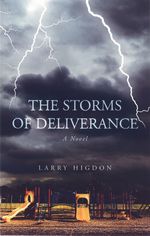
The Storms of Deliverance by Larry Higdon

The Storms of DeliveranceThe Storms of Deliverance

by Larry Higdon

PDF, 216 pg.
Tate Publishing, 2011

Read: January 22 – 23, 2016

Before I start, you might want to take a gander at the quick Q&A I did with the author, Larry Higdon. I’ll be more vague than he was on some plot details.

Johnson (everyone calls him Johnson — he’s not all that crazy about the rest of his name) is not having a great day — traffic is horrible, if not dangerous; he’s got a headache that passed “killer” a while back — it’s even effecting his vision — and he’s got more assorted aches and pains than he can count. Before he makes things worse, he pulls to the side of the road to try to stop the headache with a nap — and at least not have to deal with rush hour.

Things get interesting when he wakes — he doesn’t recognize the car that he’s in, or his clothes, the face in the review mirror, or . . . much of anything. The city looks like Atlanta, but, it’s not quite right — it’s almost impossible to find a pay phone, for one thing. Then he sees a newspaper and reads the date: 2008? Wait a second, he went to sleep in 1981! Didn’t he? Using the address he finds in the glove box and a map he buys at a gas station, he finds his apartment, and starts trying to figure out what’s going on. He’s got a picture of his girlfriend, who seems to be as advanced in age as he is, but there’s no sign of her anywhere.

The possible explanations don’t seem to work for him — he can remember everything (except the last 17 years) perfectly, so he rules out amnesia. Is it time travel? What about magic, mysticism? Something else?

The exploration of what happened with him will lead Johnson to all sorts of self-evaluation — none of which will be pleasant. Maybe learning about his missing years isn’t such a good idea after all. But he just might get the chance to repair some relationships — and do something meaningful.

Shortly after Johnson starts to figure out what’s going on in earnest, we get some flashbacks to where he meets his girlfriend, Katy, and we watch the beginnings of their relationship as it develops as his baseball career stumbles. On the whole, this section did very little for me, although I really enjoyed the parts about baseball, and would’ve really liked more. Now, there is no narrative need for more baseball, in fact, the story might be better served leaving it as vague as it is, so this is just a personal preference. Still, I wanted to see more baseball.

Things pick back up once we leave the flashback and get into solving the problem that is Johnson, and that carries through to the end — which includes things that defy rational explanation, but that really work in context.

I’m not convinced that I liked any of the characters — I might grow to like a few with a little more time. It’s hard to know what to think of Johnson, for example, since he’s so uncertain, so in flux (I’m willing to bet I like him a few months after the events of the book, assuming he stays on the track he’s on). I didn’t dislike anyone, I’m just not sure. Dr. Pfeiffer had potential, as did Johnson’s daughter, Zoe.

I have a minor gripe: anachronisms. Nothing horrible, but I caught a couple that were big enough to take me out of the moment. There was a mention of Prozac in 1982 (six years before released), and Johnson shouldn’t have been familiar with Caller ID if he was stuck in ’81 (although that one could be intentional, pointing to a possible explanation of what’s going on in his head). Yes, these aren’t that major, and no plot points hinged on these, but when I came across them I had to stop, whip out my smartphone to see if they were appropriate. That deserves a strike or two.

In the end, I wrote in my notes, “Oddly affecting, sorta snuck up on me.” I started off intrigued by the premise, and interested in seeing how Higdon solved things. Then I got sorta bored with the flashback, and then by the time we were in ’08 again, I was invested in this story. It’s not the best book you’ll read this year, but it’s a good one, and you’ll be glad you did.

Disclaimer: I was provided with a copy of the book by the author in exchange for an honest review, and I think I got the better end of the deal.

—–

3.5 Stars

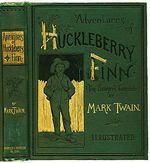
United States of Books – The Adventures of Huckleberry Finn by Mark Twain

The Adventures of Huckleberry FinnThe Adventures of Huckleberry Finn

by Mark Twain

Author: Laura at http://125pages.com

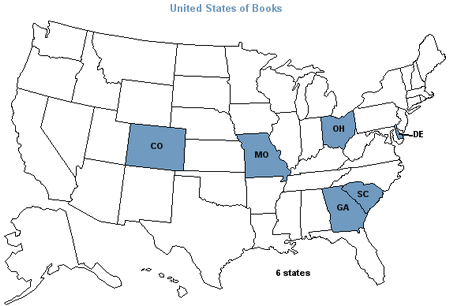
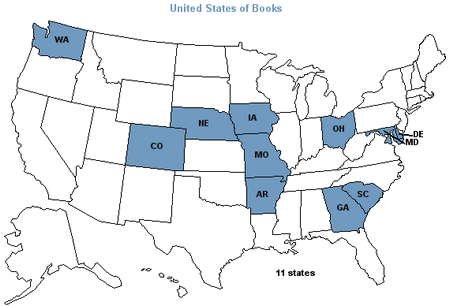
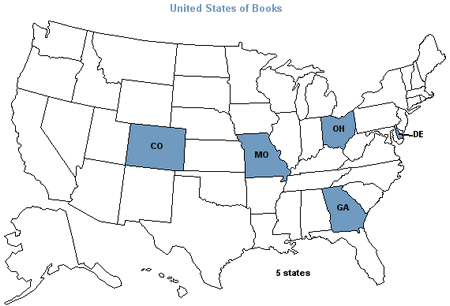
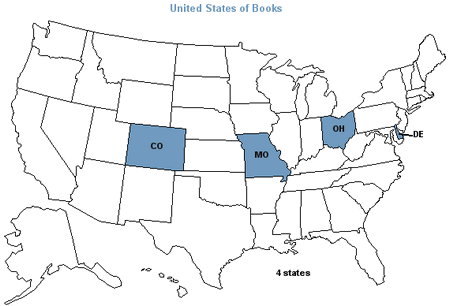
Welcome to another installment of the United States of Books! See full details here. Today we will visit Missouri with The Adventures of Huckleberry Finn by Mark Twain. Entertainment Weekly says “Twain’s masterpiece about Missouri’s most iconic literary contribution, Huck Finn, will resonate for as long as America’s rivers flow.”

I’m not sure how I never read The Adventures of Huckleberry Finn before now. I read The Adventures of Tom Sawyer in high school and upon looking on my shelves I discovered I already owned both of them. Finn takes place soon after the events of Sawyer, with both boys wealthy and Finn living with the Widow Davis as his alcoholic father has not been seen in a year. Stifling under the rules, Finn seeks adventure. He rejoices when he is able to sneak past Jim, a slave who keeps watch over the house, to join his friends as they play robbers at night. When his Pap finds out about his windfall, he returns to town seeking the money. He kidnaps Huck and locks him in an isolated cabin. Huck the stages his own death to escape and sets off down the river. He happens upon Jim, who is also running after hearing about plans that he is to be sold. A series of madcap adventures follow, including grifters pretending to be royalty, cross-dressing, family feuds and an elaborate plan to save Jim.

This was a hard book to rate as it is not on the same level as current books. The six distinct dialects used made it not flow as modern literature does, but added a unique aspect to each word said. The writing was humorous and full of heart. Yes, at times, the words used do not match what we consider proper, but for the time it is accurate. The plot was all over the place, but always made its way back to Huck at the center. The pacing was quick and the story never lagged.

A true classic in terms of setting, language and speech patterns, The Adventures of Huckleberry Finn, is a unique look at a not so shiny time in our country’s past. That being said, the correlation between Huck running from what he considered slavery, and an actual slave running with him for real freedom was powerful. Seen from a child’s eyes, what was normal became unthinkable, as Huck learned to count on Jim. Mark Twain crafted a nuanced picture of such a specific time frame, I think The Adventures of Huckleberry Finn will never not be read by those seeking to understand the past.

Favorite lines – It was kind of solemn, drifting down the big, still river, laying on our backs looking up at the stars, and we didn’t ever feel like talking loud, and it warn’t often that we laughed—only a little kind of a low chuckle. We had mighty good weather as a general thing, and nothing ever happened to us at all—that night, nor the next, nor the next.

Biggest cliché – “Running away will be super easy and fun.”

Have you read The Adventures of Huckleberry Finn, or added it to your TBR?

—–

4 Stars

Top Ten (and a bonus) Books from My Childhood

I was bemoaning how long my current read was the other day and how it was going to leave me without a post for today, and my ever-so-clever daughter suggested, “Why don’t you list the Top 10 Books from your childhood?” That sounded pretty fun, so I figured that I might as well. It turned out to have been better than I thought, so kudos to her.

Ranking them really would be impossible, but then 11 came to mind really without any effort, and I couldn’t axe one of them, so there’s a bonus entry to the list. All of these I read more than I can count — if they’re part of a series, these were the ones that I came back to most often. The links are to Goodreads pages because I can’t find good official pages for all the books/authors (a true sign of my age, I guess).

Enough of that, on with the trip down Amnesia Lane:

The Castle of LlyrThe Castle of Llyr

by Lloyd Alexander

The Chronicles of Prydain taught me most of what I needed to know about Fantasy (augmenting The Chronicles of Narnia‘s lessons). Fflewddur Fflam here is at his best, I think it’s here that I fell in love with Eilonwy, Taran’s more of a real hero than before, and you get plenty of Gurgi (who I just have to mention because thinking of him makes me smile). There’s peril, the characters grow more than they have before, a hint of romance . . . it’s not the most important book in the series, but I think it’s pivotal.

Danny Dunn and the Anti-Gravity PaintDanny Dunn and the Anti-Gravity Paint

by Raymond Abrashkin and Jay Williams

I didn’t know until today that this was the first in the series, I always figured it was mid-series. It’s the only one of the series that I owned — thankfully, the library had a few more — so it’s the one I read most. It was also my favorite — I just loved the stuff at the edge of our solar system and Prof. Bullfinch and Doctor Grimes making musical instruments from their hair — stupid as all get out, but it worked for me.

The Mystery of the Dead Man's RiddleThe Mystery of the Dead Man’s Riddle

by William Arden

While Encyclopedia Brown (see below) got me reading mysteries, it was The Three Investigators — Jupiter Jones, Bob Andrews and Pete Crenshaw (btw, the only thing there I had to look up was Pete’s last name — not bad for a series I haven’t touched since the late 80’s) got me hooked on reading detective series. The Dead Man’s Riddle was one of my favorites — and I think the first or second I read — something about the Cockney slang kept bringing me back to it. I read what I do today because of this series, really.

SuperfudgeSuperfudge

by Judy Blume

I remember Tales of a Fourth-Grade Nothing being funnier, but this was a better story — the Fletchers leaving NYC, Peter maturing, Fudge being a real pain, not just a cute nuisance. Blume taught me a lot about how to read non-genre stuff, probably paving the way for Hornby, Tropper, Weiner, etc.

The Last of the Really Great WhangdoodlesThe Last of the Really Great Whangdoodles

by Julie Edwards

What a great world, what a great magic system . . . I’m not sure I can express what this book meant to me as a kid, and the copious warm-fuzzies the memory brings up. I remember that it was in the pages of this book about a magic kingdom that I first learned about DNA and RNA (and what those letters meant) — thanks, elementary school science classes. The creatures’ names in this are great (and, as an adult, I can “hear” Andrews saying them in my mind for an added layer of fun). There’s a great deal of whimsy here, a sense of play that permeates this — even when it gets silly. The kingdom’s motto, “peace, love and a sense of fun” really sums up the spirit of the book.

Me and My Little BrainMe and My Little Brain

by John D. Fitzgerald, Mercer Mayer (illus.)

Sure, the series was supposedly about Tom, but J. D.’s the real hero of the books. He has a conscience, a better moral compass than his brother — and is probably just as smart. This is the book that lets him shine as he ought to have all along. All the books had their strong points, and were fun, but this ruled them all.

The Phantom TollboothThe Phantom Tollbooth

by Norton Juster, Jules Feiffer (illus.)

Such wordplay! What a great, twisted way to teach how important words and ideas are. Seriously, just a wonderful book. The humor is so off-kilter, any appreciation I have for puns came from this book (and it set the standard that a pun must achieve for me not to groan). If you haven’t seen the documentary about it, The Phantom Tollbooth: Beyond Expectations, get on it. (I contributed to the Kickstarter for it, I should add).

The Voyage of the Dawn TreaderThe Voyage of the Dawn Treader

by C. S. Lewis

I remember the bookstore where I bought this, the date and month that I bought it, and reading a good chunk of it before I got home. I read this one more than the rest of the series (Prince Caspian a close second). I just love this one — you get Reep at his bravest and funniest, some really odd creatures, an epic story, and Eustace’s redemption (back when I did crazy things like this, I almost got a tattoo of Eustace as Dragon). Who could ask for more?

Alan Mendelsohn the Boy from MarsAlan Mendelsohn, the Boy from Mars

by Daniel M. Pinkwater

Pinkwater has funnier and stranger books (both before and after this one), but there was heart, there was depth — there was length! — to this story about a kid who didn’t really fit in until he made a friend who didn’t want to fit in. This is another one where I can peg the place and time I bought it. Science Fiction-y in a real world (didn’t know you could do that!), comic book geeks as heroes, and real non-sanitized-for-kids emotions. There’s no way this wouldn’t be a favorite. More than the rest on this list, I’m thinking of finding my old copy and taking it out for another spin (because I just read the next one a couple of years ago).

The Westing GameThe Westing Game

by Ellen Raskin

If I had to pick one off this list (and I don’t), this would probably be my favorite. I re-read it two years ago, and it was one of my favorite experiences that year with a book. The characters are great, the story was so clever, the writing so crisp. There’s nothing wrong with this book at all.

I saw a hardcover reprinting of this on Monday, and had to fight to resist buying a new copy. Kind of regretting that now.

Encyclopedia Brown Boy DetectiveEncyclopedia Brown, Boy Detective

by Donald J. Sobol

Summer after second grade, we were on a forever-long road trip and I was bored, so I demanded my parents buy me something to read. I must’ve been a real snot about it, because at the next town, they did. I got two books, this one and Sugar Creek Gang Screams in the Night (not the best in the series, but it was good enough to read several times). It blew me away — I loved the puzzles, the characters, the idea. I wanted to be a P. I. This was my first mystery book, and it clearly set the stage for most of what I’ve read since (about a third of what I read).
Were you a fan of any of these as a kid? What were some of your faves? Have you read them lately?

My Grandmother Asked Me to Tell You She’s Sorry by Fredrik Backman

My Grandmother Asked Me to Tell You She's SorryMy Grandmother Asked Me to Tell You She’s Sorry

by Fredrik Backman, translated by Henning Koch
Hardcover, 370 pg.
Atria Books , 2015
Read: November 20 – 24, 2015

If you don’t like people, they can’t hurt you. Almost-8-year-olds who are often described as “different” learn that very quickly.

That lesson was impressed upon Elsa pretty hard, which has left her with a very small group of people that she likes (but, like most 7 year-olds, she really wants to like people) — although in many, there’s only one person in that circle for Elsa — her grandmother. Elsa’s grandmother was her best friend, her superhero, the most devoted adult in her life.

Elsa doesn’t do that well in school — doesn’t get along with teachers or classmates — but thanks to Wikipedia, knows all sorts of things in very random areas. She’s utterly convinced of the importance of the Harry Potter series and other “quality literature,” like Spider-Man comics.

She used to write letters to Santa every Christmas, not just wish lists but whole letters. They weren’t very much about Christmas, mainly about politics. Because Elsa mostly felt that Santa wasn’t involving himself enough in social questions, and believed he needed to be informed about that, in the midst of the floods of greedy letters that she knew he must be receiving from all the other children every year. Someone had to take a bit of responsibility.

Following her Granny’s death, Elsa is given a series of letters to deliver to various people that her Granny has helped in the past, but who’ve had problems with her since. This eventually involves adventures (things both 7 year-olds and adults would consider adventures) and a lot of personal growth. As she delivers them, Elsa learns a lot about who Granny was before Elsa came along, and finds herself in a much larger world than she’d previously been able of living in.

This is just charmingly written, sweetly told, and it’ll draw you in with the language. Backman and Koch show a delight with language and people that will surely win you over. It’ll make you smile, it’ll make you giggle, it’ll make you melt a little — if your grandmother’s alive, you’ll want to give her a call — if not, you’ll miss her more than usual.

—–

4 Stars

Stepdog by Nicole Galland

Stepdog Stepdog

by Nicole Galland
Trade Paperback, 386 pg.

William Morrow Paperbacks, 2015

Read: December 9 – 10, 2015

I’m going to cut to the chase, if you want to read a blurb for the book, click on the cover or title above and it’ll take you to the proper website.

Let’s start with the positives, shall we? Galland can really put together a sentence. I found much of this charming and entertaining. And I’ll never not appreciate a Roddy Doyle reference (or two).

I wanted to like Cody. She’s a dog, I always want to love the dog. But she wasn’t so much a character as she was a furry obstacle to Rory’s desired lifestyle. I kept thinking about her like Skyler White or Carmela Soprano. But Skyler and Carmela were unjustly disliked by significant portions of the audience because they served as an obstacle to their criminal husbands (which was actually commendable) while being actual characters with their own interests and points of view. Cody actually did nothing but serve as an obstacle to Rory’s selfish interest.

I wanted to like Sarah, too. But see above (except for the canine part).

Maybe it’s too much of a stretch to paint them as the anti-Skyler/Carmela, but that’s where my mind went.

Jay goes from this guy to a supervillain in a novel that didn’t seem to be about that kind of thing at all in a heartbeat. Changing this from a slightly overwritten love story to an underwhelming crime story. The climactic action was way too overblown, the denouement was too quick and tidy.

Stepdog was close to being a perfectly charming read, and settled for being a minor disappointment.

—–

2 Stars

Girl Waits with Gun by Amy Stewart

Girl Waits with GunGirl Waits with Gun

by Amy Stewart
Series: The Kopp Sisters, #1

Hardcover, 404 pg.
Houghton Mifflin Harcourt, 2015
Read: November 27 – 28, 2015

He looked up and said, in a loud, plain voice, “She’s not a regular lady.”

That line is uttered in the final few pages of this novel, but it does a pretty good job of summing up Constance Kopp (and her two sisters, too). Fitting, really, for “of one of the nation’s first female deputy sheriffs.”

It’s 1914. Constance, her older sister Norma, and much younger sister, Fleurette, live on a farm in Northern New Jersey. They’re out for a drive into town in a carriage when an automobile slams into the side. Everyone escapes fairly unscathed, but rattled. Well, the ladies are rattled, the driver of the car, Henry Kaufman, and his companions are annoyed that the Kopps had the temerity to be on the road, much less be struck by a car. Constance demands payment for repairs, but Kaufman brushes her off.

But Constance is persistent and begins to annoy Kaufman, who’s notorious for busting a strike the year before (and should be notorious for worse). And when Kaufman gets annoyed bad things happen — a campaign for intimidation begins against the sisters. Soon it becomes a battle of wills — Kaufman’s arrogance and pride vs. Constance’s gumption, stubbornness, and sense of right.

Constance soon learns of more of Kaufman’s crimes and abuses, meeting other victims — who warn her just how bad things can be. While she tries to withstand Kaufman’s assaults, she begins to try to help other victims. At the same time, she befriends the local sheriff, one of the rare lawmen in the area who aren’t beholden to Kaufman and his peers.

There’s a lightness to the writing, but the subject matter is grim — and frequently uncomfortable. Whether it’s the persecution of the sisters, Constance’s investigation into Kaufman’s misdeeds, or Stewart exploring the events that brought the Kopps to their present circumstances, this is a hard world and it takes a certain kind of person to make it. But you wouldn’t know that from the narration, really — just as Constance maintains a proper disposition (or tries to) and manners, so does Stewart.

It would’ve been very easy to turn this into something it’s not. Probably very tempting, too. It could’ve been all about the gender disparity of the time, and a feminist crusade. Or about the economics and labor conditions of the area and time — the strikes and the way they were dealt with by the owners and police. Or any number of other things, really. And it was about those things, but primarily it was a story. A decently told story with well-constructed characters. You give me one of those, and you can throw whatever politics, economic theory, etc. you want into the mix and I’ll read it. I may not buy everything you’re selling, but I’ll listen, and if your story and characters are good enough, I’ll come back. Too many people — particularly with historical fiction, it seems — will do okay with the story, mess up the characters, but nail the agenda. Stewart avoided those pitfalls, and thereby served her audience and any possible point she wanted to better.

Now, while this is a novel, it appears that Stewart has done as much research as she could to make this as non-fiction as possible. I’ve wondered a bit about that approach, does that limit what parts of the story she tells? Which would account for some odd gaps. And if it does limit it — is that a good or a bad thing? Or does that depend on the writer? That’s probably it, for some writers, such a limit would be freeing, while others would find the restriction too much. Stewart, it seems, turns this into a strength — matching with her previous non-fiction publications.

A fun little ride, full of historical nuggets, and a family you’d like to spend some time with. A little action, a little danger, but not a lot of violence. A pleasant mix of historical fiction and mystery. It’ll work for the cozy reader, the historical fiction reader, and people who just like good stories.

—–

3 Stars

Rules for a Knight by Ethan Hawke

Rules for a KnightRules for a Knight

by Ethan Hawke

Hardcover, 169 pg.
Knopf, 2015

Read: November 30, 2015


So the story goes, Ethan Hawke is a descendant of a knight who died at the Battle of Slaughter Bridge in 1483. The night before the battle, this knight, Sir Thomas Lemuel Hawke penned a lengthy letter to his young children so that they’d have something to remember him by, and hopefully learn something from him. Ethan Hawke came into possession of this letter, and after a scholar translated it for him, modernized the language so that he could pass these lessons on to his kids. Given the fact that the “Hawke” surname was once “Hawker”, there’s an ornithological flavor to all of this.

The letter, or manifesto, consists of short lessons on a variety of virtues or characteristics that Sir Thomas wanted to pass along to his son and daughters (which are awfully feminist for the 15th Century): justice, solitude, generosity, discipline, love, humility, and so on. Virtues and ideals that are shared by many Western and Eastern cultures — something akin to what C. S. Lewis would call the Tao. The lessons combine personal vignettes from Sir Thomas’ life and training with fable-like stories (many of which are old and common — like the two dogs/wolves inside each of us fighting for control, you ought to feed the one you want to win).

Hawke’s wife, Ryan, provided the illustrations for this book. I wouldn’t say they’re dazzling, but they’re nice — and fit the material well.

This is a nice book, one that serves its purposes well. Short chapters, well (if somewhat heavy-handed) written. It’s not a must-read, but it’d be a good use of anyone’s time — particularly something for dads to read to young children.

—–

3 Stars

If I Fall, If I Die by Michael Christie

 If I Fall, If I DieIf I Fall, If I Die

by Michael Christie

Paperback, 323 pg.
Hogarth, 2015
Read: October 20 – 23, 2015

When he was a toddler, Will and his mother, Diane, moved into a house in rural Canada (somewhere north of Toronto, I think) and never left. I don’t mean that didn’t move to a different residence, I mean they didn’t leave. Diane was a filmmaker — some sort of arty, documentary/montage-type thing — with some psychological issues that got more and more intense until sometime after Will’s birth. By the time he was 2(ish), these issues had pushed her to the breaking point, and she had to retreat to a home that she’d bought with her brother before his death years previous. Diane has some sort of panic disorder and a pretty strong case of agoraphobia — so strong that Will ends up exhibiting most of the symptoms without, you know, actually being agoraphobic.

About 10 years later, Will hears a strange noise in the front yard, and before he knows what’s happening, he’s outside, investigating. Sorry, that’s Outside. Where danger lurks, bad things happen, and people shouldn’t be. He meets a kid about his own age, is mystified by him and drawn to him — mostly because he seems brave, but also, because he’s someone his own age. Within a few weeks, Will is sneaking outside for short jaunts — walking around the neighborhood, looking for his friend. Soon, he convinces his mother to enroll him in school, where he tunes out the teacher, but makes a couple of friends.

From this point on, the book diverges — on the one hand, we get Will’s continued socialization, growth, and maturation. As well as a better understanding of what happened to his mother.

On the other hand, Will and his school-friend, Jonah find themselves adventuring. Jonah’s a very smart kid, on the verge of falling through the societal tracks (like most of the local Indians) with criminal brothers, and a knack for looking graceful on a skateboard. He teaches Will to skate, and how to be less awkward. The two also enact some real Tom Sawyer/Huck Finn escapades, while hunting for Will’s first Outside-friend — which brings them into contact with all sorts of nefarious individuals.

The latter of these two paths is slightly less interesting, and is executed less convincingly — although it’s clearly the more exciting and eventful. It also seems like that it’s Christie’s focus, it’s the core of the story he seems to want to tell. Sadly, it’s not the one I wanted to read (as much), especially because all of it was pretty predictable. I’m not saying it’s not worth reading, but it just didn’t do as much for me as the other stories. Titus, in particular, the homeless man they befriend (for lack of a better word) is pretty entertaining with his frequent Dogberryisms.

Will gets braver and braver, and a little wiser until he comes to the realization that something bad is always going to happen — to you, to someone you love, to someone you know, to someone you read about in the newspaper — it’s just a question of how you live until then. The question is, armed with this understanding: how will he live? Can he help his mother?

Will, Diane, Jonah — are all richly drawn characters (which isn’t too surprising, given the focus on the first two). Many of the supporting characters are about as well drawn — Will’s first school friend, Angela, was great, but I could’ve used more of her (the story didn’t require more of her, we didn’t need more of her). The villains were a bit sketchy, but there were as fully developed as the needed to be to serve their purpose (see again, Tom Sawyer/Huck Finn comparison).

The writing was insightful, and while I wouldn’t want to hold up Diane as a test case for agoraphobia, I really felt like I understood her. I felt the same about Will — I particularly liked the way that his becoming acclimatized to the Outside wasn’t a straight line, or easy growth — but it came in fits and starts, with many steps backward (some brought on by his own insecurities, some by his mother’s). His perspective (especially early on), vocabulary, worldview, and social awkwardness (the nicest way I can put it) all fit someone who’s been locked away from the world and only interacted with a loving, doting mother; television; and delivery men.

Whatever the flaws, this was a really good book, and one I’m very glad it came across my path. Michael Christie is a name I will keep an eye out for in the future.

Disclaimer: I received this book from the nice folks over at Blogging for Books for this review. Not sure they got their money’s worth, but I hope so.

—–

4 Stars

Whirligig by Magnus Macintyre

WhirligigWhirligig

by Magnus Macintyre

Paperback, 301 pg.
Marble Arch Press, 2015
Read: October 13 – 14, 2015

This is the story of a self-centered, shallow, city-dwelling fat man who takes an opportunity to reinvent himself and travels to a small town in Scotland to be the voice of a proposed wind farm. Which, of course, he knows nothing about. So, our fat man, Claypole, spends the next week bouncing around from here to there in this community, finding himself in one embarrassing/catastrophic situation after another. I think this is where we’re supposed to find humor — it never struck me as funny. These all just seemed like a guy acting without thought and finding himself being taken care of like some sort of bumbling Candide.

As anyone who’s read this setup knows, once this particular Englishman went up this proverbial hill, he developed an understanding of this community, learned some important life lessons, and whatnot before he came down the proverbial mountain.

I couldn’t tell, really, how sincere we’re to take the “green” portions of this story — there are a couple of true believers, and a cartoonish doubter or two — but the rest, their interest in/commitment to the cause seems pretty shallow. Now, that’s the characters, not the author, I grant you. But when the central plot revolves around the establishment of an environmentally friendly source of power, I expect a bit more than that.

Those people that do actually end up liking Claypole — I don’t get it. Particularly those who take a seemingly instant liking to him. He’s such an offensive buffoon that it’s hard to understand. I guess I can understand those who grow to like him when they see the man behind the awkwardness.

The people of this small town are sketchy, outside of one family, they’re fairly generic stock characters. And that family? I can’t buy them either, a little more fleshing out and I probably could’ve believed them. But pretty much, they’re just a collection of characteristics, tics, and odd wardrobes.

Whirligig has very sweet ending, and it was not exactly the one a reader would expect, but pleasant, and – like “crap telly” (Claypole’s words) had taught him, one that tied everything up nicely.

Not funny enough, not “green” enough, and I couldn’t connect the way I wanted to with anyone. Near miss after near miss after near miss takes me to a 2 1/2 Star rating.

—–

2 1/2 Stars

Page 41 of 46

Powered by WordPress & Theme by Anders Norén