Tag: General Fiction Page 42 of 46

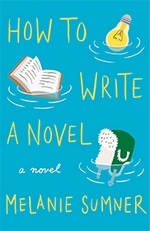
How to Write a Novel by Melanie Sumner

How to Write a NovelHow to Write a Novel

by Melanie Sumner
Paperback, 287 pg.
Vintage, 2015
Read: September 28, 2015

Aristotle — but you can call her Aris — Thibodeau is a 12 1/2 year-old would-be novelist. Under the guidance of her English teacher, school librarian and English-professor mother, she’s trying to write a novel in the next 30 days. Once it’s sold, she figures she’ll be able to make enough money so her mom can quit her job, still take care of her brother with his counseling/medication and find a husband. Aris does have a candidate in mind for her step-dad, but is open to someone else. We get to see precious little of her writing, but we do get to follow her on her journey through the novel writing process, and the family turmoil and drama surrounding it. Actually, as I write that, I have a hard time believing everything that happened outside of her novel took less than 30 days.

There’s a strong self-awareness to the narration — from Aris stopping the action to describe something she’s lacking in her novel, and then providing it in the narration to the sections of the book being labeled “Rising Action,” “Denouement,” etc. Typically, it works, but there were a couple of instances where it seemed forced or overdone.

There are two really strong points to this novel. Sumner can write a sentence that just sings I grabbed three examples from the opening pages — we get voice, humor, and a crystal-clear idea of the character she’s describing (and the one doing the describing):

Diane is forty-three now, short and either curvy or chubby, depending on her mood, with a button nose and blondish bangs that are always falling in her face.

Then he grinned. Papa was old before braces came out, so his teeth are slightly crooked, just enough to make him look like he can tell a good joke.

. . . ladies in the South don’t shake hands. Instead, they fold their cool fingers over yours and press ever so gently, leaning in close until you smell breath mints and the eau de toilette behind each ear. Then they say something awful. A few days after Joe [Aris’ father] died, Grandma and knelt beside Diane’s [Aris’ mother] bed and folded her fingers over her hand. After looking into her eyes for a moment, she whispered, “Why didn’t he ever have a better job?”

Don’t ya just luuuuv Grandma?

The other strong point (maybe half of a point) is her characters — Aris, Diane, her brother Max — are great. Diane’s student, Charles and his mother are pretty well-drawn. The librarian Ms. Chu wasn’t that fleshed out, but she didn’t need to be, and she was well drawn enough that you want to see more. These are real people, you could build a book around any of them alone. But the rest — and I’m only talking about characters that should be well-drawn — just aren’t. Aris’ grandparents don’t become much more than they were described above. The worst is Aris’s choice for her future step-dad, their current volunteer nanny: Penn MacGuffin*. He’s an accumulation of ticks, quirks, and clichés, but there’s not a person in the middle of that.

The more I think about it, the less I’m sure I like How to Write a Novel as a novel, however frequently clever it is. There are some great scenes, dazzling sentences, charming characters here; it was a pleasure to read. But I’m just not sure there’s much there beyond that.


* I’m not going to mention how long it took me to realize what his name meant — let’s just say it was before this moment, and I felt really, really stupid

—–

3 Stars

Reread Project: The Van by Roddy Doyle

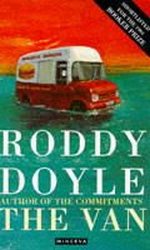
The VanThe Van

by Roddy Doyle
Series: The Barrytown Trilogy, #3

Trade Paperback, 311 pg.
Minerva, 1991
Read: August 25 – , 2015
Jimmy Rabbitte, Sr. started off as a supporting character in The Commitments, moved up to co-star in The Snapper, and finally moves to the forefront in The Van, which is more about him than the other two were about any one person. Which isn’t to say that Jimmy, Jr., Sharon, Veronica, Darren and the twins aren’t here, they’re just in the background — as are most of Jimmy, Sr.’s friends (actually, I think Jr.’s in this far more than he was The Snapper).

Not only is the focus more narrow, the final installment in the trilogy is different in other ways — it’s almost 100 pages longer (depending on the printing) than The Snapper which was about 50 pages longer than The Commitments. Which gives Doyle more space to do things he hadn’t really before. It’s still primarily told through heavily stylized In the first 90 pages, I estimated I’d read more (significantly more) narration than I did in the first two volumes of the trilogy.

It’s not been clear before what Jimmy did for a living, but whatever it was, it was pretty clear the bills were barely paid. They stretched what they had pretty far, but they seemed to manage. Somewhere along the line, pretty sure it was post-Snapper, but I’m not sure, Jimmy lost his job. Unemployment isn’t setting well with him — he can’t support his family, he’s bored, he can’t even go down to the pub to have a few pints with his friends.

Jimmy’s trying to grow — he’s reading the classics. Thinking of taking some classes. But it’s not enough. At some point his friend, Bimbo, also gets laid off. The two spend a lot of time together — having a companion in his unemployment makes the whole thing tolerable for Jimmy — almost like summer vacation from school. Bimbo isn’t quite as accepting of this new reality — he almost applies to work at McDonald’s, but is shamed out of it by Jimmy. Bimbo’s wife is even less satisfied with his job status. Which leads to a reckless move on Bimbo’s part — reckless, yet maybe inspired — he uses some of his last dollars on a Chip Van (minus an engine). In the midst of the U.S.’ current Food Truck craze, this might not seem so risky, but in the early 90s? (then again, what do I know of early 90’s Dublin, other than what I’ve picked up from Doyle’s novels and the movies based on them?)

They’ve just a few weeks until the World Cup games start when they hope they can cash in on the post-game crowds. So Jimmy and Bimbo rush to clean the, learn to cook, design a menu, etc. And now you’ve got yourself a plot — can these two make a go of this? Can they remain friends and co-workers? Will they start a grease fire that destroys the whole of Barrytown?

There was, it seemed to me, a maturing of Jimmy that started back in The Snapper. Not that he wasn’t a good father before, but he kicked it into a higher gear with Sharon during her pregnancy. Here, that seems to manifest itself in a paternal pride — Junior’s having some sort of success out there, is getting married; his other son, Darren, is doing very well in school (better than anyone else in the family, that’s sure). Part of Jimmy’s reaction to it is finding pleasure in someone else’s success for what it means to them. I’m not convinced that the Jimmy of The Commitments or the first part of The Snapper could do that.

That’s not to say that he’s Man of the Year material or anything. There are some real (human) flaws to him. He’s petty, he’s jealous, he’s proud — there’s some sort of mid-life crisis that he’s got a half-hearted interest in involving Other Women. As in all good fiction, these just make him someone you can like, someone you can relate to, someone you can get annoyed with — even pity.

There’s some great, great stuff about sports fans here — national pride around The World Cup, the joy in sports, the very real camaraderie that can exist for a few moments around a shared experience. That’s not my typical milieu, but I’ve tasted it a time or two — and I can’t imagine many capture it better than Doyle did here. Even if I didn’t like the rest of the book, I think that part would’ve been worth it.

In the end, this is Doyle’s best work (to date), not the most enjoyable, but the best. It’s impossible after reading this, to ignore Jimmy, Sr.’s brief appearances in The Commitments, to not pull for him earlier than you should in The Snapper, and really to forget him. Just a great character in a world you really don’t want to leave.

—–

4 Stars

Go Set a Watchman by Harper Lee

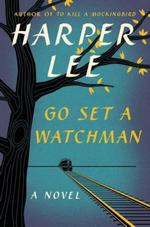
Go Set a WatchmanGo Set a Watchman

by Harper Lee
Hardcover, 278 pg.

HarperCollins, 2015

Read: August 14 – 15, 2015

Maycomb did not have a paved street until 1935, courtesy of F. D. Roosevelt, and even then it was not exactly a street that was paved. For some reason the President decided that a clearing from the front door of the Maycomb Grammar School to the connecting two ruts adjoining the school property was in need of improvement, it was improved accordingly, resulting in skinned knees and cracked crania for the children and a proclamation from the principal that nobody was to play Pop-the-Whip on the pavement. Thus the seeds of states’ rights were sown in the hearts of Jean Louise’s generation.

I don’t know what to think. I just do not. It’s that simple. I probably shouldn’t even be blogging about this one, but I feel compelled to.*

There are so many things that’d help me know what to think about this; for example: 1. if there wasn’t the cloud of controversy over the publication — did Lee really want it published? Is she of sound enough mind to make that choice now? and so on. 2. If there’d been a third book of hers published, it’d be easier to know which is the aberration — Mockingbird or Watchman (because there is a clear qualitative distinction) — it’d be easier to cut her some slack if we knew this wasn’t her typical work.

Am I glad I read this? I think so. There are phrases, sentences, paragraphs, vignettes, scenes, that I relished. I do think I like the story of Jean Louise here. I think I appreciate Atticus as father, not necessarily Atticus as a man making certain choices. I’m pretty sure I like Jean Louise’s Uncle Jack.

But there’s bits about this novel that just confound me. Some of the speechifying seems so out of place (and I won’t get into what I think of the points of them). A lot of the speechifying makes it seem like an unfinished draft — where Lee could’ve come back, fleshed it out, edited it and made the same points through dialogue, not monologues.

Maybe in time, after weeks/months of thought, a few re-reads, some distance, I’ll have an opinion about the book that I can stand behind. Right now, best I can manage is a shrug.

—–

* And because I’m really close to having blogged about every novel this year, haven’t missed one since February — and I don’t want to break my streak.

—–

? ? ? ? ?

The Most Useless Page Ever?

Is there anyone holding this book in their hands that needs to be given this information? Why waste the ink?
Also by Harper Lee
“Oh, To Kill a Mockingbird, huh? Never heard of it. Wonder if it’s any good.”

Obviously, there are people who haven’t heard of the Mockingbird — but none of them are going to be tempted to pick up Go Set a Watchman.

Now, the question is, once the initial furor/money-grab over this new book has died down, are there going to be future printings of Mockingbird printed with an “Also by Harper Lee” page? And if so, will the font size be legible?

At this point, I’ve got a little less than a hundred pages to go in the book, and I have no idea what I think of it. Individual sentences or paragraphs? I have very strong opinions about some of them.

But the novel?

I just don’t know.

Thank You, Goodnight by Andy Abramowitz

Thank You, GoodnightThank You, Goodnight”

by Andy Abramowitz
Hardcover, 338 pg.
Touchstone, 2015
Read: June 30 – July 3, 2015

In most instances, space between people grows like mold, neglected just long enough to be noticed. You intended to wipe it clean, but the more of it there is, the more daunting a task it becomes to erase it. Not so with me and the band. I’d discontinued those people as if they were a premium cable channel that I’d finally realized was broadcasting nothing I wanted to watch.

From passages like that, a nice mix of thoughtful, sentimental, with a bit of a grin; to the out-and-out funny, like the funniest suicide attempt I’ve read in a long time, possibly ever (something worthy Save Steve Holland’s Lane Myer, but longer); this book covers the spectrum. Not only covers it, but does so with assurance and panache. It’s one of those first novels that makes you wonder what could possibly be done as a follow up.

Teddy Tremble is a successful enough lawyer for someone who’s heart isn’t really in it, while still being good at it. He’s sort of coasting through life — being good enough at his job, good enough with his girlfriend of forever, good enough for his social circle, but not good enough for his father (but after meeting him, you understand that’s just a given). He’s forty-ish and realizes that life is going to pretty much stay this way. On the whole, he seems okay with that — but in the back of his mind he knows he’s not. He won an Academy Award. His band was huge for a little while in the 1990’s, before his hubris ruined things. Sure, things are good enough now, but once upon a time they were great.

Then through a truly humbling and bewildering set of circumstances, Teddy comes across a group of huge Tremble fans. Seriously, die-hard doesn’t begin to describe these people. Think something akin to the kind of people that organized the first Star Trek convention back when it wasn’t a cultural phenomenon, just a short-lived and then canceled show. This changes everything. The adulation, the attention, the satisfaction of performing gets under his skin and he starts writing music for the first time in a long time.

Pretty soon, he’s (forgive the cliché) trying to get the band back together — his agent and producer are on board, convinced that what he’s written exceeds his former quality. Incidentally, both of these characters are the kind that we readers hope to come across — supporting characters that threaten to steal the entire novel, but when used properly just make the whole thing better.

Anyway, with these two on board — Teddy just has to convince the rest of the band to give it a shot, to trust him. Maybe even to forgive him for what he did to them so long ago. Then he has to convince music fans to take them seriously. Neither of these tasks is going to be easy. Both are practically impossible, really.

The book starts out as pretty entertaining, definitely amusing. But it doesn’t stop there — it gets better, deeper, emotionally richer all the while. By the time I got to (and through) Chapter 20, I tweeted that, “Not sure I need to read another word (am going to), but that was as close to perfect as it gets.” I’m still thinking about it a month later.

At various places through the novel, Teddy observes: “One day I’ll die, and this will be one of the things I did with my time.” I’m not sure if I’ve ever seen one sentence used so many different ways with so many different meanings depending on the context. Sometimes he’s says it wryly, sometimes caustically, sometimes wistfully, sometimes with pride. It’s one of those writerly things that when you see it in action, you wonder why more people don’t try it.

Each of these characters — the agent, the producer, the bandmates, their (sometimes very odd) families, Teddy’s girlfriend, associates in the law firm, and others — are well-drawn. Occasionally familiar, without being stock characters or cliché, each character ends up being strong enough that you want to spend at least a little more time with them. But Abramowtitz is too capable of steward of his resources and gives us just enough to leave us wanting more.

I’ve seen a lot of comparisons of Thank You to Hornby’s High Fidelity and Tropper’s This is Where I Leave You. I don’t get that. Maybe it’s just because these people haven’t read anything else by these authors — they should be comparing this to Hornby’s Juliet, Naked and Tropper’s One Last Thing Before I Go (to be fair, I have seen a little of this comparison, but no one else that I’ve seen has tagged Juliet). These three cover some of the same territory, and Abramowitz comes out looking really good in that company. Don’t get me wrong, I really liked Juliet, I know I liked it more than most people I know. But I don’t think it was as good as it wanted to be or as it thought it was. Thank You seems to do the things that Juliet was wanting to do but didn’t get done. I’m not necessarily saying it’s a better book (I might lean that way), but this is more successful in the areas they overlap. Similarly, while I wouldn’t say that One Last Thing is a bad book, it can’t hold a candle to this one. I’m not trying to make this a competition, but for this first-time novelist to get things better than old pros like Hornby and Tropper says so much about him.

One day I’ll die, and reading this will be one of the things I did with my time. I’m so glad it was.

—–

4 1/2 Stars

Re Jane by Patricia Park

This is frustrating…I’ve been working on this post for a couple of weeks now, and have spent a lot of time re-writing, re-writing and throwing out material. I finally decided what to keep and how to organize it, I think. I’m tempted to just put this cover image next to a big .gif of a thumbs up and call it a day.

—-

Re JaneRe Jane

by Patricia Park
Hardcover, 338 pg.
Pamela Dorman Books, 2015

Read: July 6 – 8, 2015

There are two ways to look at this book — as a retelling of Jane Eyre and as a novel on its own terms. It’s clearly indebted to Jane Eyre — frequently, the allusions are subtle; sometimes, she might as well be jumping up and down waving a flag. Still, Park’s her own writer — this is its own story, with its own characters — and a heroine who’s not just Brontë’s best-known character thinly disguised.

If you haven’t read Jane Eyre, first of all — shame on you. Secondly, yes, you can read this and appreciate it — you’ll just miss some of Park’s cleverness. Instead, what you’ll get is a straight-forward story about the trials and travails (and travels) of a young Korean-American woman.

Jane Re’s a half-Korean college graduate who becomes a nanny for the daughter of a couple of silly (white) New Yorkers — she’s a stereotypical college professor in Women’s Studies, he’s a henpecked high-school English teacher. Their daughter was adopted from China, and is now old enough that she doesn’t need a nanny — which makes the whole thing a greater challenge. Still, it’s better than the alternative — returning to live with her uncle and aunt, who were forced to take her in after the death of her mother in Korea (and her family there being unwilling to keep her).

Then through a series of events you can read about yourself, she finds herself living for a bit in South Korea. This is as fascinating as you’d think it’d be. It’s not just about a young South Korean woman, it’s about a young half-South Korean woman, raised in the States (by people who left Korea decades before), trying to acclimate to Korea. A stranger in the U.S. to many because of culture and appearance, finds herself a greater stranger there for the same reasons.

Which leads to . . . spoiler stuff. Which is even more interesting. Along the way there’s a whole mess of family issues, stranger-in-a-strange-land issues, self-acceptance issues, romance issues, and other things I can’t pair with the word “issues.” Jane goes through a lot, I’ve got to say — maybe a wider-range of challenges than Eyre. I frequently found myself wanting a bit more spunk, a bit more chutzpah from Jane throughout. But, like her namesake, when she needed it, she found it within — and it was great to see.

Park makes a pivotal choice in her selection of chronological setting — and one that worried me. It’d have been so easy to go wrong with this, and I’m used to seeing it go badly — but Park pulls it off, and actually makes it work for her.

In the end, I liked Jane. I rooted for her. I liked (some of) her family and friends. I was invested in the story. It’s not going to go down as good as, or as important as, its inspiration — but it’s a well-written, warm, look at a woman learning how to take charge of her life.

—–

4 Stars

Reread Project: The Snapper by Roddy Doyle

The SnapperThe Snapper

by Roddy Doyle
Series: The Barrytown Trilogy, #2

Paperback, 212 pg.

Penguin, 1992

Read: May 20 – 21, 2015Naturally, after one of the best rock band novels ever — one fully of music, laughs, and style — Doyle follows it up with a heartfelt story of a young woman who gets pregnant after a one-night stand. Who wouldn’t?

Now, Sharon (the young woman in question) is the sister of Jimmy Rabbitte — The Commitments’ manager. So there is a tie — and we saw a little of their father and the rest of the family last time. Still, this feels so different, it’s hard to conceive of them being part of a trilogy. Oh well — it works — so who cares?. Carried along by Doyle’s inimitable style, this story — which could easily have been maudlin, overly sentimental, or sappy; comes across as genuine and heartfelt instead.
Where The Commitments was full of laughs, raunch, and style; The Snapper is full of laughs, family and heart. It’s not just about one member of the family this time — it’s all of them. The focus is on Sharon and her father, Jimmy, Sr.

Sharon finds herself “up the pole,” much to her distress. She knows who the father is, a one-night stand (something far less meaningful, actually) she wishes had never happened. Unwilling to let anyone know the father’s real identity, she makes one up (which also relieves her of the need to let the real guy have anything to do with the kid). Initially, she’s in sort of a denial — she knows the baby will change everything. But that’s months away — right now, she and her friends can still hit the pub after she gets off working at the supermarket and pretend that everything’s just like it was a couple of weeks ago. Eventually, she starts to make the changes necessary, but only when she has to. There’s personal growth here for Sharon, when she has no choice. But honestly — other than questionable taste in men, and an utter lack of awareness about Fetal Alcohol Syndrome — she seems like she’s got her head screwed on right already.

Jimmy, Sr. seems like the kind of guy you’d like to hang out in a pub with occasionally — I think he (and his friends) would get old quickly if you hung out with them all the time. Generous, funny, and gregarious. Maybe not the most responsible guy around — but he’s making ends meet (mostly), and doing (almost) his best for his kids. Eventually, he seems to get his act together for Sharon — or at least he tries. Which just makes you like him more — even as (because?) he just doesn’t make it some times.

While these two are on the forefront of Doyle’s attention, we do get some time with Sharon’s siblings (even Jimmy, Jr. — a little bit — who’s still trying to make it in the music business) and long-suffering mother. We watch the family stumble along through financial woes, various school clubs, a bicycle club or two, and being the subject of neighborhood gossip. These all might not be as well-rounded as Sharon and her father are, but they’re close enough that you think you know them.

Back in college, I read The Commitments a lot — but I think I read The Snapper more. It’s not as fun as its predecessor, but it’s a better novel — populated with actual people, actual growth, and something that looks a lot like actual life for many people. The Rabbites could be your neighbors, and you’d be happy to have them, which makes getting to spend time with them between the covers of a book just that pleasant.

—–

4 1/2 Stars

How to Start a Fire by Lisa Lutz

How to Start a Fire How to Start a Fire

by Lisa Lutz

Hardcover, 337 pg.
Houghton Mifflin Harcourt, 2015
Read: June 5 – 6, 2015
I really enjoyed Lisa Lutz’s latest, best, and most mature novel and want to encourage you to give it a read. That said, I’m not really sure how to start this post — or how to finish it, now that I think about it. It’s not really a plot-driven book, it’s more about the relationships between the three main characters, and others in their lives. But, it’s really difficult to talk about the book without talking about the two (maybe three) plot points that drive the whole thing.

Early on, I jotted down the note, “I’m either going to love or hate this book,” and while I stayed in the former camp, I could easily see where some wouldn’t (a quick skim of goodreads today, suggests I was right). This book plays with chronology, skipping around throughout the 20+ year history of the characters (plus some in-chapter flashbacks), with no easily noticeable pattern. So, in the first few chapters (most of Part One), once I started a new chapter, I’d have to flip back to the first page of the 3-4 previous chapters to make sure I was placing the current one in the right spot on my mental timeline. Eventually, I didn’t have to physically turn the pages, and was able to re-arrange things without much thought — and I know two other readers that experienced the same

At its core, How to Start a Fire is about the relationships of three women over time, from meeting in college through everything that happens over the next twenty plus years — ups, downs, fights, make-ups, forgiveness, betrayal, estrangement, personal growth, self-destruction, and the ability of friendship to forget all of that and just care in the moment. To boil it down to its essence: real friendship.

I had to repeatedly remind myself that this was a Lisa Lutz novel, it didn’t feel like one. Not any of The Spellman Files or Heads you Lose, this was a totally different creature (not being a mystery novel plays into that, obviously). Of course, like with my fixation on chronology eventually I got into the book and stopped caring about that. Most of the humor is different, most of the heart is different — the types of people are different, too. Still, the humor is solid, the heart is genuine, and the people are, y’know, people.

Yet . . . there’s no denying the Lutz DNA here. The three main characters were aggressively quirky like Izzy or Rae, Anna ‘s brother could’ve been David), and Malcom has a very Henry-esque quality. There’s so much more about the novel to think about than the parallels to the Spellman books. I don’t want to focus on it, but I did make those notes at one point. I think if I hadn’t written it down, I’d have forgotten about it by the time I reached the end.

This is Chick Lit that can be appreciated by the non-Chick reader* — there’s a little bit of something for just about everything in these pages, laughs, chuckles, an “Aww” or three, and maybe a something to make your eyes misty. It’s a bit too fresh for me to confirm this, but I’m betting this is one of those novels that rewards re-reads (especially when you’re not trying to figure out what’s going on in the opening chapters). Not my favorite Lutz book, but probably her best — and it demonstrates what many of her readers have suspected: she can write whatever she sets her mind to. Frankly, I want something back in the comedy/crime area again, but I’ll line up for whatever.

—–

* Which is the mark of the best of Chick-Lit — or any genre — even those outside the target demographic can appreciate it.

—–

4 Stars

Reread Project: The Commitments by Roddy Doyle

The CommitmentsThe Commitments

by Roddy Doyle
Series: The Barrytown Trilogy, #1

Paperback, 165 pg.
Vintage Contemporaries, 1987
Read: April 15, 2015

Will yeh please put your workin’ class hands together for your heroes. The Saviours o’ Soul, The Hardest Workin’ Band in the World, —Yes, Yes, Yes, Yes —The Commitments.

This is a tough one for me to talk about — I’m a long-time fan, I’ve read it a dozen or so times, it’s all I can do to not turn total fan-boy and just gush. eh, I might not try too hard.

My college roommates and I became fans of the music video for “Try a Little Tenderness” from the soundtrack for the movie adaptation, and we waited for what seemed like a interminable amount of time before the movie came to the art-house theater in town. I loved it from the opening sequence on and tracked down the novel the next day. It blew my mind (for reasons I’ll get into in a bit), and I read it a dozen or so times over the few years until I loaned it (and the rest of the trilogy) to someone at work. Naturally, I never saw him again (I ended up with a copy of Gaines’ A Lesson Before Dying and another book in the transaction). I finally let myself buy a replacement copy a few years ago (found a used copy with the same cover), and have now read it twice. And, if anything, my appreciation grows each time.

It’s the late 80’s and three young Dubliners (from the poorest part of Dublin) have formed a band — sort of. Not everyone in it are musicians yet, but they’re working on it. Thanks to the direction of their keyboard (defined in the loosest possible way) player, they’re going to play synth-pop and go by the name “And And! And” (and, yes, I got the exclamation point in the right place). Their first order of business (while learning how to play) is to hire a manager. Jimmy Rabbitte is the guy from their school/neighborhood who’s the area’s music/music industry expert. As evidenced by the fact that he’s the first one anybody knew of that was aware of Frankie Goes to Hollywood — and, even greater — he’s the first to realize how bad they were. Jimmie gets things going immediately by dropping the name (especially that !) and the keyboard player.

Instead, they’re going to play American soul music — and then put an Irish twist on it — local slang, geographic references, and so on. Jimmie puts an ad in the paper to recruit some musicians, hits up a coworker he heard at a company party, and so on. As a result, he collects a very strange crew of musicians — including a trumpet player decades older than the rest of them, with plenty of professional experience (the trumpet in “All You Need is Love,” for example). The rest, as they say, is history.

The story of The Commitments is told through a very unconventional prose and dialogue style. It’s like Doyle took Leonard’s 10 Rules to the furthest point possible (other than #7, which he violates in every line). You can hear these characters talk, you can feel the energy in the room — heck, this book comes closer to capturing musical performances better than anything this side of Memorex or vinyl. Couldn’t tell you what anyone looks like (well, The Commitmentettes are pretty attractive — especially Imelda), what their homes are like, the weather, or anything of that other stuff that tends to fill the pages of novels. But I can tell you what happened, to whom, and how all related reacted. Which is good enough for me.

This isn’t one of those books that gives you diminishing returns upon re-reading. It’s fresh (while dated — no idea how Doyle pulls that off), funny, and full of soul. Dublin soul, of course. Just like the rag-tag musicians that come to life in its pages.

Oh, if you can get your hands on the soundtrack albums (or find them streaming somewhere) to listen to while reading, it makes it all better (even though there’s almost no overlap between songs).

—–

5 Stars

Dorothy Parker Drank Here by Ellen Meister

Dorothy Parker Drank HereDorothy Parker Drank Here

by Ellen Meister

Hardcover, 336 pg.
G.P. Putnam’s Sons, 2015
Read: March 9 – 10, 2015
Meister’s previous novel, Farewell, Dorothy Parker, was an enjoyable though fairly predictable but well-executed tale with characters I appreciated. While I intended to track down more by Meister, I hadn’t yet. One thing I didn’t expect was to see a sequel — there was really nothing in the it to make me think one was forthcoming — or necessary. So I didn’t read this with any great sense of anticipation, mostly just hoping that it wouldn’t be worse than Farewell.

Well, it wasn’t worse — it was actually better.

Ted Shriver is a — was a — literary star. A novelist of a stature and fame that every MFA student dreams of — until plagiarism scandal a few decades ago ruined that career and turned him into a recluse. He’s currently residing in the Algonquin Hotel, which is where the same hotel that the ghost of Dorothy Parker is spending as much of eternity as she can. Enter Norah Wolfe, a young producer about to be out of a job when the talk show she works for is going to be canceled. She’s got this crazy idea, though — if she can get her hero, Shriver, to come on the show and be interviewed for the first time since the scandal, she just might be able to keep the show on the air. And a certain ghost decides to join the cause, as soon as she convinces Norah that she’s really there.

I know, outlandish, right? An appearance by a novelist is going to save a TV show —puh-leez. (the ghost tied to a guest book is completely believable by comparison).

I do think (but haven’t compared the two in order to examine), that this time, Dorothy Parker isn’t as much fun — either in antics or dialogue. But she’s more flawed, more regretful over the past, more self-reliant, lonelier. — basically, she’s a more well-rounded character reflecting a lot of the less snarky, less quotable Parker. Shriver was believable (and a self-pitying jerk), I think the story could’ve used more time with him as an active character, not just the person everyone is reacting to (even when he’s nowhere to be seen). Norah is our Point of View character — she’s likable, driven, damaged (in a pretty obvious way), and it’s not long before you’re wanting things to work out for her. There are a few other notable characters — and a few that are little more than one dimension, but on the whole you are left with the impression that they could easily be more than that.

I did wonder at the lack of any mention of the events of the previous novel or its protagonist, even in passing. Which means you can read these independently of each other, or in whatever order you wish.

This wasn’t a perfect novel — there was one subplot that was largely unnecessary and a little annoying (but in the end, Meister used it effectively, but she could’ve found another way to achieve the same ends). Other than that, compared to its predecessor, I thought the characters were more complex, the emotional stakes were richer, and the book was about more than just the pretty straight-forward plot. A pleasant read, give it a shot.

—–

3.5 Stars

Page 42 of 46

Powered by WordPress & Theme by Anders Norén