Tag: General Fiction Page 44 of 47

Landline by Rainbow Rowell

LandlineLandline

by Rainbow Rowell

Hardcover, 310 pg.
St. Martin’s Press, 2014
Read: August 13, 2014

If the last few years have taught us readers anything, it’s that if you want quirky, honest, heart-felt romance with real (and usually moderately overweight) people and solid laughs, Rainbow Rowell will consistently deliver for you. And if you don’t think you want that, after you read her, you’ll realize that’s just what you wanted after all. She has two YA books and now two Adult books to her credit. Her latest, Landline delivers the typical Rowell magic in her story, but this time she included something else: actual magic. Sort of.

Georgie McCool is half of a pretty successful TV writing team who are thiiiiis close to being much more successful, all they have to do is crank out a handful of scripts in the next couple of weeks and they’re in a great position to sell their first series. The catch is, this involves working over Christmas — despite Georgie’s plans to go to her mother-in-law’s in Omaha with her husband, Neal and their two daughters. Georgie says that she can’t pass up this opportunity, so Neal and the girls go off without her.

Georgie sees this as a regrettable occurrence, but one of the sacrifices she has to make to get her dream show made. Her mother, step-father and sister see it as her husband leaving her, and Georgie ends up staying with them. Which gets Georgie to worrying — especially when she can never seem to reach Neal on the phone during the day. At night, however, when her iPhone battery is dead, she has to resort to the landline in her old room and she ends up talking to Neal back before they got engaged.

Don’t ask. It makes no sense. She never bothers to explain. And it doesn’t matter. Georgie eventually figures out that’s what’s going on and she rolls with it, and the reader does, too.

These conversations, as well as the absence of her family, lead Georgie on a path down memory lane, reflecting on the beginning of their relationship and how it changed as they did. Maybe Neal had made a mistake choosing her. Maybe she’d ruined her life (and his) by choosing him. Would they have both been better off going their separate ways? Or was there something worth fighting for now? Would that matter? The clock is ticking — for Georgie’s marriage (both now and then) and her career. Is she up for it?

The tension is real, the apprehension, fear, and self-doubt (for starters) that Georgie is wrestling with is very obvious and palpable. Yet while focusing on this, Rowell’s able to create a believable world filled with a lot of interesting people. There’s Georgie’s partner/best friend, Seth and another writer on their current (and hopefully future) show — and Georgie failing to hold up her end of things there, as much as she tries.

Then there’s her sister, mother and step-father. They’re much better developed (probably only because we spend more time with them). Her mother’s a pretty implausible character, yet not a cartoon, she’s a pug fanatic, married someone much younger than her, and generally seems really happy. Her sister’s about done with high school and is figuring herself out (and mostly has) — she’s a hoot, and my biggest problem with the book is that we don’t get more of Heather. Not that there wasn’t plenty of her — and it’d require the book to take a far different shape. We get whole storylines about all the non-Neal people in her life, little vignettes showing us their character, giving us smiles in the midst of Georgie’s crisis, like:

“Kids are perceptive, Georgie. They’re like dogs”–she offered a meatball from her own fork to the pug heaped in her lap–“they know when their people are unhappy.”
“I think you may have just reverse-anthropomorphized your own grandchildren.”
Her mom waved her empty fork dismissively. “You know what I mean.”
Heather leaned into Georgie and sighed. “Sometimes I feel like her daughter. And sometimes I feel like the dog with the least ribbons.”

Not only do the supporting stories, or even the little moments like this fill out Georgie’s world and make it more interesting, they provide a breather for the reader from having to deal with the disintegrating marriage.

I know some people think we spend too much time in flashbacks, where Georgie’s remembering how she and Neal met, got to know each other, and started seeing each other, etc. But we need that. If all we get is Neal in the present, or past-Neal on the phone, we’re not going to care enough. Especially in the first couple of scenes we get with Neal, it’d be real easy to see him as unsympathetic — the guy holding Georgie and her career back. We need these flashbacks so the reader can sync their feelings about Neal with Georgie’s, so that when we read something like:

Georgie hadn’t known back then how much she was going to come to need Neal, how he was going to become like air to her.
Was that codependence? Or was it just marriage?”

or

She needed him.
Neal was home. Neal was base.
Neal was where Georgie plugged in, and synced up, and started fresh every day. He was the only one who knew her exactly as she was.

find ourselves agreeing with her, or at least seeing why she says it.

At the end of the book, there’s a lot of plot lines dangling — some very important ones, actually. Enough so, that normally, I’d devote a paragraph to complaining about it. But I won’t this time — it works for Landline. There’s a lot for Georgie to work out herself, she’s really only settled on the one most important thing, leaving the rest to be resolved another day. And that’s got to be good enough for the reader.

Not her best, but Rowell on an off day is still really, really good.

—–

4 1/2 Stars

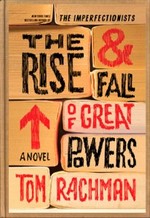
The Rise & Fall of Great Powers by Tom Rachman

The Rise & Fall of Great PowersThe Rise & Fall of Great Powers

by Tom Rachman

Hardcover, 384 pg.
The Dial Press, 2014
Read: July 15 – 19, 2014

He raised his menu.
She consulted hers. “You don’t like sweet-and-sour, do you.”
“No,” he confirmed. “I want food that can make up its mind.”

I had a real difficult time connecting to the people, the story, this book — but early on, I came upon this exchange between a man and a young girl — Tooly, the protagonist. That was enough to keep me going — that, and Rachman’s previous work, The Imperfectionists.

There are three storylines running through most of this book — Tooly in 1988, Tooly in 1999, and Tooly in 2011. We see her as a child, still growing up; we see her all grown, but still figuring out her place in the world; and then as an established adult who’s made a place in the world — but she’s still expecting/looking for the same one she tried to find in ’99.

I spent most of the novel not really sure where any of these stories were going — maybe 2/3 of it. It didn’t take me too terribly long to come to the conclusion I wouldn’t be sure for awhile, so I decided to just enjoy the ride. Which was so easy to do — Tooly spent her life surrounded by a great menagerie of people — Paul, a traveling computer technician working for various U.S. embassies in the 80s; Venn, a very charming con man; Humphrey, a Russian ex-pat and armchair intellectual; Fogg, a small-town bookseller; Sarah, a — I don’t know how to describe her, a histrionic woman with a short attention span (I guess, you eventually learn a lot more); a lout of a lawyer (whose name escapes me at the moment), who really isn’t that much of a lout; and others. It doesn’t matter what they’re talking about, you want to hear them talk, you want to see the interactions between these people and each other, or these people and Tooly. The actual plot seems secondary as long as you get bits of conversation like this (like the above quotation, this is from 1988’s story):

“I know exactly what you’re like,” Sarah affirmed.
After a long pause, Tooly responded, “What are you like?”
“Me? Well, I like bread with strawberry jam and believe raspberry jam ruins everything. I think those who joke around with such matters are barbarians. And I’m right about everything. Except in the morning, when I’m wrong.”

Each chapter moves the various stories along, bit by bit — and you get one or two strange encounters between Tooly and the other characters, you hear some strange theory about the way the world works, or how someone decides to do something, or some scheme to make sense of it all — and I can’t describe it for you better than that — just give it a read.

Eventually, Rachman decides to let you see the pattern he’s stitching — and then it all comes together, each piece falling into place and while there was no way to see all of it coming, it all feels like it fits. Not a “ohh, sure, I should’ve guessed that;” but “well, naturally — there was really no other way for that to work, was there?”

For Fogg, Humphrey, and Tooly (and most of the other characters to some extent) books are a vital part of their existence — or at least their way of thinking. They’re how they connect to the world, to people, to their experience. The various ways the characters interact with, describe, and use books are just fascinating and are right up my alley. Just for exposure to the various things this novel says about books, it’s worth slogging through all the “what’s going on?” of this read.

For example — shortly after young Tooly first meets Humphrey, she asks to see his books (he always has stacks by him, but they keep changing, so she knows he has a stash somewhere). He takes her to a closet bursting with books.

“Books,” he said, “are like mushrooms. They grow when you are not looking. Books increase by rule of compound interest: one interest leads to another interest, and this compounds into third. Next, you have so much interest there is no space in closet.”
“At my house, we put clothes in the closets.”
He sneered at this misapplication of furniture. “But where you keep literature?”

That compound interest line is a great one, isn’t it?

The Rise & Fall of Great Power is a lovely little book I can’t really talk about without over explaining. Filled with great characters; plausible, yet implausible events: an embarrassment of riches when it comes to quotable lines; interesting philosophies; stacks of books; and a dash of hope mixed a hint of existential despair. More than worth your time.

—–

4 1/2 Stars

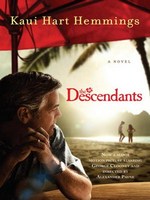
Dusted Off: The Descendants by Kaui Hart Hemmings

The DescendantsThe Descendants

by Kaui Hart Hemmings

ebook, 247 pg.
Random House, 2007
July 14-15, 2012

I really should’ve read this before the movie…for the first 100 pages or so, I heard Clooney’s voice in my head narrating this. I did eventually get over it, and even before that, it stopped distracting me.

This is a tragic tale of a man losing his comatose wife while realizing he’d lost her months (at least) before the accident that left her in that state. About him finally becoming the father he should be to two very messed up daughters (tho’ one’s far worse off than the other, and it’s not the one he thought was worse).

It’s a story told with warmth, sadness (not moroseness–thankfully), touches of humor, and humanity. I laughed, I got misty, I got warm fuzzies. Really, really great book.

—–

4 Stars

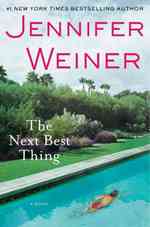
Dusted Off: The Next Best Thing by Jennifer Weiner

The Next Best ThingThe Next Best Thing

by Jennifer Weiner

Hardcover, 389 pg.
Atria Books, 2012
Read: Jul. 9-10, 2012

A sort of uninspired rom-com from Weiner about a TV writer finding a measure of success, love and stepping out on her own from the cocoon she was raised in. The saving grace is that with a writer as entertaining and skilled as Weiner, even the uninspired can be fun to read.

On the whole, it reads like a dramatization of Ben Blacker’s podcast about TV writing (Nerdist Writer’s Panel) with a couple of personal plotlines thrown in to the mix. So the non-family, non-romance stuff reads like a pretty authentic behind the scenes–nice for those of us who are into that kind of thing.

The sexual content was a bit more explicit than I’m used to from Weiner (as limited as my experience might be–my wife’s is more extensive and she agrees)–it’s not terrible, but just not what I expected from this writer, using this character to tell this story–seems out of place.

Not Weiner at her best, but a good way to kill a few hours.

—–

3 Stars

Dusted Off: Breakfast at Tiffany’s by Truman Capote

Breakfast at Tiffany'sBreakfast at Tiffany’s

by Truman Capote
Paperback, 178 pg.
Vintage International, 1993
Read: Jun. 24, 2012

Am not sure why this one resonates with so many, why it’s so acclaimed, but it is. For the most part, the narrative left me cold, as did the characters.

Capote’s descriptions on the other hand…great stuff, delicious writing there. Made it worth my while, but I can’t imagine I’ll be back for more.

—–

2 Stars

Dusted Off: Doc by Mary Doria Russell

DocDoc

by Mary Doria Russell
Hardcover, 394 pg.
Random House, 2013
Read: June 9-13, 2012

I was almost 100 pages into this novel when the thought occurred to me how extraordinarily careful Russell was in the way she put this together. Not that I think most authors are sloppy or anything, but the effort to make sure every piece, every word, every event was placed juuuust so was very evident.

The result of all this care is a heckuva novel about the years and events leading up to Wyatt & Morgan Earp heading to Tombstone with their good buddy Doc Holliday. Warm, exciting, brutal–this novel reads like a fast-paced biography. Really, really well written–there are a couple of times that Russell overplays her hand and gets downright manipulative, and at least once she almost lost me while doing so.

I’m glad I stuck it out tho’, the climax was as heart-breaking as it was heart-warming, and the coda put a nice little bow on the whole thing. Well worth the time and effort.

—–

4 Stars

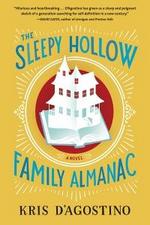
Dusted Off: The Sleepy Hollow Family Almanac by Kris D’Agostino

The Sleepy Hollow Family AlmanacThe Sleepy Hollow Family Almanac

by Kris D’Agostino
Paperback, 352 g.
Algonquin Books, 2012
Read from May 13-14, 2012

blech. I feel like I’ve read this book 3 times this year (see also: Flatscreen: A Novel and The Fallback Plan). Each time I’ve been disappointed. What a waste of talent (the dude can write, sure).

Oh, and I think that people who write blurbs for un-funny books that promise “hilarity” or something along those lines should be excessively fined–maybe imprisoned.

—–

2 Stars

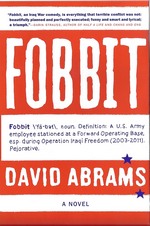
Fobbit by David Abrams

FobbitFobbit

by David Abrams
Paperback, 384 pg,
Grove Press, Black Cat, 2012
Read: Jan. 23-25, 2014

I enjoy a good satire — no matter if the target is one I identify with or oppose, a good satire is a treat. Fobbit didn’t totally work for me as a satire, but it came close.

As the cover says, a Fobbit is someone stationed at the Forward Operating Base during the Iraq war. The novel follows a handful of Fobbits as they try to survive their deployment while accomplishing as much as The Powers That Be allow them to (which includes a surprising number of PowerPoint presentations).

Staff Sergeant Gooding of Public Affairs attempts to keep various media outlets appraised of events, but before he can, he has to run everything up the flagpole — beginning with the impossibly political Lt. Col. Harkleroad. By the time Harkleroad and his superiors get done massaging/mangling the presentation of the facts to suit their needs, CNN, etc. have already discovered the reality, ran their stories, and moved on to something else.

On the other end of things, Sgt. Lumely is on the front-lines, but has to endure the inept command of Capt. Abe Shrinkle, who’s probably just as dangerous to his men as Iraqi insurgents (if not more). Lt. Vic Duret is Shrinkle’s commander, and he’s as frustrated trying to minimize Shrinkle’s damage.

Fobbit starts slow, and builds slower — but, eventually (and organically), the plot picks up and the lives of these poor Fobbits spiral out of control. Then it stopped feeling like a “eat your veggies” kind of read, and one that I could enjoy.

Fobbit‘s not as pointed as Catch-22, or as laugh-out-loud funny as Mash: A Novel About Three Army Doctors — as much as it wants to be in that company. But it’s honest, upfront, and feels authentic.

This is a satire of the circumstances these soldiers found themselves in, about the way the war was being fought, not about whether it should be or not. As nearly as possible, it’s an a-political book — pro-Operation Iraqi Freedom or anti- — it can be appreciated for what it is. Well-written, with characters that are a little more human than satire necessitates, and a world more grounded than expected.

—–

3 Stars

Dusted Off: Empire Falls by Richard Russo

Empire FallsEmpire Falls by Richard Russo
Hardcover, 483 pg.
Knopf, 2011
Read: May 22-27, 2012

Wow. Just wow. Not sure what else to say.

I’d suspected/wondered that something like the big climactic event was going to happen–yet when it happened, I was on the edge of my seat, saying “No fraking way!” (and just about decapitated my son who interrupted me during the middle of it) But even before that, the book had grabbed me with its humor, tragedy and humanity.

This one’s going to haunt me (in good and bad ways) for a long time.

—–

5 Stars

The Love Song of Jonny Valentine by Teddy Wayne

The Love Song of Jonny ValentineThe Love Song of Jonny Valentine

by Teddy Wayne

Hardcover, 304 pg.
Free Press, 2013
Read: Dec. 25, 2013

Jonny Valentine, the 11-year-old pop sensation, desperately wants to reach adolescence (probably not all that different from others his age) — but he’s very, very aware what that will do to his voice, his appearance — overall, his appeal to the tween and teen demographics. And he’s counting on it, if he doesn’t sell more to teen girls, he’s sunk. His career is dead.

That’s not the only part of his life that he sees in marketing terms. His haircut, the amount of fat and calories he consumes, his video gaming, exercises, amount of sleep — everything is micromanaged to the nth degree by his mother/manager, studio, vocal coach, and, to a lesser extent, his bodyguard (the closest thing her has to a friend). Everything he thinks, everything he wears he runs through a mental calculus wondering what it’ll do for sales, social media exposure, ticket sales, etc. How anyone can deal with this all, much less a near-adolescent, is unfathomable.

Honestly, ticket sales and record sales have dropped off a little for this phenom, so the record company begins to take a more hands-on approach to things — inventing news stories, coming up with a new media relations plan, etc. etc. And Jonny’s life becomes a little harder.

At the core of this story though, is a little kid, who just wants to be a little kid. He wants his mom to be more of a mom than a manager, he wants to spend time with his best friend from before he made it big, he wants to screw around and play. At the end of the day, I feel more pity for Jonny than I did for Auggie Pullman from Wonder.

Most of the observations/comments on/critiques of celebrity culture that are given here, are things we’ve all seen or made ourselves. But by putting them into the mouth and head of a kid, rather than an outsider adult, makes it all so much more effective.

Darkly comic (not terribly funny, though), insightful, sympathetic. A worthwhile read.

N. B. just because this is about an eleven-year-old, don’t for a second think this is appropriate reading material for that age. This isn’t MG, this is written for an adult audience.

—–

3 Stars

Page 44 of 47

Powered by WordPress & Theme by Anders Norén