Tag: General Fiction Page 45 of 46

Dusted Off: Bright’s Passage by Josh Ritter

Bright's PassageBright’s Passage

by Josh Ritter
Hardcover, 193 pg.
The Dial Press, 2011

I wanted to like this a lot more than I found myself able to–maybe it’s just that I didn’t get it, I don’t know. I found this to be an over-written, messy bore. Sorry, Mr. Ritter, I’ll keep listening (and reading in the future), but…this just didn’t work at all for me.

—–

2 Stars

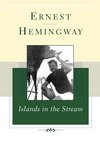
Islands in the Stream by Ernest Hemingway

Islands in the Stream

by Ernest Hemingway

I typically don’t bother with posthumous novels, but for some reason* I went ahead and tried this one, and on the whole, I’m glad I did, despite my rating. There’s a lot to the characters in this novel that weren’t in the previous novels. Still, as much as I appreciated various aspects of the novel, I just couldn’t get into it as a whole.

Part 3, “At Sea,” did almost nothing for me — Thomas Hudson is almost impossible to recognize, and it’s probably harder to sympathize with him — or his crew. Given that they’re hunting Nazi’s, it should be a pretty easy sell.

Part 2, “Cuba,” had some really interesting moments, some dialogue that leaps off the page, and once his first wife appears, Hudson becomes likable for the first time since Part 1. I don’t recall Hemingway’s characters having a pet before, and while Hudson’s relationships with his cats seem more than a little strange, just having them made him seem more human. Like in Part 3, he’s very different from the character we met in Part 1, but it’s a bit more understandable here. While I didn’t find that much to like about the character, the physical descriptions he gives towards Honest Lil are about the best, and most evocative, I remember in Hemingway.

Part 1, “Bimini,” is what made this worth the read. Other than the kid in The Old Man and the Sea (which a significant portion of this section evokes), we don’t really see children in Hemingway. But here, Thomas Hudson’s two sons from different wives are spending a few weeks with him, a chance for them all to reconnect, and give their mothers some sort of break. I really liked these kids — probably more than any other characters he’s devised. And Hudson’s relatable, sympathetic, and even likable as a person — something that he loses quickly, and only regains briefly toward the end of Part 2.

Honestly, if you’re inclined to give this a try, only read Part 1 — you’ll be happier for it, and the scenes with Hudson and one or both sons are really great. Otherwise, you probably have better things do with your time.

—–

* I’d already checked it out from the library before I found that out.

—–

2 Stars

Dusted Off: Beauty Queens by Libba Bray

Beauty QueensBeauty Queens

by Libba Bray
Hardcover, 396 pg.
Scholastic Press, 2011

This book is just fun. Are the characters over the top? Yup. Is it too preachy at times? Oh yeah. Does Bray hit the same target over and over and over again? Yup. But usually those targets have it coming.

There are plenty of flaws in this book, but Bray’s style, tone and message(s) work so well that you ignore them easily and forgive them all even more easily. A great, fun read–even for a guy like me who is nowhere near the target audience.

—–

4 Stars

Dusted Off: I Just Want My Pants Back by David Rosen

I Just Want My Pants BackI Just Want My Pants Back

by David Rosen
Paperback, 240 pg.
Broadway Books, 2007

This is a Coming of Age novel by a would-be Nick Hornby. Frequently amusing, but fairly paint-by-numbers. There’s virtually no plot point that couldn’t be predicted the instant a character is introduced.

There are plenty of fun turns of phrase, and Rosen definitely has a knack for this thing–I just hope that next time out the story is as good as the writer telling it.

—–

2 Stars

Dusted Off: Mansfield Park by Jane Austen

Mansfield ParkMansfield Park

by Jane Austen
Original Publication: 1814

This is my third foray into the works of Austen in my resolution to read her collected works this year, and it’s as disappointing as the first two–maybe more.

Once again, we have a collection of mostly empty-headed young women who fawn over largely unworthy men with healthy inheritances/incomes. There are two of these women who are capable to some thought, of being almost well-rounded, and they’re both in love with the same man (who, other than being utterly clueless about this fact for the entire novel is the only single guy worth bothering with). But there’s a twist this time–the protagonist doesn’t come from the same social class as everyone else, she’s been taken in and raised by her wealthier uncle. Hardly a Dickensian orphan, but still, not “worthy” of being in the company with these people.

Everyone else gets married and whatnot, leaving the triangle socially isolated until things finally come to the only just (and entirely predictable) conclusion for all involved, and they all lived happily ever after.

There was nothing real here–no real heart, no soul, just a bunch of cardboard cutouts going through the motions. Once again, I have to ask–how did Austen get the rep she has? I want to fall under her spell, I want to like her stuff, but I just can’t. Not yet anyway. Here’s hoping Emma‘s better.

—–

1 Star

Dusted Off: Sense and Sensibility by Jane Austen

Sense and SensibilitySense and Sensibility

by Jane Austen
Original Publication: 1811

I honestly don’t know what to say about this, my first exposure to Jane Austen (other than it’s far overdue).

I don’t see the appeal, I don’t see why this one has endured. That’s not to say I hated it. It’s just that I don’t get it. Yes, there were amusing turns of phrases here and there, and I can see where it might be seen as a template for romantic comedies since then. But..meh.

—–

2 Stars

In Medias Res: Islands in the Stream by Ernest Hemingway

as the title implies, I’m in the middle of this book, so this is not a review, just some thoughts mid-way through

—–

Islands in the Stream

by Ernest Hemingway

Part 1 of this had some of the most enjoyable passages (for me) in Hemingway’s works, some things I just didn’t see the point of, but overall I really liked this.

Part 2? Now, that I’m only getting through because I’m stubbornly persisting, that’s all.

I hope Part 3 turns this around.

Dusted Off: In Zanesville by Jo Ann Beard

In ZanesvilleIn Zanesville by Jo Ann Beard

The 1970’s weren’t the easiest time for a couple of 14 year old girls to grow up–just ask In Zanesville’s unnamed narrator and her best friend. In this coming of age novel, we see the two of them deal with odd babysitting gigs, clothes, strange teachers, annoying/horrible family situations, self-awareness, friends, brushes with popularity, and (of course) boys at that awkward and vital time of life. Jo Ann Beard depicts their struggles, failures (and even a success or two) in a well-written (sometimes wonderfully so), moving way.

My problem with this book is that the narrative doesn’t go anywhere, the narrator’s story doesn’t end, there’s no conclusion, it just stops. I’m not sure the narrator comes of age, she rather comes right up to the border of it and looks across. That’s more than dissatisfying, it ends up cheapening the whole experience.

Even so, Beard’s writing makes In Zanesville worth the time.

—–

3 Stars

Dusted Off: How to Talk to a Widower by Jonathan Tropper

How to Talk to a WidowerHow to Talk to a Widower by Jonathan Tropper

this isn’t the review the book deserves, but it’s all I can come up with at the moment…

Twentysomething Doug Parker, after two years of marriage to a woman with a teenage son, becomes a widower who can’t let go of his grief (and doesn’t want to anyway). He withdraws from life, from work, from family, and from the angry stepson who lost as much as he did.

Events–and overly-amorous neighbors–conspire to drag him, kicking, screaming and swearing, back to the land of the living (with all its attendant glories and problems).

I’m fairly certain this isn’t Tropper’s best novel, but it’s probably his most effective–he can bring you from the verge of tears (or over the verge) to laughing out loud and back again in less than 5 pages. That’s true even on a re-read like this was for me. I love this book.

—–

5 Stars

A Working Theory of Love by Scott Hutchins

A Working Theory of Love
A Working Theory of Love by Scott Hutchins
My rating: 1.5 of 5 stars

What is there to say about this disappointing mess? Well, I guess there’s that. Hutchins had aspirations, clearly, there was a lot of ambition behind the various storylines surrounding Neill Bassett here, and I really don’t think he lived up to them.

To really get into my problems with the book would take 1. Spoilers, and I really hate giving those kind of reviews. 2. Effort, and I simply cannot bring myself to care enough to put in the effort.

I couldn’t care about any of these characters — they just weren’t that interesting, developed or sympathetic. There were a couple I was tempted to care about, but he just didn’t give anyone enough depth to be invested in. A lot of plot issues could’ve been overcome with a couple of characters I could give a rip about.

The family storyline had the most promise, and fell the furthest short — well, at least the mother storyline. I don’t believe his mother, and everything seemed too pat at the end of the book regarding her story.

None of the romance stories worked for me — even the resolution Neill came to at the end seemed more like something imposed on the character by the author than anything that came naturally from the novel. The only evidence we really have to support any feelings Neill has for any of the women here comes from his narration — and doesn’t ring true. The evidence isn’t to be found in the story, or his action.

The A.I. test story is the most interesting — for the “father”-son interaction. Not for any of the philosophical questions it tries to raise about the nature of humanity, or love, etc. But it’s not enough to save this novel.

Not funny, not moving, not terribly interesting. Spare yourself, you have better things to do with your time.

Page 45 of 46

Powered by WordPress & Theme by Anders Norén